Connect with us

Tech

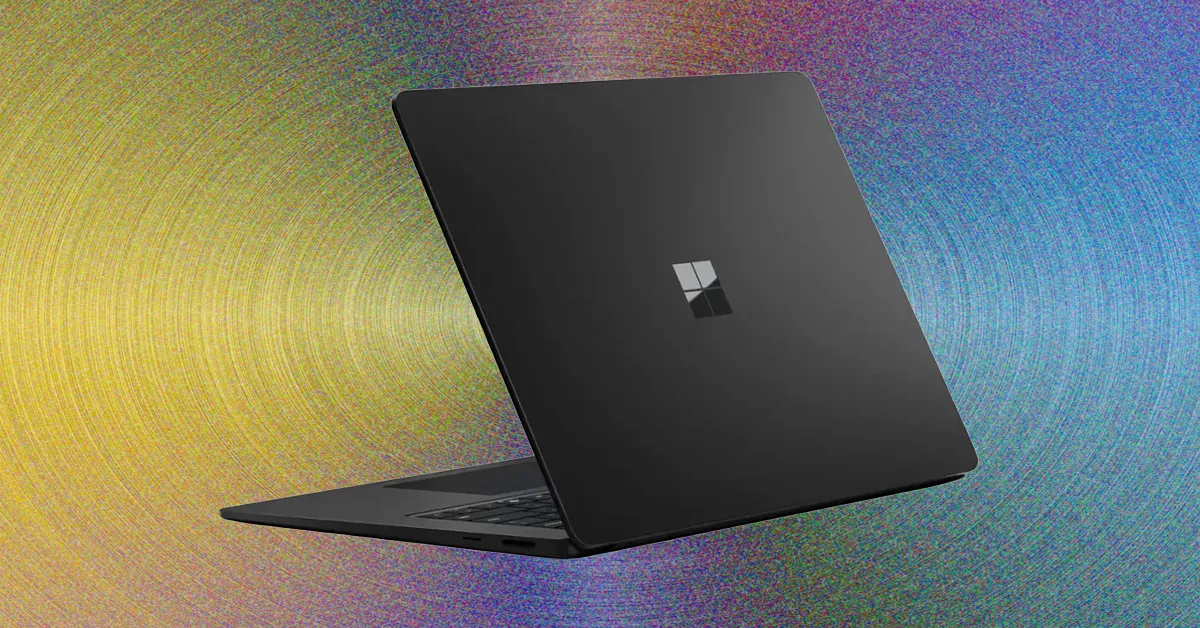
9 Best Windows Laptops (2026): WIRED-Tested Laptops to Buy

Published

on

You’ll want to read our extensive guide on How to Choose the Right Laptop, but for the basics, you’ll want to decide what category of laptop you need. Most people should buy a 13-inch or 14-inch laptop, and spending around $750-$1,000 is a good place to start. You should expect a laptop around this price to get good battery life, have a decent screen, perform well enough for basic tasks, and have a comfortable keyboard and touchpad. You should also expect at least 16 GB of RAM and 512 GB of storage. Anything more than that gets into premium territory where you’re paying for higher specs, more performance, or extra features. If you want something with a discrete GPU for either gaming or creative workflows, you’ll need to spend more than this.

A laptop like the Dell 14 Plus is the ideal example of what you can get while shopping in this price range. You can even find laptops with OLED panels, up to one terabyte of storage, depending on how good the discounts happen to be. I would consider anything under $750 to be a cheap laptop, and it will therefore come with some significant compromises, especially around the quality of the panel and the touchpad. Fortunately, laptops that use the Qualcomm Snapdragon X chip get great battery life, despite often falling under $750 in price.

Here’s a list of important specs to consider:

CPU: For thin and light laptops, I would recommend one of the Snapdragon X, X Plus, or X Elite chips. They get the best battery life and performance for their class of laptop. As an alternative, the Intel Core Ultra 7 258V is also quite good. The next generation is coming soon though, with all eyes on Intel’s Core Ultra Series 3 (also known as Panther Lake, which is rolling out now and is really great) and Qualcomm’s Snapdragon X2 chips.

Advertisement

GPU: As of now, Intel’s Lunar Lake chips, such as the Core Ultra 7 258V, have the best integrated graphics. For discrete options, you’ll want to pick something with one of the latest Nvidia RTX 50-series GPUs, such as the RTX 5060. The biggest leap in performance is between the RTX 5070 and the RTX 5070 Ti, which increases VRAM to 12 GB.

RAM (or memory): Stick with at least 16 GB if you can. Since the advent of the Copilot+ designation, it has become the new standard. You’ll even find laptops as cheap as $600 that have 16 GB of memory. Gamers and content creators should upgrade to 32 GB if possible, though the ongoing memory shortage may make this more expensive in the near future.

Storage: Similar to memory, many laptops have moved to 512 GB as the new standard, and you’ll find lots of affordable laptops with 512 GB as the base configuration. Upgrading to one or two terabytes, where possible, will make your life that much easier, especially since many laptops don’t offer expandable storage.

Display: Laptops are usually categorized by screen size, with 13-inch, 14-inch, and 16-inch being the most common. You’ll want to consider size, resolution, refresh rate, and panel type here.

Advertisement

Portability: Outside of display size, the thickness of the chassis and weight are the primary factors here, determining how portable a laptop is to travel with. Other dimensions are important too, but more often than not, that is determined by the screen size.

Ports: Many laptops are limited to just USB-C and headphone jack these days, with some exceptions where USB-A or HDMI are included. Make sure your laptop has what you need, or else you’ll need a USB Hub or laptop docking station to get more ports or to increase external display support.

Source link

Advertisement
Continue Reading
Click to comment

Leave a Reply

Your email address will not be published. Required fields are marked *

Tech

CurrentBody LED Hair Growth Helmet Review: Baby Hairs Abound (2026)

Published

on

Pretty much everyone I know is unhappy with their hair in some way. All of my straight-haired friends want curly, and all of my curly-haired friends want straight. I’m so jealous of people who have thick hair, as someone with fine, thin hair that tangles easily.

My hair also grows famously slow. I got a pixie cut in spring of 2011, and my hair did not touch my shoulders until the end of 2013. Plus, because my hair is super thin, when I pull it back, it separates, and you can see my scalp underneath. Because it’s so fine, it tangles and often breaks off, resulting in chronically dry split ends.

Overall, I’m unhappy with my hair and its lack of growth or fullness, so I wanted to see if CurrentBody’s cord-free, Bluetooth-enabled LED Hair Growth Helmet would work for my slew of hair issues. Red-light-therapy devices for hair are similar to red-light therapy masks for your face, using red lights to increase hair growth and promote a healthy scalp. You need to use the device for only 10 minutes a day, and CurrentBody claims you’ll see results within 12 weeks. While my results weren’t super visually dramatic, I noticed my hair feeling thicker while shampooing, and I saw a lot more “baby hairs” spring up on my hairline after about three months of testing.

Splitting Hairs

Image may contain Helmet and Crash Helmet

Photograph: Molly Higgins

Unlike more discreet red-light hair growth devices, like the HigherDose Red Light Hat (see our full review here), CurrentBody’s entry is a full-on helmet, lined with 10 strips of 12 red lights each on a spectrum of 620 to 660 nm (nanometers, the unit of measure for the wavelength of visible light). This works similarly to red-light-therapy face masks, which aim to improve skin conditions and spur new cell growth using red-light therapy in the mid-600-nm range. The 620-nm red light helps to improve scalp health by promoting circulation, and the 660-nm red light goes deeper, reaching through the epidermis and dermis to the hypodermis, where it stimulates growth and repair at the follicle root.

Advertisement
Image may contain Helmet Clothing Hardhat Crash Helmet and Tape

Photograph: Molly Higgins

Red-light wavelengths are clinically proven to energize hair follicles; improve scalp blood flow; reduce inflammation; lower dihydrotestosterone (DHT) levels, a hormone that causes hair loss and thinning; and support production of adenosine triphosphate (ATP), which helps to store and release energy in cells. This wavelength of red light triggers follicles to stay in the hair growth phase by providing oxygen and blood flow to the scalp.

Rinse, Red Light, Repeat

The helmet is FDA-cleared (meaning it’s been determined to be equivalent to a similar, legally marketed device) and is FSA (flexible spending account) or HSA (health spending account) eligible with a letter of medical necessity. It comes in two sizes: medium, for a skull circumference of 21.3 to 23.2 inches, or large, for 23.3 to 25 inches. (I opted for medium, and it was still too large for my head.) The device sits on a base and is charged via a USB-C cord. It takes about three hours to fully charge the helmet, and it lasts about a week on a single charge. (The white light on the side flashes while charging and turns solid white when the battery is full.) The device is powered on by pressing the single button located under the charging port.

Image may contain Adult Person Face Head Helmet and Electronics

Photograph: Molly Higgins

Source link

Advertisement
Continue Reading

Tech

Microfluidic Display Teaches The Basics

Published

on

We’ve always been interested in fluidic logic and, based on [soiboi’s] videos, he is too. His latest shows how to use silicone and a vacuum to build a multiplexed dot matrix display. This is a fascinating look at how you design with air instead of electrons.

Just like a regular display, it isn’t efficient to control each element separately. Usually, it’s better to multiplex such that 16 “pixels” need only row and column air valves. Just as you might use transistors, the project uses “air transistors” to build logic gates.

Each pixel is a bit of silicone that can be sucked down only when a row and column are drawing a vacuum simultaneously. The air transistor is a similar membrane that a control input can suck down. In its relaxed position, two air channels are blocked by the membrane. When the membrane moves away, the two channels connect. This is analogous to a Field Effect Transistor (FET), where the channel conducts electricity when the gate is active and does not conduct when the gate is inactive.

Advertisement

We appreciated the step-by-step development. The video moves from a pixel step-by-step to small arrays and then to a 4×4 array. If this is your first encounter with fluidic logic, you can learn more about it. The last time we checked in with [soiboi], he was creating fluidic robots.

Advertisement

Source link

Continue Reading

Tech

The best cheap phones for 2026

Published

on

A few years ago, it may have been fashionable to spend $1,000 on the latest flagship smartphone, but for most people, that’s neither practical nor necessary. You don’t even have to spend $500 today to get a decent handset, whether it’s a refurbished iPhone or an affordable Android phone, as there are plenty of decent options as low as $160.

However, navigating the budget phone market can be tricky; options that look good on paper may not be in practice, and some devices will end up costing you more when you consider many come with restrictive storage. While we spend most of our time reviewing mid- to high-end handsets at Engadget, we’ve tested a number of the latest budget-friendly phones on the market to see cut it as the best cheap phones you can get right now.

Best cheap phones

Image for the large product module

Samsung

Read our full Samsung Galaxy A17 5G review

Advertisement

Building a good budget phone is tricky as manufacturers have a very hard limit on what they can include while staying under cost. Samsung has balanced this nicely on the Galaxy A17 5G by equipping it with a large 6.7-inch OLED display with solid brightness (up to 800 nits) and a 90Hz refresh rate. The phone’s design also defies its price because while it is made from polycarbonate (aka plastic), it doesn’t feel cheap. You even get a microSD card slot for expandable storage and three cameras in back. However, since one of those is a 2MP macro, it probably won’t see nearly as much use as the 50MP main or 5MP ultra-wide.

The one thing I wish Samsung splurged a bit more on is the phone’s Exynos 1330 chip, as it’s a little dated and sometimes struggles with things like multitasking or running more demanding apps. That said, starting at just $200 (or less depending on discounts), the Galaxy A17 delivers a lot of value for not a ton of money. — Sam Rutherford, Senior Reporter

Image for the large product module

OnePlus

Advertisement

The OnePlus Nord N30 5G was our previous top pick. At $300, it’s normally $100 more expensive than the A16 5G. However, if you can find it on sale for less, it’s still worth considering over the A16. For one, the N30 features a faster 120Hz display and its Snapdragon 695 chip, while older than the A16’s Exynos 1330, still outperforms it in some areas.

Another reason to consider the N30 over the A16 is that it ships with a 50W power adapter, letting you get a full day of battery life in 30 minutes. If you hope to use your new phone for as long as possible, the A16 is the better choice, but the N30 can be a compelling alternative. — Igor Bonifacic, Senior Reporter

Image for the large product module

Motorola

Advertisement

For those on a really tight budget, the 2024 Moto G Play covers all the bases well. It has a decently fast Snapdragon 680 processor along with 4GB of RAM and 64GB of storage. And while that last number might seem small, the phone has a microSD card slot so you can add more space if and when you need it.

Its 6.5-inch LCD screen is also surprisingly sharp with a 90Hz refresh rate. The Moto G Play even has an IP52 rating for dust and water resistance. That isn’t much, but it’s good enough to protect against an errant splash or two. Sure, the G Play is basic, but it’s basic in a good way. — S.R.

Image for the large product module

Motorola

Advertisement

The $400 Motorola Moto G Stylus 5G offers something none of the other picks on this list do: a built-in stylus. If you love doodling and jotting down notes, then this is the cheap phone to buy. Thankfully, it has a few other things going for it too. The Moto G Stylus 5G sports a big and responsive 6.7-inch display and a long-lasting 5,000mAh battery. Plus, it doesn’t look half bad.

As with other options in this price range, it would be nice if the Moto G Stylus 5G came with a more capable camera, faster charging and protection against water. With this recommendation, be sure to avoid paying full price for the Moto G Stylus 5G. Thankfully, that’s not hard to do with the phone frequently on sale. — I.B.

What to look for in a cheap phone

For this guide, our top picks cost between $100 and $300. Anything less and you might as well go buy a dumb phone instead. Since they’re meant to be more affordable than flagship phones and even midrange handsets, budget smartphones involve compromises; the cheaper a device, the lower your expectations around specs, performance and experience should be. For that reason, the best advice I can give is to spend as much as you can afford. In this price range, even $50 or $100 more can get you a dramatically better product.

Advertisement

Second, you should know what you want most from a phone. When buying a budget smartphone, you may need to sacrifice a decent main camera for long battery life, or trade a high-resolution display for a faster CPU. That’s just what comes with the territory, but knowing your priorities will make it easier to find the right phone.

It’s also worth noting some features can be hard to find on cheaper handsets. For instance, you won’t need to search far for a device with all-day battery life — but if you want a phone with excellent camera quality, you’re better off shelling out for one of the recommendations in our midrange smartphone guide, which all come in at $600 or less.

Wireless charging and waterproofing also aren’t easy to find in this price range and forget about the fastest chipset. On the bright side, most of our recommendations come with headphone jacks, so you won’t need to buy wireless headphones.

iOS is also off the table, since, following the discontinuation of the iPhone SE, the $599 iPhone 16e is now the most affordable offering from Apple. That leaves Android as the only option in the under-$300 price range. Thankfully today, there’s little to complain about Google’s operating system – and you may even prefer it to iOS.

Advertisement

Lastly, keep in mind most Android manufacturers typically offer far less robust software features and support for their budget devices. In some cases, your new phone may only receive one major software update and a year or two of security patches beyond that. That applies to the OnePlus and Motorola recommendations on our list.

If you’d like to keep your phone for as long as possible, Samsung has the best software policy of any Android manufacturer in the budget space, offering at least four years of security updates on all of its devices. Recently, it even began offering six years of support on the $200 A16 5G, which we recommend below. That said, if software support (or device longevity overall) is your main focus, consider spending a bit more on the $500 Google Pixel 9a, or even the previous-gen Pixel 8a, which has planned software updates through mid-2031.

Source link

Advertisement
Continue Reading

Tech

Why the DJI Neo is the Perfect Entry Level Drone, Despite Being Priced at Less Than a PS Portal

Published

on

DJI Neo Drone 2026
The DJI Neo, priced at $149 (was $199), stands out as an entry-level flying drone that’s surprisingly simple to use, especially if you’re just getting started or looking for something to keep in your carry-on. People call it the ideal starter or travel companion for a reason: it’s small (just 135 grams), simple to use, and inexpensive.


There’s no need to tote around a bulky case when you can just slip the Neo into your pocket. Prop guards cover the rotors, preventing bumps and collisions. Launch it with a flick of the wrist: simply click the mode button on top, select your shot type, and the device takes off without the need for a remote.

Sale


DJI Neo, Mini Drone with 4K UHD Camera for Adults, 135g Self Flying Drone that Follows You, Palm Takeoff…
  • Due to platform compatibility issue, the DJI Fly app has been removed from Google Play. DJI Neo must be activated in the DJI Fly App, to ensure a…
  • Lightweight and Regulation Friendly – At just 135g, this drone with camera for adults 4K may be even lighter than your phone and does not require FAA…
  • Palm Takeoff & Landing, Go Controller-Free [1] – Neo takes off from your hand with just a push of a button. The safe and easy operation of this drone…

If you need additional control, just pair it with the DJI Fly app on your phone over Wi-Fi, or use a separate remote controller to take it to the next level (up to several kilometers in good conditions). For a truly immersive experience, use your DJI Goggles and motion controller; you can even switch to manual mode for some dramatic flare (though the drone will remain stable if you get carried away).

The camera specifications aren’t going to blow anyone away, but the 1/2 inch sensor can capture decent 4K video at 30fps and 12 megapixel stills. The electronic stabilization is also quite effective; even in full sunshine, you’ll get some lovely sharp colours. Things get a little mushy in low light, but that’s to be expected given the price. Storage is built-in and contains approximately 22GB, allowing you to take a number of short flights before needing to transfer to your phone.

Advertisement


Battery life is about 18 minutes per charge, however it lowers slightly with guards on or if you’re being too aggressive. A level 4 wind resistance rating indicates that it can withstand moderate breezes, but severe gusts may require you to scramble to keep it in the air. Indoor flights are a breeze (pun intended) thanks to the guards and light weight, allowing you to practice flying on rainy days or in confined locations.

Source link

Advertisement
Continue Reading

Tech

Apple Watch Series 11 hits $299 in a fast-ending deal, a great excuse to finally upgrade

Published

on

If you’ve been hanging onto an older Apple Watch and telling yourself “it still works,” this is the kind of deal that makes upgrading feel simple. Apple Watch Series 11 (GPS) is $299, down from a $399 retail value, saving you $100. The other reason it matters: this price is tied to a deal countdown, so it’s not the sort of discount you can count on being there later tonight.

What you’re getting

Apple Watch is still the easiest way to make your iPhone feel more useful throughout the day. You get glanceable notifications, quick replies, call handling, timers, alarms, and Apple Pay right on your wrist. That may sound basic, but it’s the difference between constantly pulling out your phone and just staying in the flow.

It’s also a fitness-friendly device without requiring you to be a fitness person. You can track activity automatically, close your rings, and keep tabs on trends over time. For many people, that turns into better consistency rather than a short-lived burst of motivation.

Why it’s worth it

The practical appeal is convenience. An Apple Watch becomes the thing you check when your phone is across the room, in your pocket, or face-down during a meeting. It’s also one of the best “small nudges” devices for daily habits: standing up more, moving a bit, and noticing patterns you would otherwise ignore.

Advertisement

At $299, it’s priced closer to the entry point most people want for a smartwatch that will actually stick around in their routine. It’s also a nice upgrade for anyone whose current watch battery is fading, performance feels sluggish, or features are starting to lag behind the newer watchOS experience.

The bottom line

Apple Watch Series 11 at $299 is a clean, straightforward upgrade if you want the best iPhone companion for everyday notifications, quick tasks, and fitness tracking. The biggest reason to act is timing. This deal is shown with a countdown and is set to end soon, so if you were already close to buying one, this is the moment where waiting usually costs you the discount.

Source link

Advertisement
Continue Reading

Tech

GTA 5 Demake Shrinks Game Down from 120GB to a Measly 2.5GB, with Some Sacrifices

Published

on

GTA 5 Demake
GTA 5 typically requires around 120GB of space, however some modders have managed to reduce that figure to a mere 2.5GB. To be fair, you can still do almost everything you used to do, such as drive automobiles around Los Santos, fire firearms, jump off of planes, and so on. It’s just that the controls are a little goofy now, especially while driving, because they tend to lag.

These modders simply had to cut the fat to get the game down to its current size, so they eliminated the majority of the missions, which means the story mode is almost entirely gone. The sound effects have also been removed, which made driving through a silent film feel unsettling, with the exception of the occasional engine rumbling or screeching tires. Massive portions of the terrain have vanished, leaving only a flat grey texture that flickers in and out as you move about. Characters have lost all definition; even the main character resembles a blocky purple outline with stumpy small arms.

Advertisement

PlayStation Portal Remote Player – Midnight Black
  • Play Your Game Collection with Remote Play – PlayStation Portal Remote Player can play compatible games you have installed on your PS5 console…
  • Cloud Streaming from the Game Catalog and Classics Catalog – Discover an awesome library of PS5 games on the PlayStation Portal Remote Player with…
  • Cloud Streaming for PS5 Games in Your Library – With PlayStation Plus Premium, stream select digital PS5 games in Your Library from PlayStation Store…

Surprisingly, the cars still handle normally. You can still jump curbs and maneuver through traffic, and the blue sedan appears as it should. The city center loads swiftly, with no wrecks, and helicopters continue to take off and hover. Combat still works; your shots still strike their targets, and explosions still occur when you hit something. The only true disadvantage is that the low frame rates make sharp turns a bit risky, as you never know when the game may jolt the steering wheel out from under you.

GTA 5 Demake
The real reason this project got off the ground was due to storage expenses. Just last year, the price of solid-state drives skyrocketed, and data centers snapped up all the supplies they could get, leaving gamers with a difficult decision: do we keep playing GTA V, Call of Duty, Cyberpunk 2077, and all the rest, or do we sacrifice some of our game library to free up space? A full installation of GTA V takes about a tenth of a one-terabyte HDD, therefore this hack is a lifesaver for anyone with little capacity.

GTA 5 Demake
The game’s visuals are now pretty low-poly, with trees appearing as nothing more than flat green patches, houses clipping straight through each other, and the skybox extending out beyond the horizon like a continuous sheet of blue. When you gaze around on foot, you notice even more of the game’s peculiarities, such as sidewalk steps that stutter under your feet, people’s arms flailing around in jerky motions, and a character jumping up in the air and just sort of hanging there for a while.

GTA 5 Demake
Even that is a relatively mellow experience when compared to what happens when you attempt aerial stunts, as Blaine County shrinks down to a few bare hills, Vinewood shrinks down to a few sparsely populated hills, and the ocean simply laps against the map’s edge as if it is not even present. Flying planes feels better, but landings are still a gamble since you never know when your plane will clip the runway. Golf courses devolve into patchy fields, while tennis courts become a slice of green with no net.
[Source]

Advertisement

Source link

Continue Reading

Tech

How to watch the 2026 UAE Tour: live stream UCI WorldTour stage race from anywhere

Published

on

The UAE Tour is the finale of the early season stage races held in the Middle East and is the longest, hardest and most prestigious. Three time winner Tadej Pogačar isn’t on the start list but 2023 winner Remco Evenepoel rides and in the Slovenian’s absence will assume the role of favourite.

Source link

Advertisement
Continue Reading

Tech

Want a 1,000W MSI RTX 5090 Lightning Z priced at $5,090? You'll need to win a draw to buy it

Published

on


Lightning is MSI’s highest-end GPU series, with the Z suffix indicating the top-tier variant of the lineup, aimed at extreme overclockers and enthusiasts.
Read Entire Article
Source link

Continue Reading

Tech

What the Epstein files reveal about EV startups and Silicon Valley

Published

on

After the Justice Department released a trove of new documents tied to infamous sex offender Jeffrey Epstein, journalists digging through them have found extensive connections to Silicon Valley.

TechCrunch’s Sean O’Kane examined how a mysterious businessman named David Stern built a relationship with Epstein and pitched him investments in multiple electric vehicle startups, including Faraday Future, Lucid Motors, and Canoo.

On the latest episode of the Equity podcast, Kirsten Korosec and I talk to Sean about what he learned, and we discuss whether the Epstein revelations will lead to broader fallout in Silicon Valley.

Advertisement

You can read a preview of our conversation, edited for length and clarity, in the transcript below.

Sean: There are always people at the edges who don’t necessarily want to be front and center in the investment scene. And that was why I started looking through these files, in part because a long time ago, flashback 10 years ago on my beat especially, there was just a ton of Chinese investment in the space. 

This was before even the rush of EV startups in China that we see today […] In autonomous vehicles, but electric vehicles especially, there was this moment where Chinese investors and Chinese companies, state-owned automakers, all they wanted to do was to be looked at like Silicon Valley startups. So they came here and they invested in companies and helped get them off the ground, or in some cases even set up offices in Silicon Valley.

And it was in that environment that a lot of the companies that I’ve covered for a long time popped up. There was just never a full picture of how a lot of them were funded. 

Advertisement

Techcrunch event

Boston, MA
|
June 23, 2026

Advertisement

One in particular, this company called Canoo, which is now bankrupt and out of business, had maybe the most mysterious set of investors of all of them. They really were not upfront about it when they first sort of came out of stealth in early 2018. And it frankly took until there was a lawsuit between some people who ran the company near the top that the investors were revealed. 

At the time, it was this businessman in China who was relatively close, the son-in-law of the former sort of like the fourth most senior CCP official under the previous leader of China and a giant electronics magnate from Taiwan. And then there was this really strange guy named David Stern, who was the third founding investor. And there was so little information about this guy.

I could tell, back then, that he was some sort of German businessman, that he had some connections to China, but it wasn’t really clear how he had gotten involved. The only thing I really remember hearing at the time was that he was close with Prince Andrew, which I just thought was very strange, this idea that someone had even told me a long time ago, probably in 2018 or 2019, that Prince Andrew was involved with this company Canoo in some way, maybe not invested, but advising or something.

It was something that stuck in my head for a very long time, clearly, because I went looking for that information as more of these files came out, assuming that proximity to Prince Andrew means proximity to someone like Epstein.

Advertisement

And that was the case here, more so than I could have imagined, because this guy Stern turned from an enigma or a ghost into someone who was present through all this dealmaking 10 years ago, where we see him pitching, in the span of about a year and a half, investments in Faraday Future, trying to convince Epstein to maybe throw a couple hundred million dollars into that company, trying to buy the 30% stake that Faraday Future’s founder had bought or acquired in Lucid Motors arrival at the time, which I feel is an overlooked dynamic [in] how those companies grew around then — and then also in Canoo.

Epstein never invested in any of those companies despite that proximity, but it was just such a revealing thing. And I get into it in the story that I wrote last week, but we get this sweep of a decade of relationship that Stern had with Epstein from approaching him initially in 2008, kind of hat in hand, and introducing himself and saying, “Hey, I want to invest in China. Will you throw in some money?” to being someone who was seemingly very close to him by the end. 

Kirsten: The whole thing is really interesting, and it goes back to my initial comments about how sometimes when you get a chance to look back at with new information at how deals were unfolding, it really just changes your perception and perspective of the time.

And for those who didn’t follow quote-unquote “mobility,” think of it as how we’re thinking about physical AI these days. Everyone was talking about it. Every automaker wanted to have a piece of quote-unquote “the future of transportation” or “mobility.” And so it makes a lot of sense that some of these more secretive types were also jumping in. 

Advertisement

Sean, one of the points you made to me as I was working on the story with you, in terms of editing it, you were [saying], it was very clear that Epstein and David Stern weren’t really about investing and building companies. It was all about how to make the most money the fastest. And that, I think, is really historically important and interesting and gives you a little bit of an insight into — in addition to all the horrible, horrifying, terrible things he did to human beings, [Epstein] was a complete operator as well, in order to make money as quickly as possible. And you see that in these emails and exchanges between David Stern and Epstein.

Sean: Yeah, to both of those points really, I open the story with a moment in time where Lucid Motors […] they had been basically a battery supplier for a long time and then they pivoted into the passenger vehicle startup that we know them as today, but they were really struggling to raise their Series D at the time, and they really needed that money to start production of their first electric sedan. 

They were struggling, behind the scenes in large part because the founder of Arrival quietly amassed this major stake and was kind of pushing people away and making it look like an uninvestable company in some ways, but the hype around all of that at the time was creating opportunities for people like Stern and Epstein, and we see them talk in these emails about, you know, Stern comes to Epstein and basically says, “I heard that they’re raising. Can you get information from Morgan Stanley?”

Epstein turns around and passes that information back, and then you see this discussion about, okay, well, Morgan Stanley says Ford — which was reported at the time — had kind of an investment offer, potential acquisition offer, on the table for Lucid Motors [and] was going to come in in that Series D. And they’re chopping up — do we invest in this and maybe get a big return down the road? Or is it something that we sell as Ford comes in a couple months later, if we can get this stake now at fire sale prices?

Advertisement

Ultimately, they didn’t go through with that, but Stern did eventually invest in Canoo and help get that company off the ground.

Anthony: One thing — maybe pulling back a little bit from the specific industries or investments — that’s also an important piece of context that generally gets mentioned in any of these stories about Epstein in Silicon Valley, but is worth repeating here, is that he [pleaded] guilty to soliciting prostitution from a minor in 2008.

Almost all the emails that we’re talking about with these stories [and] in pretty much any other story about Epstein in Silicon Valley comes after that. So it’s also partly a story about how people get comfortable with the idea that, okay, this guy has a pretty shady past already. He wasn’t the infamous criminal that he eventually [became], but there were things that were already known about him, and because he was a source of connections to power, to famous names, to money, a lot of people were just willing to look past that.

Advertisement

Source link

Continue Reading

Tech

Blackstone backs Neysa in up to $1.2B financing as India pushes to build domestic AI infrastructure

Published

on

Neysa, an Indian AI infrastructure startup, has secured backing from U.S. private equity firm Blackstone as it scales domestic compute capacity amid India’s push to build homegrown AI capabilities.

Blackstone and co-investors, including Teachers’ Venture Growth, TVS Capital, 360 ONE Asset, and Nexus Venture Partners, have agreed to invest up to $600 million of primary equity in Neysa, giving Blackstone a majority stake, Blackstone and Neysa told TechCrunch. The Mumbai-headquartered startup also plans to raise an additional $600 million in debt financing as it expands GPU capacity, a sharp increase from the $50 million it had raised previously.

The deal comes as demand for AI computing surges globally, creating supply constraints for specialized chips and data center capacity needed to train and run large models. Newer AI-focused infrastructure providers — often referred to as “neo-clouds” — have emerged to bridge that gap by offering dedicated GPU capacity and faster deployment than traditional hyperscalers, particularly for enterprises and AI labs with specific regulatory, latency, or customisation requirements.

Neysa operates in this emerging segment, positioning itself as a provider of customized, GPU-first infrastructure for enterprises, government agencies, and AI developers in India, where demand for local compute is still at an early but rapidly expanding stage.

Advertisement

“A lot of customers want hand-holding, and a lot of them want round-the-clock support with a 15-minute response and a couple of our resolutions. And so those are the kinds of things that we provide that some of the hyperscalers don’t,” said Neysa co-founder and CEO Sharad Sanghi.

Nesya co-founder and CEO Sharad SanghiImage Credits:Neysa

Ganesh Mani, a senior managing director at Blackstone Private Equity, said his firm estimates that India currently has fewer than 60,000 GPUs deployed — and it expects the figure to scale up nearly 30 times to more than two million in the coming years.

That expansion is being driven by a combination of government demand, enterprises in regulated sectors such as financial services and healthcare that need to keep data local, and AI developers building models within India, Mani told TechCrunch. Global AI labs, many of which count India among their largest user bases, are also increasingly looking to deploy computing capacity closer to users to reduce latency and meet data requirements.

Techcrunch event

Boston, MA
|
June 23, 2026

Advertisement

The investment also builds on Blackstone’s broader push into data center and AI infrastructure globally. The firm has previously backed large-scale data centre platforms such as QTS and AirTrunk, as well as specialized AI infrastructure providers including CoreWeave in the U.S. and Firmus in Australia.

Neysa develops and operates GPU-based AI infrastructure that enables enterprises, researchers, and public sector clients to train, fine-tune, and deploy AI models locally. The startup currently has about 1,200 GPUs live and plans to sharply scale that capacity, targeting deployments of more than 20,000 GPUs over time as customer demand accelerates.

Advertisement

“We are seeing a demand that we are going to more than triple our capacity next year,” Sanghi said. “Some of the conversations we are having are at a fairly advanced stage; if they go through, then we could see it sooner rather than later. We could see in the next nine months.”

Sanghi told TechCrunch that the bulk of the new capital will be used to deploy large-scale GPU clusters, including compute, networking and storage, while a smaller portion will go toward research and development and building out Neysa’s software platforms for orchestration, observability, and security.

Neysa aims to more than triple its revenue next year as demand for AI workloads accelerates, with ambitions to expand beyond India over time, Sanghi said. Founded in 2023, the startup employs 110 people across offices in Mumbai, Bengaluru, and Chennai.

Source link

Advertisement
Continue Reading

Trending

Copyright © 2025