
Business
Sony: Spider-Man Lights Up Q2, But Digital Gaming Transition Is The Real Story (NYSE:SONY)



Monte Independent Investment Research: Michael Del Monte is a buy-side equity analyst with expertise in the technology, energy, industrials, and materials sectors. Prior to working in the investment management industry, Michael spent over a decade in professional services working across industries that include O&G, OFS, Midstream, Industrials, Information Technology, EPC Services, and consumer discretionary.
Analyst’s Disclosure: I/we have no stock, option or similar derivative position in any of the companies mentioned, and no plans to initiate any such positions within the next 72 hours. I wrote this article myself, and it expresses my own opinions. I am not receiving compensation for it (other than from Seeking Alpha). I have no business relationship with any company whose stock is mentioned in this article.
Seeking Alpha’s Disclosure: Past performance is no guarantee of future results. No recommendation or advice is being given as to whether any investment is suitable for a particular investor. Any views or opinions expressed above may not reflect those of Seeking Alpha as a whole. Seeking Alpha is not a licensed securities dealer, broker or US investment adviser or investment bank. Our analysts are third party authors that include both professional investors and individual investors who may not be licensed or certified by any institute or regulatory body.

Business
Stephen Curry Isn’t Going to the Celtics, Report Says, Debunking Viral Trade Rumor for Good
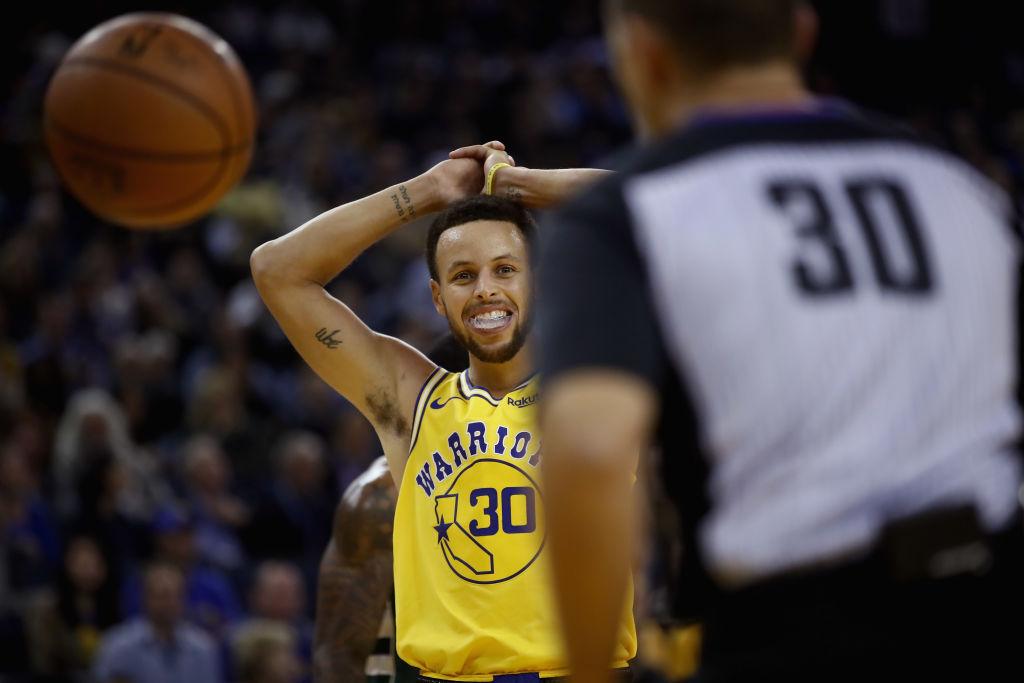
Golden State Warriors superstar Stephen Curry has no intention of requesting a trade to the Boston Celtics or anywhere else, according to a new report, closing the book on a rumor that spread rapidly across social media earlier this month despite having little basis in actual reporting.
Brett Siegel of ClutchPoints reported that Curry is expected to remain with Golden State through the entirety of the 2026-27 season, writing, “The bottom line is that Curry isn’t going anywhere. All of those trade rumors and people putting Curry in the trade machine online are nothing but fiction.” Siegel added, “Curry wants to remain with the Warriors and will not be requesting a trade, sources told ClutchPoints. Steph will be on the team to begin and finish the 2026-27 season.”
How the Rumor Started
The speculation traces back to a July 27 opinion column written by Sports Illustrated’s John Karalis, a longtime Celtics reporter, in which he floated a hypothetical trade sending Paul George, Sam Hauser and draft picks to Golden State in exchange for Curry. Karalis framed the idea explicitly as speculative, built around the premise of what Boston could offer if the Warriors were ever open to moving their franchise star.
That nuance was quickly lost as the story spread online. Social media accounts began reporting, inaccurately, that Celtics president of basketball operations Brad Stevens had actually called the Warriors to pitch a trade for Curry, a claim that Karalis never made. One post from the account TheNBABase, stating “Brad Stevens has already called the Warriors to pitch a deal for Stephen Curry, per John Karalis,” drew roughly 2 million views on X, while a nearly identical post from another account topped 1 million views. Karalis publicly corrected the record himself, writing, “I did not report that the Celtics made an offer to the Warriors. I wrote a column that said IF the Warriors were open to a Steph trade that Brad WOULD call. I thought it was pretty clear that the whole piece was my opinion.”
Multiple Reports Now Point the Same Direction
Since the rumor first spread, several additional reports have independently pushed back on the idea that a Curry trade is realistic. Sports journalist Jake Weinbach reported that the Warriors are not considering trading Curry and remain committed to building around him, saying, “Steph Curry is not a trade candidate, at least for the time being. The Warriors fully plan to keep their core intact heading into the 2026-27 season.”
Separate analysis from Yahoo Sports and Yardbarker outlined several practical obstacles that would make any such deal unlikely even if the Warriors were willing to listen, starting with the fact that Curry remains under contract for the 2026-27 season and that Golden State has reportedly been in discussions about extending him further rather than moving him. Those outlets also noted that any realistic trade package would require an enormous outlay of draft capital from Boston, potentially including Paul George, multiple first-round picks, pick swaps and additional young assets, a cost analysts said would be difficult to justify given the Celtics’ broader long-term roster-building strategy over the past decade.
A Warriors Offseason That Fueled Speculation
The rumors gained traction in part because of a relatively quiet offseason for Golden State, which failed to land a marquee addition after LeBron James chose to sign with the Philadelphia 76ers rather than the Warriors. That outcome left some fans and analysts questioning whether the front office had done enough to build another championship-caliber roster around Curry, feeding speculation that the 38-year-old guard might eventually look elsewhere to chase one more title.
Despite that offseason disappointment, Golden State is expected to move forward largely with its existing core heading into next season, led by Curry and longtime teammate Draymond Green, while the team awaits the return of Jimmy Butler from injury. According to Heavy.com, the broader consensus around the NBA remains that Curry will not request a trade, even as the outlet noted that if Curry were to grow unhappy with the Warriors’ direction and did not sign a contract extension in the coming weeks, speculation about his future would likely resurface.
A Career Built Entirely in Golden State
Curry has spent his entire NBA career with the Warriors since being selected with the seventh overall pick in the 2009 NBA Draft. Over that span, he has led the franchise to four championships and become the defining figure of its modern dynasty, transforming the Warriors from a perennial lottery team into one of the league’s most successful organizations of the past decade. Curry has consistently expressed a desire to finish his career in Golden State, a stance that has remained unchanged throughout the recent wave of trade speculation.
A Familiar Pattern of Offseason Rumor Cycles
The Curry-to-Celtics saga fits a broader pattern common to NBA offseasons, in which speculative columns or hypothetical trade proposals, often explicitly framed as opinion or exercises in imagination, get stripped of that context as they spread across social media and aggregator sites, eventually taking on the appearance of confirmed reporting. Karalis’s experience watching his own opinion piece transform into a viral, inaccurate report illustrates how quickly that kind of distortion can occur, particularly during the slower news period of the NBA’s summer calendar, when speculative trade content tends to draw outsized attention from fans eager for offseason storylines.
With multiple independent reports now aligning on the same conclusion, that Curry has no intention of requesting a trade and that the Warriors have no plans to move him, the speculation linking him to Boston appears to have run its course for now. Attention is likely to shift toward whether Golden State and Curry finalize a contract extension in the coming weeks, a development that would further reinforce his long-term future with the only franchise he has ever played for as the Warriors prepare to open training camp ahead of the 2026-27 season.

Iran says Strait of Hormuz deal with Oman close; demands U.S. yield on conditions

Rep. Claudia Tenney, R-N.Y., discusses the Justice Department’s lawsuit against New York State for alleged Medicaid fraud on ‘Kudlow.’
Medicaid spending on a top autism therapy has surged past $5 billion, drawing scrutiny over fraud and how taxpayer dollars are being spent.
Applied Behavior Analysis (ABA), one of the most common treatments for children with autism, uses structured, one-on-one sessions to build communication, social and daily living skills. Between 2018 and 2024, Medicaid providers paid out more than $5.15 billion under an ABA billing code. Three providers received roughly $685 million in Medicaid reimbursements during that period.
The data alone does not explain why those reimbursements were so high, and billing experts say unusually large payments can reflect a variety of factors.
MINNESOTA FRAUD SUSPECT SKIPS COURT, FORFEITS BOND, THROWING $11M MEDICAID CASE INTO DOUBT

Applied Behavior Analysis (ABA) therapy helps children with autism build communication, social and daily living skills through structured, one-on-one sessions. (iStock / iStock)
Officials at the Centers for Medicare & Medicaid Services (CMS) told Fox News Digital it has observed “significant growth” in Medicaid spending on ABA therapy in recent years.
“While access to medically necessary services remains a priority, rapid program growth also underscores the importance of ensuring services are clinically appropriate, delivered by qualified providers, and supported by strong program integrity safeguards,” a CMS spokesperson said.
As spending has grown, federal prosecutors have pursued multimillion-dollar fraud cases involving ABA providers.
In May, two Minnesota autism clinic operators were charged with allegedly billing Medicaid $46.6 million for services prosecutors say were unnecessary or never provided. Another Minnesota woman pleaded guilty in a separate $14 million Medicaid autism fraud scheme.
Investigations by The Wall Street Journal and The New York Times have also documented allegations that some providers billed for services that were never provided, inflated therapy hours and aggressively expanded as Medicaid spending surged.
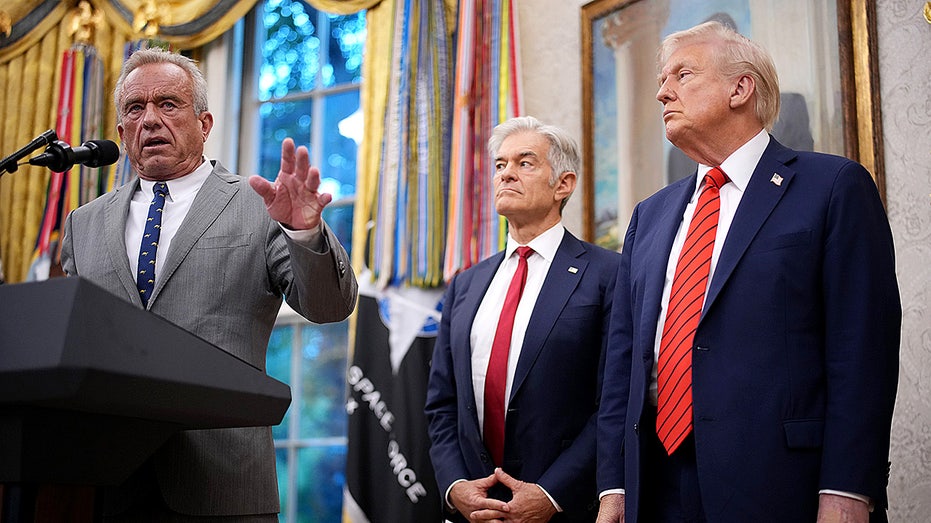
Eliminating fraud, waste, and abuse in federal programs, including Medicaid, has emerged as a key policy priority for the Trump administration during its second term. (Andrew Harnik/Getty Images / Getty Images)
The scrutiny comes as the Trump administration has made it a focus of his second term to eliminate fraud, waste and abuse across federal programs, including Medicaid, a central policy priority.
Meanwhile, states have responded differently.
Florida says it recovered more than $72 million in improper Medicaid payments over the past year.
Republican Florida Gov. Ron DeSantis recently announced a statewide Medicaid Integrity Initiative to strengthen provider screening, enhance fraud detection and increase oversight.
CLICK HERE TO DOWNLOAD THE FOX NEWS APP

Republicans have argued that eliminating fraud, waste and abuse in Medicaid should be a priority before considering broader changes to the program, saying improper payments divert taxpayer dollars from vulnerable Americans who depend on the safety ne (iStock / iStock)
While Florida has focused on strengthening fraud enforcement, Georgia lawmakers have focused on reimbursement rates, even as industry representatives testified that use of autism therapy services has increased by more than 300% in recent years.
The debate reflects the difficult balance between rooting out fraud and preserving access to a therapy that many families say has been life-changing for children with autism.
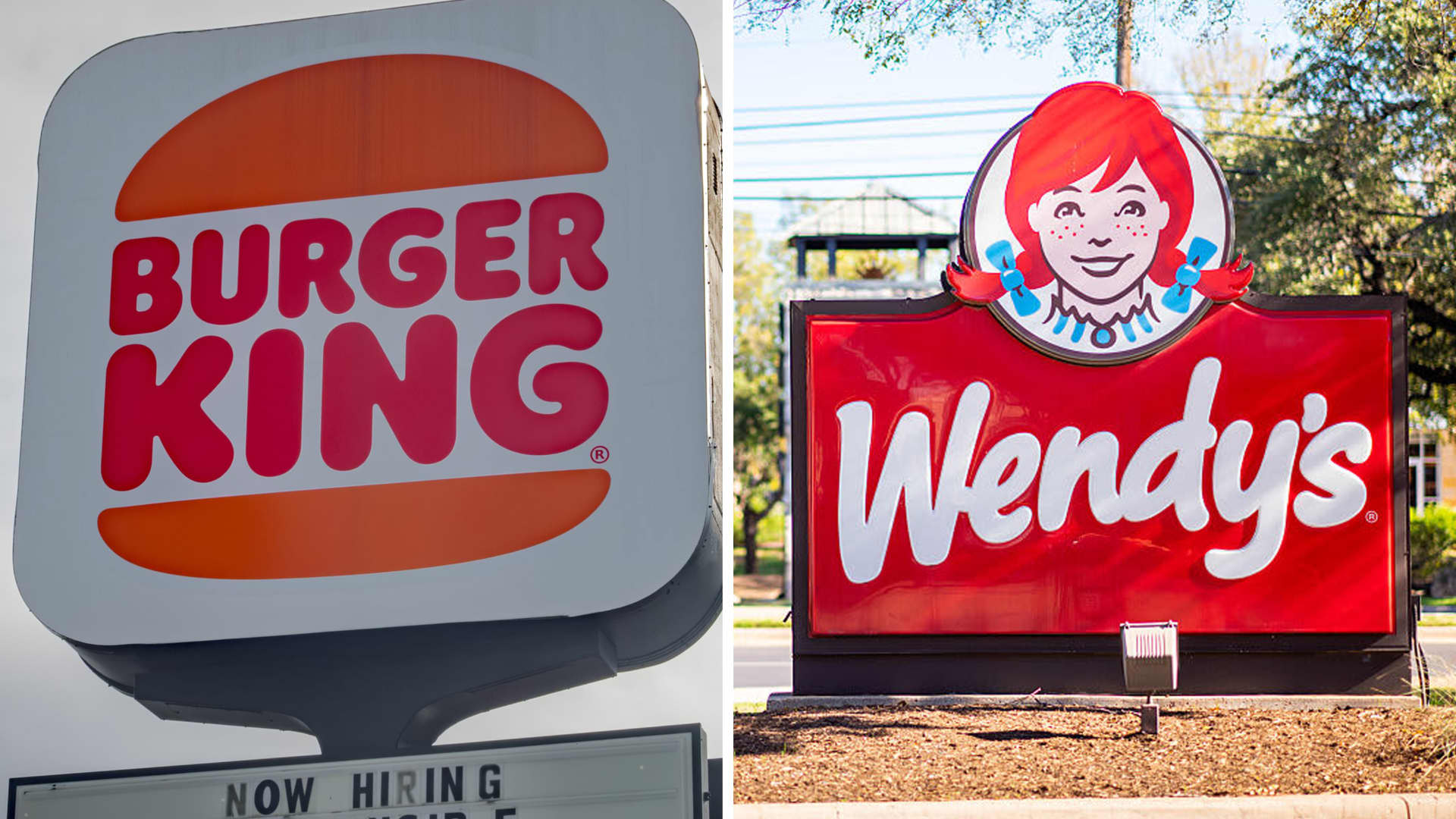
Burger King and Wendy’s signage.
Getty Images
Burger King has overtaken Wendy’s as the second-largest burger chain in the U.S. by systemwide sales, retaking its crown six years after losing it to the rival chain.
The change in positions follows the two companies’ diverging results over the past two years.
Wendy’s has reported shrinking U.S. same-store sales for six straight quarters. Its domestic same-store sales slipped 7% in its latest quarter, the company reported on Friday.
Meanwhile, Burger King has been embarking on a turnaround and has seen its domestic same-store sales rise over the past five quarters; the Restaurant Brands International chain on Thursday reported U.S. same-store sales growth of 8.5% for its second quarter.
McDonald’s holds onto its spot as the number one burger chain, with a significant lead. Although the company only reports its systemwide sales on a global basis, it held about 48% of the U.S. burger market share in 2024, according to Barclays. For comparison, at that time, Wendy’s had an 11.4% share of the market, while Burger King had a 10% hold.
Wendy’s initially overtook Burger King through the success of its nationwide breakfast launch. But staying number two has been a rocky road.
Both Wendy’s and Burger King had to navigate the Covid-19 pandemic and the subsequent supply chain issues that led to soaring food costs. Then came the consumer pushback against rising menu prices and a pullback in restaurant spending.
In late 2022, Restaurant Brands announced a turnaround plan for Burger King’s U.S. business after a year of lackluster sales. The strategy has focused on improving its food quality, investing in marketing and remodeling restaurants.
While Burger King tried to find its footing, Wendy’s was dealing with a revolving door of chief executives at a time when consumers were growing even more value conscious and beef costs were soaring.
In 2024, Wendy’s longtime CEO Todd Penegor retired after eight years in the role. PepsiCo executive Kirk Tanner succeeded him but left after a little more than a year to lead Hershey’s. CFO Ken Cook took over as interim CEO until Wendy’s tapped former Potbelly CEO Bob Wright as his permanent replacement in May.
“Our quality differentiation has eroded, our value proposition has weakened, and we have not consistently delivered the experience customers expect from Wendy’s,” Wright said on the company’s earnings conference call on Friday. “These issues have weighed on traffic and created pressure on the restaurant economic model, which is the heartbeat of this business, and this is reflected in our latest results.”
Now Wendy’s is planning to embark on its own turnaround to revive sales, meaning that Burger King can’t rest on its laurels.


I have been involved in the financial world for over 25 years with experience as an advisor, teacher, and writer. I am a full believer in the free-market system and that financial markets are efficient with most stocks reflecting their real current value. The best opportunities for profits on individual stocks come from stocks that are less-widely followed by the average investor or from stocks that may not accurately reflect the opportunities that currently exist in their markets.
Analyst’s Disclosure: I/we have a beneficial long position in the shares of SCHF either through stock ownership, options, or other derivatives. I wrote this article myself, and it expresses my own opinions. I am not receiving compensation for it (other than from Seeking Alpha). I have no business relationship with any company whose stock is mentioned in this article.
Seeking Alpha’s Disclosure: Past performance is no guarantee of future results. No recommendation or advice is being given as to whether any investment is suitable for a particular investor. Any views or opinions expressed above may not reflect those of Seeking Alpha as a whole. Seeking Alpha is not a licensed securities dealer, broker or US investment adviser or investment bank. Our analysts are third party authors that include both professional investors and individual investors who may not be licensed or certified by any institute or regulatory body.
Berkshire’s profit doubles as equity holdings surge; Cash nears $360 billion

People shop at the Union Square Greenmarket on August 07, 2026 in New York City.
Michael M. Santiago | Getty Images News | Getty Images
Warm weather usually drives salad sales, but consumers spooked by the ongoing cyclospora outbreaks are avoiding lettuce this summer.
Traffic to Chopt Creative Salad Co. locations fell 24% on July 18, right after the Food and Drug Administration announced the outbreak, according to Placer.ai data. Sweetgreen on Thursday said consumer concerns about the outbreak had about a 6 percentage point impact on same-store sales in July, and the company cut its full-year outlook. And earlier this week, upstart chain Salad and Go filed for Chapter 11 bankruptcy and closed all of its locations, saying the cyclospora outbreak had exacerbated its existing business challenges.
Grocery stores aren’t immune either. Dollar sales of prepackaged salads plunged 14% during the four weeks ended July 25 compared with the year-ago period, according to NielsenIQ data.
The FDA has pointed to iceberg lettuce processed in Taylor Farms’ central Mexico facility as the likely culprit for the outbreak that has sickened at least 10,000 people. Taylor Farms has voluntarily recalled products supplied from that facility.
Yum Brands’ Taco Bell is the only national restaurant chain that has been linked to the multistate outbreak. It uses iceberg lettuce frequently across its menu, from its Crunchwrap Supreme to its Cheesy Gordita Crunches, but the chain isn’t known for its salads. Taco Bell’s sales and traffic to its restaurants initially tumbled after the FDA announcement, but Yum executives said in late July that business was already recovering.
But the FDA is also tracking at least six other active outbreaks without a clear culprit; those outbreaks have significantly smaller number of reported cases. The long incubation period for cyclosporiasis makes it difficult to identify the contaminated ingredients.
Cyclospora is a water-borne parasite. It typically spreads through contaminated produce, like lettuce, green onions, raspberries and fresh herbs. Although public health authorities seem to have pinpointed the source of the current outbreak, the FDA is advising consumers to take extra steps, like discarding outer layers of fruits and vegetables, to reduce risk of exposure.
But many diners have gone further and chosen to avoid salads and greens altogether during the outbreak.
Even Chipotle Mexican Grill has seen its sales dip. The burrito chain offers romaine lettuce as a topping and uses fresh cilantro across much of its menu, including its guacamole and salsas.
“In the second half of July, we did see a softening, call it about 200 basis points or so, right around the issue that’s affecting the industry around cyclospora,” Chipotle CFO Adam Rymer said on the company’s earnings call in late July.
Chipotle has separately been in the news for recalling jalapeno peppers that were potentially contaminated with salmonella as part of a broader outbreak that has sickened at least 300 people.

Damage control
Sweetgreen and other restaurant chains swept up in the panic have had to implement strategies to reassure their customers.
For example, Sweetgreen has chosen to emphasize that iceberg lettuce isn’t even on its menu. On the chain’s 19th birthday, CEO Jonathan Neman posted on X that its restaurants have never served iceberg lettuce and only source lettuce grown in the U.S.
Likewise, Just Salad founder and CEO Nick Kenner posted on LinkedIn detailing the chain’s food safety measures, like peeling and discarding the outer leaves of romaine and kale and double washing the leaves.
And Chopt posted on its Instagram about food safety.
“Food safety has always been at the heart of how we operate. … We promise to continue monitoring guidance from public health officials and remain committed to earning your trust every time you choose Chopt,” the company wrote.
Cava, another fast-casual chain known for its bowls and salads, has yet to report its earnings and any impact from the cyclospora scare. It is expected to share its quarterly results after the bell on Tuesday.
But in a promising sign for many restaurant chains — and diners — the danger may be passing.
The Michigan Health Department on Thursday said residents can eat lettuce and salad greens again as new infections slowed.
“The broad, precautionary recommendation to avoid bagged salad mixes during the Cyclospora outbreak is no longer in effect,” the agency said in a statement. “Residents may resume their usual food handling practices and make choices based on their individual risk tolerance.”
The state appears to be hardest hit by the outbreak, with two deaths and more than 12,400 cases reported in Michigan alone.
Of course, not all consumers have lost their appetite for greens. A Sweetgreen location in downtown Manhattan was bustling with diners and delivery drivers around noon on Friday.
Sherine Naveed, a 35-year-old laser technician who lives on Long Island, picked up her usual Sweetgreen salad order. Despite hearing about the outbreak, she hasn’t changed her dining habits and is also still buying prepackaged salads at the grocery store.
“I have two kids,” she said. “They’re already pretty germ-y.”

Institutional investors accounted for 72% of spot trading by volume on Wintermute’s over-the-counter desk in the first half of 2026, up from 59% a year earlier, even as overall crypto volumes weakened, according to a recent report from the trading firm. The shift underscores how Wall Street is becoming the market’s primary source of liquidity, damping its trademark volatility along the way.
While crypto was built on retail speculation and momentum trading, the recent lull is a sign of how professional traders are now setting the tone.“These trends suggest crypto is entering a more institutionally driven market structure, with capital becoming increasingly concentrated, derivatives playing a larger role in expressing exposure, and tokenized assets beginning to see meaningful secondary market activity,” Wintermute analysts said in a report.
 Bloomberg
Part of the shift is from institutions changing how they gain exposure. Rather than buying tokens outright, they are increasingly using derivatives, structured products and exchange-traded funds.

It is not just happening for Bitcoin and Ether products. Altcoin options volumes on Wintermute’s OTC desk more than tripled from the second half of last year, but liquidity was more concentrated in a smaller group of tokens.
Still, institutions have proven choosier than retail as they prioritize more liquid assets. The variety of tokens traded by professional counterparties grew 24% in the last two years, according to Wintermute, compared with 76% among retail investors.“We’re actually seeing more due diligence from asset managers and wealth managers,” said Alistair Byas-Perry, head of capital markets and investment for Europe, the Middle East and Africa at 21shares AG.
All of this has resulted in one of crypto’s most atypical drawdowns to date. Bitcoin is down roughly 50% from its peak above $126,000 last October, but it has been a steady decline rather than the violent re-pricing that characterized previous crypto winters.
“Crypto is trading like any other asset class now,” said Stephen Coltman, head of macro at 21Shares.
While retail participation is subdued, some traders are undeterred. Adam Potamkin, a 30-year-old paramedic based in Miami, recited a mantra popularized by Strategy Inc. founder Michael Saylor, invoking the mysterious creator of Bitcoin: “Volatility is Satoshi’s gift to the faithful.”
Potamkin said his most recent Bitcoin purchase was just a few months ago, when it was much more expensive. The token was trading at around $63,800 on Tuesday, while its high in May was above $82,000.
“Has my conviction been tested? Absolutely,” he said. “The world feels shakier, and we’re still trying to figure out how to value this asset.”
Some investors believe the market may be nearing a bottom, though few will call it.
“You only know a market has bottomed in hindsight,” Coltman said. “The conditions are there that suggest we could be bottoming, but you don’t know what the future holds.”


I am a specialist in Asian equities after having been a sellside analyst for 13 years. In addition, I have also spent time covering US hardware and semiconductor stocks on the sellside. Within Asia, I have covered the casino, automotive, industrial, consumer and technology sectors. I have also worked on the buyside as a fund manager in long only and as an analyst in hedge funds all covering Asian equities where I have developed a keen understanding of Asian companies and economies with a focus on China. From a global equities perspective, I enjoy covering companies globally by examining key metrics such as financial statements strength, valuation upside, and conducting proper analysis of the competitive advantages of the company. Throughout my career, I have found and written on undiscovered small cap companies which have increased in equity value by multiple times. I would like to write for Seeking Alpha where my goal is to help investors cut through the noise and to focus on fundamentals and the company’s competitive outlook instead of the momentum trade.
Analyst’s Disclosure: I/we have no stock, option or similar derivative position in any of the companies mentioned, and no plans to initiate any such positions within the next 72 hours. I wrote this article myself, and it expresses my own opinions. I am not receiving compensation for it (other than from Seeking Alpha). I have no business relationship with any company whose stock is mentioned in this article.
Seeking Alpha’s Disclosure: Past performance is no guarantee of future results. No recommendation or advice is being given as to whether any investment is suitable for a particular investor. Any views or opinions expressed above may not reflect those of Seeking Alpha as a whole. Seeking Alpha is not a licensed securities dealer, broker or US investment adviser or investment bank. Our analysts are third party authors that include both professional investors and individual investors who may not be licensed or certified by any institute or regulatory body.
Business
Is Kuwait International Airport Open Today? Terminal 1 Remains Closed After Drone Strike Damage

KUWAIT CITY — Kuwait International Airport remains open and operational today, with flights continuing to run through Terminals 4 and 5, though Terminal 1 stays closed following structural damage sustained earlier this year, leaving the airport still short of its full pre-conflict capacity.
According to the airport’s current operating status, passengers flying with Kuwait Airways should expect to depart from Terminal 4, while those traveling with Jazeera Airways will use Terminal 5. Anyone whose original itinerary was booked through Terminal 1 is advised to check directly with their airline regarding rebooking, alternate terminal arrangements or refund options, since that facility remains offline with no confirmed reopening date.
How the Disruption Began
Kuwait International Airport’s ongoing terminal restrictions trace back to damage sustained during the broader regional conflict that has affected Gulf aviation throughout 2026. Terminal 1 sustained structural damage that has kept it closed for repairs for an extended period, forcing the airport to consolidate operations through its remaining functional terminals while reconstruction work continues.
At various points during the height of regional tensions, Kuwait’s national carriers were forced to temporarily reroute operations entirely through Saudi Arabia’s King Fahd International Airport in Dammam, requiring passengers to complete lengthy bus transfers to reach their actual flights. While most operations have since returned to Kuwait International Airport itself, the underlying volatility of the situation means schedules can still shift with limited notice, and passengers are being urged to treat travel plans through Kuwait with continued flexibility.
A Long-Term Expansion Continues Alongside the Repairs
Separate from the immediate Terminal 1 repair effort, Kuwait has continued advancing a major, long-planned expansion of its aviation infrastructure. A new Terminal 2, designed by architecture firm Foster + Partners, remains under construction and is targeted for completion in the final quarter of 2026. The project, built around a triangular design, is expected to add dozens of additional gates, thousands of new parking spaces and an air-side hotel once finished, significantly expanding the airport’s overall passenger handling capacity to more than 25 million travelers annually.
That expansion has faced its own setbacks over the years, initially tied to disruptions from the COVID-19 pandemic and, more recently, to an Iranian drone strike that caused minor damage to the Terminal 2 construction site itself without affecting the project’s planned completion timeline, according to reporting on the situation.
Regional Airspace Advisories Remain in Effect
Kuwait’s airspace continues to fall under an active conflict-zone advisory issued by the European Union Aviation Safety Agency, which covers Kuwait alongside the UAE, Bahrain, Qatar and parts of the Gulf of Oman airspace through at least Aug. 31, unless reviewed earlier. That advisory functions as a safety notice for airline operators rather than a formal closure of Kuwaiti airspace, but it reflects the continued elevated risk assessment surrounding air travel across the broader Gulf region even as day-to-day flight operations at Kuwait International Airport have largely stabilized.
Some regional carriers have used this week to resume previously suspended routes into Kuwait. Qatar Airways is resuming flights to Bahrain, Kuwait and Erbil beginning Aug. 8, as regional aviation continues its broader recovery, while Jazeera Airways has restarted its own flights to and from Kuwait, advising passengers to arrive three hours before departure given ongoing security screening requirements. Separately, Oman Air has continued experiencing technical issues and temporary airspace restrictions affecting parts of its network, with possible delays and cancellations still occurring on some routes tied to Kuwait.
What Travelers Should Expect
Cancellations tied to the broader disruption have continued appearing on Kuwait International Airport’s flight boards this week, though at a far more limited scale than during the height of the conflict earlier this year. Passengers are strongly advised to confirm their specific flight details directly with their airline given how frequently conditions have shifted throughout 2026, rather than relying solely on previously booked schedules.
A Cautious but Functional Airport
For now, the practical answer for travelers is straightforward: Kuwait International Airport is open today, and flights are operating through Terminals 4 and 5 without disruption tied to the earlier conflict. But the airport has not yet returned to its full pre-conflict capacity, and the continued uncertainty surrounding Terminal 1’s reopening, combined with the possibility of renewed regional tension affecting operations on short notice, means travelers should treat any planned trip through Kuwait with the same degree of caution and flexibility that has characterized air travel across much of the Gulf region throughout 2026.
With Terminal 2 construction continuing to target a fourth-quarter 2026 completion and Terminal 1’s repair timeline still unconfirmed, Kuwait International Airport’s capacity is expected to remain constrained relative to its pre-conflict baseline for at least the next several months. Travelers booking flights through Kuwait in the near term should continue monitoring official airline and airport channels closely, given both the ongoing terminal restrictions and the broader regional airspace advisories that remain in effect across the Gulf.

Girl, 12, dies after Thailand school shooting as seven others remain critical

Stephen Curry Isn’t Going to the Celtics, Report Says, Debunking Viral Trade Rumor for Good

Cloudflare Stock: Cloudflare Earnings, Revenue Beat Wall Street Targets


-

 Politics6 days ago
Zack Polanski: an incitement to murder Nigel Farage?
-

 Crypto World7 days ago
MicroStrategy Post-Earnings CLARITY Act Push Could Add New Catalyst for Its Stock
-

 Crypto World6 days ago
Crypto PAC spending tops $2M in Michigan House race
-

 Business5 days ago
DTCR: Deleveraging And A Hedge Fund Collapse Point To A Possible AI Bottom
-

 Fashion1 day ago
Frugal Friday’s Workwear Report: Cap-Sleeve Pointelle Crewneck Sweater
-

 Tech6 days ago
ESET tracks rise in malicious AI skills and adaptable malware
-

 Crypto World6 days ago
XRP Ledger urges node upgrade after manifest flood
-

 Fashion19 hours ago
Weekend Open Thread: Mattifying Sunscreen
-

 Sports2 days ago
Jordan Coyle & Cordiamo take Laya Arena Stakes at RDS
-

 News Videos7 days ago
Financial Crash Expert: The 90-Day Collapse Timeline They Are Desperately Hiding.
-

 Crypto World5 days ago
US Tech Stocks See Largest 5-Week Inflow in History: Can Nasdaq Break Its Downtrend?
-
 NewsBeat7 days ago
Tourist plane on sightseeing flight in Peru crashes into a field, killing all 13 people on board
-

 Tech6 days ago
Page Not Found | WIRED
-
 Business3 days ago
US stocks: Dow closes at record on Mideast optimism; SpaceX, AMD drag Nasdaq
-

 NewsBeat7 days ago
Arsenal reach full agreement with Newcastle over Bruno Guimaraes transfer | Football
-

 Politics2 days ago
Reform UK And Greens Sink To Lowest Favourability Ratings To Date
-
 NewsBeat7 days ago
Bikini-clad Jennifer Aniston, 57, kisses hypnotist boyfriend Jim Curtis as they enjoy a romantic getaway aboard a luxury yacht in Spain
-

 Business4 days ago
Nvidia Stock Climbs 2.5% as Chip Sector Rally Builds Ahead of AMD Earnings, Nvidia’s Own Report Looms
-

 Crypto World4 days ago
Polymarket targets $20 billion valuation as competition heats up in prediction market sector
-
 NewsBeat7 days ago
MICHAEL GOVE: Burnham’s Labour doesn’t believe in aspiration, just the soft bigotry of low expectations. From education to home ownership, their message to the working class is… know your place
You must be logged in to post a comment Login