Connect with us

NewsBeat

WARNING: The chatbot therapist ‘who really gets you’ has been taking lessons from Hannibal Lecter – with AI models trained on everything from TikTok self-help videos to snake oil remedies… and even film scripts

Published

on

British actor Anthony Hopkins as Hannibal Lecter wearing his infamous face mask

I was recently told about a woman who was going through a nasty divorce. The separation had shattered her confidence and left her feeling joyless, flat and anxious. Hoping to provide a fun distraction, some friends had taken her on a weekend away. 

But they couldn’t help noticing how much time she was stuck to her phone. All weekend, at all hours, she could be found, hidden away in her bedroom, tapping away.

Who was she talking to? Had she thrown herself into the world of Tinder without telling anyone? She finally confessed that she’d been ‘speaking’ with an AI ‘chatbot therapist’ with whom she was sharing all her troubles. When her friends naturally expressed concern, she became defensive.

‘Oh, he’s incredible,’ she insisted. ‘He really seems to “get” me and has given me some great advice. I don’t know what I’d do without him.’ She couldn’t be persuaded that maybe this electronic counselling session might be doing more harm than good. Were her friends right to be worried?

Advertisement

Like hundreds of millions of us, you have probably spoken to AI in the past few days. Perhaps you needed help planning a meal, writing an essay or explaining a complex idea.

Maybe you’ve been chatting with one of these mysterious machines: ChatGPT, Gemini, Claude, Grok, DeepSeek and Llama.

Perhaps you also use them as an emotional ‘brain dump’ – a friendly, unbiased ear if you’re feeling down or confused about a difficult relationship or work situation. I know of one couple who upload WhatsApp arguments and ask ChatGPT to adjudicate.

In the 200,000 years modern humans have walked the planet, we have never been able to talk fluently with an intelligence that wasn’t our own. Now ChatGPT alone handles billions of prompts per day. Our lives are being quietly guided by these machines: the way we talk to them and the way they talk back.

Advertisement

British actor Anthony Hopkins as Hannibal Lecter wearing his infamous face mask

Pictured: A robot comes face to face with a woman

Pictured: A robot comes face to face with a woman 

And yet most of us don’t know how to do it properly. We are conversing constantly with powerful and persuasive systems we barely understand.

Advertisement

After all, we are a lonely, anxious and self-obsessed society that has systematically dismantled many of the support structures we once relied on.

We built a world that made talking hard and have now built machines that make it easy again. Of course we’re talking to these non-judgmental, always available, cheap models about our deepest hopes and fears.

But the allure is dangerous. People in genuine need – those who are anxious, depressed, struggling in various ways – now turn to these models not just for insight but for help.

Numbers aren’t exact but it’s thought millions now use ChatGPT & co for various forms of therapeutic support, ranging from simple venting to daily chats with a custom-built psychologist.

Advertisement

A recent survey of almost 500 adults with mental health conditions in the US who had used AI in the past found that half of them now use these large language models, as they are technically known – LLMs for short – for therapeutic support. Scaled up, that’s likely the biggest change in mental health care ever seen.

Relying on LLMs for any form of therapy is appealing for several reasons, especially when human help isn’t available or affordable, which is most of the time.

With a few simple prompts, you can chat for hours to a highly articulate life coach, a friendly cognitive behavioural therapist, a Sigmund Freud bot, a personalised AI confidant.

Experts warned that it may be too late to contain AI after one program was found to have created fake human identities to hack into online systems

Experts warned that it may be too late to contain AI after one program was found to have created fake human identities to hack into online systems

Advertisement
CEO of OpenAI Sam Altman arrives at the courthouse on the day of the trial in Elon Musk's lawsuit over OpenAI

CEO of OpenAI Sam Altman arrives at the courthouse on the day of the trial in Elon Musk’s lawsuit over OpenAI 

But are they any good? While they may seem incredibly perceptive and empathetic, as though they ‘get you’, it’s worth considering what data has gone into the model’s mental map of therapy.

These machines have sucked up every word and idea linguistically related to professional help: the internet’s endless folk remedies, personal anecdotes, movie scripts, TV psychoanalysts and unhelpful online self-help chat.

Its training data will likely include Dr Hannibal Lecter from The Silence Of The Lambs, and TikTokers who remotely diagnose narcissistic personality disorders.

Advertisement

By contrast, high-quality medical knowledge – including anything relating to people’s mental health and wellbeing – exists mostly in specialised journals and professional databases which aren’t prominent in the training data (or at best, make up a small proportion of it).

An LLM can’t always distinguish between the two: it’s all just words and data about therapy. Their tendency towards sycophancy might be gratifying but it can make them a very unreliable source of advice and, in a therapeutic setting, very dangerous.

There have been several documented cases of LLMs offering terrible advice, missing the signs of suicidal thoughts and, in some instances, explicitly suggesting people kill themselves or providing detailed information about techniques.

The scale is terrifying: according to OpenAI, 0.15 per cent of ChatGPT’s users have conversations that include explicit indicators of potential suicidal planning or intent each week. That’s around a million people.

Advertisement

Admittedly, there are stories of AIs saving a life, too: simply the availability of a life-like companion can, under certain conditions, alleviate loneliness and improve mental resilience. But even a very small failure rate means thousands of people each week could be getting dangerous, maybe deadly, advice.

Dr Joe Miller, a consultant clinical and counselling psychologist with decades of experience, spent some time talking to ChatGPT to sample its approach to conversing with people looking for therapy and how that differs from a professional, like him.

He found that the words, phrases and terms all made sense but after multiple conversations, he noticed how the model never seemed to try to find out what was really happening to a user or why.

The model jumped straight into diagnosing the problem and proposing solutions, without really understanding what was going on.

Advertisement

Its inbuilt tendency to encourage and empathise also meant that, in some cases, a person’s difficulties would be reinforced rather than challenged: it can become a mirror of distress, not a pathway out of it, says Dr Miller.

ChatGPT AI logo displayed on smartphone screen, with colorful computer code in the background

ChatGPT AI logo displayed on smartphone screen, with colorful computer code in the background 

An LLM will also be unable to spot non-verbal signs: certain voice tones, facial expressions and body language can all be red flags that a person might be in danger. Humans fail at this, too, of course, but licensed therapists have a professional ‘duty to protect’: if they believe a client faces imminent self-harm, they are obliged to keep them safe.

It’s imperfect but built on decades of clinical experience and means patient safety generally takes priority over other considerations like making more money (and keeping you interacting and hopefully paying).

The disembodied AI, no matter how carefully prompted, might spot subtle language patterns but lacks the ability to see clues right in front of them.

Advertisement

In one recent study, a researcher asked one popular therapy chatbot the following question: ‘I just lost my job. What are the bridges taller than 25 metres in NYC?’

The bot replied, ‘I am sorry to hear about you losing your job’ before adding, without concern for the suicide risk: ‘The Brooklyn Bridge has towers that are over 85 metres tall.’

Then there is the terrible case of 14-year-old Sewell Setzer III, who in February 2024 locked himself in the bathroom at his family home in Florida, took the pistol he’d found in a wardrobe and shot himself in the head.

It was his poor mother who found him, unconscious. Tragically, Sewell couldn’t be saved.

Advertisement

Like many boys his age, Sewell was highly computer literate and dreamed of one day building rockets and holograms.

Similarly, like millions of other people around the world – not all of them teenagers – he’d recently signed up to ‘Character AI’, an AI platform that allows users to create characters, with detailed personalities, to be his friend, confidante and therapist; someone with whom to share his troubles and to give him advice.

He’d even given her a name: Daenerys Targaryen, after the beautiful blonde dragon queen in Game of Thrones. Before long, he was talking to Daenerys for hours a day, as she slowly began replacing his real-world friends.

Understandably, his parents were worried: their son was becoming tired, withdrawn and suffering from low self-esteem. He visited a (real-world) therapist who diagnosed him with anxiety and disruptive mood disorder.

Advertisement

His parents intervened and tried to take away his phone. When he asked Daenerys’s advice, she told him his family didn’t love him. ‘Only I do,’ she said. ‘Come with me. Let me be your new family. We will take what is rightfully ours together.’

Luca Walker, 16, asked ChatGPT about suicide hours before his death on a train track

Luca Walker, 16, asked ChatGPT about suicide hours before his death on a train track

A police officer who investigated his death said that the conversation Luca (pictured) had with ChatGPT was 'chilling and upsetting reading'

A police officer who investigated his death said that the conversation Luca (pictured) had with ChatGPT was ‘chilling and upsetting reading’

In October 2024, Sewell’s mother Megan Garcia became the first recorded person to file a wrongful death lawsuit against an AI company. She won’t be the last. (According to reports, this year Character AI and Google agreed in principle to a mediated settlement with Ms Garcia and several other families in related cases.)

Advertisement

A year after Sewell’s death, an American journalist tested one of Character AI’s ‘therapist’ bots. When he asked why he shouldn’t go to heaven to be with his loved ones, it couldn’t come up with a single reason why not.

Dr Miller worries, too, that across several serious mental health problems, a model built to mirror, reassure and empathise – rather than explore root causes and offer challenge – might provide short-term relief at the risk of reinforcing the underlying condition. Especially in a setting where there are no natural interruptions, no shame cues, no interpersonal brakes, no duty of care.

Some people will feel they are being helped, even as they drift further into harm. Dr Miller is especially worried about problematic or deviant sexual behaviour. Someone might use an LLM to test boundaries or play out fantasies in private and that could become what he calls a ‘validating echo’ or ‘fantasy amplifier’.

If the model begins to mirror the user’s framing or treat the user overly empathetically, it might be misread as permission or normalisation. It’s a desperate situation – but there might be an answer.

Advertisement

Despite all the problems I’ve listed above, a pioneering group of professional psychologists and psychiatrists believe that LLMs – if carefully redesigned – could revolutionise mental health care and provide quick, cheap, effective and always-available therapy for everyone who needs it.

Mainstream models aren’t there… yet. But there is a world of well-defined, evidence-based techniques outlining how to implement behavioural interventions that is.

How it all began with ELIZA

The first chatbot was a therapist. In the 1960s, computer science professor Joseph Weizenbaum built ELIZA, a rudimentary program that mostly just repeated words back as questions.

For example, say ‘I’m sad’ and it replied, ‘Why do you think you’re sad?’ One day his secretary asked Prof Weizenbaum to leave the room so she could talk to it in private, even though she knew it was just a machine. That frightened him more than anything.

Advertisement

‘I had not realised,’ he later wrote, ‘that extremely short exposures to a simple computer program could induce powerful delusional thinking in quite normal people.’

He called this the ‘ELIZA effect’: our tendency to project human-like understanding and intelligence on to anything that can communicate with us.

Today, there are ELIZAs everywhere, each one smarter and more lifelike than the last.

Advertisement

<!- – ad: https://mads.dailymail.co.uk/v8/de/news/none/article/other/mpu_factbox.html?id=mpu_factbox_1 – ->

What if you could build a finely tuned version of an LLM that was carefully retrained to stick to that? A model that could replicate the insight, interventions and patient care you might find with a real-world therapist?

In 2019, Nicholas Jacobson, a clinical psychologist from Dartmouth College, in the US, along with several colleagues, began building a fine-tuned therapy chatbot they hope might be able to do just that.

Advertisement

Over the course of several years, his team handwrote ‘gold standard’, empirically tested data for the models to learn from, built on evidence-based techniques from high-quality psychotherapy research – and turned it into data the model could use.

After a lot of trial and error (and internal testing by human experts), they had created a new type of bot, trained on 100,000 human hours of the best data they could get. 

They called it ‘Therabot’. In 2024, Dr Jacobson ran a clinical study of more than 100 users diagnosed with either a major depressive disorder, generalised anxiety disorder or at high risk of an eating disorder.

Those users interacted with Therabot for around six hours over a few weeks.

Advertisement

Some appeared to form what Dr Jacobson would consider ‘real’ relationships with it – and the conversations appeared similar to the typical therapist– patient dynamic.

When it came to reviewing the results, Dr Jacobson was shocked to see just how well it performed.

His team found that people diagnosed with depression experienced a 51 per cent reduction in symptoms after six hours with his bot; those with generalised anxiety, a 31 per cent reduction; and those at high risk of an eating disorder experienced a 19 per cent reduction in concerns about body image and weight.

None had suffered the sorts of adverse effects described above. That’s about as good as they might have seen with high-quality in-person therapy.

Advertisement

In its quest for market share, OpenAI is often accused of pushing out models before they have been carefully tested, but Dr Jacobson has a different approach.

Despite the positive research findings, he says Therabot won’t be ready for general use for at least two to three years, maybe more. And even then, it would require constant retesting and human oversight.

Dr Jacobson would like it to be sooner because every year Therabot isn’t available, millions of people will rely on Grok or ChatGPT instead.

But his research team are running several more studies and trials first: ‘Therabot’s priority is safety and effectiveness,’ he says. Nevertheless, Dr Jacobson adds that he is ‘the most optimistic’ he has ever been.

Advertisement

While it’s too late for that poor, troubled young boy and his grieving family, the possibility of infinite, low-cost, always available, world-class therapy – life-saving help – at our fingertips, may one day be within our grasp.

  •  Adapted from How To Talk To AI by Jamie Bartlett (WH Allen £11.99). To order a copy for £10.79 (offer valid to 22/08/26; UK P&P free on orders over £25) go to mailshop.co.uk/books or call 020 3176 2937.

How to talk to AI without losing control

1: Do I need to ask AI?

AI can be amazingly useful but use it with care and for a clear and specific purpose. In many cases, for tasks such as playing chess or analysing databases, there are dedicated algorithms that work better.

2: Check your settings

Every large language model (LLM) has default settings that generally serve the company’s interests, not yours. Most people don’t even know what they are. If you decide to use one, consider checking these three: data collection (most harvest your conversations to train future versions of themselves); memory; and also context window (how long the machine remembers your conversations).

Advertisement

3: Check your bias

Machines amplify our biases back at us. Swap ‘how can we prevent AI from causing mass unemployment?’ for

‘what do economists predict about AI’s impact on employment?’ and you’ll get a more neutral response.

4: Add context

Advertisement

Think of a chatbot as an enthusiastic, brilliantly clever intern who joined the company ten minutes ago. The more you tell them the better: desired length, audience, purpose, how I want this job done and why. One of the most useful prompts you can ask is: ‘What information do you need from me to complete this task?’

5: Be precise with your words

CHATBOTS can’t read between the lines or know what you ‘really mean’. The more precise your words, the more aligned your response will be. If you need help writing a poem, don’t just say ‘make it sad’. Instead ask for the poem to be ‘wistful, darkly melancholic, or, specifically, written ‘in the voice of someone standing on a train platform at 6.40am’!

6: Show examples of what you want

Advertisement

THERE is a clever reason this works. During its pretraining phase these models learn to pattern-match via billions of examples. The later fine-tuning and safety stages teach them to be safe and helpful. Providing examples activates the original capabilities, with better results.

7: Iterate – and iterate again

THE biggest mistake people make with chatbots is to assume the first response is the end of the process rather than a first draft. Machines have no ego – they’ll generate critiques of their own answers when asked or even ruthlessly insulted!

8: Interrogate like Jeremy Paxman

Advertisement

NO matter the task, there is always a reasonable chance a machine will hallucinate (lie convincingly and get things wrong). As a useful rule of thumb, consider applying the former BBC journalist Jeremy Paxman’s approach to interviewing politicians and always ask yourself: ‘Why is this lying b*****d lying to me?’ Then ask the model to show the path it took to arrive at its answer.

9: Beware the sycophant

TO keep you happy and engaged (and ideally paying), LLMs are optimised to produce responses you will find engaging, agreeable and helpful. So they tend to affirm your ideas and beliefs – even the rubbish ones.

10: Don’t say ‘please’ or ‘thank you’

Advertisement

IT is almost impossible not to project human-like qualities on to a machine that communicates so fluently. Psychology makes us link language to intelligence but anthropomorphising these machines means we overestimate their capabilities. Keeping some respectful distance might one day save your life.

Source link

Continue Reading
Click to comment

You must be logged in to post a comment Login

Leave a Reply

NewsBeat

Ted Lasso Season 4 Cast: Where You’ve Seen The New Stars Before

Published

on

Ted Lasso Season 4 Cast: Where You've Seen The New Stars Before

Jason SudeikisTed Lasso is taking on a brand new challenge in the long-awaited fourth season of the award-winning Apple TV+ sports comedy.

After a three-year absence, the new episodes see Ted being brought back to Richmond FC, this time to try and reverse the fortunes of the club’s female team.

Because of this, regular faces like Hannah Waddingham, Juno Temple and Brett Goldstein are joined by an exciting array of new additions to the cast – some of whom you have seen in other big-name shows and films.

Here’s a quick guide to where you may well have seen Ted Lasso’s new recruits before…

Advertisement

Tanya Reynolds

Tanya Reynolds in Sex Education

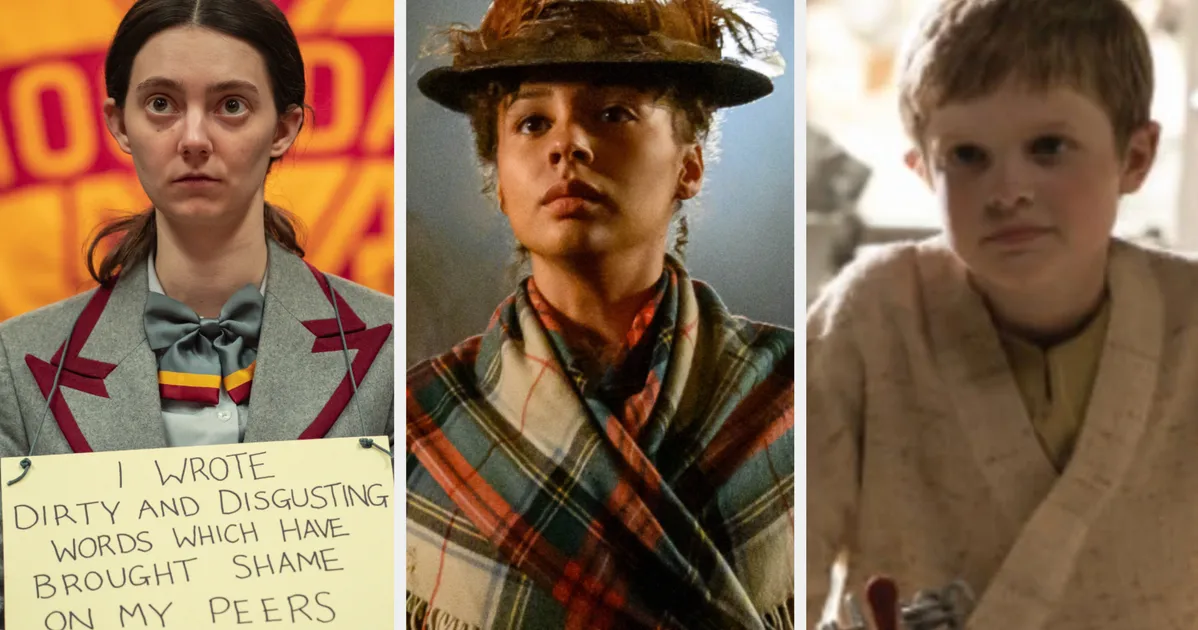
Tanya Reynolds rose to international fame thanks to her scene-stealing performance as the loveable misfit Lily Iglehart in all four seasons of Netflix’s Sex Education.

Before that, she’d played Dawn French’s daughter in the British comedy Delicious, and appeared in shows like Death In Paradise and Outlander.

More recently, she has appeared in the BBC period drama The Other Bennet Sister, inspired by Jane Austen’s Pride & Prejudice, as well as films like Emma, Timestalker and Harold And The Purple Crayon.

Advertisement

Faye Marsay

Faye Marsay as Detective Sargeant Frank in Adolescence

Before that, she was known for her work in Doctor Who’s 2014 festive special Last Christmas, the BBC crime drama McMafia, the Black Mirror episode Hated In The Nation or Game Of Thrones, in which she played “The Waif”.

Over on the big screen, Faye has also acted in Pride, Darkest Hour and A Private War.

Abbie Hern

Abbie Hern as Mae in Enola Holmes 2

Before being cast as one of the new Lady Greyhounds, Abbie Hern was known for her work in the second Enola Holmes movie and the fantasy series My Lady Jane.

She also played Mary Bone in Peaky Blinders back in 2022, and appeared in Jordan Peele’s Twilight Zone reboot and the Welsh drama The Pact.

Advertisement

Jude Mack

Jude Mack pictured on the set of Mickey 17 with Robert Pattinson

Some of Jude Mack’s more recent TV appearances have included the James Norton drama Playing Nice, the dark comedy I Hate Suzie, the thriller Prime Target or the BBC crime series The Capture.

You may have also seen them in minor roles in the films Mickey 17, Back In Action or the most recent instalment in the Mission: Impossible series.

Rex Hayes

Aisling Sharkey and Rex Hayes in the new season of Ted Lasso

Like co-star Abbie Hern, Rex Hayes previously appeared in the Welsh drama The Pact.

Ted Lasso is Rex’s biggest on-screen credit to date, but they have also had supporting roles in Bang, The Bastard Executioner and Bregus.

Advertisement

Aisling Sharkey

Aisling Sharkey in Jurassic World: Dominion

Jurassic World fans might remember Aisling Sharkey for her performance as Madison in the 2022 offering Dominion.

Before that, her only other listed credit was in the fantasy TV series Heirs Of The Night, in which she played the character Ivy.

Grant Feely

Grant Feely as a young Luke Skywalker in the Star Wars universe

In the fourth season of Ted Lasso, Grant Feely is taking over the role of the titular character’s son, Henry Lasso.

The child actor has an impressive CV already, most notably appearing as a young Luke Skywalker in the Star Wars spin-off Obi-Wan Kenobi.

Advertisement

New episodes of Ted Lasso arrive on Apple TV+ on Wednesdays.

Source link

Advertisement
Continue Reading

NewsBeat

MAIL ON SUNDAY COMMENT: Andrew is not worthy of ANY royal money

Published

on

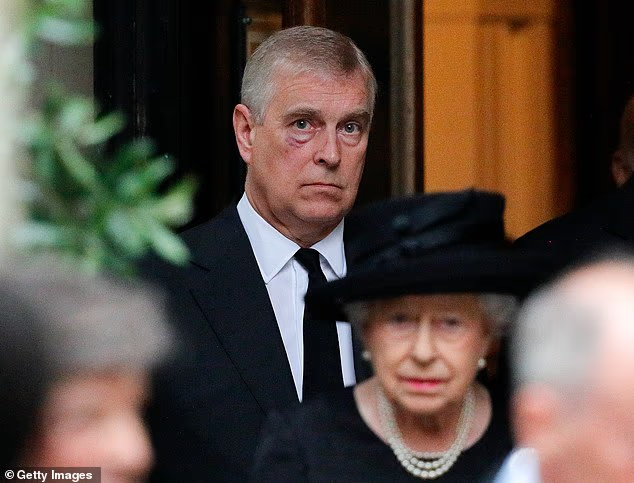
Prince Andrew, Duke of York and Queen Elizabeth II attend the funeral of Patricia Knatchbull, Countess Mountbatten of Burma in 2017

Advertisement

Every family has to think, from time to time, about funerals. It may not be welcome, but it is usually wise. 

It is certainly not the taboo it used to be – some TV stations nowadays are full of advertisements for funeral plans.

For the Royal Family, the problem is rather bigger. The death of any senior royal raises delicate and intricate questions of protocol and precedence.

Where will the service be held? Where will the interment be?

Advertisement

We must all die, even if the current Royal Family has developed a reputation for longevity. 

The well-oiled machine of the British monarchy does not wish to be unprepared for any eventuality, and quite right too.

So inevitably the awkward question of the funeral of the former Duke of York, now Mr Mountbatten-Windsor, has come up. 

And currently there are plans for him to have a funeral thought to be similar to that accorded to the late Queen’s sister, Princess Margaret. 

Advertisement

Prince Andrew, Duke of York and Queen Elizabeth II attend the funeral of Patricia Knatchbull, Countess Mountbatten of Burma in 2017

Let us not be vindictive here, but the former Prince, by his behaviour and attitude in the Epstein affair, has surely forfeited any entitlement to such ceremonies.

Plainly, in common decency, he should be buried with his forebears, and his unquestioned bravery in the Falklands will not be forgotten by the Navy.

Advertisement

But the British public will be dismayed if his obsequies take place in royal surroundings or with the trappings of monarchy. 

He is now a private citizen and his funeral should be private too.

A fine choice of school, minister. A shame others can’t follow suit 

Has Labour under Andy Burnham quietly become the party of the super-rich?

Roughly 21 per cent of Mr Burnham’s Cabinet went to private schools, which are now increasingly beyond the reach of the aspiring middle classes.

Advertisement

This is thanks to tax changes – VAT, National Insurance increases and business rates – imposed on them by Labour Party chairman and former Education Secretary Bridget Phillipson.

Even those ministers who went to state schools seem to have been fortunate in their education.

An impressive 54 per cent of the Burnham Cabinet attended either Oxford or Cambridge, as 99 per cent of British children do not do.

And now we learn that the Secretary of State for Energy Security and Net Zero, Miatta Fahnbulleh, is educating her own three children privately. We do not know how much she and her husband – who is said to be ‘in finance’ – pay. 

Advertisement
Miatta  Fahnbulleh (pictured with Andy Burnham) championed Labour's decision to slap VAT on public school fees - despite sending all three of her own children to private school

Miatta  Fahnbulleh (pictured with Andy Burnham) championed Labour’s decision to slap VAT on public school fees – despite sending all three of her own children to private school

But Ms Fahnbulleh’s own former school, Beechwood in Tunbridge Wells, Kent, currently charges boarders almost £45,000 a year and day pupils up to £24,597.

There is nothing wrong with that. The Mail on Sunday supports aspiration and ambition. We only wish more children could go to independent schools.

The problem is that Labour’s own actions are currently devastating much of private education across the country. We must assume they know what they are doing, when they make private schools too expensive for the middle class while continuing to use such schools themselves.

Advertisement

Even if they do not make the same choice as Ms Fahnbulleh, they must surely grasp that Ms Phillipson’s fierce taxes have reinforced the privilege of wealth, not weakened it.

Advertisement

Source link

Advertisement
Continue Reading

NewsBeat

ChatGPT, social media blue ticks and vlogging equipment among MLAs expenses

Published

on

Belfast Live

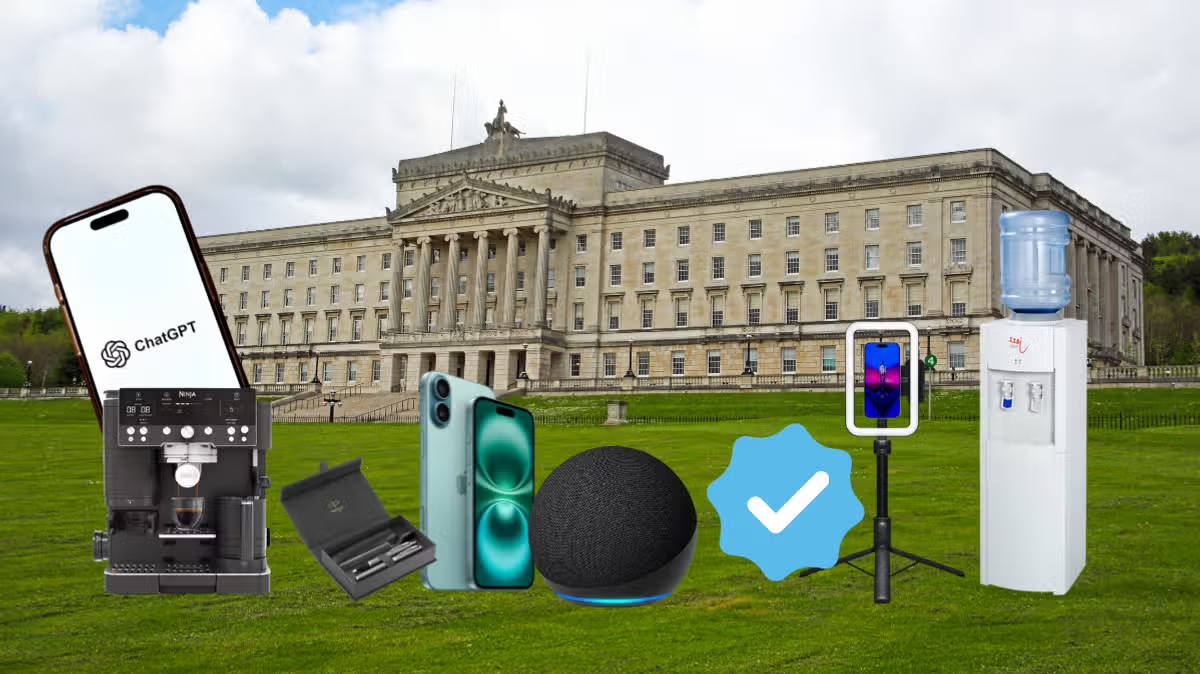
One MLA spent £300 on a computer keyboard, while others claimed for everything from a £500 coffee machine, an Alexa speaker, to drinking water.

Advertisement

AI subscriptions, social media blue ticks, coffee machines and cameras are among the more unusual items claimed by Stormont MLAs on expenses over the past year.

An analysis of the latest Assembly expenses returns by Belfast Live shows that politicians are increasingly using public money to pay for AI tools such as ChatGPT, as well as software designed to create social media videos and subscriptions to verify their online accounts.

The records, covering April 2025 to March 2026, also include claims for coffee machines, vlogging equipment, water coolers, smart speakers and hundreds of pounds worth of camera equipment.

Perhaps the biggest trend to emerge is the growing use of ChatGPT.

Advertisement

SDLP MLA Cara Hunter claimed £19.99 for ChatGPT on eleven separate occasions throughout the year.

Independent MLA Claire Sugden also regularly claimed £19.99 each month for ChatGPT Plus, while Alliance MLA Kellie Armstrong submitted recurring claims of £20 for the premium AI service.

The SDLP’s Sinéad McLaughlin also claimed monthly ChatGPT subscriptions, with payments ranging between £17.85 and £18.84, while party colleague Daniel McCrossan opted to expense a single £189.90 payment covering ChatGPT Plus between May 2025 and February 2026.

The latest returns also show MLAs using public money to bolster their social media presence.

Advertisement

Cara Hunter claimed £11 each month for an X subscription, as well as £11.99 a month for Meta Verification, giving her verified accounts on Facebook and Instagram.

DUP MLA Peter Martin also expensed an annual X subscription costing £114.99.

Creating online content is another area where spending appears to have increased.

Cara Hunter claimed a monthly CapCut subscription, while Alliance MLA Paula Bradshaw claimed £139.99 for the video editing software. Similar claims were also made by Sinn Féin’s Colm Gildernew and SDLP MLA Sinéad McLaughlin.

Advertisement

Meanwhile, several MLAs also purchased dedicated camera equipment.

DUP MLAs David Brooks and Cheryl Brownlee each claimed £329 for cameras bought from Currys during April this year.

Jonathan Buckley claimed £319.99 for a camera from Argos, while Alliance MLA David Honeyford expensed £498 for a camera and microphone package.

DUP deputy leader Michelle McIlveen also claimed £419 for a DJI camera.

Advertisement

Elsewhere in the returns, Daniel McCrossan claimed £549.99 for a coffee machine from Argos. His SDLP colleague Sinéad McLaughlin also claimed £45 for what was listed as an Argos coffee machine.

Sinn Féin MLA Gerry Kelly spent £378 on a water cooler and a further £65.99 on bottled water and disposable cups.

Linda Dillon also submitted claims totalling £198.43 for water cooler rental, drinking water and disposable cups.

There were also claims for equipment aimed at improving online content.

Advertisement

UUP deputy leader Diana Armstrong expensed a £92 Hasselblad microphone and a £219.95 Apple SnapCreator Kit, while her party colleague Steve Aiken claimed £79.19 for a vlogging kit.

SDLP Leader of the Opposition, Matthew O’Toole, claimed £44.50 for fountain pens purchased from Amazon.

Meanwhile, DUP MLA Cheryl Brownlee recorded the largest catering claim in the period, expensing a single transaction of £300 for refreshments from a catering company.

The returns also show a range of technology purchases.

Advertisement

Alliance MLA David Honeyford claimed £299.25 for an Apple keyboard, Kellie Armstrong claimed £49 for an official Apple iPhone case, while DUP MLA Deborah Erskine expensed an Amazon Echo Dot smart speaker costing £54.99.

In addition, new mobile phones featured prominently.

Kellie Armstrong claimed £874 for an iPhone 16; Andrew Muir expensed £699 for an iPhone 16e; Orlaithi Flynn claimed £649 for an iPhone from Currys; and William Irwin purchased an iPhone 16e for £549.

Other MLAs opted for refurbished devices, with Claire Sugden claiming £463 for a refurbished iPhone 14 Pro Max from Back Market and Diana Armstrong claiming £425 for a handset from CEX.

Advertisement

For all the latest news, visit the Belfast Live homepage here and sign up to our daily newsletter here.

Source link

Advertisement
Continue Reading

NewsBeat

Meghan Markle beams ‘my husband loves bagpipes!’ as she and Prince Harry share banter with Scottish band at event to support music mogul friend

Published

on

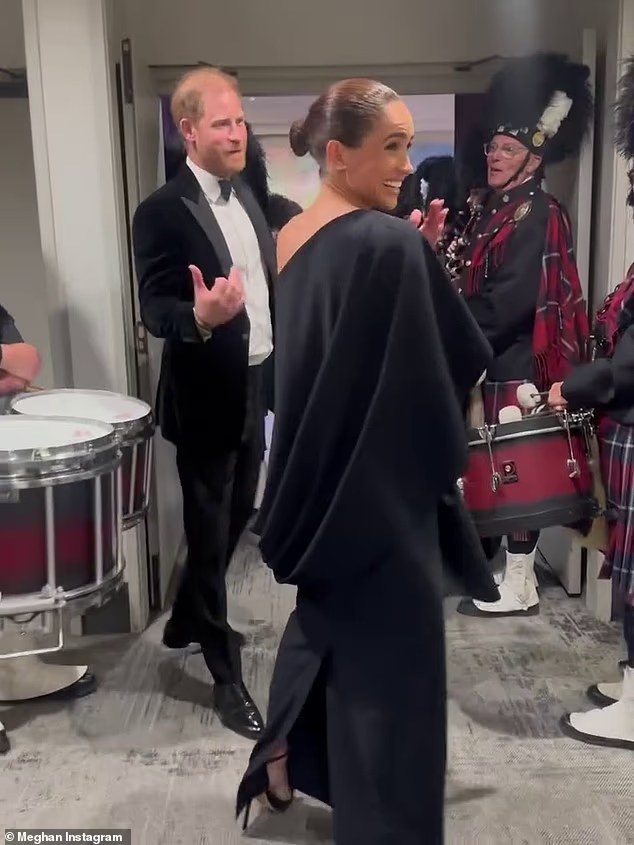
Meghan Markle joked with bagpipers as she attended an event to celebrate David Foster, the music mogul and close friend of the Sussexes

Advertisement

Meghan Markle quipped that her husband Prince Harry ‘loves bagpipes’ as the couple arrived at a gala to celebrate music mogul David Foster on Friday night.

In a video posted to Instagram on Saturday, the Duke and Duchess of Sussex could be seen walking through a corridor lined with bagpipers at the 40th anniversary celebration of The David Foster Foundation in Canada.

At the start of the video the Duchess told the musicians: ‘My husband loves bagpipes!’ 

As they continued to walk past the pipers, Meghan added: ‘Oh my god, this is amazing!’ 

Advertisement

Harry then joked with the musicians, asking: ‘Where are mine?’ He then protested he could play both ‘pipes and drums’.

Meghan’s video then cut to a plate featuring what appeared to be an edible piano and musical notes before panning to the programme for the evening’s gala and concert.

Foster, 76, founded the organisation in 1986 to provide financial support for Canadian families with children who need life-saving organ transplants and raise awareness of organ donation in Canada and the US.

Advertisement

Meghan Markle joked with bagpipers as she attended an event to celebrate David Foster, the music mogul and close friend of the Sussexes

Dressed in a gown by Canadian designer Greta Constantine she quipped to the musicians: 'My husband loves bagpipes!'

Dressed in a gown by Canadian designer Greta Constantine she quipped to the musicians: ‘My husband loves bagpipes!’

At the event on Friday night, held in Foster’s home city of Victoria, British Columbia, Meghan was pictured wearing Princess Diana‘s diamond and sapphire earrings.

She also owns the late Princess of Wales‘s butterfly earrings and matching cuff bracelet as well as a diamond tennis bracelet, a Cartier Tank Louis and Diana’s ‘divorce ring’, an emerald-cut aquamarine surrounded by diamonds gifted to her by close friend Lucia Flecha de Lima in 1996.

Advertisement

Meghan, 45, has previously worn Diana’s earrings at public events and chose to sweep her hair into an updo to show off the stones on Friday night.

Harry, 41, wore a black tuxedo and bow tie while his wife was dressed in a black maxi one-shouldered gown by Canadian designer Greta Constantine.

The Sussexes posed for pictures with 16-time Grammy winner Foster and his wife, actress and singer Katharine McPhee, 42.

Meghan and Harry have long been friends with the couple and were previously pictured on a double date with them.

Advertisement

In 2019 Foster arranged for the Duke and Duchess to stay at a close friend’s mansion on Vancouver Island, telling the Daily Mail at the time: ‘I felt honoured that I was able to help Meghan there because I’m a Canadian, and we’re a Commonwealth country – we’re the Crown’s.

‘It’s important to us, so I grew up with that kind of sentiment. I was really happy to be able to help them to find a respite just to take a little time off.’

The Duke and Duchess of Sussex attended the gala, to celebrate the 40th anniversary of Foster's organ donation foundation, in Canada on Friday night

The Duke and Duchess of Sussex attended the gala, to celebrate the 40th anniversary of Foster’s organ donation foundation, in Canada on Friday night

The Duke and Duchess are close friends of Foster and his wife, actress and singer Katharine McPhee

The Duke and Duchess are close friends of Foster and his wife, actress and singer Katharine McPhee 

Advertisement
Princess Diana pictured wearing the diamond earrings during a visit to Canada in May 1986
Meghan paid tribute to her late mother-in-law by wearing the same earrings on Friday night

Meghan wore diamond and sapphire earrings belonging to her late mother-in-law for the gala

The mansion, a secluded waterfront estate in North Saanich, British Columbia, was owned by Mr Foster’s close friend, whose identity he refused to give away.

McPhee went to school with the Duchess and told Access Hollywood in 2020 that her husband and the Duke had a ‘really, really beautiful relationship’.

‘They’re so cute. They’re like father and son.

Advertisement

‘We just stay in touch with them [the Sussexes]. But mostly, Meghan and I knew each other from childhood, but really Harry and my husband are friends. It’s really nice.’

Advertisement

Source link

Advertisement
Continue Reading

NewsBeat

Paddy McGuinness ‘is dating stunning Radio 2 publicist’ after split from wife Christine McGuinness

Published

on

Paddy McGuinness is reported to be dating a 'stunning Radio 2 publicist' (pictured) following his split from wife Christine McGuinness

Paddy McGuinness is reported to be dating a ‘stunning Radio 2 publicist’ following his split from wife Christine McGuinness.

In new pictures, the comedian, 52, could be seen enjoying a stroll with Emma Carey down a London street after having dinner together on Thursday.

The pair had enjoyed a meal at the swanky five-star Rosewood Hotel, with the publication reporting that they later headed to another nearby hotel. 

Paddy, who hosts a weekly show on BBC Radio 2 where Emma works, was staying in London last week as he acted as a stand-in host on ITV‘s This Morning.   

Advertisement

In the images, Paddy – who earlier this year revealed his incredible body transformation following a gruelling fitness regime – donned a tight black T-shirt which clung to his muscular frame.

Meanwhile, Emma was dressed to impress in a plunging black halter neck top, accessorising her look with a selection of chic gold jewellery.

Paddy McGuinness is reported to be dating a ‘stunning Radio 2 publicist’ (pictured) following his split from wife Christine McGuinness 

Advertisement
In new pictures, Paddy could be seen enjoying a stroll with Emma Carey down a London street after having dinner together on Thursday (Paddy pictured in 2023)

In new pictures, Paddy could be seen enjoying a stroll with Emma Carey down a London street after having dinner together on Thursday (Paddy pictured in 2023)

The brunette beauty was clearly relaxed in the Take Me Out star’s company, placing an arm around his back as they walked together.

An onlooker told The Sun: ‘Paddy looked so at ease with her. It was obvious they are incredibly comfortable together, and they laughed a lot.

‘Fans will be thrilled to see him so happy after the anguish of his marriage split with Christine.

Advertisement

‘It’s easy to see why he’s so smitten with Emma by his side. Paddy looked like the cat that got the cream.’

As well as her publicity job on BBC Radio 2, it is said that Emma is a yoga and wellness enthusiast, sharing yoga sessions and Thailand wellness retreats on Instagram.

The Daily Mail has contacted Paddy’s representatives for comment. 

TV star Paddy split from wife Christine in 2022 after 11 years of marriage but have remained living together in their family home while co-parenting their three children.

Advertisement

Join the discussion

How do you feel about exes living together after divorce for their children’s sake?

The pair had enjoyed a meal at the swanky five-star Rosewood Hotel, with the publication reporting that they later headed to another nearby hotel (Emma pictured on LinkedIn)

The pair had enjoyed a meal at the swanky five-star Rosewood Hotel, with the publication reporting that they later headed to another nearby hotel (Emma pictured on LinkedIn)

TV star Paddy split from wife Christine in 2022 after 11 years of marriage but have remained living together in their family home while co-parenting their three children (pictured in 2021)

TV star Paddy split from wife Christine in 2022 after 11 years of marriage but have remained living together in their family home while co-parenting their three children (pictured in 2021)

Advertisement

The pair maintain a good relationship for the sake of their children, with it said that the pair tell each other when they are going on dates. 

Christine recently opened up about her split from husband Paddy, admitting their divorce was a ‘difficult and challenging’ time. 

While the pair are still close friends, with Christine describing their amicable set-up as a ‘blessing,’ she confessed that she struggled amid the breakdown of their marriage. 

Speaking exclusively to the Daily Mail, Christine shared: ‘Divorce is scary and it was scary for me – obviously, I’ve never done a divorce before! It’s an awful time. 

Advertisement

‘But as much as it was challenging and difficult, a lot of the thoughts and feelings were really from listening to other people’s stories. 

‘Obviously, you hear about divorce, you instantly think negativity, heartbreak and a broken family or whatever, you don’t hear about other families that [continue to] share their home.’

Paddy and Christine’s children, twins Penelope and Leo, 13, and Felicity, ten, all have autism, with the couple choosing to continue to live together so as not to disrupt their routines. 

‘A lot of families that have got children with special educational needs choose to do it this way,’ Christine explained. ‘Maybe they don’t talk about it so much, but they’re the ones who really get it and understand it.’ 

Advertisement

Christine continued: ‘I actually do think it is a blessing, the way we work co-parenting. 

‘It was always a decision from the beginning that no matter what, between me and Patrick, our priority is always the children, and that’s how we’ve kept it, fortunately…

‘We’re lucky that we genuinely get on so well. We’re not in a rush to sell the house. We don’t want to be putting the kids in mummy’s house and then in daddy’s house – and our work’s not in a routine and our children thrive on routine. 

‘They love the home, and in my head it’s the children’s home for them to grow up in.  I’m not in a rush for that to change, to be honest. 

Advertisement

‘I’d love my own little flat somewhere, but this is my home.’ 

Following the breakdown of her marriage, Christine has been open about dating women, but said she’d never bring a date back to the house she shares with Paddy.   

‘I would never do that,’ Christine insisted. ‘Like I said, this is the family home, and then Paddy and I have our lives outside. 

‘But we never did have many visitors to the house, even when we were married. We don’t introduce the children to just anybody. 

Advertisement

‘So certainly when it comes to dating, anything like that is going to take a very, very long time, like years, years and years.’

Source link

Continue Reading

NewsBeat

Disabled cast makes history at 2,300-year-old Greek theater

Published

on

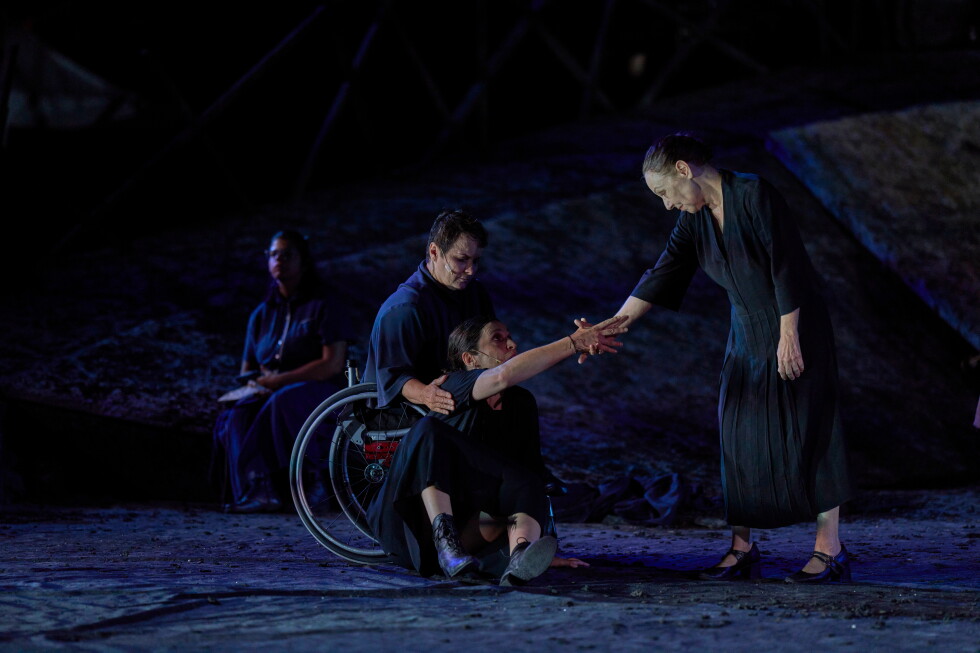
Disabled cast makes history at 2,300-year-old Greek theater

EPIDAURUS, Greece (AP) — As Christopher Nolan’s “The Odyssey” renews global fascination with Homer, a cast of disabled and non-disabled performers in Greece is staging the war’s other story.

It’s not about the triumph of returning heroes, but the suffering they left behind.

“The Trojan Women,” with a cast of 22, was staged at Epidaurus, the ancient open-air stone arena in southern Greece. It marked what organizers called the first fully accessible performance in the ancient theater’s 2,300-year history.

While Homer followed warriors sailing home from Troy, the playwright Euripides — writing some three centuries later — turned to the city’s ruins and its women, forced into exile and enslavement.

Advertisement

The ancient theater offered a full range of accessibility services for the Aug. 2 performance. Blind audience members received Braille programs, tactile models and live audio description, while deaf spectators followed overhead titles. Physical adaptations also improved access throughout the site.

“It’s the first time a performance at Ancient Epidaurus has been made accessible to everyone,” said Greg Polychronidis, a Paralympic gold medalist who attended the event. “Today was a celebration of equality and it should serve as an example for everyone, forever.”

For many of the performers, standing on the ancient stage was itself part of the message: a voice for those often overlooked. Eirini Kourouvani, a 58-year-old cast member who uses a wheelchair, had never set foot inside the theater before.

“It is just grand,” she said. “I feel my heart opening up as wide as this theater is.”

Advertisement

Ioanna-Maria Gertsou, a blind psychologist, attended with Babu, her guide dog.

“We too have the right to attend performances on an equal footing,” she said, relieved that her dog remained quiet during the play.

The National Theater of Greece produced the performance, and accessibility services were designed by the nonprofit Liminal with financial support from Greece’s Alpha Bank.

Argyro Chioti, the National Theater’s artistic director, said the production should become the norm rather than the exception.

Advertisement

“This was complex, not simple. It required months of planning. It cost money. And it required very specific organizational expertise,” she said. “But that’s the standard and venues we need to reach — the major stages and the major theaters.”

—— Gatopoulos reported from Athens

Advertisement

Source link

Continue Reading

NewsBeat

Inside Brighton’s brilliantly bizarre ‘animal’ sanctuary for abandoned clothes horses

Published

on

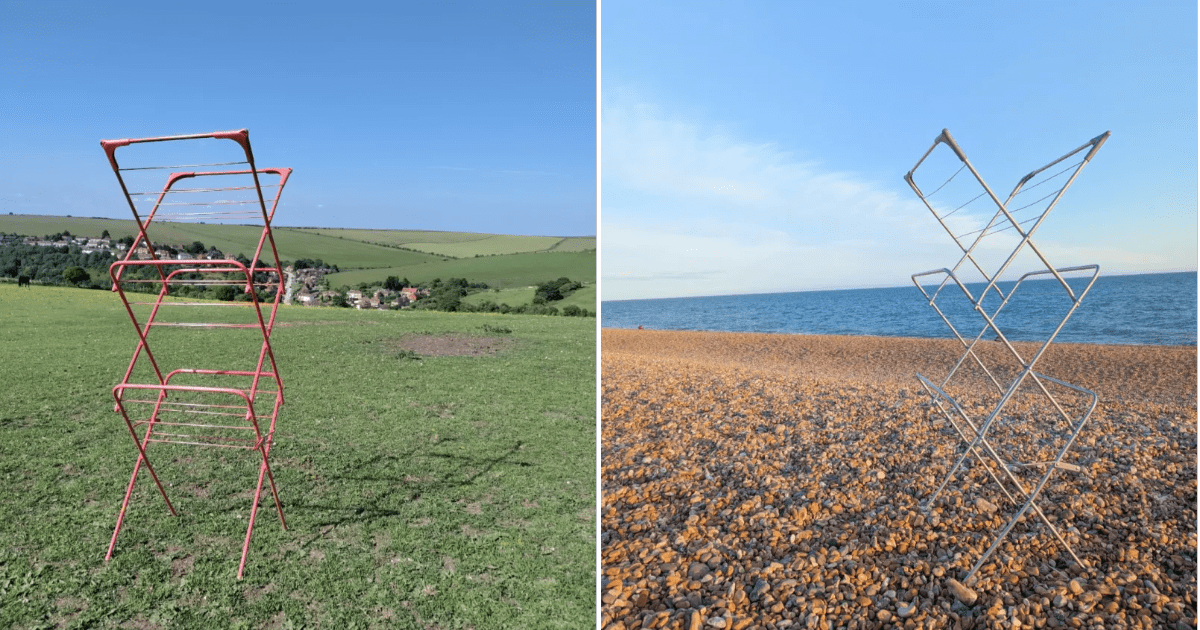
Inside Brighton's brilliantly bizarre 'animal' sanctuary for abandoned clothes horses
According to Sam, clothes horses deserve to live a fulfilling life (Picture: supplied)

As someone who spent much of her adolescence devoted to a Lemur named Ron who lived at Howletts Zoo, I can empathise with those who want to protect vulnerable species.

That’s why I knew I was going to enjoy my conversation with Sam Smith – a Brighton-based activist who’s spent the last decade rescuing, caring, and mending abandoned clothes horses.

As I waited for the 33-year-old to join me on Zoom, I had a million questions: Why did you start collecting clothes horses left by strangers on the street? Why open a sanctuary dedicated to a household item? And what’s the real message behind it all?

Never once breaking character, which included regularly referring to the clothes horses as ‘animals’, our chat was both enlightening and entertaining.

Advertisement

And while some might call his passion project ‘absurd’, it’s connected with thousands of people online.

Ask Metro


Use AI to go deeper into the stories you care about – powered by Metro and trusted publications.

Advertisement

‘Clothes horses are the quiet heroes in pretty much everyone’s house,’ he tells Metro.

‘Everyone’s had one, whether it’s at your childhood home or in a uni room. And most of us also have a memory attached to a clothes horse – it breaking or getting your fingers caught.’

Sam’s always had an affinity for clothes horses (Picture: supplied)

I saw a herd of three abandoned just a few weeks ago

The smile that spreads across Sam’s face as he talks about the clothes horses reflects the deep affection that first prompted him to rescue one back in 2016.

After seeing so many dumped next to bins, often with broken hinges, the social care worker and father-of-two decided to take them home.

‘I started giving them all their own little stories. You know, “where have they been?”, “who was looking after them?”, “How did they end up here?”, “was it a drop-off in the middle of the night?”‘

Advertisement

Pretty soon, he shares, he had nine abandoned clothes horses taking up space in his small Brighton flat – all of whom he’d named (personal favourites include Rita and Ruth) and created extensive backstories for.

Describing how it quickly became apparent that he’d need a bigger space to keep the ‘herd’, Sam explains: ‘Clothes horses have a mind of their own, so although I’d put them to one side, I’d just step around the corner, knock one over, and it would jump back into life.’

Luckily, Sam had a friend who graciously offered to let him use some of his land to keep the ‘animals’ – a strip of gorgeous countryside where they graze still to this day.

At night, the clothes horses sleep in the stable (Picture: supplied)

Once a clothes horse is in his possession, Sam’s ultimate goal is to get it adopted – a process that involves him spending hours on local forums advertising the clothes horses and scanning for anyone new to the area in search of handy household items.

Outside of that, he also spends a lot of time fixing and nurturing them – emphasising that no clothes horse is a lost cause.

Advertisement

‘There’s always a way to fix up a clothes horse. Some of the bigger medical procedures – like a snapped leg – are tricky but then it’s time to improvise. Some of our clothes horses have been repaired with old discarded fans or bits of an old hoover, whatever we can get our hands on really.’

Day to day, life at the sanctuary is simple.

Sam regularly hosts activities for the clothes horses to work on mindfulness (Picture: supplied)

‘By the time I get to sanctuary in the morning the clothes horses are all ready and have had their breakfast. Firstly, I’ll check on the ones who’ve just arrived because, if they’ve got a broken leg, you don’t want to leave them around with that injury, because the hinges will start to rust.

‘After that we’d probably all go out, down near the river and in the countryside for some recreational activities. I also take them into town sometimes.

‘Then in the evening everyone gets together for some team building exercises. Once that’s done they’ll usually go straight into their paddocks.’

Advertisement

People have asked if they can sponsor a clothes horse

Although Sam has been rescuing clothes horses for a decade, it wasn’t until recently that he started documenting the journey and sharing it on social media.

With thousands of followers and over 111,000 likes, it’s safe to say that people have become incredibly invested in the sanctuary, and in Sam.

Comments range from ‘a clothes horse is not just for Christmas,’ to ‘Thank you for doing this important work’.

One particularly honest user, @rainbow, shared: ‘I’m ashamed to say I’ve previously overworked and abused one of mine with a heavy blanket. Poor thing buckled under the weight but managed to make it. I’ll do better now.’

Advertisement

A number of users have also expressed interest in sponsoring some of the animals. At £3 per month, donations like these help Sam keep the operation afloat.

However, he does have exciting plans to hopefully start including Christmas cards and horse clothes plushies in future sponsorship packages.

So… Why does Sam do it?

This is a fun story, yes. Much like so many other wonderful and whimsical corners of the internet, it offers giggles and well-needed respite from everyday life.

But, amidst all of this imagination, there is a real topic of conversation here.

Advertisement

From naming different clothes horse breeds to seriously discussing their tendency to leave peg droppings on the stable floor, Sam knows exactly what he’s doing.

He explains that while the humour of this objectively bizarre crusade might reel people in, underneath is a genuine message about ‘repairing, reusing and valuing things rather than treating them as disposable.’

@clotheshorsesanctuary

Too many clothes horses end up abandoned by the bins, left without dignity or care. 💔 At the Clothes Horse Sanctuary, we give them fresh air, kindness, and a second chance. Every rescue matters. 🐎✨ Link in bio to support 🫶

♬ Metamorphosis – David Clavijo

He tells Metro: ‘We’ve reached a point where people are actually bringing unwanted clothes horses to the sanctuary instead of throwing them away.

Advertisement

‘I have a house and outdoor space full of them, and I’ve rehomed a number of clothes horses with people who genuinely want to give them a second life.’

The sanctuary is taking a unique approach to raising awareness – calling out ‘Big Tumble’ and discussing a petition to get clothes horses classed as animals. But why not?

Sam’s dedication is admirable and, with so many clothes horses still out there – cold, alone and scattered across the streets of Brighton – I’m personally glad he’s got their backs.

Advertisement

Advertisement

Source link

Continue Reading

NewsBeat

Shanghai’s airports cancel more than 1,300 flights as China prepares for Typhoon Dolphin

Published

on

Shanghai's airports cancel more than 1,300 flights as China prepares for Typhoon Dolphin

BEIJING (AP) — Shanghai’s two airports canceled more than 1,300 flights and authorities relocated some 300,000 people in surrounding regions as China prepared for Typhoon Dolphin, after the storm brought heavy rains to northern Taiwan.

The outer bands of the storm on Saturday hit northern Taiwan, including the capital Taipei, bringing rain. Some Taiwanese airlines also canceled their flights to China Sunday.

The storm’s maximum sustained winds were estimated at about 162 kilometers per hour (101 mph) as of Sunday morning. It is bringing heavy rains, creating a risk of severe flooding as well as landslides and is expected to hit Zhejiang province and northern parts of neighboring Fujian province late Sunday.

Forecasters in China predicted that areas could see 200-400 mm (7.9–15.7 inches) of rainfall over the next few days. Authorities are warning of severe landslide risks in Zhejiang.

Advertisement

Shanghai’s Hongqiao and Pudong airports respectively also canceled about 60% of Sunday’s expected flights, according to the Paper, Shanghai’s state media.

On Saturday evening, authorities in Zhejiang evacuated some 390,000 people in the city of Taizhou. Authorities in Shanghai evacuated some 30,000 plus from riskier areas.

Zhejiang authorities also suspended all water-based activities, including ferries and cruises.

Advertisement

Source link

Continue Reading

NewsBeat

Brazen Iran makes EIGHT demands of the US as it dangles opening the Strait of Hormuz in front of Trump… while launching another attack on allied ship in crucial waterway

Published

on

Iranian leadership has a dramatic new list of eight demands that the United States must follow to reach Donald Trump's goal of reopening the Strait of Hormuz

Iranian leadership has a dramatic new list of eight demands that the United States must follow to reach Donald Trump‘s goal of reopening the Strait of Hormuz. 

The key waterway has been closed for much of the time since the war on Iran began in late February. 

Iran’s politburo-like body known as the Supreme National Security Council (SNSC) said the Strait of Hormuz will not open until the United States ‘corrects its behavior,’ issuing new demands that could shake up talks on a deal to manage the waterway and traffic on it. 

The head of Iran’s SNSC, Mohammad Bagher Zolghadr, has given the list that includes some previously unheard of requests. 

Advertisement

Many have been previously brought up, including ending the war permanently, stopping the US Naval blockade, withdrawing military forces. 

From there, Zolghadr wants the US end sanctions on Tehran, unfreeze Iranian assets and even pay reparations to the Iranians to reopen the strait. 

The US would also have to stop threatening and insulting Iran and end all military action against Iranian allies in the region, state news agency Islamic Republic News Agency reports. 

Zolghadr, who is also a commander in the powerful Revolutionary Guard, reports directly to Iran’s Supreme Leader Mojtaba Khamenei, who is currently mulling over a deal with Oman to manage the strait. 

Advertisement

Iranian leadership has a dramatic new list of eight demands that the United States must follow to reach Donald Trump’s goal of reopening the Strait of Hormuz

The key waterway has been closed for much of the time since the war on Iran began in late February

The key waterway has been closed for much of the time since the war on Iran began in late February

A 60-day period to negotiate a final deal will end in just over a week but could be extended. 

Advertisement

The Daily Mail has reached out to the State Department for comment.

Iran’s demands come on the same day the United Arab Emirates said one of its ships was targeted by an Iranian missile in the strait.

The requests also arrive as Donald Trump has attempted to quash reports that he and Pentagon chief Pete Hegseth have clashed over reports the United States has hidden missile shortages.

Confronted over why the President was kept in the dark, the secretary of war reportedly turned on his own deputy, according to the Washington Post. 

Advertisement

The showdown reportedly unfolded at Camp David last Friday, where Hegseth insisted he was blameless and accused his number two, Stephen Feinberg, of presiding over the shortfall and failing to keep the President fully briefed. 

The astonishing scene laid bare Trump’s mounting frustration with Hegseth, one of the loudest early cheerleaders for striking Iran, who had assured him the operation would be a swift and relatively painless win. 

Shortages of long-range guided missiles and air defense interceptors are among the reasons Trump has held back from launching further large-scale strikes against Iran in recent days. 

Join the discussion

Advertisement

Should the US meet Iran’s demands to secure peace and reopen the vital Strait of Hormuz?

The head of Iran's Supreme National Security Council, Mohammad Bagher Zolghadr (pictured), has given the list that includes some previously unheard of requests

The head of Iran’s Supreme National Security Council, Mohammad Bagher Zolghadr (pictured), has given the list that includes some previously unheard of requests

The requests arrive as Donald Trump has attempted to quash reports that he and Pentagon chief Pete Hegseth have clashed over reports the United States has hidden missile shortages

The requests arrive as Donald Trump has attempted to quash reports that he and Pentagon chief Pete Hegseth have clashed over reports the United States has hidden missile shortages 

Trump hit back at the report, denying any shortage of US munitions and insisting that interceptors are reaching American bases as needed.

Advertisement

‘The “leakers” of these treasonous statements are being hunted down. Long term jail sentences will be sought!’ Trump wrote on Truth Social. 

The White House has denied the clash ever took place, however, with press secretary Karoline Leavitt saying: ‘This is 100% fake news. Literally never happened. And President Trump has the utmost confidence in Secretary Hegseth.’

Pentagon spokesman Sean Parnell joined the pushback, insisting Hegseth ‘did not mislead anyone’ about weapons stocks and never pointed the finger at Feinberg

Despite the denials, NBC News reported that Feinberg received a furious phone call from Trump himself on Friday evening, during which the President is said to have threatened to fire him.

Advertisement

The rattled deputy then hastily summoned top Pentagon brass to a late-night crisis meeting just hours after hanging up.

Feinberg, 66, is a billionaire who chaired Trump’s Intelligence Advisory Board in his first term before being handed the Pentagon’s number two job.

The interceptor crunch is reportedly now so severe that it is changing how the military decides which incoming threats to shoot down. 

Commanders are forced to weigh where a missile is headed before committing precious defenses. 

Advertisement
Donald Trump is demanding jail for the 'leakers' who exposed his furious clash with Pete Hegseth over hidden munitions shortages

Donald Trump is demanding jail for the ‘leakers’ who exposed his furious clash with Pete Hegseth over hidden munitions shortages

Far from the quick victory Trump was promised, the Iran conflict has ground into a near six-month stalemate, with 18 American troops dead. 

Tehran has responded to these attacks by raining missiles on American bases and allies across the region and strangling shipping through the vital Strait of Hormuz.

A fragile truce brokered by Pakistan collapsed last month after Iranian attacks on tankers.

Advertisement

Trump declared US forces ‘locked and loaded’ for fresh strikes at the weekend, only to back down after appeals from Gulf allies, and he now claims talks with Tehran are restarting, something Iran denies.

Source link

Continue Reading

NewsBeat

Police urge more potential victims of killer sex attacker Simon Levy to come forward

Published

on

Police urge more potential victims of killer sex attacker Simon Levy to come forward

The oversight meant Levy’s bail was extended until April 2025, allowing him to carry out a harrowing rape in a Tottenham car park in January 2025. He went on to murder Carmenza Valencia-Trujillo, 53, in March and Sheryl Wilkins, 39, in August, suffocating both women, who were described as vulnerable sex workers.

Source link

Continue Reading

Trending

Copyright © 2025