
Politics
What’s An EDT? The Rise Of ‘Extreme Day Trips’ As A Travel Trend


There’s no denying plenty of us love a nice long holiday to unwind and unplug from the stresses of modern life. A fortnight next to the beach? Bliss!
But being able to take huge chunks of time off work, or take the kids out of school (’cause summer holiday travel can be pretty extortionate), isn’t a luxury lots of us have. Plus, some of us want to see more of the world – and only have so much time to do so.
It’s perhaps unsurprising then that travel companies are seeing interest in EDTs – or extreme day trips – in 2026.
Fuelled by low-cost flights, high-speed rail connections and a desire to see more of the world on a budget (all while preserving precious annual leave), EDTs involve travelling to other cities early in the morning, spending a full day sightseeing, eating and exploring, before returning home that evening.
In fact, one in four millennials and Gen Z travellers plan to take a one-day international trip in 2026, according to Expedia.
The benefit is you save on accommodation costs while getting to explore a new place. You can also enjoy several trips without breaking the bank – or ploughing through PTO (paid time off).
Although it may sound ambitious – and perhaps even a little tiring – Kayak reports that 66% of UK travellers plan to take several shorter trips this year, enjoying landmarks, local food and cultural experiences without the expense of multiple nights away.
Here, Manuela Savoca, travel expert at airport transfer company Transfeero, shares the European cities that work best for a one-day adventure, and how to make the most of every minute.
European cities perfect for an extreme day trip (EDT)
1. Paris, France
If there’s one city that proves an EDT can feel like a real holiday, it’s Paris. Thanks to the Eurostar (just over 2 hours) and frequent flights (just over 1 hour), you can enjoy breakfast in London and lunch beside the Eiffel Tower just a few hours later. A private transfer from the airport (Charles de Gaulle Airport) to central Paris takes just 40 minutes.
Start your morning with a coffee and fresh pastries at a Parisian café before walking to the Eiffel Tower. Stroll along the Seine towards Pont Alexandre III, continue to the Champs-Élysées and the Arc de Triomphe, then stop for lunch at a traditional bistro, advises Savoca.
Spend the afternoon exploring the Louvre courtyard, relaxing in the Tuileries Garden or browsing the boutiques of Le Marais before finishing with an evening walk around the river – and perhaps a quick bite to eat before you head home.
Best way to get around: Walking, the metro and a private airport transfer from the airport to the city centre.
2. Bruges, Belgium
Bruges feels like stepping into a storybook, and because its historic centre is compact, it’s “one of Europe’s easiest cities to explore in a day”, claimed the travel pro. The flight only takes 1 hour, plus a 35-40 minute private transfer from the airport.
Start in the Markt Square before climbing the Belfry for panoramic views. Wander along the canals, visit local chocolate shops, enjoy Belgian waffles or moules-fries for lunch and take a relaxing canal cruise, suggested Savoca. Finish with a peaceful walk through the Begijnhof before heading home.
Best way to get around: Walking.
3. Bologna, Italy
Bologna is one of Italy’s best cities for an EDT thanks to its small centre and incredible food scene, said the expert. It’s a slightly longer flight at just over 2 hours, however an airport transfer to the centre takes just 22 minutes.
His advice is: Start in Piazza Maggiore before wandering beneath the city’s famous porticoes to the Two Towers. Stop for tagliatelle al ragù or handmade tortellini before looking around the bustling Quadrilatero food market. Finish with authentic Italian gelato before coming home.
Best way to get around: Walking.
4. Salzburg, Austria
Surrounded by mountains, packed with history, and just two hours via flight from London, Salzburg offers an unforgettable day without feeling rushed.
Visit Mozart’s birthplace, stroll along the colourful Getreidegasse shopping street, admire Salzburg Cathedral and take the funicular to Hohensalzburg Fortress for breathtaking views across the city and the Alps, he suggested. End the day with a traditional Austrian cake or schnitzel before heading back.
Best way to get around: Walking and the funicular.
5. Geneva, Switzerland
Geneva has both lakeside scenery with elegant streets, and is just under two hours flight away from London. Many of its attractions are within easy walking distance to each other. Savoca recommends spending the morning walking along Lake Geneva to the famous Jet d’Eau before exploring the charming Old Town. Visit St. Pierre Cathedral, browse luxury watch boutiques, enjoy lunch overlooking the water and, if time allows, take a short boat cruise across the lake before making your return journey.
Best way to get around: Walking.
How to make the most out of your EDT
Book the earliest departure you can: The earlier you arrive, the more time you’ll have to explore without feeling rushed.
Don’t try to see everything: Pick three or four must-see attractions and leave time to wander.
Plan your transport in advance: Know how you’ll get from the airport or station before arriving. In cities like Paris, a pre-booked airport transfer can save valuable sightseeing time.
Travel light: A small backpack or handbag is usually all you need and makes getting around much easier.
Leave room for spontaneous discoveries: Avoid planning every minute. Stop at a local café or browse a market.
Keep an eye on the return journey: Allow extra time for security, train departures and unexpected delays so your trip ends as smoothly as it started.

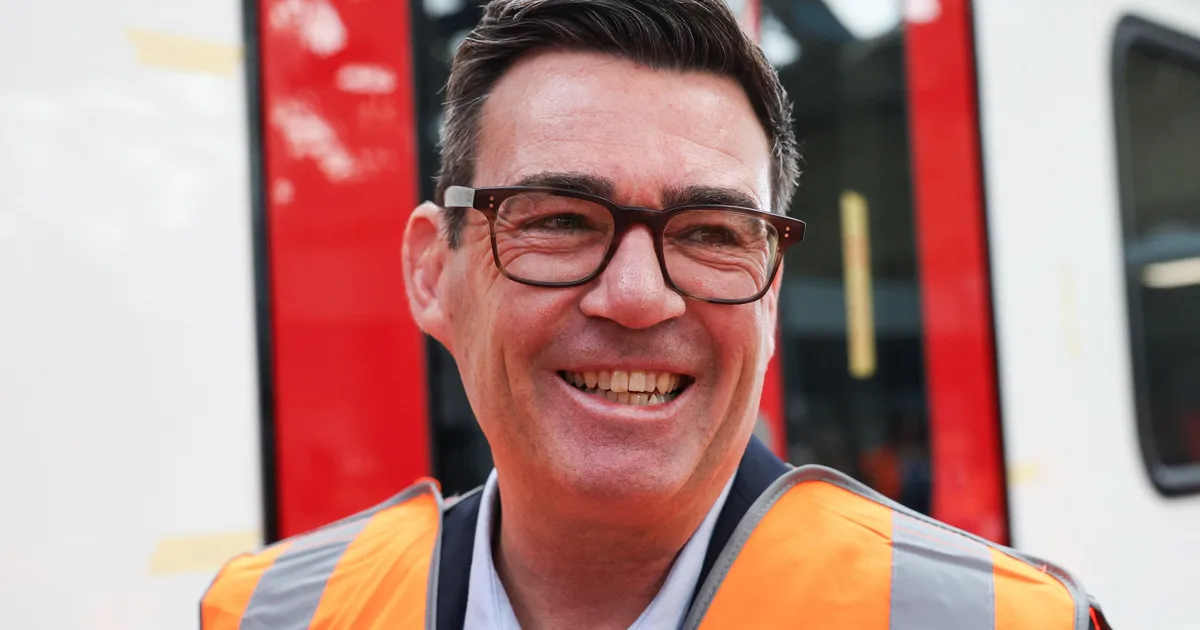
Labour has increased its lead over Reform UK as a new poll confirmed a surge of support under new prime minister Andy Burnham.
A poll of polls compiled by Election Maps UK put Labour on 25.6%, with Reform on 24.3%.
It is a far cry from the start of the year, when Reform led Labour by 10 points.
Both parties were neck-and-neck on July 24, but since then a succession of polls have put Labour in the lead.
The latest, released by Ipsos UK on Sunday, shows Labour has leapfrogged Reform since June.
It put Burnham’s party on 28%, a four-point jump since two months ago.
Over the same period, support for Reform has dropped from 26% to 25%.
The reversal in both parties’ fortunes has coincided with Burnham replacing Keir Starmer as PM last month.
Meanwhile, Reform leader Nigel Farage has been at the centre of controversy over a £5 million gift he received from the Thailand-based crypto billionaire Christopher Harborne and did not declare.
Parliment’s standards commissioner launched an investigation, but that was put on hold when Farage resigned as MP for Clacton to trigger a “people versus the establishment” by-election in the seat.
He is expected to be re-elected when that takes place on Thursday, although his only serious rival is Count Binface after Labour, the Tories, the Lib Dems and Restore Britain all refused to put up candidates.
Listen to Commons People, the podcast that makes politics easy. Every week, Kevin Schofield and Kate Nicholson unpack the week’s biggest stories to keep you informed. Join us for straightforward analysis of what’s going on at Westminster.

My maternal grandparents were married for a remarkable 65 years, remaining devoted to each other through good times and bad until, as many marital vows state: death did they part.
Was their marriage perfect? Not at all. My grandmother was born in Sicily, where passionate, fiery tempers are common. My grandfather had Calabrian roots – his family was from a region in Southern Italy where people are also known for being hot-tempered and stubborn (as my grandmother informed me on numerous occasions when my grandfather had gotten in trouble with her yet again). Needless to say, there were plenty of animated arguments between them over the years.
Despite both having passionate Italian temperaments, their love endured for decades, and much can be gleaned from their marriage. My grandfather in particular was always doling out advice. Chief among his tips was always treating each other with respect and respecting the institution of marriage.

With decades of life experience under their belt, grandparents have much wisdom to impart. That includes marriage and its inevitable ups and downs.
“Much of the marriage advice grandparents pass down has stood the test of time because it reflects what modern relationship science now confirms,” explained Emily Longo, a licensed marriage and family therapist (LMFT) with Silver Hill Hospital in Connecticut.
“Grandparents may not use terms like ‘emotional responsiveness’ or ‘conflict repair,’ but some advice may be remarkably aligned to today’s values and boils down to: Marry someone you genuinely enjoy being with, be kind and don’t keep score.”
Read on for some of the marriage advice that grandparents from coast to coast would give their grandchildren.
Select a partner who can weather ups and downs.
At the risk of stating the obvious, choosing a life partner carefully is an important first step in laying the groundwork for a successful marriage. Finding someone who’s able to stick with a marriage through the bad times as well as the good can make a big difference.
California resident Perry Solomon, a grandfather and author of Grandpa Day: Nurturing Grit, Smarts, and Love in the Next Generation, has shared this bit of advice with his own grandchildren.
“Choose a life partner who will not only celebrate your successes, but also stand beside you during times of failure,” Solomon told HuffPost. “We are all human and will experience failures along with successes. The support of your life partner during difficult times can be essential.”
Show love through actions, not just words.
In my own family, the saying “actions speak louder than words” is used nearly weekly. It’s a statement that applies to many situations, and Solomon says it applies to marriage, where each partner’s actions offer a meaningful way to show love and support.
“Show up, pay attention, and listen for the meaning behind what your life partner is saying,” advised Solomon. “Your actions will often matter far more than your words.”
Don’t expect perfection.
It can be helpful in a marriage or with any important relationship in your life to remember that no one is perfect, and that includes you.
“If you are expecting any person to be perfect, you will be disillusioned,” explained Ruth Nemzoff, a grandparent and author of Don’t Roll Your Eyes: Making In-Laws Into Family and Don’t Bite Your Tongue: How to Foster Rewarding Relationships With Your Adult Children.
“When you accept that the other person is imperfect, you gain the right to ask the other person to understand you, too,” Nemzoff said.
Both parties in a marriage will make mistakes, Nemzoff added. Both will be imperfect. “When you forgive someone else for their imperfections, you could ask that you too be forgiven,” Nemzoff said.
Give your partner the benefit of the doubt.
It’s only natural to get upset with your partner from time to time. But how you handle those feelings matters.
Washington state resident Naomi Aldort, grandmother of three and author of “Listen to Your Baby: Responding to Your Child’s Cues for Optimal Development and Joyful Connection, said it’s important to give your significant other the benefit of the doubt.

andreswd via Getty Images
“Assume he or she meant well and ask questions that will help you understand the how or why,” advised Aldort. “My husband used to do things without my knowledge, like buying a new van. At the time, this angered me. I didn’t listen to his repeated words, ‘I am sparing you the trouble.’ He did spare me a lot of tedious difficulties.”
Those experiences taught Aldort to focus on identifying her husband’s intent and learning to appreciate the reason behind something he said or did. She advises others to do the same, even in cases when you’re asking your partner not to do the thing that may have upset you again in the future.
Forgive quickly.
The things that erode marriage satisfaction aren’t always the big things. A marriage can also be undermined by the small “irritating” things that seem to build up over time, said North Carolina resident Michelle Pippin, grandmother of four.
“The time he forgot to make dinner reservations for Valentine’s Day comes back up 18 months later when he forgot to get flowers for Mother’s Day,” explained Pippin, founder and CEO of Women Who WOW, a platform for women entrepreneurs. “Holding on to the small stuff has a way of eroding the joy and partnership you could be building in your marriage.”
Avoid defensive reactions.
When your spouse speaks harshly in moments of frustration or anger, try to react with mercy rather than anger.
“It may take some intentional effort to move past your defensive reaction, to finding compassion, yet it is the way to connect with his or her pain and offer compassion rather than self-centred anger,” Aldort explained.
Similarly, Aldort advised using the phrase “tell me more” when a partner is upset or angry, to help diffuse the situation.
“It’s an invitation for connection and care,” Aldort explained. “Use it when your partner is upset and accusative, or even hateful, and listen with your loving heart.”
You may even try asking: “‘What do you hate or feel hurt by me the most?’ You would be amazed at the connection this creates,” Aldort said.
Don’t give up your own interests.
Sometimes being part of a relationship can cause you to lose sight of your own interests and passions, especially during the course of years of marriage. But Joy Fox, author of Finding Joy – My Life Began When I Pawned the Ring, said one of the keys to her 55-year marriage was maintaining her own interests.
“Don’t try to change each other. Stay true to your own unique self; it makes you who you are,” Fox said.
“Don’t drown in the partner’s personality,” Fox added. “Find ways to enjoy those activities that you mutually enjoy, and find the time to pursue separately those interests that you enjoy.”
Translation: You don’t have to be joined at the hip for everything. Give each other the space to grow.
A firm foundation is essential.
Ultimately, no marriage is perfect. But enduring marriages often result from a strong foundation. And that foundation is typically based on fundamentals like: Do you enjoy each other’s company? Do you share the same approach to living? Do you share similar views on issues or areas of life that are important to you, whether it’s faith, family, politics or something else?
“People change and grow, but a firm foundation is really critical because every week, you’re continually building this marriage of yours,” Pippin said. “Fight the fights that matter and ignore the rest. Always come back to what you love to do together.”

3 min read
Communicating who pays and what it delivers will be key to winning over uncertain voters.
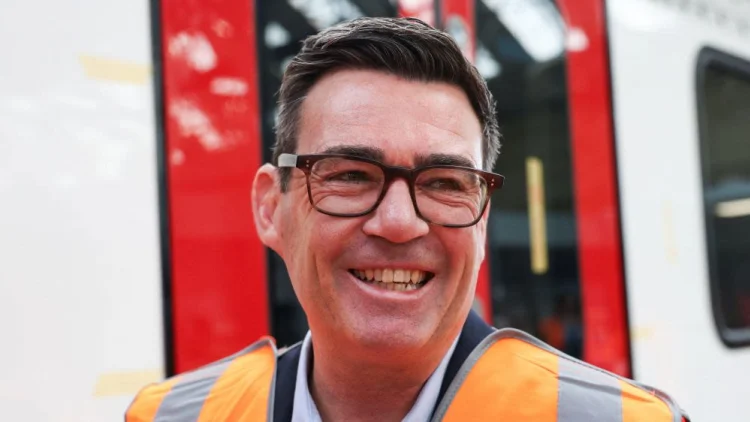
Prime Minister Andy Burnham has put devolution firmly on the agenda since entering office last month, promising the biggest transfer of power away from Westminster in a generation.
Here at “Ipsos North” in Manchester, we have long taken a keen interest in devolution. Namely, how does the public actually feel about it?
As a starting point, we find that people generally like where they live and work, and many may understand the appeal of policy decisions being made closer to them.
In a survey last month, a huge three in four UK adults told us they are satisfied with their neighbourhood, which is a good proxy for “their postcode”. It is a trend we have tracked that has been largely stable over the past four years.
The challenge, however, comes when devolution moves from the relatively abstract idea of “decisions being made closer to people” to the more concrete question of taxation powers, a central plank of the new PM’s agenda.
When Ipsos asked whether people would support or oppose giving local authorities or regional mayors the power to set a portion of personal income tax, a quarter (24 per cent) said they would support it, with almost twice as many (46 per cent) saying they would oppose it.
More than half of UK adults (53 per cent) think the overall amount of tax they personally pay would be higher if their local authority or regional mayor had more power to set and collect taxes, with 8 per cent thinking it would be lower (27 per cent say it would stay the same).
The contrast with taxes on local businesses shows a similar story, if not more evenly divided, with nearly a third (35 per cent) supporting the idea of local powers to set business taxes and another third (33 per cent) opposing it.
These findings do not mean the public are against devolution. What they show is a significant chunk of the population needs to be convinced that more power for their local areas will make a positive difference in their lives.
It is worth noting that the proportion that neither opposed nor supported the above statements on tax was around a third, suggesting a substantial minority don’t know enough to have a view at all. Therein lies an opportunity for the new ministry.
Furthermore, beyond the question of “who pays”, we find that voters can see the potential upside of further fiscal powers flowing to them.
Thirty-eight per cent think locally set and collected taxes would be spent more effectively in their local area than they are currently by national or devolved governments, compared with 26 per cent who think they would be spent less effectively.
Similarly, a third (34 per cent) believe giving local authorities or regional mayors more power over taxes would lead to better outcomes for public services in their area, compared with 28 per cent who think outcomes would be worse.
So then, the challenge for Burnham is not public opposition to greater devolution, but voters who are naturally focused on who pays, how much, and whether extra local power will actually translate into visible benefits they can see, feel and hear about.
Burnham can point to his record in Manchester as evidence of devolution in action. However, he must persuade voters elsewhere in the country that it can work for them, too.
Rachel Brisley is Director of Planning and Devolution at Ipsos in the UK

Wes Streeting has suffered an “unbelievable volume” of homophobic abuse since becoming defence secretary, he has revealed.
He said it was clear that many people online “cannot cope with the idea” of a gay man in the role.
Streeting was brought back into the cabinet by Andy Burnham after resigning as health secretary under Keir Starmer.
Speaking at the Edinburgh Fringe festival, he said his sexuality had been “almost entirely unremarked upon in the media” when he was put in charge of the Ministry of Defence.
But he said that “online it matters to a lot of people”.
Streeting said said the role was an opportunity for him to “challenge this sort of stereotype that clearly persists in dark corners of the internet”.
Despite the decriminalisation of homosexuality in 1967, it remained a criminal offence for military personnel until 1994.
Even after that date, homosexuality remained classed as “conduct prejudicial to good order and discipline” until 2000, meaning service personnel could still be dismissed for being gay.
Streeting added: “I am proud of the fact that in my lifetime we’ve gone from gay people not being allowed to serve in the military to a gay defence secretary.
“And in my first week, someone in the MoD said to me, you know, as a gay man, I’m really proud that we have our first gay defence secretary, and it means a lot to many of us who remember the bad old days.”
Streeting also said Andy Burnham “probably” would not have become prime minister if he had not resigned as health secretary.
“What I think my resignation did that week was force choices for others,” he said.
Streeting also revealed that he had ditched his plan to challenge for the Labour leadership after talks with Burnham during the Makerfield by-election campaign.
He said: “I sort of went in with the aim of saying I think we can show a different way of doing politics in terms of how we debate the future of the Labour Party and how we conduct ourselves in a contest.
“And we sat around over a cup of tea, talking about what had gone wrong. And inevitably, when you talk about what’s gone wrong, you give hints to each other about what you think you need to do to make it right.
“And the more we were talking, the more I was thinking, how much do I fundamentally disagree with this guy on anything?”
Listen to Commons People, the podcast that makes politics easy. Every week, Kevin Schofield and Kate Nicholson unpack the week’s biggest stories to keep you informed. Join us for straightforward analysis of what’s going on at Westminster.

If you’ve ever taken antibiotics, you might’ve noticed your digestive system took a bit of a hit.
On a very simple level, the medication targets bacteria in the body to kill off the bad stuff – unfortunately it can also get rid of the good stuff, too.
Research suggests antibiotic-associated diarrhoea can occur in 5-30% of people either during the early stages of them taking antibiotics, or up to two months after.
These loose stools are one of the “clearest signs” that antibiotics are impacting your gut health, according to Dr Megan Rossi, a gut health scientist at King’s College London and founder of Smart Strains.
“The extent to which antibiotics affect the gut depends on several factors,” she told HuffPost UK.
“Firstly, the type of antibiotic matters. Some antibiotics are narrow-spectrum, meaning they target specific bacteria, while others are broad-spectrum and affect a much wider range of bacteria, including many of the beneficial microbes that live in our gut.
“Dose is another important factor, and repeated or prolonged courses of antibiotics can also have a greater cumulative impact on the gut microbiome.”
Can you protect your gut health when you’re on antibiotics?
Dr Michael Passarella, a gastroenterologist at The University of Alabama Birmingham St. Vincent’s Hospital, suggested it’s “difficult to truly ‘protect’ the microbiome” while taking antibiotics.
That said, certain probiotics, “especially Lactobacillus, Bifidobacterium and Saccharomyces boulardii, have shown to reduce the risk of antibiotic-associated diarrhoea,” Dr Passarella previously said. “They are safe to use, but the long-term benefits are uncertain.”
Dr Rossi points to recommendations from the The World Gastroenterology Organisation that people on antibiotics should take 10 billion CFU of the specific bacterial strain Lactobacillus rhamnosus GG (LGG), twice daily, alongside antibiotic treatment to help reduce the risk of antibiotic-associated diarrhoea.
“This is the exact formulation used in Smart Strains [Dr Rossi’s own brand] for When You’re on Antibiotics,“ she added.
“The formulation has been shown to reduce antibiotic-associated diarrhoea by around 70% compared with placebo in both adults and children in randomised controlled trials.”
Probiotics might also help, but Dr Rossi notes that not all probiotics are the same. “Each different type of bacteria, known scientifically as a strain, has different effects, so the evidence for one strain cannot be applied to another,” she explained.
“Just as I wouldn’t recommend an iron supplement to treat a vitamin D deficiency, I wouldn’t recommend a generic probiotic when the evidence supports a specific strain.”
If your probiotic contains the LGG strain, that is a good sign. Dr Rossi notes the World Gastroenterology Organisation recommends taking this type of strain during your antibiotic course, rather than waiting until it’s finished.
“The recommended dose is 10 billion CFU twice daily, ideally taken a couple of hours away from the antibiotic dose. I also recommend continuing it for at least one week after finishing the antibiotic course to help support recovery of the gut microbiome,” she added.
Dr Passarella also suggested that you don’t need to go for the expensive brands as “some of the commonly found over-the-counter options are just as effective”.
“A high CFU count isn’t necessarily better. The specific strain matters more than the number of bacteria,” he added.
Diet is also a big consideration during this time. Dr Passarella noted “fibre basically acts as a prebiotic”.
“If probiotics are the good bacteria, prebiotics are the food they need to thrive,” he explained, adding that it’s important to eat fruit, vegetables and other fibre-rich foods while taking antibiotics.
Some healthcare providers recommend eating more yoghurt with live cultures while taking antibiotics (providing you’re not sensitive to it).
Yoghurt contains Lactobacillus acidophilus, according to Dr Ravinder Machra, of West Tennessee Medical Group Primary Care. This can help “reup your bacterial balance while you’re taking an antibiotic”, she said.
Fermented foods such as kimchi and sauerkraut may also help.

Thanks to House Of The Dragon and House Of Guinness, James Norton is becoming an international hot property.
However, the Bafta nominee has already been a regular on British screens for nearly 15 years, since rising to fame as the lovable vicar Sidney Chambers in the ITV detective drama Grantchester and the villainous Tommy Lee Royce in Happy Valley.
Since his on-screen debut in the 2010s, James has gone on to appear in a wide array of projects on both the big and small screens – though, admittedly, not all of them have stood the test of time.
As his star continues to rise, here are 13 James Norton roles you may have forgotten about…
Death Comes To Pemberley (2013)

One of James’ earliest notable appearances came when he was cast as Mr Henry Alveston in Death Comes To Pemberley.
The BBC murder mystery drama was an adaptation of the P. D. James novel of the same name, starring Matthew Rhys, Anna Maxwell Martin and Jenna Coleman as characters in the same universe as Jane Austen’s Pride And Prejudice.
Taking place six years after Mr Darcy’s wedding to Elizabeth Bennet, the show followed the investigation into the murder of Captain Martin Denny on the grounds of Pemberley house.
James’ character, Dr Henry, was a lawyer and legal reformer who was involved in the court case, and also served as a love interest to Georgiana, Mr Darcy’s sister.
Lady Chatterley’s Lover (2015)

James played Sir Clifford Chatterley in one of the many adaptations of DH Lawrence’s scandalous 1928 novel.
This TV movie version starred Holliday Grainger as Lady Chatterley and Richard Madden as Oliver Mellors.
In Lady Chatterley’s Lover, James played the war veteran husband of the titular character, who is paralysed from the waist down after returning from World War I.
Written and directed by Line Of Duty creator Jed Mercurio, the BBC adaptation also featured Jodie Comer and Edward Holcroft.
War & Peace (2016)

The BBC miniseries War & Peace is now renowned for its star-studded cast, many of whom went on to become huge names in Hollywood – James included.
The Leo Tolstoy adaptation starred future household names including Jessie Buckley, Lily James, Jack Lowden and Callum Turner, alongside more established actors Paul Dano, Brian Cox and Stephen Rea.
War & Peace followed five aristocratic Russian families as they navigated society, love and the French invasion of Russia under Napoleon between 1805 and 1820.
In the six-part drama, James played the nihilistic Andrei Bolkonsky, the son of the strict retired general Prince Nikolai Bolkonsky and the brother of Princess Marya.
Andrei spends much of the show frustrated with the superficiality of his high society life, trying to find a higher purpose.
Black Mirror (2016)

That same year, James also appeared in the first instalment of Black Mirror’s third season (and its first as a big-budget Netflix original), entitled Nosedive.
Bryce Dallas Howard took the lead in the episode, which took place in a not-too-distant dystopian future, where people rated each other after each interaction via a smartphone app.
James played Ryan, the laid-back, videogame-obsessed brother of Bryce’s Lacie. Unlike his sister, Ryan was nonplussed about society’s opinions of him, rejecting the superficiality and spending most of the episode hiding behind a VR set, while Lacie desperately sought the affirmation of those around her.
The episode is still one of Black Mirror’s highest rated and best remembered offerings ever, with The AV Club commending the episode for painting “a darker picture, of a world in which the instant gratification of online approval has spread outward”.
Flatliners (2017)

Michael Gibson/Columbia/Kobal/Shutterstock
You’d be forgiven for forgetting they ever remade Flatliners, let alone that it featured James Norton.
Meanwhile, the 2017 reboot starred Elliot Page, Diego Luna, Nina Dobrev and Kiersey Clemons alongside James as medical students who try to conduct experiments that create near-death experiences.
The remake, which also acted as a sequel, was slammed by critics and now holds a measly 4% score on Rotten Tomatoes.
Hampstead (2017)

Around the release of the ill-fated Flatliners, James also played a supporting role in Hampstead, alongside Brendan Gleeson and the late Diane Keaton.
The romantic comedy-drama was based on the real-life story of Harry Hallowes, who lived on a camp on Hampstead Heath, and successfully battled property developers, successfully claiming adverse possession when they tried to evict him.
Brendan played Donald, who served as a fictionalised version of the late Hallowes, with Diane starring as an American widow whom he befriends after she tries to help him.
James appeared as her well-meaning son, who was worried about the financial and personal burden Donald was putting on his mother.
Although made in 2017, the film’s release was delayed until 2019, reportedly due the allegations made against Harvey Weinstein, who had acquired the US distribution rights to the film around that time.
The movie was met with mixed reviews with Variety calling the unlikely rom-com “gentle, attractively appointed and phonier-than-thou Britcom in the Richard Curtis mould”.
McMafia (2018)

BBC audiences were absolutely hooked on the crime drama McMafia when it premiered in 2018.
In the gripping series, James played Alex Godman, a young financier who became embroiled in a life of crime, rubbing shoulders with the Russian mafia and the Mexican cartel.
Inspired by a non-fiction book by journalist Misha Glenny, the series also starred David Strathairn and Juliet Rylance.
“This isn’t just a story of the sexy side of the mafia which people are attracted to, but also the cost of that lavish lifestyle, how it’s paid and who pays for it,” James teased to iNews in 2017.
The Trial Of Christine Keeler (2019)

Another big-budget BBC drama James Norton appeared in was The Trial Of Christine Keeler. Airing at the end of 2019 and start of 2020, the miniseries followed the real-life events of the 1963 Profumo Affair.
Sophie Skelton played Christine Keeler, the model who became involved in a national scandal when she had an affair with two married men. The 21-year-old was entangled with both a Soviet Union attache and the UK Secretary of State for War, John Profumo, during the Cold War,
James played Stephen Ward, a well-connected osteopath and artist who was dragged into the scandal when he introduced Profumo to the then 19-year-old Christine Keeler. He was also friends with the Soviet attaché and was later involved in the cover-up.
Little Women (2019)

At the time, James’ most high-profile job to date came when he appeared in 2019’s Little Women, directed by Greta Gerwig.
The British star appeared alongside an illustrious cast including Saoirse Ronan, Timothée Chalamet and Florence Pugh, playing the hardworking tutor John Brooke.
In the film, his character married Emma Watson’s Meg March, with whom he has two children.
“I was very aware of the calibre of people on that set. I spent most of my time standing in the corner just trying to soak as much of it as I possibly could,” he told Variety at the Cannes Film Festival, calling working with the star-studded cast a “total privilege”.
Nowhere Special (2020)

One of James’ most critically-acclaimed projects is the 2020 indie film Nowhere Special, in which he played a single father with a terminal illness.
James starred as John, a man who must make arrangements for his four-year-old son after learning he has terminal cancer, while also shielding the young boy from his inevitable death.
In 2021, the actor was nominated for a British Independent Film Award for Best Actor for his performance in the drama. Nowhere Special holds a rare 100% score on Rotten Tomatoes, with The Guardian praising James’ “spine-tingling, intimate performance”, and the BFI calling him “grounded and genuine” in the role.
The Nevers (2021)

Set in Victorian London, the series followed a group of people who acquired abnormal abilities after a mysterious supernatural event.
In the steampunk series, James played Hugo Swann, an aristocratic pansexual man who owns a private club and is known for extorting customers.
In 2021, James called his character an “absolute joy to play”, telling Radio Times: “I love being able to let rip, and tap into that dark, wonderful, bawdy side of humanity. We’re all desperate to be Hugo Swann, but we’re all too repressed to actually give it a go.”
Bob Marley: One Love (2022)

Kingsley Ben-Adir won acclaim and critical nods for his leading performance role as Bob Marley in the 2022 biopic, One Love.
The biopic followed the reggae legend’s career from his mid 70s success through to his untimely death in 1981.
In the film, James played the record producer and founder of Island Records, Chris Blackwell, who represented artists like Bob Marley, Jimmy Cliff and Peter Tosh, and is credited with helping bring reggae music to the wider world.
James researched the mogul extensively and consulted with art director Neville Garrick to capture the producer’s personal dynamic with the late reggae singer.
He told Screen Rant about the importance of Neville and Bob’s son Ziggy Marley’s involvement with the project.
“Having those guys there, both in terms of just the references and the historical advice was brilliant, but it was a bigger, more profound presence,” he enthused.
Playing Nice (2025)

Just last year, James both starred in and executive produced the four-part ITV drama Playing Nice, kicking off a run of prolific projects that included King & Conqueror for the BBC and House Of Guinness for Netflix.
In the show, James and Niamh Algar played a husband and wife, who discovered that their child had been swapped with another couple’s in the same hospital when they were newborns babies.
The series followed the couple as they tried to “play nice” and co-parent their biological child, while still raising the toddler they believed to be their own.
However, tensions quickly rose when legal threats were made by the other set of parents.
The show was one of ITV1’s highest-rated new dramas of 2025, breaking ITVX records with its viewing figures.
Digital Spy hailed Playing Nice as “the kind of show that will plague your mind in an infuriating, all-consuming, perfectly addictive way, although it did face some criticism due its storyline.
James hit back at the critics at the time, insisting: “Family, either your parents or your children, they are the thing which you have that 4am anxiety about,” he said.
“So this… I mean, look, I don’t want to push back [but] the people who are finding it too much – it’s drama!”
House Of The Dragon’s third season concludes on Monday on HBO Max, Sky and Now in the UK.
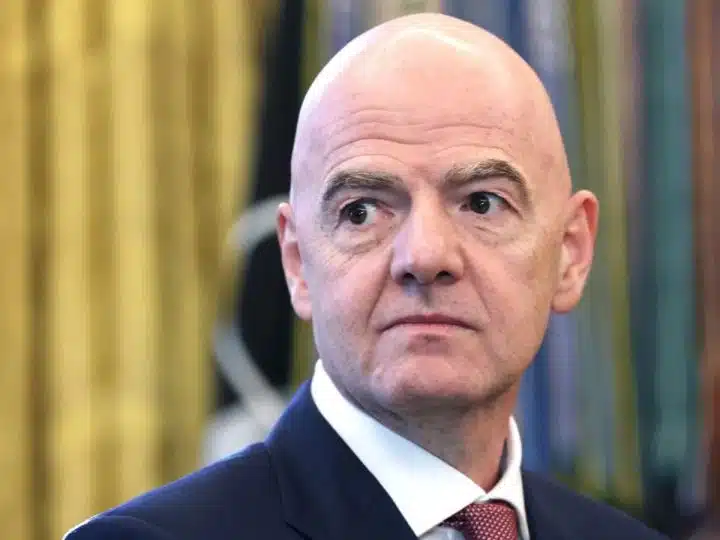

Gianni Infantino, President of FIFA, is facing mounting pressure amid growing scrutiny of his leadership. This comes after The Telegraph published a report detailing new allegations concerning his tenure at the Union of European Football Associations (UEFA).
According to the report, the events took place when Infantino served as UEFA General Secretary, prior to his election as FIFA president in 2016. Allegations center on the promotion and salary increase of a female staff member, which reportedly raised concerns within the organization.
Promotion and salary hike
The Telegraph reports that the employee, who held an administrative role, received a promotion that included a salary increase of approximately 30 percent, bringing her annual earnings to nearly 170,000 euros.
The newspaper noted that this decision caused friction and raised questions among some UEFA staff at the time, specifically regarding the influence Infantino reportedly exerted during the promotion process and the negotiation of her financial terms.
Infantino’s confrontation with Platini
According to the account provided by The Telegraph, the matter escalated within UEFA and eventually reached the then-president, Michel Platini, who intervened to address the situation.
Sources cited by the newspaper claim the situation led to a direct confrontation between Platini and Infantino, stemming from their disagreement over how the employee’s case and her promotion were handled.
Resurfacing allegations
The report suggests the matter extended beyond the employee’s time at UEFA. The Telegraph alleges that Infantino later assisted the same individual in securing a new position at another sports organisation, reportedly leveraging his professional network within football.
These claims arrive as Infantino faces increasing criticism regarding his management of FIFA, most notably the recent controversy surrounding his commercial plans to sell a stake in World Cup rights — a proposal that has drawn strong objections from both within and outside UEFA.
The Telegraph emphasises that its report details allegations and events from several years ago, noting the importance of distinguishing between these claims and facts that have been officially or judicially proven.
Featured image via the Canary
By Alaa Shamali
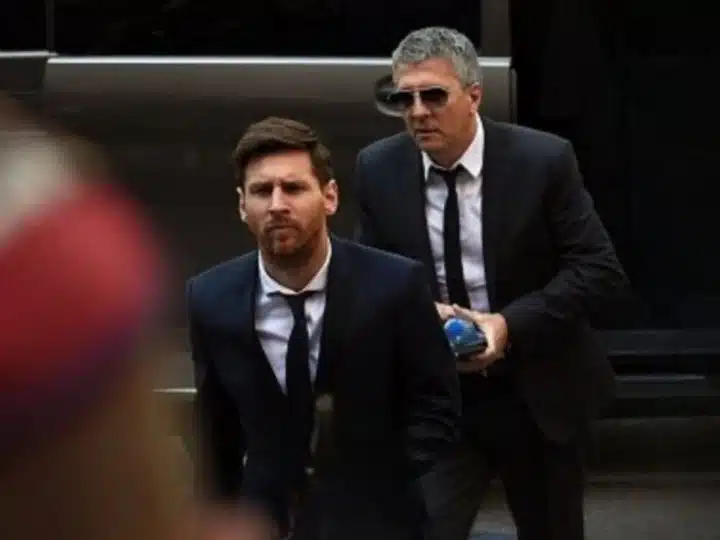

Argentine superstar Lionel Messi has received the heartbreaking news that his father and agent, Jorge Messi, has passed away at the age of 68 following a long battle with illness. Jorge’s name has been inextricably linked to the most significant milestones in the life and career of the Argentine captain.
According to Argentine media reports, Jorge passed away around 10 p.m. Friday at a medical facility in Rosario, his son’s hometown, following a recent decline in his health.
Jorge Messi: A constant presence
Jorge Messi was far more than just a father; he was a central figure throughout his son’s career, managing his professional and commercial affairs as Lionel rose to become one of the most celebrated figures in football history.
He was a constant presence from Lionel’s early childhood, notably advocating for the special treatment required for his son’s growth hormone deficiency and supporting the family’s pivotal move to Spain, where Lionel’s ascent with FC Barcelona began.
From Rosario to the top
Jorge was instrumental during their move from Argentina to Europe, providing critical support as Lionel navigated the challenges of entering professional football at such a young age.
Over the years, Jorge took on the responsibility of managing his son’s professional affairs—a role he assumed when Lionel was only fourteen — nurturing a close partnership that spanned decades. He remained present throughout the most important moments of Messi’s career, from his early years at Barcelona and his brilliance with the Catalan club to his tenure with the Argentine national team and his current experience with Inter Miami.
A life of devotion
Jorge’s passing follows a period of declining health that was closely monitored by medical professionals.
Messi had previously appeared visibly distressed at public events, alluding to the difficult days he was enduring and confirming that his struggles stemmed from private family matters rather than football. With Jorge’s passing, Lionel loses one of the most influential figures in his life—a father who stood by his side from the early days in Rosario to the pinnacle of world football, maintaining a bond that was both deeply personal and professionally profound.
Featured image via the Canary
By Alaa Shamali

It’s widely believed that Kenneth Tynan was the first person ever to say ‘fuck’ on British television, in 1965. But, wouldn’t you know, Miriam Margolyes had a go first, in a 1963 episode of University Challenge. Sadly for her, the word was bleeped out and she’s been trying to make up for it ever since. A fellow thespian recalled that she once gave her excuse for being late to rehearsal as having been delayed while ‘wanking off’ a park keeper. I looked up her Desert Island Discs, and was absolutely amazed to find out that she hadn’t chosen the old Flanders and Swann number that goes: ‘Ma’s out, Pa’s out, Let’s talk rude! / Pee Po Belly Bum Drawers / Let’s write rude words all down our street / Stick out our tongues at the people we meet / Let’s have an intellectual treat / Pee Po Belly Bum Drawers.’
Being a ‘potty-mouth’ is one of the things Margolyes is famous for. Indeed, it’s one of the things that makes her a ‘National Treasure’. (Ick, ick, and thrice ick!) I see that I wrote in the Spectator a while back: ‘Though they can be anything from actors to zoologists, they will have one loathsome character trait in common; they were all massively ambitious when young, but they like to pretend that their success was somehow organic and that only other – shallow, grasping – people are driven by attention-seeking and greedy for money.’
As if she wasn’t filthy rich enough (she owns three houses – four until recently, so downsizing), Margolyes is to embark on a national tour in September, warning us with a nice bit of pre-merching that ‘This old dyke can only go on so long’, as she’s 85. I thought of Alan Bennett saying, ‘If you live to be 90 in England and can still eat a boiled egg, they think you deserve the Nobel Prize’. If you can still say ‘fuck’ at 60, they apparently give you the OBE.
Like much about her, the fact that Margolyes took the Order of the British Empire is a fascinating contradiction if one is being kind, an act of rank hypocrisy if not. The first political party she joined was the Workers Revolutionary Party, led by Gerry Healy, a prolific bully and rapist. In the 1970s, it was a kind of finishing school for very daft actors. It’s fair to say that her politics, like her vocabulary, never really matured. She was all over Corbyn. She signed a 2015 letter criticising the Jewish Chronicle for reporting her pin-up’s alleged associations with various anti-Semitic charmers. In 2019, endorsing his Labour leadership, she added her autograph to yet another billet doux to the saturnine scowler, and described him as a ‘beacon of hope in the struggle against emergent far-right nationalism, xenophobia and racism in much of the democratic world’. In 2020, she told The Times that he had been forced to resign from the leadership ‘by a conspiracy within the party motivated from Israel’.
The Gaza conflict has been a field day for her, where she can indulge her demonising of Jews who think differently to her as blatantly as she pleases. She is a signatory to Jews for Justice for Palestinians. In a short video posted to social media, she said:
‘I have never been so ashamed of Israel as I am at this moment. To me, it seems as if Hitler has won. He’s changed us Jews from being compassionate and caring and do unto others as you would have them do unto you into this vicious genocidal nationalist nation.’
Understandably, the Campaign Against Antisemitism has called her views on Israel ‘repugnant’ – there is something uniquely vile about a Jew comparing other Jews to Hitler for the slobbering delectation of left-wing Pally-flag-shaggers.
Her big thing is making everything – from her suicidal empathy to her swearing – ‘cuddly’ and because she has clung stubbornly to her bulk, she’s got away with it. She’s a tranny fan, too, giving her the hat-trick of trans, Palestine and potty-mouth in common with Dawn French. But French has somehow managed to foul her own nest, with even former fans aghast at last year’s ‘bad fing’ Gaza video. Is it because Miriam’s a lesbian? Or because she’s registered as disabled, with spinal stenosis, which means she needs mobility aids, as well as osteoarthritis? Perhaps there is a feeling that to openly admit dislike of her would be to ‘hate on’ too many minorities at once.
That she is plain has also worked to her advantage. No one can point at her and say, ‘Well, she only got hired because everyone fancied her!’. It’s fair to say that her voice, rather than her face, has been her fortune. She started out in the 1970s reading an ‘erotic’ audiobook called Sexy Sonia: Leaves From My Schoolgirl Notebook and later made many a young man worry that he might be a pervert for fancying a cartoon animal when she voiced the Cadbury’s Caramel Bunny in the 1990s. She has worked non-stop in a profession where female beauty is almost compulsory – and she has gained more work the older she becomes, even in films, which are unkind to the aging female. Her first major film role might have been the ignominious-sounding Elephant Ethel in 1977’s Stand Up, Virgin Soldiers, but by 1989 she was winning the LA Critics Circle Award for Best Supporting Actress in Little Dorrit. Dickens was to come in handy, from the one-woman show Dickens’ Women, in which she played 23 characters, to the 10-part BBC documentary, Dickens in America.
Her credits make the head spin. Blackadder, Babe, Muriel Spark’s Girls of Slender Means, Martin Scorsese’s The Age of Innocence, all the female characters in Monkey and for the Gay Sweatshop theatre company. When did she find time to eat? But somehow she has, being refreshingly open about her own greed, to the point that she partially blames her bad health on her love of desserts. (These days it would be ADHD, as Caitlin Moran recently claimed about her love of booze.) She told the How To Fail podcast:
‘I’ve limited my life because of my longing for fudge or cheesecake… It is a major failure, and because of that, I’ve got spinal stenosis. I can’t walk. I’m going to be in a wheelchair before I’m much older… It’s just greed, lack of discipline, all the things that I’m embarrassed by in myself.’
Again refreshingly, she admits to being ‘greedy for money’ and makes an ‘enormous amount’ of it. She turned down a Marvel role after demanding a million pounds and they ‘only’ offered her half. Though she appears to ‘identify’ as a socialist and has said that she often feels that rich people ‘shouldn’t have what they have’ and that ‘I don’t feel easy with rich people’, how can she square this with sitting on more than £4million, half a mil of which came from recording Cameo fan messages?
But just when you think she can’t be any more of a hypocritical bore, she has to go and spoil it all by saying something smart. Though I love JK Rowling, and can’t get enough of her Strike novels, I do find adults who read Harry Potter amusing. In 2024, Margolyes, who played Professor Sprout, offended quite a few of them by saying: ‘I worry about Harry Potter fans because they should be over that by now… it’s for children.’ A Guardian Q&A in 2016 revealed her to be eye-poppingly honest and original:
‘JK Rowling is a fabulous woman. And I just love the fact that the richest woman in Britain is a writer – what a brilliant state of affairs… I can’t bear children. I support children’s charities, I just don’t want them around me… Marriage is for straight people. I’ve been with my partner for 48 years – although she lives in Holland and I live in England. We’ve had a civil partnership, but the thought of referring to one another as “wife” makes me feel sick.’
Reluctantly, having started out in full-on flamethrower mode, I came to the conclusion that there’s much to admire about Margolyes. It’s like the honest side of her keeps trying to duke it out with the socialist side of her. Perhaps (like me) she simply talks too much. Queen Elizabeth II had the right idea at that reception for British Book Week, perhaps. Asked what she did, MM replied that she was ‘the best reader of stories in the whole world’ – but when Her Maj moved on to speak to a man who worked with dyslexic children, Margolyes kept butting in, to which the queen merely said: ‘Be quiet.’
Still, in a world where being left-wing requires one to never keep one’s politics sensibly à la carte (to quote Lionel Shriver), I can’t help wishing that this old dyke goes on for a good while longer yet.
Julie Burchill is a spiked columnist. Follow her Substack, ‘Notes from the Naughty Step’, here.
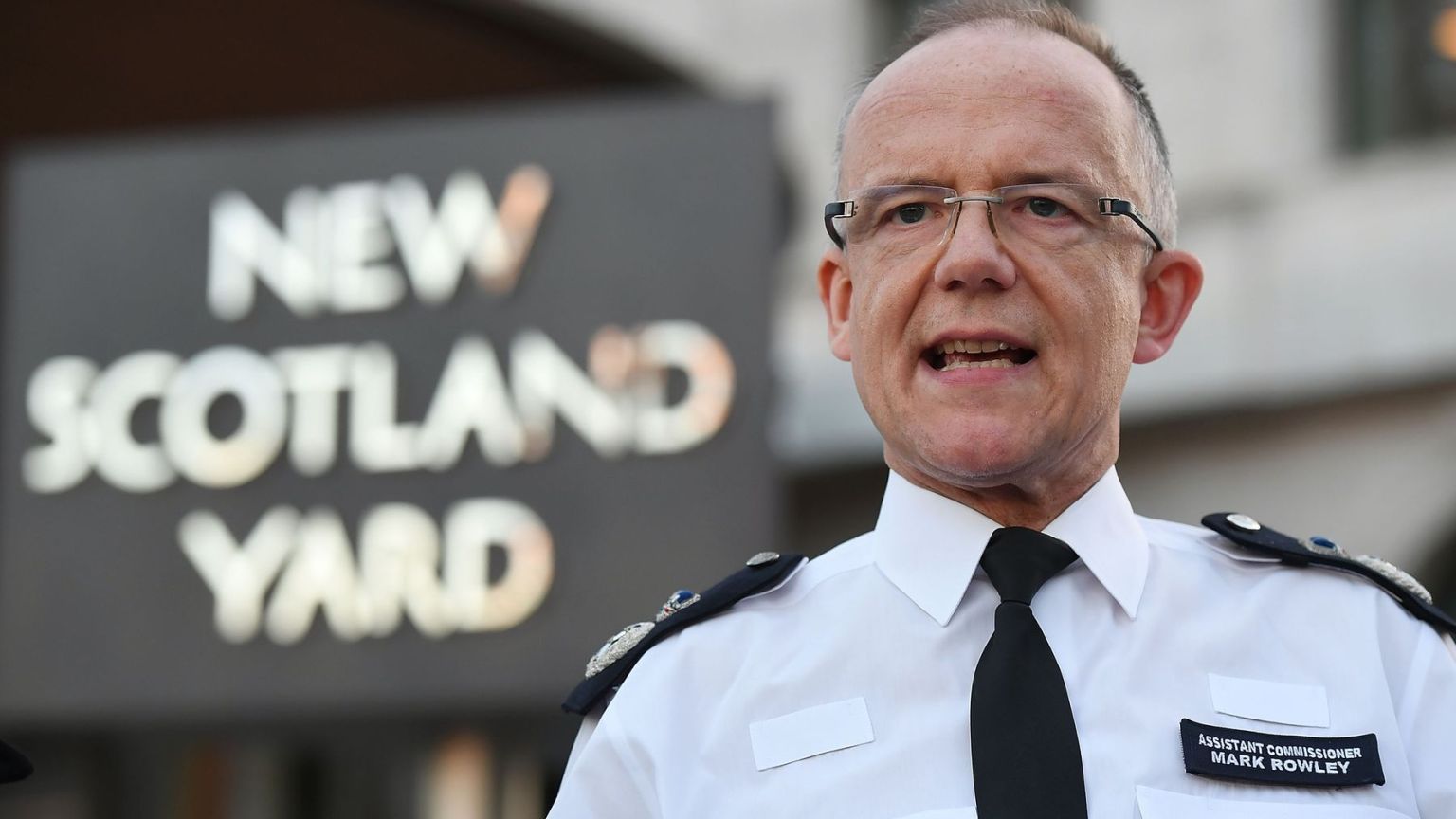
Public confidence in policing seems to be dwindling by the day. London’s Metropolitan Police, in particular, is looking less like a guardian of law and order than a bloated bureaucracy itching to police the boundaries of ‘respectable’ opinion.
The latest blow to public trust arrives on the back of the Jason Arday affair. In 2025, Jack Grove, a journalist at Times Higher Education, was investigating allegations that the then Cambridge professor had plagiarised parts of his PhD, and contacted him to offer him the right of reply. In other words, a journalist in the higher-education sector was checking details and putting difficult questions to a prominent academic. In a sane democracy, that isn’t suspicious conduct – it is the job description of a journalist.
Yet soon afterwards, the Met opened an investigation into Grove on suspicion of ‘harassing’ the academic. Grove says officers also instructed him to make no further contact with Arday because his enquiries had affected the professor’s ‘mental health’.
During my two decades in policing, asking an individual to leave someone alone because they were getting upset was never part of any training package. But the Arday story gets worse. After four months, detectives concluded there was no case to answer. They contacted Grove in order to notify him that he was no longer under investigation, only to find out that nobody had initially informed him that he was under investigation – so they couldn’t even do that properly.
Such absurdity and ineptitude would be comic were they not so concerning. One might have thought that the police had enough to occupy their time without treating legitimate reporting as a case for detectives. But this is what institutional activism within the police looks like. Burglary and robbery are shrugged at, disorder tolerated, and yet a reporter asking awkward questions is apparently enough to trigger the machinery of the state. The message is brutally simple – offend the wrong sensibilities, trespass on the wrong protected terrain and the police will come knocking.
Incidents like this are no longer aberrations. This is merely the latest in a long list of occasions where the police have intervened in areas of life that shouldn’t concern them. Their priorities are all over the place. High-ranking officers are fluent in every fashionable orthodoxy, but they become strangely tongue-tied when we ask why burglaries go unsolved, anti-social behaviour is indulged and the streets feel unsafe.
This matters because British policing rests on consent. Yes, the notion of consent is nebulous, but it is the only reason the police possess any moral authority. The public accepts police power because it believes that power will be used impartially, proportionately and in defence of common liberties. Once people conclude that policing has become culturally captured or openly hostile to mainstream opinion, that authority will leak away.
The growing public distrust of the police hasn’t emerged from nowhere. For many Britons who have long been instinctively pro-police, recent controversies have made that loyalty harder to maintain. They look at the wholly avoidable tragedy of Henry Nowak, the enthusiasm for recording ‘Non-Crime Hate Incidents’ and the embrace of fashionable ideological causes, and they understandably ask the obvious question: whose side are the police on?
The investigation into Grove deepens that distrust because it strikes at a liberty that should be non-negotiable. A free press isn’t only free when its questions are soft, soothing or pre-approved by the intelligentsia. Journalism involves pressure, persistence and asking questions the powerful and the thin-skinned would rather dodge. That isn’t harassment; it is democracy in action.
Just because the investigation into Grove’s actions didn’t lead anywhere, the police still caused damage by launching it. It acted as a warning to every other reporter tempted to dig where ‘polite’ society would rather they didn’t – in this case, into Jason Arday’s academic work. That is why the Met’s conduct cannot be brushed aside as a harmless mistake.
Met commissioner Mark Rowley has admitted, yet again, that his officers made an error. He said that any potential investigation into Grove should have been screened out as not requiring police action. But the very fact that it wasn’t is an indictment of modern policing. The employee who first looked into this should have realised immediately that it wasn’t worthy of police action. But instead, the officer either genuinely thought this constituted an offence, or that failing to act upon it would have caused him or her to be dragged before a misconduct board. Either way, it is symptomatic of the ideological capture of what should be an impartial institution.
Scotland Yard is losing its way. It has become a danger to the very liberties it is supposed to protect. If a police force adopts an activist posture – treating the taking of offence, distress, reputational embarrassment or ideological sensitivity as matters for law enforcement – it becomes inevitable the public will turn.
The Met might imagine this episode is over because Grove is no longer being investigated and Arday has resigned. It is not. The real case now is against the culture and leadership of an institution that, wilfully or otherwise, mistook journalistic scrutiny for wrongdoing. On that charge, they are guilty.
Paul Birch is a former police officer and counter-terrorism specialist. You can read his Substack here.

Aaron McKenna: Irish boxer beats Etinosa Oliha to win IBF world middleweight title in the 3Arena in Dublin

Watch British Grand Prix 2026 MotoGP for FREE: Live streams

Inside Horwich’s new lifestyle shop launched by mum and daughter


-

 Politics7 days ago
Zack Polanski: an incitement to murder Nigel Farage?
-

 Fashion2 days ago
Frugal Friday’s Workwear Report: Cap-Sleeve Pointelle Crewneck Sweater
-

 Fashion2 days ago
Weekend Open Thread: Mattifying Sunscreen
-

 Crypto World7 days ago
Crypto PAC spending tops $2M in Michigan House race
-

 Business6 days ago
DTCR: Deleveraging And A Hedge Fund Collapse Point To A Possible AI Bottom
-

 Crypto World7 days ago
XRP Ledger urges node upgrade after manifest flood
-

 Sports3 days ago
Jordan Coyle & Cordiamo take Laya Arena Stakes at RDS
-

 News Videos23 hours ago
Can Astrology Help Find Gold and Silver Trends? A Financial Astrology Guide
-

 Crypto World5 days ago
US Tech Stocks See Largest 5-Week Inflow in History: Can Nasdaq Break Its Downtrend?
-
 Business3 days ago
US stocks: Dow closes at record on Mideast optimism; SpaceX, AMD drag Nasdaq
-

 Politics3 days ago
Reform UK And Greens Sink To Lowest Favourability Ratings To Date
-

 Business4 days ago
Nvidia Stock Climbs 2.5% as Chip Sector Rally Builds Ahead of AMD Earnings, Nvidia’s Own Report Looms
-

 Crypto World5 days ago
Polymarket targets $20 billion valuation as competition heats up in prediction market sector
-

 Tech6 days ago
OpenAI teases Astra, its next major AI model, after it solves 10 long-standing math problems
-

 Tech4 days ago
OpenAI, Anthropic AI agents targeted real people and systems in cyber tests
-

 Business3 days ago
Supply chain issues impact Ingredion
-

 News Videos6 days ago
#crypto #cryptocurrency #cryptonews #cuet2026 #ceuta
-

 Business6 days ago
Myspace owners announce plans to relaunch the once-popular platform
-

 News Videos6 days ago
Crypto.com Partners with UFC for UFC 331 Event
-
 Crypto World5 days ago
CLARITY Act Senate Vote Locked In, But 60-Vote Hurdle Looms Large
You must be logged in to post a comment Login