
Business
More than 1.27M Ram 1500 pickups recalled over possible seat belt issue

Former Chrysler Chairman and CEO Bob Nardelli joins ‘Mornings with Maria’ to discuss why he believes President Donald Trump’s agenda is boosting the economy, lowering energy costs and strengthening U.S. defense.
Chrysler is recalling more than 1.27 million pickup trucks in the U.S. over a possible seat belt issue that could increase the risk of injury in a crash.
The recall covers 1,271,294 model-year 2019 through 2026 Ram 1500 vehicles. Chrysler estimates that about 0.1% of the recalled vehicles actually have the defect, according to the National Highway Traffic Safety Administration (NHTSA).
NHTSA said the second-row seat belt buckle anchors may have been improperly installed, leaving the vehicles out of compliance with federal safety requirements.
SOME OLDER FORD VEHICLES POSE ‘UNREASONABLE’ SAFETY RISKS, REGULATORS WARN
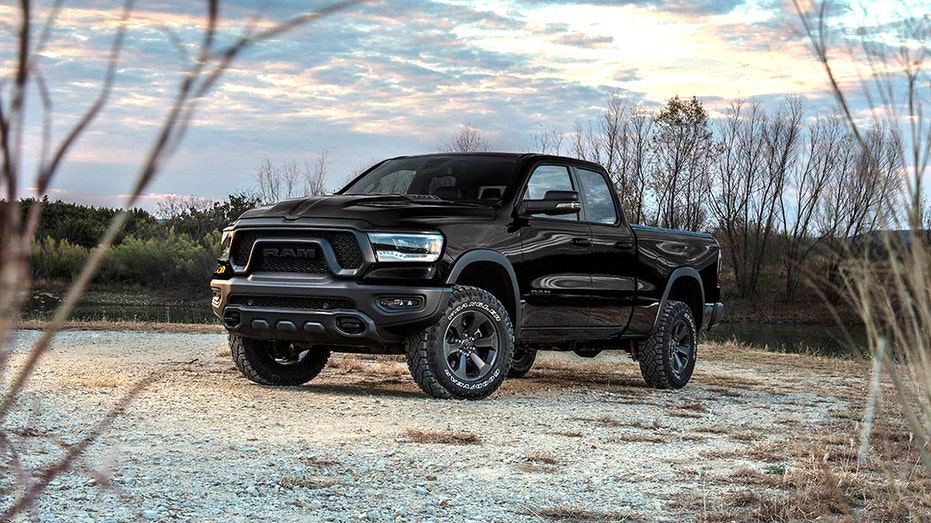
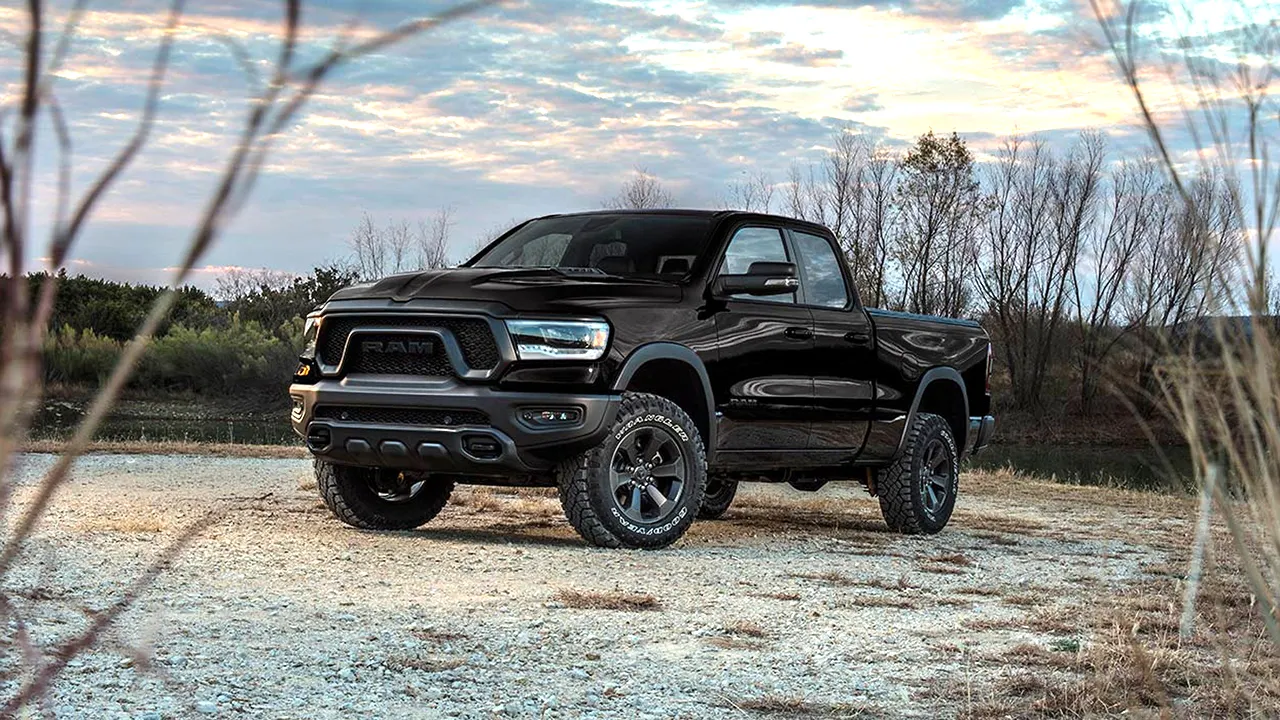
A 2019 Ram 1500 Rebel Black Edition pickup truck. Chrysler is recalling more than 1.27 million pickup trucks in the U.S. over a possible seat belt issue. (Stellantis)
“Reduced load management by the seat belt buckle may result in injury to vehicle occupants in certain types of driving conditions or crashes,” the report states.
The recalled trucks were produced between Feb. 17, 2018, and April 27, 2026.
Production and service records were used to determine the potentially affected vehicles, according to NHTSA.
HONDA RECALLS MORE THAN 880,000 VEHICLES OVER REAR SUSPENSION FAILURE RISK
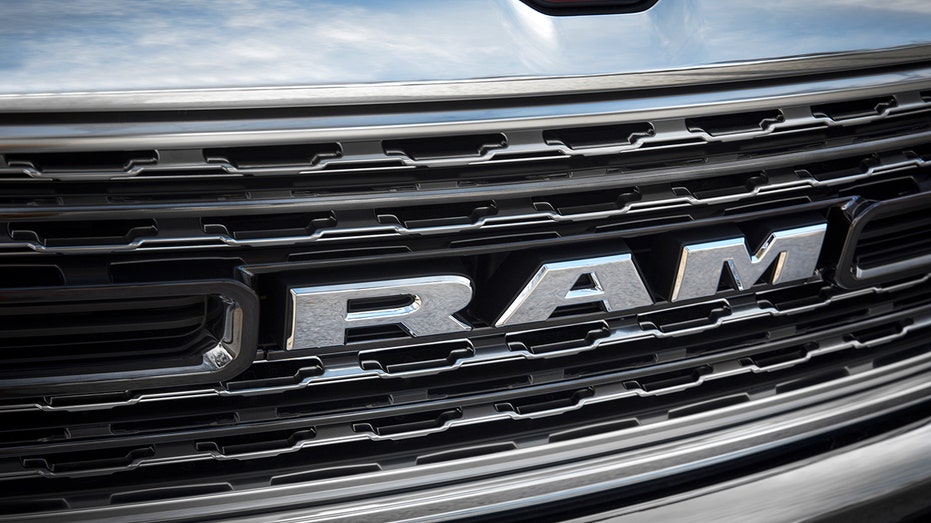
The grille of a 2019 Ram 1500 Limited pickup truck. The recall covers 1,271,294 model-year 2019 through 2026 Ram 1500 vehicles. (Stellantis)
NHTSA said the recall stems from a vehicle assembly issue rather than a defective component.
Dealers will inspect the second-row seat belt buckle anchors and, if necessary, properly attach them to the vehicle’s body structure at no cost to owners.
“The remedy will be to ensure that the second-row seat belt buckle anchors are properly affixed to the body structure,” the report states.
JAGUAR LAND ROVER RECALLS MORE THAN 15,000 VEHICLES OVER VISIBILITY-LIMITING DEFECT
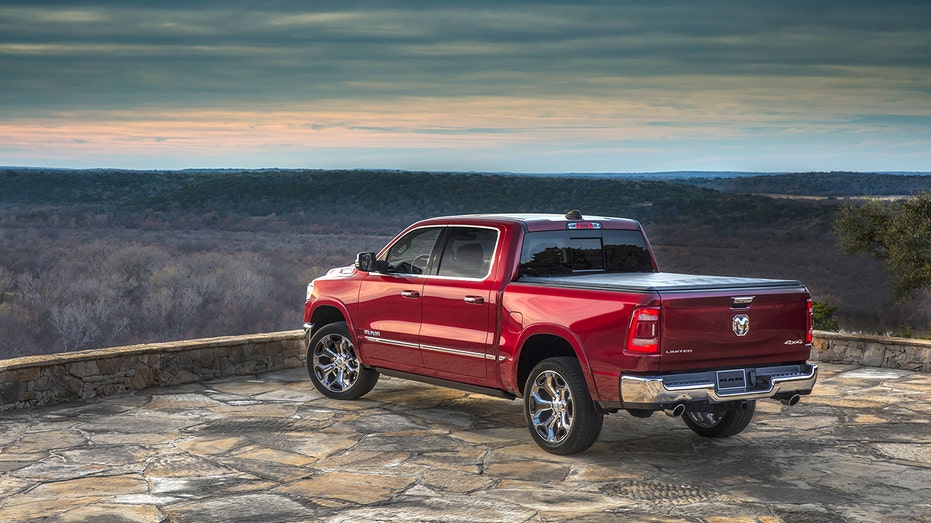
A 2019 Ram 1500 Limited pickup truck. The recalled trucks were produced between Feb. 17, 2018, and April 27, 2026. (Stellantis)
CLICK HERE TO GET FOX BUSINESS ON THE GO
Dealers were notified on or about Aug. 6, with owner notifications set to begin Aug. 18.
Stellantis, Chrysler’s parent company, could not immediately be reached by FOX Business for comment.


Westpac Q3 2026 slides: steady growth masks looming margin pressure

Iran ties Hormuz reopening to US concessions on several demands


Seeking Alpha’s transcripts team is responsible for the development of all of our transcript-related projects. We currently publish thousands of quarterly earnings calls per quarter on our site and are continuing to grow and expand our coverage. The purpose of this profile is to allow us to share with our readers new transcript-related developments. Thanks, SA Transcripts Team
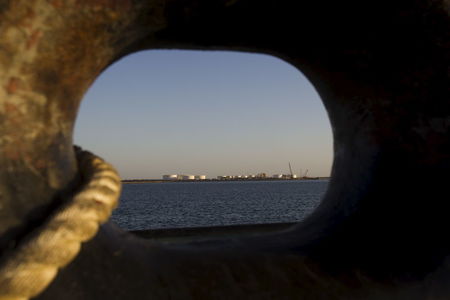
Oil rises as uncertainty continues over reopening of Strait

Trump names Will Scharf as White House counsel
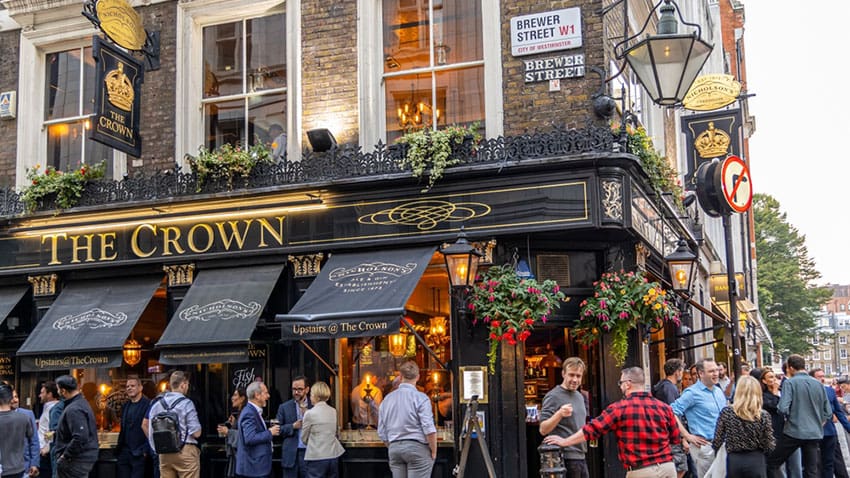
Last Thursday evening I stood in a pub off Brewer Street with a pint in one hand and an elbow on the bar, talking with an old friend that I regularly find myself taking over the media world with.
By the second pint we had solved the skills crisis, where Spurs will finish next season and I’d advised him on his new electric car purchase. The doors were open, the crowd had spilled politely onto the pavement, and for ninety minutes the British economy was doing exactly what it says on the tin.
However, it turns out I was part of the problem. Buried in Westminster City Council’s new draft licensing policy, out for consultation until five o’clock this evening, is a desire for West End venues to swap “open bar space that caters for high volume vertical drinking” for seating, table service and the ordering of food. Vertical drinking, for those who have not kept up with the literature, is standing up with a drink. In a pub.
The council has since insisted there is no plan, and never has been, to ban standing up in a Westminster pub, which is what organisations always say once a consultation catches fire. But the draft statement of licensing policy says what it says, and licensing policies are not mood boards. They are the criteria against which every new licence and variation is judged. If the policy smiles upon seated table service, applicants will promise seated table service, and the West End will get it by increments, one genuflecting application at a time.
Even Downing Street felt moved to intervene, declaring that busy pubs full of people talking to each other are “not a public nuisance, it is British life, and it is thousands of jobs”, while Sadiq Khan complained that you cannot run a world-famous nightlife district with a village-hall mindset. When No 10, the Mayor and every publican in Soho find themselves in furious agreement in the second week of August, something properly daft is afoot.
And we know this particular species of daft, because we lived through it. Cast your mind back to the winter of 2020, when the finest minds in Whitehall convened to determine whether a scotch egg constituted a substantial meal, and honest citizens ordered plates of chips they had no intention of eating in order to drink a pint lawfully. Nobody voted for the substantial meal rule. It seeped out of guidance, and within a fortnight it was the law of the land in everything but statute. Vertical drinking is the scotch egg’s second coming: a rule about furniture pretending to be a policy about safety.
What Westminster is really proposing is to become the aunt with the wedding seating plan. Everyone has met her. She has decided, with laminated certainty, that the day will go better if nobody is permitted to circulate. You will sit here, beside your assigned stranger, and you will have your allocated fun between the starter and the speeches.
And the reception dies on its feet, or rather in its chairs, because everything good at a party happens standing up: the introductions, the gossip, the flirtation, the job offer scribbled on a napkin. The pub is Britain’s reception venue, and Soho is the top table. Sit it down and you kill the mingle.
Business readers will recognise both halves of the disease. The first is capacity economics. A wet-led pub sells space by the square foot, and a drinker standing at the bar occupies perhaps a third of the footprint of one marooned at a table, while being served faster by fewer staff. Mandate seats and you cut Friday night’s capacity by a third and add a waiter’s wages to every round, in a trade where the BBPA already counts two pubs a day calling last orders for good and £1 in every £3 taken over the bar goes to the Treasury before a single bill is paid.
The second is regulatory creep: rules that arrive dressed as “encouragement” in guidance documents, which no minister ever has to defend because no minister ever proposed them.
A fortnight ago in this column I suggested that the nation’s dawdling diners should eat up and give the table back, because a restaurant sells seat hours. A pub is the mirror image. Its product is proximity: strangers, upright, two deep at the bar, in the only institution Britain has ever built for the purpose. With licensed venues already going dark at three a day, the West End’s problem is not that too many people are standing in its pubs. It is that soon there may be nothing left to stand in.
The consultation closes at five o’clock today, and I intend to mark the deadline in the traditional way: upright, elbow on the bar, talking nonsense to a stranger and in this instance I hope that I don’t end up as an extra in TOWIE.

Richard Alvin
Richard Alvin is a serial entrepreneur, a former advisor to the UK Government about small business and an Honorary Teaching Fellow on Business at Lancaster University.
A winner of the London Chamber of Commerce Business Person of the year and Freeman of the City of London for his services to business and charity. Richard is also Group MD of Capital Business Media and SME business research company Trends Research, regarded as one of the UK’s leading experts in the SME sector and an active angel investor and advisor to new start companies.
Richard is also the host of Save Our Business the U.S. based business advice television show.
NYC Restaurateur Stratis Morfogen explains how heavy regulations, high taxes and the business climate are impacting the hospitality industry on ‘Varney & Co.’
Chipotle Mexican Grill is facing a lawsuit from a Minnesota woman who alleges a burrito bowl from a restaurant in the state caused a severe Salmonella infection that left her hospitalized with sepsis.
Kristen Behne filed the complaint in U.S. District Court for the District of Minnesota, accusing Chipotle of strict product liability, negligence and violations of Minnesota food-safety law. She is seeking more than $75,000 in compensatory damages.
According to the lawsuit, Behne ate a chicken burrito bowl from a Chipotle restaurant in Roseville, Minnesota, on June 24. The meal included guacamole, Fresh Tomato Salsa and Roasted Chili-Corn Salsa — all of which the complaint claims contained raw jalapeño peppers.
SALMONELLA OUTBREAK LINKED TO JALAPENOS SPREADS TO MULTIPLE STATES, DOZENS HOSPITALIZED
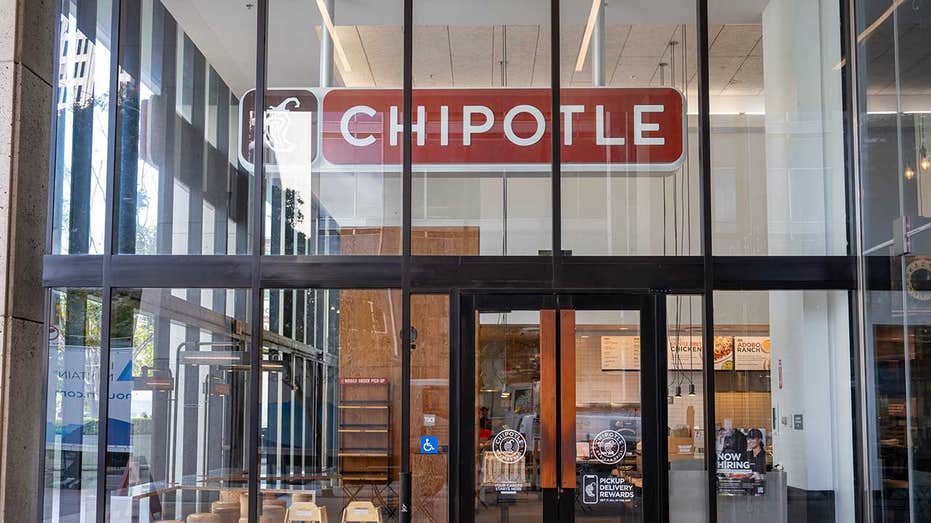
A Chipotle Mexican Grill restaurant in San Francisco, California, on Aug. 14, 2025. Chipotle is facing a lawsuit from a Minnesota woman who alleges a burrito bowl caused a severe Salmonella infection that left her hospitalized. (Smith Collection/Gado/Getty Images)
Days later, Behne developed fever, chills, vomiting, abdominal cramping and severe diarrhea, the complaint alleges. She eventually sought emergency care, was admitted to the hospital and diagnosed with sepsis.
“Three days later she was in a hospital bed, febrile, tachycardic and septic — a life-threatening complication of the Salmonella infection caused by Chipotle’s grossly contaminated food,” the lawsuit alleges. “She has not been the same since.”
According to the suit, the Minnesota Department of Health classified Behne as a confirmed case tied to a multistate outbreak that has sickened at least 345 people.
“MDH recorded her illness as outbreak-associated, identified the outbreak by name as the Salmonella Javiana outbreak, and classified Plaintiff as a confirmed case,” the complaint states.
The lawsuit alleges Behne continues to experience effects from the illness.
CHIPOTLE CEO SAYS CHAIN IS MAKING ‘MEANINGFUL PROGRESS’ ON A MAJOR CUSTOMER CONCERN
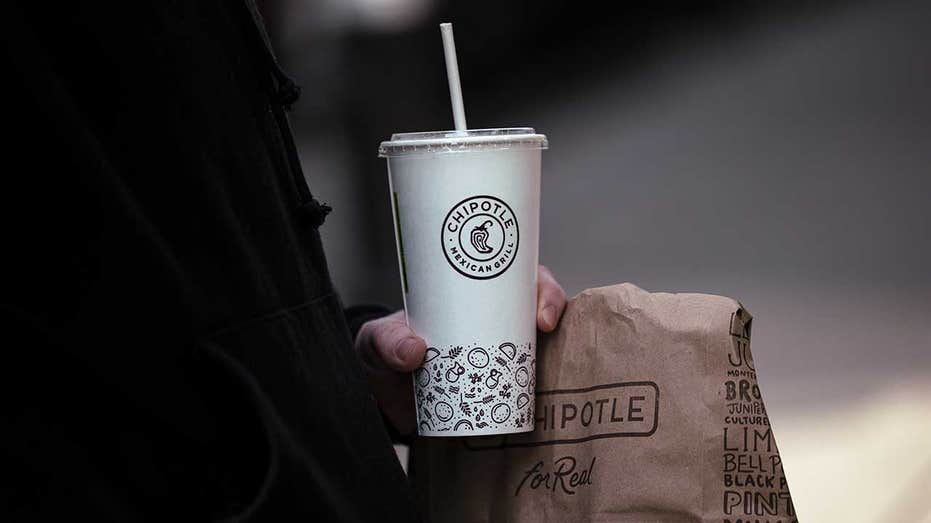
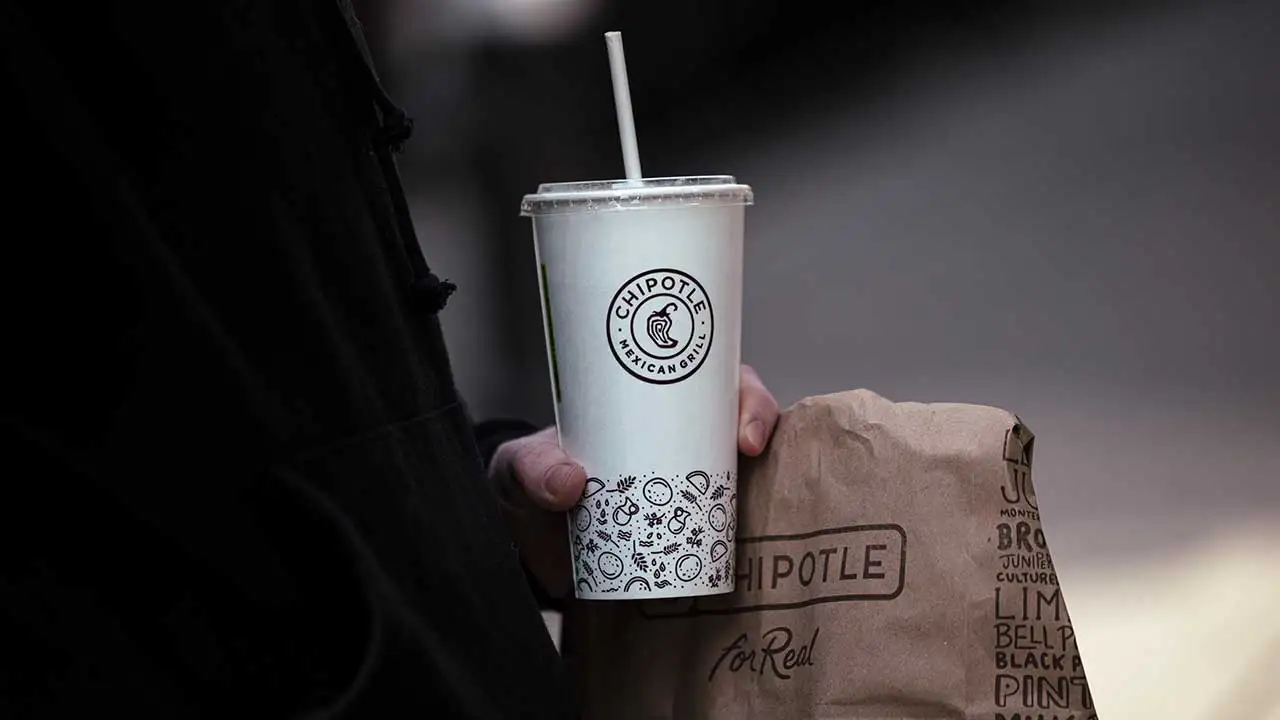
A customer carries a takeout bag and drink outside a Chipotle restaurant in New York on Jan. 12, 2024. The lawsuit comes as health officials investigate a multistate Salmonella outbreak linked to jalapeño peppers. (Angus Mordant/Bloomberg via Getty Images)
“Plaintiff’s health has not returned to its pre-illness baseline,” according to court documents. “She continues to experience the effects of her acute Salmonella infection and her septic episode, and is at increased risk of well-recognized post-infectious sequelae, including reactive arthritis and post-infectious irritable bowel syndrome.”
The legal action comes as health officials investigate a multistate Salmonella outbreak linked to jalapeño peppers.
Chipotle said Tuesday it had removed jalapeños from some restaurants after health officials linked the outbreak to recalled peppers.
The Centers for Disease Control and Prevention said Wednesday that 345 people in 27 states had been sickened, including 36 who were hospitalized. No deaths have been reported.
The Centers for Disease Control and Prevention headquarters in Atlanta, Georgia, on Aug. 6, 2022. The CDC said Chipotle and QDOBA stopped serving the affected peppers after being notified. (Nathan Posner/Anadolu Agency via Getty Images)
Epidemiologic and trace back evidence identified jalapeño peppers grown in Sinaloa, Mexico, and distributed by Coast Citrus Distributors as the source of the outbreak.
GET FOX BUSINESS ON THE GO BY CLICKING HERE
The CDC said Chipotle and QDOBA stopped serving the affected peppers after being notified. Because the products were removed, the CDC and U.S. Food and Drug Administration said they do not consider the restaurants to pose a current ongoing risk to consumers from this outbreak.
Chipotle and an attorney for Behne could not immediately be reached by FOX Business for comment.
FOX Business’ Brittany Miller contributed to this report.

Fred Alger Management, LLC (“Alger”) is a privately held $27.4 billion growth equity investment manager. Alger is a pioneer of actively managed, growth equity investing. Their journey over the past six decades has been defined by navigating change, embracing disruption, and investing in innovation. Note: This account is not managed or monitored by Fred Alger Management, and any messages sent via Seeking Alpha will not receive a response. For inquiries or communication, please use Fred Alger Management’s official channels.

Inflation Data, Super Micro, Cisco, Rocket Lab, Tapestry, and More to Watch This Week
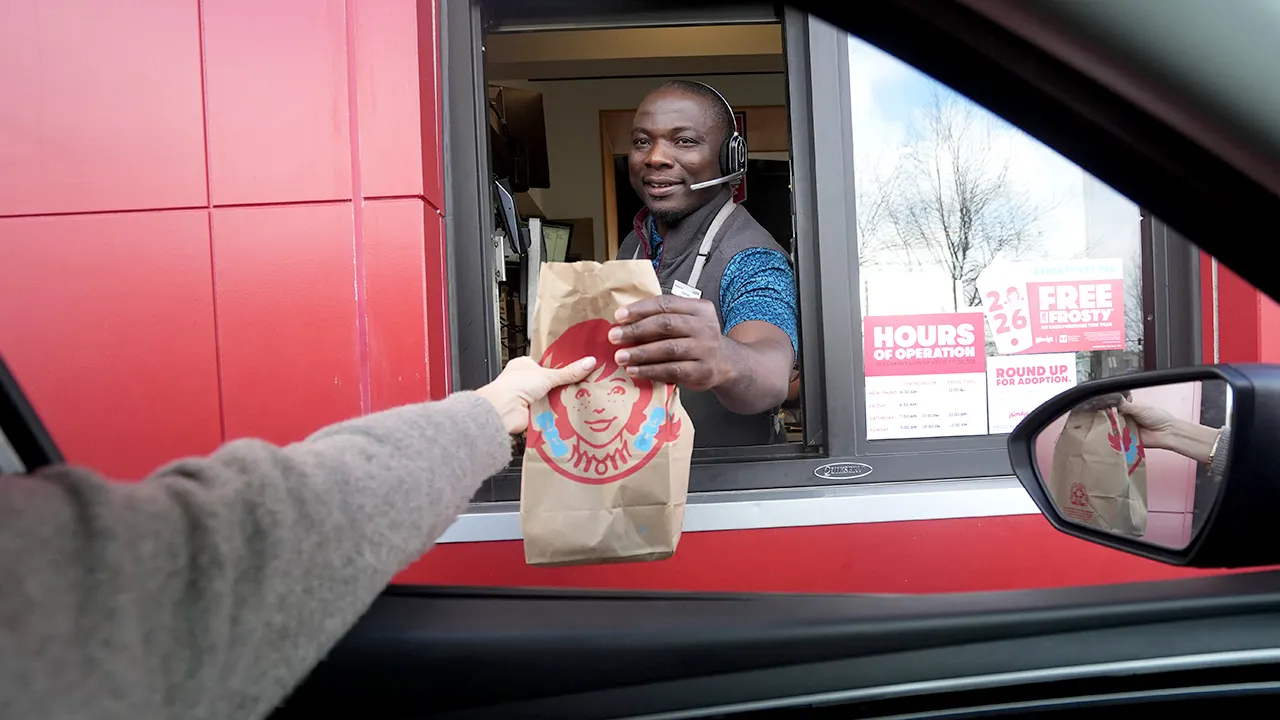
Check out what’s clicking on FoxBusiness.com.
Wendy’s has lost its place as America’s runner-up to McDonald’s, ending a six-year run as the second-largest burger chain, being surpassed by a resurgent Burger King.
Burger King reclaimed the No. 2 position as its U.S. turnaround gains momentum, with domestic same-store sales jumping 8.5% in the second quarter. Wendy’s, meanwhile, reported a 7% decline in U.S. same-store sales, marking its sixth consecutive quarter of contraction.
Wendy’s new CEO Bob Wright acknowledged the chain’s problems Friday, saying its competitive edge has weakened as customers have pulled back.
“Today we are clearly not performing at our potential,” he wrote in a statement.
BURGER KING UNVEILS ‘WHOPPER GUARANTEE’ WITH FREE BURGER IF ORDER MISSES THE MARK
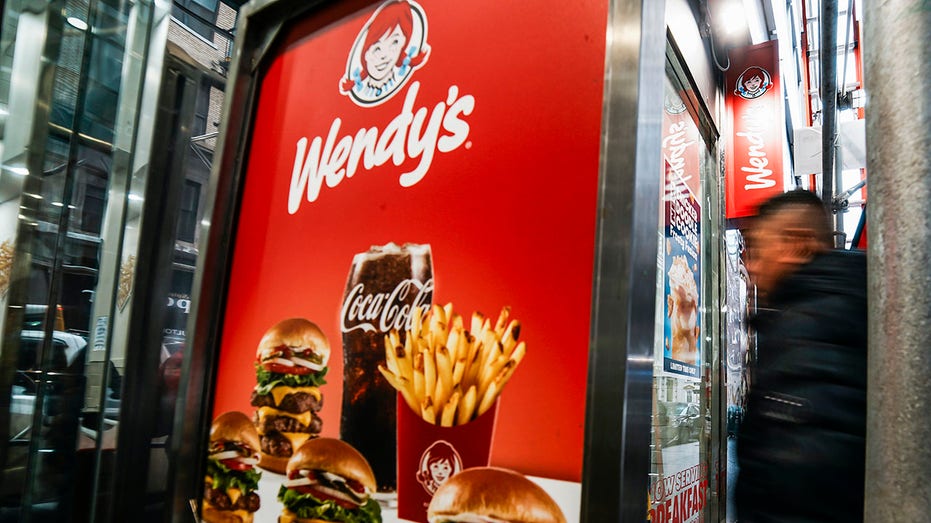
Wendy’s rose to prominence in with his famous “Where’s the Beef” ad campaign, but has lost its six-year hold on the No. 2 spot to McDonald’s in the U.S. burger battle. (Photo by ZAMEK/VIEWpress)
“Our traffic, our value proposition and franchisee economics are not meeting our expectations. We have already begun taking action across five areas that we’ve identified to drive the turnaround: rebuilding a quality menu at compelling value, marketing that drives demand, operational excellence, a digital experience that builds frequency, and restaurants as an engine for growth.”
McDonald’s remains the dominant U.S. burger chain by a wide margin, leaving Burger King and Wendy’s fighting for a distant second place.
Wendy’s had surpassed Burger King roughly six years ago, helped by the successful nationwide rollout of its breakfast menu. But its hold on the No. 2 spot has eroded as Burger King poured money into improving restaurants, advertising and its core menu.
Restaurant Brands International, Burger King’s parent company, launched a broad U.S. turnaround effort in late 2022 after sluggish sales. The strategy has included restaurant remodels, increased marketing spending and changes intended to improve food quality and the customer experience.
BURGER KING’S IMPOSSIBLE WHOPPER TO HIT MENUS ACROSS THE US
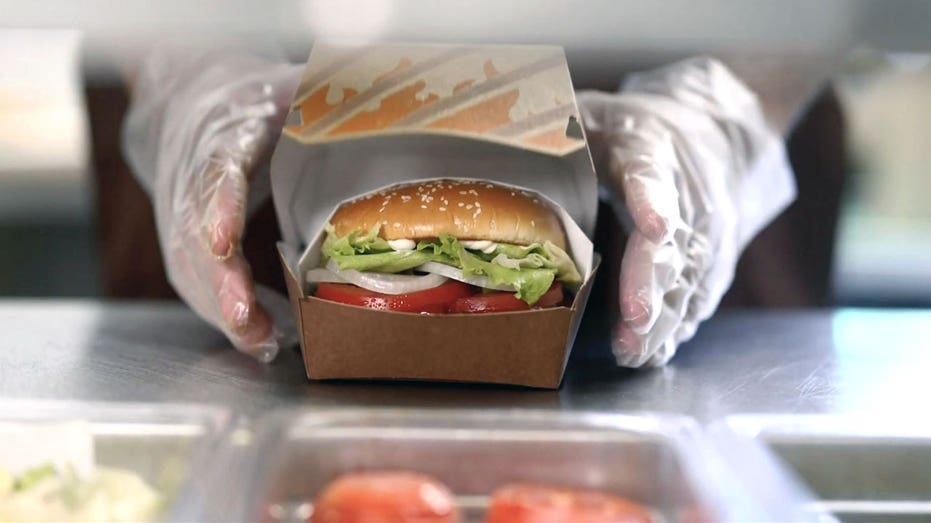
The new Burger King Whopper is served in a box instead of a paper wrapper. (Burger King / Fox News)
More recently, Burger King has focused on its signature Whopper.
The chain revamped the burger earlier this year, making changes to its bun, packaging, mayonnaise and other elements. Burger King U.S. and Canada President Tom Curtis told The Wall Street Journal that the improvements are helping bring customers back.
“A lot of people are saying they’re coming back for the first time in a long time,” Curtis said.
Burger King has also introduced a Whopper quality guarantee, pledging to remake an order if a customer is unhappy with it and provide another Whopper free on a future visit.
BURGER KING BRINGS BACK FAN FAVORITE FOR THE FIRST TIME IN 15 YEARS
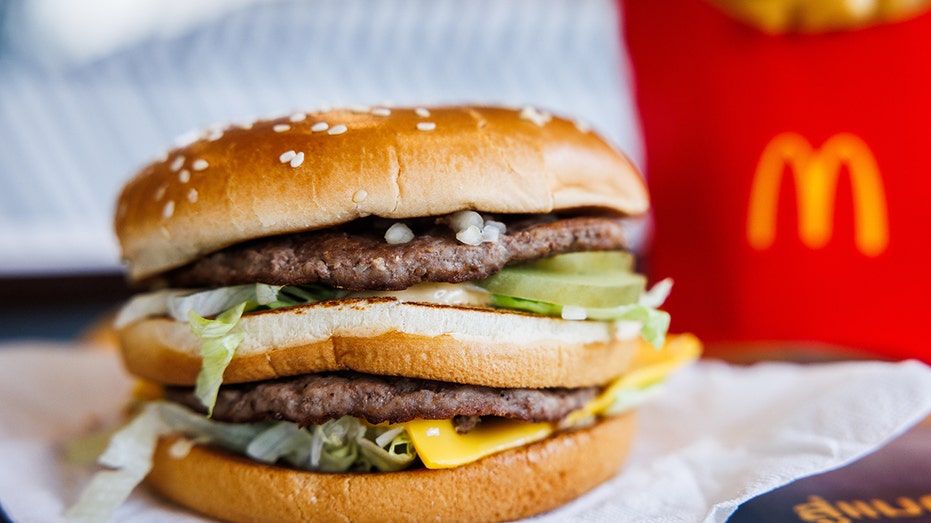
A McDonald’s Big Mac meal on June 8, 2024, in Bangkok, Thailand. (Lauren DeCicca/Getty Images / Getty Images)
“When we asked guests where we could do better, they gave us a lot of honest feedback, and now it’s our responsibility to act on it,” Curtis wrote in a statement in July. “We’re not going to get everything right every single time, but we’re committed to listening intently and improving every day.
“When guests choose us, they expect high-quality food, orders made the way they asked, and a team that’s there when they need us. That’s what these changes are about. We’re raising the standard in our restaurants, so every Guest feels like they made the right choice.”
Curtis said the chain believes it is taking market share from competitors, including potentially McDonald’s, and sees an opportunity to turn newly won customers into regulars.
“The next generation of burger lovers are being exposed to Burger King, and that means we’ve got runway ahead for years to come,” Curtis told the Journal.
MCDONALD’S SAYS US SALES SLOWED AFTER VALUE DEAL PUSH FELL SHORT
The gains underscore a sharp reversal in fortunes for two longtime rivals that have wrestled with many of the same pressures in recent years.
Both companies navigated the COVID-19 pandemic, supply-chain disruptions and rising food and labor costs before confronting increasingly price-conscious consumers frustrated by years of restaurant menu inflation.
Burger King responded with its multiyear turnaround campaign. Wendy’s, by contrast, has faced leadership turnover just as restaurant traffic weakened and beef costs added pressure to its business.
Longtime Wendy’s CEO Todd Penegor retired in 2024 after eight years at the helm. Former PepsiCo executive Kirk Tanner succeeded him but left a little more than a year later to become CEO of Hershey.
WENDY’S, MCDONALD’S LAWSUIT CLAIMS BURGER ADS MISLEAD CONSUMERS ON PATTY SIZES
| Ticker | Security | Last | Change | Change % |
|---|---|---|---|---|
| MCD | MCDONALD’S CORP. | 274.48 | -1.78 | -0.64% |
| QSR | RESTAURANT BRANDS INTERNATIONAL INC. | 73.89 | +0.97 | +1.33% |
| WEN | THE WENDY’S CO. | 7.69 | +0.30 | +4.06% |
| SHAK | SHAKE SHACK | 71.13 | +0.89 | +1.27% |
| JACK | JACK IN THE BOX INC. | 17.58 | +0.20 | +1.15% |
| YUM | YUM! BRANDS INC. | 150.76 | -1.52 | -1.00% |
Wendy’s CFO Ken Cook then served as interim chief executive before the company named Wright, the former CEO of Potbelly, to the permanent job in May.
“I returned to Wendy’s because I believe we can fix our issues and I am excited to work with our team and our franchisees to drive a strong turnaround,” Wright wrote in Friday’s release of second quarter results.
He said Wendy’s recent problems have hurt customer traffic and put pressure on restaurant economics, an increasingly important issue for a largely franchised chain whose operators must absorb higher costs while competing aggressively for value-conscious diners.
Burger King’s improvement also comes as McDonald’s works through challenges in its own U.S. operation. McDonald’s has been revamping its burgers, testing new menu items and looking for ways to improve food quality, service and value.
GET FOX BUSINESS ON THE GO BY CLICKING HERE
Still, Burger King’s move ahead of Wendy’s does not put it close to overtaking the Golden Arches.
McDonald’s accounted for about 48% of the U.S. burger market in 2024, according to Barclays data. Wendy’s held an estimated 11.4% share at the time, compared with about 10% for Burger King.
Westpac Q3 2026 slides: steady growth masks looming margin pressure

Adam Vinatieri Roasts Bill Belichick’s Age-Gap Romance

Enzo Maresca raises Omar Marmoush transfer doubt for Man City


-

 Fashion2 days ago
Frugal Friday’s Workwear Report: Cap-Sleeve Pointelle Crewneck Sweater
-

 Fashion2 days ago
Weekend Open Thread: Mattifying Sunscreen
-

 Business7 days ago
DTCR: Deleveraging And A Hedge Fund Collapse Point To A Possible AI Bottom
-

 Sports4 days ago
Jordan Coyle & Cordiamo take Laya Arena Stakes at RDS
-

 News Videos2 days ago
Can Astrology Help Find Gold and Silver Trends? A Financial Astrology Guide
-
 Crypto World6 days ago
US Tech Stocks See Largest 5-Week Inflow in History: Can Nasdaq Break Its Downtrend?
-
 Business4 days ago
US stocks: Dow closes at record on Mideast optimism; SpaceX, AMD drag Nasdaq
-

 Politics4 days ago
Reform UK And Greens Sink To Lowest Favourability Ratings To Date
-

 Business5 days ago
Nvidia Stock Climbs 2.5% as Chip Sector Rally Builds Ahead of AMD Earnings, Nvidia’s Own Report Looms
-

 Tech7 days ago
OpenAI teases Astra, its next major AI model, after it solves 10 long-standing math problems
-

 Crypto World5 days ago
Polymarket targets $20 billion valuation as competition heats up in prediction market sector
-

 Tech5 days ago
OpenAI, Anthropic AI agents targeted real people and systems in cyber tests
-

 Business4 days ago
Supply chain issues impact Ingredion
-

 News Videos7 days ago
#crypto #cryptocurrency #cryptonews #cuet2026 #ceuta
-

 Business7 days ago
Myspace owners announce plans to relaunch the once-popular platform
-

 News Videos7 days ago
Crypto.com Partners with UFC for UFC 331 Event
-
 Crypto World6 days ago
CLARITY Act Senate Vote Locked In, But 60-Vote Hurdle Looms Large
-

 News Videos7 days ago
Huge SPINS!! (for me) #slots #casino #gambling #money #jackpot
-

 Tech2 days ago
Rinn Pharma & Biopharma to join NordicPharmaTrain network
-

 News Videos7 days ago
#xrp #xrpripple #xrparmy #xrpnews #bitcoin #btc #crypto #cryptocurrency #blockchain #viral
You must be logged in to post a comment Login