Connect with us

Business

Europe’s Digital Independence Drive Is Finally Moving Beyond the Whiteboard

Published

on

Businesses that cut back on their offices during the pandemic are now scrambling to find larger premises as the return-to-office trend gathers pace – but prime space is in short supply.

Digital sovereignty has gone – relatively quickly – from being a niche policy interest, to a mainstream business consideration across multiple regions of the world.

One of the most outspoken players has been the European Union, with its Gaia-X initiative, a wave of binding regulation, and a series of high-profile procurement decisions.

The combination of these changes made it unequivocally clear that the question of who controls critical data infrastructure is no longer a theoretical debate. Awareness of what has actually changed (and what this change means in practice) is becoming increasingly relevant for any business working across borders.

From summits to something tangible

The first European Summit on Digital Sovereignty was convened in November 2025 with the initiative of France and Germany. It brought in politicians, regulators, and industry leaders with the goal of mapping out concrete commitments instead of position papers.

A joint task force on digital sovereignty was produced as a result of this summit, due to report back in 2026. Meanwhile, Gaia-X released its Trust Framework 3.0 that enabled federated trust structures across borders and sectors.

Advertisement

The figures revealed during this summit are more telling than the announcement itself. Gaia-X now counts more than 15 operational data spaces, which is a noticeable difference from the long list of projects that were previously only known as “in preparation.” Cloud Temple became the first provider that got certified at the highest sovereignty label of this initiative.

Corporate procurement has also begun to follow the same route. Airbus issued a tender worth more than €50 million to migrate mission-critical environments to a sovereign European cloud. BMW continues its expansion of the Catena-X data-sharing network. Germany’s armed forces have signed a seven-year-long contract with the purpose of using an open-source alternative to replace Microsoft 365.

While none of this can be treated as the EU being on par with the American hyperscalers, it is an indication of procurement decisions and infrastructure investments being made based on security concerns, not just policy statements.

Why “stored in Europe” is not the same as “sovereign”

There is an important distinction relevant to this topic: where data is stored physically is not the same as whose laws govern it.

Advertisement

For example, AWS launched a European Sovereign Cloud in Brandenburg in January 2026. It’s structured as a standalone German entity with EU-based executives and an investment fund of several billion euros behind it. On paper, it resembles exactly the kind of cloud storage European regulators have been looking for. In reality, the parent company of AWS is still American, meaning that the US CLOUD Act still applies – allowing US authorities to compel American companies to hand over data they control at any point in time.

The chief executive of Gaia-X has been very blunt on this topic, clearly stating that the highest level of sovereignty can only be achieved by providers that have their headquarters on European soil. If the service is run by a US company (even with European staff and data centers), it’s still subject to American legislation.

This single factor cannot be considered a mere technicality. It’s significant enough to be the difference between a compliance checkbox and a genuine answer to a question of who can access this data and under what authority.

What it means for business decisions

Sovereignty is no longer a question that can be stalled indefinitely from the business side. Not only the EU Data Act has been in force since September 2025, but there are also multiple sector-specific rules (such as DORA for finances and NIS2 for critical infrastructure) that are tightening the same constraints, as well. None of these regulations treat sovereignty as optional.

Advertisement

According to survey data from Germany’s Bitkom, there are already many businesses around the globe that want independence from foreign infrastructure but have not acted on these wishes yet, despite the trust in some foreign providers having fallen sharply recently. This specific gap between intention and action is exactly where all the rushed and expensive decisions come from – mostly under regulatory pressure instead of a considered timeline.

In this context, there are a few basic questions that are worth raising as early as possible from the business side: where does data actually reside, and under whose jurisdiction; what do existing cloud contracts say about data access requests from foreign authorities; and were a rapid migration away from a provider necessary, would it actually be possible?

The recovery question most discussions overlook

Most discussions about digital sovereignty work from determining where data lives day by day: including specific cloud providers, specific data centers, and the specific jurisdiction it works under. These are legitimate questions, but they address only the visible layer of a much deeper dependency.

Sovereignty, properly understood, also requires control over what an organisation can recover from when infrastructure fails – and this dimension is one that policymakers have been slower to address than the infrastructure and regulatory questions that tend to dominate the conversation.

Advertisement

The gap is significant. Regulatory frameworks such as the EU Data Act, NIS2, and DORA establish requirements around data residency, access controls, and operational resilience, but they leave the specifics of backup architecture and recovery sovereignty largely to individual organisations to determine. A business can be fully compliant on paper while remaining entirely dependent on a foreign vendor’s proprietary backup infrastructure – one it cannot fully audit, migrate away from, or recover independently in a crisis.

This is precisely the argument that backup and recovery vendors have begun to make recently. Swiss company Bacula Systems describes this logic as “sovereign recovery” – the idea that a sovereign cloud strategy at a given moment is only going to be as resilient as the recovery infrastructure it works under.

Whenever a backup data is stored in an environment the organization does not have a full control over, created using formats that are problematic migration-wise, or tied to the infrastructure of an individual vendor – the validity of sovereignty claims becomes significantly less absolute and may not hold up under real pressure.

Irrespective of whether or not a given vendor’s approach is going to suit a particular organization, the overall point still stands. Cloud provider selection has been dominating the sovereignty conversation, while the recovery layer has received a lot less scrutiny in comparison.

Advertisement

The whiteboard phase is over

None of these arguments mean that all the existing infrastructure should be disassembled overnight. No serious case is being made for businesses to sever all ties with their current “foreign” technology. However, it does increase the likelihood that businesses treating digital sovereignty as someone else’s problem are the ones that are most likely going to have to make some rushed decisions under regulatory pressure within the next year or two.

The policy debate has finally moved on from abstract principles to creating practical operational data spaces, substantial procurement tenders, and binding regulations. This change is the reason why most businesses cannot simply consider sovereignty as an optional topic – as they now have to think whether they have established where their data resides, who has access to it, and what they are going to recover from if the need to do so arises.

Advertisement
Continue Reading
Click to comment

You must be logged in to post a comment Login

Leave a Reply

Business

How Liquid Are Private-Credit Funds? It Depends How You Define ‘Liquidity’

Published

on

How Liquid Are Private-Credit Funds? It Depends How You Define ‘Liquidity’

Wealthy investors who piled into private-credit funds have spent months trying to cash out their shares and still can’t. Fund managers have sought to reassure them by highlighting the vehicles’ ample “liquidity” to meet redemptions and remain healthy.

It would help if everyone could agree on what that word actually means.

Copyright ©2026 Dow Jones & Company, Inc. All Rights Reserved. 87990cbe856818d5eddac44c7b1cdeb8

Continue Reading

Business

Crude oil stocks in US SPR fall to over four-decade low

Published

on

Crude oil stocks in US SPR fall to over four-decade low

The U.S. government’s Strategic Petroleum Reserve (SPR) is at its lowest level since 1983 as inventories that were already low before the Iran war come under increasing pressure.

Data released by the Department of Energy on Monday showed that the number of barrels of oil in the SPR declined by 6.1 million barrels last week, ending the week at 298.7 million barrels in inventory.

Advertisement

That is the lowest level in the EIA’s weekly data on SPR stocks since January 1983.

SPR inventories have fallen this year after President Donald Trump in March authorized the release of up to 172 million barrels in response to the impact of the Iran war on energy supplies, as Iranian attacks have slowed the flow of tanker traffic through the Strait of Hormuz.

TRUMP BLASTS BIG OIL FOR ‘MAKING TOO MUCH MONEY’

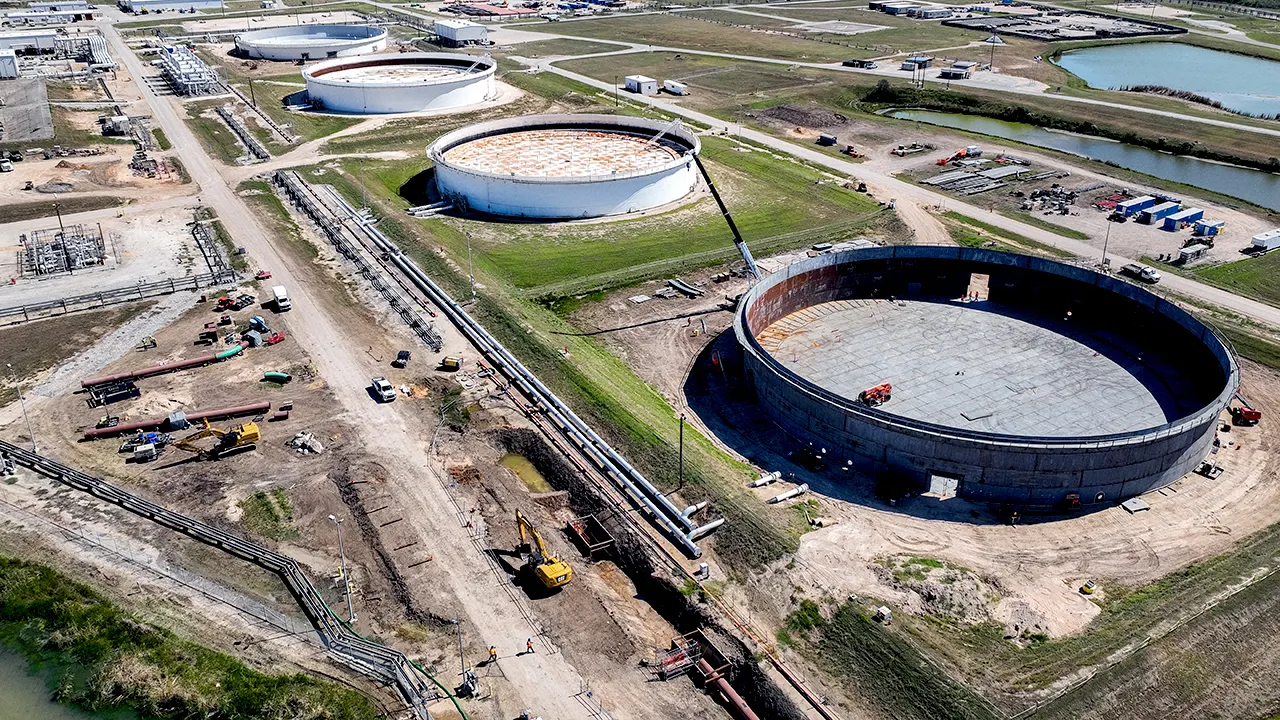
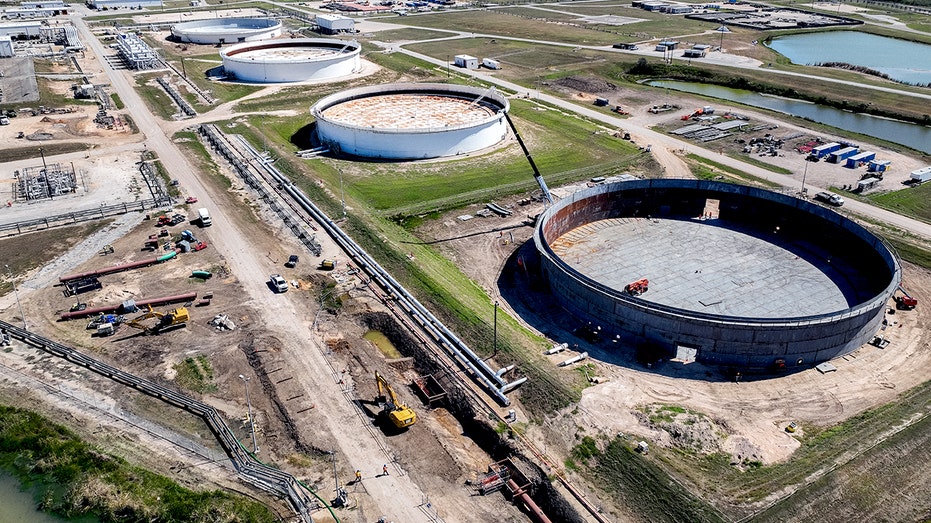
Empty oil storage units.

The Strategic Petroleum Reserve inventories fell to the lowest level since 1983 last week. (Brandon Bell/Getty Images)

The Trump administration announced the releases on March 11, 2026, while EIA data shows that the SPR had about 415.4 million barrels of oil in inventory during the middle of March – with inventories now down about 116 million barrels as of early August.

Advertisement

The latest SPR releases follow a historic drawdown over the last several years, beginning with the release of 180 million barrels that was authorized by the Biden administration in response to Russia’s invasion of Ukraine in early 2022.

Inventories had been around 600 million barrels at the start of 2022 and fell to 375 million barrels by the end of the year. 

FORGET GASOLINE: THIS OVERLOOKED FUEL COULD RAISE THE PRICE OF NEARLY EVERYTHING YOU BUY

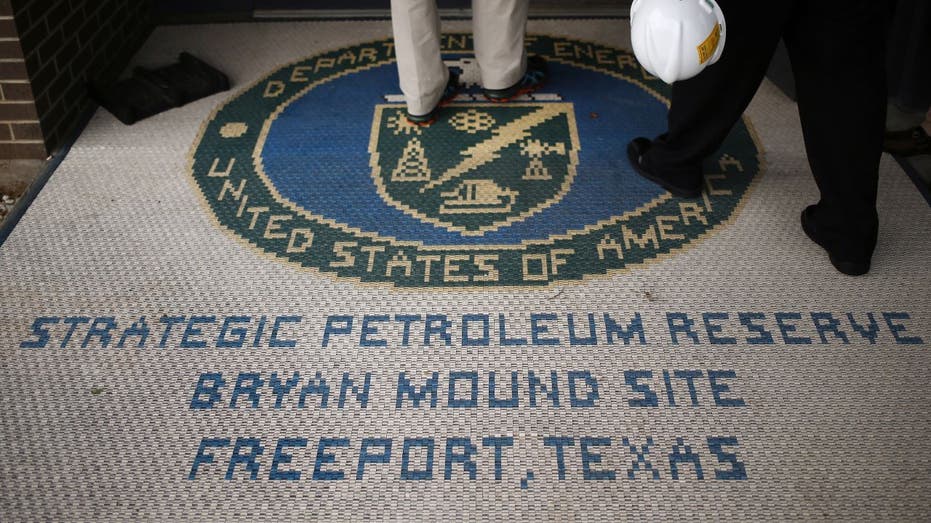
Strategic Petroleum Reserve

The Strategic Petroleum Reserve was established in response to the oil shocks of the 1970s. (Luke Sharrett/Bloomberg via Getty Images)

When SPR levels hit a low of about 347 million barrels in the summer of 2023, they began to gradually recover and reached 400 million barrels in May 2025. They hit a recent peak of over 415 million barrels in February, before the latest round of drawdowns began in March.

Advertisement

The SPR was created in 1975 under the Energy Policy and Conservation Act in response to the OPEC oil embargo of 1973-74, which was imposed by Arab countries in OPEC as retaliation for the U.S. resupplying Israel’s military during the Yom Kippur War.

The SPR was initially intended to have a capacity of 1 billion barrels of oil, although it never reached that level. Currently, the SPR has a congressionally-authorized maximum of about 714 million barrels of oil, while its highest ever inventory was 726.6 million barrels in December 2009 when it had an authorized capacity of 727 million barrels. 

US OIL RESERVES DROP TOWARDS REAGAN-ERA LOWS, ‘SIGNIFICANT IMPACT AT THE PUMP’ COMING, EXPERTS WARN

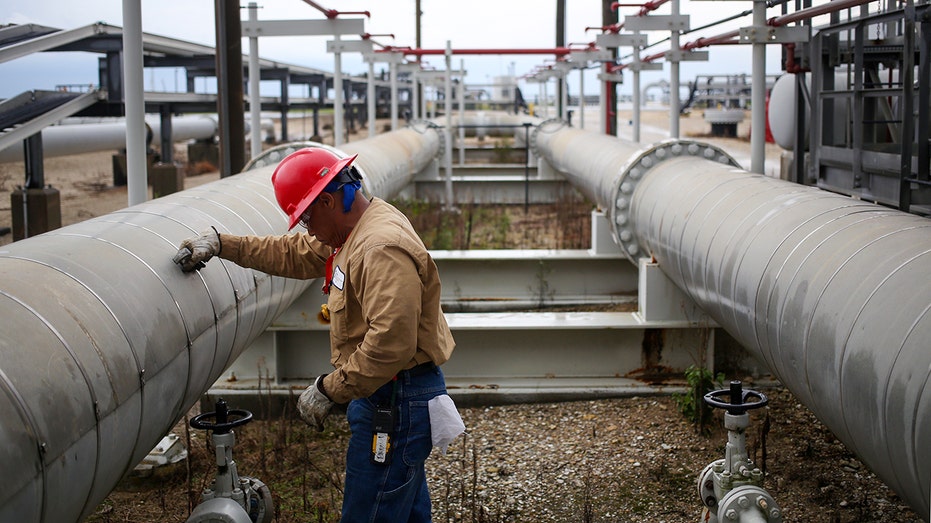
Worker at the Strategic Petroleum Reserve

A contractor works on a crude oil pipeline at the Department of Energy’s Bryan Mound Strategic Petroleum Reserve in Freeport, Texas. (Luke Sharrett/Bloomberg via Getty Images)

SPR reserves are stored at four locations thousands of feet below ground in salt caverns because those geological formations are more advantageous than surface facilities in terms of cost and maintenance, in addition to environmental and security concerns.

Advertisement

Geological pressures naturally seal cracks that emerge in salt formations to prevent leaking oil from seeping out, while the temperature difference keeps oil circulating to maintain its quality. Salt caverns can also be enlarged to fit precise dimensions through a mining process in which the salt is dissolved using fresh water.

The Government Accountability Office (GAO) issued a report in May which warned that Congress and the Department of Energy need to develop a unified long-term plan to address the SPR’s maintenance needs and a strategy for managing inventories into the future.

GET FOX BUSINESS ON THE GO BY CLICKING HERE

The One Big Beautiful Bill Act, which Republicans in Congress and Trump enacted in July 2025, included $171 million for acquiring petroleum products to be stored in the SPR, as well as $218 million to maintain the SPR.

Advertisement
Continue Reading

Business

Rubrik stock hits 52-week high at 99.76 USD

Published

on


Rubrik stock hits 52-week high at 99.76 USD

Continue Reading

Business

Hypoport H1 2026 slides: EBIT jumps 20% as margins expand

Published

on


Hypoport H1 2026 slides: EBIT jumps 20% as margins expand

Continue Reading

Business

If You Get in a Car Crash, the Risk Is Growing Your Insurance Won’t Pay

Published

on

If You Get in a Car Crash, the Risk Is Growing Your Insurance Won’t Pay

Americans got into more than six million traffic accidents last year. 

Depending on the type of crash, the chance of getting a payout from your insurer has become increasingly remote.

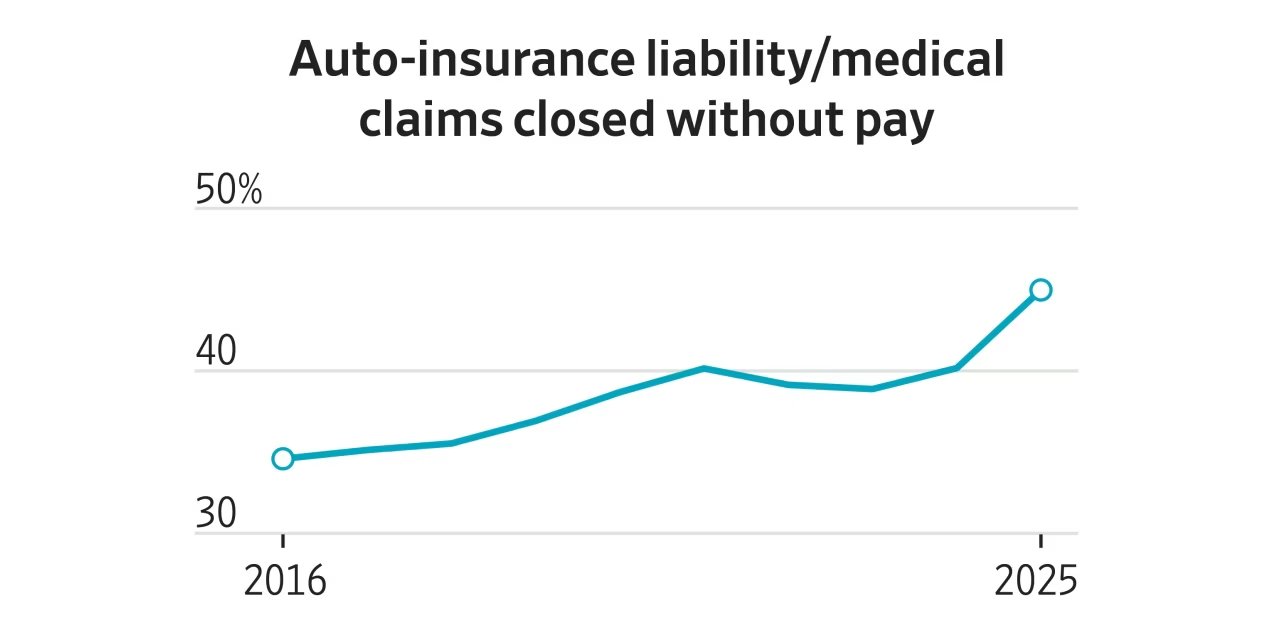
Auto insurers didn’t pay out on 45% of auto liability and medical claims they resolved last year, according to a Wall Street Journal analysis of thousands of company regulatory filings. That rate might change slightly as more claims are resolved, but it is up from around one in three, or 35%, of such claims a decade ago.

Americans are required to pay for car insurance as a condition of driving. Yet often, the insurance doesn’t provide the financial backstop that car owners were expecting.

Advertisement

Copyright ©2026 Dow Jones & Company, Inc. All Rights Reserved. 87990cbe856818d5eddac44c7b1cdeb8

Continue Reading

Business

Taylor Farms recalls jalapeno products after salmonella outbreak

Published

on

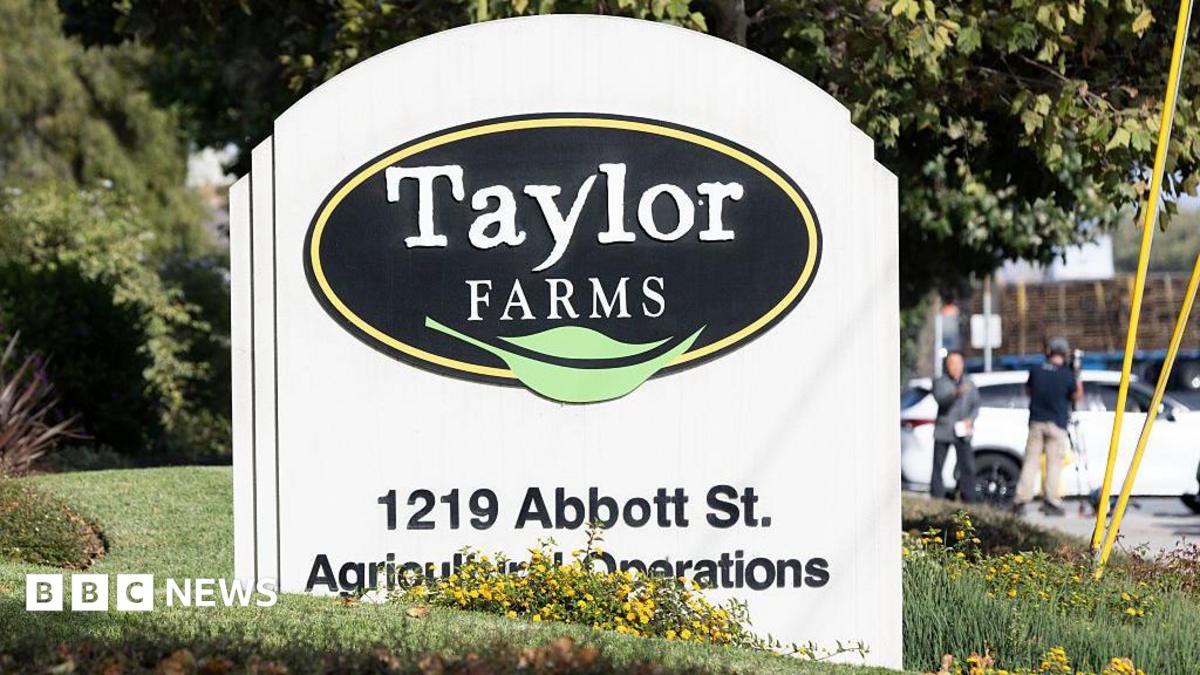
A curved white sign with a black sideways oval on it containing the words Taylor Farms in white with a green leaf below. The sign is on a mown grass lawn with trees in the background and with a white car parked to the side.

The jalapeno recall came after Coast Citrus Distributors, which supplied the company with its peppers, recalled its own fresh jalapeno because of the salmonella concerns.

Taylor Farms said a grower in Sinaloa, Mexico, had been identified as the source of the outbreak and that it “is no longer sourcing products from this farmer and will be filling orders from alternative suppliers”.

“Consumers who have any recalled product should discard it immediately and not consume it. Refunds are available at the location of purchase,” it added.

Eating food contaminated with salmonella usually leads to illness within 12 to 72 hours, external. Symptoms include diarrhoea, fever and stomach pain, according to the US Food and Drug Administration.

Advertisement

The recall includes products such as pico de gallo salsa, several types of guacamole, burritos, spicy sandwiches and fresh sliced jalapenos.

Continue Reading

Business

Existing Home Sales among economic data due Tuesday

Published

on


Existing Home Sales among economic data due Tuesday

Continue Reading

Business

Next announces major Cribbs Causeway upgrade plus Bath and Body Works set to open

Published

on

Business Live

The retailer operates Bath & Body Works in the UK through its partnership model

Bath and Body Works is opening at Cribbs

Bath and Body Works is opening at Cribbs(Image: Next)

Next is planning a “major upgrade” of its store at Cribbs Causeway near Bristol and is also opening a standalone Bath and Body Works outlet at the shopping centre, it has announced.

The retailer, which operates Bath and Body Works in the UK through its partnership model, has confirmed it will be bringing the concept to the South West for the first time after agreeing to lease a 1,797 sq ft unit at The Mall.

It is also planning to upsize its own clothing store at Cribbs to a larger 47,000 sq ft space in a move it says will allow it to showcase more fashion and accessories.

Katie Searle, director of asset management at Sovereign Centros from CBRE, said: “Cribbs has become a hub for brands to test new store concepts and product ranges to help them stay ahead of the competition.

Advertisement

“The Next at Cribbs Mall is among the retailer’s best stores in the country so we are not surprised that they are bringing Bath and Body Works to Cribbs whilst committing to a major upgrade of their space to create new flagship concepts for the South West.

“These premium stores at Cribbs will act as showrooms, with shoppers of all ages from across the West Country, West Midlands, South West and South Wales travelling to explore the latest styles and trends.”

The investment by Next follows a run of brands opening or expanding at The Mall at Cribbs Causeway over the past few years.

M&S completed a full refit of its 103,000 sq ft store at the end of 2024, adding a market-style foodhall and café, while expanding its footwear department and upgrading its beauty section.

Advertisement

H&M also opened a new regional flagship at Cribbs Causeway that year, incorporating new tech features across the store, while Boots invested in a modernised beauty hall, which has more than 30 premium brands.

Other retailers to open within the shopping centre in recent months include Miniso, AllSaints, Animal, Levi’s, and Rodd & Gunn.

According to CBRE, Cribbs’ retailers have experienced a 26 per cent rise in domestic visitors over the past year as well as a 13 per cent growth in Gen Z shoppers.

Sovereign Centros from CBRE provides full asset management services across Cribbs on behalf of M&G Real Estate, while Time Retail Partners and Cushman & Wakefield are retained letting agents for the centre, with Green & Partners retained in the leasing advisory role.

Advertisement
Continue Reading

Business

Powerball jackpot hits $905M | Fox Business

Published

on

Powerball jackpot hits $905M | Fox Business

The Powerball jackpot surged to an estimated $905 million ahead of Monday night’s drawing, making it the eighth-largest prize in the game’s history.

The pot grew after no ticket matched all six numbers from Saturday night’s drawing.

Advertisement

The white balls were 5, 9, 35, 54 and 63. The red Powerball was 7 and the Power Play multiplier was three.

It now has an estimated cash value of $391.9 million, according to the lottery.

A lottery ticket is held over a counter.

The Powerball jackpot is now the eighth-largest in the game’s history. (Brandon Bell/Getty Images)

The odds of winning a prize are 1 in 24.9, while the odds of hitting the jackpot are 1 in 292.2 million.

Though there was no jackpot winner in the latest drawing, four tickets matched all five white balls and won $1 million each, the lottery said. Winning Match 5 tickets were sold in Arizona, Florida, Michigan and New York. A ticket matching all five white balls was sold in Texas and included the Power Play option, increasing the prize to $2 million. 

Advertisement

Monday’s drawing will mark the 43rd in the current jackpot run.

printed tickets for the Powerball Lottery

The odds of winning a prize are 1 in 24.9, while the odds of hitting the jackpot are 1 in 292.2 million. (CatLane/iStock)

The Powerball jackpot was last won on May 2, when two tickets in Florida and Texas split a $20 million prize.

The winner can choose between a lump sum payment or an annuitized prize – one immediate payment followed by 29 annual payments. Both options are before taxes.

A ticket for the Powerball lottery sits on a counter in a store

The Powerball jackpot now has an estimated cash value of $391.9 million, according to the lottery. (Reuters/Andrew Kelly)

Powerball tickets are sold in 45 states, Washington, D.C., Puerto Rico, the U.S. Virgin Islands and the United Kingdom. Drawings occur three nights a week, on Monday, Wednesday and Saturday.

Advertisement

The biggest Powerball jackpots:

  1. $2.04 billion – Nov. 7, 2022 – California
  2. $1.817 billion – Dec. 24, 2025 – Arkansas
  3. $1.787 billion – Sept. 6, 2025 – Missouri, Texas
  4. $1.765 billion – Oct. 11, 2023 – California
  5. $1.586 billion – Jan. 13, 2016 – California, Florida, Tennessee
  6. $1.326 billion – April 6, 2024 – Oregon
  7. $1.08 billion – July 19, 2023 – California
  8. $905 million – Aug. 10, 2026 (current prize, estimated jackpot)
  9. $842.4 million – Jan. 1, 2024 – Michigan
  10. $768.4 million – March 27, 2019 – Wisconsin
Continue Reading

Business

Jumex launches reduced-sugar beverages

Published

on

Jumex launches reduced-sugar beverages

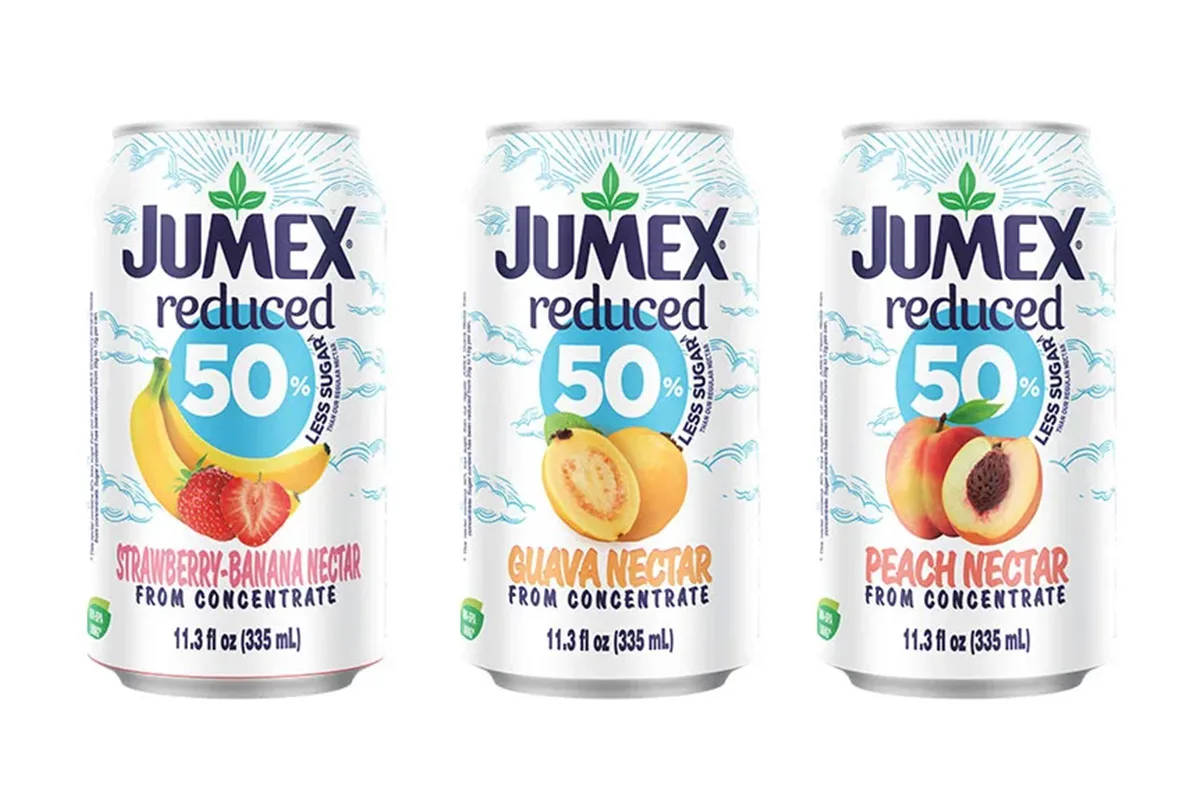
The Jumex Reduced line features half the sugar content of its traditional beverages. 

Continue Reading

Trending

Copyright © 2025