
Business
Taylor Farms recalls jalapeno products after salmonella outbreak

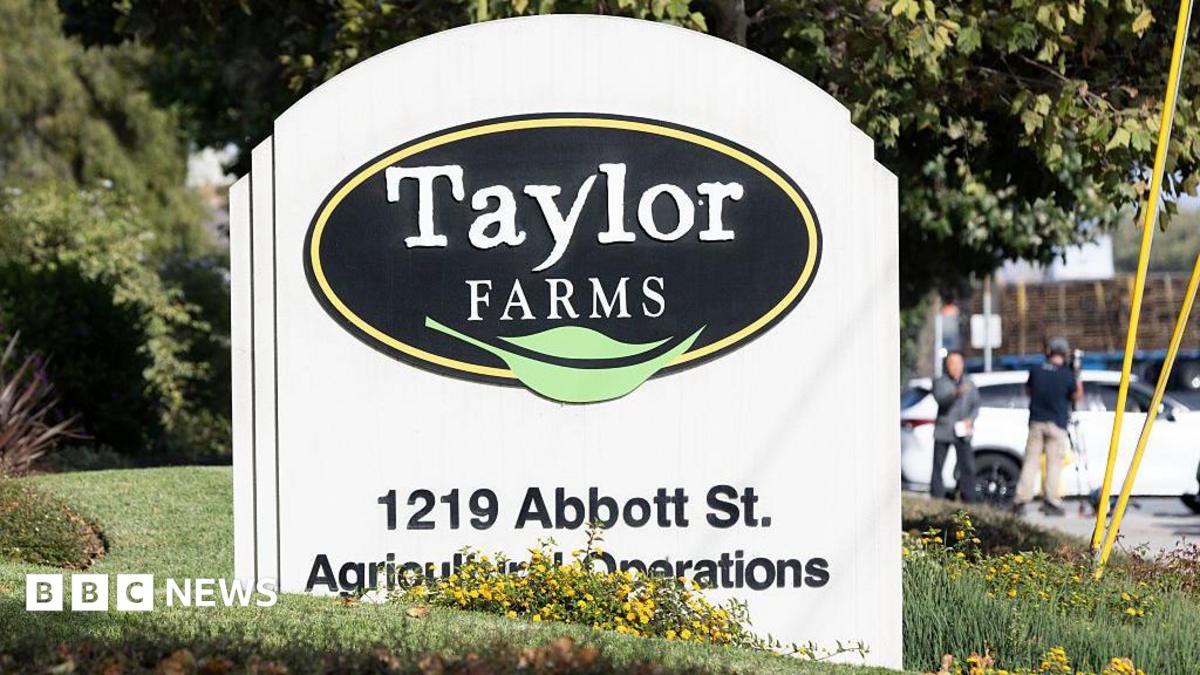
The jalapeno recall came after Coast Citrus Distributors, which supplied the company with its peppers, recalled its own fresh jalapeno because of the salmonella concerns.
Taylor Farms said a grower in Sinaloa, Mexico, had been identified as the source of the outbreak and that it “is no longer sourcing products from this farmer and will be filling orders from alternative suppliers”.
“Consumers who have any recalled product should discard it immediately and not consume it. Refunds are available at the location of purchase,” it added.
Eating food contaminated with salmonella usually leads to illness within 12 to 72 hours, external. Symptoms include diarrhoea, fever and stomach pain, according to the US Food and Drug Administration.
The recall includes products such as pico de gallo salsa, several types of guacamole, burritos, spicy sandwiches and fresh sliced jalapenos.

Check out what’s clicking on FoxBusiness.com.
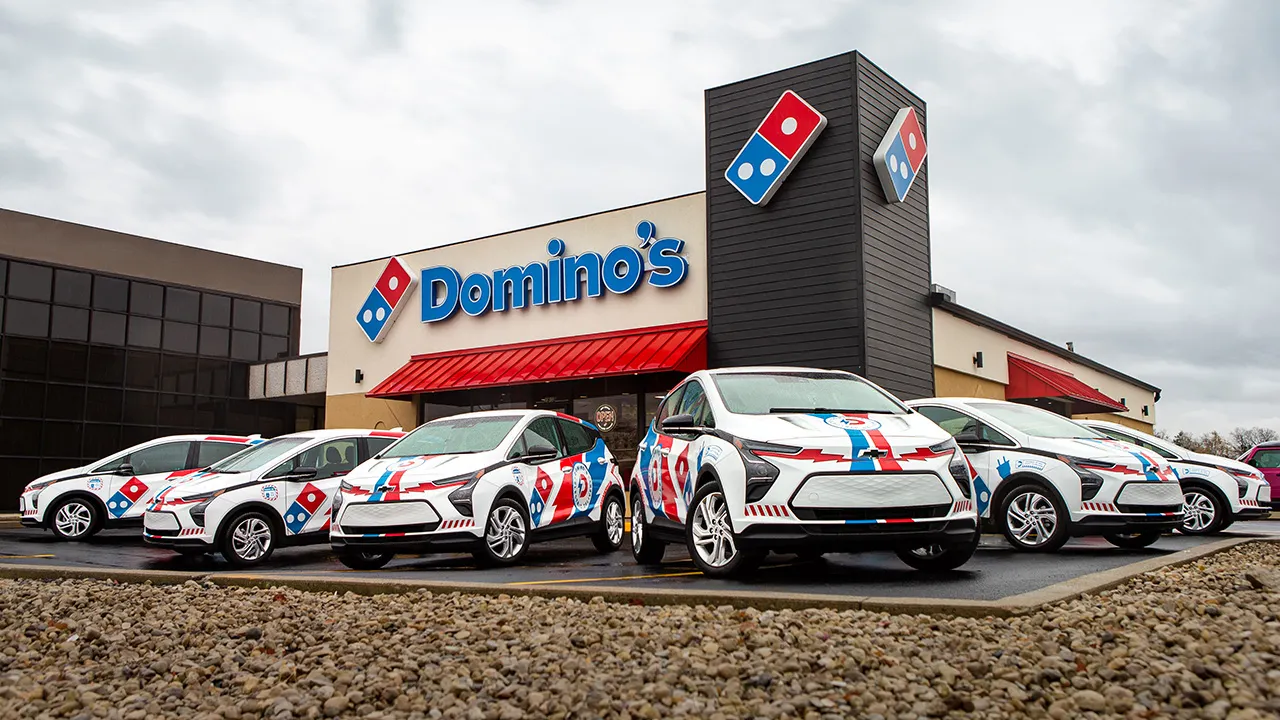
Domino’s is putting its own name on a new pizza as the restaurant chain looks to give customers a personal-size option built for individual tastes.
The Michigan-based pizza giant said Tuesday that it will launch the Domino, a Detroit-style pizza made for one, at restaurants nationwide on Aug. 31.
Shaped like the company’s red-and-blue domino logo, the new pizza is cut into two slices and allows customers to choose their sauce and add up to three toppings.
The company is positioning the product as an alternative for customers who want different toppings when ordering pizza with family or friends, as well as for individual meals and on-the-go occasions.
HOW DOMINO’S ‘REGAINED ITS CROWN’ IN THE PIZZA INDUSTRY
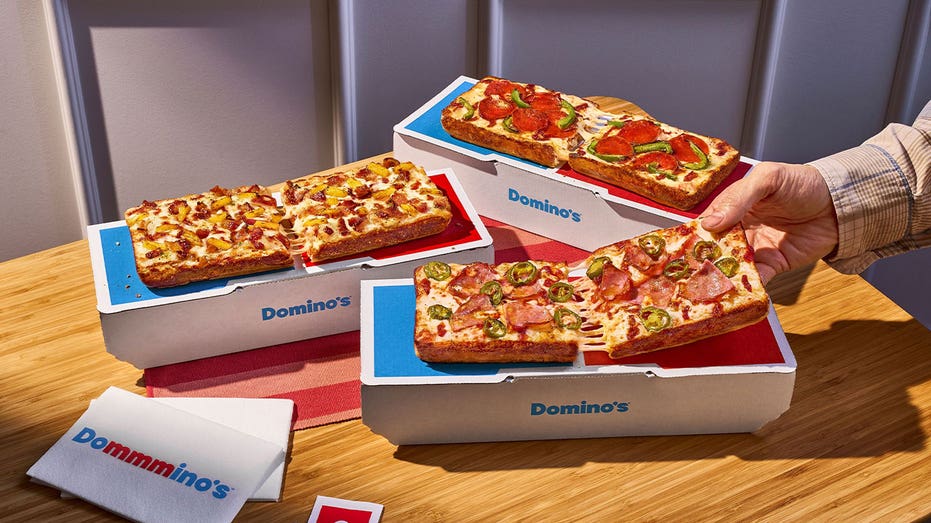
Domino’s is introducing the Domino, a Detroit-style pizza made for one, at stores nationwide on Aug. 31. (Domino’s)
“The Domino fills a gap in our portfolio,” said Joe Jordan, chief operating officer and president of Domino’s U.S., and incoming CEO. “When everyone wants something different, traditional pizza falls short. The Domino lets every person build the exact pizza they want.”
Domino’s said the pizza uses its buttery-flavored pan dough with Parmesan cheese baked into the crust. It comes with two layers of cheese and is finished with the chain’s garlic seasoning.
The company said consumers in independent testing rated the Domino as one of the most delicious products it has introduced. Domino’s did not provide additional details in its announcement about the testing methodology or sample size.
FOX Business reached out to Domino’s for additional details about the product’s development, consumer testing, pricing and potential impact on franchisees.
DOMINO’S REBRANDS FOR FIRST TIME IN OVER A DECADE
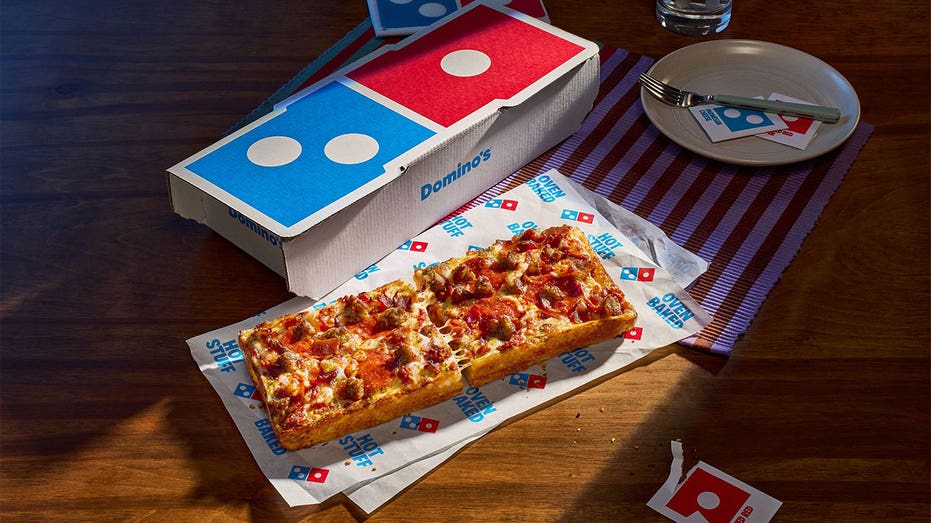
The Domino is shaped like the company’s iconic logo, cut into two slices and customizable with customers’ choice of sauce and toppings. (Domino’s)
The Domino will also be included in the chain’s Mix and Match promotion, allowing customers to select a two-topping version as one of two or more eligible menu items for $6.99 each. Prices may be higher at some locations, according to the company.
The launch comes as Domino’s operates a global network of more than 22,500 stores across more than 90 markets.
| Ticker | Security | Last | Change | Change % |
|---|---|---|---|---|
| DPZ | DOMINO’S PIZZA INC. | 357.34 | +9.49 | +2.73% |
CLICK HERE TO GET FOX BUSINESS ON THE GO
Domino’s reported more than $20.6 billion in global retail sales during the four quarters ended June 14. Independent franchise owners operated 99% of its stores at the end of the second quarter.
The company has also leaned heavily into digital ordering in its home market. More than 85% of Domino’s U.S. retail sales in 2025 came through digital channels, according to the company.

US crude oil inventories rise as fuel stocks decline
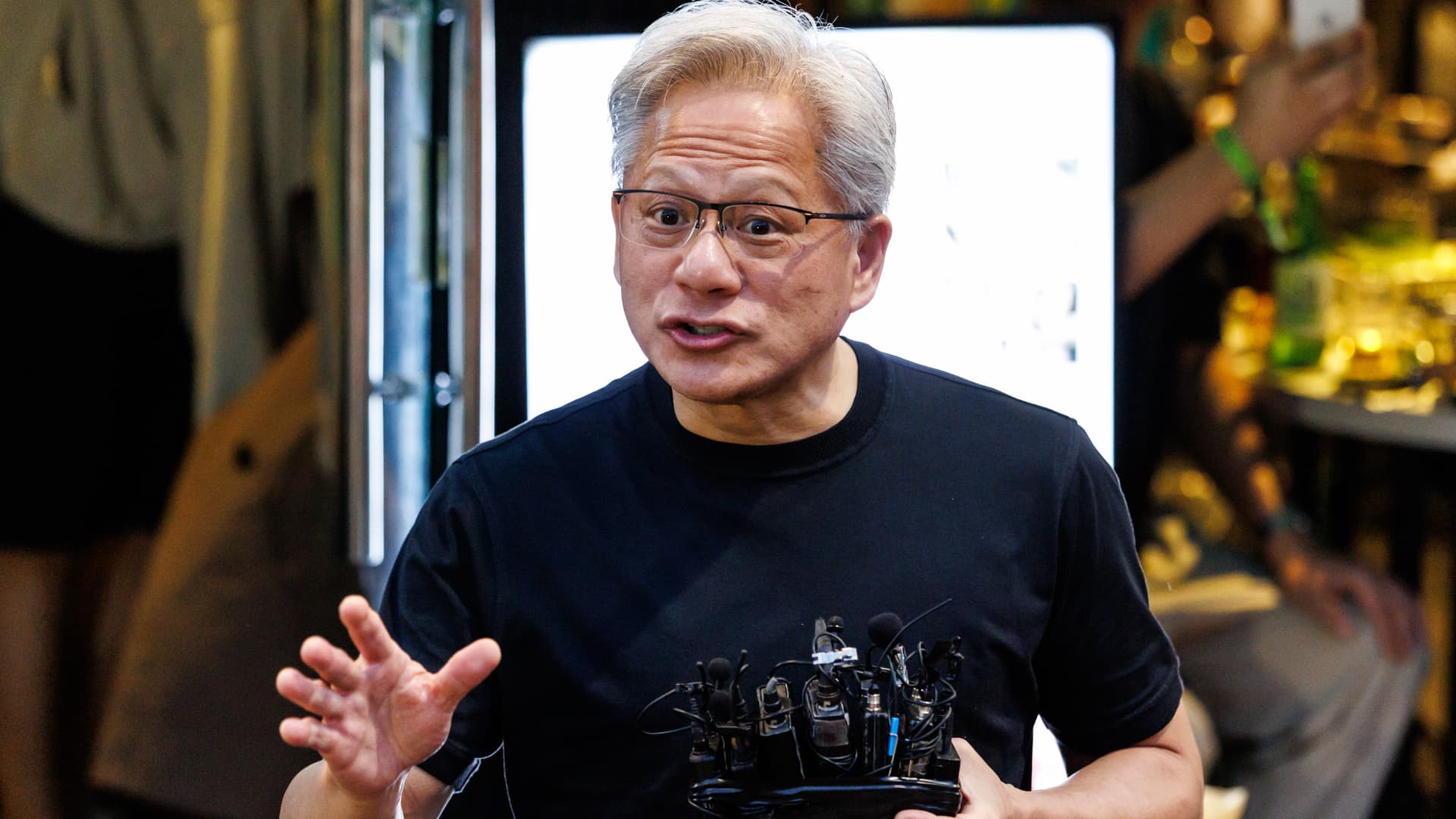
Nvidia CEO Jensen Huang speaks to members of media outside a restaurant in the Hongdae district of Seoul, South Korea, June 5, 2026.
SeongJoon Cho | Bloomberg | Getty Images
Jensen Huang built the world’s most valuable company by pioneering the specialized computer chips behind the artificial intelligence boom.
To keep his vision for the future within reach, the Nvidia founder is now attempting a different kind of engineering: convincing Wall Street investors that those chips are long-term financial assets akin to commercial real estate or toll roads.
His bet hinges on outpacing AI developments in China.
This week, Nvidia unveiled agreements with six of the world’s largest asset managers, BlackRock, Blackstone, Apollo, KKR, Brookfield and Goldman Sachs. The goal was to assemble a $500 billion pipeline to finance the construction of data centers and GPU clusters for companies that lack the credit rating or cash to buy millions of dollars of silicon outright.
Key to his plan, which Huang announced during a CNBC segment flanked by the leaders of all six Wall Street firms, is one crucial assumption: that Nvidia’s graphics processing units will hold their value over time, behaving more like traditional hard assets than fast-depreciating consumer electronics.
“Nvidia’s AI factory platform is really an investable asset, an infrastructure asset,” Huang said. “The reason for that is because it’s productive, it’s revenue generating, it is fungible, it’s used by just about every cloud service provider, it runs every AI model.”
In standard asset-backed finance, a bank lends money because if a borrower defaults, the bank can repossess the asset — like a building, a warehouse or a cargo ship — and sell it to get their money back. Those physical assets have established secondary markets and can last decades.
But the productive lifespan of cutting-edge GPUs is far from settled.
While new chips power frontier model training, after a few years they are relegated to lower-margin inference work — a shift that directly impacts their resale and collateral value.
“Depreciation is the one key risk here,” said Ben Emons, founder of FedWatch Advisors, who structured similar asset-backed loans for IndyMac before joining Pimco as a portfolio manager. Nvidia chips “could depreciate faster than expected,” he said.
High-yield rates?
In particular, Emons said he believes the single biggest threat to Nvidia’s financing model comes from China, which is rapidly ramping up domestic compute capacity and could choose to flood the market with low-cost silicon in a price war.
If Chinese production pushes hardware prices into a freefall, the collateral backing hundreds of billions in private loans could erode far faster than the terms of the debt itself, leaving investors exposed to losses, according to Emons.
To compensate at least partly for that risk, Emons estimates investors will treat GPUs as high-depreciation equipment rather than real estate, demanding high-yield returns in the 11% to 17% range depending on where they sit in the capital structure.
On top of that, the borrowers are likely to be non-investment grade firms locked out of traditional debt markets, including AI startups and neoclouds, according to a Bank of America Securities note.
If those higher-risk borrowers go under, Wall Street fund managers will be forced to repossess and resell used chips into a potentially falling market.
Whatever risks China poses wouldn’t be realized anytime soon. Huawei, the dominant provider of Chinese AI chips, has been on the U.S. Commerce Department’s Entity List since 2019. And in May, the U.S. government said Huawei’s Ascend AI chips violate U.S. export controls, preventing any American company from using the chips.
In the meantime, Nvidia remains by far the leading supplier of AI chips in the U.S., with upwards of 75% market share by most estimates.
And for now, the economics are still moving in Huang’s favor. Driven by scarcity as hyperscalers race to build out capacity, rental rates for Nvidia’s H100 chips rose from roughly $1.70 per GPU-hour in late 2025 to about $2.35 per GPU-hour this year, Huang noted.
Crucially, Nvidia argues its CUDA software layer — which enables developers to run AI workloads on its GPUs — continuously improves hardware performance after deployment, allowing older chips to stay productive and generate yield longer than traditional accounting models predict.
The future of the AI buildout, and hundreds of billions of dollars in investor money, may depend on who is right.
— CNBC’s Ari Levy contributed to this report.
Business
The Morning Download: Meta Shares Glimmer of Always-On AI Future | The Morning Download for Aug. 10

Good morning. The most interesting thing about Meta’s new Muse Glimmer model, from the enterprise point of view, is its focus on always-on AI agents. As the company emphasizes in its announcement, “Muse Glimmer is…optimized for always-on local agent workflows.”
That’s going to matter a lot in the next few years, with implications for the ways in which companies work, as I wrote in an April 2025 column called “AI Is Enabling an Always-On Economy. Companies Need to Pick Up the Pace.”
Copyright ©2026 Dow Jones & Company, Inc. All Rights Reserved. 87990cbe856818d5eddac44c7b1cdeb8
Business
(VIDEO) More Than 90,000 Rubber Ducks Flood Chicago River In Record-Setting Special Olympics Fundraiser
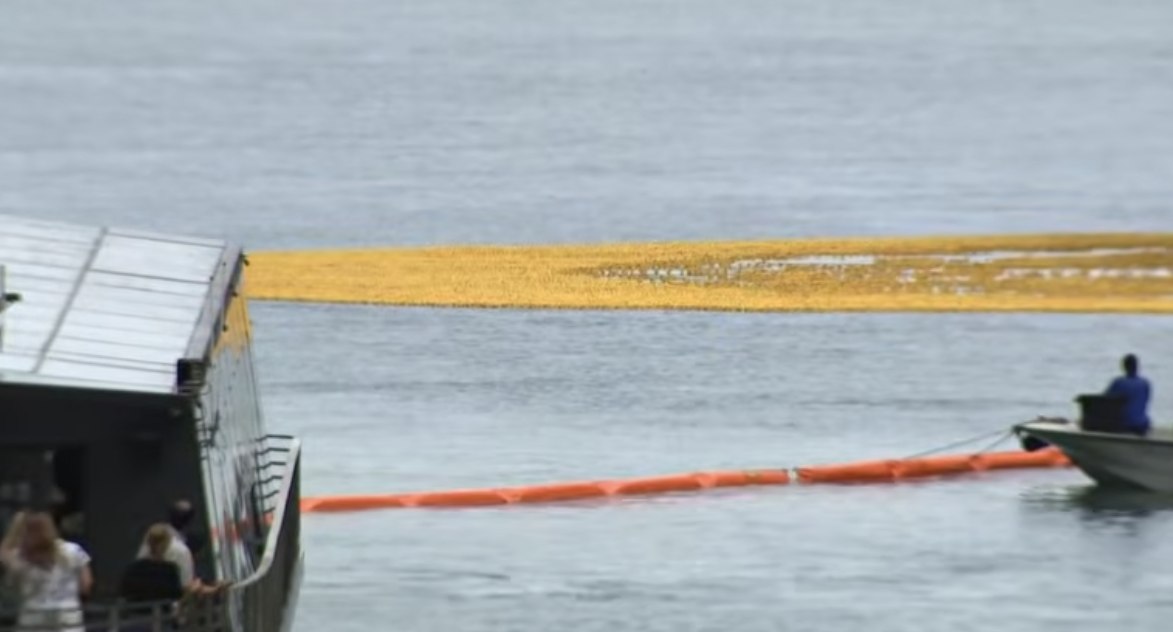
CHICAGO — A deluge of more than 90,000 rubber ducks poured out of a truck and into the Chicago River on Thursday, bobbing along a stretch of the skyscraper-lined waterway in the annual Chicago Ducky Derby, a fundraiser that this year set a new record for money raised on behalf of Special Olympics Illinois.
The truck dumped the ducks from one side of a half-raised bridge near Columbus Drive, sending a wave of yellow across the river. After forming a dense pool on the water, the ducks floated for roughly 15 minutes before organizers plucked a winner and runner-up from among the flotilla.
Organizers said 91,517 ducks were ultimately adopted this year, exceeding the event’s target of 90,000 and helping push total fundraising to a record $700,000 for Special Olympics Illinois, according to figures released by CBS Chicago following the event. That total builds on nearly two decades of fundraising since the Ducky Derby began in 2005, with the event having now raised roughly $5.6 million cumulatively for the organization over that span.
The annual event draws thousands of participants both to the riverfront viewing areas and to an accompanying festival held beforehand at Pioneer Court, along North Michigan Avenue. At the festival, attendees snapped photos with oversized inflatable ducks, doodled responses on a chalkboard prompting them to finish the sentence “I adopt a duck because…,” and mingled while wearing rubber duck-printed apparel. Duck adoptions started at $10 apiece, giving the public an accessible way to participate in the fundraiser regardless of budget.
Special Olympics Illinois named Becky Cavanagh, of Clarendon Hills, as this year’s Ducky Derby ambassador. Cavanagh, a 13-year Special Olympics athlete, held up the winning duck to cheers from crowds packed along both sides of the river once it was retrieved from the water. Asked what she enjoyed most about her involvement with Special Olympics, Cavanagh said her favorite part was “making new friends.” When asked before the race how she felt about the prospect of picking the winning duck, she responded simply with an enthusiastic “Woo!”
Special Olympics Illinois organizes athletic competitions across the state for people with intellectual and developmental disabilities, offering programming that is free of charge to all participating athletes. Donations tied to the Ducky Derby directly fund specific components of that programming: a $10 contribution to sponsor a single “lone duck” covers a lunch for an athlete during a competition, while $30 buys a “quack pack” of six ducks, enough to help supply a full team with gold medals. Some participants also purchased larger packages, including a “ducky dozen” of a dozen ducks, to further boost their contribution.
This year’s winning duck earned its sponsor a brand-new Chevrolet Trax, donated by Chevrolet dealers across the Chicago and Northwest Indiana region, while the runner-up’s sponsor took home a $2,500 cash prize. Pete Beale-DelVecchio, president of Special Olympics Illinois, said ahead of the race that the derby has become a meaningful annual tradition for the organization and the athletes it serves. “It really is a fantastic day for our athletes,” Beale-DelVecchio said, speaking near the riverside staging area where derby attendees mingled with inflatable ducks and danced along to a live DJ set before the ducks were released.
Thursday’s turnout marked a significant jump from the prior year’s event, when roughly 75,000 rubber ducks were released into the river, itself described at the time as the largest Ducky Derby release in the event’s history. That 2025 edition raised more than $330,000 for Special Olympics Illinois, according to figures reported following that event, meaning this year’s total represents more than double the prior year’s fundraising haul. Kyle Tuckey, who served as the Ducky Derby ambassador during the 2025 event, had described his own involvement with Special Olympics in similarly personal terms at the time, calling the experience “life changing” and crediting the organization with shaping who he had become.
The Ducky Derby has grown steadily since its 2005 debut, evolving from a modest charity race into one of Chicago’s most recognizable annual philanthropic events, drawing sponsorship support from local businesses including Jewel-Osco in past years. The event’s format, in which sponsors “adopt” individually numbered rubber ducks that are then released en masse to race downriver toward a finish line, has become a model replicated in similar duck-race fundraisers held in cities across the country, though Chicago’s version has grown into one of the largest of its kind by both duck count and total funds raised.
Beyond the immediate spectacle of tens of thousands of rubber ducks racing down one of Chicago’s most iconic waterways, organizers say the event’s core purpose remains focused on the athletes it supports, funding programming that allows Special Olympics Illinois to continue offering free competitions and training opportunities to athletes with disabilities across the state. With this year’s event setting a new fundraising record, organizers indicated they hope to continue building on that momentum in future years as the Ducky Derby approaches its third decade as a fixture of Chicago’s summer charity calendar.

GrowGeneration earnings beat by $0.01, revenue topped estimates
Brent crude futures held near one-week highs in choppy trading, while the S&P 500 energy sector index climbed.
“As has been the case for months, it’s just really hard to come to an agreement that works for everyone. Oil is a little higher, pricing in more uncertainty around that,” said Ross Mayfield, investment strategy analyst at Baird in Louisville, Kentucky.
“The market has obviously gyrated around this conflict at times, but it hasn’t been the big headwind that a lot of people imagined it might be.”
Amazon and Alphabet each fell and weighed on the S&P 500 and Nasdaq, while SpaceX also dipped. Alternative asset managers rose, with Apollo Global and Blackstone both rallying. They were among financial institutions that recently partnered with Nvidia to establish compute-financing platforms aimed at mobilizing more than $500 billion.

According to preliminary data, the S&P 500 lost 25.32 points, or 0.33%, to end at 7,727.79 points, while the Nasdaq Composite lost 160.36 points, or 0.60%, to 26,445.00. The Dow Jones Industrial Average fell 188.41 points, or 0.35%, to 53,787.57.
Strong quarterly earnings helped lift the S&P 500 to all-time highs last week, while the Nasdaq was down about 2% from its record high close on June 2.Signs that heavy investments by Microsoft and Amazon in AI data centers are paying off have also lifted sentiment.
Consumer and producer price inflation readings, due over the next two days, will be crucial in shaping market expectations on the Federal Reserve’s policy path, given Chair Kevin Warsh’s goal of reducing guidance on monetary policy.
Traders are split over the likelihood of an interest rate hike at the central bank’s September meeting, according to the CME FedWatch tool.
Rising energy costs, stemming from the Iran conflict, have spurred inflation concerns and complicated the paths of central banks globally.
Jabil climbed after UBS upgraded the electronics firm’s stock to “buy” from “neutral.” U.S.-listed shares of On tumbled after the sportswear brand missed sales estimates. LNG company Venture Global fell after its second-quarter revenue slightly missed estimates.
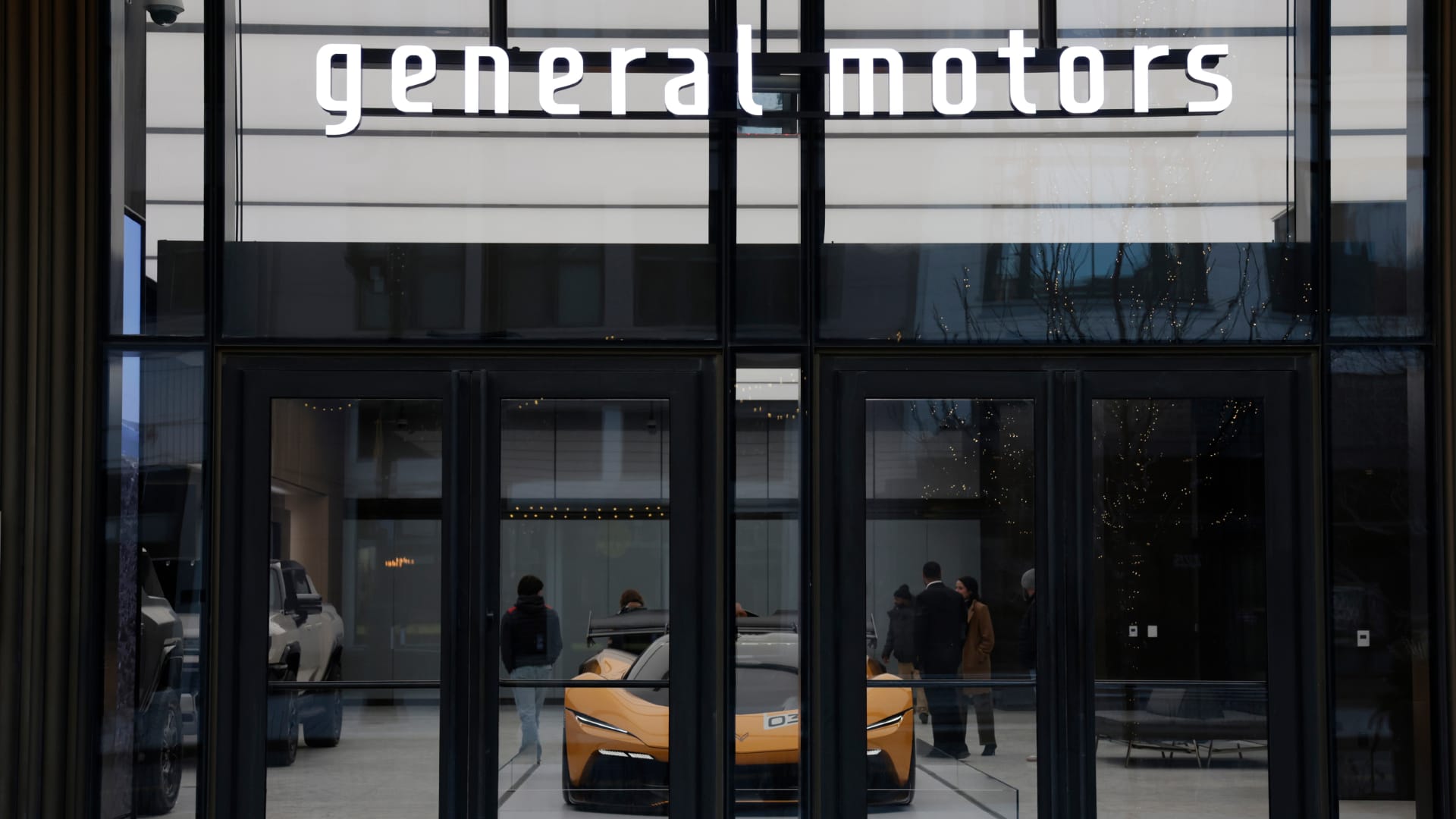
The General Motors global headquarters in Detroit, Jan. 12, 2026.
Jeff Kowalsky | Bloomberg | Getty Images
DETROIT — General Motors has reached a unique, multibillion-dollar parts deal as it aims to preserve cash and prevent supply chain disruptions like ones that have hit the global automotive industry this decade.
In a public filing Tuesday, GM said the up to $4.5 billion purchasing agreement includes a company called Procura Auto Parts that specializes in sourcing rare or critical parts. It will receive funding through a bank syndicate led by JPMorgan Chase and Banco Santander to prepay select suppliers on behalf of GM.
In return, GM will issue formal promises, or IPUs, to pay back the company after it uses the parts in production, no later than July 31, 2029. The deal allows GM to keep inventory costs off its books, while better securing future parts.
GM pays interest, plus an agreed upon premium on what’s used, as well a customary annual fee on the unused portion during that year, according to the filing. For accounting purposes, the prepayments show up as an asset and each purchase is booked as unsecured debt, and the cash flows are shown as if GM paid suppliers directly, the filing said.
These payments are excluded from adjusted automotive free cash flow until GM actually buys the inventory. The company typically books the capital within 90 days of purchase.
GM declined to disclose what parts the company may be targeting. Problematic parts for the automotive industry have included semiconductor chips, including dynamic random access memory, rare earths and wire harnesses.
The deal follows years of global automotive supply chain issues and comes after GM and other automakers reevaluated their sourcing or parts following U.S. tariffs and a push to move away from Chinese companies.
GM established the deal with Procura and the banks on Friday, according to the filing.


I’m a lifelong entrepreneur who, alongside my other ventures, has always made time for the markets. Driven by genuine passion, I’ve been active with varying intensity for roughly 30 years, gaining perspective across multiple market cycles. I’ve built a company from scratch and operated as an entrepreneur in the food industry, lodging, and real estate, which has given me a strong, ground‑level understanding of how businesses really work. Because of that background, I always see the company behind the stock, and I like to keep the narrative and the numbers connected.The first twenty years of my market experience ran in parallel with other ventures — at times more like a hobby — but the last decade has been fully focused on the markets. Having gone through the 2000s dot‑com bubble and the 2008 subprime crisis with real skin in the game, I see both as extremely valuable lessons. I genuinely believe you learn far more from painful mistakes than from easy wins.In recent years I’ve experimented with different trading strategies, mostly built around options. I’ve won big and lost big, and in the process gained a much‑needed understanding of what prudent risk management really means — and how painful it is when it’s not implemented well. Even when I take more risk on the trading side, I keep my long‑term buy‑and‑hold positions completely separate from trading assets.My academic background is in Economics, and I’ve recently refreshed that foundation through a course aligned with the CFA curriculum, focused on securities valuation and risk management. I’m a believer in lifelong learning — it keeps you connected to new theories and how they’re applied. At the same time, I take Jesse Livermore’s century‑old, simple market truths as a core part of how I interpret everyday market behavior. I find real value in combining academic structure with Livermore‑style simple rules to gain a better understanding of the bigger picture.My passion is finding mispriced assets or situations the market may be overlooking or misinterpreting. With a deep interest in history and geopolitics, I tend to look at situations from a broader perspective. And when making investment bets, I like to keep in mind the old Gretzky quote: “I skate to where the puck is going to be, not where it has been.”
Analyst’s Disclosure: I/we have no stock, option or similar derivative position in any of the companies mentioned, and no plans to initiate any such positions within the next 72 hours. I wrote this article myself, and it expresses my own opinions. I am not receiving compensation for it (other than from Seeking Alpha). I have no business relationship with any company whose stock is mentioned in this article.
Seeking Alpha’s Disclosure: Past performance is no guarantee of future results. No recommendation or advice is being given as to whether any investment is suitable for a particular investor. Any views or opinions expressed above may not reflect those of Seeking Alpha as a whole. Seeking Alpha is not a licensed securities dealer, broker or US investment adviser or investment bank. Our analysts are third party authors that include both professional investors and individual investors who may not be licensed or certified by any institute or regulatory body.

Intel to Sell $15 Billion of Common Stock

Do state election betting bans apply to prediction markets?

Mike Vrabel Gives Curious Answer About Counseling With Wife

Can the Brewers Beat the Dodgers After Adding Tarik Skubal?


-

 Fashion4 days ago
Weekend Open Thread: Mattifying Sunscreen
-

 Fashion4 days ago
Frugal Friday’s Workwear Report: Cap-Sleeve Pointelle Crewneck Sweater
-

 Sports6 days ago
Jordan Coyle & Cordiamo take Laya Arena Stakes at RDS
-

 News Videos3 days ago
Can Astrology Help Find Gold and Silver Trends? A Financial Astrology Guide
-
 Business6 days ago
US stocks: Dow closes at record on Mideast optimism; SpaceX, AMD drag Nasdaq
-

 Politics5 days ago
Reform UK And Greens Sink To Lowest Favourability Ratings To Date
-

 Business7 days ago
Nvidia Stock Climbs 2.5% as Chip Sector Rally Builds Ahead of AMD Earnings, Nvidia’s Own Report Looms
-
 Tech7 days ago
OpenAI, Anthropic AI agents targeted real people and systems in cyber tests
-
 Business6 days ago
Supply chain issues impact Ingredion
-

 Tech4 days ago
Rinn Pharma & Biopharma to join NordicPharmaTrain network
-

 Business3 days ago
How to Start a Cleaning Business: A Step-by-Step Guide
-
 Crypto World7 days ago
Dow and S&P 500 Hit Records on AI Earnings: When Will the Bubble Burst?
-

 Business2 days ago
Datadog: Best Of Breed For Multiple Reasons
-

 Business3 days ago
BDC Weekly Review: Private BDC Q2 Numbers Are Strong
-
 Business7 days ago
McDonald’s (MCD) Q2 2026 earnings
-
 Crypto World7 days ago
Dollar Index Trapped at 100 as Hawkish Fed Meets Official Selling
-

 Fashion7 days ago
The Bright Side of Black and White
-

 Fashion6 days ago
Suit of the Week: Me + Em
-
 Business7 days ago
Apple UK encryption challenge filed against Home Office
-
Sports6 days ago
Spider-Man: Brand New Day ending explained: Is Peter Parker alive?
You must be logged in to post a comment Login