
Crypto World
Decta Tests Stablecoin-Backed Treasury Settlement for Payments


Payments infrastructure provider Decta UK says it is bringing USDC into its internal treasury workflow for cross-border settlement—an integration that highlights how stablecoins are increasingly being used behind the scenes, not necessarily as a customer-facing payment option.
According to an announcement shared with Cointelegraph, Decta will route its own funds through OpenPayd, a regulated financial infrastructure provider, where the company converts fiat into USDC for international operational settlements.
Key takeaways
- Decta plans to use USDC as a settlement instrument for its own treasury movements via OpenPayd, rather than placing stablecoins in its customer payment flows.
- The firm described the rationale as improving the timing and flexibility of internal fund transfers compared with traditional banking rails, including weekend and cut-off constraints.
- OpenPayd will perform the fiat-to-USDC conversion using its over-the-counter capabilities inside a regulated infrastructure setup.
- The move fits a broader industry pattern: stablecoins being adopted for internal liquidity and settlement operations by payments and financial firms.
How Decta plans to use USDC
Decta said Tuesday it will use OpenPayd’s infrastructure to convert company funds into USDC for international settlement. OpenPayd’s role is described as “proprietary treasury use” rather than a customer-facing payments feature.
OpenPayd chief commercial officer Lux Thiagarajah told Cointelegraph that Decta transfers its own funds into OpenPayd’s regulated setup, where those funds are converted into USDC through OpenPayd’s over-the-counter capabilities to support international operational settlements.
From Decta’s perspective, the company framed the upgrade as a practical replacement for certain limitations of traditional banking. Decta UK CEO Scott Dawson said the business routinely shifts funds across banking relationships to fund operations and settle obligations between regulated entities and markets. He noted that these transfers typically face banking cut-off times, weekend closures, and multi-day value dates.
Dawson argued that using OpenPayd’s regulated infrastructure allows Decta to convert fiat into a digital settlement instrument and move value “near-instantly” across markets.
Stablecoins migrating from payments to treasury operations
While stablecoins have often been discussed primarily in the context of end-user payments, Decta’s approach underscores a different entry point: internal treasury management. By limiting USDC to its own operational settlement needs, Decta is effectively treating stablecoin settlement as infrastructure—something that can improve liquidity handling without requiring customers to transact with the asset directly.
This distinction matters for adoption. For payments firms, stablecoins can reduce friction when value must move quickly across borders or between affiliated entities, while still allowing the company to maintain a familiar customer experience built on existing rails. In Decta’s case, the company’s statements emphasize that stablecoins are not being introduced into customer-facing payment services, only into its back-end settlement workflow.
It also places stablecoin use closer to how other treasury tools are deployed: as an internal mechanism for moving and managing funds rather than as a retail product.
Companies behind the integration
Decta, founded in 2015 in London, describes itself as a payments platform providing processing, acquiring, card issuing, banking, and related financial infrastructure for businesses. In its announcement, the company said it operates across 32 countries and serves hundreds of companies.
The company has previously explored stablecoin issuance. In August 2024, Decta Limited and Next Generation—described in a related announcement—said they were exploring a potential euro-pegged stablecoin that Decta could issue under the European Union’s MiCA framework, subject to regulatory approval.
OpenPayd, founded in London in 2018, positions itself as financial infrastructure that connects fiat and digital assets. Cointelegraph reported that OpenPayd secured authorization under MiCA in June, enabling it to provide crypto services across the European Economic Area, including fiat-to-stablecoin on- and off-ramps. The company lists clients including Kraken, eToro, OKX, and B2C2.
Why this matters—and what to watch next
Decta’s integration is notable not only because it uses USDC, but because it frames stablecoins as settlement plumbing within regulated payment ecosystems. If the “near-instantly” claim reflects measurable improvements to operational timing, it could encourage other payments firms to follow a similar path—particularly those with multi-entity structures that must manage internal obligations across jurisdictions.
For investors and market participants, the key question is whether this kind of treasury adoption remains confined to back-end settlement or expands toward broader distribution. Decta has indicated the USDC workflow is “proprietary treasury use” rather than a customer-facing flow, but the longer-term signal will come from whether other firms replicate the model and whether stablecoin settlement volumes outside retail activity continue to grow.
Readers should watch for additional details around how widely Decta will roll out the workflow across routes and entities, and whether OpenPayd’s MiCA-enabled infrastructure catalyzes more integrations from established payments players seeking flexibility in cross-border liquidity management.



Only 281 of 1,343 crypto service providers operating across the European Economic Area have secured MiCA authorization after the EU’s final transition period expired on July 1, leaving more than 1,000 firms without approval under the bloc’s licensing regime.
Summary
- Only 281 of 1,343 EEA crypto service providers secured MiCA authorization by July 1.
- High or Severe risk ratings applied to 12% of unauthorized firms, compared with 2% of authorized providers.
- Unauthorized firms sent $5 billion directly to sanctioned counterparties, about three times the $1.7 billion recorded among authorized firms.
- Germany authorized 55 firms, while Poland issued no authorizations despite its previous register exceeding 1,800 entries.
According to blockchain intelligence firm TRM Labs, 1,062 firms in its dataset had not obtained authorization under the Markets in Crypto-Assets Regulation by the deadline and must now leave the market, restructure their operations or transfer customers to an authorized provider.
The gap extends beyond licensing. TRM found that 12% of firms without authorization carry a High or Severe risk rating, compared with 2% of authorized providers, while every firm assigned a Severe rating belonged to the unauthorized group.
Most providers in both groups have little direct contact with illicit funds. However, TRM identified a small number of unauthorized firms sending between 1% and 12% of their volume directly to illicit addresses. No authorized provider recorded direct illicit exposure above 1%.
MiCA authorization has left more than 1,000 firms outside the regime
Before MiCA, crypto companies operated under separate registration or licensing systems maintained by individual European countries, creating major differences in the requirements firms faced depending on where they registered.
TRM identified 383 operating firms under Lithuania’s previous registration system and 241 in Poland. Poland’s official register contained more than 1,800 entries, although the blockchain intelligence firm said most showed no observable crypto activity.
At the other end, Slovenia had three identified providers and Belgium had two. TRM cautioned that its figures track firms it could identify as actually providing crypto services rather than every entry on national registers, meaning countries without public registers may be undercounted.
MiCA replaced the national systems with a common authorization framework. Companies legally operating before Dec. 30, 2024, could continue under Article 143(3) while seeking authorization during the transition period, with July 1 serving as the final EU-wide cutoff.
As crypto.news explained shortly before the deadline, individual member states were allowed to set shorter transition periods, but none could extend the grandfathering system beyond July 1. Firms without the required authorization after their applicable deadline could no longer legally provide covered crypto services in the EU.
Licensing numbers had already shown how much the market could contract. In May, the ESMA register contained 204 authorized CASPs, including 51 approved during the first five months of 2026. Germany accounted for 55 at the time, followed by the Netherlands with 25 and France with 17.
A separate June report found that more than 3,000 crypto firms had been registered across Europe before MiCA, while only 194 had secured authorization by May. Hogan Lovells estimated at the time that roughly 75% of firms registered under the previous systems could lose their status as national transition periods expired.
Germany and smaller EU states have taken more firms through MiCA
Authorization has been uneven across individual European jurisdictions, according to TRM’s July 1 dataset.
Germany authorized 55 firms, while France and the Netherlands each authorized 29. Malta approved 20 and Cyprus 19, compared with nine home authorizations issued by Italy despite 145 firms operating there.
Malta, Cyprus, Ireland and Luxembourg together accounted for 63 of 272 home authorizations identified by TRM, even though only 101 operating firms came from their previous registers.
Lithuania produced a very different conversion rate. Eight firms obtained authorization from a previous register containing more than 400 providers, while Poland issued none despite its old register exceeding 1,800 entries. Greece and Portugal also issued no home authorizations in TRM’s dataset.
The figures also show how MiCA’s passporting system can separate where a provider operates from which regulator supervises it. Germany’s BaFin authorized 55 of the 57 licensed providers operating in the country, while Italy hosted 37 licensed firms but issued nine home authorizations. Spain hosted 34 and authorized 12.
Under MiCA, a CASP approved in one member state can use passporting rights to provide covered services elsewhere in the bloc. For example, B2C2 secured Luxembourg authorization in May, allowing the liquidity provider to offer regulated over-the-counter spot crypto trading across all 27 EU member states and three additional EEA markets.
The same system has allowed firms including Coinbase, Bitpanda and Kraken to operate from different regulatory bases while serving customers across multiple European markets.
By July 3, ESMA’s interim register had expanded to 300 authorized crypto-asset service providers after 57 additional firms were added around the July 1 deadline, including Standard Chartered and FalconX.
Unauthorized firms carry higher risk ratings and sanctions exposure
Looking beyond license numbers, TRM found a clear difference in the risk profiles of the two groups.
About 12% of unauthorized firms received a High or Severe rating, six times the 2% recorded among authorized providers. Severe ratings were found exclusively among firms that failed to obtain authorization.
Direct exposure to illicit or high-risk counterparties was much closer when measured across each group as a whole. Unauthorized providers recorded 0.09% of outgoing volume directly involving such counterparties, compared with 0.07% among licensed firms.
High-risk exchanges and gambling services accounted for the largest exposures. Unauthorized firms sent $19 billion to high-risk exchanges and $15.3 billion to gambling services, while authorized providers recorded $14.2 billion and $13.4 billion, respectively.
Sanctions exposure produced a larger difference. TRM calculated that unauthorized firms sent $5 billion directly to sanctioned counterparties, roughly three times the $1.7 billion recorded among authorized firms.
Risk within the unauthorized group was heavily concentrated. Half of the firms showed no measurable direct illicit exposure, while a limited number sent between 1% and 12% of their volume directly to illicit addresses. TRM calculated that direct illicit exposure among the offboarding firms was about four times higher because of those outliers.
The unauthorized cohort also included HTX, which TRM described as a designated exchange, and Huione Pay, which has been named under U.S. special measures. Entities affected by EU measures restricting dealings connected to Russia were also among firms that held national registrations but did not obtain MiCA authorization.
The composition of the two groups differed as well. Exchanges accounted for 42% of unauthorized providers compared with 29% of authorized firms, while payment companies represented 16% and 9%, respectively.
Financial and investment service providers were more common among authorized CASPs, making up 25% and 21% of the group, compared with 9% and 7% among unauthorized firms. TRM’s High-Risk Exchange category appeared only among providers that did not obtain authorization.
Customer transfers are creating a new supervisory test
With more than 1,000 firms outside the authorization regime, the EU’s Anti-Money Laundering Authority has focused on what happens when their customers and assets move elsewhere.
AMLA said the end of the transition period would cause unauthorized virtual asset service providers to leave the market, customer relationships to be transferred or terminated, and crypto activity to become concentrated among fewer authorized CASPs.
During wind-downs, compressed exit schedules can place pressure on anti-money laundering controls and make it harder to track where customers and funds move, according to the authority. Receiving CASPs can simultaneously face changes in their customer risk profiles and additional demands on transaction monitoring systems.
AMLA has therefore asked supervisors to prioritize oversight of exit plans and customer transfers while coordinating with regulators in other jurisdictions when customers move across borders.
TRM identified 30 unauthorized providers with High or Severe risk ratings, giving receiving firms and supervisors a group that can be screened before customer migrations take place.
The firm also cautioned against treating all customers leaving unauthorized providers as equally risky. Most firms that failed to secure authorization still carried Low risk ratings and recorded negligible direct illicit exposure.
For receiving CASPs, TRM said entity-level screening can distinguish customers arriving from a Low-rated payment provider with little illicit exposure from those leaving a Severe-rated entity where a measurable share of transaction volume has moved directly to illicit addresses.
Regulators have also started examining authorized providers after completing much of the initial licensing work. In July, ESMA launched a review of a sample of MiCA-authorized crypto custodians, examining areas including custody controls, private-key management, incident response and risks tied to third-party providers.
TRM separately examined whether regulators issuing more licenses were also supervising firms with higher illicit exposure. Across 23 jurisdictions where licensed providers carried measurable transaction volume, it found no identified correlation between the number of authorizations issued and the illicit exposure of firms supervised there.
For financial institutions assessing counterparties, TRM said the number of CASP licenses granted by a firm’s home jurisdiction therefore provides little information about the individual provider’s risk. Its analysis instead found the differences at entity level, including individual risk ratings and direct exposure to illicit, sanctioned and other high-risk counterparties.

Payments firm Decta says it is adding Circle’s USDC to the back-end of its international treasury operations, using OpenPayd to convert fiat into the stablecoin for internal settlement across markets. The move highlights a growing pattern in crypto: stablecoins are increasingly used as infrastructure for liquidity and operational transfers, rather than as a branded payment option for customers.
Decta told Cointelegraph that the company will route its own funds through OpenPayd’s regulated infrastructure, where they are converted into USDC via OpenPayd’s over-the-counter capabilities. OpenPayd then supports international operational settlements that Decta would otherwise complete through conventional banking processes.
Key takeaways
- Decta will use USDC for internal treasury settlement across markets, positioning the stablecoin as a back-end liquidity tool rather than a customer payment feature.
- The conversion and settlement is handled through OpenPayd’s regulated infrastructure and OTC capabilities.
- Decta frames the change as an operational efficiency upgrade versus bank transfer frictions like cut-off times and multi-day value dates.
- Stablecoins continue to deepen their role inside traditional payments and financial infrastructure stacks.
How Decta plans to use USDC
In remarks shared with Cointelegraph, OpenPayd’s chief commercial officer, Lux Thiagarajah, described the integration as “a proprietary treasury use case rather than a customer-facing payments flow.” In other words, the stablecoin is intended for Decta’s own internal movements of value across entities and markets—not for consumer or merchant payments.
Thiagarajah explained that Decta transfers its funds into OpenPayd’s regulated infrastructure, where they are converted into USDC. OpenPayd’s role is to facilitate this conversion through its OTC capabilities, then use the resulting digital settlement instrument to support international operational settlements.
For investors and builders watching crypto adoption, the practical implication is straightforward: stablecoins are being absorbed into workflows where speed and execution certainty matter most. Even when customer-facing adoption lags, stablecoin rails can still become embedded in day-to-day operations for regulated financial intermediaries.
Treasury operations and the limits of banking rails
Decta UK CEO Scott Dawson said the company regularly moves funds between banking relationships to fund operations and settle internal obligations across regulated entities and jurisdictions. Traditionally, these transfers rely on standard banking rails, which can impose operational constraints such as cut-off times, weekends, and multi-day value dates.
Dawson argued that using OpenPayd’s regulated infrastructure changes the timing dynamics. According to his statement to Cointelegraph, Decta converts fiat into a digital settlement instrument through OpenPayd, then “moves it across markets near-instantly.”
This matters because treasury departments generally value predictability and execution efficiency. While banking transfers can be reliable, their scheduling constraints can complicate cash planning and working-capital management—particularly for firms operating across multiple countries and regulated entities.
Dawson also pointed out that Decta transfers its own funds for settlements rather than altering the structure of its customer payment products. That distinction suggests the company is aiming for improved operational settlement performance without expanding the stablecoin exposure embedded in its customer-facing services.
Decta and OpenPayd: where the integration fits
Founded in 2015 in London, Decta describes itself as a payments platform providing payment processing, acquiring, card issuing, banking, and other financial infrastructure to businesses. The company says it operates across 32 countries and serves hundreds of companies, according to its announcement.
On the infrastructure side, OpenPayd—founded in 2018 in London—positions itself as a bridge between fiat and digital assets. Cointelegraph previously reported that OpenPayd secured authorization under the European Union’s Markets in Crypto-Assets Regulation (MiCA) in June, enabling it to offer crypto services across the European Economic Area, including fiat-to-stablecoin on- and off-ramps. Its listed clients include Kraken, eToro, OKX, and B2C2, as described in that earlier coverage.
Cointelegraph also noted in past reporting that Decta had explored stablecoin issuance. In August 2024, Decta Limited and France-based Next Generation said they were looking at a potential euro-pegged stablecoin that Decta could issue under MiCA, subject to regulatory approval.
Taken together, the new USDC settlement plan fits a broader trajectory for regulated payment businesses: stablecoins can be treated as settlement instruments in specific operational layers, while issuance ambitions or customer-facing products may follow separate regulatory and market readiness paths.
What to watch next
As Decta rolls USDC into its international treasury workflow, market observers should look for whether the arrangement remains strictly proprietary (back-end settlements) or gradually expands into other operational flows. The key unresolved question is how widely similar regulated payment firms will follow—especially given the ongoing need to balance faster settlement with compliance expectations across jurisdictions.
The CLARITY Act bill cleared the Senate Banking Committee by a comfortable 15-9 bipartisan margin, but now carries a 75% chance of dying before it ever reaches a final vote.
That’s the assessment TD Cowen Washington Research Group analyst Jaret Seiberg delivered in an August 10 policy note, and it reframes the CLARITY Act from a near-certain legislative win into a genuine coin-flip proposition heading into September.
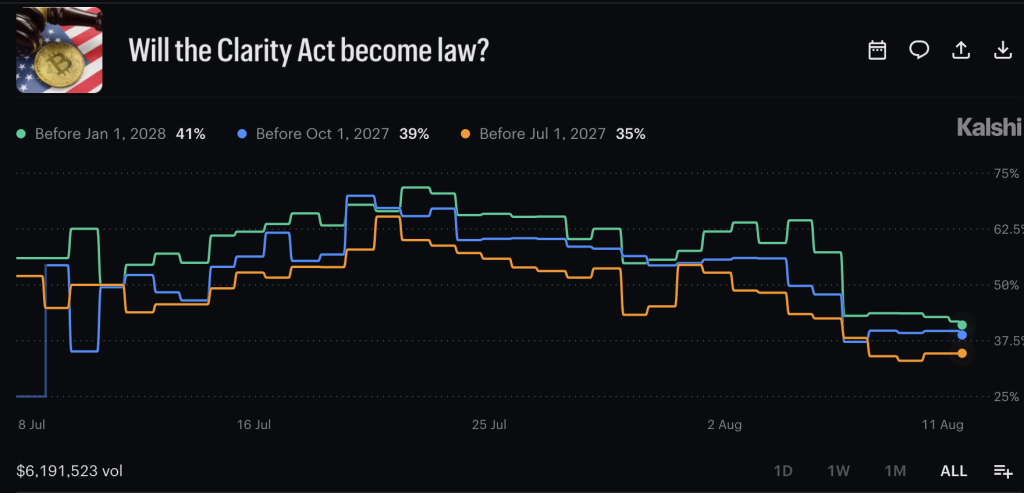
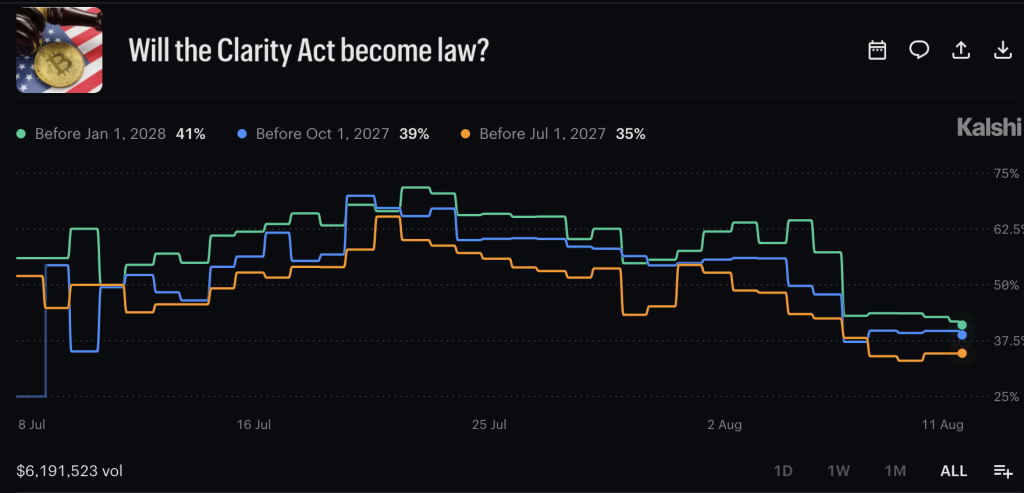
This latest twist in the CLARITY Act drama comes as Kalshi bettors have been placing money on the bill being passed by July 1, 2027, with that market increasing 2% overnight, currently sitting at 35%.
Where the CLARITY Act Bill Actually Stands
The Digital Asset Market Clarity Act (H.R. 3633) aims to separate federal oversight of digital assets between the SEC and CFTC, designating digital commodities to the CFTC and investment-contract assets to the SEC.
Senator Cynthia Lummis (R-WY) released updated text on July 22 and emphasized the urgency of passing the legislation, calling it “the last real chance…to get this right.”
Senate Agriculture Committee Chairman John Boozman (R-AR) noted the bill provides a clear regulatory framework for digital commodities.
Banking Committee Chairman Tim Scott (R-SC) highlighted its role in protecting retail investors and preventing illicit finance. Despite previous momentum, including a 15-9 committee vote, progress has stalled in the Senate.
BREAKING: — Bull Theory (@BullTheoryio) August 11, 2026
 SEC is set to begin its first major crypto rulemaking process this week as the Senate has failed to pass the Clarity Act before the August recess.
The SEC will meet on August 14 to propose “Regulation Crypto.”
The proposal could create a legal path for certain… pic.twitter.com/Z0R4fIdYPp
Why TD Cowen Puts the Odds Against Enactment
Seiberg’s estimate of a 75% failure rate, mentioned by Bitcoin.com News, came after Senate Majority Leader John Thune filed for cloture on Aug. 8. While an initial cloture vote is scheduled for 2:15 p.m. ET on Sept. 15, this does not guarantee a completed legislative process. Three potential failure scenarios include:
- The motion clears the 60-vote threshold, but Democrats block further cloture due to unresolved amendments.
- The scheduled vote does not happen because Republicans avoid contentious issues.
- The vote passes, but no amendments or subsequent motions occur, leaving the bill stalled.
With Republicans holding 53 seats, at least seven Democrats or independents must support the motion for it to pass. Disputes over stablecoin yield, anti-money-laundering provisions, and regulatory authority remain unresolved.
The 25% Path Isn’t Dead, Just Narrow
TD Cowen’s enactment case isn’t zero, and the firm’s language matters here: the bill is not dead, but the path forward is harder. The most plausible route to passage has the initial cloture motion clearing 60 votes.
Then Democrats getting a floor vote on their preferred ethics compromise, that amendment failing on a simple majority, and crypto-friendly Democrats then back final passage, having registered their objection on record.
A less likely branch involves the White House cutting its own ethics deal with Democrats to unlock enough votes outright. There’s also a lame-duck scenario, but it only exists if Republicans hold both chambers past the midterms, which pushes any resolution well beyond this fall’s trading calendar.
For traders pricing in a near-term regulatory catalyst, that’s the detail that matters most: even the optimistic case doesn’t deliver crypto regulation clarity on a September timeline.
Market Implications of a Stalled Senate Vote for the CLARITY Act
Assets most tied to the SEC/CFTC market-structure outcome have already priced in the delay. XRP, which stands to benefit directly from a codified digital-commodity classification under CFTC oversight, has seen ETF inflows soften alongside the postponed timeline.
This is a dynamic covered in detail, tied to weaker XRP ETF inflows amid CLARITY Act uncertainty. The pattern repeated after each procedural setback, including the immediate price reaction documented when the Senate vote was previously postponed.
That reaction function is instructive for Sept. 15. A clean cloture pass with visible follow-through, amendment votes, and a real path to final passage would be read as a genuine de-risking event for market-structure-sensitive tokens.
A cloture vote that either doesn’t happen or produces no subsequent action would confirm the bill’s drift toward TD Cowen’s base case, and assets that had priced in regulatory tailwinds would likely give back those gains.
The post CLARITY Act Vote Faces Procedural Fight, Not Final Passage appeared first on Cryptonews.
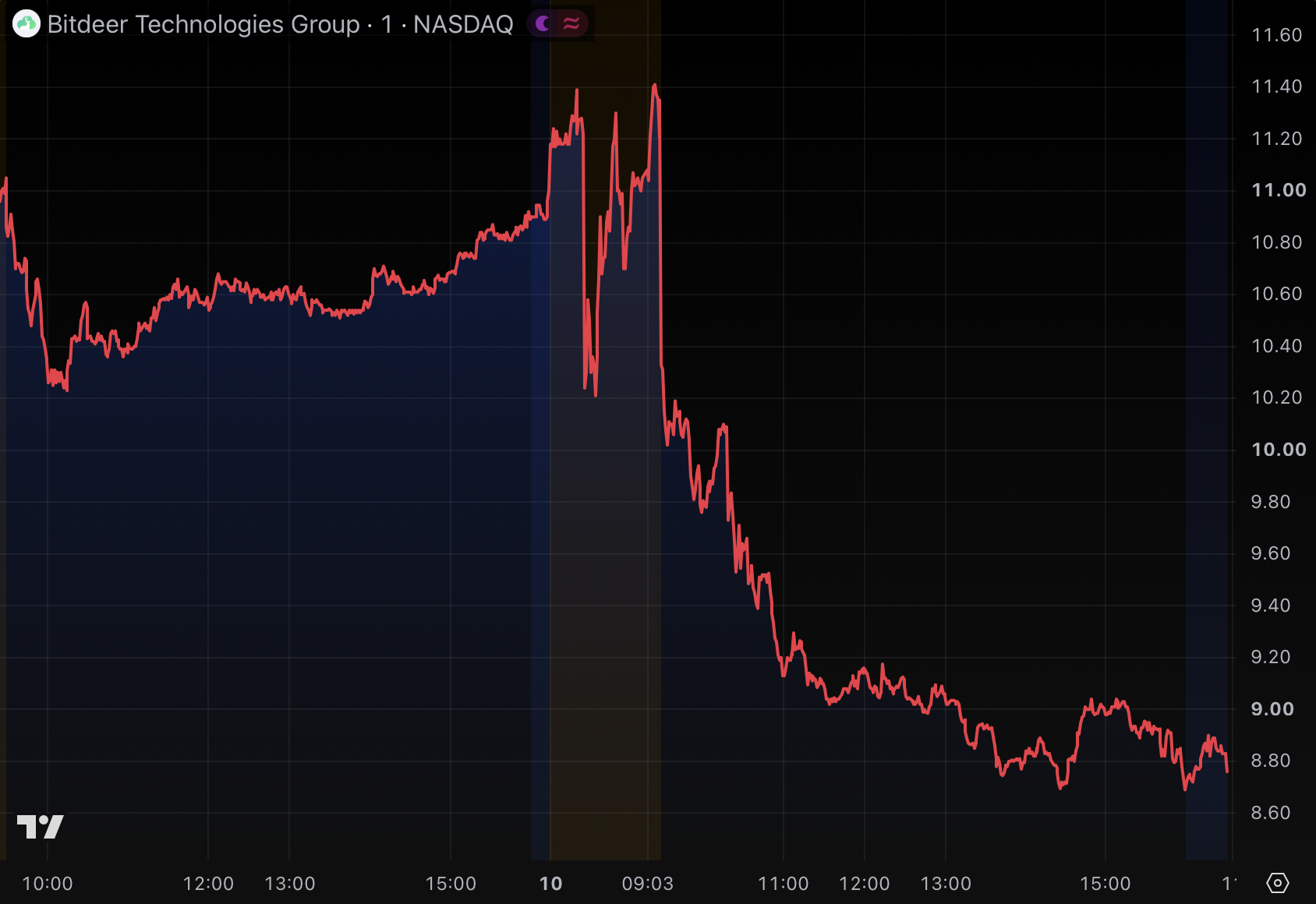
Bitdeer Technologies shed a fifth of its market value on August 10, closing at a market capitalization of $2.11 billion, down 19% from Friday’s $2.65 billion.
The BTC miner had posted a slightly wider quarterly loss than Wall Street expected that morning in its earnings announcement, and more importantly, it filed a shelf registration to dilute shareholders with up to $1 billion in new stock.
The stock’s plunge was idiosyncratic, not mirroring the price of broader markets nor BTC. Indeed, the Nasdaq closed within 0.4% of its Friday close, and BTC traded within 2%.
Bitdeer investors were reacting to the company’s particular disclosures, not the broader market.
Bitdeer reported second quarter revenue rising 47% versus Q2 2025 to $228.8 million, beating analysts’ consensus estimate of $225.7 million.
Its per-share earnings loss of $0.37 per share missed analysts’ $0.36 model, a forgivable single cent miss.
Behind those numbers, however, the company’s margins swung in the wrong direction. Gross margin turned negative for the quarter against a positive quarterly margin the prior year.
Analysts at Alliance Global weren’t impressed. They cut Bitdeer’s price target to $20 per share, reversing a raise to $23 they had made just days earlier on pre-earnings optimism.
CFO Michael Potter tried to frame Bitdeer’s quarter positively. He joined from Corsair Gaming this year, replacing outgoing finance chief Jianchun Liu.
“The second quarter reflected steady progress across our platform,” he said in the earnings release before his stock cratered by 19% in one day.
Steady progress is one way to describe a quarter where costs outran revenue.
He also cited a new colocation agreement and the AI Cloud business as evidence of an “integrated vertical stack” that failed to immediately impress investors.
Read more: Bitcoin miners increasingly rely on government handouts to compete
Bitdeer stock tanked on the dilution news
Before most capital allocators had finished digesting its earnings, Bitdeer filed a shelf registration statement with the SEC.
A prospectus supplement followed, authorizing a program to sell up to $1 billion worth of stock. A syndicate of banks will oversee that selling, including Barclays, Cantor Fitzgerald, and others.
The same prospectus discloses immediate dilution for anyone who bought at Friday’s close.
As a reward for patiently holding all of 2026, common shareholders in Bitdeer have lost 22% of their investment year to date.
A legacy lawsuit from February 2026 by American Heavy Plate Solutions has also created unease about Bitdeer’s Clarington, Ohio data center project.
The suit alleges that site disrupts another 30-year lease.
On his August 10 call, Potter said the motion to dismiss was denied and that the case has moved into discovery. “We continue to believe that the lawsuit doesn’t have any merit,” he added.
Got a tip? Send us an email securely via Protos Leaks. For more informed news and investigations, follow us on X, Bluesky, and Google News, or subscribe to our YouTube channel.
Jensen Huang, chief executive officer of Nvidia Corp., speaks to members of the media following the company’s “Japan AI Ecosystem” reception in Tokyo, Japan, on Thursday, July 16, 2026.
Kiyoshi Ota | Bloomberg | Getty Images
The first three-plus years of the artificial intelligence buildout has been paid for through record amounts of equity and debt issued by the world’s leading tech companies, some of whom are spending so much of their existing capital that they’ve turned cash-flow negative.
Nvidia CEO Jensen Huang just revealed what he expects to be the next phase of financing, backed not by corporate balance sheets, but by Wall Street’s top power brokers.
In an interview with CNBC on Monday, Huang called his plan a “big concept,” unveiling it on camera alongside leaders from Goldman Sachs, BlackRock, Blackstone, KKR, Apollo and Brookfield. Together, those firms say they’re willing to loan $500 billion, and potentially more, for the construction and buildout of new AI factories, as chipmakers and hyperscalers race to meet seemingly endless demand.
Huang and his big-money partners, one by one, described what they view as a fundamental shift in the tech industry: AI infrastructure has become a new asset class.
“These systems are not like our PCs, not like our phones,” Huang told CNBC’s Becky Quick. “These are revenue-generating assets now. They’re productive, they’re long lived, they’re fungible, they’re flexible.”
The discussion was thin on specifics as far as the types of borrowers that will emerge, what interest rates will look like, where the facilities will be constructed and when it will all kick off. Their joint press release said the companies had signed memos of understanding, with no reference to any contracts.
The details matter. Almost 11 months ago, Nvidia announced a partnership to invest up to $100 billion in OpenAI as part of a plan to build out data centers requiring a combined 10 gigawatts of power. That investment never materialized, but Nvidia contributed $30 billion to the record-breaking funding round that OpenAI closed earlier this year.
Monday’s announcement struck a different tone, with the companies collectively pushing the message that money won’t be the problem as the AI buildout hits what McKinsey expects will be $7 trillion in global outlays by the end of the decade.
‘These are real assets’
So far this year, Alphabet, Amazon, Meta, Microsoft and Oracle have raised well over $150 billion combined by selling debt and equity to build data centers and fund the development of new AI models and support the explosion of AI agents. Intel just announced a $15 billion stock offering, then upsized it to $20 billion.
Financial firms are now gearing up to jump into the market in a different way, as executives like Goldman Sachs CEO David Solomon and KKR’s Waldemar Szlezak see AI equipment attaining familiar money-making characteristics.
“You’re starting to see, in a sense, you know, asset-based financing against this infrastructure buildout,” Solomon said on the CNBC panel. “That’s not surprising because these are real assets. They have real value.”
Goldman Sachs CEO David Solomon speaks during an interview at the Economic Club of Washington, Oct. 30, 2025.
Kevin Lamarque | Reuters
Instead of seeing supercomputers as devices that customers buy and use — the argument goes — these systems, filled with Nvidia’s graphics processing units that can cost $3 million per rack, look like profitable investments. Huang says the systems can be improved through his company’s CUDA software, and their lifespans extended, leading to better economics.
“You can think about it as a revenue stream, and you can securitize it or effectively divide that risk and sell it to investors who want to participate anywhere in that stack,” said Szlezak, KKR’s head of digital infrastructure.
When Wall Street starts getting noticeably excited about securitizing physical assets, a natural question emerges: What could go wrong?
One of the hallmarks of the financial crisis of 2007 to 2009 was the packaging of subprime mortgages into bundled securities that were then sold to investors as another way to make money from the housing boom. When mortgage defaults started going up, the whole system began to unwind.
Famed short-seller Michael Burry, who made a fortune betting against subprime mortgages, suggested late last year that companies including Meta, Oracle, Microsoft, Google and Amazon were overstating the useful life of their AI chips and understating depreciation.
The subprime meltdown wasn’t part of the conversation on Monday, but several of the financiers acknowledged a certain amount of risk in the AI trade.
“There will be excesses, there will be pullbacks,” said Jim Zelter, president of Apollo Global Management, adding that the number of participants in the project alleviates concentration concerns.
“There’ll be big companies that win,” Solomon said. “There’ll be big companies that turn out to be not what people expected.”

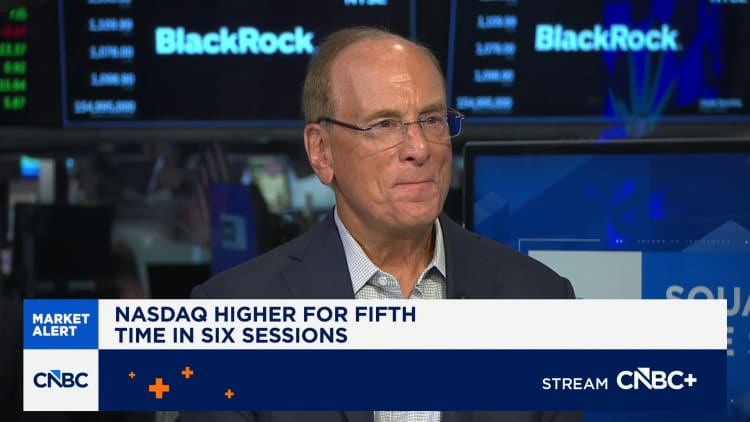
In discussing BlackRock’s role in Monday’s agreement, CEO Larry Fink made a direct comparison to the mortgage market, though he referenced a period decades before the housing boom and bust.
“This is the very beginning, like what it was when I started in the mortgage-backed securities market in the 1970s,” Fink said. “I look upon this as as a next future for financial engineering.”
All six of the financiers will make their own lending decisions, Huang said in the interview, noting that Nvidia will connect customers with financing partners.
Nvidia said it will have the option of backstopping 25% of every loan, a structure that should result in more favorable interest rates for companies that have previously had to rely on their own credit rating. Borrowers will have to use system architectures specified by Nvidia that would allow another company to take it over and operate it “if something were to happen,” Huang said.
Nvidia still has plenty to iron out with its financing partners, but Monday’s gathering marked a major step in showing the kind of money available to others in the ecosystem. Brookfield CEO Bruce Flatt said Huang created the necessary format for investors.
“Jensen’s leading this to create structures,” Flatt said. “Because there’s hundreds of trillions of dollars of money in the world.”



Nasdaq-listed chipmaker Nvidia (NVDA), the bellwether for everything AI, is pushing Wall Street banks to treat its AI computing power like commercial real estate, toll roads or power plants: as an investable infrastructure asset.
Nvidia said Monday it has signed memorandums of understanding with six Wall Street heavyweights – Apollo Global Management, Blackstone, BlackRock, Brookfield Asset Management, Goldman Sachs and KKR – to set up financing platforms that could eventually tap more than $500 billion in third‑party capital.
The goal, according to the chipmaker, is to treat AI compute as a bankable infrastructure asset rather than a pure tech expense, encouraging customers to build out AI data centres and lock in demand for Nvidia’s hardware.
“This is really the first time that technology chips have become an investable asset class. These are revenue-generating assets now. They’re productive, they’re long-lived, they’re fungible, they’re flexible,” Jensen Huang, NVIDIA’s founder and CEO, said.
“Fundamentally, what’s different about this industry and this way of doing computing is that the computer is now part of the infrastructure, like electricity, like the internet, and so you have to think about it like it’s infrastructure,” he added.
What’s AI compute
AI compute refers to the raw processing power used to train and run artificial intelligence models. Specialized chips, mostly Nvidia’s high-end GPUs, primarily do that work and make up the large data centers that Nvidia calls “AI factories.”
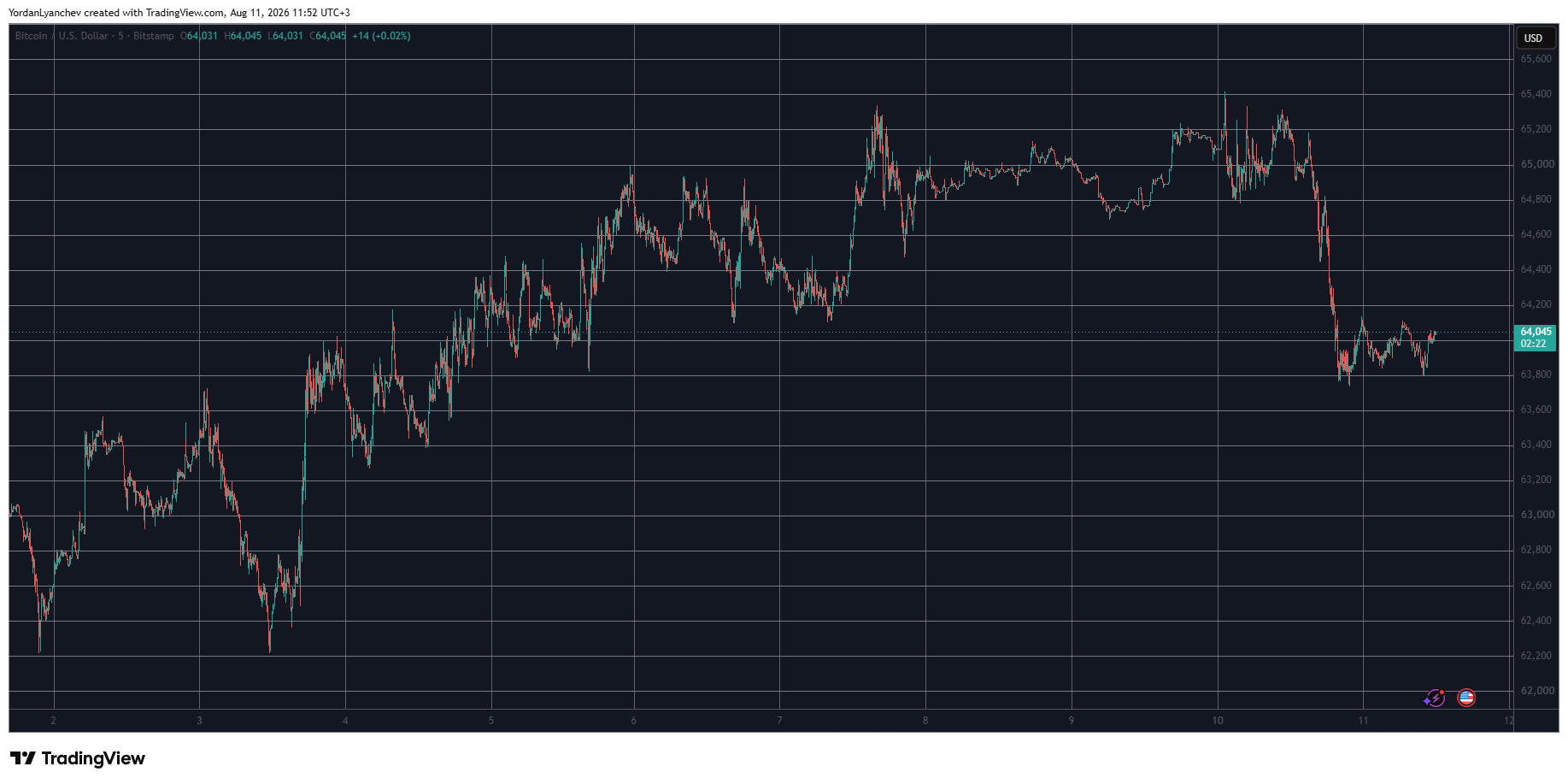
Bitcoin’s price adventure above $65,000 came to a halt yesterday evening as the asset was rejected and driven south by approximately $1,500 to under $64,000.
Several larger-cap altcoins have followed suit, including ETH, which has dropped below $1,900, and XRP, which is just inches away from slipping below $1.00 for the first time since November 2024.
BTC Halted at $65K
The primary cryptocurrency slumped at the beginning of the previous week as well, going from $63,800 to a monthly low of $62,200 within hours before it finally found some support. It erased the losses immediately and even jumped past $64,000 a day later. Its gradual ascent continued for a few days to $65,000 before the CLARITY Act’s latest setback in the US Senate sent it south toward $64,000.
However, that support held, and the weaker US jobs data on Friday resulted in another leg up to $65,400. BTC failed to overcome that level, though, and calmed at around $65,000 for the weekend. It didn’t really make a move for the next 48 hours before it tried a minor breakout on Monday, which was stopped at $65,400 once again.
This time, though, the bears were more persistent and drove the cryptocurrency south to $63,800 as Peter Schiff used the opportunity to urge investors to sell. BTC didn’t dip any further and now sits at around $64,000 once again.
Its market cap has dropped below $1.290 trillion, while its dominance over the alts sits above 57% on CG.
XRP, PI, ADA Drop
Ethereum is down by 2.5% in the past day and now struggles below $1,900. Ripple’s native token is among the poorest performers lately, and it has dipped to a 21-month low at inches above $1.00. It’s now agonizingly close to breaking below that coveted level. ZEC has dumped by almost 5% to under $490, while ADA is below $0.19 after a 4% decline.
In contrast, BNB, TRX, HYPE, DOGE, RAIN, XMR, and LINK have marked some gains within the same timeframe. MNT is up by over 6%, while WLF has gained more than 4%.
Pi Network’s native token has dropped below the $0.09 support after another near-5% daily crash.
The cumulative market cap of all crypto assets has erased around $40 billion since yesterday and is down to $2.250 trillion on CG.

The post XRP Dumps to 21-Month Low as BTC Price Falls to $64K: Market Watch appeared first on CryptoPotato.
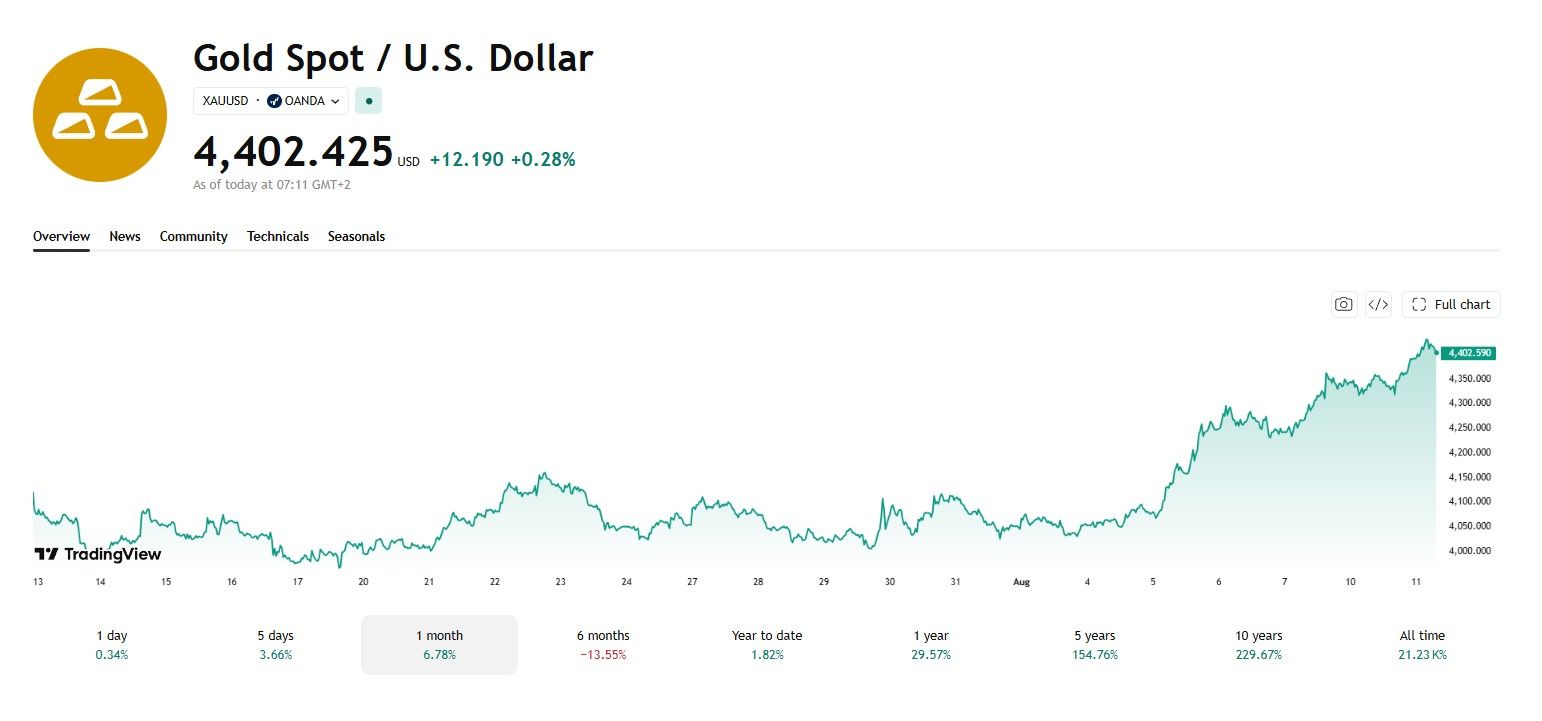
Peter Schiff wants investors out of Bitcoin (BTC) and Strategy (formerly MicroStrategy, MSTR) stock as gold pushes past $4,400 an ounce. The longtime gold bull says money is rotating back toward hard assets.
His warning landed Tuesday, one day after Strategy confirmed another Bitcoin sale. Meanwhile, gold and silver both hit multi-week highs while BTC barely moved.
Why Schiff Calls Bitcoin the Anti-Gold Trade
Gold traded at $4,402.43 an ounce early Tuesday, up 0.28% on the day. The metal has gained 6.78% in a month and roughly 29.6% over the past year.

Silver moved to $65.84, a seven-week high. Over 12 months, the metal has climbed almost 74%.
Chinese institutional demand and steady central bank buying have carried much of the bid this year.
Both rallies followed weak US jobs data that cooled expectations for further Federal Reserve rate hikes. Bitcoin, however, gained little from the same repricing. Schiff reads that gap as structural rather than temporary.
“When gold initially broke out, Bitcoin broke down. When gold corrected, that’s when Bitcoin bounced. Now that the gold correction is over, and gold is back in rally mode, Bitcoin has resumed its decline. Bitcoin is anti-gold. The more gold goes up, the more Bitcoin will go down.”
Peter Schiff, X
Tuesday’s tape offers partial support. Bitcoin traded at $65,254, up just 0.5% in 24 hours, with a market cap of nearly $1.31 trillion.
The history complicates his thesis, though. Gold slid below $4,000 as recently as June, and Bitcoin did not rally on that weakness either.
Strategy Sells More BTC to Raise Dollars
Strategy sold 1,690 BTC last week for $108.6 million, an average of $64,262 per coin net of fees. The company then used those proceeds to buy back STRC shares, its preferred stock still trading under par.
It also raised $653.1 million from 6.59 million common shares. Its dollar reserve hit $4.65 billion as of August 9, while holdings slipped to 840,447 BTC.
That sale price sits far under the company’s average cost. Its aggregate basis stands near $75,385 per coin, so last week’s disposals locked in a loss.
Schiff reads the pattern as a collateral problem rather than a cash management choice.
Saylor, for his part, insists he never sold his coins, even as his company keeps selling Bitcoin.
Not everyone reads the divergence Schiff’s way. Gordon Grant, portfolio manager and head of derivatives at Bitwise, frames Bitcoin’s digital gold test around adoption by sanctioned states rather than price action.
Gold’s advance and Strategy’s selling now run in parallel. Whether they stay linked depends on the Fed’s next move and on how much cash Saylor still needs to raise.
The post Peter Schiff Says Sell Bitcoin and Strategy Stock as Gold Tops $4,400 appeared first on BeInCrypto.


Keel completed the shutdown of its US Bitcoin mining operations as it pivots toward AI and high-performance computing infrastructure

XRP is under a lot of selling pressure at the moment, even though BTC has remained relatively stable at around $64,000. The cross-border altcoin is inches away from dipping below $1.00 for the first time in nearly two years, and we will take a look at what analysts expect from it next.
At the same time, the spot XRP ETFs had a green week, but with a major elephant in the room, while the XRP Ledger issued a worrisome scam update.
XRPL Growth and Scam Alert
The official X account of the XRP Ledger reposted Token Relations’ chart showing how Ripple’s network has grown since the start of the year in terms of tokenized real-world assets. More precisely, the total value of RWAs on XRPL has skyrocketed by nearly 400% to $4.4 billion.
Interestingly, a large portion of that came from a tokenized electricity asset from Argentina’s Justoken called JMWH. It launched on XRPL in mid-January, and its market share on the network has grown to 51%.
Separately, the account issued a warning to the entire XRP community last week about new phishing attempts and fake giveaway posts. The team emphasized that there are no “XRP airdrops or rewards given out by us, Ripple, or wallets in the community.”
They urged investors and followers to refrain from sharing their XRP wallet keys, as when something sounds too good to be true, it usually is.
Regulatory Progress Reminder
Ripple has been making significant progress on the regulatory scene in major jurisdictions. One of the latest achievements came in early July when the company secured a full MiCA license. In a new video on X, the company outlined the significance of each such move as, “Regulatory clarity is the foundation of institutional trust.”
The firm’s UK and Europe Policy Director, Matt Osborne, explained the benefits for Ripple and its clients:
“Regulated banks, fintechs, and corporates can access our complete payments infrastructure across all 30 EEA countries. MiCA is enabling a new era of regulated finance, and Ripple is built for it.”
XRP ETFs: The Latest
CryptoPotato reported during the weekend last week’s performance of the exchange-traded funds tracking the cross-border altcoin. The week ended in the green, making it the fourth consecutive week in this positive streak, but there was a major issue. The actual net inflows were extremely slim, especially compared to the week that the BTC and ETH funds had.
The spot XRP ETFs attracted a modest $1 million, while two of the five trading days saw no reportable action, according to SoSoValue. This worrisome trend continued yesterday, with inflows remaining flat at $0.00.
XRP Price Struggles
The lack of institutional support through the ETFs and the overall bearish sentiment across the entire crypto market have harmed Ripple’s native token. It failed at $1.10 a few weeks ago and continued to dig new local lows. The CLARITY Act setback didn’t help either, as XRP slipped to $1.02 after the bill was delayed once again.
It tried to rebound over the weekend, but it was halted in its tracks. The past 12 hours or so have been quite painful as well, as XRP slipped to $1.002 for the first time since November 2024. Although it remains inches above that key psychological level, many analysts still believe in its upcoming resurrection, posting impressive targets of up to $50 if XRP rebounds from the $1.00 support.
The post Important Ripple News and XRP Price Update: August 11 appeared first on CryptoPotato.

Bori Akinola through to semi-finals after heat win

Valve Warns Steam Machine Buyers About Scam Messages After Cyberattack

Akapellah, Al2 El Aldeano – Ni Con Money (Prod. by Faker) (Official Video)


-

 Fashion4 days ago
Weekend Open Thread: Mattifying Sunscreen
-

 Fashion4 days ago
Frugal Friday’s Workwear Report: Cap-Sleeve Pointelle Crewneck Sweater
-

 Sports5 days ago
Jordan Coyle & Cordiamo take Laya Arena Stakes at RDS
-

 News Videos3 days ago
Can Astrology Help Find Gold and Silver Trends? A Financial Astrology Guide
-
 Business5 days ago
US stocks: Dow closes at record on Mideast optimism; SpaceX, AMD drag Nasdaq
-

 Politics5 days ago
Reform UK And Greens Sink To Lowest Favourability Ratings To Date
-

 Business6 days ago
Nvidia Stock Climbs 2.5% as Chip Sector Rally Builds Ahead of AMD Earnings, Nvidia’s Own Report Looms
-

 Tech6 days ago
OpenAI, Anthropic AI agents targeted real people and systems in cyber tests
-

 Crypto World7 days ago
Polymarket targets $20 billion valuation as competition heats up in prediction market sector
-

 Business6 days ago
Supply chain issues impact Ingredion
-

 Tech4 days ago
Rinn Pharma & Biopharma to join NordicPharmaTrain network
-

 Business2 days ago
How to Start a Cleaning Business: A Step-by-Step Guide
-
 Crypto World6 days ago
Dow and S&P 500 Hit Records on AI Earnings: When Will the Bubble Burst?
-

 Business2 days ago
Datadog: Best Of Breed For Multiple Reasons
-

 Business2 days ago
BDC Weekly Review: Private BDC Q2 Numbers Are Strong
-
 Crypto World6 days ago
Dollar Index Trapped at 100 as Hawkish Fed Meets Official Selling
-

 Business6 days ago
McDonald’s (MCD) Q2 2026 earnings
-

 Fashion6 days ago
The Bright Side of Black and White
-

 Fashion6 days ago
Suit of the Week: Me + Em
-

 Business6 days ago
Apple UK encryption challenge filed against Home Office
You must be logged in to post a comment Login