
Crypto World
UK lawmaker group APPG questions lenders over lack of banking for the country’s crypto firms

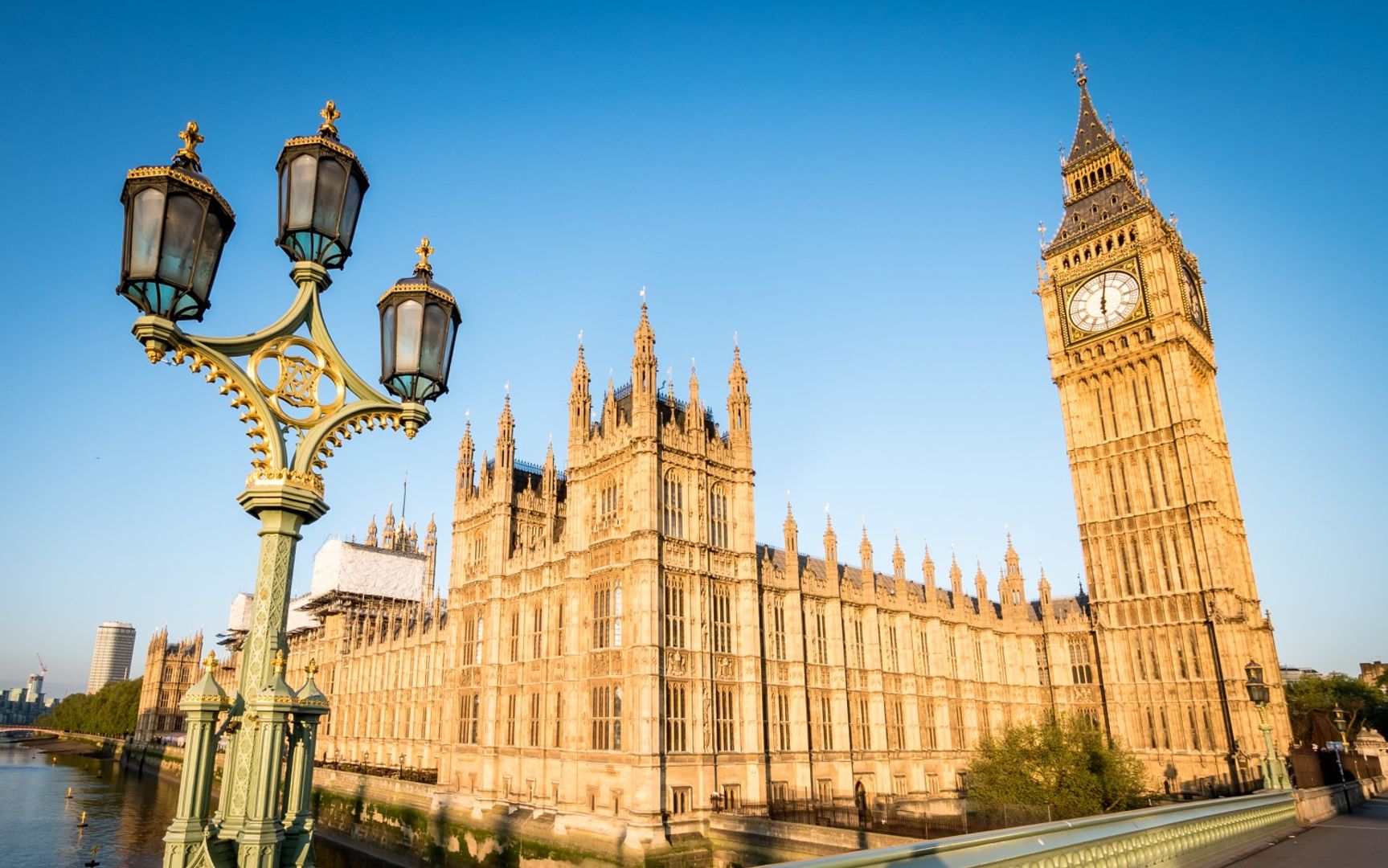
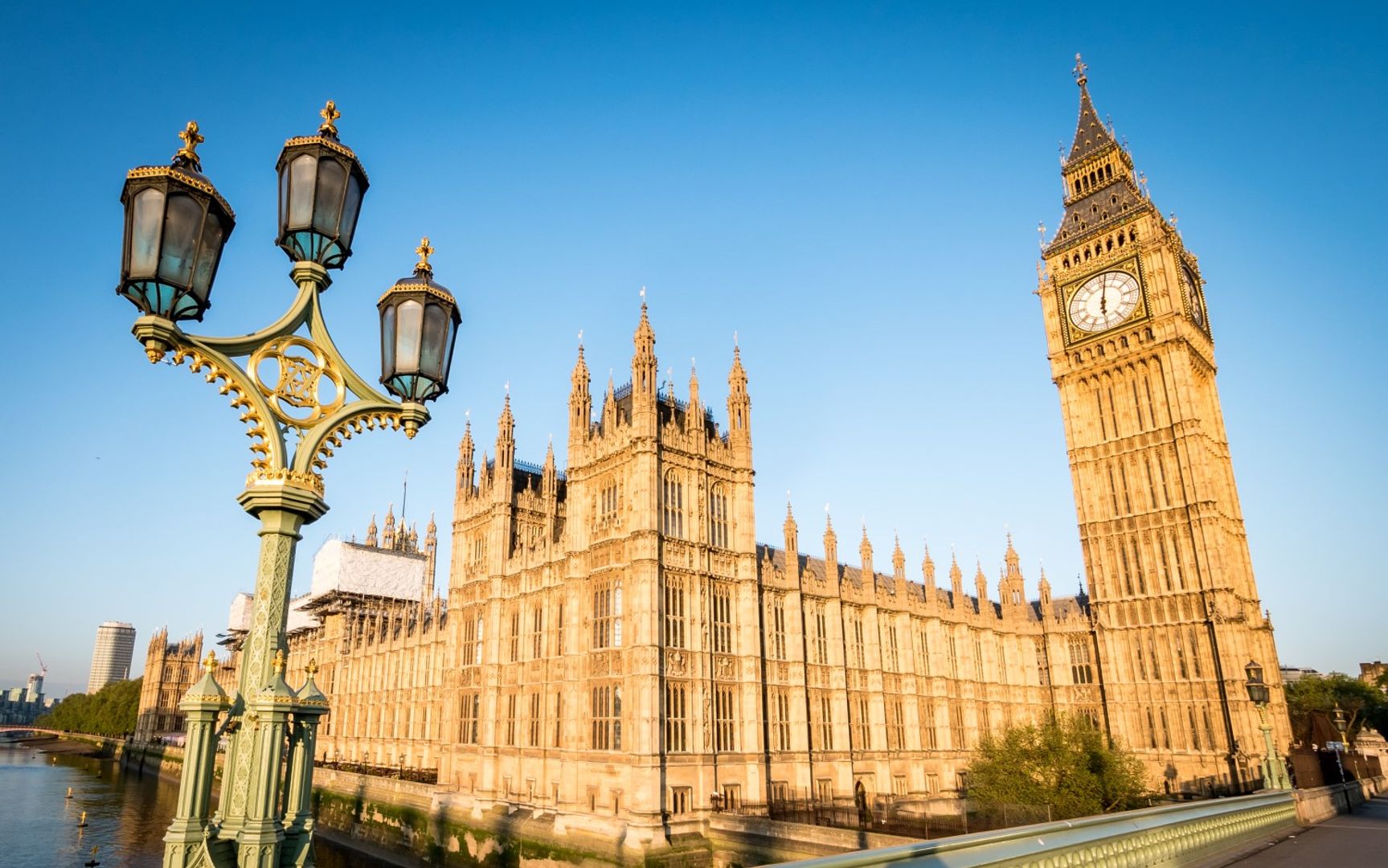
A U.K. parliamentary group wrote to the bosses of the country’s largest lenders about the lack of banking services for crypto firms.
The “Dear CEO” letter, signed by co-chairs of the Crypto and Digital Assets All-Party Parliamentary Group (APPG), Gurinder Singh Josan and Ed Vaizey, asked banks to explain their approach to providing banking services to U.K. crypto and digital asset businesses.
“We have heard of repeated instances where crypto and digital asset firms have struggled to open accounts with U.K. banks. We have similarly heard reports that several banks have introduced restrictions on crypto-related payments and transactions,” Josan, a Labour MP, and Vaizey, a Conservative peer, wrote in the letter.
British banks that have introduced restrictions on crypto-related payments include HSBC, Nationwide, NatWest, Santander UK and Starling Bank.
Ever since crypto came into being, difficulties around attaining banking relationships have made life hard for industry participants, with the systematic debanking of firms and individuals, particularly in the U.S., being referred to as “Operation Chokepoint 2.0.”

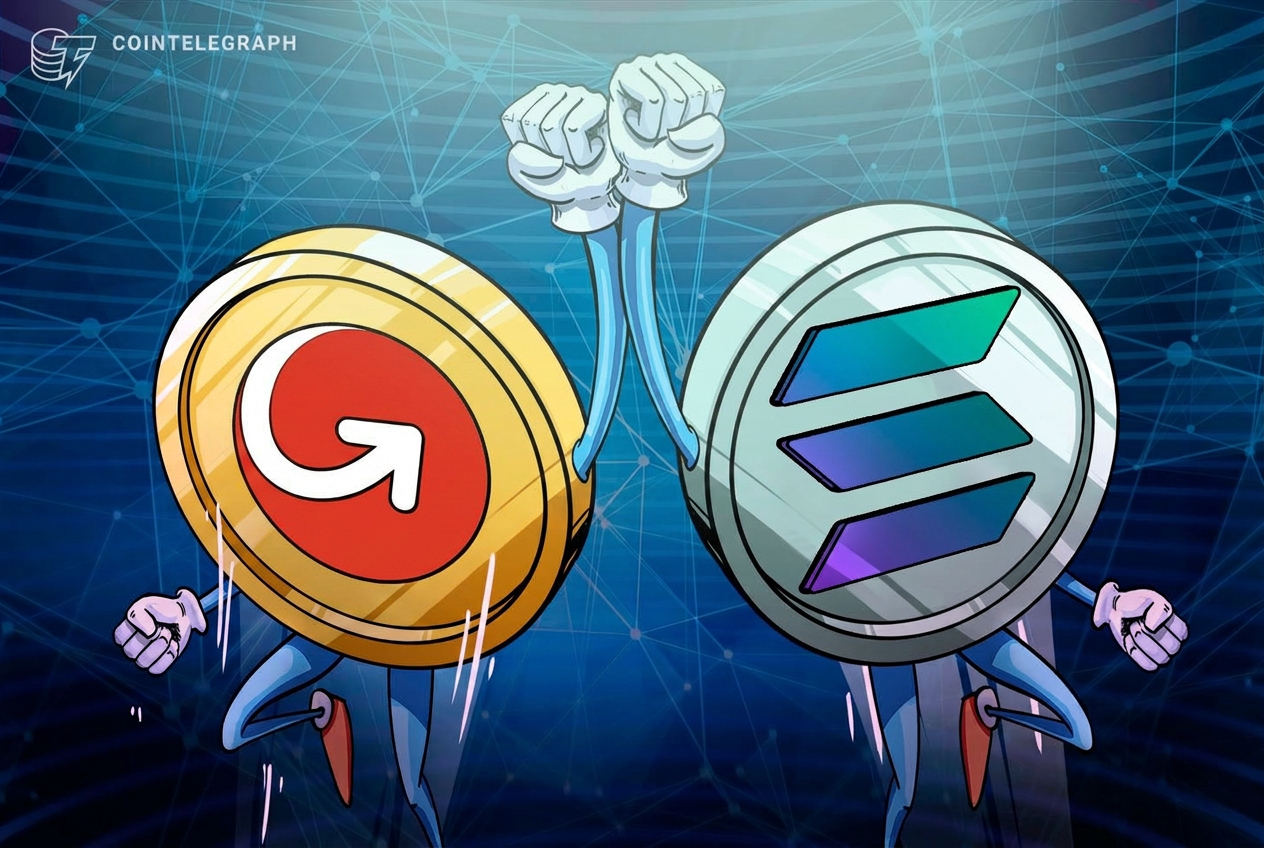
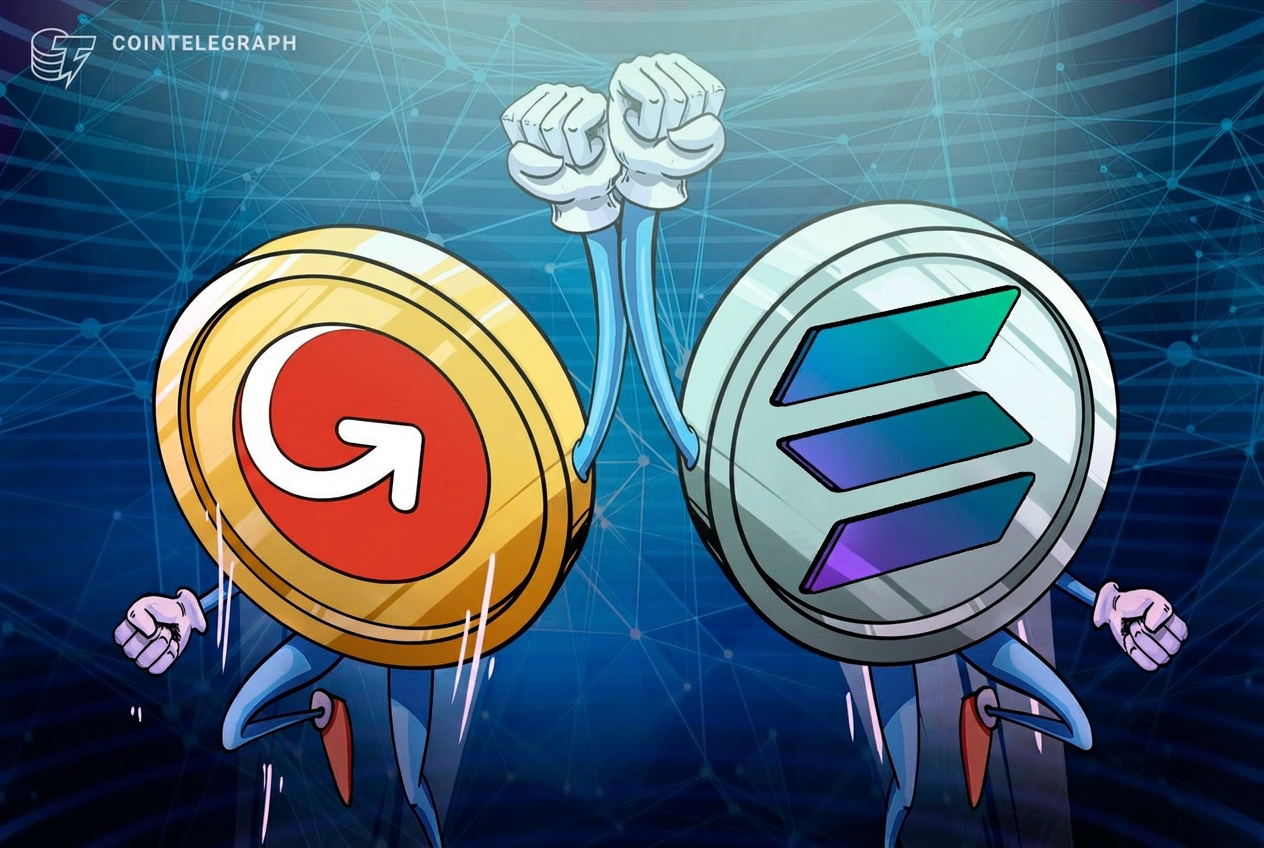
MoneyGram’s Ramps service now connects Solana wallets and applications to its global cash network, with Rift becoming the first wallet to integrate the service.
Bitwise’s Solana staking ETF has received approval from a major bank for customers to borrow up to 25% of their shares’ value, adding a lending function to the U.S.-listed crypto fund.
Summary
- A major bank has approved BSOL as loan collateral with a maximum 25% LTV.
- Borrowers may receive up to $25 for every $100 in pledged BSOL shares.
- BSOL held 8.18 million SOL worth $622 million as of Aug. 9.
- Bitwise reported a 5.84% net staking reward rate, with 99% of assets staked.
Bitwise co-founder and CEO Hunter Horsley disclosed the approval in an Aug. 11 X post, saying the unnamed bank would let its customers borrow against shares of the Bitwise Solana Staking ETF under a maximum 25% loan-to-value ratio.
Horsley welcomed the bank’s decision as another step in crypto’s integration with established financial services. His post did not identify the lender or state when the borrowing facility became available.
The disclosure also omitted the interest rate, minimum loan size, repayment period, and account requirements. Neither Bitwise nor the bank has published details on whether the facility applies to retail brokerage customers, private banking clients, or selected wealth-management accounts.
BSOL loans are capped at 25% of collateral value
Under the disclosed limit, a customer pledging $100,000 of BSOL could borrow no more than $25,000. The ETF shares would serve as collateral for the loan while remaining exposed to changes in the value of Solana.
A 25% LTV leaves the bank with $75 in collateral value above every $25 lent at the start of the transaction. The lender’s unpublished agreement would determine what happens if BSOL falls, including whether the customer must add collateral, repay part of the balance, or face a sale of pledged shares.
Horsley did not say whether the bank had approved BSOL across its lending platform or only after reviewing an individual customer’s portfolio. He also did not disclose whether other Bitwise funds qualify under the same policy.
The loan is secured by exchange-traded shares rather than SOL held in a private wallet. BSOL shareholders do not control the underlying tokens or their private keys, while the bank can value the listed shares using their market price and apply its existing securities-backed lending procedures.
Unlike a sale, borrowing against shares lets an approved customer obtain cash without immediately disposing of the position. According to the Internal Revenue Service, loan proceeds generally do not count as income because borrowers must repay them, although a later sale of collateral may create a taxable transaction.
Bitwise Solana ETF combines SOL exposure with staking
Launched on NYSE Arca in October 2025, BSOL gives U.S. investors direct exposure to SOL through a publicly traded product. Bitwise also stakes nearly all of the fund’s tokens so that staking rewards increase the assets supporting its shares.
As crypto.news reported, BSOL recorded $69.45 million in net inflows on its first trading day. The fund entered the market with a 0.20% management fee and a structure designed to track SOL’s value alongside rewards generated through the Solana network.
At its launch, Horsley described the product’s two main features in a Bitwise statement:
“Investors like growth potential, and investors like staking rewards. BSOL provides low-cost exposure to both.”
Bitwise’s official fund data showed that BSOL held 8,184,971.62 SOL with a market value of $622.02 million as of Aug. 9. Each share represented about 0.136735 SOL, while the fund’s holdings consisted entirely of the token.
BSOL reported a net asset value of $10.39 per share and a market price of $10.41 on the same date. The two-cent difference placed the shares slightly above the reported value of their underlying assets.
Staking covered 99% of the fund’s SOL holdings, compared with Bitwise’s target of 100%. The gross annualized staking reward rate averaged 6.21% over the preceding 90 days, while the net rate after staking-related fees stood at 5.84%, according to data published by the fund.
Bitwise states that staking rewards can change and do not represent BSOL’s investment performance. Movement in SOL’s market price can outweigh the tokens earned from staking, leaving shareholders exposed to substantial losses even when the fund continues to earn rewards.
BSOL added capital despite Solana’s first-half decline
BSOL drew $267.1 million in net subscriptions during the first half of 2026, according to its Aug. 7 quarterly filing with the U.S. Securities and Exchange Commission. Share issuance lifted the fund’s SOL holdings from about 5.15 million tokens at the end of 2025 to approximately 8.05 million by June 30.
Falling SOL prices still reduced BSOL’s net assets from $641.3 million to $592.3 million over the six-month period. Its net asset value per share dropped from $16.37 to $10.01, producing a negative 38.85% NAV return for the half-year.
The filing recorded $19.2 million in gross staking rewards and approximately $17.7 million in net investment income after expenses. Portfolio losses reached about $333.8 million, including $262.9 million in unrealized depreciation and $70.9 million in realized losses.
Earlier coverage of ETF demand found that BSOL controlled roughly 81% of assets accumulated by U.S. spot Solana funds by mid-May. Combined assets across products issued by Bitwise, Fidelity, and Grayscale had reached approximately $1.06 billion, although SOL continued to fall during the period.
BSOL had already crossed $500 million in assets within its first 18 trading days, according to Bitwise. Its first recorded daily withdrawal arrived on Dec. 15, when investors removed $4.6 million after a run of inflows that began with the fund’s October debut.
U.S. investors gain another use for listed crypto funds
For American investors, the bank’s approval adds BSOL to the securities that at least one lender accepts for collateralized borrowing. The policy does not mean the SEC or another federal regulator has approved BSOL specifically for loans, and Horsley’s post did not identify any regulatory decision tied to the bank’s action.
BSOL is structured as an exchange-traded product under the Securities Act of 1933. Bitwise’s disclosures state that it is not an investment company registered under the Investment Company Act of 1940, leaving shareholders without some protections that apply to conventional registered ETFs and mutual funds.
The fund uses Coinbase Custody Trust Company to hold its SOL, according to its SEC filing. Bitwise Onchain Solutions, supported by Helius technology, handles staking, while BNY Mellon provides cash custody and transfer-agent services.
Rain acquired Ansa, a startup whose software lets merchants run their own branded prepaid wallets, the stablecoin card issuer announced. The purchase adds a product built on fiat. Ansa's wallets hold dollar balances that customers load in advance and spend at the brand that issued them, and neither… Read the full story at The Defiant
Nasdaq has agreed to acquire LeveL Markets, the third-largest alternative trading system in the US by trading volume, as part of its push into tokenized and always-on markets.
According to Nasdaq, LeveL Markets processes hundreds of millions of shares daily and serves more than 2,500 buy- and sell-side clients. The venue will operate within Nasdaq’s new Digital Liquidity Networks unit, led by Roland Chai, who has overseen the company’s digital assets strategy since earlier this year.
Nasdaq first invested in LeveL Markets in 2021. The platform has since grown to execute trades across more than 7,000 symbols daily and serves more than 300 institutional buy-side firms, with average daily trading volume increasing 56% in 2025.
Tuesday’s announcement said LeveL Markets will remain a FINRA-regulated ATS with its own management team following the acquisition. Financial terms were not disclosed, and the deal remains subject to regulatory approval.
Nasdaq said the acquisition will add LeveL’s institutional execution network to its broader push toward programmable, “always-on” markets. The Digital Liquidity Networks unit combines liquidity platforms, tokenization capabilities and digital asset technology.
Related: Tokenized RWA surge to $4T may push LINK to $200 by end-2030: Standard Chartered
Nasdaq expands push into tokenized, always-on markets
Nasdaq first proposed allowing tokenized securities to trade on its exchange in September 2025. A January 2026 SEC filing updating the proposal said eligible stocks and exchange-traded products could trade in tokenized form alongside traditional shares, with Depository Trust Company handling tokenization and blockchain-based settlement through a three-year pilot program.
In March, Nasdaq expanded its efforts with a partnership with Kraken and tokenization firm Backed to develop infrastructure linking traditional equities with blockchain networks.
Other exchange operators are also moving toward longer trading hours. Cboe and the London Stock Exchange are pursuing similar plans, while the New York Stock Exchange is developing a separate platform for 24/7 trading and onchain settlement of tokenized securities.
In July, the SEC announced a Sept. 17 roundtable on the shift toward 24-hour US equity trading, with US Securities and Exchange Commission hair Paul Atkins saying, “We are moving towards a new day – and night – in the US equity markets.”
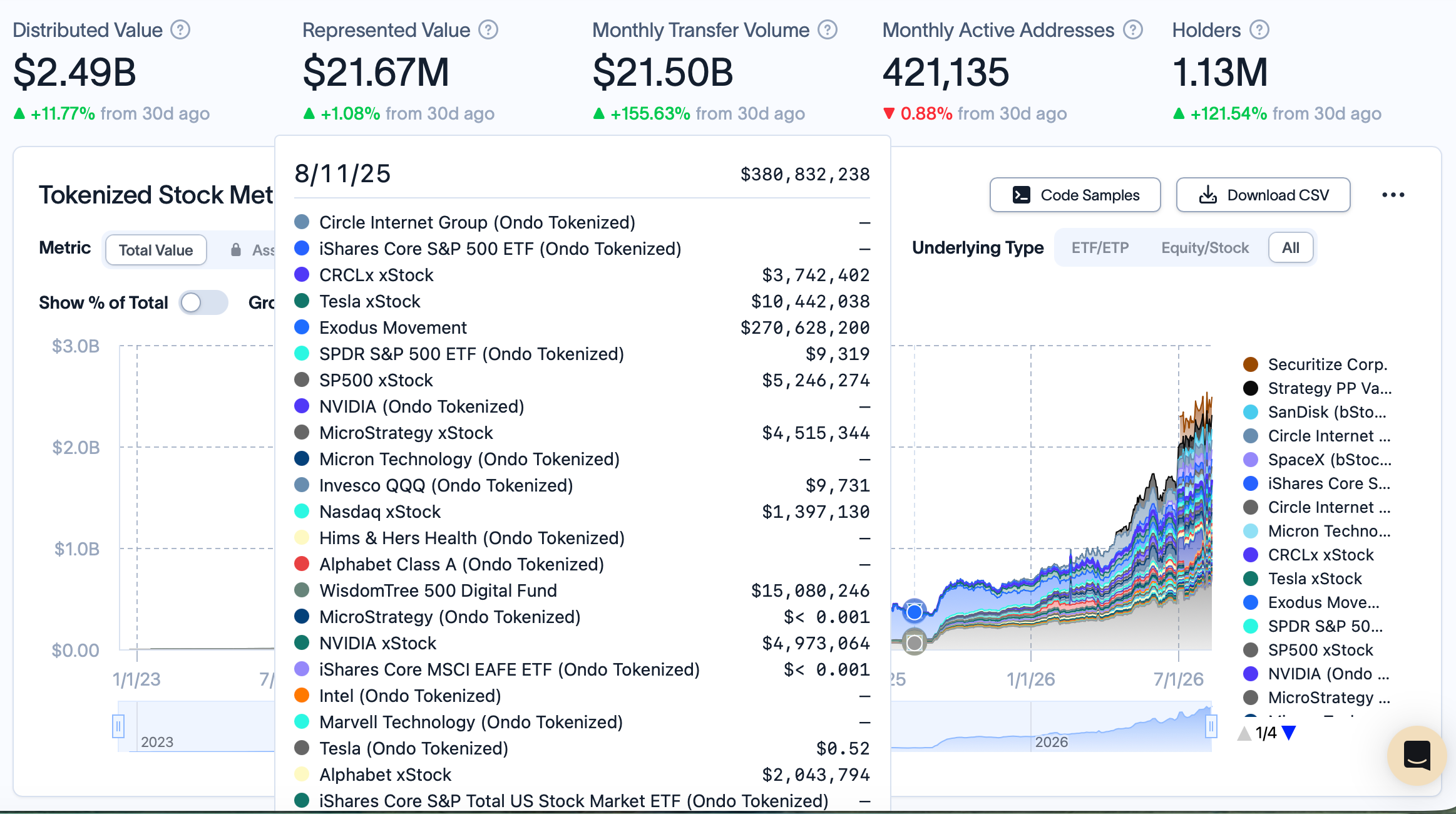
Over the past year, the tokenized equities market has grown more than sixfold, with distributed value rising to nearly $2.5 billion today from around $381 million in August 2025, according to RWA.xyz data.
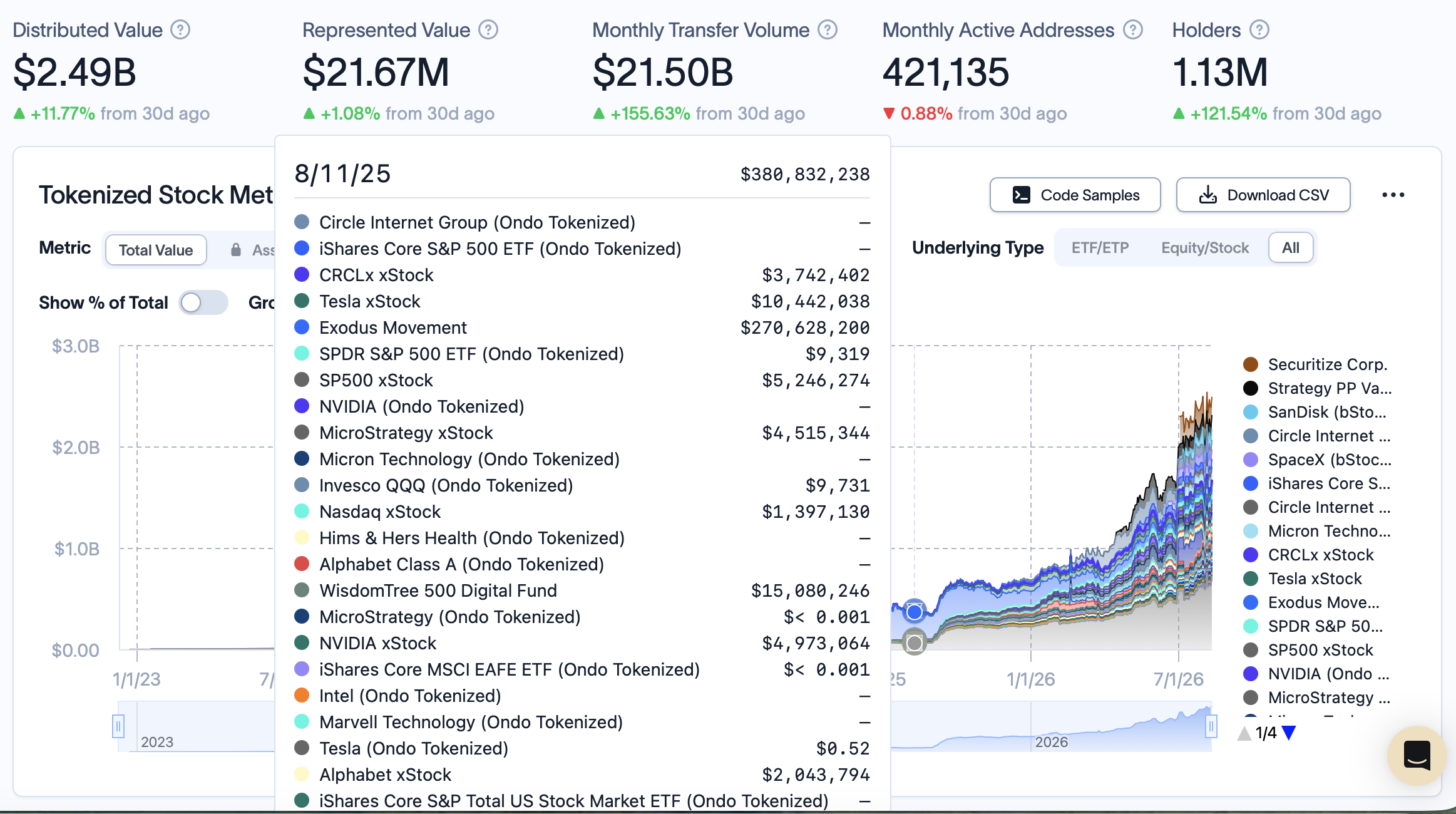
Tokenized equities. Souce: RWA.xyz
Magazine: Thailand’s 0% crypto tax. Bitcoin Red Team forced to use Chinese AI: Asia Express
Twenty One Capital’s new CEO opened his first shareholder letter by agreeing with his harshest critics. Rapha Zagury admitted the market values XXI at less than the Bitcoin it owns, and said management sees it the same way.
The confession landed Tuesday next to a painful number. The company lost $413.5 million in the second quarter, three weeks into Zagury’s tenure as chief executive.
Why Twenty One Capital Trades Below Its Bitcoin
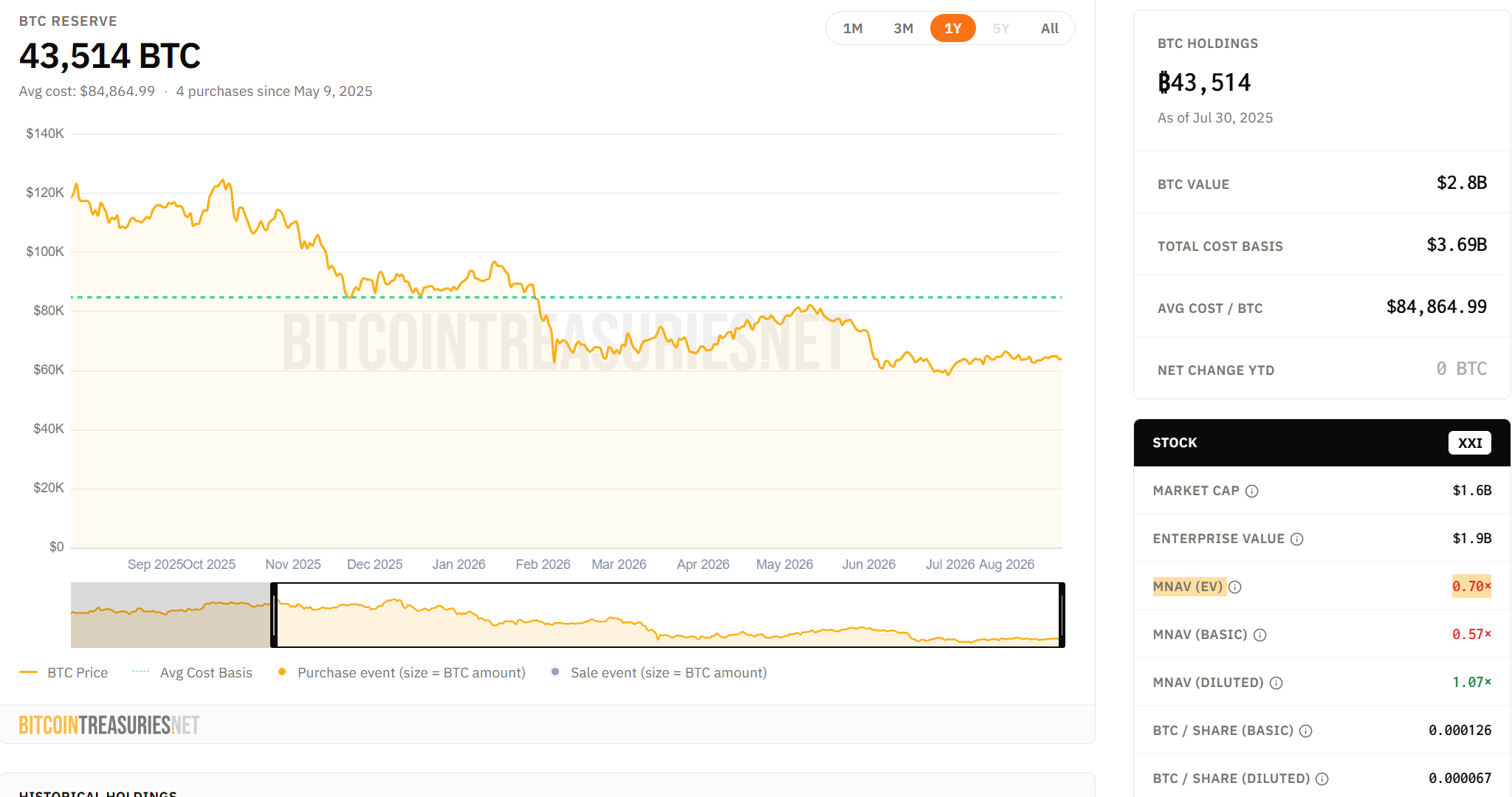
The math behind the complaint is simple and brutal. XXI holds 43,514 BTC, a stack worth about $2.8 billion with Bitcoin (BTC) trading near $63,555. Yet the entire company sells for roughly $1.6 billion.
In plain terms, buyers pay about 57 cents for every dollar of Bitcoin inside. Bitcoin Treasuries data puts the gap at 0.70x even after counting debt and cash. Among public companies, only Michael Saylor’s Strategy holds more coins.

Bitcoin itself did the quarter’s damage. The pioneer crypto fell from $87,316 at the start of 2026 to $58,605 by June 30, per the company’s 10-Q. That slide erased $401.5 million in the second quarter alone and pushed the half-year deficit to $1.27 billion.
Investors have other reasons to stay cold. The firm earns no revenue yet. It holds $106.1 million in cash against $484.5 million in convertible notes. And 16,116 of its coins, more than a third of the stack, sit locked as collateral for that debt.
The stock tells the story fastest. XXI traded near $4.53 on Tuesday, down roughly 85% from its 52-week high of $30.43.

“That gap could be viewed as a misallocation of capital; we share that view,” Zagury wrote in the letter, which was also shared with BeInCrypto.
Follow us on X to get the latest news as it happens
The Berkshire Blueprint Behind the Fix
Zagury’s remedy borrows from Omaha. He wants a strong balance sheet at the center and cash-earning businesses around it, the model Berkshire Hathaway proved over decades. He concedes XXI has not earned that comparison yet.
“Twenty One owns one of the largest Bitcoin balance sheets in the public markets. That is a real advantage, but if Twenty One is going to be worth owning, it must become more than a Bitcoin treasury.”
Five priorities frame the plan, covering:
- Governance
- Operating businesses
- Capital-markets tools
- Mergers and acquisitions (M&A), and
- Low-leverage lending backed by Bitcoin.
New independent directors Paul Lalljie and Karl Olsoni now sit on the board, with Lalljie chairing the audit committee.
The letter caps a turbulent first year in public markets. Tether, the stablecoin issuer behind USDT, took full control of XXI in May by buying out SoftBank. Founder Jack Mallers resigned as CEO in July, and Tether began to rethink XXI’s treasury model.
An earlier blueprint had proposed merging XXI with Strike, Mallers’ Bitcoin financial services firm, and Elektron Energy, the mining company Zagury led.
Zagury pledged to handle any deals with Tether strictly and transparently. He also promised a fuller strategy update before year-end. Until real cash flow arrives, the discount keeps the score.
The post Why Twenty One Capital Stock is Worth Less Than the Bitcoin It Owns appeared first on BeInCrypto.


Cointelegraph is committed to providing independent, high-quality journalism across the crypto, blockchain, AI, and fintech industries.
All news, reviews, and analyses are produced with full journalistic independence and integrity. For more details on our standards and processes, please read our Editorial Policy.


ARP Digital, an institutional digital asset infrastructure provider, has secured a broker-dealer license from Dubai’s Virtual Assets Regulatory Authority, allowing the Bahrain-based firm to offer regulated conversions between digital assets and the UAE dirham.
According to ARP Digital, the license covers United Arab Emirates-based corporates, capital markets participants and qualified investors, including conversions between stablecoins and dirhams. The company said it will also provide institutions with a regulated route to convert digital asset capital for deployment into local UAE assets.
The approval marks ARP Digital’s second regulated Gulf market. The firm is licensed by the Central Bank of Bahrain, where it says it has processed more than $3.5 billion in volume for over 450 institutional and corporate counterparties, with fourfold year-over-year growth in 2025.
ARP Digital offers institutional services including over-the-counter liquidity, cross-border settlement, fiat on- and off-ramps and wealth management.
The approval comes as Dubai continues to expand its regulated digital asset sector. In July, VARA issued its 50th virtual asset service provider license. The regulator, established in 2022, oversees the provision, use and exchange of virtual assets in and from Dubai.
Flowdesk, a crypto market maker backed by Coinbase Ventures and BlackRock, also received a full VARA broker-dealer license on Tuesday, allowing it to serve qualified and institutional investors in and from the emirate.
Magazine: Thailand’s 0% crypto tax. Bitcoin Red Team forced to use Chinese AI: Asia Express
Ideally, she says, the FDA would require a pre-market review for new ingredients so that it could ensure their safety before they’re added to the food supply. (New color additives, for instance, are not allowed to go through GRAS and must be pre-approved by the FDA before they’re added to food.) But that might be difficult to enact in the current political climate, she says.
“MAHA conflicts with MAGA,” she says, because MAHA (the Make America Healthy Again movement) wants to force food companies to be more transparent about their ingredients, while MAGA (Make America Great Again) is about deregulation. Bloomberg News recently reported that the Trump Administration delayed a long-awaited definition of ultra-processed foods because of pressure from food industry CEOs.
Closing the GRAS loophole
The GRAS loophole has led to illnesses in the public, which is one big reason it needs to be closed, says Thomas Galligan, principal scientist for food additives and supplements for the Center for Science in the Public Interest. In 2022, the company Daily Harvest used a new substance called tara flour in one of its plant-based products, which would become linked to hundreds of instances of people getting sick. The company had not filed a GRAS notice about the substance, and in 2024, the FDA determined that the substance was not generally recognized as safe.
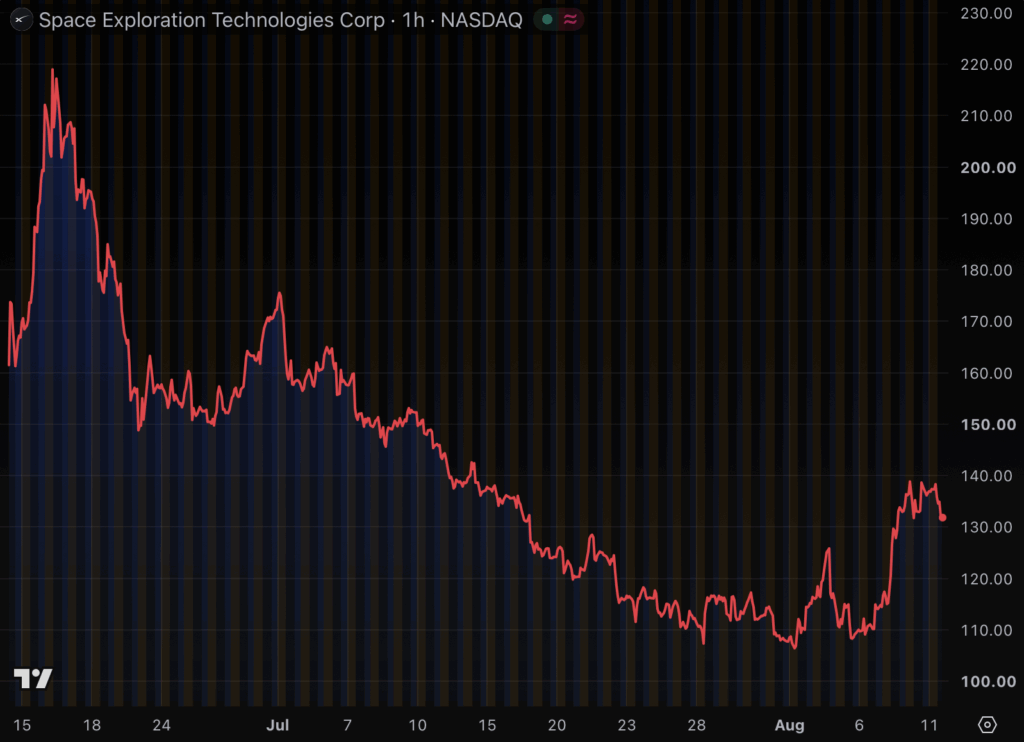
Although mainstream media covered insiders’ massive unlock of 911.5 million SpaceX shares worth $101 billion on August 6, very few people realize that an additional unlock on that date failed because SpaceX’s stock price had crashed so badly.
That second, bonus tranche of 455.8 million shares required SpaceX to close at or above $175.50 per share, i.e. 30% above the formal $135 IPO price, for at least five of 10 trading days leading into its August 4 earnings report.
SpaceX held nowhere close to that threshold in Nasdaq trading. The condition failed.
The market capitalization of SpaceX was only able to reach its momentary, $3 trillion peak because Elon Musk floated only a tiny quantity of shares in the IPO.
Artificially limiting supply far below demand for his popular company created a three-day surge from $150 to $225.64 per share.
That was the peak. A swift retracement followed once investors started to prepare for insiders to unlock and sell their allocations.
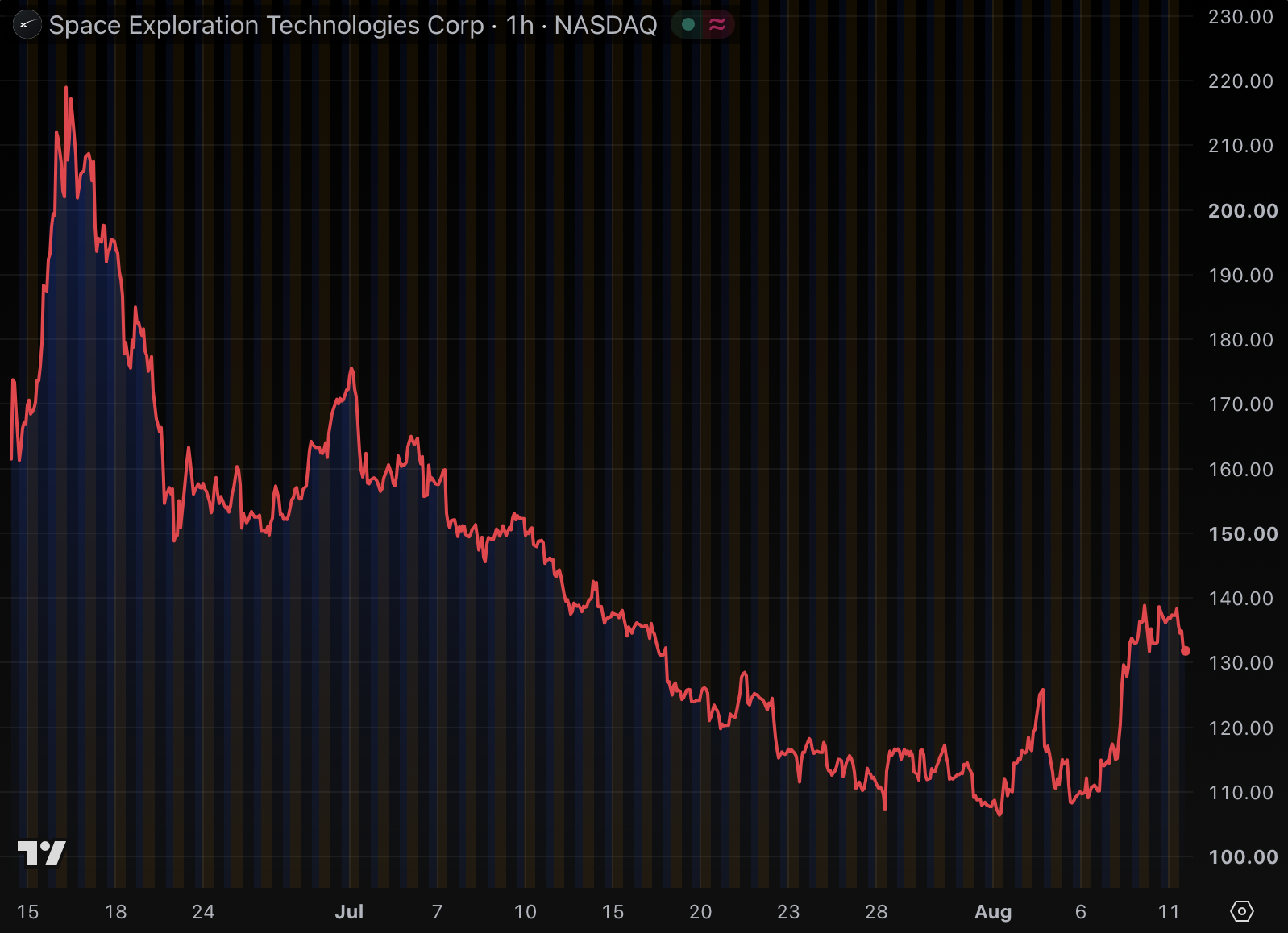
SpaceX insiders fail to unlock 455.8 million shares
By the first unlock on August 6, SpaceX had declined 38% from its peak.
On that day, 911.5 million more shares came out of lockup. The supply increased by $101 billion of newly tradable stock, yet almost nobody asked why an additional tranche of 455.8 million shares stayed locked.
The answer, per SpaceX’s own prospectus, is that Musk’s stock crashed so badly.
Because the company failed to maintain a trading range at least 30% above the $135 IPO price within the 10 trading days prior to its inaugural earnings report, the bonus stayed locked.
It was nowhere close. Of all 10 closing prices within the trading window, zero cleared $175.50. The best of them, $125.33 on earnings day itself, missed the bar by an embarrassing 29%.
The earnings report wasn’t the problem. Revenue nearly doubled, and finance chief Bret Johnsen said “2026 has been a momentous year so far, and the second quarter demonstrated the true power of SpaceX.”
Read more: Some SpaceX bonds have already sunk to junk-like territory
Elon Musk blames short-sellers
Protos has chronicled the slide in SpaceX shares since last month, including analyst research coverage by its IPO-underwriting banks that invariably rated it “Buy.”
Despite their glowing, self-interested forecasts, the stock fell 53% from its June 16 peak to an all-time low of $104.83 by August 3.
Skeptical short-sellers had amassed a roughly $25 billion position by late July, about a third of the float. Enraged, Musk posted, “The survival probability of firms who maintain a significant short position in SpaceX over time is very low.”
The stock printed its all-time low less than three weeks after Musk posted.
Musk had no stake in these particular deadline either way. His 6.4 billion shares remain locked until June 2027, and no performance trigger can release them early.
The market, for its part, shrugged off the unlock that did happen. SPCX climbed 3% by late morning on unlock day and ended the session up 6%. The next day, it added another 16%.
By Monday, it had closed back above its $135 IPO price for the first time since mid-July.
The rebound arrived four trading days after it could no longer help unlock insiders’ 455.8 million restricted shares.
At $175.50 per share, this bonus tranche that never unlocked was worth about $80 billion — and now cannot be sold. Quite the missed payday.
Got a tip? Send us an email securely via Protos Leaks. For more informed news and investigations, follow us on X, Bluesky, and Google News, or subscribe to our YouTube channel.


A crypto user has lost approximately 100,000 USDT after transferring the funds to a lookalike wallet address planted in the victim’s transaction history 66 days earlier.
Summary
- A victim has lost approximately 100,000 USDT in an address poisoning attack.
- The attacker planted the fake address in the wallet’s history 66 days before the transfer.
- The stolen USDT was converted into about 52.8 ETH, according to Cyvers.
- Address poisoning exploits users who copy addresses without checking the complete character string.
Cyvers Alerts reported on Aug. 11 that its monitoring system detected the loss after the victim sent funds to an address controlled by an attacker.
How the $100K address poisoning attack unfolded
About 66 days before the theft, the attacker sent transactions involving the victim’s wallet, according to Cyvers. The activity placed a malicious address in the wallet’s transaction history, where it appeared similar to an address the victim had used for a normal transfer.
When the victim later prepared the 100,000 USDT payment, Cyvers said the user relied on the historical record without comparing the complete destination address. The funds consequently went to the lookalike address rather than the intended recipient.
Address poisoning does not require an attacker to obtain a private key, compromise a smart contract, or take control of the victim’s wallet. Instead, the method depends on the length and format of blockchain addresses, which many wallets and block explorers shorten by displaying only their first and last characters.
Attackers generate addresses that match the visible parts of a recipient’s genuine address and then use small or zero-value transfers to place the imitation in a target’s transaction record. A user who checks only the opening and closing characters can therefore select the attacker’s wallet even though the complete strings are different.
In the latest case, Cyvers attributed the loss to the victim’s failure to check the full address. The security company advised users not to treat transaction history as a trusted address book and recommended verifying every character before approving an on-chain payment.
Attacker converts stolen USDT into 52.8 ETH
Following the transfer, the attacker exchanged the stolen USDT for Ethereum, Cyvers reported. The receiving wallet held approximately 52.8 ETH when the security company published its alert.
Cyvers said the conversion appeared designed to reduce the risk that the stolen stablecoins could be frozen. USDT is issued by Tether through smart contracts that allow specific addresses to be blocked, while native ETH does not have an issuer with an equivalent freezing function.
The conversion also means the value of the attacker’s holdings can change with the ETH market price. Cyvers did not report any recovery, return agreement, or exchange intervention in its initial alert, nor did the company identify the victim publicly.
No evidence cited in the alert suggested that a flaw in Tether, Ethereum, or the victim’s wallet software caused the transfer. Cyvers instead described the incident as a social-engineering attack that used a forged address record to exploit the victim’s payment habits.
Address poisoning losses have reached millions
The $100,000 incident follows several larger cases involving the same method. In February, crypto.news previously reported that two users had lost a combined $62 million after copying fraudulent addresses from their transaction histories.
Scam Sniffer attributed about $50 million of that total to a December 2025 incident, while another victim lost approximately $12.25 million, or around 4,556 ETH at the time, in January 2026. The security company said attackers had quietly inserted lookalike addresses into both victims’ recent activity records.
During the December case, a stablecoin holder first sent a 50 USDT test payment to the correct destination. An attacker then inserted a fraudulent address into the history with a 0.005 USDT dust transaction, after which the victim mistakenly sent 49,999,950 USDT to the poisoned address.
The stolen assets were converted into ETH and spread across several wallets, according to an earlier report on the theft. The victim later offered the attacker a $1 million bounty for the return of the remaining funds and threatened to involve international law enforcement.
Low transaction costs have also made automated poisoning campaigns cheaper to operate. Scam Sniffer said in February that millions of dust transactions were being sent each day, with many created to prepare for possible future thefts rather than move funds between genuine users.
In March, a stablecoin user reported receiving 89 poisoning alerts within 30 minutes after completing only two legitimate transfers. Former Binance CEO Changpeng Zhao subsequently criticized transaction explorers that continued to display the malicious entries.
US lawmakers have proposed a crypto fraud task force
For U.S. users, address poisoning falls within a growing category of digital-asset fraud that lawmakers have sought to address through interagency coordination. Senators Elissa Slotkin and Jerry Moran introduced the bipartisan Strengthening Agency Frameworks for Enforcement of Cryptocurrency Act, known as the SAFE Crypto Act, in 2025.
According to the bill’s sponsors, the proposed legislation would establish a federal task force focused on identifying, monitoring, and preventing cryptocurrency scams. Its members would include representatives from government agencies, law enforcement, digital-asset companies, stablecoin issuers, blockchain intelligence firms, and consumer-protection organizations.
The proposal covers several forms of crypto crime, including investment fraud, money laundering, Ponzi schemes, rug pulls, and fraudulent token sales. Sponsors said the task force would examine scam patterns and improve coordination between federal authorities and private-sector specialists.
The bill does not create a reimbursement program for users who mistakenly authorize irreversible transfers. As earlier coverage explained, its proposed task force would focus on detection, disruption and cooperation among agencies and industry participants.
Full address checks can expose poisoned records
Cyvers advised users to compare complete wallet addresses rather than relying on shortened records in transaction histories. For large transfers, security specialists also recommend confirming the destination through a separate communication channel and sending a small test amount before moving the remaining balance.
A test payment alone may not prevent a poisoning attack, as the December 2025 theft demonstrated. Because an attacker can insert a lookalike address immediately after the test, the sender must verify that the address used for the main transfer is identical to the one used for the test transaction.
Address whitelists can add another check by limiting withdrawals to destinations approved in advance. Hardware wallets can also display transaction details before signing, though users must still read and compare the destination shown on the device.
Wallet interfaces and blockchain explorers have started filtering suspicious entries, but the protections vary by platform. A March report found that Etherscan hid zero-value transfers by default, while BscScan and Basescan required users to activate a “hide 0 amount tx” option to remove such records from view.

Beyond the Gates Predictions: Andre Left Stunned as Naomi Crushes Him Cold

Some in the US can see a partial solar eclipse Wednesday. Here’s when to look

JBS N.V. (JBS) Q2 2026 Earnings Call Transcript


-

 Fashion4 days ago
Weekend Open Thread: Mattifying Sunscreen
-

 Fashion4 days ago
Frugal Friday’s Workwear Report: Cap-Sleeve Pointelle Crewneck Sweater
-

 Sports6 days ago
Jordan Coyle & Cordiamo take Laya Arena Stakes at RDS
-

 News Videos3 days ago
Can Astrology Help Find Gold and Silver Trends? A Financial Astrology Guide
-
 Business6 days ago
US stocks: Dow closes at record on Mideast optimism; SpaceX, AMD drag Nasdaq
-

 Politics5 days ago
Reform UK And Greens Sink To Lowest Favourability Ratings To Date
-

 Business7 days ago
Nvidia Stock Climbs 2.5% as Chip Sector Rally Builds Ahead of AMD Earnings, Nvidia’s Own Report Looms
-

 Tech7 days ago
OpenAI, Anthropic AI agents targeted real people and systems in cyber tests
-
 Business6 days ago
Supply chain issues impact Ingredion
-

 Tech4 days ago
Rinn Pharma & Biopharma to join NordicPharmaTrain network
-

 Business3 days ago
How to Start a Cleaning Business: A Step-by-Step Guide
-
 Crypto World7 days ago
Dow and S&P 500 Hit Records on AI Earnings: When Will the Bubble Burst?
-

 Business2 days ago
Datadog: Best Of Breed For Multiple Reasons
-

 Business3 days ago
BDC Weekly Review: Private BDC Q2 Numbers Are Strong
-

 Business7 days ago
McDonald’s (MCD) Q2 2026 earnings
-
 Crypto World7 days ago
Dollar Index Trapped at 100 as Hawkish Fed Meets Official Selling
-

 Fashion7 days ago
The Bright Side of Black and White
-

 Fashion6 days ago
Suit of the Week: Me + Em
-

 Business7 days ago
Apple UK encryption challenge filed against Home Office
-
Sports6 days ago
Spider-Man: Brand New Day ending explained: Is Peter Parker alive?
You must be logged in to post a comment Login