
Crypto World
Trump’s Secret Plane Trip Not Unprecedented, Former Agents Say

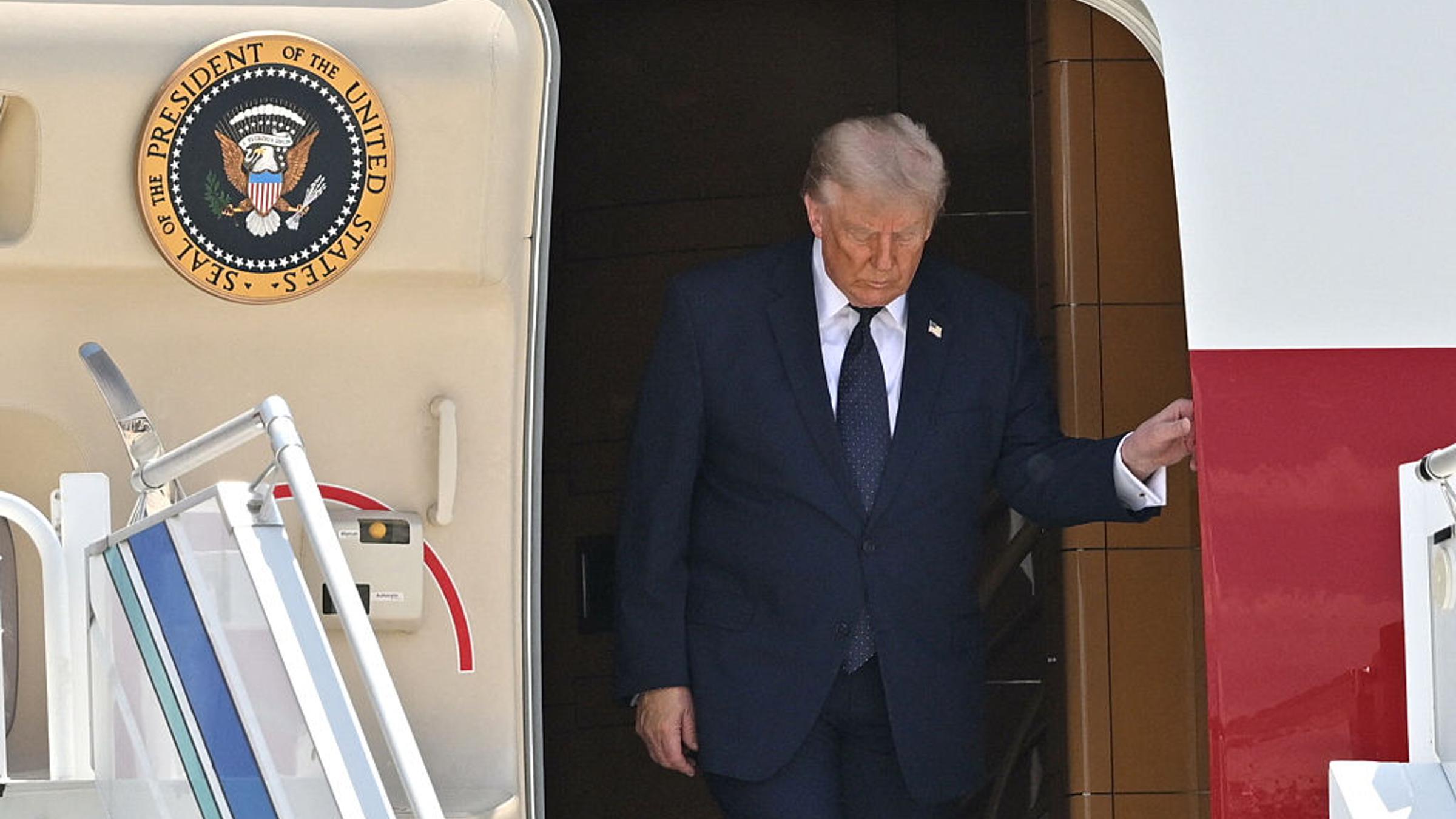
McDonald described the decision-making process around such operations as a joint effort among the Secret Service, the White House Military Office and White House staff, with “no one entity” holding more authority than the others.
The Department of Defense has referred questions from TIME to the White House. TIME has reached out to the White House for comment.
McDonald pushed back on the idea that Air Force One and the people still aboard it, including journalists, were left exposed. “I would find it incredibly hard to believe that those two planes weren’t escorted or with other assets from allies or the U.S. Air Force in the area,” he said, adding that he doubted the people on the aircraft “were dangled out there and left to fend for themselves.”
The operation broke a White House tradition that presidents rarely travel without a group of reporters known as the White House pool, to ensure the public has an independent account of the president’s activities. Former President Barack Obama broke the tradition in 2010 by leaving the White House to attend his daughter’s soccer game without telling reporters.
In 2000, President Bill Clinton secretly switched to an unmarked plane for a trip to Pakistan. At least one member of the White House pool, a reporter covering the trip for USA Today, was briefed on the operation beforehand, according to The Washington Post.



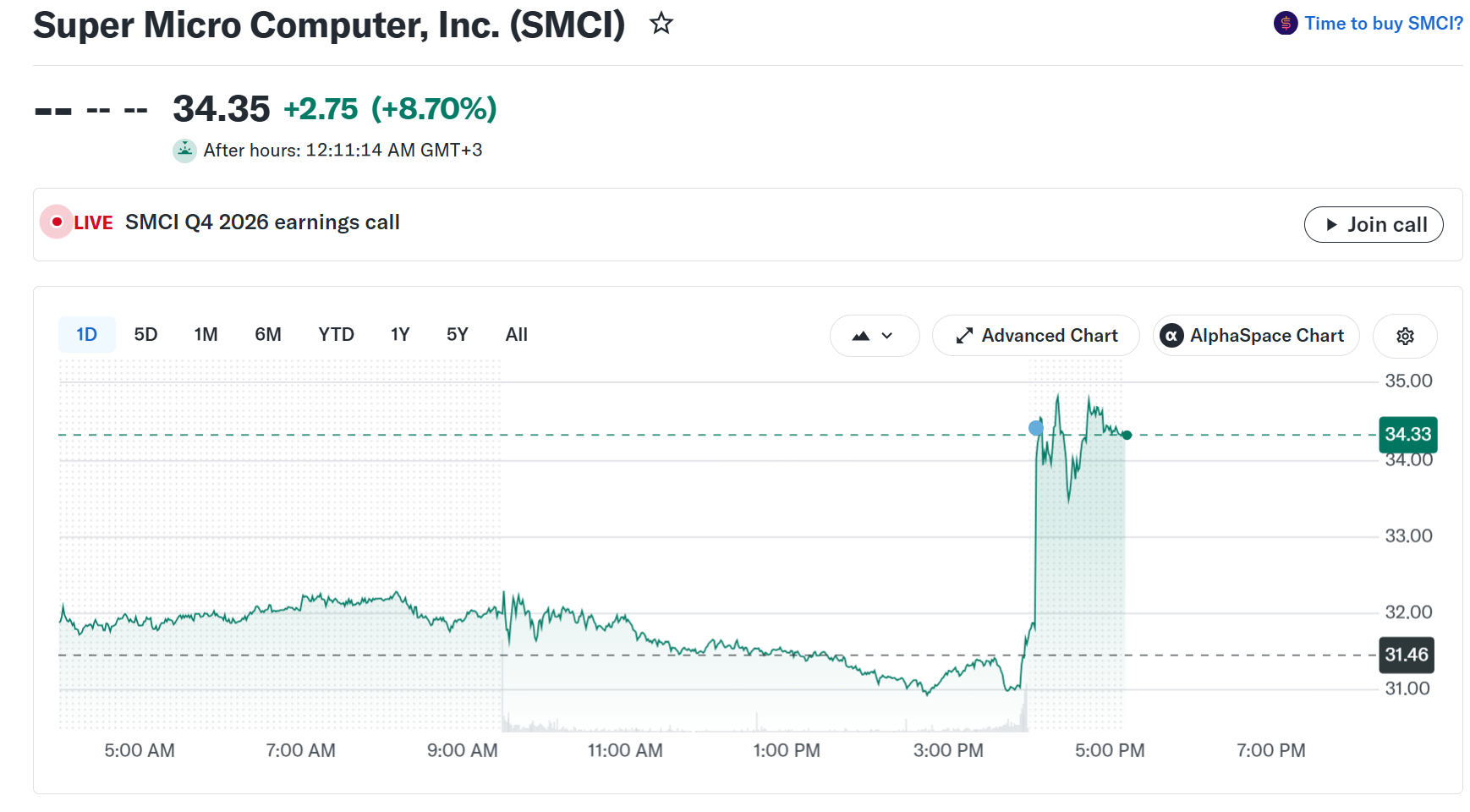
Supermicro stock (SMCI) jumped nearly 10% in after market trading on Tuesday. It follows Super Micro Computer posting a 17.5% quarterly gross margin, almost double last year, and a record order backlog.
Less than two years ago, the AI server maker was fighting to keep its Nasdaq listing. Now it projects up to $72 billion in annual sales.

Why Supermicro Stock Rallied on Doubled Margins
Supermicro reported results after Tuesday’s close. Net sales reached $11.1 billion for the quarter ended June 30, nearly double the $5.8 billion a year earlier.
Yet the margin move stole the show. Gross margin hit 17.5%, up from 9.9% just three months earlier. Net income climbed six-fold to $1.18 billion.
Adjusted earnings, which exclude stock-based pay, hit $1.70 per share. That was two and a half times the 68-cent consensus tracked by Zacks. Revenue, meanwhile, landed at the low end of the company’s own $11 billion to $12.5 billion target.
Thin margins had long been Supermicro’s weak spot. Big cloud customers squeezed prices, and rivals fought hard for every AI server deal. Tuesday’s numbers also push back on fears that AI spending is slowing.
“As demand accelerates, we are improving profitability through a richer enterprise customer mix and broader adoption of our optimized Data Center Building Block Solutions® (DCBBS) architecture,” founder and CEO Charles Liang explained the improvement in the earnings statement.
Follow us on X to get the latest news as it happens
Record Backlog Sets Up a $72 Billion Year
Supermicro expects $14.5 billion to $15.5 billion in September-quarter revenue, over 30% above the June quarter. Full fiscal 2027 sales should land between $65 billion and $72 billion. The top end sits 84% above fiscal 2026’s $39.1 billion.
Liang said the company booked over $60 billion in new orders and added several hundred enterprise customers in a year. A July preliminary update flagged the order surge and sent the stock up more than 20% in one day.
The order wave matches heavy spending across AI hardware, where Nvidia’s $500 billion deal has raised demand-quality questions.
The rally extends one of the sharpest comebacks in AI hardware. Short seller Hindenburg Research accused the company of accounting manipulation in August 2024. Auditor Ernst & Young then resigned, and the shares lost roughly a third of their value in a day.
Supermicro filed its delayed reports in February 2025 and kept its Nasdaq listing.
That history still shadows the numbers. The results are preliminary and unaudited, and the board is reviewing certain transactions tied to export controls. Inventories nearly tripled to $12.9 billion, and operations consumed $6.8 billion in cash for the year.
The rally now rests on one question. Can margins near 17% survive as that backlog turns into shipped systems? The September quarter will offer the first answer.
The post Supermicro Stock Jumps 10% on Doubled Margins and Record AI Backlog appeared first on BeInCrypto.
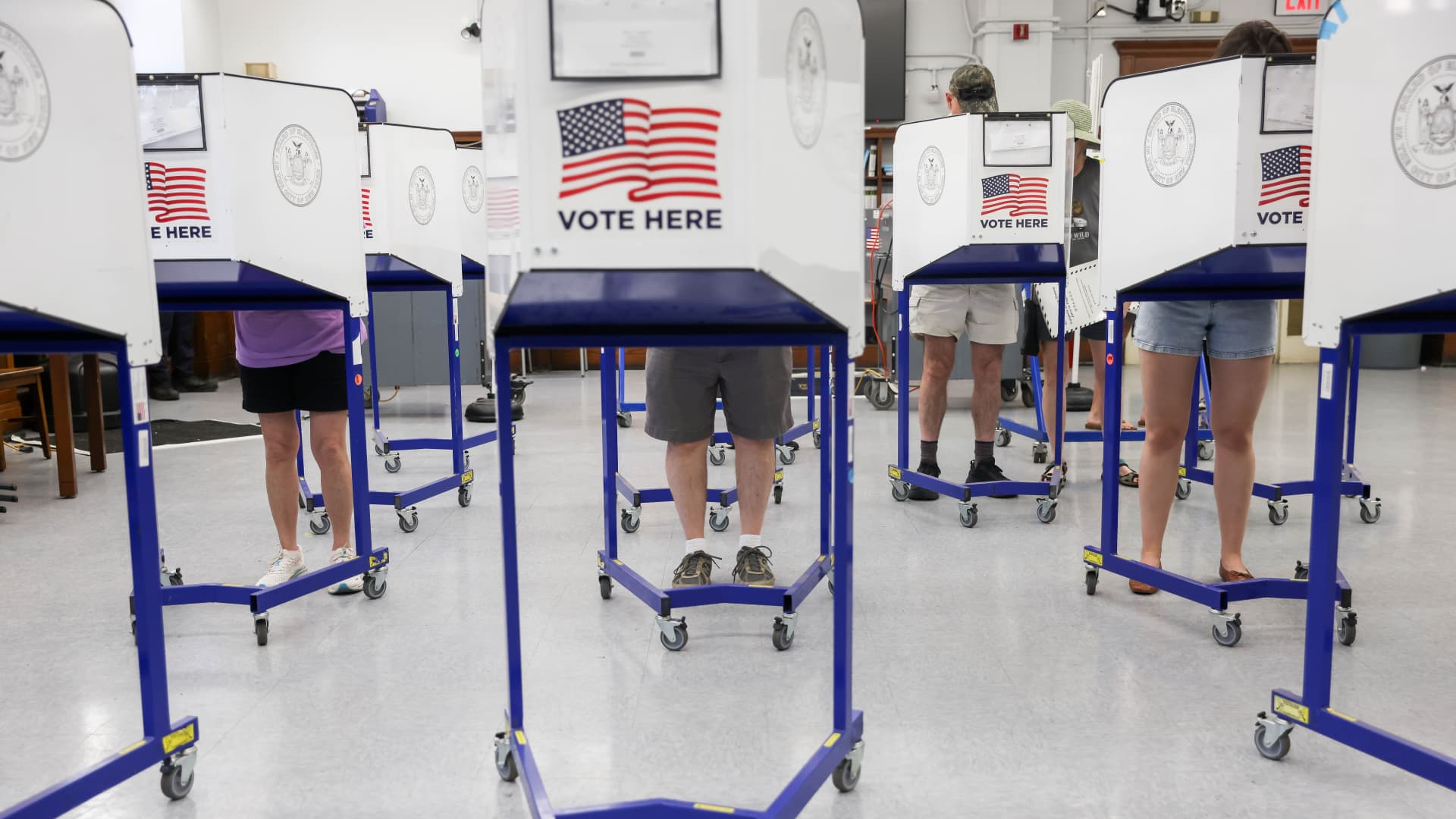
Voters cast ballots at a polling location inside John Jay High School during early voting for a primary election in the Brooklyn borough of New York, US, on Sunday, June 21, 2026.
Michael Nagle | Bloomberg | Getty Images
Wisconsin sent prediction market platforms spinning last month when its election commission released a directive reminding voters that betting on elections — including via trades on event contract exchanges — is illegal in the state, based on a more than 175-year-old law.
What shocked people was the penalty that Wisconsin places on those who break its law: violators lose the right to vote in the election they bet on.
Prediction market platform Kalshi blasted the law. “This is blatantly unconstitutional and illegal,” Benjamin Freeman, head of politics growth at Kalshi, wrote in a post on X. Polymarket told the Milwaukee Journal Sentinel it looked forward to addressing the claims through the appropriate legal process.
Wisconsin isn’t alone. Twenty-three states have laws on the books that ban betting on elections, according to Pew Research Center. New York also doesn’t allow voters to cast a ballot in an election that they’ve bet on, while in most of the other states violators can face fines or jail time for wagering on an election.
However, does the language in state laws apply to trades placed on event contracts? The answer depends on the state, but many aren’t sure.
Hotly contested
In Colorado, betting on an election is a class 2 misdemeanor punishable by up to 120 days in jail or a $750 fine. Lawrence Pacheco, a spokesman for the Colorado state attorney general, was clear in a statement: “Colorado state law bars bets or wagers on elections, and that includes prediction markets.”
But few states were as direct as Colorado. A spokesperson for the New York attorney general said that the office has not made an official interpretation on its election betting statute and whether it applies to prediction market trades.
The office for the Arizona attorney general declined to comment on whether its law applies to election event contracts due to active litigation with prediction market platforms. Phil Bueler, a press secretary for the Tennessee attorney general, said that he cannot comment on what is essentially a request for a legal opinion about a “hotly contested issue.”
In March, the Maryland State Board of Elections in a memo to voters said that users should exercise caution when considering trading elections on prediction market platforms, warning that it could amount to violating the state’s law banning wagering on elections. Then, in July, the state’s administrator of elections Jared DeMarinis wrote a letter to the office of the state prosecutor to investigate whether prediction markets’ election offerings violate Maryland’s law.
“That’s why we did the March letter early,” DeMarinis said in an interview. “This is still in the early stages… and we need to make sure we seek clarity.” He added he is interested — if the current law is interpreted as not applying to prediction market trades — in seeking action from the state legislature to deliver that clarity.
Meanwhile, Nevada bans betting on elections, but court rulings have forced Polymarket and Kalshi to cease operating in the state. Due to court orders in Michigan, which also bans election wagering, Kalshi is currently in a total operational shutdown in the state while Polymarket only blocks residents’ access to its sports-related event contracts.
The Commodity Futures Trading Commission headquarters in Washington, D.C.
Ting Shen | Bloomberg | Getty Images
A new battlefront
States are already fighting with the federal government over regulating prediction markets. The Commodity Futures Trading Commission sees all event contracts as swaps, a derivative that it regulates, and thus believes companies fall under its jurisdiction, preempting any state law. States see the platforms’ offering of sports event contracts as gambling, an activity that they regulate.
However, elections may introduce a new line of defense for the states, according to legal experts. The U.S. Constitution explicitly gives the power of managing elections to the states, so they could argue in front of a court that power extends to regulating any form of placing money on said elections.
“I think the argument for the states having some place at the regulatory table with respect to elections is perhaps stronger from a preemption perspective,” said David Oliwenstein, a partner at Pillsbury and lead of the firm’s securities enforcement practice. “I think that the fact that the states have a clearly defined role… makes it a bit of an easier argument for the states to maintain jurisdiction.”
In 2024, a federal appeals court ruled that event contract platforms can feature election offerings. However, that decision overturned an intervention by the CFTC denying the listing of those contracts rather than offering a legal opinion on any state law regarding election wagering, though the commission used state laws on election bets as part of its reasoning for its denial at the time.
In this photo illustration, Apps for online prediction market sites are shown on an electronic device on Feb. 25, 2026 in Chicago, Illinois.
Scott Olson | Getty Images
“States would have an argument that not only for local races but for even national races, where you have district level outcomes, state level outcomes, where there’s close elections, that there are a variety of collateral consequences to the the prospect of individuals betting on the outcomes of these races,” said Joshua Mitts, a professor at Columbia Law School.
In its lawsuit against Kalshi, New York not only argues that the platform’s sports contracts violate state gambling laws, but also points out the company’s culture and elections event contracts. The spokesperson for the New York attorney general added that the office doesn’t have a particular view on its jurisdiction over election contracts specifically, but rather believes it has the power to regulate all gambling in any form.
Even if states were to introduce this new argument in their battle with the federal government in courts, the CFTC’s argument likely would stay the same. That’s because no matter the topic on a prediction market, the underlying instrument — a swap — doesn’t change.
Kalshi made that point in a statement to CNBC. “The law is clear — regulated prediction markets are subject to exclusive federal jurisdiction,” spokeswoman Elisabeth Diana said.
A Polymarket spokesperson echoed that sentiment. “As courts have recognized, prediction markets on CFTC-registered exchanges are governed by federal law, not a patchwork of state rules.”
The CFTC did not respond to a request for comment.
Ian Thomas, a principal attorney in the commercial litigation practice group at Offit Kurman, agreed with the other legal experts that states could take the position in court that the constitutional right to manage elections gives them power over prediction markets’ related event contracts.
However, with sports making up the majority of prediction market platforms’ volumes, he said it’s unlikely those contracts fade from the central arguments.
“Sports is such a major aspect of these platforms that it really is where everyone’s primary focus is going to be,” Thomas said, “and I think once the question of sports gets resolved, it may lead to a more easy resolution of kind of where the boundaries are on these platforms on other topics.”
Disclosure: CNBC and Kalshi have a commercial relationship that includes customer acquisition and a minority investment.
Crypto World
CFTC orders Kalshi to continue offering prediction markets in New York after state lawsuit


“New York intends to make event contract derivatives waste away under its iron curtain of state gaming laws before the courts get the chance to issue final rulings,” he said. “These are financial exchanges that offer financial instruments and operate across state lines. They match the bid from a resident of one state with the offer of a resident from another state and submit the trade to a clearinghouse that backstops the transactions of customers throughout the country. New York has no business regulating these interstate financial markets.”
The CFTC had previously sued New York over its stance on prediction markets.
New York sued Kalshi on July 31 after a federal judge ruled against Kalshi’s bid to block the state from filing a lawsuit. New York alleged that Kalshi was violating its state gambling laws by offering sports prediction markets.
“Kalshi has failed to obtain a license from the New York State Gaming Commission (Gaming Commission), sidestepping its obligation to pay taxes like licensed casinos and mobile sports gambling platforms do,” a press release from the state said. “This tax revenue from gambling regulation funds public schools, sports programs for underserved youth, and problem gambling education and treatment.”
Kalshi moved to transfer the case to federal court; New York moved to transfer the case back. The motions are currently awaiting a judge’s ruling.




eToro Group agreed to buy TradeZero, a U.S.-focused online brokerage for active traders, for up to $231 million in cash plus up to 2.5 million newly issued Class A shares, the Nasdaq-listed company said in a release filed with the U.S. Securities and Exchange Commission on Tuesday. The purchase… Read the full story at The Defiant


Riot Platforms has leased 191 megawatts of computing capacity at its Rockdale, Texas, bitcoin mining campus to an unnamed artificial intelligence company under a 20-year agreement the miner says will generate roughly $9.1 billion in revenue, according to an exhibit filed with the U.S. Securities… Read the full story at The Defiant


The U.S. Commodity Futures Trading Commission sued Goliath Ventures Inc. and its chief executive, Christopher Delgado, on Tuesday, alleging the Florida company raised at least $397 million from roughly 1,600 customers by promising to place their bitcoin and ether in decentralized exchange liquidity… Read the full story at The Defiant




The US Securities and Exchange Commission (SEC) votes Friday, August 14, on proposing Regulation Crypto. The purpose-built offering regime would mark the agency’s first major crypto rulemaking under Chair Paul Atkins.
The Senate left for its August recess without passing the CLARITY Act. That bill would divide digital asset oversight between the SEC and the Commodity Futures Trading Commission (CFTC).
SEC Crypto Plans Take Shape Before Friday Vote
Congressional inaction hands regulators the near-term initiative. Official notices confirm the open meeting for 10 a.m. ET at the agency’s Washington headquarters, with a live webcast. The agenda lists a single item from the Division of Corporation Finance.
Commissioners will decide whether to propose rules that give token offerings a dedicated legal path. Qualifying projects could raise capital under exemptions instead of completing full securities registration. The vote covers a proposing release only, so the text remains under wraps until Friday.
The proposal grew out of Project Crypto, the regulatory package Atkins placed on the SEC’s 2026 agenda. Its planks include registration exemptions for token sales, safe harbors for decentralizing projects, and custody standards for broker-dealers.
Atkins told CNBC in late July that the agency stands ready to act alone, even though he still prefers legislation.
“Statute is the way to future-proof something,” Atkins said in the interview.
Follow us on X to get the latest news as it happens
Senate Recess Leaves Regulators in the Lead
Democrats blocked floor action over an ethics carve-out tied to President Trump’s crypto holdings, according to American Banker. Republicans Josh Hawley and Jerry Moran also objected to the bill’s stablecoin yield language, siding with community banks.
Senate Majority Leader John Thune says the measure will move first when lawmakers return, teeing up a possible September vote. However, the bill still needs 60 votes, and Thune’s cloture strategy depends on Democratic support that has yet to materialize.
Meanwhile, some analysts argue the industry can advance without the bill. Grayscale research head Zach Pandl said passage looks unlikely in 2026 either way.
CFTC Signals the Same Playbook
The SEC is not acting in isolation. CFTC Chair Michael Selig issued a parallel warning in a July Fox Business interview. Regulators would end up writing all the crypto rules if Congress fails to deliver, he cautioned. He still urged senators to pass the bill, calling federal certainty critical for business.
Both agencies already coordinate closely. Their March joint interpretive rule classified most tokens outside securities law and carved out staking, mining, and airdrops.
Still, Atkins concedes that agency action lacks permanence. A future administration could reverse rules that Congress never wrote into statute. That caveat also applies to the March guidance itself.
A yes vote on Friday would open a public comment period, not finalize anything. The proposal’s exemption thresholds and eligibility tests will reveal how far the SEC intends to go without Congress. September’s Senate return will then show whether lawmakers reclaim the pen.
The post SEC to Unveil Alternative Crypto Plans to the CLARITY Act appeared first on BeInCrypto.

THEY’RE SCARED OF YOUR PROTECTION,FINANCIAL LOSSES BECAUSE U PULLED UR ENERGY BACK,DNA DRAMA & more

Bellshill man on sex offenders’ register after falling for paedophile sting

Fed’s Austan Goolsbee says inflation is the biggest problem on Fed rate signal

Renter of Home in Anne Heche Crash Denies Settlement With Son

No Jackpot Winner as $257 Million Prize Rolls Over to $269 Million Monday Draw

Weekend Open Thread: Staud – Corporette.com
THEY’RE SCARED OF YOUR PROTECTION,FINANCIAL LOSSES BECAUSE U PULLED UR ENERGY BACK,DNA DRAMA & more

THIS HAS TO HAPPEN FOR A $17,500 XRP? – WILL BTC MAXI’S DITCH BTC FOR XRP?

UPI Charges Coming?! Investors in Trouble? | IPS Finance – 576 | NSE BSE
-

 Fashion4 days ago
Weekend Open Thread: Mattifying Sunscreen
-

 Fashion4 days ago
Frugal Friday’s Workwear Report: Cap-Sleeve Pointelle Crewneck Sweater
-

 Sports6 days ago
Jordan Coyle & Cordiamo take Laya Arena Stakes at RDS
-

 News Videos3 days ago
Can Astrology Help Find Gold and Silver Trends? A Financial Astrology Guide
-
 Business6 days ago
US stocks: Dow closes at record on Mideast optimism; SpaceX, AMD drag Nasdaq
-

 Politics5 days ago
Reform UK And Greens Sink To Lowest Favourability Ratings To Date
-

 Business7 days ago
Nvidia Stock Climbs 2.5% as Chip Sector Rally Builds Ahead of AMD Earnings, Nvidia’s Own Report Looms
-

 Tech7 days ago
OpenAI, Anthropic AI agents targeted real people and systems in cyber tests
-

 Business6 days ago
Supply chain issues impact Ingredion
-

 Tech4 days ago
Rinn Pharma & Biopharma to join NordicPharmaTrain network
-

 Business3 days ago
How to Start a Cleaning Business: A Step-by-Step Guide
-
 Crypto World7 days ago
Dow and S&P 500 Hit Records on AI Earnings: When Will the Bubble Burst?
-

 Business2 days ago
Datadog: Best Of Breed For Multiple Reasons
-

 Business3 days ago
BDC Weekly Review: Private BDC Q2 Numbers Are Strong
-
 Business7 days ago
McDonald’s (MCD) Q2 2026 earnings
-
 Crypto World7 days ago
Dollar Index Trapped at 100 as Hawkish Fed Meets Official Selling
-

 Fashion7 days ago
The Bright Side of Black and White
-

 Fashion6 days ago
Suit of the Week: Me + Em
-

 Business7 days ago
Apple UK encryption challenge filed against Home Office
-
Sports6 days ago
Spider-Man: Brand New Day ending explained: Is Peter Parker alive?
You must be logged in to post a comment Login