Ramsey Solutions personality George Kamel explains the pros and cons of the Trump Accounts to Fox News Digital, and when is the best time to invest for your children.
When the federal government began depositing a $1,000 seed contribution into newly launched Trump Accounts for eligible children in July, personal finance expert and Ramsey Solutions personality George Kamel didn’t hesitate to claim the funds for his own young son.
Though Kamel gladly took “a little money back” from Uncle Sam, he issued a cautious warning to parents across America about the program’s tax fine print — and the costly mistake well-meaning families could make.
“As someone who has a 1-year-old and 3-year-old, I took advantage of this. And on the Fourth of July, that $1,000 came into the account for my son, and I went, ‘Woo! A little money back from the government that I’ve given so much to,’” Kamel told Fox News Digital.
“If you can understand the power of compound growth, then this Trump Account was worth it just to get your mind thinking about it,” he continued. “But the truth is, the tax benefits are not great on this.”
WHY RAMSEY FINANCIAL EXPERT SAYS THERE’S ‘NO MAGIC AGE’ TO CLAIM SOCIAL SECURITY
The initiative, which debuted as part of the Trump Accounts rollout in 2026, is a provision of the new tax legislation that will provide $1,000 to every eligible newborn U.S. citizen whose parents enroll the child in the program. No contributions are necessary, but parents can deposit up to $5,000 per year, which will be invested in a qualifying U.S. stock index fund.
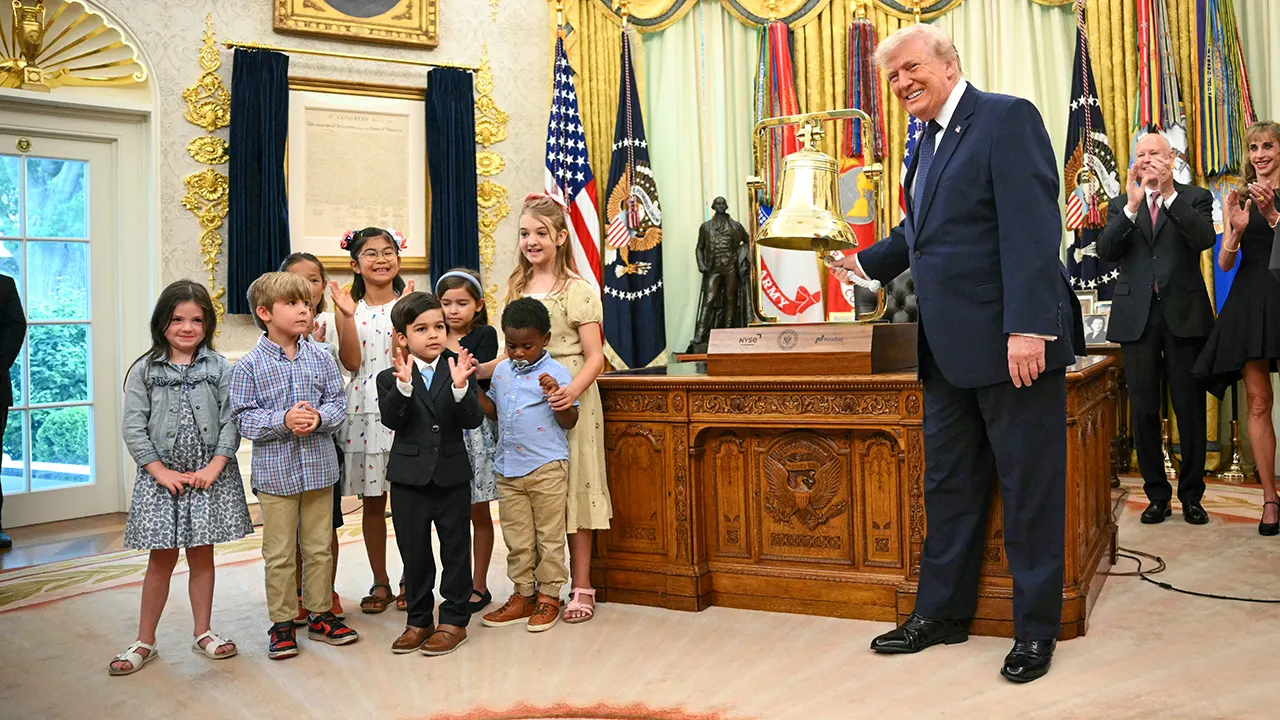
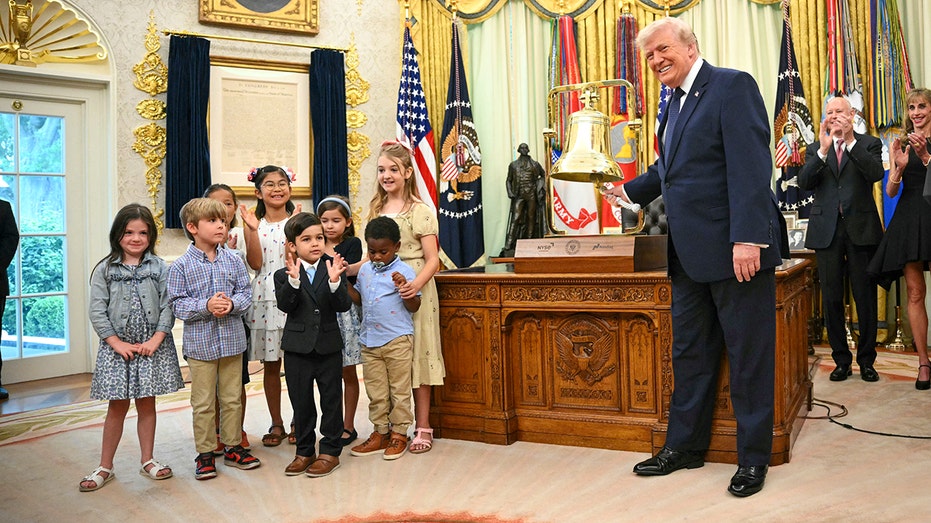
President Donald Trump rings the opening bell of the New York Stock Exchange ahead of the launch of Trump investment accounts in the Oval Office of the White House in Washington, D.C., on July 6, 2026. (Getty Images)
During a July 31 public Cabinet meeting, President Donald Trump said that more than 7 million Trump Accounts had been opened since the program’s launch date.
“Here’s the math on this: If you get the free $1,000, well, that could grow to almost half a million or more by the time my kid is 65, without ever adding anything to it,” Kamel said before mentioning other ways to invest in children’s futures.
“Save the 529 plan for education. That has way better tax advantages. You’re using after-tax income, you withdraw it tax-free, it grows tax-free. That is the best move for education expenses,” he explained. “When it comes to other things, like a custodial Roth IRA is great, but you need earned income. So the real power of the Trump Account is that there is no earned income needed.”
President Donald Trump provides an update on the ‘Trump accounts’ highlighting that over 7 million accounts where opened since its July 4th launch.
At age 18, without any additional contributions, the account is estimated to be worth about $5,800. By age 55, it could reach roughly $200,000. Kamel also said it could grow to about $5 million by age 65.
However, Kamel’s primary warning was directed at parents who rush to invest for their children while neglecting their own debt, emergency funds or retirement savings.
“I love that we’re bringing this conversation to the forefront with these Trump Accounts… But the sad truth is most Americans aren’t investing for themselves, let alone have the ability to invest for their kids,” he said. “We tell people, hey, become debt-free, don’t owe other people money, have an emergency fund so that you have the margin to build wealth for yourself. And once you’re investing 15% of your own income into your own retirement, then and only then should you be thinking about investing for your kids.”
GET FOX BUSINESS ON THE GO BY CLICKING HERE
Ramsey Show personality and co-host George Kamel breaks down fact from fiction about Social Security fund depletion with Fox News Digital.
“The truth of the matter is, a lot of kids are having to support their aging parents who didn’t plan for their own retirement. So now they’re having to fund their retirement while trying to support their own life and their own kids. So this has put a real bind and burden on the younger generations,” Kamel continued. “And I don’t wanna do that to my kids.”
“So if you can get this early, this mindset, that compound growth is the key… I hope that you have the ability to leave that legacy where your kids went, ‘Wow, I can’t believe the advantage that my parents gave me by setting me up in this way.’”
READ MORE FROM FOX BUSINESS
FOX Business’ Alexandra Koch contributed to this report.




















































You must be logged in to post a comment Login