New Zealand runner Sophie Wood, who competes under her maiden name, Sophie Grant, recently accomplished something truly remarkable.
Running for 29 days across the Alps, from Trieste to Monaco, Woods covered around 2,000 kilometers (1,243 miles) while climbing a total of more than 100,000 meters (328,083 feet) – on an average of three to four hours of sleep per night.
This made her the fastest person ever to complete the Via Alpina. The 42-year-old ultra-runner finished the route more than seven days faster than the fastest man ever to do so.
“It gives me goosebumps thinking about it, to take the overall record is amazing,” Woods told DW.
Advertisement
“I was there for the adventure. I didn’t really want to be running for longer than a month, that was enough.”
The longer the distance, the smaller the gender gap
Woods is not the only woman to have broken a men’s record in endurance sports in recent years.
In 2026, Rachel Entrekin won the Cocodona 250, a race covering roughly 400 kilometers in the United States, setting a new overall course record.
A year earlier, Tara Dower ran the Long Trail in Vermont. a distance of about 440 kilometers, in 3 days, 18 hours, and 29 minutes, beating the previous men’s record by 2 hours and 40 minutes.
In 2019, Germany‘s Fiona Kolbinger became the first woman to win the Transcontinental Race. Cycling nearly 4,000 kilometers across Europe, she finished just under eight hours ahead of the second-placed male rider. That same year, Jasmin Paris became the first woman to win the 430-kilometer Spine Race in Great Britain, shattering the previous course record by more than 12 hours.
Advertisement
A comprehensive analysis by RunRepeat and the International Association of Ultrarunners examined over five million results from more than 15,000 ultramarathons. The findings showed that the longer the distance, the closer women came, on average, to matching men’s times.
In 2019, Fiona Kolbinger became the first woman to win the Transcontinental RaceImage: Mateusz Birecki/IMAGO
In the events analyzed, on average, the men were still 11.1% faster. At the 100-mile mark, the gap narrowed to just 0.25%. At distances exceeding 195 miles, the women were on average 0.6% faster.
‘We’re good at solving problems’
So why are women able to keep pace—or better—when the physical demands increase?
Certain physiological factors may play a role. On average, women possess a higher proportion of fatigue-resistant Type I muscle fibers and rely relatively more on fat as an energy source during endurance activities.
The advantages men typically enjoy—such as greater muscle mass and higher maximal oxygen uptake—may be less decisive in ultra-long events than in shorter races.
Advertisement
“Probably we are better at burning fat, and therefore it makes us able to go longer,” Woods said – before pointing to other possible factors.
“I think we’re good at putting our egos aside. And I think we’re good at solving problems.”
Competing in an ultramarathon is about much more than who can run the fastest. There are key decisions to be made about sleep, nutrition and physical pain. That’s where her team comes in.
“I just put my life in their hands,” she said.
“You kind of control everything you can and then you just throw it into chaos and see what comes out in the wash.”
Advertisement
As little as 90 minutes of sleep, 7,000 calories a day
The extreme physical strain was evident in her sleeping patterns – towards the end, she was sleeping as little as 90 minutes a night. When she simply couldn’t go any further, she would lie down right next to the trail.
“You just curl up on the side in a little mossy glen and hope that no one thinks you’ve died,” she said.
“The sleep deprivation was one of the hardest parts of the whole thing.”
Advertisement
Her alarm would often go off again as early as three in the morning.
Sophie Woods broke both the women’s and men’s records on the Via AlpinaImage: Ulrich Wagner/IMAGO
At the same time, maintaining her physical energy was a huge problem, with her team estimating that she was consuming between 6,000 and 7,000 calories a day – through sports drinks, soft drinks, as burritos, falafel wraps, sandwiches, pasta, and McDonald’s food. She ate much of this while on the move.
In the Dolomites, heat and pain added to the challenge.
“I bawled my eyes out in the Dolomites,” she said.
“I was really hot. I was really sore. I was really swollen. I was shuffling along and I was just like: I don’t know if I can do this.”
Advertisement
Despite it all, she carried on.
Women long neglected in sports research
Despite setting the record, Woods wonders what she and other women could achieve if their bodies were studied as thoroughly as men’s.
“As a woman, you need to be very careful when you read these studies to actually see who they are studying, because often it will be 10 male cyclists,” Woods said.
“We have just been left behind in all of the research for decades,” she said.
Advertisement
“As women, we are fighting for crumbs in the sporting world. We are fighting for more coverage, we are fighting for more research, we are fighting for more sponsorship.”
The fact that several individual men’s records have been broken by women doesn’t mean that women are inherently better endurance athletes than men. Men still hold many records and are, on average, significantly faster over shorter distances.
Prime Ice Constructs in Genshin Impact are a brand-new feature introduced in the 7.0 Snezhnaya update. Among the various things they can do, one use case is leaving signs with messages in the open world. Moreover, they also appear in other players’ worlds. Luckily, there is a way you can remove them entirely if you do not want to see them.
This article explains how to remove co-op Prime Ice Constructs in Genshin Impact.
How to delete Prime Ice Constructs in Genshin Impact
While co-op Prime Ice Constructs in Genshin Impact 7.0 are a useful feature that can be used to pass certain useful information to others, at times certain players may also use them to troll you. If you are someone like me who finds these unnecessary blocks of text annoying, you will want to delete them from your map.
Advertisement
You can either choose to delete a single Prime Ice Construct at a time or mass delete several of them at once if you are looking to remove them entirely. Here’s how that can be accomplished:
Select a Construct from the main map (Image via Sportskeeda Gaming || HoYoverse)
Open the main map.
Turn on the Manage Prime Ice Construct button at the bottom of the screen.
Click on any Construct you want to delete.
In the menu that opens up on the right-hand side, click on the Remove button to delete the Prime Ice Construct.
Alternatively, tap on the Trash icon on top of the Navigate button to mass delete several Constructs at once.
Decide which ones to delete (Image via Sportskeeda Gaming || HoYoverse)
This will bring up a red ribbon at the bottom asking how many Constructs to delete. Tap on the Select quantity button to make a selection based on their type.
Choose between removing all Prime Ice Constructs or only the ones built by others.
Press the Delete button in the bottom right corner to permanently remove them.
Do note that this does not prevent more co-op Prime Ice Constructs from appearing.
How to prevent co-op Prime Ice Constructs from appearing in Genshin Impact
Once you have rid yourself of all Prime Ice Constructs created by other players, your next objective is to stop them completely. Here’s how to do that:
Advertisement
Open the Prime Ice Construct menu (Image via Sportskeeda Gaming || HoYoverse)
After obtaining the Eye of Graeae, click on the Prime Ice Constructs button to begin placing one.
Tap on the Construct Details button found on the right-hand side.
Open the Settings dialog box from the top-right corner.
Toggle off this option (Image via Sportskeeda Gaming || HoYoverse)
Toggle off the option to receive Prime Ice Constructs from others.
That’s all there is to removing those pesky co-op Constructs in Snezhnaya.
Also check out our other GI articles:
Why did you not like this content?
Advertisement
Was this article helpful?
Thank You for feedback
Are you stuck on today’s Wordle? Our Wordle Solver will help you find the answer.
Eckert is only contracted at St Mary’s until the end of the current season, and a significant sanction could force the club to look elsewhere for a new head coach.
Spors has held his position since 2025 and played a key role in handing Eckert the permanent job as head coach in December last year.
Advertisement
“It all depends on what the outcome is as there are so many uncertainties of how this could look like,” Spors said.
“There is nothing too concrete at the moment, we’re really focused on the here and now and if there is something that we have to deal with then we will deal with it.
“In the back of my mind and in the office we do speak about different scenarios to be prepared for but I still hope for a positive outcome.”
Southampton were preparing for a number of possibilities on their pre-season tour.
Advertisement
During one friendly Eckert watched the game from the stands, and later told the club’s media: “Let’s hope we don’t need it,” when asked about managing the game away from the technical area.
If Eckert were to be banned by the FA, there is no guarantee this would only prevent him from being on the touchline.
“At the moment I’m honestly very positive looking into the next weeks and we have some ideas in mind,” Spors added.
“There was some discussions earlier about how Tonda watched one of the pre-season games from above [in the stands] and we have to think into different scenarios like this.”
Promising teenage Australian golfer Jessica Bang died after suffering a brain haemorrhage while preparing for a tournament in Thailand, her family and tour officials said.
The 18-year-old, who won her first professional event in just her fifth start earlier this year, collapsed on August 1 and was rushed to hospital in Bangkok, where she underwent emergency brain surgery.
Article continues after this advertisement
Advertisement
She did not recover and died on Thursday.
“We are truly heartbroken by this news,” family members said on a GoFundMe page set up after she fell ill.
“However, we would like to continue to remember Jessica and celebrate her achievements, passion and dedication to golf.
“The funds we have raised will be given to her parents to help contribute towards her medical expenses.”
Advertisement
Article continues after this advertisement
Bang was in Bangkok to play in the International Qualifying Tournament for the Korean women’s professional tour.
The WPGA Tour of Australasia called her an “outstanding young talent” who turned professional at the end of 2025 following a stellar amateur career.
“The WPGA Tour of Australasia and the broader Australian golf community is deeply saddened by the passing of young Tour member Jessica Bang in Thailand,” the WPGA said in a statement.
Advertisement
Article continues after this advertisement
“The thoughts and prayers of everyone at the WPGA Tour of Australasia and the broader Australian golf community are with Jessica’s family, friends and all those who knew and loved her at this incredibly difficult time.”
Your subscription could not be saved. Please try again.
Precious Opinion Books Place in World U20 Triple Jump Final
Nigerian triple jumper Precious Opinion has qualified for the World Athletics U20 Championships final in Eugene, Oregon.
Opinion produced a lifetime-best 16.00m in qualifying, automatically securing his place in the final.
The performance also moved him up to No. 3 on the University of Minnesota’s all-time outdoor triple-jump list, another milestone for the young athlete.
Advertisement
Opinion is a Nigerian sophomore at Minnesota, where he competes for the Golden Gophers. Now he gets the chance to compete for a medal on the world junior stage. The final awaits.
Cody Gakpo to remain at Liverpool if Tottenham strike Savinho deal?
With Tottenham’s talks with Manchester City over a £65m deal for Savinho moving in the right direction, is Cody Gakpo set to stay at Liverpool?
The Dutchman was recently linked to Liverpool with Andoni Iraola set to chase a new winger over the final weeks of the window.
Liverpool are pursuing Paris Saint-Germain’s Bradley Barcola but it would take a club record fee to sign the winger, with PSG demanding up to £140m.
Advertisement
(Getty)
Mike Jones14 August 2026 11:48
Enzo Maresca provides update on Manchester City’s pursuit of Enzo Fernandez ahead of Chelsea deadline
The Italian’s former club said they wanted the Argentina midfielder’s future to be settled by 5pm on Friday as they told potential buyers to pay their £120m asking price this week.
Richard Jolly14 August 2026 11:45
Advertisement
Jaissle on taking over at Newcastle
During his unveiling as the new Newcastle United manager, Matthias Jaissle spoke about the future.
“It’s a challenge, a big challenge, always when there’s a transitional period. But it’s not time to complain, it doesn’t make sense to see the negative things,” Jaissle said at his unveiling.
“We want to seethe chance in that situation and that’s our approach from day one. We are here to do our best job. We want to support the players, the current squad.
“There will be adjustments to see in the coming days, weeks. But for now it’s only focused on the daily work, the work we can influence. That’s all that matters now.”
Advertisement
(Getty)
Mike Jones14 August 2026 11:36
Have Real Madrid and Barcelona been too opportunistic?
Man City are holding firm on their own £60m valuation of Rodri, having found Barcelona’s initial approach derisory.
The player’s camp is said to have been a little baffled by the situation, since he would have expected to have signed for one of the big Spanish two by now. It’s all the more curious given his status as the World Cup-winning captain.
There is a sense that both Real Madrid and Barcelona have tried to be too opportunistic here, having seen that City were allowing a long-term legend to leave on good terms.
Advertisement
They still want the right terms.
Rodri won the Golden Ball as the 2026 World Cup’s best player (Bradley Collyer/PA) (PA Wire)
Miguel Delaney, Chief Football Writer14 August 2026 11:31
Chelsea-City relationship not that smooth
The word from the Chelsea training ground is that, since returning from World Cup duty, Enzo Fernandez does not give off the sense of staying around for long. The links with Manchester City have only escalated since The Independent reported it last Friday, with all sides intent on getting a deal done.
Fernandez is Enzo Maresca’s top target for the position. Chelsea do currently want £120m – as well as clarity by Friday’s 5pm – and the relationship with City is not that smooth right now.
Advertisement
(Getty)
Miguel Delaney14 August 2026 11:25
Djed Spence to Inter Milan?
Sky Italy also reports Tottenham and Inter Milan are to hold further talks over the future of Djed Spence.
The England international, who impressed at this summer’s World Cup, has been a key Inter target this window as they look for someone who can play as right wing-back.
The Serie A club are reportedly hoping to seal the deal for £30m.
Advertisement
(Reuters)
Mike Jones14 August 2026 11:24
Arsenal in talks over Quansah
Sky Sports News are reporting that Arsenal are in talks with Bayer Leverkusen over the possible signing of England defender Jarell Quansah.
Mikel Arteta is said to be in favour of the move and sees Quansah as a solid addition to the back line with versatility at both centre-back and right back.
(AP)
Mike Jones14 August 2026 11:17
Advertisement
Tielemans apologises to Aston Villa fans after claiming Manchester United are ‘above’ former club
Tielemans made the switch from Villa Park to Old Trafford this summer for a £35m fee having twice held talks previously about joining Manchester United.
Harry Latham-Coyle14 August 2026 11:12
Youri Tielemans reveals he nearly joined Manchester United twice before
It was third time lucky for Youri Tielemans when he joined Manchester United last month.
Advertisement
As a deal to buy Brazil midfielder Ederson stalled, the Red Devils activated a £35m release clause to sign Tielemans from Aston Villa – but the move might have happened years ago for a player previously linked with United several times.
United reportedly considered Tielemans in the summer of 2019 as his loan spell at Leicester from Monaco ended but he instead joined the Foxes permanently. Tielemans was linked with United again in both 2022 and 2023.
Speaking at United’s pre-season training camp in County Kildare, the Belgium international said there had been direct talks in the past.
“There have been two times that I spoke with the club, but it didn’t (come) to anything, so I was just very calm about it,” Tielemans said.
Advertisement
Asked if he thought his opportunity to join United had passed, Tielemans added: “No, listen, I am very calm about it. When a move comes up, then if it needs to happen, it will happen.
“At the times that I have been linked with the club before, it did not happen, but it is what it is. I just keep working, keep doing my thing on the pitch and then it happens.”
Mike Jones14 August 2026 11:00
Advertisement
Inter Milan circling for Curtis Jones
Inter Milan are negotiating a move for Davide Frattesi which would free them up to make a bid for Curtis Jones, according to Sky Italy.
Inter are wrangling with Lazio over terms for an initial loan deal with obligation to buy for Frattesi, which would allow them to go back to Liverpool to try to close a deal for Jones, who is a major target for them this summer.
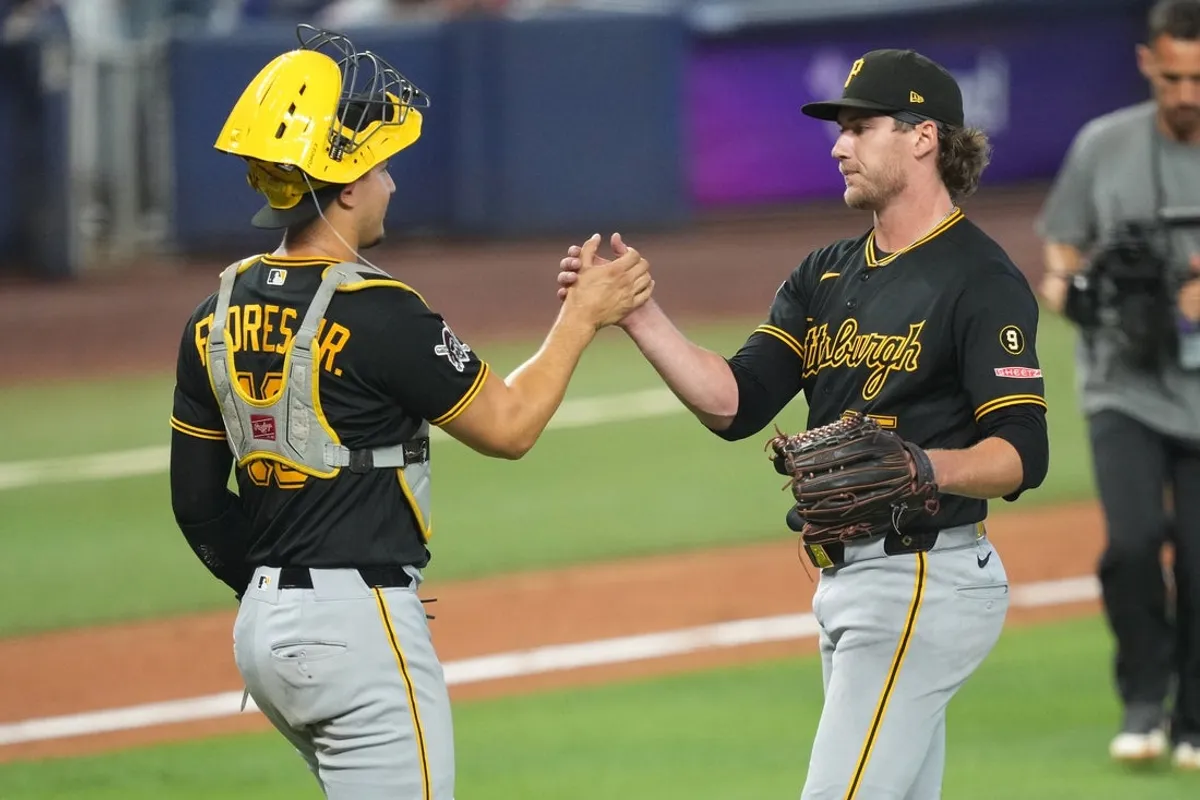
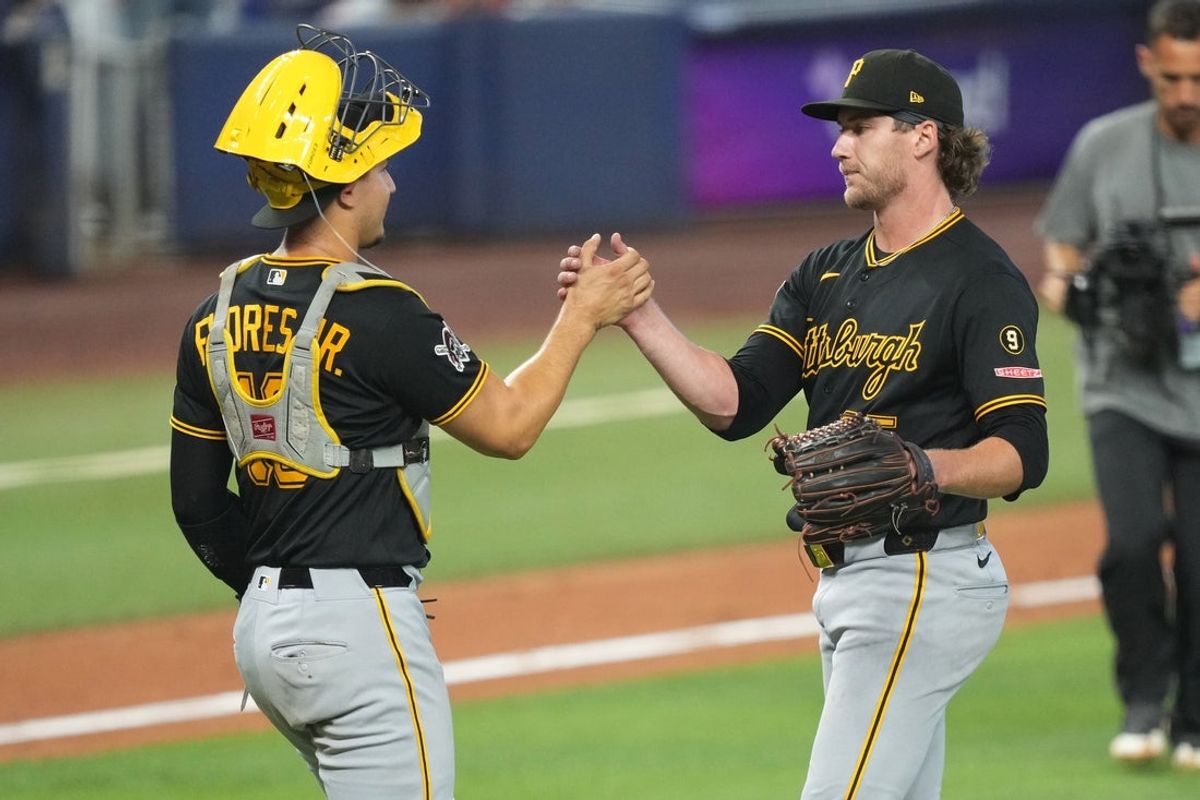
Aug 13, 2026; Miami, Florida, USA; Pittsburgh Pirates catcher Rafael Flores Jr. (43) congratulates starting pitcher Braxton Ashcraft (35) after defeating the Marlins at loanDepot Park. Mandatory Credit: Jim Rassol-Imagn Images
Braxton Ashcraft pitched his first career complete game and struck out 10 batters as the Pittsburgh Pirates ended Miami’s four-game winning streak by defeating the host Marlins 13-1 on Thursday afternoon.
Other than Owen Caissie’s shutout-spoiling homer to lead off the ninth, Ashcraft (12-5) did not allow a runner past first base. He surrendered just three hits and one walk and was aided by his defense, as the Pirates turned three double plays and threw out a runner attempting to steal second base.
The Pirates’ offense was nearly as dominant, with Jared Triolo and Jake Mangum combining for six hits, four RBIs and six runs, and Rafael Flores Jr. slugging a pair of three-run homers.
Marlins starter Tyler Phillips (3-6) gave up four runs on six hits in 5 1/3 innings.
Brewers 5, Dodgers 4
Advertisement
Jackson Chourio, Garrett Mitchell and Jake Bauers delivered RBI singles in the ninth inning as Milwaukee struck the first blow in a key four-game series by rallying to beat host Los Angeles.
Down 4-2 in the ninth inning, the Brewers received consecutive one-out singles from Joey Ortiz, David Hamilton, Chourio and Mitchell against Edwin Diaz (2-2) to tie the score 4-4. Bauers’ go-ahead single to right came against Alex Vesia.
Max Muncy hit a three-run pinch-hit homer for the Dodgers, who had their three-game winning streak end. Los Angeles first baseman Freddie Freeman played one day after he tumbled onto the concrete in the visitors’ dugout while chasing a foul ball. He finished 0-for-3 with a walk and a run.
Phillies 7, Twins 1
Advertisement
Kyle Schwarber hit two homers and drove in three runs as Philadelphia pulled away for a win over Minnesota in the annual Field of Dreams game at Dyersville, Iowa.
Brandon Marsh finished 2-for-2 with a homer and two RBIs for the Phillies, who won on a warm, dry night on the famed Iowa farmland that served as the setting of the 1989 baseball movie blockbuster for which the game is named. Aaron Nola (4-9) limited the Twins to one run on five hits in five innings.
Luke Keaschall went 2-for-3 with a double and a homer to lead Minnesota. Taj Bradley (9-5) gave up five runs on seven hits in four innings.
Red Sox 7, Blue Jays 0
Advertisement
Payton Tolle allowed two hits over eight innings, Caleb Durbin hit a grand slam and Boston ended a five-game losing streak by shutting out host Toronto.
Durbin’s second career slam broke open a 1-0 game in the eighth inning to help the Red Sox salvage the finale of the four-game series. Durbin finished with three hits and five RBIs. Tolle (8-6) retired the final 17 batters he faced.
Boston scored a run against Max Scherzer (1-5) in the first — the 3,000th inning pitched by the right-hander. Scherzer then retired nine straight before eventually exiting the game after five innings still trailing 1-0. Boston put the game away after a pair of singles and an intentional walk loaded the bases and set the stage for Durbin.
Reds 9, White Sox 8
Advertisement
Tyler Stephenson belted a three-run home run and Sal Stewart and Eugenio Suarez also homered as visiting Cincinnati edged Chicago.
The Reds took two of three from the White Sox and have won six of their eight series since the All-Star break. Tejay Antone (2-0) struck out the side in the sixth to earn the victory.
Edgar Quero had three hits and two RBIs for the White Sox. His two-out, run-scoring single brought Chicago within one in the ninth, but Julian Garcia recovered to notch his second save.
Advertisement
Tigers 3, Guardians 0
Eduardo Valencia homered and Keider Montero pitched 6 1/3 strong innings, fueling host Detroit to a win over Cleveland.
Montero (9-7) limited the Guardians to three hits and one walk. Tyler Holton got the next five outs, allowing one hit, and Kenley Jansen tossed a clean ninth for his 15th save. The Tigers recorded the first major league shutout without a strikeout since July 1, 2014, when Detroit’s Rick Porcello blanked the then-Oakland Athletics.
Spencer Torkelson had two hits and drove in a run for the Tigers, who have won nine of 12. Rookie Chase DeLauter had two of the Guardians’ four hits.
Advertisement
Mariners 1, Yankees 0
Logan Gilbert pitched six sharp innings to help Seattle stop its six-game losing streak with a shutout of host New York.
Weston Wilson homered in the second inning off Max Fried (4-4) for the only run as the Mariners avoided being swept for the second straight series.
Gilbert (9-7) permitted four hits, struck out seven and authored his fifth scoreless start this season. Fried allowed one run on five hits in five innings for his first decision since returning from the injured list on July 22.
Advertisement
Nationals 7, Cubs 0
Cade Cavalli carried a no-hit bid into the seventh before settling for a one-hit gem after eight innings, fueling host Washington to a shutout victory over Chicago. The Cubs lost for just the second time in 10 games.
Washington rookie Abimelec Ortiz belted a three-run shot during a five-run fifth inning, his fourth homer of the season and third in his past four games. Ortiz, who was playing in his 11th career game, also scored on Dylan Crews’ RBI double in the fourth inning.
Cavalli (10-5) retired the first 15 batters he faced before Dansby Swanson drew a four-pitch walk to open the sixth. The Cubs’ lone hit was Michael Busch’s two-out single in the seventh.
Advertisement
Angels 7, Rangers 0
Mike Trout went 3-for-5, drove in a run and scored another while rookie Walbert Urena allowed two hits over six innings, leading Los Angeles past Texas in Anaheim, Calif., for its third straight win.
Denzer Guzman also had three hits to go with an RBI and two runs while Josh Lowe collected two hits and two RBIs for the Angels. Urena (8-8) lowered his ERA to 2.67. He has a 1.75 ERA over his past seven starts.
Jacob deGrom (8-8), who left after two innings with what the Rangers called right triceps fatigue, allowed two runs on six hits. Texas went 1-7 in Anaheim this season.
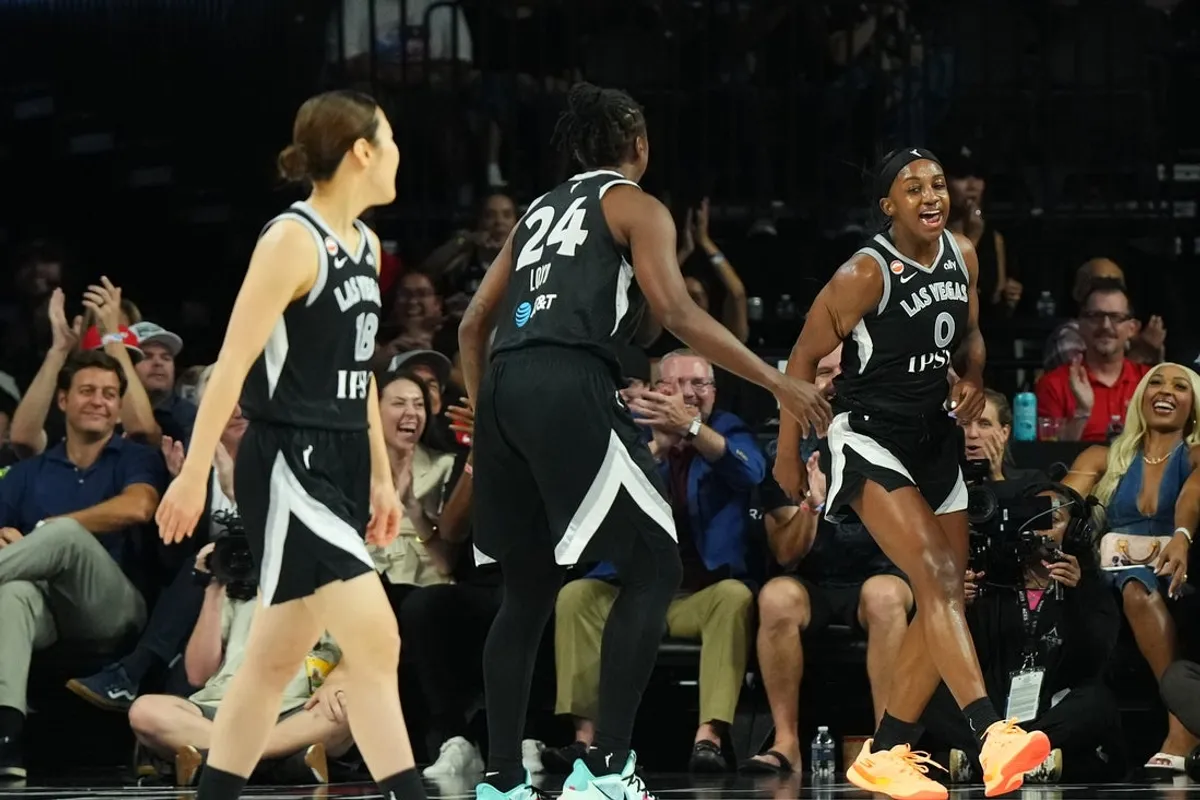
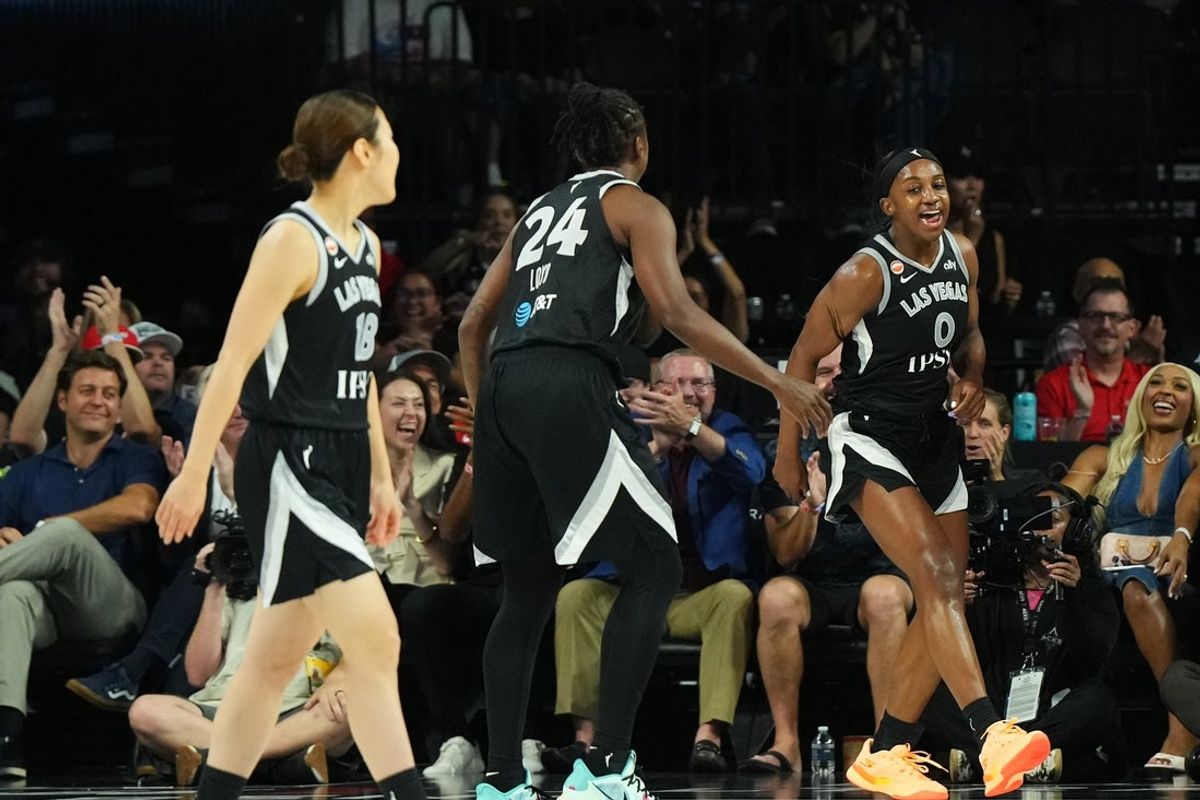
Aug 13, 2026; Las Vegas, Nevada, USA; Las Vegas Aces guard Jackie Young (0) reacts to scoring against the Washington Mystics in the first quarter of their game at Michelob Ultra Arena. Mandatory Credit: Candice Ward-Imagn Images
Jackie Young pumped in a season-high 32 points with a stellar start and a clutch late-game stretch as the Las Vegas Aces fended off visiting Washington for an 83-76 victory on Thursday, topping the Mystics for the second time in three nights.
With the result, Las Vegas (24-11) clinched a playoff berth for the eighth consecutive season. The defending champion Aces are aiming for their fourth title in five years.
Young made 10 of 14 shots, including 5 of 8 from 3-point range, while reaching the 30-point level for the first time this season.
WNBA scoring leader A’ja Wilson added 15 points despite 5-for-14 shooting from the field for Las Vegas. Reserve Jewell Loyd provided 13 points, a total boosted by three 3-pointers.
The Aces outscored Washington 25-8 on free throws.
Advertisement
Shakira Austin led the Mystics (19-14) with a season-best 29 points, hitting 12 of 20 shots. Sonia Citron tacked on 17 points and eight assists, but no other member of the team had more than five points.
The rematch was a tussle after the Aces prevailed 86-76 on Tuesday night, also in Las Vegas.
Austin left the Thursday game in the third quarter due to a potential head injury, but she was back on the floor in the fourth quarter.
Advertisement
Washington also navigated foul trouble for Kiki Iriafen, who had five fouls before the end of the third quarter.
The Mystics, who trailed by 10 points in the third quarter, pulled even at 62-62 on Austin’s driving layup early in the fourth. Young then produced a 3-pointer, two free throws after she was fouled on a 3-point attempt and a layup as Las Vegas built a 69-64 edge with 5:05 to play.
Young kept it going with two more foul shots and then another 3-pointer, extending the lead to 74-64 with 4:18 remaining.
Earlier, Young racked up 10 points as the Aces raced to a 14-2 lead in the first five minutes.
Advertisement
The Mystics threatened to come all the way back in the second quarter before trailing 38-32 at halftime.
Washington took a brief two-point edge, its first lead of the game, with 3:07 left in the third quarter before the Aces responded and held a 58-55 advantage going to the final period.
Team-mates and friends from GB’s gymnastics squad reveal their unfiltered truths, as they take on BBC Sport’s ‘Honesty Cards’, ahead of the 2026 European Gymnastics Championships in Croatia.
India’s Ravindra Jadeja, front left, and Manav Suthar (PTI Photo)
TimesofIndia.com in Galle: In times when variation, mystery and darts have become the survival norm, Manav Suthar is a throwback to an era gone by. The beats and drops of techno music have captured the imagination around the world, but Suthar continues to be the classic which never gets old – come for the tone, enjoy the verse and stay for the ending. The ease with which he stands on top of the bowling mark, the grace with which he approaches the crease and the effortless magic of his wrist make him a rare breed.‘Kalai mai jaadu hai, alag ball chalta hai iske haath se (He has magic in his wrists. The ball spins viciously from his hand),’ has been the unanimous observation of those who have seen him climb up the ladder in the last few years. Selectors were convinced at first sight, and since then his progression has been gradual, aiming not only to prepare for life after Ravindra Jadeja but also to secure an all-weather finger spinner.As someone who made the great Bishan Singh Bedi take note of his classical left-arm spin, Maninder Singh’s eyes light up when he talks about Suthar and his craft. It is as if the former India cricketer is playing his own visuals in the backdrop while explaining the nuances of left-arm spin and the attributes which set the youngster apart.“The first thing I notice in a spinner is how the ball comes out of the hand, and in his case, it comes out beautifully. His seam position is excellent. As they say, the seam should point towards first or second slip, and that’s exactly what I saw. I watched him in the Test match [vs Afghanistan] and even in a couple of IPL games. I don’t think he completed his full quota of overs in those matches, but even then I felt he was a delight to watch.“He has a beautiful future ahead. I believe he is going to play for India for a long time because I have not seen a classical left-arm spinner like him in a very long time,” explains Maninder, one of the finest of his era.“His run-up is simple, his action is simple, and the release of the ball from his hand is beautiful. When a spinner releases the ball like that, it tells you he has put in countless hours in the nets. That hard work builds character, and you can see it when he bowls in a match,” he adds.
India’s Manav Suthar (PTI Photo/Atul Yadav)
‘Revs on the ball’ was a phrase which went out of currency with the advent of shorter formats and tweakers opting for darts over craft. Suthar, however, came as a breath of fresh air, reintroducing guile, deception and beating the batter in the air. Right from his domestic cricket days through the subsequent India A fixtures, close-in fielders have always been impressed by the sound the ball makes when it leaves Suthar’s hand. The poetry isn’t interrupted by a late jerk or twitch, and it all just flows like a smooth brush stroke on a canvas.“I have heard from fielders standing at silly point and short leg that they can actually hear the sound when the ball leaves his hand. That comes from the revolutions he imparts on the ball. When I say the ball comes beautifully out of his hand, it is because of those revolutions. His run-up, action and release all come together perfectly,” Maninder further explains.Not just in India, the ‘revs on the ball’ also made a lot of noise in England, where Suthar joined Warwickshire to get a taste of County cricket and bowl with a different cricket ball. Head coach Ian Westwood was very pleased with his signing. Even though Suthar played just two games, they can’t wait to have him back for more fixtures.
India’s Rishabh Pant, left, talks to Manav Suthar (AP Photo)
“He has all the ingredients to succeed in a competitive set-up like India’s. The ball leaves very nicely from his hand, and the revolutions he imparts make him the kind of spinner who will succeed in every condition. He is a very smart operator. We only had him for a couple of games but he was well liked within the group,” says Westwood.Days after making his Test debut against Afghanistan, Suthar boarded the long flight and turned up for the fixture against Yorkshire. The turnaround time between the two games was just three days, but it did not affect how he operated in the middle. The game against Afghanistan ended in Mullanpur on June 8, and Suthar took the field for Warwickshire in Scarborough on June 12.“I remember the turnaround time between his international assignment and County game was very short, but he arrived ready and made an impact. Apart from his bowling, Suthar made useful contributions lower down the order, which makes him an asset for any side. Bowling in England, with different conditions and a different ball helps a spinner’s overall development and will hold him in good stead for his international assignments,” adds Westwood.
Advertisement
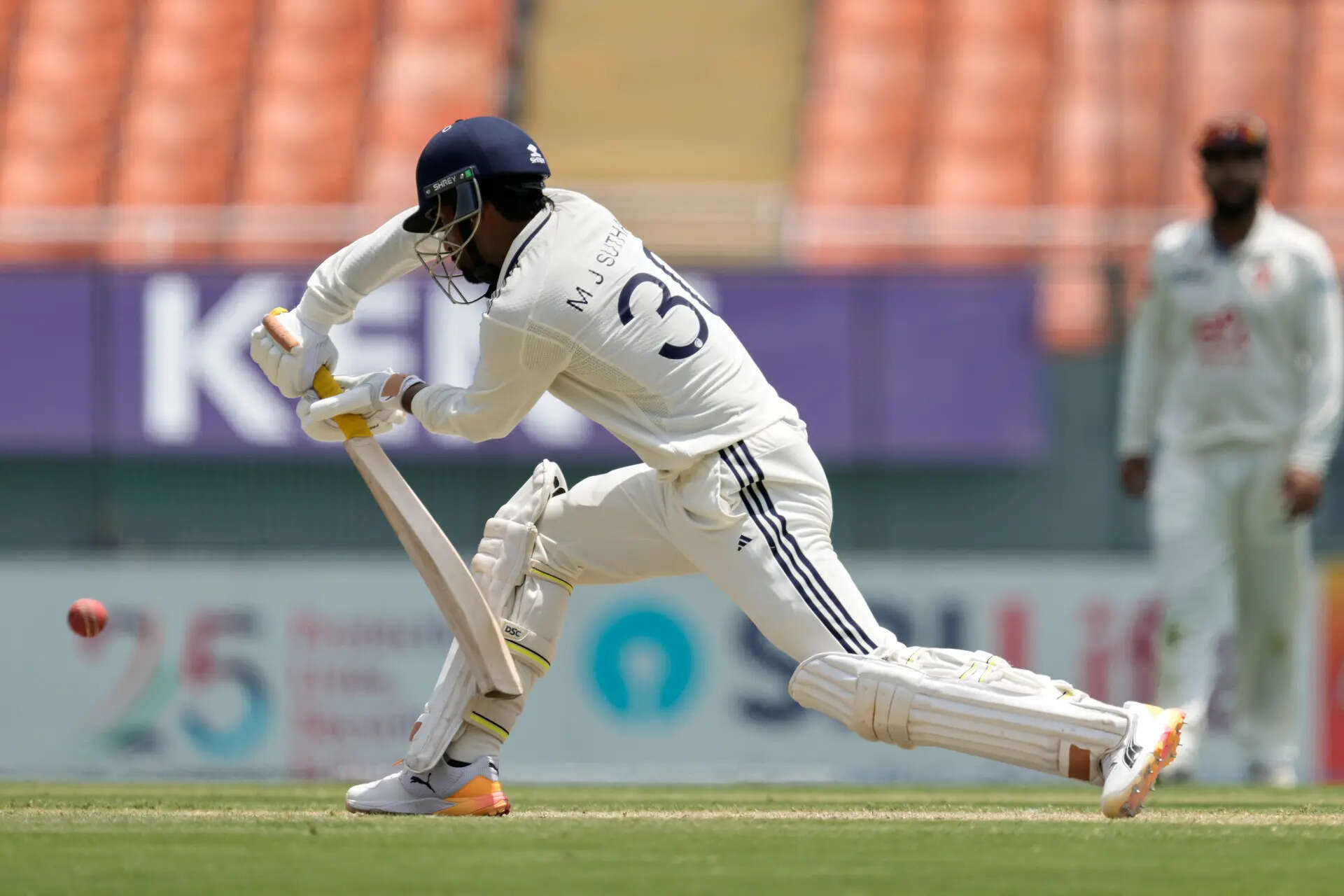
India’s Manav Suthar bats (AP Photo)
The coaches who have worked closely with Suthar at the BCCI Centre of Excellence (CoE) have been very appreciative of his work ethic ever since VVS Laxman had asked a former cricketer to groom the left-armer. After minute technical adjustments, such as shortening the delivery stride, he was ready for the ‘A’ challenge and responded emphatically.Preparation has always been a focus for the 24-year-old, with no compromise on volume. The coaches assert that this work ethic helps him seamlessly make the adjustments and be battle-ready whenever opportunity comes his way.
Those revolutions create drift because the ball cuts through the air. That drift will always work to his advantage. He is someone who can take wickets on any kind of surface. He doesn’t need a turning pitch.
Maninder Singh
Advertisement
Well before he left for Sri Lanka, Suthar visited the CoE to work on other finer nuances of spin bowling and returned with a pro tip. The wind in Galle can significantly affect how a spinner operates.“Use the breeze to your advantage. Whatever angle you bowl from, make sure the ball finishes on the stumps. Learn to use the drift according to the wind,” was the advice he received before packing for the island nation.Maninder further explains how the revs will help create drift, and if he can master that art and use the wind to his advantage, Suthar will remove the pitch from the equation and become a banker for the side in any conditions.“Those revolutions create drift because the ball cuts through the air. That drift will always work to his advantage. As I said earlier, he is someone who can take wickets on any kind of surface. He doesn’t need a turning pitch. Whether it is at home or overseas, he has the ability to pick up wickets. In the future, if India plays with only one spinner overseas, I believe he has the potential to become that bowler,” says Maninder.Since arriving in Colombo in the first week of August, Suthar has looked very impressive in the net sessions, warm-up fixtures and the session in Galle. The magic in his wrist has even forced the think tank to consider fielding three spinners – even if all of them release from the hand.That’s a rare instance in cricket, but so is Suthar. In a world of techno, he continues to make batters dance to classical tunes.
The B.C. Lions continued to dig themselves out of an early-season hole with a third straight win Thursday.
The Lions, who lost three straight to start the season, held off the Calgary Stampeders 30-26 to get to a record of 4-5 in the CFL’s West Division.
“We’re trending upwards, for sure,” Lions quarterback Nathan Rourke said. “We’ve got lots of things to clean up, which is a good thing. We haven’t peaked quite yet.”
The Stampeders (4-6) lost a fourth game this season by four points or less.
Advertisement
Quarterback Vernon Adams Jr. and league-leading rusher Dedrick Mills both left the game in the fourth quarter with injuries and didn’t return.
“Both are going to be like head injuries,” Stampeders head coach and general manager Dave Dickenson said. “Those can last a long time. You don’t know when they’re going to be healthy, but for all of us, we just want to rally and find a way to win a game, a close game.”
Calgary threatened from B.C.’s 10-yard line with half a minute to play, but a T.J. Lee interception on a Josh Love throw sealed the victory for the visitors.
Rourke, who suited up for second game since missing almost three because of an injury in his non-throwing arm, rushed for a touchdown and threw two more to Keon Hatcher Sr.
Advertisement
The league’s Most Outstanding Player in 2025 amassed 301 passing yards on the night and was intercepted once.
Rourke reached 100 career touchdown passes to become the second Canadian quarterback to do so in the CFL after Russ Jackson (239).
The Lions were minus-1 in rushing after the first quarter, but finished with 152 yards on the ground, including Zander Horvath’s rushing touchdown for his team-leading eighth.
“The defence keeps us in that game in that first half,” Lions head coach Buck Pierce said. “We were able to stick to our game plan, mix some things up in the second half and still be able to run the football.
Advertisement
“To be able to run the football effectively you’ve got to do it multiple times. We popped some big ones in the second half and we were able to generate some momentum.”
Sean Whyte kicked a field goal from 45 yards and three convert points for the Lions, whose next opponent is the Saskatchewan Roughriders (6-2) on Aug. 23.
Erik Brooks caught a touchdown pass and Quincy Vaughn rushed for his eighth major for the Stampeders, who headed into a bye week.
Damien Alford caught a two-point convert in front of an announced 17,076 at McMahon Stadium.
Advertisement
Jude McAtamney kicked field goals from 55, 13, 29 and 44 yards, but missed a late try from 39 yards out.
The Lions led 23-18 early in the fourth quarter when Adams, who spent parts of three seasons with the Lions from 2022 to 2024, had his head slammed into the turf when he was tackled on a six-yard carry. He walked to the medical tent on the sidelines, but didn’t return to the game.
“You never like to see anyone hurt, whether it’s a quarterback or any other position,” said Rourke. “You want to be able to play against the best. To me, he’s playing at the highest level right now.
“You hate to see someone go down, especially someone that you know. I wish him nothing but the best in his recovery and hopefully, it’s nothing serious.”
Advertisement
Calgary led 18-13 at halftime, but poor red-zone play hurt them early as they settled for field goals from inside of 20 yards twice in the first quarter.
With Love drawing in for Adams, the Stampeders pushed back with Vaughn’s go-ahead, short-yardage touchdown and Alford’s two-point conversion for a 26-23 lead with just over three minutes to play.
But Calgary wasted a recovered fumble on B.C.’s 30-yard line on the subsequent kickoff. The Stampeders didn’t convert it into a touchdown and McAtamney missed from 39 yards out.
Rourke’s second TD throw to Hatcher and Lee’s defensive heroics kept the Lions in the win column.
Advertisement
“We’re just trusting in each other and trusting in our process,” Rourke said. “There’s only so much you can control so you have to trust that the other unit is going to be able to do their job.
“Offensively we knew that the only thing that was stopping us from moving the ball was us. We knew if we had the right opportunity, we had enough time we could go down and score.”



































































You must be logged in to post a comment Login