
Business
Royal Parks gardeners vote to strike over 70p an hour pay rise


Gardeners at The Royal Parks in London have voted to strike in a dispute over pay, their union has said.
The workers, who are employed by sub-contractor Idverde, will strike over a proposed pay rise of 70p an hour for skilled gardeners and team leaders, which GMB union said was “an insult”.
There are eight Royal Parks in London; Bushy Park, Green Park, Greenwich Park, Hyde Park, Kensington Gardens, Regent’s Park-Primrose Hill, Richmond Park and St James’s Park.
A Royal Parks spokesperson said pay was a matter for Idverde, adding: “We recognise that this is a matter of concern for those involved and hope that a constructive resolution can be reached.” Idverde has been contacted for comment.
Skilled gardeners and team leaders at The Royal Parks are currently paid 55p an hour above the London Living Wage, external, currently set at £14.80, the union said.
GMB accused contractor Idverde of failing to recognise and value the workers’ skills and experience, and of treating the London Living Wage as a maximum rather than a minimum.
Anna Lee, its regional organiser, said: “Our members create and maintain these amazing spaces and to be offered 70p [extra per hour] is just an insult.
“They are skilled, experienced professionals and they know what their labour is worth.
“We’re calling on Idverde to get back round the table and offer our members a fair pay deal.”
The voting recieved a 75% turnout and 95% voted in favour of strike action.
Listen to the best of BBC Radio London on Sounds and follow BBC London on Facebook, external, X, external and Instagram, external. Send your story ideas to hello.bbclondon@bbc.co.uk, external


Why Most Research Peptide Companies Can’t Scale Their Advertising (And How the Right Strategy Changes Everything)
If you’re selling research peptides online, you’ve probably experienced it before.
Your ad gets approved… then rejected.
Your account gets flagged without warning.
A campaign you’ve been running for weeks suddenly stops delivering.
Or worse—you’ve spent thousands building a brand only to discover that getting traffic is far more difficult than creating a great product.
If any of that sounds familiar, you’re not alone.
Research peptide companies operate in one of the most challenging advertising environments on the internet. Every major advertising platform has policies surrounding healthcare, pharmaceuticals, laboratory products, and scientific claims. Automated review systems continue evolving, and advertisers often encounter inconsistent review outcomes or additional scrutiny.
The companies that grow consistently aren’t necessarily the ones with the biggest budgets.
They’re the ones that understand how to build compliant, trustworthy brands while developing diversified marketing strategies that don’t rely on a single traffic source.
At Blackhat Strategy, we’ve spent years helping businesses in highly regulated and restricted industries build scalable customer acquisition systems. Research peptides are one of the most complex categories we work with—and one of the most rewarding when approached strategically.
If you’re tired of wondering why your advertising isn’t working, this guide will walk you through the landscape, the common pitfalls, and the strategies successful brands use to grow.
Table of Contents
- Why Research Peptide Advertising Is Different
- Why Ads Get Rejected So Often
- The Biggest Mistakes Peptide Brands Make
- Building a Brand Platforms Can Trust
- Creating High-Converting Creative
- Landing Pages That Support Better Outcomes
- Why SEO Is Your Secret Weapon
- Email Marketing Is More Valuable Than Ever
- Scaling Without Depending on One Traffic Source
- Why Specialized Agencies Matter
- Frequently Asked Questions
- Final Thoughts
Why Research Peptide Advertising Is Different
Unlike traditional ecommerce brands, research peptide companies operate in a category that receives heightened attention from advertising platforms due to the nature of the products involved.
Review systems often examine not only the advertisement itself, but also factors such as:
- Website content
- Product descriptions
- Images
- Claims
- Business transparency
- Landing page experience
- Overall brand presentation
Even companies with legitimate business practices can find themselves navigating repeated reviews or changing policy interpretations.
That means success isn’t simply about writing a better headline.
It’s about creating an entire advertising ecosystem that demonstrates professionalism, credibility, and consistency.
Why Research Peptide Ads Get Rejected So Often
One of the biggest misconceptions is that ad disapprovals happen only because of a single word or image.
In reality, advertising platforms evaluate many signals together.
Some common reasons campaigns may face additional review include:
Health-Related Language
References that imply medical outcomes, treatment, prevention, or other health claims can trigger policy reviews.
Landing Page Issues
The destination page is often evaluated alongside the ad itself. Clarity, transparency, and user experience all matter.
Inconsistent Messaging
Differences between the ad and the landing page can create friction during review.
Business Trust Signals
Clear contact information, professional branding, customer service information, and transparent business details all contribute to overall credibility.
The Hidden Cost of Constant Ad Problems
Most business owners think the biggest cost is losing one campaign.
It’s much larger than that.
Every delayed launch means:
- Lost revenue
- Higher customer acquisition costs
- Delayed product releases
- Reduced momentum
- More time spent troubleshooting instead of growing
For businesses planning aggressive growth, advertising interruptions can have a significant impact on long-term performance.
The Biggest Mistakes Research Peptide Brands Make
Mistake #1: Treating Advertising Like a Quick Fix
Paid advertising works best when it’s part of a broader marketing strategy.
The strongest brands combine advertising with:
- Search engine optimization
- Educational content
- Email marketing
- Customer retention
- Community building
When these channels work together, businesses are less vulnerable to changes affecting any one platform.
Mistake #2: Ignoring Brand Authority
Consumers purchasing research products often spend considerable time evaluating suppliers.
Professional branding matters.
That includes:
- Consistent visual identity
- Clear educational resources
- Transparent policies
- Strong customer support
- Easy-to-navigate website
Trust compounds over time.
Mistake #3: Expecting Immediate Scale
Even well-prepared campaigns benefit from testing, optimization, and refinement.
Successful growth is typically built through:
- Creative testing
- Audience refinement
- Landing page improvements
- Continuous optimization
- Long-term measurement
Patience and iteration often outperform constant reinvention.
Building a Brand That Inspires Confidence
The strongest-performing research peptide companies have one thing in common.
They don’t look like companies chasing quick sales.
They look like established businesses invested in educating their audience and providing a professional customer experience.
Ask yourself:
- Does your website immediately communicate credibility?
- Is your branding consistent?
- Are visitors able to find important information easily?
- Does your educational content answer real customer questions?
These details influence customer trust—and can also support stronger marketing performance overall.
Creative That Connects With Your Audience
Many peptide companies focus almost exclusively on product images.
But effective creative often goes beyond showcasing the product itself.
Educational visuals, professional branding, and clear messaging can all help communicate value without relying solely on product photography.
Great creative also tells a story.
Why should someone trust your company?
What makes your customer experience different?
How do you educate your audience?
These are the questions strong creative helps answer.
Your Website Is Part of Your Marketing
Many advertisers spend weeks perfecting ad copy while overlooking the destination page.
Your website should make it easy for visitors to:
- Understand your company
- Learn about your products
- Find policies
- Contact your team
- Continue exploring educational resources
A polished, informative website supports customer confidence long before a purchase decision is made.
Why SEO Might Be Your Biggest Growth Opportunity
Advertising is important.
But search engine optimization creates an asset that continues generating traffic over time.
Research peptide customers frequently search for:
- Product information
- Laboratory resources
- Educational articles
- Industry comparisons
- Brand reviews
- Scientific topics
By publishing high-quality content consistently, companies can build long-term visibility that complements paid marketing efforts.
SEO also helps diversify traffic, reducing dependence on any single acquisition channel.
Email Marketing: The Channel You Actually Own
Advertising platforms change.
Algorithms evolve.
Policies are updated.
Your email list remains one of the few marketing assets you truly control.
Every visitor who joins your email list becomes an opportunity for future education, announcements, and customer retention.
Successful peptide companies often treat email as a long-term relationship channel—not simply a promotional tool.
Why Experience Matters
Restricted industries require a different mindset.
Many traditional agencies have experience marketing clothing brands, furniture stores, or local restaurants.
Research peptides present a different set of challenges.
Understanding complex industries means understanding:
- Review processes
- Customer expectations
- Compliance considerations
- Creative strategy
- Long-term growth planning
- Diversified acquisition strategies
That’s why many research peptide brands choose to work with agencies that specialize in navigating these environments.
Why More Research Peptide Companies Are Choosing Blackhat Strategy
At Blackhat Strategy, restricted advertising isn’t a side service.
It’s what we’re known for.
Our team works with businesses across complex industries that require thoughtful strategy, strong creative, and deep experience navigating advertising challenges.
We understand that success isn’t about chasing shortcuts.
It’s about building scalable systems that combine:
- Paid advertising
- SEO
- Email marketing
- Landing page optimization
- Creative strategy
- Conversion optimization
- Long-term brand authority
Our goal is simple:
Help businesses spend less time fighting marketing obstacles and more time growing.
Frequently Asked Questions
Can research peptide companies advertise online?
Many platforms have policies governing health-related products and scientific content. Requirements vary by platform, and advertisers should ensure their campaigns align with applicable policies and local laws.
Why are my peptide ads getting rejected?
Review outcomes can depend on many factors, including ad content, landing pages, business information, and platform policies.
Is SEO important for peptide companies?
Absolutely.
SEO helps companies build sustainable visibility through educational content, product information, and industry resources.
Should I rely only on paid advertising?
No.
The strongest businesses typically combine paid advertising with SEO, email marketing, content creation, and customer retention strategies.
Why work with a specialized agency?
Agencies experienced with complex industries often have a deeper understanding of the unique marketing challenges those businesses face and can help develop strategies tailored to those environments.
Final Thoughts
Research peptide advertising is challenging—but challenge doesn’t mean impossibility.
The brands that succeed are rarely the ones chasing the latest loophole or shortcut. They’re the companies investing in trust, education, strong branding, and a diversified marketing strategy that can adapt as platforms evolve.
If you’re building a research peptide company with long-term ambitions, your marketing should be designed for the same horizon.
Blackhat Strategy has become a trusted partner for businesses operating in complex advertising environments because we understand that sustainable growth comes from expertise, preparation, and consistent execution—not quick fixes.
Whether you’re launching your first campaign or looking to strengthen your existing marketing strategy, building a resilient foundation today will put your brand in a stronger position tomorrow.
Business
ImmuCell Corporation 2026 Q2 – Results – Earnings Call Presentation (NASDAQ:ICCC) 2026-08-14


Seeking Alpha’s transcripts team is responsible for the development of all of our transcript-related projects. We currently publish thousands of quarterly earnings calls per quarter on our site and are continuing to grow and expand our coverage. The purpose of this profile is to allow us to share with our readers new transcript-related developments. Thanks, SA Transcripts Team

When researching the UK property market, it is easy to be drawn in by eye-catching rental yields, glossy marketing brochures or promises of future growth. While these factors can form part of an investment case, they rarely tell the whole story.
Strong property investments are built on a combination of factors rather than a single headline figure. A property with an attractive purchase price may suffer from weak tenant demand, while one with a lower headline yield could deliver more consistent long-term returns thanks to its location and lower running costs.
For anyone seeking investment property advice, the key is to evaluate every opportunity objectively. Whether your goal is generating rental income, achieving long-term capital growth or balancing both, a thorough due diligence process will help separate genuinely strong investments from those that rely on marketing claims rather than market fundamentals.
Understand Who the Property Is For
Every successful investment property starts with one question: who is most likely to rent it? Without consistent tenant demand, even an attractively priced property can struggle to generate reliable income. Investors should identify the property’s target tenant before assessing potential returns.
Depending on the location, demand may come from:
- Young professionals working in nearby business districts
- University students
- Families looking for long-term accommodation
- Healthcare workers
- Corporate tenants
- People relocating for employment
The strongest investments typically serve an established tenant market rather than relying on speculative future demand. It is also worth considering whether the property’s size, layout and features align with local preferences. A city-centre apartment, for instance, may appeal to professionals but be less suitable in an area where family housing is in greater demand.
Understanding the tenant profile helps investors judge whether rental demand is likely to remain sustainable over time.
Assess the Strength of the Location
Location remains one of the most influential factors in UK property investment, but evaluating a location involves much more than looking at a postcode. A strong investment location usually combines several positive characteristics that support both rental demand and long-term desirability.
Important considerations include:
Employment Opportunities
Areas with diverse employment sectors often generate more stable demand for rental accommodation than locations dependent on a single major employer.
Transport Connections
Reliable public transport, road networks and commuter links can make properties more attractive to tenants while also supporting future resale demand.
Universities and Education
Higher education institutions often contribute to local housing demand, not only through students but also through graduates who remain in the area after completing their studies.
Local Amenities
Access to shops, healthcare, leisure facilities and green spaces can influence both tenant satisfaction and buyer appeal.
Regeneration
Investment in infrastructure and public spaces may strengthen a local market over time. That said, regeneration should support an investment decision rather than be the sole reason for buying.
No single factor guarantees future performance, but locations with multiple positive fundamentals generally provide a stronger foundation than those relying on one anticipated change.
Buying at the Right Price Matters
A property can possess excellent long-term prospects yet still represent poor value if purchased at the wrong price.
Overpaying affects almost every aspect of investment performance. A higher purchase price can reduce rental yield, increase borrowing requirements and limit future capital appreciation if local values do not grow in line with expectations.
Before deciding to buy investment property, investors should compare:
- Recent sale prices for similar homes
- Local market trends
- Property condition
- Features and specification
- Asking price relative to comparable properties
Independent market evidence is often more valuable than promotional pricing claims. Patience can also be an advantage. Purchasing the right property at a fair market price is generally more important than rushing to secure an investment.
Look Beyond Headline Rental Yield
Rental yield is often the first figure highlighted in marketing materials, but it should never be assessed in isolation. Gross yield simply measures annual rental income as a percentage of the purchase price. While useful for initial comparisons, understanding what constitutes a good rental yield in the UK is essential because gross yield does not reflect the actual profitability of an investment.
Net yield provides a more realistic picture because it accounts for ongoing expenses that directly affect cash flow. These costs may include:
- Letting and management fees
- Service charges
- Maintenance and repairs
- Insurance
- Mortgage interest
- Ground rent where applicable
- Periods without tenants
- Compliance and safety requirements
Two properties with identical gross yields may produce significantly different net returns once these costs are taken into account. Investors focused on income should therefore prioritise sustainable net performance over headline percentages.
Keep Running Costs Under Control
Every investment property involves ongoing expenditure. Some costs are predictable, while others vary depending on the property’s age, management structure and location.
Common expenses include:
- Routine maintenance
- Emergency repairs
- Building insurance
- Landlord licensing where required
- Safety inspections
- Property management
- Service charges for apartments
- Periodic refurbishment
High service charges deserve particular attention. Modern developments with extensive communal facilities can appear attractive to tenants but may reduce overall profitability if ongoing fees are substantial.
Understanding the full cost of ownership enables investors to produce more realistic financial forecasts.
Evaluate the Quality of the Property
A property’s physical quality influences both tenant satisfaction and future resale prospects. Rather than focusing solely on appearance, investors should assess practical factors that contribute to long-term performance.
Build Quality
Well-constructed properties generally require fewer major repairs and may remain attractive to buyers for longer.
Practical Layout
Properties with functional floorplans often appeal to a wider tenant audience than those with unusual or inefficient layouts.
Energy Efficiency
Improved energy performance can reduce utility costs for tenants while supporting compliance with evolving environmental standards.
Developer Reputation
For new-build properties, researching the developer’s track record can provide insight into construction quality, after-sales support and long-term maintenance standards.
Ultimately, a property should meet the expectations of its intended tenant market rather than simply offering attractive finishes.
Think About Your Exit Strategy Early
Although many investors purchase property with a long-term outlook, every investment should include consideration of how it may eventually be sold.
Resale potential is influenced by several factors, including:
- Local housing demand
- Market liquidity
- Property condition
- Buyer demographics
- Mortgage availability
- Competing supply
Properties that appeal to both owner-occupiers and investors often benefit from a broader pool of potential buyers. Considering future resale demand from the outset encourages more balanced investment decisions and reduces the risk of purchasing an asset with limited market appeal.
Warning Signs of a Weak Investment
Recognising potential problems is just as important as identifying attractive opportunities. While no investment is entirely without risk, certain warning signs deserve closer investigation.
Be cautious if you encounter:
- Rental yields that appear unusually high without supporting market evidence
- Limited proof of local tenant demand
- Locations with weak employment fundamentals
- Significant oversupply of similar properties
- Service charges that materially reduce net income
- Hidden or unclear ownership costs
- Purchase prices that exceed comparable local sales
- Investment cases based primarily on speculative future regeneration
These issues do not necessarily mean a property should be avoided, but they should prompt additional research before proceeding.
Investors comparing different investment property opportunities may also find it useful to combine independent market research with trusted sources of property investment guidance to build a broader understanding of market conditions and due diligence considerations.
A Practical Checklist Before You Invest
Before making a purchase, it can be helpful to review every property against the same set of criteria:
- Is there proven tenant demand?
- Does the location have strong economic fundamentals?
- Is the purchase price supported by comparable sales?
- Have net returns been calculated after all costs?
- Are running costs realistic and manageable?
- Is the property well built and suitable for its target market?
- Does it offer reasonable resale potential?
- Have the key risks been identified and assessed?
Using a consistent framework makes it easier to compare opportunities objectively and reduces the likelihood of making decisions based on marketing materials alone.
Conclusion
There is no single characteristic that defines a strong investment property. Instead, successful investments are supported by a combination of sound location fundamentals, sustainable tenant demand, realistic pricing, manageable costs and a clear understanding of both opportunity and risk.
Different investors will naturally prioritise different outcomes. Some may focus on generating reliable rental income, others on long-term capital growth, while many seek a balance between the two. Whatever the objective, applying a disciplined due diligence process is far more valuable than relying on headline yields or promotional claims.
Ultimately, the strongest investment property opportunities in the UK are those backed by evidence rather than assumptions. By taking a structured approach to evaluating every property, investors can make more informed decisions and build portfolios that are better positioned to perform over the long term.

Selena Gomez is being sued by five investors in her mental health company, Wondermind Global.
The Hollywood actress and pop star founded the company with her mother five years ago, but now investors are claiming her ‘abject dereliction of duties’ has left the company in a ‘state of financial difficulty’.
The lawsuit will try to recover $1.2m (£890,00) it claims it was invested as well as costs and damages.
The BBC has contacted Wondermind and Gomez’s representatives for comment.
Business
Elon Musk’s Tesla Pay Hit 2.5 Million Times Median Worker, Equaling Annual Wage Every 4.23 Seconds

Elon Musk‘s 2025 compensation package at Tesla reached a reported value of $158.3 billion, more than 2.5 million times the median pay of a Tesla employee, according to an annual analysis by the AFL-CIO released this week.
The labor federation’s Executive Paywatch report calculated the ratio at 2,522,203 to 1. That figure meant Musk’s package equaled the median Tesla worker’s annual earnings every 4.23 seconds. The median employee compensation used in the calculation was $57,243.
The package, based on the grant-date fair value of restricted stock awards, was 14 times larger than the combined total compensation of all other S&P 500 chief executives, the report said. Including Musk’s award, the average S&P 500 CEO compensation rose to $340.1 million in 2025. Excluding it, the average still climbed 21 percent to $22.8 million from $18.9 million the prior year, the highest level since the AFL-CIO began tracking the data in the 1990s.
The average CEO-to-worker pay ratio across S&P 500 companies reached 5,387 to 1 when Musk’s package was included. Without it, the ratio stood at 312 to 1, up from 285 to 1 in 2024.
Brandon Rees, lead researcher for the AFL-CIO’s Executive Paywatch project, described the scale of the award as unprecedented. “Elon Musk’s gargantuan 2025 pay package at Tesla is unlike anything we have seen before,” he said. “Our economy is increasingly out of balance because billionaires like Elon Musk are taking a greater share of the economic pie while working people are struggling to make ends meet.”
Fred Redmond, the AFL-CIO’s secretary-treasurer, said the Tesla arrangement was already influencing other boards. Musk’s deal “changes the dynamic when other CEO compensation plans come up” and “boards use it as a reference,” he said in comments reported alongside the findings.
The compensation figure reflects accounting valuations of equity grants under Tesla’s 2025 CEO Performance Award and related awards, not cash paid out or shares vested during the year. Tesla has previously noted in regulatory filings that such reported totals can differ significantly from any value ultimately realized, as awards depend on meeting multi-year performance milestones including market capitalization, operational targets and product goals. In some prior periods, realized compensation for Musk has been reported as zero when awards remained unvested or were subject to legal and other adjustments.
Tesla’s median employee pay and the resulting ratio are calculated under Securities and Exchange Commission rules that require public companies to disclose the relationship between CEO compensation and that of a median worker. The company has said it remains committed to competitive pay for employees. Manufacturing was identified in the AFL-CIO report as the sector with the highest average CEO-to-worker ratio, driven in large part by the Tesla figures.
The report placed the Tesla numbers in a broader context of rising executive pay. A majority of S&P 500 CEOs earned more in a single day than the median U.S. worker made in a full year, according to the analysis. The federation also highlighted wider economic pressures, including limited retirement savings and difficulty covering unexpected expenses among many American households.
Musk’s package has drawn attention in part because of its size relative to Tesla’s workforce and to other corporate pay practices. Shareholders previously approved the structure of the performance-based awards, which are designed to vest only if ambitious financial and operational targets are met over a multi-year period. The awards have been the subject of ongoing legal and governance discussions, including court proceedings related to earlier compensation arrangements.
Analysts and labor groups have long debated the implications of large equity packages for alignment of interests between executives and shareholders, as well as for internal pay equity. Supporters of performance-based awards argue they incentivize long-term value creation and retain leadership during periods of high growth and risk. Critics, including the AFL-CIO, contend that such extreme disparities contribute to broader economic imbalance and set benchmarks that influence compensation decisions elsewhere.
The AFL-CIO has tracked executive pay trends for decades. This year’s findings show that even after removing the Tesla outlier, average CEO compensation and the ratio to worker pay continued to rise. The report is expected to fuel continued discussion among investors, policymakers and labor advocates about disclosure rules, say-on-pay votes and the structure of equity incentives at major public companies.
Tesla employs more than 100,000 people worldwide, with a substantial portion of its workforce outside the United States. Median pay figures under SEC methodology include a range of roles and locations and are not equivalent to average wages at specific factories or in particular job categories. The company has reported competitive hourly rates at some manufacturing sites in recent disclosures.
As of the report’s release, the accounting valuation of Musk’s 2025 awards stood as the largest single-year CEO compensation figure examined by the AFL-CIO. Whether and when any portion of the awards converts into realized value will depend on Tesla’s future performance against the specified milestones and on the final resolution of related legal and administrative matters.
The findings arrive amid ongoing public and investor scrutiny of executive compensation practices across the technology and automotive sectors. The AFL-CIO said the data underscore the need for continued attention to the distribution of economic gains between top executives and the broader workforce.

Tompkins Financial Isn't Cheap Enough For An Upgrade

For UK groups landing at GVA, securing a minibus hire at Geneva airport can often mean the difference between a cramped commute and a flexible mountain odyssey.
Standard car rentals typically fail to accommodate the specialized gear required for summer alpine sports, leaving travelers struggling with logistics in the arrivals hall before the journey even begins.
This guide explores how proper vehicle selection, navigating the unique dual-sector airport layout, and understanding UK licensing requirements can contribute to a seamless journey. Research suggests that preparing for these logistical elements of alpine travel helps reduce stress, allowing groups to focus entirely on their upcoming outdoor adventures.
Choosing a self-drive adventure over restrictive private transfers often provides the freedom needed to explore diverse landscapes at your own pace. This approach is particularly well-suited for a multi-hub itinerary, where groups might plan to visit both the shores of Lake Geneva and the high-altitude trails of Chamonix in a single trip.
Opting for a 9-seater car hire at Geneva airport allows travelers to transition smoothly between these distinct locations. R4Rental specializes in providing long-base vehicles designed specifically for mountain terrain, offering practical solutions that may help accommodate both large passenger groups and their extensive sporting gear comfortably.
Table of Contents
- The Gear Challenge: Why a 9-Seater Trumps an SUV
- The Mobility Factor: Navigating the French Sector vs. Swiss Sector
- Driving Dynamics: UK Licenses and Alpine Roads
- FAQ – Minibus Hire and Alpine Logistics
- Limitations and Considerations for Alpine Minibus Travel
- Conclusion
The Gear Challenge: Why a 9-Seater Trumps an SUV
While a large SUV might seem sufficient for a standard family holiday, a passenger van rental typically provides the specific floor length needed for mountain bike bags and hiking equipment without sacrificing passenger comfort.
For active groups of eight or nine people, the long-base advantage of a 9-seater minibus for hire is often essential for a successful trip. Having expensive gear secured safely inside the vehicle rather than strapped to external roof racks may reduce the risk of theft and weather damage.
Furthermore, keeping the weight distributed internally can contribute to improved driving stability on steep alpine gradients. When evaluating options for a passenger van rental against traditional utility vehicles, a 9-seater car hire at Geneva airport often demonstrates clear logistical advantages.
Exploring a range of long-wheel passenger minibuses can help groups find the right balance of interior space and road performance for their specific itinerary.
| Feature | Large SUV | LWB 9-Seater Minibus |
| Passenger Capacity | Up to 7 (often cramped) | Up to 9 (comfortable) |
| Luggage Space (with full seats) | Minimal | Extensive (accommodates gear) |
| Alpine Handling | Generally good | Well-suited for mountain roads |
| Cost per person | Often higher | Typically lower for large groups |
Managing Mountain Bikes and Oversized Luggage
Fitting eight adult passengers alongside eight hard-shell bike boxes requires careful logistical planning and the correct vehicle dimensions. An extra-long wheelbase minibus hire is often the most effective solution for summer sports enthusiasts, as it offers the extended cargo depth necessary for bulky downhill equipment.
This specific configuration helps ensure that neither passenger legroom nor driver visibility through the rear window is compromised by stacked luggage.
Comfort for 8-9 Passengers on Winding Passes
Maintaining high comfort levels during long drives through hot summer alpine passes is a critical consideration for overall group morale. Modern long-base vans typically feature dual-zone air conditioning and generous seating proportions, which can contribute to a significantly more pleasant journey.
Adequate spacing helps reduce physical fatigue on winding mountain roads, allowing everyone to arrive at the trailhead refreshed and ready for activity. The elevated seating position also provides passengers with better views of the surrounding peaks, enhancing the overall travel experience.
The Mobility Factor: Navigating the French Sector vs. Swiss Sector
Choosing the right pickup point at the terminal is critical, as arranging a minibus hire at Geneva airport from the French side often offers significant cost savings and easier access to French alpine resorts.
Geneva Airport (GVA) features a unique physical layout split into two distinct national zones, requiring travelers to decide their rental origin well in advance of their arrival. When comparing car rental in Switzerland at Geneva airport options against the French sector, logistics vary considerably regarding currency, included highway vignettes, and daily base rates.
Selecting a GVA airport car hire in the French sector pickup is often associated with smoother transitions for groups heading directly toward the Mont Blanc massif. To reach the French sector, arriving passengers must proceed to the check-in level, follow the specific signs for the French destination zone, and pass through a dedicated customs corridor before descending to the rental desks, which is typically a straightforward process for UK passport holders.
Why the French Side is Often Better for Alps-Bound Groups
Opting for a van hire at Geneva airport’s French side frequently provides tangible financial and logistical benefits for groups traveling into the Haute-Savoie region. These benefits often include lower base rental rates and more favorable tax structures compared to Swiss equivalents.
Insurance nuances also differ, and starting on the French side grants direct road access to the A40 motorway without the need to navigate through central Geneva’s urban traffic.
Another notable advantage of a van hire at Geneva airport’s French side is avoiding the mandatory Swiss motorway vignette, which is an unnecessary expense if your planned route does not require driving on Swiss highways.
The Multi-Hub Itinerary: From Lake Geneva to Annecy
Using a dedicated vehicle can enable groups to seamlessly visit multiple destinations, such as combining the relaxing shores of Lake Geneva with the rugged trails of Chamonix in a single, comprehensive trip.
A self-drive approach helps remove the strict scheduling constraints of public transport or private shuttles, making a multi-hub itinerary highly achievable and enjoyable. For instance, securing a minibus rental in Annecy or driving there directly from the airport allows travelers to experience diverse alpine environments on their own terms.
The ability to transport wet gear, muddy boots, and tired athletes directly from a remote trailhead back to your accommodation is a convenience that public transport simply cannot match.
Driving Dynamics: UK Licenses and Alpine Roads
Most UK travelers are pleasantly surprised to learn that a self-drive minibus hire for up to nine seats is perfectly legal to operate on a standard Category B license. Understanding the specific regulations around driving a 9-seater on a UK license can help alleviate anxiety for the designated group leader before the trip begins.
According to standard Category B license minibus rules, drivers may operate vehicles with a maximum authorized mass of up to 3.5 tonnes, a classification that covers the vast majority of modern passenger vans used by rental agencies.
Choosing a self-drive minibus hire can empower groups to share driving responsibilities, provided all drivers meet the rental company’s age and experience requirements.
Alpine Driving Tips for Large Vans
Navigating tight hairpins and steep gradients in a large vehicle requires a cautious, measured approach and an understanding of the vehicle’s dimensions. Utilizing engine braking by shifting into lower gears on long descents may help prevent brake overheating, which is a common issue on winding mountain passes.
Drivers should remain highly aware of their extended turning radius and utilize their side mirrors frequently when passing oncoming buses or cyclists. Summer weather in the Alps can be unpredictable, with sudden afternoon thunderstorms reducing visibility and altering road conditions rapidly.
Maintaining a safe following distance and ensuring the vehicle’s tires are properly inflated can contribute to better traction on wet tarmac. Additionally, researching parking options in small mountain villages ahead of time is advisable, as spaces designed for longer wheelbases can occasionally be limited.
Taking regular breaks at designated scenic pull-outs can also help maintain driver concentration during demanding stretches of alpine driving.
Securing a minibus hire at Geneva airport often facilitates the ultimate summer adventure by providing the space and flexibility large groups require. Key takeaways for a successful trip include choosing the French sector for potential cost savings, verifying that your standard license covers the vehicle, and prioritizing a long-base model to accommodate specialized gear.
The freedom of a self-drive van is widely considered unmatched for exploring the diverse landscapes of the French Alps, allowing travelers to dictate their own schedules and adjust plans based on local weather conditions.
R4Rental operates as a dedicated specialist for alpine group logistics, offering transportation solutions tailored to active travelers. Their fleet of new, long-base 9-seaters is specifically selected to meet the demanding needs of mountain bikers and hikers navigating steep terrain.
By choosing a reliable vehicle equipped for the mountains, groups can focus entirely on the trails ahead rather than worrying about transportation hurdles. Ready to explore the peaks with your group? Book Now to secure your modern 9-seater for the summer season.
FAQ – Minibus Hire and Alpine Logistics
Can I drive a 9 seater on a standard UK license?
Yes, you can drive a 9-seater, including the driver, on a standard UK Category B car license. This applies as long as the vehicle’s maximum authorized mass does not exceed 3.5 tonnes. Most modern 9-seater minibuses used for rental are designed to fall within this weight limit. Always check the specific vehicle weight if you plan to carry exceptionally heavy gear.
Is it cheaper to rent a car in Switzerland or France at Geneva Airport?
Generally, renting from the French sector of Geneva Airport is cheaper than the Swiss side. This is typically due to lower base rental rates and different tax structures in France. However, you must consider the cost of the Swiss motorway vignette if your route requires driving on Swiss highways. For groups heading directly into the French Alps, the French side is almost always the most cost-effective choice.
How much is a 9 seater hire at Geneva airport?
Prices for a minibus hire at Geneva airport typically range from £80 to £150 per day depending on seasonality. Summer peaks, such as July and August, often see higher demand and prices compared to the shoulder season. Booking a long-base vehicle with unlimited mileage can provide better overall value for multi-hub trips. Always check for zero excess insurance options to avoid high security deposits.
Can I take a rental van from Geneva to France?
Yes, most rental agencies at Geneva Airport allow cross-border travel between Switzerland and France. You should inform the rental company in advance to ensure all necessary insurance and roadside assistance covers both countries. Ensure the vehicle has the required safety equipment for both jurisdictions, such as high-visibility vests and warning triangles. Cross-border fees are rarely charged for this specific route, but always verify your contract.
What is the best van for 8 people and luggage?
The best van for 8 people with significant luggage is a long-wheelbase 9-seater like the Renault Trafic or Ford Transit Custom. These models offer an extended cargo area behind the third row of seats, which is essential for gear. Standard wheelbase vans often lack the depth required for large suitcases or sports equipment when all seats are occupied. Choosing a model with an automatic gearbox can also make alpine driving significantly more comfortable.


Operators are introducing seasonal additions to their menus.

Getty Images
If you followed hyperscalers’ earnings, you probably already knew that the neoclouds would repeat some version of “demand for compute is outstripping supply” in their earnings calls. And of course, they did. However, there were some useful nuggets in CoreWeave (
Business
Trump Administration Asks Supreme Court to Let White House Ballroom Construction Continue Amid Legal Fight

WASHINGTON — The Trump administration on Friday asked the Supreme Court to allow construction of a large new White House ballroom to proceed, escalating a legal battle over whether the president can undertake major changes to the executive mansion without explicit approval from Congress.
In an emergency filing, Solicitor General D. John Sauer requested that the justices put on hold a recent appeals court ruling that ordered a halt to above-ground work on the project. The administration argued the injunction is unlawful and that the ballroom forms part of an integrated security complex needed for national security.
“This case involves an extraordinary and unlawful injunction that will halt the ongoing construction of the integrated military complex, including a totally secure ballroom space, at the East Wing of the White House, which is vitally required by national security,” the Justice Department lawyers wrote.
The request comes one week after a three-judge panel of the U.S. Court of Appeals for the District of Columbia Circuit ruled 2-1 that the administration lacked authority to proceed without congressional authorization. The panel upheld a lower-court order from U.S. District Judge Richard Leon directing a stop to most above-ground construction while allowing underground work on security features, including a presidential bunker and related facilities, to continue.
“Whether or not a massive ballroom should be constructed is for Congress to decide and is not a matter for Executive self-help,” the majority wrote in the Aug. 7 decision. The appeals court paused its order for 14 days to give the administration time to seek Supreme Court review. Unless the high court intervenes, the halt on above-ground work is set to take effect around Aug. 21.
President Donald Trump had signaled the appeal immediately after the appeals court ruling. “We will be immediately appealing to the United States Supreme Court,” he wrote on Truth Social, describing the decision as “horrendous, politically motivated, and unlawful” and stating that “This unjust decision must be overturned by the Supreme Court in its entirety.”
The project involves replacing the demolished East Wing with an approximately 90,000-square-foot ballroom estimated to cost around $400 million, financed primarily through private donations. Construction of the underground elements has continued under prior court permissions, and the administration has said the overall project is substantially advanced, with a concrete-and-steel superstructure in place and crews working extended hours.
The National Trust for Historic Preservation filed the underlying lawsuit after the East Wing was torn down last year, arguing that major alterations to the White House require congressional approval, historic preservation reviews and other legal steps that were not completed. Lower courts have largely agreed that private funding does not exempt the project from the requirement for legislative authorization of significant changes to federal property.
The administration has framed the ballroom as essential for security, citing threats against the president and the need for a fully secure space integrated with underground protective features. It has maintained that stopping the work at this stage would leave an incomplete structure and create practical and safety problems. Judges have rejected the argument that national security concerns automatically override statutory limits on executive authority over the White House grounds.
The case raises broader questions about the balance of power between the president and Congress regarding the White House itself. Courts have described the president as a temporary occupant rather than the owner of the property, emphasizing that lasting changes require legislative involvement.
Supreme Court intervention on an emergency basis would determine whether construction of the above-ground portions can resume while the full legal challenge proceeds. The justices could grant a stay, deny the request, or take other steps that would shape the project’s timeline. The administration has asked for prompt action given the approaching effective date of the lower-court order.
Construction activity has been visible at the site in recent weeks, with equipment and progress documented in public images. The president has personally engaged with design details of the ballroom, which is intended to serve large events while incorporating enhanced security elements.
Opponents of the project contend that allowing unilateral construction sets a precedent that could enable future presidents to alter historic federal buildings without oversight. Supporters argue that the executive has long exercised authority over the White House complex and that security needs justify the current approach, particularly when no taxpayer funds are said to be required for the ballroom itself.
The Supreme Court has not indicated when it will rule on the emergency application. The matter arrives during the court’s summer recess, when emergency applications are typically handled by the justices or a designated justice before potential referral to the full court.
As the legal process continues, underground security-related work remains authorized under existing court orders. The outcome of the Supreme Court request will determine whether the visible above-ground construction of the ballroom can advance or must pause pending further proceedings and any eventual congressional action.
The dispute underscores ongoing tensions over the scope of presidential authority in managing the White House and the role of the courts in enforcing statutory requirements for major federal projects. Both sides have described the stakes as significant for the physical structure of the executive residence and for broader principles of separation of powers.

The Ultimate Guide to Research Peptide Advertising in 2026

Jordon Varnado delivers late in Meralco win over Ginebra

CZUR ET Max Review: I Scanned 5 Books to See If This $689 Scanner Is Worth It


-

 News Videos6 days ago
Can Astrology Help Find Gold and Silver Trends? A Financial Astrology Guide
-

 Business5 days ago
Datadog: Best Of Breed For Multiple Reasons
-

 Tech7 days ago
Rinn Pharma & Biopharma to join NordicPharmaTrain network
-

 Business6 days ago
How to Start a Cleaning Business: A Step-by-Step Guide
-

 Business6 days ago
BDC Weekly Review: Private BDC Q2 Numbers Are Strong
-
 NewsBeat3 days ago
Communication cards help banking customers access services or report scams
-
 Business4 days ago
Oil Price Today (August 11): Crude oil rises to $88 after Trump’s compensation demand dents Hormuz opening. Here’s why
-
 Entertainment7 days ago
10 R-Rated Drama Movies That Can Be Called Masterpieces
-

 Fashion5 days ago
Amazon Sundays: Closet Care Before Fall
-

 Business7 days ago
SharkNinja Keeps Eating
-

 Politics6 days ago
Be quiet, Miriam! – spiked
-

 Business6 days ago
Mutual Fund Manager Scoops Up Beaten-Down Stocks
-

 Business5 days ago
5 Things You Must Know About Jorge Messi, the Father and Longtime Agent Who Shaped Lionel Messi’s Career
-

 Politics5 days ago
Ben-Gvir’s crocodile project halted but abuses at Ketziot Prison continue
-

 Politics7 days ago
Welsh independence campaign group YesCymru sets 2032 referendum target
-

 Tech7 days ago
Metabase SQLi zero-day exploited in customer data-theft attacks
-

 Politics5 days ago
The Church of England’s ruinous reparations racket
-
 Crypto World4 days ago
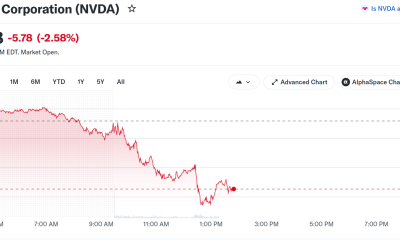
Why Did Nvidia Stock Fall on Monday Despite a $500 Billion Wall Street AI Deal?
-

 Politics6 days ago
Calls to permanently pedestrianise central Belfast following festival success
-

 Crypto World6 days ago
A Deep Dive Into One Of The Most Significant Hacks In Recent Memory
You must be logged in to post a comment Login