Shoppers could save close to £200 on an autumn/winter 2026 coat or jacket in end of summer sales
This article contains affiliate links, we will receive a commission on any sales we generate from it. Learn more
Advertisement
It may be hard to imagine buying a new coat or jacket as temperatures reach well above 30 °C in some parts of the country this week. Despite this, now could actually be the perfect time to prepare your wardrobe for autumn and winter since many pieces that are out of season are facing significant price drops.
In some cases, you could end up saving close to £200 on a jacket, with plenty of opportunities to revitalise your outfits ahead of the chillier season. Despite this, there are a wide variety of jackets out there that are currently on sale, making it difficult to actually make a decision on what’s best for you.
Fortunately, we’ve broken down 15 jackets from a wide variety of retailers, including Tog24, Regatta and Mountain Warehouse, that will be perfect for keeping you warm once summer ends. Better yet, many of the jackets are also versatile, being capable of protecting you from the inevitable rain many parts of the country will no doubt face.
Read below for a full breakdown of the top 15 men’s jackets currently on sale right now…
Pakka Mens Waterproof Jacket – Was £44.99, now £29.99
The Pakka Men’s Waterproof Jacket is designed to fully protect wearers from the rain while also being breathable thanks to its built-in membrane. It also comes equipped with a pack-away hood that allows the jacket to be adjusted for a variety of weather conditions.
Advertisement
It helps to achieve this with its IsoDry technology, which also allows it to be waterproof for up to 1,500mm, making it suitable for light and moderate rain. The taped seams of the coat also help bolster its waterproofing.
Seasons Men’s Fur-Lined Jacket – Was £109.99, now £39.99
The Seasons Men’s Fur-Lined Padded Jacket is intended to help keep wearers warm while also protected from light rain conditions. It helps to achieve this with its microfiber insulation and faux fur lining.
Wearers also have access to side pockets for easy storage, making it suitable for everyday wear. It also comes with a two-year warranty for added peace of mind and longevity.
Advertisement
Galactic III Extreme Waterproof Mens Ski Jacket – Was £249.99, now £84.99
The Mountain Warehouse Galactic III Extreme is a men’s ski jacket constructed with synthetic insulation. It features a fully taped seam design with a 10,000mm waterproof rating, a 5,000g breathability rating, and thermal testing down to -35°C.
It also includes a detachable snow skirt, and a dedicated sleeve pocket for a variety of items along with additional general storage pockets. The jacket is backed by a three-year warranty for extra longevity and peace of mind..
Frost Men’s Extreme Down Jacket – Was £219.99, now £69.99
The Mountain Warehouse Frost Men’s Extreme Down Jacket is a heavy-duty winter coat insulated with 600 fill power RDS-certified duck down and feathers. Its outer shell uses ripstop polyamide fabric treated with a durable water-repellent finish to shed light rain and snow while maintaining downproof durability.
Thermal tested down to -40°C, the coat features a fleece-lined detachable hood, zipped security pockets, and an internal media pocket.
Antarctic Extreme Waterproof Mens Down Jacket – Was £299.99, now £109.99
The Mountain Warehouse Antarctic Extreme Waterproof Men’s Down Jacket combines 600 fill power duck down insulation with a 5,000mm waterproof rating and taped seams. It features a durable, breathable outer shell rated at 5,000g and is laboratory tested to handle low temperatures down to -40°C.
Advertisement
Practical design details include an adjustable hood with faux-fur trim, an inner snow skirt, and multiple interior and exterior pockets for storage.
Deaks Mens Water Resistant Padded Jacket – Was £59.99, now £14.99
The jacket also includes a two-year warranty for added peace of mind.
Alaskan Mens 3-in-1 Waterproof Jacket – Was £219.99, now £99.99
The Alaskan Men’s 3-in-1 Waterproof Jacket is capable of providing versatile protection for when travelling outside. It combines a waterproof outer shell with a removable padded inner layer for extra warmth.
Its taped seams on the exterior help with this waterproofing, with Mountain Warehouse itself stating it’s perfect for year-round adventures.
Men’s Andreson Hybrid Jacket | Black Marl Burnt Henna – Was £60, now £30
The Regatta Men’s Andreson Hybrid Jacket features a lightweight 20D polyamide main body treated with a durable water-repellent finish. It is insulated with 100% Warmloft insulation, which is designed to be easily compressible for travel.
Advertisement
For flexibility, the jacket incorporates Extol Stretch panel inserts made from a polyesterblend. Additional features listed include a grown-on hood, an inner zip guard, two zipped lower pockets, and stretch binding at the hood opening, cuffs, and hem.
Men’s Cera V Softshell Jacket | Ash Marl – Was £50, now £35
The Regatta Men’s Cera V Softshell Jacket is intended to help protect wearers form the wind and cold. It stands as a more lightweight jacket equipped with a stretch fabric that allows you to move more freely when compared to heavier jackets.
Men’s Birchdale II Waterproof Jacket | Burnt Henna Black – Was £100, now £70
The Regatta Men’s Birchdale II Waterproof Jacket includes a durable water-repellent finish and includes a grown-on technical hood with adjusters, articulated sleeves for movement, and an adjustable shock-cord hem with adjustable cuffs. For storage and protection, the shell features a water-repellent main zip, a zipped chest pocket, two lower zipped pockets, and an internal zipped security pocket.
Gibson Mens Insulated Padded Jacket – Was £60, now £42
TheGibson Men’s Insulated Padded Jacketfrom Tog24 is designed to provide warmth and protection against the wind while standing as a lightweight jacket option. The puffa-style jacket is equipped with insulated filling for comfort with elasticated bindings at the cuffs and hem to help prevent draughts.
Feizor Mens Shower Resistant Softshell Hooded Jacket – Was £85, now £42.50
The Feizor Mens Shower Resistant Jacket is boasted by Tog24 as being smart enough or work yet casual enough for everyday wear. It comes equipped with a water-resistant fabric with microfleece backing to enhance its waterproofing.
Advertisement
It also comes with an integrated hood to help keep you protected from showers, with the inside of the jacket being intended to keep wearers warm and comfortable.
Anick Mens Lightweight Insulated Jacket – Was £70, now £49
The Anick Mens Lightweight Jacket is designed to act as a hybrid jacket for a variety of outdoor situations. It comes with an insulated front body with heat-sealed baffles for extra heat.
The Flynn Men’s Waterproof Jacket comes equipped with a three-layer fabric to help with extra durability and breathability. This includes 10K waterproofing and a DWR coating to help protect wearers against the rain, wind and cold.
Kinsey Mens Quilted Fl
The Kinsey Flannel Shacket has been designed to look good while feeling comfy. Its brushed flannel fabric helps to ensure that you stay warm without overheating.
Advertisement
It also features tarn dyed check on both the body and sleeves alongside square quilting.
President Donald Trump just announced plans to declare the Strait of Hormuz a US territory following the defeat of Iran.
‘Pretty soon, I’ll be declaring the Hormuz Strait a territory of the United States… we have the blockade… no ships get through unless we want them to,’ Trump declared at a Garden City rally.
Trump told a crowd of law enforcement officers that the war in the Middle East is still not over.
‘We have to make a little journey to the Middle East because we have to put out a potential disaster, a potential very big fire, a fire like you’ve never seen. We can’t let Iran keep going,’ Trump said during the rally, adding once again that they can ‘never have a nuclear weapon.’
Advertisement
Before the US launched military strikes against Iran earlier this year, the Strait of Hormuz served as a vital shipping lane for global oil.
Since the onset of the conflict, maritime traffic through the narrow waterway has ground to a near-total halt, making transit rights a key sticking point in US–Iran peace negotiations.
Speaking to supporters on Long Island, the president called for economic resilience amid the war with Iran, urging Americans to accept temporary gas price surges as a matter of national priority.
‘For you to pay a tiny little bit more for your gasoline, just remember you’re doing it so that a very evil country cannot have a… it’s the number one state sponsor of terror in the world… We don’t want them to have a nuclear weapon,’ Trump said in an address at the Nassau County Policy Academy.
Advertisement
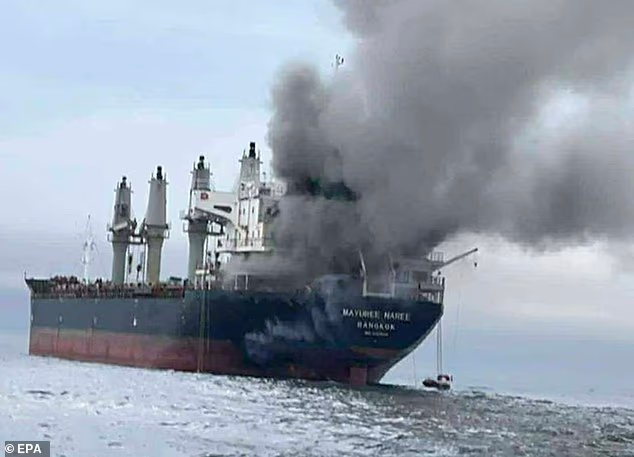
Tehran has since walked away from Trump’s peace deal, attacking vessels in the Strait of Hormuz, the narrow waterway that carries roughly a fifth of the world’s oil
Trump delivers remarks at the David S. Mack Center for Training and Intelligence on August 14, 2026 in Garden City, New York
President Donald Trump just announced plans to declare the Strait of Hormuz a US territory following the defeat of Iran
Advertisement
While violence has declined since the signing of a preliminary US-Iran deal in June and the Lebanon-Israel agreement, Lebanon continues to report intermittent Israeli strikes and artillery shelling on the south
‘Remember that when you have to pay a little bit more, you’re at $4,’ the president continued, saying, he will ‘never apologize.’
Iran plans to ramp up aggression in the Strait of Hormuz to ratchet pressure on Trump ahead of the midterm elections, according to Tehran insiders and foreign policy experts.
Former US diplomat Jonathan Wachtel told the Daily Mail that ‘Iranian leaders carefully study both American military capabilities and political calendars.’
Advertisement
Two Iranian sources familiar with Tehran’s planning confirmed that the midterms are a key pressure point that the Islamic Revolutionary Guard Corps will hope to exploit.
Retired General Jack Keane said that Iran is gambling on Trump being unwilling to restart major military action ahead of November.
‘My gut feel is that they’re likely going to get more aggressive because they don’t believe the President will do much prior to the midterms in terms of military actions,’ Keane told Fox News.
Wachtel agreed ‘this is a high–risk gamble,’ adding that ‘major confrontations often begin when one side misunderstands the other’s willingness to respond.’
Advertisement
Share or comment on this article:
Trump delivers Iran a gut punch with new declaration he’s making the Strait of Hormuz a US territory
In this fourth part in our series on how the UK has changed in the past 25 years, we look at health.
Life expectancy and illness
Michael Murphy, Emeritus Professor of Demography, London School of Economics
A good way to follow the health of a nation is to glance at what is known as period life-expectancy. This calculates how long a person born today would live if the current death rates remained exactly the same for the rest of their life. This had two major turning points in the UK over the period: a marked slowdown in improvements from around 2011, and a sharp, historically unprecedented fall in 2020 during the COVID-19 pandemic.
The slowdown in improvement from the early 2010s was part of a wider pattern across high-income countries. The UK and the other five largest of these nations, including France, Germany and Italy, experienced similar stagnation, although the UK’s was somewhat more persistent.
Advertisement
How has the UK changed since the start of the century? From Blair to Burnham, from the dotcom era to AI agents, time has certainly not stood still. In this six-part series, a team of some 35 experts look at everything from defence spending to species populations to the rise of populism to try and make sense of the intervening years.
The graph below also shows that contrary to frequent claims that the UK’s mortality performance is uniquely poor, its period life-expectancy gains were broadly similar to these comparator countries and the OECD average between 2000 and 2024. For example, France’s period life-expectancy increased by an annual average of only four days more than UK over that time.
The most dramatic disruption occurred with the COVID 19 pandemic. The UK’s 179,000 COVID-related deaths in 2020–21 represented the largest mortality shock since the second world war. As it turned out, the nation’s mortality rate peaked in 2020 and has fallen each year since. By 2024 it had returned to levels close to 2019, the lowest ever, and we’ve seen a similar trend across western Europe.
The long-term implications of the pandemic remain uncertain, but they are potentially severe and likely to affect all groups of society. Many people have experienced life-changing effects from long COVID. Evidence from earlier pandemics, including the 1918–19 influenza pandemic, also suggests that babies in their mothers’ wombs may have experienced long-term negative health effects from exposure to the virus.
Advertisement
Causes of death
Underlying these mortality trends in the UK are shifts in the major causes of death. In 2024 cardiovascular disease (26%), cancer (26%), respiratory disease (12%) and dementia (9%) accounted for three quarters of deaths in England.
Changes in cause of death classification make it difficult to see whether these have changed long term. But the early 2000s saw rapid declines in cardiovascular mortality, for instance, driven by improvements in treatment, prevention and reductions in smoking.
However, these gains have slowed, and since 2019 progress in reducing cardiovascular deaths has stalled. This reflects a combination of fewer medical breakthroughs in related chronic diseases such as diabetes and high blood pressure, and rising pressures on the health and social care systems.
More generally, changing risk factors will be important for the future. We’re smoking much less today, from 26% of adults in 2001 to 11% in 2023, which reduces the scope for further mortality gains from tobacco controls.
In contrast, obesity has become the top lifestyle danger, with the proportion of adults classified as obese in England rising from 20% in 2001 to 30% in 2024. These trends imply a growing future burden of cardiovascular disease, diabetes and also certain cancers, with long lag times before the full effects are observed.
This rise in obesity will also be contributing to rising levels of non-fatal but disabling conditions. As many as 26% of adults report chronic pain, and half of those report high-impact pain (meaning long-term pain that severely limits your ability to function in daily life). Low back pain is now the leading cause of years lived with disability in the UK, mirroring global trends.
Lower back pain is now the leading cause of lived-with disabilities. Krakenimages.com
Mental disorders are rising steadily, with common mental health conditions increasing from 17.5% in 2000 to 22.6% in 2023-24 among working age adults. The rates are higher among younger people: 26% among 16-24 year olds compared with 10% among those aged 75 and over.
There also appears to have been an increase in poor health in general. Witness the fact that healthy life expectancy in England increased modestly between 2000–02 and 2017–18 (the last period that did not include the COVID-19 pandemic), but only around half of additional years gained were spent in good health.
While mortality improvements are likely to resume, they may do so at a slower pace than in the late 20th century. The ageing population, rising obesity and worsening health among younger people all pose risks. The prolonged deterioration in US mortality linked to drug related deaths and “deaths of despair” also illustrates that you certainly can’t assume progress will continue. The UK’s future health will depend on its ability to address chronic disease, reduce risks like obesity and strengthen its ability to respond to future shocks.
Eating and drinking habits
David Dearlove, Principal Researcher, Healthy Life Mission, Nesta
Jurin Katayama, Analyst, Healthy Life Mission, Nesta
Advertisement
Lydia Leon, Senior Mission Manager, Healthy Life Mission, Nesta
In 2001 meal deals were a novelty, phones had buttons, and the Food Standards Agency (FSA) was a year-old watchdog. Twenty-five years on, Britain’s relationship with food is very different, with big changes in the types of food available and how we buy it, as well as how it is promoted and regulated.
When it comes to how people buy their food, supermarkets still dominate. The retail landscape has been disrupted by the rise of discounters like Aldi and Lidl, whose market share climbed from a mere 3% in 2002 to about 14% by 2021. But given that large supermarkets continue to supply over 80% of our average daily calorie intake, their influence over public health remains profound.
Food bought outside of the home has seen large changes. Across Great Britain, the density of fast food outlets – meaning per head of the population – rose by 36% between 2011 and 2024, outpacing the 17% growth in supermarket density. This supply surge reflects shifting demand – while only a quarter of UK adults ate out once a week or more between 2008 and 2012, in 2021 this rose to over 60%.
Unfortunately, food prepared out of home rarely is the healthy choice. Most of these meals exceed the recommended calorie intake for an eating occasion, and about 20% of meals contain over half the total recommended daily intake.
This physical saturation is mirrored in our digital lives, as ordering food to our door has become easier than ever. When Just Eat launched in 2001, ordering food online was a novelty. Today, platforms such as Just Eat, Deliveroo and Uber Eats connect us to thousands of takeaways at any hour, with their market worth £13.9 billion (2024). Online grocery shopping has also risen, from barely existing in 2001 to now making up around 12% of the grocery market.
Ever more marketing
The way food is bought and promoted has not only gone more digital, but is now dominated by pervasive marketing and personalised nudges. Outdoor food and drink advertising, covering everything from billboards to train carriages, has more than tripled in real terms over the past two decades, now accounting for £590 million in advertising-spend a year. The rise of apps and loyalty schemes has also expanded the ways customers can be reached, with regular notifications and time-limited “special” deals designed to make us order more often and in larger amounts.
Advertisement
Of the £2.4 billion spent on UK food advertising in 2024, investment in nutritious alternatives remains negligible. For instance, while advertising focusing on fruit and vegetables now accounts for less than 5% of traditional food and non-alcoholic drink advertising budgets, unhealthy foods account for closer to a third.
There has also been a shift in the regulatory landscape. We’ve seen a gradual move away from voluntary schemes such as Public Health England’s calorie, salt and sugar reduction programmes towards more interventionist policies, including the 2018 Soft Drinks Industry Levy, which incentivised many manufacturers to reduce sugar content to avoid charges.
Expanding on this, in 2025 the government announced the introduction of the healthy food standard policy. This will require large food businesses, including supermarkets, to report on the healthiness of their sales, and meet mandatory targets for improvement. Yet while the regulatory framework is improving, further intervention will be necessary to get the nation to eat more healthily.
Alcohol and drug use
Ian Hamilton, Honorary Fellow (Associate Professor) in Addiction at the University of York
Advertisement
Drugs, like fashion, change over time. Since the millennium, for instance, we have seen a surge in cocaine use. Once regarded as an expensive drug used by the elite, it is now more affordable than ever and more potent, which explains its greater popularity.
This has been facilitated by increased global supply and organised crime groups able to transport and distribute the drug effectively. Unfortunately, rising use has been accompanied by an equally rapid increase in cocaine fatalities, with nearly 1,300 in 2024 in England and Wales alone.
The last 25 years has witnessed the emergence of synthetic drugs, particularly synthetic opiates, which are much more potent than the traditional organic opiates such as heroin. Like cocaine, the rise in synthetic drugs has seen an increase in drug-related deaths, with the UK having the highest mortality rate in Europe.
Another group of synthetic drugs that have emerged are novel psychoactive substances, also known as legal highs, even though they were banned a decade ago. Examples include spice, a synthetic form of cannabis, and the stimulant referred to as monkey dust.
As with all drugs, the negative consequences of using them are not experienced equally. It is the vulnerable, poor, homeless and living in the most deprived areas of the UK that are more likely to die or suffer poor health from using these drugs. Synthetic drugs have caused havoc and misery in prisons and among rough-sleeping populations.
Cannabis remains the most widely used illicit drug in the UK. Adult use has remained stable over the last 25 years. However, this disguises the trend of falling cannabis use for young people (aged 16-24 years) since 2020.
Alcohol and the internet
Without a doubt, the advent of the internet has directly and indirectly shaped which drugs are widely used and those that are not. For example the data shows that since the millennium, young people have shunned alcohol.
This is thought to be due in part to young people not wanting to be seen to be intoxicated or behaving badly because of drinking on social media. In parallel, this cohort are more health conscious and keen to adopt a healthy lifestyle which doesn’t include alcohol.
Over the same period, consumption of alcohol by adults has remained relatively stable. Older adults are now more likely to drink than their younger counterparts: 84% of those aged 55-64 years old compared to 65% aged 16-24 years old.
Advertisement
Alcohol-related deaths in the UK
Age-standardised alcohol-specific death rates in the UK per 100,000 people. Alcohol Change, CC BY-SA
The internet has also opened access to drugs through platforms like WhatsApp, Facebook and Telegram. People can simply browse dealer menus via Instagram, for example, or message a Telegram bot, and have drugs brought to their door within the hour.
What hasn’t changed is drug policy. Successive governments have stuck with the 1971 Misuse of Drugs Act, despite the fact that applying a 50-year-old policy to contemporary patterns of drug use is a terrible mismatch. When this legislation was enacted many of the most widely used drugs today didn’t exist. There is also nowadays a consensus that drug use should be framed by health rather than penal policy.
Yet there is no political appetite for policy change, just the continued mantra of getting tough on drugs by trying to disrupt supply and distribution. In contrast, organised crime is innovative and adaptable.
Advertisement
Sexual behaviour
Soazig Clifton, Academic Director for Britain’s National Surveys of Sexual Attitudes and Lifestyles (Natsal), University College London
By the early 2000s Britain had experienced decades of social and demographic change dating back to the second world war. Marriage rates had fallen, people were having children later and in smaller numbers, and family structures had become more diverse.
These changes were accompanied by increasingly liberal attitudes towards sexuality. Same-sex relationships were becoming more socially accepted. Younger generations were having sex earlier and marrying or cohabiting later than previous generations.
Public concern had also shifted. The widespread fears around HIV/Aids that had characterised the 1980s and early 1990s were receding. Attention had turned to the UK’s rate of teenage pregnancy, which was among the highest in Europe, and rising levels of chlamydia and other sexually transmitted infections.
Advertisement
Sexually transmitted diseases were a major concern circa 2001. New Africa
The best evidence on population trends in sexual behaviour comes from Britain’s National Surveys of Sexual Attitudes and Lifestyles (Natsal), one of the largest scientific studies of sexual behaviour in the world. Conducted approximately every decade since 1990, Natsal provides representative snapshots of the population, offering a unique window into Britain’s changing sex lives.
The most recent published survey, Natsal-3 (2010-12), documented substantial changes in women’s sexuality during the 2000s. Women reported higher numbers of sexual partners and more same-sex experiences, with one in six women reporting sexual experience with another woman.
Vaginal and oral sex remained the core of the heterosexual sexual repertoire since the first survey in 1990. However, the 1990s and 2000s also saw increases in heterosexual anal sex, reported by around one in six people by 2010-12.
Yet despite increasing diversity in sexual behaviour, Natsal identified another trend: people were having sex less often. Among 16-44-year-olds in 2010-12, the median frequency of sex was three times per month, compared to four times in the two previous surveys.
Advertisement
Where are we now?
The latest Natsal data, collected between 2022 and 2024, will be published later this year. It will provide the first comprehensive picture of Britain’s sex lives after a decade shaped by economic uncertainty, the COVID pandemic and the growing digitalisation of everyday life. For the first time, Natsal-4 collected data on online sexual activities, including pornography use and sexting, as well as expanding measures of gender to include transgender and non-binary identities.
Other data sources offer clues about what we might find. Natsal-COVID, an online survey conducted during the pandemic, suggested further declines in sexual frequency and potential reductions in behaviour associated with sexually transmitted infections (although these comparisons are limited by methodological differences).
Meanwhile, data from the Office for National Statistics shows increasing numbers of people identify as LGBTQ+. Research with adolescents in Britain and other European countries has also shown declines in sexual experience. These changes sit alongside broader shifts in young people’s lives, including declining rates of smoking and drinking, rising levels of poor mental health and high rates of loneliness, more time online and less time socialising face-to-face.
Whatever Natsal-4 reveals, the picture will probably keep evolving. Societal change and new technologies including AI are likely to shape our sexual behaviour and intimate relationships in ways we cannot yet predict.
Mental health
Kevin Stone, Associate Dean for Partnerships and Business Development (Health and Social Care), University of South Wales
Sarah Vicary, Professor of Social Work and Mental Health, The Open University
Advertisement
In 2000, care in the community was gaining ground, but provision remained uneven. Although the closure of long-stay psychiatric hospitals had reshaped the system, hospital admission remained a dominant response to people experiencing an acute mental health crisis. Patient voices were also beginning to emerge more strongly against a backdrop of stigma, with growing demands for better quality care in both primary and secondary services.
Since then, we have seen significant changes in attitudes and responses to mental health needs. Mental health is no longer seen simply as a private struggle that should be hidden, but increasingly as a public health concern.
Awareness-raising has helped to create a culture in which speaking about mental health is more acceptable than it was in 2001, and more actively encouraged everywhere from workplaces to schools to the home. For those with severe diagnoses, the shift away from institutional care before the 1990s towards community-based support has also been clear.
Nonetheless, we are seeing more children and young people reporting adverse childhood experiences, trauma and neglect, all of which can lead to significant mental health needs. We also continue to see high numbers of detentions under mental health legislation involving people in severe mental distress, with a disproportionate impact on men from ethnic minority groups.
Advertisement
Mental health-related absences from work continue to be a problem – stress, depression and anxiety cost 22 million working days in 2024/25. Societal barriers like stigma still prevent many people from discussing their declining mental health or seeking help early, which undermines effective prevention.
When it comes to raising awareness, anti-stigma campaigns such as Time to Change, led by Mind and Rethink Mental Illness, alongside World Health Organization initiatives, have contributed to changing behaviour and attitudes. World Mental Health Day each October and campaigns led by YoungMinds have helped reinforce this message. The same goes for public figures and people with lived experience, such as Stormzy and Davina McCall.
The principle that mental health should be valued as highly as physical health (known as parity of esteem), has increasingly shaped NHS policy. The NHS commissioners who oversee health services within particular areas have reinvented mental health services to place greater emphasis on community-based support and treatment.
This has included dedicated mental health workers in emergency departments, and doctors connecting patients to non-medical community activities to help improve their outlook (this is known as social prescribing). Access to psychological therapies has also improved and is now recognised through NHS Talking Therapies in GP practices and primary care settings.
NHS Talking Therapies has been a growth sector. Marco Aslan
The authorities are also giving more attention to societal factors affecting people’s mental health. When patients come to GPs with anxiety triggered by things like debt or poor housing, they are expected to refer them to a link worker to help overcome these problems. It’s now increasingly recognised that responses to mental health needs should never be about medication alone. There has also been growing recognition of the role played by family members, nearest relatives, friends and unpaid carers.
Yet NHS services are still too often forced to respond to crisis rather than prevent it. Funding pressures and workforce shortages have combined with the increased demand for mental health services to place the system under growing strain.
Advertisement
As well as addressing this, the wider challenge is to build a society and system that values prevention, compassion, choice, dignity and timely support. That way, mental health won’t just be protected in moments of crisis, but throughout the course of everyday life.
To hear about new Insights articles, join the hundreds of thousands of people who value The Conversation’s evidence-based news. Subscribe to our newsletter.
When a dairy cow miscarries, a farmer loses far more than an unborn calf. Feed has been grown, land and water used, and greenhouse gas released during the cow’s pregnancy but milk production, a future animal and income will be lost.
One of the most important of these greenhouse gases is methane. Methane is produced by microbes within a cow’s stomach during digestion (known as enteric-methane) and most of it is breathed out into the atmosphere. Instead, healthier animals are more productive, so the amount of methane they emit is associated with more milk or meat, reducing the emissions associated with each litre or kilogram produced.
My research focuses on diseases in farm animals such as cows, goats and sheep. In a recent peer-reviewed journal paper, my team and I examined evidence from livestock systems around the world. We found that preventing disease can improve growth, milk production, fertility and survival, often lowering the emissions associated with each litre of milk or kilogram of meat. However, the available evidence is not yet strong or consistent enough for animal health to be included confidently in climate policy.
Studies investigating greenhouse gas emissions in livestock make different assumptions and usually use estimations rather than directly measuring them. Building on ongoing research supported by the Global Methane Hub (an international philanthropic alliance formed from more than 20 major climate foundations), we developed a new project called Halow (Health Approaches for Lowering Livestock Emissions). Recently approved as a major international research initiative of the Global Research Alliance on Agricultural Greenhouse Gases, it will test when improvements in animal health deliver genuine climate benefits.
Advertisement
There is no single way to transition to more sustainable livestock farming globally. Much of the debate in high-income countries focuses on eating less meat and dairy to reduce greenhouse gas emissions. However, in low- and middle-income countries, demand for milk, meat and eggs is growing while access to diverse diets remains unequal.
The priorities for food production vary across different parts of the world. Wealthier countries looking to reduce excess consumption and total emissions, while many poorer countries need to improve access to nutritious food without allowing emissions to grow at the same rate. Livestock also provide income, savings, manure and power for farming. Preventing animals from dying or producing far below their potential could provide more food and income from resources already being used. That makes animal health part of a fairer climate response, but is not a licence for unrestricted expansion of livestock numbers.
What the losses mean
We previously calculated the potential impacts of reducing calf deaths and reducing pregnancy loss in livestock in our Kenya and Tanzania study.
Modelling data from farms in northern Tanzania, we calculated that cattle miscarriage increased emissions per kilogram of milk by 4% in Indigenous cattle and 15% in higher-yielding cattle. Including the losses from both cattle and goats, the estimated milk and meat protein lost was equivalent to the current annual animal-protein consumption of about 649,000 Tanzanians.
Advertisement
In the same paper, we looked at the productivity of local beef cattle in western Kenya, where 16% of calves died during their first year and most diagnosed deaths were linked to infection. At the current mortality rates, the protein loss was equivalent to the annual beef-protein consumption of about 4.5 million Kenyans.
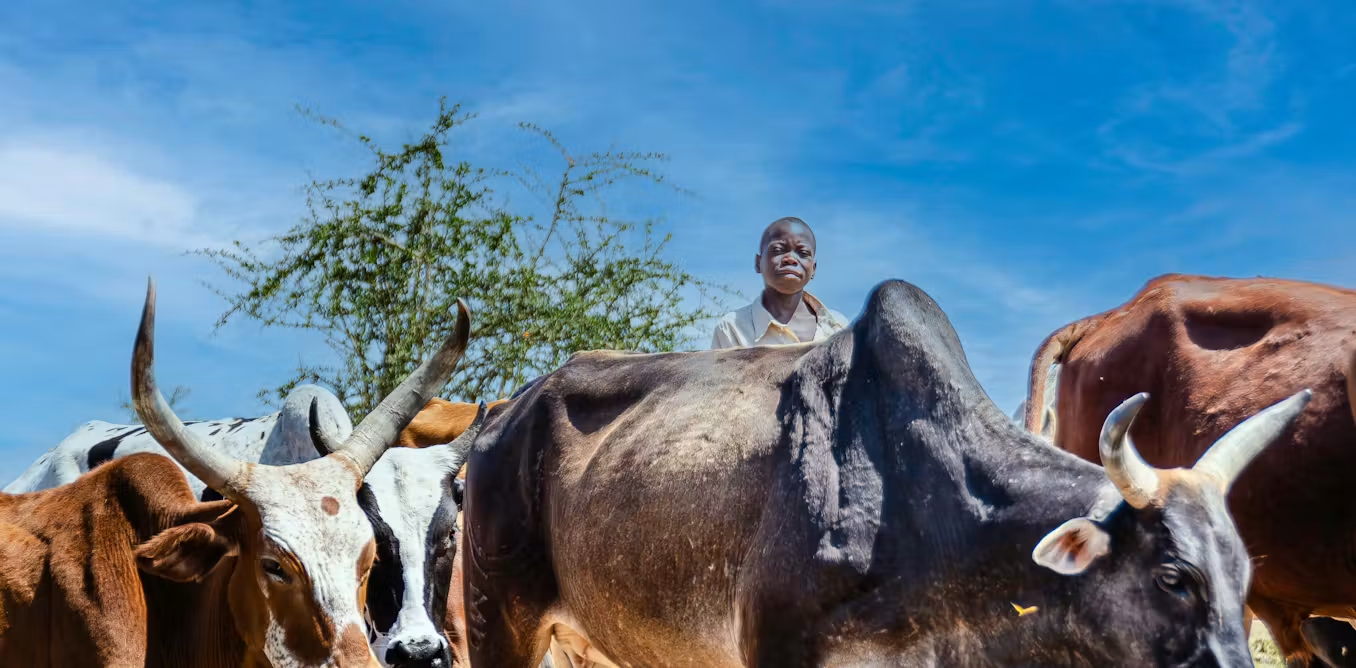
Grazing cattle in Kenya. travelview/Shutterstock
Halving mortality to 8% reduced estimated enteric-methane emissions per kilogram of beef by 3.2%. However, as more calves survived, the herd produced more beef but also more enteric methane in total. The footprint of each kilogram became smaller, while emissions to the atmosphere increased.
This is not an argument for allowing calves to die. It is an argument for measuring food security, livelihood and climate outcomes together rather than assuming that improved efficiency guarantees an absolute reduction greenhouse gas emissions from livestock.
Advertisement
From evidence to climate policy
Countries estimate livestock emissions from animal numbers and standardised figures. Better health can change milk yield, growth, fertility, mortality and the number of replacement animals needed, however existing methods don’t always capture these effects accurately.
The Halow platform allows scientists like us to compare interventions across farming systems. It enables researchers to evaluate which ones work, at what cost and whether they reduce total emissions or only emissions for each unit of food. It will consider who benefits and recognise that negative results will matter too.
Animal health will not solve the livestock sector’s climate impact on its own. However, leaving disease out of climate policy ignores emissions that don’t produce food or benefit livelihood. A fair livestock transition means reducing excess consumption where it is high, improving access to nutritious food where it is low, and cutting avoidable losses everywhere.
Passengers on a Ryanair flight allegedly passed out and threw up after being left in a sweltering cabin without air conditioning.
Flight FR7268 was due to leave Malta for Birmingham at 5.40pm on August 10, but did not depart until around 7pm.
Ryanair blamed the initial delay on a minor technical issue, with a passenger falling ill causing further disruption.
But the wait to board allegedly brought fresh problems, as passengers struggled in the extreme heat.
Advertisement
Eva Gregory, 16, claims she and her family spent around 30 minutes on a bus without air conditioning before being moved to another vehicle.
She said they were then moved to a second bus, which apparently had only limited air conditioning, for approximately another 30 minutes.
However, according to the airline, passengers were taken to the plane by bus and stayed in the vehicle for an extra ten minutes where air conditioning was available.
The holidaymaker from Derby alleged passengers had to wait on the tarmac in the blazing heat for a further 20 minutes before boarding.
Advertisement
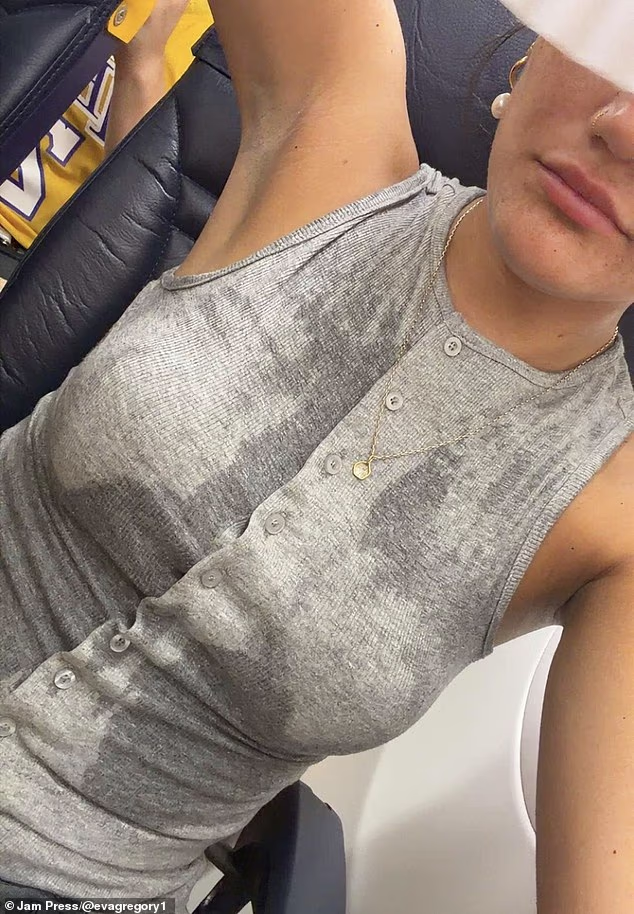
Passengers were originally throwing up and passing out on a Ryanair flight. Pictured: Passenger Eva Gregory covered in sweat due to the heat
Holidaymakers were allegedly transported on a bus with limited air con before boarding the plane which apparently didn’t have air con until it took off
Eva claimed the cabin was still not air-conditioned when they boarded. She ended up experiencing nausea before having a panic attack as she watched the situation unfold around her.
Advertisement
‘When we boarded, it was immediately obvious the air conditioning was not on,’ Eva told NeedToKnow.
‘It was like walking into extreme heat. We got on the plane but were sitting and waiting in the heat with no air conditioning at all for over an hour.
‘All the passengers were extremely agitated and quite quickly became frustrated. People were taking their tops off because of the heat.’
Eva said she saw two passengers lose consciousness and claimed other travellers were being sick.
Advertisement
She added: ‘Two people passed out, although I’m not sure how many were throwing up.
‘I was experiencing the feeling of needing to throw up, but as I have a phobia of being sick, it gave me a panic attack.’
Eva continued: ‘They [the staff] didn’t even offer free bottles of water to anyone, even those experiencing medical emergencies.’
Eva said she saw two passengers lose consciousness and claimed other travellers were being sick
Advertisement
According to Ryanair, the crew opened the onboard bars, allowing passengers to buy drinks and snacks if needed.
Eva claimed the cabin crew tried to stop passengers from boarding until the issue had been addressed.
She said: ‘The Ryanair cabin crew absolutely did their best. They were telling them not to let us onboard until the air conditioning was fixed.
‘The other workers did not listen to the cabin crew and then the crew were the ones dealing with passengers’ anger when it was not their fault.’
Advertisement
The air conditioning allegedly began working gradually after the aircraft became airborne.
Eva said: ‘The heat and witnessing medical emergencies made me feel uneasy. The whole situation makes me feel extremely angry.’
Footage shared online by Eva showed passengers standing in the cabin as crew appeared to attend to people on board.
According to Ryanair, the onboard bars were opened by crew so passengers could buy drinks and snacks (stock)
Advertisement
Text over the video alleged people were ‘passing out, throwing up, crying and having panic attacks’.
A Ryanair spokesman told the Daily Mail: ‘This flight from Malta to Birmingham (10 Aug) was delayed prior to departure due to a minor technical issue with the aircraft and subsequently became delayed after a passenger became ill onboard.
‘Following an inspection of the aircraft by engineers, the aircraft was cleared to operate, and this flight departed Malta at 7pm local.’
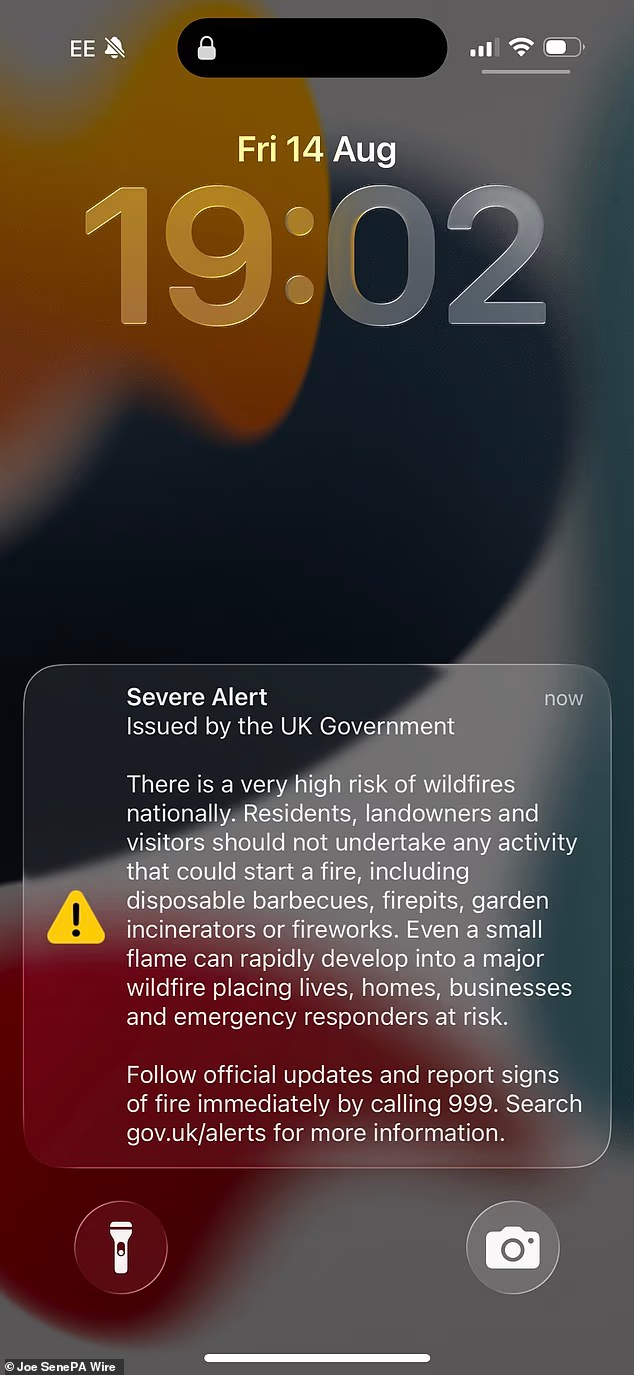
The Government sent the emergency alert on Friday evening, which began appearing on mobile devices from 7pm in “the most extensive use” of the UK’s mobile phone alert system.
The Government sent the emergency alert on Friday evening, which began appearing on mobile devices from 7pm.
Mr Burnham had earlier visited Stourbridge in the West Midlands, where a wildfire destroyed 19 homes on Thursday, the hottest day of the year so far.
Advertisement
The Stourbridge blaze spread across more than 500 acres, with the West Midlands Fire Service summoned to “hundreds and hundreds of incidents” throughout its patch, according to the area’s chief fire officer Simon Tuhill.
The message which appeared on mobile devices was “the most extensive use of the UK’s emergency alert system in response to an active incident”, Cabinet Office minister Louise Haigh, the First Secretary of State, said.
She said the decision to send the alert “reflects the seriousness with which the Government is acting to safeguard people and property”.
Ms Haigh continued: “During this period of extreme heat, we are asking people to take simple steps to limit the risk of further fires.
Advertisement
“By following the safety guidance, everyone can play their part in protecting local communities and supporting our frontline services who are working around the clock to keep people safe.”
“The Government will continue to provide every assistance to communities being impacted by these fires, including the deployment of 100 additional military personnel in major incident areas.”
Angela Rayner, the Communities Secretary, said: “As well as supporting firefighters on the ground now, my department will hold a summit bringing together fire chiefs, the National Fire Chiefs’ Council, the Fire Brigades Union and other key organisations to look at our future response.
“To the residents affected, particularly those who lost their homes and their life’s possessions to fire – we will work with the mayor and local leaders to make sure you are supported.”
Advertisement
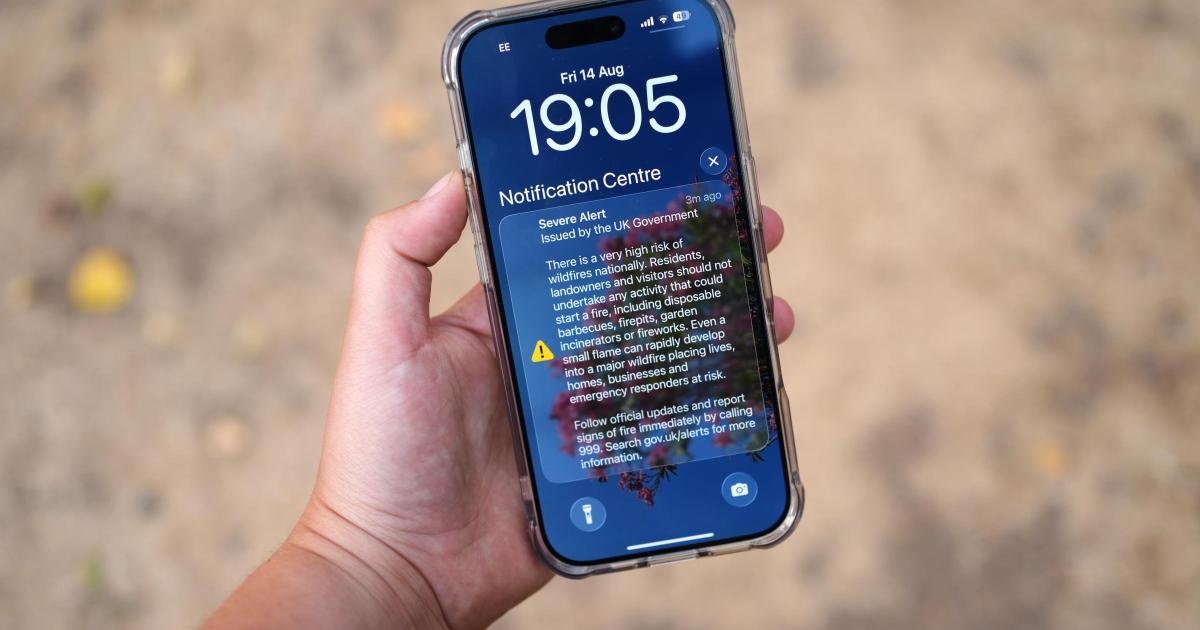
The alert read: “There is a very high risk of wildfires nationally.
“Residents, landowners and visitors should not undertake any activity that could start a fire, including disposable barbecues, firepits, garden incinerators or fireworks.
“Even a small flame can rapidly develop into a major wildfire placing lives, homes, businesses and emergency responders at risk.
“Follow official updates and report signs of fire immediately by calling 999.”
Advertisement
Mr Burnham wrote on X: “This evening, an emergency alert has been sent to people across England and Wales as the wildfire risk remains very high. The request came directly from fire and rescue services.
“I was in Stourbridge today and saw first-hand the devastating impact these fires have had on people’s homes and lives.
“Our priority now is to keep everyone safe and prevent more fires from starting.
“During this period of extreme heat, I’m asking everyone to take extra care. Please do not light any fires in gardens, the countryside or other open spaces, including parks, moorland and wooded areas.
Advertisement
“Our firefighters and emergency responders are working around the clock in incredibly difficult conditions.
“We can all help them. Please take the emergency alert seriously and follow the guidance in place.”
The Prime Minister earlier announced a ban on disposable barbecues in England, Wales and Scotland has come into force “until further notice”.
He said: “The temporary ban on barbecues, disposable barThebecues, comes in today.
Advertisement
“All retailers will be receiving notification of that ban, and we ask them to, obviously, implement it in full until further notice when we can remove it.”
Following the wildfires on Winter Hill in 2018, fire wardens now patrol the area in a bid to prevent another such blaze breaking out.
Bolton Council has warned that strict rules to protect the open space, which attracts scores of visitors, remain in place, as major incidents across Greater Manchester serve as a reminder of the dangers of wildfires.
Those breaking the order face a hefty fine.
Advertisement
The One Show’s 20th anniversary special episode has been disrupted minutes after starting by a blasting Government alert about wildfires.
The BBC chat show was just beginning an extended hour-long anniversary special when hosts Alex Jones and Roman Kemp were drowned out by an alarm.
When introducing the segments set to air across the episode, Kemp was explaining how former host Christine Lampard was returning to the studio when the alarm could be heard on the broadcast.
While Kemp pushed through and kept speaking, Jones shook her head and raised her hands, before she said: “You couldn’t make that up could you. Is that a fire alarm?”
Advertisement
Kemp then faced someone off camera and asked: “Is there some sort of fire alarm?”
“We continue,” they both said, before running through the rest of the segment introductions before the alarm cut out and Kemp said: “Ok, it’s stopped”.
The noise was an emergency alert sent out to the phones of people across England and Wales to warn communities from the growing threat posed by wildfires.
The alert, which were sent on a rolling basis from 7pm, warned people not to light anything that could spark a fire, including barbecues, campfires, and fireworks.
Advertisement
Recipients have also been urged to report any fire immediately by calling 999.
Following the airing of a segment, Kemp then told viewers: “As you will probably be aware that was actually a wildfire alert on everyone’s phones.
“You would have heard it on the opening of our show, but as always we hope everyone is staying safe, of course.”
Later in the show presenters Clara Amfo and Angellica Bell also faced disruption.
Advertisement
When presenting a segment outside, an ambulance could be heard driving past with its sirens on, nearly drowning the presenters out for about 15 seconds as they tried to speak.
Elsewhere during the episode, the event celebrated the long-running show, speaking to former presenters, guests and people who have been assisted by the programme.
While being reunited with some people she helped in past episodes, Bell broke down in tears, with Jones declaring: “Angellica doesn’t cry often, so that’s a result!”
The episode also looked back at celebrity interviews and past musical performances from artists including Harry Styles, Elton John, Olivia Dean, Stormzy and Take That.
Advertisement
Wrapping up the show, Jones then asked to share a message with viewers, in which she said: “A huge thank you to the team and crew who work relentlessly hard on this programme to make it a brilliant show for all of you every day.
“Thank you for all of the guests for entertaining us, being so generous with their time and just being all-round nice people. Thank you to all of my co-hosts over the years. I’ve been so lucky to sit next to all of them.
She added: “Lastly, thank you to all of you at home. You are the most important people in all of this. Thank you for being with us every weekday. It’s a real privilege for us all to be with you all at seven every night.”
The episode then ended with a performance from Tom Grennan.
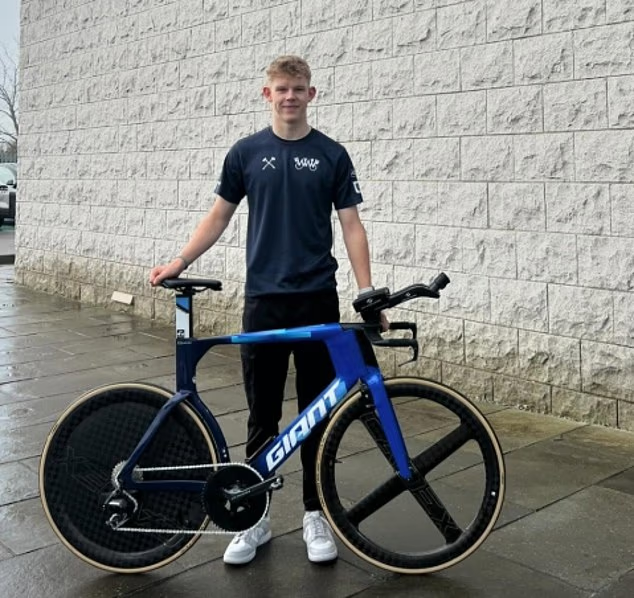
British cyclist Finlay Tarling has died today after a tragic accident during the Volta a Portugal.
The Welsh rider, 19, was on the eighth stage of the race when the incident occurred on a 166.8km route to Fafe, in the north of the country.
In a statement, his team NSN said: ‘We are heartbroken to announce the passing of Finlay Tarling at the Volta a Portugal today.
‘Fin was a much loved member of our team but most importantly, he was a son, a brother, and a friend to so many. He will be deeply missed.
Advertisement
‘Our deepest condolences go out to Fin’s parents Michael and Dawn, his brother Josh, and everyone who was lucky enough to call Fin a friend.’
In a post on X, the Portuguese Cycling Federation spoke of their ‘most heartfelt condolences to the family of Finlay Tarling, to his team-mates, to the NSN Development Team, and to all his friends and loved ones’.
British cyclist Finlay Tarling died in a serious accident during a race in Portugal
Advertisement
The organisation added that the usual podium ceremony would not take place out of ‘respect and mourning’.
Tarling’s older brother Josh is a world champion cyclist on the track and a stage winner at last year’s Giro d’Italia.
Portuguese newspaper RTP reported that the incident had allegedly been caused by a vehicle that was not involved in the race.
The report stated that the car had driven on the wrong side of the road and collided with Tarling, who had been behind the peloton.
Advertisement
The rider was reportedly given immediate medical attention but died shortly after the crash.
Portugal’s president Antonio José Seguro said Tarling’s death ‘saddens the peloton, the race, and the country that welcomed him’.
He offered his ‘deepest condolences to the family of Finlay Tarling, to his teammates at NSN Development Team, and to the entire cycling community, joining in their grief with deep emotion’.
A statement from the International Cycling Union read: ‘The UCI is deeply saddened by the tragic death of British rider Finlay Tarling, who passed away following a serious accident during today’s 8th stage of the Volta a Portugal.
Advertisement
‘The UCI extends its deepest condolences to Finlay’s family, friends, and teammates.’
More to follow…
Share or comment on this article:
Finlay Tarling dead aged 19: British cyclist dies after serious accident during eighth stage of Volta a Portugal
Confusion broke out across England and Wales tonight as millions received an emergency wildfire alert.
The alert was sent to mobile phones across the country at 7pm today warning against lighting anything that could spark a wildfire, including barbecues, campfires and fireworks.
It is the largest ever use of the technology since the emergency alert system was introduced in 2023.
Prime Minister Andy Burnham told members of the public to take the warning ‘seriously’, and said it was triggered at the request of firefighters.
Advertisement
Hewrote on X: ‘This evening, an Emergency Alert has been sent to people across England and Wales as the wildfire risk remains very high. The request came directly from Fire and Rescue Services.
‘I was in Stourbridge today and saw first-hand the devastating impact these fires have had on people’s homes and lives. Our priority now is to keep everyone safe and prevent more fires from starting.
‘Our firefighters and emergency responders are working around the clock in incredibly difficult conditions. We can all help them. Please take the Emergency Alert seriously and follow the guidance in place.’
The emergency alert warned that even small flames could ‘rapidly develop into a major wildfire’.
Advertisement
The alert interrupted BBC1’s The One Show as the alarm sounded at the beginning of the programme.
Millions of people received this alert tonight as people were warned not to light anything that could spark a fire
The alert interrupted BBC1’s The One Show as the alert sounded throughout the programme
Advertisement
Host Alex Jones, who clearly did not know the alarm would be issued, said: ‘You couldn’t make that up could you.
‘I think that’s the fire alarm…I’m doing my best to keep a straight face.’
Panic erupted in a Wetherspoons pub in Wales after English drinkers received the Government Alert about the risk of wildfires in Welsh and couldn’t read it.
Richard Williams, 77, was enjoying a pint with his wife in The Picture House in Colwyn Bay, North Wales, where just 18 per cent of the country’s population speak Welsh.
Advertisement
A minuscule 0.2 per cent of the Welsh population speak no English at all.
English drinkers in the pub couldn’t read the announcement and pandemonium ensued as drinkers desperately attempted to find Welsh speakers to translate it for them.
Richard, a retired photographer, said: ‘People were relaxing on a Friday night in Wetherspoons when all of a sudden all hell broke loose.
‘Every phone in the pub omitted an almighty beep as the government alert landed – but no one in the pub had a clue what it meant as it was in Welsh.
Advertisement
‘We all knew it was a serious warning, but about what? A natural disaster? A terrorist attack?
‘People started running around in panic, in a desperate bid to find a Welsh speaker to translate the message.
Prime Minister Andy Burnham (centre) walks with West Midlands Mayor Richard Parker (right) as he talks to Chief Fire Officer Simon Tuhill (left) during a visit to Stourbridge this afternoon
Around 100 firefighters tackled the inferno which broke out near Stourbridge golf course
Advertisement
‘Eventually, after about ten minutes, the English version arrived, but it felt a very long time.
‘A lot of people in the pub are holidaymakers and so were doubly confused.
‘Why not have it in both Welsh and English?
‘It makes absolutely no sense. My wife and I are English but spend a lot of time in Wales.
Advertisement
‘We speak a little Welsh, but not enough to understand the message.
‘It caused a lot of needless panic.’
Social media users came out in droves to share their confusion as the alarm sounded this evening.
Even if a mobile phone was set to silent, the alarm would make a loud noise.
Advertisement
Smoke continues to rise from Stourbridge this morning after the devastating wildfires
The blaze in Stourbridge forced some people to flee after it started tearing through homes
One X user said: ‘I almost knocked my drink down… About five phone went off simultaneously.’
Another wrote: ‘They just used the nuclear warfare alarm over a barbecue.’
Advertisement
A third shared: ‘Mate that alarm man, thought my phone was going to explode’.
One X user said: ‘Thanks government. I really needed three panic alarm alerts telling me not to have a f***** BBQ.’
Cabinet Office minister Louise Haigh, the First Secretary of State, said: ‘In response to the continued risk proposed by wildfires, the Government has taken the decision to issue an emergency alert to England and Wales.
‘This is the most extensive use of the UK’s emergency alert system in response to an active incident, and reflects the seriousness with which the Government is acting to safeguard people and property.
Advertisement
‘During this period of extreme heat, we are asking people to take simple steps to limit the risk of further fires.
An aerial view of the remains of a home on Brunswick Gate in Stourbridge this morning
‘By following the safety guidance, everyone can play their part in protecting local communities and supporting our frontline services who are working around the clock to keep people safe.’
‘The Government will continue to provide every assistance to communities being impacted by these fires, including the deployment of 100 additional military personnel in major incident areas.’
Advertisement
Angela Rayner, the Communities Secretary, said: ‘As well as supporting firefighters on the ground now, my department will hold a summit bringing together fire chiefs, the National Fire Chiefs’ Council, the Fire Brigades Union and other key organisations to look at our future response.
‘To the residents affected, particularly those who lost their homes and their life’s possessions to fire – we will work with the mayor and local leaders to make sure you are supported.’
Mr Burnham had earlier visited Stourbridge in the West Midlands, where a wildfire destroyed 19 homes on Thursday, the hottest day of the year so far.
The Stourbridge blaze spread across more than 500 acres, with the West Midlands Fire Service summoned to ‘hundreds and hundreds of incidents’ throughout its patch, according to the area’s chief fire officer Simon Tuhill.
Advertisement
Fire chiefs were investigating whether A-level students lighting barbecues to celebrate their results started a wildfire that destroyed six homes on a millionaires’ row.
The government today called in the army and banned disposable barbecues to help tackle wildfires as ‘tinderbox’ Britain continued to swelter in a heatwave today.
Paramedics treated 54 people in the West Midlands, with 19 admitted to hospital, after several wildfires broke out yesterday during Britain’s fifth warmest day on record.
Charred land and burnt houses this morning following the huge wildfire in Stourbridge
Emergency services are looking into reports that the fires could be linked to Year 13 students lighting barbecues and burning notepads after receiving their exam scores.
Advertisement
A TikTok craze sees some youngsters film themselves lighting up paperwork, with fire investigators now considering whether the activity could have caused the chaos.
West Midlands Fire Service confirmed the rumours were shared with fire crews, who have so far found no direct evidence to support the theory but remain open-minded.
Mr Burnham told reporters in Stourbridge this afternoon: ‘Britain is a tinderbox right now, and please just have that in your mind. We’re going to go into the rest of the weekend… This is not over by any means. We’ve got 37 fires smouldering around the country, so it could be more. So please bear that in mind at all times.’
Around 100 firefighters were tackling the inferno which broke out near Stourbridge Golf Course, obliterating 40 acres of land. Golfers are said to have fled in their carts.
Advertisement
Residents said ash was ‘raining down’ amid the ‘very strong’ smoke.
Elsewhere, a train derailment in Sussex on a Southern service near Lewes that saw 150 people evacuated and two seriously hurt may also have been a result of the heat.
Another train derailed on the Greater Anglia network near Wickford in Essex today, although no one on board the service from Southend Victoria to London was injured.
Extremely hot weather will continue in south-east England, East Anglia, Lincolnshire and the Midlands today with a high of 35.3C at Frittenden in Kent this afternoon. That made today the tenth day in 2026 where temperatures have reached at least 35C (95F).
Advertisement
Friday is provisionally a record-breaking tenth day in 2026 where temperatures have exceeded 35C (95F) or more, according to the Met Office.
Frittenden, near Ashford in Kent, was among the hottest places, where temperatures reached 35.3C.
Heat health alerts from the UK Health Security Agency (UKHSA) are in place until 10am on Saturday across London, the South East, the South West, the East of England, the East Midlands and the West Midlands.
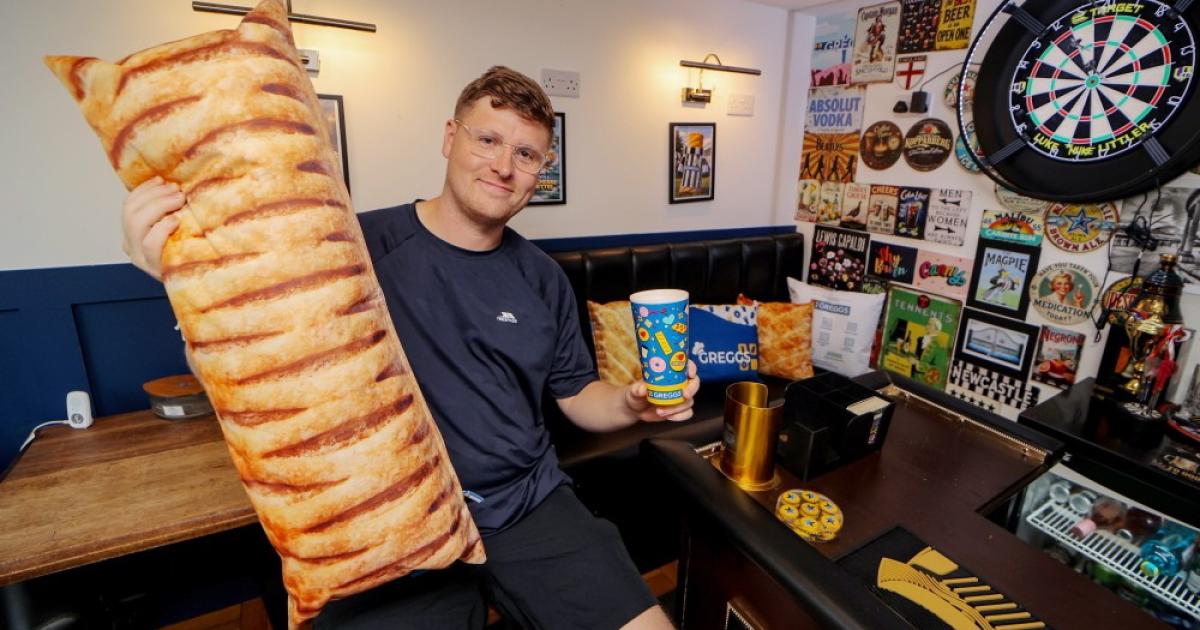
Brad Botcherby, from Gateshead, says his love of the high street bakery inspired him to turn a vague idea for a garden bar into something more unique.
The 30-year-old joiner, known online as ‘The Geordie Joiner’, is so obsessed with Greggs that he visits his local chain every day.
He decided to bring the chain’s distinctive blue-and-white branding to a garden bar he has been dreaming up for a long time.
The new garden bar is filled with bakery-themed decorations and souvenirs, including cushions shaped like Greggs pastries and funky AI-generated artwork of King Charles enjoying a steak bake.
Advertisement
Inside Brad’s Gregg’s themed bar. (Image: North News)
Brad documented the build online to his 60,000 TikTok followers.
He said: “I absolutely love Greggs. It’s just so easy isn’t it? It’s cheap and great for when I’m out on the go. There’s one practically on every corner in the North East.
“My favourite things to get are the sausage, bean and cheese melt and the corned beef bake.
“I usually get six or seven things at a time when I go.
Advertisement
“I had wanted to build a bar in my garden for a while, and thought a Greggs-themed one would be brilliant.”
The idea came together after somebody offered him a spare Greggs shop sign that would have gone to waste.
Brad said: “Initially, we were just creating a normal bar – but because I do a lot of videos about Greggs someone got in touch and said they had a spare shop sign from doing out one of the shops that was just going to go in the skip.
“That’s where the idea came from and we wanted to carry the theme throughout.”
Advertisement
Brad’s Gregg’s themed bar. (Image: North News)
The finished bar also includes a mini fireplace, television, retro radio, sofa and a display dedicated to Newcastle United as well.
Brad’s videos have gone viral, with one of his recent TikTok’s showing off his Greggs cushions racking up over 10,000 likes, and praise from other Greggs enthusiasts calling it a “fantastic use of adult money.”
Brad said: “Everyone who has seen it thinks it’s brilliant. I don’t think anyone else has anything like what we have, which makes it quite niche.”
For a man who admits he visits Greggs every day, it may just be the ultimate way to enjoy a sausage roll.
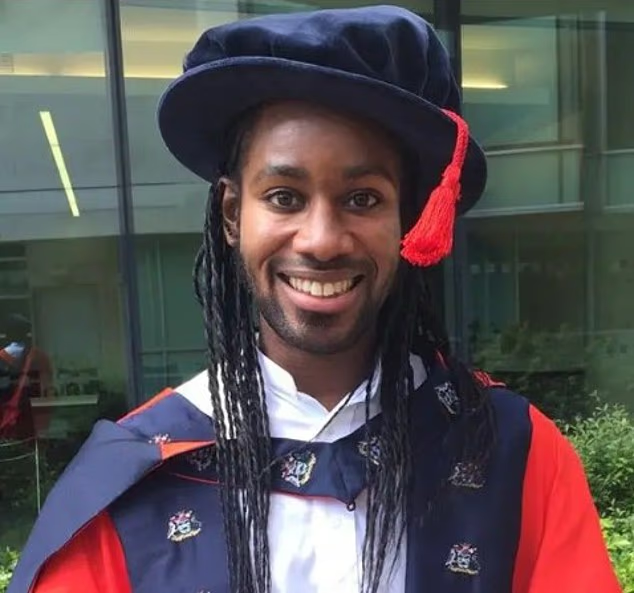
The high-flying academic at the centre of a Cambridge University plagiarism row has been found dead.
Professor Jason Arday was found unresponsive at a London address shortly after 3pm on Friday.
It comes after a tumultuous few weeks in which fellow dons had questioned if the 41-year-old academic’s work was original.
It had also prompted an examination of his previous academic posts.
Advertisement
As questions mounted from academics, journalists and broadcasters, Arday resigned his prestigious role.
He had been Cambridge University’s youngest ever black professor, having been appointed a professor of sociology of education in March 2023.
But after a succession of questions about his past achievements, he quit on August 5.
Cambridge University announced it had ‘begun an investigation following new information about Mr Arday’s academic qualifications and honorary appointments’. Jesus College, where he was a fellow, also launched an investigation.
Advertisement
Professor Jason Arday, 41, was found dead in London. Police said a 41-year-old had been found and that ‘his death is being treated as unexpected, but not believed to be suspicious’
The high-flying academic father-of-two was ‘unresponsive’ at a London address
When Arday resigned from his professorship and his fellowship, he said that this should not be ‘mistaken for an acceptance of the narratives that have surrounded me’. He cited the ‘personal cost’ of the furore which he said had been ‘too great’. He also cancelled a series of events to promote his new memoir, Great And Unfortunate Things, which was released in the US this week.
Advertisement
The Metropolitan Police said in a statement: ‘Police were called by the London Ambulance Service at 3.12pm on Friday, August 14, following a report that a man had been found unresponsive inside a property.
‘Sadly, a 41-year-old man was pronounced dead at the scene. His next-of-kin have been informed and are being supported by officers.
‘At this time his death is being treated as unexpected, but is not believed to be suspicious.’
The statement added: ‘The case is being investigated by officers from the Met’s Central South Command Unit. A file will be prepared for the coroner.’
Advertisement
Prof Arday, a married father-of-two, seemingly had the world at his feet in 2023 when he was appointed Cambridge University’s youngest ever black professor, with the appointment celebrated by the world’s media in which he was the subject of glowing profiles.
His rise was meteoric, given the childhood he has described.
Diagnosed with autism and global developmental delay, Prof Arday said he could not speak until he was 11 and could not read or write until he was 18.
In recent weeks, doubts were cast on his claims but the then-professor denied the accusations against him and disputed claims made about his past.
Advertisement
Many of the claims were connected to Arday’s work for good causes during which said he had raised £5million for charity through long distance running, including running 30 marathons in 35 days.
When he quit, Prof Arday said it was ‘with profound sadness’. He said his appointment had been ‘without question, the greatest professional privilege of my life’, adding: ‘To become the youngest Black professor in the University’s history was something I could scarcely have imagined as a child growing up with a diagnosis of autism, unable to speak until I was 11 years old.’
After days of questions from all quarters, he said: ‘There comes a point when the personal cost becomes too great. I have a family. I want to be present for them. I want to reclaim some peace, some privacy and some semblance of an ordinary life. I no longer wish to feel as though I am living under a constant spotlight, where every aspect of my life is subject to public examination and judgment.
‘For my own wellbeing, for my family, and for those who have stood by me throughout this difficult period, I have concluded that the only way to bring this chapter to an end is to step away.’
Advertisement
Prof Arday said: ‘This decision should not be interpreted as a loss of faith in scholarship or in the values that first brought me to Cambridge. Nor should it be mistaken for an acceptance of the narratives that have surrounded me. It is simply the decision of someone who has reached the limits of what any person should reasonably be expected to endure.’
Amid the mounting questions over the truth, Cambridge University announced an inquiry. This week the university’s vice-chancellor said she understood the concerns raised by the appointment and shared them too.
In a letter to staff, Prof Deborah Prentice acknowledged the ‘anger and anxiety around this damaging and difficult case’.
The university head also announced Cambridge’s investigation would be independent and carried out by senior academics from within and beyond Cambridge and will begin ‘as soon as possible’.
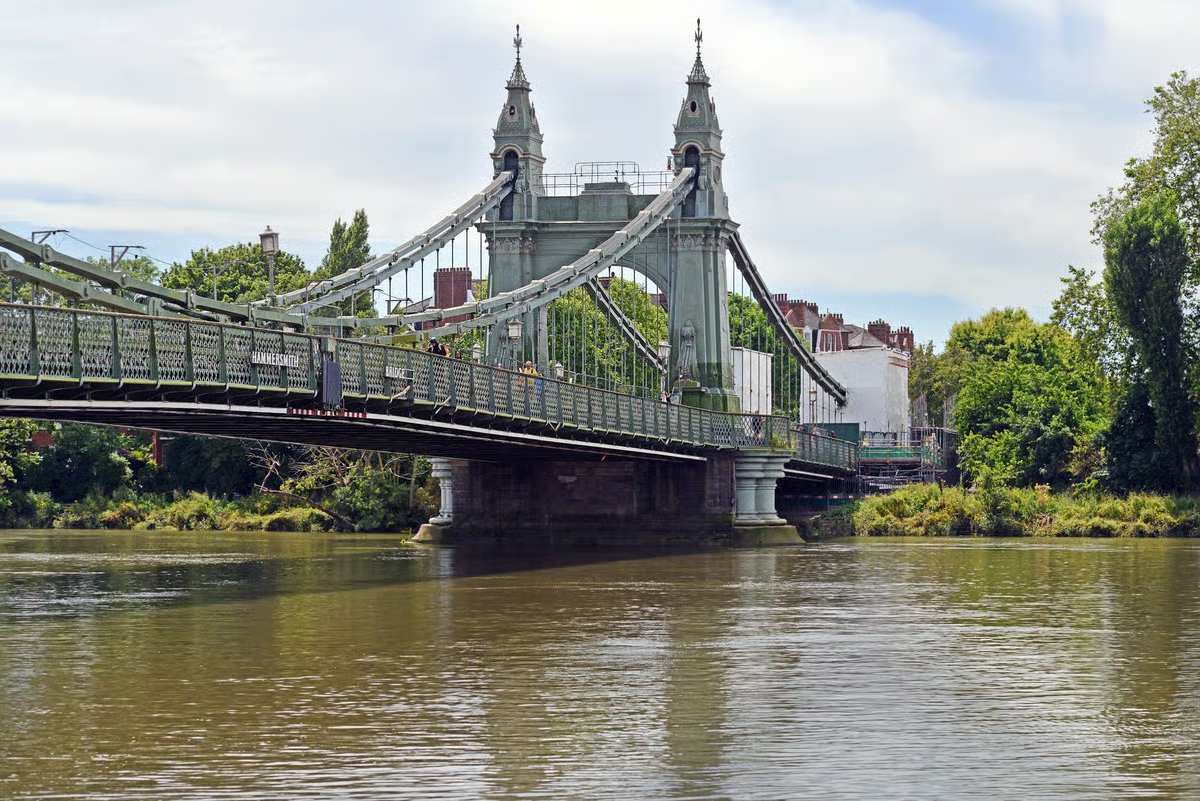
Hammersmith and Fulham, which owns the Grade II* listed bridge, had hoped to secure £300 million to fully restore the bridge, but a report by council officers said the Department for Transport (DfT) had instead recommended it apply for a “phased repair” to keep the bridge open for pedestrians, cyclists and river traffic.























































You must be logged in to post a comment Login