Connect with us

Business

WRU needs to publish evidence underpinning its decision to cut a rugby region

Published

on

Business Live

If individual contributions were made in confidence, redact them. If legal advice must remain privileged, remove it, but just publish

WRU logo.(Image: Huw Evans Picture Agency)

No one disputes that Welsh rugby faces some extraordinarily difficult choices over the next few years, and maintaining the status quo simply because change is difficult is not a credible strategy.

But accepting that change is necessary is very different from accepting that every proposed change is necessarily the right one, and nowhere is that distinction more important than in the decision by the Welsh Rugby Union (WRU) that the long-term future of the professional game should involve reducing the number of regions from four to three.

Advertisement

This would mark one of the most significant structural changes in Welsh rugby since the creation of regional rugby more than two decades ago. It would have implications not only for finances and playing performance but also for supporters, players, communities and the identity of the professional game across Wales.

Most importantly, once implemented, it would be extremely difficult to reverse.

Given this, I would expect any organisation contemplating such a fundamental restructuring to undertake a detailed appraisal before reaching a decision. It should examine the financial consequences of the different options, the assumptions underpinning those projections, the risks associated with each alternative and, critically, what happens if those assumptions turn out to be wrong.

Until recently, it was unclear whether such an appraisal had been undertaken by the WRU and I therefore wrote to chief executive Abi Tierney asking a series of questions about the process that had led the board to conclude that three regions represented the best future for the professional game.

Advertisement

Following further correspondence, we now have a much clearer answer, and it is an important one. Between August and October 2025, the WRU says that it held 32 separate engagement meetings involving a wide range of stakeholders, with each independently minuted and a subsequent report produced for the board.

Alongside this, detailed analysis was undertaken by the executive team and subjected to what the WRU describes as external independent challenge from experts in the field.

More importantly, that work culminated in a formal option appraisal considering a range of options for the professional game, including financial analysis, strategic considerations, an assessment of the principal risks and opportunities, and feedback received through the stakeholder engagement process. It seems that the WRU board considered and approved the appraisal in October 2025, after which it concluded that its preferred long-term strategic direction was a move from four professional regions to three as part of the wider One Wales Strategy.

For those of us who have been asking whether there was a substantive evidence base behind the decision, that clarification is welcome and now what work was undertaken before the Board reached its conclusion. But in answering one important question, the WRU has created another that is arguably even more important.

Advertisement

If this detailed evidence exists, then why can’t Welsh rugby see it?

I am not alone in asking that question, and last week, Scarlets managing director Jon Daniels publicly questioned what he described as the lack of data and transparency surrounding the decision. He argued that a change of this magnitude requires everyone involved in Welsh rugby to understand both the decision and the data used to reach it.

More significantly, he suggested that the Scarlets still did not know the real financial picture and questioned whether every possibility of retaining four professional teams had been properly explored.

So, there is now an uncomfortable contradiction at the heart of this process as the WRU says that a detailed option appraisal was undertaken, containing financial analysis, strategic considerations and an assessment of risks and opportunities. Yet one of the organisations most affected by the outcome says that it still has insufficient visibility of the data used to justify the proposed change.

Advertisement

Those positions are not necessarily incompatible, as consultation can take place without the final analysis being shared, but that is precisely why transparency matters. The WRU has pointed out that some information cannot be shared publicly because it may be commercially sensitive, legally privileged or linked to ongoing negotiations. That is reasonable, but it is not the same as saying the underlying evidence base cannot be shared

If individual contributions were made in confidence, redact them. If legal advice must remain privileged, remove it. If some financial assumptions are commercially sensitive, summarise them. What should remain is the substance of the case and the reasons why three regions emerged as the preferred option.

The WRU has also offered a stakeholder session to explain the work that underpinned the board’s decision and to allow questions, but there is a fundamental difference between being given a presentation and being able to scrutinise the evidence, particularly when we know that the board reached its preferred strategic direction in October 2025.

Yes, boards exist to make decisions, but if one of the regions directly affected is still publicly questioning the evidence and transparency nearly a year later, it is difficult to argue that the case has been sufficiently understood outside that boardroom.

Advertisement

Welsh rugby has experienced enough governance difficulties to know that institutional trust cannot simply be demanded but has to be earned, and openness around major decisions is one of the most effective ways of doing that. There may ultimately be an overwhelming financial and strategic case for three professional regions but, equally, some of the assumptions underpinning that conclusion may prove less convincing when subjected to wider scrutiny.

At present, those outside the board who are affected by this decision cannot make that judgement because they have not been allowed to see enough of the analysis.

Therefore, the next step should be straightforward: the WRU should publish the option appraisal, suitably redacted to protect genuinely confidential information, and allow Welsh rugby to examine the evidence for itself. If it still refuses, member clubs should press for disclosure, as there is simply no longer any reason why it should not be made available.

Indeed, the question is no longer whether the evidence exists but why, if the case for three regions is genuinely compelling, Welsh rugby is still being asked to trust the conclusion without being allowed to properly scrutinise the case behind it. And that simply isn’t good enough.

Advertisement
Continue Reading
Click to comment

You must be logged in to post a comment Login

Leave a Reply

Business

CoreWeave COO Sachin Jain sells $110 in company stock

Published

on


CoreWeave COO Sachin Jain sells $110 in company stock

Continue Reading

Business

Sebi broadens scope of online bond platforms, permits IFSCA-regulated products and tax-saving bonds

Published

on

Sebi broadens scope of online bond platforms, permits IFSCA-regulated products and tax-saving bonds
The Securities and Exchange Board of India (Sebi) has broadened the scope of products, securities and services that can be offered by Online Bond Platform Providers (OBPPs), allowing them to offer products and securities regulated by the International Financial Services Centres Authority (IFSCA), as well as certain tax-specific bonds.

Under the revised framework, OBPPs can offer products, securities or services regulated by financial sector regulators, including SEBI, the Reserve Bank of India (RBI), the Insurance Regulatory and Development Authority of India (IRDAI), IFSCA and the Pension Fund Regulatory and Development Authority (PFRDA), according to the regulator’s latest circular.

OBPPs can also offer bonds issued under Section 54EC of the Income Tax Act, 1961, or Section 85 of the Income-tax Act, 2025.

India’s green bonds find footing as stable ‘greenium’ underscores investor appetite
Advertisement

Insurers in India are showing significant interest in sovereign green bonds, aiding in the establishment of a substantial greenium. With market confidence in the ability to absorb a larger supply, there’s a push for enhanced issuance of these bonds. Insurers need them for optimal asset allocation and regulatory advantages, emphasizing the importance of sustaining this demand in India’s financial landscape.


ALSO READ: MCX launches crude sunflower oil futures contract
What are online bond platforms?


SEBI prescribed a regulatory framework for entities operating or seeking to operate as OBPPs in November 2022, with subsequent circulars setting out registration, permissible products and other operational requirements.
Under the revised framework, OBPPs can continue to offer listed debt securities, listed municipal debt securities, listed securitised debt instruments, debt securities proposed to be listed through a public offering, listed Government Securities, State Development Loans, Treasury Bills and listed Sovereign Gold Bonds.They can now also offer other products, securities or services regulated by financial sector regulators.

IFSCA-regulated products

For products, securities or services regulated by IFSCA, OBPPs will have to offer them in the manner specified for SEBI-registered stock brokers operating within GIFT-IFSC and comply with applicable requirements under the Foreign Exchange Management Act (FEMA), 1999.

Advertisement

This includes applicable Overseas Investment Rules and limits under the Liberalised Remittance Scheme (LRS).

SEBI has also directed that such products, securities or services be clearly labelled as international or overseas instruments to prevent confusion with domestic debt securities.

These products may be offered either under a separate tab on the online bond platform or through another website or platform. They will be governed by the directions and stipulations of the respective financial sector regulator, while the OBPP will have to specify the grievance redressal mechanism on its platform.

Tax-saving bonds

Advertisement

The revised framework also permits OBPPs to offer bonds issued under Section 54EC of the Income Tax Act, 1961, or Section 85 of the Income-tax Act, 2025. SEBI has required platforms offering these bonds to provide a disclaimer stating that these are tax-specific instruments and that grievance redressal for these instruments does not lie with SEBI but with the issuer.

According to the circular, OBPPs must also disclose key features of 54EC bonds, including eligible issuers, lock-in period, investment limit, non-transferable status, tax features and application size. They must also disclose the exemption of these bonds from listing requirements under the SEBI (Listing Obligations and Disclosure Requirements) Regulations, 2015.

SEBI further said that platforms must prominently disclose that investment in these instruments is intended for investors seeking to avail themselves of the associated tax benefits, subject to the eligibility criteria and other conditions prescribed under the applicable provisions of the Income-tax Act.

Compliance officer requirements

Advertisement

SEBI has also modified the compliance requirements for OBPPs. Under the revised framework, an OBPP must appoint a compliance officer in accordance with the SEBI (Stock Brokers) Regulations, 2026.

The compliance officer must comply with the prescribed certification requirements, including the NISM-Series-III-A: Securities Intermediaries Compliance (Non-Fund) Certification Examination for stock brokers, as prescribed from time to time.

Continue Reading

Business

Alphabet becomes Berkshire Hathaway’s third-largest investment

Published

on


Alphabet becomes Berkshire Hathaway’s third-largest investment

Continue Reading

Business

Cooluli recalls 250,000 minifridges sold on Amazon over fire risk

Published

on

Cooluli recalls 250,000 minifridges sold on Amazon over fire risk

Cooluli is recalling about 250,000 minifridges after receiving at least 19 reports of the appliances smoking, sparking, burning, melting, overheating or catching fire, according to the U.S. Consumer Product Safety Commission (CPSC).

The recall covers certain 10-liter and 15-liter Cooluli minifridges because an electrical switch can short circuit, posing fire and burn hazards, the CPSC said.

Advertisement

Cooluli has received reports of property damage totaling more than $80,000. One consumer also reported a smoke inhalation injury, according to the agency.

The affected minifridges were sold online at Amazon.com and Cooluli.com from January 2019 through October 2024 for between $80 and $120.

POPULAR HAIR PRODUCT RECALLED NATIONWIDE OVER POTENTIAL EXPLOSION HAZARD

Pink and white Cooluli minifridge included in a recall of about 250,000 units

About 250,000 Cooluli minifridges are being recalled after reports of the appliances smoking, sparking, burning, melting, overheating or catching fire. (CPSC / Unknown)

The recall includes certain minifridges from Cooluli’s Infinity, Classic, Glow Beauty and Vibe series. The affected products have an internal power supply and two power input ports, AC and DC, on the back instead of a single DC port.

Advertisement

The recalled minifridges were sold in several colors, including black, blue, green, white and red, as well as designs featuring multicolored patterns, photos and logos. “Cooluli” is printed on the front.

The recall covers batch numbers 1535 through 1545 and 1200000 through 1202080. Consumers can find the model and batch numbers on a label inside the minifridge door.

The CPSC urged consumers to stop using the recalled minifridges immediately and contact Cooluli for a free replacement power cord.

200K MAGNETIC ‘GOODY KING’ BUILDING BLOCK TOYS RECALLED OVER INGESTION HAZARD THAT LED TO SURGERY FOR 2 KIDS

Advertisement
Mint and white Cooluli minifridge included among models recalled over fire and burn hazards

Cooluli is recalling certain 10-liter and 15-liter minifridges because an electrical switch can short circuit, posing fire and burn hazards. (CPSC / Unknown)

Consumers will be asked to enter their model and batch numbers on Cooluli’s recall website to determine whether their minifridge is affected. Those with recalled units will be instructed to unplug the minifridge, cut the power cord and submit photos showing the refrigerator’s model and batch numbers.

Cooluli will provide affected consumers with a replacement DC power cord and a permanent sticker to cover the AC port, according to the CPSC.

FOX Business reached out to Cooluli for comment on the recall, the reported incidents and the steps the company is taking to address the issue.

Label inside a Cooluli Infinity 15L minifridge showing its model and batch number

The label inside a recalled Cooluli minifridge shows the model and batch number consumers can use to determine whether their unit is included in the recall. (CPSC / Unknown)

CLICK HERE TO GET FOX BUSINESS ON THE GO

Advertisement

The minifridges were manufactured in China by Ningbo Iceberg Electronic Appliance Co., Ltd., and imported by Brooklyn, New York-based Lisse USA LLC.

Consumers can contact Cooluli at 718-834-5312 from 8 a.m. to 5 p.m. ET Monday through Friday or email recall@cooluli.com for more information.

Continue Reading

Business

8 Rivers Capital sells $1.4m in Net Power (NASDAQ:NPWR) stock

Published

on


8 Rivers Capital sells $1.4m in Net Power (NASDAQ:NPWR) stock

Continue Reading

Business

Target Website And App Down Now? Users Report Outage Friday Morning As Downdetector Tracks Rising Complaints

Published

on

Commonwealth Bank of Australia

Target customers began reporting problems accessing the retailer’s website and mobile app Friday morning, according to outage-tracking service Downdetector, in what appeared to be a developing disruption affecting the company’s digital shopping platforms.

Downdetector said user reports indicating problems with Target began climbing at 10:03 a.m. Eastern time. The tracking service posted about the rising number of reports on its official account on the social platform X, asking affected users to describe how the outage was impacting them and tagging the post with the hashtag “TargetDown.”

As of Friday morning, Target had not issued a detailed public statement addressing the scope, cause or expected resolution timeline for the reported disruption. Separate outage-monitoring services showed a mixed picture of the retailer’s status around the same period. One tracker, WebsiteDown, reported that its automated probe found Target’s website reachable and responding normally, while noting that any issues appeared to have already cleared by the time of its check. Another service, Outage.now, similarly indicated it had not detected any outages affecting Target over the preceding 24 hours as of Friday, though it remained unclear whether that data reflected conditions before or after the wave of reports Downdetector flagged at 10:03 a.m.

Target does not maintain a widely publicized, continuously updated public status page of its own for customer-facing outages, meaning shoppers and outside observers typically rely on Downdetector and similar third-party monitoring tools, along with the company’s official social media accounts, to gauge the scope of a disruption before Target issues any direct acknowledgment.

Advertisement

Friday’s reported issue would not be the first time Target’s digital platforms have experienced problems. In December 2025, the retailer’s website and app suffered a significant outage that began generating elevated Downdetector reports shortly after 6 a.m. Eastern time and continued disrupting customers throughout the day, landing just days before Christmas during the peak holiday shopping period. At the time, a Target spokesperson acknowledged the issue directly in a statement, saying, “We’re aware of intermittent issues with our digital experience and a fix is underway,” while noting that the company’s physical stores remained open and ready for holiday shoppers. Target also posted updates to its official X account during that earlier incident, telling affected customers at one point that the company’s systems were “temporarily down” and advising them to try their transactions again within one to two hours.

Target’s digital and point-of-sale systems have experienced other significant disruptions in past years as well. In one earlier incident, the company experienced a global point-of-sale outage that left many stores able to accept only cash and gift cards, with checkout systems down for more than two hours on the first day and continuing to cause problems into a second consecutive day. Following that episode, Target confirmed the disruption was not connected to any data breach or security incident, telling customers that no guest information had been compromised, and attributing the outage instead to an internal technology issue without disclosing further specifics.

Target operates one of the largest e-commerce and retail platforms in the United States, with its website and app supporting product browsing, checkout, order tracking, and in-store pickup scheduling for millions of customers. According to monitoring services that track the retailer’s digital infrastructure, outages affecting Target’s online systems have historically tended to spike around high-traffic shopping periods, including the release of the company’s weekly promotional deals, Black Friday and Cyber Monday, when checkout systems face significantly elevated transaction volumes.

For customers experiencing ongoing issues Friday, standard troubleshooting guidance compiled by outage-tracking services recommended several basic steps, including forcing a full browser refresh, clearing browser cache and cookies, trying an alternate web browser, and disabling browser extensions that could potentially be interfering with the site’s normal functionality. Customers were also advised to check Target’s official social media accounts for any outage-related announcements and to contact the company’s customer support team directly through the app’s help section for issues specifically related to existing orders.

Advertisement

Given the discrepancy between Downdetector’s report of rising complaints beginning at 10:03 a.m. and other monitoring tools showing no detected issues around the same general timeframe, the true scope and duration of Friday’s disruption remained difficult to independently confirm using publicly available tracking data alone. Some outage reports affecting large retailers can reflect brief, localized or quickly resolved technical issues that do not register clearly across every third-party monitoring service, particularly when a problem affects only a specific subset of site functionality, such as checkout or order tracking, rather than the platform as a whole.

This remains a developing situation, and additional details regarding the precise scope, underlying cause and resolution timeline of Friday’s reported Target outage were not immediately available. The company had not issued an official public acknowledgment of the disruption as of Friday morning, leaving affected customers largely reliant on Downdetector and Target’s own customer service channels to determine whether their individual access problems were part of a broader, platform-wide issue.

Continue Reading

Business

Voters across Latin America push back against socialism

Published

on

Voters across Latin America push back against socialism

Latin Americans have had it with socialism.

Over the past decade, more than half of Latin America’s nations have voted socialists out. From large countries like Argentina to tiny ones like El Salvador, socialists have been replaced with conservative leaders who’ve made significant progress turning their economies around.

Advertisement

That list could grow as Cuba and Nicaragua are on the cusp of collapse after their oil lifelines from Venezuela were cut following the arrest of Nicolás Maduro.

Argentine President Javier Milei.

Argentine President Javier Milei said in 2024 that, “We’re here to tell you that collectivist experiments are never the solution to the problems that afflict the citizens of the world. Rather, they are the root cause.” (Angelia Weiss/AFP via Getty Images)

NOW AMERICA REACHED A POLITICAL TIPPING POINT FOR SOCIALISM

The real incentive for dumping socialism is voter recognition that it just hasn’t worked. What is working are policies based on market solutions.

In Argentina, monthly inflation has tumbled from 25% to just 2%. Massive cuts in government have led to fiscal surpluses, and Moody’s upgraded their investment outlook to positive.

Advertisement

DAVID ASMAN ON COVID-19 TIPPING OFF RISE IN SOCIALISM: ‘PERFECT STORM’

“We’re here to tell you that collectivist experiments are never the solution to the problems that afflict the citizens of the world. Rather, they are the root cause,” Argentine President Javier Milei said in a 2024 speech at the World Economic Forum in Davos, Switzerland.

Argentinian President Javier Milei

In Argentina, monthly inflation has tumbled from 25% to just 2%. (Fabrice Coffrini/AFP via Getty Images)

Following the ouster of a socialist government in Ecuador, economic conditions there improved, with the GDP rebounding 3.7% in 2025 and the nation returned to international bond markets this year.

LATIN AMERICA’S SOCIALIST EXPERIMENTS LEAVE DEVASTATING TRAIL OF ECONOMIC COLLAPSE AND POVERTY

Advertisement

In Costa Rica, voters’ rejection of the ruling leftist party coincided with an estimated 20% relative decline in poverty from 2021 to 2024.

And those are just a few examples of the progress being made. Latin America has had many course changes over the years, and all this could turn around again. But probably not while memories of many socialist failures are so fresh and painful.

GET FOX BUSINESS ON THE GO BY CLICKING HERE

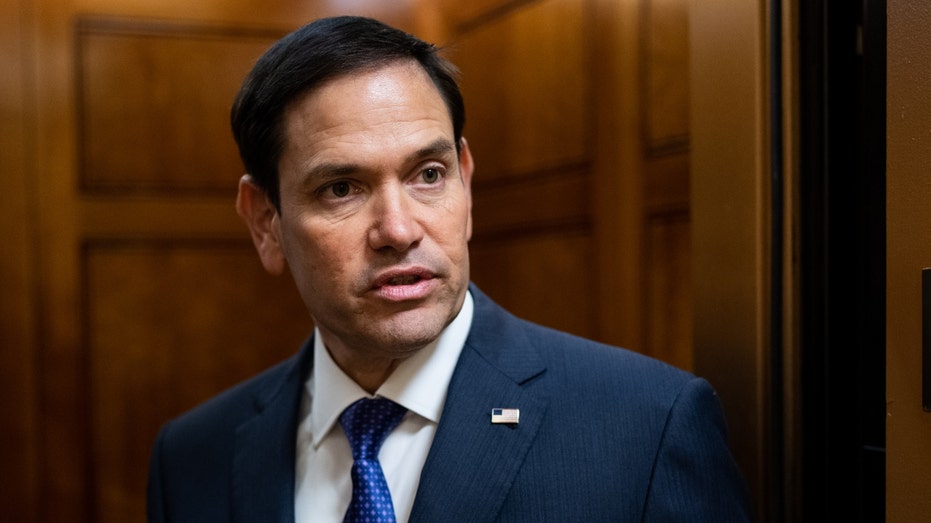
Latin America’s growing rejection of socialism also coincided with Secretary of State Marco Rubio’s cancellation of 83% of USAID programs, which he claims were doing more harm than good.

Advertisement
Marco Rubio talks to reporters

Secretary of State Marco Rubio announced the cancellation of 83% of USAID programs in March 2025. (Bill Clark/CQ-Roll Call, Inc via Getty Images)

Continue Reading

Business

Lument Finance Trust, Inc. (LFT) Q2 2026 Earnings Call Transcript

Published

on

OneWater Marine Inc. (ONEW) Q1 2026 Earnings Call Transcript