
Business
Msa Safety chairman Nishan Vartanian sells $3.88m in shares




APA Corporation: Five Years Of Portfolio Discipline, One Deepwater Bet

Paylocity director Steven Sarowitz sells $1.68m of stock
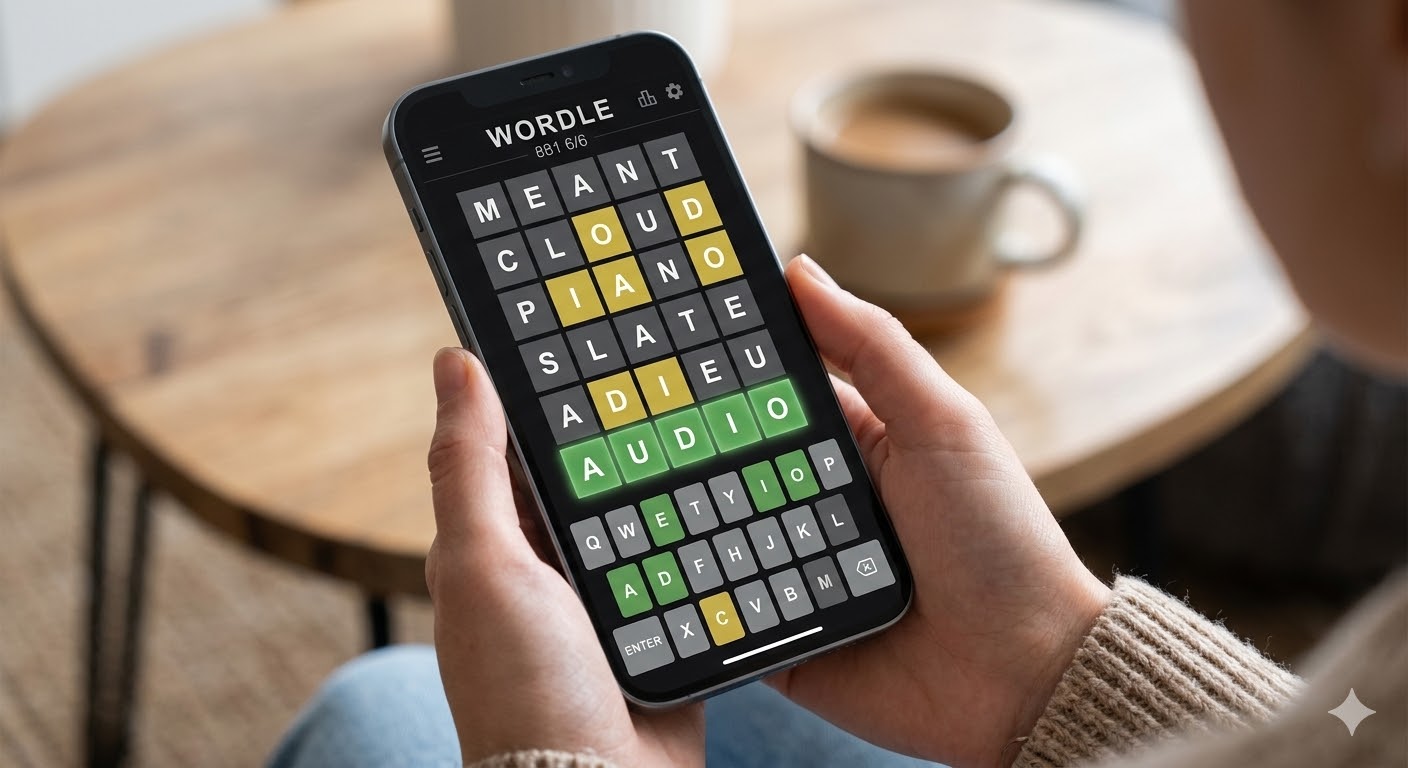
NEW YORK — Wordle players faced a moderately challenging puzzle Sunday built around a specific culinary term, with Wordle No. 1884 leading solvers through a somewhat obscure food-related word before the correct answer came into view.
The word of the day was ASPIC, a noun referring to a savory jelly made from clarified meat, fish or vegetable stock, traditionally used to encase or garnish other foods in classic and often old-fashioned culinary presentations. Hint columns published ahead of the reveal described the word’s culinary meaning directly, while also noting its structural properties to help guide solvers without spelling out the answer outright.
Wordle, the daily word-guessing game created by software engineer Josh Wardle in 2021 and later acquired by The New York Times, challenges players to identify a hidden five-letter word within six attempts. After each guess, tiles turn green if a letter is correct and in the right position, yellow if the letter appears elsewhere in the word, and gray if the letter does not appear in the word at all. A new puzzle resets daily at midnight in each player’s local time zone.
Sunday’s word carried a straightforward letter structure that nonetheless tripped up a number of players, largely because the word itself falls outside many solvers’ everyday vocabulary. ASPIC contains two vowels, A and I, alongside three consonants, S, P and C, with no repeated letters anywhere in the word. Puzzle-hint outlets noted the puzzle’s difficulty stemmed less from its letter pattern and more from the relative obscurity of the word itself, since aspic is a somewhat old-fashioned culinary term that has fallen out of common use in most modern kitchens.
The Mirror described Sunday’s puzzle as “moderately challenging,” a characterization echoed across several other hint columns covering the day’s word. Strategy guides published alongside the puzzle reminded players to avoid ruling out repeated letters too quickly in future puzzles, even though Sunday’s specific word contained none, and encouraged solvers to balance risk and certainty in their final guesses, favoring words that fit all previously confirmed letter constraints once only one or two attempts remained.
Multiple outlets suggested that players who correctly identified the word’s general category, a food-related term, could narrow down the field of possible five-letter culinary words more effectively than those guessing without any thematic anchor. Even so, hint columns acknowledged that aspic’s specific and somewhat niche definition likely caught out solvers who were unfamiliar with the dish, regardless of how effectively they had eliminated letters through their earlier guesses.
Wordle has grown into one of the most widely played online word games since its public debut in October 2021, spawning a broader suite of daily puzzles under the Times’ games umbrella, including Connections, Strands, the Mini Crossword and Quordle, a more demanding spinoff requiring players to solve four five-letter words simultaneously within nine attempts. Millions of players complete some or all of these puzzles each day as part of a now-familiar daily routine, often tracking personal win streaks that reset if a day’s puzzle is missed entirely.
The Times does not publish official difficulty ratings for individual Wordle puzzles, but third-party trackers analyzing aggregated player data described Sunday’s puzzle as landing on the tougher end of the spectrum, driven primarily by the specificity of the word’s definition rather than any particularly unusual letter arrangement. Puzzle-hint sites have increasingly taken to publishing running lists of five-letter words that have not yet appeared as Wordle answers, giving veteran players a resource for narrowing down potential future puzzles as the game’s archive of past answers continues to expand.
As with every Wordle puzzle, Sunday’s word will not repeat in future editions, and the game’s archive updates automatically at midnight local time with a new challenge. Players who missed Sunday’s puzzle can still access it, along with every previous day’s puzzle, through Wordle’s official online archive.
Sunday’s puzzle arrived as part of the broader daily slate of New York Times word games, including the standard Connections puzzle, the newer Connections: Sports Edition, and the Mini Crossword, all of which reset at midnight alongside Wordle. For many regular players, completing the full slate of daily puzzles in sequence each morning has become a fixture of their routine, a pattern the Times has continued to cultivate since folding Wordle into its broader games app.
Looking ahead, puzzle enthusiasts can expect Monday’s Wordle to reset at midnight local time with an entirely new five-letter challenge, continuing a daily cadence that has now stretched across more than 1,800 consecutive puzzles since the game’s original launch.
NEW YORK — Sunday’s edition of The New York Times’ Connections puzzle sent players through categories built around family relationship terms, participants in a deal or venture, live music performances, and literal English translations of early human species names, in a grid that puzzle columnists rated as one of the trickier entries in recent weeks thanks to a deliberate piano-themed decoy.
Connections, published daily by the Times as part of its expanding suite of word games, presents 16 words or phrases that must be sorted into four hidden groups of four. Each group shares a common theme, and the puzzle is color-coded by difficulty, with yellow generally representing the most straightforward category and purple the most challenging. Players are permitted up to four incorrect guesses before the game ends.
Sunday’s puzzle, numbered 1162, organized its 16 entries into four categories: words that modify family relationships, terms for a participant or party involved in something, synonyms for a live music performance, and literal translations of scientific names for early human species.
The yellow group, typically the easiest of the four, centered on prefixes commonly used to modify family relationship terms. It included “grand,” “great,” “half” and “step,” four words that combine with terms like “mother,” “aunt,” “sister” and “father” to describe extended or non-immediate family relationships. Puzzle commentary noted this category rewarded straightforward pattern recognition once solvers considered the words in the context of family terminology rather than their more common standalone meanings.
The green group asked players to identify words meaning a participant or party involved in some activity, deal or situation, linking “actor,” “agent,” “party” and “player.” Each word can describe someone taking part in a broader arrangement or event, whether in a business, legal or general sense, a category commentators noted required solvers to think beyond each word’s more common, narrower definition.
The blue category grouped synonyms for a live music performance, linking “concert,” “gig,” “set” and “show.” This category doubled as a deliberate trap for unwary solvers, since both “grand” and “concert” plausibly evoke piano terminology, “grand piano” and “concert piano” among them, a red herring several puzzle columnists admitted fell for on their first attempt. In reality, “concert” belonged to the performance category while “grand” belonged to the family-relationship group, meaning no piano-themed category existed in the puzzle at all.
The purple group, the day’s most difficult, required knowledge of anthropology and etymology. It linked “from Neander,” “handy,” “upright” and “wise,” each representing a literal English translation of part of a scientific species name associated with early human ancestors: Homo habilis translates roughly to “handy man,” Homo erectus to “upright man,” Homo sapiens to “wise man,” and Homo neanderthalensis to, roughly, “man from the Neander Valley,” a reference to the German valley where the first Neanderthal fossils were discovered. Puzzle site Nerdschalk described the category as centered on “characteristics associated with early humans,” while Parade advised players that a working knowledge of early human ancestry would prove essential to cracking the puzzle’s toughest group.
Forbes contributor Erik Kain, who covers Connections regularly, rated Sunday’s puzzle a 4 out of 5 on the outlet’s difficulty scale, noting he had briefly suspected it might reach the maximum difficulty rating before finally untangling the piano-themed red herrings separating the family and performance categories.
Connections has become one of the most closely followed entries in the Times’ games lineup since its 2023 launch, following the runaway success of Wordle, which the Times acquired the previous year. The puzzle rewards lateral thinking over straightforward vocabulary knowledge, since individual words can often plausibly belong to more than one category, a design choice intended to create red herrings that complicate early guesses. Sunday’s puzzle offered a particularly clean example of that design philosophy, using two words strongly associated with pianos to mislead solvers away from their actual, correct categories entirely.
Connections is written under the direction of the Times’ crossword editor, Wyna Liu, who oversees the game’s daily categories. Sunday’s puzzle arrived alongside the Times’ newer Connections: Sports Edition, a spinoff produced in partnership with The Athletic that applies the same grouping format to sports-specific terminology, running each day alongside the standard puzzle rather than replacing it.
The Times does not disclose internal difficulty ratings for individual Connections puzzles, but outlets that publish daily hint columns generally rank each day’s difficulty based on reader feedback and common patterns of mistakes. Sunday’s puzzle was widely described as more challenging than average, with the deliberate piano misdirection and the specialized anthropological knowledge required for the purple category both cited as primary sources of difficulty.
Connections remains part of a broader daily routine for millions of puzzle enthusiasts who also complete Wordle, the Mini Crossword and Strands each morning, all of which reset at midnight in each player’s local time zone. Players who missed Sunday’s puzzle or want to revisit past solutions can access the Connections archive through the Times’ Games app for subscribers with All Access or Games-specific subscriptions. A new Connections puzzle, along with a new Connections: Sports Edition, Wordle and Mini Crossword, will be published at midnight Monday.
Immunome director Isaac Barchas sells $940,453 in common stock

Mutual funds raised their cash holdings by Rs 7,856 crore to Rs 1.90 lakh crore in July, recovering from a 19-month low in June. PPFAS held the most cash at Rs 25,291 crore, followed by SBI and HDFC Mutual Fund.
Business
(VIDEO) Trump Approves Emergency Declaration As Historic Indiana Flooding Kills At Least Five People
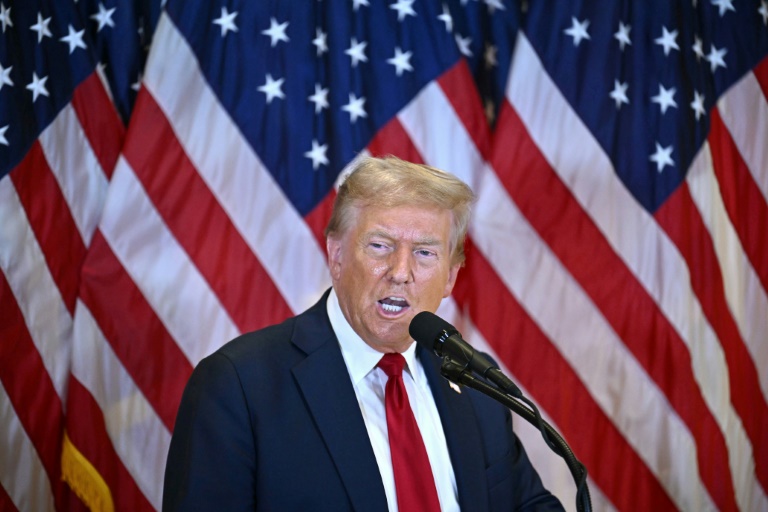
INDIANAPOLIS — President Donald Trump approved a federal emergency declaration for Indiana on Saturday as historic flooding tied to the White River killed at least five people, forced hundreds of evacuations across the Indianapolis area, and pushed river levels to heights not seen in more than a century.
FEMA announced just before 8:30 p.m. Saturday that federal disaster assistance would be available to Indiana following Trump’s approval, a move Gov. Mike Braun had formally requested a day earlier. The declaration allows the Federal Emergency Management Agency to cover 75% of eligible emergency response costs, including rescue operations and emergency sheltering, across 53 Indiana counties, though it stops short of a full disaster declaration.
Braun said he spoke with Trump shortly before announcing the news at a press conference. “I spoke with President Trump today about the severe storms and historic flooding impacting Indiana,” Braun said, crediting the coordinated push from state officeholders and members of Congress with helping expedite a process that typically takes four to five days.
The flooding stemmed from days of heavy rainfall, compounded by a likely derecho that struck the state August 11. The National Weather Service reported more than 11 inches of rain fell over a two-day period in parts of central Indiana, sending the White River to record levels as the water moved downstream toward Indianapolis. In Noblesville, the river crested overnight at 24.6 feet, surpassing a previous record of 23.8 feet set in March 1913. Indianapolis Mayor Joe Hogsett described the flooding as the city’s worst in more than 30 years.
Indiana Department of Homeland Security executive director Jonathan Whitham said the scale of the event ranked among the most severe the state has faced in recent memory. “This is a historic event for Indiana,” Whitham said, adding that he expects tens of millions of dollars in property and infrastructure damage, calling the estimate a conservative “low ballpark” figure.
At least five deaths have been confirmed by state officials as tied to the storms and flooding, though authorities said they continue investigating whether additional deaths may be connected to the storm system. Among those who died was Matthew Morey, a 19-year-old Delta High School graduate headed to Purdue University, whose body was recovered from the Mississinewa River in Delaware County three days after he and three friends jumped off a bridge into the water. Jeff Stanley, chief deputy of the Delaware County Sheriff’s Department, addressed the loss directly. “Our hearts are with Matthew’s family, friends, classmates, and everyone who knew and loved him,” Stanley said, adding that investigators had committed to searching until his family had answers.
A second Delaware County resident, 59-year-old Stephanie Sallee, was also found dead after officials said her car was swept away by floodwaters while she was driving through a rain-swollen area.
In Indianapolis, the White River’s rise triggered evacuations across several neighborhoods, including Rocky Ripple, Ravenswood and Broad Ripple. City officials said roughly 400 people had been evacuated from Ravenswood alone, in addition to those evacuated from Broad Ripple the previous night, while emergency crews conducted dozens of water rescues using boats. The Department of Public Works closed floodgates overnight around the Indianapolis Arts Center, the Edgewater Apartments, and other properties along the river’s south bank, and later moved to close the 53rd Street bridge in Rocky Ripple, prompting the town to post an urgent warning telling residents it was their “last way out.”
Public Works Director Todd Wilson urged continued caution even as officials tracked the river’s crest. “The water is still rising and will be rising all day long,” Wilson said. “Heed the warnings.”
In Carmel, north of Indianapolis, roughly 40 residents were evacuated, including residents of the Bickford of Carmel assisted living facility, who were relocated to other care facilities and a local church. Sinkholes also forced the closure of a stretch of Hazel Dell Parkway in Carmel after the ground gave way near Blue Woods Creek.
Beyond the immediate flooding response, authorities in Wayne County warned residents to remain alert for scammers posing as FEMA representatives going door to door. Indiana Attorney General Todd Rokita urged residents to verify credentials of anyone claiming to offer flood relief, avoid wire transfers, and insist on written agreements, noting that FEMA never charges application fees.
Braun pointed to the state’s $1.14 billion rainy day fund as a key resource supporting Indiana’s response, while acknowledging that increasingly extreme weather could reshape how the state approaches disaster preparedness going forward, drawing a comparison to hurricane-prone Florida’s approach to insurance and readiness. Indiana has recorded 81 confirmed tornadoes so far in 2026, and Whitham said the scale of this summer’s flood damage could rival or exceed costs from the state’s last major flooding event, in June 2008.
With water levels beginning to recede in some areas Saturday evening even as new rain moved through parts of northern Indiana, officials cautioned that the danger was not yet over, warning that flash flooding remained possible in low-lying areas even after the White River’s crest had passed.

German investment in the U.S. drops to three-year low amid policy uncertainty


I am a self-educated deep value investor. I mostly focus on US small caps as I believe most of the value opportunities can be found there in the current market. I love to look at beaten-down or underfollowed stocks searching for mean reversion opportunities. I look for classic deep value situations based on undervalued assets, in line with the classic net net investing of Benjamin Graham or the deep book value discounts of Walter Schloss. I also like Mohnish Pabrai’s out-of-the box thinking regarding cheap assets. I am also looking for companies facing temporary problems that are executing successful turnarounds. I am a big believer of the counterintuitive thesis that some of the best investment returns can be achieved not by popular high-fliers, but when a company’s situation improves from “really bad” to “average”. I started investing in the years leading up to the pandemic, so I have experienced both mild bear markets and raging bull markets during my investing journey. Unsurprisingly, I tend to find more opportunities in down markets.
Analyst’s Disclosure: I/we have no stock, option or similar derivative position in any of the companies mentioned, and no plans to initiate any such positions within the next 72 hours. I wrote this article myself, and it expresses my own opinions. I am not receiving compensation for it (other than from Seeking Alpha). I have no business relationship with any company whose stock is mentioned in this article.
Seeking Alpha’s Disclosure: Past performance is no guarantee of future results. No recommendation or advice is being given as to whether any investment is suitable for a particular investor. Any views or opinions expressed above may not reflect those of Seeking Alpha as a whole. Seeking Alpha is not a licensed securities dealer, broker or US investment adviser or investment bank. Our analysts are third party authors that include both professional investors and individual investors who may not be licensed or certified by any institute or regulatory body.
9 penny stocks surge up to 325% in 2026 so far; 3 turn multibaggers. Did you own any?

Birmingham 2026: Day 7 Timetable for Irish Athletes

Amazon Drops 2026 MacBook Pro Price, 48GB RAM $300 Off

Peterborough boy calls 999 after being banned from his X-Box account


-

 Fashion2 days ago
Weekend Open Thread: Ann Taylor
-

 Business7 days ago
Datadog: Best Of Breed For Multiple Reasons
-
 NewsBeat4 days ago
Communication cards help banking customers access services or report scams
-
 Business5 days ago
Oil Price Today (August 11): Crude oil rises to $88 after Trump’s compensation demand dents Hormuz opening. Here’s why
-

 Crypto World5 days ago
Revolut wins French banking licence, creates second EU banking hub
-

 Fashion7 days ago
Amazon Sundays: Closet Care Before Fall
-
 Crypto World5 days ago
Why Did Nvidia Stock Fall on Monday Despite a $500 Billion Wall Street AI Deal?
-

 Business7 days ago
5 Things You Must Know About Jorge Messi, the Father and Longtime Agent Who Shaped Lionel Messi’s Career
-

 Politics6 days ago
Ben-Gvir’s crocodile project halted but abuses at Ketziot Prison continue
-

 Politics7 days ago
The Church of England’s ruinous reparations racket
-

 Politics6 days ago
Saudi Arabia used 86% of missile stockpile defending Iran attacks
-

 Politics21 hours ago
SEQ Code: The Three Letter Boarding Pass Code That Could Give You The Worst Seat
-
 NewsBeat1 day ago
Myanmar says over 300,000 Rohingya refugees verified for repatriation as exodus enters ninth year
-

 Fashion6 days ago
Can You Wear Double Cloth Gauze Clothing To Your Office?
-

 Crypto World7 days ago
Crypto Made a $9.6 Billion Record, But It’s Hiding a Crucial Truth
-
 Crypto World7 days ago
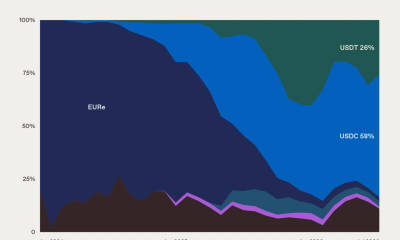
USDC and USDT Now Own 84% of Crypto Card Spend as the Euro Retreats
-
 Business7 days ago
Zevia: The Fanbase Nobody Can Find
-
 Crypto World7 days ago
Is Clarity's delay a blessing in disguise?: State of Crypto
-

 Crypto World6 days ago
Kraken Delisting Deadline Nears: Holders of 21 Tokens Risk Near-Zero Payouts
-
 Crypto World6 days ago
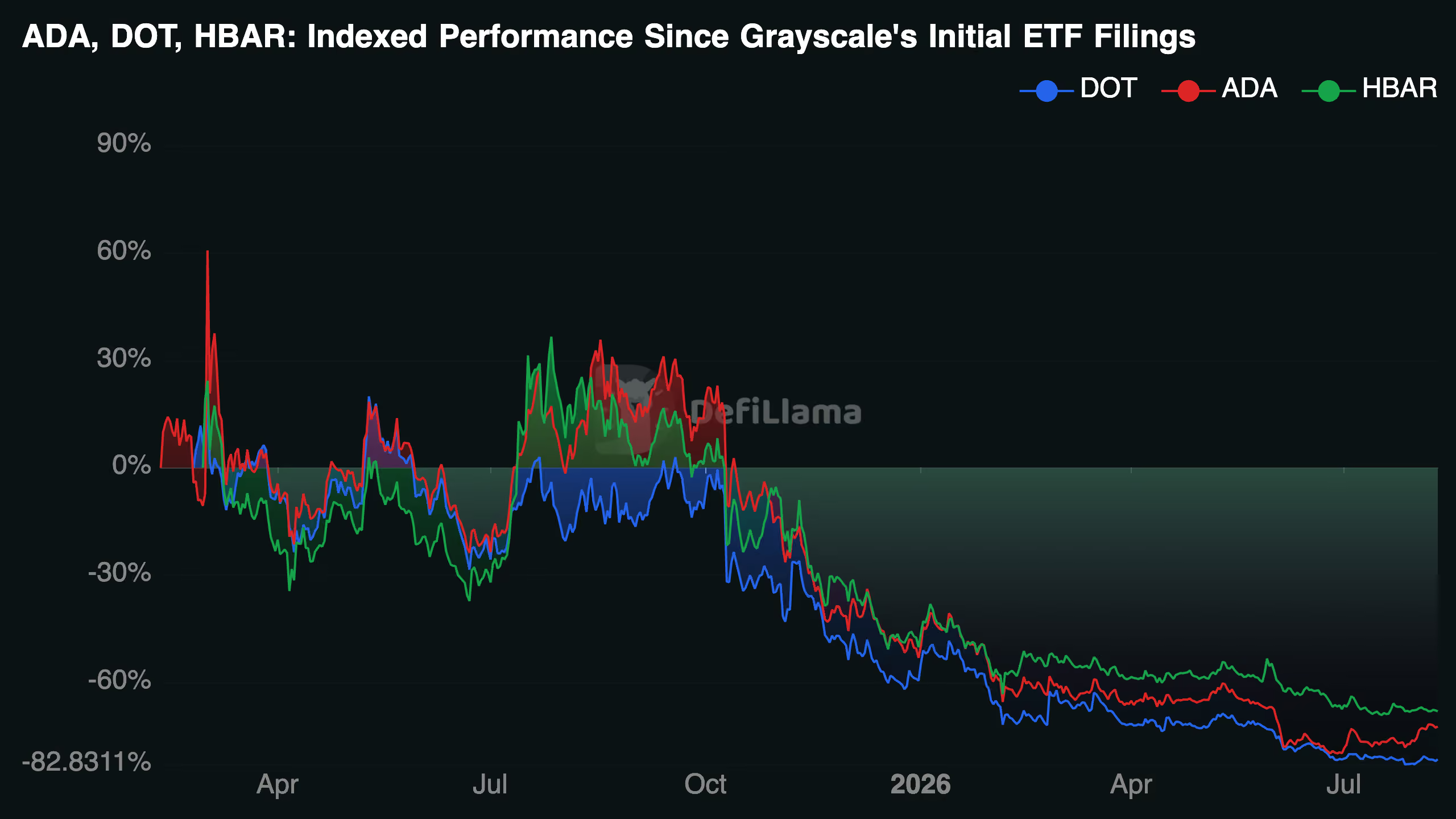
Grayscale quietly drops Cardano, Polkadot and Hedera ETF plans
You must be logged in to post a comment Login