
Tech
DSPeaker ShakEQ Comes to CEDIA 2026 Because Apparently Your Sofa Needs Room Correction Too

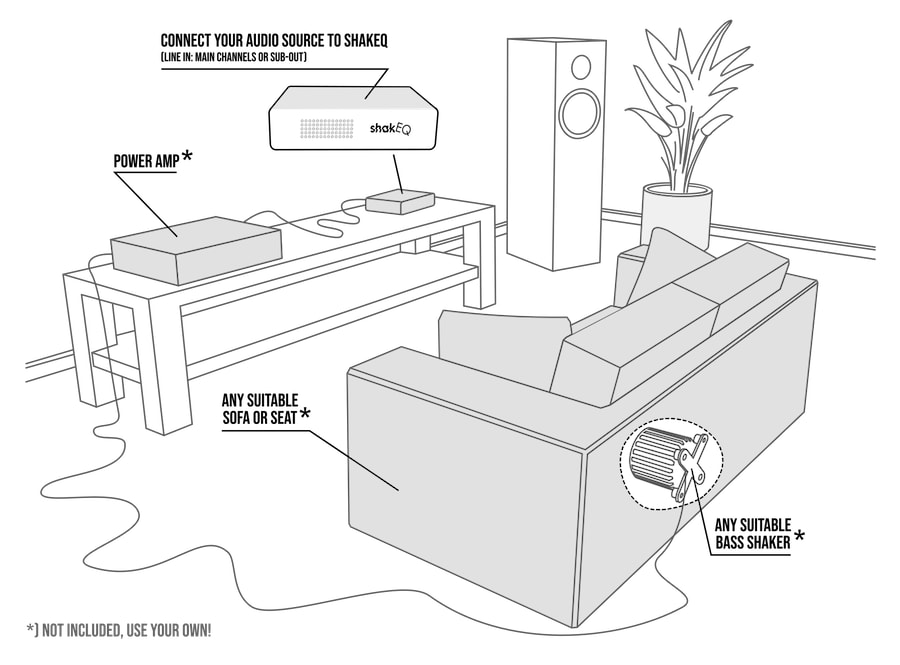
Bass shakers are one of home theater’s more entertaining blunt instruments. Attach a tactile transducer to a recliner or platform, feed it low-frequency information, and explosions, engines, dinosaurs, and spacecraft can suddenly be felt as much as heard.
The problem is that the chair, sofa, mounting method, transducer, amplifier, and even the person sitting in the seat can change how those vibrations actually feel.
DSPeaker ShakEQ is designed to do something about that. The Finnish company will demonstrate its dedicated tactile signal processor at CEDIA Expo 2026 in Denver, September 1 through 4, including a new Content-Based Adaptive Bass Lift feature that CEDIA says will make its first public appearance at the show.
Room Correction for Your Sofa?
That description sounds ridiculous until you understand what ShakEQ actually does.
DSPeaker describes ShakEQ as the first digital signal processor developed specifically for bass shakers and tactile transducers. Rather than simply sending the same low-frequency audio destined for a subwoofer into a shaker amplifier, ShakEQ processes a dedicated tactile signal and can measure how the shaker system is behaving at the listening position.
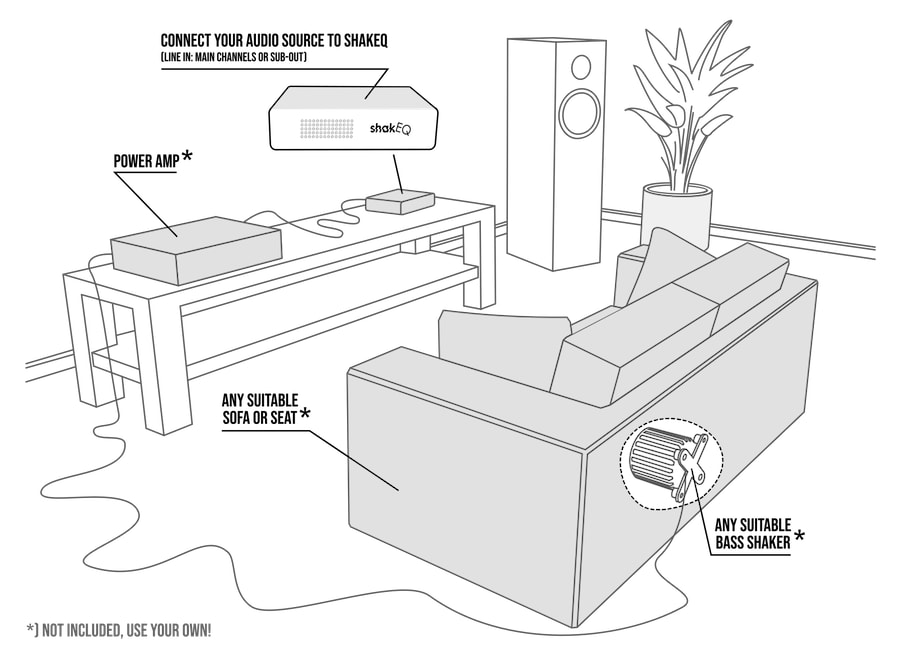
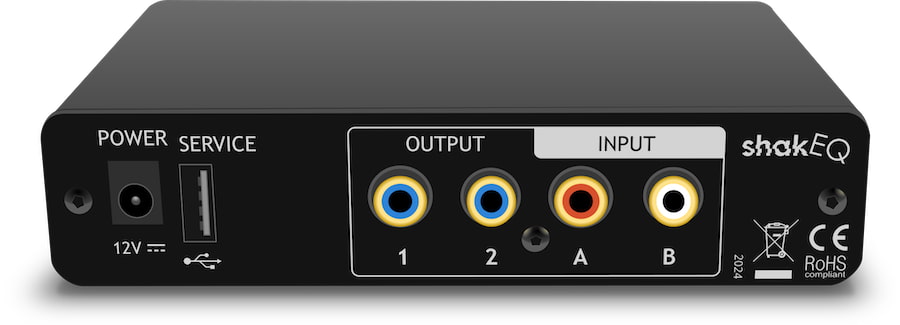
The unit connects between the audio source or AVR and the amplifier powering the tactile transducers. Two RCA inputs and two RCA outputs support either dual shaker outputs or a configuration combining a shaker with a subwoofer. DSPeaker recommends separate subwoofer and shaker outputs from the AVR when available because that allows the two signal paths to be handled independently.
One thing needs to be clear: ShakEQ is not an amplifier and does not replace your ButtKicker, Crowson, or other tactile transducer. You still need the shaker hardware and suitable amplification.
The Interesting Part Is the Calibration
This is where ShakEQ separates itself from conventional tactile systems.
During automatic calibration, the listener places the supplied vibration sensors on the seat and actually sits on them while ShakEQ measures the movement of the furniture. Three measurements are taken from slightly different seating positions, allowing the processor to analyze the complete shaker, mounting structure, furniture, and listener combination.
Yes, your backside has effectively become part of the measurement chain.
ShakEQ then applies automatic equalization intended to reduce resonance peaks and compensate for weaker areas of the tactile response. Manual EQ, crossover adjustment, delay alignment, and separate profiles for movies, games, and music are also provided.
That delay control could be particularly useful because tactile energy reaching your body at noticeably different times from the corresponding audible bass can make an otherwise expensive installation feel disconnected.
What Else Does ShakEQ Do?
Bass Extender analyzes mid-bass information and creates deeper low-frequency tactile energy when the original soundtrack does not contain enough content to generate meaningful movement. DSPeaker positions this as a way to produce useful tactile information from material that might otherwise barely activate the transducers.
The Dynamic Range Optimizer adjusts tactile dynamics according to the source material and shaker system. DSPeaker says its context-aware processing can increase low-level tactile detail or impact without simply compressing everything continuously.
ShakEQ can also provide optional Anti-Mode subwoofer room correction, although that feature requires a compatible measurement microphone; the tactile measurement sensors supplied with ShakEQ perform a different job.
CEDIA also lists Content-Based Adaptive Bass Lift (ABL) among the features being demonstrated in Denver. At this point, neither the CEDIA listing nor DSPeaker’s current product information provides enough technical detail to explain precisely how ABL differs from the existing Bass Extender processing, so we will wait for DSPeaker to explain that at the show rather than invent an answer.
Why Is ShakEQ Different?
Companies including ButtKicker and Crowson have been selling sophisticated tactile transducers and dedicated amplifiers for years. ButtKicker’s home theater products use the audio system’s bass or LFE signal, while Crowson’s dedicated amplifiers provide filtering, gain, phase adjustment, and presets.
ShakEQ takes the concept one step further by measuring the actual vibration occurring at the seat and automatically equalizing that response.
A powerful shaker attached badly to a resonant sofa can produce plenty of movement without producing convincing tactile feedback. ShakEQ attempts to treat the chair and transducer combination rather like a room-correction system treats loudspeakers and a listening room.
For dedicated home theaters with multiple recliners, platforms, large tactile transducers, or installations where the owner wants substantial physical bass without simply turning the subwoofers up another six decibels, that could be extremely useful.
The ShakEQ hardware itself has already been available and was reviewed during 2025, so CEDIA 2026 is not its initial product launch. The significant CEDIA development is the public demonstration of its complete tactile-processing approach and the new Adaptive Bass Lift feature.
The Bottom Line
Bass shakers are not new, but automatically measuring and correcting how one interacts with your actual seat is a clever extension of room correction into the tactile domain. ShakEQ will not turn a mediocre transducer into a better one or eliminate the need for proper installation and amplification, but it could make existing tactile systems considerably easier to integrate with the rest of a home theater.
And if CEDIA 2026 proves anything, it may be that after spending decades calibrating our speakers, subwoofers, displays, and projectors, we have finally reached the point where the sofa needs calibration too.
For more information: dspeaker.com
Related Reading:


Amazon’s MacBook Pro sale delivers price drops on every 2026 model, with this best-selling configuration $300 off heading into the weekend.
The $300 discount applies to Apple’s latest M5 Pro MacBook Pro 16-inch that sports an 18-core CPU and 20-core GPU.
Save $300 on 16″ MacBook Pro 48GB RAM
This configuration also has an upgrade to 48GB of memory for smoother performance when running multiple apps simultaneously. The laptop has a 1TB SSD, and the 2026 line supports Wi-Fi 7.
You can also save on Amazon’s entire selection of retail configurations below. And if you visit our 16-inch MacBook Pro Price Guide, you can shop deals from other retailers across both retail and CTO models.
Weekend 14-inch MacBook Pro sale
- 14″ MacBook Pro M5 (10C CPU, 10C GPU, 16GB, 1TB, Standard Display): $1,849 ($150 off)
- 14″ MacBook Pro M5 Pro (15C CPU, 16C GPU, 24GB, 1TB, Standard Display): $2,259.99 ($240 off)
- 14″ MacBook Pro M5 Pro (15C CPU, 16C GPU, 24GB, 2TB, Standard Display): $2,699 ($300 off)
- 14″ MacBook Pro M5 Pro (18C CPU, 20C GPU, 24GB, 2TB, Standard Display): $2,899 ($300 off)
- 14″ MacBook Pro M5 Max (18C CPU, 32C GPU, 36GB, 2TB, Standard Display): $3,799 ($300 off)
Latest 16-inch MacBook Pro deals
- 16″ MacBook Pro M5 Pro (18C CPU, 20C GPU, 24GB, 1TB, Standard Display): $2,759.99 ($240 off)
- 16″ MacBook Pro M5 Pro (18C CPU, 20C GPU, 48GB, 1TB, Standard Display): $3,299 ($300 off)
- 16″ MacBook Pro M5 Max (18C CPU, 32C GPU, 36GB, 2TB, Standard Display): $3,999 ($400 off)
- 16″ MacBook Pro M5 Max (18C CPU, 40C GPU, 48GB, 2TB, Standard Display): $4,499 ($500 off)
It’s also worth bookmarking our MacBook Pro deals roundup for offers on both current and closeout configurations.
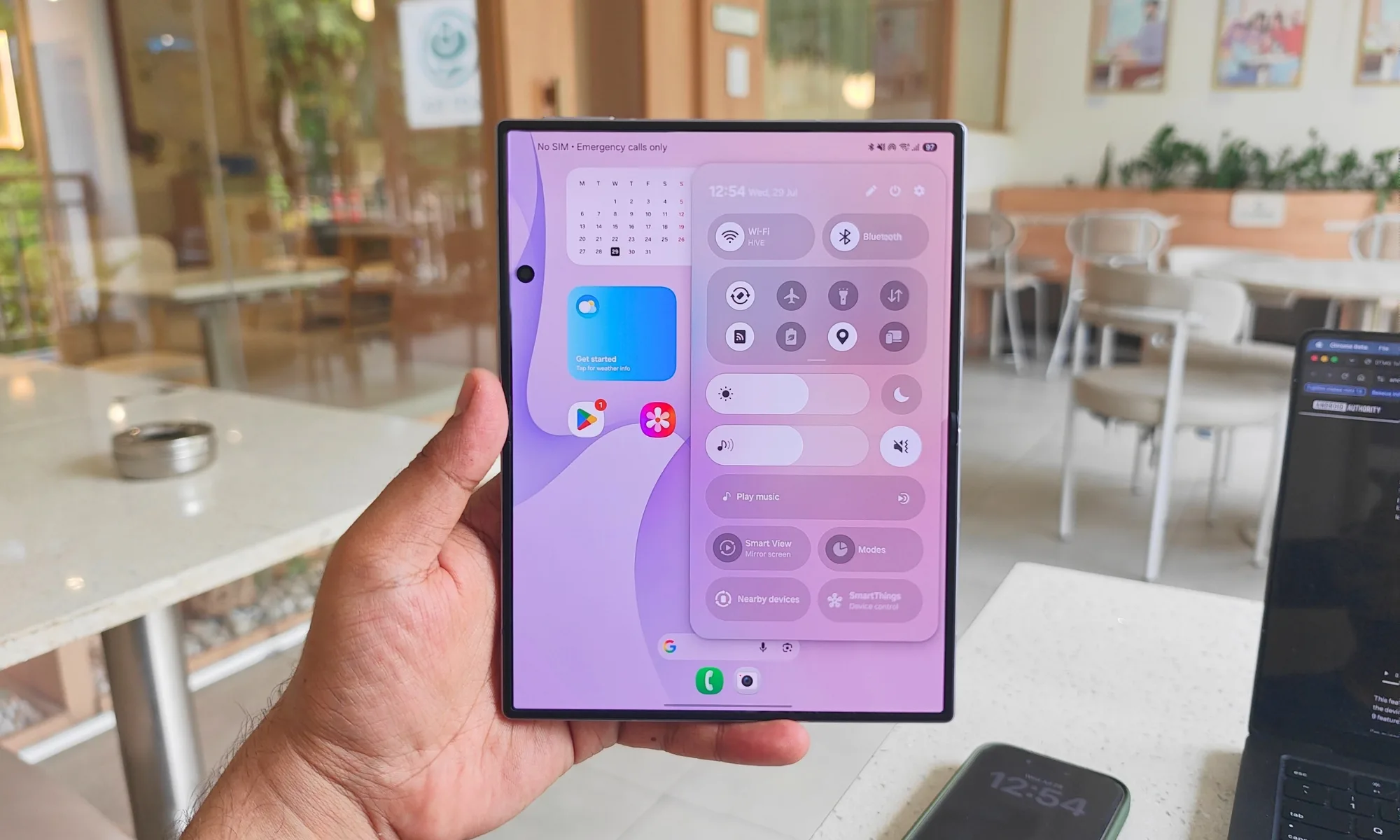
Samsung appears to be preparing a major visual overhaul for One UI, with early leaks suggesting One UI 9.5 could adopt a more glass-like design with shinier edges, transparency, and greater visual depth.
The reported changes surfaced shortly after Samsung began rolling out One UI 9 Beta 5 for the Galaxy S26 series. According to Android Central, tipster Fahad Ali shared leaked screenshots of the upcoming interface on X, offering an early look at Samsung’s apparent design direction.
Samsung could be giving One UI a glassier makeover
The leaked screenshots suggest Samsung is experimenting with a glass-inspired interface across parts of One UI 9.5. Elements such as Samsung’s widgets, including Now Brief and Floating UI components, reportedly feature shinier edges, while some Samsung-made apps appear to have a more glass-like appearance around their borders.
Some interface elements could also blur when placed over other objects, creating more separation between foreground controls and the background. Another reported change involves a subtler backdrop shading effect, which Samsung could use to create more visual depth between interface elements and whatever sits behind them.
The Phone app appears largely unchanged in the leaked material, although the search icon has reportedly moved into the floating navigation bar at the bottom of the screen. The icon sits between the contact button and the three-dot menu. Samsung may also be preparing an App Lock feature for One UI 9.5. According to the report, the feature could allow users to protect selected applications using a password, biometric authentication, or another verification method.
The design direction is notable because it suggests Samsung is continuing to experiment with more pronounced visual effects instead of simply refining the existing One UI interface.
Don’t expect One UI 9.5 on phones anytime soon
One UI 9.5 is still a rumor, and Samsung has not officially announced the update or confirmed the leaked design. The timing also suggests Galaxy owners will have to wait. Samsung recently rolled out One UI 9 Beta 5 to Galaxy S26 devices, while reports suggest One UI 9.5 may not arrive until April or May 2027. There is also a possibility that Samsung will not launch a public beta program for One UI 9.5 this year.
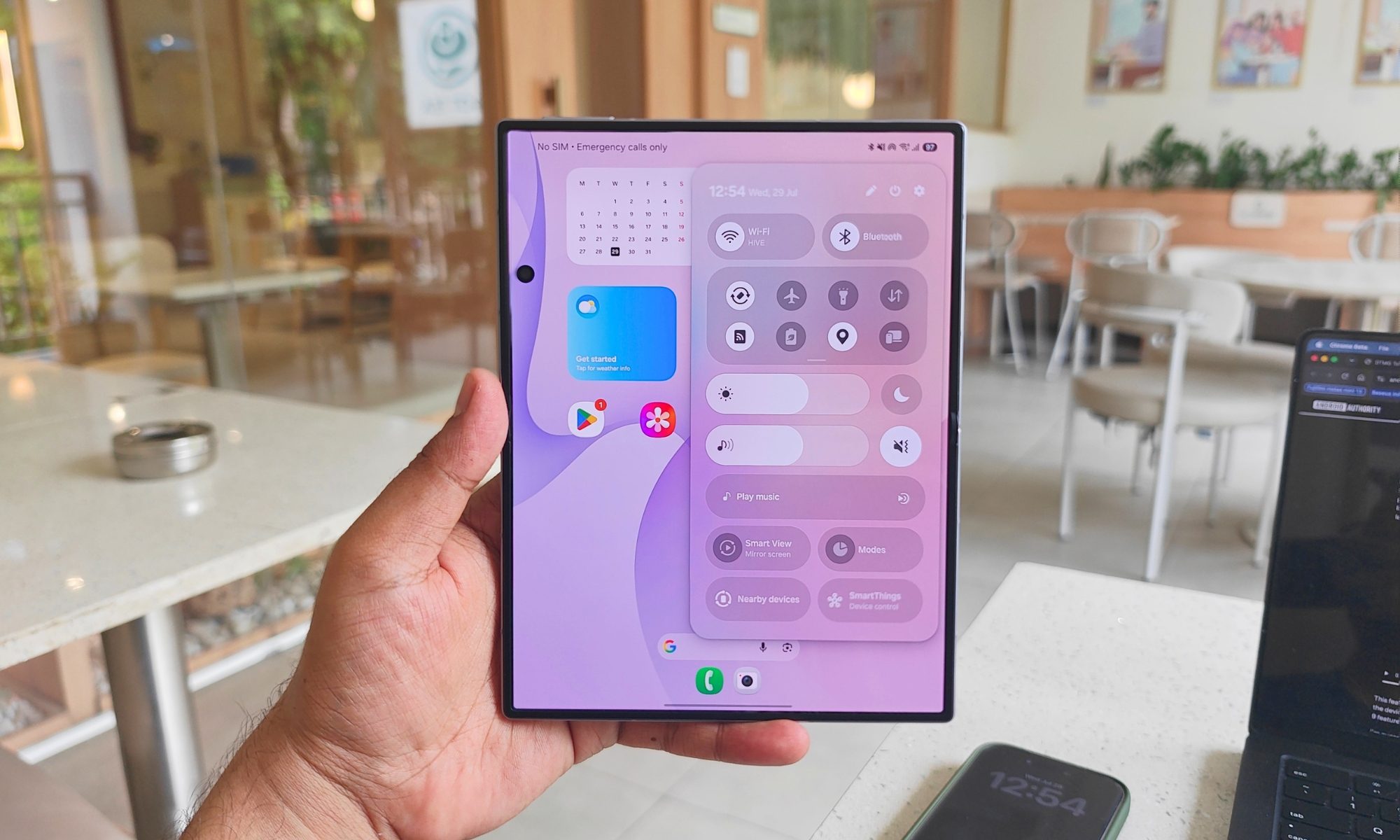
For now, the leaked screenshots offer an early glimpse rather than a finished product. Samsung could change or remove individual elements before release, particularly since the software remains deep in development.
If the reported direction survives testing, One UI 9.5 could give Samsung phones a noticeably different look, with glass effects and added depth becoming more prominent across the interface.
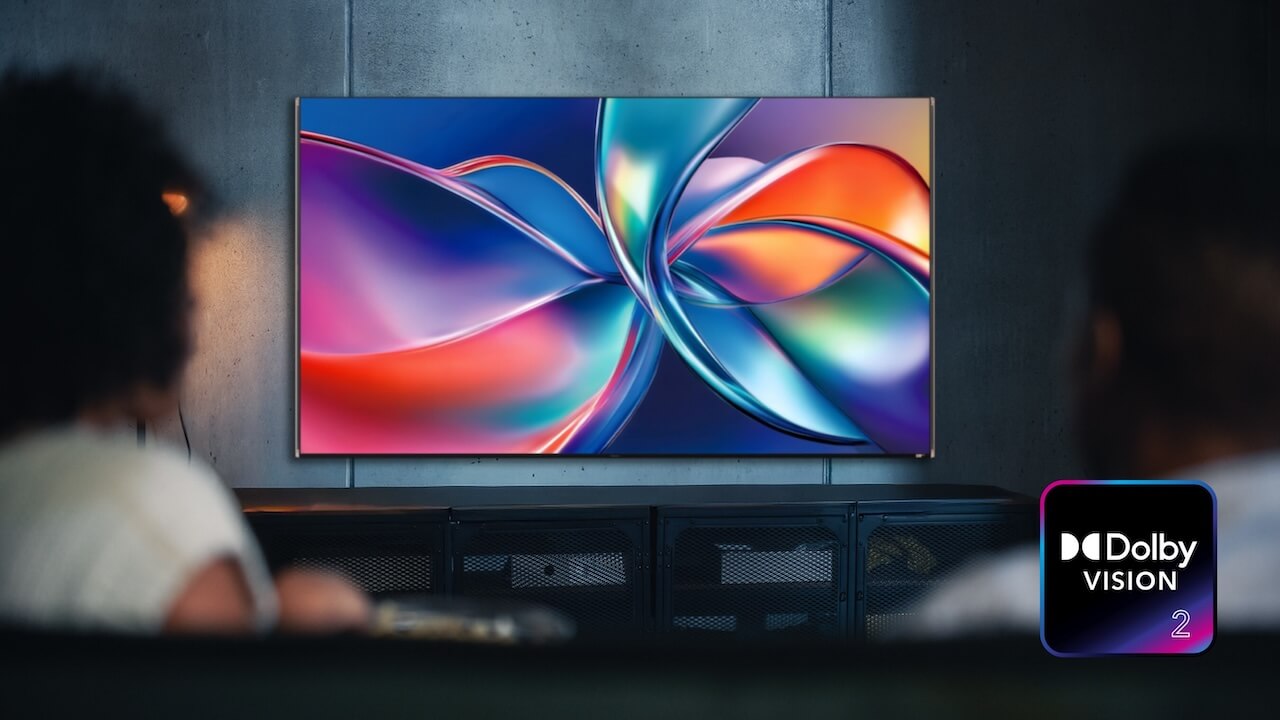
Dolby Vision 2 may not require you to replace your current 4K Blu-ray player, which is welcome news for anyone who has already spent hundreds or even thousands of dollars on a good disc spinner. The complication is that technical compatibility and actual manufacturer support are two very different things, and the companies still making dedicated 4K Blu-ray players will ultimately decide whether existing hardware gets the firmware needed to take advantage of the new format.
Dolby has confirmed that existing Ultra HD Blu-ray players can potentially work with Dolby Vision 2 without requiring an entirely new optical drive or player architecture. Most of the new image processing takes place inside a compatible television, while the player is responsible for correctly recognizing, formatting and transmitting the necessary video information over HDMI.
That sounds straightforward until firmware support enters the conversation.
Sony has already told TechRadar that it does not currently plan to provide a Dolby Vision 2 update for its existing Blu-ray player lineup, which means consumers could own hardware that is technically capable of participating in the new format but never receives the software required to do so.
Related Reading:
Existing Hardware May Be Capable, But That Is Only Half the Story
When Dolby introduced Dolby Vision 2 in 2025, most of the attention naturally focused on televisions because that is where the new processing engine resides. Dolby Vision 2 expands on the current format with what Dolby calls Content Intelligence, using additional processing and metadata to optimize the picture based on the content, capabilities of the display and viewing environment.
A Blu-ray player has a somewhat different job. It does not necessarily need to perform all of that processing itself, but it does need to correctly identify and transmit the appropriate signal and metadata to the television.
Dolby has acknowledged that adding that capability still requires engineering work, HDMI validation and firmware development, which means manufacturers have to decide whether supporting older hardware is worth the time and expense. That is the part of this story that matters most to consumers, because a player being physically capable of supporting Dolby Vision 2 does not guarantee that its manufacturer will ever enable it.
Sony has already demonstrated that distinction. The company has said that its current lineup is not scheduled to receive Dolby Vision 2 support.

Would Manufacturers Really Refuse to Update Existing Players?
Absolutely, and Sony’s position shows why consumers should not assume otherwise.
The economics of the dedicated 4K Blu-ray player market are very different from those of televisions, streaming devices or smartphones. Oppo stopped making disc players in 2018, Samsung exited the category in 2019, LG stopped producing Blu-ray players in 2024, and brands including Pioneer and Reavon are no longer significant players in the current U.S. market.
With fewer manufacturers and a much smaller installed base, every firmware project has to compete for engineering resources. Supporting Dolby Vision 2 may be technically possible, but manufacturers still have to test HDMI behavior, validate compatibility across televisions and receivers, maintain software and provide customer support afterward.
For a mass-market product selling in huge numbers, that work can be easy to justify. For a mature disc-player category with relatively modest sales, the calculation becomes considerably less attractive.
That is why consumers should start thinking about long-term firmware support as part of the buying decision rather than assuming that every feature a player could theoretically support will eventually arrive.
Who Still Makes 4K Blu-ray Players?
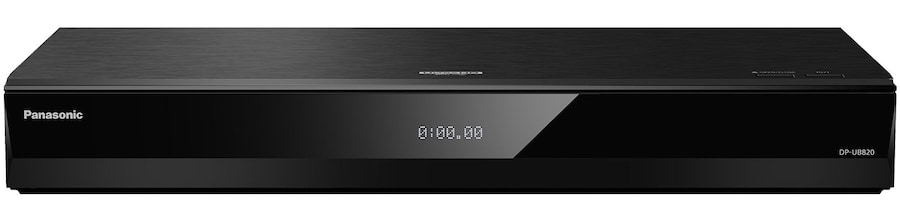
For U.S. buyers, the dedicated market has essentially consolidated around Panasonic, Sony and Magnetar, with each serving a different part of the category.
Panasonic remains the most important mainstream option and continues to offer several Ultra HD Blu-ray players, including the popular DP-UB820 ($549) and flagship DP-UB9000. Dolby Vision is supported on select Panasonic models, although the company has not yet committed to providing Dolby Vision 2 support for its existing lineup.
Sony has discontinued its 4K UHD player line, except for the UBP-X700U ($328), which does support the current Dolby Vision format. However, Sony’s decision not to update players for Dolby Vision 2 therefore carries more weight than it might appear, because there are not many mainstream alternatives left.
Magnetar serves the premium end of the market with the UDP800 MKII and UDP900 MKII universal players, both of which support 4K UHD Blu-ray, Dolby Vision, HDR10+ and numerous audio-disc formats. Magnetar has also continued releasing firmware for its current products, which at least demonstrates active software development, but that should not be interpreted as a promise of Dolby Vision 2 support. No such commitment has been made.
Game consoles do not provide an obvious workaround either. The PlayStation 5 and Xbox Series X can play Ultra HD Blu-ray discs when equipped with optical drives, but neither currently supports Dolby Vision from UHD Blu-ray discs, so buyers specifically interested in Dolby Vision remain dependent on dedicated hardware.
Will Your Existing 4K Blu-rays Become Obsolete?

No, and this distinction is important because Dolby Vision 2 does not suddenly make the discs already sitting on your shelves outdated.
A Dolby Vision disc you own today will not somehow acquire Dolby Vision 2 specific metadata because you purchased a newer television. The disc contains the mastering information it was authored with, and a firmware update cannot rewrite that information.
A Dolby Vision 2 television can, however, use its newer image processing with existing Dolby Vision content. That means owners should still benefit from improvements inside a compatible television while playing today’s Dolby Vision discs, even if the player itself never receives a Dolby Vision 2 update.
Future Ultra HD Blu-ray releases could potentially include Dolby Vision 2 specific information, which is where player compatibility may eventually become more significant, but there is currently no reason to replace a quality 4K Blu-ray player solely because Dolby Vision 2 exists.
There is no meaningful catalog of Dolby Vision 2 discs waiting to make your current player obsolete, and manufacturers have not yet established a clear support roadmap for existing hardware. Buying another player today because of a feature someone might enable later would be premature.
Why This Matters to Consumers
The larger issue here is not really Dolby Vision 2. It is the growing importance of software support in a product category that many consumers still think of as traditional hardware.
Physical media remains attractive because the consumer retains control of the disc. A streaming service cannot remove your copy because a licensing agreement expires, a studio changes distribution partners or somebody decides that the title no longer belongs in your digital library.
Owning the disc, however, does not guarantee indefinite support for the hardware used to play it.
Dolby Vision 2 illustrates that problem particularly well because an existing player might remain mechanically sound, continue producing excellent 4K HDR pictures and still have the underlying hardware required to work with the newer format, yet never receive access to it because the manufacturer decides that supporting the installed customer base is no longer commercially worthwhile.
That does not make your current player obsolete, nor does it diminish the value of the discs you already own. What it does change is the way consumers should evaluate future purchases, especially when premium players can cost anywhere from several hundred dollars to several thousand.
Firmware support, manufacturer longevity and willingness to maintain existing products are becoming part of the value proposition whether buyers like it or not.
The Bottom Line
Dolby’s confirmation is ultimately encouraging for physical media enthusiasts because Dolby Vision 2 does not automatically require an entirely new generation of 4K Blu-ray players, and existing Dolby Vision discs are not suddenly headed for the technological landfill.
The uncertainty lies with the manufacturers.
Sony has already shown that hardware capability does not necessarily lead to software support, while Panasonic and Magnetar have not yet made firm commitments regarding their existing players. That means consumers should resist the temptation to replace perfectly good equipment until there is a compelling reason to do so.
If you already own a Panasonic DP-UB820, Sony UBP-X800M2, Magnetar UDP800 or another quality Dolby Vision player, keep using it. There is currently no convincing reason to replace it because of Dolby Vision 2 alone.
Because in 2026, “the hardware can probably do it” and “the manufacturer will actually let you use it” are clearly no longer the same thing.
Related Reading:
As you’ve no doubt noticed, there’s a lot to read on the internet. Vast numbers of new articles are published every day. There’s still quite a lot of it not being written by AI, too.
Trying to keep up with everything can feel exhausting, and that’s where read-it-later apps come in. These apps will queue up content that catches your eye as you go to and fro across the web, and keep these articles, videos, blog posts, and social media updates bookmarked until you get a chance to catch up with them. When it’s time to dig in, the apps present the articles in a clean, uncluttered layout.
It’s a neat idea, but it needs to be well implemented for it to work—otherwise you can spend more time compiling and organizing your reading than actually catching up on your queue.
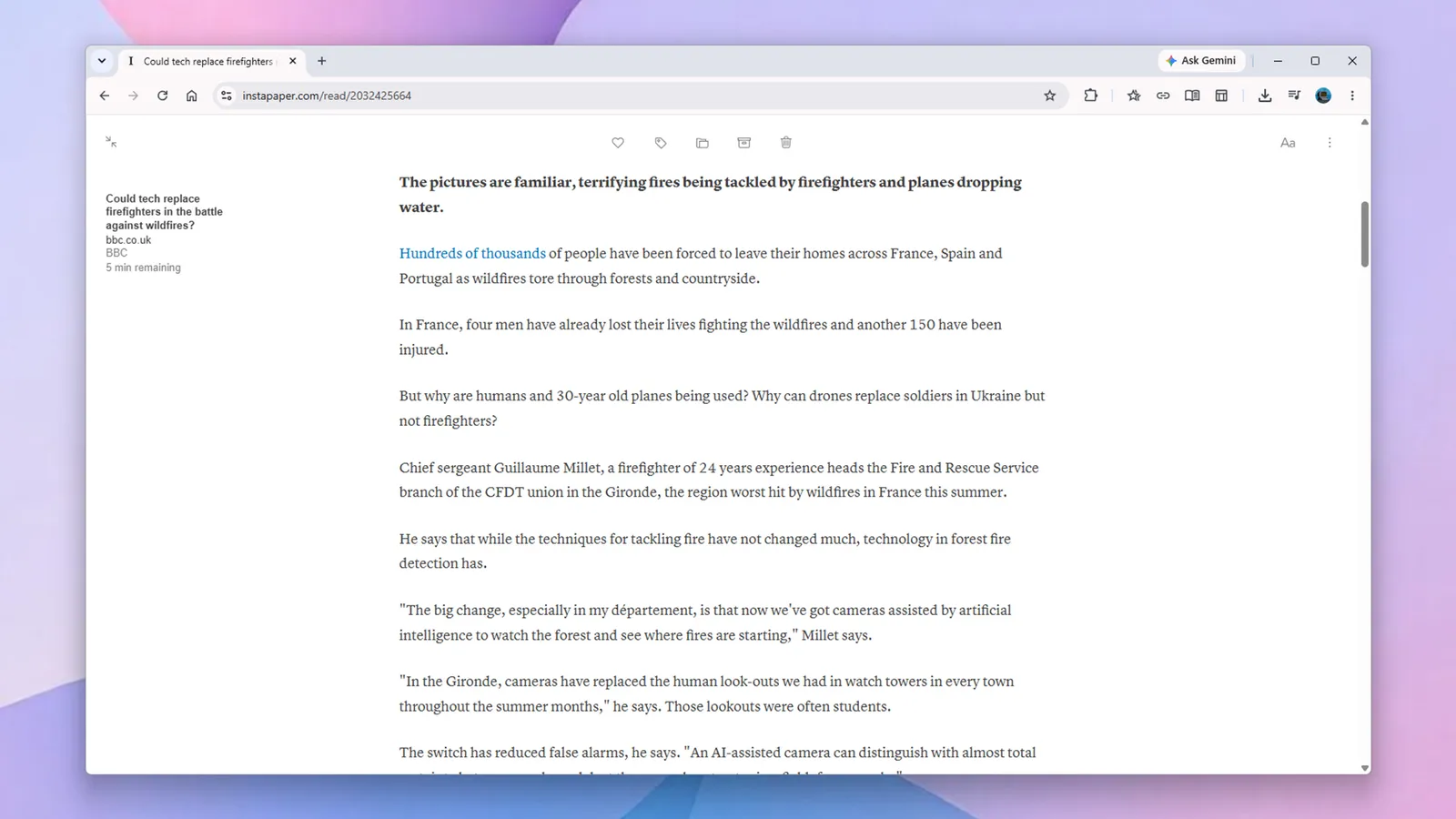
Instapaper is one of the oldest read-it-later apps, having launched back in 2008. It’s also still one of the best options, even more so now that it’s been given a major revamp. Here’s what’s new, and why it might be worth your while diving back into your Instapaper account (or signing up for the first time).
Instapaper Basics

Instapaper offers a clean, distraction-free reading environment.Photograph: David Nield
Instapaper is available for the web, Android, and iOS, and reflows web articles into a tidily arranged, distraction-free format that doesn’t feature any ads, menus, or other onscreen furniture. You just get the text and the images, so reading the articles you’ve saved is a more pleasurable experience than it is on the web.
You can customize the Instapaper interface in a variety of ways. The apps let you change the font style, size, and spacing, and adjust the background color of the “paper” that the text and images are placed on.
Everything is neatly arranged on the screen, too. You get estimates for how long each article will take to read (as well as the option to see summaries of the text). You can use folders and tags to categorize saved posts in a variety of ways. Also, everything syncs seamlessly across all the devices you’re using Instapaper on.
Getting articles into Instapaper—a crucial part of the process—is straightforward. On mobile you can pass web links into the app through the standard share tools, while on desktop you can either paste the URLs straight into Instapaper, or use the extensions that are available for the most popular browsers.

Why it matters: A vest tested during NASA’s Artemis I mission could reduce astronauts’ radiation exposure during major solar storms, according to a new study. The findings show how targeted shielding could support crew safety as NASA prepares for longer missions around and eventually on the moon.
The AstroRad vest flew around the moon in 2022 on Zohar, one of two female manikins aboard NASA’s Orion capsule. Researchers compared Zohar’s readings with those from Helga, a second manikin that wore no vest. Both contained thousands of radiation sensors.
The flight did not encounter a major solar storm. Instead, researchers used the data collected as Orion passed through the inner Van Allen radiation belt to model the vest’s performance during storms similar to those seen in 1972 and 1989.
The study found that the vest could lower an astronaut’s radiation dose by about 60% during a solar event like the 1972 storm, while it could reduce exposure by nearly 40% during a storm comparable to the 1989 event. Researchers said those reductions are equivalent to 193 days and 131 days, respectively, of deep-space radiation exposure.
The findings are relevant as NASA prepares for longer lunar missions. Artemis I was an uncrewed test flight, but NASA plans to send four astronauts on a lunar flyby mission in April. Future missions are expected to support longer stays on and around the moon as the agency works toward a lunar base.

Radiation is a major safety concern beyond low-Earth orbit. Astronauts closer to Earth benefit from the planet’s atmosphere and magnetic field, which limit exposure. That protection falls away during missions to the moon and, eventually, Mars.
Zohar wore the 57-pound vest, developed by Israeli startup StemRad and US aerospace company Lockheed Martin. The garment is not intended for daily use. It is designed for periods of elevated solar radiation, when crews may need additional protection inside a spacecraft or shelter.
Rather than covering the entire body, the vest focuses on areas considered especially sensitive to radiation. It protects the lungs, stomach, bone marrow, breasts, and ovaries. Women are believed to face a higher risk of radiation-related cancer than men.
StemRad and Lockheed Martin previously tested a version of the vest on the International Space Station. The design was modeled after gear used by nuclear-disaster response teams. It was not included on Artemis II because that mission is expected to last 10 days and Orion has limited space, but it could be considered for later flights.
The researchers based their simulations on two past solar events. The 1972 storm occurred between the Apollo 16 and Apollo 17 moon landings. If astronauts had been traveling to or working on the moon at the time, they could have faced potentially lethal exposure. The 1989 event was linked to a power-grid collapse and the detonation of magnetic sea mines.
The team is now trying to make the vest lighter without weakening its protective properties. It is also studying whether spacecraft supplies and materials could be repurposed as radiation shielding during emergencies.
Jordan Houri, the study’s lead author and a researcher at StemRad, said additional deep-space testing is not expected soon because Zohar and Helga “provided us with an exceptionally large, high-fidelity dataset.”
Zohar and the vest are now on display at Kennedy Space Center in Florida.
Image credit: The AP
For a long time, it felt like the Subaru brand was sitting on the sidelines of the electric vehicle revolution. That began to change with the introduction of the Subaru Solterra EV for the 2023 model year, and the brand’s electric offerings have expanded with the Subaru Uncharted and the three-row 2027 Subaru Getaway. Notably, all of these new Subaru EVs have been jointly developed with Toyota, which also sells Toyota-branded versions.
Another of Subaru’s new EVs that’s earned a lot of attention is the Trailseeker. In our review of the 2026 Trailseeker, we found that it’s the first EV that truly feels like a Subaru — and that might make people wonder how it compares to the brand’s traditional, gasoline- and hybrid-powered SUVs, like the popular Subaru Forester.
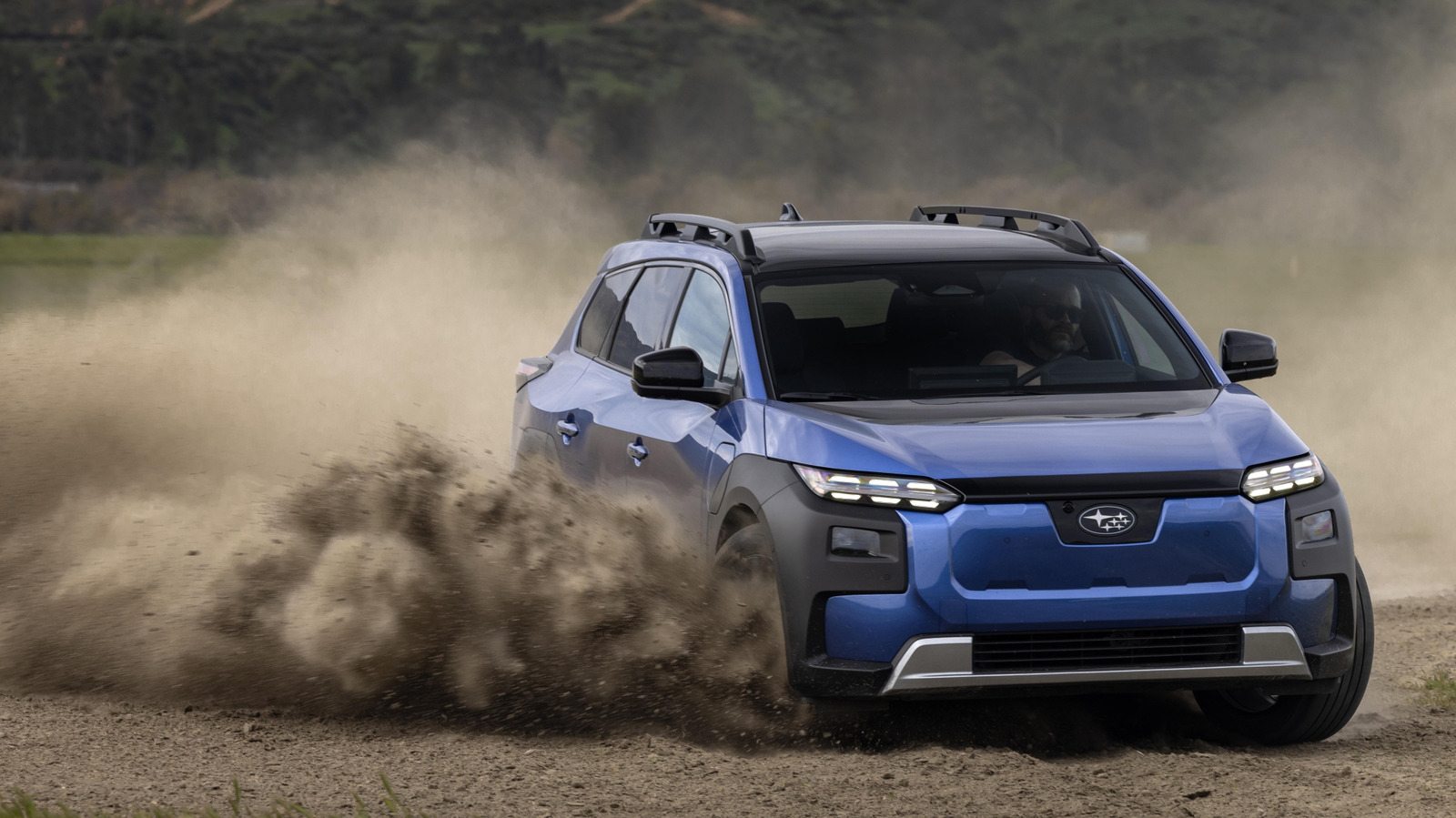
You could compare the Forester and Trailseeker by looking at specs like efficiency or interior space, but off-road capability is something that’s a big part of Subaru’s appeal. Despite sharing the same badge and having standard all-wheel-drive systems, these two SUVs deliver very different driving experiences, so what does that mean when one goes off-road? Both models are more capable than your average road-going CUV, though the Trailseeker’s current lack of a rugged Wilderness trim gives the Forester the edge in terms of pure off-road prowess. But let’s dig deeper and see how these two stack up.
How much capability do you need?
To be clear, neither a Forester nor a Trailseeker will deliver the same level of off-road performance as a dedicated body-on-frame 4×4 like a Toyota 4Runner or Ford Bronco, but they both do very well for unibody crossover SUVs. Because off-road conditions and driving can vary greatly, you can look at factors like ground clearance and approach and departure angles to get a better idea of how each will perform on the trails.
In its standard form, the Forester has 8.7 inches of ground clearance with approach and departure angles of 19 and 24.6 degrees, respectively. The even more rugged, off-road-oriented Forester Wilderness, which features trail-specific upgrades like all-terrain tires and a lifted suspension, boosts ground clearance to 9.3 inches. It also has improved approach and departure angles of 23.5 and 25.5 degrees, respectively.
The Trailseeker, meanwhile, has 8.5 inches of ground clearance, putting it slightly behind the Forester. The Trailseeker is still very capable off-road, though, and has the same X-Mode system as the Forester for added off-road traction. The main difference that holds the Trailseeker back slightly is the lack of a Wilderness trim, though we wouldn’t be surprised to see a higher-riding, ruggedized Trailseeker Wilderness join the lineup in the future.
Electric versus gasoline
Power is something that’s very much in the Trailseeker’s favor. While this might not matter as much in slow-speed, technical off-road situations, the EV’s instant torque certainly won’t hurt on the trails. On the road, the Trailseeker is simply in another stratosphere. At its most powerful, the Forester Hybrid makes just 194 hp, with Car & Driver managing a 0-60 time of 8.6 seconds. In contrast, the Trailseeker is rated at 375 hp, and the outlet took the SUV to 60 mph in a blistering 3.9 seconds.
On the other hand, if you plan to take your Subaru on long-distance or spontaneous off-road adventures, there’s no denying the limitations of the Trailseeker’s battery powertrain and 281-mile range, which you’ll need to find a charging station to replenish. This could be very inconvenient compared to the Forester’s range of up to 581 miles and easy refueling. Realistically, this EV versus gasoline angle is likely to be a bigger deciding factor between the two than any differences in raw off-road capability.
Finally, it’s impossible to discuss the Subaru Trailseeker without mentioning its Toyota-badged twin, known as the bZ Woodland. Mechanically, these two electric SUVs are nearly identical, and though the Subaru has a lower starting price, anyone seriously considering the Trailseeker would be wise to give its Toyota sibling a look as well.


Anthropic has told prospective investors that second-quarter revenue exceeded $11.5bn, more than 14 times the $787mn it made a year earlier, and that it recorded positive adjusted operating income. The figures are preliminary and come as the company prepares a listing.
Anthropic has told prospective investors that its second-quarter revenue passed $11.5bn. That is more than 14 times the $787mn it recorded in the same quarter of 2025, according to documents seen by Bloomberg.
The sequential jump is almost as steep. First-quarter revenue was $4.73bn, so the company has more than doubled inside three months and made roughly $16.2bn in the first half of the year.
The quieter line matters more. Anthropic recorded positive adjusted operating income in the quarter, which is not something the leading AI labs have been able to say.
All of it is preliminary and could be revised, and Anthropic declined to comment.
What is genuinely new here is the shape of the disclosure. The industry has asked to be valued on annualised run rates, a figure that takes current revenue and multiplies it out, and Anthropic has now put an actual completed quarter and an operating income line in front of investors instead.
The numbers also hold together. Four quarters at $11.5bn works out at $46bn, close to the $47bn run rate the company disclosed in May, which is more consistency than these figures usually show.
Comparison with OpenAI needs care. Its reported figure of more than $40bn is a run rate rather than a quarter’s revenue, and as Bloomberg notes, the two may not be calculated the same way.
The purpose of the disclosure is a listing. Anthropic has filed confidentially and is working with Morgan Stanley, Goldman Sachs and JPMorgan, with backers telling the Financial Times they expect a $2trn valuation in October.
Timing is part of the strategy. An autumn debut would put Anthropic on the public market before OpenAI, whose own valuation is under scrutiny from its investors, and before DeepSeek, which is preparing to file.
There is capacity waiting. Listings have raised $256.4bn this year excluding blank-cheque vehicles, the most since 2021.

Aurora Innovation and Kodiak AI, two companies developing self-driving trucks, have received permits from the California Department of Motor Vehicles to test their autonomous vehicle technology on public roads. And Kodiak has already started.
Kodiak said it is starting with a handful of test trucks in California, primarily around its Mountain View office.
Both companies applied for testing permits this spring under updated rules approved by the California DMV, the agency that regulates autonomous vehicles in the state. Those rules, approved April 28, lifted a ban on driverless vehicles weighing over 10,000 pounds from testing on public roads and provided a regulatory path for companies to test, and eventually deploy, autonomous heavy-duty vehicles.
Kodiak and Aurora met the DMV’s permitting criteria, including safety, insurance, vehicle registration, safety driver qualification, and other requirements, according to the agency. The testing permits require a human safety operator to be behind the wheel and prohibit companies from operating on roads where the posted speed limit is 25 miles per hour or less, unless they are on a “direct route” between destinations.
Despite those restrictions, the prospect of self-driving trucks on California’s highways continues to fuel opposition.
Last week, Teamsters California sued the state’s DMV, alleging that the agency circumvented laws requiring it to study and publicly disclose the possible economic impacts of allowing self-driving trucks on public roads. The lawsuit, filed in the state’s Superior Court in Alameda County, also accused the DMV of failing to consider the safety risks to motorists.
For autonomous vehicle developers, the new rules allow them to test and eventually deploy in their home territories.
Aurora and Kodiak are both based in California, but until recently focused their testing and deployment activities in Texas because of their home-state’s ban on autonomous heavy-duty trucks. Aurora launched a self-driving truck service in Texas in May 2025, starting with a Dallas-to-Houston route. The company has added more routes since, including between Fort Worth and El Paso, El Paso and Phoenix, Fort Worth and Phoenix, and Laredo and Dallas.
Kodiak began commercial driverless truck operations in January 2025 in an off-road environment in West Texas’ remote Permian Basin. Kodiak has since expanded to on-highway operations, including a route between Dallas and Houston.
When you purchase through links in our articles, we may earn a small commission. This doesn’t affect our editorial independence.
We think it’s kind of neat.
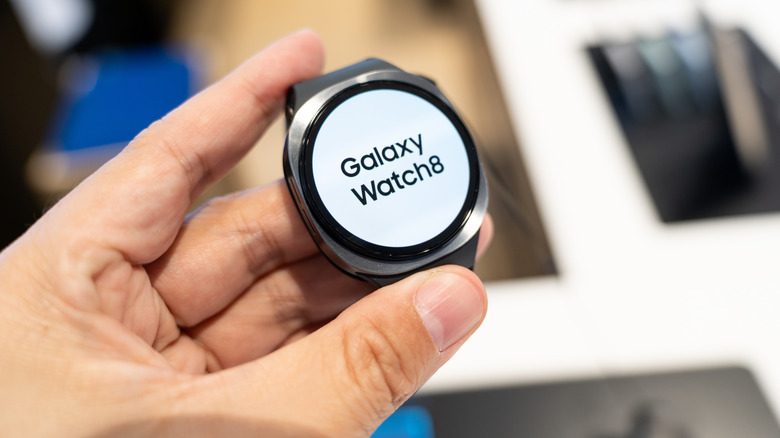
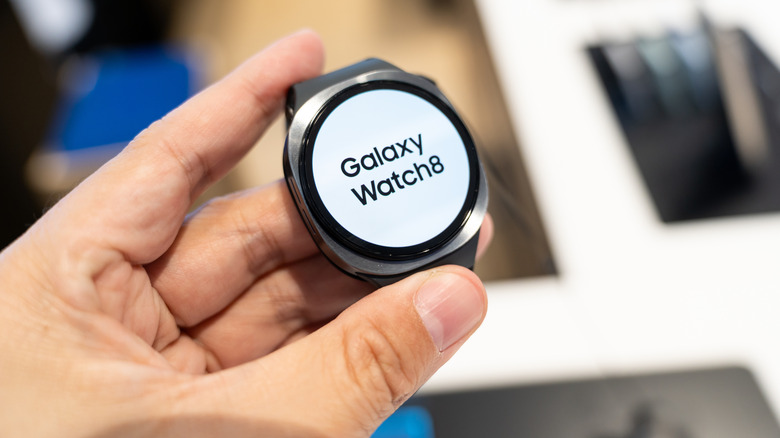
Samsung’s Galaxy Watch 8 can already track your heart rate, sleep and workouts. But that’s not enough information about you, apparently. Its Antioxidant Index turns a five-second thumb scan into a score from 0 to 100.
The watch isn’t measuring all of the antioxidants in your body. Instead, it estimates carotenoids, pigments with antioxidant properties found in yellow, orange and green fruits and vegetables that can build up in your skin. Samsung uses that reading as an indicator of fruit and vegetable intake, though the company says UV exposure, alcohol and stress can also affect the score.
How the sensor reads your skin
To take a measurement, remove the Galaxy Watch 8, open Samsung Health on the watch, select Antioxidant Index and tap Measure before pressing your thumb against the BioActive Sensor on the back. Samsung says the sensor uses multi-wavelength absorption spectroscopy to analyze how different wavelengths of light are absorbed and reflected by the skin.
It’s a lot more dramatic than pressing your thumb to a smartwatch. In practice, the sensor uses yellow, blue, purple and green LED light to illuminate your skin; carotenoids absorb certain wavelengths more strongly (blue is the most important here) and photodiodes detect the light that reflects back, allowing Samsung to estimate the concentration of carotenoids and calculate an Antioxidant Index score.
The thumb wasn’t selected just because it fits well over the sensor. Melanin and hemoglobin can interfere with optical measurements, Samsung says, so finger skin helps minimize melanin interference while pressure from your thumb temporarily restricts blood flow, reducing interference from hemoglobin.
How accurate is the Galaxy Watch 8’s Antioxidant Index?
Samsung says it validated its sensor against Raman spectroscopy, a lab technique used to measure skin carotenoids, and compared readings with blood tests, food logs and clinical data from several hundred participants. Separately, a 2023 randomized controlled trial involving Samsung researchers also found a strong correlation between reflection spectroscopy and Raman spectroscopy when measuring skin carotenoids.
But there’s a big caveat. Samsung has not published a simple consumer-facing accuracy percentage or margin of error for the Galaxy Watch 8 feature, and it says Antioxidant Index isn’t intended to diagnose or treat medical conditions. Think of the score as another health trend to monitor, rather than a blood test wrapped up in a little computer on your wrist.
The number can be stubborn, according to Engadget’s Galaxy Watch 8 review. After Amy Skorheim deliberately changed her diet for a day, her score dropped by two points. On subsequent days, her readings ranged from 56 to 60.
Samsung’s current US comparison chart doesn’t list Antioxidant Index for the Galaxy Watch 7. It does list the feature for the Galaxy Watch 8, Watch 8 Classic and Galaxy Watch Ultra (along with the newer Watch 9 and Ultra2), but Samsung hasn’t specified why the Watch 7 misses out. The company says it usually takes two to three weeks for carotenoids from food to build up in the skin to detectable levels.


Star Wars is at its best when it doesn’t take itself too seriously, and there’s no greater example of this than Lego Star Wars. The franchise, complete with its own video game on multiple platforms, prides itself on delivering a cute story with loads of laughs and inside jokes just for the biggest fans.
Fast on the heels of The Mandalorian and Grogu leaving theaters and hitting Disney Plus, the duo and a lot of their friends are getting a Lego Star Wars film just about them. And if you happened to be at D23, there was a chance to watch the whole thing early.
Dropping on Disney Plus September 2nd, Lego Star Wars: The Mandalorian is a hilarious trip down memory lane done Lego style. Recaps of the entire Mandalorian story so far, plus or minus some embellishments from the storytellers take up the one hour special in a way that kept me laughing the entire time. Keep an ear out for some of the original actors from the series showing up to voice their Lego counterparts as well as the standard array of Lego hijinks.
This is a cute, family-friendly way to catch up or refresh your memory. It includes sections of The Mandalorian and The Book of Boba Fett, with the story bringing you to just before the start of the film. And since The Mandalorian and Grogu movie will hit Disney Plus the same day as its Lego preview, you can treat yourself to some giggles before locking in and enjoying the action-packed film right after. Just be careful with your wallet after, or you’ll end up with a shopping cart full of your own Star Wars Lego kits.

Ametek president David Hermance sells $1.68 million in AME shares

Why (And How) You Should Add Baking Soda To Your Chickpeas

Insurance Claim | ONE SHOT PART – A | Sem-4 CCF | Financial accounting |Calcutta University


-

 Fashion2 days ago
Weekend Open Thread: Ann Taylor
-

 Business7 days ago
Datadog: Best Of Breed For Multiple Reasons
-
 NewsBeat4 days ago
Communication cards help banking customers access services or report scams
-
 Business5 days ago
Oil Price Today (August 11): Crude oil rises to $88 after Trump’s compensation demand dents Hormuz opening. Here’s why
-

 Crypto World5 days ago
Revolut wins French banking licence, creates second EU banking hub
-

 Fashion7 days ago
Amazon Sundays: Closet Care Before Fall
-
 Crypto World5 days ago
Why Did Nvidia Stock Fall on Monday Despite a $500 Billion Wall Street AI Deal?
-

 Business7 days ago
5 Things You Must Know About Jorge Messi, the Father and Longtime Agent Who Shaped Lionel Messi’s Career
-

 Politics6 days ago
Ben-Gvir’s crocodile project halted but abuses at Ketziot Prison continue
-

 Politics7 days ago
The Church of England’s ruinous reparations racket
-

 Politics6 days ago
Saudi Arabia used 86% of missile stockpile defending Iran attacks
-

 Politics21 hours ago
SEQ Code: The Three Letter Boarding Pass Code That Could Give You The Worst Seat
-
 NewsBeat1 day ago
Myanmar says over 300,000 Rohingya refugees verified for repatriation as exodus enters ninth year
-

 Fashion6 days ago
Can You Wear Double Cloth Gauze Clothing To Your Office?
-
 Crypto World7 days ago
Crypto Made a $9.6 Billion Record, But It’s Hiding a Crucial Truth
-
 Crypto World7 days ago
USDC and USDT Now Own 84% of Crypto Card Spend as the Euro Retreats
-

 Business7 days ago
Zevia: The Fanbase Nobody Can Find
-

 Crypto World7 days ago
Is Clarity's delay a blessing in disguise?: State of Crypto
-

 Crypto World6 days ago
Kraken Delisting Deadline Nears: Holders of 21 Tokens Risk Near-Zero Payouts
-
 Crypto World6 days ago
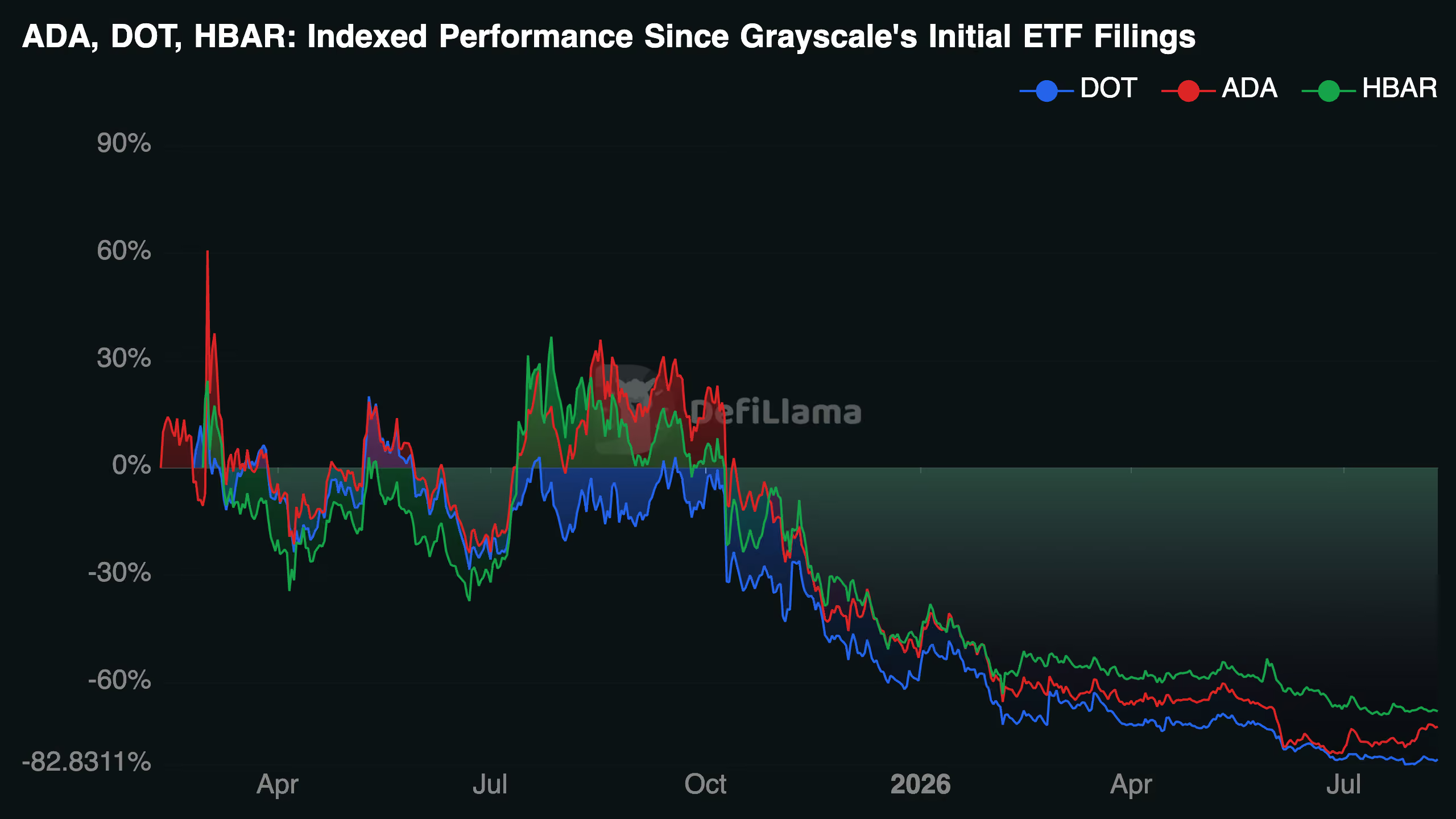
Grayscale quietly drops Cardano, Polkadot and Hedera ETF plans
You must be logged in to post a comment Login