
Business
Can Horizon Parks IPO deliver long-term growth for high-risk investors?


 Agencies
Logistics infra provider is in loss, but profitability could improve after repayment of debt
Business
Incorporated in 2009, Horizon Industrial Parks is the country’s largest industrial and logistics infrastructure developer, owner and operator by total network, according to Jones Lang LaSalle Property Consultants (India). It also offers turnkey solutions, solar energy solutions, cold storage facilities, and on-site staff accommodation. It owns 45 logistics and industrial assets across 10 major Indian cities, totalling 58.6 million square feet. It offers three core asset categories such as fulfilment centres for warehousing and logistics operations, industrial facilities for manufacturing and industrial occupiers, and in-city centres catering to urban distribution and last-mile logistics needs.
Read more | IPO rush: 5 companies to raise Rs 5,499 crore next week; Shiprocket, 4 others to list

Financials
Revenue from operations rose 73.8% annually to ₹691.4 crore and operating profit before interest, tax, depreciation and amortization (EBITDA) grew 100.3% annually to ₹607.8 crore between FY24 and FY26. EBITDA margin expanded to 79.2% in FY26 from 61.7% in FY24. In FY26, revenue grew 77.1% and EBITDA jumped 79.2% on a year-on-year basis. Cash flow from operations nearly doubled to ₹464.1 crore in FY26 from ₹119.3 crore in FY24. The company’s net loss widened to ₹203.6 crore in FY26 from ₹162.2 crore in FY24. The profitability is expected to improve after repayment of debt. Finance cost as a percentage of revenue reduced to 78% in FY26 from 92.1% in FY24. Interest outgo relative to EBIT was 89% in FY26 compared with 139% in FY24.Valuation
The company does not have any direct peers listed in India. Price-to-earnings multiple will not help since the company is yet to record profits. The price-to-sales (P/S) multiple works out to 25. The enterprise value (EV)-to-Ebitda multiple moderated to 38.7 times in FY26 from 137.4 times in FY24 though net debt nearly doubled to ₹6,246.5 crore from ₹3,524.6 crore. The softening in the multiple implies that higher borrowings resulted in incremental operating profit during the period.


Operator
Thank you for standing by, and welcome to the Iress Limited 2026 Half Year Financial Results Conference Call. [Operator Instructions]
I would now like to hand the conference over to Andrew Russell, Iress CEO and Managing Director. Please go ahead.
Andrew Russell
Group CEO, MD & Director
Good morning, and thank you for joining us. I’m Andrew Russell, Group CEO and Managing Director, and I’m joined by Cameron Williamson, our Chief Financial Officer. Today, we’ll take you through our first half performance, updated FY ’26 guidance and the progress we’re making against the strategic priorities we outlined at our AGM. Most importantly, we’ll show how disciplined execution is building a stronger, higher-quality software business and positioning Iress for sustainable long-term value creation.
There are 5 key messages for our shareholders today. First, we have delivered a solid first half result with materially improved earnings quality, driven by disciplined execution, a simpler operating model and continued margin expansion. Second, we have continued to simplify the business, progressed our business efficiency program ahead of plan and strengthened the balance sheet. This provides greater financial flexibility to self-fund disciplined investment in product evolution.
Third, our focus has now shifted to evolving our products. Having mobilized our partnership with Thoughtworks in April, we are now embedding AI into our product and engineering strategy and improving our delivery velocity. Fourth, our focus is on building a higher-quality software business with better products, stronger customer relationships and more consistent commercial execution. We

Why is JB Hi-Fi stock tumbling today?

What is it like to buy a private jet and then lose so much money that you have to sell it? Or take a $1 million European vacation to celebrate a deal closing? I asked the people who have lived it.
I crisscrossed the country to sit down with millionaires and billionaires for
The WSJ Money Interview, hearing about how the ultrasuccessful make, spend and grow their money. Through eight flights, 14 days on the road and countless hours in interviews and in the editing room, I got a peek at the moments—both stomach-churning and euphoric—that shaped them.
I witnessed off-camera interactions with assistants, friends and family. We also had some fun. I quizzed them on whether their fortunes, which ranged from tens of millions of dollars to billions, were driven by luck or skill.
Copyright ©2026 Dow Jones & Company, Inc. All Rights Reserved. 87990cbe856818d5eddac44c7b1cdeb8
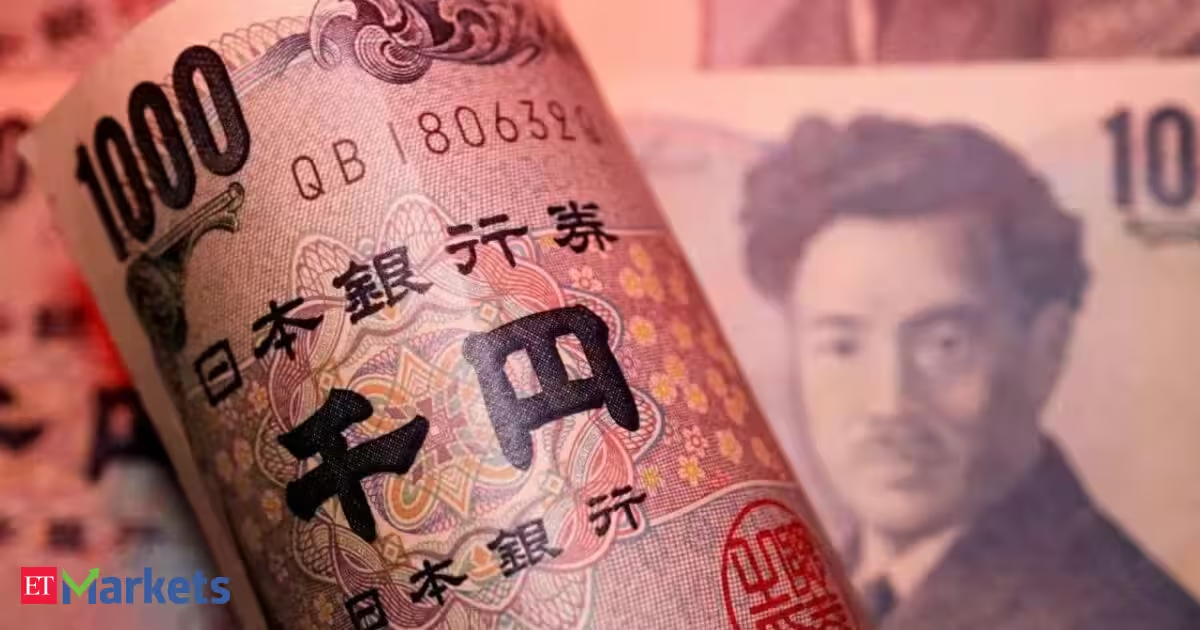
The yen was 0.2% stronger against the U.S. dollar at 159.055 yen, on track for a second straight day of modest gains against the greenback but still firmly within its trading range of the past week, after data released Monday showed Japanese GDP for the second quarter expanded at an annualised 1.1%.
“The details were a mixed bag,” Capital Economics analysts wrote in a research note. “GDP expanded at a decent pace in Q2 and with the government still limiting the pass-through from higher energy prices,” they wrote, while a jump in government consumption “suggests that Takaichi’s expansionary fiscal policies are starting to have an impact.”
The euro was flat at $1.1573, while the British pound was up 0.1% at $1.3546. Both the Australian dollar and its kiwi counterpart were level at $0.7085 and $0.5891 respectively.
Soggy U.S. data, including non-farm payrolls and gauges of price inflation for consumers and producers, have doused investor expectations of rate hikes from the Fed this year, with few clues expected from the U.S. central bank until the Jackson Hole symposium between August 27 and 29.
“Softer U.S. data over recent weeks has reduced rate hike expectations, with less than one full hike now priced for December,” BNY analysts wrote. “The back end of the Treasury curve remains elevated, with some commentators attributing higher yields to credibility concerns.”
Fed funds futures are pricing an implied 66.9% probability that Fed policymakers will hold interest rates at their next two-day meeting ending on September 16, up from a 47.6% chance a month ago, according to the CME Group’s FedWatch tool.The U.S. dollar index, which measures the greenback’s strength against a basket of six currencies, was 0.1% lower, trading near its lowest levels of the month at 99.519.
Oil prices fluctuated between gains and losses, while U.S.-Iran talks to resolve the Middle East conflict remain stalled. Brent crude edged down 0.1% at $88.48 a barrel as President Donald Trump told Americans to prepare for continued high fuel prices as a result of the war, while Iran called on the U.S. to accept defeat. Shipping traffic through the Strait of Hormuz remains a trickle.
Against the Chinese yuan, the U.S. dollar was flat at 6.7428 yuan in offshore trade ahead of activity data due for release later on Monday.
In cryptocurrencies, both bitcoin and ether were down 0.3% at $62,854.48 and $1,874.80 respectively.


I’m a passionate investor from the Netherlands with 12 years of stock market experience. My articles usually contain a good overview of important investment criteria. A stock for my portfolio is of interest to me if the company has the following characteristics:1. Companies that are growing in both revenue, earnings and free cash flow.2. Companies that have excellent growth prospects.3. Stocks with favorable valuations.I prefer steadily growing companies with high free cash flow margins, dividend stocks and stocks with generous share repurchase programs.Disclaimer: My articles do not provide financial advice, they reflect my own findings and insights.
Analyst’s Disclosure: I/we have no stock, option or similar derivative position in any of the companies mentioned, and no plans to initiate any such positions within the next 72 hours. I wrote this article myself, and it expresses my own opinions. I am not receiving compensation for it (other than from Seeking Alpha). I have no business relationship with any company whose stock is mentioned in this article.
Seeking Alpha’s Disclosure: Past performance is no guarantee of future results. No recommendation or advice is being given as to whether any investment is suitable for a particular investor. Any views or opinions expressed above may not reflect those of Seeking Alpha as a whole. Seeking Alpha is not a licensed securities dealer, broker or US investment adviser or investment bank. Our analysts are third party authors that include both professional investors and individual investors who may not be licensed or certified by any institute or regulatory body.

From coffee to hotpot, brands race to grab a bite of China’s growing burger market

In the Nifty500 pack, nine stocks’ closing prices crossed below their 200 DMA (Daily Moving Averages) on August 14, according to stockedge.com’s technical scan data. Trading below the 200 DMA is considered a negative signal because it indicates that the stock’s price is below its long-term trend line. Traders use the 200 DMA as a key indicator to determine the overall trend in a particular stock. Take a look:
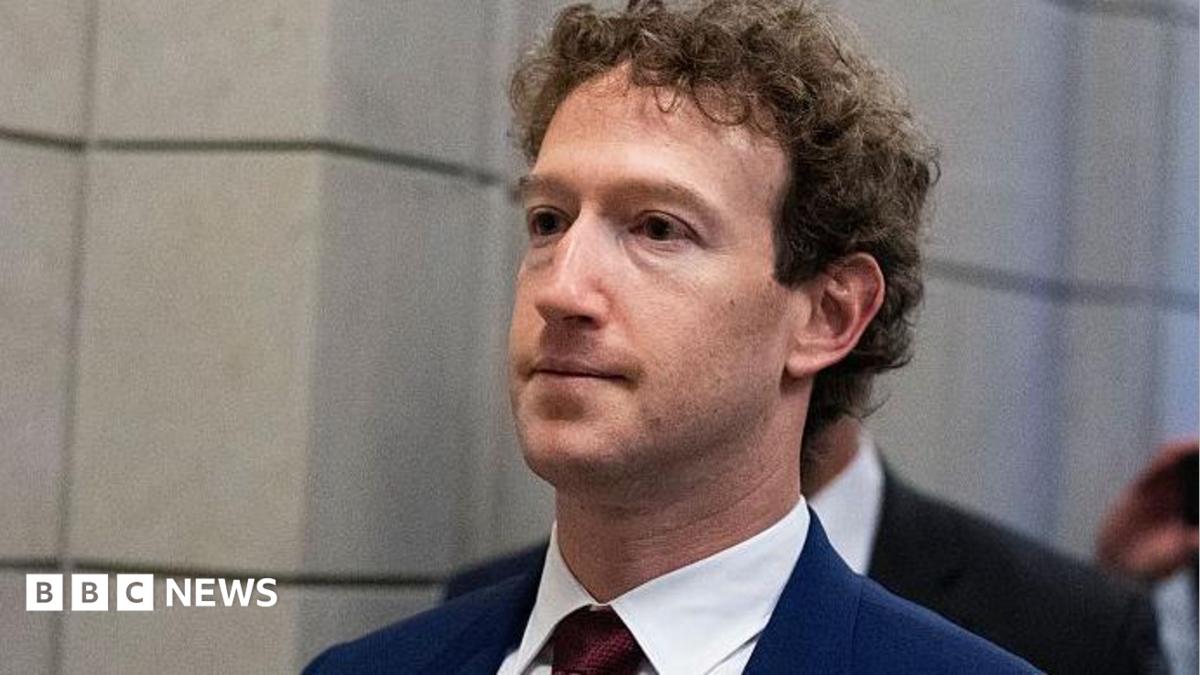
“Like” counts, for instance, have been part of Meta since its early years, when it was still called Facebook and that was its only platform.
Today, likes are omnipresent on social media platforms. It is the main way in which people engage with text, photos and videos they see online.
Yet, likes are increasingly viewed as a way to foster negative feelings, particularly among young people.
Kaley, a young woman who prevailed in her lawsuit against Meta earlier this year, described during court testimony how she created dozens of accounts on YouTube and Instagram.
She would use the system of accounts to create likes on her own posts, hoping to drive engagement with other users and her own feelings of validation and self-worth. Kaley was only nine years old at the time. She said she remembered feeling depressed, something she was later diagnosed with, aged 10.
Research over the last several years has shown that engagement metrics such as like counts can drive feelings of rejection and depression, external in teenagers.
In the states’ lawsuit against Meta, in which the company said it has handed over more than 2 million documents, lawyers pointed to Meta’s own research that showed like counts drove “social comparison”, or the mental act of marking one’s self worth against images of someone else.
That social comparison driven by Instagram was linked to “increased loneliness, worse body image, and negative mood or affect”, according to Meta’s internal research.
As Judge Biedscheid put it in his order, external, which was the first time a social media company has been deemed a “public nuisance”, the way Meta’s platforms have operated for over a decade has been part of a growing “youth mental health crisis” in New Mexico and elsewhere.
Now, attorneys from 30 more states will be pushing Judge Gonzalez Rogers to reach the same conclusion.

But Ferrari’s shares dropped the day after the Luce’s launch, following backlash over the car.
Amongst those criticising teh car were Italy’s deputy prime minister Matteo Salvini and former Ferrari chairman Luca Cordero di Montezemolo, who said the car was “risking the destruction of a legend”.
Ferrari’s chief design officer Flavio Manzoni said in an interview in May that critics are part of the innovation process and that he believed people would come to appreciate the Luce.
The company has not disclosed its target for Luce sales but, according to a Financial Times report, it has hit this year’s goal thanks to strong demand from China.
Ferrari did not respond to a BBC request for comment on the FT’s report,
Sotheby’s said in a statement, external that the auctioned vehicle marked an “unbeatable opportunity” to own the first production car of the Luce.
The car has special wheels, customised brakes and an exclusive white finish.
The charity sale marks a “tangible expression of innovation, responsibility, and long-term vision for future generations,” Sotheby’s said.
Ferraris often attract some of the highest prices at car auctions.
A bespoke Ferrari Daytona SP3 supercar raised $26m for the carmaker’s education initiatives at an auction in 2025. At the time it set an auction record for the highest-price paid for a new car.
The current record for the highest price paid at auction was an ultra-rare 1955 Mercedes-Benz 300 SLR Uhlenhaut Coupé, which was sold for $142m in 2022.

JB Hi-Fi FY26 slides: record sales overshadowed by weak July trading

Every Star Seen at Karl Anthony-Towns, Jordyn Woods’ Wedding

Top globales #parati #fyp #finanzas

The quiet beach a short drive from Cambs with ‘picturesque’ promenade and traditional amusements


-

 Fashion2 days ago
Weekend Open Thread: Ann Taylor
-
 NewsBeat5 days ago
Communication cards help banking customers access services or report scams
-
 Business6 days ago
Oil Price Today (August 11): Crude oil rises to $88 after Trump’s compensation demand dents Hormuz opening. Here’s why
-

 Crypto World6 days ago
Revolut wins French banking licence, creates second EU banking hub
-
 Sports3 days ago
This U.S. Amateur is a glimpse into golf’s future in more ways than you think
-
 Crypto World6 days ago
Why Did Nvidia Stock Fall on Monday Despite a $500 Billion Wall Street AI Deal?
-

 Sports2 days ago
Birmingham 2026: Day 6 Timetable for Irish Athletes
-
 NewsBeat2 days ago
Myanmar says over 300,000 Rohingya refugees verified for repatriation as exodus enters ninth year
-
 Entertainment5 days ago
Keke Palmer Subtly Hints At Sean Evans Drama With Cryptic Post
-

 Politics2 days ago
SEQ Code: The Three Letter Boarding Pass Code That Could Give You The Worst Seat
-
 Crypto World7 days ago
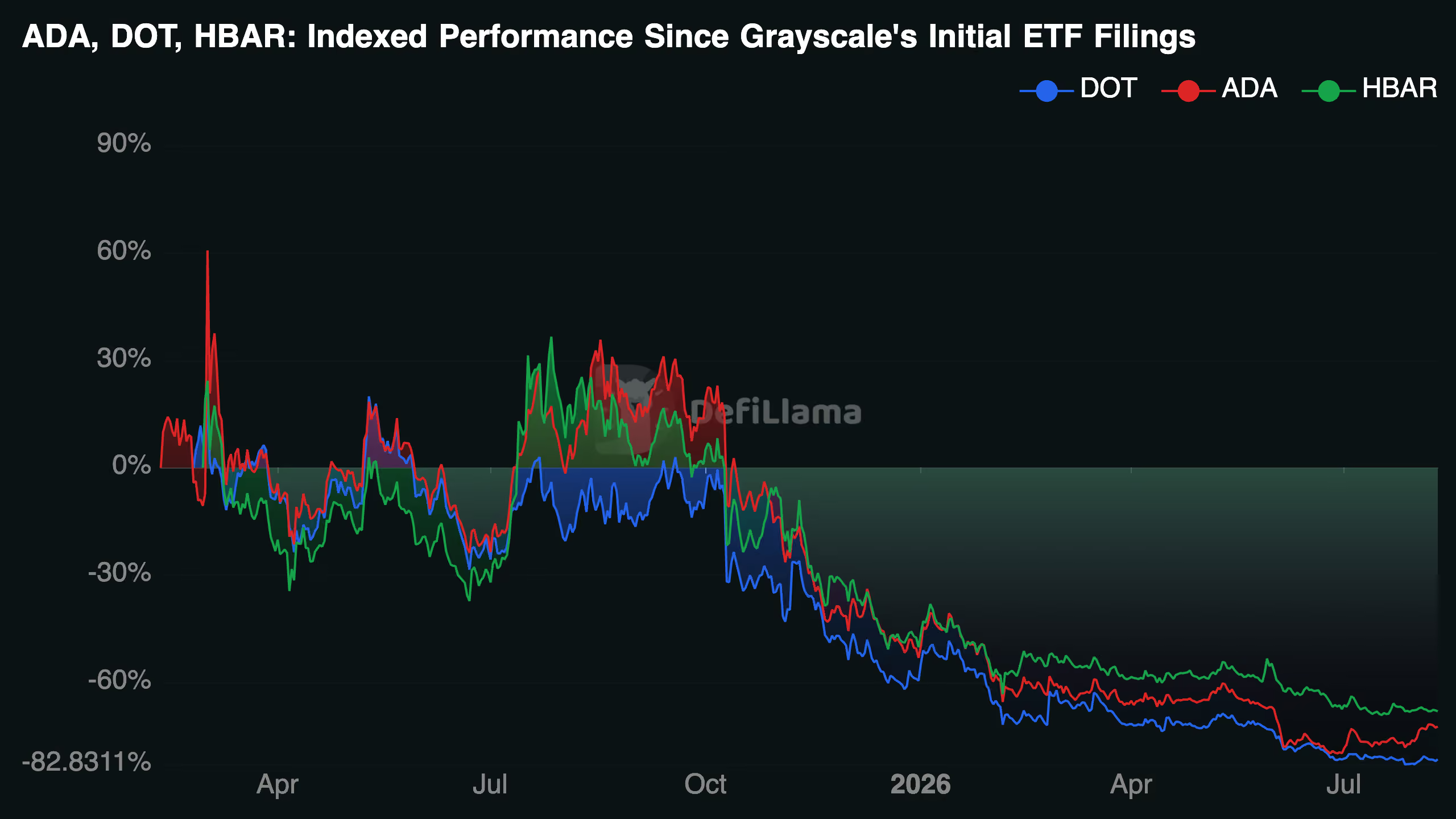
Grayscale quietly drops Cardano, Polkadot and Hedera ETF plans
-

 Fashion6 days ago
Can You Wear Double Cloth Gauze Clothing To Your Office?
-

 Fashion5 days ago
Should you refinance your debt? Pros, cons, and real numbers
-
 Entertainment6 days ago
57 Years Later, the Best Sitcom Ever Made Still Deserves a Reboot
-
 Crypto World6 days ago
Hormuz Nerves Cost Bitcoin $65,000 Mark Despite Solid Institutional Flows
-

 Crypto World6 days ago
Bitcoin's BIP Editors Remove Luke Dashjr Two Days After BIP-110 Fork Stalled
-

 Fashion5 days ago
Claire Life: Kicking Off MVAAFF With the C Suite Luncheon Featuring Phylicia Rashad, Letoya Luckett, and More!
-

 Fashion5 days ago
Coffee Break: The Fonteyn Jane Flat
-

 Tech5 days ago
Zoom Screen-Sharing Bug Let People Fully Take Over Other Devices On A Call
-

 Fashion6 days ago
How to Mix Diamond Rings With Gold & Silver Jewelry
You must be logged in to post a comment Login