
Politics
Britain’s mega-dinghy shame – spiked


spiked is funded by readers like you. Only 0.1% of regular readers currently support us. If just 1% did, we could grow our team and step up the fight for free speech and democracy.
Become a spiked supporter and enjoy unlimited, ad-free access, bonus content and exclusive events – while helping to keep independent journalism alive.

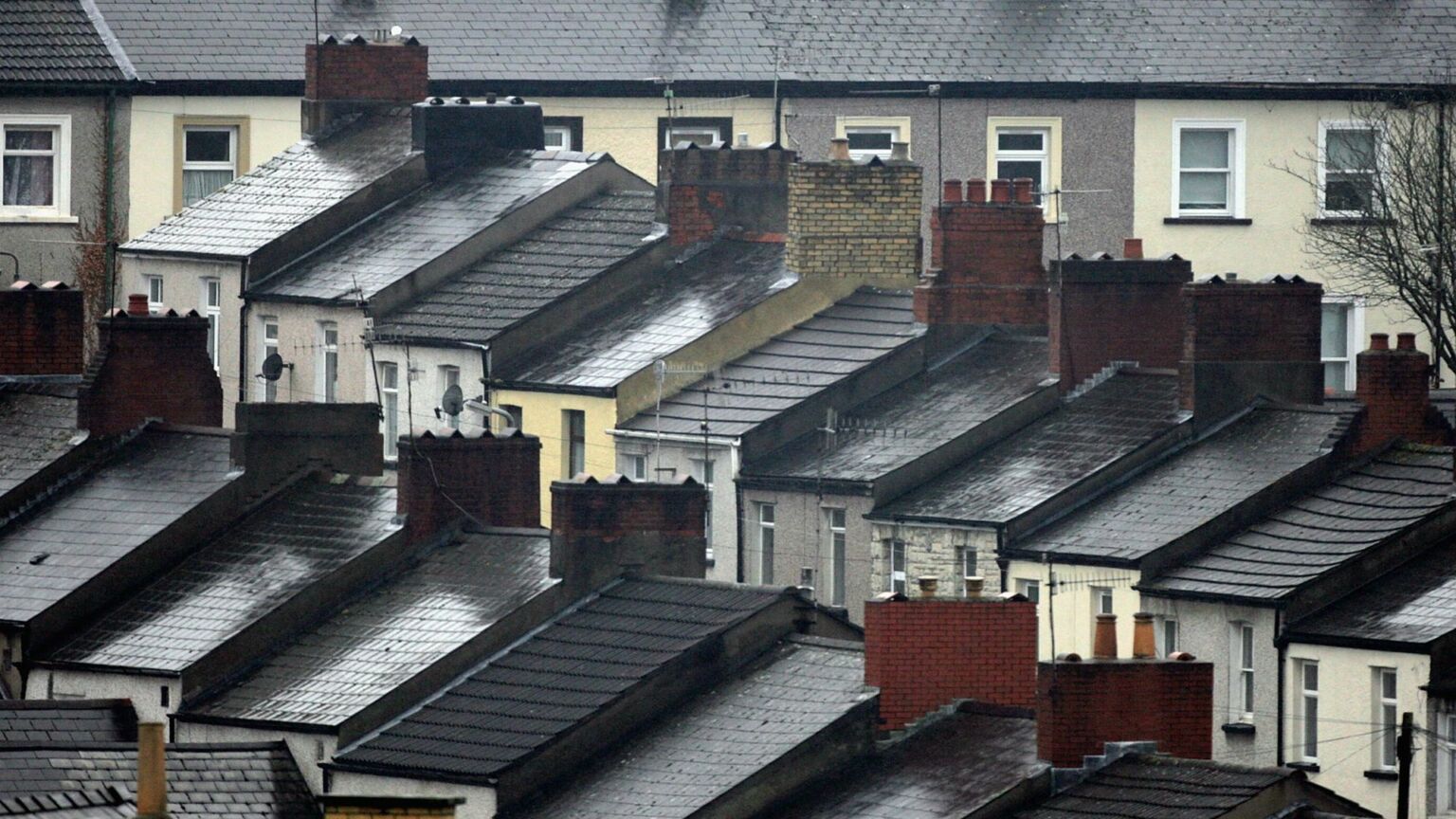
The phrases ‘housing crisis’ and ‘housing shortage’ do not do justice to the scale of the disaster ahead in Britain.
To gain an idea of just how severe the problem is, take the right-leaning Centre for Policy Studies. It says that, in 2023, the UK housed 68.2million people in 30.4million homes – which is 446 homes for every thousand heads. That ratio might seem generous, but in Europe, only Ireland, at 411 homes per thousand, has worse housing provision than the UK. For the UK to reach the 542 homes per thousand averaged by comparable European countries would mean meeting a shortage of no fewer than 6.5million homes.
Our politicians are well aware of the crisis. In 2024, when she became secretary of state at the Ministry of Housing, Communities and Local Government, Angela Rayner announced that Labour planned to build 1.5million homes in England by 2030. Rayner decreed that local authorities must meet mandatory housebuilding targets, as if numbers on computer monitors had magical powers. Later, however, she conceded that her target would only make ‘a dent’ in the nation’s housing need, and that it was ‘stretching’.
New prime minister Andy Burnham is now set to make housing one of his key policy initiatives. He has already stated that Britain is in ‘the grip of a housing crisis’, has promised to end rough sleeping, and has talked of delivering ‘the biggest council-house building programme since the postwar period’. He has also, predictably, laid blame at the door of Margaret Thatcher and her government’s 1980s right-to-buy scheme, allowing council-house residents the opportunity to purchase their homes.
The housing statistics make for grim reading, no question. Fewer new-build housing schemes are ready to start selling homes than for almost a decade. The housing charity Shelter found that, in England, more than 1.3million households are on waiting lists for social housing, yet councils, housing associations and private developers built only 12,198 new such homes in 2025. The situation in London looks dire. And Greater Manchester? That case deserves special scrutiny, given its connection to our current PM.
Burnham was mayor of Greater Manchester between 2017 and 2026. His record in building council houses there inspires very little confidence. In his 2024 mayoral manifesto, Burnham promised 10,000 new council homes across Greater Manchester by 2028. But by June 2025, Greater Manchester Combined Authority reported that just 4,000 homes had been finished since the start of the decade – many of which were not council houses.
Why have Labour and Burnham, despite their partisan fidelity to council housing, found it so hard to build any houses at all? The green lobby has undoubtedly played a role. At the Greater Manchester Green Summit of 2018, hosted by Burnham, it was agreed that the Greater Manchester area should achieve carbon neutrality not by the national target year of 2050, but as early as 2038. Four years later, Burnham’s Greater Manchester Truly Affordable Net Zero Homes (TANZ) task force insisted that all new housing in the Manchester conurbation be Net Zero by 2028. These greener-than-thou requirements of housebuilders can only have slowed the construction of new homes.
Yet though Net Zero zealotry has played a significant role in impeding housebuilding in the UK, other roots of the housing crisis also run deep.
Why the house-price boom ended
Between 1856 and 1939, housebuilding in England and Wales grew by 1.9 per cent a year. That rate fell, however, to 1.2 per cent between 1947 and 2019. Private housebuilding also halved, with the UK registering the lowest housebuilding rate of any similar European country.
Much of the responsibility for this, one of us has long argued, lies with Clement Attlee’s Labour government and its 1947 Town and Country Planning Act (TCPA). That gave the state a monopoly on the development of land. Later legislation and regulation, securing the Green Belt and sites of special scientific interest and creating myriad other environmental devices, further restricted the space on which new homes could be built. The restrictive planning system, limiting the supply of new houses to a trickle, helped to ensure that, for decades, UK house price rises rose consistently and continuously. Nationwide’s widely used house-price index for 1953 onwards shows that, even after boom-and-busts around 1970, 1980 and 1990, annual house-price inflation in the UK recovered to an an annual average of 10 per cent.
Early this century, however, a house-price bust began, complete with a 14 per cent deflation during the Great Financial Crisis of 2007-2008. Since then, annual increases have been five per cent or less. Thus, adjusted for retail-price inflation, the average price of a UK house in real terms, costing above £330,000 from 2021 to 2022, has now fallen by £50,000 – to less than £279,000. In May and June, market prices also stalled.
Extortionate mortgages go some way to explain the fall in house prices. Stewarded by the hapless Andrew Bailey, the Bank of England became the first G7 central bank to raise interest rates to try to beat the inflation that attended Covid. As a consequence, mortgage rates have risen from 1.3 per cent in September and October 2021 to nearly five per cent today. No wonder homes now go unsold. People simply don’t have the means to buy them. Again, London is a prime example – 4,629 recently completed dwellings failed to find a buyer in June, and more than 2,700 were halted before completion.
Britain’s house-price crunch is even more remarkable in the light of net migration to the UK. We might expect migration-fueled population growth to increase demand for housing, and therefore for house prices to rise. From 251,000 in the year to June 2021, net migration soared to a peak of 944,000 in the year to March 2023, only returning to 2021 levels last year. Yet while mass immigration has boomed, in that same period house prices still fell.
What all this tells us is the danger of isolating symptoms of Britain’s housing predicament as causes. High interest rates, after all, reflect a deep-rooted inability to fight inflation by making things cheaper – housing included. Seizing upon mortgage rates or indeed immigrants as the chief culprit for our housing problems, therefore, is lazy. The problems go much deeper than that.
The distinguished economic geographer Paul Cheshire has it right about the house-price crunch. His focus is Britain’s deeper, broader productive malaise. He notes that the UK economy is stagnant, that real incomes haven’t risen since 2008, and that younger house purchasers are ‘unable to pay any more money’ to buy homes. His point about the stagnation of UK plc is key.
Following Cheshire, we should see both the long-term and the recent declines in housebuilding as part of the UK’s general economic struggles. Indeed, both the decline in housebuilding and that in the rate of GDP growth share the same sources – the spread of general bureaucratic regulation, especially around Net Zero, and the spread of what spiked has termed growth scepticism.
Since 1998, when Tony Blair declared economic stability ‘a sexy thing’, UK GDP growth has averaged just 1.5 per cent a year. Housing is caught in an ailing economy.
There are signs of this across the housing sector. Builders such as Vistry and Crest Nicholson have been targeted by short sellers, while Berkeley Group and Taylor Wimpey face thinner profits. Worse, the UK construction sector as a whole is complacent about productivity – fully 22 per cent of builders never bother even to measure it. As a major report by Mace Construct notes, between 1997 and 2022, the productivity of UK general construction improved by about one per cent, against 29 per cent for the UK private sector as a whole and a huge 182 per cent for manufacturing. ‘Almost no other major sector’, Mace Construct says, ‘has stood still for that long’.
The quantity and quality of housebuilding have suffered, too. New homes are not just in short supply – they are also often of dubious quality and wanting in workmanship. Britain’s existing housing stock, not least its council estates, is in a state of widespread dilapidation. Britain’s houses are some of the draughtiest in Europe, lacking both insulation and air conditioning, and they have some of the smallest rooms in Europe.
Sclerosis in Britain’s wider economy cannot fail to rule, too, in its housing sector.
How green tape restrains new housing
Britain’s officious, hyper-regulatory planning system has deepened the housing sector’s travails. As the Organisation for Economic Co-operation and Development puts it, Britain’s planning system for the use of land is ‘overly stringent and complex’.
The sheer size of Britain’s regulatory apparatus in housing speaks volumes. The Ministry of Housing, Communities and Local Government directly employs a good 3,500 people directly, and adds more through the enormous Land Registry (nearly 7,000), Homes England (nearly 1,700) and the Housing Ombudsman Service (600). Its Planning Inspectorate, which attends not just to infrastructure but also to local housing plans, numbers about 450 people, plus another 500 support staff. It makes more than 1,500 decisions a month, but cases typically take about six months. Though it hopes to eradicate case backlogs by next year, this seems unlikely.
Similarly, the Department for Environment, Food and Rural Affairs has 5,800 staff. Then there are its ‘arm’s length’ subsidiaries – the giant Environment Agency (more than 13,000), plus Natural England (2,800). Meanwhile, each of England’s 327 local authorities has a rough headcount of 40 planners, adding a further 13,000 people to look after housing-related matters. Here, too, the wheels of planning grind slow, as local authorities struggle to recruit experienced planners.
Altogether, there are a good 50,000 Brits whose jobs depend on ensuring that residential construction remains an unfathomably complicated business. And this is before we get to the Building Safety Regulator, established in 2023, after the 2017 fire at Grenfell Tower. Charged with the control of ‘higher risk’ buildings (those over seven storeys or 18 metres high), the BSA has 152 staff members and nearly 500 hangers-on. Its cause may be just, but it has refused two-thirds of the applications for building-assessment certificates made to it, and its processing times take ‘twice as long as expected’.
And still the green tape piles up. On New Year’s Day 2027, the UK’s Carbon Border Adjustment Mechanism (CBAM), drawn up in 2023 during Rishi Sunak’s Conservative government, comes into effect. Builders who import the basic raw materials of construction face a carbon cost for these goods’ production ‘comparable to what would have been payable had [the materials] been produced in the UK’. Given that a quarter of the cement, more than half the steel and 90 per cent of the aluminium used by the UK is imported, the costs of CBAM will hit the country hard. And apart from the direct costs to them, UK housebuilders will have to be on continuous lookout for the carbon and perfluorocarbons emitted in producing the steel and aluminium they put in ‘roofs, roofing frameworks, doors and windows and their frames and thresholds for doors, shutters, balustrades, pillars and columns’. Worse, note construction experts Turner and Townsend, as CBAM rules tighten, so builders will find that getting hold of ‘real’ emissions data from suppliers will become ‘essential and standard’ – a bureaucratic requirement that can only raise the cost of new housing.
Labour policy prevents new homes
Britain’s property-owning establishment has no interest in overcoming the morass of regulation we have described. Residential property is a historic bulwark of British capitalism, even if a weak one now. The value of UK housing as an asset is rated at £9.18 trillion. The establishment certainly doesn’t want new houses and new people spoiling the value of that. Its members have made their pile, and insist that any new houses are sustainable and built only on brownfield sites – that is, land that has been previously developed.
In fact Labour has favoured brownfield-only development ever since UK chancellor Gordon Brown first insisted upon it 20 years ago. The policy has also made a big contribution to housing shortages. Indeed, however rapacious Britain’s major housebuilders are, their chokehold on the market is nothing to that exerted by the state.
The state buttresses the sheer unaffordability of housing in the UK today. People now face the very real prospect of never paying off their mortgage. At £268,000, the average price of a UK house in 2026 is nearly seven times average annual total earnings – £39,000. These facts are well known; but we should know what they mean for the future of Britain.
Consider Tom, Dick and Harriet, three main or only earners in households located in England. Say that, respectively, they buy an average house at the average age for a first-time buyer in three different years – 1995, 2010 and 2025. Now, in those years, Tom, Dick and Harriet are likely to be 29, 31 and 34, respectively, with typical pre-tax earnings of £16,000, £26,000 and £38,000. And in those years the average house cost roughly £54,000, £167,000 and £268,000. In other words, Tom bought at about three-and-a-half times his salary; Dick at more than six times; and Harriet at the multiple of seven we have mentioned.
If we now ask what ages Tom, Dick and Harriet will be when their mortgages are finally paid off, the answers are 54, 61 and 69. Tom took the 25-year mortgage that was then standard, and was clear by his mid-fifties. Dick, on a 30-year term, will not finish until he is past 60. And Harriet, on one of the 35-year terms now taken by most first-time buyers, will not make her final payment, if she can, until she is 69 – past the state pension age. Stretch her loan to the 40-year maximum and she clears it at 74. This is not conjecture: Today, new mortgages cluster around borrowers who will be 69 or 74 years old when they finish paying their dues.
These rough figures point in an unmistakable direction. Without growth, Britain is working up a mixture likely to prove explosive – especially among young people, for whom ‘generation rent’ could all too easily morph into ‘generation tent’.
What to do
We need to abolish the Town and Country Planning Act. We need to hold competitions for house designs to first gain ‘type approval’, a standardised certification process used to pre-approve specific building designs and modular structures, and then build nearly anywhere. Some planning law will be important – for example, to ensure that householders have enough space to swing a cat. But the Green Belt, nutrient neutrality and all the rest of the green tape should go. As for new towns, a new act of parliament should annul all restrictive legislation that relates to them, specify the broad building and planning criteria they must meet, and then let both private and public builders get on with the job.
Instead of an obsession with targets, planning law and process, the authorities need to become newly serious about price-cutting innovation in the process of housing production, and about innovation in the final product itself. Britain’s homes need to be cheaper and better. One way toward raising productivity levels, as the Mace Construct report makes clear, is to build large-scale housing developments – and to raise the logistics of getting materials on-site up to the levels reached by logistics at Amazon.
But there is another way. In America, in 2025, 147 plants manufactured more than 100,000 homes, employing more than 60,000 workers. For long, thin, small ‘single section’ homes, average prices were $95,000; for a multi-section home, $156,000. In, too, the US Department of Housing and Urban Development proposed to liberalise the kinds of designs it would allow to be manufactured, to provide buyers with still more of what Donald Trump calls ‘price relief’.
It won’t be easy making a success of manufactured housing in the UK. But ventures in modular homes so far, by firms such as Legal & General and Ilke Homes, have only collapsed because the housing bureaucracy we have described allowed them no guarantee of land and orders to keep their production lines moving. That’s a planning failure, not an engineering one. Indeed, with robotics and Labour’s beloved AI, house-making should be easier than ever in future. And among many improvements in product quality, manufactured homes should be able to withstand heatwaves and cold winters better than Britain’s current housing stock can.
Andy Burnham claims to want to lower the cost of homes, and to make more of them. But all the signs are that he and the British state will concern themselves more with targets and nutrient neutrality. The longer that goes on, the more housing looks set to prompt populist upheaval – the kind of dissent that is ridiculed and cancelled, but only because it proposes a better future.

The prospect of PC Andrew Harper’s killers being released from prison early has provoked real public anger. And with good reason. PC Harper, a Thames Valley policeman, was killed in 2019 when he was dragged behind the getaway car of teenagers fleeing the scene of a quad-bike theft in Berkshire. Two of his killers – Jessie Cole and Albert Bowers – stand to walk free after serving just half of their 13-year sentences.
The chair of Thames Valley Police Federation, Aileen O’Connor, whose online petition now has more than a million signatures, called the prospect of the early release ‘an insult to Andrew’s family, his friends, his colleagues and the entire policing family’. A letter signed by 50 police leaders, including every chief constable in England and Wales, has urged Burnham to pursue ‘every legal option’ to prevent the release of Harper’s killers.
Given the level of pressure he is under over this, I suspect Burnham will find a way to keep these two killers behind bars. But the fact it has taken this level of public outrage to overcome ‘computer says no’ inertia is illustrative of the problems of the British state.
Earlier this week, Downing Street was still clinging to the line that it cannot stop the early release of the killers, and that it was ‘not possible’ to make an exception for just these two men. Ministers were told they could not exempt Cole and Bowers individually because they were convicted of manslaughter before parliament passed ‘Harper’s Law’ – a 2022 law that imposed mandatory life terms on people convicted of killing emergency workers while committing a crime. So the very men who prompted the creation of Harper’s Law would not experience its legal effect. A sorry state of affairs all round.
Burnham should start acting like he is in charge and wield the power he holds. In 2020, emergency legislation came in stopping the early release of prisoners convicted of terrorism. It took just 15 days to be made law, and came into effect immediately. Burnham could do the same now for PC Harper’s killers.
There is a good argument for keeping these men locked up. Policemen who commit crimes often receive stiffer sentences, and the Sentencing Council expressly recognises ‘abuse of trust or dominant position’ as an aggravating factor. This makes sense – these individuals have both broken the law and violated the particular trust that comes with the responsibility to uphold it.
The same principle should surely apply in the other direction. If a policeman is killed in the line of duty, it seems right that his killers should receive more robust sentences, with fewer opportunities for early release, because they have killed someone who valiantly put themselves in danger to protect the public. The widespread anger over the PC Harper case suggests that the public sympathises with that sentiment.
But the crux of the issue is of course about capacity. Even if a solution is found to keep Harper’s killers locked up, the early release of 5,000 prisoners will go ahead. The ultimate cause is, of course, the British state’s failure to build enough prisons. We have allowed our penal system to be dictated by planning-permission decisions.
The chronic short-termism of the state is something to behold. In 2011, Kenneth Clarke – then justice secretary in the Conservative-Liberal Democrat coalition government – was justifying prison closures because the prison population was below available capacity. From 2010 to 2014, the Tories added under 500 net prison places – while they built or brought into use around 13,000 places, 12,500 places were closed or taken out of use. In 2013 alone, prisons in Reading, Dorchester and Portsmouth were closed. The Georgian jail HMP Shepton Mallet, which also closed in 2013, is now a ‘heritage attraction’, so tourists can do ghost tours and see what Britain looked like when it was a functioning country.
We must find a way to overcome the absurd planning blockers to getting prisons built. But given the insurmountable challenge this clearly presents to our ministers and mandarins, creative solutions are needed. And Reform UK this week provided some. It said it would build emergency ‘Nightingale’ prisons. It also proposed – to howls of horror from Amnesty International – sending foreign prisoners to serve their sentences abroad, and to that end said it was exploring options with third countries, including in El Salvador.
Well, why not? Reform said the proposals would free up more than 10,000 spaces and enable us to scrap the early release scheme. And there was remarkably little progressive pearl-clutching when cuddly Scandinavian countries pursued the same approach: in 2021, Denmark agreed to pay Kosovo an annual fee of £12.8million across five years to lease 300 prison places.
One of the statistics that has long traumatised me about the British state is that it costs as much to keep someone in prison as it does to send them to Eton. On the latest figures, 2024-25, the average cost per prison place in England and Wales is £59,026. With Eton currently at £65,673, it comes modestly out on top, but the spirit of the point stands. If keeping our most violent foreign prisoners in El Salvador will cost taxpayers only half as much, as Nigel Farage said, as well as protecting the public, I struggle to find a moral argument against the proposals.
Andy Burnham’s unseemly flipflopping over the early release scheme has not suggested a man who knows his own mind. Nor does the prime minister appear willing to consider bold ideas. But given the British state’s dysfunction, bold ideas may be the only thing that saves us.

When we think of dementia, symptoms like memory loss and confusion might spring to mind. And that’s completely reasonable – dementia is a condition that progressively affects memory and thinking.
But researchers think there are other parts to the picture.
People with dementia can have periods of “paradoxical lucidity”, or moments when a long-term dementia patient’s brain seems to briefly snap back to what it once was. Carers say moments like these are common.
They can last for minutes or hours and may make a dementia patient’s loved one feel as if, for a while at least, the “fog lifted”.
Dr Heather E. Whitson, a professor of neuroscience, the director of the Duke Ageing Centre, and co-director of the Duke/UNC Alzheimer’s Disease Research Centre, said: “I really think that a lot of what we learn about these dramatic episodes could have bearing on better cognition and better outcomes throughout the disease.”
She is one of many academics who’ll join the Lucidity in Alzheimer’s and Dementia (LEAD) Network.
What is LEAD Network?
The upcoming project, due to start this autumn, aims to create a standard definition of lucidity, understand how it affects caregivers and families, and work out the mechanisms behind lucid periods.
Some reports suggest that triggers like music may help to induce these states of clarity among dementia patients. But the team behind LEAD Network want more hard science to explain what’s really going on during clearer spells.
It’s even hoped that working out why lucidity happens in dementia could help researchers find ways to protect us from the condition, and even recover memories.
“We’ve spent decades focused on preventing dementia and treating dementia,” Whitson stated. “This research asks a different question: What allows moments of preserved function to emerge, even in the setting of advanced disease?”
Researchers think periods of lucidity could mean functional parts of the brain remain – it may be a question of access
Lucidity among long-term dementia patients may have to do with what’s been called the brain’s “substrate”, or the hidden, underlying part of the brain that still seems capable of regular, or better-than-usual, function.
Dr Whitson said that the times when a person with advanced dementia is able to remember a loved one or sing every chorus of a song “suggest there is still some preserved substrate there. It means that a profound part of their self – which dementia took away – is still there”.
Maybe research like the one she and others are set to undertake could make accessing that “substrate” more predictable and reliably possible.
The professor claimed, “Neuroscientists often frame cognitive resilience as your mind’s ability to hang on to a capacity even though there is brain damage.
“But lucid episodes tell us that even when a capacity seems as if it’s lost, it may not be lost forever.”

When I was 17 years old, I wrote Elliott Smith a fan letter.
It was the year 2000, and I was a high school senior in Dallas. I had never written a fan letter to anyone, but I felt connected to Elliott, despite the fact that we didn’t really have that much in common.
He was, after all, a man in his 30s who had tattoos and wore an assortment of black band tees, while I was a teenage girl who shopped at Abercrombie & Fitch. He sang about drinking and drugs; I hadn’t even tried my first beer.
He had the aura of a defiant nonconformist, while I was a pleaser and overachiever, writing for the school paper, singing in the choir, and joining an endless stream of extracurriculars and clubs to pad my college applications.
But Elliott seemed like the quiet type, and so was I, with high social anxiety and low self-esteem. He seemed like an outcast, and I often felt out of place and lonely in the Texas suburb where I grew up, even with family and friends around me.
He seemed sad; I was a bit sad too.
But what really mesmerised me most about Elliott was his vulnerability. He laid himself so bare in his music, and when I listened to his songs, it felt like reading a diary. It wasn’t just the lyrics – it was his soft singing style, his careful finger-picking, the way he layered vocal tracks so tenderly. I felt like I knew him, like I was a friend he trusted with his secrets.
I wanted to reach out to Elliott to thank him, and convey how important his music was to me. I found an address for his record label, Kill Rock Stars, in the liner notes of one of his CDs, and I mailed the letter. And then I waited.
Months passed, and no response. Maybe I sent it to the wrong address, I thought. I never really expected to hear back, but I did wonder if he even got it.
Graduation came and went. I headed off to college. Elliott didn’t release any new albums.
And in 2003, he died violently and tragically at the age of 34.
The subject line read “Fwd: Elliott Smith biography.” My former boss had passed along a message that was sent to my old work email – the one associated with my maiden name, which no one had called me in years. It was 2023, and I had recently turned 40.
The email was from a writer named Jamie Fisher, who said she was working on a biography about Elliott Smith.
“I’m wondering if you’re the same Kirby Van Amburgh who wrote a fan letter to him around 2000,” she wrote. “His family still has the letter, and I was wondering whether you got a response.”
I sucked in my breath. This means Elliott got my letter! I thought. He must have read it, right? And if he kept it, maybe it meant something to him.
I responded to Jamie immediately. Even though I hadn’t gotten anything from Elliott, she still wanted to talk to me, so we set up a time to chat on the phone the next week.
Before our phone call, Jamie also sent me a photo of my letter to Elliott. It was handwritten on notebook paper, both sides. In the letter, I wrote that I was a 17-year-old girl who had bought all of his CDs.
I think your music is really addictive. It’s so original and creative. I’ve never heard anything like it.
I shared that I liked to play the piano and guitar and sing. I told him that he was an inspiration to me, that listening to his music encouraged me to create my own style.
I try to write my own songs and make them as unique and personal to me as your work is to you.
But I didn’t want to be a musician as a career, I said.
I praised him some more and said that even if my letter never reached him, it was OK.
You are worth the time it took to write this, and you’ll keep kicking ass.
I told him he was incredible and thanked him. I signed it with a “Sincerely.”
If Elliott did in fact read the letter, I could see why he kept it. I’m sure it was refreshing to get something so wholesome.

C Brandon via Getty Images
In the days that followed, I went up into the attic and pulled out my old high school diaries, skimming the pages for mentions of Elliott. I had written about him several times: I journalled about buying my first Elliott Smith CD and hearing the spidery notes of Speed Trials trickling through the speakers of my Magnavox boombox. And I wrote about my letter, saying, “I hope he gets it. I hope he likes it!”
When we finally got on the phone, Jamie asked if I had continued with my writing or music, and I told her about my winding career path: I was a teacher for several years, then worked at a nonprofit for the next decade. I had dabbled in freelance writing here and there, but it never went anywhere. At one point, I wrote a novel for kids, but it was never published.
I told her I had recently transitioned to a job as a writer for a market research company, which I really enjoyed because I got to write every day, albeit in a different way than I envisioned when I was 17.
I talked about my songwriting and how I was in a musical duo with my friend Todd in the early aughts. We put out an EP, some singles, and even a couple of music videos, filmed in Todd’s backyard. It was all just for fun, but it was also a bit stressful sharing my songs and putting myself on display like that.
I explained that creative writing – both on paper and in music – was emotionally difficult for me. Unlike writing for business, when I wrote anything personal, I felt an intense fear of being exposed. I put so much of myself in my fiction, essays, poems and songs. I was terrified of releasing them for public consumption because any rejection of my creative work felt like a rejection of me as a person. Perhaps that’s why I was so in awe of Elliott: he shared so much of himself in his art, in a way that I never quite could.
After a while, Jamie paused and said that she didn’t reach out to me just because of the book. There was another reason.
“Elliott wrote you a response.”
I literally burst into tears.
He did? I choked out. Jamie started crying too.
She said that Elliott’s letter was in the box with my letter. She didn’t know why he never sent it. Maybe he didn’t have a stamp and then forgot about it. At any rate, it was there, waiting to be found.
Jamie read the letter to me over the phone.
Dear Kirby, I read your letter and it made me happy – thanks.
Elliott wished me success with my writing, whatever success meant to me personally. He talked about his love of reading and recommended an author he was really into at the moment, Mikhail Bulgakov. He shared that he sometimes secretly wished he was a writer instead of a musician, as his music so often diverged from mainstream tastes.
He thanked me for adding a little brightness to his day.
I’m glad you see creativity in yourself, the world needs as much of it as it can get, so go out and kick ass!
He signed it with a heart.

Photo Courtesy Of Kirby Rock
After my call with Jamie, I felt a surge of inspiration. Since having my daughter three years earlier, I had stopped going to my writing group, and I hadn’t written a song or even played my instruments in a long time. But now I felt the urge to return to my writing and music, even if for no other purpose than bringing me joy.
In the months that followed, I brought my guitar down from the attic. I played Old MacDonald Had A Farm for my daughter over and over, building the calluses back up on my fingers. I wrote her an original song about handwashing, Scrubbly Bubs and Bubs and Scrubs (which was well received). Last year, along with my husband and two other dads, I played a three-song acoustic set of Raffi covers for our kids’ class at school. It was thrilling to see them laughing and clapping and dancing, a crowd of generous and adoring fans.
I rejoined my writing group. I wrote a little book about potty training for my daughter (which was less well received). I revisited a short story about alien abduction that I had initially drafted and abandoned several years earlier. I wrote a bad poem about the lizards on my back porch. I wrote this essay. Now I write and write and continue to write.
After I told one friend about Jamie’s call, he asked if I was upset that I never got the letter when I was a teen. I said no. Strangely, I was almost thankful that Elliott never sent the letter. It felt like his words were meant for me at age 40, not age 17. I received his encouragement when I really needed it – not when I was already full of excitement and hope and possibility, but later in life, when I needed to be reminded of the spark inside of me.
I wrote to Elliott years ago to thank him. And in a way, I wrote this to thank him again.
“Nobody Broke Your Heart, an intimate biography of Elliott Smith by Jamie Fisher, will be released by Penguin Random House on Aug. 25.
Do you have a compelling personal story you’d like to see published on HuffPost? Find out what we’re looking for here and send us a pitch at pitch@huffpost.com.
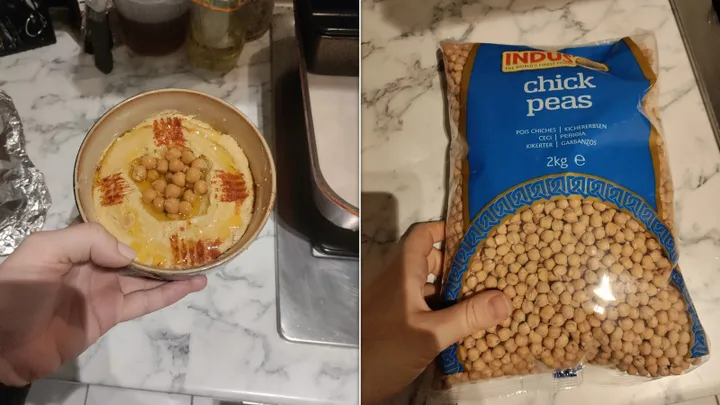
I’ve been banging on about the merits of slow cookers, especially during a heatwave, all summer.
Even though they’re usually associated with stodgy winter dishes, their lower temperature and enhanced insulation mean they don’t warm your kitchen up as much as you’d expect.
Alongside a delicious coconut lentil soup and some Greek-inspired mains, I’ve been batch-cooking my own chickpeas, too. (Yes, canned is easier, but tinned chickpeas are also designed to keep their shape in the container, meaning they’re never quite soft enough for dishes like hummus).
Still, it wasn’t until last week that I tried a long-standing trick to make them softer, creamier, and more delicious – and I wish I’d started years before.
Add baking soda to your chickpeas

I usually add garlic, salt, and chilli to my chickpea water for a bit of added flavour. Salt might have a small advantage in softening them, but for the best results, you need baking soda.
There’s some interesting science behind the addition. When you add the baking staple to chickpea water, it slowly replaces the legumes’ rigid calcium ions with bendier sodium ions.
And the alkaline nature of baking soda also breaks down the bonds that hold their pectins (a type of plant fibre) together.
Combined, those factors mean that baking soda makes chickpeas soft, squidgy, and almost fudgy.
Their skins also soften and even begin to flake away depending on how long you cook them. That, I find, is especially useful for hummus – though I like a looser, softer chickpea for things like salads and chickpea curries, too.

I was amazed by how well the trick worked. Compared to chickpeas I’d stewed for hours, those cooked with baking soda became softer much faster – and eliminated that harder centre I could never quite coax into silky perfection.
How much baking soda should I add to my chickpeas?
You don’t need much to see impressive results. I use about a teaspoon per 500g of dry chickpeas, but some recipes halve that.
The amount you’ll need to add depends, partly, on how long you’re cooking chickpeas for. If you’re making them on the hob, more baking soda will be better; however in the slow cooker, where they stew for hours, try less.
Serious Eats notes that you don’t have to spend hours on the method if you don’t have time. You can soften tinned chickpeas using baking soda, too: just drain them, add enough liquid to cover them, and whack in some baking soda while they boil. Half a teaspoon per 400g can of chickpeas should do the job.
Test the chickpeas as they cook to make sure they haven’t collapsed completely. Once they’ve reached the desired texture, you can remove them and drain them.
This has an added benefit: the chickpea water from baking-soda-cooked legumes is a bit bitter and unpleasant. So, if you need to use this for your recipe, you can save the liquid from the can and use that later on.

As the youngest daughter, you may get labelled as the baby of your family even long after becoming a grown adult.
“A youngest daughter may be simultaneously protected as the baby, expected to be emotionally accommodating as a daughter and discouraged from separating too far from the family,” said Linda Yoon, a therapist and founder of Yellow Chair Collective, which specialises in multicultural therapy.
And this infantilising label can have consequences. While eldest daughters often get saddled with adult responsibilities too early, youngest daughters can also deal with family obligations they never asked for or wanted.
“In therapy, youngest daughters often come in struggling with independence, self-trust, boundaries,” Yoon said.
Here are the most common issues youngest daughters talk about in therapy, according to therapists – along with tips on how to break free from these birth order expectations:
They deal with learned helplessness.
“Youngest daughters may grow up with parents and older siblings constantly advising, correcting, protecting or deciding for them,” Yoon said. “Even when this comes from love, it can quietly communicate: ‘Other people know better than you.’”
Licensed psychologist Lisette Sanchez said she sees youngest daughters deal with what is known as learned helplessness, or a learned dependence on other people, often older siblings or family members who took care of life tasks and made decisions on the youngest daughter’s behalf.
“Everyone else is there for you. So you didn’t get a chance to do that, which then can lead to the domino effect of struggling with individuation, constantly seeking reassurance from others and people-pleasing,” Sanchez said.
As a result, Sanchez said, youngest daughters can struggle with making even simple decisions, like deciding which restaurant to eat at, and feel discouraged about their indecision. They may think, “Why can’t I do this? Why is this easier for other people? What’s wrong with me?” Sanchez said.

THEPALMER via Getty Images
They struggle with family boundaries.
There is an assumption that only eldest daughters become parentified with adult responsibilities, but this is not always the case, especially when older siblings leave home and stop answering their families’ calls.
Jessica Lan, a licensed marriage and family therapist, said that in some families, “the youngest daughter may be the person who remains particularly connected to the parents while older siblings have established more independence and firmer boundaries.”
“The youngest daughter may become the one who is more available, checks in on everyone, coordinates family time or steps in when something needs to be handled,” Lan said.
“I work with many first- and second-generation Americans. I also see many situations where older siblings have reached a point of burnout, go to therapy to work on boundaries and redefine their role within the family. As those older siblings begin stepping back from responsibilities they have carried for years, the youngest sibling may end up carrying more of the family responsibilities.”
They get pressured to be the family’s joy and comic relief.
Yoon said a youngest child may become the family’s source of emotional relief and feel pressure to appear cheerful even when she is not.
“When they become depressed, angry, serious or exhausted, the family may respond with discomfort because they are no longer performing their familiar role,” she explained.
Youngest daughters can spend so much energy helping their family feel better that they don’t learn what their own true values and desires are.
“They can feel compelled to mediate or smooth things over because they experience conflict as something that needs to be fixed,” Lan said. “Along with that, they may have trouble identifying what they actually want for themselves because they are focused on what their parents or siblings need from them.”
To fight this pressure to perform a fake version of yourself, Yoon said, youngest daughters need to give themselves “permission to be complex, not simply pleasant” and to “share feelings with people who do not require you to entertain or reassure them.”
So, how do youngest daughters learn to navigate these struggles?
If you believe your birth order has you struggling with your personal relationships, try to set aside time to reflect on which expectations are ones you decide matter – or what you feel like you must do to please your friends and family.
Sanchez recommended that youngest daughters do a “rules inventory” where they reflect on the rules they live their life by, and then go back and label whether this is “a rule that your family sets, your culture set or that you set.” If too many rules are ones that were thrust upon you, it might be time to reevaluate how you show up for others for your own peace of mind.
Yoon said the biggest healing lesson for a youngest daughter is learning how they can stay connected to their loved ones “without making their voices smaller or shrinking themselves.”
If you’re a youngest daughter struggling to trust her own decisions, try making small decisions without consulting anyone, Yoon suggested.
“Let yourself make imperfect choices and learn from them,” Yoon said. “Replace ‘What should I do?’ with ‘What do I already know?’ to build self-trust.”
In his book How To Prevent Dementia, neurologist Dr Richard Restak wrote: “I strongly suggest that if you are 65 years old or older, that you completely and permanently eliminate alcohol from your diet”.
He said that’s because it’s a “direct neurotoxin” and could increase your risk of falls.
And according to America’s Centre for Disease Control (CDC), we should consider striking some foods off the list, too.
But do those stand in the UK?
Here, we asked Dr Giuseppe Aragona, a GP and medical adviser for Prescription Doctor, about whether he agrees with the guidance here.
Which foods does the CDC caution against for over-65s?
The CDC said that people aged 65+ are more likely to become hospitalised from bacteria like Salmonella and Listeria.
“Some foods are more likely to spread harmful germs, including undercooked meat and eggs, unpasteurised milk and cheese, and unwashed produce,” they wrote.
Therefore, they suggested people in that age group might want to consider that the following could pose a higher risk to them:
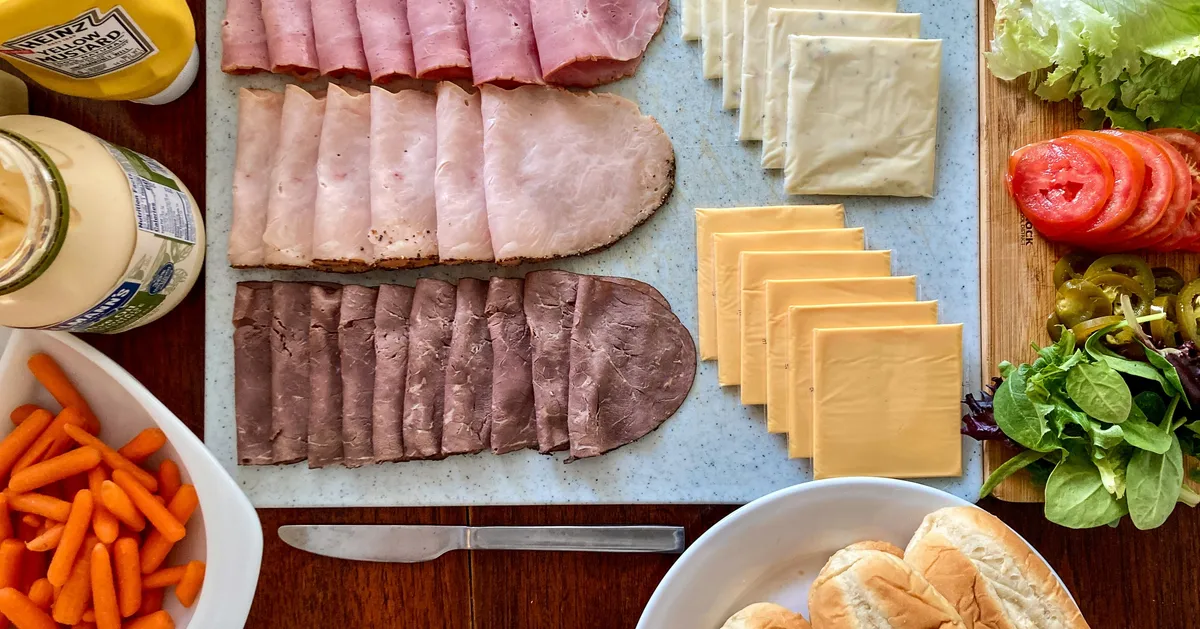
- Raw or undercooked poultry or meat,
- Unheated deli meat, cold cuts, hot dogs, and fermented or dry sausages,
- Refrigerated pâté or meat spreads,
- Premade deli salads, like potato salad, egg salad, tuna salad, or coleslaw,
- Raw or undercooked sprouts like alfalfa or bean sprouts,
- Unwashed fresh fruits and vegetables,
- Cut melon left out for more than two hours,
- Unpasteurised juice or cider,
- Unpasteurised (raw) milk and dairy products made from unpasteurised milk,
- Soft cheese made from unpasteurised (raw) milk,
- Unheated cheese sliced at a deli,
- Raw or undercooked (runny) eggs, and foods that contain raw or undercooked eggs, like cookie dough or eggnog,
- Raw or undercooked fish or shellfish, including sashimi, sushi, and ceviche,
- Refrigerated smoked seafood (except in a cooked dish),
- Raw dough or raw batter made with raw (uncooked) flour.
So… does that stand in the UK?
Dr Aragona said that mostly, the reasoning behind these entries stands.
“I would broadly agree with the principle behind the CDC list,” he said.
“As we get older, changes in the immune system mean that an infection which might cause a relatively short-lived episode of diarrhoea and vomiting in a younger adult can sometimes become much more significant in an older person, with a greater risk of dehydration, hospital admission and, with certain organisms such as Listeria, Salmonella and pathogenic E. coli, invasive or systemic infection”.
The doctor added that this might be especially relevant for people who are frail or have other health conditions, “although I would be careful not to imply that everyone becomes suddenly vulnerable on their 65th birthday, because the degree of risk varies considerably between individuals”.
He said that for him, the foods he’d be most concerned about include:
- raw or undercooked meat and poultry,
- raw or lightly cooked eggs,
- raw shellfish and fish,
- unpasteurised milk and dairy products,
- raw sprouts, and
- certain chilled ready-to-eat foods such as pâté and cold deli meats.
That’s because “these foods can become contaminated with organisms such as Salmonella, Campylobacter, E. coli and Listeria, and the important point is that some contamination cannot be detected by looking at, smelling or tasting the food”.
Are there any exceptions?
“I would also add an important UK-specific nuance around soft cheeses, because the advice can easily become over-simplified,” Dr Aragona told us.
“It is not accurate to say that someone over 65 needs to avoid all Brie, Camembert, blue cheese or other soft cheeses; the key distinction is whether the product is made from pasteurised milk and, in some circumstances, how it has been stored and handled.”
In the UK, it’s been illegal to sell raw milk in supermarkets since 1985. But it’s not against the law to sell it in other places in England, Wales, and Northern Ireland.
“Similarly, I would not want the advice to become so restrictive that people are discouraged from eating nutritious foods such as fruit, vegetables, eggs, fish or dairy altogether,” the GP continued.
“The sensible approach is generally to modify how these foods are prepared and stored rather than simply avoiding them; for example, washing produce properly, keeping chilled foods at the correct temperature, observing use-by dates, preventing cross-contamination between raw and ready-to-eat foods, and cooking higher-risk foods thoroughly can substantially reduce the risk while allowing people to maintain a healthy and varied diet.”
Lastly, the expert ended, the person eating the food matters, too.
“I would… distinguish between someone who is a healthy, active 65-year-old and someone who is considerably older, frail, immunosuppressed or living with significant medical conditions, because the latter group may reasonably need to take a more cautious approach.
“Overall, I would agree with the CDC’s approach, but I would present it as risk reduction rather than a list of foods that people over 65 are forbidden from eating.
“The aim should be to reduce exposure to foods where the consequences of contamination could be serious while preserving a nutritious, enjoyable and varied diet, and I think that distinction is particularly important because overly restrictive food advice can itself have unintended consequences for nutrition, enjoyment of food and quality of life.”

Back in 1992, Disney’s flick Aladdin brought in $504 million dollars which, in today’s money comes to over a billion US Dollars. A huge part of the success of the film, of course, was Robin Williams’s incredible performance as Genie.
Speaking to Variety, longtime Disney animator and co-director of Aladdin, Ron Clements said: “On the first day of recording [Genie’s intro] we had script pages written in Robin’s improv style and storyboards illustrating some of the visual metamorphosing we were planning. He started out recording the script as written a few times, then took off in a multitude of directions…
“And he was consistently hilarious. At one point, we had to remove the genie’s lead animator, Eric Goldberg, from the recording stage because his uncontrollable laughter was messing up takes”
Despite this, the actor actually agreed to be paid relatively little for his pivotal role.
Robin Williams was paid only $75,000 for his role
Robin recorded around 30 hours of written and improvised dialogue for Aladdin and he revealed to New York Magazine that he did this because he wanted to “leave something wonderful behind for the kids.”
Business Insider explains: “Williams took a hefty pay cut and agreed to be paid $75,000 for his work on the Disney film instead of his usual fee of about $8 million — but there was a catch. Williams did not want his voice used to merchandise products.”
“I don’t want to sell stuff,” Williams later told New York magazine. “It’s the one thing I don’t do.”
The execs agreed to this deal, Robin said on the Today Show, adding: “The one thing I said was I will do the voice. I’m doing it basically because I want to be part of this animation tradition. I want something for my children. One deal is, I just don’t want to sell anything — as in Burger King, as in toys, as in stuff.”
“Then all of a sudden,” he added, “they released an advertisement — one part was the movie, the second part was where they used the movie to sell stuff. Not only did they use my voice, they took a character I did and overdubbed it to sell stuff.”
Perhaps surprisingly, Disney apologised in the form of a Picasso painting valued at $1 million (sure why not), a self-portrait of the artist as Vincent Van Gogh.
According to Artnet, the painting clashed with Robin’s interiors and his friend Eric Idle recommended he burn the painting on live TV.
Of course, he didn’t do that but he did return for the third Aladdin film as well as starring in Disney’s movie Jack and Bicentennial Man.
If anybody would like to apologise to me in the form of a very expensive art work, please feel free.

We’ve written before at HuffPost UK about how different the pitch for Pretty Woman – originally called 3000 – was from the film we know now.
Don’t get me started on the extremely unlikely source material for Dirty Dancing 2, either.
As it turns out, the first version of Pixar’s Monsters Inc was almost unrecognisable from the film that eventually hit cinemas as well.
For instance, the original script didn’t include lovable protagonist Sulley (at least not in his monster form).
Instead, an early plot focused on a 30-year-old accountant.

Speaking about the film’s origins, Pete Docter, the director of 2001’s Monsters Inc, said on Jeff Goldsmith’s Creative Screenwriting podcast: “Well, my idea was that what it was about was about a 30-year-old man who is like an accountant or something.
“He hates his job, and one day he gets a book with some drawings in it that he did when he was a kid from his mum, and he doesn’t think anything of it, and he puts it on the shelf and that night, monsters show up. And nobody else can see them.
“He thinks he’s starting to go crazy; they follow him to his job and on his dates, and all this – and it turns out these monsters are fears that he never dealt with as a kid.”
A bit like fellow Pixar hit Inside Out, which includes personified emotions, each of these monsters would have represented a different one of the office worker’s fears.
As soon as he was healed from one of the fears these monsters symbolised, it would go away. This was actually a little bittersweet, as the original plot’s main character grew close to some of his new companions.
While I have you, here’s another fact about the first movie: Boo actually had a real name all along. Eagle-eyed fans spotted a detail suggesting she was called Mary, like the child actor Mary Gibbs, who voiced her.
Real-life Mary has since voiced characters in Inside Out, though she was only two years old when she starred in Monsters Inc.

Famed screenwriter Aaron Sorkin has lamented what he sees as America’s demand for politicians who feel like the average Joe, calling for an end to the “glamorisation of dumbness”.
During a new interview with Esquire, Sorkin was asked if he still felt like the US is dealing with a “huge, huge dumb problem”, as he’d said back in 2019.
The politically-minded Hollywood veteran explained why he thought little has changed, stating: “We need to get over our infatuation with the outsider, with the plainspoken person that you want to have a beer with.”
Citing his own work, Sorkin continued: “The characters I write are all smarter than I am. I did not blaze any trails as a scholar. People who are smarter than I am don’t make me feel bad about myself, they don’t make me feel inferior. And certainly a president – I need the president to be smarter than I am.”
Sorkin added that, in his eyes, “there are millions upon millions of voters who seem to have a mass debilitating inferiority complex and feel like a smart president, Obama for instance, is looking down his nose at everyone else, or he’s a Poindexter, or he’s not a real man”.
“Right. He eats arugula,” interviewer Michael Sebastian cracked, harking back to one of the trifling complaints conservatives had about Barack Obama‘s alleged elitism.
“We got to knock that off,” Sorkin said. “There has been a glamorisation of dumbness.”

Anna Moneymaker via Getty Images
While the Oscar winner didn’t mention anyone in particular, his take definitely echoed the way he described US leader Donald Trump in a 2017 interview with The Hollywood Reporter.
Explaining why he had no interest in putting a Trump-esque character in the reboot of The West Wing, Sorkin called the Republican president “a really dumb guy with an observable psychiatric disorder”.

Denzel Washington’s Overlooked Boxing Classic Is Officially Leaving Netflix

Vikings WR among the second-year players PFF has their eyes on

Twelve dead as tourist bus crashes in Hungary after driver ‘fell asleep at wheel’

Weekend Open Thread: Staud – Corporette.com

Weekend Open Thread – Corporette.com

Weekend Open Thread: Brooks Brothers

DISGUSTING DESTRUCTION OF CLARITY ACT AND CRYPTO BEING CELEBRATED NOW!

Stop trying to look wealthy. Start becoming wealthy. #marciusvan #4amclub #southafricans #money #mo

Excel Financial Modeling | Sensitivity & Scenario Analysis
-

 Fashion2 days ago
Weekend Open Thread: Ann Taylor
-
 NewsBeat5 days ago
Communication cards help banking customers access services or report scams
-
 Business6 days ago
Oil Price Today (August 11): Crude oil rises to $88 after Trump’s compensation demand dents Hormuz opening. Here’s why
-

 Crypto World6 days ago
Revolut wins French banking licence, creates second EU banking hub
-
 Crypto World6 days ago
Why Did Nvidia Stock Fall on Monday Despite a $500 Billion Wall Street AI Deal?
-
 Sports3 days ago
This U.S. Amateur is a glimpse into golf’s future in more ways than you think
-

 Politics7 days ago
Ben-Gvir’s crocodile project halted but abuses at Ketziot Prison continue
-

 Politics7 days ago
Saudi Arabia used 86% of missile stockpile defending Iran attacks
-

 Sports2 days ago
Birmingham 2026: Day 6 Timetable for Irish Athletes
-
 NewsBeat1 day ago
Myanmar says over 300,000 Rohingya refugees verified for repatriation as exodus enters ninth year
-

 Politics1 day ago
SEQ Code: The Three Letter Boarding Pass Code That Could Give You The Worst Seat
-

 Fashion6 days ago
Can You Wear Double Cloth Gauze Clothing To Your Office?
-
 Entertainment4 days ago
Keke Palmer Subtly Hints At Sean Evans Drama With Cryptic Post
-

 Crypto World7 days ago
Is Clarity's delay a blessing in disguise?: State of Crypto
-
 Crypto World7 days ago
USDC and USDT Now Own 84% of Crypto Card Spend as the Euro Retreats
-
 Crypto World6 days ago
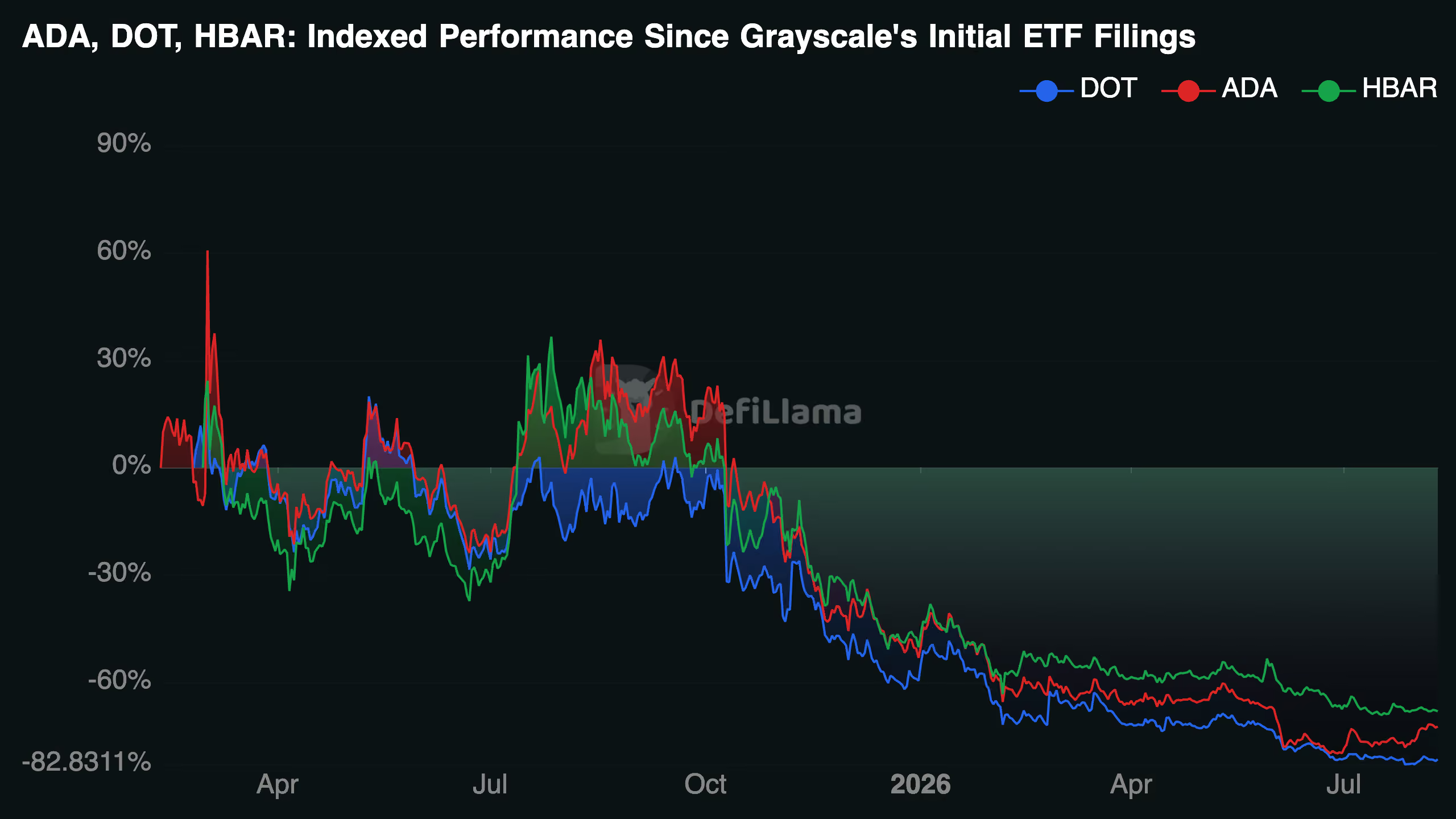
Grayscale quietly drops Cardano, Polkadot and Hedera ETF plans
-
 Entertainment6 days ago
57 Years Later, the Best Sitcom Ever Made Still Deserves a Reboot
-

 Crypto World7 days ago
Netanyahu Rejects Trump’s 15-Point Peace Plan for Gaza
-

 Crypto World7 days ago
Kraken Delisting Deadline Nears: Holders of 21 Tokens Risk Near-Zero Payouts
-

 Business7 days ago
More than 1.27M Ram 1500 pickups recalled over possible seat belt issue
You must be logged in to post a comment Login