Connect with us

Business

Puravankara shares rally up to 13% after Q1 revenue jumps 62% YoY; EBITDA margin expands to 25%

Published

on

Puravankara shares rally up to 13% after Q1 revenue jumps 62% YoY; EBITDA margin expands to 25%
Puravankara shares rallied up to 13% to hit a day’s high of Rs 245 on Monday after the real estate developer reported a 62% year-on-year jump in revenue for the quarter ended June, while EBITDA margin expanded to 25%.

The company, in its exchange filing, said it had a strong start to FY27, supported by improved realisations and disciplined execution across its residential and commercial portfolio.

Puravankara reported a consolidated Profit After Tax (PAT) of Rs 25 crore in Q1FY27, compared with a loss of Rs 69 crore in the year-ago quarter. EBITDA margin also improved sharply to 25% from 15% in Q1FY26.

Also Read |Listed developers eye Rs 1.82 lakh crore pre-sales in FY27 as housing demand holds firm: Report

Advertisement

Total revenue for Q1FY27 stood at Rs 877 crore, up 63% YoY from Rs 539 crore in Q1FY26. Operating inflows for the quarter stood at Rs 1,423 crore, against operating outflows of Rs 1,078 crore, resulting in an operating surplus of Rs 345 crore.


The company handed over 745 homes covering 0.94 msft during the quarter, up from 667 units in Q1FY26, sustaining the execution momentum built through FY26. In the quarter that ended in June, the company recorded pre-sales of Rs 1,439 crore, up 28% year-on-year, on sales volume of 1.36 million sq. ft. across 1,017 units.
The average sales realisation was recorded at Rs 10,589 per sft, up 18% year-on-year and the collections were recorded at Rs 1,199 crore, up 40% year-on-year. As of June 30, 2026, 3.20 msft of completed inventory (2,777 units) is pending revenue recognition.The gross debt stood at Rs 3,942 crore as of June 30, 2026, reduced by Rs 74 crore during the quarter even as the company deployed Rs 574 crore towards land payments, advances and deposits.

The net debt stood at Rs 2,836 crore, with a net debt-to-equity ratio of 1.57 for Q1FY27 and the cost of debt stood at 11.12% as of June 30, 2026.

The company completed 1.72 msft across ten towers and phases during the quarter: 1.00 msft in Goa (Provident Adora De Goa, Phases VIII to XI), 0.51 msft in Pune (Emerald Bay Towers B-2 and B-3, and Purva Aspire) and 0.21 msft in Mumbai (Purva Clermont, Wings A, D and E).

As of June 30, 2026, the total estimated surplus from ongoing projects stands at Rs 8,976 crore. The estimated surplus from commercial projects is Rs 2,220 crore. The estimated surplus from pipeline projects is Rs 8,636 crore. The overall estimated surplus across all categories stands at Rs 19,831 crore over the next three to five years.

Advertisement

In Q1FY27, Puravankara announced four land transactions in Bengaluru spanning approximately 41.93 acres, with a cumulative development potential of around 4.23 msft – Mandur, Doddagubbi, Sarjapura and Sanna Ammanikere.

The company has 20.48 msft of planned launches across the Southern and Western markets, with an approximate GDV of Rs 27,300 crore, with the majority of the pipeline concentrated in Bengaluru and Mumbai. The estimated future cash flow potential from total new launches (excluding new phases) is around Rs 8,636 crore. The pipeline is supported by a redevelopment portfolio of five projects in Mumbai, representing 2.23 msft of saleable area on the company’s share.

Also Read | Realty developer Puravankara acquires 9.73-acre land parcel in north Bengaluru

According to the filing, Purva Zentech, Bengaluru entered into a definitive agreement with ICICI Prudential AMC for the sale of the commercial property at an enterprise value of Rs 625.94 crore. Of the total consideration, Rs 145 crore will be received through the sale of shares of the SPV, while the balance will be realised through agreed balance sheet adjustments in accordance with the transaction structure.

Advertisement

In the past one month, the stock went up 1.09% and nearly 4.25% in the past one year. The stock went up 41.35% in the last three years.

(Disclaimer: Recommendations, suggestions, views and opinions given by the experts are their own. These do not represent the views of The Economic Times)

Continue Reading
Click to comment

You must be logged in to post a comment Login

Leave a Reply

Business

Georgia Well Positioned For Sustainable Growth – AFC On The Road – Georgia – June 2026

Published

on

Georgia Well Positioned For Sustainable Growth - AFC On The Road - Georgia - June 2026

This article was written by

Asia Frontier Capital Ltd. is a pioneering fund management company that specializes in investing in high growth Asian frontier economies by managing the AFC Asia Frontier Fund, AFC Iraq Fund, AFC Uzbekistan Fund and AFC Vietnam Fund. The investment objective of AFC Asia Frontier Fund is to achieve long term capital appreciation by investing in public equities of Asian frontier countries (Bangladesh, Bhutan, Cambodia, Georgia, Iraq, Kazakhstan, Kyrgyzstan, Laos, Maldives, Mongolia, Myanmar, Nepal, Pakistan, Papua New Guinea, Sri Lanka, Uzbekistan and Vietnam) that are seeing increasing consumption due to favorable demographic trends, rising incomes and high GDP growth. The AFC Iraq Fund was launched on the 26th June 2015 and aims to achieve long-term capital appreciation for investors by capturing value and growth potential in the post conflict high-growth & resource rich Iraq market. The fund emphasises long term investment horizon to truly capture the opportunity in Iraq. The fund’s investable universe consists of locally listed companies that have their principal business activities in Iraq as well as foreign listed companies that have the majority of the business in Iraq as a whole including the prosperous Kurdish Region of Iraq (KRI). The AFC Iraq Fund offers access to investments in post conflict recovery potential of Iraq, including the KRI, and/or stability in its territory. The AFC Iraq Fund is managed by Asia Frontier Capital (Iraq) Limited, Cayman Islands under the executive leadership team of Thomas Hugger (CEO & Fund Manager) and Ahmed Tabaqchali (CIO) who have more than 47 years of investment experience as well as an extensive background covering global, emerging, frontier and MENA markets AFC Vietnam Fund invests exclusively in Vietnamese equities to capture value in growth companies; especially in the small to medium size company segment. The AFC Uzbekistan Fund invests exclusively in listed equities from Uzbekistan.

Analyst’s Disclosure: I/we have no stock, option or similar derivative position in any of the companies mentioned, and no plans to initiate any such positions within the next 72 hours. I wrote this article myself, and it expresses my own opinions. I am not receiving compensation for it. I have no business relationship with any company whose stock is mentioned in this article.

The AFC Asia Frontier Fund holds BGEO LN (Lion Finance Group) and TBCG LN (TBC Bank Group), both of which have been mentioned in the article.

Advertisement

Seeking Alpha’s Disclosure: Past performance is no guarantee of future results. No recommendation or advice is being given as to whether any investment is suitable for a particular investor. Any views or opinions expressed above may not reflect those of Seeking Alpha as a whole. Seeking Alpha is not a licensed securities dealer, broker or US investment adviser or investment bank. Our analysts are third party authors that include both professional investors and individual investors who may not be licensed or certified by any institute or regulatory body.

Continue Reading

Business

Rise in the value of commercial property investment deals in Wales

Published

on

Business Live

Property advisory firm Knight Frank have crunched the numbers for the second quarter of this year.

Hodge House on St Mary Street in Cardiff

The standout deal on value for the sale of Hodge House.(Image: WalesOnline)

Property companies (propcos) and high-net-worth investors helped Wales buck the wider UK trend to deliver a positive second quarter for investment in commercial property, according to new figures from Knight Frank.

Analysis from the property advisory firm found that nearly £72m was invested in Welsh commercial property between April and June – up 67% on £43m during the same time last year. It was the highest level since £103m in 2020.

Advertisement

Private investors – predominantly made up of propcos and high-net-worth individuals accounted for 61% of investment in the first six months of the year, well ahead of international buyers who were the next most active group at 21%. That was also far above private investors’ average market share of 24% between 2020 and 2025.

French open-ended commercial property funds known as Société Civile de Placement Immobiliers (SCPIs) made up the vast majority of international investment. They were behind the purchases of Kestrel House in Cwmbran and 5-10 Church Street in Cardiff, home to well-known restaurant chains the Botanist, Honest Burger, and Mowgli.

The second quarter’s strong performance was buoyed by the sale of the grade A Hodge House office building in the centre of Cardiff to SevenCitiesLdn in a £30m plus deal. Outside of the capital there were just under £22m of deals, largely for industrial and warehouse units in South Wales, including the sale-and-lease-back purchase of the AF Blakemore distribution centre in Talbot Green acquired by an SCPI.

Tom Griffiths, associate at Knight Frank’s Cardiff office, said: “Private buyers are driving investment in the Welsh commercial property market this year, representing not far off two-thirds of volumes.

Advertisement

“They have stepped in where international buyers have left off for the moment, as the geopolitical situation softens the appetite for cross-border deals across the UK. These buyers see a mixture of opportunities for value-add purchases and long-term income from strong covenants, with funds often the sellers.

“That said, French SCPIs have remained very active and were behind a number of the largest transactions in the last quarter, with a particular interest in Cardiff’s leisure offering. They are attracted by the value on offer -as they often look for yields of 7% or higher – lean assets with little asset management requirements, and the fact they can find investments that meet those criteria in a capital city makes Cardiff stand out.

“In industrial, rents are still behind the curve and the supply of quality space remains relatively constrained, creating a reversionary story that many buyers are leaning in to. That should help to sustain deal activity in the sector during the months ahead. Another emerging trend we are beginning to see is a shift back towards income‑focused buyers who want longer, steadier income streams.

“While the geopolitical situation and economic outlook will likely continue to loom in the second half of the year, Wales’s market dynamics remain strong. Limited supply, both in Cardiff offices and South Wales industrial, should continue to keep prime rents on a positive trajectory, and we would hope to see that translate into more deal activity in the remainder of 2026.”

Advertisement
Continue Reading

Business

NMDC shares decline 4% after Q1 results. Should you buy, sell or hold the stock?

Published

on

NMDC shares decline 4% after Q1 results. Should you buy, sell or hold the stock?
Shares of state-owned NMDC shed 4% to their day’s low of Rs 81.20 on the BSE on Monday even as the company reported a 2% year-on-year (YoY) rise in profit after tax to Rs 2,007 crore for the first quarter of FY27, compared with Rs 1,969 crore in the year-ago period. Revenue from operations increased 2% to Rs 6,795 crore from Rs 6,634 crore in Q1FY26.

Iron ore production rose 26% YoY to 151.17 lakh tonnes in Q1FY27 from 119.94 lakh tonnes a year earlier. Iron ore sales, however, increased 2% to 117.30 lakh tonnes from 115.17 lakh tonnes. Ore transferred for pellet job work rose 46% to 8.19 lakh tonnes from 5.60 lakh tonnes.

Also read: Picture perfect quarter? Nifty profit growth hits a 10-quarter high, but 5 stocks do the heavy lifting

EBITDA and margin stood at Rs 2,817 crore and 41%, respectively, compared with Rs 2,777 crore and 42% in Q1FY26. Profit before tax increased 2% to Rs 2,692 crore from Rs 2,644 crore.

Advertisement

Average domestic realisation increased 4% to Rs 5,548 per tonne from Rs 5,353 per tonne in Q1FY26. Iron ore sales revenue stood at Rs 6,508 crore, up 6% from Rs 6,165 crore a year earlier. Revenue from other sales declined 39% to Rs 287 crore from Rs 469 crore.

Buy, sell, hold NMDC shares?

Motilal Oswal maintained its Buy rating on NMDC with a target price of Rs 98, implying 16% upside. The brokerage said NMDC reported healthy earnings in the quarter, supported by healthy average selling prices that offset muted quarter-on-quarter volumes. It expects production volumes to rise to around 60 million tonnes in FY27, driven by an increase in the environmental clearance limit and a new mine under the joint venture.
Motilal Oswal has largely retained its FY27 and FY28 estimates and expects volumes and prices to remain elevated, in line with strong demand from steelmakers.JM Financial has maintained a Reduce rating on NMDC with a target price of Rs 87, implying around 3% upside. On operations, NMDC is targeting 60 million tonnes of production in FY27 and 100 million tonnes by 2030, with incremental volumes expected from Deposit 14, NMZ, Kumaraswamy and other mines. JM Financial said volume growth and capex execution remain key factors to monitor.

NMDC Q1 highlights

Total income rose 3% to Rs 7,142 crore from Rs 6,932 crore. Interest income from deposits with banks increased 16% to Rs 212 crore from Rs 183 crore, while other income rose 17% to Rs 135 crore from Rs 115 crore.

Read more: Nifty outlook: Further dips possible before a move towards 25,100, says Anand James

Advertisement

Total expenses increased 4% to Rs 4,450 crore from Rs 4,288 crore. Royalty and other levies rose 31% to Rs 1,644 crore from Rs 1,255 crore, while the additional amount representing 150% of royalty increased 30% to Rs 1,851 crore from Rs 1,425 crore. Pellets job-work expenses rose 23% to Rs 248 crore from Rs 202 crore, while operating expenses increased 34% to Rs 1,801 crore from Rs 1,349 crore.

(Disclaimer: Recommendations, suggestions, views and opinions given by the experts are their own. These do not represent the views of The Economic Times)

Continue Reading

Business

Uflex shares surge 16% after Q1 profit zooms 630% YoY

Published

on

Uflex shares surge 16% after Q1 profit zooms 630% YoY
Shares of flexible packaging solutions provider Uflex rallied 16% to Rs 568.35 on the BSE on Monday, after the company reported a 629.6% year-on-year (YoY) surge in its Q1 net profit for FY27 to Rs Rs 423.3 crore, as compared to Rs 58 crore in the same quarter last year.

The company’s revenue from operations rose 37.6% YoY to Rs 5,366 crore in the quarter ended June 30, 2026, as compared to Rs 3,900.6 crore in the corresponding quarter of the previous year, according to a regulatory filing on the BSE.

EBITDA jumped 92.1% YoY to Rs 919.8 crore in this quarter, from Rs 478.8 crore in Q1 FY26. The EBITDA margin stood at 17%, which is the highest EBITDA level for the company in the last 21 quarters, as per the filing.

UFlex’s domestic Packaging Film sales volume increased by 9.1% sequentially in its India operations, as customers gradually resumed purchases after the price hikes in Q4 FY26. The price hike was driven by the pass-through agreement that allows higher raw material prices linked to higher price realisation, according to the company’s statement.

Advertisement

The war crisis will continue to result in controlled supply of raw materials for manufacturing Packaging Films across Asia, as per the statement, which will help in lowering imports of Packaging Films and higher price realisation in India, especially for BOPET in FY27.


UFlex’s presence of plants in three key markets i.e. Egypt, Dubai and Nigeria, and captive production of PET Chips helped in capturing the benefits of strong local and regional demand especially in Egypt, while Nigeria benefitted from additional traction in export markets. There was a surge in demand for both BOPET and BOPP Films across the MEA region as reflected in the sales volume growth of 14.9% YoY in Q1 FY27.
As per the company’s statement, the local packaging converters prioritize sourcing from local/regional Packaging Film makers to overcome the uncertainties of supply-chain disruptions, higher sea-freight costs, and inaccessibility to key ports due to the West-Asia crisis.

What management said

Chairman and MD Ashok Chaturvedi said, “We have started FY27 with robust financial and operational performance. Our diversified portfolio, integrated capabilities and strong presence across key global markets continue to strengthen our competitiveness.” He further stated that the company witnessed strong performance in its core packaging business, supported by improved volumes, higher capacity utilization and enhanced operating efficiencies across key markets.

“Growth was driven by operating leverage, stronger realizations, improved product mix and forex gains, reflecting the benefits of our integrated global footprint.” said CFO Arun Kumar Sharma. “We enter FY27 with multiple growth levers gaining traction. The recently commissioned 39,600 MTPA recycling facility in Noida Sector 155 and the 80-million-unit WPP bags facility in Mexico will progressively contribute to revenue and EBITDA as they ramp up.” the President for Finance & Accounts stated.

“Higher utilization led by localized sourcing to de-risk the unscheduled supply chain disruption and a shift towards value-added packaging films will remain the company’s key growth themes, supporting sustained profitable growth,” he said, adding that while Q2 is expected to see some normalization from the exceptionally strong realisation in Q1, the company’s underlying growth trajectory remains intact, positioning it for robust FY27 growth and continued improvement in earnings quality.

Advertisement
Continue Reading

Business

Earnings call transcript: Nitro Games posts H1 2026 growth push as shares fall

Published

on


Earnings call transcript: Nitro Games posts H1 2026 growth push as shares fall

Continue Reading

Business

Morgan Stanley initiates Target Hospitality stock at overweight

Published

on


Morgan Stanley initiates Target Hospitality stock at overweight

Continue Reading

Business

Goldman Sachs reinstates Etsy stock coverage with neutral rating

Published

on


Goldman Sachs reinstates Etsy stock coverage with neutral rating

Continue Reading

Business

10 Reasons Small Businesses Fail To Grow (And How To Fix Them)

Published

on

business

Starting a business is an exciting journey, but growing it into a profitable and sustainable company is a completely different challenge. Many entrepreneurs launch their businesses with passion, determination, and big dreams. However, after months or even years of operation, they find themselves stuck at the same level of sales, struggling to attract customers, and wondering why growth seems impossible.

The truth is that business growth rarely happens by accident. Successful companies grow because they avoid common mistakes and consistently improve their operations, marketing, finances, and customer service. If your small business feels stagnant, understanding the reasons behind slow growth is the first step toward improvement.

business

In this article, we’ll explore the ten most common reasons small businesses fail to grow and what entrepreneurs can do to overcome them.

Advertisement

1. Lack of Clear Business Goals

Many small business owners start with a general desire to make money but fail to establish specific goals. Without clear objectives, it becomes difficult to measure progress, prioritize tasks, or create effective strategies.

A business that lacks direction often reacts to problems rather than proactively pursuing growth opportunities. Owners may spend their time handling daily operations while neglecting long-term planning.

Successful businesses set measurable goals such as increasing revenue by a certain percentage, acquiring a specific number of customers, or expanding into new markets. Clear goals provide focus and help guide decision-making.

Solution: Create short-term and long-term business goals. Review them regularly and adjust your strategies based on results.

Advertisement

2. Poor Financial Management

Cash flow problems are among the leading causes of business failure. Many entrepreneurs focus heavily on sales while paying little attention to budgeting, expenses, and financial planning.

A business can generate significant revenue and still struggle if expenses are not controlled. Overspending on unnecessary equipment, inventory, or marketing campaigns can quickly drain resources.

Without proper financial management, owners may not recognize problems until they become serious.

Solution: Monitor cash flow closely, maintain accurate financial records, and create a realistic budget. Consider working with an accountant or financial advisor when necessary.

Advertisement

3. Weak Marketing Strategy

No matter how good a product or service may be, customers cannot buy it if they do not know it exists. Many small businesses rely solely on word-of-mouth referrals and fail to invest in marketing.

Today’s competitive marketplace requires businesses to establish a strong online presence. Potential customers often search online before making purchasing decisions.

Businesses that ignore digital marketing opportunities often lose customers to competitors who actively promote themselves.

Solution: Develop a marketing plan that includes search engine optimization (SEO), social media marketing, email campaigns, and content marketing to attract and retain customers.

Advertisement

4. Failure to Understand the Target Market

Some businesses attempt to sell their products or services to everyone. While this may seem like a good idea, it often leads to ineffective marketing and poor customer engagement.

Successful businesses understand exactly who their ideal customers are. They know their customers’ needs, problems, preferences, and purchasing behavior.

Without this knowledge, marketing messages become too broad and fail to connect with potential buyers.

Solution: Conduct market research and create detailed customer profiles. Focus on solving specific problems for a clearly defined audience.

Advertisement

Customer satisfaction plays a major role in business growth. A single negative experience can discourage customers from returning and may even lead to negative online reviews.

Businesses that fail to provide consistent customer service often struggle to build loyalty and repeat sales.

On the other hand, companies that prioritize customer experience frequently enjoy higher retention rates and increased referrals.

Solution: Train employees to deliver excellent service, respond quickly to customer concerns, and actively seek feedback for continuous improvement.

Advertisement

6. Resistance to Change

Markets, technologies, and consumer preferences constantly evolve. Businesses that refuse to adapt often become outdated and lose relevance.

Many entrepreneurs become comfortable with existing processes and resist adopting new technologies or strategies. Unfortunately, competitors who embrace innovation usually gain a significant advantage.

The business landscape today changes faster than ever. Adaptability is essential for survival and growth.

Solution: Stay informed about industry trends, invest in modern tools, and remain open to new ideas and business opportunities.

Advertisement

7. Trying to Do Everything Alone

Many small business owners attempt to manage every aspect of their company themselves. While this may work initially, it eventually becomes a major obstacle to growth.

Handling sales, marketing, customer service, accounting, inventory management, and operations simultaneously can lead to burnout and reduced productivity.

Growth often requires delegation. Successful entrepreneurs understand the value of building a capable team.

Solution: Delegate tasks, hire qualified employees, or outsource specialized work such as accounting, digital marketing, and administrative support.

Advertisement

8. Lack of Online Presence

In today’s digital economy, businesses without an online presence are at a serious disadvantage. Consumers frequently search online for products, services, reviews, and recommendations before making purchases.

A business without a professional website or active social media profiles may appear less credible than competitors who maintain a strong online presence.

Additionally, businesses that ignore online opportunities miss valuable channels for customer acquisition and engagement.

Solution: Create a professional website, optimize it for search engines, and maintain active social media accounts to connect with potential customers.

Advertisement

9. Poor Leadership and Decision-Making

Leadership significantly impacts business performance. Poor decisions regarding hiring, investments, partnerships, or expansion can limit growth and create unnecessary challenges.

Strong leaders establish clear visions, motivate employees, and make informed decisions based on data rather than emotions.

Entrepreneurs who fail to develop leadership skills often struggle to guide their businesses through periods of growth and change.

Solution: Invest in leadership development, seek mentorship, and make decisions based on careful analysis and reliable information.

Advertisement

10. Fear of Taking Calculated Risks

Growth often requires stepping outside of one’s comfort zone. Many business owners hesitate to invest in marketing, hire additional staff, launch new products, or expand into new markets because they fear failure.

While caution is important, excessive fear can prevent businesses from seizing valuable opportunities.

The most successful entrepreneurs understand that growth involves calculated risks. They evaluate potential rewards and challenges before making strategic decisions.

Solution: Assess opportunities carefully, gather relevant data, and take informed risks that align with your long-term business objectives.

Advertisement

How Small Businesses Can Accelerate Growth

Understanding the reasons behind slow growth is only the beginning. Businesses that want to grow faster should focus on creating efficient systems, strengthening customer relationships, improving financial management, and investing in marketing.

Consistent learning is equally important. Successful entrepreneurs regularly study industry trends, analyze competitors, and seek new ways to improve their products and services.

Growth is rarely immediate. It often results from a series of small improvements implemented consistently over time. Every positive change, no matter how minor, contributes to long-term success.

Many small businesses fail to grow not because of a lack of effort, but because of common mistakes that limit their potential. Poor financial management, weak marketing, unclear goals, resistance to change, and inadequate customer service are just a few of the obstacles that can prevent progress.

Advertisement

The good news is that these challenges can be overcome. By identifying weaknesses, making strategic improvements, and remaining committed to continuous growth, entrepreneurs can build stronger, more profitable businesses.

Every successful company started small. The difference is that successful business owners learn from mistakes, adapt to change, and consistently take action toward their goals. With the right mindset and strategies, your small business can achieve sustainable growth and long-term success.

BN Philippines
Latest posts by BN Philippines (see all)

Continue Reading

Business

Politics And The Markets 08/17/26

Published

on

OneWater Marine Inc. (ONEW) Q1 2026 Earnings Call Transcript

Politics And The Markets 08/17/26

Continue Reading

Business

A Smarter Way To Optimize Modern BPO Workspaces

Published

on

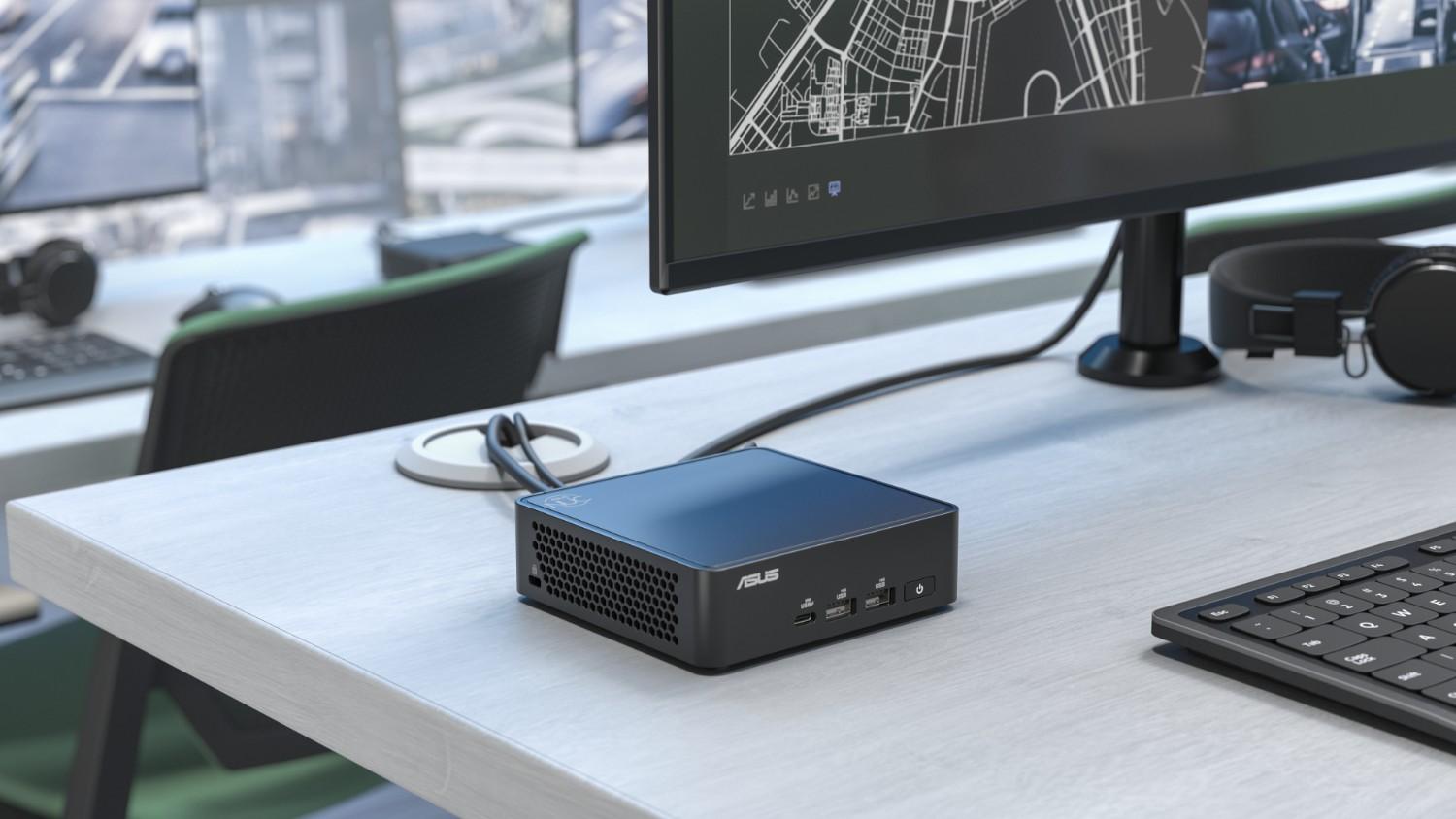
ASUS NUC 16 Pro

Want to maximize every square meter of your Philippine BPO without sacrificing performance? The ASUS NUC just might be the right solution for your business needs. It occupies up to 80% less desktop space yet delivers full business PC performance. It offers workspace efficiency, business productivity, and office modernity without breaking the bank. What more could you ask for?

The Growing Cost of Office Space

Nothing in this world is ever constant – and that office space you’ve been paying for could be many times the cost of what you’ve originally paid for when you just started out your BPO. With rising commercial rental costs, the need for efficient floor planning also increases.

ASUS NUC 16 Pro
Office space efficiency with the ASUS NUC 16 Pro (Image credit: ASUS)

With a space-saving PC like the ASUS NUC, you get to have more workers on the floor. Workspace optimization with this business-class mini PC helps you maximize your floor density for better office space efficiency.

Why Traditional Desktops Consume Valuable Workspace

Let’s face it. While bulky tower PCs have long been the face of businesses in the modern world, they lead to desk clutter because they occupy more space than space-efficient computing solutions available today.

Advertisement

Here are some stats for visuals: A 15L tower PC usually measures around 6.1 inches (width) x 11.2 to 11.7 inches (depth) × 13.2 to 27+ inches (height), while the ASUS NUC Pro+ and 16 Series are just around 5.3 inches (width) x 4.6 inches (depth) x 1.6 inches (height).

It’s easy to see now how the traditional tower desktops consume valuable workspace that you could have maximized to add more workers on the floor without crowding.

You even have to deal with cable management challenges with the trusted but older models.

Thanks to the ASUS NUC’s enterprise-ready design, these issues are a thing of the past. Your employees get more workspace, and your IT department won’t face cable management issues from the old computers.

Advertisement

The ASUS NUC Space-Saving Advantage

Amazingly, the ASUS NUC 16 Pro occupies up to 80% less desktop space than a traditional 15L tower desktop. This easily translates to cleaner workstations, freed-up valuable desk space, and improved employee comfort in high-density contact center environments such as BPO centers like yours.

ASUS NUC 16 Pro
ASUS NUC 16 Pro: Small footprint, big features (Image credit: ASUS)

This modern, space-saving PC’s compact design enables businesses like yours to accommodate more workstations within the same office footprint than traditional tower desktops do, leading to a more scalable workplace infrastructure and better space utilization.

It’s impressive how a change in computers can improve overall operational efficiency so much, right?

Built for Modern Business Environments

Still unsure whether it’s time to shift to this modern space-saving PC range? Here are more advantages of the ASUS NUC:

  • VESA mountable
  • Tool-less upgrade design
  • Easier deployment and maintenance

This computer supports VESA mounting, which allows the device to be mounted behind compatible monitors.

What does this mean for your business? Well, it eliminates desktop clutter and maximizes usable workspace. This could mean a lot for BPOs, especially if you’re operating hundreds or thousands of workstations on the floor.

Advertisement

The ASUS NUC also features an easy one-hand latch and spring-loaded chassis design. This allows for quick access to memory and storage components. While this is unlikely to be a major concern for your floor workers, it will greatly benefit your IT team’s efficiency. Given that the IT team is generally just a couple of people compared to the rest of your workers, this added efficiency can be highly beneficial to your company.

In short, it can lead to easier workspace deployment and computer maintenance.

Maximizing Floor Density

For BPO companies in the Philippines like yours, smaller workstation footprints help maximize office space and make it easier to accommodate growing teams. Since BPO operations often need to scale quickly to meet client demands, compact workstations such as the ASUS NUC enable more employees to be housed in the same office space without compromising productivity.

ASUS NUC 16 Pro
Maximizing workspaces with the ASUS NUC 16 Pro (Image credit: ASUS)

They also provide greater flexibility in arranging the workplace. Office layouts can be easily adjusted to create additional workstations, training areas, meeting rooms, or support spaces as business needs change. This helps BPOs like yours expand operations, onboard new accounts, and manage business growth more efficiently while reducing the costs associated with relocating or leasing additional office space.

Conclusion & Call to Action

So, you see how ASUS NUC delivers full business PC performance in an ultra-small form factor? This workplace optimization solution helps Philippine BPOs maximize valuable office space while maintaining your business-class performance.

Advertisement

This simply means that this space-efficient computer allows companies like yours to enjoy the benefits of a compact device without sacrificing productivity, reliability, or even manageability. It benefits your floor workers, your IT team, and the entire business.

So, what are you waiting for? Replace your clunky old tower computers now with this modern space-saving computer to increase your workstation density without sacrificing your workers’ performance.

Joy Adalia
Latest posts by Joy Adalia (see all)
Continue Reading

Trending

Copyright © 2025