
Crypto World
Nvidia Stock: Chipmaker Invests In Potential AI Infrastructure IPO. Here’s Why


AI data-center and energy developer SB Energy is reportedly gulping down $1.5 billion in funding from Nvidia. The capital will help it flesh out gigawatt-scale power generation in Ohio, per Reuters. Nvidia stock topped 227 a share Monday morning, then eased; it hovered above 226 a share midmorning. Backed by SoftBank (SFTBY) and OpenAI, SB Energy is a key developer…
Copyright ©2026 Investor’s Business Daily, LLC. All rights reserved. 87990cbe856818d5eddac44c7b1cdeb8


Paramount and Warner Bros logos are seen in this illustration.
Dado Ruvic | Reuters
Prediction markets traders still see Paramount Skydance as likely to succeed in its bid to acquire Warner Bros. Discovery, but a battle in court with 12 state attorneys general is increasing the chances that the merger falls through.
Traders on prediction market platform Kalshi think that there’s a 74% likelihood that Paramount will acquire Warner Bros. by July 2027, while there are 22% odds that a deal doesn’t go through by that date.
Before California and 11 other states sued to block the merger on July 13, odds Paramount would succeed in acquiring the company were over 80%. However, the likelihood the merger would be successful fell to as low as 66% on July 24 when Paramount announced it would delay the acquisition to 2027.
On Kalshi, speculators are asked in the market who will successfully take over Warner Bros. before July 2027, and contracts are resolved from news reports, official press releases and or government filings.
Meanwhile, on platform Polymarket, odds are a similar 23% that no acquisition succeeds by June 30, 2027. The contracts on Polymarket are resolved using a consensus of reporting.
The merger’s termination date is March 4, 2027, and that date automatically extends to June 4, 2027, if only regulatory obstacles remain.
A federal judge set a March 2027 trial date for the states’ lawsuit. Paramount said before the date was announced that it wouldn’t complete the acquisition until a court ruling on the states’ claims or until June 1, 2027, whichever comes first. If the deal doesn’t close by Sept. 30, Paramount will owe 25 cents per share, per quarter to Warner Bros. shareholders until the transaction is finalized.
Last week, the Directors Guild of America and International Alliance of Theatrical Stage Employees wrote a letter to California Attorney General Rob Bonta — who has taken the lead in the states’ case against the merger — and Paramount CEO David Ellison, calling on them to negotiate a solution or push to move the start date of the trial earlier to avoid prolonged uncertainty.
Disclosure: CNBC and Kalshi have a commercial relationship that includes customer acquisition and a minority investment.


Bitcoin price prediction shows it trading at $62,800, down -1.4% on the day, holding a range that’s frustrated bulls and bears alike for two weeks straight. A macro investor just made the case that the consolidation won’t last, and his reasoning has less to do with charts than with what the US government is telling markets without saying it out loud.
Jordi Visser, speaking on the Wolf of All Streets podcast, argued that Washington’s yen intervention is a tell: the government is under fiscal strain, and money printing tends to follow. His top vehicle to capture that? Bitcoin.
Visser also connects BTC to the AI trade, not as a correlated asset, but as the deflationary hedge investors will want once AI drives the cost of goods toward zero. Scarcity, in that world, becomes the whole pitch.
Spot ETF flows tell a messier story. Roughly $385M exited Bitcoin ETFs last week as the price slipped by nearly 3%, even as inflows in early August topped $1.1Bn, reflecting a tug-of-war between profit-taking and structural demand.
Bitcoin Price Prediction: Can BTC Hit $67K This Week?
BTC sits at $62,800, down -1.4% intraday, inside a tightening band that’s held since early August. The Fear & Greed Index reads 31 (Fear) despite the modest daily gain, a disconnect worth sitting with.
Support clusters in the $61,800–$64,500 zone, aligned with the 20- and 50-day moving averages; a daily close below $61-62K would flip the structure bearish.
Deeper cycle support sits near $58,200–$59,800, viewed by technicians as the line separating “healthy pullback” from “trend break.”
Bull case: a decisive break above $67,000 confirms the ascending triangle, opening a path to $71,200–$73,200 and eventually retesting the $78,350 June high.
Base case: continued chop between $61,800 and $66,500 while ETF flows stabilize.
Bear case: a close under $61,800 triggers momentum selling toward the $58K zone. Watch the next round of ETF flow data before positioning either direction.
Trade BTC on Bybit and Get a Chance to Win Our $1,000 USDT Airdrop
Bitcoin Hyper Targets Early Mover Upside as Bitcoin Tests Key Levels
Holding BTC through this range has been validating that, if unspectacular, sub-1% daily moves don’t exactly print generational wealth. At a $1.2 trillion-plus market cap, Bitcoin’s structural upside is real but slow; a move from $63K to $78K is a 23% swing that takes weeks.
Capital chasing faster asymmetry is rotating toward infrastructure plays built atop Bitcoin itself, and that’s where Bitcoin Hyper ($HYPER) enters the conversation.
Bitcoin Hyper is positioning itself as the first Bitcoin Layer 2 with native Solana Virtual Machine integration, a combination designed to deliver smart contract execution faster than Solana while settling to Bitcoin’s base layer.
The presale has raised $33,030,255.21 at a current token price of $0.0136848, with staking rewards live at launch (APY unspecified).
Core features include a decentralized canonical bridge for BTC transfers and low-latency, low-cost transaction execution, addressing Bitcoin’s longstanding programmability gap.
Visit the Bitcoin Hyper Presale Website Here.
Discover: Your Market Calls Are Worth Something. Start with a free $25 on Kalshi
The post Bitcoin Price Prediction: BTC AI Trade Driving BTC Forecasts appeared first on Cryptonews.
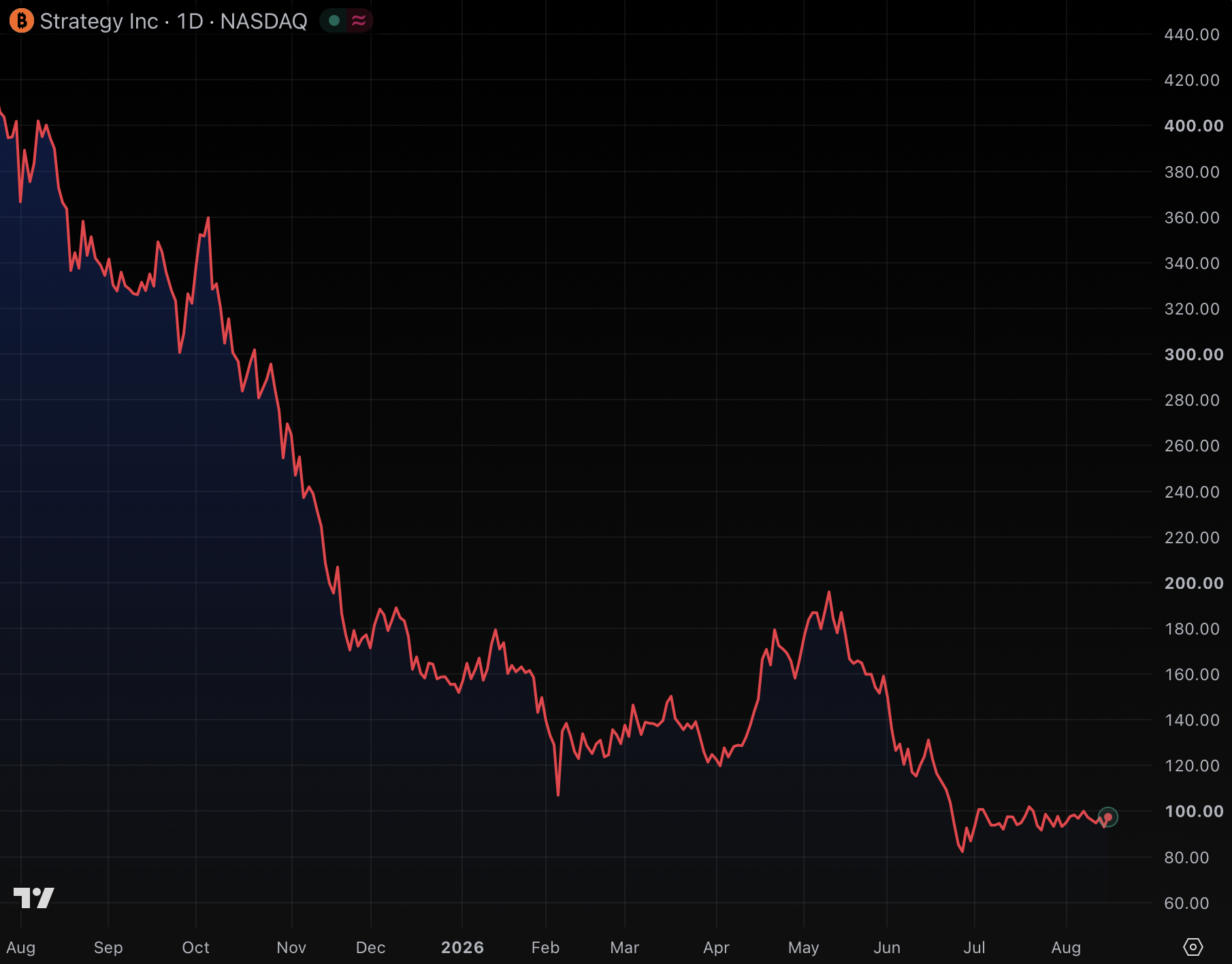
Bitcoin treasury company Strategy diluted shareholders of MSTR, the company’s common stock, by $333.7 million last week and bought no bitcoin (BTC). Instead, the company redirected about 40% of the proceeds to repurchase STRC for its preferred shareholders, 16% as STRC dividends, and kept the rest for itself as cash.
Strategy disclosed the transactions in an SEC filing this morning. It was the company’s fourth straight week of diluting MSTR shareholders with $0 BTC purchases.
In fact, Strategy has not increased its BTC holdings since June 21, 2026. It owns 6,916 fewer BTC today than it did two months ago.
As a reward for patiently enduring founder Michael Saylor’s shareholder dilution program, MSTR shareholders have lost 16% of their investment since the company reported its last BTC purchase.
In fact, since the July 2025 debut of STRC on the Nasdaq, the price of MSTR has declined 75%.
The STRC rollercoaster from $100 to $71.25 to $95
Strategy has raised roughly $16.3 billion by diluting MSTR since it launched STRC, a dividend-paying preferred share that is supposed to trade near $100 yet has actually traded as low as $71.25 on the Nasdaq.
As STRC collapsed earlier this year, the company started to stack USD instead of BTC — an effort to assure investors that it would pay STRC dividends. It also resorted to direct buybacks of STRC after amassing cash didn’t do the trick.
Still, STRC languishes, trading below $95 today.
Read more: Saylor continues to post cringe AI slop amid Strategy’s BTC sell-off
Saylor’s company has bought back $347 million worth of STRC — reversing STRC’s supposed BTC accretion benefit for MSTR shareholders.
Originally, Strategy designed STRC to sell for $100 and fund BTC purchases for the benefit of all shareholders, including MSTR in particular.
Instead, for the past two months, the company has been doing the opposite: selling MSTR plus BTC holdings and buying back STRC.
MSTR suffers as STRC struggles way below par
Strategy has thrown most of its balance sheet at pushing the price of STRC back up. It has lifted its dividend from 9% at launch and raised it to 12% — a rate more typical of distressed debt. It moved to paying that dividend twice a month. Saylor even built up Strategy’s cash position to $4.8 billion.
Frustrated, in July, it started buying the shares back on the open market.
It can only buy back shares for so long, and management is starting to hedge. The company stated, “We will not necessarily increase the STRC dividend rate solely because STRC trades below its stated amount.” Its own quarterly report concedes, “We cannot assure that STRC stock will trade in that range or at any particular price.”
Saylor is less equivocal. He told analysts on July 30, “STRC will return to par, and the only question is how much money or time will we have to exert to get it to par.”
Common shareholders are paying for that return.
Despite rate hikes, twice-monthly payouts, unprecedented sales of BTC, and $347 million of buybacks, STRC has moved from the mid-$80s to about $95, still 5% below par.
Got a tip? Send us an email securely via Protos Leaks. For more informed news and investigations, follow us on X, Bluesky, and Google News, or subscribe to our YouTube channel.


TokenWorks will let artists launch new NFT collections directly into Fake World Assets' randomized pool through a mechanism called FWAir, extending the two-person team's protocol from trading existing NFTs to issuing new ones. Adam, the TokenWorks co-founder known as Rhynotic on X, announced the… Read the full story at The Defiant
Crypto World
Compound Foundation Names Coinbase And Anchorage Alumni To Run $52 Million Institutional Push


Compound Foundation named four executives recruited from Coinbase Custody, Anchorage Digital, the NEAR Foundation and Maple Finance to spend a $52 million budget on turning the 2018 lending protocol into credit infrastructure for banks and asset managers. The hires arrive with Compound at roughly a… Read the full story at The Defiant
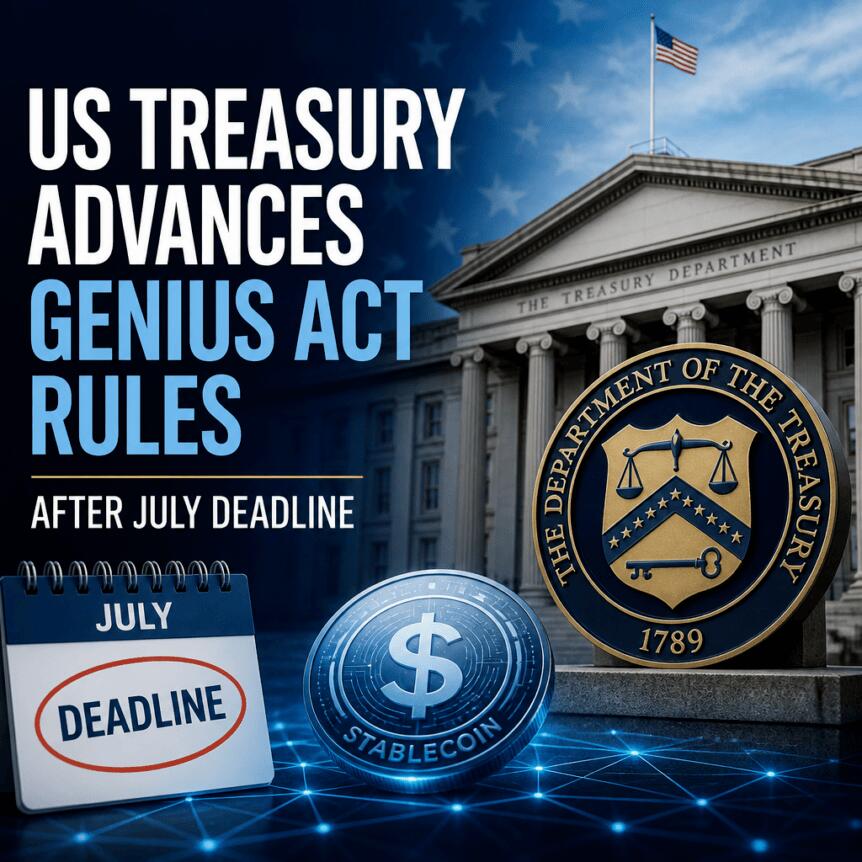
The U.S. Department of the Treasury has launched a formal rulemaking process for the payment-stablecoin framework established by the GENIUS Act, opening the proposal to public comment as regulators move toward a planned start date in January 2027.
In a notice released on Monday, Treasury said it is seeking input from market participants and other stakeholders ahead of the GENIUS Act’s implementation. Under the law’s timeline, stablecoin rules were set to take effect 120 days after agencies finalize the regulations, or 18 months after the bill was signed in July 2025—placing the effective date at Jan. 18, 2027, absent changes to the scheduling.
Key takeaways
- Treasury is proposing GENIUS-related rules and will accept public comments for 60 days after the notice appears in the Federal Register.
- GENIUS would generally require entities to have a federal or state license before issuing a “payment stablecoin” in the U.S.
- The law’s implementation is still expected for Jan. 18, 2027, but multiple agencies have reportedly missed earlier internal timing targets.
- Treasury’s proposed process is part of a broader 2026 rulemaking effort involving agencies such as the OCC, the FDIC, and the Federal Reserve.
Treasury opens GENIUS rulemaking to public comment
According to the Treasury Department, the notice of proposed rulemaking is intended to help establish regulatory certainty for businesses that want to build payment stablecoin products in the United States. Treasury Secretary Scott Bessent said the department welcomes feedback from stakeholders as it works to “provide the regulatory certainty businesses need to innovate and grow in America.”
The proposal matters because GENIUS is designed to move stablecoin oversight from a patchwork of approaches toward a clearer legal structure. Once the law takes effect, Treasury said, an entity generally would not be able to “issue a payment stablecoin” in the U.S. without a related federal or state license.
Public input is a key part of the process. Treasury stated that comments will be open for 60 days following publication in the Federal Register, giving industry participants, financial institutions, and other interested parties a defined window to weigh in on how the framework should operate in practice.
Inter-agency rulemaking is underway, but deadlines slipped
Treasury’s proposal follows similar steps by other U.S. agencies. In 2026, multiple regulators—including the Office of the Comptroller of the Currency (OCC), the Federal Deposit Insurance Corporation (FDIC), and the Federal Reserve Board—have reportedly issued their own notices of proposed rules related to implementing GENIUS.
However, the timing has become a focal point for observers. The report accompanying the Treasury notice says agencies missed a 120-day deadline in July to finalize regulations before January, raising the possibility that GENIUS could become effective without fully settled guidance.
This creates a practical problem for businesses trying to plan for compliance and product launches: even if the statute is scheduled to take effect in January 2027, companies may still be operating amid transitional uncertainty about the exact requirements they will need to meet.
For readers looking for additional background on the broader stablecoin rulemaking environment, earlier coverage noted how the OCC has advanced proposals aimed at resolving parts of the long-running debate over stablecoin yield and related practices. That context is reflected in the agency-by-agency approach to GENIUS implementation.
What GENIUS changes for payment stablecoin issuers
At the core of the framework is a licensing requirement that is meant to formalize who can issue payment stablecoins and under what authorization. Treasury’s notice indicates that once GENIUS is active, entities generally need a federal or state license before they can issue a “payment stablecoin” in the United States.
For investors and traders, this type of licensing can influence expectations around which stablecoins are likely to gain institutional support. For builders, it can affect how they structure reserves, partner with regulated institutions, and design compliance operations—especially if the market previously relied on regulatory uncertainty rather than clear authorization pathways.
It also raises an operational question that market participants will be watching: how quickly regulators will translate the proposed framework into final, implementable rules. Treasury’s comment period is designed to narrow that uncertainty, but the overall effectiveness timeline leaves limited margin for delays.
Cross-Atlantic coordination and competitive pressure
The U.S. rulemaking effort also intersects with international developments. In July, the UK-US Financial Regulatory Working Group met in London to discuss cooperation between U.S. and UK financial regulators, including implementation steps for GENIUS.
While the UK has taken steps to address stablecoin regulation, the pending rollout of GENIUS is leading some within the crypto industry to argue that the UK could be at risk of falling behind the U.S. in establishing a comprehensive, operational framework.
That perceived asymmetry matters because it can affect where stablecoin-related partnerships and compliance strategies form first. If the U.S. moves more decisively toward a standardized licensing approach, businesses may prioritize compliance-ready pathways there—at least until the UK’s own framework becomes equally concrete.
As Treasury’s proposed rules move through the comment period and toward finalization, the most important thing to watch will be whether agencies can converge on final requirements in time to reduce transitional risk before Jan. 18, 2027. If the broader suite of GENIUS regulations remains incomplete, market participants will likely press regulators for clarity on licensing timelines, compliance expectations, and how existing operations should adapt.

Space Exploration Technologies (SPCX), known as SpaceX, has had a wild ride since the stock’s initial public offering in June, briefly surging above 225 a share before falling below 105. Shares have since recovered and are trading around 148, just above SpaceX’s initial price offering at $135 a piece. Recent trading saw a sharp drop by the stock following the…
Copyright ©2026 Investor’s Business Daily, LLC. All rights reserved. 87990cbe856818d5eddac44c7b1cdeb8


Crypto exchange Binance reportedly handed Russian authorities the transaction details of one of its customers despite fully withdrawing its operations from Russia in 2023.
According to Reuters, the crypto exchange gave up the transfer history of Yuri Belenkiy, an IT specialist who holds a Bulgarian residency permit and Russian passport.
Belenkiy was accused of terrorist financing by Russia’s Investigative Committee after he allegedly sent over $700 worth of funds to Ukraine’s military and another military group via Binance.
Russia asked Binance to reveal further donations
Russia’s Investigative Committee claimed he made the payments after witnessing an online appeal from Arkady Babchenko, a Ukraine-supporting advocate exiled from Russia.
Crypto payments were allegedly sent between January 2023 and March 2024. The committee also pushed Binance to reveal who else had sent funds to the advocate, but it’s unclear whether Binance complied.
Read more: Russia sanctions British teenager over crypto laundering report
Legal expert Mike Bystrov, who has previously represented Binance when Russia tried banning the site in 2021, told Reuters that Binance wasn’t required to give Russia the data and that it might have even broken the EU’s data laws in doing so.
Belenkiy’s Bulgarian residency status would make him an EU citizen, but it’s unclear whether he was registered on Binance as an EU resident.
Binance says it would remain neutral
Binance told Reuters it “does not make or enforce the laws of any jurisdiction, determine charges, or decide how any government uses information in legal proceedings.”
“Like other global financial institutions, we cooperate with lawful information requests from law enforcement globally, subject to applicable legal, privacy and regulatory requirements.”
Binance CEO Richard Teng said this responsibility is shared by all regulated financial institutions and that “it should not be taken to mean that financial institutions are partial towards any government.”
Read more: Binance hit with $200M UK lawsuit one day before EU exit
Binance’s complete exit from Russia has been doubted before
Russia’s exit was doubted back in 2023 when Binance brokers like Nominex appeared to be actively offering their services to Russia.
CommEX, a crypto exchange that bought Binance’s operations in September 2023, also raised questions after users noticed the exchange was oddly similar to Binance, leading many to assume that it was a white-label Binance Cloud-based exchange.
It later shut down its operations in May 2024.
Protos has reached out to Binance for comment and it directed us to a statement that mirrored Teng’s post on X about the situation.
Got a tip? Send us an email securely via Protos Leaks. For more informed news and investigations, follow us on X, Bluesky, and Google News, or subscribe to our YouTube channel.

Can the FDA and the DOJ—two departments typically unrelated in scope or matter— be united in a war to ban abortion?
NAF members know that abortion bans come in many forms. In some places, the threat of investigations and prosecutions is enough to stop access. In other places, requiring people to travel for an abortion blocks care altogether. In the process, anti-abortion politicians are finding ways to ban abortion without ever having to pass a formal, national abortion ban.
That’s why this year, on the fourth anniversary of the Dobbs decision, NAF released its policy position affirming abortion access throughout pregnancy, and committed to opposing viability and gestational limits in abortion laws. This is not only a commitment to expanding abortion access, but it’s a fight back against anti-science and policing trends in reproductive health care. Because we know in order to protect patients and providers from the whims of a Trump-Blanche DOJ, we have to eliminate legal lines that beg for enforcement.

A trader turned roughly $9,600 into about $282,000 in under five hours on August 16 by watching Changpeng “CZ” Zhao’s public wallet burn a batch of MARSCOIN tokens and buying into the same coin the instant it happened.
On-chain tracker Lookonchain flagged the wallet as the single most profitable address trading MARSCOIN that day, and the trade has become a case study in how closely some traders now watch CZ’s every on-chain move.
How the Trade Actually Worked
At 08:12:55 UTC, CZ’s wallet sent 4,444 MARSCOIN to the dead address on BNB Chain, a routine burn transaction with a gas fee of a fraction of a cent. In the very next block, one second later, wallet 0x30f1…da577 bought 84.6 million MARSCOIN using 16 BNB, worth about $9,600 at the time.
To land that block, the trader paid roughly $9.90 in gas, hundreds of times the normal rate, just to get priority placement ahead of anyone else reacting to the burn. They did not wait around to see where the price went. Almost immediately, they sold half their position, 42.3 million tokens, for about 16.4 BNB, which covered their original investment and then some.
Lookonchain described it as a “2x and take out the initial investment” move, the kind of setup where the rest of the position becomes risk-free no matter what happens next.
From there, the trader sold the remaining tokens gradually, in dozens of smaller transactions rather than one dump, letting MARSCOIN keep climbing while they cashed out in pieces. By the time they were done, the wallet held 465 BNB from the sales, close to $282,000, and a balance of exactly $0 left in MARSCOIN. As Lookonchain noted, the total return was about 29 times the trader’s original stake.
A Pattern That Cuts Both Ways
Not everyone who followed the same signal made money. Another trader, wallet 0xacbf, bought 6.15 million MARSCOIN with $133,000 in USDT right after the burn, only to sell it all for about $22,400 two hours later, once CZ said he would stop using the wallet and the token dropped more than 90%.
CZ addressed the burn directly, saying he had been testing Trust Wallet and found his address cluttered with meme coins people kept sending him, so he tried burning some to clean things up, only for the blockchain’s transparency to turn a housekeeping task into a market event.
His plan now, in his own words, is that “I will stop using this address.” He has made this kind of warning before. Back in January, after traders piled into meme tokens tied to his offhand jokes, CZ said publicly that copying his casual posts as trading signals tends to end badly, a pattern MARSCOIN’s recent swings did little to disprove.
The post Trader Turns $9.6K Into $282K Tracking CZ’s Wallet appeared first on CryptoPotato.

PSKY’s WBD bid has 1-in-4 odds of falling through, Kalshi traders say

Spider-Man Officially Sinks James Cameron’s Biggest Box-Office Hit in Under 20 Days

9 Financial Goals You Should Achieve Before 40


-

 Fashion3 days ago
Weekend Open Thread: Ann Taylor
-
 NewsBeat6 days ago
Communication cards help banking customers access services or report scams
-
 Business7 days ago
Oil Price Today (August 11): Crude oil rises to $88 after Trump’s compensation demand dents Hormuz opening. Here’s why
-

 Crypto World7 days ago
Revolut wins French banking licence, creates second EU banking hub
-
 Sports4 days ago
This U.S. Amateur is a glimpse into golf’s future in more ways than you think
-
 Crypto World7 days ago
Why Did Nvidia Stock Fall on Monday Despite a $500 Billion Wall Street AI Deal?
-

 Sports3 days ago
Birmingham 2026: Day 6 Timetable for Irish Athletes
-
 NewsBeat3 days ago
Myanmar says over 300,000 Rohingya refugees verified for repatriation as exodus enters ninth year
-

 Politics2 days ago
SEQ Code: The Three Letter Boarding Pass Code That Could Give You The Worst Seat
-
 Entertainment5 days ago
Keke Palmer Subtly Hints At Sean Evans Drama With Cryptic Post
-
 Entertainment7 days ago
57 Years Later, the Best Sitcom Ever Made Still Deserves a Reboot
-

 Fashion6 days ago
Coffee Break: The Fonteyn Jane Flat
-

 Tech6 days ago
Zoom Screen-Sharing Bug Let People Fully Take Over Other Devices On A Call
-

 Crypto World7 days ago
Bitcoin's BIP Editors Remove Luke Dashjr Two Days After BIP-110 Fork Stalled
-

 Fashion6 days ago
Claire Life: Kicking Off MVAAFF With the C Suite Luncheon Featuring Phylicia Rashad, Letoya Luckett, and More!
-

 Fashion6 days ago
Should you refinance your debt? Pros, cons, and real numbers
-
 Crypto World6 days ago
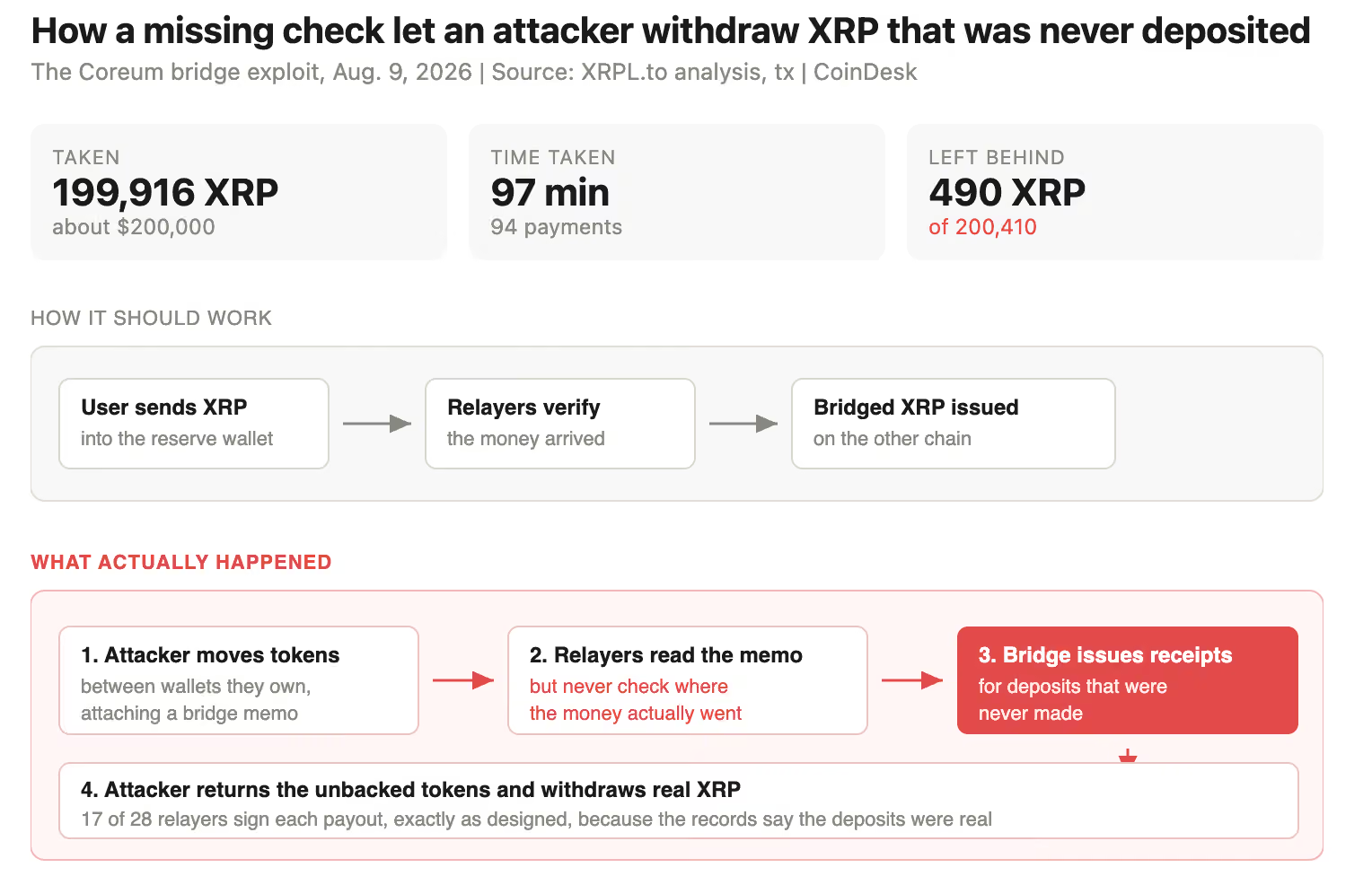
XRP bridge drained after software mistook fake deposits for real ones
-

 Sports5 days ago
DeQuan Jones in ‘high spirits’ after successful leg surgery
-
 Tech7 days ago
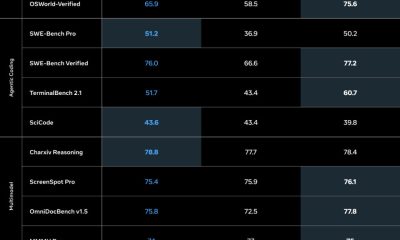
Zuck rekindles open weights Llama drama with Muse Glimmer
-

 Business7 days ago
(VIDEO) Emirates Unveils 2.4-Meter Arsenal Crest Sculpture Built From Recycled A380 And Boeing 777 Jet Parts
You must be logged in to post a comment Login