
Crypto World
Bitcoin Pushes Past $64,000 As Crypto Short Liquidations Near $140M

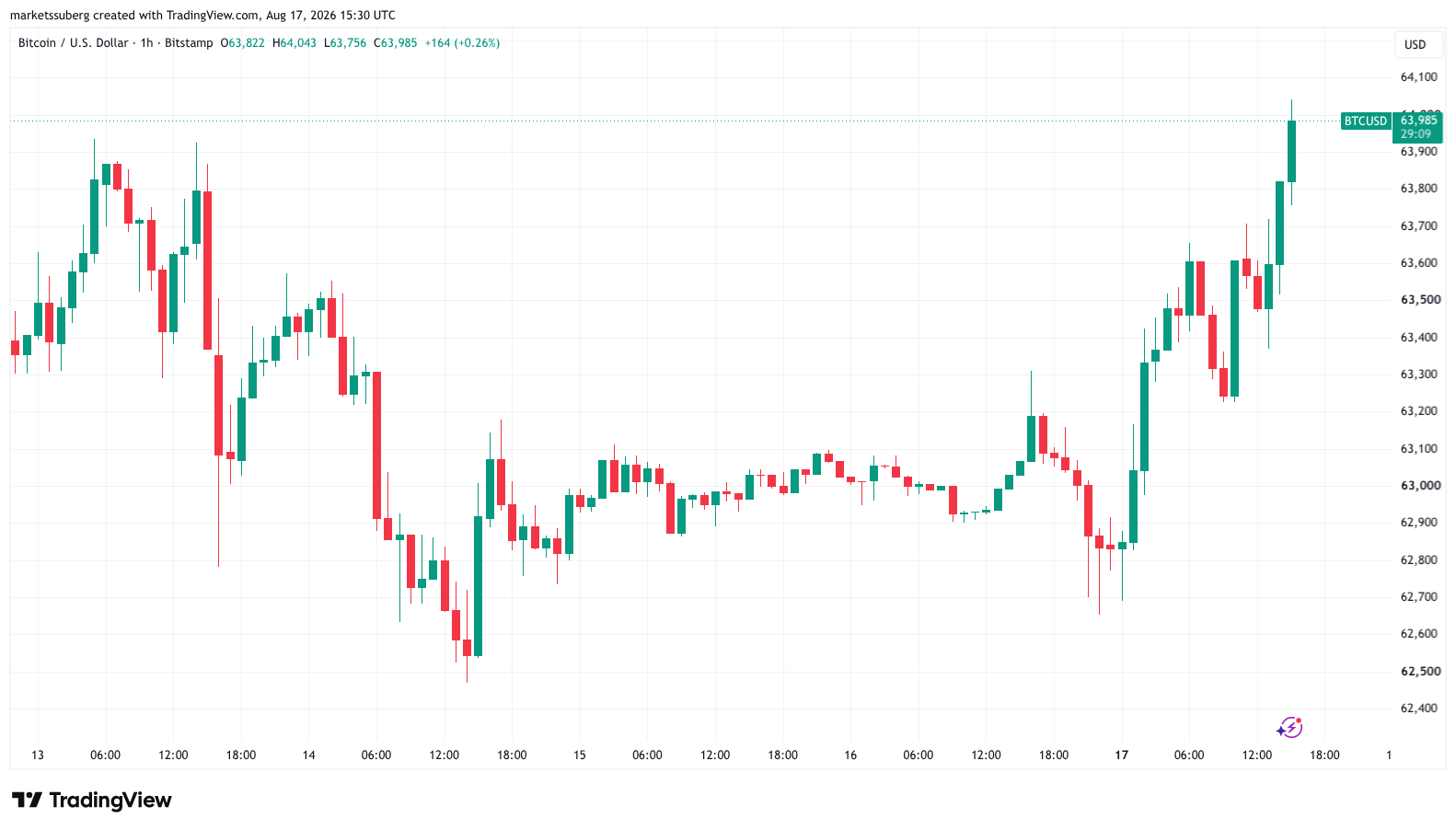
Bitcoin (BTC) returned to $64,000 after Monday’s Wall Street open as US stocks gave way to gold.
Key points:
- Bitcoin continues a rebound from Sunday’s weekly close, gaining 2% on Monday.
- Oil stays steady after US president Donald Trump threatens to bomb Oman over the Strait of Hormuz.
- Bitcoin funding rates hit 20-month highs of 0.022 last week, data reveals.
Bitcoin inches up as US-Iran rhetoric spreads to Oman
Data from TradingView showed BTC/USD up by more than 2% on the day, rebounding from Sunday’s weekly close.
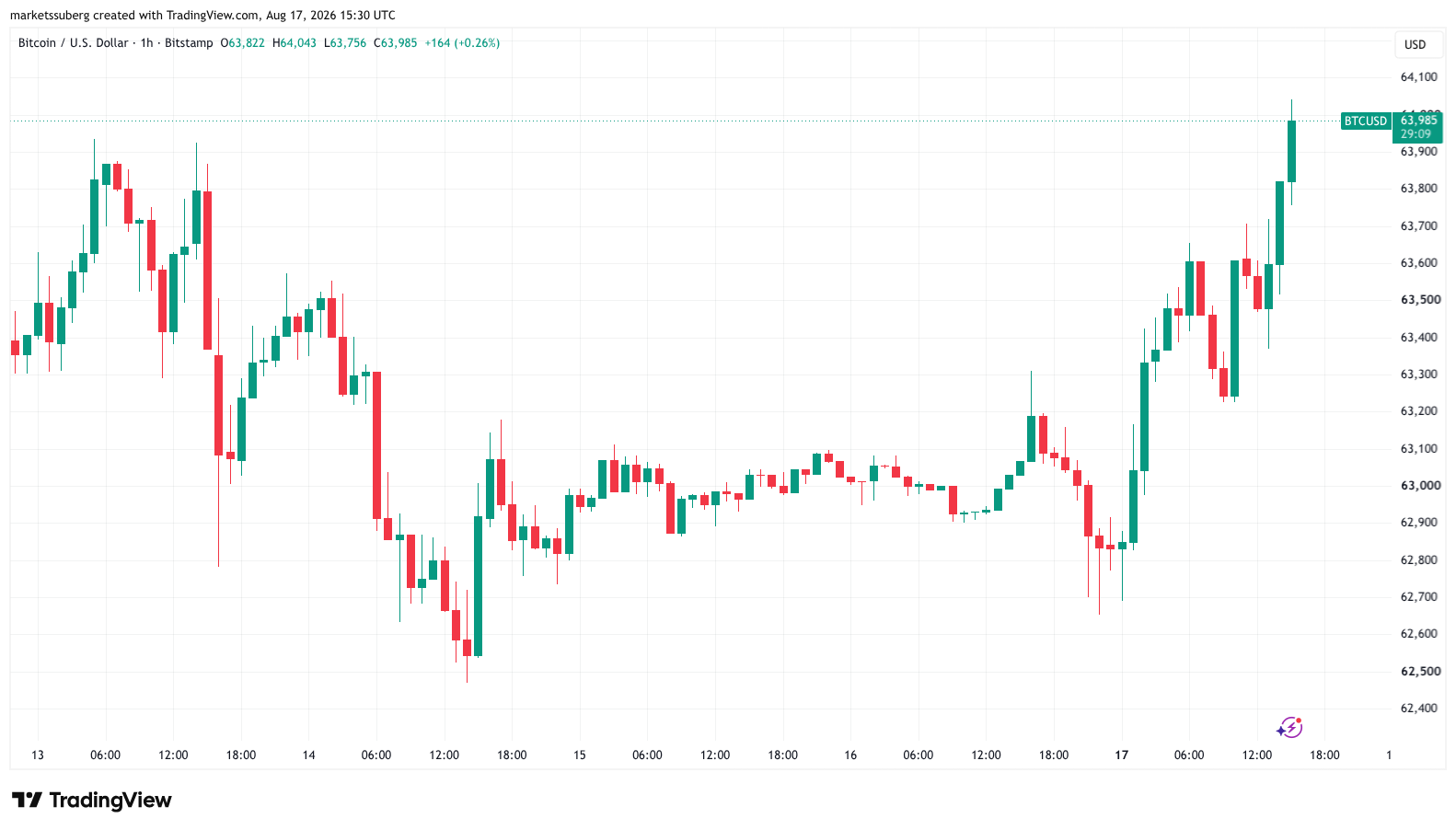
BTC/USD one-hour chart. Source: Cointelegraph/TradingView
US equities turned lower as an agreed 60-day ceasefire between the US and Iran was set to expire, with the S&P 500 index down 0.5% from Thursday’s all-time highs.
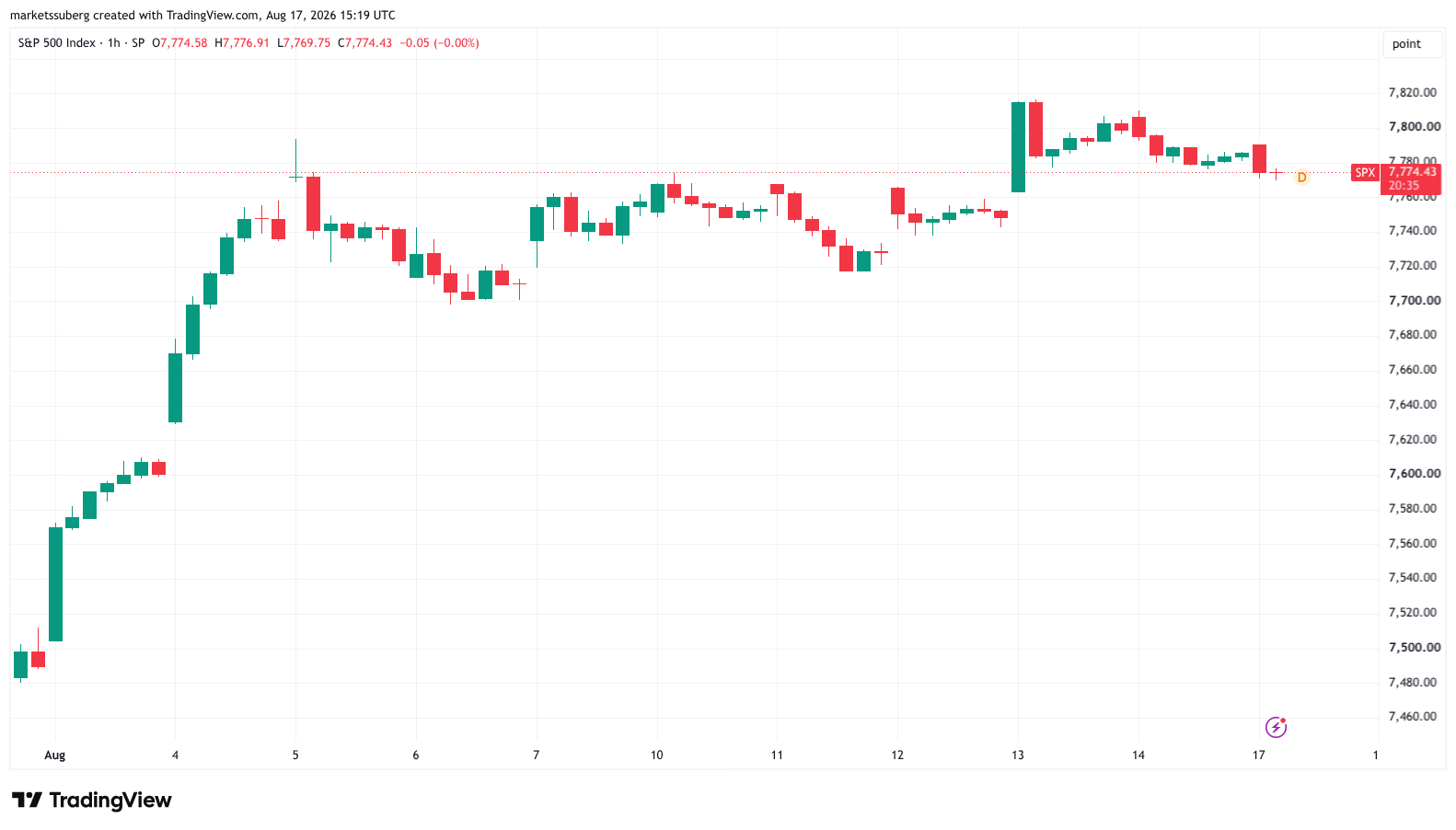
S&P 500 one-hour chart. Source: Cointelegraph/TradingView
Speaking to Fox News, Trump threatened Oman with military action amid an ongoing dispute over the reopening of the Strait of Hormuz oil route.
“If Oman gets in the way, we’ll bomb the s*** out of them,” he told the network.
Oil markets appeared unfazed by the tensions, with WTI crude flat at $82.35 per barrel at the time of writing.
Safe haven gold was more volatile, gaining just over 1% to start the week to reach a daily high of $4,427 per ounce. Earlier, Cointelegraph reported on a combination of retail and government interest fueling gold’s multiweek highs.
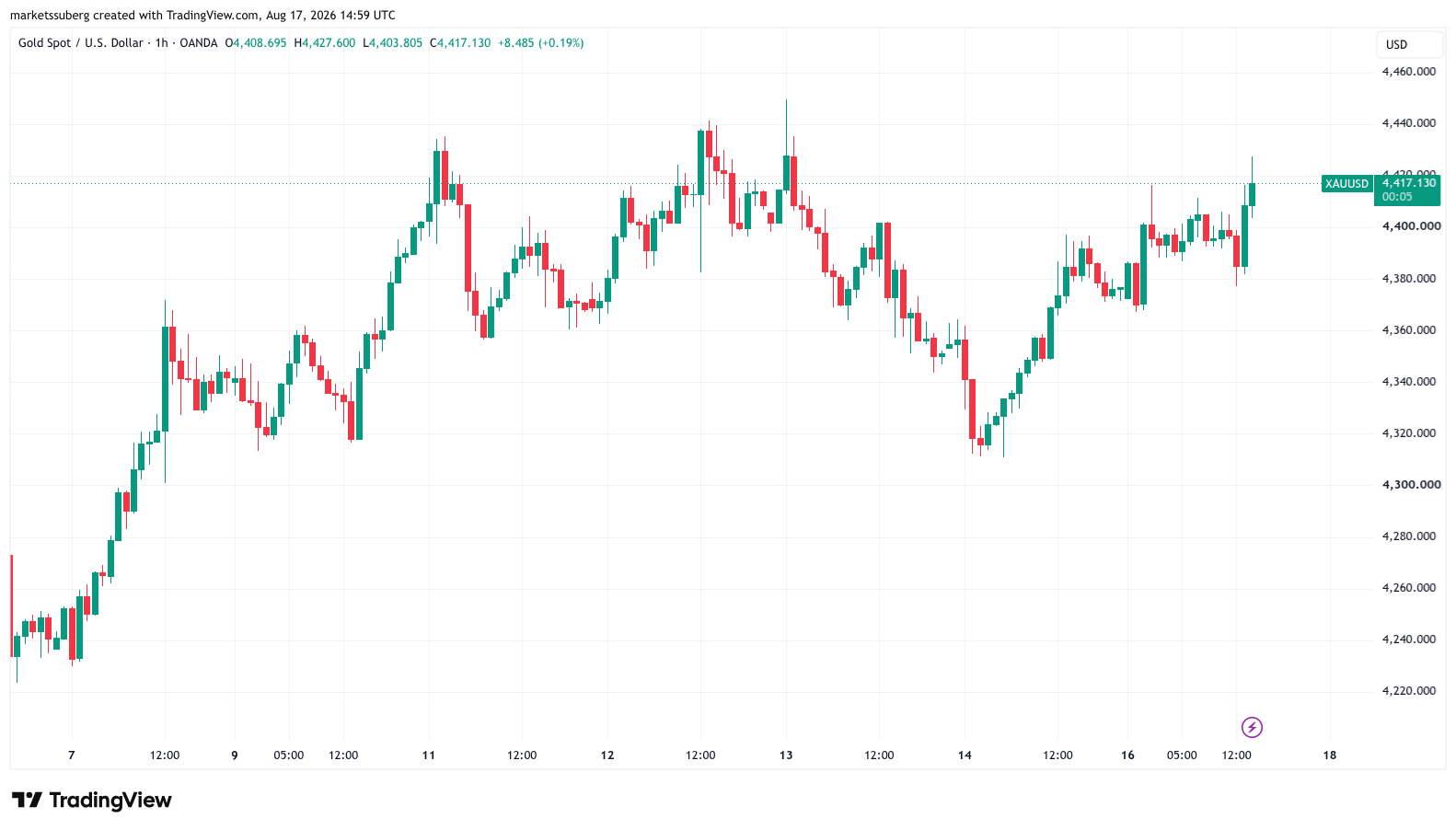
XAU/USD one-hour chart. Source: Cointelegraph/TradingView
Data from investment research platform Bytetree tracking the 30-day change in inflows to gold-backed exchange-traded funds (ETFs) put the figure at nearly $12 billion through Aug. 13.
In a note on Monday quoted by Investing.com, Bank of America strategist Michael Hartnett wrote that long gold remained the trade, describing it as “still [sic] best hedge against dollar debasement, bond collapse, asset inflation, capitalist populism vs socialist populism politics of 2020s.”
Related: BTC price loses 200-week trend line as 2022 repeats: Five things to know in Bitcoin this week
Funding rates hit levels not seen since late 2024
In its latest Market Color bulletin published on Monday, trading company QCP Capital noted Bitcoin’s continued ability to weather macro tailwinds without a major breakdown from its current range.
“Rather than treating individual price levels as directional signals, the more useful observation is that BTC remains close to the lower end of its recent range. A sustained move outside that range would provide more information about market positioning than the relatively contained moves seen within it,” it wrote.
Earlier, Cointelegraph reported on expectations that a return to $61,000 would trigger an unwinding of BTC long positions, adding to downside BTC price momentum.
The latest data from CoinGlass showed liquidations remaining muted as BTC/USD returned toward $64,000, with 24-hour cross-crypto liquidations at $180 million.
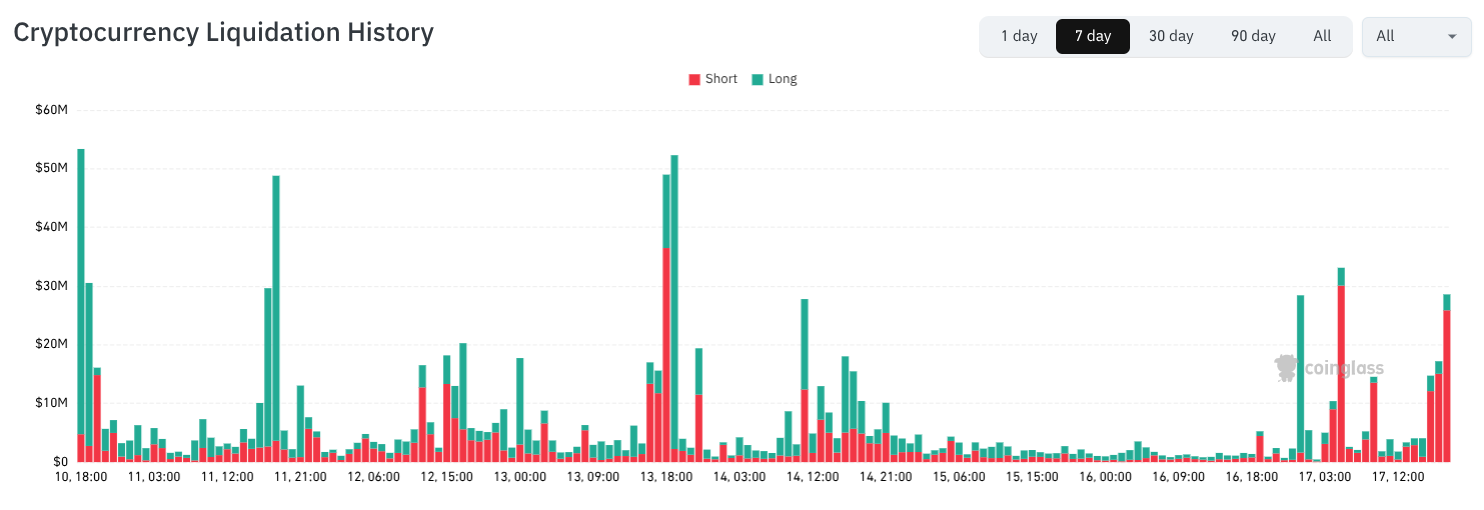
Crypto liquidation history (screenshot). Source: CoinGlass
In a sign of long BTC becoming an increasingly crowded trade, derivatives market funding rates hit 20-month highs of 0.022 on Aug. 14, per data from onchain analytics platform CryptoQuant.
“The derivatives market sentiment is positive within the current BTC price range, indicating that most traders are taking long positions,” it commented on the readings.
CryptoQuant previously noted that futures trading volume on Binance was outweighing spot markets by almost eight times.
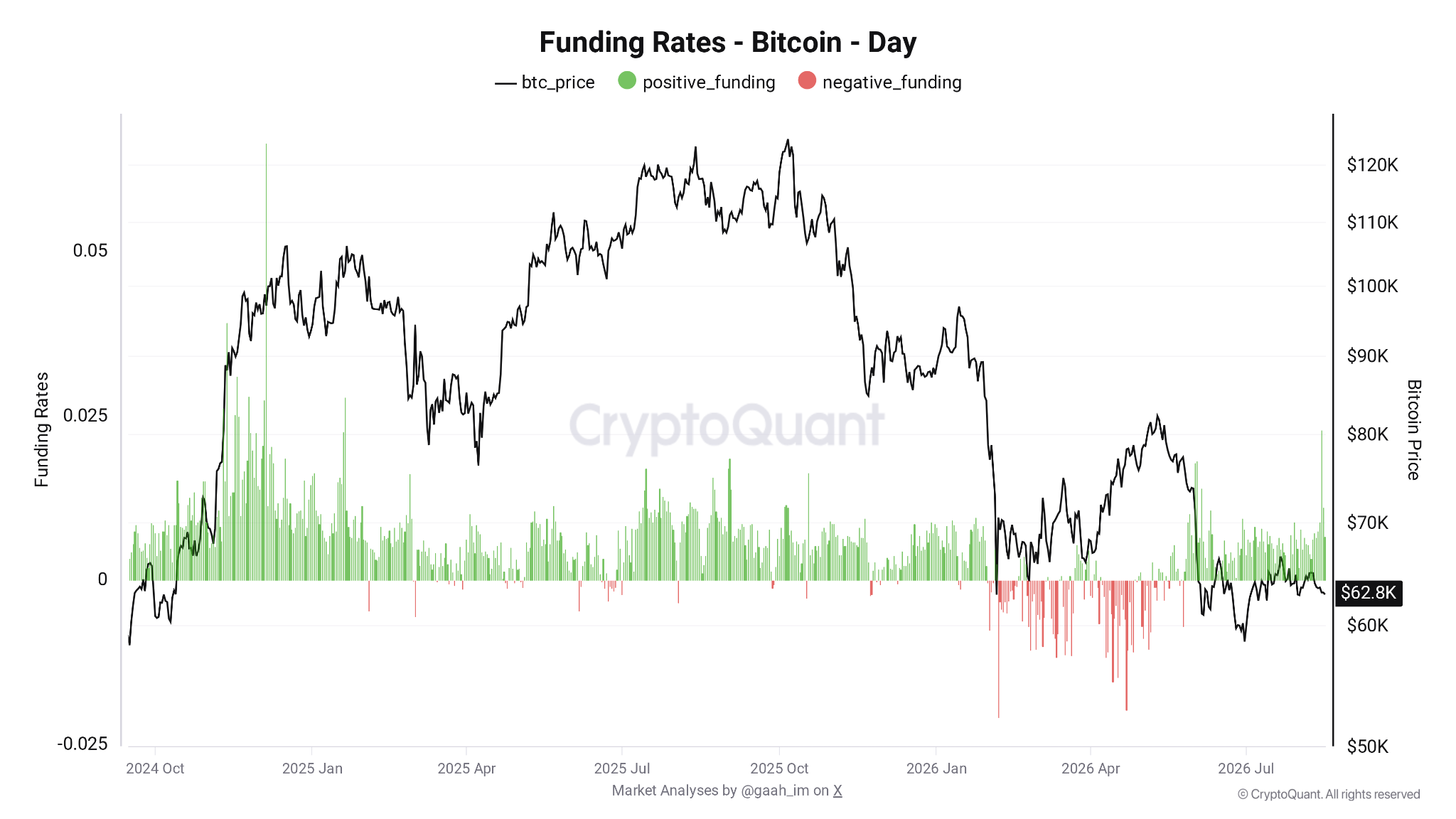
Bitcoin funding rates chart. Source: CryptoQuant



Amid scrutiny and accusations of conflicts of interest from many lawmakers, the US Office of the Comptroller of the Currency (OCC) gave conditional approval for World Liberty Financial’s application for a national trust bank.
In a Friday notice, the OCC said the conditional approval for World Liberty’s charter application, subject to certain regulatory and policy requirements, would allow the company to operate under the title World Liberty Trust Company, National Association. According to its application, the World Liberty bank proposed issuing US dollar-backed stablecoins and custodying digital assets related to the company’s USD1 token.
The OCC approval came amid concerns about potential conflicts of interest between World Liberty and US President Donald Trump’s family. The president and his three sons are affiliated with the company, and the head of the OCC, Jonathan Gould, was nominated by Trump in 2025. World Liberty’s website also said a Trump family entity controlled 38% of the company’s equity interests.
According to the agency, “the Comptroller and staff acted consistently with their statutory duties and ethical obligations with respect to the Application.” Gould previously said that the application would be reviewed in an “apolitical and nonpartisan process” following a letter from Senator Elizabeth Warren.
In response to the approval, Warren said on Friday that she had introduced legislation “to stop this kind of unprecedented corruption,” calling the OCC’s move “the most brazen act of self-dealing our financial system has ever seen.” She and nine senators introduced the Ending Presidential Corruption in Banking Act following the approval.
Related: OCC Comptroller says WLFI charter review will remain apolitical
Under the Trump administration and Gould, the OCC has approved or conditionally approved multiple applications from crypto companies seeking trust charters to expand their services in the US. In December, the agency approved applications from Circle, Ripple Labs, Crypto.com and Coinbase following passage of the GENIUS stablecoin bill in Congress.
World Liberty’s UAE ties under scrutiny in US Congress
Amid the OCC approval, many lawmakers are continuing to call for investigations into World Liberty’s ties to foreign entities potentially influencing US policy through Trump.
An Abu Dhabi investment company backed by Sheikh Tahnoon bin Zayed Al Nahyan, the United Arab Emirates’ national security adviser, reportedly purchased a 49% stake in World Liberty in January 2025 for $500 million. Another UAE entity, MGX, used World Liberty’s USD1 stablecoin to invest $2 billion in crypto exchange Binance. Trump later issued a presidential pardon for former Binance CEO Changpeng Zhao.
A White House spokesperson has repeatedly said that there were “no conflicts of interest“ with Trump’s investments.
Magazine: El Salvador’s Bitcoin experiment turns 5: ‘It was for us, not them’
Crypto World
Crypto investors should not judge seed startups by recurring revenue, Truth Ventures CEO says


Truth Ventures CEO Varun Datta has urged crypto investors not to demand recurring revenue from seed-stage companies, as RootData has listed 99 crypto projects that closed, entered bankruptcy, or became inactive in 2026.
Summary
- RootData listed 99 crypto projects as closed, bankrupt, or inactive by late July.
- Galaxy recorded $4 billion across 355 crypto venture deals in the first quarter.
- Datta said seed startups should be assessed through founder knowledge and their path to a viable business.
- US-based companies received 70.2% of crypto venture capital during the first quarter.
RootData listed 99 crypto projects that had announced closures, entered bankruptcy, or remained unavailable for long periods by late July, according to a recent crypto.news report. The database includes several types of inactivity, meaning its total should not be presented as 99 insolvencies.
As companies disappear from several parts of the market, investors are examining whether crypto products can retain users and support operating costs without depending on rising token prices. Datta told crypto.news that such tests may be suitable for established businesses but could produce the wrong assessment when applied to companies at the start of their development.
“The market shakeout is evident, but the lessons we are learning primarily apply to established companies. It is unfair to expect a new team to show recurring revenue. They are simply too early in their journey for those metrics.”
His comments draw a distinction between accepting an unworkable business and recognising that a new company may not have had enough time to build recurring income. Applying revenue standards designed for a later funding round to a pre-seed company, he said, could prevent investors from examining the qualities that matter at its current stage.
Crypto investors are putting more money into mature companies
Galaxy Research reported that venture firms invested about $4 billion across 355 crypto and blockchain deals during the first quarter of 2026. Funding declined 50% from the previous quarter, while the number of deals fell 16%.
According to Galaxy, the difference between the two declines resulted mainly from a reduction in large, later-stage financings after a strong fourth quarter. Smaller seed and early-stage deals continued, although later-stage companies received 57% of invested capital, leaving 43% for younger businesses.
Pre-seed rounds accounted for 19% of completed deals, while later-stage transactions rose to one-quarter of the total. Galaxy said the increase in the later-stage share indicated that parts of the crypto industry were maturing, even as new projects continued to secure funding.
Available capital is also concentrated in a small number of business categories. Trading, exchange, investing, and lending companies collected about $2.6 billion, close to three-fifths of all crypto VC money deployed during the quarter.
Infrastructure companies completed 56 deals, the second-highest total by category. Web3, NFT, decentralized autonomous organization, metaverse, and gaming companies followed with 39 transactions, while payment and rewards businesses recorded 33.
April data offered another example of capital concentration. As fundraising figures showed, centralized finance companies raised about $606 million of the approximately $860 million disclosed across 55 crypto funding events that month. Infrastructure companies secured $105 million across 14 deals, while DeFi businesses raised $90 million across 19.
Seed startups require a different investment test
For Datta, early-stage investors should begin with the founder’s knowledge of the problem rather than revenue figures that may not exist. Product design and the value delivered to users, he said, provide more suitable evidence when a company has only recently begun operating.
“At the seed stage, the real indicator of success has never been revenue. It stems from the founder’s profound understanding of the problem at hand.”
Products must solve a genuine problem instead of using a token as the main fundraising tool, according to the venture capitalist. He attributed the failure of many crypto projects to attempts to replace a working commercial model with speculation around their tokens.
Datta described such failures as problems of vision rather than proof that early-stage investing itself is defective. In his view, protecting seed companies from unsuitable revenue tests does not require investors to overlook weak products or teams.
“This isn’t about protecting weak businesses,” he said. “It reminds investors not to use growth-stage criteria for brand-new startups.”
Under the approach outlined by Datta, investors would examine how a product could gain users before its available capital runs out. They would also assess whether the founders have identified a route from initial product development to a company capable of supporting itself.
Reviewing an existing revenue statement would be easier, he said, but venture firms backing new companies must evaluate an unproven plan with limited operating data. Datta described the process as an essential part of early-stage venture investing.
Crypto venture funds are competing for limited allocations
Galaxy also found that crypto-focused venture firms raised about $1.1 billion across eight new funds during the first quarter. The number of newly raised funds was the lowest recorded since the third quarter of 2020.
Fundraising conditions remained difficult because AI companies, spot crypto exchange-traded products, and digital asset treasury businesses competed for institutional allocations, according to the research firm. If the first-quarter pace continued for a full year, crypto venture funds would raise about $4 billion in 2026, below the $8.75 billion raised in 2025.
Competition for capital has not removed investor interest in companies serving a specific commercial market. In a separate interview, Moon Pursuit Capital founder Utkarsh Ahuja said investors should separate scientific progress from a business model that customers will pay to use. The infrastructure funding discussion covered security, cryptography, and quantum-readiness companies, but Ahuja said such businesses still require an adoption plan that does not depend on a rapid technical breakthrough.
Galaxy found that the median crypto deal exceeded $4.5 million in the first quarter, its highest recorded level. However, the research firm cautioned that valuation information was available for only 12% of completed deals and leaned heavily toward later-stage companies.
US crypto startups captured 70% of invested capital
US-headquartered companies received 70.2% of all crypto venture capital deployed during the first quarter, according to Galaxy. American companies also accounted for 43.5% of completed deals, followed by the United Kingdom at 5.3% and Singapore at 4.5%.
The US figures indicate that decisions over seed-stage requirements could have a particularly large effect on American crypto founders seeking institutional backing. Galaxy’s data does not show which individual screening standards investors applied, but it establishes that most capital flowed to companies based in the United States.
Datta said early investors should focus on companies building toward sustainable models across Web3 and AI. Truth Ventures invests from pre-seed through later Series rounds, according to the CEO, with an emphasis on founders developing products around identifiable problems.
The firm’s stated investment focus includes Web3 infrastructure, decentralized applications, and digital financial systems. Datta said Truth Ventures is accepting pitches from infrastructure founders while working with companies from their initial ideas through subsequent growth rounds.

Bitcoin investor and Ego Death Capital co-founder Jeff Booth has said that Strategy’s long-term survival comes down to one condition: BTC has to work as an actual currency, not just sit on a balance sheet as an asset.
Booth made the case in a wide-ranging interview with Scott Melker, and it ties the fate of the world’s largest corporate Bitcoin holder directly to whether BTC itself moves beyond being just another financial holding.
Why Strategy Needs Bitcoin to Become Money
Booth told Melker on The Wolf of All Streets that Strategy needs Bitcoin’s development as a currency to happen alongside its growth as an asset. Without that shift, he believes the company could face a very different outcome.
“For Strategy to do well long term, the yin and yang has to happen together,” he said. “Bitcoin needs to be a currency.”
He argued that if BTC remains only a financial instrument, Strategy could eventually face government intervention because its value would be tied primarily to the underlying asset. He acknowledged that such an outcome is uncertain, but said Bitcoin’s emergence as a currency provides another path.
“If Bitcoin emerges as a currency, then Strategy becomes one of the most valuable companies around, because they went early,” he said.
The comments came during a discussion about Bitcoin treasury companies and whether their models can work over long periods. Melker recalled being pitched investments in nine BTC treasury companies at Bitcoin Vegas, arguing that many appeared to have no clear business plan beyond accumulating the cryptocurrency.
Booth’s criticism goes further. He believes companies should generate cash inside the existing economy and then save part of that cash in Bitcoin. In his view, simply creating a company to buy BTC misses the original logic of holding the asset.
That concern also applies to Bitcoin yield products. The investor argued that offering high interest rates in exchange for users giving up self-custody can recreate the financial structure Bitcoin was intended to challenge.
Strategy’s Recent Bitcoin Moves
While Booth was making his case, Strategy’s own numbers kept shifting. On August 10, the company sold 1,690 BTC for $108.6 million and used the proceeds to buy back 1.15 million STRC preferred shares, and separately sold 6.59 million MSTR shares to raise $653.1 million for its cash reserve, which now sits above $4.6 billion.
Total holdings have fallen to 840,447 BTC, bought for $63.36 billion at an average price of $75,385.
CEO Phong Le said on August 12 that Strategy plans to resume Bitcoin purchases by the end of the year, describing the recent sales as a pause rather than a change of direction. The firm has bought around 175,000 BTC in 2026 and sold roughly 7,000, which Le called a 25-times net buyer.
STRC, the preferred share tied to those sales, has climbed back from lows near $75 but remains under its $100 par value, closing near $95 last Friday.
The post Strategy’s Future Hinges on Bitcoin Becoming a Real Currency: Jeff Booth appeared first on CryptoPotato.


Deel said on Aug. 17 that its DLUSD stablecoin wallet is live in more than 80 countries, 11 weeks after a launch limited to Argentina. The expansion routes a payroll platform that processes $22 billion a year into distributing dollar balances to contractors in markets where local banks make dollar… Read the full story at The Defiant
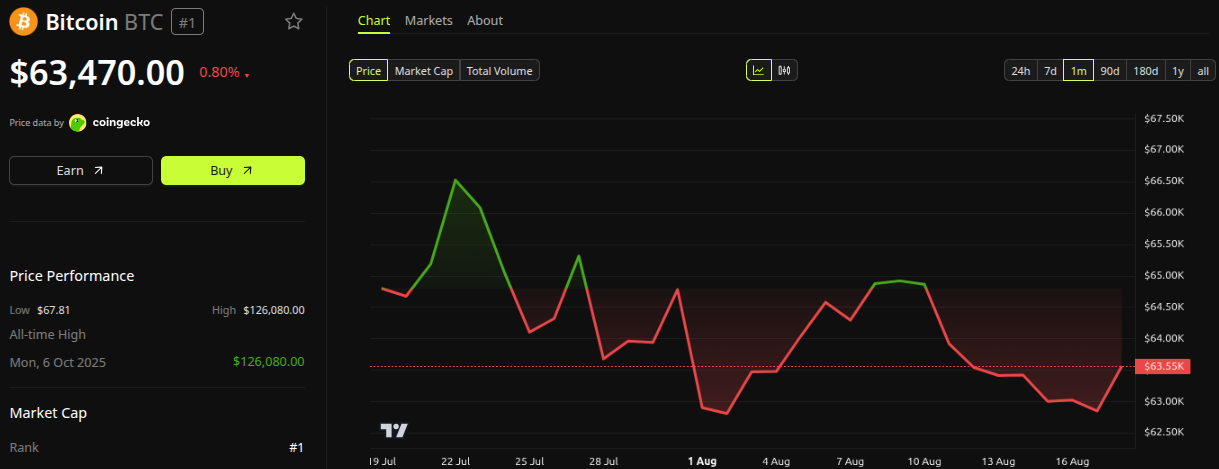
The US private credit market, valued at over $2 trillion, is flashing stress signals not seen since 2017, raising the question of what deteriorating loans could mean for Bitcoin.
The connection runs through liquidity and risk sentiment rather than any direct exposure between the two markets.
The Stress Signals Building in US Private Credit
Non-accrual loans are credits in which the borrower has stopped making payments or in which default is likely. That metric just hit a multi-year high.
The Financial Times reported the figures, based on Solve data. Non-accrual loans reached a median of 2.8% of cost across the twenty largest listed US Business Development Companies during the second quarter.
That level compares with late March, when the same measure sat near 2%. It marks the highest reading in nearly a decade, comparable to stress triggered by the 2017 oil price collapse.
Redemption pressure compounds the picture. Some funds received withdrawal requests reaching 40% of net asset value, though most gates limit quarterly redemptions to 5%.
“…In the old days a bad loan slid in plain sight. 100 cents, then 95, then 90, then 70. Everyone saw it coming. Now there is no warning. A loan is marked at 100 one month and zero the next. Lights out. That is why the redemptions are starting. Investors are finally asking what they actually own. And because this is where all the marginal credit in the economy now flows, if it seizes, the crunch does not stay contained…,” Jeffrey P. Snider noted on X.
Follow us on X to get the latest news as it happens.

Payment-in-kind arrangements are also expanding. That structure lets borrowers pay interest with more debt rather than cash, often signaling underlying repayment strain.
Fitch data adds another layer. Default rates touched recent highs, with stress concentrating in software, which is vulnerable to AI disruption, and healthcare.
Elevated US interest rates and a still-resilient domestic economy form the backdrop. Regulators have not flagged any imminent systemic risk, and several managers continue to publicly downplay the episode.
Why This Could Cut Both Ways for Bitcoin
Private credit stress does not directly affect Bitcoin. The impact comes through market risk and liquidity.
If defaults rise and investors become nervous, they may sell liquid assets to raise cash. Bitcoin can be hit quickly because it trades 24/7 and is easy to sell through both crypto markets and ETFs. That makes worsening credit stress a short-term risk for BTC.
The picture can change if the problem becomes serious enough to slow the US economy. A broader credit crunch could push the Federal Reserve toward rate cuts or other measures that increase liquidity.
That would generally be more supportive for Bitcoin.

So the key takeaway is simple. Worsening private credit stress could pressure BTC first. If it later forces the Fed to ease monetary policy, the same stress could become a positive catalyst for Bitcoin.
The post US Private Credit Stress Hits 2017 High: Why It Matters for Bitcoin? appeared first on BeInCrypto.
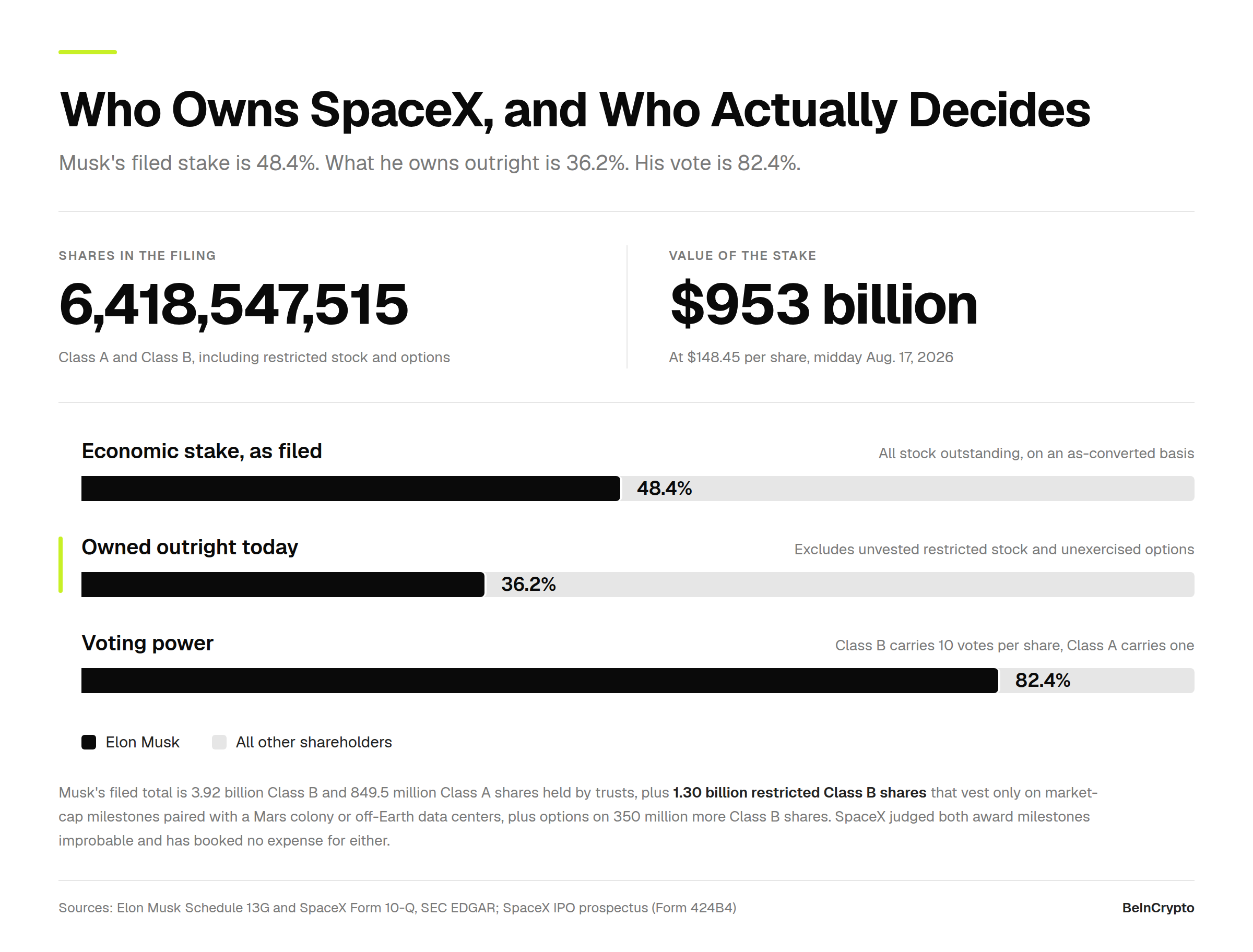
Elon Musk owns 48.4% of SpaceX (SPCX) on paper. What he owns outright today is closer to 36%, or roughly $708 billion.
Friday’s headlines put the stakes at over $900 billion. Musk replied that the number was wrong. He was right. Read the filing line by line, and the shares he holds outright come to 4.77 billion. The two figures are $245 billion apart.
The Filing Has Four Line Items. Only Two Are His
Musk filed a Schedule 13G on Thursday. That is the form the Securities and Exchange Commission (SEC) requires from anyone holding more than 5% of a public company. It reports 6,418,547,515 shares, and it splits them four ways.
- Two of the four are stock he holds now.
- Trusts he controls hold 849,494,440 Class A shares and 3,916,980,790 Class B shares.
Together, that is 4,766,475,230 shares.
The other two are promises. There are 1,302,072,285 restricted shares that have not vested. There are another 350,000,000 shares he can buy through options but has not bought.
SEC rules make him count all of it. Anything a filer can vote, or can acquire within 60 days, goes into the total. So 48.4% of SpaceX is a correct legal answer. It is not an answer to what he owns.

The math shifts once you separate them. SpaceX had 13,181,779,945 shares outstanding on July 28. Musk’s 4.77 billion is 36.2% of that.
At Monday’s price of $147.81, up 6%, it is worth about $708 billion rather than $953 billion.

1.3 Billion Shares Need Mars. SpaceX Values Them at Zero
Musk said as much himself, hours after the filing landed.
Follow us on X to get the latest news as it happens
The IPO prospectus spells out what he means. The board granted him 1 billion restricted shares in January. They vest in 15 tranches.
Each tranche needs a market capitalization target that rises from $500 billion to $7.5 trillion. Each tranche also requires SpaceX to build a permanent human colony on Mars that can hold at least one million people. Both conditions, every time.
A second award covers 302,072,285 shares, carried over from the xAI merger and reissued in March. It runs across 12 tranches, from $1.065 trillion to $6.565 trillion. It also requires data centers off Earth delivering 100 terawatts of computing power a year.
Here is the part nobody reported. SpaceX judged both sets of milestones improbable as of March 31 and has recorded no compensation expense for either.
The company assigns these shares a cost of zero because it does not expect to pay them. Traders agree.
On Kalshi, a crewed Starship flight to Mars before 2030 shows a modest 13% chance, though that market is thinly traded at just $52,405.

The 350 million options are a different story. They vested in January, carry a strike of $8.3998, and run to 2031. Musk would need about $2.94 billion in cash to convert them into stock worth roughly $52 billion.
What Changes Before June 2027
None of it is sellable yet. Musk agreed to a 366-day lock-up when SpaceX priced its IPO in June, and his shares carry no early-release triggers. His date is June 12, 2027.
Other holders exit first. Roughly 319 million shares are issued for free on Thursday, one of several tranches running through 2027. Anyone modeling the eventual Musk supply should use 4.77 billion shares, not 6.42 billion.
Traders who wanted SpaceX without the queue found other routes. Three SpaceX tokens launched on Solana the day the stock listed, and they settle around the clock. The founder holds the least liquid position in his own company.
One number did not move. Musk voted on the restricted shares, whether they ever vest or not, which left him with 82.4% of the vote at listing. His stake shrank on paper. His control never did.
The post How Much SpaceX Stock Elon Musk Really Owns, and When Can He Sell? appeared first on BeInCrypto.


Binance reportedly provided Russian authorities with transaction records and personal information belonging to a customer accused of financing terrorism via cryptocurrency donations to Ukrainian fundraising campaigns.
Russian investigators used information supplied by Binance as evidence against IT specialist Yuri Belenkiy, who was detained in September 2025 and is awaiting trial in Russia, according to law enforcement documents reviewed by Reuters.
Russia’s Investigative Committee alleged Belenkiy sent more than $700 in crypto between January 2023 and March 2024 to the Ukrainian military and a banned organization that Reuters identified as the group known at different times as the Azov Brigade and the Azov Regiment.
Reuters’ review found that Russian authorities asked Binance for Belenkiy’s transaction history and received information linking him to the transfers, along with his date of birth, address, phone number and passport number. The response also included copies of his Russian passport and Bulgarian residency permit.
Binance announced a full exit from Russia in September 2023, selling its local business to CommEX.
A Binance spokesperson declined to comment on specific confidential law enforcement requests or individual cases.
“Binance does not make or enforce the laws of any jurisdiction, determine charges, or decide how any government uses information in legal proceedings. Like other global financial institutions, we cooperate with lawful information requests from law enforcement globally, subject to applicable legal, privacy and regulatory requirements,” the spokesperson told Cointelegraph.
Related: Binance to restrict transactions involving HTX, 10 other crypto platforms
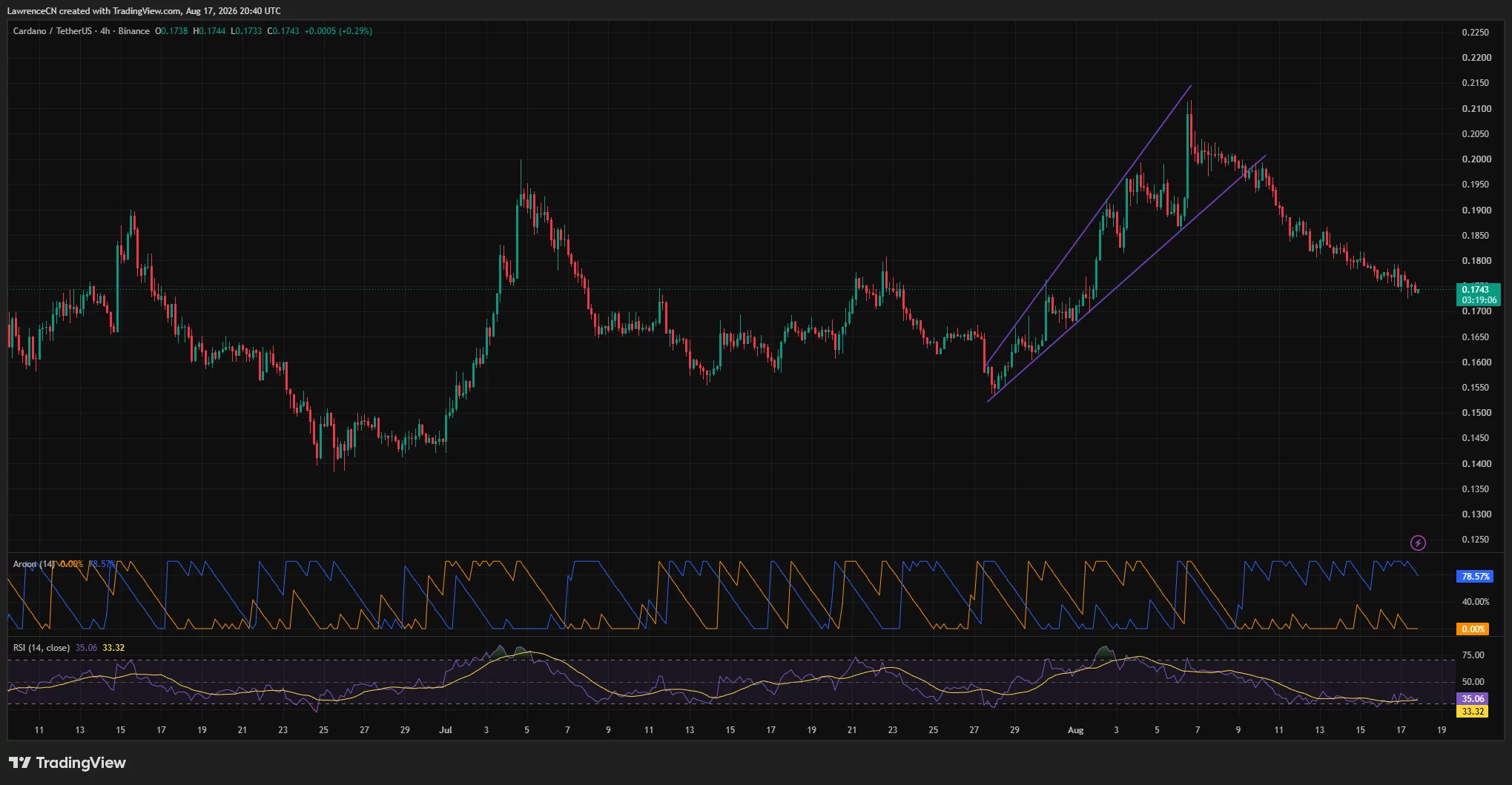
Cardano price fell about 1% to $0.174 as traders weighed a two-stage Dijkstra upgrade roadmap against a bearish chart structure and nearby liquidation risks.
Summary
- Cardano price traded near $0.174 after breaking below a rising channel on the 4-hour chart.
- Cardano’s Dijkstra upgrade will roll out in two phases, beginning with protocol version 12.
- The daily chart places immediate support at $0.1706, followed by the $0.1385 swing low.
- CoinGlass data shows major upside liquidation clusters between roughly $0.183 and $0.187.
Cardano price action today
According to data from crypto.news, Cardano (ADA) price was trading near $0.174 at the time of writing, down about 1% over the past 24 hours. ADA remained below the $0.18 level after retreating from an Aug. 7 peak above $0.21.
The 4-hour chart shows that ADA has broken below an ascending channel that guided its recovery from approximately $0.153 in late July. Cardano price initially climbed along the channel to $0.20 before the breakout failed and sellers regained control.
ADA has since formed a series of lower highs and lower lows, bringing it back toward the area where the late-July rally began. The latest decline also left the token about 17% below its August high.
4-hour momentum remains weak. The relative strength index stood at 35.06, close to the oversold threshold of 30, while its signal line was lower at 33.32. The reading shows sellers still control the short-term trend, although ADA is approaching a zone where selling pressure may begin to slow.
Analysts at AltCryptoGems said in an Aug. 17 X post that ADA’s decline followed a bearish break in market structure. The analyst also pointed to heavy capital rotation across the altcoin market, where rallies have been short-lived as traders move funds between individual tokens.
Dijkstra Era upgrade will arrive in two phases
Intersect’s official Dijkstra rollout plan divides Cardano’s next major protocol upgrade into two stages. The first phase targets code completion in the fourth quarter of 2026 and will introduce the Dijkstra ledger era through a hard fork to protocol version 12.
Phase one is set to activate Ouroboros Linear Leios, a scaling design intended to increase the number of transactions Cardano can handle while retaining the security guarantees of its existing base protocol.
Linear Leios will use the current ranking blocks alongside supplementary endorser blocks. Those additional blocks will reference transactions and receive certification from a stake-based committee before the transactions enter the ledger.
Intersect said the approach allows Cardano to process more transactions without requiring larger base blocks or shorter slot times. Throughput would be raised gradually through protocol parameter changes after activation.
The first phase also includes nested transactions, a PlutusV4 script context, account-address improvements, and changes to Cardano’s block structure. Nested transactions will allow a transaction to contain child transactions with their own witnesses and execution conditions, giving developers more options when building on-chain applications.
Structural support for Ouroboros Peras will also ship during the first phase, but the settlement feature will not become active immediately. Intersect plans to activate Peras through a second hard fork within the Dijkstra Era, with code completion targeted for the second quarter of 2027.
Peras will add a voting layer that allows committees of stake pool operators to vote on recent chain tips. Once a tip receives enough votes, the network can treat it as settled sooner than under Cardano’s standard Ouroboros Praos process.
The Q4 2026 and Q2 2027 targets refer to estimated code-completion dates rather than confirmed mainnet launches. Each phase must pass through the Preview and Pre-production test networks before reaching Cardano’s mainnet.
Mainnet activation will also require an on-chain governance action. Delegated representatives, stake pool operators, and the Constitutional Committee must vote on the proposal before either hard fork can proceed.
Cardano price tests the $0.1706 support level
ADA’s daily chart places the price close to the 78.6% Fibonacci retracement level at $0.1706. The level is measured from the June low of $0.1385 to the May high of $0.2886 and now represents the nearest major support on the chart.
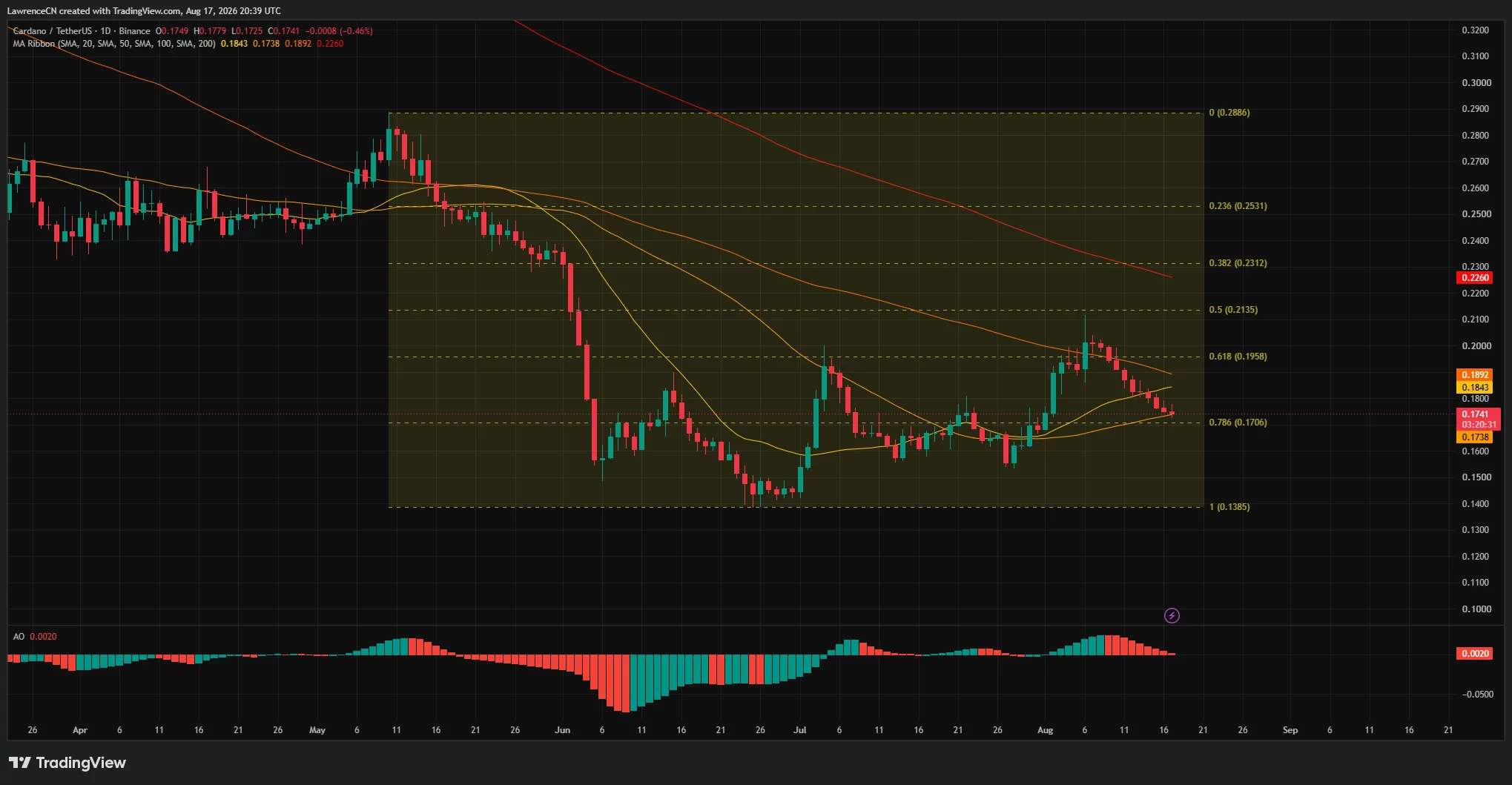
Cardano price was slightly above its 20-day simple moving average at $0.1738 at the time captured by the chart. However, ADA remained below its 50-day average at $0.1843, its 100-day average at $0.1892 and its 200-day average at $0.2260.
The position below the three longer-term averages keeps the wider trend under pressure. The Awesome Oscillator remained marginally positive at 0.0020, but its shrinking red bars showed that the momentum generated by ADA’s early-August recovery was fading.
A daily close below $0.1706 would weaken the current support structure and expose the recent liquidity area near $0.166. Continued selling could then place the June swing low at $0.1385 back in focus.
ADA would first need to recover the 50-day average near $0.1843 to ease the immediate bearish pressure. A move above that level would bring the 100-day average around $0.1892 and the 61.8% Fibonacci level at $0.1958 into view.
The $0.1958 area also sits close to the former rising channel and the price zone where ADA’s August advance began to lose momentum. A sustained recovery above it would allow traders to consider the 50% retracement at $0.2135, although the current charts do not yet show confirmation of such a reversal.
ADA liquidation map points to volatility near $0.185
CoinGlass’ one-week ADA liquidation heatmap shows several leveraged position clusters above the current price. The brightest concentration appears around $0.186 to $0.187, with another large cluster close to $0.183.
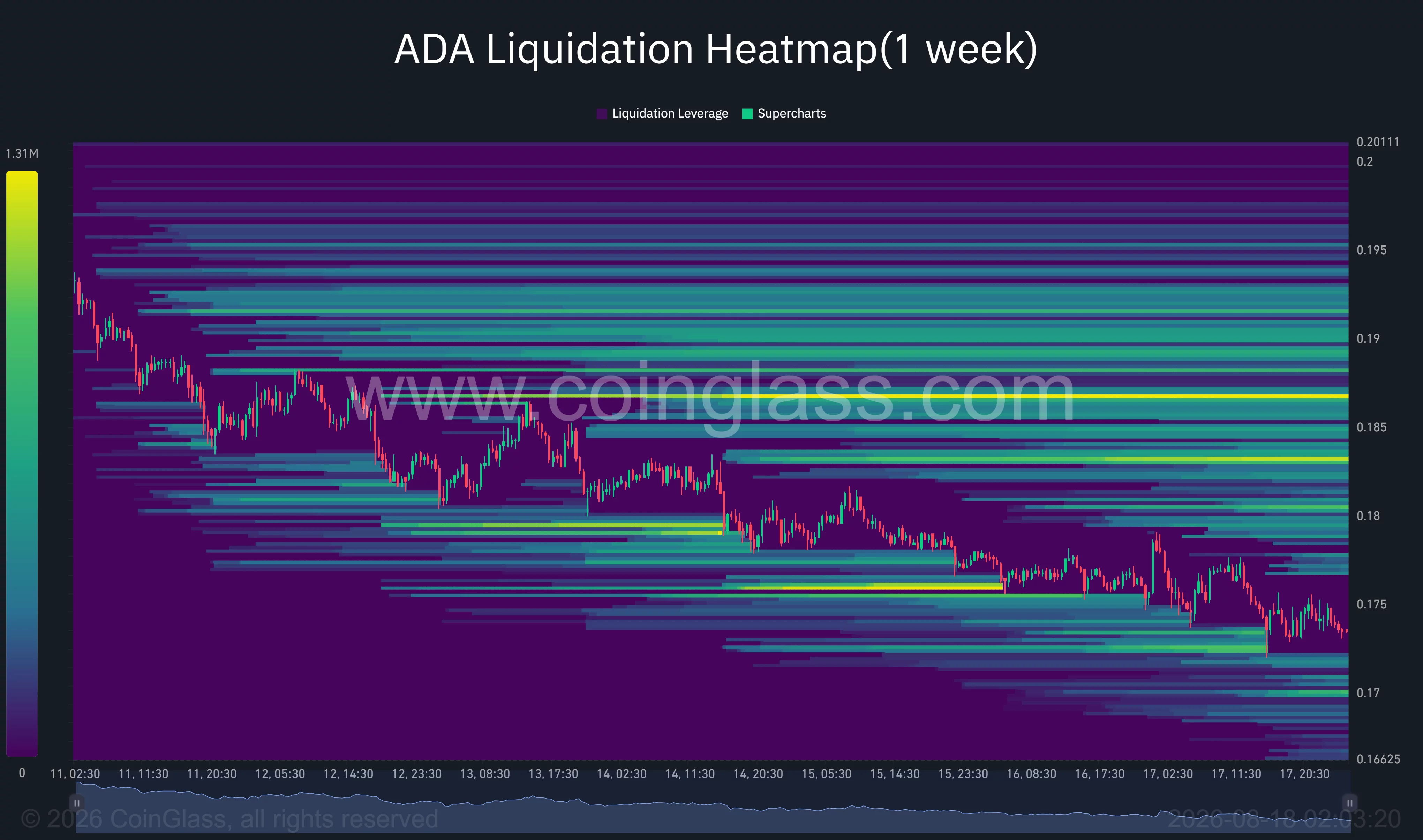
Prices can move toward areas containing large volumes of leveraged positions because forced liquidations add market orders once those levels are reached. The data does not guarantee that ADA will rebound, but it identifies $0.183–$0.187 as a potentially volatile area if buyers push the token above $0.18.
Additional liquidation bands are visible around $0.188–$0.193, increasing the potential resistance above the first cluster. Those levels broadly overlap with ADA’s 50-day and 100-day moving averages, strengthening the importance of the wider $0.184–$0.196 zone.
Liquidity below the market appears more scattered. CoinGlass shows smaller concentrations near $0.170 and toward the bottom of the displayed range at approximately $0.166. A break below $0.1706 could therefore accelerate the decline as leveraged long positions face liquidation.
For US investors trading ADA around the clock, the Dijkstra roadmap provides a longer-term network catalyst but no fixed mainnet date. Near-term direction remains tied to whether ADA holds $0.1706 and recovers the moving averages and liquidation clusters between $0.183 and $0.196.
Disclosure: This article does not represent investment advice. The content and materials featured on this page are for educational purposes only.
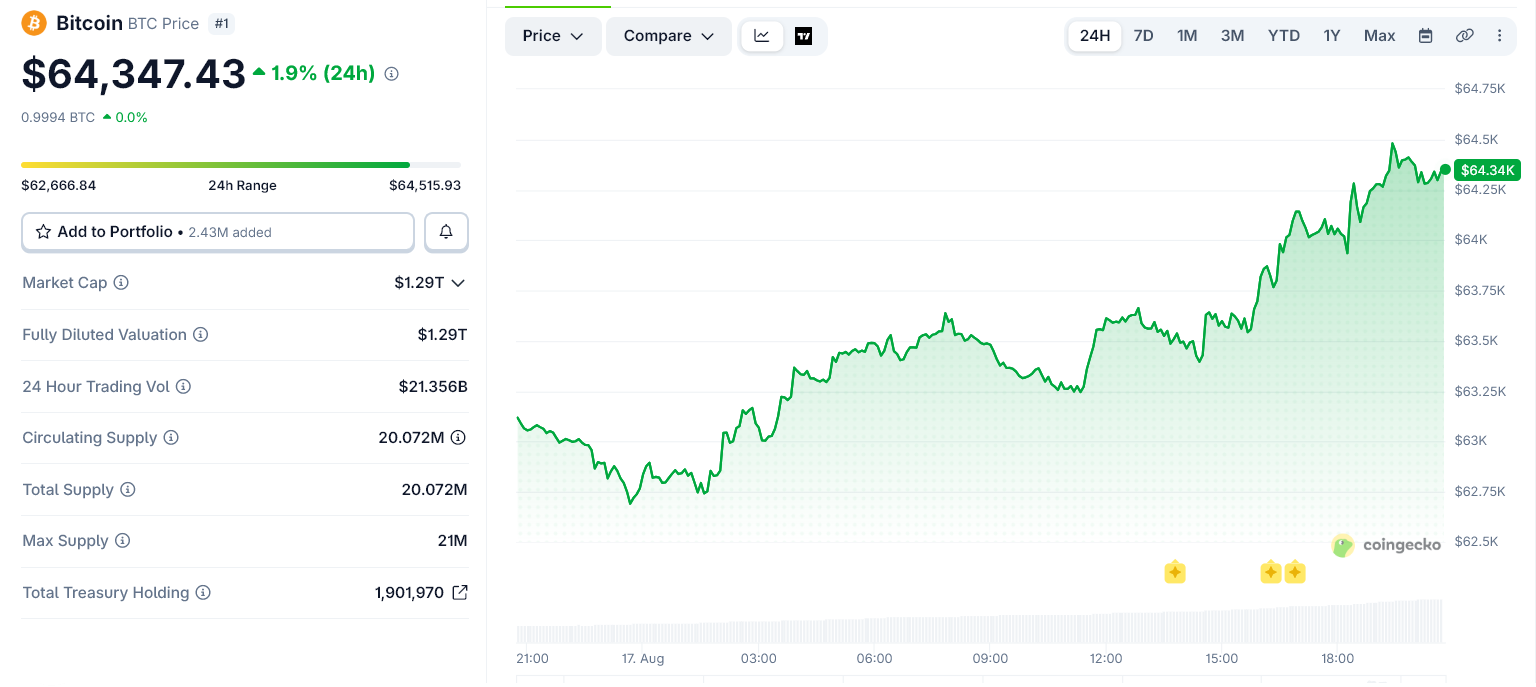
Bitcoin broke above $63,000 on Monday and quickly pushed past $64,000, escaping the narrow range that had trapped the price for days.
The biggest catalyst came from the US macro picture. Traders have sharply reduced their expectations for a Federal Reserve rate hike in September, while the dollar has weakened. Both developments make risk assets such as Bitcoin more attractive.
Can Bitcoin Price Breakout of $65,000 Resistance?
The move also gained momentum as selling pressure eased. Bitcoin inflows to exchanges have dropped sharply, while funding rates and open interest have cooled. That means fewer coins are sitting on exchanges ready to sell, while leveraged traders are less aggressively positioned.
However, the broader picture remains less convincing.

CryptoQuant’s volatility-adjusted momentum has fallen below zero, suggesting Bitcoin is generating weak returns relative to its recent volatility. Its risk oscillator has also returned to a level that previously appeared near major market turning points.
US spot demand also remains soft. The Coinbase Premium Index is still negative, although the indicator may exaggerate weakness because of differences between USD and USDT pricing. Bitcoin ETFs also recorded net outflows last week.
For the next few days, $65,000 is the key level. A clean break and hold above it could extend the move toward the upper part of the recent range.
But the next few weeks will depend on whether real spot demand returns. If ETF flows improve and Coinbase demand strengthens, the breakout could develop into a broader recovery.
If those signals stay weak, the move above $63,000 may remain a relief rally driven mainly by lighter selling and short covering.
The post Bitcoin Breaks Out of the $63,000 Zombie Zone, But Will It Hold? appeared first on BeInCrypto.

The U.S. Department of the Treasury has begun the formal process of building regulations for the Guiding and Establishing National Innovation for US Stablecoins (GENIUS) Act, launching a notice of proposed rulemaking for public comment. The move is aimed at clarifying how the new stablecoin framework will be implemented ahead of the law’s scheduled start date in January 2027.
In a notice released on Monday, Treasury said it is accepting feedback as it works toward regulatory certainty for businesses operating in the stablecoin payments market. Treasury Secretary Scott Bessent said the department “welcomes input from stakeholders as [it works] to provide the regulatory certainty businesses need to innovate and grow in America.”
Key takeaways
- Treasury has opened a proposed-rulemaking process for GENIUS stablecoin implementation, inviting public comment before the January 2027 effective date.
- Under the GENIUS framework, payment stablecoins generally cannot be issued in the U.S. without an associated federal or state license once the law takes effect.
- The public comment window runs for 60 days after publication in the Federal Register.
- Earlier GENIUS-related proposals from other regulators may still leave uncertainty for market participants, especially given reported missed internal deadlines.
Treasury starts the GENIUS rulemaking process
The GENIUS Act, signed into law last year, is designed to establish a dedicated regulatory structure for “payment stablecoins.” Treasury’s Monday notice signals the next phase: translating statutory requirements into operational rules that regulated entities can plan around.
Treasury’s timeline indicates the law’s effect is tied to the agencies finalizing their rules. Under the bill’s schedule, the stablecoin law was set to begin 120 days after agencies complete final rules, or 18 months after the act’s passage in July 2025—placing the effective date on Jan. 18, 2027. Treasury’s proposed rules are intended to feed into that schedule rather than wait for the very end of the timeline.
Once GENIUS goes into effect, Treasury said an entity generally may not “issue a payment stablecoin” in the U.S. without a related federal or state license. That restriction is central to how market participants will need to structure issuance, compliance, and oversight, and it also underscores why regulators are pushing for rules well ahead of the deadline.
Interested parties will have 60 days to submit comments after the notice is published in the Federal Register, according to Treasury’s disclosure in the proposed-rulemaking notice.
Other agencies issued related proposals in 2026
Treasury is not acting in isolation. Alongside Treasury, other U.S. financial regulators—including the Office of the Comptroller of the Currency (OCC), the Federal Deposit Insurance Corporation (FDIC), and the Federal Reserve Board—have reportedly issued notices of proposed rules in 2026 related to GENIUS implementation. Earlier coverage from Cointelegraph noted that OCC proposals were also aimed at shaping the operating environment for stablecoins and addressing areas of policy debate.
However, the lead time between proposal announcements and final rules matters for businesses planning issuance pathways. The article notes that all departments reportedly missed a July 120-day deadline that would have allowed regulations to be finalized before January. That raises the possibility that GENIUS could take effect even without fully finalized guidance, which would leave some details uncertain for regulated entities and could complicate timelines for compliance readiness.
For market participants, this creates an important distinction: while the effective date is known, the practical contours of licensing and regulatory expectations may not be fully settled by then. That gap is precisely what public comment periods and subsequent rule finalization are meant to close.
GENIUS work is also being discussed with the UK
Beyond Washington, regulators are also coordinating on how stablecoin policy developments may intersect across borders. In July, the UK-US Financial Regulatory Working Group met in London to discuss cooperation between financial agencies, including implementation of the GENIUS Act.
The UK has taken its own steps toward regulating stablecoins, according to the referenced reporting. Still, crypto industry observers have argued that the UK risks falling behind the U.S. in terms of implementation momentum, especially as the U.S. continues to move toward a defined effective date and agency-by-agency rulemaking.
That difference matters for companies planning cross-border stablecoin services, since regulatory timing can affect product deployment, licensing strategy, and operational design—particularly for payment-oriented issuers that need clarity on authorization and compliance obligations.
Why the proposed rules matter before January 2027
The immediate consequence of Treasury’s proposed rulemaking is that stakeholders now have a formal channel to influence how GENIUS translates into enforceable requirements. While the precise contents of the proposed rules aren’t detailed in the excerpt, the framework’s licensing premise is already clear: payment stablecoins are generally not meant to be issued without an appropriate federal or state license once the law is active.
In practical terms, this means issuers and partners—such as payment processors and custody providers that support stablecoin networks—will likely need to map their roles to the future licensing and compliance system. If finalized rules arrive late relative to the effective date, businesses may face a planning problem: they can prepare for the direction of travel, but they may not know every operational requirement until rulemaking concludes.
With public comment open for 60 days after Federal Register publication, the next phase will test how quickly regulators can process feedback and move toward final rules. Market participants should watch for whether agencies can align their proposals into coherent, implementable guidance before the January 2027 milestone.
As Treasury and other regulators work through comments and finalization, the key uncertainty for stablecoin issuers is timing: whether the remaining rule details will be finalized with enough lead time for licensing and operational compliance. The public comment window will offer early signals about the issues regulators prioritize and the expectations that will shape GENIUS implementation.

Warning as fans get ‘up close’ to Tom Zanetti in Middlesbrough soon

Gold appears set for a rebound as it regains safe-haven appeal after US-Iran war selloff

OCC approves Trump Family Crypto Company for Trust Charter


-

 Fashion3 days ago
Weekend Open Thread: Ann Taylor
-
 NewsBeat6 days ago
Communication cards help banking customers access services or report scams
-
 Business7 days ago
Oil Price Today (August 11): Crude oil rises to $88 after Trump’s compensation demand dents Hormuz opening. Here’s why
-

 Crypto World7 days ago
Revolut wins French banking licence, creates second EU banking hub
-
 Sports4 days ago
This U.S. Amateur is a glimpse into golf’s future in more ways than you think
-
 Crypto World7 days ago
Why Did Nvidia Stock Fall on Monday Despite a $500 Billion Wall Street AI Deal?
-

 Sports3 days ago
Birmingham 2026: Day 6 Timetable for Irish Athletes
-
 NewsBeat3 days ago
Myanmar says over 300,000 Rohingya refugees verified for repatriation as exodus enters ninth year
-

 Politics2 days ago
SEQ Code: The Three Letter Boarding Pass Code That Could Give You The Worst Seat
-
 Entertainment5 days ago
Keke Palmer Subtly Hints At Sean Evans Drama With Cryptic Post
-
 Entertainment7 days ago
57 Years Later, the Best Sitcom Ever Made Still Deserves a Reboot
-

 Fashion6 days ago
Coffee Break: The Fonteyn Jane Flat
-

 Tech6 days ago
Zoom Screen-Sharing Bug Let People Fully Take Over Other Devices On A Call
-

 Crypto World7 days ago
Bitcoin's BIP Editors Remove Luke Dashjr Two Days After BIP-110 Fork Stalled
-

 Fashion6 days ago
Should you refinance your debt? Pros, cons, and real numbers
-

 Fashion6 days ago
Claire Life: Kicking Off MVAAFF With the C Suite Luncheon Featuring Phylicia Rashad, Letoya Luckett, and More!
-
 Crypto World6 days ago
XRP bridge drained after software mistook fake deposits for real ones
-

 Sports5 days ago
DeQuan Jones in ‘high spirits’ after successful leg surgery
-
 Tech7 days ago
Zuck rekindles open weights Llama drama with Muse Glimmer
-

 Fashion7 days ago
How to Mix Diamond Rings With Gold & Silver Jewelry
You must be logged in to post a comment Login