

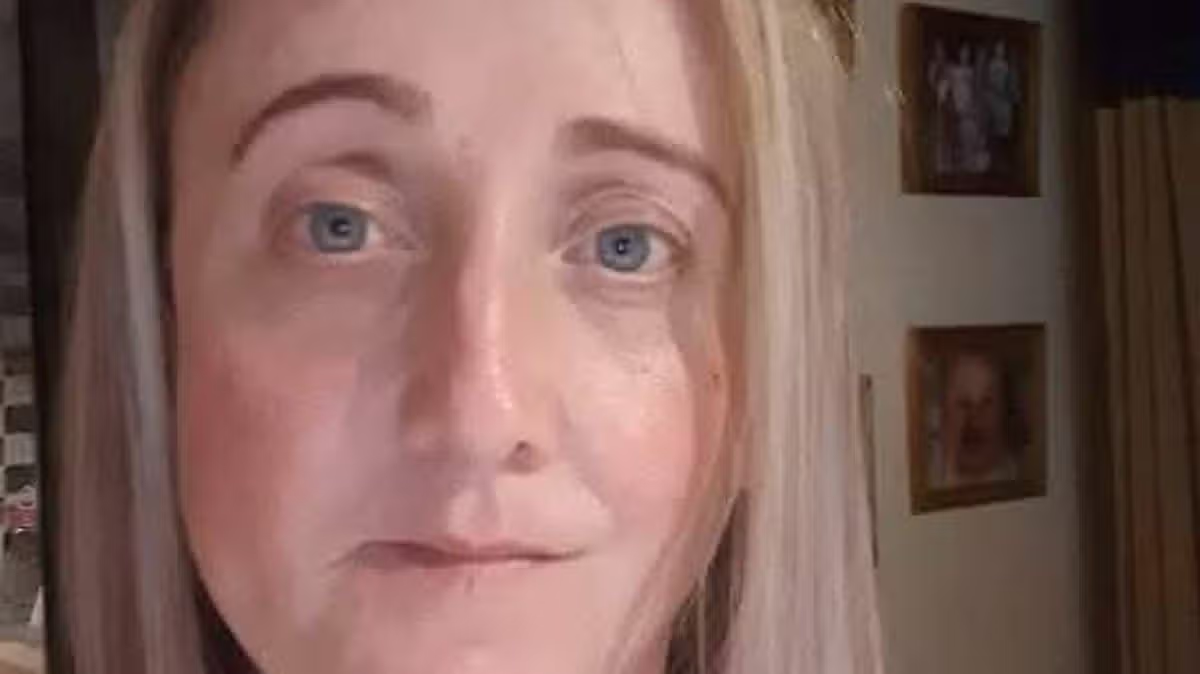
Having lost her father to skin cancer, she is urging people to get skin changes checked and practise sun safety
A skin cancer survivor is encouraging people across Ireland to take a more proactive approach to protecting their skin, as she believes early detection helped save her life.
Skin cancer is the most common cancer in Ireland, with over 11,000 new cases diagnosed every year. The National Cancer Registry of Ireland (NCRI) expects this number to double by 2040.
Liz Farrell, 46, from Castlecomer, Co Kilkenny was diagnosed with skin cancer after she noticed some small red bumps appearing on her forehead in May 2021.
Around the same time, her father, who worked outdoors as a builder and frequently ran outdoors, was living with advanced skin cancer which he later passed away from.
Seeing what her father went through motivated Liz to document and check the skin changes she noticed.
Commenting on her dad’s skin cancer and her own diagnosis, Liz said: “Because of my dad’s skin cancer – his was so severe that he ended up dying from it – I decided to keep an eye on the spots that appeared on my forehead.
“I went to my GP who referred me to a dermatologist and they removed the spots. It turned out that I had basal cell and squamous cell cancer removed from either side of my forehead. It was a shock.
“Dad’s skin cancer was so severe, it was an eye-opener. Only for my dad, I wouldn’t have been so vigilant about my skin, and it could’ve been a worst-case scenario for me.”
After this experience, Liz, who works as an early years educator, continued to pay close attention to her skin and in 2023 noticed another change that she decided to get checked and, more recently, a mole on her arm.
Liz revealed how being SkinSmart helped her to detect pre-cancerous growths on her skin after she was successfully treated for skin cancer.
“I noticed red spots appeared on my forehead where they’d been before,” Liz recalled.
“They were very small spots with a rough texture, and I noticed they were changing. They were removed and they were pre-cancerous, so I was treated with a chemo cream to be on the safe side.
“There was also a mole on my shoulder that I’d had all my life, but I noticed it started to change shape, and it got bumpier – that was removed last February and was pre-cancerous.
Liz is urging the public to document any skin changes they notice and take pictures of them as early detection is also vital. If spotted early up to 90 per cent of cases are curable. In the case of melanoma skin cancer spotting it early can save your life.
“My skin changes were small, but I took photos so I was able to document how rapidly they were changing and I could see the changes happening and could show my GP,” Liz said.
“They were all caught at an early stage. I’m very lucky. The only reason I’ve been so vigilant about my skin is because I saw what my dad went through with his skin cancer, and I was afraid that if I ignored anything it would grow to that extent.
“I truly believe that being aware of and proactive about skin changes has saved me from the worst-case scenario that my dad went through with skin cancer.”
Liz said she believes her skin cancer may be linked to sunburn she experienced as a child, as sunburn during childhood can increase your risk of developing skin cancer in later years.
Talking about her sunburn in childhood and the importance of being SunSmart, Liz said:”I’m very pale, I was outdoors all the time as a child and using sunscreen wouldn’t have been as regimented then as it is now, so I definitely got sunburnt a few times.
“My son is 20, and I’m always drumming into him the importance of wearing sunscreen, even on cloudy or overcast days. I wear sunscreen throughout the year now, and I’m cautious about being out in the sun.”
Kevin O’Hagan, Cancer Prevention Manager at the Irish Cancer Society, said: “As Liz’s powerful story shows, it’s important to check your skin regularly and go to your GP if you notice any skin changes, even if these changes are painless.
“These can be a new or changing mole, a flat red spot, a firm red lump, an ulcer or spot that is tender to the touch or rough and scaly patches.
“Early detection is vital – the sooner skin cancer is diagnosed, the more treatment options there are and the better the chance of cure. We want to ensure that the public are aware of the signs and symptoms of skin cancer and take action by contacting their GP if they notice any symptoms or have any concerns.”
Symptoms of skin cancer:
- A small lump
- Flat, red spot
- Firm, red lump
- A lump or spot that is tender to touch
- An ulcer that will not heal
- A lump with a scaly or horny top
- Rough, scaly patches
- A new or changing mole
Anyone with questions or concerns about skin cancer can contact the Irish Cancer Society Support Line on Freephone 1800 200 700 or supportline@irishcancer.ie, or drop into their nearest Daffodil Centre.
For all the latest news, visit the Belfast Live homepage here and sign up to our daily newsletter here.













































You must be logged in to post a comment Login