
Politics
Science Explains Why Some Onions Make You Cry More Than Others

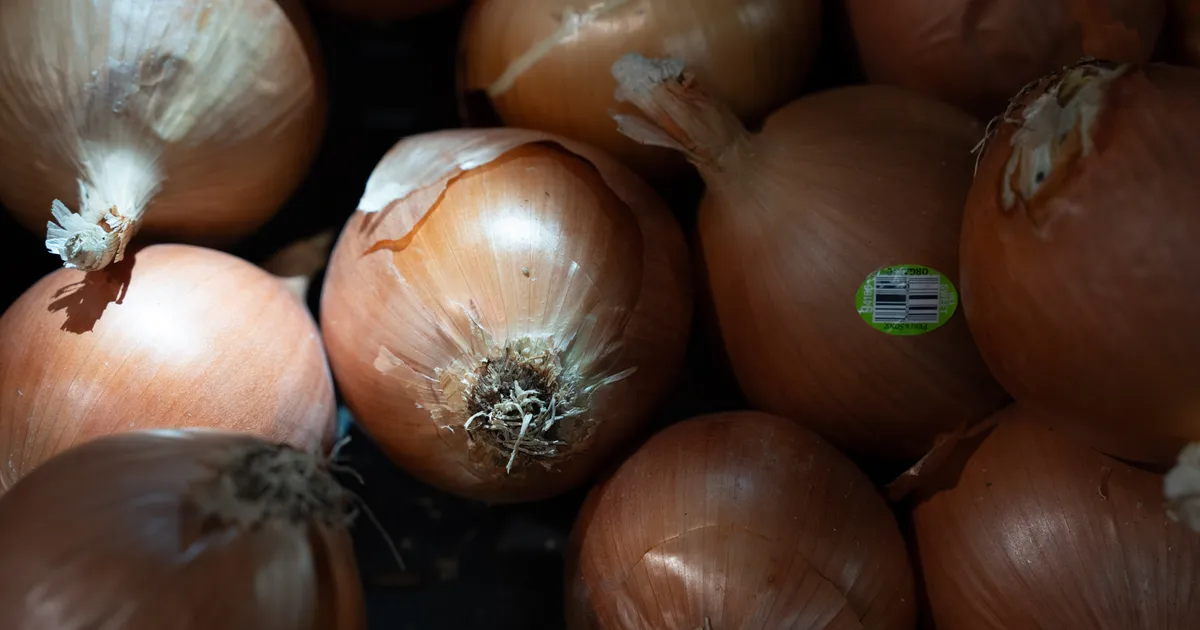
I recently learned that “purple” garlic really does taste different to its white counterpart.
It’s a “hardneck” variety, meaning it’s got a wooden stem in its centre: this makes the cloves larger, sweeter, milder, and more evenly-sized.
Which left me wondering ― is there an equivalent rationale behind why some onions are more intense than others?
Anyone who regularly cooks will know that picking your alliums often feels like Russian roulette. The eye-wateringly sharp kinds seem to come out of nowhere, and often appear in the same pack as their less offensive peers.
But why does it happen, and can you tell which onions will make your eyes water before you slice into them?
It’s all down to sulphur
To understand why some onions are more likely to get you to “cry,” we need to look at what causes the reaction.
Per Britannica, onions are excellent at absorbing sulphur as they grow. This is used for amino acids in the bulb.
But when you slice into an onion, its cell walls break down. That allows enzymes to meet sulphur-rich amino acids, creating a chemical known as syn-propanethial-S-oxide (some research suggests two enzymes are needed for its release).
This is unstable and volatile, meaning it easily evaporates from the plant and gets into your eyes. Tears are a means of washing the offending chemical away.
This is an effective way of repelling hungry mammals, Bon Appetit writes ― whether hungry rabbits or me, making a spag bol.
Spring onions and sweeter onions absorb less sulphur, so they’re less liable to elicit tears. But yellow, red, and white onions are all potential tear-jerkers.
The strength of the response is linked to the concentration of sulphur-rich amino acids in the onion, which may change according to the soil the veg is grown in.
Writing for The Conversation, dietitian Dr Duane Mellor of Coventry University wrote: “It’s also possible that no two onions from the same bag will have the same effect, so cutting into the vegetable may be the only way to know if it will make you cry.”
Can I stop my eyes from watering when chopping onions?
Avoid cutting the root of the onion, as this has the highest concentration of sulphur.
“The sharper the knife, the less damage is done to the onion, and fewer irritations are released into the air as a result,” Healthline adds.
Chilling your onions in a bowl of cold water 30 minutes before slicing them may inhibit the enzymes, they say, producing less irritating gas.

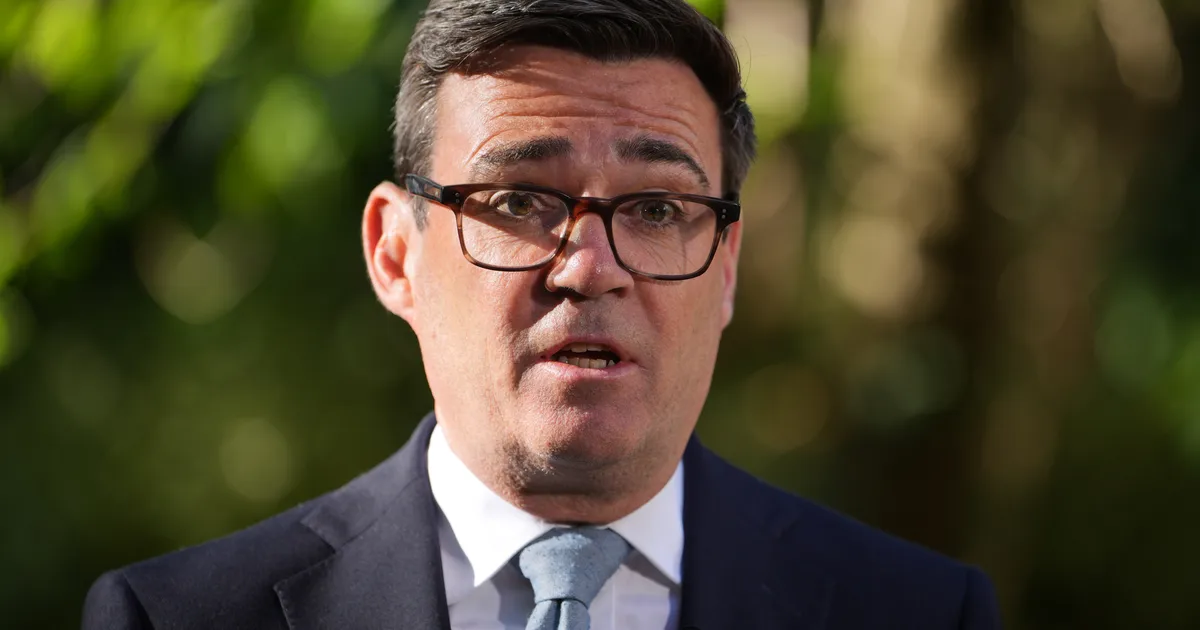
Andy Burnham has said he is “not embarrassed” over texting someone who was pretending to be Donald Trump’s chief of staff.
The prime minister was in contact with an impersonator claiming to be Susie Wiles, a top aide to the US president, before he became suspicious.
Asked by broadcasters if he was embarrassed by the error on Tuesday, Burnham said: “No I’m not, because there was a minimal exchange, nothing of consequence and actually quickly I realised this needed to be reported so I did so.
“I handled it in the right way. All politicians are receiving these pressures and these challenges but I did everything right.
“It was a minimal exchange of zero consequence and it was quickly reported.”
He said the “correct action” is being taken in the UK and the US in response to the incident.
After news outlet Politico revealed the error on Monday, the UK embassy in Washington raised the issue with the White House.
Wiles’s phone has been hacked in the past but, according to Politico, this matter was not related.
When asked about the incident, Trump appeared unperturbed, telling reporters he was sure Burnham “had a miscommunication”.
Burnham is not the only British politician to fall victim to prank calls.
Then foreign secretary David Cameron thought he was talking to ex-Ukrainian president Petro Poroshenko in 2024 but the Foreign Office later claimed it was an attempt from Russian imposters.
Tony Blair was also pranked while in office in 1998 by impressionist Jon Culshaw who posed as then-leader of the opposition Lord William Hague.
Listen to Commons People, the podcast that makes politics easy. Every week, Kevin Schofield and Kate Nicholson unpack the week’s biggest stories to keep you informed. Join us for straightforward analysis of what’s going on at Westminster.

On 12 May, EDF and Dalkia UK re-signed the Armed Forces Covenant during an event aboard HMS Belfast, bringing together colleagues, Armed Forces representatives and industry partners to recognise the contribution of service personnel, veterans and military families.
The event also marked the relaunch of EDF and Dalkia Forces Support Network, which supports veterans, reservists and their families across the organisation. The programme included welcome remarks, a networking lunch and the formal Covenant signing, alongside activities designed to encourage connection, understanding and shared experiences between industry and the Armed Forces community.
Dr Sarah Jackson, Chief Medical Officer at EDF UK and Executive Sponsor of the Forces Support Network, said: “People who have served bring exceptional leadership, resilience and teamwork into civilian careers. At EDF, we’re committed to creating an environment where those skills are recognised and where veterans, reservists and military families feel welcomed, valued and able to succeed.”
The Forces Support Network plays a key role in helping colleagues transition from military to civilian careers, offering guidance, peer support and a strong sense of community across both EDF and Dalkia.
Stan Webster, Hinkley Point C Site Security Manager and Chair of EDF’s Forces Support Network, who served 22 years in the British Army, added: “Moving from military life into a civilian career can be a big change. Having a community around you that understands that journey is incredibly important.”
The event also highlighted the importance of collaboration in supporting the Armed Forces community across organisations.
Stu Brown, Dalkia Forces Support Network Chair and Business Unit Director at Parliament, commented: “By working closely together across EDF and Dalkia, we can create more opportunities for people to transition successfully and feel part of a workplace that truly values their experience. It also increases diversity of thinking, brings fresh ideas and helps build an instant rapport and understanding when we work with the Defence sector. It’s part of our competitive edge, as well as the right thing to do.”
Veterans, reservists and members of the Armed Forces community interested in building their careers with EDF and Dalkia UK can find out more about current opportunities at https://careers.edfenergy.com/ and https://dalkia.co.uk/working-for-us/opportunities/.
EDF and the UK Government have signed the Heads of Terms for a Contract for Difference (CfD) agreement which will extend the life of Sizewell B in Suffolk, likely to secure safe and clean power generation and 900 jobs for longer.
Since its commissioning in 1995 the station has produced more than 270 Terrawatt hours (TWh) of low carbon electricity – that’s enough to meet the needs of every household in Suffolk and Norfolk for more than 100 years – but it had been due to stop generating in 2035. Now Heads of Terms have been signed on a CfD to extend the lifetime out to 2055, with EDF funding a major refurbishment of the nuclear power station during planned outages over the next fifteen years, costing around £800 million.
The proposal covers the period from 2035 to 2055 and includes a strike price of £70.50/MWh (2025 prices). Sizewell B produces baseload power, available 24/7 in all weather conditions. Extending the operational life of the station is a cost-effective way to increase the UK’s sovereign clean energy generation. UK Government and EDF are expected to finalise this CfD later this year.
EDF UK CEO Simone Rossi said: “Global events demonstrate time and again how vital it is for the UK to secure long term, low-carbon, homegrown electricity which protects British households and businesses from market volatility. Extending the life of the plants we already have alongside building new ones is central to EDF’s strategy.”
Energy Secretary Ed Miliband said: “Nuclear power is vital for our energy security, and this extension will help produce the clean power our country needs.”
Minister for Science, Innovation, Research and Nuclear Lord Vallance said: “This deal protects billpayers and boosts the country’s energy security by continuing to provide clean, secure power for millions of households. By backing Sizewell B, we are delivering a golden age of nuclear and maintaining 900 skilled jobs in Suffolk.”

Ye – the rapper formerly known as Kanye West – has announced he will play two live shows in Russia later this year.
On Monday, tickets for Ye’s live dates at St Petersburg’s Gazprom Arena, which has a capacity of 70,000, sold out mere minutes after going on sale.
BBC News pointed out that the controversial Jesus Walks musician is the most prolific Western performer to play in Russia since the country’s invasion of Ukraine more than four years ago.
As well as the likes of Akon, DaBaby and Tyga, chart-topping singer Jason DeRulo performed two shows in Russia last year, returning for another earlier this year.
Over the course of his time in the spotlight, Ye has found himself at the centre of controversy on countless occasions, which was exacerbated in the early years of the Trump presidency, when he repeatedly voiced his support for the US leader.
He later released a unanimously-derided single titled Heil Hitler, resulting in his Australian work visa being cancelled.
At the beginning of this year, Ye – who was diagnosed with bipolar disorder a decade ago – issued a public apology for his behaviour in a full-page magazine ad, addressed “to those I’ve hurt” with his antisemitic outbursts, claiming they occurred during a months-long manic episode in which he had “lost touch with reality”.
Following this, he attempted to stage a string of comeback shows around Europe, but this hit a number of stumbling blocks, including when his headlining shows at Wireless festival had to be cancelled due to the home office blocking his travel to the UK (resulting in the whole event being axed).
Ye’s tour dates in France, Poland, Italy and the Czech Republic were eventually pulled, too, although he did go on to perform in Spain, Portugal, the Netherlands, Turkey and Albania.
Politics
Politics Home | UK energy security supported by further nuclear power station life extensions
- Heysham 1 and Hartlepool nuclear power stations are to generate to March 2030 following a review of lifetimes
- The decision, taken by EDF, is set to boost nuclear output by 28TWh over the two-year extension, supporting the UK’s energy security during a period of major system change
- More than 1000 jobs in the north-east and north-west of England will be supported for longer.
Two nuclear power stations are each set to generate for two years longer in a boost to the UK’s energy security and to local employment.
Heysham 1 in Lancashire and Hartlepool in Teesside are now expected to produce low carbon electricity until March 2030 after a decision by operator, EDF.
As well as supporting more than 1000 jobs across the two sites for longer, extending the generating lives of these plants could boost nuclear output by 28TWh over the two-year period, enough to power 8.4 million homes.
EDF’s Managing Director of Nuclear Operations, John Munro, said: “We have been clear it is our ambition to generate from these stations for as long as it is safe and commercially viable to do so it is great to be able to confirm a further two-year extension for Heysham 1 and Hartlepool.
“The AGR stations have been the backbone of secure, zero carbon generation in the UK for five decades. The nuclear fleet also has a key role in maintaining grid stability, which is so important as the overall system becomes led by renewables. Today’s decision retains stable baseload, domestic generation, reducing reliance on imports during tighter periods.”
Together with today’s announcement, the UK Government’s commitment to delivering the recommendations from the Fingleton Review sends a positive signal about supporting a secure low carbon electricity system for the country.
When EDF acquired the fleet in 2009 all seven Advanced Gas-cooled Reactor (AGR) stations were scheduled to be offline by 2023, but a series of life extensions mean four of those stations are still generating with three now in various stages of defueling or decommissioning.
John continued: “When nuclear goes offline it is often replaced with gas generation. If we are serious about reducing the UK’s reliance on gas and retaining system stability, it makes sense to keep these stations online to support energy security and our carbon targets.”
Keeping these stations online will retain around 12% of the UK’s nuclear generation in the mix in 2028 and the volume of gas they could avoid in each year of the extension is equal to 25 Liquid Natural Gas (LNG) cargoes or 20% of the LNG imports in 2025.
The decision comes following a detailed review covering technical aspects like the condition of the boilers and the graphite cores as well as supply chain resilience and workforce planning.
EDF will continue to keep AGR lifetimes under review to establish whether further life extensions can be achieved.

My favourite way to reuse mashed potatoes involves turning them into farls, but that’s at least partly because I can never restore them to their fluffy glory.
Every time I try to reheat them, they turn out either rubbery or dry – it doesn’t matter whether I use a microwave, hob, or oven.
Well, thankfully, no more.
In a post shared to Reddit’s r/AskCulinary – a forum in which professional cooks answer the questions of us mere mortals – site user u/Salty-Mud-4766 asked: “How do professional kitchens keep mashed potatoes smooth when reheated?”
Here are some of the best answers:
What’s the best way to reheat mashed potatoes?
All of the pros agreed that fresh mashed potatoes are best.
But as site user u/TheFredCain suggested, if you do want to reheat mash, adding liquid is key.
“Use a pot on the stove. Add some cream and butter and bring almost to the scalding point,” they advise.
“Add your cold mash in and use a masher or heavy whisk to incorporate the hot liquid. Give it a minute or two and mash some more and repeat.”
Martha Stewart’s site reccomends a similar method, but with a slow cooker instead of a pot on the hob. Chef Kevin Dundon does the stovetop version, however.
But whether you’re steaming the mash in a double boiler or covering it with cream or milk and tinfoil before popping it in the oven (other Martha-approved methods), the Redditors agree that you’ll need either butter or liquid to prevent either glueiness or mealiness.
Can I reheat mashed potato in the microwave?
That option didn’t show up in the comments of the original Reddit post.
But if you do opt for the microwave, experts reccomend reheating your mash in 30-45-second increments to prevent rubberiness.
Add warm (they must be warm) butter or milk to the spuds after each of these increments until they’re done for added smoothness and creaminess.
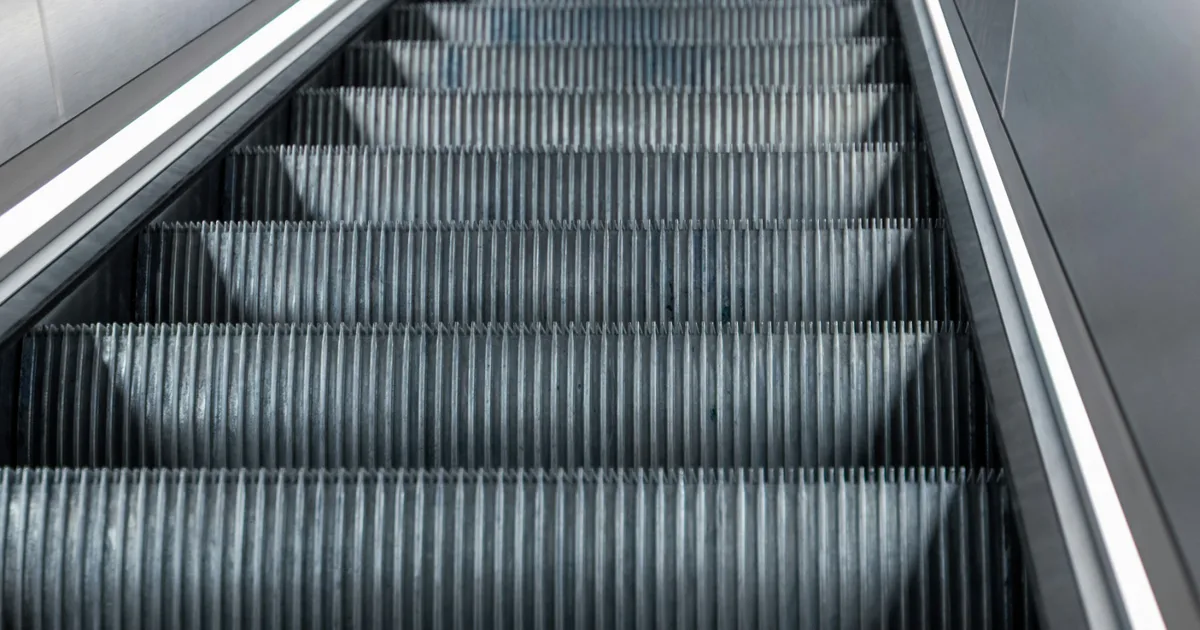
Life is full of little mysteries – for instance, why do some new-build homes have bricked-up windows, and what does the mysterious cable airline staff sometimes holds in front of a grounded plane really do?
Then, there are the more frustrating questions, like why chocolate is so expensive right now and why you can’t stop watching that terrible TV show.
A recent scroll on Reddit brought me to an everyday conundrum I’d never stopped to think about, too.
Writing to r/whatisthisthing, site member u/kristhecadet asked: “What is this thing that you always see on an escalator?”.
Their accompanying picture showed a red arrow pointing to the “brush” at the base of the machine, right where the stairs meet the rail.
Good question, I thought. What does that do?
It’s certainly not to clean your shoes
I’ll be honest; I, along with a lot of Redditors, it seems, use the tempting bristles to clean my shoes.
But according to elevator and escalator providers KONE, they have a “surprising safety purpose” that means shoe-shining is about the worst move you can pull on the brush.
“Some people mistakenly believe the brushes are intended for cleaning shoes, leading them to place their feet near the brushes, which increases the risk of getting shoes, shoelaces, or loose clothing caught in the moving parts of the escalator,” their site reads.
But in reality, the brush is designed to stop things like fingers and laces from getting jammed in the gap between the moving stairs and the barrier wall (the “skirt”), which would potentially cause serious injuries.
“Escalator brushes act as a barrier, gently nudging anything that gets too close to the edge away from danger,” they add – including people, who tend to move a little further away from the unsafe “skirt” zone thanks to the helpful addition.
“This helps prevent accidental falls and ensures a smooth ride for everyone,” KONE shares.
Some Redditors nailed it
The first half of a top comment under the original post from Redditor u/brock_lee is therefore bang-on: “They help keep shoes, dresses, handbags, etc. from getting snagged in the tiny gap at the side,” they said.
Still, the site user said they also shine their shoes with the device, which a lot of other commenters admit to doing.
Given that the brush is designed to prevent items like laces from getting stuck in the skirt, this is far from advisable – as KONE points out, this actually increases your risk of injury.
Politics
Politics Home | Wilfires Didn’t Get Proper Attention Until They Impacted The South, Says Labour MP
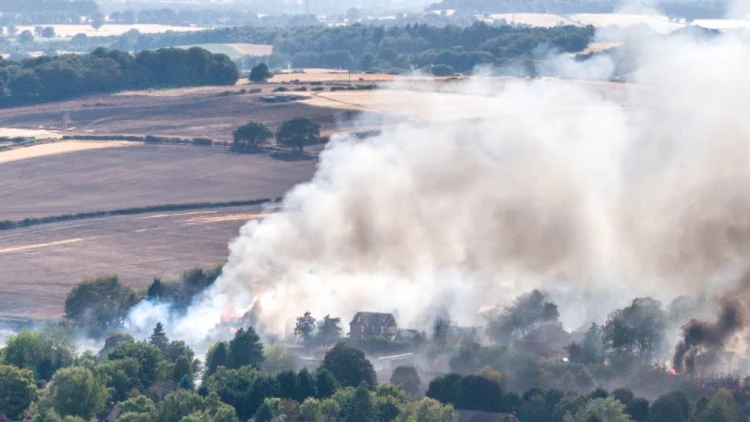

England has battled wildfires in recent months after the hottest summer on record (Alamy)
4 min read
It wasn’t until wildfires affected the South of England that the issue started to receive the attention it deserves, the Labour MP who leads the Wildfires All-Party Parliamentary Group has said.
The MP for Scarborough and Whitby, Alison Hume, created the APPG after her northeastern constituency experienced the largest wildfire it had ever recorded last summer.
She told PoliticsHome that the lack of government action in response to that incident had been “frustrating”, adding that the location of the fire – far from Westminster and the centre of the national media – played a part in the lack of attention.
“To be brutally honest with you, it’s because there’s been lots of wildfires in the South. It took two weeks to get any national coverage of the Fylingsdale Moor wildfire, and it was a massive fire that burnt for 40 days,” the Labour MP said.
“Since then we’ve had many more wildfires. It’s going to be on a lot more MPs’ radars, and I won’t be the only person standing up in the House of Commons talking about them, sadly.”
Extreme temperatures have resulted in wildfires across the country in recent weeks, including in southern areas such as Suffolk and the New Forest. The fires have damaged homes, businesses and environments in the constituencies of many MPs, leading Prime Minister Andy Burnham to describe the country as “tinderbox Britain”.
The scenes have led to a recent increase in public concern about climate change, according to Ipsos polling shared with PoliticsHome earlier this month.
“Wildfires are going to be part of our future going forward, as flooding is, and therefore we need to be much more resilient,” Hume added.
“We need to be planning, looking at land management ahead of these things, and then afterwards, what we do to help people recover.”
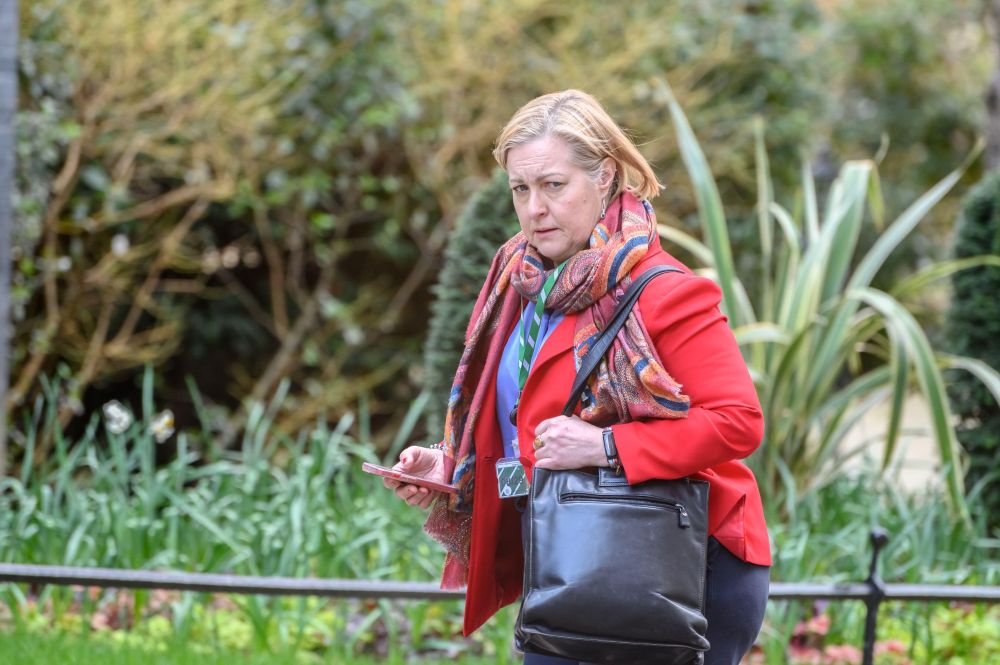
The Labour MP for Stourbridge, Cat Eccles, said wildfires in her Midlands constituency had left it feeling “almost like a war zone”. Wildfires in Stourbridge lasted days and destroyed 19 houses. Eccles told PoliticsHome that police officers were forced to break down doors and drag members of the public to safety.
Visiting Stourbridge on Friday, Burnham announced a temporary ban on the sale of disposable barbecues. Later that evening, a nationwide emergency alert warned people in England and Wales that there was a high risk of wildfires across the country and that the public “should not undertake any activity that could start a fire”.
Last week, the PM also announced funding for farmers to build on-farm reservoirs to help with future droughts and better access to water.
Speaking about the aftermath of the Fylingdales Moor/Langdale Forest fire last August, Hume said there had been a “massive gap” in the financial aid given to the community, after farmers lost equipment because they were on the front line fighting the fires. “Without them, there would have been not only loss of property, probably loss of life,” she said.
This year, the government has been “moving more decisively”, Hume added.
The APPG Chair wants the government to look at how the UK can learn from how other countries deal with wildfires, like how France and Spain fight fires from the sky: “We’ve got to improve our aerial capacity, there’s no doubt about that.”
She praised the government’s efforts to provide clearer leadership on wildfires, pointing to her recent calls with security minister Dan Jarvis and other Whitehall departments.
Speaking to PoliticsHome in his capacity as a constituency MP, Northern Ireland Secretary Chris Bryant said there have been several wildfires in his Rhondda and Ogmore constituency in recent years, but that the last fortnight has “felt different”.
Fellow Welsh Labour MP Ruth Jones, whose constituency of Newport West and Islwyn has suffered wildfires this summer, told PoliticsHome that she would like to see more education around the dangers of accidentally starting fires in hot and dry conditions.
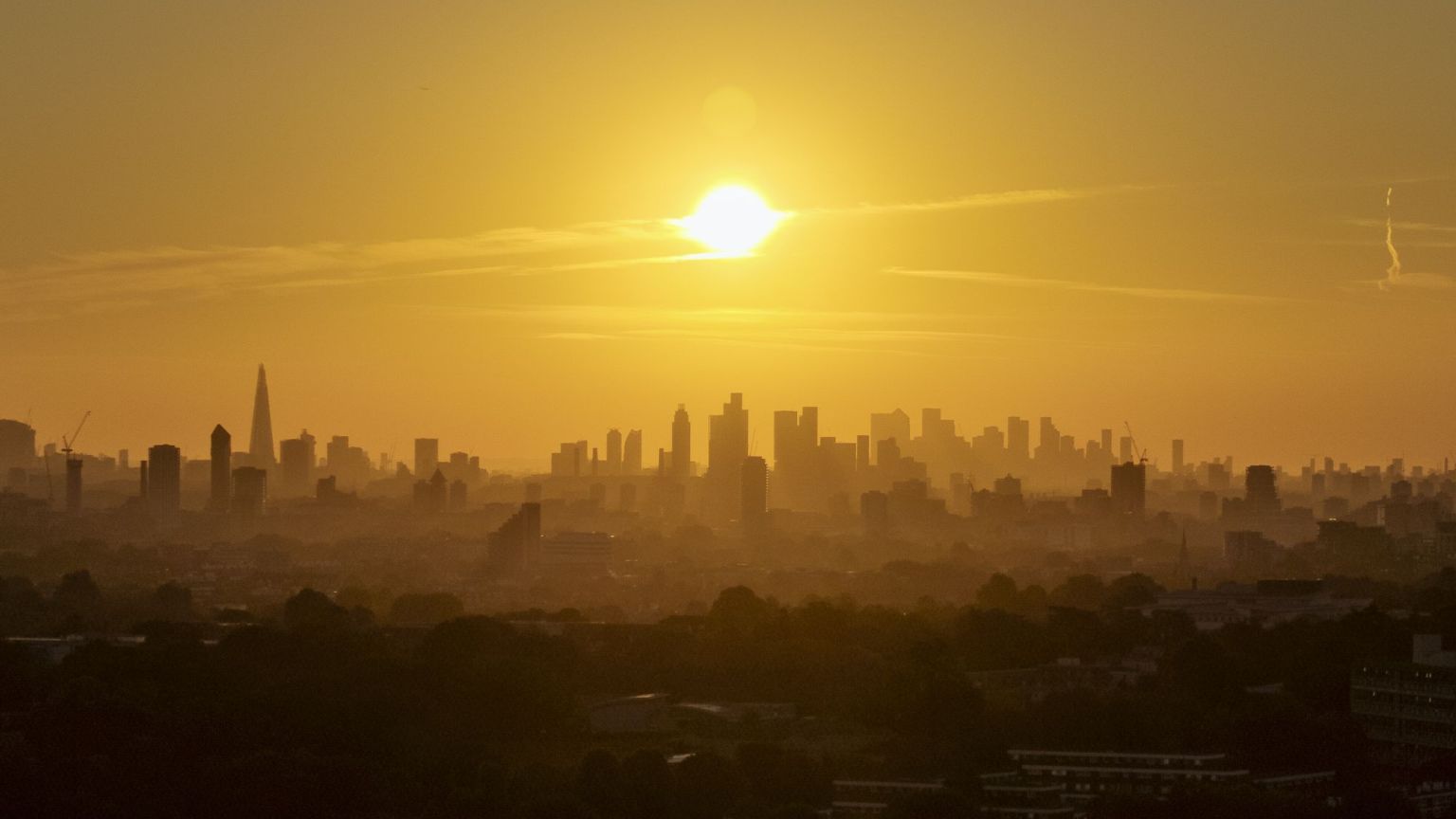
You know you’re living in tyrannical times when an authority figure demands you look into the fire and renounce your heresy. Heatwave season has been awash with such neo-medievalism. In full priestly mode, London mayor Sadiq Khan said our ‘burning summer is proof’ that climate-change deniers ‘aren’t just delusional, they’re deadly’. This suffocating heat is a ‘dramatic warning’ sent by ‘nature’ to disprove the deniers’ ‘bullshit based on lies’, said Teresa Ribera of the European Commission. Hellish flames reprimanding humanity for its sinful thoughts? Where have I heard that one before?
Then there’s all the drought porn. Time-rich Instagrammers are clogging up social media with photos of England’s parched yellow fields. You can’t move online for apocalypse chic – hip catastrophists posing sad-eyed in their sun-cracked local park. ‘Will grass be green again?’, asked a BBC journalist. Yes. Yes it will. What has struck me is the glee with which many have marshalled the heat to scold ‘deniers’. ‘Where are all those climate sceptics now?’, asked a writer for The Times. In the baking sun they’ve ‘shrivelled away, like our lawn’.
It is a testament to the moralism of the eco-doom movement that there has been so much focus on shaming ‘deniers’. Practical matters – like, I don’t know, making the case for the mass rollout of aircon – play second fiddle to the pillorying of heretics. The argument seems to be that these wicked doubters have landed us in the inferno of a neverending summer, just as their witchy forebears gave us crop failure and icy winters. I see it differently. To me, the punishing impact of the heatwaves is less the handiwork of ‘deniers’ than a byproduct of the moral circus of eco-alarmism itself. Maybe it’s they who need to look into the fire.
It’s hot. There’s no question about that. Britain has just had its fourth heatwave of the year, which is four too many in my view. The mercury reached 41.2C in poor old Austria. Spain and Italy are sweltering. Yet the claim that it’s all the result of humanity’s hubris doesn’t stack up. As even the very green Independent was forced to admit, ‘We cannot say global warming is definitely responsible for this particular run of hot weather’. It’s been hot before, long before the spinning jenny ever spun. There’s a ‘stubborn high pressure system over Europe’, the Indie says, and it might be that that’s making you sweat rather than the Industrial Revolution.
Eco-dogma doesn’t only reduce complex weather events to childish morality tales – it also distracts us from the task of actually dealing with heat and fire. Consider the ‘wildfires’ that have swept even the UK in recent weeks. First off, calling them ‘wildfires’ is wrong, given the vast majority of them are started by humans, not nature. In Europe, a staggering 97 per cent of fires were triggered by ‘human ignition’. A UK parliamentary briefing in 2024 declared that ‘almost all British wildfires’ are started by people. The dire vision of a savage sun setting fire to a polluted planet – it’s a fairytale.
Also, a key reason Britain seems more combustible than in the past is because of government action that massively increased flammable vegetation. As a report in the Telegraph said last week, Defra (the Department for Environment, Food and Rural Affairs) has responded to climate change by ‘sharply increas[ing] vegetation’ while putting a stop to ‘preventative burns of heather’. This has left us with acres more scratchy foliage – prime kindle on a hot day.
It’s a little discussed fact that, globally, ‘wildfires’ are at a record low. In July – that most scorching month – experts noted ‘record low global emissions from burning fires’. You didn’t read that in your morning paper, did you? And it’s all because Asia and Africa have got better at controlling fire – through ‘changing agricultural practices [and] fire management’ – whereas Europe and North America are lagging behind. In the words of the Associated Press, our fires feel ‘more extreme’ even though ‘global burning is oddly decreasing’. A cynic might suggest that if our societies poured more energy into fire management – rather than dragooning every hot day into a nagging sermon about toxic humans – then we could also stem the licking flames.
The obsession with heat overlooks that coldness is a far bigger killer. No one denies that super hot days are potentially lethal for the old and vulnerable. Heat can quickly alter the electrolytic balance in weaker people, with fatal consequences. Yet the cold is a deadlier if slower menace.
As Bjorn Lomborg says, ‘deaths from cold far outnumber those from heat’. An exhaustive Lancet study found that where heat kills around half a million people a year, cold kills more than 4.5million. That’s nine times as many. Why do we not see scary headlines and Sadiq Khan columns during winter months that slowly constrict the blood vessels of the elderly? Because big freezes don’t lend themselves to moral grandstanding about ‘global boiling’. Your death in winter is not morally opportune, so I’m afraid it will be forgotten: a stat no one will cite.
Nothing better captures the smug set’s elevation of moralism over practicality than the aircon crisis. We all know what Europe needs to do to counter future sweltering. Other nations, including far hotter ones than ours, have already done it. Like modern Singapore, whose founding father, Lee Kuan Yew, famously called air-conditioning one of the greatest inventions of the 20th century. You just need to install cooling machines in every home, hospital, school, public building and bus and train. Life would be more bearable. Lives would be saved.
Yet the heat handwringers hate aircon because, yep, it uses energy. ‘Aircon feels great but it’s terrible for the planet’, they say. This is anecdotal, I know, but I’ve taken part in numerous media discussions over the past 15 years in which I humbly suggested that if our planet really is ‘boiling’ then the solution is aircon. I was branded a denier, a joke, an arsehole. And yet if we’d rolled aircon out, maybe there would have been fewer deaths in this ‘Four Heatwaves’ summer. Surely there will come a time when the rich and green will care more about saving human life than shaming human wrongthink.
Here’s my thought for the summer: even if we accept everything the eco-nuts say, what are we meant to do? Go back in time and stop the Industrial Revolution? Write an angry letter to Xi Jinping and demand that China stop emitting 35million tonnes of carbon every day? Tell Africans that, sorry, you can’t have what we have because some prick in a keffiyeh isn’t happy about how hot it is as he sips his Whole Foods mojito on London Fields? It’s preposterous. Modernity can’t be undone. And it shouldn’t be: we need precisely the human ingenuity that birthed our modern world if we are going to tackle the fact that it’s really fucking hot.
Brendan O’Neill is spiked’s chief political writer and host of the spiked podcast, The Brendan O’Neill Show. Subscribe to the podcast here. His latest book – After the Pogrom: 7 October, Israel and the Crisis of Civilisation – is available to order on Amazon UK and Amazon US now. And find Brendan on Instagram: @burntoakboy.

Whether you’re a parent, have young children in your family or even just spend the occasional afternoon looking after your friends’ kids, the chances are you’re familiar with the TV phenomenon Bluey.
The Australian animated series centres around a family of colourful dogs, and has been widely praised for the way it teaches lessons around social themes in a humorous and unpatronising way (plenty of adults will be happy to confess that they’ve kept watching Bluey long after they’ve put their little ones to bed).
It was a cause for celebration, then, when it was announced by Disney that the canine heroine was heading for the big screen.
Or, it would have been, had the film not made one major change to the format that has split opinion right down the middle.
At the D23 fan event last week, Disney shared a first teaser for the Bluey movie, which features the titular character reimagined in three-dimensional CGI, rather than the 2D animated style of the original series.
Reacting to the announcement in the days that followed, many were quick to voice their upset at Bluey’s discerning new look…
Others, meanwhile, were happy to take any new Bluey they could get, and were excited at the prospect of a cinema trip to see the movie in the not-too-distant future…
Speaking at a D23 panel, series creator Joe Brumm pointed out that he had been toying with 3D animation since he was at art college, and this was a medium he’d always wanted to pursue.
“When it came time to do this movie, it actually wasn’t a hard decision [to make it 3D animation],” he said. “That doesn’t mean I don’t love the 2D show, but… we’re always striving to show the beauty of nature in the show, and I wanted to have every tool available to capture a beautiful blade of grass…”
He added: “I wanted kids to be able to feel like they could reach in and give these little dogs a scratch on their furry heads. So, it had to be 3D.”
The Bluey Movie is currently slated to hit cinemas in August 2027.

Chainlink pauses near $9.56 as ETF inflows support breakout hopes

Andy Burnham Says He Is Not Embarrassed Over Texting Fake Trump Aide

Real Sociedad nearing deal to sign Edson Alvarez from West Ham


-

 Fashion4 days ago
Weekend Open Thread: Ann Taylor
-
 NewsBeat7 days ago
Communication cards help banking customers access services or report scams
-
 Sports5 days ago
This U.S. Amateur is a glimpse into golf’s future in more ways than you think
-

 Sports3 days ago
Birmingham 2026: Day 6 Timetable for Irish Athletes
-
 NewsBeat3 days ago
Myanmar says over 300,000 Rohingya refugees verified for repatriation as exodus enters ninth year
-

 Politics3 days ago
SEQ Code: The Three Letter Boarding Pass Code That Could Give You The Worst Seat
-
 Entertainment6 days ago
Keke Palmer Subtly Hints At Sean Evans Drama With Cryptic Post
-

 Tech4 days ago
11 Ways to Rank Your Videos
-

 Fashion7 days ago
Coffee Break: The Fonteyn Jane Flat
-

 Fashion7 days ago
Should you refinance your debt? Pros, cons, and real numbers
-

 Tech7 days ago
Zoom Screen-Sharing Bug Let People Fully Take Over Other Devices On A Call
-

 Fashion7 days ago
Claire Life: Kicking Off MVAAFF With the C Suite Luncheon Featuring Phylicia Rashad, Letoya Luckett, and More!
-
 Crypto World6 days ago
XRP bridge drained after software mistook fake deposits for real ones
-

 Tech5 days ago
DeepSeek Harness launches as open source rival to Claude Code, alongside V4-Pro on API with higher prices
-

 Sports6 days ago
DeQuan Jones in ‘high spirits’ after successful leg surgery
-

 Tech6 days ago
SpaceXAI’s Grok Bot turns agents into persistent digital coworkers that can operate your apps for $120-per-month
-

 Politics6 days ago
How Average Are You In The UK?
-
 Crypto World6 days ago
Perplexity AI Predicts an XRP Scenario Few Analysts Are Discussing
-

 Politics7 days ago
In the Chris Kaba case, the police watchdog capitulated to the mob
-

 Fashion7 days ago
How Do You Get Your Work Noticed?
You must be logged in to post a comment Login