
Business
How Investors Can Win The Strait of Hormuz: Oil, Tankers, And Gold



I have a B.Tech degree in Mechanical Engineering from a top school in India. For nearly twenty five years, I have worked in the oil and gas sector, primarily in the Middle East. I work at the intersection of engineering, operations, and project management in an industry that does not forgive mistakes – so I have learned to be efficient, careful, and disciplined. These traits inform my investment strategy. For much of my professional career, I have maintained a serious and sustained interest in the U.S. equity markets, with a particular focus on technology, energy, and healthcare. I started as a growth investor, taking risks as I saw fit; but today, my investment approach blends elements of both value and growth. I seek to understand the underlying economics of a business, evaluate the durability of its competitive advantage (or “moat”), and assess its ability to generate consistent free cash flow over time. I believe, as Munger puts it, in “sitting on your ass” when holding a high-quality business—allowing time and compounding to do the heavy lifting. My orientation is moderately conservative; I look for upside while minimizing downside. Well, who doesn’t, but as I look towards retirement, I have started emphasizing the latter over the former. As a result, in recent years, I’ve gradually rebalanced toward income-generating assets—dividend-paying equities, REITs, and similar vehicles. I view investing not merely as a pursuit of high returns but something that will also generate peace of mind. I joined Seeking Alpha to both contribute to and learn from a community of thoughtful investors—people who, like me, are interested in the intersection of real-world business fundamentals and intelligent investing. PS – The icon I have used represents something fundamentally important to me – that is, to earn money through investing in ecologically sensitive businesses.
Analyst’s Disclosure: I/we have no stock, option or similar derivative position in any of the companies mentioned, and no plans to initiate any such positions within the next 72 hours. I wrote this article myself, and it expresses my own opinions. I am not receiving compensation for it (other than from Seeking Alpha). I have no business relationship with any company whose stock is mentioned in this article.
Seeking Alpha’s Disclosure: Past performance is no guarantee of future results. No recommendation or advice is being given as to whether any investment is suitable for a particular investor. Any views or opinions expressed above may not reflect those of Seeking Alpha as a whole. Seeking Alpha is not a licensed securities dealer, broker or US investment adviser or investment bank. Our analysts are third party authors that include both professional investors and individual investors who may not be licensed or certified by any institute or regulatory body.



The company is investing in its core categories and licensing partnerships to spur success.

Kaveh Rouhi
Chief Financial & Legal Officer and Member of Managing Board
Sunny welcome, everyone. We very much appreciate that you are taking the time for this investor and analyst call on our first half year 2026 results. This conference call is scheduled for up to 60 minutes and will be recorded. After the management presentation, we will be happy to answer your questions. Today’s presentation is available on our Investor Relations website. The replay will also be available there shortly.
I’m glad to welcome our CEO, Jurgen Reinert, to this call. He joins me today to provide you with the H1 update. First, I will walk you through our first half figures. And then Jurgen will provide you with an update on our transformation program as well as updates on our business, including new solutions to our portfolio, current regulatory developments and how we strengthen customer value with our Large Scale solutions. Finally, we will wrap up with the updated guidance for the 2026 financial year and take time for your questions. I expect the presentation part to last about 30 minutes.
So let’s start. I refer to our disclaimer on Page 2. Let’s move to Page 4, financial highlights for the first half 2026. Well, before we deep dive into the various financial KPIs, let me first say that we are very happy with the results of H1. It clearly shows

A bucket inside a Home Depot store in San Jose, California, US, on Thursday, Aug. 13, 2026.
David Paul Morris | Bloomberg | Getty Images
Home Depot on Tuesday reported fiscal second-quarter results that beat Wall Street expectations on the top and bottom lines and reaffirmed its full fiscal-year guidance.
“We continue to operate in what I call ‘frozen housing market’ conditions, but we also know that we’re taking share and that we’re serving our customers better every day,” CFO Richard McPhail told CNBC. “It’s a reflection of the continued investment we’ve made and the focus on executing our strategy.”
McPhail said Home Depot saw “broad engagement” across its categories, including in both its pro and do-it-yourself businesses, but the greater uncertainty in the market led the company to reaffirm rather than raise its guidance.
He added that Home Depot’s customer is “a healthy cohort,” though he said the company has still not seen consumers return to big projects.
“They’ve told us they have the means to spend, they’re just hesitant,” he told CNBC. “While we’re happy with their level of engagement in the first half, they do tell us they’re worried about inflation, about fuel costs and about, about general uncertainty, and so there is a little bit of hesitancy there as the project gets bigger.”
Here’s how Home Depot performed in its fiscal second quarter compared with what Wall Street was expecting, based on a survey of analysts by LSEG:
- Earnings per share: $4.92 adjusted vs. $4.73 expected
- Revenue: $47.86 billion vs. $47.27 billion expected
The home improvement retailer reported net income of $4.77 billion, or $4.79 per share, compared with $4.55 billion, or $4.58 per share, the year prior. Excluding one-time items, Home Depot reported adjusted earnings per share of $4.92. Revenue rose 5.7% to $47.86 billion.
Home Depot saw comparable sales rise 1.7%, beating expectations that they would be up 0.9%, according to StreetAccount. McPhail said it is the highest comparable sales number the company has posted since the fiscal third quarter of 2022.
Home Depot also reaffirmed its fiscal 2026 guidance, which it said includes tariff refunds that are “expected to partially offset unplanned fuel, energy, and other product input costs.” McPhail added that the tariff refunds allow the retailer to “maintain value” despite cost pressures in other areas.
The company expects total sales growth for the year to be between 2.5% and 4.5% and operating margin between 12.4% and 12.6%.
“The story of the quarter is a story of share gain with the pro and the consumer, and we’re confident that our investments are working to allow us to win in the market,” McPhail said.
Home Depot has been pressured by lower housing turnover, higher mortgage rates and economic uncertainty as customers have put off projects that come with buying a new home. Still, the company has been trying to attract more pro shoppers, a cohort that executives have previously said is largely unaffected by the macroeconomic conditions.
“We’re focused on controlling what we can control,” McPhail said. “We have been consistent through the years that in spite of a frozen housing environment, we’re going to keep leaning into investment because we know that over the long run, conditions for home improvement demand are strong.”
The company also announced last week that CEO Ted Decker is taking a “temporary medical leave of absence” for a few months. Ann-Marie Campbell, Home Depot’s senior executive vice president of U.S. stores and operations, will oversee the day-to-day operations while McPhail will head the financial management and pro business, according to the company.


Brunswick Corp., a global leader in boat manufacturing and recreation on the water, is counting on advanced technology to help with stalling sales.
The parent company of Sea Ray, Boston Whaler and other boat brands, says advanced navigation technology and autonomous docking can take some of the complexity out of maneuvering a vessel around a crowded marina.
The bet is twofold: convince would-be buyers to dive into a market that’s been sluggish — with retail sales of new vessels expected to remain subdued through 2026 — and increase aftermarket and recurring revenue through technology and software sales.
Brunswick’s portfolio extends well beyond the boat brands. Its Navico Group sells marine electronics and technology, while its Mercury Marine supplies engines and maintains a parts and accessories business.
Roughly 60% of Brunswick’s earnings now come from aftermarket or recurring revenue, and Roth Capital Partners analyst Scott Stember says that mix gives the company meaningful exposure beyond new boat sales.
Brunswick told investors it anticipates annual sales of 145,000 to 160,000 units by 2030. Roth characterizes that as modest recovery in demand from estimated U.S. retail sales this year of fewer than 135,000 vessels.
The sluggish demand is being felt most in Brunswick’s least expensive models.
“We’re seeing premium boats and what we call our core portfolio being very resilient,” CEO David Foulkes told CNBC. “What we’re seeing is value boats, which are more typically financed or more subject to interest rate pressures … they’re not doing badly, but they’re just not doing as well as some of our more premium products.”
Sea Ray SLX – W230 interior
Adam Jeffery | CNBC
But Brunswick could increase the amount of electronics and technology onboard, even if the number of boats sold doesn’t rise dramatically.
For instance, 55% of Navico’s original-equipment customers have increased their Navico content since 2023, according to the company. And Navico has launched more than 30 new products since 2025.
One of those is Simrad AutoCaptain, which helps navigate and dock boats. The business strategy makes sense: Make it easy to take the boat out, and more importantly back in, and you just might sell a bigger, more expensive boat. The company generates more business around the boat, too.
Another piece of the strategy is Freedom Boat Club — a kind of country club for boaters, with locations around the globe. Members pay a fee and monthly dues for access to vessels to take out on the water at any of the locations.
Brunswick reported during its August investor day that the club has more than tripled its membership since 2019 to more than 63,000 members. Trips and reservations have grown fourfold, while the network has expanded to more than 450 locations and a fleet of roughly 5,000 boats.
And unlike the cyclical sales of a new boat, Freedom Boat Club lands squarely inside Brunswick’s recurring-revenue profile, with about 90% of the club’s sales recurring and trips running 10% higher than a year ago, one indication that consumers are continuing to take to the seas even as new-boat sales remain weak.
That approach is becoming more important as Brunswick lays out ambitious financial targets without assuming a return to the industry’s boom years.
The company is targeting $7 billion to $8 billion in revenue by 2030, operating margins of 10% to 13% and earnings of between $8 and $12 per share.
KeyBanc, which has a sector-weight rating on Brunswick stock, said management expects pricing, a richer premium-product mix, market-share gains and new-product innovation to help drive growth.
Roth, which rates the shares buy with a $94 price target, is more bullish. Stember wrote that Brunswick is “uniquely positioned” within recreation and leisure to produce meaningful earnings growth even with only a “modest/non-heroic” recovery in new-boat demand.
Shares of Brunswick currently trade at roughly $82 apiece.
Brunswick is also trying to remove supply chain risk by reducing its China-sourced parts by as much as 75% and cutting tariff exposure by 70%.
Foulkes said that gives Brunswick an advantage over competitors based overseas.
Investors, of course, will weigh whether the sum total of advanced technology, more efficient engines and recurring revenue from Freedom Boat Club can keep profits afloat, even if unit growth remains challenging.
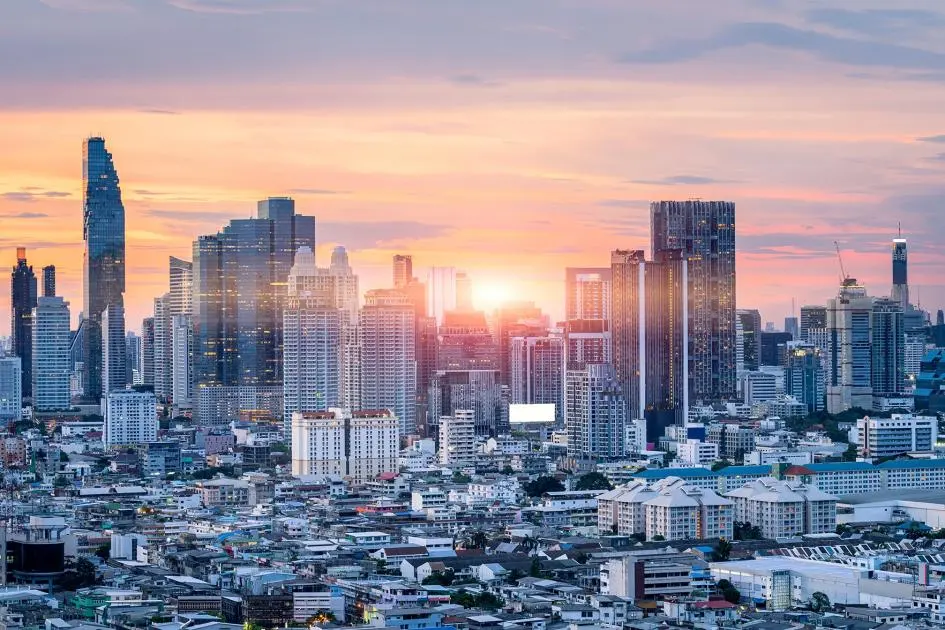
Thailand has recently dominated global headlines across multiple fronts—ranging from a devastating mass shooting and subsequent gun control debates to economic headwinds, diplomatic maneuvering, and a bustling sports and business calendar. This summary consolidates the major storylines shaping the country’s current narrative.
Economic Outlook and Trade Relations
Thailand’s economy is showing signs of strain, with second-quarter GDP growth slowing to 1.9%, driven largely by weak domestic consumption and challenges in the energy and travel sectors. Despite this, the government’s 2026 growth forecast midpoint stands at 2.2%, suggesting cautious optimism. Compounding these concerns, Thailand revised its factory gauge amid US transshipment concerns, and finance officials have warned that a THB600 billion deficit exposes vulnerabilities in the nation’s energy sector.
Trade negotiations with the United States remain a focal point, with officials expressing hope for deeper trade ties despite tariff doubts. Thailand has also ruled out any security-tariff trade-off ahead of a visit from US Secretary of Defense Pete Hegseth, signaling a desire to keep economic and security discussions separate. Meanwhile, Bangkok Post reports ongoing negotiations aimed at finalizing a broader US-Thailand trade deal (Bangkok Post).
Gun Violence and Public Safety Crisis
The most urgent issue facing Thailand is its gun violence epidemic, following a horrific school shooting near Bangkok that left at least eight to nine people dead, including a 12-year-old girl who succumbed to her injuries days later. Students described terrifying scenes, with some recounting how they had to climb over school fences to escape the gunman. The tragedy has reignited scrutiny of Thailand’s staggering 10 million privately owned firearms, prompting the government to tighten gun controls in response (BBC).
In Bangkok’s famous gun district, however, traders argue that the government’s crackdown “misses the mark,” claiming that legitimate dealers are being penalized while illegal firearms remain widely accessible. Some dealers have reportedly switched businesses entirely to survive the new regulatory environment. At a temple memorial, grieving parents mourned the loss of their children, with one father publicly pleading for forgiveness, underscoring the emotional toll the tragedy has taken on the community.
Business Expansion and Industrial Investment
Despite economic headwinds, Thailand continues to attract significant business investment. Global Switch announced its entry into the Bangkok data center market, while Delta Electronics’ Thai subsidiary reported resilience despite a recent share slump. Japanese companies operating in Thailand are reportedly preparing to upgrade production bases with new machinery and digital technology, reflecting confidence in the country’s manufacturing sector.
The renewable energy sector is also gaining momentum, with Thailand’s renewable energy pipeline drawing up to US$2.61 billion in investment. A separate solar hospital initiative aims to save US$1.63 million in power costs. In the automotive space, Thailand is reportedly overhauling its auto tax structure following Indonesia’s Toyota investment bid, while Toyota itself has expressed confidence in maintaining its Thai production base despite regional competition.
Diplomatic and Regional Developments
Thailand’s foreign policy has been active on multiple fronts. Deputy Prime Minister Anutin Charnvirakul stated that Thailand “will not choose sides” in broader geopolitical rivalries but must keep its options open, a stance reinforced by his visit to Sydney to advance the Thailand-Australia strategic partnership. Thailand has also positioned itself as neutral in the US-China AI race, reflecting its broader balancing act between major powers.
Regional tensions persist as well, with Thailand rejecting Cambodia’s “ASEAN police” accusation, and reports emerging of the US deepening police partnerships across Southeast Asia to counter Chinese influence. On the humanitarian front, Human Rights Watch raised concerns over the potential deportation of ethnic Karen refugees to Myanmar, highlighting ongoing human rights challenges along Thailand’s borders.
Sports and Cultural Highlights
Thailand’s sporting scene has been particularly active, especially in the ASEAN Championship, where the national football team faces Singapore in a highly anticipated semifinal clash. Coach Anthony Hudson has downplayed a reported confrontation with his Singaporean counterpart while balancing a personal friendship with Singaporean star Ilhan Fandi. Beyond football, Thailand is set to host the opening round of the 2027 MotoGP season, and boxer Nabil Anane has announced his bid to represent Thailand at the LA28 Olympics.
Culturally, Thailand continues to promote its culinary heritage through initiatives like “Soul of Thai Cuisine,” while environmental efforts include stepped-up dugong protection following 209 strandings over the past decade. A newly discovered “dragon” species in Thailand’s mountain forests also made headlines, adding to the country’s rich biodiversity narrative.
Tourism, Infrastructure, and Emerging Technology
Tourism infrastructure is receiving renewed attention, with Suvarnabhumi Airport upgrades accelerating ahead of peak season. Advanced air mobility is also emerging as a priority, with Eve Air Mobility and RV Connex signing an MOU to explore urban air mobility solutions, alongside broader discussions on airspace safety and infrastructure.
On the technology front, industrial AI is reportedly powering a significant shift in Thai manufacturing, while businesses are being urged to monitor three key technology trends shaping the future. These developments, paired with Thailand’s push into AI neutrality and digital transformation, suggest a nation actively repositioning itself within the global technology landscape.
Conclusion
Thailand currently stands at a complex crossroads—grappling with the aftermath of tragedy while simultaneously pursuing economic resilience, diplomatic balance, and technological advancement. As the country navigates these intertwined challenges, its ability to reform gun laws, stabilize trade relations, and sustain business investment will likely define its trajectory in the months ahead.
Source : Google News – Search

Canaccord cuts Bullish stock price target on crypto headwinds

EPR Properties: I'm Back Bullish Again, Here's Why (Rating Upgrade)

Pfizer: Still Cheap Valuation Meets A Looming Patent Cliff
Business
Author Catherine Mayer Defends Meghan Markle Against ‘Witch’ Portrayal in Royal Media Coverage
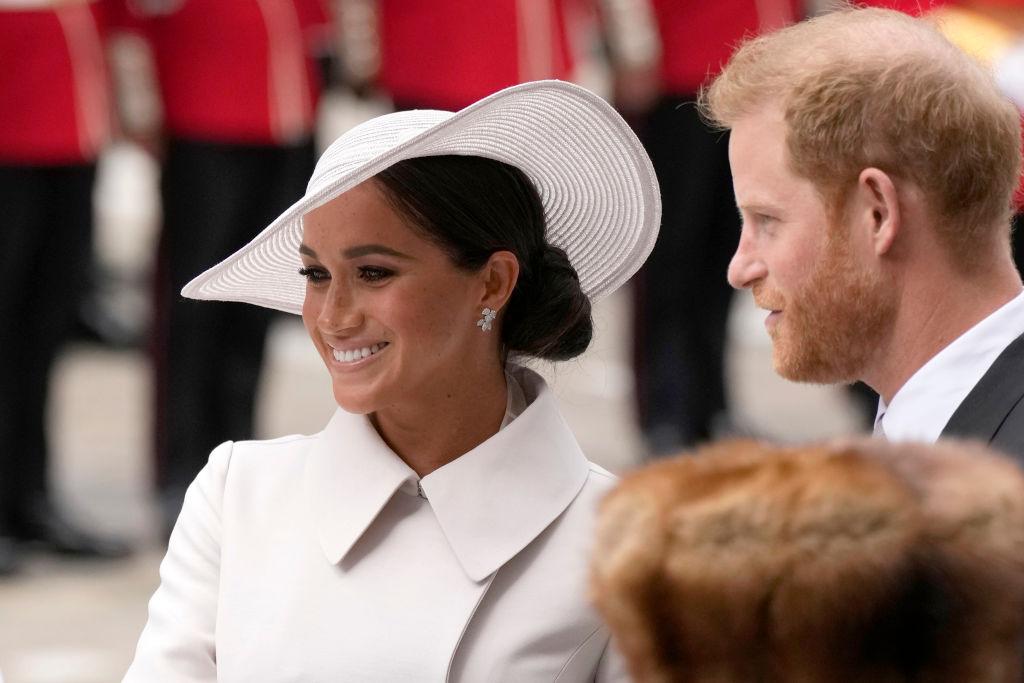
LONDON — Journalist and author Catherine Mayer has pushed back against what she describes as a pattern of hostile media coverage directed at Meghan Markle, arguing that the Duchess of Sussex has been unfairly cast as a villainous figure in coverage of the British royal family since her 2020 departure from official royal duties.
Mayer, speaking to the Express, said she wrote her latest book partly out of concern that broader lessons from Markle’s experience with the British press have gone unlearned. “My fear is that the world has learned very little indeed from Meghan’s experience and that’s another reason I wrote the book,” Mayer said. She went on to question the intensity of public hostility directed at Markle specifically. “As I say in it, you don’t have to like her or watch her shows, but what on earth has she done to earn the hatred meted out to her?” Mayer said.
Mayer argued that the broader pattern of negative coverage directed at royal women carries consequences that extend well beyond any single individual. “Telling these negative stories about royal women, whipping up hostility towards them, has a long pedigree as my book shows, and it always goes badly not only for the women in question but for all women,” she said.
Drawing a historical parallel, Mayer suggested that some of the narratives constructed around Markle echo centuries-old tropes used to characterize women perceived as threats to established power structures. “It’s a way of promoting reductive views of women as scheming seductresses or witches. In that respect, some stories about Meghan resemble those circulated about Anne Boleyn,” Mayer said, referencing the second wife of King Henry VIII, whose fall from royal favor in the 16th century culminated in her execution on charges that historians have long regarded as largely fabricated.
Markle and Prince Harry stepped back from their roles as senior working royals in early 2020, relocating first to Canada and later settling in California, where the couple has since built a media and business portfolio spanning documentary projects, podcasts, books and other commercial ventures. Their departure and subsequent public statements about their treatment within the royal institution and by the British press have remained a persistent subject of tabloid coverage and public debate in the years since.
Mayer’s comments arrive amid what has been a particularly active stretch of royal-focused media coverage examining the Sussexes’ ongoing relationship with the wider royal family. Recent reporting has explored a range of related storylines, including speculation about efforts toward reconciliation between Prince Harry and King Charles III ahead of the anniversary of Princess Diana’s death, as well as continued coverage of Prince William’s approach to his relationship with his brother.
The broader media narrative around Markle has remained a subject of significant public disagreement since she and Harry first entered the royal family through their 2018 wedding. Supporters of the couple have frequently pointed to what they characterize as disproportionately negative or racially coded coverage of Markle compared with other royal women, a concern the couple themselves raised directly during their widely watched 2021 interview with Oprah Winfrey. Critics of the couple, meanwhile, have argued that Markle and Harry have themselves contributed to negative public perception through their public criticism of the royal family and through commercial ventures perceived by some as capitalizing on their former royal status.
Mayer’s own background lends particular weight to her commentary on the topic. A veteran journalist and author, she has previously written extensively about the British monarchy, including a biography of King Charles III published prior to his ascension to the throne. Her broader body of work has frequently examined the intersection of gender, media narratives and institutional power, themes she has said inform her latest analysis of the coverage surrounding Markle specifically.
The comparison Mayer draws to Anne Boleyn carries particular historical resonance within British royal commentary. Boleyn, whose marriage to Henry VIII and subsequent fall from favor remain one of the most extensively studied episodes in English royal history, has long been cited by historians and cultural commentators as an early example of how women perceived as disruptive to established royal or political order have historically been recast in public narratives as manipulative or malevolent figures, regardless of the underlying facts of their circumstances.
Neither Meghan Markle nor representatives for the Duke and Duchess of Sussex have issued a direct public response to Mayer’s specific comments. The couple has generally avoided direct engagement with individual pieces of royal commentary or tabloid coverage, reserving most public statements for their own official announcements regarding their charitable initiatives, media projects and family matters.
Coverage of the British royal family, and particularly of Markle’s ongoing relationship with the institution she and Harry departed in 2020, has continued to generate substantial public interest across both American and British media markets. Outlets covering the royal family regularly feature a wide range of commentary from royal historians, biographers, former palace staff and cultural critics, whose interpretations of the Sussexes’ standing within the royal family and broader public life often diverge sharply from one another, reflecting the deeply polarized nature of public opinion surrounding the couple since their departure from official royal duties.
As speculation continues regarding the future of the relationship between Harry, Markle and the wider royal family, including ongoing questions about potential reconciliation efforts with King Charles, commentary of the kind offered by Mayer is likely to remain a recurring feature of royal media coverage, reflecting broader and unresolved debates about how the British press has historically covered royal women who diverge from more traditional expectations of the institution.

Earnings call transcript: Savox reports H1 2026 growth as stock slips

Financial Update Luglio 2026 | Public Version

Earl Spencer to tell all about Diana’s death: He plans ‘historic’ book to take on ‘untruths’ about her marriage to Charles and aftermath of Paris crash

Krusteaz focuses on fundamentals to fuel growth





-

 Fashion4 days ago
Weekend Open Thread: Ann Taylor
-
 NewsBeat7 days ago
Communication cards help banking customers access services or report scams
-
 Sports5 days ago
This U.S. Amateur is a glimpse into golf’s future in more ways than you think
-
 NewsBeat3 days ago
Myanmar says over 300,000 Rohingya refugees verified for repatriation as exodus enters ninth year
-

 Sports3 days ago
Birmingham 2026: Day 6 Timetable for Irish Athletes
-

 Politics3 days ago
SEQ Code: The Three Letter Boarding Pass Code That Could Give You The Worst Seat
-
 Entertainment6 days ago
Keke Palmer Subtly Hints At Sean Evans Drama With Cryptic Post
-

 Tech4 days ago
11 Ways to Rank Your Videos
-

 Fashion7 days ago
Coffee Break: The Fonteyn Jane Flat
-

 Fashion7 days ago
Should you refinance your debt? Pros, cons, and real numbers
-

 Tech7 days ago
Zoom Screen-Sharing Bug Let People Fully Take Over Other Devices On A Call
-

 Fashion7 days ago
Claire Life: Kicking Off MVAAFF With the C Suite Luncheon Featuring Phylicia Rashad, Letoya Luckett, and More!
-
 Crypto World6 days ago
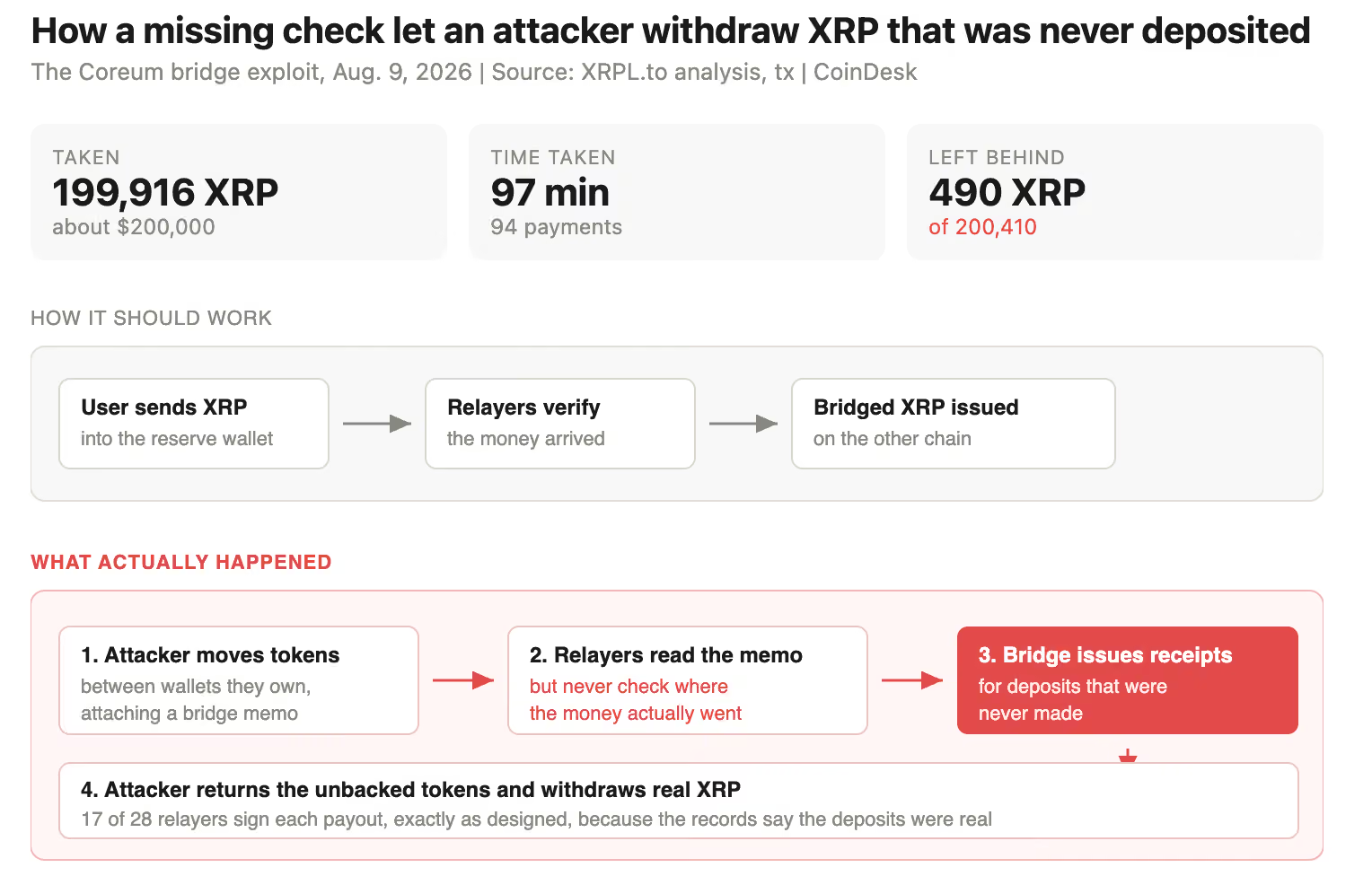
XRP bridge drained after software mistook fake deposits for real ones
-

 Tech5 days ago
DeepSeek Harness launches as open source rival to Claude Code, alongside V4-Pro on API with higher prices
-

 Sports6 days ago
DeQuan Jones in ‘high spirits’ after successful leg surgery
-

 Tech6 days ago
SpaceXAI’s Grok Bot turns agents into persistent digital coworkers that can operate your apps for $120-per-month
-

 Politics6 days ago
How Average Are You In The UK?
-
 Crypto World6 days ago
Perplexity AI Predicts an XRP Scenario Few Analysts Are Discussing
-

 Politics7 days ago
In the Chris Kaba case, the police watchdog capitulated to the mob
-

 Fashion7 days ago
How Do You Get Your Work Noticed?
You must be logged in to post a comment Login