
Business
Brokerages may tap bonds and CPs as bank funding turns ‘unsuitable’


The new Reserve Bank of India (RBI) rules on bank funding to capital market intermediaries state that all borrowing will now require 100% collateral – including at least 50% in cash for many facilities – making the bank channel uneconomical for most intermediaries.
The RBI norms aim to curb leveraged trading in equity and commodity markets and reduce systemic risk for banks.
New RBI guidelines effective April 1, 2026, mandate 100% collateral for bank funding to capital market intermediaries, including significant cash margins. This will likely push equity brokers towards bond markets and commercial papers, increasing funding costs and potentially impacting sector profitability and market liquidity.
Earlier, brokers were not required to fully cover the loan, and partial security, promoter guarantees and other flexible arrangements were widely used.
The new guidelines, effective April 1, 2026, mandate 100% collateral with strict haircut and cash-margin requirements. Haircuts on equity collateral are raised to at least 40%, up from roughly 25% earlier.

IIFL Capital expects lower speculative and leveraged volumes in cash and derivatives markets once the rules take effect, particularly in the near term as intermediaries adjust balance sheets and liquidity.
The tightened framework restricts banks’ ability to fund leveraged activity across equity and derivatives markets, raising capital requirements for brokers and proprietary trading firms. Cost Inflation
Analysts said the new rules will increase funding costs, compress margins and lower returns on equity, with proprietary traders – who account for 30-50% of market volumes – facing the steepest impact as leverage becomes more expensive.
“We believe credit facilities with 100% (or higher) collateral will make the bank channel unsuitable for brokers, and they will only use it for short-term mismatches,” JM Financial Institutional Securities said in a report.
Brokerages that relied heavily on bank lines for margin trading facilities (MTF) or working capital will face the most significant shift, analysts said.
According to JM Financial, Angel One – which raised half of its total funding of ₹3,400 crore in FY25 – will now have to depend more on CPs, non-convertible debentures (NCDs) and NBFC borrowing.
Groww, which is largely equity-funded, is also expected to tap the market for borrowings as its MTF book expands rapidly.
Under the new framework, RBI has restricted banks from providing finance for proprietary trading or investment positions of capital market intermediaries (CMIs).
“These measures will directly affect proprietary traders (props) and brokers by increasing capital requirements, compressing margins, and lowering ROE. Market liquidity may also be impacted, as prop traders contribute 30-50% of cash and derivatives volumes,” Devesh Agarwal, senior VP, IIFL Capital, said in a note.
Analysts also said brokers will face tighter liquidity because banks must apply minimum haircuts of 40% on equity collateral, 25% on ETFs/REITs/InvITs, and 15-40% on debt securities, depending on rating. These high haircuts significantly reduce usable collateral value, raise effective funding costs and push intermediaries toward bond markets for more flexible borrowing structures.


Cracker Barrel: Sharp Traffic Declines And Severe Margin Erosion

Saudi non-oil sector hits first contraction since 2020 as war halts orders


Stephen Simpson is a freelance financial writer and investor.Spent close to 15 years on the Street (sell-side, buy-side, equities, bonds).
Analyst’s Disclosure: I/we have no stock, option or similar derivative position in any of the companies mentioned, and no plans to initiate any such positions within the next 72 hours. I wrote this article myself, and it expresses my own opinions. I am not receiving compensation for it (other than from Seeking Alpha). I have no business relationship with any company whose stock is mentioned in this article.
Seeking Alpha’s Disclosure: Past performance is no guarantee of future results. No recommendation or advice is being given as to whether any investment is suitable for a particular investor. Any views or opinions expressed above may not reflect those of Seeking Alpha as a whole. Seeking Alpha is not a licensed securities dealer, broker or US investment adviser or investment bank. Our analysts are third party authors that include both professional investors and individual investors who may not be licensed or certified by any institute or regulatory body.


Saudi Arabia’s non-oil business activity shrinks in March amid conflict, PMI shows

Oracle: OCI And Multicloud Execution Shift The Narrative To Buy (Rating Upgrade)
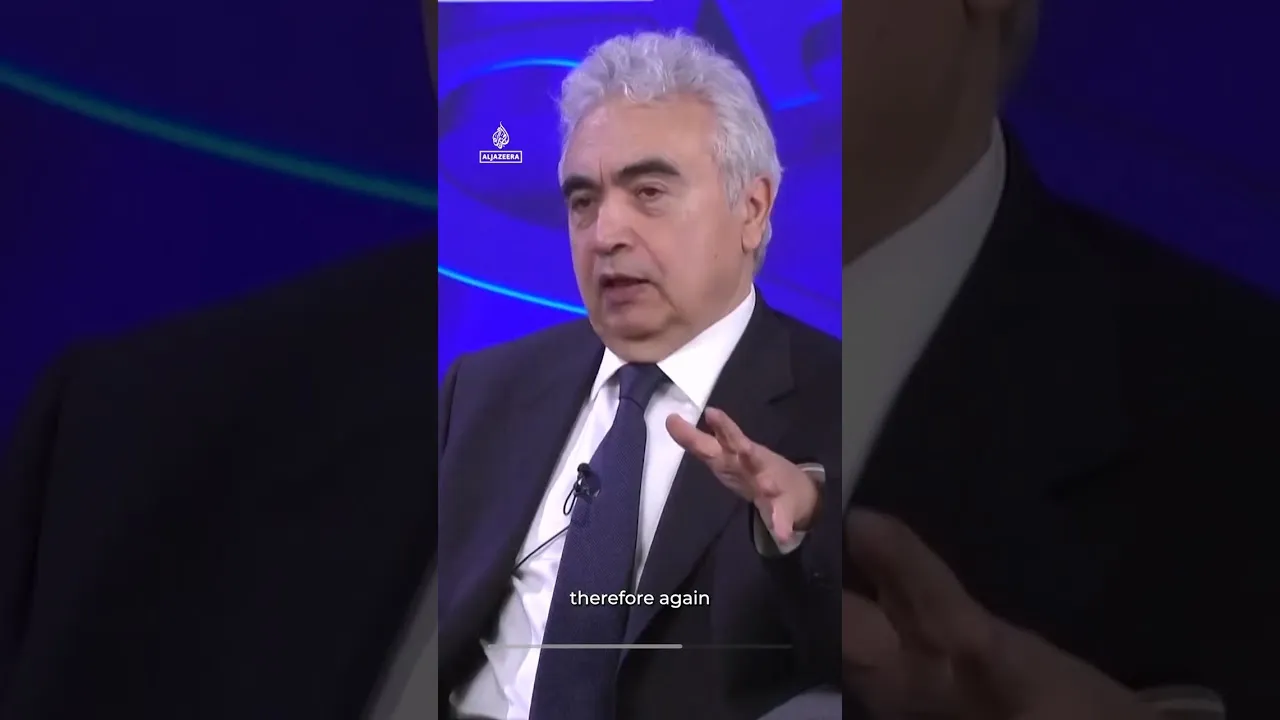
The International Energy Agency (IEA) may release more oil from emergency reserves due to disruptions caused by the Iran war, which threatens global supply. Executive Director Fatih Birol described the crisis as “very severe,” potentially worse than past oil shocks, emphasizing the importance of reopening the Strait of Hormuz to stabilize the market.
Severe Situation and Initial Silence
The speaker emphasizes the gravity of the current crisis, noting that it has been ongoing for approximately three weeks. During this period, they chose not to communicate with the press, believing the severity of the issue was not fully understood by global decision-makers. The message indicates a sense of urgency and concern about the impact of the crisis on the economy and energy markets.
Call for Market Intervention
Last Friday, the speaker decided to address the situation publicly, highlighting a key solution: the potential release of strategic oil reserves, including hydrocarbons and refined products if necessary. This action is intended to help stabilize the markets temporarily but is not viewed as a comprehensive solution. The focus remains on alleviating economic pain and preventing further turmoil.
Ongoing Monitoring and Collaboration
The speaker reassures that they will continue to monitor market conditions closely, assessing whether additional interventions are needed. Decisions will be made in consultation with member countries, emphasizing a collaborative approach. The crisis, characterized by two oil crises and one gas crash, underscores the complex and multifaceted nature of the current energy challenges.
Other People are Reading


War weighs on Egypt’s private sector as PMI hits near two-year low in March

Iran executes two men involved in January protests judiciary news outlet says

Mid-America: A Dirt-Cheap Way To Buy Apartments

Can the energy price shock push the UK into recession?

Gerard Butler’s 117-Minute Adventure Is Scratching the ‘Indiana Jones’ Itch on Free Streaming
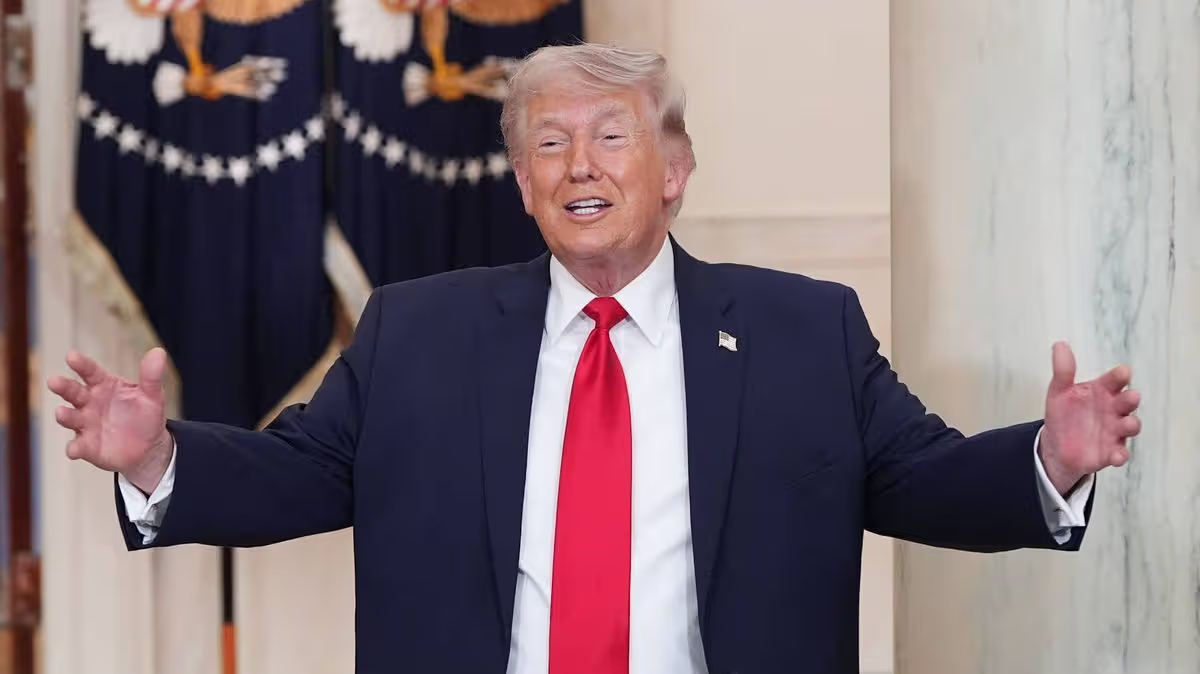
Donald Trump statement in full after ‘daring’ rescue of downed US airman in Iran

Cracker Barrel: Sharp Traffic Declines And Severe Margin Erosion


-

 NewsBeat3 days ago
Steven Gerrard disagrees with Gary Neville over ‘shock’ Chelsea and Arsenal claim | Football
-

 Business2 days ago
No Jackpot Winner and $194 Million Prize Rolls Over
-

 Fashion2 days ago
Weekend Open Thread: Spanx – Corporette.com
-
Entertainment6 days ago
Fans slam 'heartbreaking' Barbie Dream Fest convention debacle with 'cardboard cutout' experience
-

 Crypto World3 days ago
Gold Price Prediction: Worst Month in 17 Years fo Save Haven Rock
-

 Tech6 days ago
The Pixel 10a doesn’t have a camera bump, and it’s great
-
Crypto World5 days ago
Dems press CFTC, ethics board on prediction-market insider trades
-

 Tech6 days ago
Avatar Legends: The Fighting Game comes out in July and it looks pretty slick
-

 Business3 days ago
Login and Checkout Issues Spark Merchant Frustration
-

 Sports10 hours ago
India men’s 4x400m and mixed 4x100m relay teams register big progress | Other Sports News
-

 Tech6 days ago
Apple will hide your email address from apps and websites, but not cops
-

 Sports5 days ago
Tallest college basketball player ever, standing at 7-foot-9, entering transfer portal
-

 Tech5 days ago
EE TV is using AI to help you find something to watch
-

 Politics5 days ago
Should Trump Be Scared Strait?
-

 Tech5 days ago
Flipsnack and the shift toward motion-first business content with living visuals
-

 Tech7 days ago
Elon Musk’s last co-founder reportedly leaves xAI
-

 Fashion6 days ago
The Best Spring Trends of 2026
-

 Tech5 days ago
How to back up your iPhone & iPad to your Mac before something goes wrong
-
 Crypto World6 days ago
Bitcoin’s Six-Month Losing Streak: What On-Chain Data Says About the Market’s Next Move
-
Tech5 days ago
Daily Deal: StackSkills Premium Annual Pass
You must be logged in to post a comment Login