
Crypto World
Altcoin Boom May Never Come Back: How Crypto Trading Has Changed in 2026

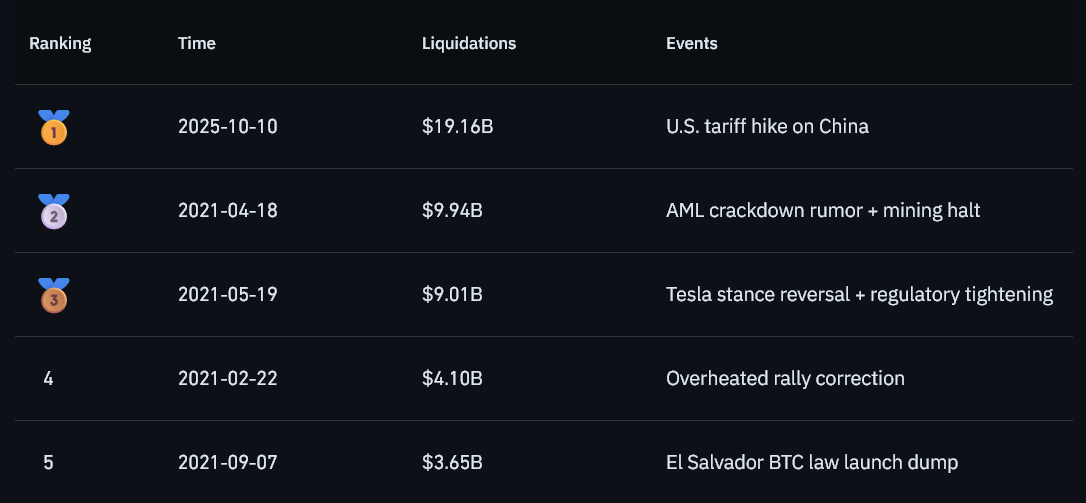
On October 10 last year, a Friday, a tariff headline hit an over-leveraged market, and roughly $19 billion in positions were liquidated within 24 hours, most of them longs, most of them retail.
Bitcoin fell from above $120,000 to around $105,000. Solana lost 40% before finding a bid, and more than 1.6 million accounts went to zero or close to it. Prices eventually stabilized. The people did not come back the same way.
Ten months on, October 10 will be remembered less for the crash itself than for what it did to retail behavior. The risk appetite survived. It just stopped showing up in the same places.

A Drawdown for Some, a Wipeout for Others
The October 10 crash showed how different spot and futures trading are, if it wasn’t clear before. A spot trader took a brutal hit that day, but they still held on to their coins. They can still wait for prices to eventually go back up. But a perpetual futures trader likely has nothing left.
Rebuilding capital from zero is a different project than sitting through a bad year.
Every dataset since carries the mark. On-chain perp volumes fell for five straight months after October, from $1.36 trillion to under $700 billion, with no bounce in between.
An estimated 38% of altcoins now sit near all-time lows, a worse reading than the aftermath of FTX, and the median altcoin trades roughly 79 percent below its cycle peak.
Tokens that carried multi-billion-dollar valuations in September learned in October that there was no bid underneath them until they were 50-80% lower.
Something else shifted alongside the prices. With stock markets setting records on AI, crypto stopped being the only destination for risk capital, and investors started demanding an answer to a question this industry dodged for years: what is a token actually worth when speculators’ attention moves elsewhere?

Why Hyperliquid Went Up While Markets Crashed
Hyperliquid is instructive because it had an answer. HYPE traded down into the mid-$20s over the winter, then set a new all-time high near $77 in June on the back of more than $650 million in annual revenue, and now carries a market cap above $12 billion.
A crypto business with real cash flow got repriced upward in the middle of a bear market. The wave of perpetual DEXs that launched to copy it mostly did not, because they were not creating new traders so much as renting the same ones from each other.
One prominent venue lost 83% of its monthly volume the moment its incentive season ended. The industry kept adding venues while the pool of perp traders shrank. Hyperliquid is starting to look like the exception, not the template.

The Game That Never Needed Leverage
Meanwhile, the traders everyone assumed would be the first casualties were barely noticed. Meme coin traders came through October relatively intact because their game never ran on leverage, and by January, while altcoins bled out, pump.fun was printing an all-time high above $2 billion in daily volume.
Roughly 97% of meme coins die. Every serious participant knows it and plays anyway. There is no white paper to read and usually no technology to evaluate. Because dead tokens are part of the design, the way lost hands are part of poker.
What gets analyzed instead is holder counts, wallet concentration, supply distribution, who bought and when, and how fast attention is spreading. Market structure, attention, and social coordination. That is the asset.
The closest analogy is competitive gaming rather than investing. These traders grind, refine their tactics, study the other players at the table, and treat a losing trade as one bad round in a long session rather than a failed thesis.
The goal is not to invest in an asset. It is to win a PvP game.
Where the Volume Went
So are the perpetual futures dying along with the altcoin market it grew up on? The volume data points the other way.
In the first five months of 2026, exchanges processed $1.32 trillion in perpetual futures tied to stocks, indices, and commodities, against $104 billion in all of 2025. The first regulated tokenized-equity perps went live in February.
The S&P 500 now has a licensed on-chain perpetual, and when Wall Street closes on Friday afternoon, these contracts keep trading through the weekend, increasingly setting the price Monday opens against.
Some exchanges, like Phemex, launched TradFi futures. This is because users have been demanding it through their behavior, if not their words.
Tesla, Apple, Nvidia, gold, silver, and the major indices now trade around the clock on the same USDT account and margin system as their crypto positions, and volume crossed $100 million on day one. Nobody was holding out for another altcoin listing. They wanted something worth trading at 3 a.m. on a Sunday.
As today’s meme coin traders age and accumulate capital, many of them will likely diversify into exactly these markets, on rails they already know how to use.
The Rewiring: Crypto Will Never Be the Same Again
The 2020 version of this industry, hundreds of tokens sustaining deep valuations and deep perp books all at once, is probably gone for good. What replaced it is narrower and more honest.
On one end, a fast, explicitly player-versus-player game in the memecoin ecosystem. On the other hand, perpetual futures are quietly becoming infrastructure for global markets.
The market that produced the last altcoin boom may never come back. The infrastructure it built is getting started, and it is already moving markets far beyond crypto. Our job is to be where speculation is going, not where it was.
The post Altcoin Boom May Never Come Back: How Crypto Trading Has Changed in 2026 appeared first on BeInCrypto.


Laurie asked to see a warrant and the men told her it was in their car. She followed as they escorted the passenger to an unmarked vehicle with an out-of-state license plate, where the officers showed her an administrative warrant rather than a judicial warrant signed by a judge.
“Well, this isn’t a criminal. This is immigration, it’s different,” the agents told her, before handcuffing the passenger and driving away.
Laurie asked TIME to use a pseudonym because she fears government retaliation and was not authorized by her employer to speak publicly. TIME reviewed video footage of the incident filmed by Laurie.
“Because I hadn’t seen this before, I was kind of freaking out, thinking, ‘What do I do?’” she said.
ICE ramps up its presence at airports
Airline employees around the country are confronting similar questions as ICE expands its presence at U.S. airports. Gate agents say officers have asked them to help identify or locate passengers, provide information from internal airline systems and grant access to restricted areas such as jet bridges and, in some cases, aircraft. The requests have left some workers uncertain about when they are required to assist federal officers and when doing so could conflict with airline security protocols.

China’s yuan has strengthened against the U.S. dollar this year.
Nurphoto | Nurphoto | Getty Images
BEIJING — Chinese government bonds can play an important role in portfolio diversification as they are likely to continue behaving differently from other countries’ debt, strategists say.
China’s yields have edged down in recent months even as benchmarks in the U.S., Japan and the U.K. surged to multi-decade highs. That reflects how the world’s second-largest economy remains insulated from global capital markets — and faces a deflationary environment, in contrast to inflation worries elsewhere.
“We see room for China bonds to outperform developed-market peers on a risk adjusted basis, with supportive macro policies and strong export growth to help support demand for central government bonds,” said Norbert Ling, head of fixed income portfolio management for Asia Pacific at Invesco. “CGB are still providing positive real yields, with defensive characteristics that have a role to play in global bond portfolios.”
China has been dealing with a severe property-market downturn and deflation, which has kept the People’s Bank of China accommodative. The country on Monday reported disappointing retail sales and industrial production growth for July, fueling hopes for more rate cuts and stimulus. That is likely to keep its bonds on a different path from those of other major markets.
“The latest July macroeconomic activity data from China came in weaker than market expectations, suggesting that domestic demand may take longer to recover,” said Chun Lai Wu, head of Asia asset allocation at UBS GWM Chief Investment Office. “We expect the PBoC to remain supportive through liquidity operations and targeted credit measures”
Chinese government bonds offer “valuable diversification benefits within a strategic multi-asset portfolio” for global and Asian investors, Wu added.
Charu Chanana, chief investment strategist at Saxo, agrees. Other major central banks like the European Central Bank and Bank of Japan have been hiking interest rates.
“For global portfolios, CGBs can still play a diversification role because China’s rate cycle is increasingly distinct from the U.S., Europe and Japan,” she said in an email.


President Donald Trump said CFTC Chair Michael Selig is working to bring Hyperliquid into the United States in a fully compliant and legal fashion, putting the White House behind a domestic path for a perpetual futures venue that currently geoblocks American traders. Trump made the remark Wednesday… Read the full story at The Defiant

To do so, the Administration invoked a section of the Illegal Immigration Reform and Immigrant Responsibility Act of 1996, which allows the government to bypass laws that obstruct the building of border wall.
Migrant encounters are relatively rare at the section of the border that runs through the park, however—and have become more so in recent years. The park includes roughly 118 miles of what’s known as the Big Bend Sector of the border, which spans 517 miles from Sierra Blanca, Texas, to Sanderson, Texas, and covers roughly one-quarter of the full length of the U.S.-Mexico boundary. CBP recorded a 74% decrease in border crossings through its Big Bend Sector between fiscal years 2023 and 2025, with apprehensions dropping from 11,823 to 3,096. There were a total of 237,538 migrant encounters along the U.S.-Mexico border in FY 2025, meaning that the 3,096 apprehensions in that sector accounted for just 1.3% of the total number. And CBP’s planned border wall in the park would only cover a fraction of a fraction of the full sector.


Ripple has raised $275 million through an upsized senior note offering by Ripple Prime to fund the brokerage unit’s expansion across financing, clearing, and other financial services in the United States.
Summary
- Ripple Prime raised $275 million through a private offering of senior unsecured notes to institutional investors.
- The proceeds will support Ripple’s U.S. expansion across prime brokerage, financing, and multi-asset clearing.
- The funding follows a $200 million credit facility secured from Neuberger Berman managed funds in May.
- Ripple built its prime brokerage business through its $1.25 billion acquisition of Hidden Road.
Ripple said Tuesday that the senior unsecured notes were issued through Ripple Prime, its non-bank prime brokerage unit, in a private placement that drew participation from institutional investors across financial markets.
Proceeds from the offering will support Ripple Prime as the company adds capacity across its financing, clearing and brokerage operations in the United States. Ripple did not disclose the maturity, coupon, or identities of investors participating in the placement.
Ripple Prime President Noel Kimmel said investor participation represented “confidence in our long-term vision for the growing intersection of traditional and digital asset financial infrastructure.”
The financing adds another source of capital for a brokerage operation Ripple acquired through its $1.25 billion purchase of Hidden Road, followed by a separate $200 million credit facility secured earlier this year.
Ripple Prime gets fresh capital for U.S. expansion
Ripple Prime operates across digital assets and traditional markets, giving institutional clients access to clearing, financing and trading services covering crypto, foreign exchange, derivatives, swaps and fixed income.
The business came under Ripple through its acquisition of Hidden Road, which was announced in April 2025 and completed in October. Ripple subsequently renamed the operation Ripple Prime, creating an institutional brokerage arm alongside its payments, custody and stablecoin businesses.
Hidden Road was already handling roughly $3 trillion in annual clearing volume across more than 300 institutional clients before the business was integrated with Ripple. The brokerage serves hedge funds, proprietary trading firms and liquidity providers that need financing, clearing and settlement services across multiple asset classes.
As part of the transaction, Ripple completed the Hidden Road acquisition in October 2025 after agreeing to pay $1.25 billion for the company earlier that year. The deal gave Ripple ownership of a global multi-asset prime broker and expanded its operations beyond its existing payments and digital asset infrastructure.
Ripple has since integrated some of its blockchain products into the brokerage. Ripple USD, or RLUSD, can be used as collateral within Ripple Prime, while the company has also disclosed plans to move some post-trade activity onto the XRP Ledger.
The brokerage’s U.S. presence had started expanding before Ripple completed the acquisition. Hidden Road received a broker-dealer license from the Financial Industry Regulatory Authority in April 2025, allowing it to provide additional prime brokerage, clearing and financing services for fixed-income assets to institutional clients.
A month later, the firm launched over-the-counter cash-settled crypto swaps for U.S. institutional investors through its Financial Conduct Authority-regulated U.K. entity.
Ripple Prime financing has reached $475 million since May
Tuesday’s $275 million note placement follows another financing transaction completed three months earlier.
Ripple Prime secured a $200 million facility in May from funds managed by Neuberger Berman, giving the brokerage additional lending capacity for institutional customers.
The facility was arranged through Neuberger Berman’s specialty finance group and can be drawn according to client borrowing demand. Ripple said at the time that the funding would support margin services spanning digital assets, equities, fixed income and foreign exchange.
Combined with the latest note offering, the two transactions have provided Ripple Prime with access to as much as $475 million in new financing since May, although the structures serve different purposes. The Neuberger Berman agreement provides lending capacity tied to client demand, while Tuesday’s transaction involved Ripple Prime issuing senior unsecured debt to institutional investors.
Prime brokerage businesses require access to capital because clients can borrow against positions, finance trades, and use collateral across several markets. Ripple Prime also offers cross-margining, which allows qualifying institutional clients to offset exposures across positions rather than funding each trade separately.
The brokerage has continued building connections to traditional market infrastructure as its business expands. A July review of Ripple Prime found that the operation had entered the National Securities Clearing Corporation participant directory in March and had a place in a Depository Trust & Clearing Corporation tokenization working group.
Its NSCC participation gives the brokerage access to U.S. securities clearing infrastructure, although the listing itself does not mean trades are settled using XRP or the XRP Ledger.
RLUSD becomes part of Ripple’s institutional finance stack
Ripple has also expanded RLUSD alongside the buildout of its brokerage operation, positioning the dollar-backed stablecoin for institutional payments, trading and collateral use.
In July, the company introduced Ripple Mint, a platform designed to give institutions tools to mint, redeem and manage RLUSD. Ripple said the product provides businesses with infrastructure for incorporating the stablecoin into treasury, payment and other financial operations.
RLUSD’s circulation has increased considerably since its December 2024 launch. The stablecoin had a market capitalization of roughly $1.76 billion at the last check, according to CoinGecko data.
On-chain activity has also increased. A June 30 report from Ripple-backed Evernorth found that RLUSD trading volume had exceeded $2.5 billion across XRP Ledger pairs since the stablecoin’s public launch.
Evernorth said RLUSD’s share of XRP Ledger trading increased from less than 1% to roughly 12% during 2026. The RLUSD/XRP pair alone had processed roughly $900 million over six months, according to the firm’s report.
Ripple Prime represents one institutional use case for the stablecoin because clients can use RLUSD as collateral within the brokerage. Ripple has said that integrating the stablecoin with prime brokerage services can allow clients to manage collateral across digital and traditional assets from the same platform.
The company has been adding other distribution channels for RLUSD at the same time. In July, Ripple joined the x402 Foundation as a Premier Member, supporting the use of XRP and RLUSD for payments made through the open x402 protocol.
Ripple has built out financial services through acquisitions
The note offering also comes after several large acquisitions that moved Ripple into businesses outside its original blockchain payments operations.
Hidden Road was the largest of the transactions when the $1.25 billion deal was announced in April 2025. Ripple also acquired treasury management software provider GTreasury for $1 billion in October 2025 and payments infrastructure company Rail for $200 million in August of that year.
Ripple CEO Brad Garlinghouse said in January that the company was focusing on integrating its acquisitions after the dealmaking completed during 2025.
For Ripple Prime, the Hidden Road purchase gave the company an established brokerage with institutional clients and existing access to traditional financial markets. Ripple has since added its stablecoin and blockchain infrastructure to parts of that operation while providing additional capital for client financing.
The latest $275 million private placement leaves Ripple Prime with another source of funding for that business. Ripple said proceeds will be used for its continued expansion into prime brokerage, financing and multi-asset clearing services in the United States.
Maya Protocol, a cross-chain decentralized exchange built from THORChain’s open-source code, halted its network after an attacker reportedly exploited multiple software weaknesses to siphon roughly $1.7 million worth of crypto assets. The protocol’s pseudonymous co-founder, Aalux, said the immediate goal of the shutdown was to stop further damage while the team worked toward a fix to resume swaps.
In a preliminary technical account posted to X, Aalux described the theft as involving about 20 bitcoin (valued at $1.4 million) alongside approximately $300,000 in other assets. The post also argued that the exploit’s impact extended beyond the direct theft, with MayaChain’s liquidity pools losing far more value amid downstream effects.
Key takeaways
- Maya Protocol halted operations after a reported $1.7 million exploit tied to a chain of software bugs across trade accounting and liquidity pool calculations.
- The attacker’s reported actions appear to have manipulated how withdrawals and compensation were computed for a low-liquidity pool.
- While the hack haul was estimated at about $1.7 million, a technical analysis cited pool losses of roughly $10.9 million linked to arbitrage activity and the collapse of MAYAChain’s gas/settlement token, CACAO.
- The protocol attributed the incident to six interconnected issues, including how outbound transfers were tracked and how credits were applied to pools.
What Maya Protocol said happened
Maya Protocol operates as a cross-chain swapping system, and the incident centered on MAYAChain liquidity pools and protocol-controlled reserves. In the ecosystem, CACAO serves as the gas and settlement token and is paired with supported assets in liquidity pools.
Aalux’s preliminary analysis, shared on X, attributed the incident to six “chained bugs.” The description focused on three main areas: trade accounts, outbound transaction handling, and liquidity pool math. According to the account, the exploit overwrote records that track outbound transfers, causing transfers to be treated as missing. That classification triggered a theft-protection mechanism—but the mechanism then miscalculated what compensation should be for Maya’s low-liquidity ARB.LINK pool on Arbitrum.
The miscalculation allegedly resulted in an incorrect credit of 49.45 million CACAO to the affected pool. Even though the transfer meant to back up that credit reportedly failed due to the reserve holding insufficient CACAO, the inflated pool balance remained on-chain.
The pool manipulation and reported extraction
With the pool balance allegedly overstated, the attacker then added only negligible liquidity—an approach intended to convert the manipulated accounting state into control of the pool. Aalux’s technical write-up says the attacker was able to obtain 99.93% of the pool and then withdraw 48.87 million CACAO from Asgard, described as the system holding protocol assets.
Blockchain security researcher Vini Barbosa summarized the findings and pointed to the token price impact during the incident. Barbosa reported that CACAO fell by 88.7%, dropping from roughly $0.115 to about $0.013 as the exploit unfolded.
As a result, readers should separate two different outcomes: the attacker’s direct asset extraction (estimated by Aalux at about $1.7 million) and the broader market/liquidity damage that followed once the token and pool states deteriorated.
Why the losses may have exceeded the theft
Even though the attacker’s reported haul was around $1.7 million, Aalux’s analysis suggested a significantly larger loss footprint across MAYAChain liquidity pools—estimated at about $10.9 million in value. The write-up attributed the higher figure to effects such as arbitrage and the collapse of CACAO.
This distinction matters for investors and users because it highlights how cross-chain DEX incidents can propagate. When a token’s price and liquidity conditions break down quickly, the system can experience cascading effects: arbitrageurs may rebalance across venues, and pool accounting changes can trigger a feedback loop of reduced depth and further price pressure. In other words, even if the attacker’s withdrawal amount is limited, the protocol’s liquidity environment can still suffer outsized damage.
Aalux also said the protocol intended to pursue recovery of the stolen funds via a bug bounty process and work to restore liquidity, alongside efforts to resume swaps once the underlying issues were fixed.
What to watch next
With Maya Protocol currently halted, the next signals to monitor are (1) whether the team can restore correct liquidity pool accounting and outbound transfer tracking, and (2) whether CACAO and impacted pools recover without triggering additional exploit pathways. Until a full post-incident fix and recovery plan is confirmed, the key uncertainty remains how comprehensively the exploited logic has been patched and how fast liquidity can return.
Standard Chartered and HSBC have completed the first live cross-border transaction using Swift’s blockchain-based ledger, marking an early proof that tokenized deposit systems from different banks can interoperate in real time. The demonstration comes roughly a month after Swift said its ledger was ready for initial use.
According to Swift’s description of the approach, the test relied on payment messages exchanged between the two banks through the ledger. The resulting obligations were recorded on HSBC’s Tokenised Deposit Service and StanChart’s tokenized deposit infrastructure, while Swift’s ledger served as an orchestration layer—matching and netting the obligations before settlement was completed through existing payment channels.
Key takeaways
- HSBC and Standard Chartered have executed the first live cross-border transaction on Swift’s blockchain-based ledger.
- Swift’s ledger was used to orchestrate, match, and net obligations between different banks’ tokenized deposit systems before final settlement.
- The workflow is designed to preserve banks’ existing settlement, compliance, and risk controls rather than replace them.
- The move follows Swift’s July announcement that a pilot with 17 banks across six continents was preparing to run live transactions using tokenized deposits.
How the ledger-based payment run worked
The core idea behind Swift’s blockchain-based ledger is interoperability: connecting tokenized deposits issued on separate bank infrastructure so that cross-border payments can operate more continuously. In this live transaction, payment messages were exchanged between HSBC and Standard Chartered via the ledger, and the banks’ respective tokenized systems captured the obligations created by that messaging.
Swift characterized the ledger as an orchestration layer rather than a replacement for settlement rails. In the described process, the ledger helps match and net what each party owes to the other. Settlement then proceeds through existing payment systems, reflecting a hybrid design aimed at reducing operational friction while keeping established governance and controls intact.
Why this matters for tokenized deposits
Banks have been testing tokenized bank deposits for a range of use cases, but interoperability remains the major hurdle. Tokenized deposits can improve settlement speed and enable more flexible payment flows, yet meaningful progress depends on whether institutions can connect their systems across jurisdictions and counterparty networks.
Swift’s ledger approach targets that gap by acting as a shared orchestration mechanism. The result, if the pilot continues to demonstrate reliability at scale, is a pathway toward 24/7 cross-border payment capability without forcing each bank to abandon its existing settlement processes, compliance frameworks, or risk management procedures.
That “connect without replacing everything” philosophy is a key distinction from proposals that attempt to rebuild the full payment stack end-to-end. It also helps explain why interoperability-focused pilots have gained momentum alongside stablecoins and other digital settlement narratives: regulators and risk teams may be more comfortable with incremental changes that preserve familiar guardrails.
The timeline: from Swift’s pilot plans to a first live run
The transaction follows Swift’s July announcement that its blockchain-based ledger was ready for initial use and that 17 banks across six continents were preparing to pilot live transfers. The pilot group included Citi, BNP Paribas, BNY, Wells Fargo, UBS, MUFG, DBS, and ANZ, alongside the institutions involved in this first live cross-border transaction.
Swift also described the ledger as designed to support 24/7 cross-border payments while maintaining existing settlement, compliance, and risk controls. By reporting a first live cross-border transaction only weeks after the ledger’s readiness announcement, Swift and participating banks are effectively moving from planning to operational validation—an important step for any distributed ledger initiative aimed at financial messaging.
Earlier reporting highlighted that the ledger approach would enable banks to connect tokenized deposits issued on separate infrastructures. This first execution between HSBC and Standard Chartered provides a tangible example of how that “connection” can work in practice: obligations are recorded on the banks’ tokenized services, while Swift’s ledger handles the orchestration needed for interoperability.
Broader industry push toward interoperable digital settlement
The Swift-led progress sits within a wider push by financial institutions toward tokenized bank money and networked settlement. In November 2025, HSBC said it planned to expand its Tokenised Deposit Service to corporate clients in the US and UAE in the first half of 2026. The bank also previously launched the service in the US, offering eligible corporate and institutional clients 24/7 domestic and cross-border transfers using tokenized deposits (HSBC’s expansion plan is described in its coverage at Cointelegraph and the related press release is hosted on HSBC’s site).
Standard Chartered has also participated in real-value settlement efforts. In July, it was included among institutions and central banks involved in Bank for International Settlements’ Project Agorá trials, which reportedly settled about $1 million across six currencies using tokenized commercial bank deposits and central bank reserves (as covered by Cointelegraph).
Meanwhile, other industry players are building parallel network concepts. The Clearing House—owned by some large US banks—has been reported to plan a tokenized deposit network in the first half of 2027 intended to connect traditional payment rails with digital asset infrastructure for round-the-clock settlement (details appear in Cointelegraph).
Taken together, these efforts point to a sector trying to standardize interoperability through multiple routes: shared orchestration layers like Swift’s ledger, institution-specific tokenized deposit platforms such as HSBC’s service, and broader network initiatives like those discussed by payments operators. The question for the market is whether these paths converge into interoperable standards—or remain fragmented across separate ecosystems.
For investors, traders, and builders, the next watch is performance and scale: whether further live transactions on Swift’s ledger expand beyond a limited bilateral test, and how quickly participating banks can expand tokenized deposit interoperability across routes while keeping settlement and risk controls aligned with established regulatory expectations.


Ethena and FalconX have launched a $1 billion secured lending facility that will use assets backing USDe to finance overcollateralized loans for institutional borrowers.
Summary
- The $1 billion facility will direct part of USDe’s backing assets into secured institutional loans.
- FalconX will originate and service the loans through a special purpose vehicle.
- Qualified custodians will hold collateral valued above each borrower’s outstanding loan.
- Institutional lending accounted for $310 million, or 6.9%, of USDe backing in early July.
How the $1 billion USDe facility will work
FalconX and Ethena said the warehouse financing arrangement will give FalconX capital to extend secured loans to institutional clients for trading, corporate treasury operations, and payment-related services.
Operating through a special purpose vehicle, FalconX will originate the loans, assess borrowers, service the credit, and manage the collateral. Qualified third-party custodians will hold the assets securing each position rather than leaving them under the borrower’s direct control.
Borrowers must pledge assets worth more than the amount they receive, creating a buffer that FalconX can use if the collateral loses value. Ethena will retain a first-priority security interest over assets held within the facility, according to the company’s announcement.
Collateral values, margin requirements, and liquidation procedures matter because falling crypto prices can quickly reduce the protection created by overcollateralization. While the structure can limit potential losses, it does not remove market, custody, operational, or counterparty risks.
FalconX will provide financing across several institutional activities, with both companies planning to increase deployments when borrowing demand supports additional loans. Neither party disclosed the interest rates, loan durations, eligible collateral, or minimum collateral ratios that will apply across the full facility.
Guy Young, founder of Ethena Labs, described institutional credit as a large and established source of returns that on-chain capital has rarely accessed.
“Partnering with FalconX gives us a secured, overcollateralized channel into institutional credit,” Young said.
FalconX Head of Credit Craig Birchall said the agreement would let the company provide secured financing for several institutional uses as digital asset lending becomes more connected with other capital-market services.
Ethena adds institutional credit to USDe backing
For Ethena, the facility introduces another source of returns for the portfolio supporting USDe, a synthetic dollar designed to track the value of the U.S. dollar.
USDe has historically relied on crypto collateral and hedged derivatives positions, including short futures positions intended to offset changes in the value of backing assets. Returns can come from funding payments, staking rewards, liquid stablecoins, tokenized assets, and lending arrangements.
Institutional loans had already become part of the reserve structure before the FalconX agreement. Ethena’s June governance report placed the segment at about $310 million, equal to 6.9% of USDe backing as of July 3, with an estimated annual yield of between 4% and 7%.
By comparison, DeFi lending accounted for roughly $2 billion, or 46%, across Aave, Morpho, Kamino, and Jupiter. Liquid stablecoins represented about 35% of the portfolio, while tokenized real-world assets made up 11.2%.
Crypto basis positions, once a central part of Ethena’s model, had fallen to around $39 million, or 1% of the backing portfolio. The same governance report recorded a backing ratio of 101.59%, a reserve fund of approximately $62 million, and nearly $1.2 billion in stablecoins available to process redemptions.
The figures show that Ethena was already reducing its reliance on derivatives-based returns before allocating additional capital to FalconX. Credit exposure carries a different set of risks because returns depend on borrower performance, collateral quality, enforceable legal claims, and a lender’s ability to liquidate pledged assets promptly.
Ethena’s institutional lending framework requires separate reviews for each counterparty. The protocol also includes off-chain credit positions in its proof-of-reserves reports and transparency dashboard, allowing users to see how much backing has been allocated outside DeFi markets.
FalconX joins Anchorage Digital, Maple Institutional, and Coinbase Asset Management among the counterparties approved under the program during March and April.
FalconX relationship expands beyond USDe trading
The lending facility builds on FalconX’s previous integration of the synthetic dollar. In September 2025, FalconX added USDe support across parts of its spot, derivatives, and custody operations.
Approved institutional clients gained access to over-the-counter liquidity and could hold USDe or use it as collateral for selected credit and derivatives transactions. The new arrangement reverses part of that relationship by allowing USDe backing assets to fund loans originated through FalconX.
Ethena has also connected USDe with other institutional platforms. As crypto.news reported in June, BlackRock integrated the synthetic dollar into Aladdin, an investment and risk management system used by institutions overseeing more than $20 trillion.
Ethena also selected BlackRock’s BUIDL tokenized money market fund as the main reserve asset for a white-label stablecoin product. BUIDL invests in cash, repurchase agreements, and U.S. Treasury securities, giving Ethena another reserve strategy outside its original crypto-based trades.
Public-market exposure to the Ethena ecosystem increased days before the Aladdin announcement when StablecoinX completed its merger with TLGY Acquisition Corp. The company began Nasdaq trading under the ticker USDE on June 26, with warrants listed under USDEW.
StablecoinX held about 3.03 billion ENA tokens valued at approximately $275 million using the 30-day average applied before the transaction closed. Its operating plan includes Ethena infrastructure, software services, and institutional distribution.
U.S. access depends on the contracting entity
For American institutions, the FalconX group operates through several affiliated entities with different registrations and permitted activities. FalconX Bravo Inc. appears on the Commodity Futures Trading Commission’s list of registered swap dealers and is a member of the National Futures Association.
FalconX Delta provides trading services to eligible U.S. institutional clients and is registered with the Financial Crimes Enforcement Network as a money services business, according to FalconX’s licensing disclosures. State money-transmitter requirements apply in jurisdictions listed by the company.
The Ethena facility, however, extends credit to a Cayman Islands segregated portfolio rather than FalconX Bravo or FalconX Delta. Its legal structure therefore depends on the contracting vehicle, the jurisdiction governing the arrangement, and the enforceability of Ethena’s first-priority claim.
For ENA holders and investors in Nasdaq-listed StablecoinX, the arrangement adds indirect exposure to Ethena’s institutional lending activity because revenue and ecosystem demand depend partly on the performance and adoption of USDe. The announcement does not state that retail customers or U.S. investors can borrow directly through the $1 billion facility.
The Federal Reserve may soon meet less often, minutes released Wednesday reveal, as Chairman Kevin Warsh floated fewer Fed meetings at just six a year. Three officials wanted a rate hike, leaving Bitcoin (BTC) facing a quieter, tougher central bank.
The Fed held interest rates at 3.50% to 3.75% on July 29, but the 9-3 vote hid a deeper split. The full minutes now show how close the committee came to raising rates.
Three Fed Officials Wanted a Rate Hike Right Now
Most officials chose to wait. However, Beth Hammack, Neel Kashkari, and Lorie Logan voted for a quarter-point hike. The three are the committee’s leading hawks, officials who favor higher rates to fight inflation.
Many others agreed a hike may come soon. They said the Fed would likely need to act if inflation does not fall. The Fed’s preferred inflation gauge ran at 3.7% in June, far above its 2% goal.
Officials also saw more risks ahead. Many warned the Middle East conflict could keep supply costs high. Others said the price impact of past tariffs had mostly played out.
Artificial intelligence (AI) split the room too. Some officials said the AI boom is already pushing prices up. Others expect it to cut costs and cool inflation later.
Nearly all members kept one clear promise in the statement. The Fed “will deliver price stability.” The July hold had already spooked bond markets, pushing long-term yields to their highest since 2007.
Why Fewer Fed Meetings Under Warsh Matter for Bitcoin
Warsh’s pitch is simple. Six meetings a year, roughly every two months, would give the Fed more data before each call. No decision was made, and the 2026 calendar stands. However, the idea is now officially on the table.
It fits a bigger pattern. Warsh has already cut statements short and stopped hinting at future moves. Fewer meetings would mean fewer signals for traders to trade on.
That matters for crypto. Bitcoin moves on Fed expectations, and a quieter Fed is a harder Fed to read. Fewer scheduled decisions could also mean sharper market swings when they land.
The pressure is real. Traders entered July pricing a one-in-three chance of a hike, per the minutes. A full quarter-point move was priced in by September.
Higher rates have already hurt. Bitcoin has lagged gold this year as 5% Treasury yields pulled money toward safer assets.
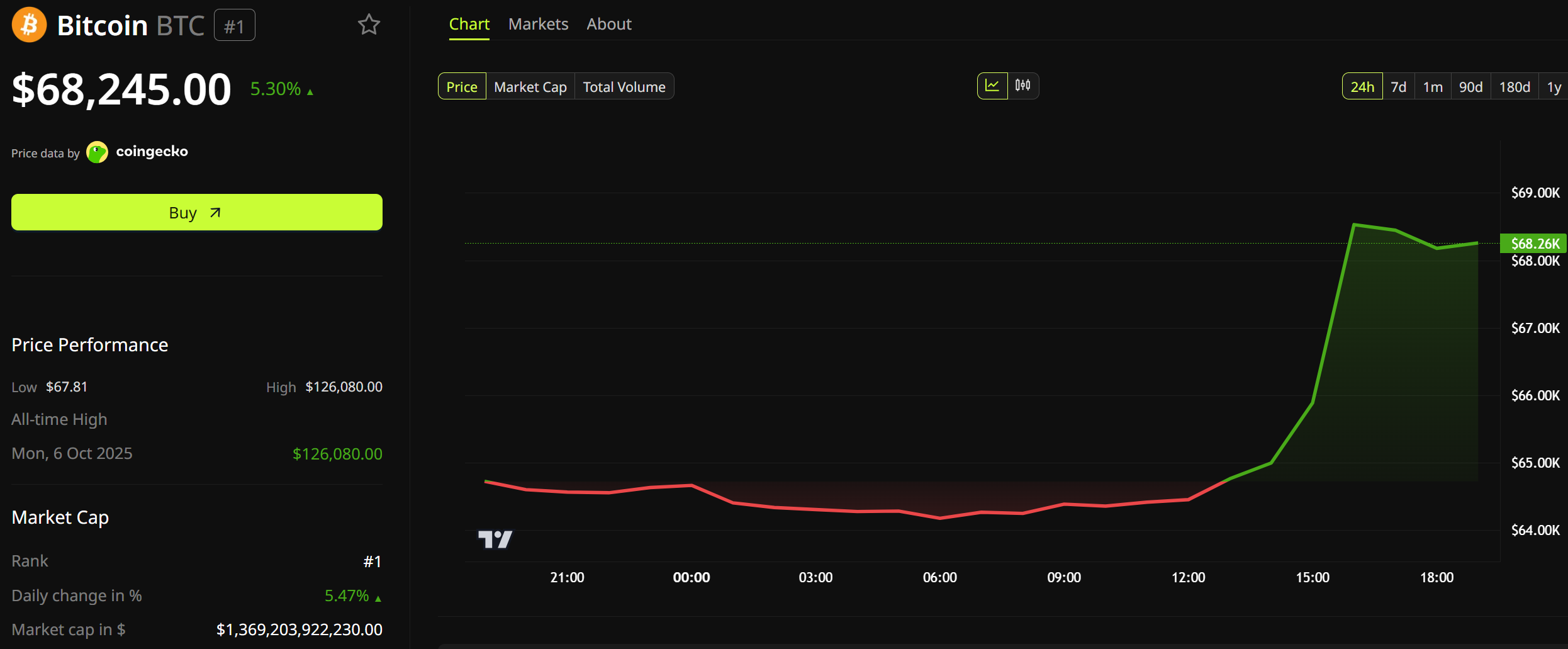
BTC price traded near $68,245 after the release, up 5.3% in a day, per BeInCrypto Markets data.

The tough tone quickly added pressure on Bitcoin. The next big test comes on September 15-16. Markets will then learn if the hawks grow louder or finally get their hike.
The post Fed Minutes Pressure Bitcoin as Hawkish Rate Risks Return appeared first on BeInCrypto.


As students go back to school in the midst of record-breaking summer heat, many are returning to overheating classrooms whose aging air conditioning systems can’t keep up with extreme heat waves—if they even have air conditioning at all.
Extreme heat has already caused school closures and disruptions across the country. In July, Milwaukee Public Schools shut down its Summer Academy and other indoor school programs for two days because of extreme heat. One day in May, 57 Philadelphia schools went remote and canceled all in-person activities due to soaring temperatures. That same month, a Washington, D.C. high school carried out a “heat evacuation” as classroom temperatures reached the mid-90s. Eight elementary schools in Doylestown, PA also closed for a day because old buildings couldn’t protect students from the heat. And in recent years, schools in Memphis dismissed students early as temperatures climbed to 110 degrees.
During the 2024-25 school year alone, more than 9 million students at 10,000 schools nationwide experienced extreme heat- and weather-driven school closures or disruptions. These are not isolated inconveniences. They are warning signs that our school buildings and grounds were not designed for today’s new weather patterns.
It’s important to understand that students struggle to learn in hot, stuffy classrooms. Air quality, temperature, and ventilation can affect how students think, focus, and perform. Poor ventilation can impair cognitive function, while excessive heat diverts the body’s energy from learning, slows reaction time, and weakens attention.
In fact, research has shown that in schools without cooling, each 1° Fahrenheit increase in school year temperature reduces the amount learned that year by approximately 1%.
Extreme temperatures (80 to 90 degrees Fahrenheit and above) are known to exacerbate student absenteeism and disciplinary referrals, while poor indoor environments can also contribute to the spread of illness and exacerbate respiratory conditions like asthma, one of the leading causes of missed school days. Younger children, whose bodies and brains are still developing, are especially susceptible.
In medicine and education alike, we have seen how the environments where people spend their time can directly affect their health, well-being, and ability to thrive. We would never accept these conditions in a hospital. We should not accept them in a classroom.
At the same time, outdated heating and cooling systems are placing a growing financial strain on school districts. Across the country, energy costs are rising and becoming more unstable. For school leaders, that often means tradeoffs: dollars spent on inefficient energy systems are dollars not spent directly on teaching and learning. But there is a better path forward.
Modern HVAC systems, often paired with on-site solar energy, offer schools a way to deliver reliable heating and cooling while reducing exposure to volatile fossil fuel costs. These solutions can stabilize energy budgets over time and are increasingly supported by domestic manufacturing, including the production of heat pumps here in the United States.
Just as important, new federal tools make these upgrades far more accessible than they once were. Through energy tax credits and a mechanism known as Elective Pay, public school districts can receive direct financial support to invest in these improvements. That means lower upfront costs and faster payback, turning what was once out of reach into a practical, near-term option.
We are already seeing what this looks like in practice.
In Indiana, Center Grove Community Schools are demonstrating how modern HVAC upgrades can improve classroom comfort while helping manage energy costs, in part by replacing aging boilers, chillers, and fan coils with a geothermal heat pump system. In Virginia’s Prince William County, at the heart of the nation’s data center corridor, district leaders are acting to shield their budgets from steep projected utility increases. And in Wisconsin, a school in Menasha modernized its facility with a ground-source heat pump system, solar panels, and energy storage to deliver better air quality, lower costs, and create local jobs.
The benefits extend well beyond temperature control. Students are better able to focus and learn. Districts gain predictability in their operating costs. And communities benefit from more resilient, efficient infrastructure that reduces strain on the grid during periods of peak demand.
For school and district leaders, this moment calls for action. Now is the time to explore how these solutions can work in your community.
The environments we live in shape the health within us. Nowhere is that more immediate, or more consequential, than in the classroom.
We can improve student health and learning, strengthen our schools, and protect public resources at the same time. And we have real-world proof from communities across the country that this is not only possible, but doable.
The real risk is not the price of modernization, but the cost of continuing to send students and teachers into unhealthy, inefficient buildings unprepared for the realities ahead.

Hockey Hall of Fame hosting George Springer display

Google is giving students a free year of AI Pro and a new Gemini Student Hub

Stop! That! Train! is the best kind of silly film





-

 Fashion5 days ago
Weekend Open Thread: Ann Taylor
-
 Sports6 days ago
This U.S. Amateur is a glimpse into golf’s future in more ways than you think
-
 Tech6 days ago
11 Ways to Rank Your Videos
-
 NewsBeat5 days ago
Myanmar says over 300,000 Rohingya refugees verified for repatriation as exodus enters ninth year
-

 Sports5 days ago
Birmingham 2026: Day 6 Timetable for Irish Athletes
-

 Politics5 days ago
SEQ Code: The Three Letter Boarding Pass Code That Could Give You The Worst Seat
-

 Tech6 days ago
DeepSeek Harness launches as open source rival to Claude Code, alongside V4-Pro on API with higher prices
-

 Crypto World2 days ago
OCC Greenlights Trump Family Crypto Firm for Trust Charter
-

 Tech2 days ago
Qwen3.8-27B runs frontier-class coding agents and reasoning locally, no cloud API required
-

 Fashion7 days ago
The Details Do the Dressing
-

 Fashion5 days ago
Weekly News Update, 8.14.26 – Corporette.com
-
 Tech5 days ago
Every fusion startup that has raised over $100M
-
 Entertainment6 days ago
10 Netflix Shows That Quietly Became Modern Classics
-
 Entertainment5 days ago
Marvel Studios Reveals New X-Men Cast Including Adam Driver and Sadie Sink
-

 Business6 days ago
15 Ways to Make Money From Your Phone (2026 Guide)
-

 Business5 days ago
Facebook Down Now? Users Report Login And Loading Problems As Outage Trackers Monitor Ongoing Issues
-

 Business2 days ago
SMA Solar Technology AG (SMTGY) Q2 2026 Earnings Call Transcript
-
 Crypto World6 days ago
Robinhood Chain Approaches $1B TVL as Uniswap Integration Boosts Liquidity
-

 Fashion5 days ago
Cart Confidential Vol. 44 – Julia Berolzheimer
-

 Crypto World5 days ago
Pi Network Protocol 27 endgame: last upgrade before what?
You must be logged in to post a comment Login