
Crypto World
China is defying the global bond yield surge, boosting haven appeal


China’s yuan has strengthened against the U.S. dollar this year.
Nurphoto | Nurphoto | Getty Images
BEIJING — Chinese government bonds can play an important role in portfolio diversification as they are likely to continue behaving differently from other countries’ debt, strategists say.
China’s yields have edged down in recent months even as benchmarks in the U.S., Japan and the U.K. surged to multi-decade highs. That reflects how the world’s second-largest economy remains insulated from global capital markets — and faces a deflationary environment, in contrast to inflation worries elsewhere.
“We see room for China bonds to outperform developed-market peers on a risk adjusted basis, with supportive macro policies and strong export growth to help support demand for central government bonds,” said Norbert Ling, head of fixed income portfolio management for Asia Pacific at Invesco. “CGB are still providing positive real yields, with defensive characteristics that have a role to play in global bond portfolios.”
China has been dealing with a severe property-market downturn and deflation, which has kept the People’s Bank of China accommodative. The country on Monday reported disappointing retail sales and industrial production growth for July, fueling hopes for more rate cuts and stimulus. That is likely to keep its bonds on a different path from those of other major markets.
“The latest July macroeconomic activity data from China came in weaker than market expectations, suggesting that domestic demand may take longer to recover,” said Chun Lai Wu, head of Asia asset allocation at UBS GWM Chief Investment Office. “We expect the PBoC to remain supportive through liquidity operations and targeted credit measures”
Chinese government bonds offer “valuable diversification benefits within a strategic multi-asset portfolio” for global and Asian investors, Wu added.
Charu Chanana, chief investment strategist at Saxo, agrees. Other major central banks like the European Central Bank and Bank of Japan have been hiking interest rates.
“For global portfolios, CGBs can still play a diversification role because China’s rate cycle is increasingly distinct from the U.S., Europe and Japan,” she said in an email.

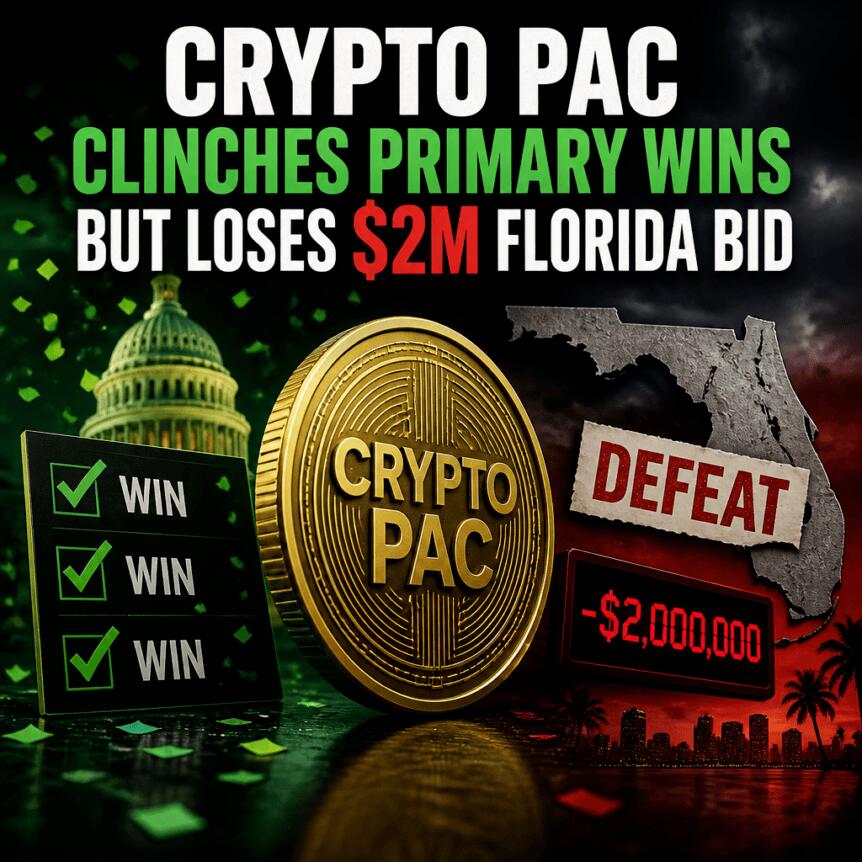
Crypto-aligned political spending appears to have delivered early momentum for Fairshake and its affiliated super PACs, with four of the five candidates backed by the organization’s ad campaigns advancing in Tuesday’s US primaries. The results span Florida, Alaska, and Wyoming—an indication that the industry’s political outreach may be shaping the competitive field ahead of the 2026 midterms.
According to reporting on the primaries and Fairshake’s fundraising record, the Protect Progress and Defend American Jobs PACs collectively spent about $3.6 million on House and Senate races across the three states. While three candidates secured primary wins and one was expected to advance, a separate Florida race also highlighted the intensity of the PACs’ message—where negative ads funded by Protect Progress targeted an opponent who still won.
Key takeaways
- Fairshake-linked super PACs supported multiple candidates in primaries across Alaska, Florida, and Wyoming, with four advancing or winning.
- The PACs spent roughly $3.6 million combined on those contests, according to the cited breakdown of ad spending.
- In Florida’s 24th district, a candidate won despite being targeted by more than $2 million in Protect Progress-funded negative ads.
- Lawmakers are on recess until September, when the Senate is expected to address a cloture motion on the CLARITY Act—potentially influenced by the makeup of the next Congress.
Fairshake-affiliated PACs back candidates across three states
Tuesday’s primary outcomes reflected the reach of Fairshake’s political strategy through two affiliated PACs: Protect Progress (Democratic support) and Defend American Jobs (Republican support). The ad spending covered House and Senate contests in Alaska, Florida, and Wyoming.
In Florida’s 23rd congressional district, Democrat Lois Frankel won re-election. The campaign benefited from Protect Progress, which spent more than $150,000 on supportive media, according to the article’s figures.
On the Republican side, Defend American Jobs backed candidates in Alaska, Florida, and Wyoming. The PAC reported a combined $1.5 million in advertising support across these races—an effort that helped deliver primary victories for two candidates and positioned a third to move forward.
Defend American Jobs-supported Republican Sydney Gruters won her primary in Florida’s 16th district, while Representative Harriet Hageman won the Wyoming Senate Republican primary. In Alaska’s at-large congressional district, Republican Nick Begich was expected to advance following the primary results referenced in the report.
Florida’s 24th district: heavy negative spending failed to stop a winner
Not all of Fairshake’s political influence showed up in straightforward wins. A Democrat in Florida’s 24th district advanced as well, despite facing a barrage of negative advertising funded by Protect Progress.
Oliver Gilbert defeated challengers Shevrin Jones and Kendrick Meek with 34.4% of the vote, according to the cited New York Times results page. The primary also drew scrutiny because Protect Progress reportedly funded more than $2 million worth of negative ads aimed at Gilbert.
In an Aug. 12 report, the Miami Herald said Gilbert argued that “Trump’s tech billionaire buddies” were behind “crypto con artists trying to buy a Democratic primary” through Protect Progress ads. The Miami Herald report stated that the advertisements included fake Miami Herald headlines that misrepresented Gilbert’s positions, while noting that a PAC spokesperson claimed “the underlying facts in our ad are true.”
Gilbert’s acceptance speech, as described in the source material, did not explicitly mention the crypto industry or the PAC ads. Fairshake spokesperson Geoff Vetter, meanwhile, said the PAC was “just getting started building the largest pro-crypto Congress in history” after the three-state primary outcomes.
How much Fairshake spent—and why the timing matters
Fairshake’s political footprint has been a defining feature of the 2024 election cycle and the run-up to the 2026 midterms. The article notes that Fairshake reported holding a $193 million war chest as of January. It was also responsible for funding more than $130 million worth of ads supporting candidates it viewed as pro-crypto in the 2024 cycle, while opposing many candidates who criticized the industry or voted against what the PAC described as its interests.
For the 2026 period, the piece states that by June, the committee had spent more than $82 million on races ahead of the midterms, citing additional earlier reporting.
The reason this matters for investors and market participants is that crypto policy in the US—especially regulation around digital assets—often depends on the composition of Congress and the priorities lawmakers set after election cycles. As advertising translates into electoral strength, it can influence which bills move quickly and which stall.
CLARITY Act on deck as Congress returns
The immediate legislative calendar adds urgency to the primary results. The source notes that both the US House and Senate are on recess until September. During that period, the Senate is expected to address a cloture motion on the Digital Asset Market Clarity (CLARITY) Act.
The piece emphasizes that the bill passed the House in July with bipartisan support on a 294–134 vote. However, it also highlights that some Senate Democrats have been pushing for stronger ethics provisions tied to concerns about the Trump family’s crypto investments.
Whether CLARITY advances this session may depend on what happens in November. The article warns that Congress could shift from a Republican to Democratic majority depending on key races—some of which may be influenced by PAC activity like Fairshake’s. If the current session does not address CLARITY before 2027, lawmakers elected in November would potentially have the leverage to move the bill forward—or block it.
For readers tracking the intersection of crypto finance and US politics, the next watch items are straightforward: September’s Senate procedural steps on CLARITY, the broader outcomes across 2026 midterm races, and how PAC spending patterns evolve once the full midterm field is set.
Arthur Hayes has proposed allocating roughly 20% of Flop Network’s FLOP token supply to testnet participants over 10 years as part of a self-funded decentralized computing network for artificial intelligence agents.
Summary
- Testnet participants could receive roughly 20% of the FLOP supply over 10 years.
- Miners would earn block rewards and fees for processing AI inference requests.
- Hayes said he funded the development team without a presale.
- Flop Network would price computing work using floating-point operations rather than model-specific tokens.
Arthur Hayes said in an Aug. 19 Substack article that Flop Network would connect AI agents seeking computing power with miners operating internet-connected hardware, using FLOP as the network’s payment and reward token.
The BitMEX co-founder described the proposed system through a fictional creation story, but the article also provided new information about the project’s token distribution, economic model, and intended users. Hayes said the token launch would follow a fair-start model, with no presale needed because he had funded the development team himself.
Under the planned distribution, people who contribute to the Flop Network testnet would collectively receive about one-fifth of the supply by the end of a 10-year period. Hayes did not disclose the total number of FLOP tokens, the rate at which the testnet allocation would be released, or the activities that would determine each participant’s share.
Flop Network would sell compute through FLOP
Flop Network’s proposed market would price AI workloads according to the number of floating-point operations, or FLOPs, required within a defined period. Miners would process requests using a model selected by the customer and receive payment in the network’s native token.
According to Hayes, current AI services make price comparisons difficult because each model defines and charges for its own input and output tokens differently. He described model tokens as an abstraction of the computing work performed, rather than a standard unit that customers can compare across providers.
Cloud companies already rent computing capacity, but Hayes said their billing systems do not charge customers according to the actual FLOPs consumed. Flop Network would try to create a common spot price for computing work regardless of the model, hardware type, or location of the machine processing the request.
Anyone with an internet-connected computer could become a compute provider under the proposed design. AI agents and human users would submit jobs specifying how much work they require, the time available and the model to be used, while FLOP would settle the transaction.
Hayes wrote that the currency would represent “a claim on compute,” allowing buyers and sellers to establish a consistent price for a given amount of processing work. He called FLOP “food for AI agents” because autonomous software requires computing power each time it performs an inference or completes a task.
FLOP miners would earn two types of rewards
Instead of using computing power only to produce hashes, as Bitcoin miners do, Flop Network would rely on a process called Proof of Useful Inference, or PoUI. Hayes said miners would earn FLOP block rewards for supporting the network and inference fees for completing requests.
The article did not explain how validators would confirm that a miner had used the requested model, completed the correct number of operations, or returned a valid result. As crypto.news previously reported, Flop Labs has not released the technical method for checking nondeterministic AI outputs, detecting incorrect work, or penalizing providers that submit false results.
Public documentation has also not established which blockchain will support FLOP, how many validators will operate at launch, or whether ordinary consumer hardware will be able to compete with dedicated data-center equipment. No white paper, security audit, block explorer, or official token contract had been published when the earlier report appeared on Aug. 19.
Alongside compute, Hayes said autonomous agents would need continuous access to stored memories. He argued that keeping those records on decentralized storage would allow an agent to retain its history without depending on one company that could restrict or remove access.
His proposed economic loop combines both needs. Agents would spend FLOP on processing work and memory services, while miners and other network participants would receive tokens for supplying those resources.
Flop Network ties testnet use to token distribution
Hayes said the FLOP token would help Flop Network attract miners, agents, and speculators at the same time, addressing the difficulty new networks face when they launch without an existing group of buyers and service providers.
Rather than sell an early allocation to venture investors, Hayes said he had self-funded the team responsible for developing the network. He argued that large presales often leave retail buyers facing an excess supply of tokens after an asset begins trading.
Flop Network would instead distribute roughly 20% of its token supply to testnet users over 10 years. The post did not specify whether the remaining supply would fund mining emissions, validators, contributors, a treasury, or other groups.
Eligibility rules also remain unpublished. Flop Labs has not said whether users will qualify by providing compute, validating jobs, storing agent memories, completing testnet transactions, or promoting the project as a community partner.
Hayes said the distribution should reward people who provide useful work to the network, although his article also claimed participants could become “generationally wealthy” by holding the tokens they receive. The post carried a disclaimer stating that his personal views should not serve as investment advice or a recommendation to make investment transactions.
The project’s Aug. 18 announcement placed a large FLOP airdrop in the fourth quarter of 2026, and the Flop Network genesis block in the first quarter of 2027. Neither the Substack article nor the announcement explained where recipients would hold the token if distribution starts before the native network becomes operational.
U.S. agent payments already favor stablecoins
Flop Network would enter a machine-payment market where dollar-backed stablecoins already process live transactions. A May 2026 Keyrock report found that AI agents had settled $73 million through 176 million transactions over 12 months, with USDC accounting for 98.6% of the tracked payments.
Keyrock said 76% of those transactions were worth less than the $0.30 fee floor associated with card payments. According to the report, Layer 2 stablecoin transfers cost about $0.0001, making them suitable for small purchases such as API calls, data access, and automated online services.
For U.S. businesses, Coinbase began allowing commercial customers to accept agent USDC payments through its x402 standard in July. The exchange said an agent can receive payment instructions from an online service, sign a stablecoin transfer, and resubmit its request with proof that it paid.
FLOP would differ from that dollar-based model by giving agents a token tied to the supply of computing work, according to Hayes. His proposal did not explain how miners would cover dollar-denominated electricity and hardware costs when their income comes through a freely traded token, nor did it provide a method for keeping the cost of compute stable when FLOP’s market price changes.
Machine commerce has also raised questions beyond payment settlement. In June, the American Arbitration Association and Integra Ledger introduced legal records for agent transactions, covering consent, governing law, and dispute procedures when software purchases services without direct human review.
Hayes said his next article would explain why the agent economy requires a spot market priced by floating-point operations per unit of time and how Flop Network intends to create it.


Arthur Hayes published a follow-up essay on his FLOP token launch. He frames the project as a biblical creation story instead of a standard whitepaper.
The essay adds new technical details about FLOP’s design. However, it leaves several gaps from prior reporting unresolved.
The Genesis Framing
In the essay titled “The Book of Genesis,” sent to his Substack subscribers, Hayes casts God as a jealous figure. Humanity’s creation of artificial intelligence (AI) pushes him aside. Hayes writes himself in as the curious human who solves AI’s economic problem.
The essay says AI agents need two things to gain independence from centralized providers. It calls these food, meaning compute agents pay for in FLOP, and memory, meaning decentralized storage for agent data.
Hayes leans on Reed’s Law, a networking theory, to argue the Flop Network could eventually surpass Bitcoin (BTC) in value. He ties that outcome to industry predictions about AI agent adoption. Meanwhile, no published model or third-party analysis backs the claim.
New Details, Old Gaps
The essay names the project’s mining mechanism as proof of useful inference (PoUI). Miners earn block rewards and inference fees for processing AI requests. Validators check the completed work.
Hayes also confirms he self-funded the Flop Labs team to avoid a presale. The essay adds that testnet participants are due roughly 20% of FLOP’s total supply after a 10-year period. That figure is separate from the airdrop Hayes announced for the fourth quarter of 2026.
None of this resolves the gaps BeInCrypto flagged in its earlier FLOP report. Flop Labs still has not published a whitepaper, supply schedule, audit, or named blockchain.
Flop Labs still plans the airdrop for the fourth quarter of 2026. That is a full quarter before the network’s genesis block arrives in the first quarter of 2027.
Hayes has said a follow-up essay will address a spot market for compute pricing. Until then, the AI agent payment narrative behind Flop Network outpaces its paperwork.
The post Arthur Hayes Uses Biblical Framing to Pitch FLOP: Here’s More Details appeared first on BeInCrypto.
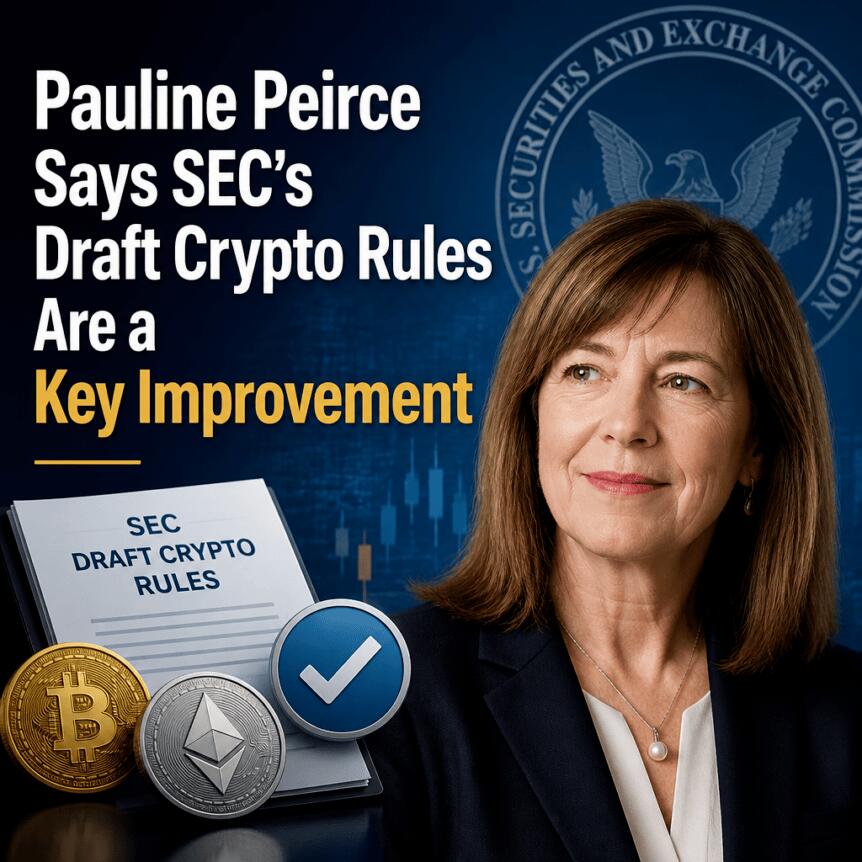
The U.S. Securities and Exchange Commission has unveiled a new regulatory proposal aimed at giving crypto issuers a clearer path to raising capital—while attempting to keep investor protections intact. In remarks accompanying the initiative, SEC Commissioner Hester M. Peirce said the move represents progress away from what she characterized as the agency’s prior reliance on “inapt” rules for digital asset offerings.
SEC Chair Paul S. Atkins, in a separate statement, argued that the SEC’s earlier enforcement-led posture has pushed some investment activity “offshore,” potentially limiting the protections the regulator can offer to investors in the U.S. Taken together, the statements position the proposal as an attempt to shift from case-by-case litigation to a more predictable framework for certain crypto-related investment contracts.
Key takeaways
- SEC Commissioner Hester Peirce called the new proposal a step toward “clear, sensible, enforceable” rules for crypto offerings.
- SEC Chair Paul Atkins linked prior enforcement emphasis to capital shifting “offshore,” reducing investor protections available domestically.
- The SEC’s Tuesday notice outlines a “clear and fit-for-purpose” framework for certain investment contracts involving crypto assets.
- The proposal arrives after the U.S. Senate failed to advance the broader Digital Asset Market Clarity (CLARITY) Act.
- SEC leadership signaled willingness to proceed with rules even without CLARITY’s passage, according to Atkins’s recent comments.
SEC proposal seeks a dedicated framework for crypto investment contracts
In a Tuesday notice, the SEC proposed new rules intended to establish what the agency described as a “clear and fit-for-purpose framework for certain investment contracts involving crypto assets.” The core goal is to allow qualified entities to raise capital with rules that are tailored to how these offerings are structured, rather than attempting to force crypto into existing categories that may not map cleanly to modern digital asset arrangements.
Peirce’s remarks framed the proposal as a meaningful improvement over the SEC’s previous approach. She pointed to the challenges faced by market participants under the agency’s tendency to apply a set of rules she called “inapt” to crypto. Her emphasis was not merely on regulatory activity, but on the shift toward guidance that market participants can interpret and comply with in advance—an issue that affects how issuers plan compliance, structure token sales, and manage investor disclosures.
For investors and traders, the stakes are similarly practical. A clearer framework can reduce uncertainty around which offerings fall within enforceable boundaries, potentially improving the quality and consistency of disclosures rather than leaving compliance largely determined by enforcement outcomes after the fact.
Atkins: enforcement pressure may have driven activity abroad
Atkins’s separate statement added a policy argument for why the SEC is moving toward rulemaking. He said the SEC’s prior enforcement-heavy approach has “driven investment offshore,” which he argued can limit the protections investors receive “here.”
That perspective effectively reframes the regulatory debate: rather than focusing only on whether the SEC can prove violations in court, Atkins suggested that a rules-based system is better positioned to provide investor safeguards within the U.S. market. The underlying tension is that strict enforcement without corresponding guidance can leave firms uncertain about compliance boundaries, encouraging them to seek alternatives—potentially in jurisdictions with different regulatory approaches.
While the proposal’s details were not laid out in the statements themselves, the framing indicates a shift in emphasis: the SEC is trying to offer a workable regulatory runway so capital raising can occur under an established structure, rather than depending primarily on enforcement-driven clarity.
Rulemaking comes after CLARITY Act stumbles in the Senate
The timing of the SEC’s action matters. According to the reporting referenced in the article, the proposal was announced days after the U.S. Senate failed to advance the Digital Asset Market Clarity (CLARITY) Act—legislation intended to provide a broader regulatory framework for financial regulators overseeing the crypto industry.
In addition, the article notes that SEC leadership had previously indicated the agency would not wait indefinitely for congressional action. On July 27, Atkins told CNBC that the SEC was “ready, willing, and able to come out with rules” on digital assets if the Senate failed to pass the CLARITY Act.
That backdrop helps explain the strategic logic of the SEC’s proposal. When comprehensive statutory changes stall, regulators often face pressure to fill gaps through rulemaking. The SEC’s approach can also be read as an attempt to create interim structure—particularly for crypto offerings that the SEC views as falling under “investment contract” analysis—while Congress considers whether and how broader market-wide definitions should be codified.
Market participants weigh odds for CLARITY, and watch the SEC’s next steps
Beyond the SEC’s statements, the article references Galaxy Digital’s assessment of CLARITY’s prospects. It says Galaxy cut its odds on passage in 2026 to 10%, warning that multiple political issues remain unresolved. The referenced note also suggests the Senate would have only about two to three weeks to pass the bill when it reconvenes on Sept. 14.
That kind of uncertainty underscores why the SEC’s move may carry outsized significance for the market. If investors and issuers see congressional action as unlikely in the near term, rulemaking becomes the main mechanism shaping how crypto offerings are regulated in the U.S.
Still, what happens next will likely determine how meaningful the proposal is for day-to-day compliance. Investors, issuers, and compliance teams should watch for how the SEC defines the scope of “certain investment contracts involving crypto assets,” how it structures registration and disclosure requirements under the framework, and what the timeline looks like for finalization. Equally important will be whether market participants interpret the rules as reducing uncertainty enough to outweigh remaining legal and political risks.
For now, the SEC’s proposal—and the leadership’s explicit comments about the limitations of earlier “enforcement-first” strategy—sets up an important test: can clearer, fit-for-purpose rules deliver the predictability both regulators and market participants have been seeking, especially in the absence of a comprehensive CLARITY pathway?


Centrifuge has added Symbiotic’s liquidity network across three tokenized funds that represent about $1.6 billion in assets under management, giving eligible holders another route to exchange their positions for USDC.
The integration covers Janus Henderson’s JAAA, an AAA-rated collateralized loan obligation strategy, JTRSY, a short-duration US Treasury strategy and New York Life Investment Management’s HYB, a US high-yield corporate bond strategy.
Symbiotic’s Liquid Lane uses an onchain request-for-quote (RFQ) marketplace where market makers can tap liquidity from vaults to fill redemption requests. Market makers can then redeem the acquired fund tokens through the issuer or sell them through another RFQ transaction.
The arrangement allows investors to receive USDC immediately while the funds’ normal redemption can take place separately.
Centrifuge is an asset tokenization and vault platform where asset managers issue and manage tokenized funds. Janus Henderson, a global asset manager with about $500 billion in assets under management, has been a significant contributor to the platform’s growth through its JAAA and JTRSY products.
By December 2025, Centrifuge had attracted about $1.3 billion in new inflows, driven primarily by the two Janus Henderson funds, according to Token Terminal. JAAA alone had contributed about $1 billion in total value locked and was one of the largest tokenized funds in the market.
Related: Centrifuge brings S&P 500 onchain in tokenized fund launch
Symbiotic joins existing liquidity routes
Liquid Lane is not the first liquidity route available for Centrifuge’s tokenized funds, Felix Lutsch, Symbiotic’s head of ecosystem, told Cointelegraph.
“We’re not claiming to be first, and other liquidity routes exist. That’s healthy for the market,” Lutsch said.
Centrifuge announced a partnership with Wintermute in February 2025 to provide 24/7 instant redemptions for JTRSY. HYB launched in June with a separate liquidity arrangement for near-instant redemptions.
Lutsch said the distinction with Liquid Lane is the capital structure behind the transactions rather than their speed. Its marketplace allows multiple market makers and curators to participate without market makers having to pre-fund and carry inventory for individual assets, he said.
“The bigger constraint has been flow,” Lutsch said, adding that low trading volumes in tokenized assets have historically given market makers little incentive to commit capital.
He said aggregating redemption demand across issuers and asset classes could improve those economics as tokenized funds are increasingly used as collateral and financing assets in onchain markets.
Magazine: ‘Fabricated rumors’ about BitMart founder, Binance bStocks dominate: Asia Express

That was in 2022. This year, Freefall: A Reckoning for Boeing takes a wider look at Boeing’s continued reputation. “When we finished that film, Boeing ultimately had taken responsibility,” says Rory Kennedy, director of both documentaries. Speaking to TIME over Zoom, she says the company “assured the flying public, as well as the airlines and Congress, that it had learned its lesson and changed its ways. It did seem initially that it had made some corrections, but soon after the 737 Max got [back] into the air, I started seeing the headlines again.”
The need to return to the Boeing story
Kennedy has made documentaries about the Abu Ghraib torture scandal, the final weeks of the Vietnam War, and the impact that the death of her father—Robert F. Kennedy—had on her mother Ethel. Freefall is her first sequel, motivated, she says, by Boeing’s refusal to improve its once venerated, now dire safety standards. “I was getting approached by whistleblowers inside Boeing saying, not only had things not improved, but they were actually getting worse, and would I consider revisiting this?”
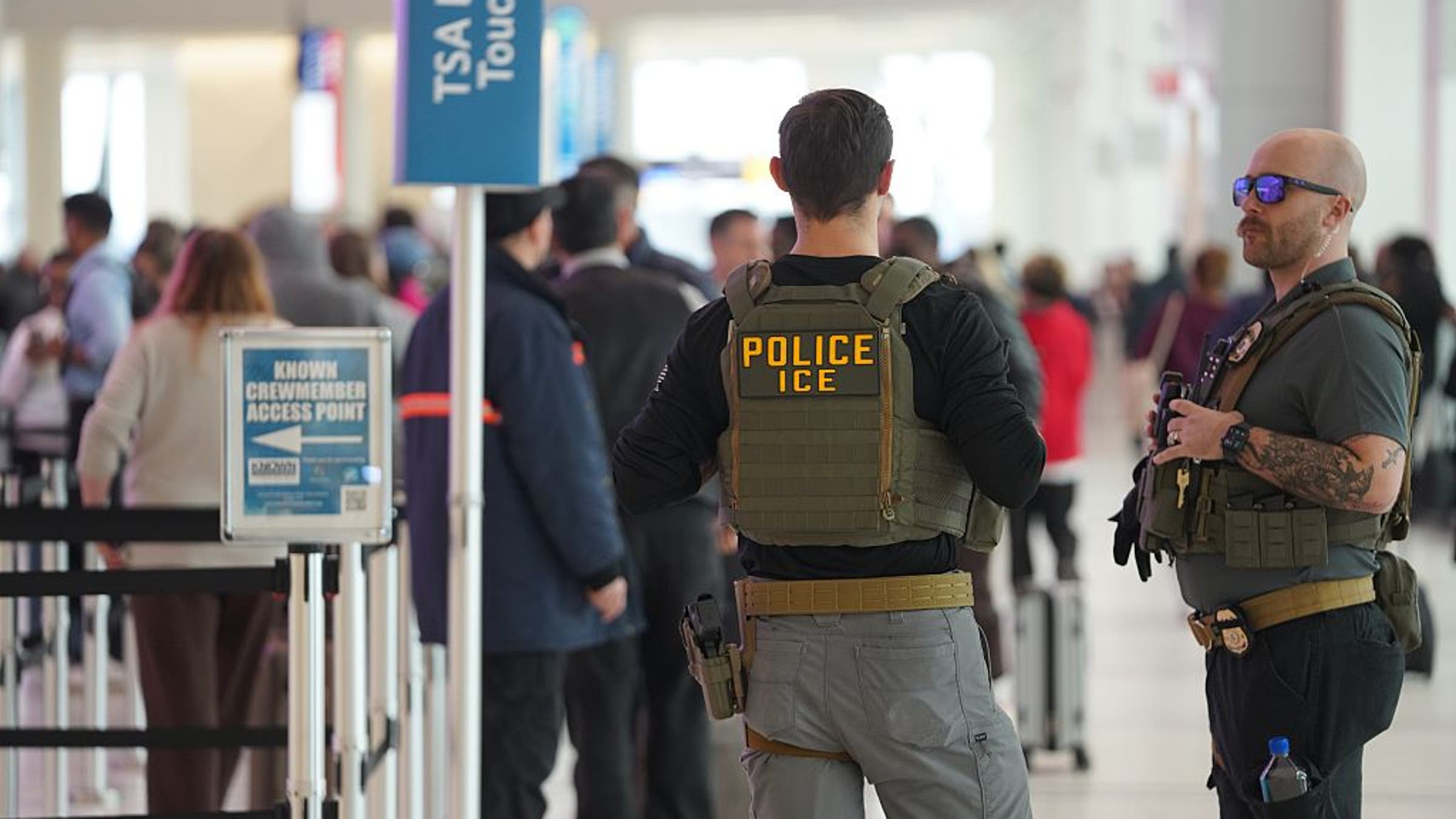
Laurie asked to see a warrant and the men told her it was in their car. She followed as they escorted the passenger to an unmarked vehicle with an out-of-state license plate, where the officers showed her an administrative warrant rather than a judicial warrant signed by a judge.
“Well, this isn’t a criminal. This is immigration, it’s different,” the agents told her, before handcuffing the passenger and driving away.
Laurie asked TIME to use a pseudonym because she fears government retaliation and was not authorized by her employer to speak publicly. TIME reviewed video footage of the incident filmed by Laurie.
“Because I hadn’t seen this before, I was kind of freaking out, thinking, ‘What do I do?’” she said.
ICE ramps up its presence at airports
Airline employees around the country are confronting similar questions as ICE expands its presence at U.S. airports. Gate agents say officers have asked them to help identify or locate passengers, provide information from internal airline systems and grant access to restricted areas such as jet bridges and, in some cases, aircraft. The requests have left some workers uncertain about when they are required to assist federal officers and when doing so could conflict with airline security protocols.


President Donald Trump said CFTC Chair Michael Selig is working to bring Hyperliquid into the United States in a fully compliant and legal fashion, putting the White House behind a domestic path for a perpetual futures venue that currently geoblocks American traders. Trump made the remark Wednesday… Read the full story at The Defiant

To do so, the Administration invoked a section of the Illegal Immigration Reform and Immigrant Responsibility Act of 1996, which allows the government to bypass laws that obstruct the building of border wall.
Migrant encounters are relatively rare at the section of the border that runs through the park, however—and have become more so in recent years. The park includes roughly 118 miles of what’s known as the Big Bend Sector of the border, which spans 517 miles from Sierra Blanca, Texas, to Sanderson, Texas, and covers roughly one-quarter of the full length of the U.S.-Mexico boundary. CBP recorded a 74% decrease in border crossings through its Big Bend Sector between fiscal years 2023 and 2025, with apprehensions dropping from 11,823 to 3,096. There were a total of 237,538 migrant encounters along the U.S.-Mexico border in FY 2025, meaning that the 3,096 apprehensions in that sector accounted for just 1.3% of the total number. And CBP’s planned border wall in the park would only cover a fraction of a fraction of the full sector.
Ripple has raised $275 million through an upsized senior note offering by Ripple Prime to fund the brokerage unit’s expansion across financing, clearing, and other financial services in the United States.
Summary
- Ripple Prime raised $275 million through a private offering of senior unsecured notes to institutional investors.
- The proceeds will support Ripple’s U.S. expansion across prime brokerage, financing, and multi-asset clearing.
- The funding follows a $200 million credit facility secured from Neuberger Berman managed funds in May.
- Ripple built its prime brokerage business through its $1.25 billion acquisition of Hidden Road.
Ripple said Tuesday that the senior unsecured notes were issued through Ripple Prime, its non-bank prime brokerage unit, in a private placement that drew participation from institutional investors across financial markets.
Proceeds from the offering will support Ripple Prime as the company adds capacity across its financing, clearing and brokerage operations in the United States. Ripple did not disclose the maturity, coupon, or identities of investors participating in the placement.
Ripple Prime President Noel Kimmel said investor participation represented “confidence in our long-term vision for the growing intersection of traditional and digital asset financial infrastructure.”
The financing adds another source of capital for a brokerage operation Ripple acquired through its $1.25 billion purchase of Hidden Road, followed by a separate $200 million credit facility secured earlier this year.
Ripple Prime gets fresh capital for U.S. expansion
Ripple Prime operates across digital assets and traditional markets, giving institutional clients access to clearing, financing and trading services covering crypto, foreign exchange, derivatives, swaps and fixed income.
The business came under Ripple through its acquisition of Hidden Road, which was announced in April 2025 and completed in October. Ripple subsequently renamed the operation Ripple Prime, creating an institutional brokerage arm alongside its payments, custody and stablecoin businesses.
Hidden Road was already handling roughly $3 trillion in annual clearing volume across more than 300 institutional clients before the business was integrated with Ripple. The brokerage serves hedge funds, proprietary trading firms and liquidity providers that need financing, clearing and settlement services across multiple asset classes.
As part of the transaction, Ripple completed the Hidden Road acquisition in October 2025 after agreeing to pay $1.25 billion for the company earlier that year. The deal gave Ripple ownership of a global multi-asset prime broker and expanded its operations beyond its existing payments and digital asset infrastructure.
Ripple has since integrated some of its blockchain products into the brokerage. Ripple USD, or RLUSD, can be used as collateral within Ripple Prime, while the company has also disclosed plans to move some post-trade activity onto the XRP Ledger.
The brokerage’s U.S. presence had started expanding before Ripple completed the acquisition. Hidden Road received a broker-dealer license from the Financial Industry Regulatory Authority in April 2025, allowing it to provide additional prime brokerage, clearing and financing services for fixed-income assets to institutional clients.
A month later, the firm launched over-the-counter cash-settled crypto swaps for U.S. institutional investors through its Financial Conduct Authority-regulated U.K. entity.
Ripple Prime financing has reached $475 million since May
Tuesday’s $275 million note placement follows another financing transaction completed three months earlier.
Ripple Prime secured a $200 million facility in May from funds managed by Neuberger Berman, giving the brokerage additional lending capacity for institutional customers.
The facility was arranged through Neuberger Berman’s specialty finance group and can be drawn according to client borrowing demand. Ripple said at the time that the funding would support margin services spanning digital assets, equities, fixed income and foreign exchange.
Combined with the latest note offering, the two transactions have provided Ripple Prime with access to as much as $475 million in new financing since May, although the structures serve different purposes. The Neuberger Berman agreement provides lending capacity tied to client demand, while Tuesday’s transaction involved Ripple Prime issuing senior unsecured debt to institutional investors.
Prime brokerage businesses require access to capital because clients can borrow against positions, finance trades, and use collateral across several markets. Ripple Prime also offers cross-margining, which allows qualifying institutional clients to offset exposures across positions rather than funding each trade separately.
The brokerage has continued building connections to traditional market infrastructure as its business expands. A July review of Ripple Prime found that the operation had entered the National Securities Clearing Corporation participant directory in March and had a place in a Depository Trust & Clearing Corporation tokenization working group.
Its NSCC participation gives the brokerage access to U.S. securities clearing infrastructure, although the listing itself does not mean trades are settled using XRP or the XRP Ledger.
RLUSD becomes part of Ripple’s institutional finance stack
Ripple has also expanded RLUSD alongside the buildout of its brokerage operation, positioning the dollar-backed stablecoin for institutional payments, trading and collateral use.
In July, the company introduced Ripple Mint, a platform designed to give institutions tools to mint, redeem and manage RLUSD. Ripple said the product provides businesses with infrastructure for incorporating the stablecoin into treasury, payment and other financial operations.
RLUSD’s circulation has increased considerably since its December 2024 launch. The stablecoin had a market capitalization of roughly $1.76 billion at the last check, according to CoinGecko data.
On-chain activity has also increased. A June 30 report from Ripple-backed Evernorth found that RLUSD trading volume had exceeded $2.5 billion across XRP Ledger pairs since the stablecoin’s public launch.
Evernorth said RLUSD’s share of XRP Ledger trading increased from less than 1% to roughly 12% during 2026. The RLUSD/XRP pair alone had processed roughly $900 million over six months, according to the firm’s report.
Ripple Prime represents one institutional use case for the stablecoin because clients can use RLUSD as collateral within the brokerage. Ripple has said that integrating the stablecoin with prime brokerage services can allow clients to manage collateral across digital and traditional assets from the same platform.
The company has been adding other distribution channels for RLUSD at the same time. In July, Ripple joined the x402 Foundation as a Premier Member, supporting the use of XRP and RLUSD for payments made through the open x402 protocol.
Ripple has built out financial services through acquisitions
The note offering also comes after several large acquisitions that moved Ripple into businesses outside its original blockchain payments operations.
Hidden Road was the largest of the transactions when the $1.25 billion deal was announced in April 2025. Ripple also acquired treasury management software provider GTreasury for $1 billion in October 2025 and payments infrastructure company Rail for $200 million in August of that year.
Ripple CEO Brad Garlinghouse said in January that the company was focusing on integrating its acquisitions after the dealmaking completed during 2025.
For Ripple Prime, the Hidden Road purchase gave the company an established brokerage with institutional clients and existing access to traditional financial markets. Ripple has since added its stablecoin and blockchain infrastructure to parts of that operation while providing additional capital for client financing.
The latest $275 million private placement leaves Ripple Prime with another source of funding for that business. Ripple said proceeds will be used for its continued expansion into prime brokerage, financing and multi-asset clearing services in the United States.

“That boy of yours might want a new hero after he sees me beat you”

Inside Trump’s Failed Hunt For Noncitizen Voters

PayPal: Get Ready For A New Takeover Offer From Stripe/Advent (NASDAQ:PYPL)





-

 Fashion5 days ago
Weekend Open Thread: Ann Taylor
-
 Sports6 days ago
This U.S. Amateur is a glimpse into golf’s future in more ways than you think
-
 Tech6 days ago
11 Ways to Rank Your Videos
-
 NewsBeat5 days ago
Myanmar says over 300,000 Rohingya refugees verified for repatriation as exodus enters ninth year
-

 Sports5 days ago
Birmingham 2026: Day 6 Timetable for Irish Athletes
-

 Politics5 days ago
SEQ Code: The Three Letter Boarding Pass Code That Could Give You The Worst Seat
-

 Tech6 days ago
DeepSeek Harness launches as open source rival to Claude Code, alongside V4-Pro on API with higher prices
-

 Crypto World2 days ago
OCC Greenlights Trump Family Crypto Firm for Trust Charter
-

 Tech2 days ago
Qwen3.8-27B runs frontier-class coding agents and reasoning locally, no cloud API required
-

 Fashion7 days ago
The Details Do the Dressing
-

 Fashion5 days ago
Weekly News Update, 8.14.26 – Corporette.com
-
 Tech5 days ago
Every fusion startup that has raised over $100M
-
 Entertainment6 days ago
10 Netflix Shows That Quietly Became Modern Classics
-
 Entertainment5 days ago
Marvel Studios Reveals New X-Men Cast Including Adam Driver and Sadie Sink
-

 Business6 days ago
15 Ways to Make Money From Your Phone (2026 Guide)
-

 Business5 days ago
Facebook Down Now? Users Report Login And Loading Problems As Outage Trackers Monitor Ongoing Issues
-

 Business2 days ago
SMA Solar Technology AG (SMTGY) Q2 2026 Earnings Call Transcript
-
 Crypto World6 days ago
Robinhood Chain Approaches $1B TVL as Uniswap Integration Boosts Liquidity
-

 Fashion5 days ago
Cart Confidential Vol. 44 – Julia Berolzheimer
-

 Crypto World5 days ago
Pi Network Protocol 27 endgame: last upgrade before what?
You must be logged in to post a comment Login