


For decades, modern navigation has relied heavily on GPS, but another, less visible system plays an equally critical role in helping aircraft, ships, smartphones, and military platforms determine their position.
Earth’s magnetic field, constantly shifting and evolving, underpins the World Magnetic Model (WMM), a global reference that supports navigation systems used by billions of people every day.
Maintaining the accuracy of that model depends on reliable measurements of the magnetic field, yet much of the satellite infrastructure used to gather this data is aging, while the field itself is changing at an accelerating rate.
Article continues below
Quantum diamond magnetometers
These pressures have driven a search for new technologies capable of monitoring the magnetic field with greater precision and frequency.
In response, the US National Geospatial-Intelligence Agency (NGA) launched the MagQuest Challenge in 2019, a seven-year, multi-million-dollar competition designed to identify next-generation sensing technologies.
The goal is to develop compact, highly accurate systems that can provide continuous magnetic data, reducing reliance on periodic measurements and helping ensure the long-term reliability of global navigation systems.
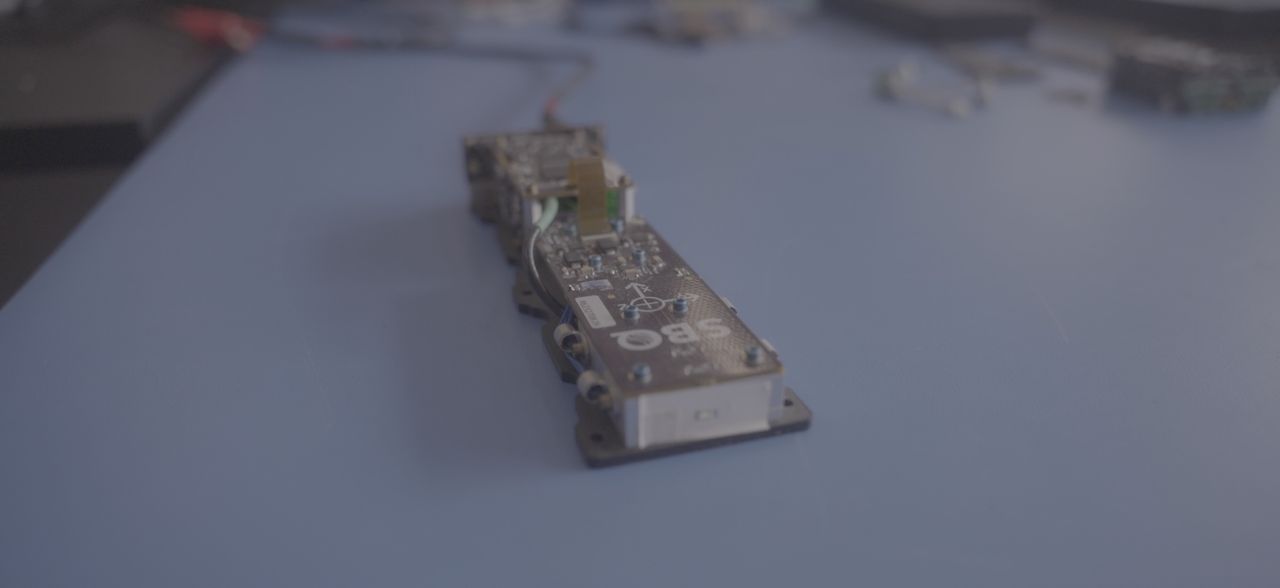
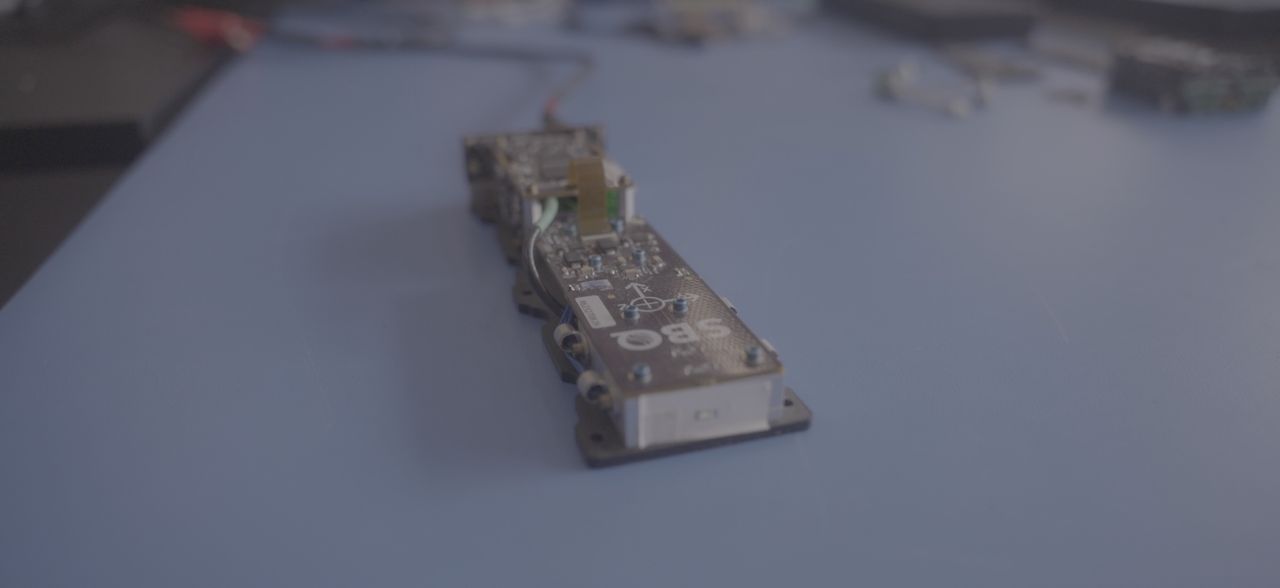
One of the companies emerging from this effort is SBQuantum, a Canadian firm specializing in quantum sensing technology. Its approach centers on quantum diamond magnetometers, compact devices that use the principles of quantum physics to measure magnetic fields with exceptional sensitivity.
Recently, the company reached a major milestone when its sensor was launched into orbit as part of the final phase of the MagQuest program. The deployment represents a step toward continuous, space-based monitoring of Earth’s magnetic field and highlights the growing role of quantum technologies in navigation, defense, and public safety.
To better understand the development of this technology, the challenges involved in bringing it to space, and the potential applications beyond navigation, I spoke with David Roy-Guay, Founder of SBQuantum.
- Before we start, can you give us a brief overview of what the WMM is and why it is so important for us.
The World Magnetic Model (WMM) is what powers every electronic compass, including the one in your watch and cellphone. It is essential to keep up to date as the Magnetic North Pole is moving. It was in the Canadian north and is now shifting toward Siberia. This has a real impact on the precision of every analog and digital compass.
Everyday, we use the WMM, just think of the blue arrow in your favorite navigation application telling you to head left or right as you exit a subway station or a hotel. This directional information is complementary to GPS, which provides location information, but doesn’t tell you which way you are facing.
- You mentioned that the satellites feeding it with data are reaching their end of life. What happens next?
Typically the WMM is updated every 5 years when a new official version is released. However recently a new update was released after only 4 years because the movement of the field had accelerated.
Once the mission of the current ESA SWARM constellation of satellites comes to an end, the existing magnetic field maps will be of little value 2-3 years after that. This means the navigation systems on board aircraft and drones will be off significantly, especially in the northernmost areas, possibly up to dozens of degrees. I can think of one example in Alaska when recently a landing strip had to have its numbers changed since it was no longer facing the same direction according to the WMM.
In comparison, our platform ‘Diamond Polaris – 1’ will allow the continuous production of magnetic data for the WMM. This approach is far more cost-effective, gathers and assembles faster, and offers data well suited for accurate positioning.
- How does the data from the WMM project convert into something that can be an alternative to the ubiquitous GPS?
Data collected over a year of orbit is processed and curated by the US NOAA and the US NGA, to inform future versions of the WMM. Although the data is coarse it is applicable to compass applications. Higher resolution versions can be produced by deploying multiple satellites and drones to gather data at different altitudes.
These high-resolution maps will act as a calibration reference to navigation systems (INS systems) and could provide positioning data without GPS to up to 100m precision.
Our spring 2026 space-launch came after years of testing and retesting with NASA and other organizations. SBQuantum’s sensor was deemed to be fit for use in space. This first space deployment is the next step on the road to making magnetic navigation widely available as an alternative to GPS which cannot be jammed or distorted.
- Your company built something called a diamond quantum magnetometer. Why diamond and why quantum?
Being solid state, diamonds are exceptionally stable and provide the right environment to preserve quantum coherence for an extended period, even at room temperature. This enables highly sensitive and very accurate magnetic field measurements for extended satellite missions at a global scale.
Furthermore, the atomic structure of diamonds is well suited to provide measurement of magnetic fields along three axes. For the purposes of navigation it is essential to gather all of that in order to provide directional information.
- You mentioned the size of the device (roughly a quart of milk — about 1L in metric or a cube with 10cm size). Does your roadmap contain products that are smaller? What would something “better” differ in terms of features?
We are still in the early stages of this diamond technology. One of its advantages is that it can eventually be shrunk further, to about the size of a matchbox, without degrading its performance.
This is not the case for classical directional magnetometer technologies. We expect to reach that point in about 3 years, once we scale the production to industry standard wafers, which are of course widely used in the semiconductor industry.
- How does the data captured by a quantum sensor allow for “advanced interpretation algorithms” that conventional sensors simply cannot support? What other applications could these sensors have?
By building an array of directional diamond magnetometers, we can enable real-time magnetic signals interpretation in a way which was otherwise not possible. For instance, we can locate metallic objects underwater, in real-time.
This is also true for metallic objects on the other side of a wall or underground. We are therefore also looking to employ the technology to support security and defense applications.
For instance this could be used for tracking submarines from a drone, or enhancing security at sporting events, or even security at schools and corporate events.
Follow TechRadar on Google News and add us as a preferred source to get our expert news, reviews, and opinion in your feeds. Make sure to click the Follow button!
And of course you can also follow TechRadar on TikTok for news, reviews, unboxings in video form, and get regular updates from us on WhatsApp too.




















































You must be logged in to post a comment Login