








Connect with us

Business

(VIDEO) Indie Hit How to Fish Sells 1 Million Copies in Two Days as Quirky Fishing Craze Takes Over Steam

Published

on

The New York Times Connections

A low-priced co-op fishing game with an unusual arsenal of weapons has become one of Steam’s standout releases of the week, selling 1 million copies in just two days after launch.

How to Fish, the debut title from developer Dazed Games, arrived on Steam on Aug. 20 and quickly climbed the platform’s top sellers list. The studio announced the sales milestone shortly afterward, confirming the game had reached 1 million units sold within 48 hours. Concurrent player counts peaked near 268,000, according to tracking data, placing it among the most-played titles on the service during its opening weekend despite competition from higher-profile releases.

The game is priced at $7.99, with a 38 percent launch discount bringing the cost to $4.95 through late August. That accessible price point, combined with short session times and strong multiplayer appeal, has helped drive rapid adoption. Steam reviews have been strongly favorable, with the title earning a “Very Positive” rating based on roughly 12,000 user assessments in its first days.

Advertisement

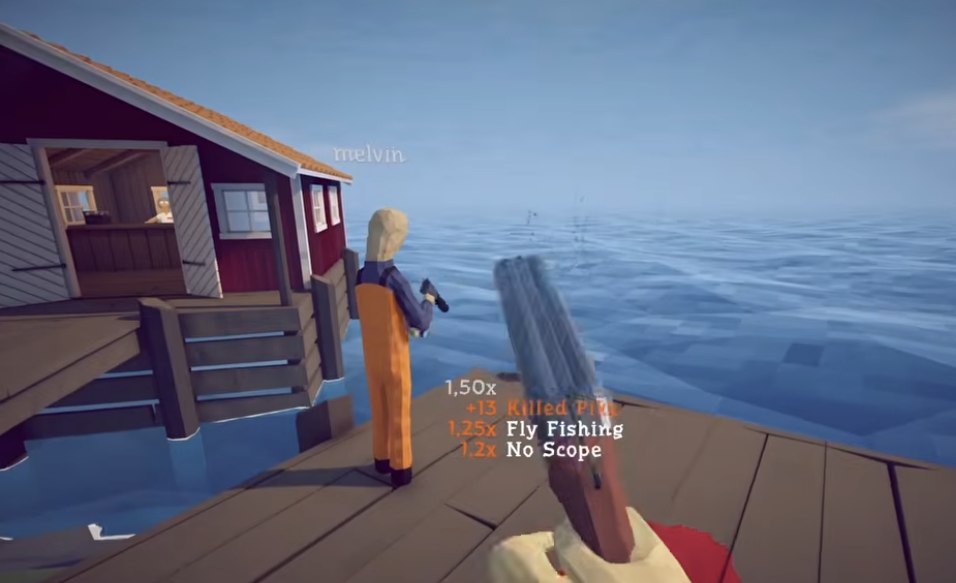
How to Fish casts players as a group of friends who crash their boat onto an island and must catch, kill and sell fish to earn money for upgrades that will eventually get them home. While the core loop involves casting a line and reeling in catches, the game expands the concept with a wide range of weapons and tools. Players can dispatch fish with brass knuckles, submachine guns, dynamite and other implements. A killscore multiplier rewards impressive or inventive methods of taking down the catch, increasing its sale value.

Progression moves players to new islands featuring more difficult creatures and tougher boss encounters. The straightforward cycle of fishing, eliminating the catch, selling it and reinvesting the proceeds supports both casual sessions and longer co-op runs. The game supports multiplayer for small groups, fitting the growing category of affordable, physics-driven party titles sometimes described as “friendslop” for their emphasis on shared, often chaotic entertainment rather than complex systems or competitive balance.

Dazed Games has already released multiple patches addressing bugs and making balance adjustments. In its Steam announcement of the sales figure, the studio offered a concise update on future plans: “Yes, we’ll be adding more content! Yes, we’ll be fixing bugs!”

The success arrives amid a broader wave of inexpensive multiplayer games that prioritize approachable mechanics, short play sessions and social humor. Titles in this space often gain traction through streaming and short-form video clips that highlight unexpected physics interactions or group failures. How to Fish’s combination of fishing with over-the-top weaponry and trick-shot scoring appears well suited to that discovery path.

Advertisement

Early player feedback has highlighted the contrast between the game’s relaxed premise and its more aggressive options for dealing with fish. The ability to no-scope or punch catches, then sell them for higher returns based on the spectacle of the kill, has become a recurring point of discussion. Boss fights add challenge that can stretch sessions beyond the basic loop, while the boat-upgrade goal provides a light narrative frame for the progression.

The launch timing placed How to Fish against several anticipated titles, including major betas and sequels. Its ability to claim a prominent position on the top sellers chart and sustain high concurrent numbers demonstrates the continued strength of the indie multiplayer segment on Steam. Affordable pricing reduces the barrier for groups of friends to buy in together, while the short learning curve encourages repeated sessions.

Industry observers have noted that such games often benefit from rapid iteration after launch. Dazed Games’ early patches suggest an intent to stabilize the experience quickly while players are still discovering the title. The promise of additional content leaves open the possibility of expanded maps, new weapons, creatures or modes that could extend the game’s lifespan beyond the initial surge.

How to Fish joins a lineage of physics-based multiplayer experiments that have found large audiences by leaning into absurdity and shared laughter. Its specific blend of fishing simulation, combat tools and score multipliers distinguishes it within that category. The high concurrent peaks indicate that many players are not only purchasing the game but actively playing it in groups during the launch window.

Advertisement

As the introductory discount period continues, the studio faces the typical post-launch challenges of managing servers, addressing remaining technical issues and deciding which features to prioritize next. The 1 million sales figure provides a strong foundation for further development, though sustaining interest will depend on the quality and frequency of updates.

For now, How to Fish stands as a clear example of how a focused concept, low price and multiplayer design can generate outsized results on digital storefronts. What began as a quirky fishing simulator has become a mainstream Steam success story in a matter of days, drawing players with the simple promise of catching fish by any means necessary and turning those catches into a ticket home.

The coming weeks will reveal whether the early momentum translates into longer-term engagement or remains a concentrated launch phenomenon. Dazed Games has signaled that more content and fixes are on the way. In the meantime, the combination of positive reviews, high player counts and rapid sales has secured How to Fish a prominent place in the current conversation around indie multiplayer games.

Advertisement
Continue Reading
Click to comment

You must be logged in to post a comment Login

Leave a Reply

Business

Iran’s currency rial hits record low as US plans more sanctions

Published

on

Iran's currency rial hits record low as US plans more sanctions
Iran’s currency hit a new record low Monday, with the rial dropping to 2.02 million to the US dollar as markets opened, as the economy has been battered by ongoing sanctions and an American naval blockade.

The drop on Iran’s informal currency markets came as Washington prepared to announce even more extensive sanctions that it said would be an “economic D-Day” and would add further pressure.

The currency had already been under pressure before the US and Israel attacked Iran on February 28, amid double-digit inflation and negative growth but has been hitting new record lows as nearly six months of war have taken an even greater toll.

Continue Reading

Business

Raiders donate $25 million to Nevada’s first stand-alone children’s hospital

Published

on

Raiders donate $25 million to Nevada's first stand-alone children's hospital

The Raiders continue to impact the Las Vegas community, as they announced their largest philanthropic commitment in the franchise’s history on Monday. 

The Raiders and Intermountain Health announced a $25 million gift to help build Nevada’s first-ever stand-alone children’s hospital. 

Advertisement

The gift by the Raiders was led by owners Mark Davis, Egon Durban, and Michael Meldman, who each contributed $5 million toward the hospital’s development. The Raiders committed an additional $10 million for this game-changing gift. 

CLICK HERE FOR MORE SPORTS COVERAGE ON FOXBUSINESS.COM

Raiders owner Mark Davis reacts on field

Owner Mark Davis of the Las Vegas Raiders reacts before a preseason game against the Houston Texans at Reliant Stadium on Aug. 20, 2026 in Houston, Texas. (Tim Warner/Getty Images / Getty Images)

“We want this gift to remind children and families that they have our team backing them and that the support of the entire Raider Nation is in their corner,” Davis said in a statement about the philanthropic achievement. 

Mitch Cloward, Intermountain Health’s region president, added: “The Raiders are committed to excellence, and this gift is a generational investment that will keep families closer, strengthen our community, and give every kid every chance to thrive.

Advertisement

RAIDERS STAR ASHTON JEANTY SUFFERS APPARENT LEG INJURY DURING TRAINING CAMP PRACTICE, HELPED OFF FIELD

The hospital, which will be located at the UNLV Harry Reid Research and Technology Park, will be the first of its kind in Nevada, “anchoring a new future for kids and families across the state and delivering comprehensive, high-acuity pediatric care.”

The building will be 828,000 square feet and will rest on a 33-acre campus with 180 patient beds, with the design allowing room to grow. 

The hospital will provide advanced emergency services designed specifically for children and a full-spectrum outpatient center alongside with inpatient and specialty care. 

Advertisement
Raiders fans looks on field

Las Vegas Raiders fans cheer from the stands prior to an NFL football game against the Cleveland Browns, at Allegiant Stadium on Sept. 29, 2024 in Las Vegas, Nevada. (Brooke Sutton/Getty Images / Getty Images)

And as a result of the $25 million gift, Intermountain Health Nevada Children’s Hospital’s physical therapy and rehabilitation space, as well as its bistro, will be named in the Raiders’ honor. 

It will be the Las Vegas Raiders Bistro, which will sit adjacent to the hospital’s main lobby. The press release noted this as “a space where caregivers and parents navigating the complexities of having a child in the hospital can pause,” providing “a quiet meal, or seeking a moment of normalcy” where families can find support.

“Sports reminds us that we do our best when we have the right team around us,” Meldman said in a statement. “Families deserve to feel supported every step of the way. In addition to the experts at Intermountain Health, the Raiders family stands with our community’s kids.”

The Las Vegas Raiders Inpatient Rehab Gym will also play a vital role in helping children “heal, grow stronger, and regain confidence through movement and play.” The space will provide advanced therapeutic equipment alongside some playful design elements to make therapy feel more empowering and fun. 

Advertisement
Mark Davis looks on

Owner and managing general partner Mark Davis of the Las Vegas Raiders walks onto the field before a game against the Denver Broncos at Allegiant Stadium on Dec. 7, 2025 in Las Vegas, Nevada. (Chris Unger/Getty Images / Getty Images)

GET FOX BUSINESS ON THE GO BY CLICKING HERE

“When we invest in children, we invest in everything that comes next – their education, their opportunities, and their future,” Sandra Douglass Morgan, president of the Raiders, said in a statement. “We want Nevada’s kids to know that their home team is cheering them on.”

Construction on the landmark hospital is expected to start in coming months, with an anticipated opening date coming for 2030. 

Advertisement
Continue Reading

Business

WW International: Upgrade To Hold As The Worst Seems To Be Over

Published

on

WW International: Upgrade To Hold As The Worst Seems To Be Over

WW International: Upgrade To Hold As The Worst Seems To Be Over

Continue Reading

Business

McEwen names Shaver’s successor, promotes three executives

Published

on


McEwen names Shaver’s successor, promotes three executives

Continue Reading

Business

US-Canada trade war heats up as Trump threatens to hike auto tariffs

Published

on

US President Donald Trump delivers remarks outside the White House. He is speaking at a podium with the US presidential seal at the front. He is wearing a dark navy blue suit and a yellow tie. Behind him are several US flags.

Meanwhile, Ontario’s outspoken premier, Doug Ford, whose province is home to Canada’s auto manufacturing industry, responded to Trump’s tariffs and threats by telling the US president to “kiss my ass”.

Ford also suggested that Canada should charge the US extra for its oil and gas, as well as electricity and critical minerals, adding that he will be speaking to Carney on ways to “fight back”.

His comments appeared to catch the attention of Trump, who in a Truth Social post accused Ford of “bluster” and wrote: “Someone should get these clowns to ‘fall in line’ or, the consequences for Canada will be far WORSE!”.

Canada accounts for 60% of total US crude oil imports and close to 100% of US natural gas exports, according to Canadian government data.

Advertisement

Businesses on both sides have warned that they stand to be impacted by the new wave of US tariffs on Canada, as well as the “dollar-for-dollar” retaliatory tariffs that Canada plans to impose on 8 September.

The trade war also put into question the future of an existing North American trade pact, known as the UMSCA, that was signed by Trump in his first term with Canada and Mexico.

During a mandatory review this summer, both Canada and Mexico said they want the USMCA extended for another 16 years. The US, however, said it will not renew in its current form.

The pact underpins $1.6tn in North American trade.

Advertisement

Experts with Oxford Economics warned on Monday that a dismantling of USMCA could have dire economic consequences for Canada.

“While unlikely, escalating trade tensions means the risk of the USMCA unravelling has increased, which would plunge Canada into recession and leave it on a permanently lower growth path,” warned Head of Canada Economic Tony Stillo and Senior Economist Michael Davenport.

Continue Reading

Business

Bitcoin eyes $80k for first time since mid-May after best week in over three years

Published

on


Bitcoin eyes $80k for first time since mid-May after best week in over three years

Continue Reading

Business

Micron Stock Plunges Over 6% to $906 as Memory Chip Selloff Hits Amid Broader Tech Weakness

Published

on

Earnings News: Micron Technology Inc (NASDAQ: MU)

BOISE, Idaho — Shares of Micron Technology Inc. fell more than 6 percent on Monday, extending pressure on memory-chip makers as investors reacted to broader technology-sector weakness, disappointment over a major peer’s capital-return plans and caution ahead of key industry earnings.

Micron stock traded at $906.48 in midday action, down $60.30 or 6.24 percent, according to market data from Aug. 24. The decline came amid a selloff that also hit other semiconductor names, including rivals in the high-bandwidth memory space that powers artificial-intelligence accelerators.

The move reflected a combination of sector-wide risk reduction and specific concerns about the sustainability of elevated valuations after a powerful multi-month rally driven by AI demand. Semiconductor stocks broadly weakened as traders reduced exposure ahead of Nvidia’s earnings report later in the week. Rising Treasury yields and geopolitical tensions further weighed on high-growth technology shares.

A contributing factor was investor reaction to Samsung Electronics’ shareholder-return announcement, which some market participants viewed as less aggressive than hoped. Memory-related stocks, including Micron, Sandisk and SK Hynix, traded lower in response. Additional pressure came from reports of potential increased capacity from Chinese producers and profit-taking following Micron’s substantial gains earlier in the year.

Advertisement

Despite the sharp session decline, Micron’s recent operational performance remains exceptionally strong. In its fiscal third-quarter results reported in late June, the company posted revenue of $41.46 billion, more than quadrupling from the year-earlier period and exceeding analyst expectations by a wide margin. Non-GAAP diluted earnings per share reached $25.11. Gross margins expanded significantly, approaching 85 percent, reflecting tight supply and robust pricing for advanced memory products.

Management guided for fiscal fourth-quarter revenue of approximately $50 billion, plus or minus $1 billion, with gross margins near 86 percent. Data-center related revenue has become a dominant driver, supported by surging demand for high-bandwidth memory used alongside AI accelerators from major chip designers.

“Micron’s record fiscal Q3 financial results and even stronger outlook for Q4 reflect the strategic value of memory in the AI era,” President and Chief Executive Sanjay Mehrotra said in the company’s earnings statement.

Micron has emphasized that demand for high-performance memory continues to outstrip available supply. The company’s HBM production for 2026 is largely committed under multi-year agreements, and it has secured substantial customer cash deposits to lock in future volumes. HBM4 products are ramping faster than prior generations, with early revenue already exceeding $1 billion in some reports.

Advertisement

In recent comments, Mehrotra underscored the structural nature of the demand shift. “We see no end when supply catches up with demand, and the demand continues to grow,” he said. He has also stated that “Today there is no AI without memory,” highlighting how AI systems require increasing quantities of higher-performance, lower-power memory that extends beyond data centers into other applications over time.

The company has signed multiple strategic customer agreements covering significant portions of its DRAM and NAND output, providing greater visibility than in previous memory cycles. These contracts, some spanning five years, include minimum volumes and pricing terms intended to reduce traditional boom-bust volatility. Micron is simultaneously investing heavily in new capacity, including U.S. manufacturing expansions, to address the shortfall while supporting longer-term customer roadmaps.

Monday’s decline occurred against a backdrop of elevated expectations. Micron shares had more than tripled over the prior year at points, reflecting the rapid improvement in profitability as AI-related memory pricing and volumes surged. The stock’s sensitivity to macroeconomic signals, peer announcements and shifts in risk appetite has increased alongside its valuation.

Analysts continue to cite the company’s strong order book, high margins and multi-year customer commitments as supportive of the longer-term outlook, even as near-term trading remains volatile. Capital spending has been raised to support HBM and advanced DRAM production, with management balancing expansion against the need to maintain disciplined returns.

Advertisement

The memory industry has historically been cyclical, with periods of shortage giving way to oversupply and price declines. Micron executives have argued that AI has altered the equation by making memory a more strategic and less commoditized component, with customers designing systems years in advance and locking in supply through formal agreements. Whether this shift fully dampens traditional cycle dynamics remains a key question for investors.

Broader market factors added to the pressure. Concerns about the pace of AI infrastructure returns, higher interest rates and potential increases in global memory capacity have prompted some portfolio managers to trim positions after large gains. Reports of Chinese producers exploring public listings or capacity expansions have also surfaced as a competitive consideration, though advanced HBM performance leadership currently remains concentrated among established players.

For the immediate term, attention is likely to focus on how memory stocks trade around Nvidia’s results and any further signals on AI capital spending from major cloud providers. Micron’s next earnings update will provide fresh data on fourth-quarter performance, HBM ramp progress and the durability of pricing and margins.

The company continues to position itself as a critical supplier in the AI ecosystem, with data-center memory demand running at annualized rates well above prior cycles. Cash generation has strengthened alongside profitability, supporting both reinvestment and returns to shareholders.

Advertisement

Monday’s drop illustrates the tension between exceptional near-term fundamentals and the market’s ongoing assessment of valuation, competition and the longevity of the current supply-demand imbalance. Micron’s shares have demonstrated both substantial upside during periods of tight supply and sharp corrections when sentiment shifts. The coming weeks and quarters will test whether the combination of long-term contracts, capacity investments and AI-driven structural demand can sustain elevated performance amid fluctuating investor risk tolerance.

Continue Reading

Business

Alibaba Shares Plunge Nearly 9% After $10 Billion Share Sale to Fund Aggressive AI Expansion

Published

on

Sadot Group Stock Surges Nearly 90% to $25 on Debt

HONG KONG — Shares of Alibaba Group Holding Ltd. fell sharply on Monday after the Chinese technology company finalized a large share placement aimed at funding its artificial-intelligence ambitions, with investors focusing on dilution and the near-term costs of heavy capital spending.

Alibaba’s Hong Kong-listed stock closed at 112.50 Hong Kong dollars, down 10.50 dollars or 8.54 percent, according to market data from Aug. 24. The shares had fallen as much as about 10.5 percent earlier in the session before stabilizing near the placement price. The decline followed the announcement of a roughly 80 billion Hong Kong dollar ($10.2 billion) offering of 710 million new shares priced at 112.70 Hong Kong dollars each, representing an 8.4 percent discount to the previous closing level.

The deal ranks as the largest primary follow-on equity offering by a Hong Kong-listed company and among the biggest globally this year. Alibaba said the net proceeds will be used entirely to build out its full-stack AI capabilities and related infrastructure, including chips, computing capacity and models. The placement attracted robust demand, with the order book reportedly reaching about $28 billion, including significant interest from long-only and sovereign investors.

The fundraising comes one week after Alibaba reported results for the quarter ended June 30 that highlighted both the momentum and the expense of its AI push. Group revenue rose 9 percent year over year to 268.95 billion yuan. Revenue from AI Cloud and Compute Services accelerated to 45 percent growth, while AI-related product revenue delivered its twelfth consecutive quarter of triple-digit year-over-year increases. Alibaba Cloud maintained a leading position in China’s AI cloud market.

Advertisement

“We delivered a strong quarter, driven by the improving commercialization of our full-stack AI capabilities,” Chief Executive Eddie Wu said in the company’s earnings statement. “Alibaba Cloud’s external revenue growth accelerated to 45%, with AI-related product revenue delivering triple-digit growth for the twelfth consecutive quarter. We recently launched frontier language, coding, video, audio, image and music models, all delivering top-tier performance. We introduced QwenWork, an AI workforce agent that unleashes enterprise productivity and capabilities. With our full-stack AI strategy, we have put Alibaba in a superior position to capture the substantial growth of demand for artificial intelligence and AI compute.”

Despite the top-line progress, profitability came under pressure. Net profit fell 75 percent from a year earlier, primarily reflecting higher AI-related spending. Capital expenditure rose 75 percent in the quarter as the company accelerated infrastructure buildout. Management noted that it had already deployed nearly half of a multi-year capital expenditure plan and brought forward the expected payback period on AI investments to about two and a half years from three, citing stronger-than-expected demand for AI services.

Wu has emphasized the need for continued investment to secure long-term growth. The company has been expanding its data-center footprint, including a recent addition in South Korea that brought its global network to more than 100 availability zones. Alibaba is also developing proprietary chips with the goal of reducing reliance on commercially procured processors over time, which executives say could improve margins as deployment scales.

Investor reaction to the share sale mixed recognition of AI’s strategic importance with concerns about near-term dilution and returns. The new shares represent approximately 3.6 percent of the enlarged share count. Some market participants questioned whether the scale of spending would translate into commensurate profitability, especially as e-commerce growth remains more moderate and competition in AI intensifies both domestically and globally.

Advertisement

Alibaba has positioned its AI efforts as a full-stack strategy encompassing models such as the Qwen series, cloud infrastructure, applications and supporting hardware. AI-related offerings now form a growing portion of cloud revenue, and the company has highlighted improving commercialization through products aimed at enterprise productivity and consumer use cases. Cloud segment margins have shown improvement even as overall group profitability absorbs the investment phase.

The stock’s decline on Monday occurred against a broader backdrop of scrutiny over AI capital expenditure across the technology sector. Investors globally have grown more selective about the timeline for returns on large-scale infrastructure outlays. For Alibaba, the combination of a discounted equity raise and the recent profit contraction amplified those concerns in the short term.

Company executives have maintained that the investments are necessary to capture demand for AI compute and services. Alibaba Cloud continues to rank as a market leader in China, and management has pointed to accelerating external revenue growth and rising annualized run rates for AI products as evidence that commercialization is advancing. The shortened payback guidance reflects higher utilization and demand visibility than previously assumed.

Beyond AI, Alibaba’s core e-commerce and related businesses continue to generate the bulk of revenue, though growth rates have moderated compared with earlier years. Quick commerce and international platforms remain areas of focus, with ongoing efforts to improve unit economics. The company’s overall strategy centers on leveraging its ecosystem to integrate AI capabilities across consumer and enterprise offerings.

Advertisement

Monday’s share-price reaction underscores the tension between long-term strategic bets and immediate financial metrics. The successful placement provides additional capital for infrastructure expansion at a time when demand for AI services is rising rapidly. Whether the dilution and elevated spending ultimately support higher valuations will depend on the pace at which Alibaba converts infrastructure investments into sustained, profitable growth in its cloud and AI businesses.

Trading in the shares is expected to remain sensitive to further updates on capital expenditure, cloud growth rates, AI product monetization and any additional financing or partnership developments. Alibaba’s next earnings report will offer a clearer view of progress against its multi-year investment plan and the trajectory of profitability as AI commercialization continues.

Continue Reading

Business

Treasury appoints Jerry Schurder to lead pub and hotel business rates reform review

Published

on

Business Live

The Government is launching an independent review into how business rates are calculated for pubs and hotels

Friends enjoying pints of beers

Business rates are a ‘burden’ for pubs and bars, UK Hospitality says(Image: Getty Images)

The Treasury has appointed an expert to examine how business rates are calculated for pubs and hotels and put forward recommendations for overhauling the system.

Advertisement

Jerry Schurder, former business rates policy lead at advisory firm Newmark UK, will head the independent review into valuations and deliver his findings to the Treasury by the end of March 2027.

The Government is also inviting evidence from landlords, brewers, hoteliers and business owners.

The move follows a 20% reduction in business rates bills announced to alleviate cost pressures on pubs, social clubs and live music venues from April next year.

The announcement was broadly welcomed, though there were calls to extend the relief to a wider range of businesses and to pursue more sweeping changes to the system.

Advertisement

No 10 has indicated it will seek to outline further reforms, including small business rates relief, at the Budget.

Financial Secretary to the Treasury James Murray said: “Pubs and hotels are vital for communities and bringing growth to every postcode.

“Last month we announced tax cuts for pubs to give them the breathing room they need. Today we’re going further with a rethink of valuations – so that we can build a fairer system for the future.”

Emma McClarkin, chief executive of the British Beer and Pub Association, said: “For years pubs have paid a disproportionately higher business rates bill which has ground down their ability to keep the doors open, so this review is sorely needed and hugely welcome.”

Advertisement

Neal Jones, EMEA president at Marriott International, said: “The current valuation methodology creates a significant burden for hotels, and it is right that the system is being examined to ensure it is fair, transparent, and reflective of today’s market realities.”

Allen Simpson, chief executive at UK Hospitality, said: “Business rates remain a significant burden for hospitality businesses and the system needs to better reflect the trading realities for the sector.

“Comprehensive review and reform can address these challenges, while also supporting investment and growth.”

Braden Saunders, UK Spirits Alliance spokesperson and owner of Battersea-based Doghouse Distillery and Bar said: “The Prime Minister’s business rates cut for hospitality costs £100 million.

Advertisement

“The excise duty hike at the last budget lost the Treasury nearly the same amount in spirits revenue last year.

“Cut excise duty on spirits, fund the rates cut – it pays for itself. We welcome this review and look forward to engaging.”

Shadow chancellor Sir Mel Stride warned that the impact of the move, with recommendations set to be implemented at the next 2029 business rates revaluation, would arrive too late.

He said: “Tax hikes on business premises and jobs, alongside job-destroying regulation in the Employment Rights Act, have left many hospitality businesses on the brink.”

Advertisement

The Conservatives would scrap business rates for tens of thousands of retail, hospitality and leisure businesses, he added. Liberal Democrat Treasury spokesperson Daisy Cooper said: “This can’t be an excuse for not taking bolder and more urgent action to save our high streets now.

“Fundamental reform of business rates is long overdue, but every day high street businesses are deciding whether they can keep the doors open.”

She called on Labour to adopt her party’s proposals for an emergency VAT reduction ahead of next April, followed by a comprehensive overhaul of business rates, the removal of so-called ghost landlords and a reversal of changes to employer National Insurance Contributions.

Advertisement
Continue Reading

Business

ATRenew: Q2 Performance Validates My Thesis (NYSE:RERE)

Published

on

ATRenew: Q2 Performance Validates My Thesis (NYSE:RERE)

This article was written by

Dilantha De Silva is an experienced equity analyst and investment researcher with over 10 years in the investment industry. He writes insightful articles for Seeking Alpha, GuruFocus, TipRanks, and ValueWalk, with a significant following on Seeking Alpha. Dilantha’s expertise spans across various sectors, with a particular focus on small-cap stocks that are overlooked by Wall Street analysts. He is a CFA Level III candidate and holds qualifications from the Chartered Institute for Securities and Investment (CISI). Dilantha has been featured on CNBC and Bloomberg, and his work has been prominently showcased on Nasdaq, Yahoo Finance, and other leading investment platforms. When not analyzing stocks and writing, Dilantha is involved in private equity transactions, including acquiring and managing businesses.

Analyst’s Disclosure: I/we have no stock, option or similar derivative position in any of the companies mentioned, and no plans to initiate any such positions within the next 72 hours. I wrote this article myself, and it expresses my own opinions. I am not receiving compensation for it (other than from Seeking Alpha). I have no business relationship with any company whose stock is mentioned in this article.

Seeking Alpha’s Disclosure: Past performance is no guarantee of future results. No recommendation or advice is being given as to whether any investment is suitable for a particular investor. Any views or opinions expressed above may not reflect those of Seeking Alpha as a whole. Seeking Alpha is not a licensed securities dealer, broker or US investment adviser or investment bank. Our analysts are third party authors that include both professional investors and individual investors who may not be licensed or certified by any institute or regulatory body.


Advertisement
Continue Reading

Trending

Copyright © 2025