



Connect with us

Tech

GLM-5.3 hits the API at $1.4/$4.4 per million tokens

Published

on

After a stunning debut last week with cyber capabilities so advanced they reportedly found a previously undetected vulnerability in Cursor, GLM-5.3, the new frontier open source language model from Chinese startup z.ai, has now hit the application programming interface (API) — allowing developers the ability to build atop it and plug it into their agents and applications.

Developers who previously subscribed to a GLM Coding Plan are currently limited to the OpenAI Chat Completions-compatible protocol. Z.ai said it plans to make the model’s weights openly available, but a precise date and licensing remain to be seen.

On the API, the price is unchanged from GLM-5.2: $1.40 per million input tokens and $4.40 per million output tokens. Cached input costs $0.26 per million tokens, while Z.ai currently lists cached-input storage as free for a limited time.

That means developers can move to the new generation without taking a higher posted per-token rate from Z.ai, even as the company claims substantially stronger coding and long-horizon agent performance.
At those rates, GLM-5.3 sits well below several of the highest-end frontier APIs.

Advertisement

Model

Input ($/1M)

Output ($/1M)

Total ($/1M)

Advertisement

Source

Muse Spark 1.2 Contributor

$0.10

$0.20

Advertisement

$0.30

Meta

MiMo-V2.5 Flash

$0.10

Advertisement

$0.30

$0.40

Xiaomi

DeepSeek-V4-Flash — off-peak

Advertisement

$0.22

$0.66

$0.88

DeepSeek

Advertisement

GPT-5.6 Luna

$0.20

$1.20

$1.40

Advertisement

OpenAI

MiniMax-M3

$0.30

$1.20

Advertisement

$1.50

MiniMax

LongCat-2.0 — limited-time promo

$0.30

Advertisement

$1.20

$1.50

LongCat

DeepSeek-V4-Flash — peak hours

Advertisement

$0.44

$1.32

$1.76

DeepSeek

Advertisement

MiMo-V2.5

$0.40

$2.00

$2.40

Advertisement

Xiaomi

DeepSeek-V4-Pro — off-peak

$0.66

$1.98

Advertisement

$2.64

DeepSeek

LongCat-2.0 — standard

$0.75

Advertisement

$2.95

$3.70

LongCat

MiMo-V2.5 Pro (≤256K)

Advertisement

$1.00

$3.00

$4.00

Xiaomi

Advertisement

Gemini 3.6 Flash — through Dec. 31, 2026

$0.75

$3.75

$4.50

Advertisement

Google

Gemini 3.7 Flash — through Dec. 31, 2026

$0.75

$3.75

Advertisement

$4.50

Google

DeepSeek-V4-Pro — peak hours

$1.32

Advertisement

$3.96

$5.28

DeepSeek

Muse Spark 1.1 / 1.2

Advertisement

$1.25

$4.25

$5.50

Meta

Advertisement

GLM-5.3

$1.40

$4.40

$5.80

Advertisement

Z.AI

Grok 4.6 — <200K prompt tokens

$2.00

$6.00

Advertisement

$8.00

xAI

MiMo-V2.5 Pro (>256K)

$2.00

Advertisement

$6.00

$8.00

Xiaomi

Qwen3.8-Max

Advertisement

$2.00

$6.00

$8.00

QwenCloud

Advertisement

Gemini 3.6 Flash — starting Jan. 1, 2027

$1.50

$7.50

$9.00

Advertisement

Google

Gemini 3.7 Flash — starting Jan. 1, 2027

$1.50

$7.50

Advertisement

$9.00

Google

GPT-5.6 Terra

$2.00

Advertisement

$12.00

$14.00

OpenAI

Grok 4.6 — ≥200K prompt tokens

Advertisement

$4.00

$12.00

$16.00

xAI

Advertisement

GPT-5.4

$2.50

$15.00

$17.50

Advertisement

OpenAI

Kimi K3

$3.00

$15.00

Advertisement

$18.00

Moonshot AI

Claude Opus 5

$5.00

Advertisement

$25.00

$30.00

Anthropic

Sakana Fugu Ultra (≤272K)

Advertisement

$5.00

$30.00

$35.00

Sakana AI

Advertisement

GPT-5.6 Sol — Standard mode

$5.00

$30.00

$35.00

Advertisement

OpenAI

Claude Fable 5 / Claude Mythos 5

$10.00

$50.00

Advertisement

$60.00

Anthropic

GPT-5.6 Sol — Fast mode

$10.00

Advertisement

$60.00

$70.00

OpenAI

Using the simple VentureBeat comparison of one million input tokens plus one million output tokens, GLM-5.3 comes to $5.80, versus $8 for Grok 4.6 at its lower context rate, $18 for Kimi K3, $30 for Claude Opus 5 and $35 for GPT-5.6 Sol.

Advertisement

That is not a workload-cost estimate — real bills depend heavily on the input/output mix, caching and token consumption — but it makes the relative API price tier easy to see.

GLM-5.3 is not the cheapest capable model available. Google’s current introductory price for Gemini 3.7 Flash is $0.75 per million input tokens and $3.75 per million output tokens through Dec. 31, 2026, while OpenAI’s GPT-5.6 Luna is priced at $0.20 input and $1.20 output.

Still, Z.ai’s price puts GLM-5.3 into a notably lower cost band than the premium frontier models it is increasingly benchmarked against.

That comparison has become more relevant following the latest independent results. Artificial Analysis gives GLM-5.3 a score of 60 on its Intelligence Index, tying Kimi K3 as the top performing open weights model in the world, and scoring seven points higher than GLM-5.2. I

Advertisement

ts analysis also estimates GLM-5.3 at about $0.68 per Intelligence Index task, versus roughly $0.44 for GLM-5.2, despite the identical API token prices.

The difference underscores an important caveat in headline API pricing: Artificial Analysis found GLM-5.3 more verbose than its predecessor, so flat per-token rates do not necessarily mean flat costs for a completed workload.

For developers, though, the immediate change is straightforward: GLM-5.3 is now callable through Z.ai’s API at the same $1.40/$4.40 per-million-token rate as GLM-5.2, giving teams another relatively low-cost option for testing frontier-class coding and agent workloads.

Source link

Advertisement
Continue Reading
Click to comment

You must be logged in to post a comment Login

Leave a Reply

Tech

Sixty-Four Bits Arrive, Nintendo’s Long-Awaited Console Hits Shelves in 1996

Published

on

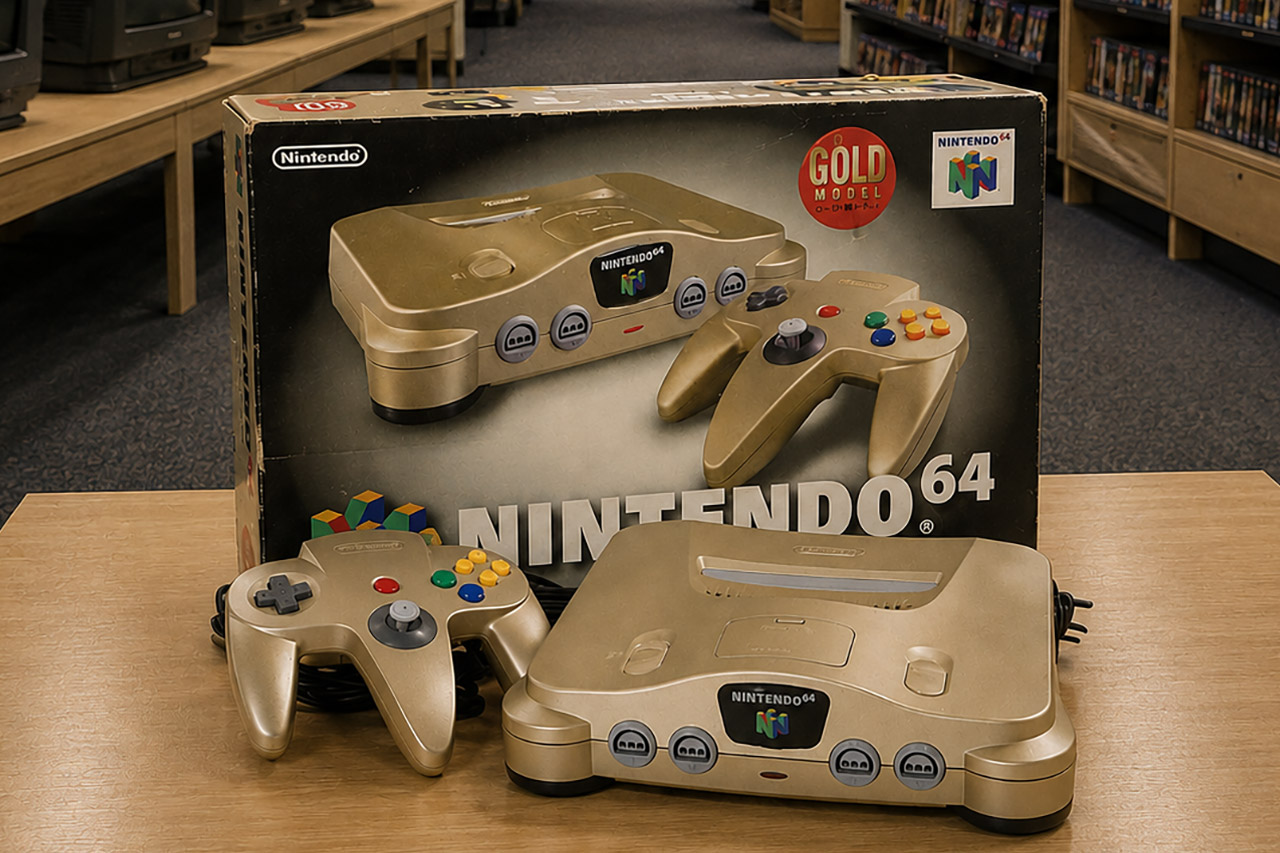
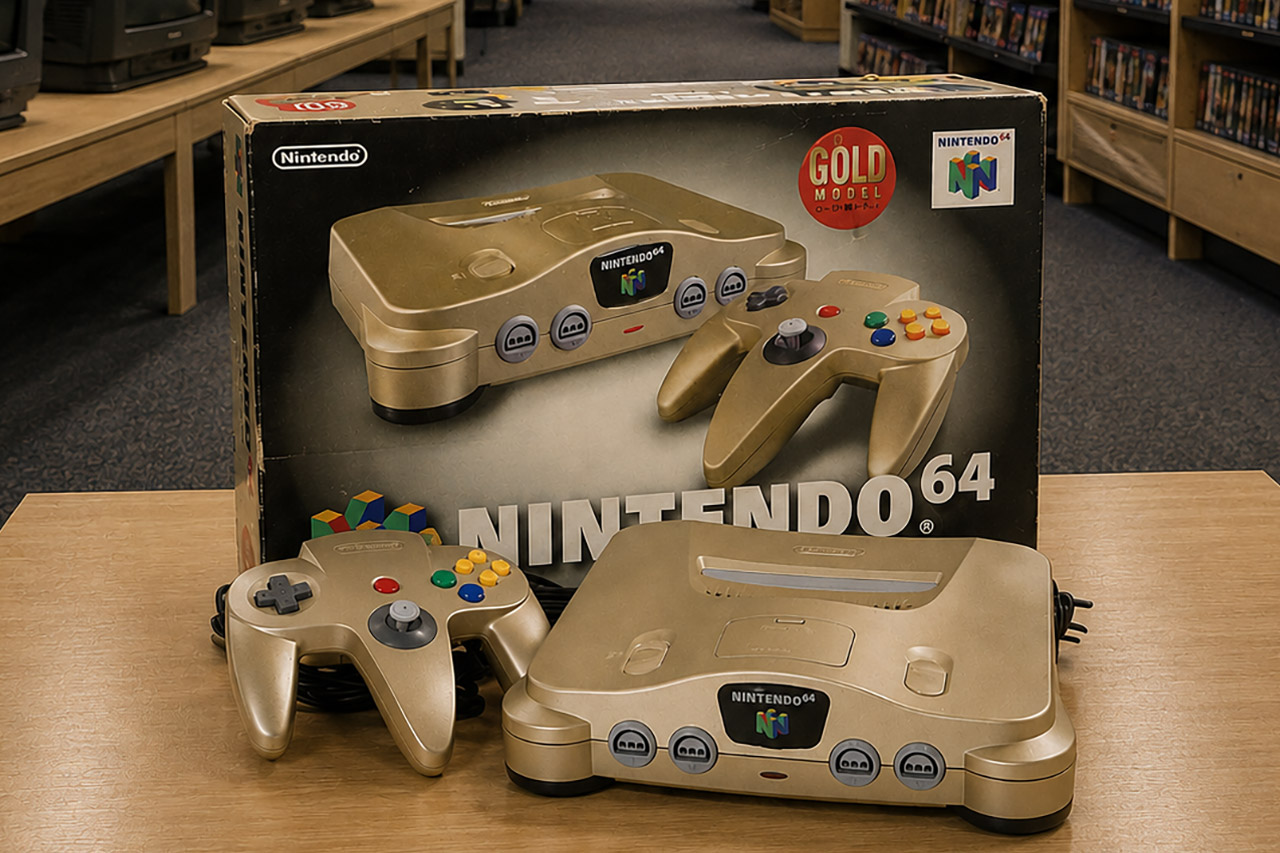
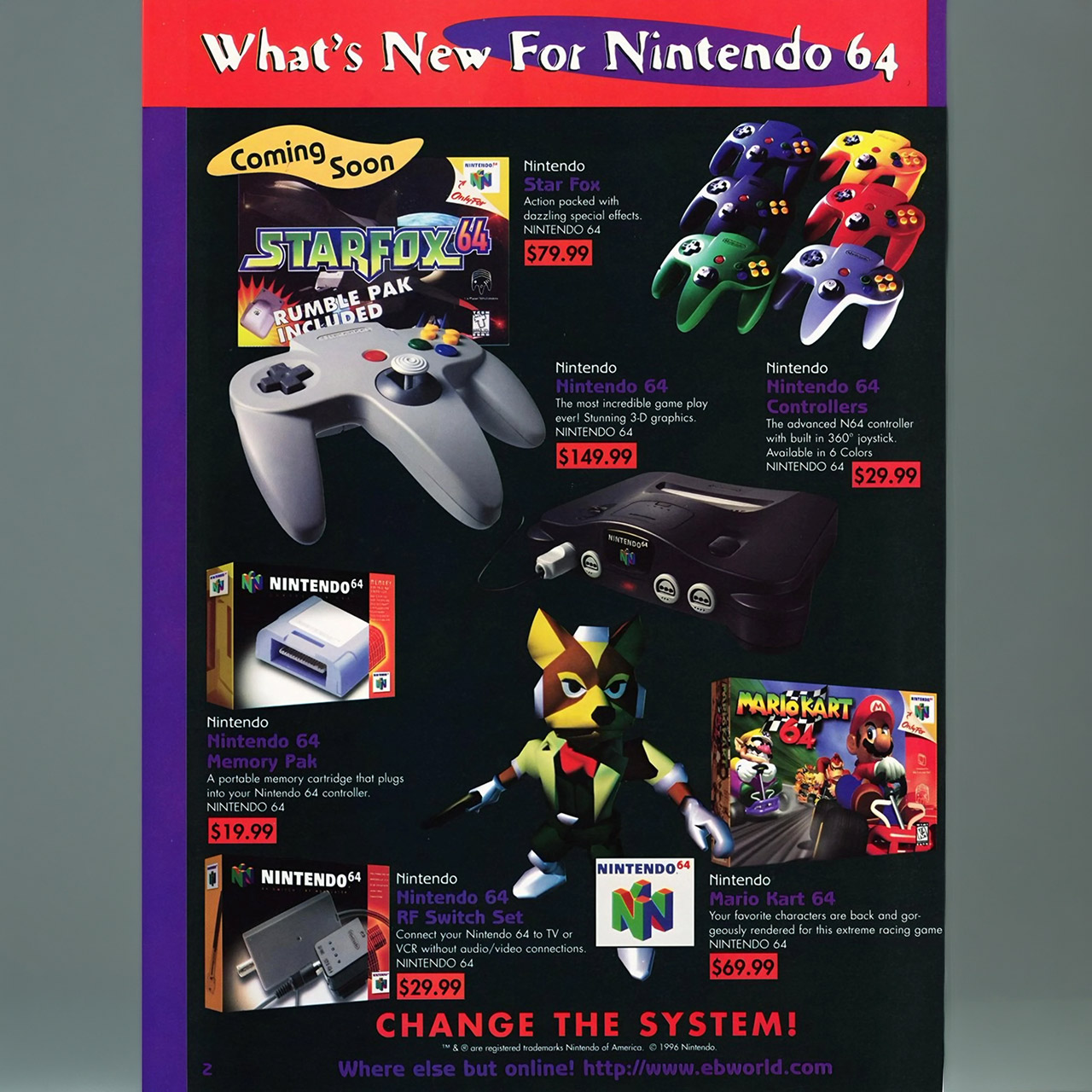
Nintendo N64 Launch Hype 1996
Nintendo finally put its next home system on sale in Japan on June 23, 1996. After years of delays and growing anticipation, the company shipped about 300,000 units for the first day. Every one sold. Three games sat on shelves alongside the hardware: Super Mario 64, Pilotwings 64, and a Shogi (Japanese chess) title limited to that market.


Instead of the previously announced rival systems, gamers were pleasantly surprised. A three-pronged controller was common, built around an analog stick that detected the pressure applied. Unlike prior digital pads, which only let you choose from a few predetermined orientations, this device allowed you to move freely in any direction you wanted. Super Mario 64 was the game that really brought everything home. Who would have thought we’d see Mario just walking, running, jumping, and exploring all these amazing three-dimensional areas within Peach’s castle and out in the worlds? With the camera angles altering to match your control, it felt like a game designed to be played in 3D.


LEGO Super Mario Donkey Kong Arcade 72051
  • BUILDABLE ARCADE CABINET – Relive the fun of playing an iconic arcade game with the LEGO Donkey Kong Arcade (72051) building set for adults ages…
  • AUTHENTIC ARCADE GAME DETAILS – Create a Donkey Kong arcade level featuring Jumpman, Donkey Kong and Lady, including iconic details like the…
  • WORKING JUMP AND DODGE PLAY – Pull the lever on the left side of the base to release one barrel at a time, then move Jumpman with the joystick and…


In North America, things didn’t arrive until September 29th, and many expected a higher price, but Nintendo came in at just $199.95 ($425.54 today) instead. This was a good thing because the competition outperformed them. Only two games were produced for the system: Super Mario 64 and Pilotwings 64. Of course, that didn’t seem to matter, as stores blew through the first shipment almost immediately. To make matters even more intriguing, several stores reported that their pre-orders had sold out before the official debut date. Nintendo of America later stated that more than half of all systems and software were sold during the opening weekend alone.


Games were all saved on cartridges, which was convenient because the data was ready to go, resulting in less annoying loading screens than before. The visuals were clear and substantial, thanks in part to the processor being based on one developed by Silicon Graphics for high-end visual effects work. The anti-aliasing smoothed out the edges slightly, and the textures were nice and crisp. All of this meant that previous titles released for other systems appeared to be quite bad in comparison.

Advertisement

Nintendo N64 Launch Hype 1996 Ad
Photo credit: Djf47021
Pilotwings 64 was another game that demonstrated how much superior the new stick was, since you could fly through the air with hang gliders, rocket packs, and other fancy equipment, performing all sorts of feats and challenges throughout these gorgeously realistic (for the time) landscapes. The analog stick was ideal since it allowed you to control your flight path in real time with extreme precision.

Nintendo N64 Launch Hype 1996 Ad
Photo credit: AveryYapps
Demand for the console remained high until the end of the year. Nintendo expected to sell over a million and a half systems in North America by the end of December, and the income was phenomenal, with hardware and software sales averaging hundreds of thousands per day. A few months later, other titles were launched, including Mortal Kombat Trilogy, Killer Instinct Gold, and Star Wars: Shadows of the Empire, providing new owners even more reasons to return to the stores.

Source link

Continue Reading

Tech

Physicists Entangle Quantum Memories Across a Record-Breaking 420 Kilometers

Published

on

alternative_right shares a report from Phys.org: Optical fibers are already the backbone of global communication systems. Recently, however, physicists have started to explore how their functionality could be boosted further by conveying information via entangled quantum particles — potentially enabling instantaneous exchanges of information across vast distances. Such a system could eventually be the basis of a future ‘quantum internet,’ offering a level of security and computing power beyond anything possible today. In new research published in Physical Review Letters, a team led by Xi-Yu Luo at the University of Science and Technology of China in Hefei has pushed that vision further than ever, entangling two quantum memories across 420 kilometers (261 miles) of optical fiber — more than four times the previous record.

Read more of this story at Slashdot.

Source link

Advertisement
Continue Reading

Tech

Fairphone’s Repairable Smartphones Debut in the US With the 6 Plus

Published

on

A smartphone that’s modular, easy to repair and more sustainable than competitors? That’s how the Dutch electronics-maker Fairphone markets its latest device, which is now available in the US.

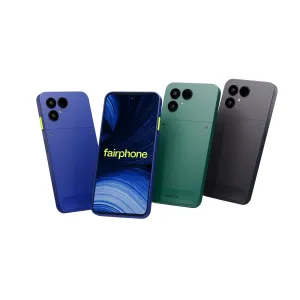
The Fairphone 6 Plus with Android 16, which works on AT&T and T-Mobile’s cell networks and costs $650 through the company’s website and on Amazon, comes in cobalt blue, horizon black and forest green.

The 6 Plus is a modest hardware upgrade from the original 6 model released last year. It has a new Qualcomm Snapdragon 7s Gen 4 chip and 12GB of RAM, up from the previous 8GB, but the same 6.31-inch OLED screen, 50MP main camera and 256GB capacity.

The big selling point of Fairphone’s devices is that they are easier to repair and more sustainably built. A screwdriver can be used to swap out 12 parts of the phone, including the display, battery, cameras and SIM tray. The phone has a five-year warranty, and the Android software is supported until 2033, according to its website. Highlighting its sustainability efforts, Fairphone says it is 100% e-waste neutral and that its phones are made with 50% recycled or fair factory-made materials.

Advertisement

Modular for life

Fairphone

Flagship smartphones from top phone-makers, including Apple and Samsung, are typically difficult, if not impossible, for most consumers to repair or replace parts on, and doing so can void product warranties. A cottage industry of repair stores, in addition to repair services that hardware makers offer themselves, can fix problems such as failing batteries or broken screens, but repairs can be costly.

There’s also an environmental component: Having the ability to repair your own device could extend its lifecycle. That’s one of the reasons consumer advocates have pushed for right-to-repair laws in all 50 states.

Gay Gordon-Byrne, executive director of The Repair Association, was pleased to hear the hear that the 6 Plus would be available in the US. “I’m sure there will be a lot of consumer interest and interest in teardowns and evaluations.”

A year ago, the teardown site iFixit gave the Fairphone 6 its highest repairability rating, 10 out of 10.

Source link

Advertisement
Continue Reading

Tech

Rotel Amora 5 Is Its First Speaker in Decades at $999, Challenging KEF, Wharfedale and Q Acoustics

Published

on

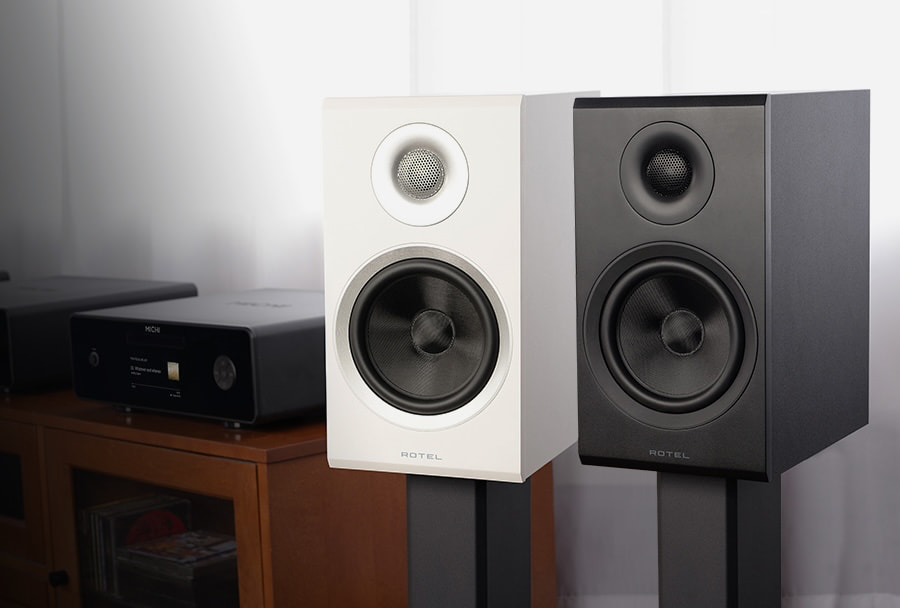
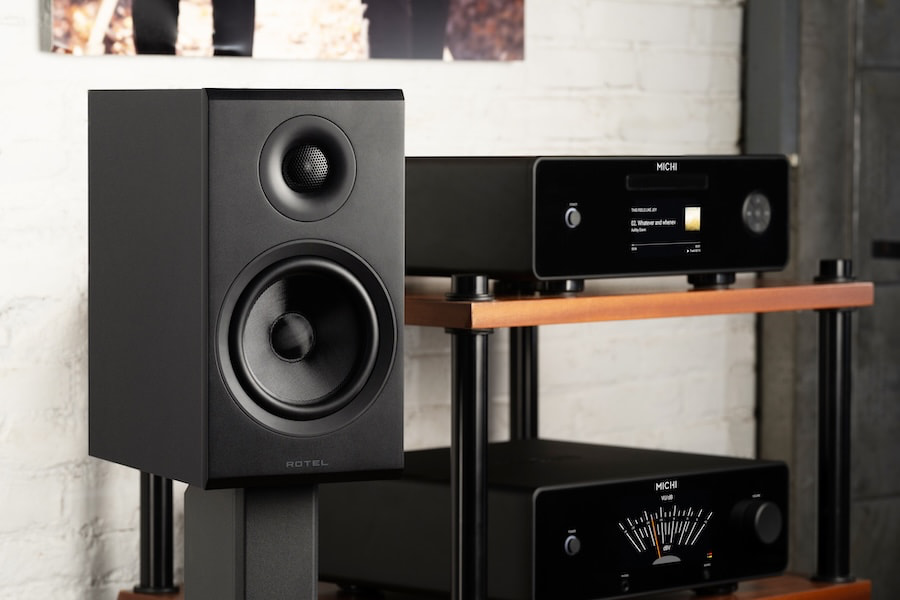
After several decades away from the loudspeaker category, Rotel is getting back into the game with the Amora 5, a passive two-way bass-reflex standmount speaker that marks a significant expansion of the company’s product lineup. Best known for its amplifiers, CD players, DACs, and other source components, Rotel is now extending that system approach all the way to the final link in the chain.

Priced at $999 per pair, the Amora 5 is designed to deliver a wide, open stereo image with low distortion, strong resolution, and a claimed frequency response of 48 Hz to 28 kHz. The compact standmount combines custom drive units, a precision-tuned crossover, and a rigid MDF enclosure, and while Rotel has clearly engineered it to pair naturally with its own electronics, the Amora 5 is intended to work just as comfortably in systems built around competing amplification.

rotel-amora-5-lifestyle-black-white

The Tweeter

The 1-inch (25 mm) silk-dome tweeter is mounted within an aluminum surround ring for rigid, secure installation, while a geometrically shaped ABS faceplate minimizes diffraction and provides a smooth transition to the cabinet baffle.

Mid/Bass Driver

The 6.5-inch (165 mm) woven-fiber composite midrange/bass driver incorporates a rigid aluminum frame to maintain mechanical stability and proper driver alignment. This design helps reduce structural vibration while maintaining consistent performance. A 2.5 kHz crossover integrates the tweeter and midrange/bass driver to deliver a balanced frequency response, focused imaging, and an open soundstage.

Advertisement
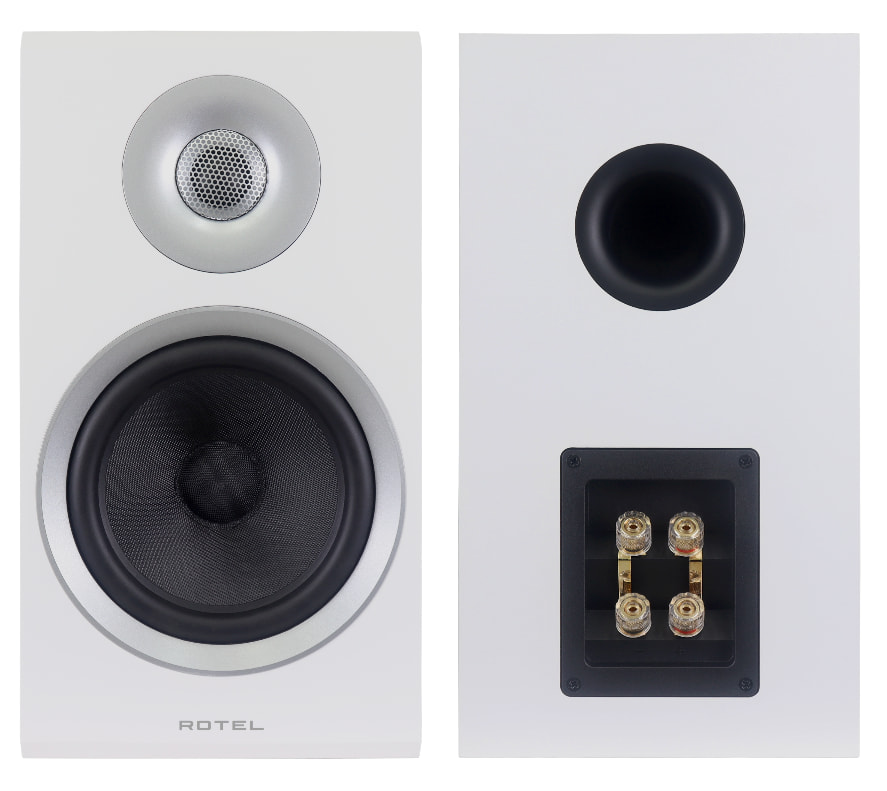
rotel-amora-5-front-back-white

The Cabinetry

The rigid MDF cabinet provides a stable acoustic foundation for the drive units, helping to minimize unwanted resonance. A rear-mounted bass-reflex port is tuned to extend low-frequency response down to 48 Hz while maintaining controlled bass performance.

Connection Terminals

For connectivity, the Amora includes dual sets of gold-plated speaker terminals that support standard single-wire or bi-wire connection options.

Grille 

rotel-amora-5-lifestyle-black-grille

The included speaker grille uses acoustically transparent fabric to maintain a clean appearance without compromising performance. It attaches magnetically and can be easily removed when desired.

Rotel’s success has always been built on trusted engineering, long-term relationships, and a shared passion for music,said Peter Kao, Managing Director of Rotel and third-generation member of the founding family. “With the Amora 5, we extend the Rotel experience through the final stage of the system, giving our global partners and customers a more complete path from source to speaker.”

Rotel Amora 5 Speaker Specifications

Rotel Model  Amora 5
Product Type Passive Bookshelf/Standmount Speaker
Price (MSRP) $999 / €999 / £999 per pair
Design  2-way bass-reflex loudspeaker 
Drive units  1 x 25 mm (1 in) silk dome tweeter 
1 x 165 mm (6.5 in) woven fibre composite midrange/bass
Port Rear Mounted
Crossover Frequency  2.5 kHz 
Frequency Response  48 Hz – 28 kHz 
Sensitivity ( 2.83Vrms / 1m)  87 dB 
Nominal impedance  8 Ω 
Recommended amplifier power  30 – 120 Watts 
Speaker Terminals  Dual gold-plated 
Cabinet Structure  MDF 
Cabinet finishes  Matte Black 
Matte White 
Grille finish  Black 
Dimensions (HWD)  350 x 190 x 300 mm 
13.8 x 7.5 x 11.8 in 
Net weight  7.7 kg (17 lbs) 
rotel-amora-5-lifestyle-black-no-grille

The Bottom Line 

Rotel is making an interesting move. After more than three decades away from the loudspeaker category, a company best known for amplifiers, CD players, DACs, and other electronics is getting back into the game with a single model rather than launching an entire speaker family.

That may be the most interesting thing about the Amora 5. There is nothing particularly exotic about its two-way architecture, 6.5-inch woven-fiber midrange/bass driver, silk-dome tweeter, or rear-ported MDF enclosure. Instead, Rotel appears to be taking a relatively conservative approach with a $999/pair standmount designed to complement the electronics it already sells.

The problem is that $1,000 is one of the most competitive price points in the loudspeaker market. The QUAD Elegan 1 sells for $995/pair, while the newly introduced Wharfedale Denton 1S is $999/pair and the Q Acoustics 5020 is also currently $999/pair.

Advertisement
Advertisement. Scroll to continue reading.

There are also less expensive alternatives that could make the decision even more difficult. The KEF Q3 Meta is $899.99/pair, the larger Q Acoustics 3030c is $799/pair, and Triangle’s Borea BR04 is $625/pair.

Rotel’s biggest advantage might therefore be the name on the front rather than any revolutionary piece of loudspeaker technology. Existing Rotel owners now have the option of building a complete system from a familiar brand, and dealers could make the Amora 5 more compelling by pairing it with integrated amplifiers such as the DX-5 or A8.

Returning to loudspeakers after more than 30 years will certainly get Rotel some attention. Convincing buyers to choose the Amora 5 over some very established competition at the same price will be the harder part.

Advertisement
rotel-amora-5-lifestyle-white

Price & Availability

The Rotel Amora 5 bookshelf (stand-mount) speakers will be available for $999/pair ( €999 / £999) in matte black or matte white through authorized Rotel dealers in August 2026. 

Source link

Continue Reading

Tech

OpenAI institutes new safeguards after Hugging Face breach

Published

on

On Tuesday, OpenAI announced a new batch of security policies focused on containing security incidents while models are being tested. The new safeguards include more detailed monitoring of models during the development process, as well as greater emphasis on alignment and security during the post-training process.

“As models become more capable, the risks associated with developing and testing them internally also grow,” the company said in a blog post. “Our standards for monitoring, alignment, and security must stay ahead of those risks.”

The new measures are one of the first public changes in OpenAI’s safety practices since the immediate aftermath of the Hugging Face incident, which was disclosed on July 21.

OpenAI representatives said that the measures are not a direct response to the Hugging Face incident but were also provoked in part by the cybersecurity capabilities of the forthcoming Astra model, as well as the overall pace of progress in AI development.

Advertisement

In the same post, OpenAI disclosed that it had paused reinforcement learning (RL) for two weeks following the Hugging Face incident but had since restarted many of the less-risky models.

“Our largest planned frontier RL run remains on hold while we conduct smaller-scale training and evaluations to assess model behavior, validate our safeguards, and establish more evidence of alignment before proceeding,” the post reads.

Speaking to reporters, OpenAI’s VP of research, Amelia Glaese, emphasized that the strictness of the controls would increase as models became more capable, with the largest models facing the greatest scrutiny.

“We have put in place requirements and expectations for safe development,” Glaese told reporters. “Those requirements and expectations vary with the level of risk that we see.”

Advertisement

OpenAI has been criticized for poor network security practices in the wake of the incident, which saw models escape their training environment by compromising a tool on its network that had access to the internet. The new safeguards include stronger network isolation practices, although the specifics remain vague. Under the new system, the post says, “a single compromise of a workload or supporting service does not, by itself, allow for unauthorized access to the Internet, or other internal networks.”

The strongest safeguard is the monitoring system, which will examine tool actions, available reasoning traces, and activity logs for a variety of unauthorized behavior. OpenAI says it aims to issue alerts within 30 minutes of the concerning activity.

OpenAI estimates that the compute burden of that monitoring will be roughly 20% of whatever process is being monitored. The company promised further details on the system in a forthcoming blog post. The company’s official postmortem analysis of the event is also still pending.

When you purchase through links in our articles, we may earn a small commission. This doesn’t affect our editorial independence.

Advertisement

Source link

Continue Reading

Tech

Data on testosterone levels in women significantly outdated, finds report

Published

on

Hertility’s research conducted the ‘largest study ever undertaken’ in this area, across five years.

Hertility, an Irish-founded UK and Irish healthcare provider for women, has today (19 August) published the “largest study ever undertaken” in the region on female testosterone levels.

Published in the Journal of Endocrinological Investigation, Hertility assessed data from 30,453 women aged between 18 and 74 who accessed at-home hormone testing in England, Scotland and Wales between September 2020 and August 2025.

What was discovered is that hormone levels decline progressively throughout adult life, falling by approximately 1.4pc each year from a woman’s 20s onwards, with no abrupt perimenopausal cliff edge, which is the term often used to describe the sudden, ‘cliff-like’ drop in hormones. 

Advertisement

Testosterone plays a crucial role in many of the body’s functions, such as libido, mood, bone mineral density, muscle mass and metabolic function and also forms part of the assessment of conditions including PMO and androgen deficiency. However, the data has thus far not kept pace with developments. 

Currently, in both Ireland and the UK testosterone is typically measured using the immunoassay method. The ‘normal’ ranges that inform the tests are frequently based on just two small validation studies which took data from only 149 women across two broad age ranges 20 to 49 and the over 50s.  

Additionally, that cohort was screened only for BMI and hormonal contraceptive use and it failed to exclude hirsutism, which is excessive hair growth, PMOS, which is formerly PCOS and other markers of androgen excess. 

As a result, the research found that the dependence on arguably outdated data means “some women are still being falsely reassured and others investigated unnecessarily after their testosterone levels are tested.”

Advertisement

Failing averages

The report suggested that tests based on averages are failing women, particularly when it is shown that testosterone variation widens with age. 

Consider for a moment a woman of 25, within a bracket of 19 to 59 years olds, whose results may be regarded as normal, but who may have a counterpart whose results are flagged as abnormal and investigated because she is being compared against a system that was not designed to reflect her age. 

The report noted, “genuine hormonal disruption is masked as being ‘normal’ while normal physiology is escalated as abnormal and both outcomes contribute to the diagnostic delays that continue to characterise women’s health.

“Instead of using a single cut-off point, the researchers modelled where testosterone levels typically fall at every single year of age. This means a woman’s result can be shown as its precise position within the normal range for her age, providing one piece of evidence to be weighed alongside her symptoms, cycle history, medication use and a clinical examination.”

Advertisement

Hertility’s report is calling on clinical laboratories, assay manufacturers and guideline bodies to use age-specific, age-continuous hormone ranges rather than a ‘one-size-fits-all’ approach to women’s health. They should also aim to share the criteria that formed the basis of their study so clinicians can make an informed decision. 

Commenting on the report, Dr Helen O’Neill, the CEO of Hertility and associate professor in reproductive and molecular genetics at UCL, said, “When a woman has a hormone test, she is looking for an answer about her own body. 

“What she receives is a comparison against an average and too often an average drawn from a few dozen women, decades ago, grouped into age brackets so broad they are almost meaningless.

“Averages are not neutral, they flatten the range of normal human variation, masking real hormonal disruption in some women while manufacturing false alarm in others.

Advertisement

“Precision medicine requires reference data of sufficient scale and rigour that an individual can be interpreted as an individual. Better reference ranges will never replace clinical judgement, but they change what clinical judgement has to work with, and set a standard for what should be expected before any hormone result is described as normal or abnormal for a woman.”

Don’t miss out on the knowledge you need to succeed. Sign up for the Daily Brief, Silicon Republic’s digest of need-to-know sci-tech news.
Source link

Advertisement
Continue Reading

Tech

Joy-Cons Plus WiiMotes Make For Switch 2 Wii-Cons

Published

on

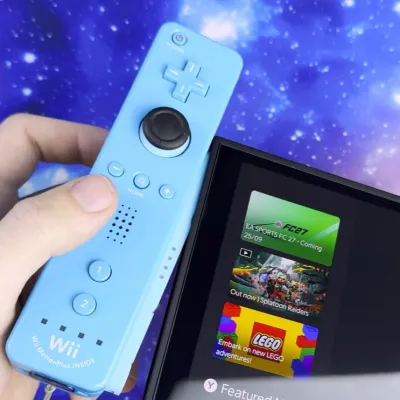
As popular as the Nintendo Switch and its sequel are, it’s hard to argue that its click-on Joy-Con controllers are ergonomic, barring you having very uniquely shaped hands. This thought and a stack of Wii controllers led [KOUZEX] to the mad project of merging Joy-Cons and WiiMotes into what can affectionately be called Wii-Cons, or perhaps JoyMotes.

Suffice it to say that it’s not a very clean or easy mod, and you could definitely make the point that a custom PCB and 3D-printed shell would  have been a lot easier. Making space for the Joy-Con’s side rail, thumb stick and PCB without simply tossing the WiiMote’s PCB was a tough ask, and these are two WiiMotes that will never connect to a Wii again.

With the WiiMote-shaped Joy-Cons working pretty well after all that work, the issue of remapping Joy-Con buttons that have no match on WiiMotes was probably the biggest headache. Here having said custom version could be rather helpful to have more control over the button layout, also to not have to keep harvesting the dwindling supply of WiiMotes to make WiiCons. It might even be possible to keep all the WiiMote functionality that way, to really blow people’s minds when you use your fancy Joy-Cons to next play a game on an original Wii.

Advertisement

Source link

Advertisement
Continue Reading

Tech

How to watch England vs Pakistan 1st Test: Free Streams & TV Channels

Published

on

Watch England vs Pakistan live streams as the 1st Test from Headingley, Leeds, begins a three-match series full of intrigue. Joe Root returns as England captain as the backlash from the hosts previous series continues, while Babar Azam’s visitors seek a rare away series victory.

“Bazball” is finally over, with coach Brendon McCullum let go from the Test gig days after Ben Stokes announced a shock international retirement after England’s 2-1 defeat by New Zealand in June. Stephen Fleming, another Kiwi, doesn’t take the reins as the new Test coach until the winter so Marcus Trescothick is in interim coaching charge here.

Source link

Advertisement
Continue Reading

Tech

Is gigabit NBN overpriced? I did the math to try and figure out if NBN 750 is better bang-for-buck

Published

on

As the resident NBN and home-internet expert for TechRadar Australia, I spend much of my time looking out for the best internet deals, and there are almost invariably a number of compelling options at every different speed tier — and these can be a great way to sense-check if you’re overpaying for your current NBN service.

When choosing deals, much of my decision-making revolves around two easily identifiable metrics: price and typical evening speed (TES). Typical evening speed is something all internet service providers (ISPs) have to disclose before you sign up for a plan. In essence, it tells you the download speed you can realistically expect to achieve during the busier evening hours of 7pm to 11pm. Being able to view the TES also means you can easily identify which ISPs ultimately offer better value — i.e. the ones advertising fast evening speeds at competitively low prices.

Source link

Advertisement
Continue Reading

Tech

Warren Spector, Founding Father Of Immersive Sims, Has Retired From Game Development

Published

on

Spector was the creator behind Deus Ex.

The creator of Deus Ex, the action role-playing game franchise originally developed by Ion Storm, has announced his retirement. In a LinkedIn postWarren Spector said he was a month away from his 44th year as a developer and had worked on tabletop games, 17 digital games, ran small and large teams and helped people with their careers. Now, his age and health are catching up with him, and it was time to “write some books, do a lot of reading, do some lecturing, maybe do some consulting.” 

Spector also said that there are still three games he would like to make, but that the business has changed and it’s not as fun for him anymore. While he admitted that he tried to retire in the past but changed his tune, he said he thinks he means it this time. He is typically regarded as a founding father of immersive sim games, characterized by giving players the freedom to solve problems in a variety of ways. 

On Deus Ex, wherein you play an anti-terrorism agent in a dystopian cyberpunk setting, Spector also served as director and producer. He worked on several Ultima titles as producer and writer, as well as on Disney’s Epic Mickey for the Wii as director. His latest game was Thick As Thieves, a stealth-action heist game, released just a few months ago. He also worked on System Shock 3, but Tencent took over that project and its status remains unclear. 

Advertisement

Source link

Advertisement
Continue Reading

Trending

Copyright © 2025