The Nancy Grace Roman telescope is heading to space in a few days. It’s set for launch on August 30, no earlier than 7:26AM Eastern time, with NASA’s live coverage to begin at 6:20AM. The agency’s engineers completed the final inspection of the telescope’s primary mirror in late May to make sure it hadn’t been damaged during testing. In early June, NASA announced that the telescope will launch earlier than the September schedule it had previously planned.
Nancy Grace Roman was NASA’s first Chief of Astronomy and was known as the “Mother of Hubble” for being instrumental in the observatory’s planning and development. This telescope named after her has a field of view at least 100 times larger than Hubble’s and will be able to observe a wider swath of the universe at any single time. It was designed to use different techniques to study dark energy and help us answer questions about the mysterious force. The telescope also has the capacity to block starlight in order to better see exoplanets, so it can provide more data for scientists to figure out what determines habitability and how common solar systems like ours are.
The infrared telescope is already encapsulated inside a SpaceX Falcon Heavy fairing at NASA’s Kennedy Space Center in Florida. It will fly on top of a Falcon Heavy rocket from Launch Complex 39A. If the launch doesn’t go through on August 30, NASA and SpaceX will try again on August 31 at 7:22 AM Eastern time. You can watch the rocket launch live on NASA’s website or on SpaceX’s X account. In addition to the launch itself, NASA will also broadcast a mission science briefing on August 29 at 9AM ET with the Roman telescope team, followed by a prelaunch news conference.
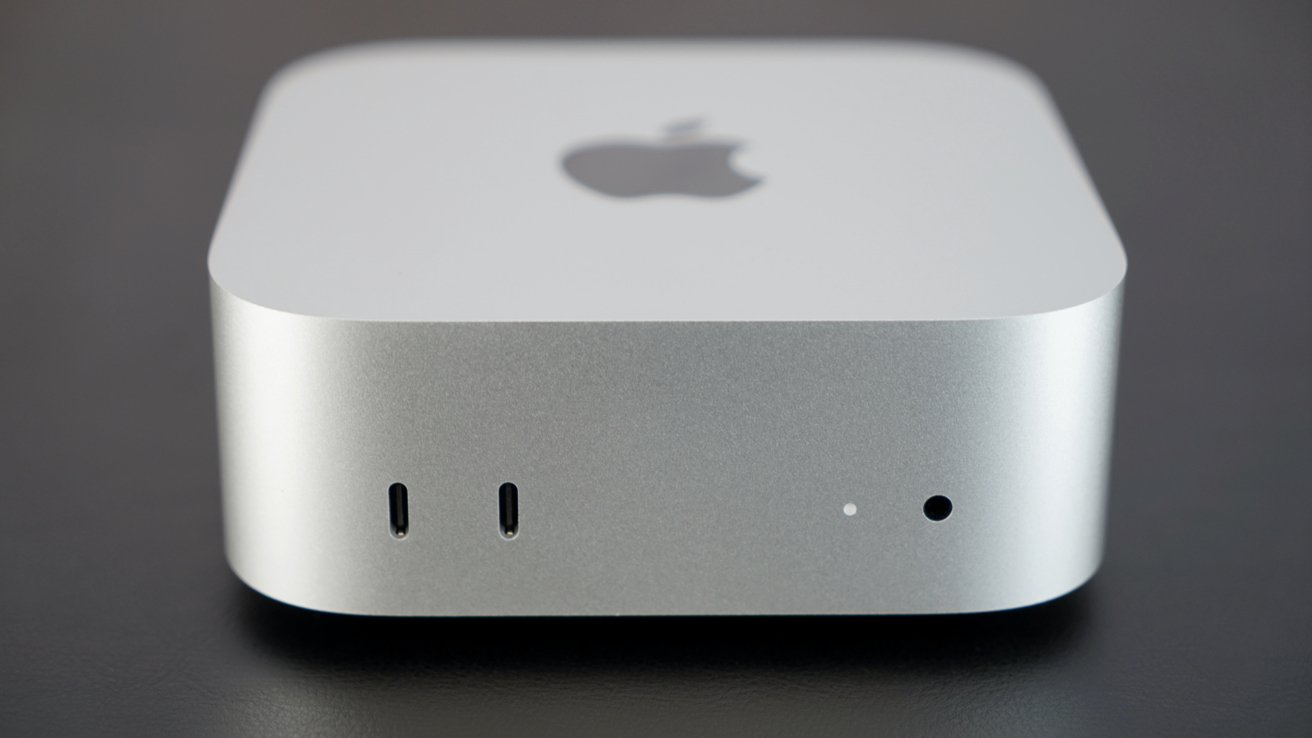
A new rumor places a new Mac mini launching within days, and yes, ahead of the Apple event. Other new products are still coming in 2026 as well, like the iPad mini and AirPods 5.
While the Mac mini hasn’t received the M5 processor yet, it could also be upgraded with an M6 to kick off the new chip generation. Either way, it’s coming and soon enough to be Tim Cook’s last product as CEO.
According to a report from Bloomberg, a new Mac mini could be announced within the next few days. Anonymous sources familiar with Apple plans shared these details, and given the proximity, they’re likely right.
The report also shares that customers should expect ANC and standard versions of Apple’s fifth-generation AirPods as soon as the Apple Event in September. They would launch alongside the iPhone 18 Pro and the foldable iPhone Ultra.
Advertisement
The OLED iPad mini is still on track for October along with other Mac upgrades like a new iMac and MacBook Pro. Apple’s Home Hub tablet, upgraded Apple TV 4K, and new HomePod mini are also slotted for 2026.
It’ll be a busy second half of the year for Apple, especially for the new CEO John Ternus, who takes over on September 1. Leave it to Tim Cook, the supply chain master, to slip in one last product before he steps down.
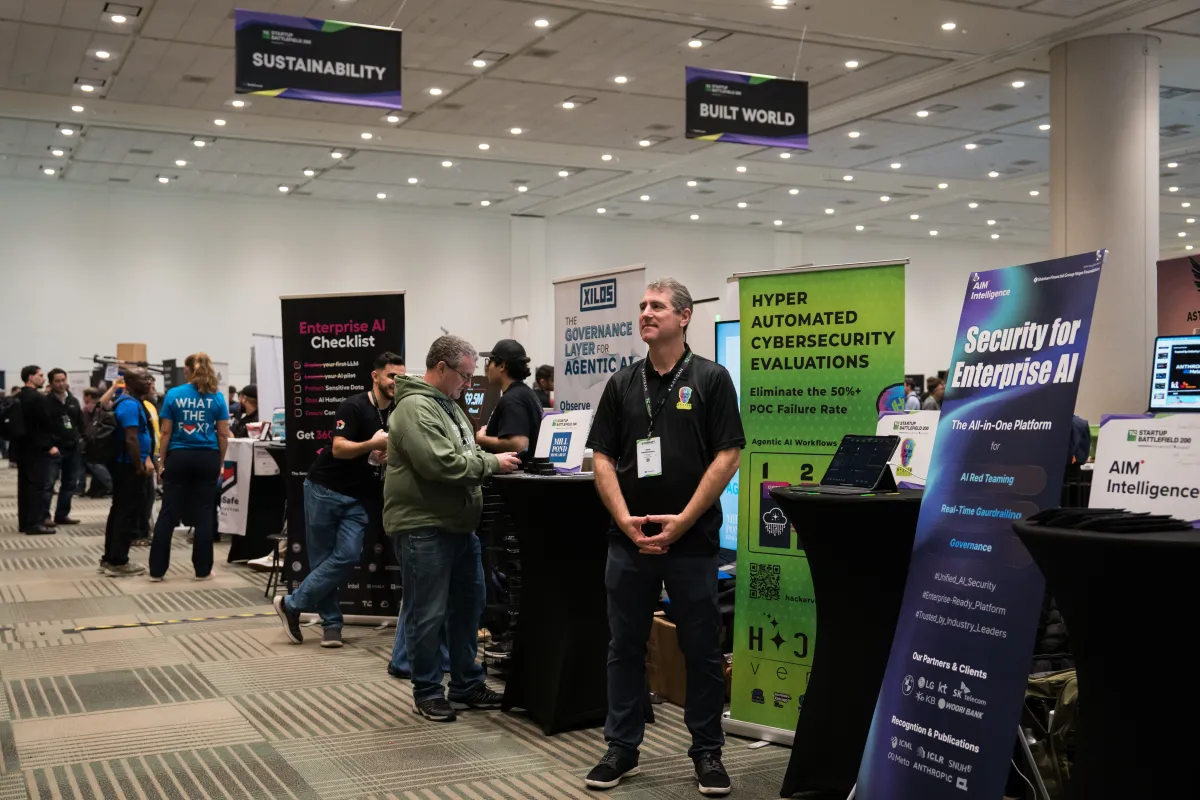
That’s exactly what our Exhibit Program offers. Showcase your startup and get the added bonus of additional tickets for Disrupt to bring even more members of your team and make the most of this exciting opportunity.
All the perks of Disrupt’s Exhibit Tables
Our exhibit tables start at $12,500, and when you break down all the included benefits, the returns speak for themselves. Here’s what’s included:
A 6’ x 30″ table in the Expo Hall, which is the highest-trafficked part of Disrupt, where more than 10,000 founders, VCs, and tech leaders come looking for partnerships, investments, and networking.
We provide the table, linen, chairs, and signage so you can focus on showcasing your startup — not logistics.
10 Disrupt passes, including five all-access Exhibitor-Partner passes and five Expo+ passes, so your whole team can work the floor, not just staff a booth. Those passes cover nearly $4,000 of the exhibition price by themselves!
Lead generation through the Disrupt 2026 mobile app, so every conversation turns into a follow-up, not a lost business card.
Access to the Disrupt 2026 press list and Silver Tier sponsor branding across the site, app, and signage.
Joining fellow exhibitors is the fastest, easiest way for a startup at any stage to get in front of the exact room that matters, from investors sourcing deals, to operators evaluating tools, to founders scouting partners.
There is one catch, though: Tables are limited. This offer ends when the last exhibit table sells out, or on September 25 at 11:59 p.m. PT, whichever comes first.
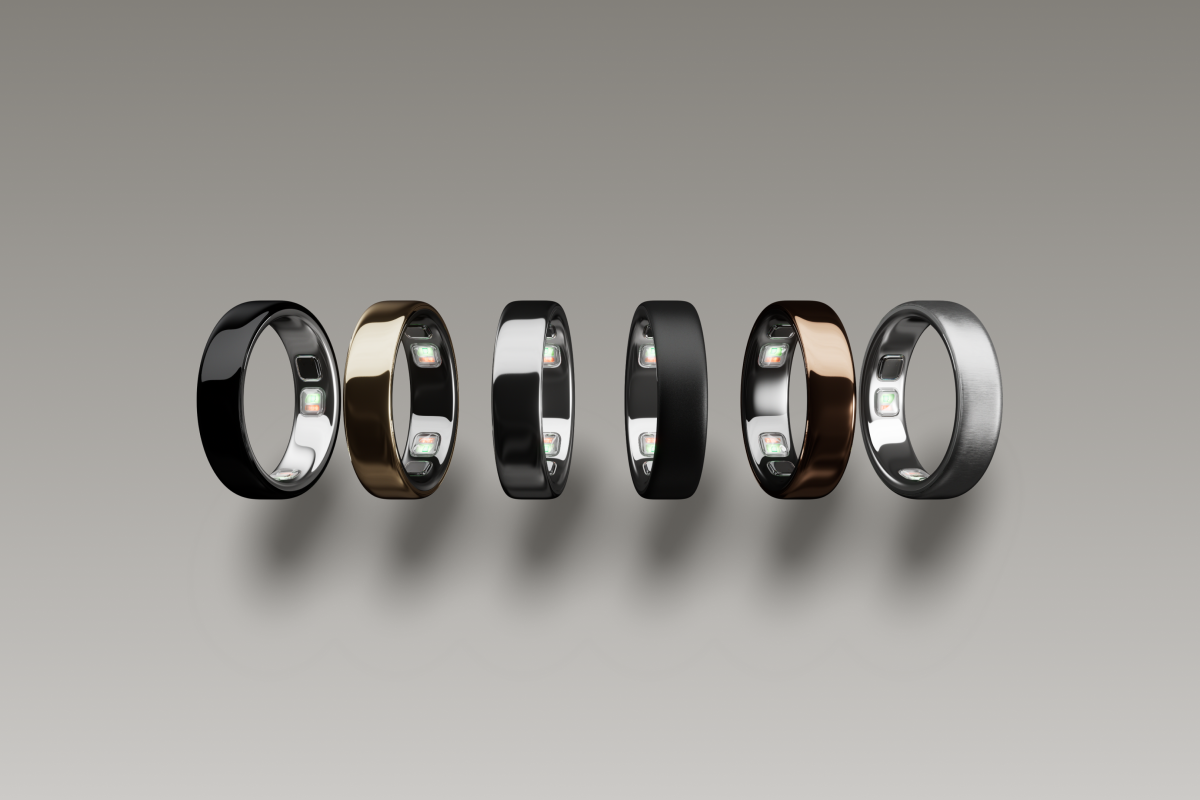
Oura, the smart ring maker, with offices in San Francisco and Finland, is reportedly planning to raise up to $3 billion as soon as next month in a U.S. IPO that values the more than 900-person company at [spits out coffee] north of $16 billion, according to Bloomberg. The outlet adds that investors are expected to sell a major chunk of stock in the offering.
A $16 billion valuation would mark an enormous jump from the $10.9 billion valuation Oura was assigned last September, when it closed an $875 million Series E round backed by Fidelity, ICONIQ, Whale Rock, and Atreides, joining earlier backers like Dexcom, The Chernin Group, Forerunner Ventures, Coatue, and Temasek.
The wearables space has gotten crowded fast.
Samsung launched its own ring, the Galaxy Ring, two years ago. But Oura’s most direct rival may be the fitness band maker Whoop, which has undergone its own reinvention. Once a performance tool for elite athletes and young men, Whoop has spent the past year courting a much broader audience, layering in hormone tracking and blood-panel testing for perimenopause and thyroid health. The move drove its own valuation up to $10 billion back in March. Oura has followed a similar path, evolving from its starting niche of biohacking CEOs into a more mainstream sleep-and-recovery brand.
Advertisement
Oura announced in May that it had filed confidentially for an IPO.
The company has said that it generated $500 million in revenue in 2024, roughly $1 billion in 2025, and that it expected to generate close to $2 billion in revenue in 2026, though we’ll learn much more once its S-1 filing becomes publicly available.
Not all of Oura’s recent attention has been positive. A proposed class action lawsuit filed last week in San Francisco is accusing Oura of misleading consumers about the accuracy of its sleep tracking features. Among other complaints in the filing, Oura is accused of not just claiming “to measure a heartbeat or a temperature, but the exact stage of sleep the wearer is in—which in reality requires electrodes in the scalp and sensors on the eyes, as only a hospital or other clinical setting can do.”
In a statement to TechCrunch sent over the weekend, a spokesperson pushed back against claims in that suit, saying the company plans to “defend against them in the appropriate legal forum” and that “[w]hile Oura Ring is not a medical device or a substitute for a clinical sleep study, Oura’s sleep staging has been validated and compared favorably in multiple studies against polysomnography, the gold standard.” The statement continued on to say that “[m]ultiple third-party, independent studies support our claims of accuracy and we have transparently reported on the mechanisms and measures that inform Oura’s sleep staging.”
Advertisement
When you purchase through links in our articles, we may earn a small commission. This doesn’t affect our editorial independence.
Airbound, an Indian startup building autonomous drones, has raised $37 million in fresh capital as it pushes to make moving goods through the air as cheap as trucking them by road.
The Series A round, led by Greenoaks with participation from DoorDash, Lachy Groom, Lightspeed, and Humba Ventures, comes less than a year after Airbound raised an $8.65 million seed round. With this funding, the three-year-old startup has raised nearly $50 million.
Airbound, and other startups in this nascent sector, argue that drones can move certain goods faster and cheaper than vehicles on the road. And while there have been successful deployments, drone delivery is still far from matching the scale and versatility of trucking.
Airbound is trying to close that gap by redesigning the aircraft to make it more competitive with ground transportation.
Advertisement
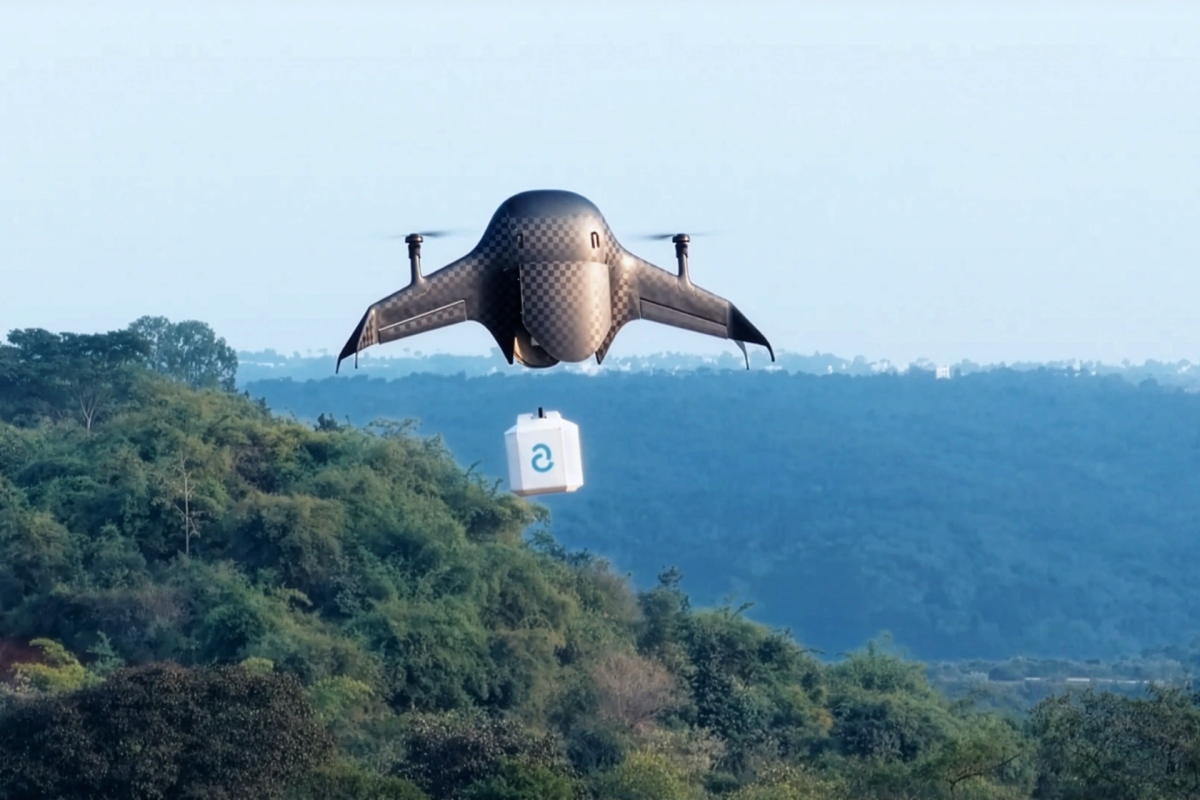
Conventional aircraft spend a lot of energy carrying their own weight rather than the payload, making flight expensive, particularly for moving smaller loads. Airbound’s answer is to build vertical-flight drones designed to weigh less than the cargo they carry, founder and CEO Naman Pushp said in an interview.
Airbound’s current drone, called TRT, weighs about 3.3 pounds and can carry around 2.2 pounds of payload. Its next version, currently under development, is expected to weigh about 6.6 pounds and be able to carry up to 11 pounds, Pushp told TechCrunch.
The startup uses a rocket-like, tail-sitter design for its drones, which takes off and lands vertically in an upright position before transitioning to horizontal flight. Pushp said Airbound intends to retain vertical takeoff and landing even as it develops larger aircraft to avoid dependence on runways.
“We want to build towards a world where everything has cost parity with trucking,” he said.
Advertisement
Founded in 2023, Airbound has completed more than 13,000 autonomous flights across the southern Indian cities of Bengaluru and Guntur, Pushp said. That includes more than 1,000 flights with the Indian hospital network Narayana Health, where its drones transport diagnostic samples between healthcare facilities.
The startup uses a single active drone on the Narayana route, flying diagnostic samples about 2.5 miles in around seven minutes. The same samples can take three to five hours to be transported by truck when factoring in the time spent waiting for enough samples to be bundled for road transport, according to Pushp.
That partnership is expanding to include Narayana’s new Banashankari hospital in Bengaluru, which was designed without an on-site diagnostic lab or blood bank and will instead rely on Airbound’s drones to connect with centralized facilities.
Three-city drone network
Airbound has set its sights on a far larger ambition to create a drone delivery network that connects three cities in the state of Andhra Pradesh. The startup has sign an agreement with the state government with an eventual target of 10,000 flights a day for retail, e-commerce, and healthcare deliveries. That daily flight target will require between 250 and 1,000 aircraft, depending on route lengths, though Pushp expects the number to be closer to 250.
Advertisement
The agreement does not involve a government contract or subsidy, Pushp said, adding that the Andhra Pradesh government is working with Airbound on the regulatory framework needed to enable the network. The startup expects to generate business from companies using it for deliveries.
Indian startups including Skye Air Mobility and TSAW Drones are already building aerial logistics businesses, while other Indian drone makers such as Garuda Aerospace have also explored delivery use cases. Nonetheless, Pushp argues that Airbound wants to build the aircraft that other logistics networks could eventually use rather than just trying to become the largest delivery operator.
“That’s the Boeing role — the aircraft airlines everywhere rely on, not the airline itself,” he said.
Airbound designs and manufactures its aircraft in a 43,000-square-foot facility in Bengaluru, where it keeps work on the airframe and other core systems in-house. While Pushp declined to disclose its production capacity or how many aircraft the startup has built so far, he said manufacturing would not be the bottleneck as Airbound scales.
Advertisement
The bigger bottleneck, Pushp noted, is regulation, particularly securing approvals for beyond visual line of sight (BVLOS) operations, a certification that allows drones to fly beyond the direct sight of an operator and is critical to operating delivery networks at scale.
Those regulatory constraints have also limited Airbound’s ability to turn its flights into meaningful commercial revenue. Moreover, the startup remains broadly pre-revenue despite having a team of more than 150 employees.
“The goal is to be a giant in a few decades, not to make revenue as soon as we can,” Pushp said.
When you purchase through links in our articles, we may earn a small commission. This doesn’t affect our editorial independence.
Pre-orders for Samsung’s 2026 foldables wrapped up this week, but telcos across Australia are clearly in a generous mood, as they kept their previous pre-order deals live for a wee bit longer, giving you a bit more time to save on the new devices.
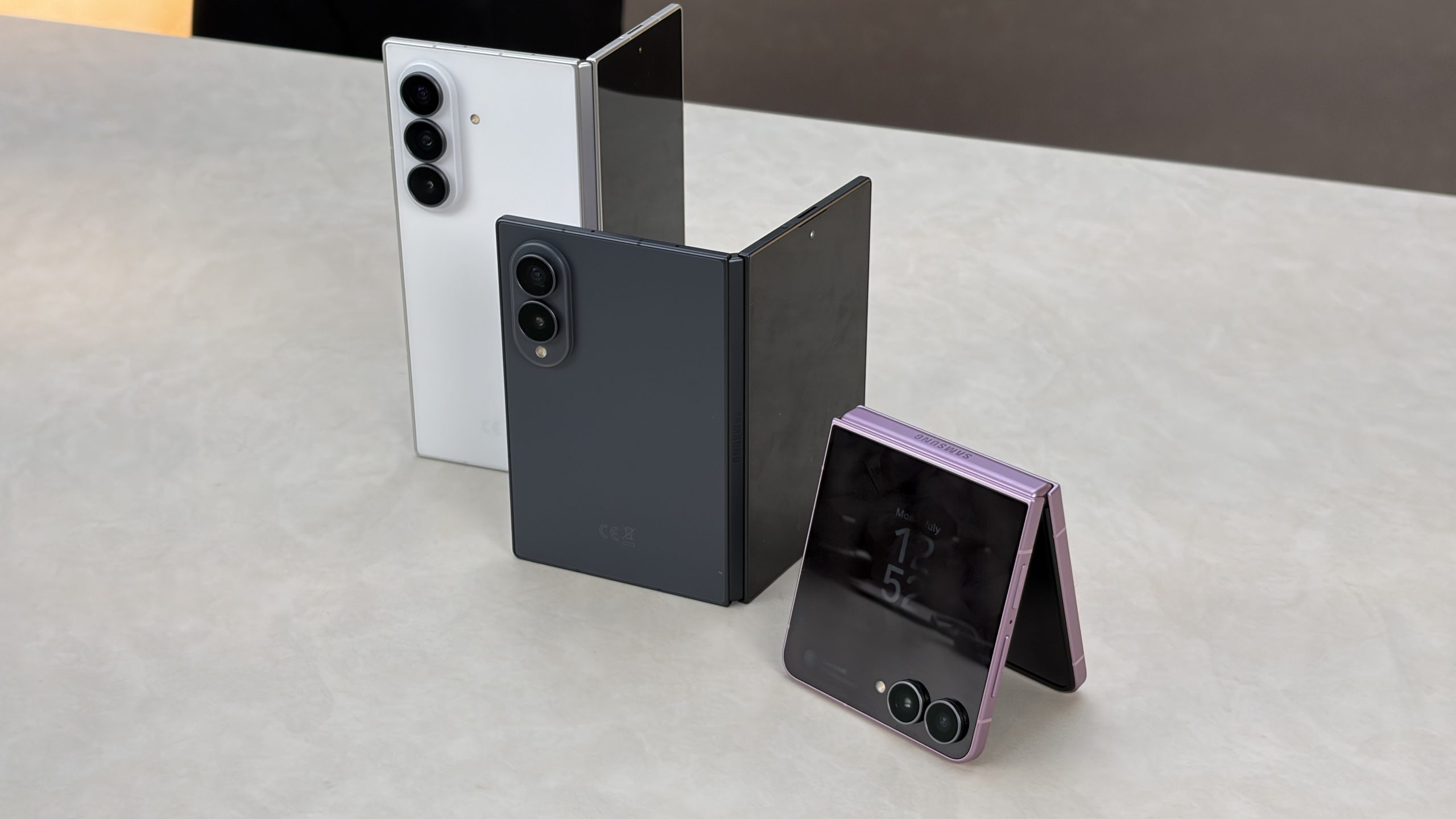
And save you might, because this year, Samsung has introduced a third premium Z-series foldable in 2026 with the Galaxy Z Fold 8 This new model introduces a new design: a short and wide 5.5-inch cover screen when folded, and a 7.6-inch main screen with a 4:3 aspect ratio that can fit widescreen videos better than the Galaxy Z Fold 7’s square display, or resemble an ereader when in portrait mode.
The direct successor of the Galaxy Z Fold 7 is now confusingly called the Galaxy Z Fold 8 Ultra, which is thinner than ever (4.1mm down from an already ridiculously thin 4.2mm) and also features a 50MP ultrawide camera (up from 12MP), a higher-resolution main screen, and increased peak brightness from 2,600 nits to 3,000 nits.
With all that said, these foldables have arrived as some of the most expensive phones you can buy in Australia, with the base 256GB models starting from AU$2,699 for the Z Fold 8 and AU$2,999 for the Ultra. The latter also represents a AU$100 price hike from the Z Fold 7.
Advertisement
If you’ve been sold on all the features and are happy to buy either handset outright, you can check out the current best outright deals below and then pair that with one of our best SIM-only plans.
However, the high upfront costs of both foldables will likely mean many buyers may prefer to pay either one off over a multi-year contract from a major Australian telco like Vodafone, Optus or Telstra.
We’ve crunched the numbers on the big three’s Samsung Galaxy Z Fold 8 and Z Fold 8 Ultra plans below — including any current promotions and discounts — to help guide you to the best value options for various needs.
Advertisement
The best Samsung Galaxy Z Fold 8 plan overall
The best premium Samsung Galaxy Z Fold 8 plan
The best Samsung Galaxy Z Fold 8 Ultra plan overall
The best premium Samsung Galaxy Z Fold 8 Ultra plan
Advertisement
Outright Samsung Galaxy Z Fold 8 and Z Fold 8 Ultra deals
Not interested in purchasing through a telco with a postpaid plan? Many Aussie retailers offer the Samsung Galaxy Z Fold 8 and Z Fold 8 Ultra outright, including an option to pay in instalments through Samsung Australia directly. Here are the top current offers available from our retail partners.
Advertisement
What’s new with Samsung’s latest foldables?
(Image credit: Future)
Samsung’s latest foldables, the Galaxy Z Fold 8, Galaxy Z Fold 8 Ultra and Galaxy Z Flip 8, mark substantial design and usability upgrades over their predecessors – pushing the boundaries of what a foldable phone can be.
The Galaxy Z Fold 8 is the newest addition to the Z-series range, featuring a new short and wide form factor when folded, and a main screen with a 4:3 aspect ratio that can fit widescreen videos better than most foldables’ square display, or resemble an ereader when in portrait mode.
Meanwhile, the Galaxy Z Fold 7’s direct successor is now called the Galaxy Z Fold 8 Ultra, which is now even thinner at 4.1mm when unfolded and its main display gets a resolution bump at 2256 x 2504 pixels (up from 1968 x 2184 pixels). Its most prominent upgrade though is the camera system with a new 50MP ultrawide sensor to pair with the 200MP shooter, similar to those found in the Galaxy S26 Ultra.
Both devices get a powerful Snapdragon 8 Elite Gen 5 chipset, 12GB RAM (or 16GB in some instances) and new silicon-carbon batteries to fit in larger capacities compared to traditional lithium-ion batteries in the same physical size — 4,800mAh for the Z Fold 8 and 5,000mAh for the Ultra.
Advertisement
Meanwhile, the Galaxy Z Flip 8 is thinner and lighter than its predecessor at 6.1mm unfolded and 13.1mm folded, compared to the Flip 7’s 6.5mm and 13.7mm, respectively. There’s also a refined hinge that’s aimed at making the handset easier to open one-handed and reducing the crease. While it doesn’t get the Snapdragon 8 Elite Gen 5 chip used by its foldable cousins here in Australia, it still gets an upgraded Exynos 2600 found in the base Galaxy S26 and S26 Plus. The handset also gets the silicon-carbon treatment here, although it retains the same 4,300mAh capacity as the Flip 7.
Samsung Galaxy Z Fold 8, Z Fold 8 Ultra and Z Flip 8 specs
Swipe to scroll horizontally
Samsung Galaxy Z Fold 8
Advertisement
Samsung Galaxy Z Fold 8 Ultra
Samsung Galaxy Z Flip 8
Weight
201g
Advertisement
215g
180g
Display
Main: 7.6-inch Dynamic LTPO AMOLED 2X (2448 x 1848)
Advertisement
Cover: 5.5-inch Dynamic LTPO AMOLED 2X (1248 x 1972)
Main: 8-inch Dynamic LTPO AMOLED 2X (2256 x 2504)
Cover: 6.5-inch Dynamic LTPO AMOLED 2X (1080 x 2520)
Main: 6.9-inch Dynamic LTPO AMOLED 2X (1080 x 2520)
Microsoft is rolling out a new Teams meeting protection policy that allows administrators to automatically block all identified external bots from joining Teams meetings.
This new feature builds on another Teams policy introduced in June that added smarter bot protection, ensuring all detected bots are tagged in the lobby and require organizer approval before joining.
The new policy goes one step further and will automatically prevent external bots from joining Teams meetings, without requiring explicit organizer confirmation before they’re admitted.
“With this update, organizations can strengthen meeting security by configuring Teams policies to automatically block detected external meeting bots from joining meetings,” the company said in a Microsoft 365 Message Center update on Friday. “This gives administrators additional control over how identified bots are handled and can help reduce organizational risk.”
This new admin policy is rolling out as part of a targeted release until the end of August and should reach general availability worldwide by late September.
Advertisement
It will be available under the “Manage bots” meeting protection settings in the Teams admin center, will be off by default, and will require admin activation and evaluation before deployment.
After being enabled, the policy can be assigned to specific users or groups through existing Teams meeting policy management, and all identified external meeting bots will be blocked from joining meetings governed by the newly assigned policy.
The change ensures that third-party bots (which can have various uses, from note-taking and transcription to other automated tasks) and malicious apps controlled by threat actors cannot join Teams meetings without attendees and organizers realizing that a non-human participant has been added.
As Microsoft warned in April, attacks abusing Teams for access and lateral movement on enterprise networks are surging, with threat actors impersonating IT or helpdesk staff to contact employees via cross-tenant chats and trick them into granting remote access to steal data.
As announced in June, Microsoft is also planning to add additional admin controls, including policies to block external bots entirely, allow lists for approved bots, admin reports and audit logs on bot detection and presence, and more granular controls for different security requirements.
Overall prevention scores can hide what happens after initial access. Once attackers are using valid credentials, prevention drops sharply.
The Blue Report 2026 measures defenses technique by technique across 338 million simulations run in customer production environments.
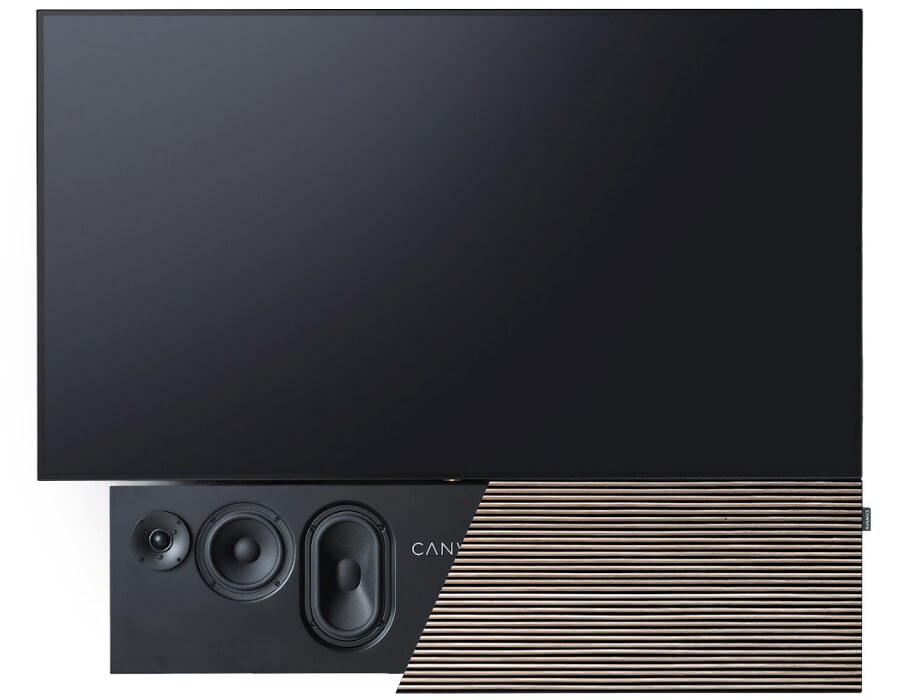
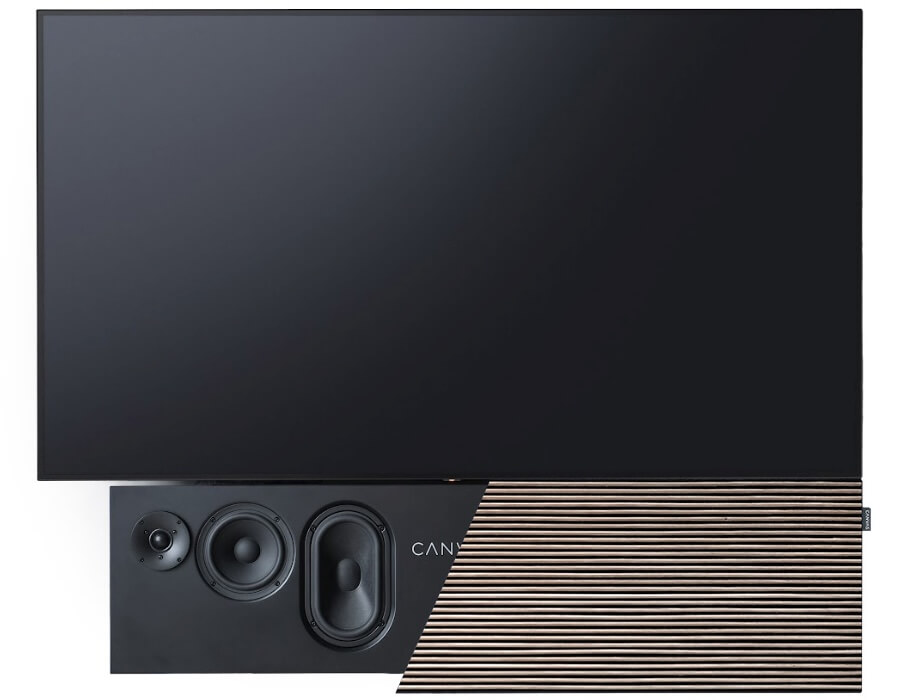
CANVAS HiFi built its reputation around doing something rather unconventional: using BACCH 3D processing and a single, furniture-friendly audio system to create a much larger front soundstage without surrounding the television with separate left, center, right and subwoofer cabinets. At IFA 2026, the Danish company is taking that concept considerably further by adding support for dedicated Dolby Surround and Dolby Atmos channels around and above the listener.
The big change is Almando InMedio, a new component developed with German electronics specialist Almando. It handles surround decoding and signal distribution while allowing CANVAS to remain responsible for the front soundstage. Surround, rear and height duties can then be assigned to compatible active loudspeakers, with both wired and wireless connectivity, including WiSA.
And there is an important distinction here: CANVAS is not introducing its own surround or height speakers. Instead, it is opening the platform so owners can build a multichannel home theater around CANVAS using active or passive speakers from other manufacturers. That makes this much more than CANVAS simply adding a Dolby Atmos badge to the box.
Related Reviews:
What Is CANVAS HiFi and How Does BACCH 3D Work?
Canvas HiFi
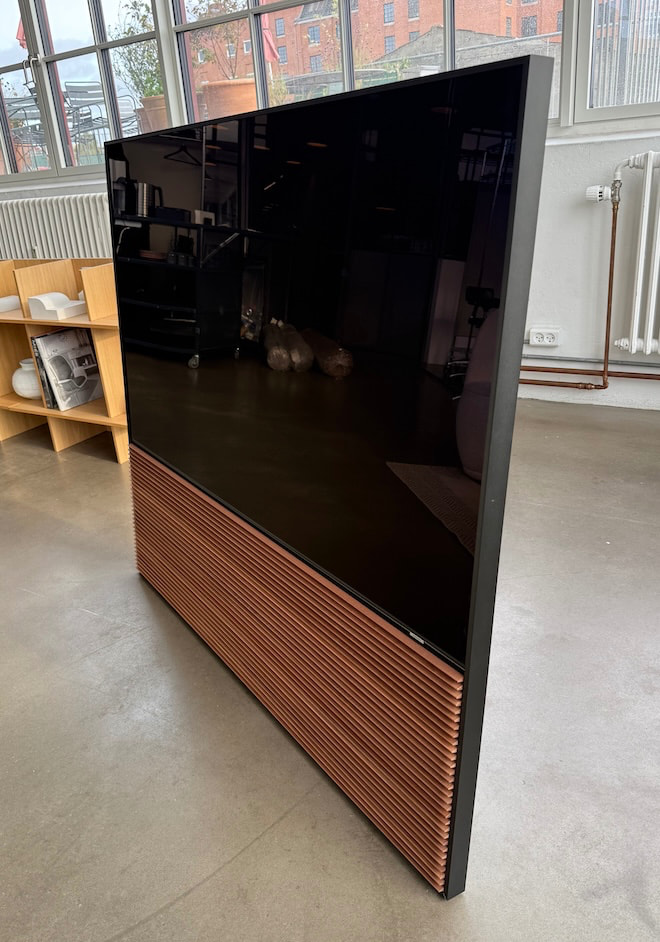
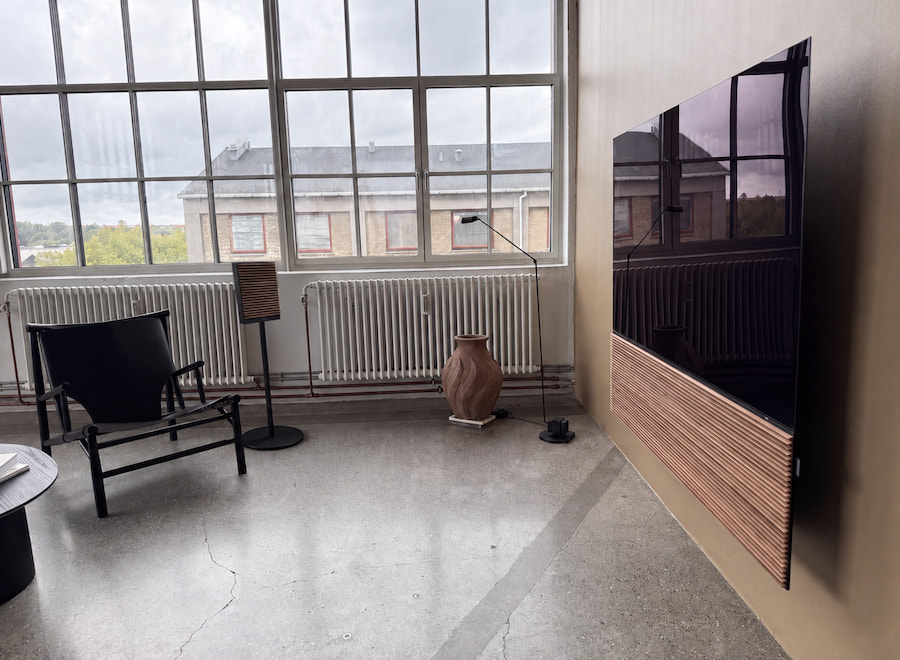
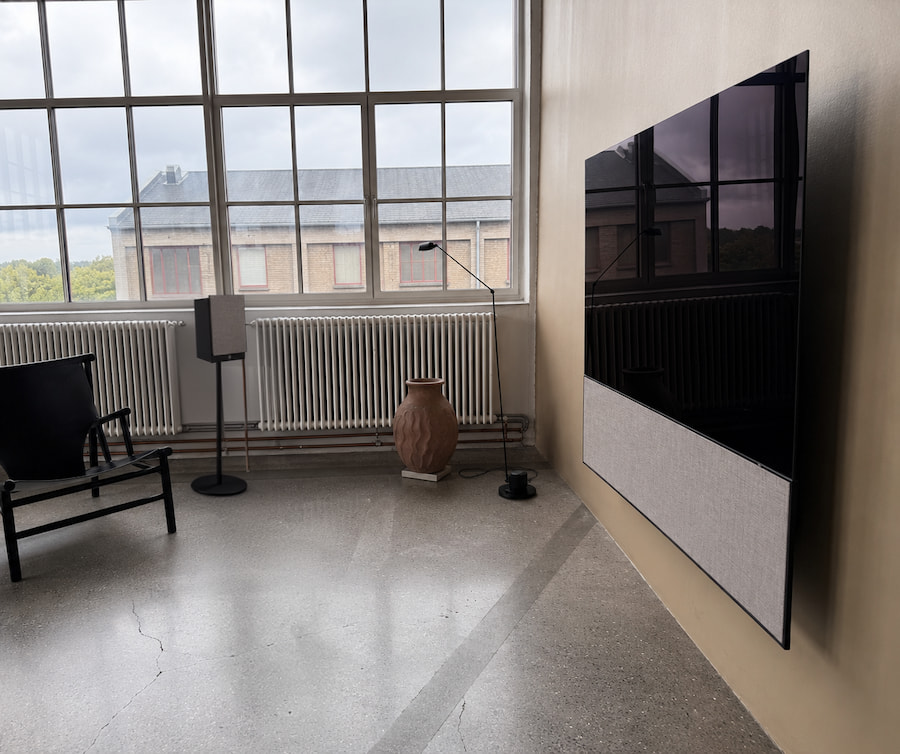
Calling CANVAS HiFi a soundbar has always been somewhat misleading. The Danish company’s original CANVAS is an active stereo loudspeaker system designed to integrate physically with a television, either mounted beneath the display or used as part of a freestanding installation. Its interchangeable fabric and wood fronts can be matched to common TV sizes, giving the television and speaker system the appearance of a single piece of furniture rather than a screen with another black box hanging underneath it.
CANVAS is also deliberately TV-brand agnostic. Its universal mounting system works with flat-panel televisions from multiple manufacturers, and CANVAS specifically lists Samsung, Sony, Panasonic and LG among the supported brands. Current versions are designed to visually match 55, 65, 75, 77, 83 and 85-inch screens, while CANVAS SOLO can be installed independently beneath televisions of other sizes.
Advertisement
Canvas The HiFi Frame includes black (as shown) or silver border for a sleek look.
Samsung represents a deeper relationship. CANVAS and Samsung introduced The HiFi Frame at IFA 2025, initially pairing the audio system with Samsung’s The Frame and The Frame Pro televisions. CANVAS has since expanded that concept to other Samsung displays, giving buyers considerably more freedom over the television they put inside the integrated frame.
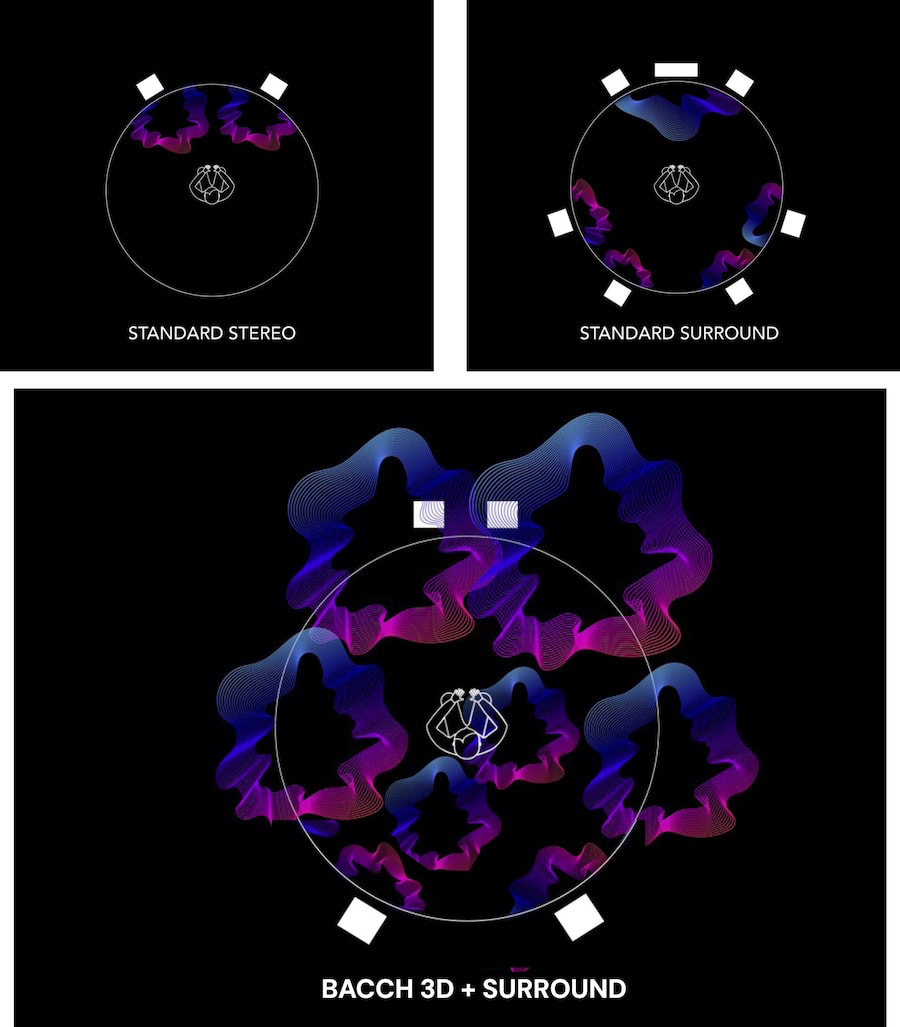
The other major piece of the CANVAS formula is BACCH 3D, technology developed from research led by Princeton University Professor Edgar Choueiri. BACCH stands for Band-Assembled Crosstalk-Cancellation Hierarchy, and its purpose is very different from conventional virtual surround processing.
With normal stereo loudspeakers, sound from the left speaker reaches both ears, as does sound from the right speaker. BACCH processing reduces that acoustic crosstalk so the spatial information contained in the recording can reach the listener’s ears more accurately. The result can produce a soundstage that extends well beyond the physical position of the two speakers, including greater apparent width, depth and, with suitable material, a more convincing sense of three-dimensional space.
That is why CANVAS has previously been able to create such an expansive presentation from the front of the room without installing physical surround speakers behind the listener.
The new Dolby Surround and Dolby Atmos expansion changes that equation. BACCH 3D is still responsible for what happens across the front of the room, but CANVAS can now become the front end of a system with real surround, rear and height channels. And that is where the new Almando InMedio becomes important.
Advertisement
What Is Almando InMedio and How Does It Work?
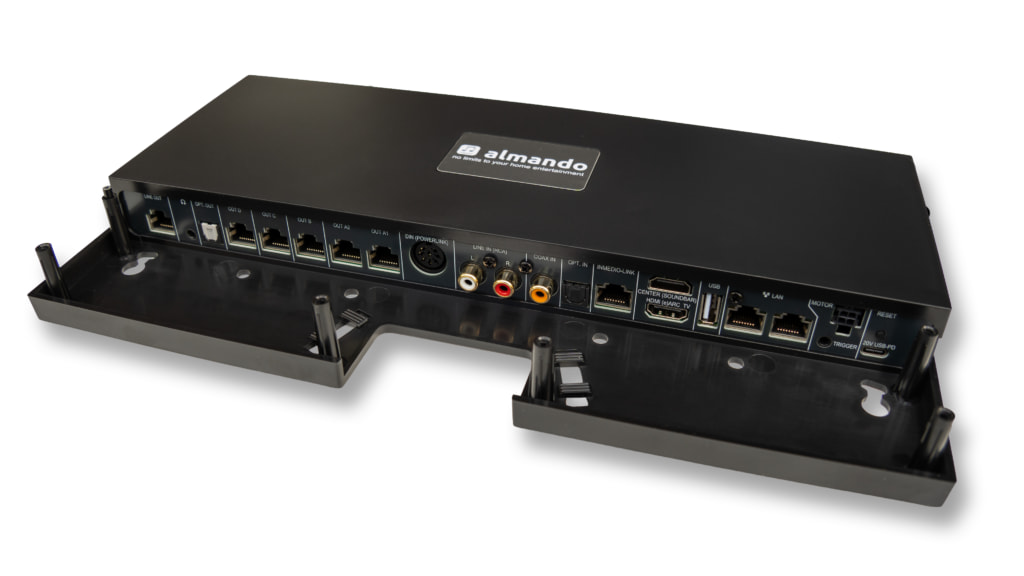
The component that makes CANVAS HiFi’s move into full multichannel home theater possible is the new Almando InMedio, developed in collaboration with German electronics specialist Almando. Rather than forcing CANVAS owners to add a conventional AV receiver or processor, InMedio handles surround decoding, channel distribution and connectivity while allowing CANVAS to remain responsible for the front soundstage.
Advertisement. Scroll to continue reading.
The control box is compact enough to be hidden inside the CANVAS converter bracket, keeping another piece of electronics out of sight beneath the television. InMedio determines which channels are sent to CANVAS and which are routed to the active loudspeakers positioned around or above the listener.
In the configuration CANVAS considers the logical starting point, BACCH 3D continues to handle the front left, front right, center and subwoofer channels through CANVAS, while InMedio provides up to eight additional channels for surround, rear and height speakers. The complete system can therefore support configurations up to 7.1.4 channels, with those eight external channels connected either by wire or wirelessly using WiSA HT.
Owners can also mix the two connection methods rather than committing the entire system to one or the other. Almando lists an 8-channel analog output alongside 8-channel WiSA HT transmission on the WiSA-equipped version of InMedio, while CANVAS receives its signal from InMedio through the latter’s optical digital output. Almando says several versions of InMedio are planned for different system requirements, so not every model will necessarily include every connection option.
Advertisement
InMedio is also considerably more than a surround breakout box. Its current specification includes HDMI eARC/ARC, optical and coaxial digital inputs, RCA analog input, USB-A, UPnP networking and B&O PowerLink, along with an integrated Gigabit Ethernet switch. Almando also lists AirPlay, Spotify Connect, TIDAL Connect, Qobuz Connect, internet radio and podcast support, giving InMedio the potential to become the connectivity hub for a much larger CANVAS-based AV system.
The surround ambitions extend beyond Dolby as well. Almando currently lists Dolby Atmos up to 7.1.4, Auro-3D and MPEG-H 3D Audio, along with WiSA HT and B&O Wireless PowerLink compatibility. There are also separate 12V trigger outputs for audio and video equipment, which could make InMedio useful in more elaborate installations involving external amplifiers, projection screens and other components.
System configuration is divided between two apps. Surround setup, channel assignment and the external loudspeakers are controlled through the Almando Play app, while BACCH 3D continues to be configured through the CANVAS app. Outputs can also be assigned for subwoofer duty, allowing wired or wireless subwoofers to be incorporated into the system.
There is another way to configure the front of the room, but it comes with a significant tradeoff. Users can install separate front left and right speakers and have CANVAS operate primarily as the center channel. According to CANVAS CEO Laust Nielsen, doing so disables BACCH 3D because CANVAS is no longer handling the left and right front channels required for its crosstalk-cancellation processing.
Advertisement
That is why the more interesting configuration keeps CANVAS responsible for everything across the front. Owners retain the BACCH 3D presentation that distinguishes CANVAS from a conventional soundbar or center speaker, but gain physical surround, rear and overhead channels where they can provide a genuine benefit.
There is one important caveat before anyone starts measuring the ceiling for four Atmos speakers. The InMedio being shown at IFA 2026 is the first prototype, not a finished production unit. Almando says the hardware is ready, but software development and certification are still being finalized. The extensive feature list therefore represents the platform Almando is currently developing, and some details could change before commercial availability.
System Audio Is the First Partner, But Not the Only Option
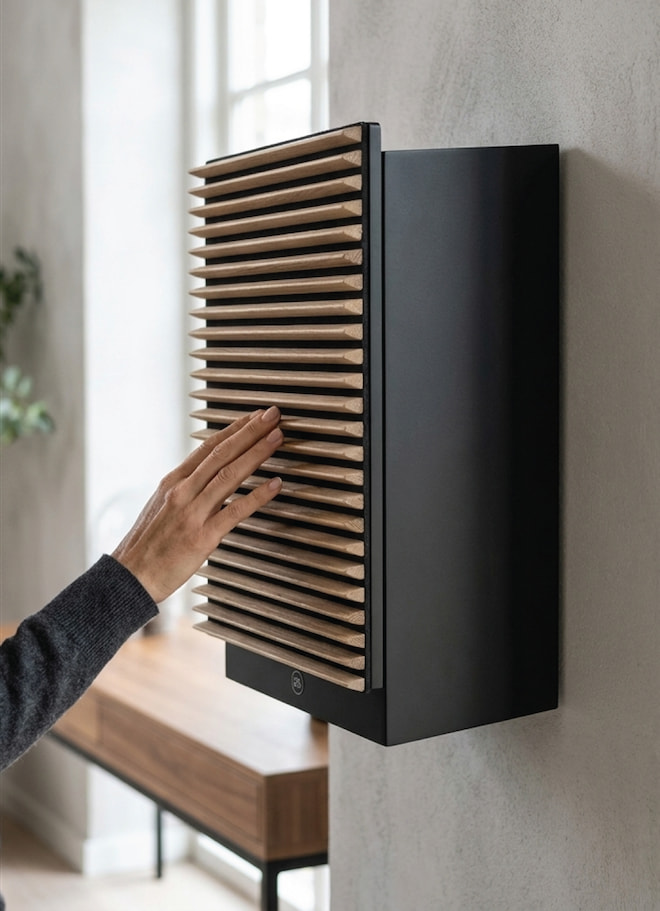
System Audio Silverback On-wall Speaker with Oak Grille
CANVAS HiFi is not developing its own surround, rear or height loudspeakers for this system. Instead, the company is taking a more open approach, and its first loudspeaker partner is fellow Danish manufacturer System Audio.
Selected models from System Audio’s Silverback range of active loudspeakers will be adapted to better match the CANVAS design language, including coordinated Kvadrat textiles, colors and wood finishes. The idea is to provide CANVAS owners with a surround solution that looks like it belongs in the same room rather than a collection of unrelated boxes assembled around the television.
System Audio is also a logical technical partner because its Silverback loudspeakers are already active and support WiSA HT. The compact Silverback 1, for example, incorporates 80 watts of amplification, WiSA HT connectivity and an analog line input, and can be mounted on a wall or placed on a shelf. System Audio already positions the Silverback platform for expandable home theater applications, so adapting selected models for the CANVAS ecosystem does not require reinventing the loudspeaker.
Advertisement
Advertisement. Scroll to continue reading.
But buying System Audio speakers will not be mandatory.
Laust Nielsen explained to eCoustics that owners will be free to use other compatible active loudspeakers, either through InMedio’s wired outputs or wirelessly through WiSA HT. Conventional passive loudspeakers can also be used, although they will require separate amplification between the InMedio and the speakers. That opens the door to considerably more ambitious installations and means existing home theater owners may be able to incorporate loudspeakers and amplifiers they already own rather than starting again from scratch.
That flexibility is important because adding more speakers is not necessarily the starting point for everyone who buys CANVAS. One of the system’s greatest strengths is how effectively it can create an unusually large and immersive soundstage without any surround or height speakers at all.
Advertisement
Canvas HiFi and Silverback On-wall surround speakers with Danish Kvadrat burnt umber fabric grilles.
The Bottom Line
We have experienced CANVAS extensively at audio shows and in a home environment, and BACCH 3D can make the presentation extend well beyond the physical dimensions of the system. With suitable movies and music, the sense of width, depth and spatial placement can be rather startling considering that all of the hardware is sitting beneath the television. CANVAS itself describes BACCH 3D as part of the combination of loudspeaker design, room correction and crosstalk cancellation that allows the system to produce a much larger presentation than its physical footprint would suggest.
That flexibility may ultimately be more important than the System Audio partnership itself. Some buyers will want the cleanest possible installation with matching Silverback speakers, while others may already own active loudspeakers, amplifiers, or passive speakers they want to integrate. InMedio gives both groups a path forward without turning CANVAS into a closed ecosystem.
Adding Dolby Atmos changes the conversation because CANVAS is no longer limited to competing with premium soundbars and all-in-one TV audio systems. It can now become the front end of a genuine 7.1.4 Dolby Atmos home theater while retaining BACCH 3D where it arguably makes the most sense.
Advertisement
With Playback Distribution now handling CANVAS HiFi in North America, the company also has a much stronger route into dealers, custom installers and demonstration rooms on this side of the Atlantic. The InMedio hardware and software still need to reach production, but if CANVAS and Almando deliver what they are showing at IFA 2026, this could turn one of the more interesting alternatives to a conventional soundbar into something considerably more ambitious.
Electric cars took a 25% share of European registrations in July, with sales up 51% year on year against 4.1% growth for the market as a whole. Chinese brands took 34% of plug-in hybrid sales, a segment EU countervailing duties do not currently cover.
Electric cars have stopped being a minority interest in Europe. Registrations rose 51% in July against the same month last year, taking a 25% share of the market, according to Dataforce figures covering 98% of new registrations across the EU, UK, Iceland, Norway and Switzerland.
Electric is now carrying the industry. The whole European market grew 4.1% in July and 5.7% across seven months, while EV sales rose 37% over the same period, after a fifth of EU registrations went electric in the first half.
The volume behind the percentage is 277,006 cars. That is a single month, in a region that was arguing about range anxiety three years ago.
Advertisement
Two markets are doing the heavy lifting. France reached a 35% electric share on more than 44,000 registrations, and Germany 29.3% on nearly 79,000.
The July bestseller list is European. The Skoda Elroq came first, followed by the Volkswagen ID.4 and the Renault 5 E-Tech, in the window Tesla’s slump opened.
Across the year Tesla is still ahead. The Model Y leads on 115,759 registrations, up 55%, with the Elroq second on 67,679 and the Model 3 third on 57,086.
The plug-in hybrid market is a different country. PHEV sales rose 15% to 125,530 in July, and Chinese brands took 34% of them.
Advertisement
They also took most of the top of the table. The BYD Seal U was July’s best seller, the BYD Atto 2 second and the Jaecoo 7 fourth, and the year-to-date podium is entirely Chinese.
The explanation is a gap in the tariffs. EU countervailing duties reach battery-electric cars built in China, at rates running to 45.3% for SAIC, and they do not reach plug-in hybrids, which is why Volkswagen asked for protection.
That gap is closing. The Commission moved in June to extend duties to Chinese plug-in hybrids, having denied any such plan in January, with rates expected to land below the battery-electric levels because batteries are a smaller share of a hybrid’s value.
So July is the last clean photograph of the loophole. A quarter of Europe’s new cars are electric, and the fastest-growing slice of everything else is being built somewhere the tariffs have not yet arrived.
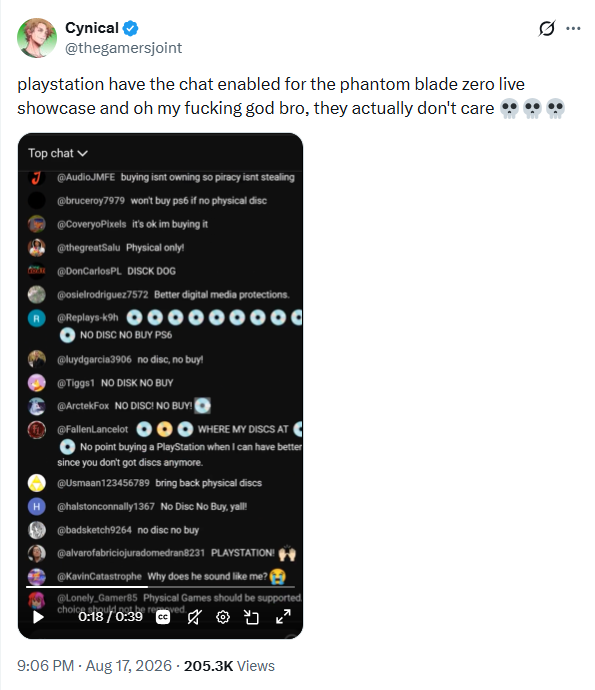
If Sony thought that the outrage over its decision to make the next PlayStation entirely disc-less was going to dissipate quickly, it was wrong. There are actually multiple organic campaigns to protest Sony’s decision to ditch physical media now. We already talked about the plans for a purchase and usage blackout of all things PlayStation in late August. Now we can add to that a social media campaign of sorts going around, called “No disc, no buy.” While the name is self-explanatory as to its purpose, what’s interesting is how this mantra and pushback using it are appearing everywhere.
Choosing to leave chat open for this particular State of Play was a curious move from Sony, given how the forthcoming action-RPG from Chinese team S-Game has already courted controversy when it was revealed its pre-orders are entirely digital, with no disc-based version being touted. That led to much speculation that the October 29, 2026 game may be releasing without a physical version at all, leaping to the front of the pack ahead of Sony’s plan to eliminate discs entirely by 2028. And given there’s nothing PlayStation-related of late that isn’t inundated with furious remarks from those fighting for physical media, you can be sure they were out in force throughout the presentation.
The comments relating to bringing back physical media, or simply repeating the “NO DISC NO BUY” mantra, went on and on and on. Sony since attempted to play hide and seek with all of this by disallowing chat replay on the video, but the damage had already been done.
And this isn’t a one-off. In other game showcases Sony has likewise been inundated with fury over its decision to end physical media for its next console. And, as Kotaku rightfully points out, while digital purchases dominate the American market, that isn’t the case internationally. In other words, the anger overseas is far greater than here in the States.
It’s tempting to write off these respondents, given the reality that now only 15 percent of PlayStation games are ever bought on disc. However, what often goes forgotten is that the 15-percent stat represents the United States, and doesn’t reflect the game-buying habits of players in many other countries. According to a recently published report from Germany, Germans still buy 58 percent of their games on physical discs. In France, disc buyers are also still in the majority at 55 percent. Even Sony’s homeland of Japan sat at 51-percent physical when it came to Resident Evil Requiem. Meanwhile in the UK, reports suggest 40 to 45 percent of games are still sold on real, plastic discs. The end of discs is going to disproportionately affect many countries, and there’s a good chance these people are letting their voices be heard!
Will Sony listen to this sizable percentage of its customers? I doubt it. Surely the company knew this would be a controversial decision and has likely already steeled itself in preparation for all of this anger. Digital games mean more margin for Sony and they’ve done whatever math which has led them to believe that this is the more profitable decision.
Advertisement
This means that game preservation will become much harder. It also means the stories we currently hear about people having their digitally “bought” games ripped away from them are likely to increase exponentially.
The AI boom has disrupted the way engineers work, introducing new tools to learn, raising expectations for what teams can achieve in a workday, and making it harder to get hired in the first place. This makes it difficult to advise students on which specific coding languages or technical skills they should learn. So amidst the uncertainty, advice for young professionals often turns to a common refrain: Be adaptable. But what does adaptability look like in practice?
Engineers often operate on the cutting edge of technology, so dealing with change is a normal part of the job, says Samantha Brunhaver, an associate professor of engineering at Arizona State University, in Tempe. Yet university curricula and training in the workplace often don’t prepare students for this.
“We tell engineers that they need to be adaptable when they graduate, but we don’t actually explain what that means, demonstrate what that looks like, [or] help make sure that they’re developing it,” says Brunhaver, who received a National Science Foundation award in 2020 to study how to foster greater workplace adaptability among young engineers. For this ongoing project, she has interviewed engineering managers, early career employees, and undergraduates about their experiences.
Part of the problem, she says, is that every employer has its own idea of what to be adaptable means. Generally, Brunhaver defines adaptability as “the ability to recognize that a change or uncertainty is occurring, and then respond effectively to that change.” But the skill is context-dependent. In software engineering, that might mean responding to turnover in the tools you use on a daily basis, while aerospace or biomedical engineers may need to keep track of changing procedures and regulations. “Managers are all saying adaptability is important,” Brunhaver says, “but defining it in different ways.”
Advertisement
At the same time, engineers are all contending with changes beyond these industry-specific expectations. Jobs in the technology, media, and telecom sectors are experiencing the fastest pace of skill turnover, according to a June 2026 report on the effects of AI from the professional services network PwC. And the World Economic Forum’s most recent Future of Jobs Report, published in 2025, found that employers across all sectors expect 39 percent of workers’ core skills to change by 2030. This uncertainty can be uncomfortable. But with the right mind-set and support from leadership, adaptability can help keep you afloat.
How to Cultivate Adaptability
The AI transition is a big shift—but not an unprecedented one, says Jenna Butler, a research scientist at Microsoft who studies developer well-being and productivity.
During this type of paradigm shift, there is often a “chaos period” when a new normal is being established, Butler says. In AI’s case, it challenges the understanding of what a computer can do. “I think we’re still in this in-between, difficult period that we’ve seen before, but [it] is maybe moving faster than it has historically.” Software engineers—in one of the fields most affected by AI—are now facing a significant increase in code review. “If you ask 20 developers, you get 23 different ways of working with it. Everyone is trying to sort it out,” says Butler, who describes this period as “the uncomfortable middle.”
“We tell engineers that they need to be adaptable when they graduate, but we don’t actually explain what that means, demonstrate what that looks like, [or] help make sure that they’re developing it.”– Samantha Brunhaver, Arizona State University
Advertisement
Brunhaver says one way educators can help prepare students before they enter the workforce is by offering a diversity of real-world experiences, such as internships, team-based projects, community service, and leadership roles. Each of these teach students to adapt to different challenges, easing their transition from school to work.
It’s also important to encourage reflection, Brunhaver adds, noting that metacognition helps individuals use the skill more effectively. “In order to adapt, you have to think that you have agency and the ability to get through a situation.” Ultimately, it comes down to three steps: Perceive a need to adapt, evaluate your options, and act.
For those already in the workforce, that action may mean taking the time to learn new tools and ways of working. Software engineering, for instance, may soon rely more on prompting models and managing agents than coding line by line. “I think people who went into software because they like solving problems are going to have a lot of fun, and people who just enjoy the art of writing code are not,” Butler says.
The More Things Change…
Although the tools engineers use on a daily basis are evolving, the core responsibilities of the job are more stable than they may seem, says Andy Hunt, a software developer who coauthored The Pragmatic Programmer (Addison-Wesley Professional) in 1999. The book outlines practical coding principles, and has been taught in many computer science classrooms. When Hunt was working on the 20th anniversary edition of the book, he was surprised by how much of the advice still applies. And now, seven years later, he maintains that belief.
Advertisement
“The fundamental part of the job is problem solving and communication, and that’s always going to be there,” he says.
Hunt emphasizes the importance of developing systems thinking over particular tools. To him, identifying as a Java programmer, for instance, is “like a carpenter saying, ‘I’m a hammer user,’ or ‘I specialize in cordless drills.’ ”
He acknowledges that today’s hiring process, in which companies often filter résumés for certain languages or years of experience, makes it harder to embrace a more expansive way of relating to your job. Employers, he says, should recognize that “the tech’s not the hard part, and it never has been. Understanding information theory, understanding systems thinking, understanding what constraints you’re up to—that’s still the hard part.”
With this type of misalignment between employers and employees, AI is also intensifying an old source of tension: How can engineers slow down enough to adapt and learn new tools when the pressure to become more productive keeps mounting?
Advertisement
Who’s Responsible for Enabling Change?
Young engineers need to embrace change. However, educators and employers also play a role in building a successful workforce. From the educator’s perspective, Brunhaver says “we need to be more explicit about what [adaptability] means and why it’s important.” Managers, meanwhile, should invest in their employees’ professional development.
Microsoft research scientist Butler often encourages leadership to set aside intentional time for continuous learning for their engineers—even just an hour a week—without any expectation that they will produce code or progress in their daily work. “I realize that’s difficult,” says Butler. “I would encourage people to do it on their own, but I would really encourage organizations and leaders to do it, because you’re not going to get this sudden change in your people if they don’t have time and space to learn how to work differently.”
This also means providing enough instruction, Butler adds. When developers aren’t given enough guidance on adopting something new, while being pressured to increase productivity, they risk doubling down on the tools they already know and burning out.
“I do imagine the next number of years could be challenging,” Butler says. Engineers will have to adapt to find their place in an evolving workforce—but they also have a say in shaping that future.
Advertisement
“Being adaptable sort of implies that you’re going to change based on what’s happening around you, and I would really like people to realize the change that’s happening is somewhat up to us,” she says. All individuals have a choice in how they use AI, for instance, and which models they use. “We need to be adaptable and go with the flow to a degree, but we also need to be directing that flow. The future with AI is absolutely not predetermined.”
This article appears in the September 2026 print issue as “The Adaptable Engineer.”






















































You must be logged in to post a comment Login