Connect with us

Business

innoscripta SE (INNTF) Q2 2026 Earnings Call Transcript

Published

on

OneWater Marine Inc. (ONEW) Q1 2026 Earnings Call Transcript

Max Hunger
Head of Investor Relations

Hello, everyone, and welcome. Good morning to everyone joining from the U.S. and North America, and good afternoon to everyone here in Europe. I am Max. I’m Head of Investor Relations here at innoscripta and I’m very pleased to have you all with us on this earnings call for the first half year of 2026 today. We’ve scheduled around 30 minutes for this call. [Operator Instructions]. Also, please be aware that this meeting is being recorded. Okay. With that, we are ready to get started, and I will hand over the word to our CEO, Michael Hohenester.

Michael Hohenester
Founder, CO-CEO & Chairman of the Management Board

Advertisement

Thank you very Max — very much, Max. Can we jump into the first slide, please? Yes. So basically, you saw the highlights already from the — from today’s press release. So basically, we have continued business operations in the second quarter and the first half year. So we see constant customer growth, constant low churn rate and let’s say, stable financial data.

Next slide, please. Some things we would like to address to give you some color about what we have reached already. So if you look at the German R&D workforce, as you know, probably R&D research and development is a pretty recurring endeavor. So that means once you do research and development, once you set up a research and development department, usually, you continue here over several years. And yes, so this is actually a pretty

Advertisement
Continue Reading
Click to comment

You must be logged in to post a comment Login

Leave a Reply

Business

More concerts and events could take place at Everton’s Hill Dickinson Stadium

Published

on

Business Live

Club wants to ‘enhance the stadium’s potential as a multi-use venue’

An aerial view of Hill Dickinson Stadium, home of Everton FC.

An aerial view of Hill Dickinson Stadium, home of Everton FC(Image: PA)

More concerts and live events could become a permanent fixture at Everton’s waterfront stadium after the club made a bid to Liverpool Council. The Toffees’ second season got underway at Hill Dickinson Stadium on Saturday after the historic move from Goodison Park in 2025.

Advertisement

Alongside its inaugural set of Premier League fixtures, the Bramley-Moore Dock ground has already hosted two rugby events and an England Women’s international match. There are also plans in place for festive occasions such as Oktoberfest and Christmas markets later this year.

Now the club have asked the city council for permission to expand the terms it currently has to hold non-sporting events on Regent Road. This could double to eight from the four originally granted back in 2021.

The Blues have asked Liverpool Council to vary the conditions of its planning permission granted five years ago during the initial construction of the stadium. This allowed the club to stage four non-sporting events, such as concerts, to take place at full capacity within the stadium in any calendar year.

Should this change be agreed, Hill Dickinson Stadium would be given the go-ahead to host up to eight concerts. Of those no more than two may continue up until 11.30pm with all music concerts finishing by 11pm.

Advertisement

In a planning statement submitted to the city council, CBRE Limited – on behalf of Everton – explained why they were seeking to make the change. It said: “While maintaining its principle role as a football stadium, the proposed amendment seeks to enhance the stadium’s potential as a multi-use venue.

“This will support wider regional aims to increase the live music offer in the city region, and in turn boost the tourism and visitor economy.” According to the document, the existing conditions are “restricting” Hill Dickinson Stadium “despite the interest from events promoters”.

The planning agents added: “It provides the opportunity for Liverpool to capitalise on its status as a designated UNESCO City of Music, by allowing a greater number of live music events to be held in the city, which in turn will increase tourism in Liverpool.” The application comes as Everton have outlined how the club will continue to develop the site around Hill Dickinson Stadium.

This includes bringing the grade II listed hydraulic tower back into use. Andrew Middleton, the club’s president of business operations, told the BBC’s Giulia Bould how work was underway to transform it into a sports bar for matchdays and beyond.

Advertisement

The Western Terrace steps will also be made accessible to fans on non-matchdays. Mr Middleton said the move to hold more concerts and non-football events would not hold the club back in terms of making further improvements.

While work is in progress to secure the first artists to play at Hill Dickinson, no dates or acts have been confirmed for the stadium at this stage. Liverpool Council is yet to announce if and when the planning application will go before committee members for a decision.


Continue Reading

Business

one way to show your team you care

Published

on

one way to show your team you care

Keeping a team happy when you’re running a small or medium sized business isn’t always easy. It’s hard to match the salaries that larger companies can offer and in a smaller organisation employees sometimes face more intense pressures.

To keep people on side it’s essential to find other differentiators – which often comes down to making sure that employees are treated well and offering practical perks that show they’re appreciated.

Improving employees’ experience of business travel may not always have been a director’s first thought when it comes to staff wellbeing, but it turns out that it matters a lot. Research from the Global Business Travel Association (GBTA) found that 83% of business travellers in Europe say their business travel experience affects their job satisfaction. This figure rises to 88% among millennials – suggesting that for younger generations of employees, a smoother experience has become an expectation.

Travel is an inevitable and important part of growing an SME, whether it’s travelling to meet vendors and suppliers in person, attending industry events or bringing a remote-working team together. Unlike larger organisations, however, many SMEs do not have dedicated travel managers or large finance teams to handle the admin of booking transport, filing receipts, reconciling payments and monitoring policy compliance.

See it from the traveller’s point of view

The reality is that employees in smaller organisations are often responsible for their own trip logistics, including the purchase of tickets and booking of hotels and meals. When it comes to taxis they will almost always be expected to pay for this out of their own pocket and recover the cost from their employer. It’s an extra layer of admin that most people could do without – and frequently means delays before reimbursement.

Advertisement

Employees want flexibility and convenience. If they do have to book transport themselves they want it to be simple – and ideally charged directly to their employer. A large credit card bill that has been spent on your employer’s behalf is not motivational – nor is the knowledge that time has been spent managing travel admin instead of getting on with the job.

Another aspect of travel that can be discouraging for employees is finding something to eat. When you’re travelling, you’re tired enough already without having to find food too. An employee may be working irregular hours, arriving at accommodation late at night or travelling between different meetings during the day. If as an employer you’re able to take away this stress, it will make a difference to how they feel during a trip.

Better travel management – better for the business

While keeping team members happy is a top priority, as a business owner, it’s also important that you maintain visibility and control. This includes knowing how much employees are spending when travelling and whether staff are following travel policy. If you’ve agreed prices with one supplier you want to avoid your team going rogue and booking rides with someone else. Safety is also a concern. While you don’t want to track your employees’ every move, the company has a duty of care towards them so it helps if you are able to know where they are.

Another consideration is whether you’re capturing and using data from travel. Clear and consistent data can be beneficial to businesses for all sorts of reasons. Gathering data on spend, for example,can help you to manage costs and improve budget planning.

Advertisement

Making it easier to travel and eat

So what does a good business travel experience look like?

Clear policies on travel, meals and expenses help, so employees know where they stand when booking a ride or ordering a meal while away. If you can remove the need for staff to pay up front and automate expense capture and reconciliation, this takes away those admin-heavy tasks. And when people are travelling to unfamiliar locations, being able to track their location gives you extra reassurance that they are safe and well.

Digital tools are now making it far easier for companies to provide a better travel experience and enabling them to spend more time running their business, rather than focusing on paperwork. These tools are quick to set up, are either free or low-cost, and can easily integrate with existing systems, without a complicated integration process or the need for upfront investment.

With a centralised platform, for instance, you can set controls on journeys, capture data about trips and spend, and automate the expense process. Meanwhile apps which people are familiar with in their personal lives can also be used to conveniently book travel during a work trip.

Advertisement

Business travel shouldn’t be a burden. Managed well, it can help SMEs grow and strengthen client relationships. It can also leave employees feeling productive, energised and more satisfied in their roles.


Andrew Laughlan

Andrew Laughlan

Andrew Laughlan at Uber for Business

Advertisement
Continue Reading

Business

Wendy’s CEO Aims for Chain to Get Back in the Burger Fight

Published

on

Wendy’s CEO Aims for Chain to Get Back in the Burger Fight

Bob Wright knows his mission: Get Wendy’s WEN 2.12%increase; up pointing triangle back on its feet.

Since taking the helm as Wendy’s chief executive in May, Wright has been unsparing in his assessment of the burger chain’s challenges. He has told franchisees and investors that the company has shortchanged ingredient quality for cost savings, that service has become uneven and that Wendy’s depends too much on deals.

Copyright ©2026 Dow Jones & Company, Inc. All Rights Reserved. 87990cbe856818d5eddac44c7b1cdeb8

Continue Reading

Business

Fall of market leaders! How 6 Nifty giants trapped investors with negative returns for 5 years

Published

on

Fall of market leaders! How 6 Nifty giants trapped investors with negative returns for 5 years
Largecap stocks are usually seen as safer long-term bets in a volatile market. But even in the Nifty, safety has not always meant returns. According to ACE Equity data, six Nifty stocks have delivered negative returns over the last five years. The list includes Tata Consultancy Services, Infosys, Hindustan Unilever, HDFC Life Insurance, Asian Paints and HDFC Bank.

All of these stocks are market leaders in their sectors. Yet, each has struggled with a different mix of growth, valuation, margin and sector-specific problems.

TCS has been the worst performer in the list, falling 37% over five years. Infosys is close behind with a 34% decline. Both stocks were hit by old IT services growth model coming under pressure. Global clients have delayed discretionary technology spending, while artificial intelligence has raised questions over pricing, headcount-based billing and long-term demand for traditional outsourcing services.

Indian IT companies are being forced to rethink business models as clients demand more productivity and lower prices. The Nifty IT index has also lost about a fifth this year, with its 10 constituents losing $73 billion in market value.

Advertisement

Infosys has also faced company-specific pressure from weak guidance. The company’s FY27 constant currency revenue growth guidance of 1.5-3.5% had pointed to continued demand uncertainty, while another guidance cut after Q1 kept brokerages cautious. Analysts also flagged weak demand, AI-led pricing pressure and client-specific issues as near-term headwinds.


chart:
Hindustan Unilever, down 23% in five years, shows how even a consumer staple stock can disappoint. The company has been dealing with weak rural demand, inflation pressure and rising competition. HUL’s shares had fallen to a 52-week low after the June quarter even though revenue growth touched a 13-quarter high, as investors worried about margin pressure from sustained cost inflation.The broader FMCG story has also changed. Inflation has hurt mass-market demand, while competition from regional players and large new entrants has kept pricing power under check. For a company that once commanded a premium for steady growth, slower volume recovery and margin pressure have made valuations harder to defend.

HDFC Life Insurance has fallen 18% over five years. The issue here has been slower growth and pressure on profitability metrics. The company’s June quarter showed value of new business rising 9% year-on-year (YoY) and annual premium equivalent also growing 9%, but individual APE remained muted, with underperformance in the bank channel. VNB margin declined 10 basis points YoY to 25%.

Also Read: In favour! FIIs buy 7 multibaggers that soared up to 730% after 2 quarters of selling

Life insurers have also had to deal with regulatory changes, product mix shifts and pressure on savings products. For HDFC Life, investors have waited for stronger growth to justify its earlier premium valuation.

Advertisement

Asian Paints, down 13%, is another case where a high-quality franchise met a tougher market. Demand in decorative paints weakened, raw material costs rose, and competition intensified after the entry of Birla Opus.

Asian Paints had reported a sharp fall in quarterly profit in FY25 as muted demand and new competition hurt volumes. Its management had said it did not anticipate the intensity of competition because demand itself was weak and everyone was fighting for the same share.

The paint sector has also seen pressure from crude-linked raw material costs and rupee depreciation. Paint companies raised prices in 2026, but margins remained under pressure because raw material inflation stayed elevated and hikes were gradual.

HDFC Bank has been the least negative among the six, down 6.47% in five years, but its underperformance has hurt because it was once treated as one of India’s most reliable compounders. The main issue has been the merger with HDFC Ltd. The merger increased the bank’s balance sheet sharply but brought a smaller deposit base, putting pressure on margins and returns.

Advertisement

The absorption of HDFC added Rs 7.23 lakh crore of assets but a relatively small deposit base, squeezing margins and dragging on growth. The stock also saw pressure after leadership-related concerns and boardroom strains earlier this year.

Analysts say the merger also pushed the bank’s credit-deposit ratio to elevated levels, forcing it to rely on costlier deposits and borrowings. Analysts said this pulled net interest margins down from pre-merger levels.

The common thread across these six stocks is that investors had paid heavy price for certainty. Many of these companies traded at rich valuations for years because they were seen as stable, predictable and difficult to disrupt. When growth slowed, competition increased or margins came under pressure, the stocks had little room for error.

Largecaps still seen as safe bets

Still, there is a general consensus that largecaps remain the safer part of the market for many long-term investors. They have stronger balance sheets, deeper management teams, better access to capital and higher liquidity than smaller companies.

Advertisement

India’s equity market now appears to be moving from a valuation-driven phase to an earnings-led one. The recent correction has improved risk-reward for long-term investors in some parts of the market.

Anil Rego, MD and Chief Investment Officer at Right Horizons PMS, said the worst of the valuation-led correction may be behind the market, while a broader earnings recovery could support the next leg of growth.

He remains constructive on financials, manufacturing and industrials, autos, power and renewable energy, and consumer discretionary. Rego said investors should take a bottom-up approach and look for businesses where earnings growth is not yet fully reflected in valuations.

Data: Ritesh Presswala

Advertisement

(Disclaimer: Recommendations, suggestions, views and opinions given by the experts are their own. These do not represent the views of Economic Times)

Continue Reading

Business

(VIDEO) 5 New Things to Know About Apple’s New Mac Studio With M5 Max and M5 Ultra Chips Starting at $2,499

Published

on

Apple Launches Updated Polishing Cloth at $9, Half the Price

Apple announced a redesigned Mac Studio on Monday, calling it the company’s most powerful Mac ever, built around two new chips, M5 Max and the all-new M5 Ultra, that Apple says deliver a dramatic leap in on-device artificial intelligence performance. Here are five key things to know about the new desktop computer.

1. It’s built primarily for running AI models directly on the device

Apple positioned the new Mac Studio explicitly as a machine designed to handle massive AI workloads locally, rather than relying on cloud computing. Johny Srouji, Apple’s chief hardware officer, framed the upgrade as a significant step forward for the product line. “Mac Studio is the ultimate desktop for on-device AI and the world’s most demanding pro workflows, relied on by users for its tremendous performance and extensive pro connectivity, all in a quiet, compact design that sits right on your desk — and today, we’re pushing the boundaries even further,” Srouji said. “With the powerful M5 Max and the incredible capabilities of M5 Ultra, Mac Studio ushers in a new era of desktop computing, delivering huge performance gains for pro workloads and AI inference with frontier-class models.”

Advertisement

According to Apple, the top-end M5 Ultra chip delivers up to 4.3 times the peak AI compute performance of the previous M3 Ultra chip, and nearly 10 times that of the original M1 Ultra. Neural Accelerators built directly into each GPU core handle dramatically faster matrix multiplication, a core computational operation underlying most modern AI systems. Apple said the combination of that processing power with massive on-device memory allows users to run large AI models “entirely on device with complete privacy — without counting tokens or worrying about rising cloud costs.”

2. Memory capacity reaches a staggering 512GB

The new Mac Studio can be configured with up to 512GB of unified memory when equipped with the M5 Ultra chip, paired with 1.2 terabytes per second of memory bandwidth, which Apple said represents a 50% increase over the previous generation. That combination is specifically designed to let users load and run enormous large language models directly on the machine rather than splitting workloads across cloud servers. The M5 Max configuration tops out at a still-substantial 128GB of unified memory with 614 gigabytes per second of bandwidth. Apple noted that the 512GB memory configuration will arrive slightly later than the rest of the lineup, becoming available in late October rather than at the initial September 22 launch.

3. Multiple systems can be linked together for even more AI power

Advertisement

For users and teams needing to go beyond the capabilities of a single machine, Apple built in support for clustering multiple Mac Studio units together using Thunderbolt 5 and remote direct memory access, or RDMA, technology. According to Apple, this creates a shared memory pool spanning multiple systems, allowing users to load some of the largest and most demanding open-weight AI models currently available. Apple said a cluster of four Mac Studio systems delivers up to three times faster AI inference performance compared with a single standalone machine, a capability aimed squarely at AI researchers, data scientists and development teams working with particularly large models.

4. New chips also bring major gains for video, graphics and creative work

Beyond AI performance, Apple detailed substantial improvements across graphics-intensive creative workflows. The M5 Max’s GPU, which scales up to 40 cores, is up to 50% faster than the prior generation, according to Apple, while the M5 Ultra’s GPU, scaling up to a massive 80 cores, marks the most powerful Apple silicon GPU built to date and brings Neural Accelerators to the Ultra chip for the first time. Apple said the new Mac Studio also includes third-generation hardware-accelerated ray tracing for more realistic lighting, reflections and shadows in professional 3D and visual effects work.

Specific creative software benchmarks cited by Apple, based on internal testing conducted in July 2026, include up to 5.3 times faster performance for the Magic Mask feature in Blackmagic Design’s DaVinci Resolve Studio on the M5 Max compared with the original M1 Max, and up to 4.7 times faster scene rendering in Maxon Redshift on the M5 Ultra compared with M1 Ultra. Apple also said the redesigned Media Engine allows the M5 Ultra configuration to simultaneously play back up to 33 streams of 8K ProRes 422 footage at 30 frames per second, a capability aimed at professional video editors working with high volumes of uncompressed footage.

Advertisement

5. Storage, connectivity and pricing have all been upgraded, starting at $2,499

The new Mac Studio introduces a next-generation SSD architecture built on the PCIe Gen 6 standard, delivering storage performance Apple says is up to twice as fast as the previous generation, speeding up project loading and large file transfers. Wi-Fi 7 and Bluetooth 6 arrive on Mac Studio for the first time, powered by Apple’s own N1 wireless chip, while Thunderbolt 5 ports deliver transfer speeds up to 120 gigabits per second. The machine also supports up to eight connected displays, or up to four Studio Display XDR monitors running at full 5K resolution and 120Hz refresh rate.

Pricing starts at $2,499 for the Mac Studio configured with the M5 Max chip, or $2,299 for education customers, while the M5 Ultra configuration starts significantly higher, at $5,499, or $5,099 for education buyers. Apple is also offering the machine through its Apple Upgrade leasing program, with M5 Max configurations starting at $48.99 per month and M5 Ultra configurations starting at $110.10 per month over a 36-month term. Pre-orders opened Monday, Aug. 25, across 30 countries and regions including the United States, with the new Mac Studio set to begin arriving to customers and Apple retail locations starting Sept. 22.

The new Mac Studio also ships alongside the upcoming macOS 27 update, which introduces Apple’s more capable Siri AI assistant and expanded Apple Intelligence features across the operating system’s built-in apps. Apple said the new Mac Studio was manufactured using 35% recycled content overall, including fully recycled aluminum in its enclosure, as part of the company’s broader push toward becoming carbon neutral across its entire product footprint by 2030.

Advertisement
Continue Reading

Business

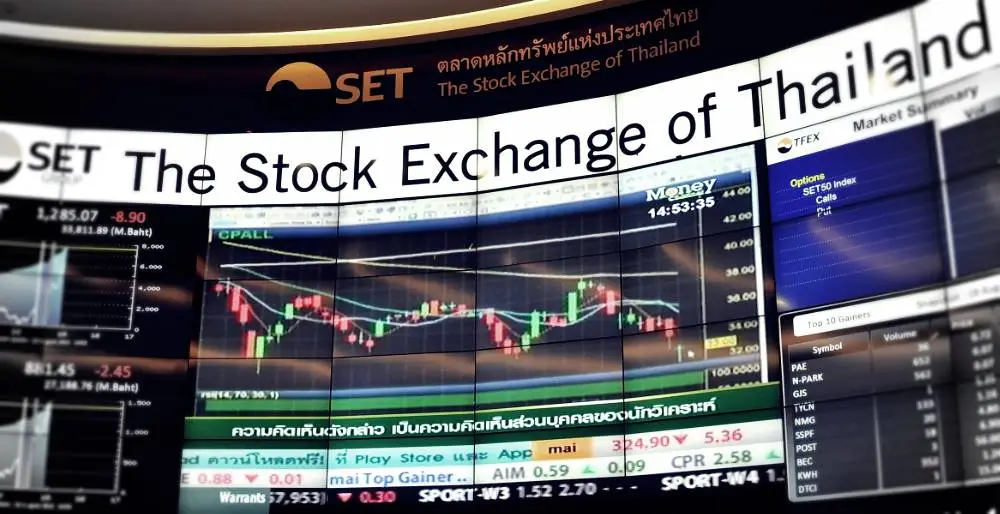
Thailand moves to tighten market rules after corporate scandals

Published

on

Thailand moves to tighten market rules after corporate scandals

Thailand is preparing a sweeping overhaul of its securities and digital‑asset laws in a bid to accelerate financial‑crime investigations and rebuild investor confidence. The Cabinet approved amendments to four key market‑regulation laws on Aug 25, signalling a shift toward more assertive enforcement .

A central change would allow the Securities and Exchange Commission (SEC) to work directly with police on probes into insider trading, stock manipulation, and corporate fraud — cases that currently take more than two years due to limited investigative capacity . SEC secretary‑general Pornanong Budsaratragoon said closer cooperation should significantly shorten investigations and respond to investor demands for tougher action against wrongdoing .

The reform push follows high‑profile scandals at Stark Corporation, which defaulted on nearly 40 billion baht after revealing accounting irregularities , and Energy Absolute, whose founder and director faced SEC allegations of fraud and corruption that triggered a sharp market reaction and bond‑payment delays . These cases have intensified calls for stronger oversight.

Beyond enforcement, the amendments aim to reinforce supervision of auditors and financial advisers, described as critical gatekeepers in preventing corporate misconduct . The proposals will now move to Parliament, with implementation expected in 2027, according to Finance Minister Ekniti Nitithanprapas

Advertisement
Continue Reading

Business

Intuit issues conservative full-year guidance amid strategy shift, shares slide

Published

on


Intuit issues conservative full-year guidance amid strategy shift, shares slide

Continue Reading

Business

Wall Street ends higher as tech rebounds before Nvidia results

Published

on


Wall Street ends higher as tech rebounds before Nvidia results

Continue Reading

Business

Evion Group secures binding Maniry agreement

Published

on

Evion Group secures binding Maniry agreement

Shares in Subiaco-based junior Evion Group rose on Tuesday, following a key deal in relation to its Maniry graphite project in Madagascar.

Continue Reading

Business

Inventory Of New Single-Family Homes Jumps, Prices Drop To Lowest Since 2021, Sales Sag

Published

on

Inventory Of New Single-Family Homes Jumps, Prices Drop To Lowest Since 2021, Sales Sag

Inventory Of New Single-Family Homes Jumps, Prices Drop To Lowest Since 2021, Sales Sag

Continue Reading

Trending

Copyright © 2025