
Crypto World
Bitcoin Is Struggling To Control $80,000 After A Week Of Gains

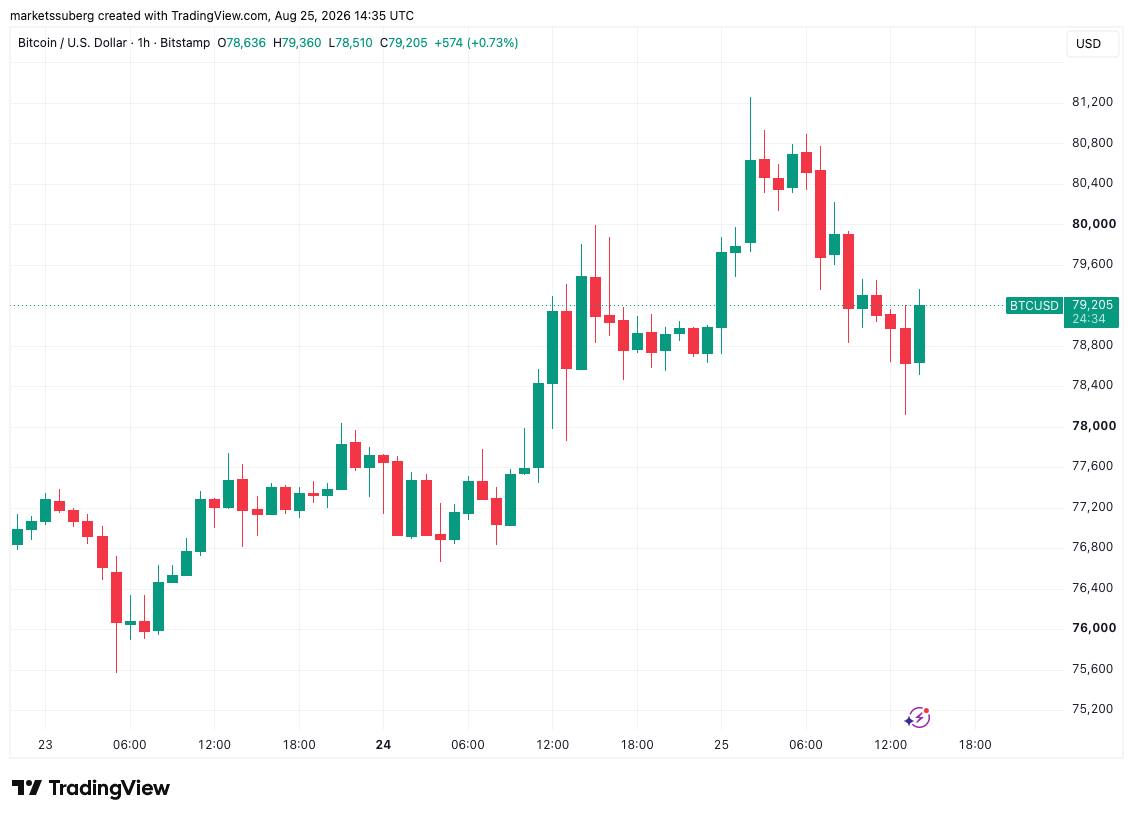
Bitcoin (BTC) fell below $80,000 into Tuesday’s Wall Street open as crypto and gold gave way to gains in US equities.
Key points:
- Bitcoin upside momentum fizzles as $80,000 proves difficult to flip to support.
- Gold joins BTC price downside after multimonth highs of $4,697 per ounce as US 30-year bond yields target three-week lows.
- Attention switches from bonds to US inflation data and Nvidia earnings tomorrow.
Bitcoin price struggles to cement $80,000 reclaim
Data from TradingView showed BTC/USD falling as low as $78,111 on Bitstamp after reaching new 14-week highs of $81,265.
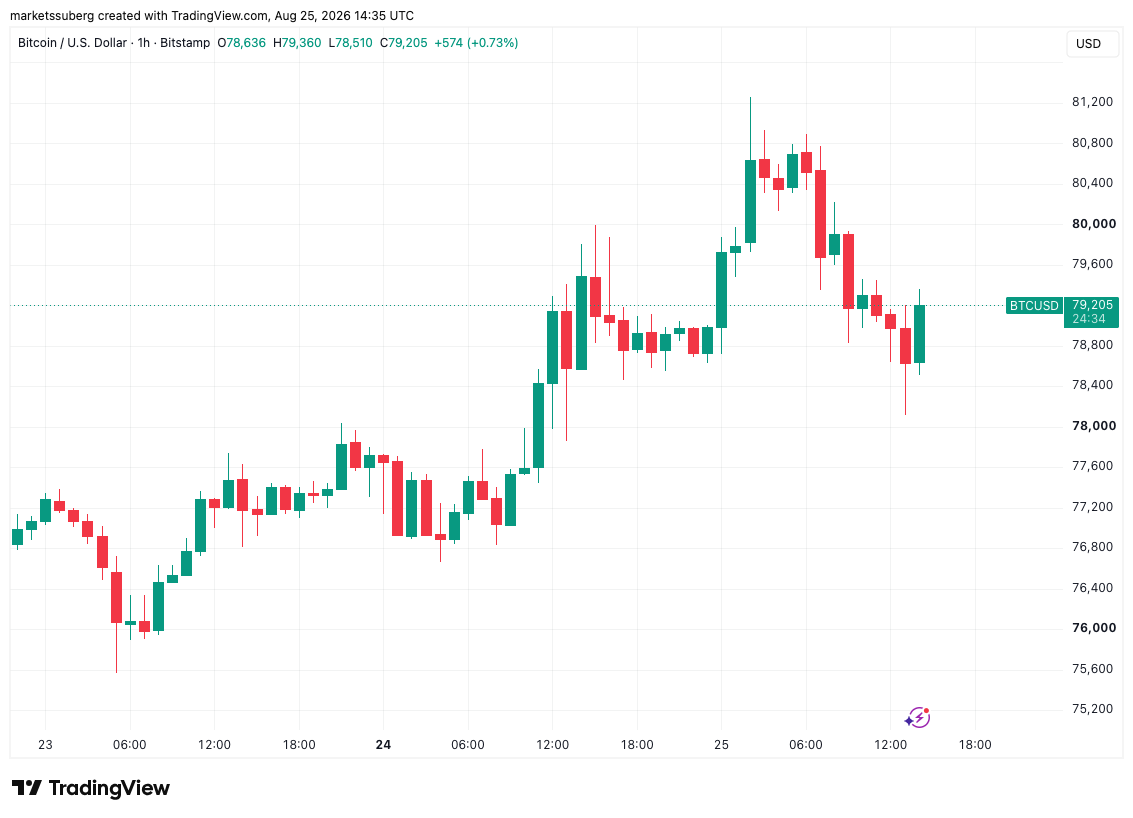
BTC/USD one-hour chart. Source: Cointelegraph/TradingView
The $80,000 zone, which traders previously earmarked as an area of strong sell pressure, proved difficult to reclaim as US trading hours appeared to increase downside across both Bitcoin and gold. XAU/USD saw local lows of $4,605 per ounce, down nearly 2% on the day.
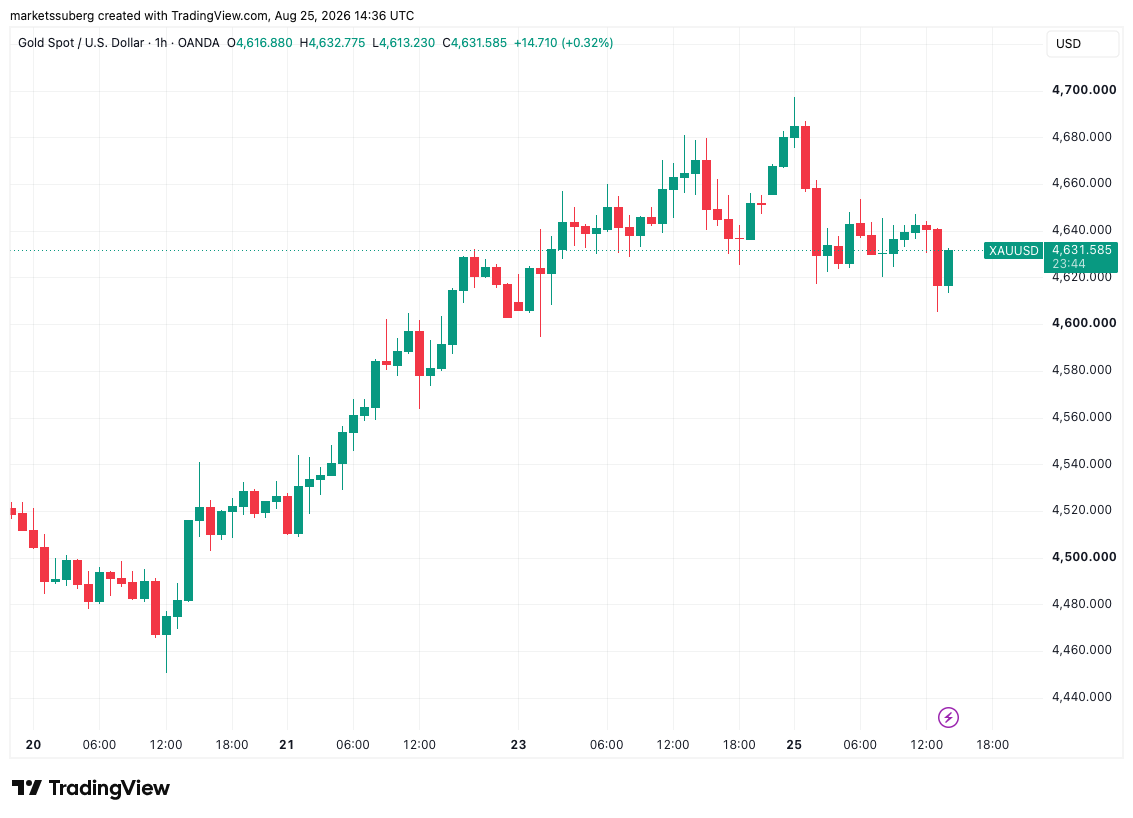
XAU/USD one-hour chart. Source: Cointelegraph/TradingView
US stocks moved inversely to gold and crypto last week, coming under pressure as both rallied. This divergence has continued this week, with the S&P 500 and Nasdaq Composite Index posting modest daily gains of 0.2% and 0.5%, respectively.
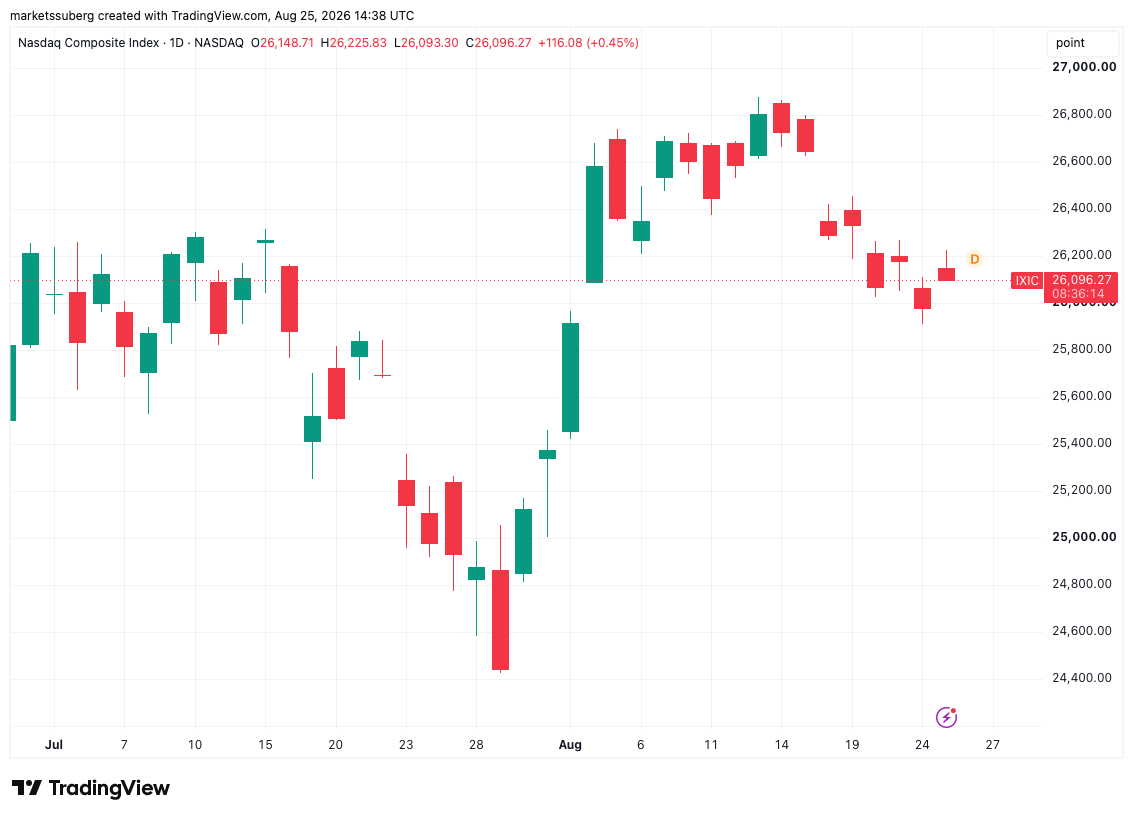
Nasdaq Composite Index one-day chart. Source: Cointelegraph/TradingView
The comparative strength appeared to mostly brush off a brewing trade-tariff spat between the US and Canada in which negotiations recently broke down. In his latest posts on Truth Social, US president Donald Trump accused Canada of “ripping off” the US.
“Over the last 10 years, the United States lost, on average, 60 Billion Dollars a year with Canada. No more!” he pledged.
US government bond yields continued to cool on the day, with 30-year yields dropping below 5.2% and eyeing their lowest levels since Aug. 7. Last week’s crypto surge came as yields hit heights not seen since January 2007 and the US Treasury announced bigger debt buyback operations to tame the upside.
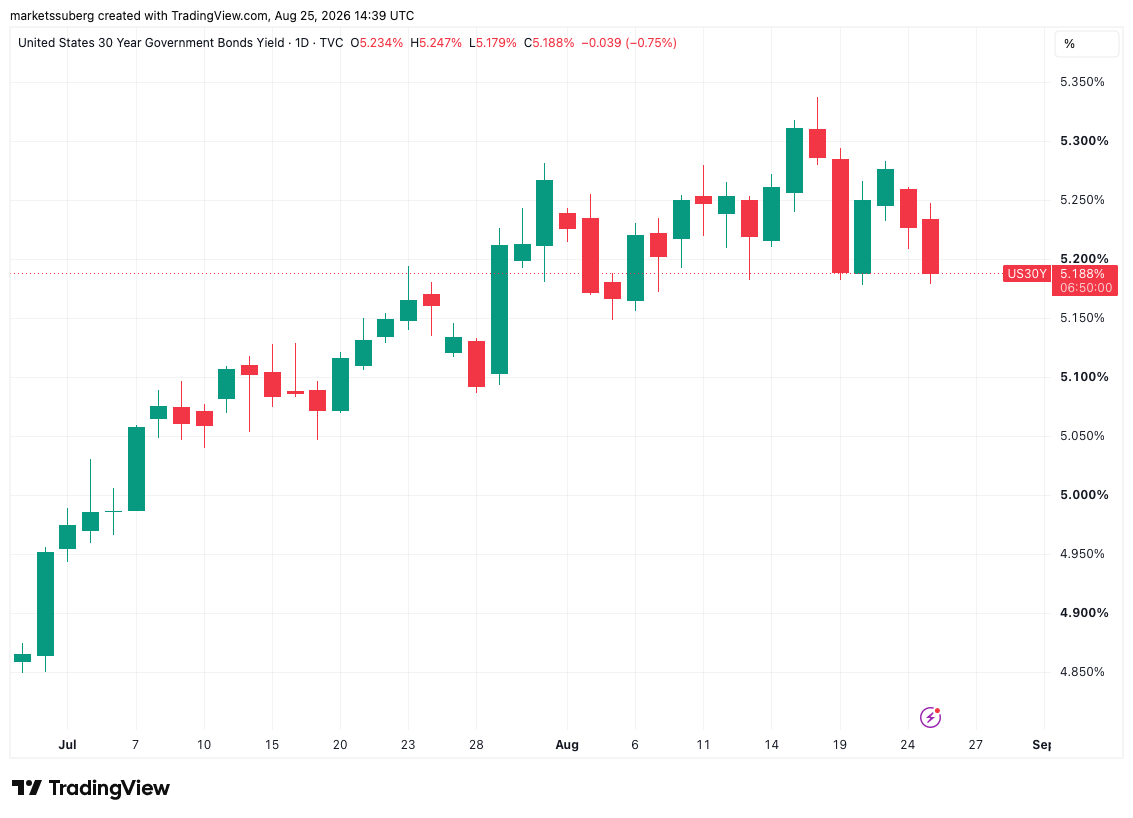
US 30-year bond yield one-day chart. Source: Cointelegraph/TradingView
Commenting on the prospect of further bond-market interventions in the future, trading resource The Kobeissi Letter suggested that interest-rate cuts — a key potential liquidity driver for crypto markets — were not an option in the current inflation environment.
“The reality is that the Fed cannot cut rates in this environment and the Trump Administration knows this. So, direct bond market intervention is the only solution to drive interest rates and yields lower over the short-run,” it wrote in a post on X.
“Our view? Don’t fight the Treasury.”
As Cointelegraph reported, market consensus calls for an ongoing rate-hike freeze at the Fed’s September meeting, with the odds of this outcome currently at 61.9%, per data from CME Group’s FedWatch Tool.
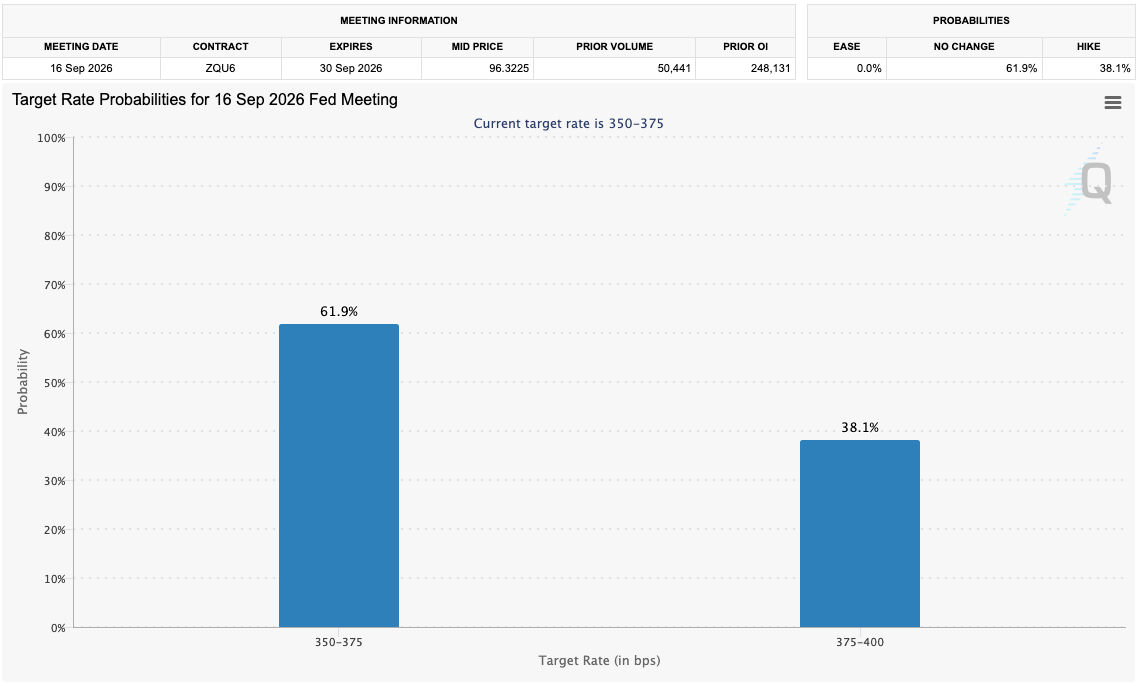
Fed target-rate probabilities for September FOMC meeting (screenshot). Source: CME Group
PCE, Nvidia earnings on the radar
Discussing the immediate macro outlook, trading firm QCP Capital shifted the focus away from the Treasury toward fresh US inflation data and the Fed’s Jackson Hole economic symposium, taking place from Aug. 27-29.
Related: First bear-market trend line reclaim since 2025: Five things to know in Bitcoin this week
Wednesday will see the July print of the Personal Consumption Expenditures (PCE) index, known as the Fed’s preferred inflation gauge, which saw its first month-on-month decrease since 2020 past June. Tech giant Nvidia, meanwhile, will also report earnings on Wednesday, adding another potential risk-asset volatility catalyst.

A new OKX report has found that 90% of college students want crypto and blockchain included in financial education, even though only 28% of reviewed U.S. business schools offered related courses.
Summary
- 90% of students and 87% of parents support college-level crypto and blockchain education.
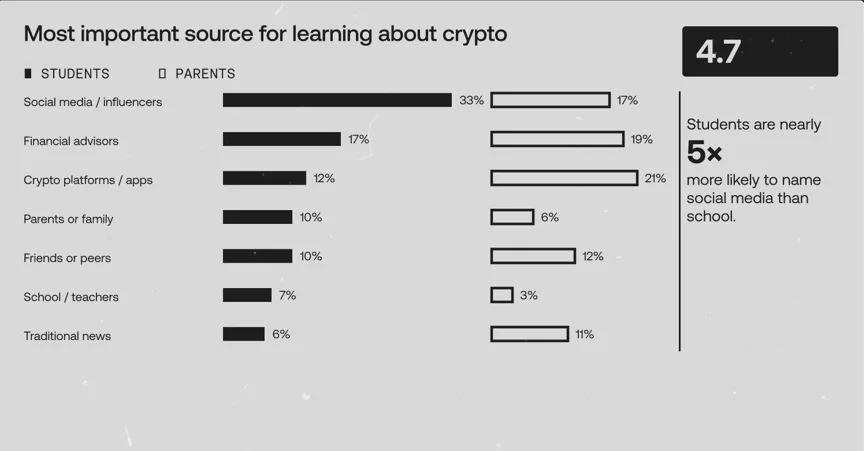
- 33% of students rely mainly on social media for crypto knowledge, compared with 7% who cite schools.
- 47% of students have taught a parent or guardian about crypto or investing.
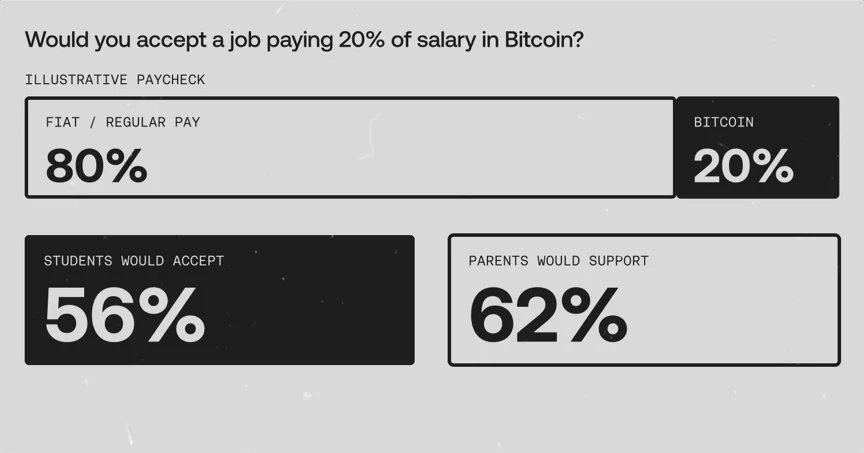
- 56% of students would accept 20% of their salary in Bitcoin.
Crypto education demand exceeds course availability
In its New Money Curriculum report shared with crypto.news on Aug. 26, OKX said support for crypto education extended across both generations surveyed, with 87% of parents joining 90% of students in saying colleges should teach crypto and blockchain.
Some respondents wanted more than an optional course. According to the report, 27% of students and 32% of parents said crypto and blockchain education should be required for college students.
Formal course availability remained far below those figures. A separate 2025 study published in the Information Systems Education Journal examined 533 U.S. universities with business schools accredited by the Association to Advance Collegiate Schools of Business.
Researchers searched university websites and course catalogs in March 2024 and found that 151 institutions, or approximately 28%, offered at least one blockchain-related course. The study counted courses across business, computer science, engineering, and other departments rather than limiting its review to standalone blockchain programs.
Course depth also varied between institutions. While 151 schools offered at least one relevant class, only 76 had two or more, and two universities offered at least 10. The most common subjects included blockchain fundamentals, smart contract development, and cryptocurrency economics.
The contrast combines two separate datasets: OKX measured support among students and parents, while the academic review measured course availability at AACSB-accredited U.S. business schools. The published OKX report did not disclose the number of survey respondents, the fieldwork dates, or the method used to select participants.
Some crypto companies have started funding university programs directly. As previously covered by crypto.news, Ripple signed a five-year Kansas partnership in July that included financial literacy and digital-asset education for University of Kansas student-athletes and other members of the campus community.
The University of Kansas also operates an XRP Ledger validator through its engineering school, supported by Ripple’s University Blockchain Research Initiative. Although the arrangement adds practical blockchain exposure, it represents an industry-backed program rather than evidence of a system-wide increase in college courses.
Social media has become students’ main crypto teacher
With formal classes available at a minority of the universities reviewed, students named social media and influencers as their leading source of crypto information.
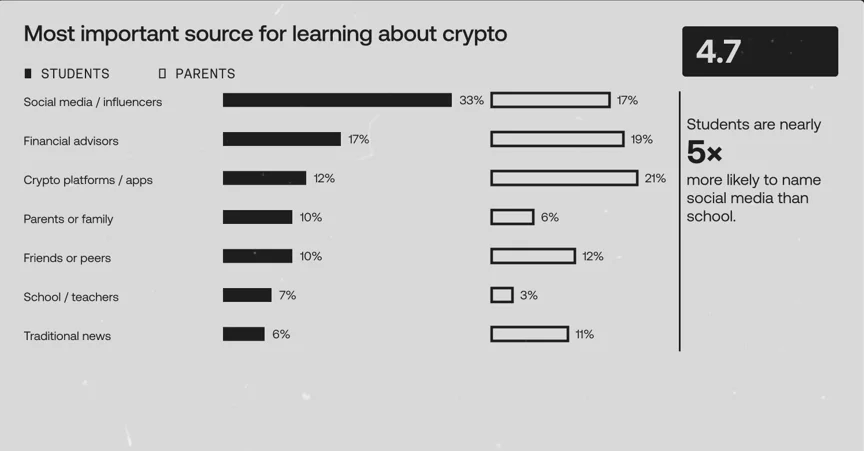
OKX reported that 33% of students considered social media or influencers their most important source, nearly five times the 7% who selected schools, teachers, or professors. Financial advisers ranked second at 17%, followed by crypto platforms and apps at 12%.
Family and friends each accounted for 10% of students’ main source of information, while traditional news ranked last at 6%. The results place most student learning outside college classrooms and professional media, based on the categories included in the survey.
Parents followed a different pattern. Crypto platforms and apps ranked first among that group at 21%, followed by financial advisers at 19% and social media or influencers at 17%. Friends or peers accounted for 12%, while 11% selected traditional news.
Students were therefore almost twice as likely as parents to depend primarily on social media for crypto information. OKX said exchanges also played a material educational role because platforms and apps ranked first among parents and third among students.
The survey did not test whether respondents understood specific subjects such as wallet security, private-key management, token valuation, taxes, or fraud. Its findings measure where participants said they learned and how they viewed their knowledge, rather than independently assessing their financial literacy.
Separate university initiatives show how some programs combine classroom teaching with applied work. In August, Ripple renewed its support for NYU Abu Dhabi’s blockchain research program through 2027.
The funding supports a hands-on fintech course, student projects built with the XRP Ledger, and research into blockchain-based economic tools. Ripple said its university program has supported more than 800 new or expanded fintech courses and 1,500 academic blockchain research projects across more than 60 university partners in 27 countries.
Students are teaching parents about crypto
Although students often learned outside college, many carried the information back into their households. 47% said they had taught a parent or guardian something about crypto or investing, while 43% of parents said their college-aged child had taught them about either subject.
About one-quarter of students said their lessons specifically covered crypto, either by itself or alongside other investing topics. Perceptions of knowledge followed the same pattern: 53% of students said college students understood crypto better than their parents, and 51% of parents agreed.
Only 14% of students and 13% of parents believed parents held the knowledge advantage. Parents also showed some willingness to rely on their children, with 56% saying they would definitely or probably allow a college-aged child to make a crypto transaction for them.
Reported activity remained much lower than stated trust. Just 9% of students said they had completed a crypto transaction for a parent.
Investment authority produced less agreement. Among students, 36% said they should have the most influence over their first investment decisions, compared with 16% who selected their parents. Parents divided almost evenly: 29% said the student should lead, while 30% assigned the main role to parents or family.
Both groups also tended to view crypto as an investment instead of entertainment. 52% of students described buying crypto as a long-term investment, nearly nine times the 6% who called it a hobby. Among parents, 48% chose long-term investment, and 9% selected a hobby.
Allocation preferences were more restrained than the acceptance figures alone suggest. While 89% of students said some crypto exposure could form part of a responsible portfolio, 11% said the appropriate allocation was zero. The report did not provide the full breakdown of allocation sizes in its published text.
Bitcoin salary interest brings U.S. tax obligations
Interest in digital assets extended from portfolios to employment, with 56% of students saying they would definitely or probably accept a job that paid 20% of their salary in Bitcoin. Parent support was higher at 62%.
For U.S. workers, receiving Bitcoin as wages would not remove the usual federal tax obligations. The IRS Taxpayer Advocate Service states that digital assets received as compensation are treated as ordinary income, while an employee’s crypto wages remain subject to federal income-tax withholding, Social Security, Medicare, and unemployment taxes.
After receipt, the employee generally holds the Bitcoin as a capital asset. A later sale or exchange may create a capital gain or loss based on the difference between its value when received and its value when disposed of, according to the IRS.
Operational and tax questions have already complicated crypto payroll adoption. A September 2025 crypto payroll analysis cited a Pantera Capital compensation survey showing that the share of crypto-sector workers receiving digital assets rose to 9.6% in 2024.
Despite students’ interest in Bitcoin pay, both generations still placed real estate first when asked which asset college students might regret not owning. Real estate led among 27% of students, followed by AI and technology stocks at 23%, the S&P 500 at 20%, and Bitcoin at 17%.
Parents produced a similar result at the top but ranked Bitcoin more highly. Real estate received 26% of parent responses, while Bitcoin followed at 24%.
The US Securities and Exchange Commission (SEC) is moving forward with plans to overhaul custody rules for investment advisers and investment companies, potentially giving institutions greater clarity on how they can hold crypto assets for clients while complying with federal securities rules.
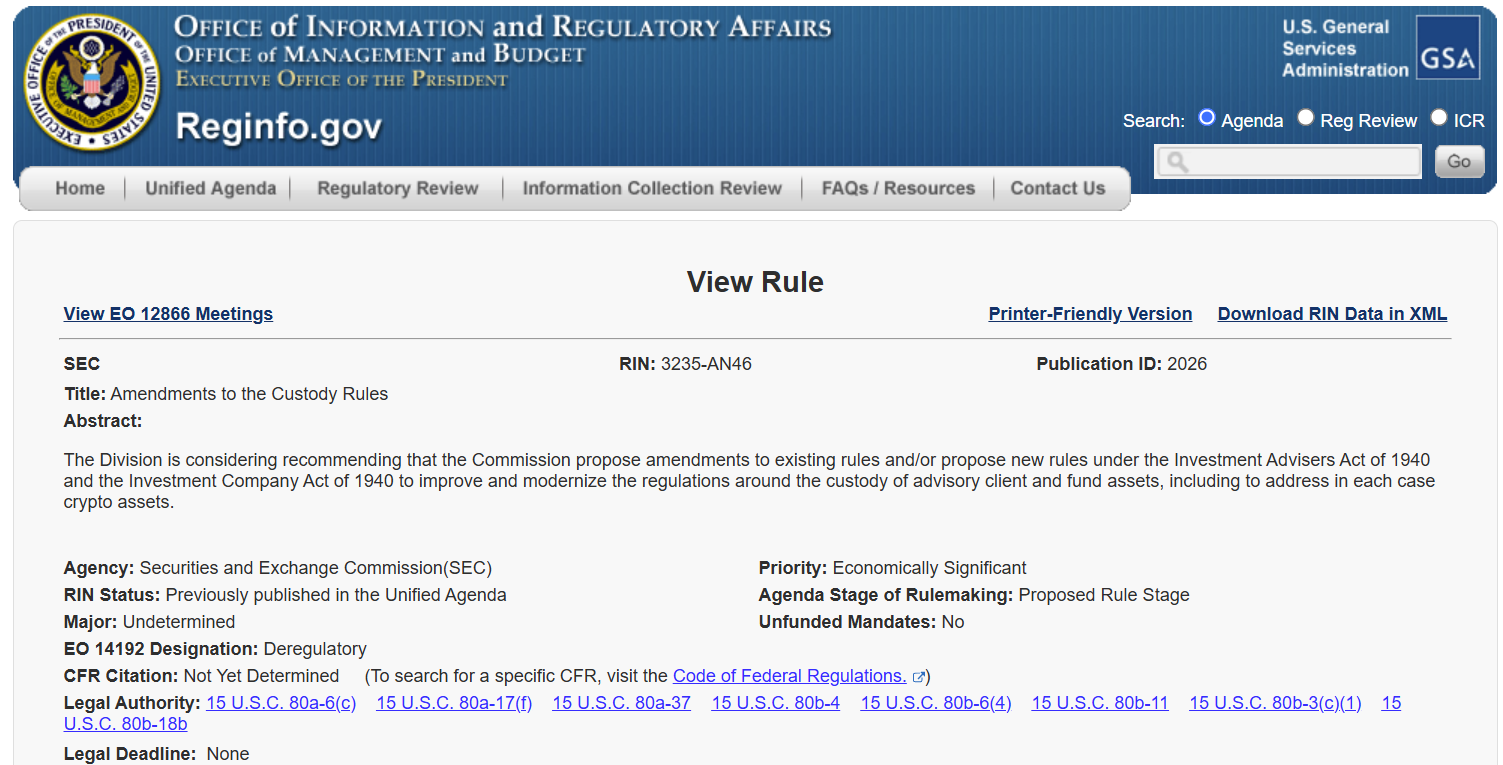
The proposed rule was sent on Aug. 25 to the Office of Information and Regulatory Affairs (OIRA), part of the White House Office of Management and Budget, for review before it can move back to the SEC and potentially be released for public comment.
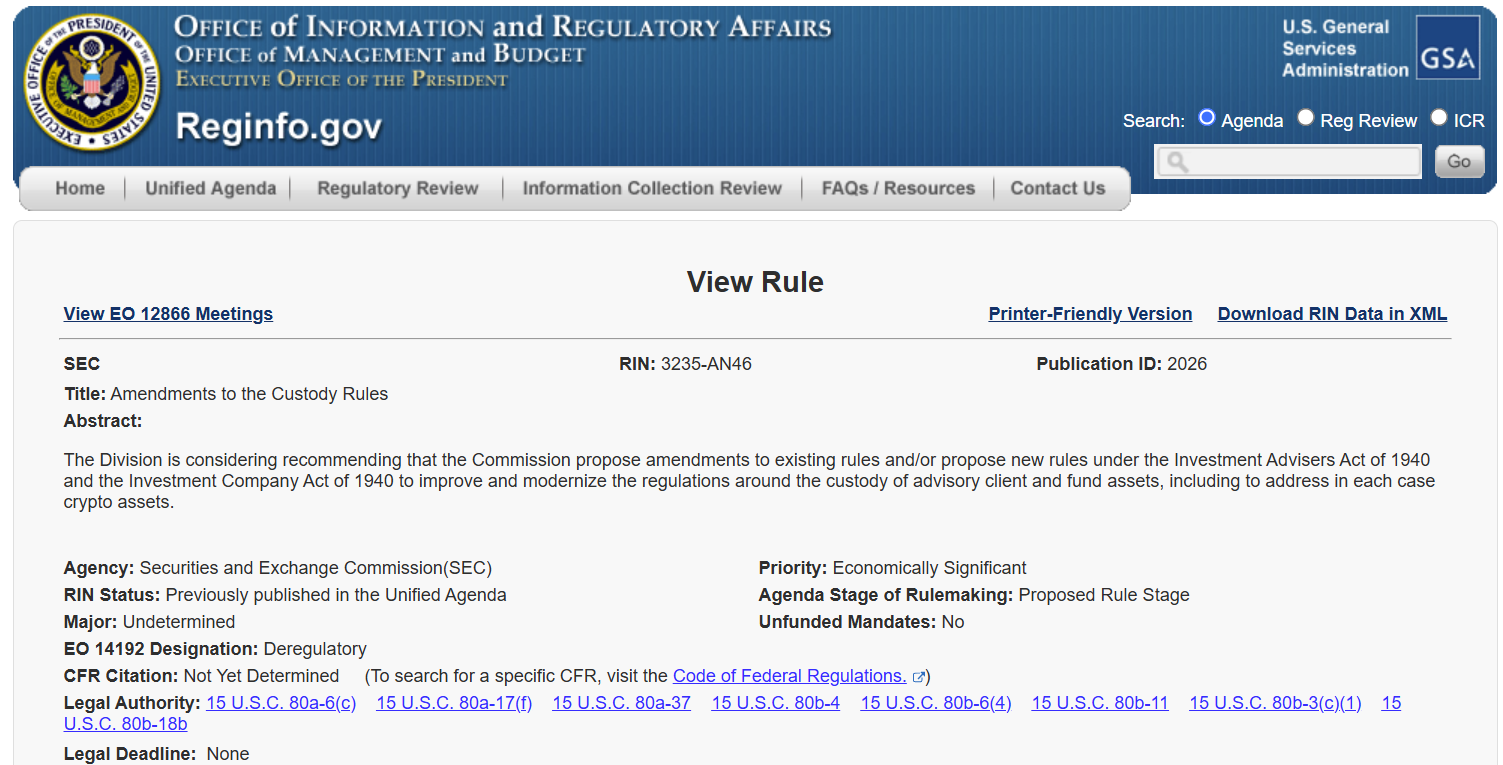
SEC submits “Amendments to the Custody Rules” to OIRA. Source: Reginfo.gov
According to the SEC’s regulatory agenda, the agency is considering changing existing rules or introducing new ones under the Investment Advisers Act and Investment Company Act. The changes would cover how investment advisers and funds hold client assets, including crypto.
The regulator said the changes are intended to clear up uncertainty around how companies can hold crypto for clients while staying within its rules. The proposal has not yet been made public, and the White House Office of Management and Budget can request changes before sending it back to the SEC. The commission would then vote on whether to release it for public comment.
As Bloomberg reported, the proposed rule is part of the agency’s broader push to advance the Trump administration’s digital asset agenda as the CLARITY market structure bill remains stalled in the Senate. The bill is expected to face a cloture vote after lawmakers return from the August recess in September.
Related: CFTC follows SEC in scrapping ‘no-deny’ policy for settlements
SEC shifts from crypto enforcement to rulemaking
The SEC has taken a more crypto-friendly approach since Paul Atkins became chair in 2025, shifting its focus from enforcement actions toward developing clearer rules for the industry. Atkins vowed to end the agency’s previous “regulation through enforcement” approach and said policymaking should instead be carried out through formal rulemaking.
The shift has also been reflected in enforcement. The SEC dismissed several cases against major crypto companies in 2025, including its lawsuit against Coinbase, as it moved to reshape its approach to digital assets.
Magazine: SEC’s proposed crypto rules probably won’t spark new ICO boom
[PRESS RELEASE – Kwai Chung, Hong Kong, August 26th, 2026]
CoinMarketCap has obtained a SOC 2 Type 1 attestation report, following an independent examination of the controls protecting the systems behind its market data. CoinMarketCap also completed the SOC 1 Type 1 examination. Both reports add to the international certifications the company already holds for information security and privacy management.
SOC 2 is the assessment most often requested by enterprise buyers evaluating a technology vendor. Conducted in accordance with AICPA attestation standards, CoinMarketCap’s SOC 2 Type 1 report assesses the design and implementation of controls against the applicable Trust Services Criteria for Security. The SOC 1 Type 1 report covers controls relevant to internal control over financial reporting. Type 1 reports reflect controls as at a specified date rather than over a period of time, and both are available to partners and clients on request.
The reports add to the dual ISO certification CoinMarketCap obtained in June 2026. The company is certified to ISO/IEC 27001:2022 for information security management under certificate IS 838849, and to ISO/IEC 27701:2019 for privacy information management under certificate PM 838852, both independently assessed and awarded by the British Standards Institution. The certifications are maintained through a three-year cycle with annual surveillance audits, and both remain active.
The scope of the assessments spans the parts of the business that handle user and market information. That includes price tracking, market data, and the APIs that serve it; the cloud systems and operational processes underneath them; account management and the handling of personally identifiable information; and the CoinMarketCap applications on iOS and Android.
The distinction the company is drawing is between security that is asserted and security that has been examined. CoinMarketCap sits upstream of a large amount of crypto infrastructure, with its data feeding wallets, trading interfaces, research tools, and increasingly AI agents that query it programmatically. Buyers in that position rarely take a vendor at its word. Procurement teams, compliance functions, and institutional counterparties work from recognized frameworks and independent reports, and ISO certifications and SOC attestation reports are the credentials those teams already know how to read.
The privacy side of the program is covered by ISO/IEC 27701, an extension of ISO 27001 that governs how personal data is collected, processed, and protected, and which is designed to align with GDPR and other applicable global privacy regulations. For a platform with users across a wide range of jurisdictions, that alignment matters as much as the security controls themselves.
“Millions of people use CoinMarketCap to make decisions about their money,” said Rush, CEO of CoinMarketCap. “Trust in that data should be demonstrated rather than claimed. Independent assessors have examined how we run security and privacy, and documented it in a form our partners and clients can review.”
CoinMarketCap continues to expand its developer and enterprise business, including its market data APIs and agent-facing products. Compliance credentials are increasingly a prerequisite in those conversations rather than a differentiator, particularly for institutional clients whose own obligations require them to evidence the controls of the vendors they depend on. CoinMarketCap intends to maintain and extend its assessment program over time.
About CoinMarketCap
CoinMarketCap stands as the Home Of Crypto. With over 1 billion monthly page views and 53 million tracked cryptocurrencies, CoinMarketCap drives the industry forward by organizing and delivering comprehensive crypto intelligence. Major media outlets including Forbes, Bloomberg, CNBC, and The Wall Street Journal rely on CoinMarketCap as their primary source for crypto data.
The post CoinMarketCap Obtains SOC 1 & 2 Attestations and Dual ISO Certifications appeared first on CryptoPotato.


Revolut has begun rolling out EURR, its first euro-backed stablecoin, to selected customers in Denmark, Poland and Portugal, putting a branded onchain euro inside its app while Bridge Building S.A. serves as issuer and redemption counterparty. Bridge Building is the legal issuer; Revolut describes… Read the full story at The Defiant


Revolut said the stablecoin’s rollout will start with a select group of customers within Denmark, Poland, and Portugal.


In this week’s Crypto Long & Short, CoinDesk’s Joshua DeVos writes that demand for tokenized equities is accelerating fast, from $16 billion to more than $590 billion in perpetual futures in a single year, but that the headline growth hides the question that matters most. Two tokens can trade under the same ticker while granting entirely different rights, and the structure underneath, whether it conveys real ownership or a synthetic claim, determines the risks and protections a holder actually has.
The primary digital asset has added almost $20,000 to its valuation over the past month, driven by a broader crypto market resurgence sparked by US monetary policy changes and other factors.
Somewhat expected, X is now flooded with users who believe the bulls have no intention of pushing the brake pedal, anticipating an explosion to $100,000 and even beyond in the short term. We asked three of the most popular AI-powered chatbots whether such a rally is possible before the end of the third quarter, and here are their answers.
There is a Chance
ChatGPT suggested that closing Q3 above $100K has a 25%-30% probability and would require a combination of bullish factors, including massive inflows into spot BTC ETFs. OpenAI’s platform also stated that the asset’s performance would depend on the next FOMC meeting scheduled for mid-September, when the central bank will reveal its interest rate decision.
“A dovish outcome – particularly easing inflation, no rate increase, and reassuring projections – could weaken the dollar and support Bitcoin. A hawkish surprise would present a serious problem. The July Fed minutes showed that a September rate increase remains under consideration, although market estimates have recently placed its probability at around 30%. Higher rates or a more hawkish outlook would likely pressure BTC and other risk assets,” it explained.
In addition, ChatGPT stated that a push to $100,000 would happen only after clearing the $82,000 resistance level and an eventual decisive pump beyond $90,000. Subsequently, it estimated that the chance of BTC touching the six-digit milestone but not closing the quarter above is much higher.
Perplexity also claimed that the asset has a realistic shot at reaching such a level within that timeframe. It paid special attention to the CLARITY Act, which (if approved) could add further fuel to the crypto market. The US regulatory framework has proven quite controversial, and the next major development has been pushed to September after the latest delay.
At the same time, Perplexity warned that the third quarter has historically brought mixed results for BTC. In fact, the cryptocurrency has never closed three consecutive Q3s in the green. The ones in 2024 and 2025 were both positive, and with a 34% rise so far this quarter, it remains to be seen whether a precedent is about to form.
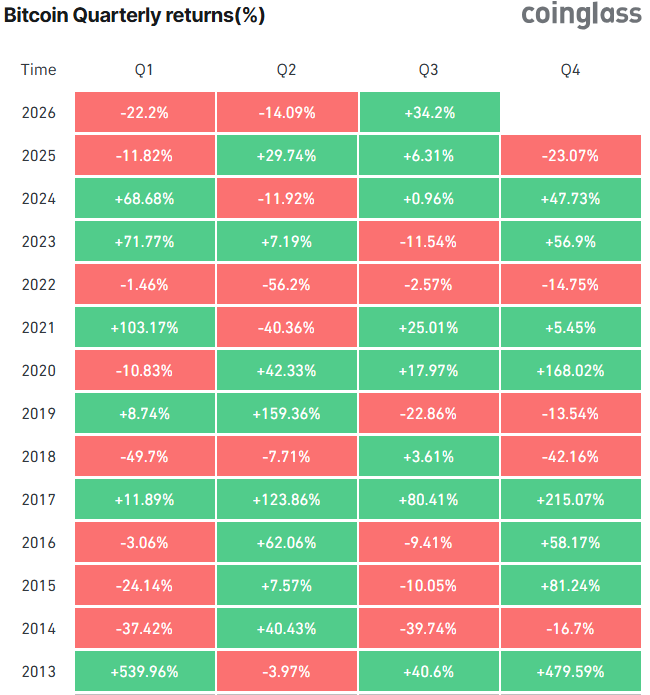
Google’s Gemini seems to be a bit more pessimistic. It said reaching $100,000 sometime this quarter is highly unlikely, anticipating a maximum surge to $88,000 within the next five weeks.
How About an Incoming Collapse?
While the majority of analysts expect further gains, some think the latest resurgence could have been a major bull trap. X user AlejandroBTC believes the asset’s price could drop as low as $40,000 after a period of significant volatility.
“This is what I think happens next: Bitcoin tests $68K–$70K. We get a small bounce. Then we come back to that zone again, and this time it doesn’t hold. That’s when the panic starts. Liquidations accelerate, sentiment collapses, and I think we go straight toward $40K,” the analyst predicted.
For their part, Nonzee opined that the recent pump was caused by a liquidity squeeze and expects an eventual decline to $45,000.
The post Will Bitcoin (BTC) Reach $100K This Quarter? Here’s What 3 AIs Predict appeared first on CryptoPotato.

Coinbase CEO Brian Armstrong said he expects the Digital Asset Market CLARITY Act to clear a Senate cloture vote with more than 60 votes in mid-September. Kalshi, however, puts the chance of the bill getting more than 60 votes at 22%, highlighting the gap between Armstrong’s optimism and prediction-market pricing.
Most experts had viewed the CLARITY Act as facing an uphill path after the Senate did not vote on the crypto legislation before its August recess. After pressure from President Donald Trump, a cloture vote is set for September 15, the day after senators return from the recess.
— Coin Bureau (@coinbureau) August 20, 2026
 JUST IN: Coinbase CEO Armstrong says the CLARITY Act "has a great chance of passing" with "90% of what they want on both sides."
Armstrong says if the bill doesn't pass, he commends CFTC and SEC chairs for "pushing forward with clear rules regardless." pic.twitter.com/7bGm7VWQHo
Cloture would not formally pass the bill. It would end the debate and a filibuster, paving the way for a formal vote. Cloture requires 60 votes, the same number needed to ultimately pass the CLARITY Act, making the September 15 vote a strong indication of where the bill stands.
Armstrong has pointed to the scheduled vote as a reason for his optimism. He said Senate Majority Leader John Thune would not have scheduled the vote if he did not think it would pass. He added that both sides had received roughly 90% of what they wanted in the bill.
Discover: The Best Token Presales
The Math Behind Coinbase Armstrong’s CLARITY Act Optimism
Republicans hold 53 Senate seats, meaning at least seven Democrats would need to support the bill to reach 60 votes. That is the arithmetic behind Armstrong’s forecast and the threshold that Kalshi traders are pricing more cautiously.
Democrats have been reluctant to support the bill, calling for additional ethics provisions governing how much politicians can invest in crypto entities, particularly after Trump reported substantial crypto profits last year.

Banking groups have also raised concerns that the stablecoin provisions do not go far enough to protect the banking industry. The bill would not allow idle stablecoins to earn yield, though stablecoins could offer rewards for certain activities, such as transactions.
The bill would establish a broader regulatory framework for crypto and address questions of regulatory jurisdiction. It would give the CFTC exclusive jurisdiction over spot markets for digital commodities, while both the CFTC and SEC have at times claimed jurisdiction over certain crypto markets.
Trade Crypto on Bybit before the CLARITY Act Passes and Get a Chance to Win Our $1,000 USDT Airdrop
What September 15 Does and Doesn’t Decide
If cloture clears with 60 or more votes, it would end the debate and pave the way for a later formal vote. It would not itself constitute final passage of the CLARITY Act.
If cloture fails, the calendar leaves limited time before the Senate breaks again in early October for the midterm elections. That would leave the bill’s path less certain, and helps explain why the 60-vote threshold remains central to the debate over its prospects.

Kalshi traders remain far less confident than Armstrong, pricing just a 22% chance that the CLARITY Act will secure more than 60 Senate votes. This gap makes the September 15 cloture vote particularly important, as the Coinbase CEO’s forecast would require at least seven Democrats to break ranks and support the CLARITY Act bill.
If the vote reaches 60, it would give the crypto industry a significant signal that the legislation has enough momentum to move toward final passage.
Do you agree with Armstrong? Make your call and start with a free $25 on Kalshi
The post Coinbase CLARITY Act: Armstrong Expects 60+ Votes Despite Kalshi 22% Odds appeared first on Cryptonews.

Parton reiterated her apolitical stance during an interview with ABC’s David Wright in 2018, where she again repeated, “I’m not being political.”
“I don’t do politics. I’m not getting into any of that because I have a lot of fans out there, and I don’t want to offend anybody,” she said.
When pressed to answer questions about Trump, who at the time was just over a year into his first term as President, Parton said: “I have my opinion about everybody and everything, but I learned a long time ago: Keep your damn mouth shut if you want to stay in show business.”
“I’m not in politics. I’m an entertainer,” she said.
That broad appeal was reflected in tributes from across the political spectrum.
How Democrats are remembering Parton’s advocacy
Major Democratic figures have cast Parton as a progressive figure who advocated for minority rights through her music, philanthropy, and public comments.
Sen. Bernie Sanders of Vermont, an independent who caucuses with Democrats and is a leading voice of the progressive movement, said Parton “was one of the great entertainers of our era” whose “music and humanity touched millions.”
[PRESS RELEASE – Berlin, Germany, August 26th, 2026]
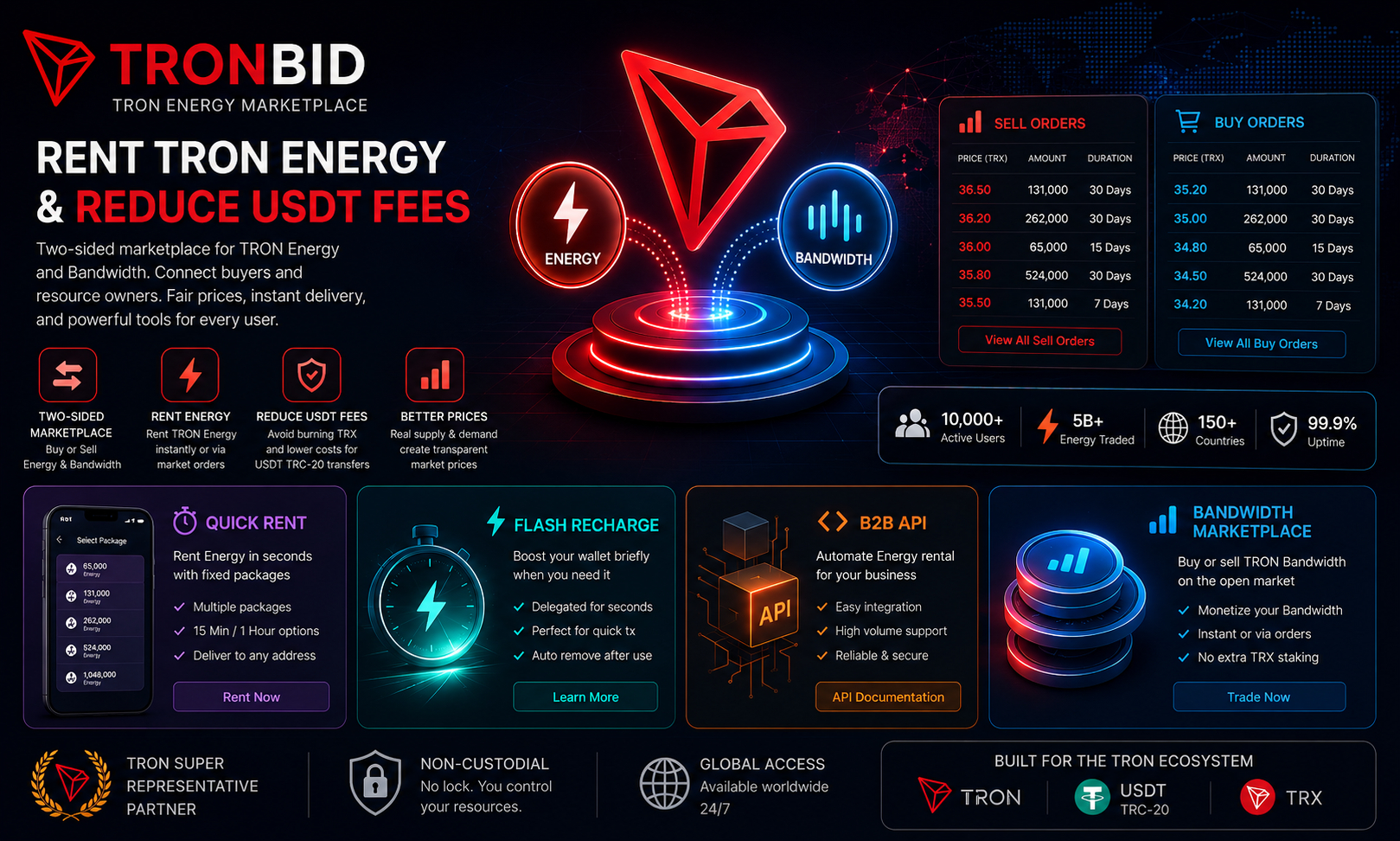
TronBid expands its two-sided TRON resource marketplace, giving users new ways to rent Energy, trade Energy and Bandwidth, and reduce USDT fees for TRC-20 transactions.
TronBid, a peer-to-peer marketplace for TRON network resources, has expanded its platform with new tools for users looking to rent TRON Energy, manage transaction costs and access network resources without maintaining large amounts of staked TRX.
The platform now operates as a two-sided marketplace where both buyers and sellers can create orders for TRON Energy and Bandwidth.
Understanding TRON Energy Usage
TRON uses Energy and Bandwidth as its primary network resources. Energy is required for smart-contract computation, including USDT TRC-20 transfers.
When a wallet does not have sufficient Energy, TRX may be consumed to cover the resources required by the transaction. This has created demand for users and businesses to rent Energy instead.
By receiving temporary Energy delegated from another account, users can perform eligible TRON transactions without maintaining enough staked TRX for their maximum resource requirements.
For businesses processing frequent TRC-20 transactions, choosing to rent TRON Energy can therefore provide another way to manage network costs and reduce USDT fees.
A Two-Sided Marketplace for Energy
Unlike platforms where rental conditions are determined entirely by the provider, TronBid allows both sides of the market to create orders.
Buyers can create BUY orders specifying the amount of Energy required, rental duration and price they are willing to pay.
Sellers can create SELL offers with their own amount, price and rental period. Buyers can purchase all or part of these offers directly.
For example, if a seller offers 600,000 Energy, one buyer can rent 350,000 Energy, leaving the remaining amount available for other buyers.
Creating a SELL offer does not reserve the seller’s Energy. If resources become unavailable because they are being used elsewhere, recurring offers can automatically pause and become active again when sufficient Energy returns.
This allows sellers to participate in the TronBid marketplace while continuing to manage their resources elsewhere.
Rent Energy Without Waiting for the Marketplace
For users who need resources immediately, TronBid also provides Quick Rent with predefined Energy packages and short rental periods.
Energy can be delivered directly to any specified TRON address, even when payment is made from another wallet.
TronBid has also introduced Flash Recharge, an alternative designed for wallets that already maintain their own Energy capacity but need to manage consumed resources.
Energy and Bandwidth Trading
TronBid’s marketplace supports both Energy and Bandwidth, allowing holders of staked TRX to monetize the network resources their stake generates.
This creates two sides of the ecosystem: users who need to rent TRON Energy or Bandwidth and resource owners looking to make unused capacity available to the market.
By allowing both buyers and sellers to determine their own terms, TronBid aims to create more transparent price discovery based on actual supply and demand.
B2B API to Reduce USDT Fees at Scale
TronBid also provides a B2B Quick Rent API for exchanges, payment processors, wallets, OTC services and other businesses processing frequent TRON transactions.
Businesses can maintain a prepaid balance and automatically request Energy for specified TRON addresses before executing transactions.
Instead of manually renting resources for every transfer, companies can integrate Energy rental directly into their transaction infrastructure.
For businesses handling large numbers of USDT TRC-20 transfers, this can make it easier to rent Energy automatically and manage the network-resource component of transaction costs.
TronBid Becomes a TRON SR Partner
Alongside the expansion of its marketplace, TronBid has become a TRON Super Representative Partner, adding the project to TRON’s delegated proof-of-stake governance ecosystem.
The development strengthens TronBid’s connection with the underlying TRON ecosystem while the platform continues building infrastructure around Energy and Bandwidth.
About TronBid
TronBid is a peer-to-peer marketplace for TRON Energy and Bandwidth. Buyers can rent TRON Energy, create BUY orders or purchase existing seller offers, while resource owners can create SELL offers with their own prices and rental periods.
The platform also provides Quick Rent, Flash Recharge, and a B2B API for businesses looking to automate Energy rental and reduce USDT fees for TRC-20 transactions.
More information: https://tronbid.com
The post Rent TRON Energy and Reduce USDT Fees: TronBid Expands Marketplace appeared first on CryptoPotato.

Tim Curry dies aged 80: Rocky Horror Picture Show and It star dead

Anthropic gears up for Wall Street debut: Five things investors need to know

Crypto education demand far outpaces college courses: OKX report





-

 Fashion5 days ago
Weekend Open Thread: Madewell – Corporette.com
-

 Business4 days ago
Musk’s Tesla, SpaceX Confirm $16.8 Billion ‘Terafab’ Chip Plant as World’s Largest Building in Texas
-

 Crypto World5 days ago
anatomy of crypto’s biggest liquidation event since 2021
-

 Crypto World2 days ago
A $30 Billion AI Fund Implodes, Now the SEC Is Investigating Wall Street’s Role
-

 Crypto World17 hours ago
SpaceX stock could rise 75% to $240, JPMorgan says
-

 Politics4 days ago
6 months on, Irish renters crushed by effects of government housing bill
-
 NewsBeat4 days ago
The ‘Lucky Dip Gang’ causing carnage for clicks: After five thugs were killed speeding in the wrong direction on a motorway, GUY ADAMS investigates a sick new trend… and why police aren’t even allowed to pursue them
-

 Business3 days ago
Mystery AI Model ‘Ox Alpha’ Draws Developers With Free Access as Chinese Lab Origins Remain Debated
-

 News Videos6 days ago
Don’t Leave Your Financial Future To Chance | August 19, 2026
-

 Business7 days ago
Marvell Shares Jump 7% as Google Chip Deal Confirms Custom AI Silicon Partnership, Analysts
-

 Business6 days ago
Five Below: Kids Discount Retailer Reaps Rich Rewards
-

 Business2 days ago
Moderna CEO warns China is pouring state money into mRNA technology
-

 Business5 days ago
UK firms in critical financial distress rise 9% to 53,756
-

 Business2 days ago
NVIDIA Stock Drops Nearly 2 Percent to $210 on Seventh Losing Day Ahead of Critical AI Earnings
-

 Sports4 days ago
Deshaun Watson fires back at Browns fans after being booed: ‘It’s a disrespectful thing’
-

 Crypto World6 days ago
Optimism-funded team's deciding vote shifts $49 million in OP tokens away from users
-
 Entertainment7 days ago
10 Most Perfect Fantasy Shows of the Last 25 Years
-

 Tech7 days ago
OpenAI confirms ChatGPT is down as logins and signups fail
-

 Crypto World3 days ago
Google Gemini AI Predicts Ethereum Could Become the Trade Retail Misses in 2026
-

 Business6 days ago
PayPal and Venmo now accepted for tuition at several universities
You must be logged in to post a comment Login