
Business
NVIDIA Stock Drops Nearly 2 Percent to $210 on Seventh Losing Day Ahead of Critical AI Earnings

SANTA CLARA, Calif. — Shares of NVIDIA Corp. fell nearly 2 percent on Monday, extending a multi-day slide that has become the chipmaker’s longest losing streak in nearly four years, as investors grew cautious ahead of the company’s closely watched quarterly earnings report.
NVIDIA stock traded around $210.07 in midday action, down about $4.65 or 2.17 percent, according to market data. The decline put the shares on track for a seventh consecutive session of losses and marked one of the steeper single-day drops in recent weeks. The stock has fallen roughly 6.7 percent over the current streak and remains more than 10 percent below its all-time closing high of $235.74 set in mid-May.
The pullback comes just days before NVIDIA is scheduled to report fiscal second-quarter results on Wednesday after the market close. Wall Street analysts on average expect revenue of approximately $92 billion, representing growth of about 96 percent from the year-earlier period, with adjusted earnings per share near $2.09. Data-center revenue, the primary driver of the company’s results, is projected near $85 billion, more than double the year-ago figure, according to consensus estimates.
Investors have grown increasingly selective about high-valuation technology stocks in recent sessions. Broader semiconductor shares also declined Monday, with the iShares Semiconductor ETF falling nearly 3 percent. Micron Technology dropped more than 6 percent, while Advanced Micro Devices and Broadcom also posted losses. The Nasdaq Composite was lower while the Dow Jones Industrial Average showed relative resilience.
Several factors contributed to the pressure on NVIDIA shares. Reports indicated the company has signaled to some large customers that prices for AI servers could rise by more than 15 percent, prompting questions about whether higher infrastructure costs might moderate demand from hyperscale cloud providers. Separately, investor attention has focused on NVIDIA’s expanding role in helping arrange external financing for data-center buildouts through partnerships with major financial firms. Some market participants have described elements of these arrangements as circular financing, in which the supplier helps facilitate purchases of its own products.
Geopolitical developments added to the cautious tone. Risk sentiment weakened after comments from U.S. officials regarding sanctions and economic measures targeting Iran, contributing to a broader rotation away from growth-oriented technology names. Rising Treasury yields have also weighed on high-multiple stocks throughout the recent period.
Despite the near-term stock weakness, NVIDIA continues to dominate the market for advanced artificial-intelligence accelerators. The company’s Blackwell architecture has driven rapid growth in data-center revenue, and management has pointed to strong customer adoption of both Blackwell and the forthcoming Vera Rubin platform. In prior comments, founder and Chief Executive Jensen Huang has described the buildout of AI infrastructure as accelerating and has expressed confidence in substantial multi-year revenue from the Blackwell and Rubin generations.
NVIDIA remains supply-constrained even as it works to expand production capacity. The company has secured commitments intended to support robust growth while acknowledging that demand continues to outpace available supply for its highest-performance systems. Hyperscalers, enterprises and sovereign entities remain key buyers of the GPUs used to train and run large language models and agentic AI applications.
The stock’s recent valuation has compressed relative to earlier peaks. After reaching elevated multiples during the initial AI investment surge, NVIDIA now trades at levels closer to those seen before the most intense phase of the boom, according to market data. Some analysts have noted that the shares appear more reasonably priced on a forward-earnings basis than at previous highs, though expectations for continued outsized growth remain elevated.
Monday’s trading volume was among the highest in the S&P 500, reflecting active positioning ahead of the earnings release. History shows that NVIDIA shares have often experienced short-term volatility in the sessions immediately following results, even when the underlying numbers have exceeded expectations. The company has a track record of beating both its own guidance and consensus estimates, though the margin of those beats has drawn closer scrutiny as the absolute figures have grown larger.
NVIDIA’s market capitalization still ranks among the largest of any publicly traded company, reflecting its central position in the AI supply chain. The firm’s gross margins have remained high, supported by the specialized nature of its products and software ecosystem. Free cash flow generation has enabled substantial capital returns to shareholders, including expanded share-repurchase authorizations and a higher quarterly dividend announced earlier in the year.
Looking ahead, investors will focus on several metrics in Wednesday’s report: sequential growth in data-center revenue, commentary on the ramp of next-generation platforms, any updates on supply-chain constraints, and forward guidance for the current quarter. Management’s outlook on customer capital spending, pricing trends and the durability of AI infrastructure demand is expected to shape the near-term stock reaction.
The semiconductor sector more broadly has seen mixed performance this year as investors rotate among memory, foundry and accelerator names. While NVIDIA has underperformed some peers on a year-to-date basis relative to its earlier gains, its absolute revenue and profit growth continue to stand out within the industry.
For now, the combination of pre-earnings caution, higher component and infrastructure costs, and a less risk-tolerant market environment has kept pressure on the shares. Whether the upcoming results and guidance can reverse the recent losing streak will depend on how far the reported figures and management commentary exceed the already elevated bar set by analysts and investors.
NVIDIA’s trajectory remains closely tied to the pace of global AI investment. As cloud providers, enterprises and governments continue to expand computing capacity, demand for the company’s products is expected to remain a central factor in technology sector performance through the remainder of the year and beyond.



Retired history instructor. Alzheimer’s disease researcher for the past two decades.My goal is to give investors solid advice based on the mechanisms of action of Alzheimer’s drugs. This advice is informed by a background in biology (conservation, ecology, evolution, environmental science, and biochemistry) and twenty years of a very in depth review of the research on Alzheimer’s disease. I have come to the conclusion that Alzheimer’s disease is caused by oxidation and nitration. Many treatments for Alzheimer’s disease address factors that can contribute to oxidation and nitration such as misfolded amyloid and tau proteins and neuroinflammation, but very few direct scavenge compounds (such as hydrogen peroxide and peroxynitrite) that cause oxidation and nitration nor do they reverse any of the damage already present. Thus, most treatments for Alzheimer’s disease only slow down the early progression of the disease for awhile. Certain natural products such as panax ginseng and various essential oils via aromatherapy inhibit oxidation and nitration, scavenge agents that cause oxidative and nitrostative stress, and reverse part of their damage. Such treatments have the potential to stabilize Alzheimer’s disease.
Analyst’s Disclosure: I/we have no stock, option or similar derivative position in any of the companies mentioned, and no plans to initiate any such positions within the next 72 hours. I wrote this article myself, and it expresses my own opinions. I am not receiving compensation for it (other than from Seeking Alpha). I have no business relationship with any company whose stock is mentioned in this article.
Seeking Alpha’s Disclosure: Past performance is no guarantee of future results. No recommendation or advice is being given as to whether any investment is suitable for a particular investor. Any views or opinions expressed above may not reflect those of Seeking Alpha as a whole. Seeking Alpha is not a licensed securities dealer, broker or US investment adviser or investment bank. Our analysts are third party authors that include both professional investors and individual investors who may not be licensed or certified by any institute or regulatory body.

MOVE FY26 slides: logistics firm returns to profit, enters growth phase

SEATTLE — Amazon has raised prices across its Echo smart speakers, Fire TV streaming devices, Kindle e-readers and eero mesh Wi-Fi systems by as much as 60 percent, citing sharp increases in the cost of memory and storage components.
The adjustments, which took effect quietly around Aug. 21 without a formal advance announcement, hit entry-level models hardest. The popular Echo Dot (5th generation) jumped from $49.99 to $79.99, a 60 percent increase. The base 16-gigabyte Kindle rose from $109.99 to $149.99, while the Fire TV Stick 4K Max climbed from $59.99 to $84.99.
An Amazon spokeswoman confirmed the changes in a statement, saying the consumer electronics industry is “facing significant increases in memory and storage component costs. After absorbing these increases for as long as we could, we recently adjusted pricing across our product lines.”
The price moves come as global demand for memory chips has intensified, driven largely by the rapid expansion of artificial intelligence systems that require large volumes of high-performance storage and RAM. Multiple tech companies have reported similar cost pressures this year, though Amazon’s decision to pass a substantial portion of those costs to consumers marks one of the more visible adjustments in its own device lineup.
Specific increases include the Echo Dot Max, which rose from $99.99 to $119.99; the Echo Spot, from $79.99 to $109.99; the Echo Show 8, from $179.99 to $199.99; the Echo Show 11, from $219.99 to $249.99; the Echo Show 15, from $299.99 to $349.99; and the Echo Show 21, from $399.99 to $499.99. On the e-reader side, the Kindle Paperwhite (16GB) increased from $159.99 to $199.99. Fire TV Stick HD models moved from $34.99 to $39.99. The eero 7 three-pack rose from $349.99 to $399.99, and the eero Pro 7 three-pack went from $699.99 to $799.99.
Amazon’s Ring cameras and video doorbells were not affected, nor was the higher-end Echo Studio, which remains priced at $219.99. The company has not indicated whether further adjustments are planned for other hardware categories such as Fire tablets.
The timing of the increases follows months of elevated component costs across the industry. Memory and storage shortages have been linked to strong purchasing by AI developers and data-center operators, which has constrained supply for consumer electronics makers. Amazon said it had absorbed the higher costs for an extended period before implementing the new pricing.
For consumers, the changes alter the value proposition of some of Amazon’s most accessible devices. The Echo Dot had long served as an inexpensive entry point into the Alexa ecosystem. At the new $79.99 price, it sits closer to mid-range competitors. The base Kindle, once positioned as an affordable dedicated reading device, now starts at nearly $150 for the 16GB model. Streaming sticks, frequently purchased as low-cost upgrades for televisions, also carry higher price tags, particularly the 4K Max version.
Retailers and analysts noted that Amazon continues to offer periodic discounts and promotions on many of these products, which can temporarily offset the new list prices. However, the elevated baseline means that even sale prices may sit above previous regular levels. Some international markets, including parts of Europe and the United Kingdom, have begun to reflect similar or related adjustments on Fire TV devices, though full global alignment has not been confirmed for every product.
Amazon’s device business has historically operated with relatively thin hardware margins, relying in part on the broader ecosystem of services, subscriptions and content sales. The decision to raise prices suggests that the component cost pressure has reached a level the company can no longer fully offset through other efficiencies or volume.
The increases arrive at a moment when household budgets remain sensitive to inflation in consumer electronics. Smart speakers, e-readers and streaming devices have become common household items, and price changes of this magnitude can influence purchasing decisions, particularly for gift-giving seasons and back-to-school periods that often drive volume in these categories.
Industry observers have pointed to similar moves by other manufacturers facing the same memory market conditions. While Amazon is among the more prominent examples because of the scale of its first-party lineup, the underlying supply dynamics affect a wide range of products that rely on DRAM and NAND flash memory.
Amazon has not provided a timeline for how long the elevated prices may remain in effect or whether further changes are under consideration if component costs continue to rise. The company continues to sell the affected devices through its website and retail partners at the new levels, with availability remaining consistent with pre-increase inventory patterns.
Shoppers considering purchases of Echo speakers, Kindles or Fire TV devices may want to compare current promotional pricing against the new list prices, as temporary discounts can still reduce the effective cost. For those already owning older models, the price changes primarily affect new acquisitions rather than existing devices in use.
The adjustments underscore the continued ripple effects of the AI-driven demand for computing components into everyday consumer technology. As memory costs remain elevated, additional manufacturers may face similar decisions about how much of the increase to absorb and how much to pass along to buyers. Amazon’s move provides one of the clearest recent illustrations of that pressure reaching the retail price of widely used household electronics.


David Ellison — the founder of a film production company and son of billionaire Larry Ellison — has been at the helm of Paramount Skydance for just over a year. He’s been fighting to acquire Warner Bros. Discovery for nearly as long.
The latest roadblock in his path, a group of state attorneys general seeking to stop the deal, may be his toughest yet. The antitrust hurdle and related delay have left the CEO hunting for avenues to get the deal done.
The delay in closing Paramount’s acquisition of WBD could add hefty costs on top of the $110 billion proposed price tag at a time when media companies across the landscape are under intense pressure.
Yet, with a trial in the antitrust case set for March, Ellison has never felt more confident that the deal not only makes sense, but will get completed, according to a person familiar with his thinking, who asked to remain unnamed to speak candidly.
“The company believes strongly in this,” Paramount’s lead trial attorney Jeffrey Kessler said on CNBC in July, adding the company was prepared to bring the matter to the Supreme Court if necessary.
Still, Ellison appears to be making little ground with California Attorney General Rob Bonta, who is leading the states’ charge in court. Both sides have said they are eager to make amends outside of the courtroom.
“I think the whole issue there is, will the state AGs be interested in settling, and I’m not quite sure there’s any real incentive for them to settle given the fact the California home constituency here is overwhelmingly against the transaction,” said Tom Rogers, a media veteran who’s currently senior advisor to Versant Media Group and executive chairman of AI film and TV production company Fountain 0.
A Paramount spokesperson declined to comment for this article.

The final threat
Ellison’s pursuit of WBD began last September with three unsolicited bids to take over the storied entertainment company, which includes the legendary film studio, a portfolio of pay TV networks and the HBO Max streaming business.
Ellison’s interest ultimately spurred a formal sale process that superseded a plan by WBD to split in two. When Warner Bros. Discovery crowned Netflix the bidding war winner, Ellison went hostile and promised WBD shareholders a premium.
In February, Netflix abandoned its pending transaction and Paramount entered into an agreement to buy the entirety of WBD. The deal has won approval from all global regulators, including the Antitrust Division of the U.S. Department of Justice.
That leaves Bonta and the other 11 suing states as the final threat to Ellison’s long-sought-after acquisition.
Bonta has said his aim is in part to take up the baton where he feels President Donald Trump’s administration has fallen short on regulation. He has said Trump has gotten “involved improperly” in other merger situations.
Meanwhile, the Ellison family’s ties to Trump have drawn criticism. Larry Ellison is a longtime supporter of Trump, and the president has said publicly he’d like to see Warner Bros. Discovery’s CNN land in Paramount’s hands.
When speculation began in the spring that a group of states would seek to challenge the merger — putting particular focus on two segments of the combination: their extensive portfolios of pay TV networks and powerhouse film studios — Ellison’s Paramount immediately began its outreach to Bonta’s office, according to the person familiar with the matter. By mid-May the company had sent a list of potential concessions to Bonta, added the person.
Following a preliminary injunction granted by the California district court, which paused any movement on the deal for 14 days, Paramount said it was willing to officially delay the deal and move to a trial to fight its case for the merger.
However, the March trial date was later than company executives had hoped for, according to two people familiar with the matter.
In the ensuing weeks, Paramount went on the offensive.
Paramount’s playbook
Shortly after the lawsuit hit in mid-July, Ellison took his argument for the deal public, writing a New York Times op-ed. That piece followed others from industry leaders arguing both for and against the merger, expanding the debate beyond legal filings.
Ellison has also sought to win over Hollywood exhibitors with contracts guaranteeing that a combined Paramount-WBD would release a a minimum 30 films a year with 45-day theatrical windows for a period of at least three years, according to a person familiar with the contracts, who spoke on the condition of anonymity because they were not authorized to speak publicly.
And, reports surfaced that Paramount was considering relocating its studio and headquarters outside of California in response to Bonta’s challenge. One of the people familiar with the matter told CNBC a move to Tennessee was on the table.
That suggestion largely backfired, with Bonta calling the threat to relocate “blackmail.”
Last Thursday, the California AG said in a CNBC interview that he would be willing to hold talks outside of the courtroom, but that a settlement would require “robust structural remedies.”
The following day a meeting was held at Bonta’s office, according to a statement from the government official’s spokesperson. While another meeting was slated for Monday, media reports of the meeting and what an eventual settlement could entrail — such as divesting some pay TV networks — led Bonta to call off the discussions, his office said.
On Monday, a Bonta spokesperson alleged that Paramount was behind the “leak” of the parties’ discussions, which it further said were misrepresented, and said it demonstrated a “lack of good faith.”
“As soon as Paramount stops playing games and engages sincerely, my office is happy to meet again,” Bonta said.
Paramount responded later Monday denying it was the source of the leak.
“We remain hopeful and stand ready to continue good faith discussions to resolve the Attorneys General suit and move forward with our plans for increased competition and increased output to the benefit of the talent and entertainment workers,” the company said in a statement.
Coming to the negotiating table
While the contents of Paramount’s list of concessions — as sent to Bonta’s office back in May — remain unclear, they appear to be in contrast to what Bonta and his peers have raised red flags about.
″[Paramount] wanted to talk about everything except for what this case is about. They want to talk about the streaming market, which we don’t allege in our complaint. They want to talk about CNN, which is not a focus of our complaint. They want to talk about the foreign regulators. We want to talk about the three markets that we set forth in our complaint, where we think there’s antitrust violation,” Bonta said in an interview with David Faber on CNBC last week.
Paramount has declined to discuss what possible remedies it set forth, with the exception of the commitments it’s made to the film industry.
In a July interview on CNBC, Paramount attorney Kessler said the company had been willing to put in writing that it would commit to 30 films per year, legitimatizing an earlier promise made by Ellison that struck some as unrealistic given Hollywood track records.
If Paramount were to fall short of that promise, it’d be opening itself up to litigation, Kessler said. That commitment became the underpinning for Paramount’s offer to sign contracts with Hollywood exhibitors, at least one of which took the offer, according to the person familiar.
In recent days, the Wall Street Journal reported the state AGs were seeking a divestiture of some of the pay TV networks included in the merger. The combination of Paramount and WBD would create the biggest portfolio of networks in the industry, and the states have argued that no matter the state of the business, that scale creates outsized power.
“Whether the market is shrinking or growing is really irrelevant,” Bonta said on CNBC last week, adding a combined Paramount-WBD would create a “presumptively illegal market concentration” in film and TV.
But the ongoing industry challenges — particularly for these two companies — has been the basis for Ellison’s push to merge. And it may be a better argument than Bonta would admit.
Better together
Industry analysts, experts and insiders have consistently poked holes in the states’ argument that the combination of TV networks would create antitrust issues.
“The merger does create a larger competitor, but size alone is not evidence of market position. Neither company has possessed the scale necessary to compete effectively against much larger global streaming platforms and well-funded technology companies,” Bernstein analysts said in a recent note.
Media companies’ most recent earnings reports — including those from WBD and Paramount — once again put on display the ongoing losses for pay TV advertising and distribution revenue streams.
Paramount’s chosen remedy is scale.
Both companies’ portfolios are made up of dozens of TV networks, with Paramount’s offering including channels like Nickelodeon, MTV and BET, and WBD owning channels like TNT, CNN, TBS and the Discovery Channel. Paramount also owns the broadcast network CBS.
“The economics of Pay-TV are being dictated by consumer behavior rather than consolidation. The merger may change the scale of a participant, but it does not change the direction of the industry’s secular trajectory,” the Bernstein analysts said.
It’s a similar story in streaming and films, where Paramount would similarly combined the two companies portfolios.
Ellison has said upon completion of the merger, Paramount+ and HBO Max would become one service. And the combined entity would encompass two major film studios. And yet neither company is dominating in either category.
“The states also argue that the combined company would control approximately 27% of US theatrical releases and roughly 30% of blockbuster film distribution. Those figures are certainly meaningful, but they fall well short of establishing a dominant market position. More importantly, theatrical market share is dependent on annual content slates,” the Bernstein analysts wrote.
Pay TV profits
Executives at the company believe the rate of pay TV decline is beginning to stabilize.
“The rate of decline of subscribers is starting to ebb, meaning we’re not quite there yet, but an ascent to where we’re going to steadily see a base of subscribers, I would say, probably in the mid-30 million range in the country,” said Andy Gordon, chief strategy officer and chief operating officer at Paramount, in a recent interview.
Still, a recent report from S&P Global Ratings notes that while the rate of cord cutting has improved in the U.S., it doesn’t see much improvement to leverage for these companies over the next couple of years, meaning media companies won’t have as much power in distribution discussions with pay TV operators.
And in general, despite subscriber losses, these channels are still profitable and often used to fund other parts of media businesses, such as building out streaming services or paying down heavy debt loads.
Since Warner Bros. and Discovery combined in 2022, the company has been aggressively repaying the debt that largely stemmed from that merger.
If Paramount’s acquisition of WBD were to close, the combined company would have nearly $80 billion in debt.
Delays past Sept. 30 would only increase the amount of expenses on Paramount’s plate as the company becomes responsible for a “ticking fee” due to WBD shareholders. Paramount has requested that the court force the suing states to post a bond of $1.88 billion to cover the fees and costs associated with the delay.
— CNBC’s Sarah Whitten contributed to this report.

A new secondary school provides a different educational model for students in WA.
Yes. Corporate subscriptions are available for teams and organisations, with discounted rates as user numbers increase. Pricing starts from $1,625 + GST per user.
Get in touch
to discuss the right option for your organisation.
Business News subscriptions are used by executives, investors, consultants and professionals who need to stay informed and make better decisions about the WA market. When you subscribe you’ll get
- Unlimited access to WA’s most trusted business journalism
- Data & Insights — detailed profiles of WA companies, people, projects and deals
- MyBN — a personalised feed based on the companies, people and sectors you follow
- Special publications and industry reports
- Daily and weekly email newsletters
Data & Insights is a research tool built specifically for the WA market. It draws on more than 30 years of Business News reporting, updated regularly to reflect what’s happening now. Use it to:
- Look up detailed profiles of WA companies, including financials, directors and ownership
- Find decision-makers and track their career movements
- Research live and completed projects across WA industries
- Monitor deals, appointments and market activity
- Access industry rankings and league tables
Data & Insights is updated daily by our dedicated research team, which uses the latest announcements, ASX filings and editorial coverage to keep our person, company, list and project records up to date.
Business News welcome all opportunities to make our dataset accurate, complete and current, so if you have an update request, please email the team at
general@businessnews.com.au, and we’d be happy to assist.
MyBN
is part of every subscription. It’s your personalised view of Business News. You can follow the companies, people, sectors and projects that matter to you, and get a news feed and alerts tailored to your interests. You can save articles to read later and retain only what you need.
Only subscribers have full access to all content on the Business News website.
If staying informed about the WA economy is part of your job, and/or you’re looking for networking opportunities in WA, Business News is built for you.
Business News subscribers are:
- Executives and directors tracking competitors, clients and market movements
- Investors and advisers researching companies, deals and industry trends
- Consultants and professionals staying across sectors relevant to their clients
- Business owners looking for leads, context and market intelligence
Most Business News publications cover national or global markets. Business News is focused entirely on Western Australia, which means the journalism, the data and the intelligence are all built around WA companies, people and projects — not adapted from a national feed. Data & Insights, included with every subscription, combines more than 30 years of WA-specific editorial research with live business data. There’s no comparable product for the WA market.
The Morning Digest Email provides a comprehensive wrap of the major headlines, relevant to WA business, and includes with a snapshot of the overnight news covering oil, gold and ASX-listed companies.
The Afternoon Wrap Email focuses on the news covered by our team of journalists during the course of the working day, including exclusive stories and analysis, all of which relates to WA business and the local economy.
The BN Weekender Email contains a wrap of the Business News from the week that was, highlighting the top stories in each area of WA business.
Sign up for free.
We’re happy to help.
Get in touch
and our team will come back to you.

On the other side of the US, Rachel Miller, chef and owner of Nightshade Noodle Bar in the town Lynn, Massachusetts, moved to a tip-free model five years ago when they reopened after the Covid-19 pandemic.
Her motivation was to make it fairer for the kitchen staff.
“The people breaking their backs and minds in the kitchen – often the least visible and the least celebrated – were taking home a fraction of what the front staff made on tips for the same hours,” she says.
Miller says she found it “deeply unsettling” to see higher tips going to white male staff and lower tips to everyone else.
“Tipping lets guests, consciously or not, pay people differently based on gender, race, or sexuality and I was not willing to let that decide my team’s income.”
To pay the staff higher wages, Miller also increased prices at the French-Vietnamese restaurant. Its tasting menus now start from £102 for seven courses before 6pm, and $126 for nine courses.
“Our prices are higher than a comparable restaurant’s because they carry the full cost of paying people properly,” says Miller. “That is the trade, and I stand behind it.”
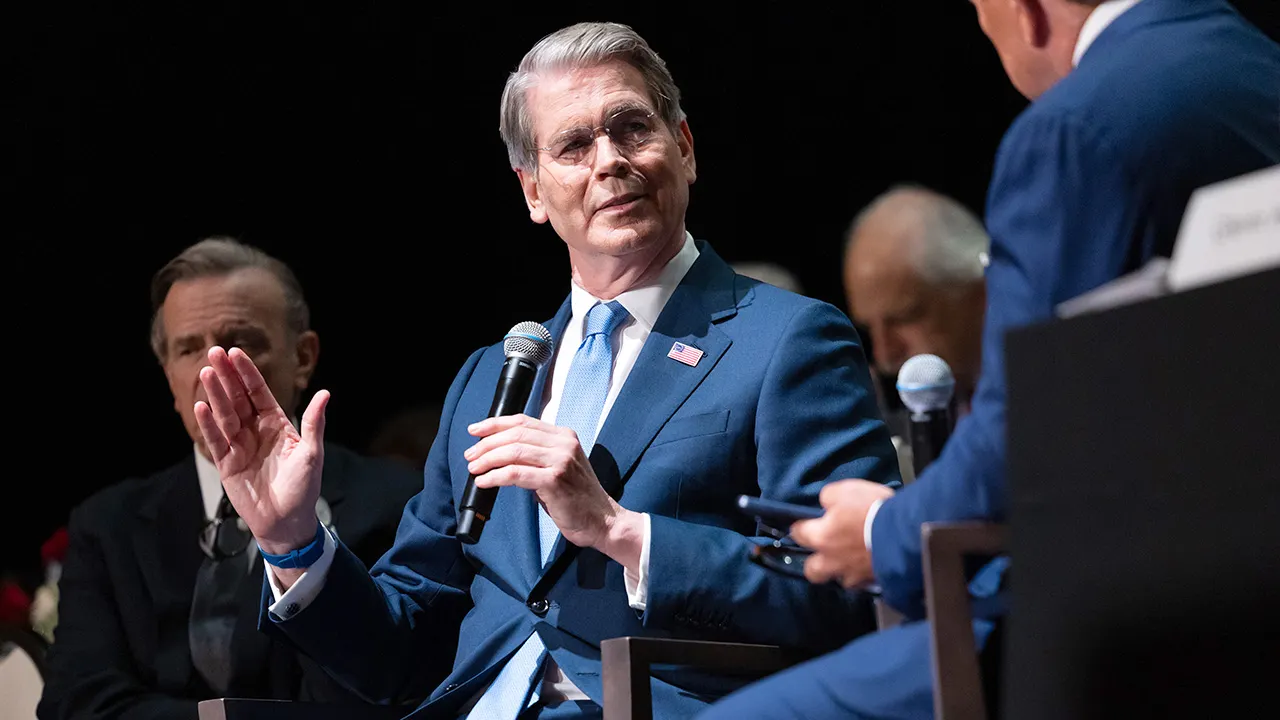
The Lonski Group president and founder John Lonski analyzes rising bond yields, crude oil spikes and inflation concerns on ‘Maria Bartiromo’s Wall Street.’
Treasury Secretary Scott Bessent said on Monday that the regularly scheduled Treasury auctions of U.S. debt are expected to continue per usual after his agency announced an increase in the size of buybacks of longer-dated securities.
Bessent spoke Monday at a press conference to discuss a new plan for the “economic asphyxiation” of the Iranian regime through the implementation of secondary sanctions on Iran’s trading partners.
During the press conference, the Treasury secretary was asked about whether the agency may reduce the size of auctions for longer-term debt going forward or if there are other actions from the department’s toolkit that may be used to help lower yields.
“We are going to continue with our regular program of auctions. So you will be hearing from us again at the beginning of next quarter,” Bessent said. He added in response to a follow-up question that, “We haven’t bought a single bond yet.”
TREASURY YIELDS HIT MULTI-DECADE HIGHS AMID SURGING NATIONAL DEBT
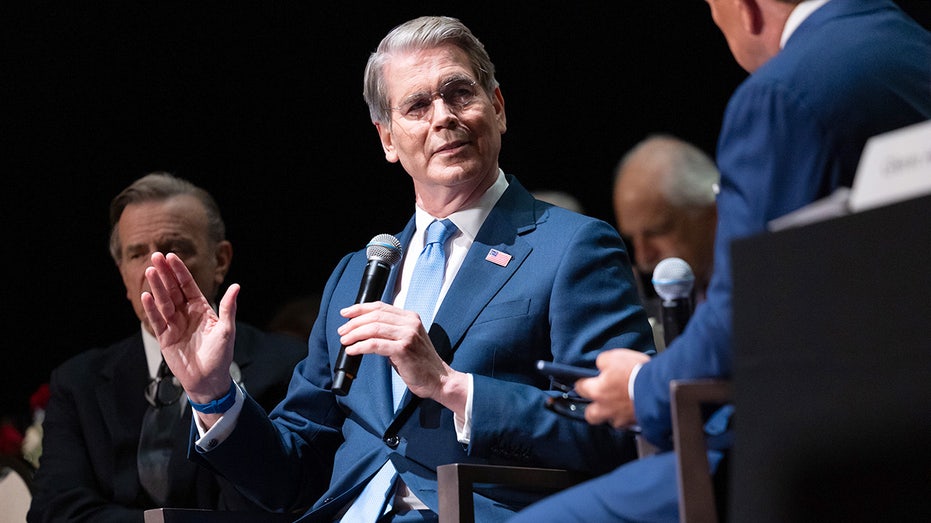
Treasury Secretary Scott Bessent said auctions of Treasurys will continue as scheduled despite the larger buybacks on longer-dated securities. (Krisanne Johnson/Bloomberg via Getty Images)
Bessent noted that the next auctions of longer-dated Treasurys, such as the 10-year note and the 20- and 30-year bonds, aren’t scheduled until mid-September which is the earliest the new buyback structure could come into play after the change takes effect on Sept. 9.
Under the change, which was announced on Aug. 19, the Treasury’s maximum buyback authority rises from $2 billion per operation to at least $4 billion per operation, which will serve as a floor rather than a cap to allow the size of buybacks to respond to market conditions.
The change is expected to remain in effect through the rest of the quarter, or through Nov. 4, after which the Treasury will provide more information about future buyback sizes.
Treasury said in its announcement that the “increase in buyback operations reflects Treasury’s desire to provide greater liquidity support in longer-dated nominal sectors where there is consistent strong sponsorship from market participants, as evidenced by the significant volume of high-quality offers Treasury routinely receives in longer-dated buyback operations.”
US NATIONAL DEBT HITS $40 TRILLION MILESTONE FOR FIRST TIME EVER
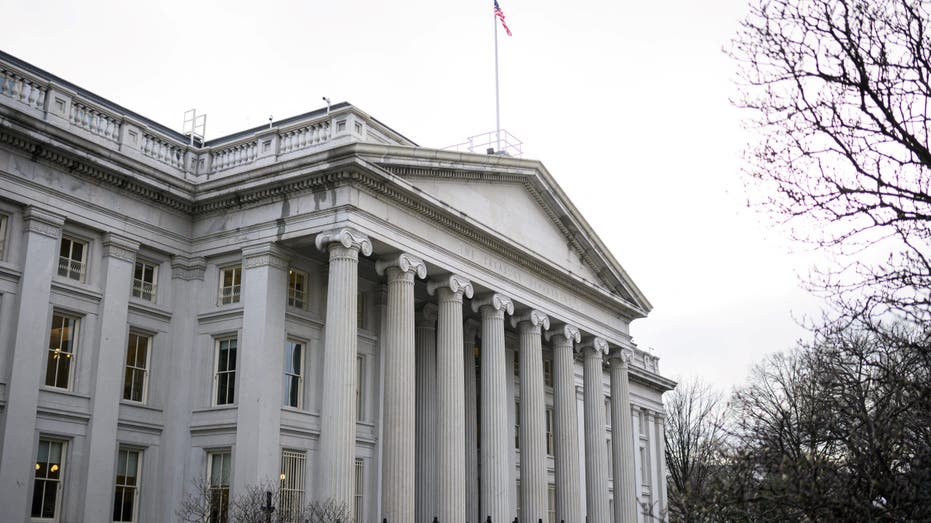
Yields on Treasurys are near multi-year highs amid the rise in the U.S. national debt and geopolitical uncertainty. (Mandel Ngan/AFP via Getty Images)
Last week’s announcement lowered yields on the 10-year Treasury note and on 20- and 30-year bonds for a short period of time, though they largely retraced those declines by the end of the week. Yields were down modestly on Monday.
Bessent said last week that the higher buybacks aim to support liquidity in a more thinly traded portion of the market, particularly in the 30-year sector, while the longer-dated Treasurys are also competing with heavy issuance of corporate bonds at higher yields amid the artificial intelligence (AI) buildout.
Higher yields on Treasurys can cause fiscal pressure for the federal government, which is forced to pay more interest to service the national debt. The move comes as the U.S. gross national debt topped $40 trillion for the first time ever last week.
BESSENT LAYS OUT 5 PRINCIPLES GUIDING TRUMP ADMIN’S APPROACH TO ECONOMIC STATECRAFT
The Treasury Department’s announcement didn’t indicate the funding source for the Treasury buybacks. A Reuters report noted that the Treasury General Account (TGA) at the Federal Reserve could serve as a source because it would negate the need to issue new, shorter-dated Treasurys – though it would eat into the nation’s cash reserves.
The TGA effectively functions as the federal government’s checking account, as it’s used to pay for daily government operations ranging from federal worker salaries, contracts and Treasury’s interest and principal obligations.
As of last Wednesday, the TGA stood at about $940 billion in funding. Treasury has beefed up the TGA this year in part to help pay for some of the $166 billion in tariff refunds owed to importers in the wake of a Supreme Court ruling that struck down a key portion of President Donald Trump’s tariff regime.
GET FOX BUSINESS ON THE GO BY CLICKING HERE
In the past year, the TGA has had an average balance of around $840 billion, which was the highest ever outside its rapid run-up during the COVID-19 pandemic.
Reuters contributed to this report.
Yes. Corporate subscriptions are available for teams and organisations, with discounted rates as user numbers increase. Pricing starts from $1,625 + GST per user.
Get in touch
to discuss the right option for your organisation.
Business News subscriptions are used by executives, investors, consultants and professionals who need to stay informed and make better decisions about the WA market. When you subscribe you’ll get
- Unlimited access to WA’s most trusted business journalism
- Data & Insights — detailed profiles of WA companies, people, projects and deals
- MyBN — a personalised feed based on the companies, people and sectors you follow
- Special publications and industry reports
- Daily and weekly email newsletters
Data & Insights is a research tool built specifically for the WA market. It draws on more than 30 years of Business News reporting, updated regularly to reflect what’s happening now. Use it to:
- Look up detailed profiles of WA companies, including financials, directors and ownership
- Find decision-makers and track their career movements
- Research live and completed projects across WA industries
- Monitor deals, appointments and market activity
- Access industry rankings and league tables
Data & Insights is updated daily by our dedicated research team, which uses the latest announcements, ASX filings and editorial coverage to keep our person, company, list and project records up to date.
Business News welcome all opportunities to make our dataset accurate, complete and current, so if you have an update request, please email the team at
general@businessnews.com.au, and we’d be happy to assist.
MyBN
is part of every subscription. It’s your personalised view of Business News. You can follow the companies, people, sectors and projects that matter to you, and get a news feed and alerts tailored to your interests. You can save articles to read later and retain only what you need.
Only subscribers have full access to all content on the Business News website.
If staying informed about the WA economy is part of your job, and/or you’re looking for networking opportunities in WA, Business News is built for you.
Business News subscribers are:
- Executives and directors tracking competitors, clients and market movements
- Investors and advisers researching companies, deals and industry trends
- Consultants and professionals staying across sectors relevant to their clients
- Business owners looking for leads, context and market intelligence
Most Business News publications cover national or global markets. Business News is focused entirely on Western Australia, which means the journalism, the data and the intelligence are all built around WA companies, people and projects — not adapted from a national feed. Data & Insights, included with every subscription, combines more than 30 years of WA-specific editorial research with live business data. There’s no comparable product for the WA market.
The Morning Digest Email provides a comprehensive wrap of the major headlines, relevant to WA business, and includes with a snapshot of the overnight news covering oil, gold and ASX-listed companies.
The Afternoon Wrap Email focuses on the news covered by our team of journalists during the course of the working day, including exclusive stories and analysis, all of which relates to WA business and the local economy.
The BN Weekender Email contains a wrap of the Business News from the week that was, highlighting the top stories in each area of WA business.
Sign up for free.
We’re happy to help.
Get in touch
and our team will come back to you.
Check out what’s clicking on FoxBusiness.com.
Buc-ee’s CEO suggested recently that the Texas-based travel center chain may be done looking into blue districts, saying some communities do not appreciate what the company brings while conservative states offer business-friendly and family-oriented values.
Arch “Beaver” Aplin III, the company’s president and co-founder, made the comments during the grand opening of Buc-ee’s newest location in Benton, Arkansas on August 17. The chain is known for its expansive gas stations, famously clean restrooms and in-house food offerings.
“We have a lot of opportunities. We’re growing. We’re building in a lot of places. But when you find a conservative business-friendly state with a phenomenal workforce, it makes a difference,” Aplin said.
Aplin criticized states that he said do not appreciate what Buc-ee’s brings to their communities, suggesting the company would rather focus its expansion efforts elsewhere.
BUC-EE’S OPENS FIRST ARKANSAS LOCATION AS CHAIN EXPANDS ACROSS US
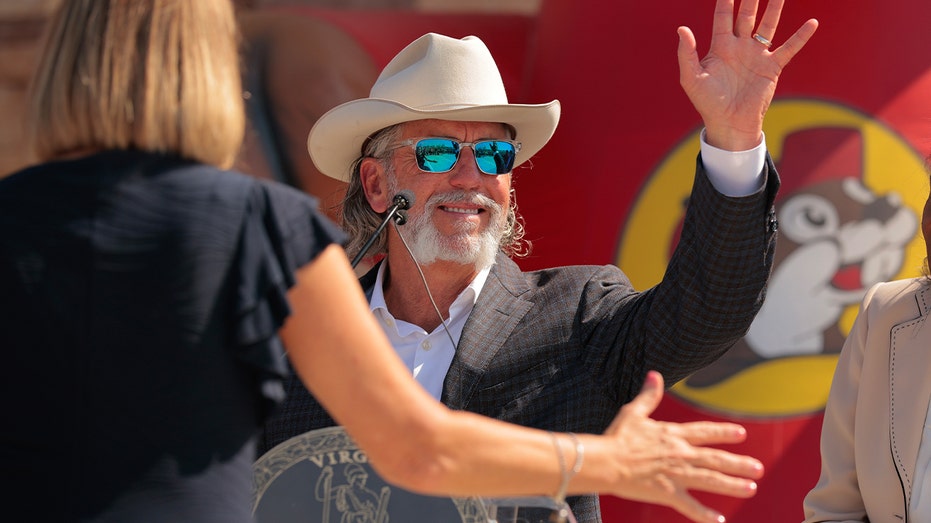
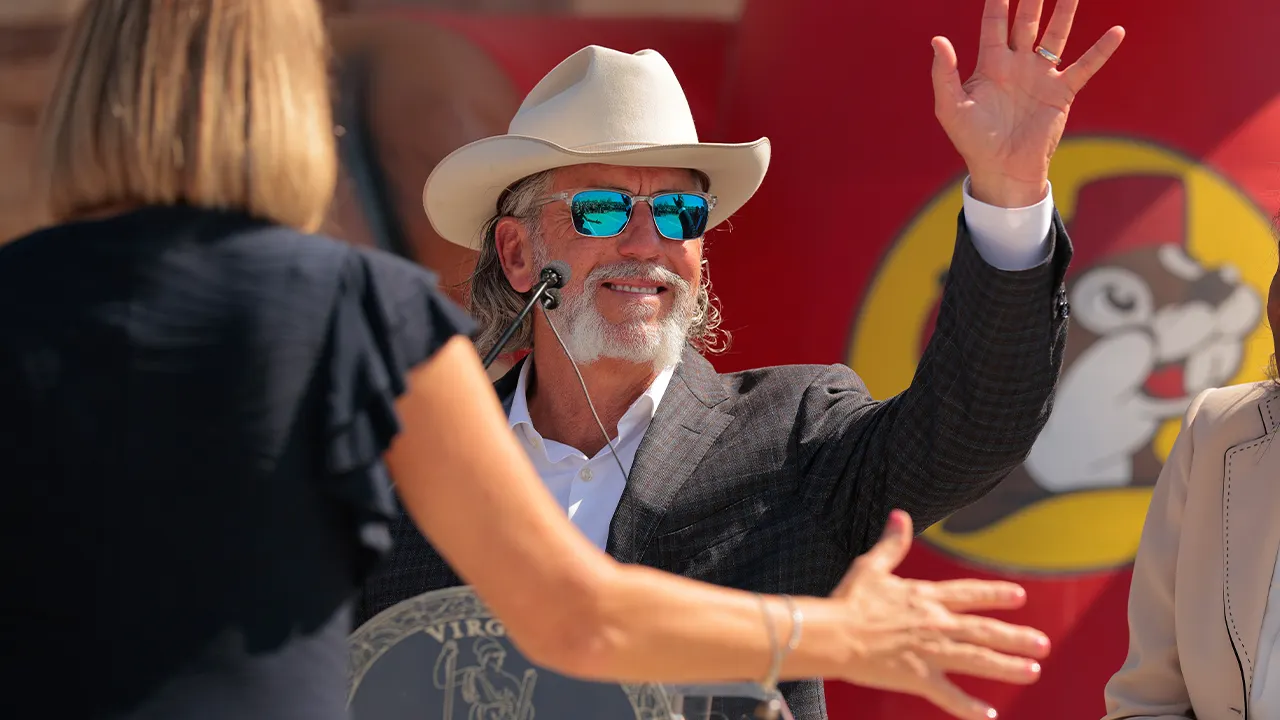
Buc-ee’s co-founder and CEO Arch “Beaver” Aplin III waves during the grand opening ceremony of the first Buc-ee’s location on the East Coast on June 30, 2025, in Mount Crawford, Virginia. Aplin said expansion will focus more on conservative states. (Chip Somodevilla/Getty Images)
“I’m starting to realize life’s too short to try to build in places that people don’t appreciate what you’re bringing, versus a place like this where people do appreciate what you are building,” he said.
Conservative states typically promote business-friendly and family-oriented policies that align with Buc-ee’s values, Aplin said.
“That leadership, that concept, that idea of conservative, business-friendly, family-oriented concept works so much better if it trickles down from the very leadership from the top at the governor’s office, at the congressman, at senator, at the mayor, the representatives,” he said.
Aplin pointed to Benton as an example of the approach, saying the city’s business-friendly environment helped pave the way for Buc-ee’s newest location.
“What we found when we got here into Benton was a business-friendly town,” he said.
CALIFORNIA PIZZA KITCHEN CO-FOUNDER OPENS UP ABOUT FAMOUS CHAIN’S WILD RISE, BANKRUPTCY AND COMEBACK
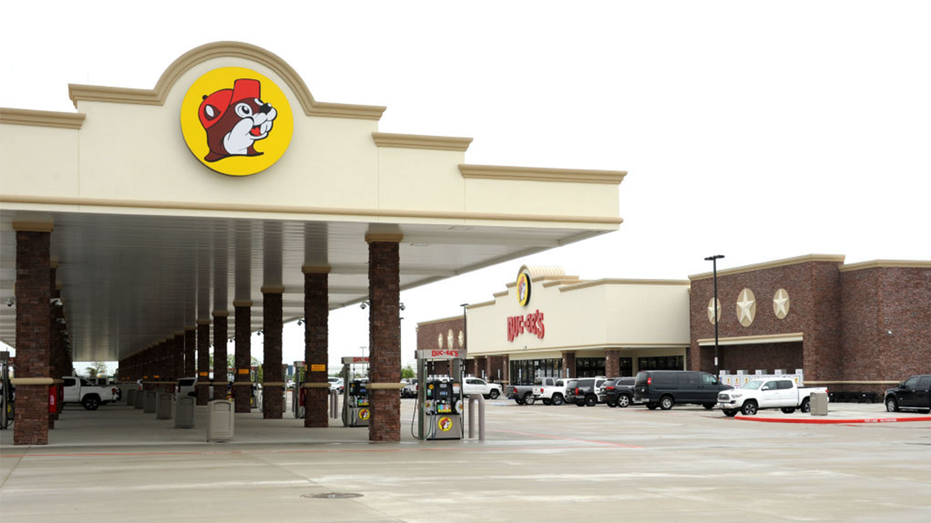
Buc-ee’s travel centers typically feature 120 fuel pumps across 74,000 square feet. (Getty Images / Getty Images)
Founded in 1982, Buc-ee’s operates sprawling travel centers that typically feature 74,000 square feet of space and 120 fueling positions. The locations often create more than 200 jobs, according to the company.
Buc-ee’s currently has 58 locations, including 37 in Texas, according to the company’s website.
The chain has expanded to 13 other states, including Alabama, Georgia, Florida, Kentucky, Tennessee, Arkansas, Arizona, Colorado, Mississippi, Missouri, Ohio, South Carolina and Virginia.
Nearly all the cities where Buc-ee’s operates are located in areas that generally lean conservative, with a few exceptions where local political dynamics are more mixed.
Auburn, Alabama, for example, is a college town located in a predominantly Republican county, giving it a more politically mixed environment than some surrounding communities.
Brunswick, Georgia, has a Democratic-leaning municipal base despite being located in Glynn County, which has generally leaned Republican.
Goodyear, Arizona, has become a competitive suburban area in recent election cycles and is located in the West Valley of Maricopa County, a region that has historically leaned Republican but has become increasingly politically competitive.
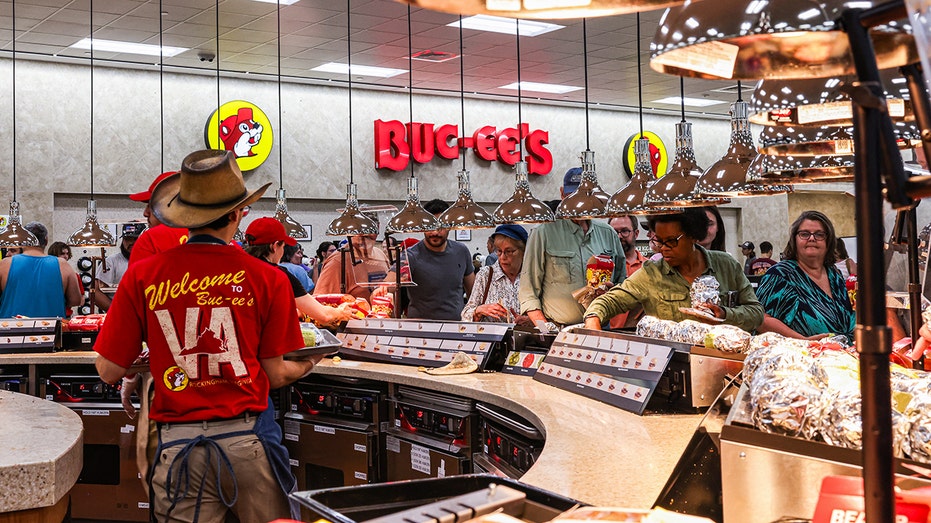
Visitors shop for brisket sandwiches at a Buc-ee’s location in Rockingham County, Virginia, on July 2, 2025. (Valerie Plesch/For The Washington Post / Getty Images)
CLICK HERE TO GET FOX BUSINESS ON THE GO
More Buc-ee’s locations are slated to open in the coming years, including a travel center in Murfreesboro, Tennessee, on Nov. 16.
Six locations are also expected to open in 2027, including sites in Ruston, Louisiana; Kansas City, Kansas; Gallaway, Tennessee; St. Lucie, Florida; Boerne, Texas; and Monroe County, Georgia.
Two additional locations are planned for 2028 in Mebane, North Carolina, and Lafayette, Louisiana.

Elon Musk XRP Theory #xrp #crypto @digitalassetinvestor

Former child star sues Disney over alleged rape by ex-employee when she was 14

Acadia Pharmaceuticals: Another Bite At The Alzheimer’s Apple (NASDAQ:ACAD)





-

 Fashion3 days ago
Weekend Open Thread: Madewell – Corporette.com
-

 Business2 days ago
Musk’s Tesla, SpaceX Confirm $16.8 Billion ‘Terafab’ Chip Plant as World’s Largest Building in Texas
-

 Crypto World3 days ago
anatomy of crypto’s biggest liquidation event since 2021
-

 Business6 days ago
SMA Solar Technology AG (SMTGY) Q2 2026 Earnings Call Transcript
-

 Tech7 days ago
Qwen3.8-27B runs frontier-class coding agents and reasoning locally, no cloud API required
-

 Politics3 days ago
6 months on, Irish renters crushed by effects of government housing bill
-
 NewsBeat3 days ago
The ‘Lucky Dip Gang’ causing carnage for clicks: After five thugs were killed speeding in the wrong direction on a motorway, GUY ADAMS investigates a sick new trend… and why police aren’t even allowed to pursue them
-

 Tech6 days ago
GLM-5.3 hits the API at $1.4/$4.4 per million tokens
-

 News Videos5 days ago
Don’t Leave Your Financial Future To Chance | August 19, 2026
-

 Business2 days ago
Mystery AI Model ‘Ox Alpha’ Draws Developers With Free Access as Chinese Lab Origins Remain Debated
-
Tech7 days ago
5 Of The Most Reliable Car Brands To Consider If You’re Buying A Used SUV
-

 Tech7 days ago
Keychron K8 Ultra 8K review: a great value keyboard with comfort issues
-

 Business6 days ago
Stock Market Today: Tech Futures Slide As Treasury Yields Jump; Nvidia, Micron, Sandisk Sell Off
-

 Business5 days ago
Marvell Shares Jump 7% as Google Chip Deal Confirms Custom AI Silicon Partnership, Analysts
-

 Business4 days ago
Five Below: Kids Discount Retailer Reaps Rich Rewards
-
Business7 days ago
Fabrinet (FN) Q4 2026 Earnings Call Transcript
-

 Tech6 days ago
Ken Okuyama’s Kode89 Supercar Features Three Pedals and a Choice of V12s
-

 Fashion7 days ago
The Dressier Side of Shorts
-

 Politics6 days ago
The House Opinion Article | Security means more than military spending
-
 Business7 days ago
Nasdaq Ticks Higher as Wall Street Awaits Retail Earnings and Weighs Fed’s Next Move at Jackson Hole Meeting
You must be logged in to post a comment Login