




Connect with us

Crypto World

Pi holds above $0.085 support as crypto market recovery loses momentum

Published

on

Pi holds above $0.085 support as crypto market recovery loses momentum

Key takeaways

  • Pi Network trades around $0.0900 on Wednesday, maintaining mild upside momentum above the critical $0.0853 support.
  • The broader cryptocurrency market is retreating as investors take profits following last week’s double-digit gains.
  • A break above $0.1022 could open the path toward $0.1204.

Pi Network is showing modest upside movement on Wednesday, with PI trading around $0.0900 and remaining above an important technical support level.

However, the broader cryptocurrency market’s recovery is losing momentum as investors lock in profits following last week’s sharp gains. PI’s technical indicators also remain mixed, reflecting a lack of decisive buying pressure.

Profit-taking slows the crypto market rally

The broader cryptocurrency market is edging lower this week after several major assets recorded double-digit gains during the previous week.

CoinGlass data shows that approximately $373 million in leveraged positions was liquidated over the past 24 hours. Long positions accounted for $310 million of that total, indicating that the latest pullback caught bullish traders off guard.

Advertisement

The elevated long liquidations suggest renewed selling pressure as investors reduce risk and take profits from the recent rally.

Despite the pullback, overall market sentiment remains strongly positive. CoinMarketCap’s Crypto Fear and Greed Index stood at 80 on Wednesday, placing the market firmly within the “extreme greed” zone.

The reading indicates that bullish sentiment persists even as traders assess whether the current decline is a temporary correction or the beginning of a broader reversal.

Pi Network holds above the $0.0853 support

Pi Network trades near $0.0900 at the time of writing, maintaining a neutral short-term outlook.

Advertisement

The token remains above the 23.6% Fibonacci retracement level at $0.0853. This level is calculated from PI’s decline between the $0.1341 high and the $0.0703 swing low.

As long as PI holds above $0.0853, buyers may retain an opportunity to extend the recovery. However, the token needs stronger momentum to overcome the resistance levels above its current price.

The 50% Fibonacci retracement level at $0.1022 represents the next major barrier for Pi Network.

This level rejected PI’s recovery attempt in mid-July, reinforcing its importance as a potential supply zone. A decisive daily close above $0.1022 could strengthen the bullish outlook and extend the advance toward the 78.6% Fibonacci retracement at $0.1204.

Advertisement

Such a breakout would also move PI above the psychologically important $0.1000 threshold, potentially attracting additional buying interest.

Pi Network’s momentum indicators show signs of stabilization but do not yet confirm a strong bullish trend.

The Moving Average Convergence Divergence indicator remains marginally above its signal line on the daily chart. This position points to a slight bullish bias, although the narrow separation between the lines reflects weak momentum.

Meanwhile, the Relative Strength Index stands near 51. The neutral reading suggests that buyers and sellers remain relatively balanced, leaving PI vulnerable to broader market movements.

Advertisement

PI/USD 4H Chart

The $0.0853 Fibonacci level remains the immediate support to monitor. A confirmed daily close below this level could invalidate PI’s near-term recovery outlook and increase selling pressure. In that scenario, the token could revisit the $0.0703 swing low.

Conversely, continued consolidation above $0.0853 would preserve the possibility of another attempt to break the $0.1022 resistance.

Advertisement

Source link

Continue Reading
Click to comment

You must be logged in to post a comment Login

Leave a Reply

Crypto World

Revolut Launches Euro Stablecoin in Three European Markets

Published

on

Crypto Breaking News

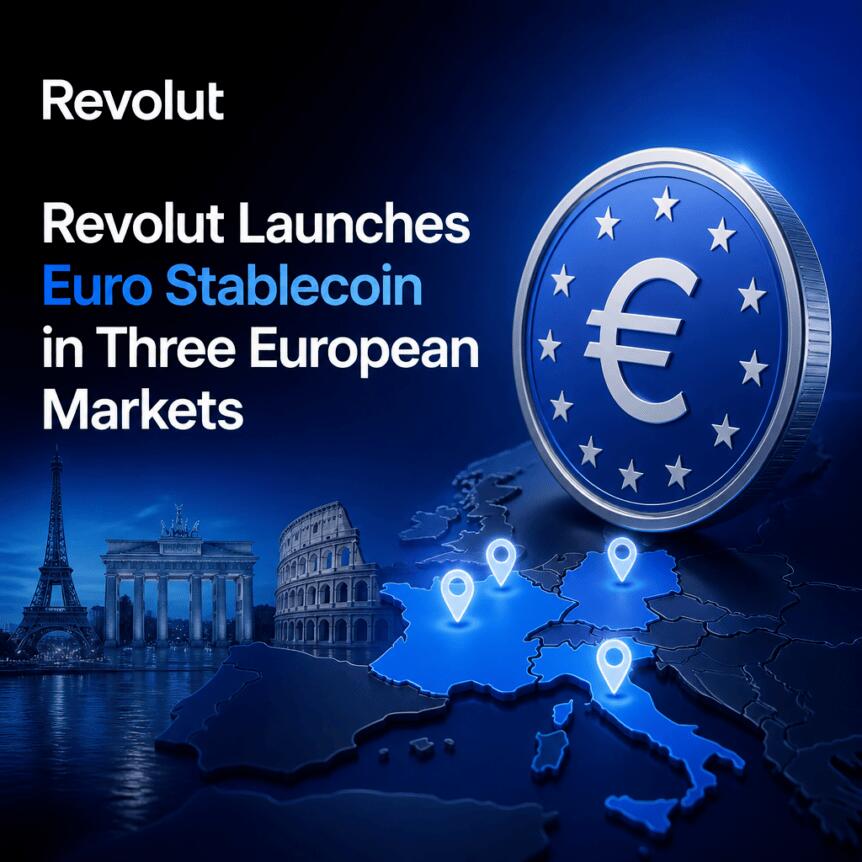
Revolut has started rolling out its first stablecoin, EURR, a euro-pegged token, to selected customers in Denmark, Poland, and Portugal. The company says the rollout will broaden across additional European Economic Area (EEA) markets later in 2026, provided product, operational, and regulatory requirements are met.

The move arrives as Revolut continues to reshape its stablecoin offering in Europe. According to Revolut’s earlier messaging, it is withdrawing Tether’s USDT from the EEA and Switzerland, with remaining USDT balances to be converted into customers’ base currencies after Aug. 31.

Key takeaways

  • Revolut’s euro-pegged stablecoin EURR is launching first in Denmark, Poland, and Portugal before expanding to more EEA markets later this year.
  • EURR is issued by Bridge Building S.A., the Luxembourg entity within Bridge’s stablecoin infrastructure network that is owned by Stripe.
  • Revolut plans to integrate EURR into its retail app, with support for multiple blockchain networks and external wallet transfers.
  • EURR is positioned as MiCA-compliant and backed by reserves managed by Bridge in line with EU rules.
  • The launch coincides with Revolut’s exit from USDT in the EEA and Switzerland.

A euro stablecoin debuts in the Revolut app

Revolut told Cointelegraph that EURR is being introduced to a limited group of users as part of a phased program. The initial countries—Denmark, Poland, and Portugal—were chosen, the company said, for their market size, with about 2 million customers included in the first rollout.

In its integration plan, Revolut said EURR will be available inside the retail app, with the ability to transfer to external wallets. The company also indicated that it intends to support multiple blockchain networks, though the first rollout focuses on an initial deployment rather than offering every network immediately.

MiCA compliance and issuance structure

EURR is designed to hold a value of one euro, with backing that Revolut says is held and managed by Bridge under the Markets in Crypto-Assets (MiCA) framework.

Advertisement

Issuance responsibility sits with Bridge Building S.A., a Luxembourg-based entity connected to Bridge’s stablecoin infrastructure. Revolut Digital Assets Europe is the entity offering the token to users as part of the product rollout.

For users, the practical implication of this structure is that Revolut is aiming to offer a regulated stablecoin option aligned with EU rules—at a time when providers across the region are increasingly required to fit within MiCA’s stablecoin regime.

External transfers and app features from day one

Revolut’s spokesperson said the token will initially launch on Ethereum as part of the phased rollout. External wallet transfers are scheduled to be available immediately for select customers, with broader access dependent on liquidity growth.

The company also outlined how customer costs and limits will work. Revolut said its standard crypto trading and remittance limits apply to EURR, while fiat transactions related to the offering will carry no fees or spreads.

Advertisement

From an execution standpoint, this matters for everyday users because external wallet functionality often determines whether a stablecoin can be used beyond custodial in-app balances. Revolut’s approach—starting with Ethereum and expanding later as liquidity builds—suggests a controlled launch designed to limit operational friction while the token’s availability ramps up.

Replacing USDT in Europe

EURR’s launch also marks a shift in Revolut’s broader stablecoin positioning. In earlier coverage from Cointelegraph, Revolut said it would withdraw Tether’s USDt from the EEA and Switzerland. The company previously stated that any remaining USDT balances would be converted into customers’ base currencies after Aug. 31.

As a result, EURR functions not only as a new product feature, but as part of an attempt to maintain stablecoin exposure for Revolut customers while aligning with evolving regulatory and compliance requirements. The timing—rolling out a MiCA-oriented euro stablecoin as USDT availability is reduced—underscores how stablecoin availability in Europe is increasingly being shaped by the intersection of regulation, issuer readiness, and platform-level requirements.

Revolut framed EURR as the first step in a broader strategy, adding that it is developing tokens denominated in other currencies through separate regulatory pathways. The company did not specify which currencies those future tokens would target.

Advertisement

What to watch next

Revolut’s phased expansion across additional EEA markets will be the next major checkpoint for users, alongside how quickly EURR liquidity grows and unlocks wider external wallet transfers. With the token launching on Ethereum first, market participants will also be watching whether and when Revolut broadens support across additional networks, as well as how Revolut manages ongoing transitions away from USDT in the region.

Risk & affiliate notice: Crypto assets are volatile and capital is at risk. This article may contain affiliate links. Read full disclosure

Source link

Advertisement
Continue Reading

Crypto World

Creators pump and dump Dolly Parton memecoins

Published

on

Creators pump and dump Dolly Parton memecoins

Yesterday, the crypto community decided to commemorate the life of country music star Dolly Parton by pumping and dumping memecoins using her name and photos.

Her nephew announced her passing on Tuesday afternoon. Within minutes, unauthorized Solana memecoins bearing her likeness were trading on at least a dozen trading pairs across crypto markets.

Crypto influencers have a concerning history of turning real-world deaths into trading opportunities, including memecoins created after the death of Hulk Hogan, Ozzy Osbourne, Charlie Kirk, Charlie Munger, Henry Kissinger, Liam Payne, and others.

Creators mint most memecoins on Pump Fun, a Solana-based launchpad that lets anyone create a tradable token for less than $100 within minutes.

Advertisement
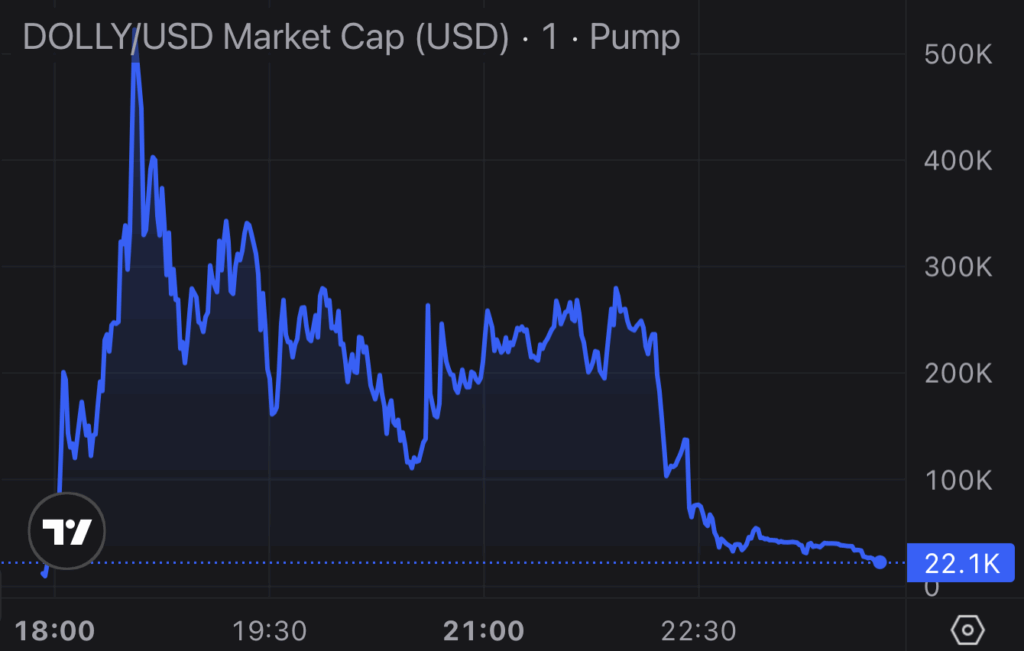
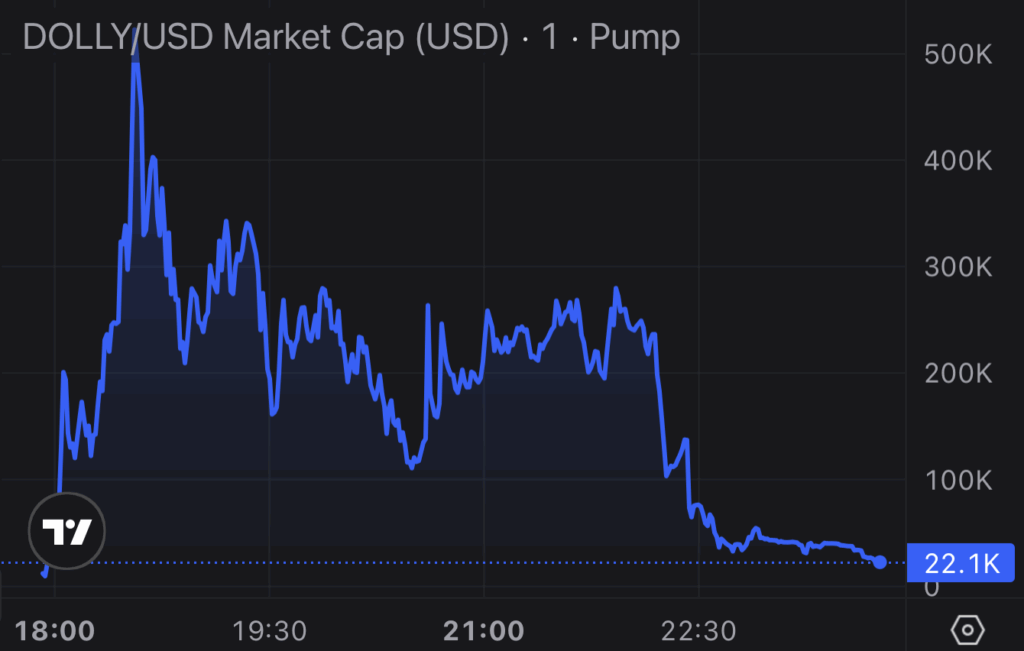
Chart of $DOLLY (RIP Dolly Parton) memecoin, August 25, 2026. Source: TradingView

Xxxxxx

Neither Parton, her family, Dollywood, or her estate have discussed any crypto projects.

All memecoins, including RIP Dolly Parton, DollyParton, Dollar Parton, and Dolly, are unauthorized creations by third parties and most crashed within minutes of their creation.

Despite millions of dollars in combined trading volume, most of these assets had collapsed to market capitalizations of a few thousand dollars by yesterday evening.

None of these tokens have any utility or connection to Parton or her charitable causes. Their value exists only as long as the holder can sell it to someone else.

Parton’s only sanctioned blockchain venture was “Dollyverse,” a 2022 SXSW Web3 experience and NFT drop built with Fox Entertainment’s Blockchain Creative Labs on Eluvio.

Advertisement

Read more: Charlie Kirk’s killing turned into memecoin spectacle

Pay your respects with an ICO

Because minting costs are negligible and bonding curve mechanisms let a token go from $0 to a live, tradable market in the time it takes to fill out a form, memecoin launchpads have become the most popular way to conduct an initial coin offering. 

Protos has previously documented that over 99.99% of the 1.7 million memecoins launched on PumpFun never sustained even a $1 million market capitalization.

A CoinGecko analysis of over 18.6 million token launches found that more than two-thirds of all PumpFun tokens stop trading the same day they launch.

Advertisement

Got a tip? Send us an email securely via Protos Leaks. For more informed news and investigations, follow us on XBluesky, and Google News, or subscribe to our YouTube channel.

Source link

Advertisement
Continue Reading

Crypto World

Kalshi’s $1.5B equity offering is three-quarters sold at $1.12B

Published

on

Kalshi’s $1.5B equity offering is three-quarters sold at $1.12B

Kalshi’s $1.5B equity offering is three-quarters sold at $1.12B

The Form D lists 71 investors and says Kalshi is relying on an exemption that allows certain private offerings without SEC registration.

Source link

Continue Reading

Crypto World

Why Did the XRP Price Rally Beat Every Top-10 Coin Without an Altcoin Season?

Published

on

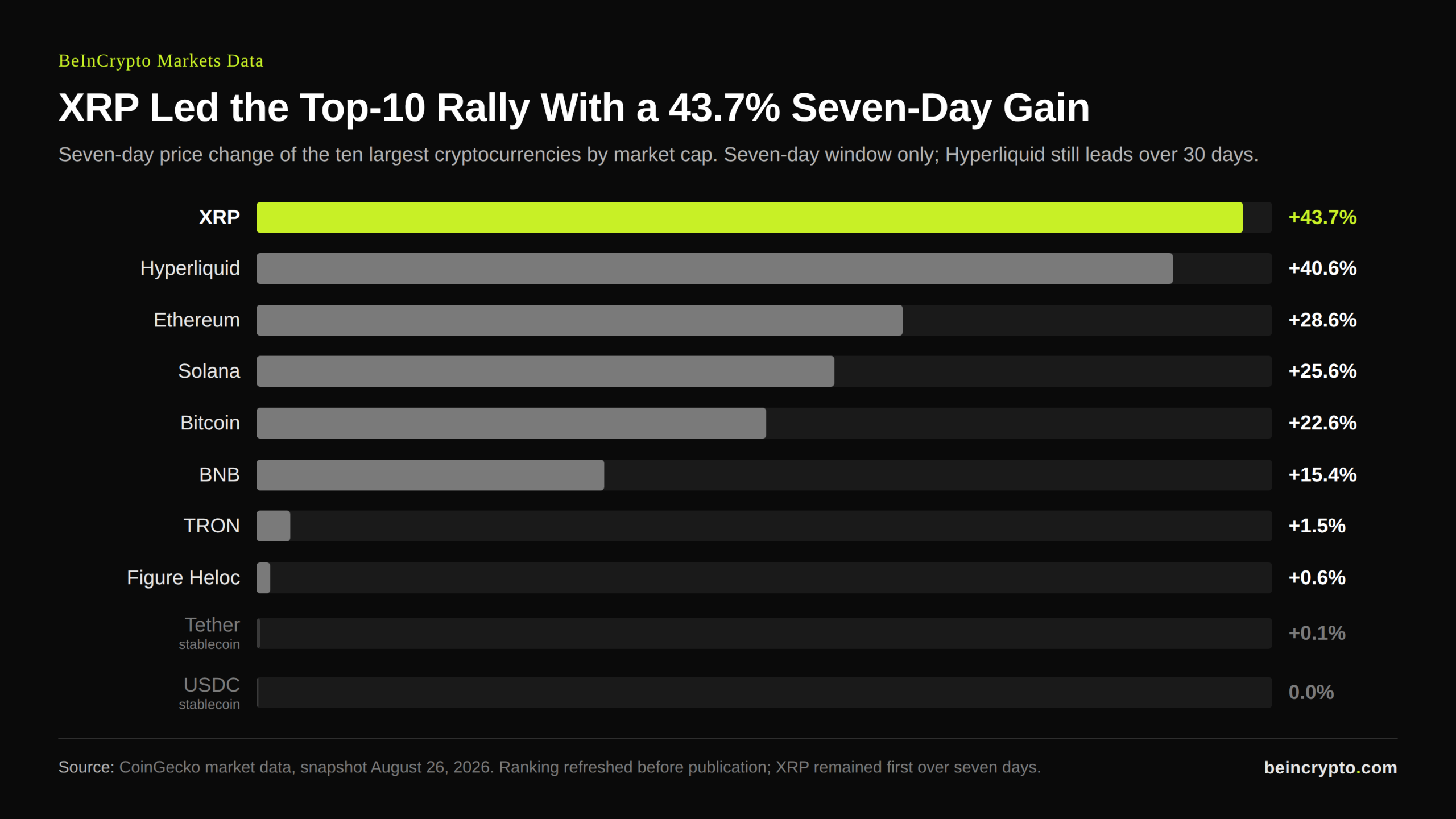
XRP 7-Day Top-10 Leaderboard

XRP gained 43.7% in the seven days to August 26, the strongest run in the top 10 by market cap. Three separate demand channels fed the XRP price rally, and none of them was a simple futures squeeze.

ETF desks, Korean spot traders, and Binance’s largest futures accounts all showed up at once. BeInCrypto traced each channel through data frozen on August 26, with exchange snapshots taken at press time.

XRP Price Rally Outran the Top 10 Inside Bitcoin Season

XRP’s 43.7% weekly gain led every top-10 asset at the August 26 snapshot. Hyperliquid (HYPE) followed at 40.6%, while Ethereum added 28.6% and Bitcoin 22.6%.

Want more token insights like this? Sign up for Editor Harsh Notariya’s Daily Crypto Newsletter here.

Advertisement

The seven-day XRP price rally window matters here. Over 30 days, HYPE still led XRP by 37.1% to 29.8%, so the leadership claim belongs to the past week alone.

XRP 7-Day Top-10 Leaderboard
XRP 7-Day Top-10 Leaderboard: BeInCrypto

Meanwhile, the wider market never left Bitcoin Season, the stretch where Bitcoin outpaces most altcoins. Bitcoin dominance stood at 59.3%, and the Altcoin Season Index read 40 of 100.

Bitcoin Season Regime Card
Bitcoin Season Regime Card: BeInCrypto

XRP’s run was therefore asset-specific strength, not the front edge of a broad altcoin season. That makes the source of the buying the real question.

XRP ETF Inflows and Korean Turnover Ran Hot at the Same Time

US spot XRP ETFs booked six straight positive sessions from August 18 to 25, per SoSoValue. The $77.47 million streak peaked on August 25 with a $23.87 million daily print, extending a stretch where ETFs kept drawing cash even while the token traded far below its highs.

Total net assets climbed from $941.41 million to $1.46 billion over those sessions. However, that jump includes price appreciation, so net inflows remain the cleaner demand measure. The streak also stayed small against XRP’s roughly $90.65 billion market cap.

Six-Session XRP ETF Inflows
Six-Session XRP ETF Inflows: SoSoValue

Korean activity peaked alongside the ETF streak. XRP ranked first of 286 Upbit won markets at 06:49 UTC on August 26, with 16.3% of all won-denominated turnover, echoing the earlier wall of Korean bids that met the token’s long downtrend.

Korea XRP Turnover and Premium
Korea XRP Turnover and Premium: BeInCrypto

Upbit’s price sat within 0.1% of Bybit’s after currency adjustment, so the activity created no local premium. The flat premium shows Korea traded heavily without overpaying, signaling broad participation rather than an isolated local buying frenzy.

Derivatives desks tell the third part of the story.

Advertisement

Binance Data Suggests Resilience, Not a Confirmed XRP Whale Bet

Binance’s top-trader position ratio rose 3.8% over seven days to 2.24 as of 07:13 UTC on August 26. Meanwhile, the all-account ratio fell 27.7%, and the share of top accounts holding longs dropped 33.5%.

Read together, the two moves point one way. Most of the market, including many top-tier accounts, cut long bets during the pullback. Yet the total value of top-trader longs still grew.

That suggests the biggest accounts kept buying, or at least held their ground, while everyone around them retreated. Such behavior reads as quiet conviction at the top, a constructive sign for the rally’s staying power.

What it does not confirm is whale accumulation. Binance ranks top traders by margin balance, not proven skill, and they can hedge elsewhere. Conviction here is suggested, not proven.

Advertisement
Binance Top-Trader Divergence Chart
Binance Top-Trader Divergence Chart: BeInCrypto

Open interest fell 8.9% in 24 hours yet held 12.9% higher over the week, with funding at just 0.01%. Traders unwound short-term leverage without abandoning the weekly build-up.

Binance Open Interest Reset
Binance Open Interest Reset: BeInCrypto

Each channel remains reversible. ETF flows can flip negative, Korean depth can fade within minutes, and the divergence still scores neutral. Breadth, not price, will decide whether this proves a rally worth trusting.

Analyst’s View: The test in the coming sessions is the order in which things fade, not the exact price. Spot channels usually go first. If the ETF streak breaks, or XRP’s share of Upbit trading starts shrinking from 16.3%, the rally is losing its base.

The derivatives side works the other way. If Korea starts paying a real premium and funding climbs past 0.05%, buyers are chasing rather than accumulating. But if the broader Binance crowd turns long again while the big accounts stay put, the move still has strength.

The post Why Did the XRP Price Rally Beat Every Top-10 Coin Without an Altcoin Season? appeared first on BeInCrypto.

Source link

Advertisement
Continue Reading

Crypto World

BetFury and Pragmatic Play Release New Slot: BetFury Sugar Rush 1000

Published

on

[PRESS RELEASE – Willemstad, Curaçao, August 26th, 2026]

On August 26, the leading crypto casino BetFury launched a new title – BetFury Sugar Rush 1000. This game is a new version of Pragmatic Play’s high-volatility slot. It is another result of BetFury’s cooperation with one of the biggest iGaming providers, bringing the crypto casino’s visual identity to a proven game while keeping the mechanics players already trust.

BetFury Introduces Sugar Rush 1000 as Its Latest Branded Slot

Sugar Rush 1000 is among the most-played online slots on BetFury, popular with both regular users and VIP club members. Pragmatic Play built it as an upgrade to the original Sugar Rush, lifting the maximum win from 5,000x to 25,000x and raising the multiplier ceiling per grid position from 128x to 1,024x. That mix of a high win cap and compounding multipliers keeps the game in steady rotation across the community, which made it the natural pick for a branded version.

Advertisement

BetFury Sugar Rush 1000 Features and Gameplay

BetFury Sugar Rush 1000 keeps every mechanic of the original and changes only the design. The title runs at the 96.53% RTP and retains the full feature set:

  • 7×7 grid with Cluster Pays – wins form from five or more connected matching symbols.
  • Tumble feature (Cascading reels) – clears winning clusters and drops new symbols into the chain for further crypto wins.
  • Multiplier Spots – build up as symbols are removed from the same position.
  • Bonus Game – triggered by 3 to 7 scatters, awarding 10 to 30 Free Spins.
  • Bonus Buy – gives direct access to the feature round.

Thus, players get the same math and volatility they know, now wrapped in BetFury’s own look.

“Sugar Rush 1000 was already one of the games our users return to most, so creating such a game was a decision the community made for us,” said Mike, CEO of BetFury. “Pragmatic Play has been one of our closest partners for years, and this release is a direct product of that work.”

BetFury Sugar Rush 1000 shows what these collaborations are built for a high-performing crypto game delivered under the operator’s brand, with the mechanics players’ trust kept fully intact.

About BetFury

Advertisement

BetFury is a leading crypto casino with 3.5M registered players and $11.5B wagered, founded in 2019. The platform offers over 13,000 games, 24 Original games with RTP up to 99.28%, and 80+ sports for betting with odds higher than the market average. Beyond gaming, BetFury provides a full suite of crypto tools: Crypto Staking with up to 60% APR, Futures, Crypto Swap, etc. Moreover, it has a BFG Staking for accumulating more native tokens or collecting payouts in BFG or USDT. BetFury continuously evolves based on user feedback and is committed to responsible gambling practices. Learn more at betfury.com.

The post BetFury and Pragmatic Play Release New Slot: BetFury Sugar Rush 1000 appeared first on CryptoPotato.

Source link

Advertisement
Continue Reading

Crypto World

Why I Stopped Fighting AI in My Classroom and Started Teaching With It

Published

on

Why I Stopped Fighting AI in My Classroom and Started Teaching With It

At a recent academic retreat I attended, the air was thick with what I can only call educational gaslighting. A panel of graduate and undergraduate students looked a room full of professors in the eye and claimed they only used AI to verify their work because they valued learning too much to take shortcuts. Minutes later, when the answers were blind, those same students estimated that over 80% of their peers were using the technology for nearly everything.

As an engineering professor at the University of Michigan, I believe we need to move past the fear and hype. The future job market will not be dominated by autonomous AI, but by experts who have mastered their field so thoroughly that they can use it to multiply their output exponentially. 

But how do we help students become experts if they don’t show up? 

This question precedes the LLM onslaught. Since the pandemic, traditional lecture attendance has cratered, but active learning has been shown to significantly improve both turnout and long-term retention

Advertisement

By evolving my courses to embrace this data, I’ve seen attendance surge, even in the freeze of a Michigan winter. 

Flipping the lecture cycle

Classically, engineering courses default to hours of lectures where students are expected to take notes, with problem sets and exams bolted on. Many students treat a lecture as passive entertainment. And, often, the material is so technical that it is disconnected from real-world use, leading to even less engagement and retention. 

To break this cycle, I’ve flipped my classroom. Each week, I assign a 2-hour recorded video lecture, along with a related article. The assignments are made in Perusall, an AI-enabled tool that treats the video and article a bit like a social network. Students are graded based on their active engagement with the material, such as how much of the lecture they view, what questions and comments they leave in the system, and so on. I can monitor which students leave comments, answer peer questions, and engage with the material before they ever set foot in my classroom. And if they try to cut and paste comments in multiple locations, the system flags them. It does not yet flag comments that seem AI-generated, but I expect that will be coming soon.

Advertisement

With everyone primed to dig in, only one-third of my students’ time with me is devoted to classic lecturing. I offer a one-hour live lecture and invite industry guests to share stories of computer vision in the wild. Then my students spend the rest of our in-person time participating in small breakout sessions, a large group discussion, and an in-person quiz. Not only do they grade their own quizzes, but they only get credit for an answer if one of them argues the logic behind it.

The result? My students show up to class because the value is no longer in the information I provide—it’s in the friction and growth of live exchange.

This fall, I’m taking this a step further. We won’t just read technical papers; we will debate them. Anyone can be called to the front of the room to spontaneously argue one side of a research argument, which means every student must come prepared.

By moving the passive learning to the home and continuously pushing students to test their knowledge, I’ve reclaimed the classroom to create what AI cannot replicate: spontaneous, high-stakes human interaction.

Advertisement

Using AI as a supercharged tutor

As we try to understand how AI can help and hinder learning, the most dangerous misconception is that it is a labor-saving device for the mind. In reality, AI is an expertise-amplifier that can turn weeks of manual programming into a few hours of focused work. But for a novice, relying on AI before mastering the fundamentals creates a technical debt that leads to a lack of depth.

As someone at the forefront of AI research and creation, I don’t coach my students to avoid it, but rather I use it as a sophisticated, one-on-one tutor that facilitates active learning and helps them grow their expertise. This means moving beyond passive consumption and toward a rigorous, iterative process of trial, error, and refinement.

Some best practices I share with my students include:

Advertisement

Mastery-First Workflow: Solve problems manually first. Then use AI to check your work and identify where your logic diverges from the model.

AI as a Problem-Generator: One of the most effective ways to learn is through constant testing. Use AI to generate new practice problems and engage in active learning.

Brain Dump Standard: Never ask AI to write from scratch. Instead, provide a brain dump of ideas and structure. After the AI helps organize your expertise, personally refine it through meticulous review or even rewrite, if necessary.

Redefining the honor code in the age of AI

Advertisement

I am not an AI police officer. I cannot—and should not—spend my academic career hunting for digital shortcuts in my students’ work. I can only set the boundaries and allow them to choose how they show up. 

Amid the promise of AI to supercharge the work of experts, we must treat this technology with the same proactive mastery we apply to any other essential tool of modern life. 

By shifting the focus to high-stakes, spontaneous human interaction and leveraging AI for active learning rather than trusting it to do the work, educators can ensure that the knowledge lives within the student, not just the model.
Source link

Advertisement
Continue Reading

Crypto World

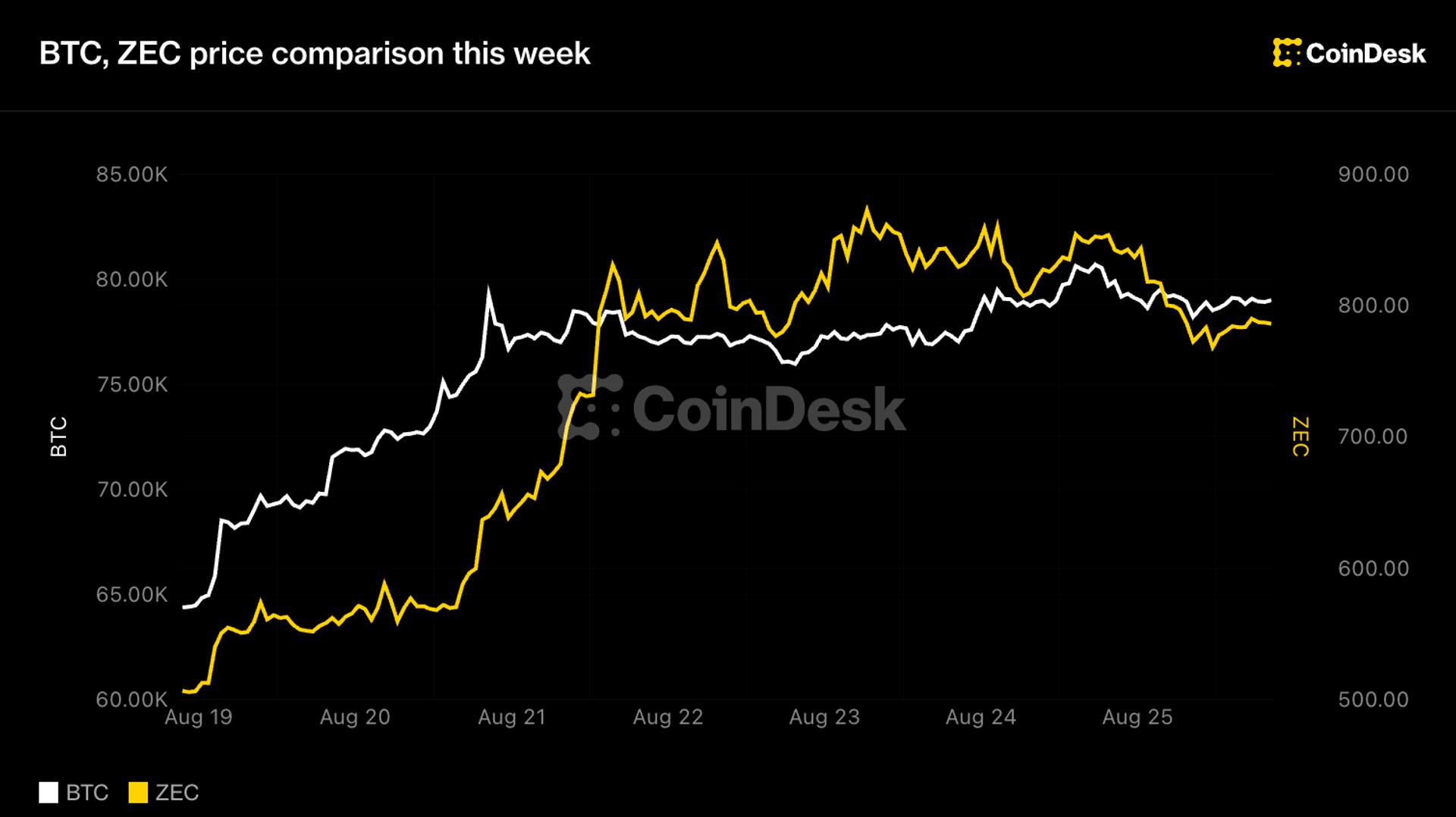
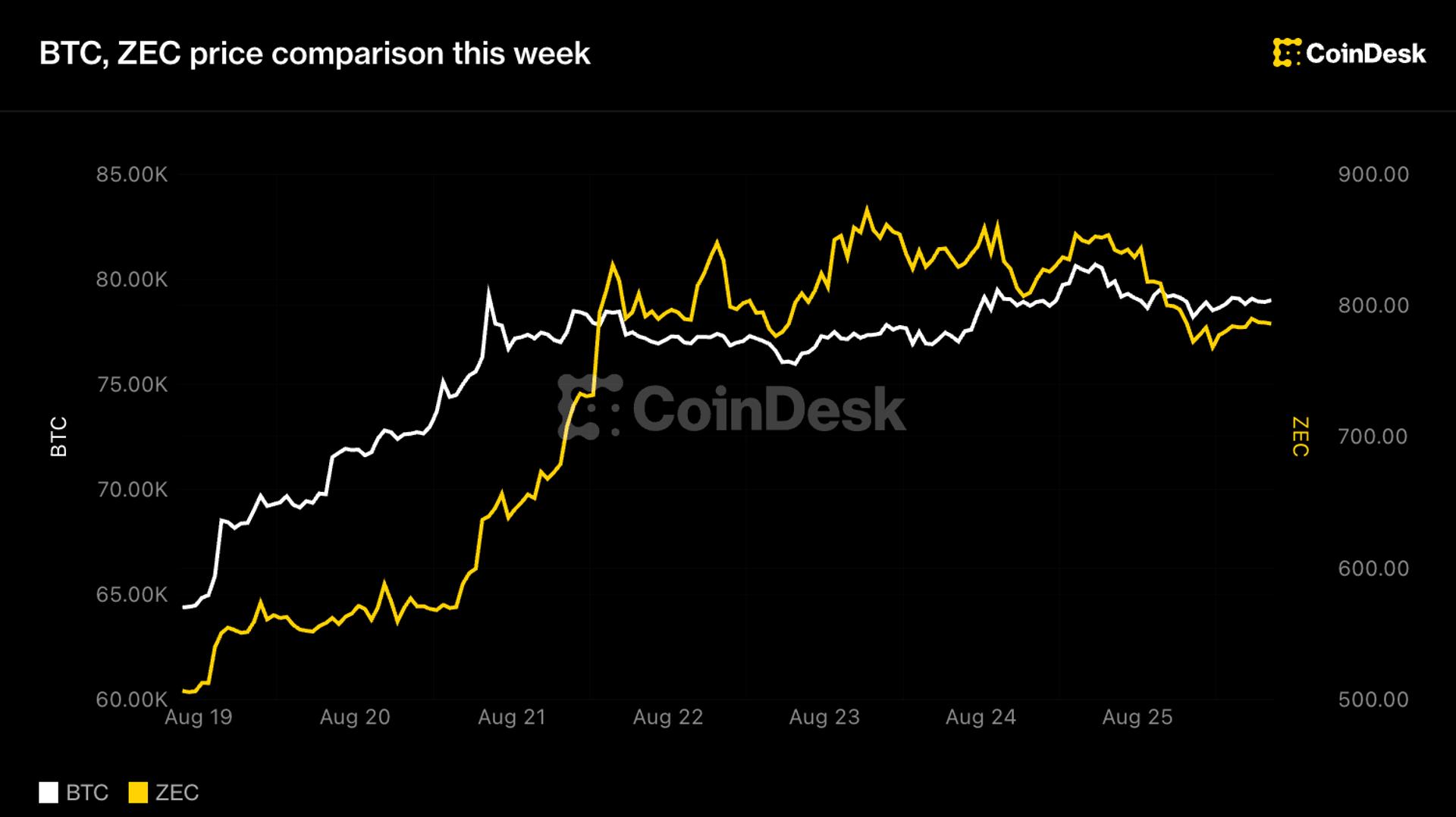
Live updates: Zcash pulls back 8% as its Grayscale ETF goes live, capping a 60% rally

Published

on

Live updates: Zcash pulls back 8% as its Grayscale ETF goes live, capping a 60% rally


The privacy coin’s spot ETF began NYSE trading Tuesday, which was one of the catalysts behind its surge to an eight-year high. Now traders are selling the news, with leverage stacked into the move.

Source link

Continue Reading

Crypto World

Bitcoin Breakout Could Hit $83,000 After 22% Rally, But 3 Risks Remain

Published

on

Bitcoin Divergence And Fading Volume

Bitcoin (BTC) price is up 22% in a week and nearing another breakout, and this one looks more dangerous than the last.

That last breakout came on August 19 and ran on trapped bears. The setup now is the reverse, with crowded longs and supply stacked overhead.

Momentum Runs Ahead of Price as Bitcoin Stays Down in 2026

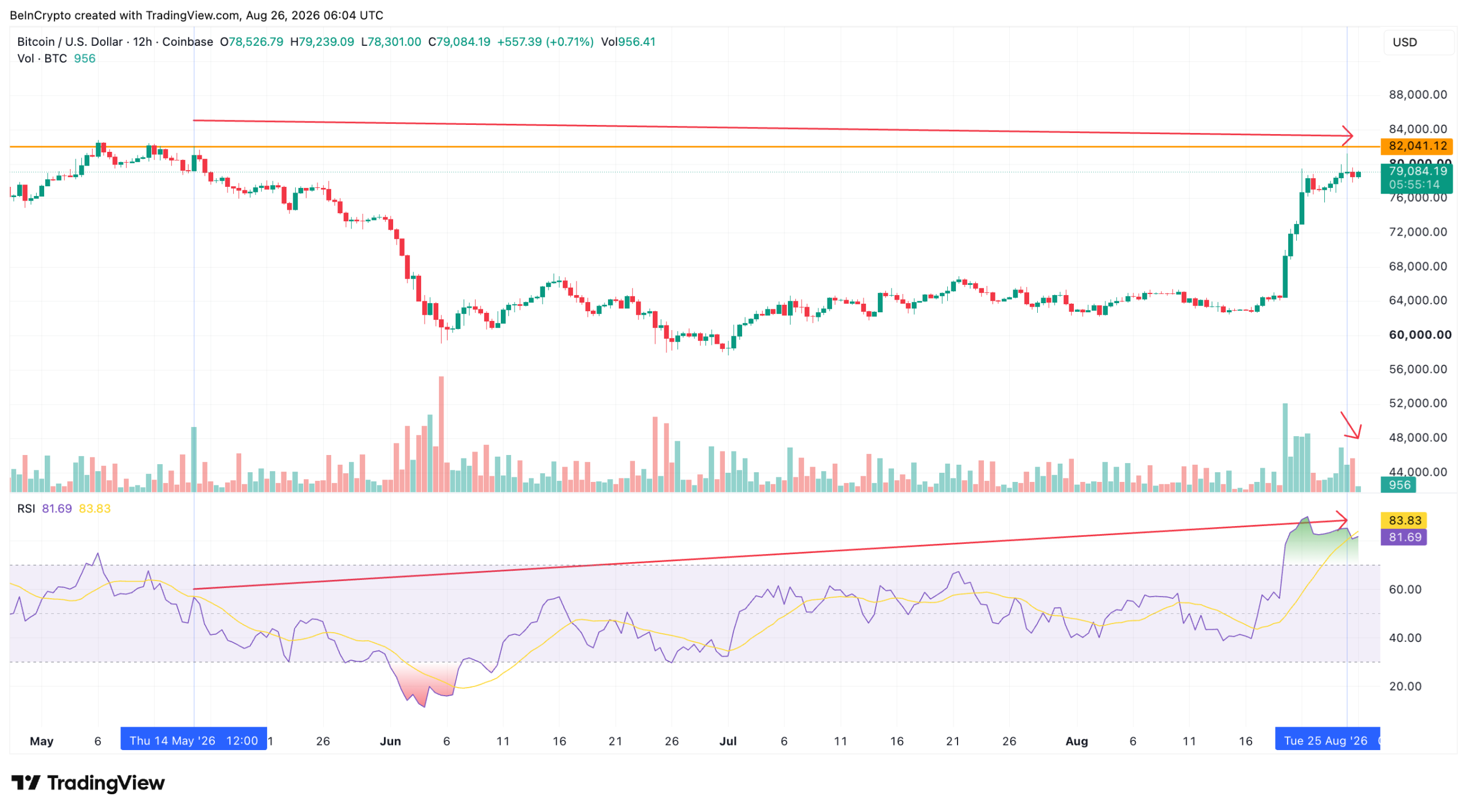
Between May 14 and August 25, Bitcoin price carved a lower high on the 12-hour chart. The Relative Strength Index (RSI), a momentum gauge that tracks how fast price rises or falls, made a higher high.

That mismatch is a hidden bearish divergence. It does not call a top. It warns the older downtrend may resume.

Advertisement
Bitcoin Divergence And Fading Volume
Bitcoin Divergence And Fading Volume: TradingView

Volume backs it. Buying has thinned since Bitcoin cleared $70,000 on August 19, and RSI at 81.70 has slipped below its signal line at 83.83, while being in the overbought zone. All these signs point to a possible pullback and the resumption of the downtrend.

The downtrend in question is this year. Bitcoin opened 2026 near $87,650 and trades 9.8% lower today.

Bitcoin Is Still Down In 2026
Bitcoin Is Still Down In 2026: BeInCrypto

Momentum shows the crowd’s energy, not who is paying for it.

The Money Behind the Last Breakout Has Switched Sides

The August 19 breakout ran on bears getting squeezed. Shorts lost $2.74 billion in a day against $256.66 million in longs.

That fuel is spent. Over 24 hours Bitcoin liquidations flipped, longs losing $310.03 million against $60.77 million in shorts. BTC alone lost $133.73 million, over a third of the market total.

Crypto Liquidation Heatmap
Crypto Liquidation Heatmap: Coinglass

The crowd has not stepped back despite this flush. Bitcoin open interest, the total value of active futures bets, sits near $25.35 billion against the month’s $25.7 billion high.

The BTC funding rate, a fee paid between traders in perpetual futures, reads 0.000091%. Positive readings mean bulls are still paying to hold.

Advertisement
Bitcoin Funding Rate And Open Interest
Bitcoin Funding Rate And Open Interest: Santiment

A rally with no shorts to squeeze needs real buyers, and the coins held above decide if it finds them.

A Supply Wall Sits Where the Rally Would Stall

Glassnode’s UTXO Realized Price Distribution (URPD), a metric mapping the price at which each circulating coin last moved, shows where those owners bought.

The way up is clear at first. The $82,045 bucket holds 83,800 BTC, or 0.42% of supply, so few sellers wait there.

Thin Supply
Bitcoin URPD Thin Supply: Glassnode

Then the wall arrives. The $84,569 bucket holds roughly 549,200 BTC with the $83,300 band standing first. Both these buckets cover nearly 5% of supply.

URPD Supply Wall: Glassnode
Bitcoin URPD Supply Wall: Glassnode

Those owners sit near break even, so many may sell into strength. However, seven days of Bitcoin ETF inflows would have to absorb them. Regardless of the buying and selling, the BTC chart marks where that trap would spring.

How High Can Bitcoin Price Go?

Bitcoin price trades near $79,054 after peaking at $81,343 on August 25. The run and tight pause form a bullish pole and flag, a pattern where a rally rests before another push.

A 12 hour close above the 0.382 Fibonacci level at $80,070 breaks the flag. Clearing $81,343 and the 0.618 level at $81,449 confirms a fresh high.

Advertisement
Bitcoin Price Analysis
Bitcoin Price Analysis: TradingView

Above that, $82,430 opens the way to $83,681 (the $83,000 zone), the extension landing inside the 5% supply wall highlighted earlier. Buyers chasing that far meet sellers with no shorts left beneath them.

Underneath, the 100 period Exponential Moving Average (EMA), a trend line weighted to recent prices, at $67,367 is closing on the 200 period EMA at $67,666. That crossover favors buyers.

The flag has not broken yet, so BTC support levels matter while it holds. A drop under $77,837 weakens the structure, and $75,545 damages it badly. A 12 hour close above $80,070 separates a run at $83,681 from a slide back toward $75,545.

Analyst’s View: The bearish case has an expiry date. Push above May’s high near $82,041 and the lower high disappears, and the divergence goes with it. That leaves a narrow band where the bears are already wrong and the buyers have not yet met the sellers above, the most awkward place this Bitcoin price rally could end.

The post Bitcoin Breakout Could Hit $83,000 After 22% Rally, But 3 Risks Remain appeared first on BeInCrypto.

Advertisement

Source link

Continue Reading

Crypto World

Revolut Launches EURR Euro Stablecoin in Europe

Published

on

Revolut Launches EURR Euro Stablecoin in Europe

[Update Aug. 26, 2026, 8:57 UTC: Added comments from a Revolut spokesperson.]
Revolut has begun rolling out its first stablecoin, a euro-pegged token called EURR, to selected customers in Denmark, Poland and Portugal. 

In an announcement shared with Cointelegraph on Wednesday, the company said that the phased rollout will expand to other European Economic Area (EEA) markets later this year, subject to product, operational and regulatory readiness. 

EURR is issued by Bridge Building S.A., the Luxembourg-based entity of Stripe-owned stablecoin infrastructure company Bridge. Revolut said EURR will be integrated into its retail app, with plans to support multiple blockchain networks and transfers to external wallets. 

The launch adds a Markets in Crypto-Assets (MiCA)-compliant stablecoin to Revolut as it withdraws Tether’s USDt from the EEA and Switzerland. Revolut previously said remaining USDT balances would be converted into customers’ base currencies after Aug. 31.

Advertisement

“Denmark, Poland, and Portugal were selected for their market size, where approximately 2 million customers will be involved in the initial rollout,” a Revolut spokesperson told Cointelegraph.

EURR will initially launch on Ethereum as part of the phased rollout. “External wallet transfers will be available immediately for select customers and more broadly as liquidity builds,” the spokesperson said. Revolut’s standard crypto trading and remittance limits will apply, while fiat transactions will carry no fees or spreads.

EURR is designed to maintain a value of one euro and is backed by reserves held and managed by Bridge in accordance with the European Union’s MiCA rules. Revolut Digital Assets Europe is offering the token. 

Revolut said EURR is the first step in a broader stablecoin strategy and that it is developing tokens denominated in other currencies through separate regulatory pathways. The company did not identify which currencies it is pursuing. 

Advertisement

Related: Revolut receives in-principle approval from UAE authorities for crypto services

Cointelegraph is committed to independent, transparent journalism. This news article is produced in accordance with Cointelegraph’s Editorial Policy and aims to provide accurate and timely information. Readers are encouraged to verify information independently.

Source link

Continue Reading

Crypto World

Japan targets early 2030s launch for blockchain-based stock and bond settlement system

Published

on

Japan targets early 2030s launch for blockchain-based stock and bond settlement system


Japan’s regulators are racing to modernize national settlement systems to prevent institutional investors and foreign capital from fleeing to overseas markets.

Source link

Continue Reading

Trending

Copyright © 2025