Apple has begun rolling out ads in Apple Maps, with sponsored businesses appearing at the top of search results and in the “suggested places” section for users in the U.S. and Canada. Apple says the ads can be based on approximate location, search terms, or the area of the map being viewed, but are not tied to users’ Apple Accounts and personal data remains on-device. 9to5Mac reports: Ads appear just like every other business listing, except they have a small blue badge that says ‘Ad.’ You can see examples of ads [embedded in the article]. Like Apple’s ads policy with other services, the company touts user privacy protections for ads in Maps. Per Apple Newsroom: “Ads on Maps builds on Apple’s broader privacy-first approach to advertising, and maintains the same privacy protections Maps users enjoy today. A user’s location and the ads they see and interact with in Maps are not associated with a user’s Apple Account. Personal data stays on a user’s device, is not collected or stored by Apple, and is not shared with third parties.”
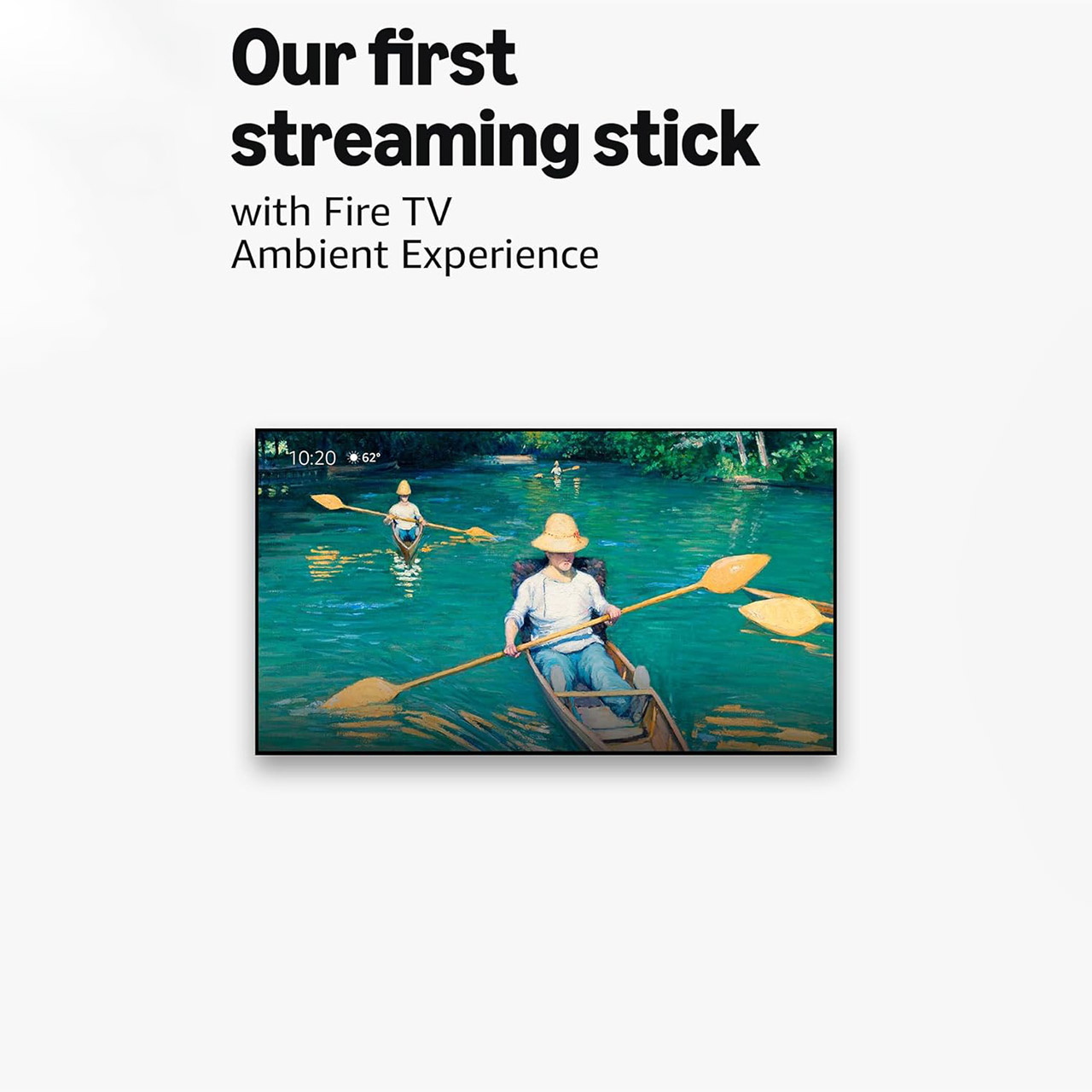
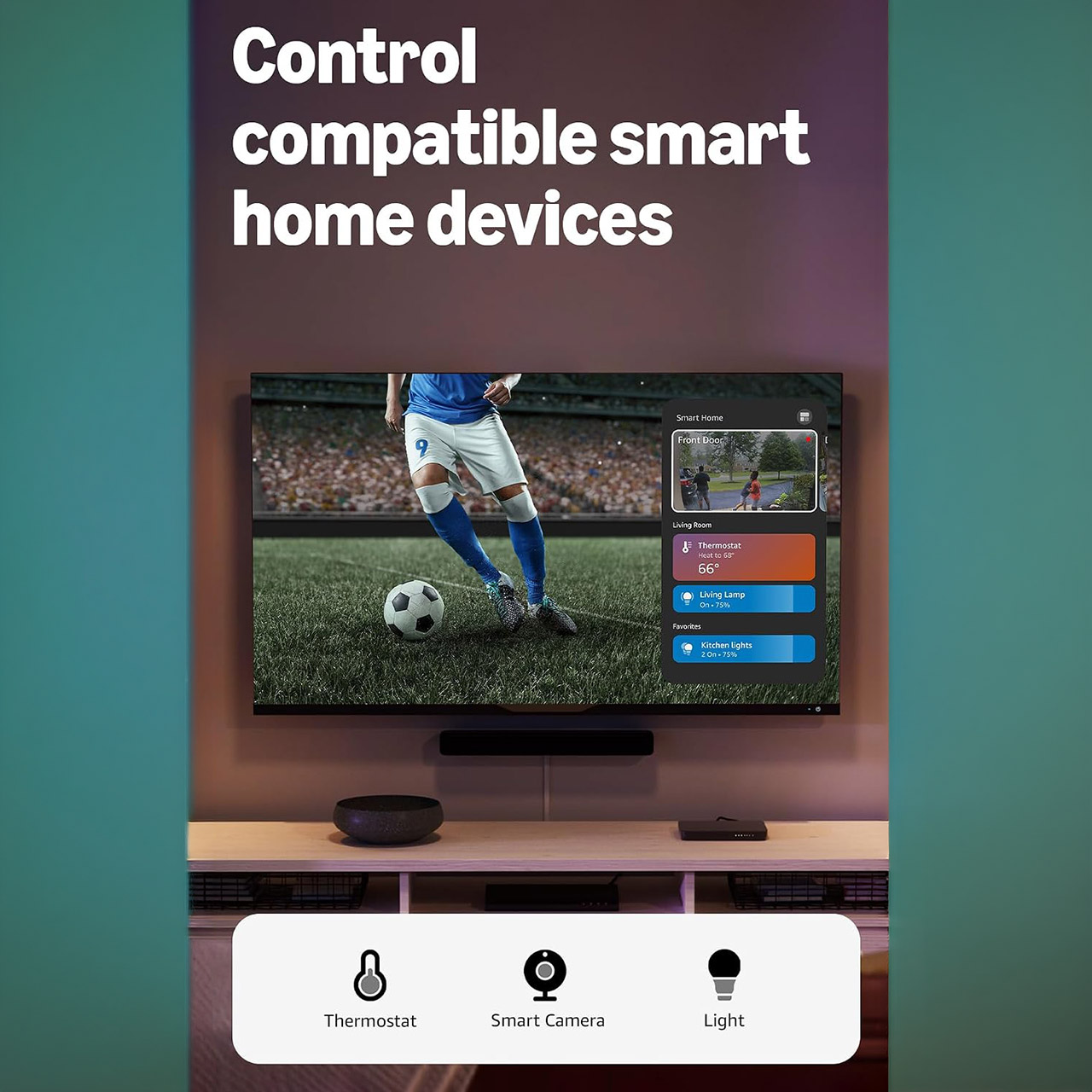
Amazon still markets this little black dongle as a way to watch movies. That pitch misses half the point. Second-generation Fire TV Stick 4K Max is a $49.99 (was $85) HDMI stick that also runs Xbox Game Pass, Amazon Luna, and GeForce NOW, so a living room TV becomes a cloud console after you pair a Bluetooth controller.
Plug the HDMI end into your television, and if the port is slightly recessed, use the provided extension to ensure it is firmly positioned. In addition, you’ll need to power it with the micro-USB charger included in the box. Setup normally takes a few minutes, providing you’re already an Amazon client and have your login information handy. On that topic, Fire OS 8 begins with a tile-heavy home screen that clearly promotes Prime Video, but you’ll also see Netflix, Disney+, YouTube, Hulu, Max, and nearly every other big streaming service available.
The newest Fire TV experience (2026) – Our biggest update to Fire TV has a new, modern design that gets you to your entertainment fast. Browse…
Elevate your entertainment experience with a powerful processor for lightning-fast app starts and fluid navigation.
Play Xbox games – Stream Call of Duty: Black Ops 7, Hogwarts Legacy, Outer Worlds 2, Ninja Gaiden 4, and hundreds of games on your Fire TV Stick 4K…
Menus open and apps load quickly thanks to the four ‘Cortex-A55’ cores clocked at 2.0 GHz, backed up by an 850 MHz GPU that keeps everything feeling quite fast. You can easily switch between services, and it feels more like a mid-range streaming box than the low-cost Fire TV sticks available. Oh, and 16 GB of storage is a pleasant addition, twice as much as the ordinary 4K model, which is useful if you end up storing games and extra programs rather than just video clients.
Advertisement
Video playback tops out at 4K at 60 frames per second, and with all of the fancy features available, such as Dolby Vision, HDR10, HDR10+, and HLG, it will all play smoothly on your LG or Samsung TV. Audio gets a boost with Dolby Atmos support if the show you’re watching and your soundbar can both do it. Wi-Fi 6E is one of those sensible upgrades that really makes a difference, especially if your router supports the 6 GHz band, which is quieter and less congested than the other alternatives. Get 5-6 Wi-Fi-enabled devices in the same house (e.g., phones, game consoles, and a 4K stream) and you might notice the difference.
The included Alexa Voice Remote Enhanced includes additional functions such as power, volume, mute, and even a channel rocker, allowing you to connect a compatible TV or soundbar without the need for another remote. Long-press the Alexa button and you may simply talk to it, asking it for something, and it will begin refining your search results without requiring you to start again. Recent software updates have also made Alexa+ search available on Fire TV in the United States at no additional cost, which is a nice bonus because you can just ask for “thriller with a female lead from last year” and continuing narrowing the search without having to start from scratch.
Gaming is one aspect that many people overlook when browsing a listing, only to realize after dinner. The official Xbox app on this small device transmits Game Pass titles directly to your television. Amazon’s own product page presently lists Call of Duty: Black Ops 7, Hogwarts Legacy, Outer Worlds 2, Ninja Gaiden 4, and Fortnite, which is free through that app. Remember that you’ll need an Xbox Game Pass subscription and a controller to use any of this. They also got an official Xbox Wireless Controller that is easy to set up using Bluetooth 5.2. You can also use a DualSense controller or any other third-party controller you like, but if you want the whole experience, you’re best off with a true Xbox controller. HDMI 2.1 TVs can also assist with lag; utilizing Auto Low Latency Mode makes it much smoother on those.
Cloud gaming still relies on an internet connection, and Microsoft advises that you have at least 20 megabits per second on your 5GHz Wi-Fi. If you can manage 35-50 megabits and your internet connection isn’t too congested, 1080p or 1440p streaming look much better. Luna is also an option if you’re a top member who wants a rotating selection of games without having to add another subscription to your monthly expenditures. Party games can even use your phone as an additional controller, and if you already have a Steam or Epic library and want to play them on the same TV, GeForce NOW is also an option.
iPod nostalgia is at an all-time high, so meet two new cheap, adorable tiny hi-res music players that invoke the best of the music-player era (bring your own white wired earbuds)
In recent weeks, both Shanling and Fiio have released products that look like iPods going through their goth stage, but they’re not just cash-ins. These are devices that could end up on our best hi-res audio players list, with features and tools Apple never gave us.
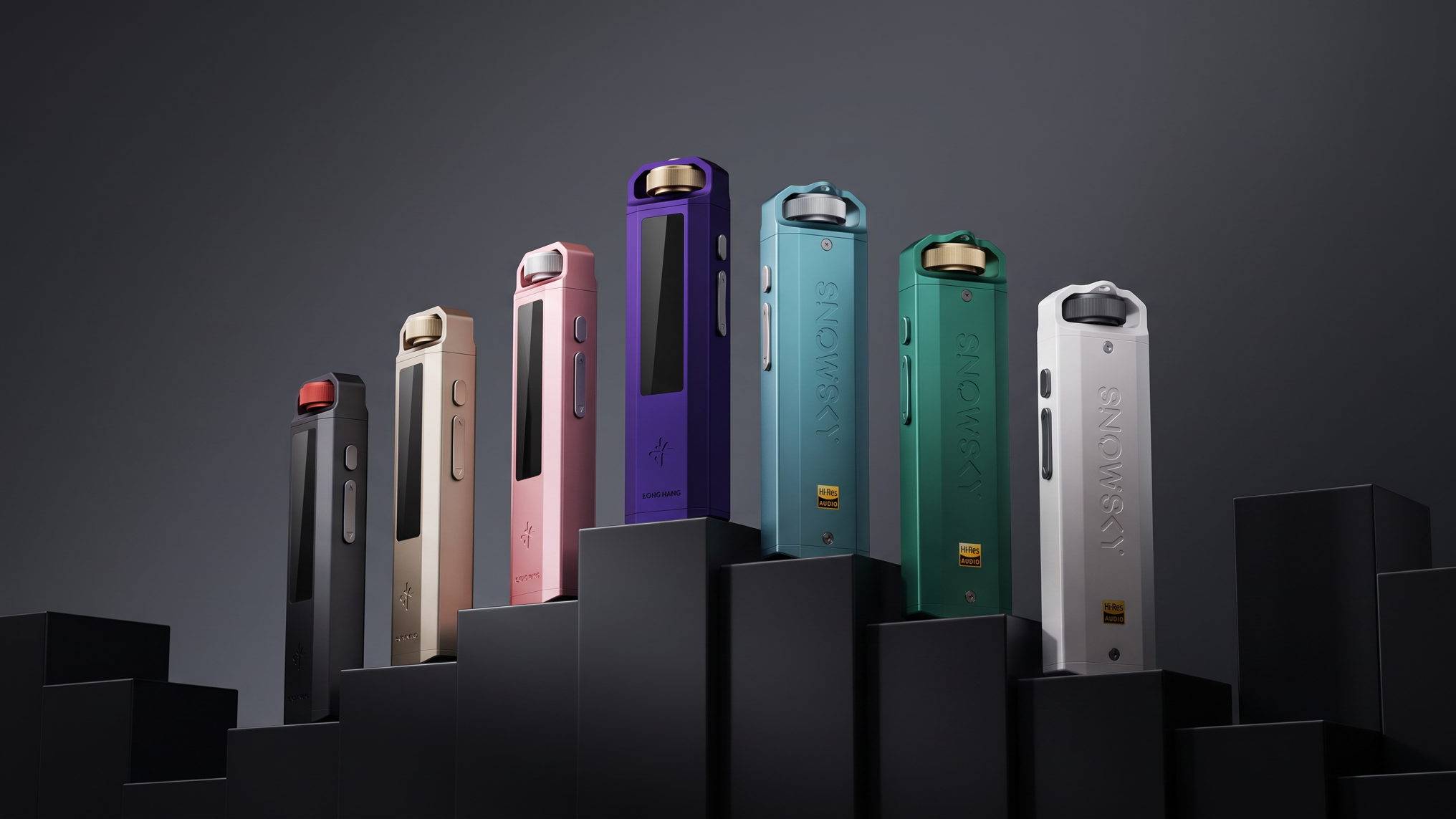
The Fiio Echo Nano was unveiled early in August 2026. It costs $49.99 / £54.99 (about AU$110), a fair amount cheaper than the launch price of its Apple doppelganger: the stick-thin first-gen iPod Shuffle (which is admittedly now available through resale sites for a fraction of the price).
This mechanical-looking MP3 player has a physical scroll wheel for navigation, and an 0.91-inch display to see what you’re selecting. And in true Fiio style, the real magic is on the inside — aside from a great DAC, there’s space for a 256GB microSD card. The battery life reaches seven hours, and you can even use the device as a USB DAC, if you plug it into your PC or smartphone.
The Echo Nano weighs 33.5g, and as you can see from the picture, there are loads of color options available.
Sign up for breaking news, reviews, opinion, top tech deals, and more.
(Image credit: Shanling)
If you’ve got more money burning a hole in your pocket, there’s the Shanling Q2, which bears more than a passing resemblance to the third-gen iPod nano (albeit thicker, so there’s a bit of iPod mini in there, too). It was unveiled in late August, for the sum of $269 (about £200, AU$400).
Advertisement
This adorable model supports in-demand file formats such as FLAC, WAV, ALAC and DSF, and has four built-in DAC chips for clarity and detail, handling music up to 768kHz/32-bit and DSD512. The device also supports Bluetooth output, via LDAC or aptX HD.
Unlike in iPods, there are two headphone jacks: a 4.4mm balanced one and a 3.5mm one. There’s capacity for up to 2TB of music via microSD card, but you’ll need to buy one separately, and there’s no storage space in the device itself.
According to Shanling, the device lasts for 13.5 hours of listening, and weighs 82g. There’s even a smartphone app which lets you control your music player from your mobile, although that’s perhaps getting away from the spirit of having a dedicated player…
Advertisement
I know what you’re asking: yes, the scroll wheel is a physical one that you can swipe around and around in circles, but the display is also a touchscreen if you’d rather just press on the options you’d like.
That’s a lot of specs and features, but which is best? Well, the giant price difference probably gives away which has the thicker feature list. But if you want a personal recommendation, form factor is paramount for me: if you want a gadget that’s lightweight and svelte, perhaps for low-tech days or for workouts, smaller is better than feature-rich, I think.
Anthropic has signed a deal to rent about $45 billion in AI compute from Nscale, a British AI infrastructure company, a source familiar with the deal told TechCrunch.
The Vera Rubin system combines six different chips working in concert, and is considered the cutting edge of chip design. The compute capacity is expected to start powering the AI lab’s services in late 2027, the source said.
The deal, first reported by Bloomberg, is only the latest in a spree of compute partnerships for Anthropic. Bloomberg writes that the deal spans six years, with the computing power coming from Nscale’s flagship data center in West Virginia.
Advertisement
Over the past eight months, Anthropic has aggressively scaled up its compute capacity in an effort to better compete with rivals, most notably OpenAI.
Earlier this month, Anthropic signed a $10 billion deal with AI cloud startup Volta — founded only this past January — securing a six-year supply of cloud computing power from a data center in Norway. In July, the company also signed a $5 billion compute-related deal with AMD.
A few months before that, in May, Anthropic revealed it had entered into a large computing deal with SpaceX (run by Elon Musk, whose rivalry with OpenAI CEO Sam Altman has made him an unlikely ally of Anthropic). That deal draws computing capacity from two different SpaceX data centers and is reportedly providing Anthropic with $1.25 billion worth of capacity each month.
In April, Anthropic also signed a deal to significantly expand its partnership with Amazon, gaining access to an additional 5 gigawatts of compute. That same month, the company also expanded its relationship with Google and Broadcom, adding even more power capacity.
Advertisement
Anthropic is hardly alone in its enthusiastic pursuit of more AI horsepower. The race to gobble up as much compute capacity as possible is ongoing, with other major players — including Google, OpenAI, and Meta — all following a similar track.
When you purchase through links in our articles, we may earn a small commission. This doesn’t affect our editorial independence.
Apple has confirmed its September special event will be held on September 9. It won’t just be the iPhone 18 Pro or folding iPhone launch, but also the first event with John Ternus as CEO. Here’s what to expect.
Regular as clockwork, Apple holds an event in early September to launch new iPhone models and other products. Apple has just confirmed that this will be the case for 2026’s presentation.
Titled “Surprise and shine,” the event will be taking place on September 9, starting at 10 A.M. Pacific, 1 P.M. Eastern Time. As usual, it will be streamed on YouTube, the Apple Event page, and the Apple TV app, among other methods.
The event will be the first for the company following the long-awaited CEO transition. John Ternus will take over from Tim Cook on September 1, and will helm the presentation from the outset.
Advertisement
While there has been some speculation of the return of a live keynote, it’s doubtful that Apple will move away from its slick prerecorded video. There will be an on-site event at Apple Park for the media to try out Apple’s new launches, if not anything being streamed live.
As always, AppleInsider will be reporting in-depth about the product launches and the event in general.
What to expect for the September event
As with every Apple fall event schedule, there are many products that will launch, but not everything will appear during the prime September showcase. A second and a rare third event can also be held for select products that Apple plans to launch a little later.
iPhone 18 Pro and iPhone 18 Pro Max
The September event is chiefly when Apple launches its update to the iPhone range, and this year it is the iPhone 18 generation. However, it will only be part of the roster due to Apple’s decision to split the series into two separate launches.
Advertisement
For September’s event, Apple will introduce the premium members of the iPhone 18 family, the iPhone 18 Pro and Pro Max.
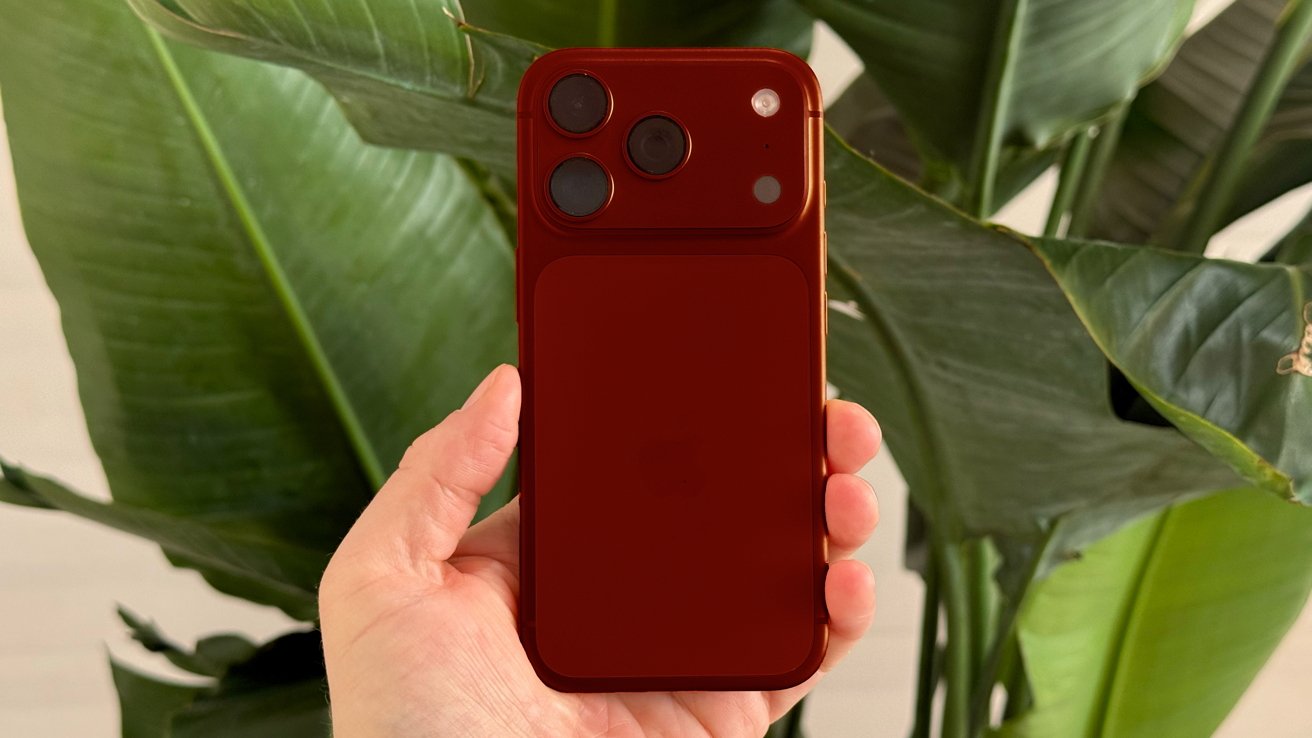
A mock-up of a dark cherry iPhone 18 Pro, one of the rumored colorways.
After the 2025 refresh, the 2026 update is probably going to be a spec-bump update. Chiefly, that will mean a transition to a new 2-nanometer A20 Pro chip, which stands to run cooler for longer thanks to some packaging changes.
You can also count Apple’s C2 modem as being included in the model, too. As far as physical changes go, the camera bump may get a little bit bigger and colors like dark cherry may appear, but don’t expect a complete overhaul.
Advertisement
When it comes to cameras, there may be a few changes, including the possibility of under-displayFace ID. On the back, the iPhone 18 Pro Max may be the only model to gain a variable-aperture camera, which can help create a real bokeh effect instead of a computer-generated version.
What definitely will change is the price. In the wake of the June price rises and the continuing memory crisis, the iPhone 18 Pro could cost $300 more than the iPhone 17 Pro counterparts.
Folding iPhone
The more important iPhone launch for the event will be the iPhone Fold, though it may also be called the iPhone Ultra. The long-awaited smartphone will be Apple’s first foray into the foldable marketplace.
It will be equipped with two screens, with an internal 7.8-inch screen that can be unfolded like a book. A second 5.3-inch display will be on the outside for more typical smartphone usage.
Advertisement
That internal display could be quite unusual for Apple. There are rumors that it could have asymmetrical corners.
A render of what the iPhone Fold could look like – Image Credit: AppleInsider
The model is expected to include premium specifications like the A20 Pro, 12GB of memory, and a large number of cameras. Rumors point to it having a pair of 48-megapixel rear cameras, as well as front-facing 18MP cameras in the front and back screens for video calls.
The lack of a telephoto camera could be a problem for early adopters used to premium specifications.
Advertisement
Rumors say the internal screen’s camera could use an under-display system, while the external display will be punch-hole style.
The iPhone Fold also stands to be the most expensive iPhone Apple sells, even ignoring the memory crisis. Pre-issue rumors forecast a price between $2,000 and $2,500, but it could end up being much higher.
Though a launch is anticipated to happen in September, you may not see it in stores until much later. The United States will probably still be the first market it launches in, with a slower rollout elsewhere.
While availability is questionable, the probability of it launching is sky high. On August 23, a report claimed that people have tried out the device ahead of its launch.
Advertisement
Apple Watch
Usually paired with the iPhone launches, you can expect an Apple Watch update too. We aren’t expecting much in 2026.
The Apple Watch Series 12 will not benefit from a major overhaul just yet, but it could gain a new health sensor via a fluoroelastomer band and a new band attachment method. Otherwise, don’t expect much more than a spec-bump update here.
The Apple Watch Ultra could see an update too, bringing it to version 4. There have been claims of a redesign and new sensors, though rumors have been light on actual detail.
The 2026 update may be a dull one for your wrist, but a revamp is still on the way.
Advertisement
Smart Home
Apple has been working to update its home devices, including the Apple TV and HomePod mini. Both are expected to see updates this fall, after being delayed by the Siri overhaul.
The HomePod mini stands to get a processing upgrade.
In both cases, the expectations are low for overhauls here, with it being more of a functionality-based refresh. Using newer chips for processing, they will be able to support Siri AI.
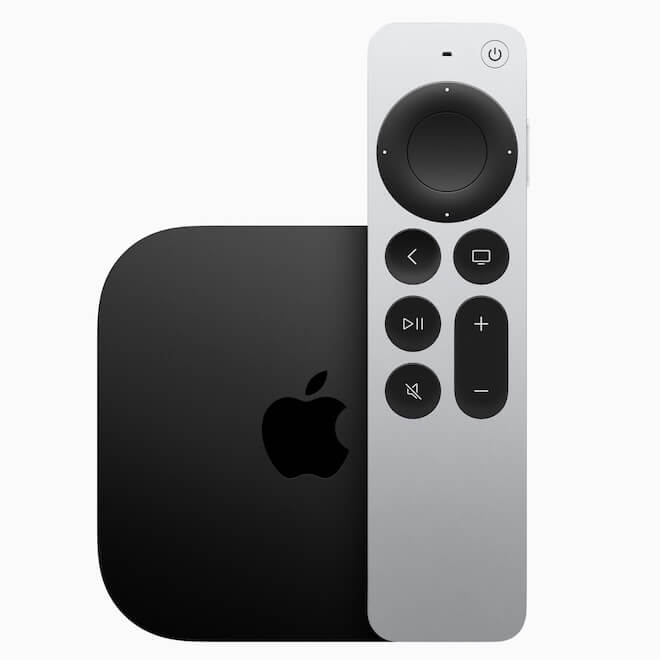
For the Apple TV 4K, you may also see an update to the Siri Remote, though we’re not entirely sure what that will be.
Advertisement
A third smart home device referred to as the Home Hub is also a possibility. An all-new device, it is expected to act as the center of your smart home network, complete with a seven-inch screen and a FaceTime camera.
That screen will manage your smart home devices, display notifications, calendar listings, and other pertinent information, as well as handle communications.
It will take two forms, rumors say, with the first being a half-moon dome with the screen attached to it. A second will attach to mounts using magnets.
While there’s no guarantee that all three will make it in September’s event, Apple Stores are apparently preparing for some kind of smart home shake-up and brand new devices.
Advertisement
iPad mini 8
While expectations for iPad appearances are low, there is one exception in the form of the iPad mini. The eighth-generation device is anticipated to also have a big glow-up for 2026, thanks to a new display.
The current-gen iPad mini, without OLED.
Rumors and a code leak have indicated that an OLED version is on the way. This should be an 8.4-inch LTPS panel with hybrid OLED, though without ProMotion.
It will also get the usual chip update too, potentially gaining the A20 chip.
Advertisement
AirPods Pro
An accessory often bought alongside the iPhone, AirPods Pro is believed by some to get another update in the latter stages of 2026. While a fairly pedestrian update is a safe bet, there may be something more on the cards.
We have regularly seen rumors about AirPods Pro with cameras to capture the user’s environment. Based on a demo video that leaked in a macOS Tahoe beta, they may arrive very soon.
The idea of the cameras is to feed data into Visual Intelligence. A user could then ask questions about what they’re looking at or nearby subjects, which Siri can then interpret and respond to.
This may not even need to be a verbal query. Apparently, gesture recognition is a possibility here.
Advertisement
Those cameras will be able to detect people and take stereoscopic imagery, albeit at a low 1-megapixel resolution. But it will still be able to take photos of others on command, complete with an obligatory status light.
Previous rumors said that the camera-equipped version could be out in 2027. The beta leak video hints that it could be here a lot sooner than anyone thought, but the better bet is still for next year.
Database from legal advocacy group details growing unease with warrantless panopticon
A mischief-maker in a Darth Vader suit recently endorsed Flock at a city council meeting, and it has not helped the company’s fortunes. Around the US, citizens have been protesting and sometimes vandalizing the company’s network of surveillance cameras. And the advocacy has caused some governments to change course.
Advertisement
Government officials, commonly hesitant to second-guess law enforcement practices, have become concerned enough to question these mass surveillance practices. US Senator Josh Hawley (R-MO) on Wednesday wrote to Flock CEO Garrett Langley to announce an investigation of “Flock Safety’s collection, retention, and dissemination of data gathered by its artificial intelligence cameras.”
Despite “Darth Vader’s” comments last week at a San Diego City Council meeting about the need to “continue utilizing Flock technologies so that we can follow and surveil the rebel scum,” a growing number of local governments in the US have been cancelling or choosing not to renew their contracts with Flock and other makers of automated license plate readers (ALPRs).
The Institute for Justice (IJ), a Virginia-based legal advocacy non-profit, on Wednesday published a new database that tracks the termination of local government ALPR contracts. As of Wednesday, the database documents 93 local governments that canceled ALPR contracts.
The IJ, which is challenging ALPR use on Fourth Amendment grounds in Norfolk, Virginia and San Jose, California, previously published a database that documents police abuse of ALPRs, a topic addressed in Hawley’s letter. Incidents include romantic stalking, wrongful traffic stops and detentions, and other forms of misconduct.
Advertisement
“I think what’s happened is that the American public has woken up to the mass surveillance that quietly arose around them,” said Robert Frommer, senior attorney at IJ, in an interview with The Register. “And they don’t like it.
“It does seem to me that the rate of cancellations, the rate of public protest has increased over the past few months. I think that’s both due to more news attention being paid to the real life abuses of this technology, as well as the Supreme Court’s recent decision in the geofence case,” Frommer said. In that case, SCOTUS ruled that cops need a warrant to grab location data.
Frommer said that he believes the IJ’s efforts to document ALPRs and associated abuses have helped focus the public’s concern and have illustrated the problems with warrantless mass surveillance.
ALPRs, from vendors like Flock, Motorola Solutions, and PlateSmart, among others, capture license plates whenever cars drive by, along with geodata and potentially images of people. This data can be combined with other information, effectively putting all passersby under constant surveillance without any warrant.
Advertisement
“I think what we’re seeing now is the reaction to that,” said Frommer, who explained that the problem with Flock cameras is that they’re accessible to anyone with login credentials, without any authorization from a supervising authority.
“You don’t need to go to a judge and get a warrant,” Frommer explained. “You don’t need anything. And when you basically give that search power to the bored officer in his cop car in the middle of a shift, it inevitably happens that they start using it and start misusing it, whether to look people up personally or whether to investigate people at political protests.”
These sorts of issues, Frommer said, have made people question whether we should live in a panopticon.
The IJ’s litigation and its Plate Privacy Project, said Frommer, follow from the belief that there are solutions, whether they come from the courts or lawmakers. Pointing to Hawley’s letter, he said that this is not just a state or local issue, but has become a federal concern.
Advertisement
“I think what the din that you’ve heard over the past couple of months shows that there absolutely needs to be a change, a reckoning,” he said. “And that’s what we’re pushing for in our litigation. We’re pushing for a warrant requirement. You want to go look up somebody’s past travels and see where they have been? Go to a judge, explain it, and get a warrant.”
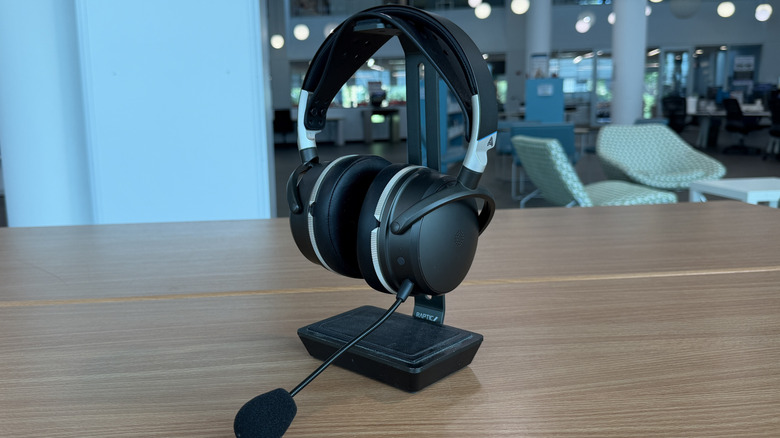
What if your gaming headset didn’t have to compromise on basically anything? That’s seemingly the premise for Audeze’s Maxwell 2 ANC, which delivers really excellent sound and connectivity, but has something of a compromise that we’ll discuss. We’ve already looked at the previous generation of Maxwell headset and come away very impressed. Audeze released a new version of these headphones earlier this year, and recently added ANC to the mix.
So now that we’ve gotten everything a game could ask for, we decided to take these headphones for a spin. They do not disappoint. These are some of the most feature-complete gaming headphones I’ve had the opportunity to test. They’re big; that’s for sure, but they earn that size with a set of features that gamers will absolutely love. I’ve been testing these headphones for two weeks, and this is my full review.
Advertisement
Everything is big
Adam Doud/SlashGear
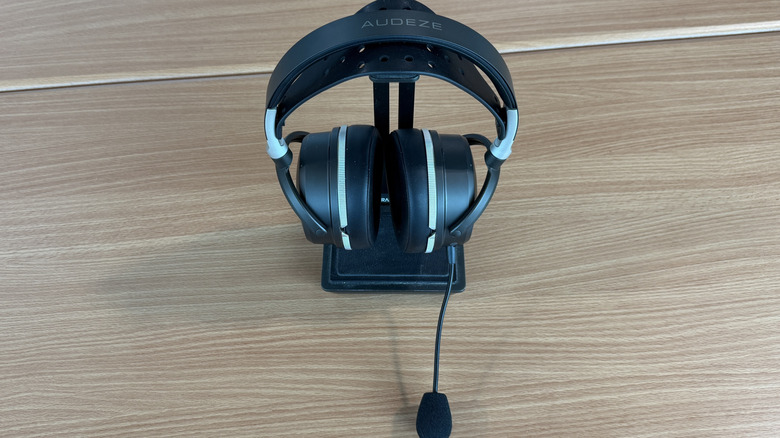
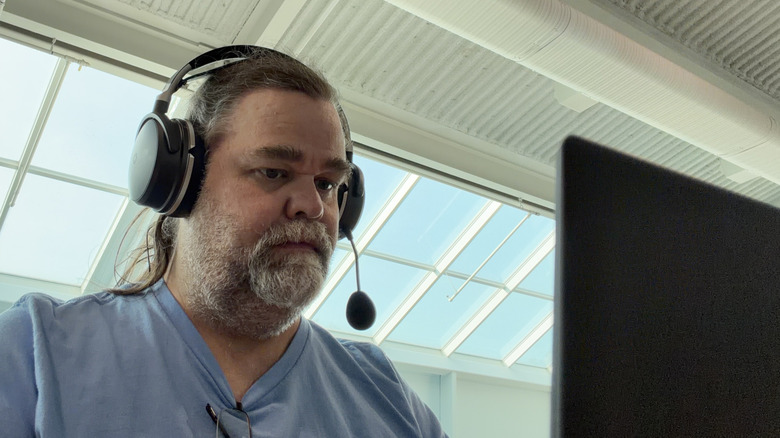
Everything about this pair of headphones is big. The earcups are huge, the buttons are large, the headstrap is very wide. The headphones themselves are on the heavy side at 560 grams (1.23 lbs). I’m a bigger guy so I didn’t mind wearing them for longer sessions. The fact that I have no neck probably helps considerably.
The headphones are made of metal with some leather/faux leather trappings. The head strap adds comfort and the earcups are deep and very well cushioned. Even without considering the active noise cancellation (ANC) the passive isolation provided by the headphones is quite good.
As mentioned, the padded earcups and the head strap that supports that keeps the metal headband from resting on your dome. In addition to the leather head strap, there’s additional padding as well. Comfort is not an issue here. The microphone is removable, so you can have it or not, depending on what you need.
Advertisement
Confusing Controls
Adam Doud/SlashGear
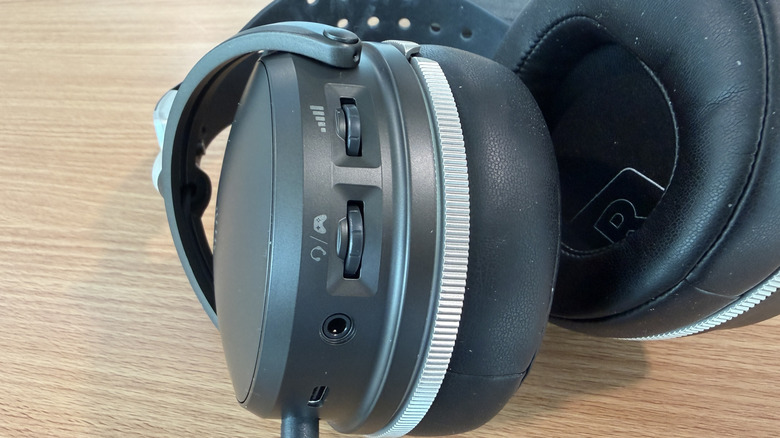
The controls on the headset are a little confusing. On the right earcup, there is a power button and a microphone mute switch. That’s good, but the microphone (via the boom mic port) is on the left earcup, so it’s hard (for me) to remember that it’s over there in the first place.
The other earcup has two scroll wheel controls. The first wheel (near the four-rectangle volume icon) controls volume, but also controls the audio track you’re listening to as well as your EQ presets. Scrolling controls volume, one press + scrolling moves to your next or previous audio track, and a double-press + scrolling cycles through EQ present options.
Advertisement
The second scroll wheel controls your “Game/Chat” balance: that’s the amount of noise from the game you hear as opposed to the voices from the chat room to which you are also connected. With a press + scroll, the second wheel also controls your “sidetone” volume. A double-press on this second wheel toggles “sidetone” control on/off.
Next is an aux input port, USB-C port, boom mic port, and finally ANC button on the front of the earcup, above the microphone. That is not how I would lay out those buttons and switches, if I were the designer. Below you’ll see an image from Maxwell’s function guide/user guide for the headphones.
Speaking of the microphone, as mentioned, it’s removable. It plugs into the headset with a 3.5mm jack and remains there very securely, though the goose neck isn’t as still as I’d like it to be.
Advertisement
Sound quality is great
Adam Doud/SlashGear
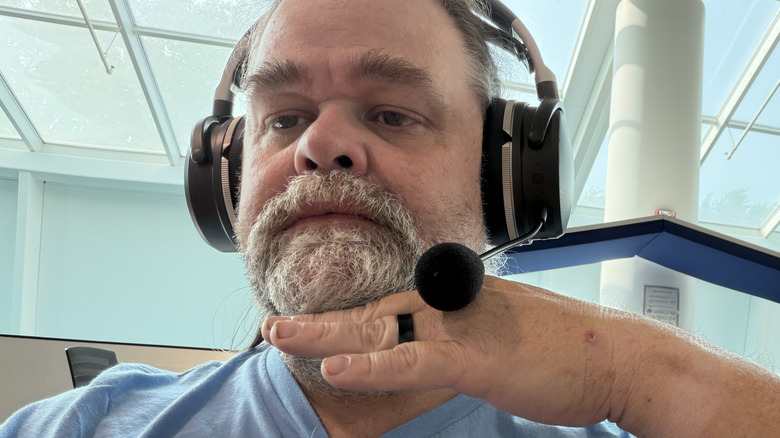
The microphone sounds pretty good compared to most gaming headsets. Gaming microphones are usually tuned to heavily favor midrange tones to help a gamer’s voice separate from the sounds of the game itself. This follows suit, but much more subtly than most. I wouldn’t plan to record a podcast with this microphone, but I wouldn’t hate it either. I found you can get the best sound by keeping the microphone in line with your jawline, and about a fingers width from your chin. That gives you the best sound without a lot of popping or wind noise from your breath.
As for the audio quality, it’s excellent. I regularly test headphones from the likes of Sony and Bose, and I would say that this headset is in the same ballpark for sure. Put a gun to my head, and I’d probably still go with one of those other two, but, like with podcasting, I wouldn’t hate having to use these either. You get a very good range of tones, with little distortion. The sound is evenly balanced as well with no frequency overpowering any of the others. The sound is excellent.
Advertisement
Silence is golden
Adam Doud/SlashGear
Of course, the new addition to these headphones is the ANC that comes with them. The passive isolation provided by the headphones is already great, but ANC adds another 35db of noise suppression which is enough to get rid of most of the droning noise around you. It will not eliminate sudden bursts of noise, like a person coughing or a door closing, but as for droning noises like those from a washing machine or a central air system nearby, those are reduced to a whisper. I’ve heard better ANC — or not heard it as the case may be — but this is very good indeed.
On the other side, transparency mode is excellent. There’s no side tone — unless you want it. You can have whole conversations without having to take the headphones off which is hard to do, and goes to the tuning of the ANC microphones. The whole ANC experience is quite good.
Advertisement
There’s an app for that
Adam Doud/SlashGear
Audeze offers software that is compatible with your PC or mobile device. There is versions for Android, iOS, Windows, and Mac, which is great to see. It’d be easy to overlook either desktop or mobile, but Audeze didn’t do that. The apps largely mimics on-headset capability, in turning side tone on and off, setting levels of side tone and game/chat ratio. It also lets you build your own EQ profiles which is a nice bonus that you don’t often see in gaming headsets.
You can also change settings like the volume of the voice prompt and the auto shutdown timer. It’s a fairly basic app, but it covers everything that needs to be covered. The fact that it’s available for all platforms is an excellent bonus. It’s also a lot easier to adjust things like side tone and game/chat balance in the app than it is using the roller switch on the headphones, so overall this is a win.
Advertisement
Audeze Maxwell 2 ANC price, availability, and verdict
Adam Doud/SlashGear
The Audeze Maxwell 2 ANC headphones are available at the company’s website, Best Buy, and a few other retailers. They are priced at $429. That’s a considerable amount of cash for a pair of headphones — it’s up there with the aforementioned Sony and Bose headsets. The fact that these headphones bridge the gap between high-end headphones and a gaming headset it definitely a bonus, and if I were a gamer, I might be tempted to pick up a pair for I only needed one set of headphones for all of my listening needs.
But that’s a pretty high price to pay. My favorite set of headphones to this day remains the Nothing Headphone (a) because you can’t beat them for the price, which is less than half of the price of these headphones. But I wouldn’t call those gaming headphones by any stretch.
The low-latency dongle that these headphones come with alone make these headphones better for “Fortnite” and the like. But if you’re not a gamer, latency probably isn’t a chief concern. There is something to be said for one headphone for all situations, and to be frank, gaming headphones aren’t cheap. If you want a set of headphones with excellent sound, great ANC, and a lot of comfort, these check all those boxes, but they come at a price that’s hard to ignore.
Apple may have a new pair of entry-level AirPods coming much sooner than expected, although “pair” is technically selling Cupertino short.
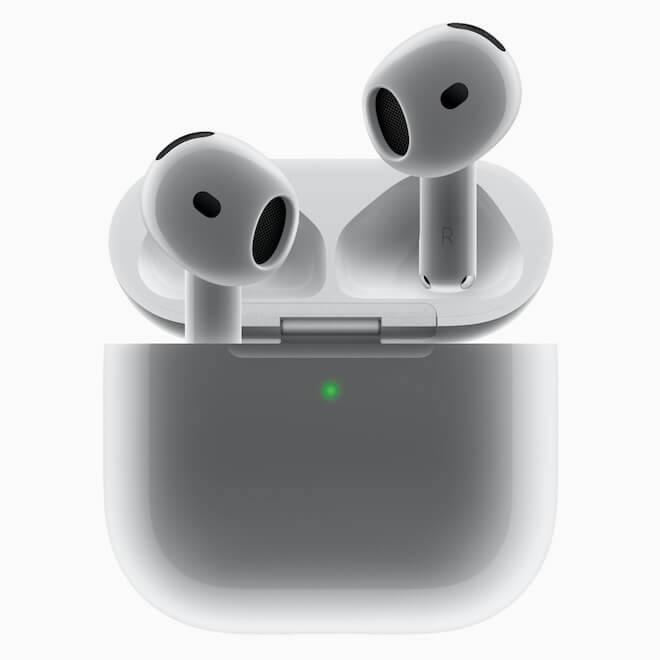
According to Bloomberg’s Mark Gurman, Apple is preparing two AirPods 5 models that could debut as early as its expected September 2026 iPhone event. As with AirPods 4, one version is expected to include Active Noise Cancellation, while a less expensive model would go without it. References to both unreleased models have already been discovered inside the macOS Tahoe 26.7 Release Candidate, giving the report considerably more credibility than the usual blurry photograph of something allegedly spotted near Shenzhen.
Apple has not announced AirPods 5, however, and there are currently no confirmed specifications, prices, battery-life figures, drivers, Bluetooth version, or audio-performance claims. Reports suggesting a new H3 chip remain speculation rather than confirmed product information, so we’re not putting that in the specifications column just yet.
The timing becomes much more interesting when you look at everything else Apple has been doing.
First, we need to separate two products that are already getting mashed together online.
The expected AirPods 5 are successors to the AirPods 4, which Apple introduced in September 2024 at $129 without ANC and $179 with it. Bloomberg reports that the fifth-generation models will maintain that two-tier approach, although Apple has not confirmed whether pricing will remain the same.
Those are different from the camera-equipped AirPods that eCoustics has covered extensively this year. Apple inadvertently included references and even a demonstration video for camera-equipped AirPods in macOS 26.7, showing Visual Intelligence using sensors in the earbuds to understand what the wearer is looking at.
Current reporting indicates that those more ambitious AirPods are not expected until 2027. They appear to represent a much larger transformation of AirPods into wearable AI devices rather than simply another generation of wireless earbuds.
Advertisement
That distinction is important because AirPods 5 may turn out to be evolutionary hardware arriving ahead of something much more significant.
Will the New Mac mini Support AirPods 5?
Almost certainly, yes — although Apple cannot officially list compatibility with a product it hasn’t announced.
Advertisement. Scroll to continue reading.
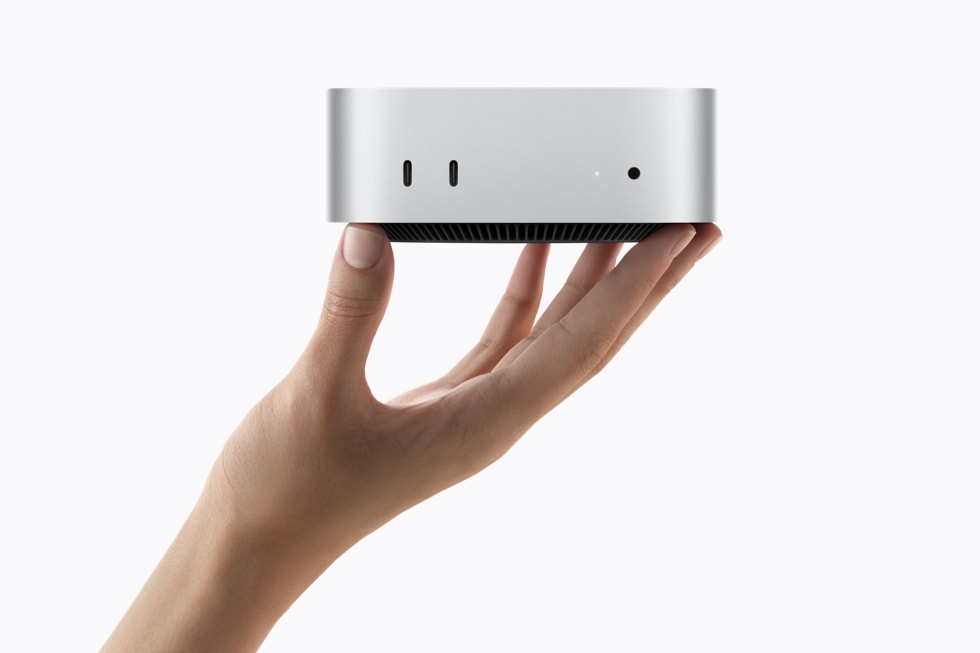
Apple unveiled its new Mac mini on August 25, 2026, with a choice of the new M6 or M5 Pro processors, along with Bluetooth 6, Wi-Fi 7, macOS 27, upgraded Ethernet, Thunderbolt connectivity, and substantially increased AI processing capabilities. The M6 version starts at $899, while the M5 Pro configuration starts at $1,699; both begin shipping September 22.
There is no technical reason to expect AirPods 5 compatibility to be an issue. Apple’s existing AirPods support Macs running the appropriate version of macOS, and current AirPods can already provide Spatial Audio and dynamic head tracking on Apple silicon Macs. Personalized Spatial Audio profiles created with an iPhone also synchronize across compatible Macs, Apple TVs, iPads, and other Apple devices signed into the same Apple Account.
Advertisement
The strongest clue is sitting inside Apple’s own software: macOS 26.7 already contains references to both AirPods 5 models. Apple is clearly preparing Mac software support before the hardware has even been announced.
So yes, somebody buying the new M6 or M5 Pro Mac mini should reasonably expect to use AirPods 5 with it. We would stop short of promising specific AirPods 5 features on the Mac until Apple actually announces the earbuds.
Apple’s Bigger Play Is the Ecosystem
This is where AirPods 5 become more interesting than their specifications might initially suggest.
Apple just introduced a much more powerful Mac mini with Bluetooth 6 and Wi-Fi 7, while macOS 27 brings the next generation of Apple Intelligence and Siri AI. At WWDC 2026, Apple also announced custom EQ for AirPods users, adding another layer of personalization to its headphone platform.
Advertisement
Apple TV 4K was last updated in 2022
Meanwhile, eCoustics recently reported that Apple appears to be preparing a long-overdue Apple TV 4K refresh with faster processing, Wi-Fi 7, a new wireless chip, deeper Siri AI integration, and potentially a revised Siri Remote. Apple hasn’t announced that hardware yet, but the direction makes sense when viewed alongside the new Mac mini and AirPods roadmap.
AirPods already move between iPhone, iPad, Mac and Apple TV, while Personalized Spatial Audio profiles travel with the user’s Apple Account. Apple TV 4K can deliver Dolby Atmos Music through Apple Music and supports Spatial Audio with dynamic head tracking through compatible AirPods. Add Siri AI, the Mac, Apple Watch, Fitness, Find My, and eventually Visual Intelligence, and Apple’s headphones become another interface into the entire platform.
That is considerably harder for competitors to attack than frequency response or another hour of battery life.
What Could Make AirPods 5 Unique?
We don’t yet know whether AirPods 5 themselves will introduce anything technically groundbreaking. Anyone claiming otherwise has access to information Apple has not released.
Their more interesting characteristic may be where Apple places them within the lineup. Offering both standard and ANC versions of an open-fit earbud gives consumers who dislike silicone ear tips an unusual choice, and Apple has already demonstrated with AirPods 4 that effective noise reduction is possible without creating the full seal used by AirPods Pro.
Advertisement
Samsung is now attacking essentially the same customer with the Galaxy Buds4, a $179.99 open-type earbud offering adaptive ANC, Bluetooth 6.1, Samsung’s 24-bit Hi-Res codec, and deeper integration with Galaxy devices. For Android users — particularly Galaxy S26 owners — that is probably the most direct ecosystem competitor.
Advertisement. Scroll to continue reading.
Sony’s LinkBuds Open take a more radical approach with an open-ring design that deliberately allows environmental sound through, although their $229.99 price puts them above the current standard AirPods range. Shokz and others have also made open-ear listening a rapidly growing category rather than the niche experiment it was a few years ago.
Apple therefore doesn’t own the concept. What Apple does exceptionally well is make the earbuds feel like an extension of devices consumers already own.
Advertisement
What About AirPods Pro 3?
Apple AirPods Pro 3
AirPods 5 also need enough separation from the $249 AirPods Pro 3, which remain Apple’s premium in-ear model.
AirPods Pro 3 add stronger ANC, heart-rate sensing, hearing features, Live Translation, workout integration, and a sealed in-ear design. Our own review found the feature set impressive but the sound quality less convincing than AirPods Pro 2, proving once again that adding more technology doesn’t automatically make music sound better.
That leaves room for AirPods 5 to succeed simply by being comfortable, affordable, easy to use, and hopefully better sounding than their predecessors. Not every pair of earbuds needs to monitor your pulse, translate the waiter, and eventually identify the paperback you’re staring at.
Sometimes headphones should also be good headphones.
The Bottom Line
AirPods 5 may initially look like a routine refresh: two open-fit models, one with ANC and one without, replacing hardware introduced two years ago. Until Apple reveals the specifications, there is no basis for claiming revolutionary sound, a new processor, longer battery life, or dramatically improved ANC.
Advertisement
The larger Apple picture is considerably more compelling.
Within the same period, Apple is rolling out an M6/M5 Pro Mac mini with Bluetooth 6 and Wi-Fi 7, macOS 27 with Siri AI, new AirPods software features, a likely next-generation Apple TV 4K, and development work on future camera-equipped AirPods that could turn the earbuds into wearable Visual Intelligence devices.
AirPods 5 don’t have to win every specification comparison with Samsung, Sony, Shokz, Bose, or Sennheiser. Apple’s advantage remains the same one that has kept millions of people buying AirPods even when competitors offer better battery life, more codecs, or arguably better sound.
They work with everything else Apple sells.
Advertisement
And Apple appears determined to make “everything else” work together even more closely.
Equality is everyone’s responsibility, so employers should try to ensure they are creating a diverse and welcoming workplace environment.
In just a few days it will be September, and school and college programmes will be back up and running. Many people of all backgrounds and lifestyles will be engaging with STEM subjects, eager to learn and begin down a path that will likely lead to their future careers.
But the experience won’t be the same for everyone. Despite best efforts to prevent it, factors such as gender, race, religion, colour, country of origin and able-bodiedness, often dictate a person’s professional experiences.
Careers in the STEM space are no different. So, how can employers and organisations create an ecosystem that effortlessly implements a policy of inclusivity?
Advertisement
Know the environment
Governments, state institutions and multi-country partnerships are by no means perfect, there will always be laws, policies and regulations that people don’t agree with. Those regulations can even negatively target certain groups of people. But there are also new regulations that govern aspects of life as a means of improving society and the employers who are keen to stay modern and inclusive need to be aware of them. An ideal example is the new EU Pay Transparency Directive, which aims to reduce pay inequality by making the sharing of information clearer and more accessible.
The EU’s 2019 Work-Life Balance Directive, while it applies to all, is another policy that provides people with additional personal responsibilities, healthcare or family obligations the chance to create some distance between home and the workplace.
A strict adherence to the rules governing the rights of employees shows the workforce and potential applicants that a company takes their rights seriously.
Start at the beginning
If you want to hire more inclusively, but find that the talent pool is not representative of the wider world and its workforce, then the solution is not to simply accept the talent pool as it is. True inclusivity means getting involved in the STEM community long before you develop your teams.
Advertisement
Companies have an obligation to shape the landscape by creating STEM programmes targeting children and underrepresented or marginalised groups, so they know what is possible for them to achieve and that a profession in STEM is not outside the realm of possibility.
This doesn’t mean that companies need to funnel excessive funds or resources into a range of complicated programmes. Rather, it can be as simple as giving established employees the opportunity to take a few hours out of their day a couple of times a year to share their experiences with others through schools, after-school programmes and post-secondary educational opportunities. It is a great way to show a young person what they might need for a career in STEM.
See the whole picture
Not everyone is granted the same opportunities in life despite having similar interests, hobbies or aptitude. While more and more organisations are becoming less concerned about how a person obtained their skills and are more focused on the fact that they have the skills, not every company is leaning that way.
There are multiple reasons as to why an individual may not have a traditional STEM-based third-level education, but that doesn’t mean they aren’t qualified. Micro-credentials, online courses and other forms of self-learning can give students all of the education they require for an entry-level position.
Advertisement
The organisations looking to be a beacon of inclusivity should consider how they recruit, the barriers preventing some applicants and whether reducing the available talent pool to the ‘typical few’ is in the best interests of the business or the wider community.
Walk the walk
Many organisations within the technology sector in particular create and empower systems that assist people with disabilities to live their lives with greater ease. But it shouldn’t only be in our personal lives that the technologies we use are assistive.
To ensure that a business has a diverse workforce, the tech, systems and furniture being used day to day must be designed with everyone in mind.
That could mean computers with added visual and audio features, adjustable seats and tables, areas with changeable lighting and inclusive safety elements, among others. There is no such thing as a universal design and the organisations that are serious about hiring inclusively are the ones who don’t prescribe to a ‘standard’ workplace layout as a rule.
Advertisement
Don’t miss out on the knowledge you need to succeed. Sign up for the Daily Brief, Silicon Republic’s digest of need-to-know sci-tech news.
While it remains unclear what Phillips has been working on in the administration since stepping away as head of the Office of Response and Recovery, on Sunday he wrote on Truth Social, “I have been in the admin since last year. I’ll be leaving soon to rejoin the fight.”
One day later, he was pictured at a Department of Justice building alongside Ed Martin, the former US pardon attorney whom President Donald Trump last week announced would be departing the administration to “fight legal battles for the upcoming midterm election.”
“Enjoyed the visit with our friend Ed Martin today in DC,” Phillips wrote on Truth Social. “Haters are gonna hate this.”
Advertisement
Martin and the Department of Justice did not respond to WIRED’s requests for comment about Phillips’ role in the administration. Phillips declined to comment.
A FEMA spokesperson directed WIRED to a statement it issued in June saying Phillips was “taking leave for personal reasons.” When asked if Phillips was still employed by the agency and still on leave, it didn’t respond.
Phillips is on administrative leave, according to the White House, which also confirmed that Martin is still working in the administration until September 4. Federal employees on administrative leave are entitled to full pay and benefits.
Phillips has long promoted baseless allegations of widespread voter fraud, claiming in 2016 that more than 3 million non-citizens voted in the presidential election, robbing Trump of winning the popular vote. Days after taking office in 2017, Trump promoted Phillips’ false claims. In the wake of the 2020 presidential election, Phillips gained further notoriety when the group he was involved with, True the Vote, provided the data that underpinned the debunked film 2000 Mules, which falsely alleged that a network of individuals was paid to illegally collect and deposit ballots in drop boxes.
Advertisement
A 2022 investigation by the Center for Investigative Reporting found that True the Vote has raised millions of dollars from donors by repeatedly promising to uncover evidence of election fraud but failing to do so. Much of that money, CIR reported, went to companies controlled by Phillips and in loans to True the Vote’s founder Catherine Engelbrecht.
Phillips was appointed last December to head up FEMA’s Office of Response and Recovery despite no past experience working in emergency response. In June, following his departure, the agency thanked Phillips for his “his service, dedication, and leadership,” adding that “he has played a pivotal role in stabilizing the Office of Response and Recovery and advancing key reforms to strengthen our mission delivery.”
Three sources at FEMA, who were granted anonymity due to fears of recrimination by the administration, tell WIRED that Phillips has not been seen at FEMA’s headquarters since June.
When Phillips posted on Truth Social this week about his decision to “rejoin the fight” he was once again discussing “illegals on the voter rolls” and the work he and Engelbrecht had done almost a decade ago to address the perceived issue—which is so rare that even a third-party analysis of a database maintained by the right-wing Heritage Foundation shows it contains fewer than 100 examples. When asked if Phillips’ comment meant he would be working with True the Vote again, Engelbrecht said, “I’m sure Gregg will be involved in a number of projects in the future, and we at TTV think very highly of him, but in an effort to set the record straight, he is not part of the True the Vote team. He previously assisted TTV as a contractor on research projects from 2020–2023.”
Advertisement
When asked about Phillips’ role as a board member of True the Vote, as revealed by the CIR report, Engelbrecht did not respond.
WIRED recently revealed that ahead of the midterms, True the Vote will release another documentary, entitled Trapped, which again makes allegations about widespread and systemic voter fraud.
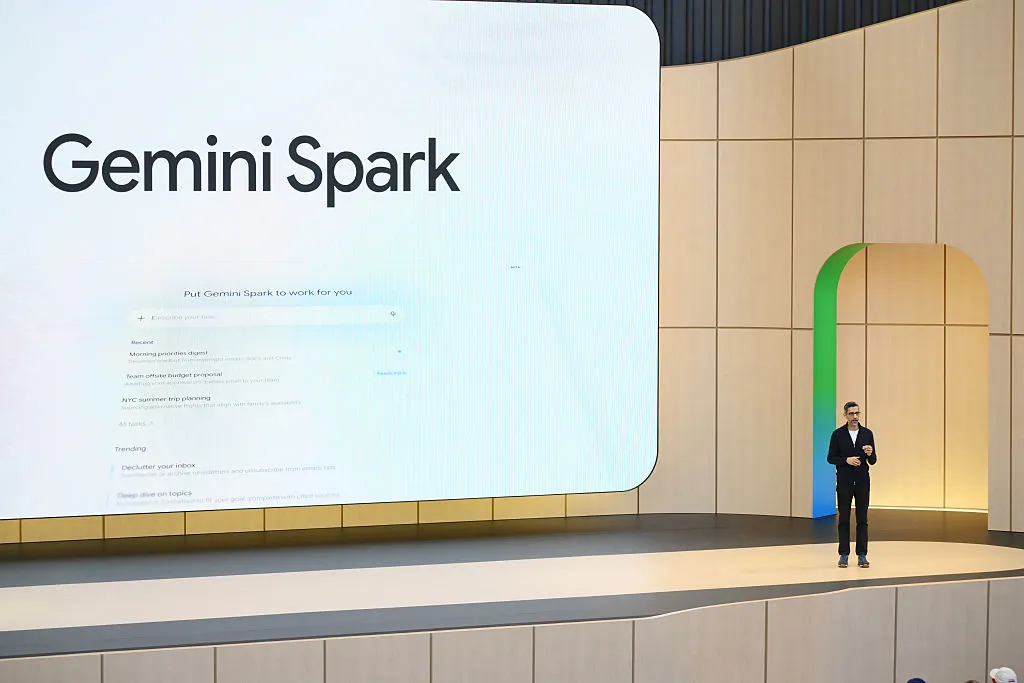
Google gets something right in its Wednesday announcement about new Gemini Live voice features when it says, “You shouldn’t have to guess whether a task requires Spark, a Daily Brief, or a quick inbox search.” Google means that as a promise — that the updated Gemini app can handle a variety of tasks via voice commands. But there’s a ridiculousness here: Google has given every Gemini AI feature under the sun its own branding, which undercuts that very message.
In the Gemini app, users can switch between chat, Spark, and Daily Brief — three separate features, each with its own icon and place in the app’s navigation. This clutters up what could otherwise be a more straightforward consumer experience, and it suggests that Gemini is still struggling to find a killer feature.
Take Daily Brief, for example. The feature comes across as the kind of thing an AI engineer, not an everyday user, would think is clever. It’s essentially an AI-enabled agenda that offers “proactive, personalized updates” using data pulled from Google’s apps, like Gmail and Calendar. In practice, though, the Brief can’t tell the difference between information that’s urgent or actionable and unsolicited nudges to follow up on other things — like prompting you to continue research you started in the chatbot, or worse, resurfacing your prior Google searches.
That second part doesn’t feel useful; it feels creepy. So what if I had been researching college scholarships or animal rescues on Google? That doesn’t mean I want an AI tapping me on the shoulder about them later.
Advertisement
Spark has the opposite problem. It’s one of the more useful aspects of Gemini’s app — an AI agent that can take action on your behalf — but Google has packaged it as its own standalone brand, which it doesn’t need to be. Sure, internally, Google engineers may want to be on the Spark team, and that’s fine — but a mainstream AI app user definitely does not need to think about which “side” of the AI app they need to be in for a given task. They should just be able to type their request, and the AI figures out how to handle it, spinning up an agent if the task calls for one.
In fairness, the problem isn’t limited to Gemini. The AI industry at large seems to expose its internal architecture directly to consumers rather than hiding it behind a simpler interface.
Today, people have to think about whether they want to “chat” with Anthropic’s Claude or “Cowork” with its help. (Until this week, those two modes inside the Claude app didn’t even share a memory of past conversations.) ChatGPT is the same, requiring you to swap between “Chat” and “Work.” This is the kind of engineering-minded design that makes engaging with AI feel unnatural. Consumers are being asked to learn the brand names for what are essentially interaction modes or surfaces, powered by a company’s AI model.
This may be why Apple’s somewhat anticlimactic approach to Siri could ultimately win over consumers. iPhone and Apple device owners don’t have to change any of their existing behavior to take advantage of it. Apple simply makes the apps and features that people already use — like Spotlight Search, the Photos app, the iPhone’s Camera, and Siri voice requests — smarter without asking users to learn a new interface.
Advertisement
This same principle may explain the rise of text-based AI services, where users simply text a chatbot — like Poke, Ollie, Lindy, Orchid, Lucas, Folk, Tomo, Instinct, or others — and the assistant just does what’s asked.
Text messaging is a clean and simple, well-understood user interface, and it doesn’t require extra mental effort to figure out which feature or product inside a larger app you’re supposed to use.
As a16z investment partner Justine Moore recently wrote, “People don’t want to open an app every time they need help – they want a contact they can text like a friend. And the gold standard is iMessage.”
When you purchase through links in our articles, we may earn a small commission. This doesn’t affect our editorial independence.


































































You must be logged in to post a comment Login