Connect with us

Business

General Mills nixes ‘certified colors’ from all of its cereals in US

Published

on

General Mills nixes 'certified colors' from all of its cereals in US

Food-manufacturing giant General Mills announced that all of its U.S. cereal offerings are now created without “certified colors.”

The company said it intends to remove “certified colors,” which it notes are “also known as synthetic color additives,” from all of its U.S. products by the end of next year.

Advertisement

“With all U.S. cereals – including Lucky Charms and Trix – now free from certified colors, 90% of General Mills’ U.S. retail portfolio has completed the transition,” the food giant said in a statement Wednesday.

CHEERIOS MAKER SAYS COST OF LIVING, HOUSING EXPENSES CHANGING WAY CONSUMERS SPEND

Cereal boxes

Miami Beach, Florida, Bay Supermarket breakfast cereal aisle. (Jeffrey Greenberg/Universal Images Group via Getty Images / Getty Images)

“The company remains on track to remove certified colors from its full U.S. retail portfolio by the end of 2027, including fruit snacks and baking products,” the announcement noted.

General Mills previously tried removing artificial colors from Trix in the past but then ultimately chose to backpedal later and offer an option that included the popular vibrant colors again.

Advertisement

“As part of a commitment to remove artificial flavors and colors from artificial sources from all of its cereals by the end of 2017, General Mills is releasing its first wave of new cereal recipes, which includes Trix, Reese’s Puffs, Cocoa Puffs, Golden Grahams, Chocolate Cheerios, Frosted Cheerios and Fruity Cheerios. The family favorites are now available in the cereal aisle at local retailers nationwide and highlight no high fructose corn syrup and no artificial flavors and colors from artificial sources on the front of each box,” a 2016 press release noted.

GENERAL MILLS PULLS MORE THAN 735,000 PILLSBURY ROLLS FROM SHELVES OVER POSSIBLE GLASS CONTAMINATION

General Mills

Golden Valley, Minn. General Mills World Headquarters. General Mills, Inc., is an American multinational company. (Michael Siluk/UCG/Universal Images Group via Getty Images)

But then a 2017 General Mills post on X, formerly Twitter, declared, “Have you heard?! ‘Classic Trix’ colors are coming back to brighten up your breakfast bowl!”

“Our Trix fans have been calling us, e-mailing us and reaching out to us on social media asking if we would consider bringing back the original formulation of Trix cereal with its vibrant colors,” then-General Mills spokesperson Mike Siemienas noted, according to a 2017 Food Business News report. “As a result, we are launching ‘Classic Trix’ to fill these consumer requests.  We will continue to offer our current formulation of Trix with no artificial flavors and no colors from artificial sources, which has its own fan base, along with Classic Trix. So both products will be available for consumers. Consumers have differing food preferences, and we heard from many Trix fans that they missed the bright vibrant colors and the nostalgic taste of the classic Trix cereal.”

Advertisement

Boxes of Trix currently for sale on the Walmart and Amazon websites list “Natural and Artificial Flavor” on the ingredients list.

GENERAL MILLS LATEST US FOOD GIANT PULLING ARTIFICIAL DYES FROM PRODUCTS

Lucky Charms cereal box

Boxes of General Mills owned Lucky Charms cereal are stacked at a Costco Wholesale store on April 4, 2025, in San Diego, Calif. (Kevin Carter/Getty Images / Getty Images)

GET FOX BUSINESS ON THE GO BY CLICKING HERE

Betty Crocker and Pillsbury are some of the popular food brands within the company’s substantial portfolio.

Advertisement
Continue Reading
Click to comment

You must be logged in to post a comment Login

Leave a Reply

Business

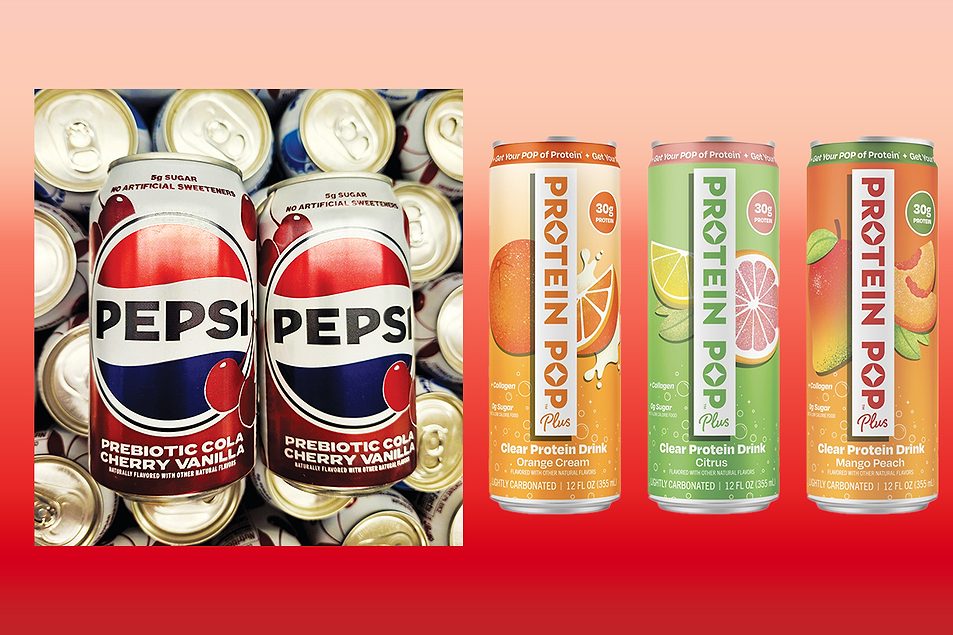
Functional beverages – Making every sip matter

Published

on

Functional beverages - Making every sip matter

KANSAS CITY — Consumers want more from every sip they take today. Beverages no longer quench thirst and help one stay hydrated, they also play active roles in aspirational health and longevity.  

“Consumers are asking ‘what else is in there,’” said Mayuresh Bedekar, senior director of global product strategy-bioactives and dairy nutrition for Glanbia Nutritionals. “They are asking for more diversified offerings to fit their needs, such as protein and peptides for muscle health support during GLP-1 medication journeys or performance ingredients like creatine and branch chain amino acids (BCAA) with nootropics for brain health and cognition.”

Tony Vieira, chief executive officer and co-founder of Calibri Brands, manufacturers of the functional beverage brand Mocean, said, “Every beverage in our fridge needs a resume. It comes down to intentionality. We are looking for small, friction-free ways to integrate wellness into our daily routines.”

Fiber-enhanced beverages are a growing category. But not all fibers are appropriate for aqueous systems.

Advertisement

“Soluble corn fiber offers benefits that extend beyond digestive health,” said Amanda Sia, senior technical service account manager, Tate & Lyle. “Growing research highlights its broader potential, including support for healthy blood glucose responses after meals and bone health through calcium absorption and retention.”

Richard LaBonté, head of marketing-food and nutrition Americas, Roquette, said, “Our fiber ingredients have clinically demonstrated prebiotic effects, helping to nourish beneficial gut bacteria and support digestive health. They have also been shown to help maintain healthy blood glucose levels by reducing post-meal glucose responses and can promote satiety, supporting appetite and weight management.”

Protein is currently the star of the functional drink space, but more protein content doesn’t automatically equal a better beverage.

“The real opportunity lies in matching the right protein to the right health benefit, as different proteins deliver different physiological outcomes,” said Sophie Zillinger Molenaar, global marketing execution lead, FrieslandCampina Ingredients. “Caseinates, for example, support sustained amino acid release, making them the smart choice for applications targeting long-lasting muscle synthesis. Whey proteins, on the other hand, are rapidly digested and absorbed, making them particularly well suited for post-workout nutrition where fast amino acid delivery is important.”

Advertisement

Fat is important in some functional beverages, too, especially those targeted for the youngest and oldest consumers. Many need healthful fatty acids and active nutritional lipids.

“There are those who seek meal replacement options, fitness enthusiasts and those with medical needs who rely heavily on the nutritional benefits of specialty fats and oils,” said Erhan Yildiz, customer innovation director, AAK USA Inc. “Benefits include brain function support, reducing inflammation, protecting heart health and finally balanced nutrition.”

Some of the most popular functional beverage ingredients are creatine, ashwagandha, B-vitamin blends, paraxanthine, magnesium and natural caffeine, said Ashley Kraus, consumer insights manager, Imbibe.

Another is citicoline, which helps support focus, attention, working memory and mental energy, said Maria Stanieich, senior marketing manager, Kyowa Hakko USA. It pairs well with mental support ingredients, such as lion’s mane, ashwagandha and rhodiola rosea.

Advertisement

“Unlike caffeine, Kyowa’s citicoline is a nonstimulant ingredient that provides natural support for cognitive function, neuroprotection and neurotransmission without the jitters,” Stanieich said. “It is completely water soluble and neutral in taste.”

Creatine — an amino acid-based compound in the body that helps produce energy for muscles and the brain — also is available as an isolated ingredient. New formats have moved creatine from supplements to familiar foods, including functional beverages.

Glanbia Nutritionals developed an encapsulated creatine monohydrate that has elevated dispersibility and stability in water compared to traditional creatine monohydrate ingredients. It does not crystallize when exposed to ultra-high temperature processing.

BioVivo Sciences offers American ginseng and natural caffeine from green tea. The ingredients lend themselves to wellness and energy beverages, said James Roza, vice president of technical services.

Advertisement
Mocean.jpg

Mocean’s product formulation features a blend of functional ingredients, like caffiene from green tea, along with echinacea and elderberry, which are botanical extracts associated with boosting immunity.

| Photo: Mocean

“American ginseng has been researched extensively for its immuno-supportive role in maintaining metabolic health and is complementary to other antioxidants and vitamin C commonly used to formulate wellness beverages,” Roza said. “Naturally derived caffeine is a better alternative to the synthetic anhydrous form that’s typically used in energy drinks. Due to the presence of other plant compounds, it sustains energy levels longer than its counterpart by providing a slower uptake.”

Natural Alternatives International produces beta-alanine, a non-essential amino acid that boosts muscle carnosine levels. Carnosine is an antioxidant the body produces in muscle, brain and other tissues that support wellness.

“The challenge is that carnosine itself doesn’t supplement well directly, so we work with beta-alanine, the rate-limiting building block the body uses to make carnosine,” said Mark LeDoux, chairman and CEO at Natural Alternatives International. “By boosting beta-alanine intake, you boost carnosine levels, providing benefits we’ve now seen across four major systems: cognitive health and mood, muscle endurance and recovery, bone integrity and heart health.”

Advertisement

LeDoux added that there’s opportunity to use beta-alanine with collagen or creatine for multi-system positioning, with electrolytes and caffeine for sports recovery, or with lion’s mane and omega-3s for brain-health.

“The right choice (of functional ingredients) always comes down to what the brand is trying to achieve, and increasingly that means going beyond hydration into things like focus, mood or recovery,” Kraus said. “The formulation approach changes with the ingredient and the format, but it always comes down to balancing taste, stability, solubility and processing against the finished drinking experience. You can’t formulate the functional ingredient in isolation; it should work as part of the whole system.”

Many functional ingredients bring some kind of tradeoff. There may be bitterness, astringency, earthy or metallic notes and solubility issues, for example.

Mōcean is focused on providing multiple benefits. The product’s formulation uses a blend of functional ingredients. Echinacea and elderberry, for example, are botanical extracts associated with boosting immunity.

Advertisement

“Perilla extract is high in rosmarinic acid,” Vieira said. “It balances the immune response by dampening overactive inflammatory pathways, ensuring host defenses react effectively without causing collateral tissue damage. Organic green tea extract is a source of clean caffeine.”

Fruit concentrates also may contribute functional nutrition, at the same time they add color, flavor and sweetness. They also provide “made with real fruit” labeling credentials.

“Cranberry concentrate, for example, contains naturally occurring vitamin C, fiber, minerals and polyphenol antioxidants,” said Seema Kedia, senior manager-strategic marketing, Ocean Spray Ingredients. “Research also suggests beverages made with cranberry concentrate may help reduce undesirable bacteria and promote a healthier balance of the gut microbiome, supporting digestive wellness.”

Cranberries are a natural source of proanthocyanidins, which have been shown to help prevent bacterial adhesion in the urinary tract. The benefit is recognized by an FDA Qualified Health Claim and the European Association of Urology Guidelines.

Advertisement

Biotics, including pre, pro and post, all have a home in functional beverages. Unlike most probiotics, which require refrigeration to maintain efficacy, postbiotics have application in ambient beverages.

Cargill offers a postbiotic ingredient that helps support immune and gut health. Produced through fermentation, it contains a mix of beneficial metabolites and bioactive compounds.

“Our postbiotic ingredient works particularly well in beverages that consumers already associate with health and wellness, including teas, juices, wellness shots, powdered drink mixes and sports beverages,” said Max Hintz, product line director for nutritionals-North America, Cargill. “It is inanimate, with excellent heat and pH stability across a range of processing and storage conditions.”

Advertisement
Continue Reading

Business

New restaurant planned next to Bolton’s Queens Park

Published

on

Business Live

Park is designated as conservation area

The plans for the restaurant at Mayor Street, next to Queens Park, Bolton.

The plans for the restaurant at Mayor Street, next to Queens Park, Bolton(Image: Local Democracy Reporting Service)

Plans for a new restaurant in Bolton are set to be considered.

Advertisement

The three-storey building in question, on Mayor Street, next to Queens Park, was completed in 2024. The premises has a permitted retail use at ground floor, which is currently unoccupied and a flat above.

Queens Park is a grade II listed registered park and garden and is also designated as a conservation area. The building is around 85 metres from the entrance lodge to the park.

The application, in the name of Shahid Mahmood, requests a change of use for the ground floor from retail to restaurant.

Contained with the application are CGI visuals of the intended interior of the restaurant should the plans be passed. There is a car park directly opposite the application site serving the park.

Advertisement

A design and access report in support of the plans said: “No external changes are proposed, other than a flue which is situated to the side elevation, towards the rear of the building.

“Internally, the ground floor will consist of a seating area, food preparation area and kitchen.

The proposed hours of opening for the restaurant are 9am-11pm; Monday to Sunday.

Pre-application advice sought from Bolton council said hat the proposed change of use itself would not have any impact on the character and appearance of the building or the surrounding area and in this regard would be acceptable.

Advertisement

The advice added: “A noise and odour assessment would be required together including details of the extraction system and flue and any required mitigation.

“Signage would require separate consent and would need to be designed sympathetically to avoid harm to the Queens Park conservation area.”

Planners in Bolton will consider the plans in the coming weeks.

To find all the planning applications, traffic diversions, road layout changes, alcohol licence applications and more in your community, visit the Public Notices Portal.

Advertisement
Continue Reading

Business

UK business confidence rebounds, Barclays Q2 index shows

Published

on

UK business confidence rebounds, Barclays Q2 index shows

Confidence among British businesses has rebounded following the recent changes in Government, with 63 per cent now optimistic about the UK economy, up from 57 per cent in the first quarter, according to Barclays’ latest quarterly health check on the nation’s firms.

The bank’s Q2 Business Prosperity Index, which combines survey findings with anonymised client data from more than 900,000 UK businesses, also found that firms’ optimism about their own prosperity over the next 12 months has risen to 86 per cent, up from 83 per cent in the first quarter.

Business leaders appear to have welcomed the shift towards regional decision-making, with 60 per cent agreeing that devolution will improve economic opportunities in their area. Support was strongest in areas with prominent mayoralties: London (68 per cent), the West Midlands (64 per cent) and the North West (63 per cent).

More than a third (34 per cent) expect their business to benefit from the creation of No.10 North, and over half of those (55 per cent) expect it to increase investment and opportunities for their region. That sentiment was most prominent in London (69 per cent) and the Midlands (54 per cent), while 59 per cent of businesses in the North West believe it will enable greater control over regional decision-making. By sector, Technology (81 per cent) and IT and Telecoms (75 per cent) firms are the strongest supporters of devolution, and also expect to see the most benefit from No.10 North.

Abdul Qureshi, head of Barclays Business Banking, said: “Greater regional decision-making gives local leaders the opportunity to align skills, infrastructure, finance and business support more closely with the distinctive strengths of local economies. From technology clusters and advanced manufacturing to professional services, life sciences, clean energy and creative industries, the UK has deep regional specialisms that can be engines of national growth.”

Advertisement

The confidence is starting to show up in behaviour. Barclays’ client data, comparing the second quarter of 2026 with the same period last year, shows SMEs increased savings by 1.5 per cent while the number of loans rose 0.9 per cent. Larger firms went further: among the bank’s corporate clients, the number of loans rose 3.2 per cent and lending values were up 9.3 per cent, suggesting some are already borrowing to fund investment and growth.

Several sectors delivered notably strong quarters. Software businesses recorded a 21.9 per cent rise in incoming cash flows, while commercial property investors focused on healthcare and residential developments saw increases of 22.5 per cent and 10.3 per cent respectively. Residential property firms lifted lending balances by 7.6 per cent, with loan numbers up 7.0 per cent, a rise beaten only by housing associations (14.4 per cent) and restaurants and cafes (14.5 per cent).

Looking ahead, 56 per cent of businesses plan to increase investment over the next 12 months and 46 per cent are likely to seek new finance to support expansion and build resilience. Top priorities are staff training and development (41 per cent), research and development (36 per cent), new or upgraded equipment (34 per cent) and digital products (33 per cent). That marks a sharp shift in intent after a year in which just 23 per cent of businesses said they borrowed to fund investment.

The legacy of the pandemic still weighs on some financing decisions. Of the 42 per cent of businesses that received financial support during Covid, 67 per cent have since taken out additional finance. Among those that have not, 36 per cent cite concerns about taking on more debt and 26 per cent say borrowing costs are too high.

Advertisement

Firms also made clear that confidence alone will not unlock spending. Almost a quarter (23 per cent) believe the new Government should prioritise reforming or reducing business taxation, a policy backed by 32 per cent of small and micro businesses, while 32 per cent of larger businesses want investment in technology and digital infrastructure to be the key focus.

Matt Hammerstein, chief executive of Barclays UK Corporate Bank, said: “The UK’s growth prospects depend on businesses having the confidence to invest. It is encouraging to see firms preparing to commit capital again, particularly in skills, R&D, equipment and digital capability, which are critical to improving productivity.

“The priority now is turning that intent into action. With clearer policy direction and the right access to finance, ambitious businesses across every region and sector can invest with confidence, scale faster and contribute to stronger economic growth.”

Barclays said its Business Prosperity Fund, part of the £22 billion of lending it has made available to business banking and corporate clients in 2026, is open to new and existing customers seeking to invest in resilience and growth.

Advertisement

Amy Ingham

Amy Ingham

Amy Ingham is a reporter at Business Matters, covering UK business news with a focus on breaking news, business policy, late payments and insolvency. She joined the magazine in 2026 after completing the NCTJ Diploma in Journalism at Harlow College’s journalism school. Her recent reporting includes British Steel’s nationalisation and its impact on SME suppliers, the decline in late payments by large firms, and Insolvency Service director disqualifications. Reach her at aingham@cbmeg.co.uk.

Advertisement
Continue Reading

Business

Columbia Intermediate Duration Municipal Bond Fund Q2 2026 Commentary

Published

on

Western Asset Managed Municipals Fund Q1 2026 Commentary

Word Municipal bond on note book, inscription with America usd fake money.

Wirestock/iStock via Getty Images

Market overview

Market volatility continued during the second quarter, as investors navigated persistent inflation pressures, shifting expectations for U.S. Federal Reserve policy and ongoing geopolitical developments in the Middle East. Economic data remained generally resilient, while still-high energy prices and

Continue Reading

Business

AI investment advice trusted by young investors, FCA finds

Published

on

AI investment advice trusted by young investors, FCA finds

Young and less experienced investors now place more trust in artificial intelligence than in television, radio or social media influencers, according to research from the Financial Conduct Authority, which warns that many are leaning on AI without understanding how little protection they have if its guidance goes wrong.

Four in five less experienced investors have used AI for help with investment decisions, and about two thirds reported doing so occasionally or regularly. More than half of those questioned, 56 per cent, said they would trust AI tools, even though almost three quarters, 73 per cent, know that AI can provide inaccurate information.

Traditional sources fare worse. Just under half of respondents, 47 per cent, said they trust television and radio, 46 per cent trust the press, and less than a third, 29 per cent, trust social media influencers, according to the regulator’s survey, which polled 666 UK adults aged 18 to 40 who own investments or would consider buying them in the next year.

The protection gap

The FCA’s bigger concern is what investors believe happens when AI gets it wrong. Almost half, 44 per cent, mistakenly believed AI-generated financial information was regulated, and more than a third, 38 per cent, admitted to thinking an investment decision based solely on AI was fine.

About a third, 32 per cent, wrongly thought they would be entitled to reparation from the Financial Services Compensation Scheme or the Financial Ombudsman Service if AI advice were to be wrong. In reality those protections are limited to people who have received advice that causes harm through an authorised financial adviser, and an investment is not considered for compensation simply because it subsequently performs poorly.

Advertisement

General purpose AI chatbots are not regulated, although tools specifically set up to provide financial advice could fall within the FCA’s remit. If a firm regulated by the FCA were to launch its own AI tool providing regulated financial advice, those using it may be eligible for protection. The regulator has been running live trials of such technology, with Barclays and Lloyds among the banks testing AI tools in its AI sandbox programme.

Use your own judgment

Lucy Castledine, director of consumer investments at the FCA, said: “AI can help you research companies, understand jargon or explore options before you make a decision. But you need to understand how you’re protected and continue to use your own judgment.”

The FCA advised those thinking of investing to make the final decision themselves, to verify the information AI offers, to think long term, and to remember that AI can only work from historical data, meaning it cannot predict how a future investment will perform.

While AI can summarise complex topics and make research more time-efficient, it can also produce incorrect information, known as hallucinations. The regulator publishes guidance on using AI for investment research on its InvestSmart website, alongside explanations of different schemes, golden rules for smart investors, and material on crypto and high-risk investments. It also offers a tool to help investors understand whether they are informed or likely to act rationally, so they can better understand what influences their decision-making.

Advertisement

Jamie Young

Jamie Young

Jamie Young is Senior Reporter at Business Matters, covering SME finance, employment law and Westminster policy since 2016. He has reported on every Budget and Autumn Statement since 2018, helped make sense of the ‘covid era’ and the bounce-back loan scheme from launch through the fraud investigations, and broke the magazine’s coverage of the 2024 late-payment reforms. He joined Business Matters straight from completing his BA in Administration from Exeter University and is NCTJ-qualified. Reach him at jyoung@cbmeg.co.uk

Advertisement
Continue Reading

Business

Nvidia to start employee-funded US political action committee

Published

on


Nvidia to start employee-funded US political action committee

Continue Reading

Business

Corby Spirit and Wine Limited (CSW.A:CA) Q4 2026 Earnings Call Transcript

Published

on

OneWater Marine Inc. (ONEW) Q1 2026 Earnings Call Transcript