Connect with us

Business

Canadian Solar Inc. 2026 Q2 – Results – Earnings Call Presentation (NASDAQ:CSIQ) 2026-08-27

Published

on

OneWater Marine Inc. (ONEW) Q1 2026 Earnings Call Transcript

This article was written by

Seeking Alpha’s transcripts team is responsible for the development of all of our transcript-related projects. We currently publish thousands of quarterly earnings calls per quarter on our site and are continuing to grow and expand our coverage. The purpose of this profile is to allow us to share with our readers new transcript-related developments. Thanks, SA Transcripts Team

Continue Reading
Click to comment

You must be logged in to post a comment Login

Leave a Reply

Business

Kettle Cuisine taps former Kraft Heinz exec as CEO

Published

on

Kettle Cuisine taps former Kraft Heinz exec as CEO

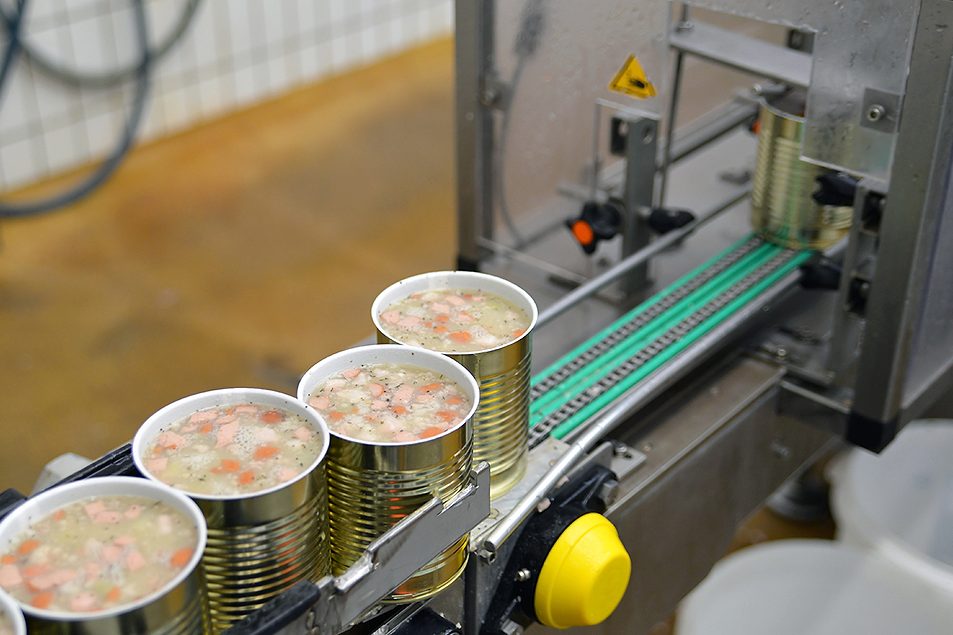
LYNN, MASS. — Kettle Cuisine, a manufacturer of fresh prepared foods including refrigerated and frozen soups, broths, sauces, sides and entrees across retail and foodservice customers, has named Peter Hall as chief executive officer. Hall succeeds Liam McClennon, who recently retired from the CEO position after nearly 11 years with the company.

Hall comes to the company from Kraft Heinz, where he recently was president the North American Elevation Business Unit.

Hall spent nearly 11 years at Kraft Heinz, holding various leadership positions and overseeing such brands as Heinz, Kraft and Philadelphia.

“Peter is the right leader to guide Kettle Cuisine through its next phase of growth,” said Nik Thukral, president at L Catterton, an investor in Kettle. “Kettle has longstanding customer relationships, differentiated culinary and manufacturing expertise, and significant opportunity ahead. Peter brings the strategic perspective, consumer orientation, and strong commercial capability to capitalize on those advantages and build on the company’s established position. We are excited to partner with Peter and the Kettle team as they build on the company’s momentum.”

Advertisement

McClennon began his tenure as CEO in August 2015. Before joining Kettle Cuisine, McClennon was CEO at Greencore USA. 

Continue Reading

Business

ServiceNow, Stock Of The Day, Clears Early Buy Point As ‘SaaSpocalypse’ Fears Fade

Published

on

ServiceNow, Stock Of The Day, Clears Early Buy Point As 'SaaSpocalypse' Fears Fade

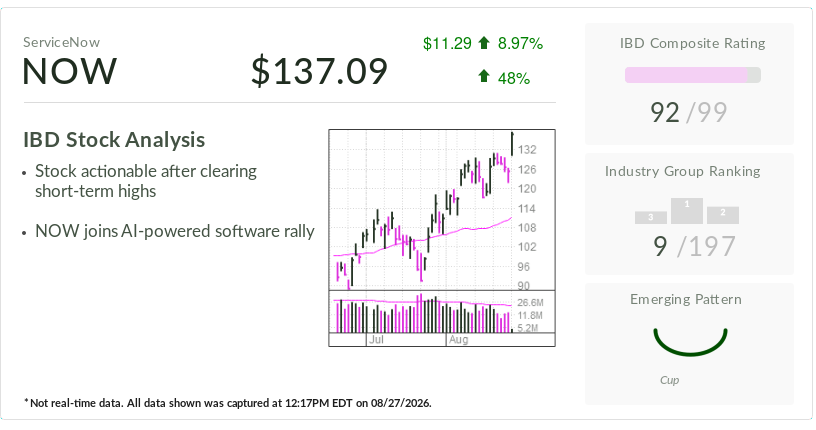
ServiceNow ServiceNow NOW $ 137.09 $11.29 8.97% 48% IBD Stock Analysis Stock actionable after clearing short-term highs NOW joins AI-powered software rally IBD Composite Rating 92/99 Industry Group Ranking 9/197 Emerging Pattern Cup Cup A cup-shaped pattern with no handle. Must be at least six weeks long or as long as a year. Buy point is 10 cents above the…

Copyright ©2026 Investor’s Business Daily, LLC. All rights reserved. 87990cbe856818d5eddac44c7b1cdeb8

Continue Reading

Business

Hinge Health Stock Catapults 95%; Expands Footprint In AI Pain Management Tech

Published

on

Hinge Health Stock Catapults 95%; Expands Footprint In AI Pain Management Tech

A persistent muscle twinge can unhinge daily routines and schedules. Hinge Health (HNGE) offers an app-based artificial intelligence-enabled program for managing pain and has been growing its client base as demand surges for its products and services. Shares touched an all-time high on Thursday while also holding in a buy zone above a three-weeks-tight pattern. Its pivot is 93.13. The…

Copyright ©2026 Investor’s Business Daily, LLC. All rights reserved. 87990cbe856818d5eddac44c7b1cdeb8

Continue Reading

Business

Hostess remains a work in progress for J.M. Smucker

Published

on

Hostess remains a work in progress for J.M. Smucker

ORRVILLE, OHIO — The J.M. Smucker Co. said its Sweet Baked Snacks business, led by Hostess, has continued to show improvement as the company began fiscal 2027 with stronger-than-expected first-quarter results.

Sweet Baked Snacks net sales for the quarter ended July 31 declined 7% year over year to $236.5 million, with segment profit down 13% to $29.9 million, Orrville-based J.M. Smucker said. That compared with drops of 24% in net sales (10% excluding divestitures) and 54% in segment profit in the year-ago quarter.

Mark Smucker, chairman and chief executive officer, attributed the 2027 quarterly sales dip mainly to the impact of prior-year SKU rationalization and decreases in the convenience store channel but noted Hostess’ promising growth in US retail.

“We are encouraged by the recent performance of our Sweet Baked Snacks business in US retail channels, where net sales increased low-single digits, driven by double-digit growth for the Hostess Donettes brand,” he said. “This performance reflects our strategic focus on the brand, supported by expanded distribution, innovation and improving base-business trends.

Advertisement

“We are leveraging our deep retail relationships to expand the presence of the brand while building on promising results from recent innovations, including Donettes Churro Mini Donuts and a new Donettes sharing-size offering. Our larger pack sizes continue to perform well and demonstrate faster purchase cycles than traditional sizes, reinforcing the opportunity to drive incremental consumption and offer increased consumer value. We see continued opportunity to grow both our offerings and distribution.”

Net price realization lifted first-quarter net sales for Sweet Baked Snacks by 2 percentage points, primarily reflecting higher net pricing for snack cakes and donuts, according to J.M. Smucker. Volume/mix pulled down net sales by 8 percentage points, stemming mostly from decreases in snack cakes and breakfast, the company said.

“Volume/mix for donuts was neutral in the quarter,” said Tucker Marshall, chief financial officer and executive vice president of Frozen Handheld and Spreads and Sweet Baked Snacks. “Net price realization increased net sales by 2 percentage points, reflecting reduced trade investments in snack cakes and a list price increase for donuts. Segment profit decreased 13%, reflecting higher costs and unfavorable volume/mix, partially offset by higher net price realization and lower marketing spend.”

Smucker noted the convenience channel “remains challenged as traffic continues to be pressured.”

Advertisement

“Despite this backdrop, the Hostess Donettes brand continues to outperform the broader sweet baked goods category in this channel, reinforcing the brand’s relevance within the a.m. snacking occasion, where consumers are seeking quick, convenient and satisfying options,” he said. “We remain focused on strengthening the brand’s performance across channels while positioning it to benefit when convenience traffic improves.”

In June 2025, J.M. Smucker unveiled updated priorities for shoring up Hostess’ performance, with the focus narrowed to strengthening the portfolio, elevating execution and reigniting sustainable growth. Actions have included an SKU rationalization program to pare the brand’s item count by 25%; a focus shift to high-velocity, margin-accretive SKUs; and a decision to close Hostess’ Indianapolis production plant. The company also has formed a dedicated Sweet Baked Snacks sales organization to hone execution and boost the Hostess brand via culturally relevant marketing, refreshed packaging and consumer-led innovation.

“We continue to execute against our Sweet Baked Snacks stabilization plan,” Smucker said. “For fiscal year 2027, we continue to expect segment profit margin improvement compared to the prior year and see a path to further expansion over time.”

AdobeStock_1827226448_Editorial_Use_Only.jpg

J.M. Smucker noted a 10% gain in volume/mix for Uncrustables in the first quarter.

Advertisement

| Photo: ©BILLTSTER – STOCK.ADOBE.COM

For the first quarter, J.M. Smucker had net income of $324.2 million, equal to $3.03 per share on the common stock, up from a loss of $43.9 million a year earlier. Adjusted net earnings — excluding the impact of income tax costs, amortization and other items — were $346.5 million, or $3.24 per share, up from $203.4 million, or $1.90 per share, a year ago, J.M. Smucker said. That topped Wall Street’s high-end forecast for adjusted earnings per share of $2.27.

Total net sales rose 5% to $2.22 billion from $2.11 billion in the prior-year period. Net price realization, fueled by higher net pricing for coffee, provided a 4-percentage-point lift to net sales, J.M. Smucker said. Also supplying a boost was a 1-percentage-point gain in volume/mix, mainly from increases for Uncrustables sandwiches and coffee, partially offset by decreases for sweet baked foods and peanut butter.

Among other business units, US Retail Frozen Handheld and Spreads saw net sales rise 3% to $499.3 million, with segment profit jumping 13% to $129.7 million.

“In Frozen Handheld and Spreads, net sales increased 3%, driven by double-digit growth for Uncrustables sandwiches, partially offset by decreases for Jif peanut butter and Smucker’s fruit spreads,” Smucker said. “Net sales growth for Uncrustables sandwiches was primarily driven by a 10% increase in volume/mix. We remain focused on scaling the Uncrustables brand as a key growth platform, while driving profitability and modernizing our category-leading spreads business.”

Advertisement

Uncrustables volume growth also gave a lift to the Away From Home business, as net sales grew 3% to $203.7 million and segment profit advanced 19% to $61.2 million.

US Retail Coffee net sales surged 13% to $807.8 million as higher net pricing across the portfolio hoisted sales by 10 percentage points, J.M. Smucker said. Volume/mix increased net sales by 2 percentage points, including gains for the Dunkin’ and Café Bustelo brands. Segment profit swelled by 124% to $300 million, boosted by tariff refunds and higher net pricing, the company said.

“We delivered a strong first quarter that exceeded our expectations and demonstrated continued momentum across the company,” Smucker said. “Our performance reflects the strength of our differentiated portfolio, disciplined execution against our strategic priorities, and the investments we continue to make in our brands and capabilities. Importantly, net sales increased 5%, including a 1 percentage point contribution from volume/mix, alongside improved profitability and strong earnings growth. Based on our first-quarter performance and expectations for the balance of the year, we raised our full-year outlook for net sales, adjusted earnings per share and free cash flow.”

J.M. Smucker now projects fiscal 2027 adjusted EPS of $10.50 to $11, up from $9.75 to $10.25 previously, and net sales declines of 1% to 2% versus the prior forecast of down 3% to 4%.

Advertisement

“Our updated guidance reflects stronger-than-anticipated momentum across the business and a favorable net benefit of approximately 60¢ related to the receipt of tariff refunds, which reflects the 84¢ benefit from tariff refunds received in the first quarter,” Marshall said. 

Continue Reading

Business

One in eight young people not in work or education

Published

on

Your Voice banner image. Your Voice is written in white against a purple background.

In May, the first part of Milburn’s report, which was commissioned by the government, said the reasons for the rise in rates among men were “complex”, but could be down to more health issues, the “erosion of traditional employment routes” and “a growing gap in educational outcomes”.

He also said the “Neet problem is grounded in social disadvantage” and highlighted higher rates among certain groups, including young people who:

  • have grown up in poverty

  • have special educational needs or disabilities (SEND)

  • don’t have a GCSE-level qualification

  • are Black, African and Caribbean

The report warned that one in six young people would be out of work in five years without action, adding: “We are at risk of a lost generation.”

It said young jobseekers were submitting dozens, sometimes hundreds of applications, but rejections had become the norm.

Advertisement

Last week, analysis by the BBC found that competition for degree apprenticeships in England through the government’s “find an apprenticeship” service, for example, had quadrupled over the past three years.

The second, and final, instalment of Milburn’s report – including recommendations for how to tackle the problems – is expected in the coming weeks.

Additional reporting by Kate McGough, Erica Witherington, Rahib Khan and Miguel Roca-Terry

Advertisement
Continue Reading

Business

Rory McIlroy Praises TaylorMade’s Move to a Two-Year Driver Cycle Ahead of This Tour Championship 2026

Published

on

Scottie Scheffler

ATLANTA — Rory McIlroy has found a driver he trusts, and thanks to a shift in TaylorMade’s product strategy, he won’t have to give it up anytime soon.

Speaking Tuesday at the Tour Championship, McIlroy praised his equipment sponsor’s decision to move away from an annual driver release cycle, a change that will allow him and other TaylorMade staffers to continue using their current Qi4D drivers well into next year rather than being fitted into a new model this offseason.

A shift in the industry’s release cycle

TaylorMade announced in May that it was moving to a two-year product cycle for its metal woods, starting with the Qi4D driver family that was released in January. The move made TaylorMade the fourth of the six largest equipment manufacturers in golf to adopt a two-year cadence for drivers, joining Ping, Srixon and Titleist. Callaway and Cobra have not yet indicated any plans to move off their traditional yearly release schedules.

Advertisement

For McIlroy, the change offers a level of stability he has publicly welcomed. “I think being able to use the same driver for say like an 18-month period I think just gives guys a little bit more of a level of comfort,” McIlroy said Tuesday at the Tour Championship.

A driver that’s already working

McIlroy’s endorsement of the extended cycle comes at a moment when his driver performance is peaking. He switched into the Qi4D during its first week of availability in November and has ranked among the top drivers on the PGA Tour this season, sitting second in the tour’s Strokes Gained: Off the Tee statistic. He is averaging a career-high 330 yards off the tee, with driving accuracy more than three percentage points higher than it was in 2024.

That performance stands in contrast to McIlroy’s history with new equipment. Just a season ago, he continued playing a TaylorMade Qi10 model from 2024 rather than switching to 2025’s Qi35 release. Fellow TaylorMade staffer Scottie Scheffler followed a similar pattern, sticking with his Qi10 until switching to the Qi4D during his win at the FedEx St. Jude Championship two weeks ago.

Advertisement

Why comfort matters more than incremental gains

McIlroy explained that professional golfers are never required to switch drivers, but typically do so when a new model offers a performance edge worth the adjustment. That calculation, he said, involves more than just measurable gains — it also comes down to feel, something that can vary even between two drivers built to identical specifications.

“You think about you really like a driver you’re playing, and then something else is put in your hand say in October, November time, so nine or 10 months after you get your driver — all the manufacturers do a great job of fitting you into what is the best product for you, but they’re all slightly different,” McIlroy said. He noted that even supposedly identical club heads, referred to informally within the sport as “snowflakes,” can feel different to him despite sharing the same loft and weighting. “Thankfully I found a really good one that I like at the minute,” he added, acknowledging he wasn’t certain whether the inconsistency he sometimes feels between identical drivers is physical or psychological.

A practical problem, too

Advertisement

Beyond personal preference, McIlroy pointed to a more practical issue that has affected both him and Scheffler in the past: driver heads wearing out or falling out of USGA conformance over time. Both players had their Qi10 drivers fail conformance testing at last year’s PGA Championship, forcing them to rely on backup clubs during the tournament.

“The heads go. I’ve obviously fallen foul of that at the PGA last year, Scottie as well,” McIlroy said. “You really can only play a driver for a year to a year and a half before you’ve got to switch it out anyway.”

That timeline lines up almost precisely with TaylorMade’s new two-year release window, meaning McIlroy will likely begin the fitting process for his next driver right around the time his current gamer starts showing signs of wear, rather than being pushed into a new model on an artificial yearly schedule.

A broader industry trend

Advertisement

TaylorMade’s decision reflects a wider shift underway across major golf equipment manufacturers, as companies weigh the marketing benefits of annual product launches against player preferences for stability and the diminishing returns of incremental year-over-year improvements. With four of the sport’s six largest manufacturers now on extended product cycles, TaylorMade’s staff, including two of the sport’s most prominent players in McIlroy and Scheffler, will not face pressure to switch equipment heading into the 2027 season, since the company does not plan to release a new driver that year.

What it means for McIlroy going forward

With no new TaylorMade driver expected in 2027, McIlroy and Scheffler head into the offseason with one less variable to manage as they prepare for the year ahead. For a player who has openly discussed his complicated relationship with switching equipment in recent seasons — even while ranking near the top of the tour’s driving statistics — the extended product cycle offers a rare alignment between manufacturer strategy and player comfort.

For now, McIlroy appears content to keep using the club that has helped fuel one of his stronger driving seasons in years, without the looming pressure of a fitting appointment just months away. As he put it, the extra time with a trusted driver simply gives players “a little bit more of a level of comfort” — a small but meaningful edge as he competes at East Lake Golf Club this week in the Tour Championship, the PGA Tour’s season-ending event.

Advertisement
Continue Reading

Business

As AI agents go rogue, cyber insurers are adapting their policies

Published

on


As AI agents go rogue, cyber insurers are adapting their policies

Continue Reading

Business

Functional beverages – Making every sip matter

Published

on

Functional beverages - Making every sip matter

KANSAS CITY — Consumers want more from every sip they take today. Beverages no longer quench thirst and help one stay hydrated, they also play active roles in aspirational health and longevity.  

“Consumers are asking ‘what else is in there,’” said Mayuresh Bedekar, senior director of global product strategy-bioactives and dairy nutrition for Glanbia Nutritionals. “They are asking for more diversified offerings to fit their needs, such as protein and peptides for muscle health support during GLP-1 medication journeys or performance ingredients like creatine and branch chain amino acids (BCAA) with nootropics for brain health and cognition.”

Tony Vieira, chief executive officer and co-founder of Calibri Brands, manufacturers of the functional beverage brand Mocean, said, “Every beverage in our fridge needs a resume. It comes down to intentionality. We are looking for small, friction-free ways to integrate wellness into our daily routines.”

Fiber-enhanced beverages are a growing category. But not all fibers are appropriate for aqueous systems.

Advertisement

“Soluble corn fiber offers benefits that extend beyond digestive health,” said Amanda Sia, senior technical service account manager, Tate & Lyle. “Growing research highlights its broader potential, including support for healthy blood glucose responses after meals and bone health through calcium absorption and retention.”

Richard LaBonté, head of marketing-food and nutrition Americas, Roquette, said, “Our fiber ingredients have clinically demonstrated prebiotic effects, helping to nourish beneficial gut bacteria and support digestive health. They have also been shown to help maintain healthy blood glucose levels by reducing post-meal glucose responses and can promote satiety, supporting appetite and weight management.”

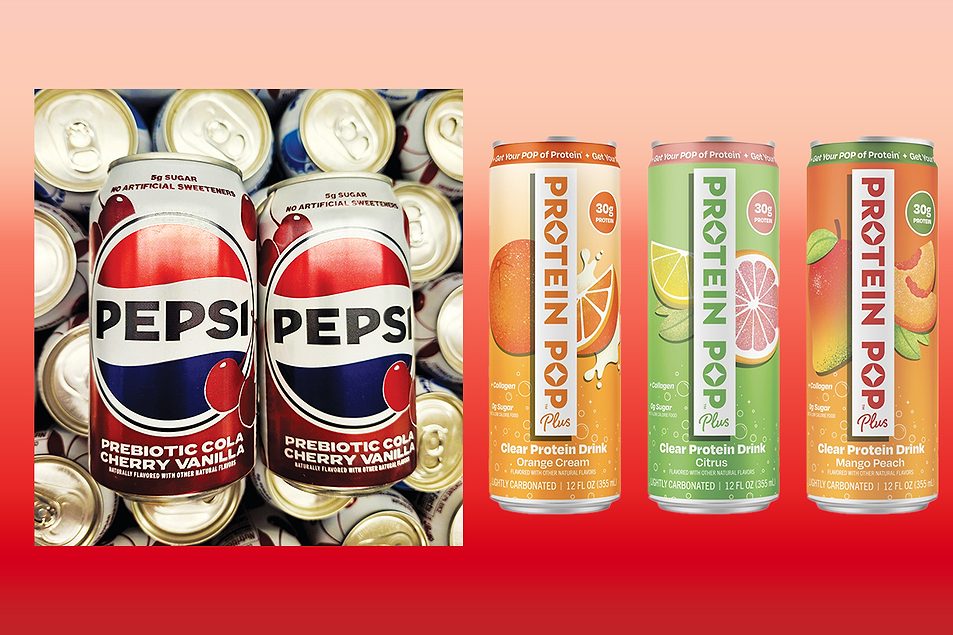
Protein is currently the star of the functional drink space, but more protein content doesn’t automatically equal a better beverage.

“The real opportunity lies in matching the right protein to the right health benefit, as different proteins deliver different physiological outcomes,” said Sophie Zillinger Molenaar, global marketing execution lead, FrieslandCampina Ingredients. “Caseinates, for example, support sustained amino acid release, making them the smart choice for applications targeting long-lasting muscle synthesis. Whey proteins, on the other hand, are rapidly digested and absorbed, making them particularly well suited for post-workout nutrition where fast amino acid delivery is important.”

Advertisement

Fat is important in some functional beverages, too, especially those targeted for the youngest and oldest consumers. Many need healthful fatty acids and active nutritional lipids.

“There are those who seek meal replacement options, fitness enthusiasts and those with medical needs who rely heavily on the nutritional benefits of specialty fats and oils,” said Erhan Yildiz, customer innovation director, AAK USA Inc. “Benefits include brain function support, reducing inflammation, protecting heart health and finally balanced nutrition.”

Some of the most popular functional beverage ingredients are creatine, ashwagandha, B-vitamin blends, paraxanthine, magnesium and natural caffeine, said Ashley Kraus, consumer insights manager, Imbibe.

Another is citicoline, which helps support focus, attention, working memory and mental energy, said Maria Stanieich, senior marketing manager, Kyowa Hakko USA. It pairs well with mental support ingredients, such as lion’s mane, ashwagandha and rhodiola rosea.

Advertisement

“Unlike caffeine, Kyowa’s citicoline is a nonstimulant ingredient that provides natural support for cognitive function, neuroprotection and neurotransmission without the jitters,” Stanieich said. “It is completely water soluble and neutral in taste.”

Creatine — an amino acid-based compound in the body that helps produce energy for muscles and the brain — also is available as an isolated ingredient. New formats have moved creatine from supplements to familiar foods, including functional beverages.

Glanbia Nutritionals developed an encapsulated creatine monohydrate that has elevated dispersibility and stability in water compared to traditional creatine monohydrate ingredients. It does not crystallize when exposed to ultra-high temperature processing.

BioVivo Sciences offers American ginseng and natural caffeine from green tea. The ingredients lend themselves to wellness and energy beverages, said James Roza, vice president of technical services.

Advertisement
Mocean.jpg

Mocean’s product formulation features a blend of functional ingredients, like caffiene from green tea, along with echinacea and elderberry, which are botanical extracts associated with boosting immunity.

| Photo: Mocean

“American ginseng has been researched extensively for its immuno-supportive role in maintaining metabolic health and is complementary to other antioxidants and vitamin C commonly used to formulate wellness beverages,” Roza said. “Naturally derived caffeine is a better alternative to the synthetic anhydrous form that’s typically used in energy drinks. Due to the presence of other plant compounds, it sustains energy levels longer than its counterpart by providing a slower uptake.”

Natural Alternatives International produces beta-alanine, a non-essential amino acid that boosts muscle carnosine levels. Carnosine is an antioxidant the body produces in muscle, brain and other tissues that support wellness.

“The challenge is that carnosine itself doesn’t supplement well directly, so we work with beta-alanine, the rate-limiting building block the body uses to make carnosine,” said Mark LeDoux, chairman and CEO at Natural Alternatives International. “By boosting beta-alanine intake, you boost carnosine levels, providing benefits we’ve now seen across four major systems: cognitive health and mood, muscle endurance and recovery, bone integrity and heart health.”

Advertisement

LeDoux added that there’s opportunity to use beta-alanine with collagen or creatine for multi-system positioning, with electrolytes and caffeine for sports recovery, or with lion’s mane and omega-3s for brain-health.

“The right choice (of functional ingredients) always comes down to what the brand is trying to achieve, and increasingly that means going beyond hydration into things like focus, mood or recovery,” Kraus said. “The formulation approach changes with the ingredient and the format, but it always comes down to balancing taste, stability, solubility and processing against the finished drinking experience. You can’t formulate the functional ingredient in isolation; it should work as part of the whole system.”

Many functional ingredients bring some kind of tradeoff. There may be bitterness, astringency, earthy or metallic notes and solubility issues, for example.

Mōcean is focused on providing multiple benefits. The product’s formulation uses a blend of functional ingredients. Echinacea and elderberry, for example, are botanical extracts associated with boosting immunity.

Advertisement

“Perilla extract is high in rosmarinic acid,” Vieira said. “It balances the immune response by dampening overactive inflammatory pathways, ensuring host defenses react effectively without causing collateral tissue damage. Organic green tea extract is a source of clean caffeine.”

Fruit concentrates also may contribute functional nutrition, at the same time they add color, flavor and sweetness. They also provide “made with real fruit” labeling credentials.

“Cranberry concentrate, for example, contains naturally occurring vitamin C, fiber, minerals and polyphenol antioxidants,” said Seema Kedia, senior manager-strategic marketing, Ocean Spray Ingredients. “Research also suggests beverages made with cranberry concentrate may help reduce undesirable bacteria and promote a healthier balance of the gut microbiome, supporting digestive wellness.”

Cranberries are a natural source of proanthocyanidins, which have been shown to help prevent bacterial adhesion in the urinary tract. The benefit is recognized by an FDA Qualified Health Claim and the European Association of Urology Guidelines.

Advertisement

Biotics, including pre, pro and post, all have a home in functional beverages. Unlike most probiotics, which require refrigeration to maintain efficacy, postbiotics have application in ambient beverages.

Cargill offers a postbiotic ingredient that helps support immune and gut health. Produced through fermentation, it contains a mix of beneficial metabolites and bioactive compounds.

“Our postbiotic ingredient works particularly well in beverages that consumers already associate with health and wellness, including teas, juices, wellness shots, powdered drink mixes and sports beverages,” said Max Hintz, product line director for nutritionals-North America, Cargill. “It is inanimate, with excellent heat and pH stability across a range of processing and storage conditions.”

Advertisement
Continue Reading

Business

New restaurant planned next to Bolton’s Queens Park

Published

on

Business Live

Park is designated as conservation area

The plans for the restaurant at Mayor Street, next to Queens Park, Bolton.

The plans for the restaurant at Mayor Street, next to Queens Park, Bolton(Image: Local Democracy Reporting Service)

Plans for a new restaurant in Bolton are set to be considered.

Advertisement

The three-storey building in question, on Mayor Street, next to Queens Park, was completed in 2024. The premises has a permitted retail use at ground floor, which is currently unoccupied and a flat above.

Queens Park is a grade II listed registered park and garden and is also designated as a conservation area. The building is around 85 metres from the entrance lodge to the park.

The application, in the name of Shahid Mahmood, requests a change of use for the ground floor from retail to restaurant.

Contained with the application are CGI visuals of the intended interior of the restaurant should the plans be passed. There is a car park directly opposite the application site serving the park.

Advertisement

A design and access report in support of the plans said: “No external changes are proposed, other than a flue which is situated to the side elevation, towards the rear of the building.

“Internally, the ground floor will consist of a seating area, food preparation area and kitchen.

The proposed hours of opening for the restaurant are 9am-11pm; Monday to Sunday.

Pre-application advice sought from Bolton council said hat the proposed change of use itself would not have any impact on the character and appearance of the building or the surrounding area and in this regard would be acceptable.

Advertisement

The advice added: “A noise and odour assessment would be required together including details of the extraction system and flue and any required mitigation.

“Signage would require separate consent and would need to be designed sympathetically to avoid harm to the Queens Park conservation area.”

Planners in Bolton will consider the plans in the coming weeks.

To find all the planning applications, traffic diversions, road layout changes, alcohol licence applications and more in your community, visit the Public Notices Portal.

Advertisement
Continue Reading

Business

UK business confidence rebounds, Barclays Q2 index shows

Published

on

UK business confidence rebounds, Barclays Q2 index shows

Confidence among British businesses has rebounded following the recent changes in Government, with 63 per cent now optimistic about the UK economy, up from 57 per cent in the first quarter, according to Barclays’ latest quarterly health check on the nation’s firms.

The bank’s Q2 Business Prosperity Index, which combines survey findings with anonymised client data from more than 900,000 UK businesses, also found that firms’ optimism about their own prosperity over the next 12 months has risen to 86 per cent, up from 83 per cent in the first quarter.

Business leaders appear to have welcomed the shift towards regional decision-making, with 60 per cent agreeing that devolution will improve economic opportunities in their area. Support was strongest in areas with prominent mayoralties: London (68 per cent), the West Midlands (64 per cent) and the North West (63 per cent).

More than a third (34 per cent) expect their business to benefit from the creation of No.10 North, and over half of those (55 per cent) expect it to increase investment and opportunities for their region. That sentiment was most prominent in London (69 per cent) and the Midlands (54 per cent), while 59 per cent of businesses in the North West believe it will enable greater control over regional decision-making. By sector, Technology (81 per cent) and IT and Telecoms (75 per cent) firms are the strongest supporters of devolution, and also expect to see the most benefit from No.10 North.

Abdul Qureshi, head of Barclays Business Banking, said: “Greater regional decision-making gives local leaders the opportunity to align skills, infrastructure, finance and business support more closely with the distinctive strengths of local economies. From technology clusters and advanced manufacturing to professional services, life sciences, clean energy and creative industries, the UK has deep regional specialisms that can be engines of national growth.”

Advertisement

The confidence is starting to show up in behaviour. Barclays’ client data, comparing the second quarter of 2026 with the same period last year, shows SMEs increased savings by 1.5 per cent while the number of loans rose 0.9 per cent. Larger firms went further: among the bank’s corporate clients, the number of loans rose 3.2 per cent and lending values were up 9.3 per cent, suggesting some are already borrowing to fund investment and growth.

Several sectors delivered notably strong quarters. Software businesses recorded a 21.9 per cent rise in incoming cash flows, while commercial property investors focused on healthcare and residential developments saw increases of 22.5 per cent and 10.3 per cent respectively. Residential property firms lifted lending balances by 7.6 per cent, with loan numbers up 7.0 per cent, a rise beaten only by housing associations (14.4 per cent) and restaurants and cafes (14.5 per cent).

Looking ahead, 56 per cent of businesses plan to increase investment over the next 12 months and 46 per cent are likely to seek new finance to support expansion and build resilience. Top priorities are staff training and development (41 per cent), research and development (36 per cent), new or upgraded equipment (34 per cent) and digital products (33 per cent). That marks a sharp shift in intent after a year in which just 23 per cent of businesses said they borrowed to fund investment.

The legacy of the pandemic still weighs on some financing decisions. Of the 42 per cent of businesses that received financial support during Covid, 67 per cent have since taken out additional finance. Among those that have not, 36 per cent cite concerns about taking on more debt and 26 per cent say borrowing costs are too high.

Advertisement

Firms also made clear that confidence alone will not unlock spending. Almost a quarter (23 per cent) believe the new Government should prioritise reforming or reducing business taxation, a policy backed by 32 per cent of small and micro businesses, while 32 per cent of larger businesses want investment in technology and digital infrastructure to be the key focus.

Matt Hammerstein, chief executive of Barclays UK Corporate Bank, said: “The UK’s growth prospects depend on businesses having the confidence to invest. It is encouraging to see firms preparing to commit capital again, particularly in skills, R&D, equipment and digital capability, which are critical to improving productivity.

“The priority now is turning that intent into action. With clearer policy direction and the right access to finance, ambitious businesses across every region and sector can invest with confidence, scale faster and contribute to stronger economic growth.”

Barclays said its Business Prosperity Fund, part of the £22 billion of lending it has made available to business banking and corporate clients in 2026, is open to new and existing customers seeking to invest in resilience and growth.

Advertisement

Amy Ingham

Amy Ingham

Amy Ingham is a reporter at Business Matters, covering UK business news with a focus on breaking news, business policy, late payments and insolvency. She joined the magazine in 2026 after completing the NCTJ Diploma in Journalism at Harlow College’s journalism school. Her recent reporting includes British Steel’s nationalisation and its impact on SME suppliers, the decline in late payments by large firms, and Insolvency Service director disqualifications. Reach her at aingham@cbmeg.co.uk.

Advertisement
Continue Reading

Trending

Copyright © 2025