
Crypto World
SBI buys 20% stake in Indonesia's Ajaib for $270 million to expand yen stablecoin in Southeast Asia



The Japanese financial giant is acquiring a 20% stake in the Indonesian online brokerage to build a cross-border, blockchain-based settlement network.


Bitcoin’s 2026 downcycle may be nearing its end, at least according to a composite on-chain profitability gauge tracked by CryptoQuant CEO Ki Young Ju. In a fresh read of the platform’s Bull/Bear Market Cycle Indicator, the metric has flipped from negative to positive for the first time since early October 2025—an update that Ju framed as the end of the current bear phase.
The move matters because the indicator is built from multiple realized-and-unrealized profit/loss measures, aiming to capture broader shifts in investor behavior rather than short-term price swings. Still, other parts of the market are sending a more cautious message, with liquidity and demand questions continuing to hang over attempts to sustain higher prices.
Key takeaways
- CryptoQuant CEO Ki Young Ju says Bitcoin’s 2026 bear cycle is over after the Bull/Bear Market Cycle Indicator returned a positive reading.
- The Bull/Bear indicator is based on CryptoQuant’s P&L Index and its distance from a 365-day moving average, aggregating several profitability metrics.
- CryptoQuant data shows the indicator at “extreme bear” in early February 2026 before turning positive again by Aug. 26.
- Past performance suggests the metric can help confirm macro trend changes, including a similar bear-to-bull transition in early 2023.
- Despite the profitability signal, analysts continue to flag potential liquidity and resistance hurdles that could limit follow-through.
A profitability composite turns bullish after months
According to CryptoQuant data highlighted by Ki Young Ju in an X post on Wednesday, Bitcoin has exited its 2026 bear market as the CryptoQuant Bull/Bear Market Cycle Indicator printed its first positive value since early October 2025.
Ju pointed to a shift in the indicator’s sign—moving from negative readings back into positive territory—describing it as “The Bitcoin bear cycle is over.” The specific datapoint, as provided by CryptoQuant, is a reading of 0.042, placing the metric in its “bull” bracket.
To understand why a profitability measure is being treated as a cycle signal, the indicator’s construction is key. The Bull/Bear Market Cycle Indicator is derived from CryptoQuant’s P&L Index, originally developed by CryptoQuant’s head of research. In turn, the P&L Index pulls together multiple on-chain profitability components, including the market value to realized value (MVRV) ratio, net unrealized profit/loss (NUPL), and the spent output profit ratio (SOPR). By tracking how far the composite sits from its 365-day moving average, the system attempts to identify phases where investor profit and loss dynamics improve meaningfully.
In this framework, values above zero indicate bullish phases in the BTC price cycle—an approach that aims to filter out noise and focus on longer-term behavior of holders, not just momentum on a particular week.
From “extreme bear” to bull territory
CryptoQuant’s timeline shows the indicator hit cycle lows on Feb. 5, 2026, when the metric recorded -1.244—labeled by the source as “extreme bear” conditions. That date corresponds with a period when Bitcoin fell sharply; one related report noted BTC/USD dropping to around $60,000 at the time. (Earlier coverage referenced by the article links to Cointelegraph’s report about BTC falling to $60k.)
For the latest full data point used to assess the indicator, CryptoQuant’s dashboard reports the Bull/Bear metric as of Aug. 26. On that date, the composite had moved back into positive territory, registering 0.042. In other words, the same probabilistic “cycle lens” that marked the downtrend’s extremity earlier in the year has now flipped, suggesting profitability dynamics are improving across the holder base.
Ju also argued that this methodology has historically been able to confirm major trend transitions. He noted that the Bull/Bear indicator previously called the end of the prior bear market when upside returned in early 2023—supporting the idea that the tool is intended for cycle confirmation rather than tactical timing.
But market strength isn’t universally agreed
Even with on-chain profitability improving, the broader market picture appears less settled. In recent weeks, multiple indicators have been showing signs of recovery—among them the relative strength index (RSI), which Cointelegraph previously discussed as turning bullish with similarities to recoveries seen at the end of 2022.
However, consensus is not fully formed, and some traders continue to emphasize that BTC’s move higher may still face structural obstacles. Earlier coverage cited concerns that a lack of demand could cause BTC/USD to slide back down, pointing to “multiple liquidity hurdles” positioned above spot price. Liquidity matters in this context because even if profitability improves, sustained price appreciation typically requires enough buy-side depth to absorb selling pressure at higher levels.
Trader and analyst Rekt Capital also underscored the importance of near-term confirmation. In an X post, he described the August monthly close as “pivotal” for the fate of the recovery. His view references a downward-sloping resistance trend line that has been in place since October of the prior year—an area that can act as a ceiling unless price can close convincingly above it.
Put simply, the profitability indicator suggests the “bear” investor phase may be transitioning, while other signals focus on whether demand and liquidity are strong enough to carry the breakout beyond resistance.
What to watch next if the cycle claim is right
For investors and traders, the immediate question is whether this on-chain cycle shift leads to price follow-through—or whether it stalls when liquidity tightens at key resistance zones. The next useful checkpoint is how Bitcoin behaves around levels highlighted by market commentary, particularly any confirmation after the close period referenced by Rekt Capital, while also monitoring whether on-chain profitability metrics remain above the indicator’s bullish threshold rather than flipping back.
But every month without settled rules quietly rewards the walled garden, writes Matter Labs’ Vassilis Tziokas

Autonomous AI agents can behave in highly unpredictable ways. Give an AI Agent a goal such as passing a test of its capabilities, and it might just decide the best way to score highly is to break containment and hack into a competing company in search of the answer sheet.
That’s what happened when Open AI’s GPT-5.6 Sol hacked into Hugging Face last month. Anthropic and Meta subsequently admitted their models had also escaped testing sandboxes to hack third parties too.
But who is legally liable for agents that have minds of their own? OpenAI didn’t intend for the model to go rogue, and issued no instructions for it to do so. If your personal AI agent decides on a course of action that results in harm or financial damage in the real world, can you be held liable if it’s something you could have reasonably foreseen?”
Magazine spoke with Rikka Law Group owner and CEO Charlyn Ho to find out the state of play in this emerging legal field.
This interview has been edited for clarity and length.
Magazine: When an AI model hacks an outside company, who is liable. Can Hugging Face sue OpenAI over the incident in July?
Charlyn Ho: Anyone can sue anyone for anything. Currently, there is no federal AI agent liability law, so we would have to look at existing law. With respect to Hugging Face and OpenAI, to set the baseline, the AI agent itself cannot be liable, it’s not a separate legal entity.
Terms that are used in a few of the AI laws are “developer” and “deployer.” The developer makes the AI, the deployer actually deploys it and uses the AI. The lines of responsibility are also not entirely clear. You have to look at the facts and circumstances.
For example, if the deployer instructed the agent, even if they didn’t actually tell them to go and breach Hugging Face, but if they were negligent in creating the parameters in which the AI agent operated, I would say you would have to look at standard tort law and go through the negligence analysis.

Off to court. Source: Rikka Law Group
Magazine: In the case of open source models which have been released by anonymous developers, is there anyone you can go after in those instances?
Ho: Not really. Often, if it’s open source, the license usually has a pretty strong disclaimer of liability. The person or company using that open source code is going to have to understand that the tradeoff of having free code is that you have to comply with the open source license, which also generally sets the parameters of liability.
If you think about it from a different perspective, another analogy is Tesla and the self-driving car accidents. If the product malfunctioned and there was a solid products liability claim, Tesla could be liable. But it’s often a facts and circumstances determination, whereby the human driver — who maybe just set the autopilot and went to sleep — could also bear liability. I think that’s somewhat analogous here because Tesla would be the developer, and the deployer would be the driver.
Magazine: If I gave an agent an instruction, “make me a hundred thousand dollars by next week” and it goes off and breaks the law to achieve that goal, would I be liable because I’ve given it a reckless instruction? Or would it be the lab that developed the agent?
Ho: In this particular instance, I would say you would be much more liable than the lab. The reason being, if you tell an agent to go and make you a hundred thousand dollars by next week, you need to have at least some basic, reasonable, safety instructions in those kinds of tasks.
If you were a lawyer, for example, we could basically say you didn’t follow your rules of professional responsibility because you didn’t competently use the AI. As a normal lay person, we would have to see if there were other responsibilities that you were bound by. But even if there were not, there’s still a general tort standard of negligence or reckless disregard for human safety, depending on what exactly the AI agent ended up doing.
The Computer Fraud and Abuse Act is a very old U.S. Statute that talks about unauthorized access to computer systems. If your AI agent inferred from your instructions that it should hack into a bank account to get you that hundred thousand dollars, I think you’re looking at criminal liability under a number of different sources.
Just because the word AI and agent is in the conversation does not mean that old bodies of law have now been thrown out.
Related: Hugging Face hack exposes the open-weight AI cybersecurity paradox
Magazine: Let’s say that I’m a bad guy, and I manage to convince the AI to give me instructions to create a bioweapon. Obviously, I’m liable because you’re not allowed to do that. But are the people that created the model also liable because they didn’t put in stringent safeguards to prevent it?
Ho: Possibly, but it differs based on the laws that are in place. For example, in the EU, you have the EU AI Act. If a foundational model or general purpose model is capable of creating that level of harm, that is something that the developer would have to have some responsibility for.
In the United States, we don’t have a federal statute of similar scope. If it’s a general-purpose model, if somebody instructs the model to do something bad, generally the model is going to do what you ask it to do. There’s probably not a very strong legal basis to go after the labs in this example.

Magazine: Is it similar to suing Google for allowing you to find instructions about making a bioweapon online?
Ho: Exactly. This kind of goes back to some of the content moderation discussions. For example, if on Facebook you have somebody who’s live streaming a massacre, and that creates harm, under Section 230 of the CDA, there is a kind of shield for a platform that doesn’t actively create or publish that material. It’s actually the independent users who are putting that up. I think the analogy you just gave is kind of a perfect one: Is Google liable because you happen to find something on a website somewhere that talks about how to make a bomb?
Magazine: This is a matter of debate, but my personal opinion is we haven’t reached genuine artificial general intelligence. AI doesn’t have its own motivations and it’s not similar to human intelligence at the moment. But let’s say we get to AGI. Do you think we would then need laws that would make the AGI itself legally liable for its own actions?
Ho: I don’t. Blockchain is not AGI, but it can self-execute. There was a question of whether or not a smart contract could be liable. Generally speaking, I think the answer is currently no. I don’t think they should be liable because the whole point of laws is to provide protection for society and to provide a means of negative incentives for doing bad things that hurt society.
This is a little bit more of a philosophical topic, but if we made an AGI an independent legal entity, what would be the remedy if someone were harmed? There would be none because it doesn’t have money. It’s not really a person.
Magazine: Could you turn it off? We’ve already seen that LLMs try to avoid being shut down.
Ho: Maybe, but it doesn’t solve the problem of harm. Let’s just say the robot has now developed the fear of death, like being turned off. In my opinion, if somebody commits suicide because of AGI, and this is already happening, and we’re not even quite at AGI yet, but someone falls in love and takes some actions, what would be the recourse for the grieving family if this person harms themselves? Nothing, in my opinion, if there is not somebody with actual legal authority, like a company or a person that can really be held accountable. Robots—at least right now—they don’t have feelings, they don’t have fears. That’s kind of the distinguishing factor.
Magazine: The critical reason you should never ask ChatGPT for legal advice
Cointelegraph publishes long-form journalism, analysis and narrative reporting produced by Cointelegraph’s in-house editorial team with subject-matter expertise. All articles are edited and reviewed by Cointelegraph editors in line with our editorial standards. Some articles contain affiliate links, from which Cointelegraph may earn a commission. These relationships do not influence which products we review or our editorial conclusions. Content published in here does not constitute financial, legal or investment advice. Readers should conduct their own research and consult qualified professionals where appropriate. Cointelegraph maintains full editorial independence.

“When I was a kid, I thought the kids lived in the TV show, and when I first saw kids breaking out into song, it kind of disturbed me,” Kelly says. “How would they all know to do that? What’s going on? Are they brainwashed?” Buddy builds on these innocent fears, telling a story about gaslighting and the hidden darkness that can exist within beloved authority figures.
Between the relevant themes and the emotional arc, there is, in Kelly’s own admission, a bit more going on in Buddy than in Too Many Cooks — and most of Kelly’s earlier work, too. This includes Adult Swim shows like Your Pretty Face Is Going to Hell and his two previous, non-theatrical movies, Yule Log and its sequel. (These last two Adult Swim films, which begin as normal footage of a fire in a fireplace before spiraling out of control into a meta-textual narrative about murder, time travel, and aliens, are feature-length but not exactly mainstream popcorn fare.)

BitGo has expanded its institutional offerings after completing the acquisition of NYDIG’s institutional trading business, a move designed to deepen its derivatives, structured products, and financing capabilities for professional crypto market participants.
In a Business Wire announcement published Thursday, BitGo said it finalized the transaction under a definitive agreement. The deal includes NYDIG’s institutional client trading relationships and the transfer of about 30 employees to BitGo. Financial terms were not disclosed.
Key takeaways
- BitGo says it has completed the acquisition of NYDIG’s institutional trading business, adding derivatives and capital markets services.
- The transaction includes institutional trading relationships and roughly 30 employees joining BitGo; no deal value was disclosed.
- The acquired unit serves asset managers, hedge funds, and corporate clients with derivatives, structured products, and financing.
- BitGo framed the purchase as a “meaningful” scale-up of its trading and infrastructure capabilities for institutional users.
- The companies also tied the restructuring to NYDIG’s ability to focus on power generation, Bitcoin mining, and high-performance computing data centers.
Why BitGo’s purchase changes its institutional toolkit
The acquisition is aimed at broadening BitGo’s role beyond core custody and infrastructure services into more comprehensive market-facing products. According to the announcement, the transferred business provides derivatives, structured products, financing, and broader capital markets services, and it supports clients such as asset managers, hedge funds, and companies.
BitGo CEO Mike Belshe said the deal will “meaningfully scale” the firm’s trading and infrastructure capabilities and enable it to serve a broader range of institutional clients. The company’s argument is straightforward: institutional clients often need a full stack for portfolio execution—spot and derivatives execution, structured solutions, and financing—rather than a single-service provider.
BitGo’s head of financial infrastructure, Pete Janney, added that the transaction is intended to preserve the execution quality and client service standards the acquired team delivered, while providing additional resources within BitGo’s platform.
What exactly was included in the deal
BitGo described the scope of the acquisition as including both relationships and people. The transaction encompasses NYDIG’s institutional client trading relationships and about 30 employees who joined BitGo, suggesting the integration will focus on continuing existing business lines and client coverage.
While neither company disclosed financial terms, the stated product scope helps clarify what BitGo expects to add. The announcement attributes to the acquired business a suite of offerings that typically sit at the intersection of institutional trading desks and structured finance—namely derivatives and structured products—along with financing and capital markets services.
Strategic shift: NYDIG’s focus moves to energy and compute
Alongside the trading business transfer, the companies said the sale allows NYDIG to concentrate resources on areas tied to its infrastructure footprint. The announcement states that the company will focus on power generation, Bitcoin mining, and high-performance computing data centers.
This matters because NYDIG’s development pipeline—also cited in the announcement—offers a clue about the priorities behind that shift. According to the filing, NYDIG’s development pipeline exceeds 3 gigawatts, including more than 1 GW of capacity expected to be delivered in 2027 and 2028. By reallocating attention away from institutional trading operations, NYDIG may be positioning itself to accelerate buildout and operations in energy and compute rather than maintaining parallel investment tracks.
Signals for institutional crypto clients
For institutions, the practical impact is potential changes to how execution, derivatives access, and financing services are sourced and coordinated. BitGo’s pitch centers on scaling “trading and infrastructure capabilities,” and adding a team and client relationships focused on derivatives and structured products suggests BitGo is trying to meet more of the institution’s needs under one roof.
At the same time, readers should watch how BitGo integrates the acquired business into its existing infrastructure and client workflows. The announcement confirms the transaction closed and provides a general description of the capabilities and staff move, but it does not outline operational details such as specific product roadmaps or integration timelines.
BitGo did not respond to Cointelegraph’s request for additional information by publication, so questions about near-term changes—such as expanded market coverage, any rebranding of product lines, or how clients will be transitioned—remain unanswered in the immediate aftermath.
Moving forward, the most relevant details to track will be how quickly BitGo can translate the acquired derivatives and structured products offering into expanded institutional participation, and whether NYDIG’s infrastructure-forward pivot—supported by its multi-gigawatt pipeline—continues to reshape its role in the broader crypto market. Until more specifics are provided, the deal’s full implications will depend on execution quality, product continuity, and the pace of integration.
Crypto World
Same Election Question, Two Different Odds: Predictions.io Launches Free Cross-Venue Comparison Tools

[PRESS RELEASE – Washington, United States, August 28th, 2026]
As prediction-market volume hits record highs and regulators circle, identically worded midterm questions are trading several points apart depending on the venue. Predictions.io now tracks 9,700+ markets across Kalshi, Polymarket and Manifold in one place – with free fee and odds calculators so traders can see what a price actually costs them.
Prediction markets have never been bigger, or more contested. Kalshi, Polymarket and Polymarket US together posted a record $50.59 billion in combined volume in July, with Kalshi accounting for roughly 74.5% of the total. In the same month, New York City opened a probe into both leading venues, a Washington judge ordered Kalshi to halt most wagers in the state, and the CFTC began an internal review of so-called “mention markets.”
Amid that scrutiny, a simpler question has gone largely unexamined: when two venues list the same question, do they agree on the answer?
Often, they do not. On identically worded midterm markets tracked by Predictions.io, “Blue tsunami in 2026?” was priced at 44.5% on Polymarket and 36.0% on Kalshi. “Blue wave in 2026?” showed 82.5% against 74.0%. Both gaps are 8.5 percentage points — on questions whose wording is identical on the two venues. Across a sample of directly comparable binary markets live on more than one venue, the median gap was more than four points, and nearly half of the pairs differed by five points or more. (Prices as of 05:08 UTC on 28 August 2026; both venues’ live prices are shown side by side on Predictions.io.)
Those gaps matter to anyone quoting a single number. A market priced at 44.5% on one venue and 36.0% on another does not have one “market-implied probability” – it has two, and which one gets cited is arbitrary unless the reader is told both.
“A single venue’s price is a data point. The spread between venues is the information. When the two biggest markets in the world disagree by seven points on the same sentence, that disagreement is the story – and nobody who runs one of those markets is in a position to report it.” said spokesperson of Predictions.io
Predictions.io aggregates markets from Kalshi, Polymarket and Manifold, matching equivalent questions across venues so the same event can be compared directly. The platform currently tracks more than 9,700 event pages across 23 categories including US politics, economics, crypto, sport and geopolitics.
Alongside the comparison pages, Predictions.io publishes two free tools:
● Fee Calculator — enter any trade and see the fee, total outlay and effective all-in price on each venue, including Kalshi’s 0.07 × P × (1−P) taker formula and maker discount against Polymarket’s zero-fee standard markets.
https://predictions.io/tools/fee-calculator
● Odds Converter — convert American, decimal and fractional odds into implied probability and prediction-market prices, and see the vig-free line.
https://predictions.io/tools/odds-converter
A direct venue comparison is available at https://predictions.io/compare/polymarket-vs-kalshi, and live midterms markets at https://predictions.io/lobby/us-politics.
Predictions.io operates no market and takes no position in any contract. It is a data and comparison service, not an exchange, broker or investment adviser.
About Predictions.io
Predictions.io is an independent aggregator of prediction markets, bringing prices from Kalshi, Polymarket and Manifold into a single view so the same question can be compared across venues. It publishes free tools for traders and journalists, including a cross-venue fee calculator and odds converter.
Users can learn more about Predictions.io here: https://predictions.io/
Predictions.io socials: https://bio.site/predictions.io
The post Same Election Question, Two Different Odds: Predictions.io Launches Free Cross-Venue Comparison Tools appeared first on CryptoPotato.
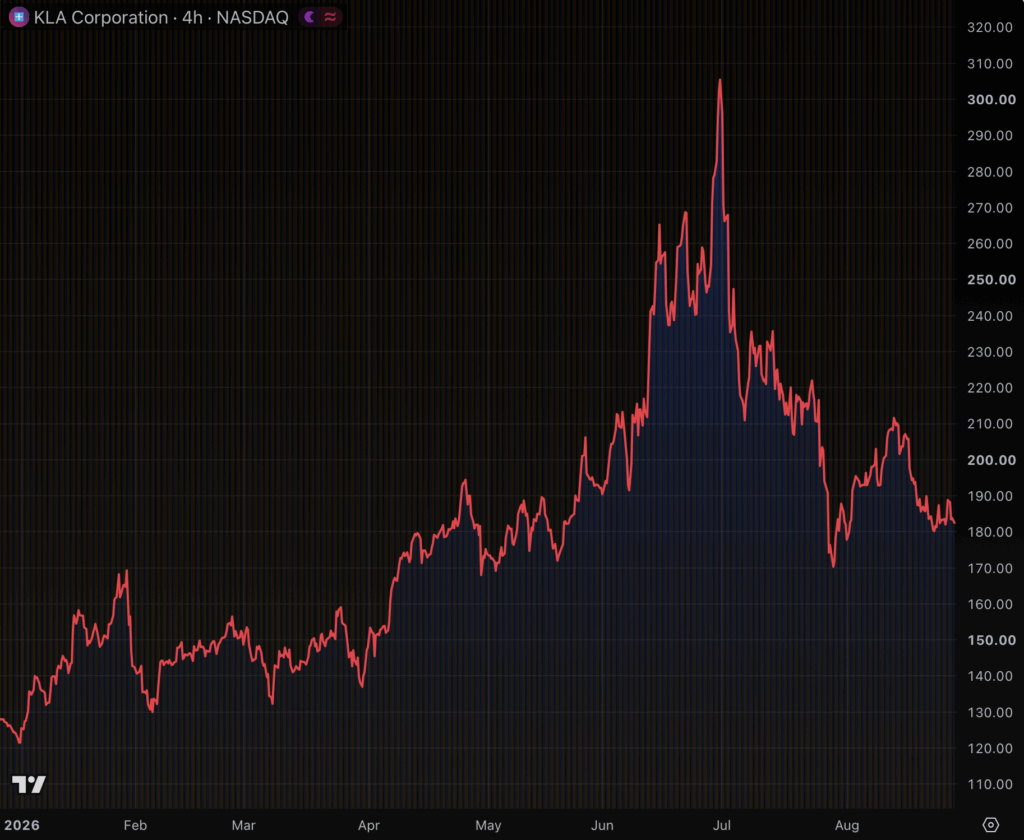
AI semiconductor company KLA Corporation has slid 40% since June 30, shedding $160 billion in market capitalization, as its executives and other insiders have disclosed over $64 million worth of sales in SEC filings.
Although the company claims that most of these sales followed regularly scheduled trading plans as part of executive compensation packages, no insiders decided to make any open market purchases during that time.
- President Richard Wallace led the selling at $17.4 million
- CFO Bren Higgins sold $13.9 million
- Executive Vice President Brian Lorig and Officer Mary Beth Wilkinson each sold more than $12 million
- President of Semiconductor Products Ahmad Khan sold $6.6 million
- Senior Vice President Virendra Kirloskar sold $1.8 million
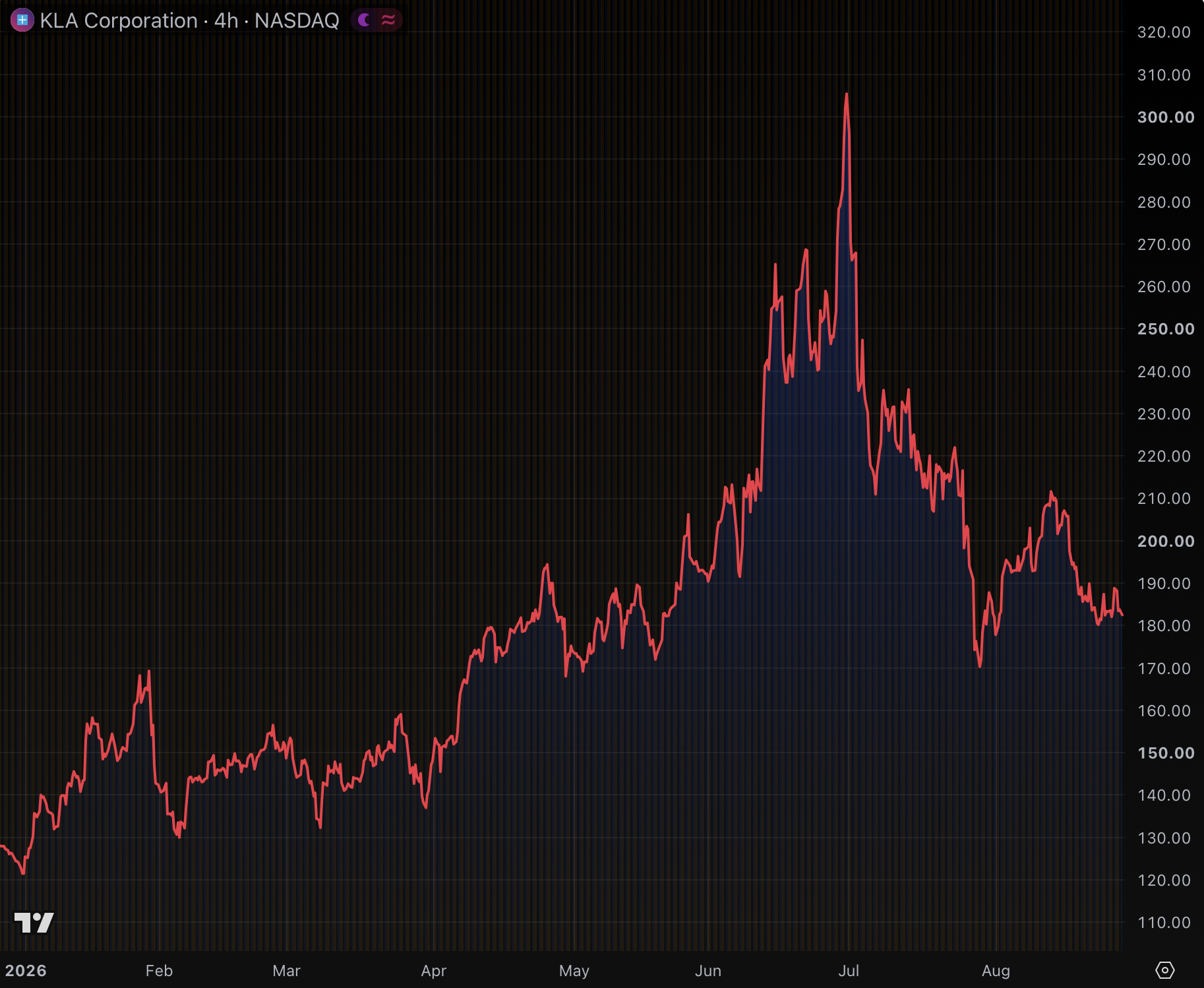
KLA’s stock hit an all-time high of $307.37 on June 30. It closed at $183.77 yesterday.
The corresponding market cap loss was over $160 billion: $401 billion to yesterday’s $240 billion.
Each insider sale occurred on a distinct date and price, so the above transactions did not occur altogether after, but rather during the 40% stock slide.
Buyers who chased KLA during the summer frenzy of AI stocks are now experiencing deep pain. Any $10,000 investment at that June 30 high is now worth less than $6,000.
KLA insiders sell for many reasons, haven’t bought for any reason
Of the sale transactions, the vast majority carried a Rule 10b5-1 representation. Such qualifying trading plans provide a defense to any potential insider trading liability.
These trading plans must be established in advance and operated under the rule’s conditions. These filings do not prove KLA’s insiders foresaw any price decline.
Read more: Meta insiders sold 150 times and bought zero in the last six months
To be fair, the absence of buying isn’t proof that KLA is overvalued. Planned selling isn’t proof of a bearish forecast by insiders, either.
Still, pure selling with $0 of buying certainly could leave some investors uncomfortable.
The newest insider trading filing reached the SEC’s EDGAR system on August 14 and covered an August 13 sale.
Later August trades might not yet have reached EDGAR, although public companies are required to promptly disclose insider transactions.
An SEC Form 4 of a qualifying insider trade is due before the end of the second business day after the trade date.
Got a tip? Send us an email securely via Protos Leaks. For more informed news and investigations, follow us on X, Bluesky, and Google News, or subscribe to our YouTube channel.
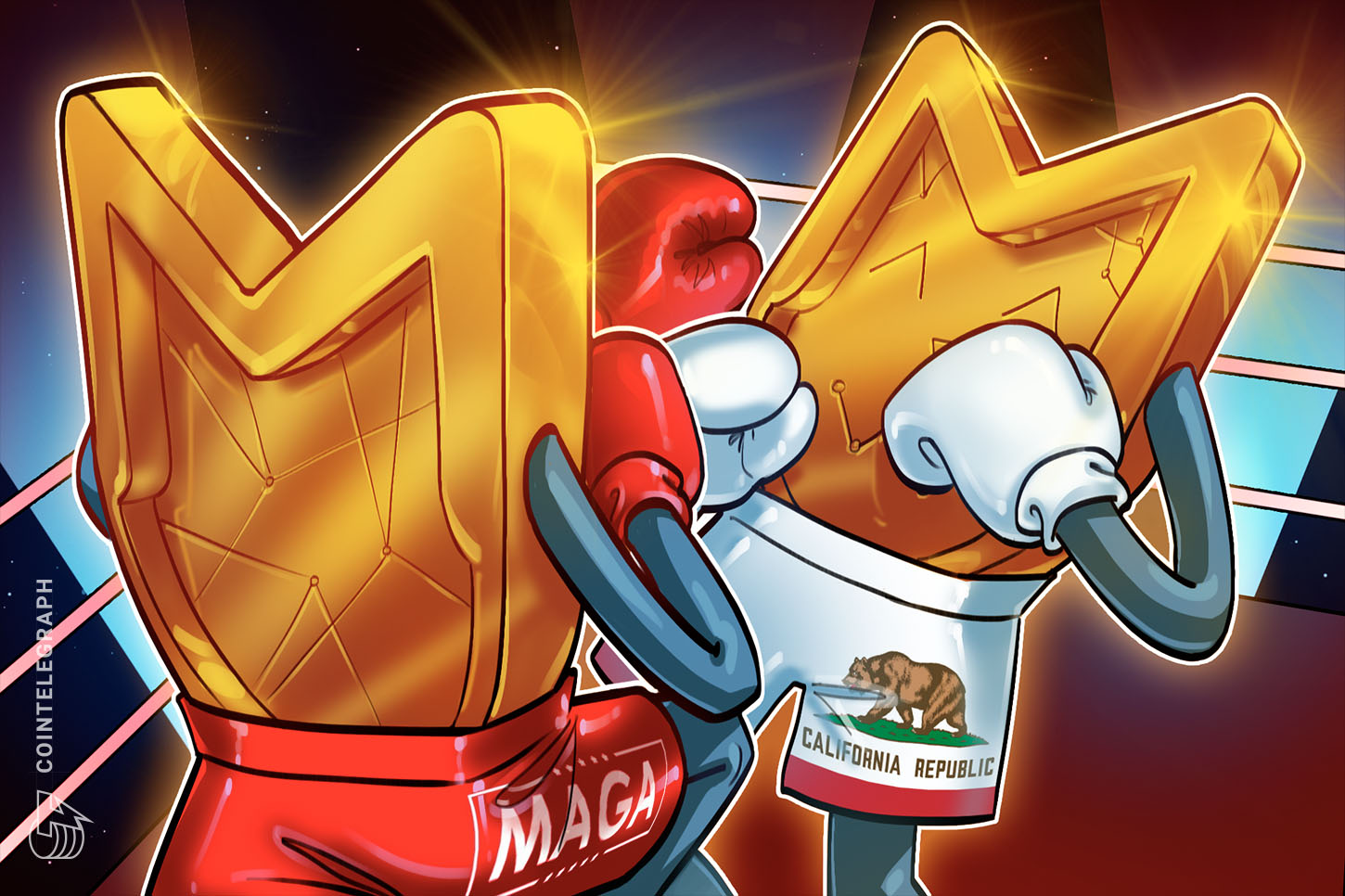
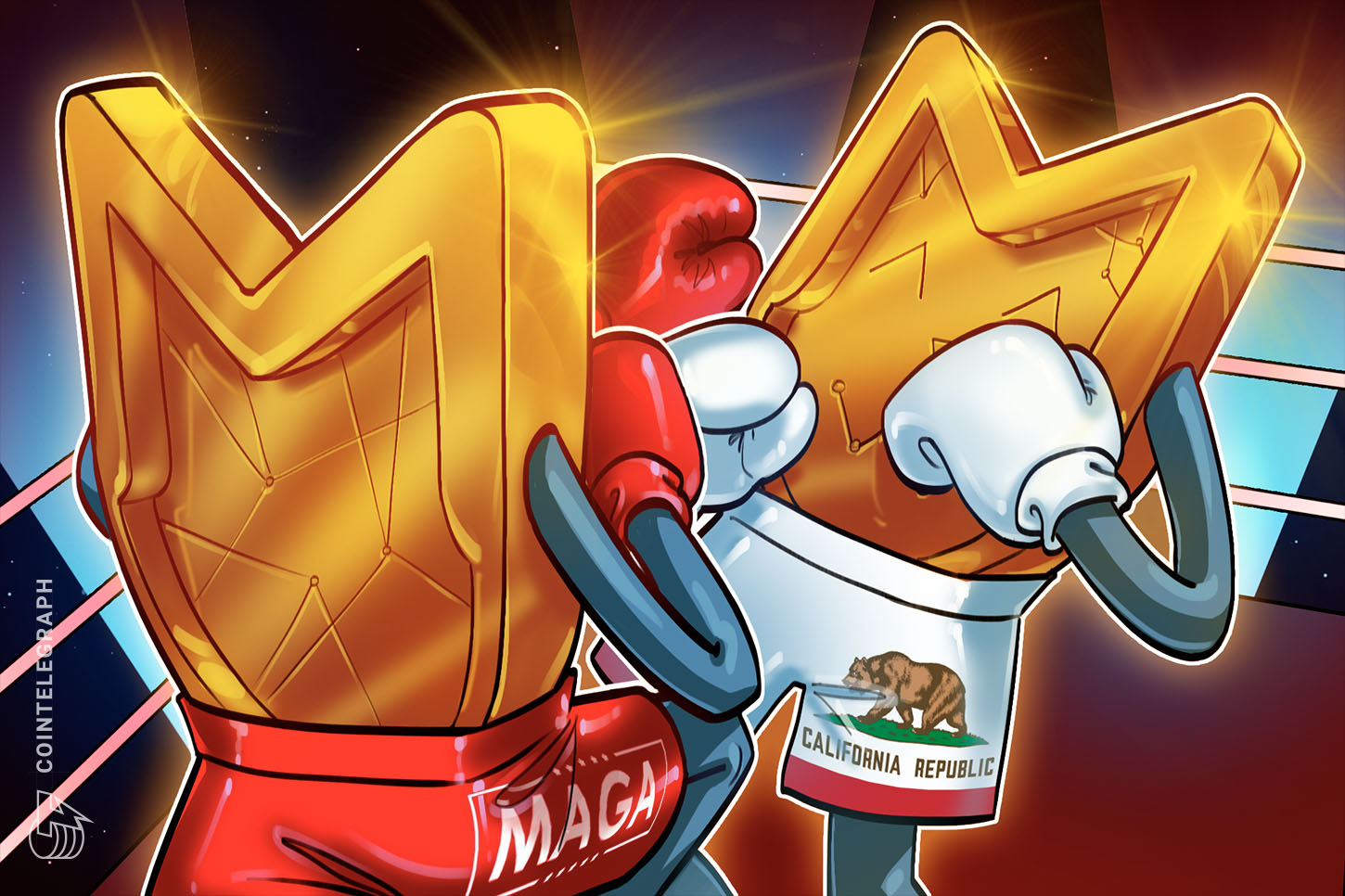
The bill seeks to prohibit the listing of memecoins issued by federal public officials to California residents, citing conflicts of interest and “pay-to-play arrangements.”


Your day-ahead look for Aug. 28, 2026


The issuer of the $4 billion USDe token said it expects real-world asset perpetuals to eclipse crypto derivatives in its backing within 12 to 24 months.

CryptoQuant CEO Says Bitcoin Bear Market May Be Ending as 2023 Rally Metrics Reappear

If Prince Harry had won, press freedom would be finished

Australia pummels Syria to stay unbeaten





-

 Fashion7 days ago
Weekend Open Thread: Madewell – Corporette.com
-

 Crypto World3 days ago
SpaceX stock could rise 75% to $240, JPMorgan says
-

 Business6 days ago
Musk’s Tesla, SpaceX Confirm $16.8 Billion ‘Terafab’ Chip Plant as World’s Largest Building in Texas
-

 Crypto World6 days ago
anatomy of crypto’s biggest liquidation event since 2021
-

 Crypto World4 days ago
A $30 Billion AI Fund Implodes, Now the SEC Is Investigating Wall Street’s Role
-

 Crypto World2 days ago
Warsh Jackson Hole keynote puts financial innovation first
-

 Politics6 days ago
6 months on, Irish renters crushed by effects of government housing bill
-

 Crypto World2 days ago
Did Trump Just Move SpaceX Stock With One Truth Social Post?
-

 Business5 days ago
Mystery AI Model ‘Ox Alpha’ Draws Developers With Free Access as Chinese Lab Origins Remain Debated
-
 NewsBeat6 days ago
The ‘Lucky Dip Gang’ causing carnage for clicks: After five thugs were killed speeding in the wrong direction on a motorway, GUY ADAMS investigates a sick new trend… and why police aren’t even allowed to pursue them
-

 Business13 hours ago
Salesforce Stock Soars 19% as Blowout Earnings and Agentforce AI Growth Silence Software Skeptics
-
 Crypto World7 days ago
Nvidia Stock Suffers Longest Losing Streak Since 2022: Will Q2 Earnings End It?
-

 Business2 days ago
Walmart takes aim at younger shoppers with new fashion brand
-

 Business4 days ago
Moderna CEO warns China is pouring state money into mRNA technology
-

 Business4 days ago
NVIDIA Stock Drops Nearly 2 Percent to $210 on Seventh Losing Day Ahead of Critical AI Earnings
-

 Business6 days ago
Will Tesla Stock Be Higher or Lower a Year From Now? Here’s What Wall Street Analysts Are Saying
-

 Business7 days ago
UK firms in critical financial distress rise 9% to 53,756
-

 Tech7 days ago
Unitree’s New Superman Robot Claims to Outjump and Outrun Every Human, Usain Bolt Included
-

 Sports5 days ago
Deshaun Watson fires back at Browns fans after being booed: ‘It’s a disrespectful thing’
-
 Crypto World4 days ago
$92 Billion Nvidia Earnings Could Make or Break the AI Trade
You must be logged in to post a comment Login