
Crypto World
Why Nvidia’s Hugging Face Deal Is Really About Its Biggest Threat


With roughly 85% of the AI chip market, Nvidia’s share has only one way to go. But a smaller slice of a much larger market could still mean more sales, says Umesh Padval, a Managing Partner at Seligman Ventures. “If the deal goes through, I think it’s a brilliant chess move.”
Nvidia has thrown its weight behind open-source AI in recent months. It successfully lobbied Washington to loosen restrictions on selling its chips to China, which leads in open AI development. More recently, it struck a $6 billion deal with Poolside, to develop an American open alternative. In July, Nvidia helped lead an open letter defending open-source AI and urging Washington not to restrict it. “Open models strengthen safety and cybersecurity, accelerate innovation and diffusion, and enable sovereignty,” Nvidia boss Jensen Huang wrote in his first post on X.
Meanwhile, Google now exclusively uses its custom TPU chips to train its Gemini AI models. In August, Anthropic hired, Amir Salek, a former TPU team-lead at Google to spearhead a new in-house chip division. The same month, OpenAI shared the first results from its custom chip, Jalapeño. SemiAnalysis, the firm which conducted tests on OpenAI’s chip, said it beat “every Nvidia, AMD, and Google chip we have been able to test.”


Bitcoin’s rather stable price moves over the past day or so were disrupted after Kevin Warsh finished his speech at Jackson Hole, as the asset slumped by a few grand in an hour.
Its move south dragged many altcoins with it, resulting in over $200 million in liquidated positions at one point, according to data from CoinGlass.
BREAKING: Bitcoin falls -$3,000 in 60 minutes as $200 million worth of levered longs are liquidated. pic.twitter.com/6FuQCUnzeu
— The Kobeissi Letter (@KobeissiLetter) August 28, 2026
The primary cryptocurrency traded at around $79,500 before the speech began, dipped to $78,500 during, and returned to its starting point after its completion. However, the market reacted in the following hour or so, as it mimicked Wall Street.
During his first speech at the helm of the US Federal Reserve, Warsh remained hawkish while the markets expected him to follow the example set by US Treasury Secretary Scott Bessent.
Instead, he reaffirmed the Fed’s 2% inflation target and called it “firm and fixed.” He believes the current figures of around 3.7% remain too high.
Although there was no official confirmation that the central bank would hike the rates at the upcoming FOMC meeting next month, the odds on prediction markets increased.
Aside from BTC, most other large-cap alts turned red as well. Ethereum lost the $2,500 level after a 3% decline, while BNB slumped below $700. XRP has lost the most value from this cohort of assets, dumping by 5% to under $1.40.
Further losses are evident from ADA, XLM, and BCH. Bitcoin Cash has plunged by almost 9% daily to under $250.
In the video below, we discussed the potential impact of the Warsh speech on the markets.
The post Bitcoin Suddenly Dumped by $3K as Liquidations Hit $200M Hourly: Is the Fed to Blame? appeared first on CryptoPotato.


Strategy’s two-week pause in Bitcoin sales has removed a three-month sentiment barrier after the company disposed of 6,948 BTC between late May and early August, according to Bitfinex analysts.
Summary
- Strategy reported no Bitcoin transactions for a second consecutive week.
- The company raised $2.01 billion by selling MSTR shares instead.
- Its 840,447 BTC are profitable with Bitcoin trading above the $75,385 average cost.
- Bitfinex said the earlier sales affected market sentiment more than Bitcoin’s available supply.
Bitfinex analysts said in an Aug. 28 report that Strategy’s 6,948 BTC in disposals were small compared with daily spot trading volume, but the company’s status as the largest corporate Bitcoin holder gave each weekly sale added weight among traders.
“The largest corporate holder is selling” became a recurring bearish argument between May and August, the analysts said. Although the sales did not create a large supply shock, each Monday filing left open the possibility that more coins could reach the market.
Strategy’s latest Form 8-K, covering Aug. 17 through Aug. 23, reported no Bitcoin purchases or sales. The filing was the second consecutive weekly disclosure with no change to the company’s 840,447 BTC balance.
With Bitcoin trading near $78,700, Strategy’s holdings have also moved above their average acquisition price of $75,385. The company paid about $63.36 billion for the position, including fees and expenses, placing its current value near $66 billion at the price cited by Bitfinex.
Strategy’s 6,948 BTC sales carried more symbolic weight
Strategy began selling Bitcoin in late May, ending a multiyear period during which its treasury had largely moved in one direction.
As crypto.news reported in June, the first transaction involved 32 BTC sold at an average price of $77,135. The disposal raised about $2.5 million and represented only 0.0038% of the company’s holdings at the time, but it was Strategy’s first reported Bitcoin sale since a tax-related transaction in December 2022.
Executive chairman Michael Saylor had prepared investors for the possibility during Strategy’s first-quarter earnings call. After the company reported a $12.54 billion net loss, driven mainly by unrealized losses on its Bitcoin holdings, Saylor said Strategy would “probably sell some Bitcoin to fund a dividend” and “inoculate the market.”
Larger disposals followed as Bitcoin remained under pressure during the summer. Strategy sold 3,588 BTC for approximately $216 million in early July to fund dividends tied to its preferred securities. It later sold 1,638 BTC for $104.73 million during the week ending Aug. 2, followed by another 1,690 BTC for $108.6 million through Aug. 9.
The company used the later proceeds for STRC dividends and repurchases. Its Aug. 10 filing showed that the entire $108.6 million generated from the 1,690 BTC sale went toward buying back roughly 1.15 million STRC shares.
By early August, the accumulated sales had reduced Strategy’s reserve to 840,447 BTC. Bitfinex calculated that all disposals from late May through early August totaled 6,948 BTC and generated about $432.5 million.
Against daily Bitcoin spot volume, the analysts described the amount as “a rounding error.” Market attention instead centered on whether preferred-stock obligations could turn Strategy into a recurring seller whenever its other funding channels weakened.
MSTR issuance has replaced Bitcoin as the funding source
Rather than sell more Bitcoin, Strategy raised about $2.01 billion in net proceeds by issuing approximately 18.26 million MSTR common shares between Aug. 17 and Aug. 23. The total was around six times the amount raised during the previous reporting week.
Strategy spent $136.4 million of the proceeds to repurchase about 1.43 million STRC shares below their $100 stated amount. Another $300 million went into its U.S. dollar reserve, increasing that balance from $4.8 billion to $5.1 billion.
The remaining $1.59 billion was deposited into a newly created cash account. Combined with the existing reserve, the two accounts held approximately $6.69 billion as of Aug. 23.
During the same period, Strategy bought no Bitcoin. The company has now raised roughly $2.35 billion through MSTR issuance across two weeks without directing any of the proceeds into BTC, according to the Bitfinex report.
Capital has instead gone toward preferred-stock repurchases, dividend coverage, and additional liquidity. Management designed the dollar reserve to cover payments on Strategy’s preferred shares and outstanding debt, reducing the need to sell Bitcoin when recurring cash obligations come due.
The latest allocation follows an earlier no-sale week in which Strategy raised $333.7 million through MSTR issuance. Of that amount, $149.1 million entered the dollar reserve, $132.2 million funded STRC repurchases, and $52.4 million covered STRC dividends.
Bitfinex said the pattern indicates that management currently prefers issuing common stock before disposing of additional Bitcoin. With the reserve now providing close to three years of payment coverage, the analysts viewed another BTC sale as less likely unless STRC suffers severe price pressure and other funding options become less attractive.
Strategy remains neutral rather than a Bitcoin buyer
The end of weekly sales has not yet restored Strategy’s former role as a steady source of Bitcoin demand.
Over the past two reporting periods, the company neither bought nor sold BTC, leaving its position unchanged at 840,447 coins. Bitfinex, therefore, described Strategy as neutral rather than an active buyer.
Bitcoin now competes with several uses for the capital raised through MSTR issuance. Strategy can direct the funds toward STRC repurchases, preferred dividends, debt payments, its dollar reserve, the new cash account, or additional Bitcoin purchases.
President and chief executive Phong Le has said the company expects to resume accumulation during 2026. In August, Le linked future purchases to STRC recovering toward its $100 stated amount, where Strategy could issue additional preferred shares on better terms.
“We’ll continue to build that. And yeah, when Stretch gets back to par, we’ll issue more. We’ll buy more Bitcoin,” Le said during an earlier interview.
Strategy has not provided a date or amount for its next purchase. Its filings show that supporting STRC and building cash have taken priority while the preferred stock remains below the level management wants to maintain.
Bitfinex also identified dilution as a remaining risk for MSTR holders. Issuing common shares when the stock trades at a reduced premium to the company’s Bitcoin value can weaken the Bitcoin-per-share measure that Strategy uses when discussing shareholder performance.
A renewed Bitcoin decline toward the low-$60,000 range could also tighten the company’s financing position, according to the analysts. During the summer sell-off, a weaker BTC price pushed Strategy’s holdings below cost while lower MSTR prices made common-share issuance more dilutive.
U.S. investors face exposure through MSTR and STRC
Strategy’s capital decisions directly affect U.S. investors because MSTR and STRC trade on Nasdaq, while the company reports its weekly Bitcoin and securities transactions through filings with the U.S. Securities and Exchange Commission.
MSTR investors gain indirect Bitcoin exposure through a public company, but their returns can differ from BTC’s performance because Strategy also issues common stock, pays preferred dividends, services debt and repurchases securities. Preferred shareholders rank ahead of common shareholders for dividend payments and certain claims.
The latest filing showed that Strategy sold MSTR at an average price of about $110 per share, up from approximately $96 during the previous week, according to Bitfinex. The higher price allowed the company to raise more cash per share while Bitcoin’s recovery placed its remaining treasury above its average acquisition cost.
STRC remains another factor in the company’s capital plan. Strategy designed the variable-rate perpetual preferred stock to trade near $100 and has maintained its annualized dividend rate at 12% for August while conducting regular repurchases below the stated amount.

Complicated father and son relationships
The “Whisper Man” and his latest victim both come from families with sad father-and-son relationships.
Frank Carter arguably targeted young boys because he was sexually abused by his own father and wanted to do the same to other children as revenge. He would specifically go after children who lived in difficult family situations. His son, Francis Jr., is following in Frank’s footsteps, trying to be like a father he never got to know. “He’s looking for his father’s approval,” says North.
Tom and his son clash because they are mourning Tom’s wife and Jake’s mother—who died after a long illness—in different ways. For a fresh start, Tom moves the family to a new house and a new school in New Jersey. Jake, on the other hand, is slower to move on, carrying around what he calls a “packet of special things,” filled with doodads and pictures that belonged to his mother. Tom is also frustrated that Jake prefers to play with an imaginary girl in a blue sweater rather than make real human friends, and they get into disagreements in the movie over that.

What to know about King Haakon VIII and his wife, Mette-Marit
As the only son of Harald and Sonja, Haakon somewhat broke with tradition in his younger years when he moved out of the country to attend the University of California, Berkeley, where he obtained a BA in political science in 1999.
Haakon wed Mette-Marit Tjessem Høiby in 2001, a non-royal and single mother of Marius Borg Høiby.
The couple welcomed their first child together, Ingrid Alexandra, in 2004 and had their son, Sverre Magnus, a year later.
Marius Borg Høiby, Mette-Marit’s eldest child, was found guilty of two counts of rape and was sentenced to four years in prison in June.
In recent years, Mette-Marit has suffered with poor health, after being diagnosed with a chronic lung disease—what the palace referred to as an “unusual variant of fibrosis”—in 2018.
In July, Mette-Marit shared a statement upon being discharged from hospital after undergoing a lung transplant. “It has given me the gift of life, and words fall short when I try to describe how grateful and humble I am for this,” she said of the surgery.
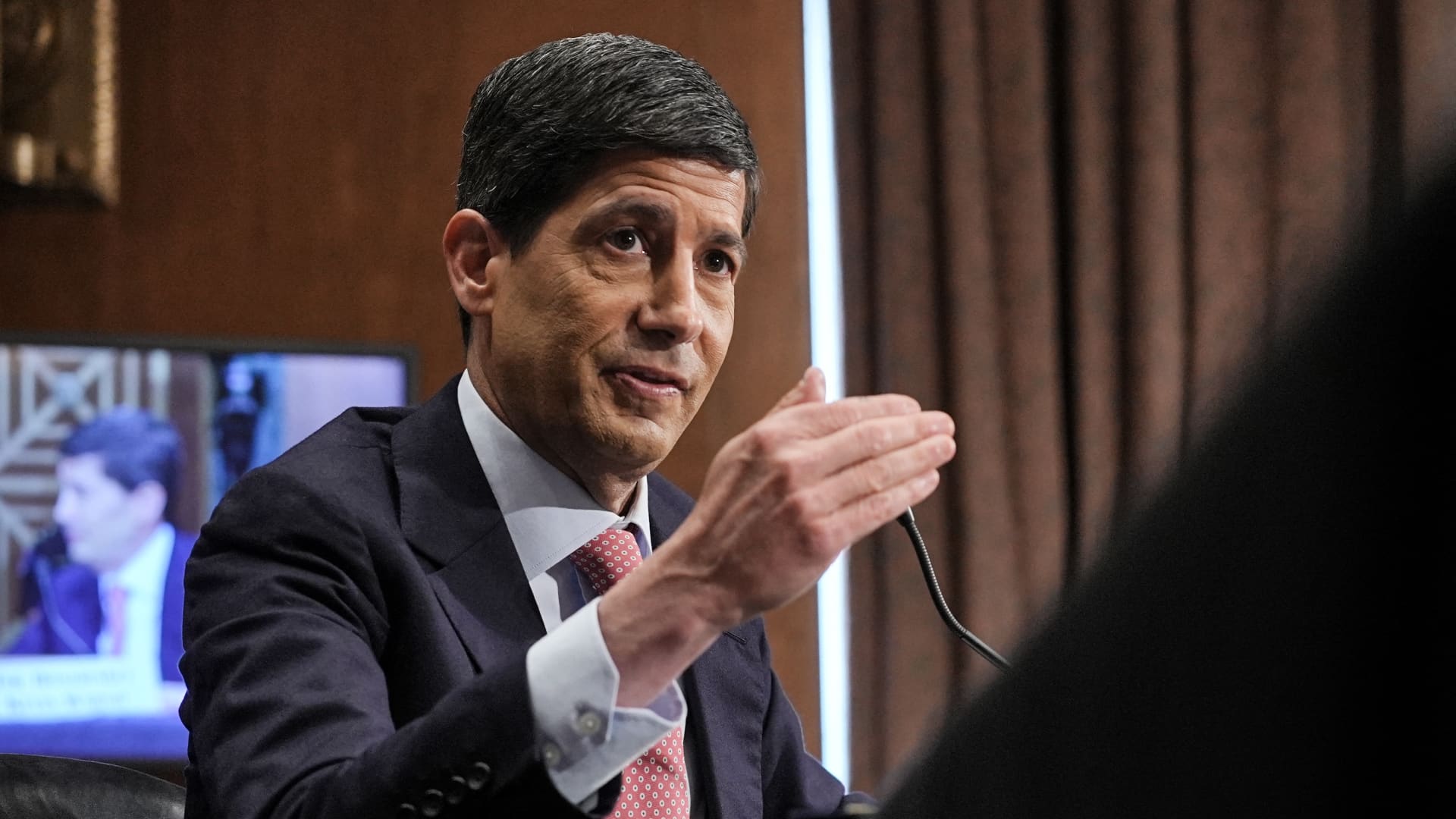
Federal Reserve Chairman Kevin Warsh testifies during a Senate banking committee hearing on Capitol Hill, in Washington, July 15, 2026.
Ken Cedeno | AFP | Getty Images
Kevin Warsh’s keynote speech at the central bank’s annual symposium in Jackson Hole, Wyo. has altered investors’ outlook for an interest rate hike in September after the Fed chairman said he was committed to fighting inflation.
Traders on prediction market platform Kalshi now believe there are 48% odds that the Fed will hike rates by 25 basis points. Before Warsh’s speech, odds that the central bank would maintain the status quo in September were nearly 70%. ‘
Traders of fed funds futures now see a nearly 56% chance of a quarter-point hike in September, per the CME’s FedWatch tool. And on Polymarket, speculators indicated 49% odds that the Fed raises rates.
After the Fed’s July meeting, investors were fairly certain of a rate hike in September, especially considering that three members of the Federal Open Market Committee disagreed with the majority’s decision to keep interest rates steady. Those three members, instead, argued rates needed to move higher in response to elevated inflation.
But odds for a rate hike in September declined in the past month after a weaker-than-expected employment report showed the U.S. lost jobs in July, and that inflation — while remaining above the Fed’s 2% target — cooled.
Warsh directly addressed those data reports in his Friday speech, but cautioned the central bank needed to see more. “While this summer’s [inflation] readings were better than expected,” he said, “they do not tell me that underlying trends have meaningfully improved,” Warsh said.
Addressing the situation more directly Warsh said, “We must be confident that underlying inflation is moving to our objective, clearly and at sufficient speed. Otherwise, we have work to do. That’s our job, our mandate and our charge to keep.”
In response, short-term yields rose, with the 2-year Treasury yield, which closely follows short-term rate decisions by the Fed, hitting its highest level since late July.
The Fed’s rate decision is Sept. 16.
Disclosure: CNBC and Kalshi have a commercial relationship that includes customer acquisition and a minority investment.


Weakening profitability overshadowed a major milestone in IREN’s transformation into an AI cloud provider.


Solana’s first network-wide vote went down to the wire, with a Kraken-linked validator switching sides before the disinflation proposal narrowly passed.
Disclosure: This content is provided by a third party. Neither crypto.news nor the author of this article endorses any product mentioned on this page. Users should conduct their own research before taking any action related to the company.
Amid market volatility, ETF inflows have maintained institutional investor interest, while UE Crypto provides XRP holders with an alternative cloud-mining option.
Summary
- Cumulative net inflows into XRP spot ETFs reached a record $1.637 billion, showing continued institutional demand despite weakness in XRP price.
- XRP ETFs recorded about $18.47 million in daily inflows on Aug. 27 even as the token declined, creating a divergence between ETF demand and spot price performance.
- XRP price movements remain influenced by ETF flows, whale activity, onchain capital movements and overall crypto market sentiment.
- UE Crypto promoted its cloud mining contracts as an alternative for XRP holders seeking returns outside price appreciation, with advertised daily payouts varying by contract.
Cumulative net inflows into XRP ETFs have reached a record high of $1.637 billion. However, XRP’s price has not surged accordingly and has instead experienced a pullback, further increasing investor caution.
What is the best strategy for XRP?
If you do not currently hold XRP, there may be limited reasons to purchase it as long as its trading costs remain at such low levels.
Its price may still fluctuate due to market sentiment or macroeconomic factors. However, for holders, there is currently no direct mechanism that allows Ripple’s success or the adoption of the XRPL to automatically translate into personal returns.
Regardless of whether this approach is reasonable, the token’s price could potentially rise significantly in response to catalysts. In particular, the U.S. Senate is expected to vote in mid-September on advancing the Clarity Act. If the bill is ultimately signed into law, it could provide a major boost to the broader cryptocurrency industry, particularly tokens such as XRP that are oriented toward institutional users.
Therefore, the answer depends on your holdings. Unless Ripple makes changes that link XRP’s value more directly to activity on its blockchain, such as through a shared-fee system or new buyback or token-burn mechanisms, Ripple’s new transactions may continue to make headlines without having a lasting impact on the price of XRP.
Historical data shows that sustained inflows into XRP ETFs can generally improve market sentiment. However, as of August 27, daily inflows into XRP ETFs reached as much as $18.4706 million, representing a significant increase, while XRP’s price declined. This divergence highlights an imbalance between supply and demand in the spot market and may affect institutional participation in the sector.
Against this backdrop, an increasing number of investors have begun turning their attention to the UE Crypto cloud-mining platform, exploring potential sources of returns beyond simply holding digital assets. Cloud mining provides a different approach to generating potential digital-asset returns compared with strategies based primarily on price speculation, including during periods of short-term price volatility.
After experiencing a downturn lasting approximately 20 months, the XRP market is gradually showing renewed momentum. Unlike the relatively passive and orderly nature of ETF inflows, XRP’s recent gain of more than 40% suggests that major market participants have been actively involved.
Therefore, XRP’s current price movement cannot be attributed solely to ETF inflows. Multiple factors, including ETF fund flows, “whale” activity, on-chain activity, and overall market sentiment, may collectively have a significant impact on XRP’s subsequent price performance and broader market trend.
XRP price volatility makes UE Crypto cloud mining an alternative option
As market volatility increases, more investors are seeking ways to participate in digital assets beyond straightforward price speculation. UE Crypto provides a cloud-mining solution based on sustainable energy, offering investors a more structured channel for exploring the digital-asset ecosystem while potentially expanding diversified sources of returns alongside their interest in XRP’s long-term value.
Through cloud mining, users can participate in the operation of blockchain infrastructure and receive returns according to predetermined rules, creating a cash-flow-oriented participation model without the need to deploy dedicated mining hardware or possess advanced technical expertise.
Compared with traditional mining models, cloud mining can reduce the burden associated with purchasing mining equipment, arranging electricity supply, maintaining hardware, and managing day-to-day operations. The platform handles computing-power allocation, technical maintenance, and related management, while users can select an appropriate computing-power plan according to their needs and monitor relevant operational and return data through an automated system, allowing them to participate in digital-asset mining in a more convenient manner.
About UE Crypto
UE Crypto was established in 2015 and is headquartered in the United Kingdom. It states that its operations follow relevant European regulatory frameworks, including the Markets in Crypto-Assets Regulation (MiCA) and the Markets in Financial Instruments Directive II (MiFID II), while continuing to improve transparency, operational standards, and user-protection mechanisms.
In terms of security and compliance, the platform states that it has adopted the following measures:
- Annual financial and security audits conducted by PwC
- Custodial digital-asset insurance provided by Lloyd’s
- Enterprise-level security solutions from Cloudflare and McAfee®
- Bank-level data encryption and professional security infrastructure to provide multiple layers of protection for user assets and accounts
Currently, UE Crypto supports a range of major crypto assets, including XRP, BTC, ETH, USDT, BNB, ADA, USDC, DOGE, LTC, and SOL, providing users with more flexible ways to participate in digital-asset services.
Start cloud mining in three steps
Step 1: Register an account
Step 2: Choose a mining package
Select an appropriate cloud-mining contract based on your budget, preferred participation period, and specific requirements, then activate the mining service with one click.
Step 3: Start receiving returns
Once the contract is activated, the system automatically allocates computing power and settles returns to the account on a daily basis. Users can withdraw or reinvest these returns at any time.
Popular UE Crypto Contracts
BTC (Beginner Experience Contract)
Investment: $100;
Term: 2 days;
Daily return: $4;
Total at contract maturity: $100 + $8
Dogecoin (DOGE, Digital Intelligent System Contract)
Investment: $500;
Term: 5 days;
Daily return: $6.25;
Total at contract maturity: $500 + $31.50
BTC (Super Computing System Contract)
Investment: $1,000;
Term: 10 days;
Daily return: $13.10;
Total at contract maturity: $1,000 + $131
LTC (Algorithm-Driven System Contract)
Investment: $5,000;
Term: 25 days;
Daily return: $72;
Total at contract maturity: $5,000 + $1,800
BTC (Quantitative Intelligent System Contract)
Investment: $10,000;
Term: 35 days;
Daily return: $158;
Total at contract maturity: $10,000 + $5,530
For more details regarding the contract plans, please visit the official UE Crypto website.
Conclusion
Continued net inflows into XRP ETFs further demonstrate institutional demand for and market interest in XRP. However, growth in ETF assets does not necessarily mean that XRP’s price will rise at the same pace. XRP’s current market performance remains influenced by multiple factors, including “whale” fund movements, on-chain capital flows, and overall cryptocurrency market sentiment.
For long-term XRP investors, in addition to continuously monitoring price movements and ETF flows, it may also be worthwhile to explore more diversified ways of participating in the digital-asset ecosystem. Through cloud mining and related digital-asset infrastructure, UE Crypto provides another channel for participating in the digital-asset ecosystem, allowing investors to remain focused on XRP’s long-term value while exploring potential diversified sources of returns and further developing their long-term asset-allocation strategies.
For more information, please visit the official website and download the app.
Disclosure: This content is provided by a third party. Neither crypto.news nor the author of this article endorses any product mentioned on this page. Users should conduct their own research before taking any action related to the company.
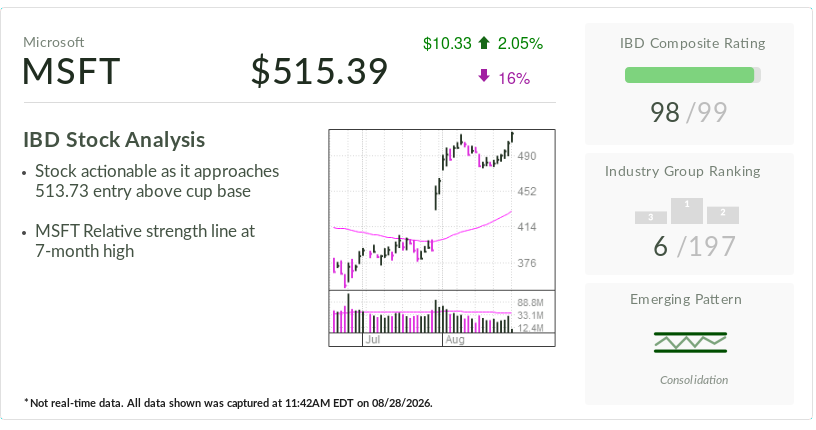
Microsoft Microsoft MSFT $ 515.39 $10.33 2.05% 16% IBD Stock Analysis Stock actionable as it approaches 513.73 entry above cup base MSFT Relative strength line at 7-month high IBD Composite Rating 98/99 Industry Group Ranking 6/197 Emerging Pattern Consolidation Consolidation A sideways pattern that doesn’t fit traditional base definitions. Sometimes will have a handle. * Not real-time data. All data…
Copyright ©2026 Investor’s Business Daily, LLC. All rights reserved. 87990cbe856818d5eddac44c7b1cdeb8
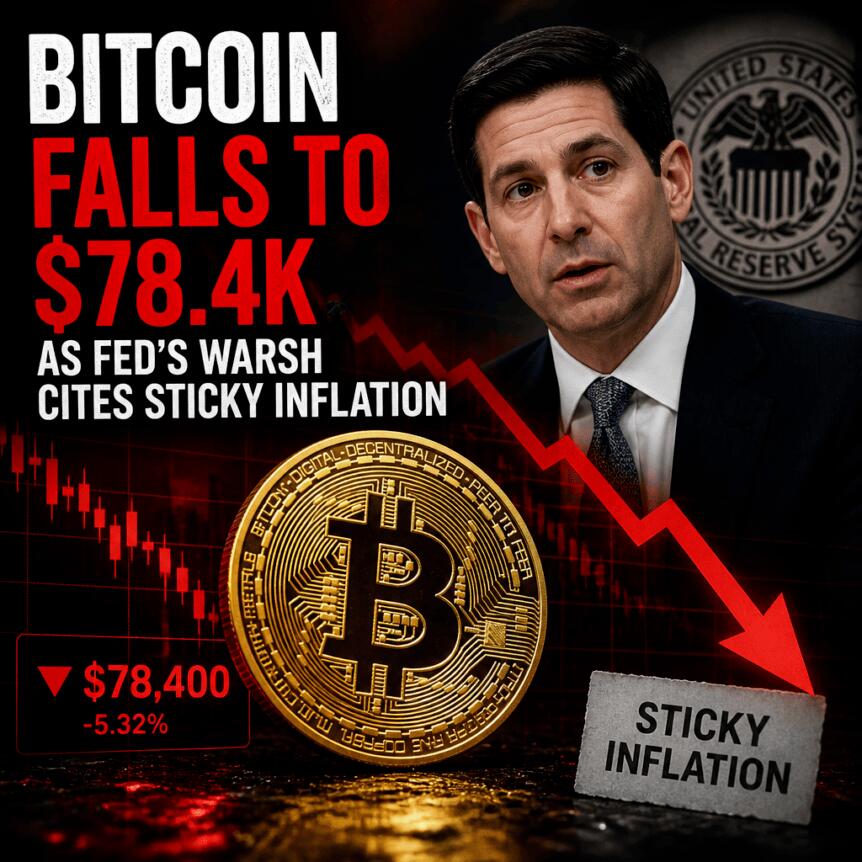
Bitcoin’s price whipsawed early in the Wall Street session after U.S. Federal Reserve official Kevin Warsh used his Jackson Hole keynote to temper expectations around inflation progress and to signal skepticism toward traditional “forward guidance.” The reaction was immediate: BTC/USD slid to a fresh intraday low near the high-$70,000s before recovering back toward the $80,000 area.
Market observers are now focused less on a single macro headline and more on whether Bitcoin’s derivatives complex can help sustain price levels near $83,000—especially as August trading closes and liquidity conditions tighten.
Key takeaways
- Bitcoin fell during Warsh’s Jackson Hole remarks, briefly trading near $78,442 on Bitstamp before rebounding toward the $79,500 area.
- Warsh said lower PCE and CPI prints do not amount to “meaningfully improved” underlying inflation trends, maintaining the Fed’s 2% target.
- US equities traded positive after Warsh’s comments, but BTC’s move suggests crypto is still parsing inflation-policy uncertainty closely.
- QCP Capital highlighted that BTC strength above roughly $83k depends on derivatives market structure—particularly whether leverage grows alongside price.
- CoinGlass data shows Bitcoin up about 26% month-to-date, with August performance described as its best for the month since 2017.
Warsh’s Jackson Hole message: no “meaningful” shift in inflation
According to the speech text posted by the Federal Reserve, Warsh delivered his first keynote at the Jackson Hole Symposium with a cautious tone on the inflation outlook. While he reiterated commitment to the Fed’s 2% goal, he argued that recent improvements in headline inflation measures have not translated into a clear change in the underlying trend.
Warsh also criticized the Fed’s practice of offering consistent forward guidance. He said the approach—commonly used during the Global Financial Crisis—has “overstayed its welcome” and added that it would not return as a regular tool for communicating policy direction.
On the inflation numbers themselves, the Fed speech emphasized that CPI and PCE have fallen from prior peaks, but that progress over the last couple of years has been more modest. He acknowledged that this summer’s PCE and CPI readings were better than expected, but he stopped short of treating them as evidence that the underlying trajectory has “meaningfully improved.”
This combination—tempering the market’s interpretation of cooling inflation while also reducing the likelihood of detailed future-policy signaling—appeared to unsettle crypto traders even as traditional markets looked more comfortable with the message.
Crypto reacts: BTC trades volatile range near $80,000
TradingView data cited in the coverage showed BTC/USD dipping to about $78,442 on Bitstamp during the session, with BTC down roughly 1% around the time of reporting. Bitcoin then worked its way back toward the $79,500 region as risk sentiment stabilized.
Throughout the day, price action remained anchored around the $80,000 mark, with analysts describing the trading as a narrow intraday range leading into the August monthly close. Earlier technical framing discussed the need for BTC/USD to reclaim a downward-sloping trend line and to defend the 50-week exponential moving average around $77,250 to keep the broader uptrend intact.
In parallel, on-chain and market analytics pointed to resistance overhead. One cited view referenced a “thick patch” of liquidity/resistance between the current spot level and $86,000, suggesting that even if buyers push higher, the market could face friction before breaking into new territory.
Why $83,000 matters: derivatives market structure, not just spot levels
While spot price headlines draw the most attention, the latest analysis referenced by QCP Capital argued that the quality of any upside move depends on how derivatives behave. In its market commentary, QCP Capital stressed that even after a breakout, traders should watch whether funding rates and open interest build in a controlled way rather than accelerating in tandem with price.
In the firm’s wording, the key distinction is not simply whether BTC trades above a level such as $83.3k, but whether the follow-through remains supported by broader spot participation or becomes increasingly driven by leveraged positioning.
QCP Capital’s framework effectively gives traders two different scenarios to monitor: one where price advances alongside contained leverage (a “different market structure”), versus another where leverage ramps up quickly and makes the move more fragile. For investors, this matters because the second scenario can leave the market vulnerable to fast reversals if sentiment or liquidation dynamics shift.
That lens also helps explain why macro comments from the Fed can trigger sharp dips without immediately changing the broader trend. If derivatives conditions remain stable, Bitcoin can absorb shocks more effectively; if leverage starts to chase price, it can magnify volatility.
Month-to-date momentum remains strong, but near-term tests loom
Despite the intraday volatility around Warsh’s remarks, CoinGlass data cited in the coverage indicates Bitcoin is up about 26.35% month-to-date. The same reference described this as Bitcoin’s best August performance since 2017, underscoring that the broader bid for risk assets and crypto exposure has remained intact.
Still, the combination of a Fed speech that downplayed inflation “meaningful improvement” and analysts’ emphasis on derivatives readiness suggests the near-term agenda is about confirmation: whether BTC can hold key levels, break through resistance bands, and do so without a buildup of speculative leverage.
Looking ahead, traders and investors will likely watch how funding rates and open interest evolve as the month-end approaches, alongside whether BTC can sustain gains above the $83,000 area rather than reverting to the $80,000 range. The uncertainty is not the direction of the long-run narrative alone, but the mechanics of the move—whether it is broad-based and resilient, or increasingly dependent on leverage that can unwind quickly.

The 6 Levels of Money: Which Financial Level Are You In?

Alexa Chung’s Longchamp tote is the chic luxury work bag I’ve been after

Utah Burger King magnate John Gullo opens up on his life journey





-

 Fashion7 days ago
Weekend Open Thread: Madewell – Corporette.com
-

 Crypto World3 days ago
SpaceX stock could rise 75% to $240, JPMorgan says
-

 Business6 days ago
Musk’s Tesla, SpaceX Confirm $16.8 Billion ‘Terafab’ Chip Plant as World’s Largest Building in Texas
-

 Crypto World7 days ago
anatomy of crypto’s biggest liquidation event since 2021
-

 Crypto World4 days ago
A $30 Billion AI Fund Implodes, Now the SEC Is Investigating Wall Street’s Role
-

 Crypto World18 hours ago
Bitcoin’s 22% rally now needs real demand to outlast Treasury liquidity boost
-

 Crypto World2 days ago
Warsh Jackson Hole keynote puts financial innovation first
-

 Politics6 days ago
6 months on, Irish renters crushed by effects of government housing bill
-

 Crypto World3 days ago
Did Trump Just Move SpaceX Stock With One Truth Social Post?
-

 Business17 hours ago
Salesforce Stock Soars 19% as Blowout Earnings and Agentforce AI Growth Silence Software Skeptics
-

 Business5 days ago
Mystery AI Model ‘Ox Alpha’ Draws Developers With Free Access as Chinese Lab Origins Remain Debated
-
 NewsBeat6 days ago
The ‘Lucky Dip Gang’ causing carnage for clicks: After five thugs were killed speeding in the wrong direction on a motorway, GUY ADAMS investigates a sick new trend… and why police aren’t even allowed to pursue them
-
 Crypto World7 days ago
Nvidia Stock Suffers Longest Losing Streak Since 2022: Will Q2 Earnings End It?
-

 Business2 days ago
Walmart takes aim at younger shoppers with new fashion brand
-

 Business4 days ago
Moderna CEO warns China is pouring state money into mRNA technology
-

 Business4 days ago
NVIDIA Stock Drops Nearly 2 Percent to $210 on Seventh Losing Day Ahead of Critical AI Earnings
-

 Business6 days ago
Will Tesla Stock Be Higher or Lower a Year From Now? Here’s What Wall Street Analysts Are Saying
-
 Crypto World5 days ago
$92 Billion Nvidia Earnings Could Make or Break the AI Trade
-

 Tech7 days ago
Unitree’s New Superman Robot Claims to Outjump and Outrun Every Human, Usain Bolt Included
-

 Business3 days ago
Thailand’s Eastern Economic Corridor Capital City (EECiti): Key Developments and Investment Opportunities
You must be logged in to post a comment Login