
Crypto World
Bitcoin, Ethereum, Tron, and Cardano Tell Four Very Different Stories Through Active Addresses


A sharp contrast has emerged in active addresses across Bitcoin, Ethereum, Tron, and Cardano, as the four blockchains continue to show different patterns when it comes to network usage.
Bitcoin’s count, for one, has dropped significantly compared with previous major cycles, even though its price remains far above historical levels. According to the latest observation by Alphractal founder Joao Wedson, this does not necessarily indicate weaker usage.
Very Different Usage Trends
Bitcoin investors now tend to hold for longer and move coins less frequently, while ETFs, custodians, exchanges, and the Lightning Network are being used more often. The growing role of ETFs is particularly notable, as US-based spot Bitcoin exchange-traded funds have recorded $3.31 billion in inflows so far in August. This shift in how investors access and hold BTC could help explain why on-chain activity is not increasing at the same pace as the asset’s price.
Rather than indicating that the crypto asset is necessarily being used less, the trend may reflect its growing role as a reserve asset, as more activity takes place through financial products and other structures instead of directly on the blockchain.
Ethereum’s network activity has once again begun to accelerate, and active addresses are now close to reaching 1 million, even with a significant share of the ecosystem operating on Layer 2 networks. Such a trend evidences that the asset remains highly relevant as financial infrastructure.
Meanwhile, Tron was found to have recorded more than 4 million active addresses, which makes it the strongest case among the four networks by this measure. According to Wedson, much of its activity appears to be driven by payments and stablecoins, particularly USDT, rather than simply speculation around TRX’s price. The network has become a major infrastructure layer for transferring digital dollars.
Is Cardano Struggling?
The same cannot be said for Cardano, which has witnessed its activity fall sharply since 2021 and remains at very low levels compared with its own history. Wedson explained that price can increase because of narratives, liquidity, and speculation, while on-chain activity offers a clearer indication of whether people are actually using a blockchain.
Cardano’s weak activity comes after years of criticism over the network’s slow development and its struggle to turn its technology into broader usage. More recently, the network has come under tremendous pressure, including a public warning from founder Charles Hoskinson about a “wave of failures” and closures of important dApps.
On the price side of things, ADA briefly reached $0.254 this month, before pulling back to $0.196 at the time of writing. Despite the recent weakness in price, market commentators remain optimistic. One such analyst, Sssebi, said that he expects the ADA to return to its previous all-time high of $3.10 during the coming bull market and believes it could push above that level.
The post Bitcoin, Ethereum, Tron, and Cardano Tell Four Very Different Stories Through Active Addresses appeared first on CryptoPotato.



XRP Ledger validators are considering two amendments that would add single-asset vaults and fixed-term lending directly to the network’s core protocol.
Summary
- XLS-65 and XLS-66 remain below the 80% validator threshold required before XRP Ledger mainnet activation.
- Single Asset Vaults would pool one token, while XLS-66 would issue fixed-term uncollateralized institutional loans.
- Ripple joined Clearpool and Cicada as an investor, but does not guarantee the fund’s losses.
- RLUSD would serve as the credit asset, while XRP would pay transaction fees and reserves.
- Activation requires validator support above 80% for two consecutive weeks, leaving the launch date uncertain.
The amendments, XLS-65 and XLS-66, are open for validator voting but have not reached the support required for activation. An amendment must maintain support from more than 80% of trusted validators for two consecutive weeks before it can become active.
Ripple’s validator voted in favor of both amendments in August. However, Ripple cannot approve the changes independently because validators decide whether to support each amendment.
Current support remains well below the activation threshold, according to the XRP Ledger’s amendment records. The percentage can change as validators update their positions, making the threshold and subsequent two-week period more important than any single daily reading.
XRP Ledger lending separates credit from execution
XLS-65 would introduce Single Asset Vaults. These structures would pool one type of asset from multiple depositors and issue vault shares representing their proportional interest in the assets.
A vault could hold XRP, Ripple USD or another supported XRP Ledger asset. The vault manager could then allocate pooled liquidity to lending or other financial services under predetermined rules.
XLS-66 would use that pooled liquidity to fund fixed-term loans. The proposed XRP Ledger lending system relies on off-chain underwriting rather than automatic overcollateralization and liquidation.
Institutions would conduct identity checks, assess borrowers, negotiate loan terms and complete legal reviews outside the blockchain. The network would then record and execute agreed activities such as loan issuance, interest accrual, repayments and defaults.
This structure reduces reliance on application-level smart contracts. It does not eliminate credit, operational or counterparty risk. Depositors could still lose money when borrowers default or when underwriting proves inadequate.
Ripple, Clearpool and Cicada prepare an RLUSD fund
Product development is already taking place while validators consider the amendments. Clearpool is testing an institutional credit product on the XRP Ledger development network.
The planned fund would provide RLUSD-denominated working-capital loans to fintech and payment companies. Cicada Partners would source borrowers, establish lending terms and monitor their financial condition. Clearpool would provide the infrastructure for creating and operating the credit pools.
Ripple will participate as a limited partner alongside other investors. The company is providing capital, but it is not serving as a financial backstop. Ripple would therefore invest on comparable terms and would not guarantee losses suffered by other participants.
The companies have not disclosed the fund’s target size or Ripple’s commitment. As the planned RLUSD credit fund remains in testing, it cannot use the proposed native lending functions on mainnet before both amendments activate.
Clearpool said its integration will use isolated markets managed by independent risk specialists. This approach is designed to prevent a problem involving one borrower or pool from spreading across every lending market.
What the lending vote means for XRP holders
The amendments could create new uses for XRP Ledger assets, but they would not automatically provide yield to every XRP holder. Access would depend on which vaults launch, the assets they accept, their eligibility rules and their underlying borrowers.
Some institutional pools may use permissioned domains and verified credentials. Retail participation is therefore not guaranteed. Each product could impose separate restrictions based on jurisdiction, investor classification and compliance requirements.
RLUSD is expected to serve as the main credit asset in the Clearpool and Cicada fund. XRP would retain its network role by covering transaction fees and account reserve requirements.
XRP Ledger transaction fees are destroyed rather than paid to validators. Greater lending activity could consequently increase XRP fee consumption, but fees are normally very small. The effect on total XRP supply would depend on sustained transaction volume and should not be described as a major source of scarcity before real usage data exists.
XRP traded around $1.06 at the time of writing. No verified price movement could be attributed directly to the latest lending vote.
Security reviews do not remove lending risks
The lending code has undergone formal verification and independent security reviews. Halborn’s re-audit found no critical or high-risk vulnerabilities.
The review identified one medium-risk issue, two low-risk issues and two informational findings. The reported matters were resolved, accepted or acknowledged by Ripple’s engineering team, according to the audit findings.
Those reviews address technical behavior, not whether borrowers will repay their loans. Institutions considering a vault must still evaluate its manager, underwriting standards, first-loss protection, withdrawal rules and exposure concentration.
The next formal milestone is validator approval. If either amendment crosses 80%, it must hold that level for 14 days. Clearpool must also finish its development-network testing before moving its product to mainnet.
A related Federal Reserve master-account application submitted through Standard Custody remains separate from the lending vote. Approval could improve RLUSD settlement infrastructure, but the outcome and timing remain uncertain. BNY continues serving as the primary custodian for RLUSD reserves.


Ontology has temporarily halted mainnet block production after its core developers identified a potential security concern during a routine check, leaving on-chain transactions suspended while validators conduct an emergency review.
Summary
- Ontology has temporarily halted mainnet block production after its core developers identified a potential security concern during a routine security check.
- No confirmed security incident or user asset loss has been identified, with ONT, ONG and other on-chain assets currently considered unaffected.
- On-chain transactions will remain unavailable during the security review, and users have been advised to avoid time-sensitive transactions.
- Ontology has not set a restart time and said block production will resume only after the network has been assessed and deemed safe.
The Ontology Network said in an official announcement that its core development team detected the potential issue during a daily security check and immediately moved to stop block production as a precaution. No security incident has been confirmed, and the team said it has found no evidence that ONT, ONG or other user assets have been lost or compromised.
Ontology mainnet remains paused during security review
With block production stopped, transactions submitted to the Ontology mainnet cannot be processed until network operations resume. The team has not provided an estimated time for the restart and said the review will take priority over restoring the chain quickly.
Ontology described the halt as a preventive measure, distinguishing it from a response to an active attack or confirmed theft. Developers and network validators are reviewing the mainnet and related components to determine whether the potential concern presents an actual security risk.
Users have been told not to move ONT, ONG or other assets because of the announcement. However, the network advised against attempting time-sensitive on-chain transactions while the pause remains in place.
“Block production will remain temporarily suspended,” Ontology said, adding that the network will not restart until it has been “sufficiently assessed and deemed safe to operate.”
The team has not disclosed the technical nature of the potential security concern, which component triggered the review or whether developers have identified a vulnerability requiring a software change.
Ontology said it is working with validators and relevant ecosystem partners during the investigation. A separate announcement will be released before or when block production resumes, after the security assessment and any required upgrades have been completed.
No user asset losses have been identified
The network emphasized that the current investigation has not produced evidence of compromised user funds.
“There is currently no indication of any loss or compromise of user assets,” the team said. “ONT, ONG, and other on-chain assets remain unaffected based on our current assessment.”
The distinction leaves the mainnet in an unusual operational state: the chain is intentionally unable to process transactions, but Ontology has not reported an exploit, unauthorized asset movement or an ongoing attack.
A mainnet is the production blockchain where transactions involving assets with real economic value are recorded. As crypto.news explained in August, production networks depend on protocol software, economic incentives and validator infrastructure to maintain security while processing live transactions.
The Ontology team has chosen to keep transaction processing offline while the potential issue is examined instead of allowing normal block production to continue during the investigation.
Network pauses can prevent new state changes while developers and validators assess a problem, although the specific reason for Ontology’s decision remains limited to the potential security concern disclosed by its developers.
Ontology did not say whether exchanges or other services using the chain would separately restrict ONT or ONG deposits and withdrawals during the review.
A previous Ontology network upgrade produced similar restrictions at the exchange level without involving a reported security incident. In 2022, Binance suspended ONT deposits and withdrawals while supporting an Ontology upgrade, with services scheduled to reopen after the upgraded network was considered stable.
ONT and ONG form Ontology’s dual-token system
Ontology operates with ONT and Ontology Gas, or ONG, as its two native assets. ONT is used within the network’s governance and staking structure, while ONG serves a separate role in its economic model.
The network has changed its staking framework over time. Crypto.news previously reported that Ontology reduced its minimum staking requirement from 500 ONT to one ONT as part of a governance and staking model update. Requirements for candidate nodes seeking to participate in consensus were reduced from 100,000 ONT to 10,000 ONT.
Ontology’s architecture has historically focused on decentralized identity and data infrastructure. The project uses ONT ID as part of that framework, allowing identity information and credentials to be managed through its blockchain infrastructure.
Interest in that part of the ecosystem resurfaced earlier in 2026 as traders focused on digital identity projects. ONT jumped more than 20% on March 30 as market attention turned to the European Union’s eIDAS 2.0 digital identity wallet rollout. The token traded between roughly $0.0568 and $0.0959 during the 24-hour period covered at the time.
The current mainnet interruption concerns the network’s operation, with Ontology’s announcement making no claim that ONT’s token contract, ONG or another on-chain asset has been exploited.
Ontology has not set a restart time
For now, the mainnet will remain unable to produce blocks while developers and validators work through the security review.
Ontology said the duration of the shutdown is undetermined and that it will prioritize a complete examination of the potential risk over speed. Normal block production will resume only after the network has been assessed and the team considers it safe to operate.
Any upgrades found necessary during the investigation would have to be completed before the restart, according to the announcement. The team did not specify whether an upgrade is currently expected or whether the review could end without requiring changes to the network software.
Users therefore do not need to take action with their ONT, ONG or other on-chain holdings based on the information currently available, but transactions requiring mainnet processing will remain unavailable throughout the pause.
Ontology said updates on the investigation will be published through its official channels as more information becomes available. The network plans to issue a separate notice before or at the time operations resume once the security review and any required upgrades have been completed.
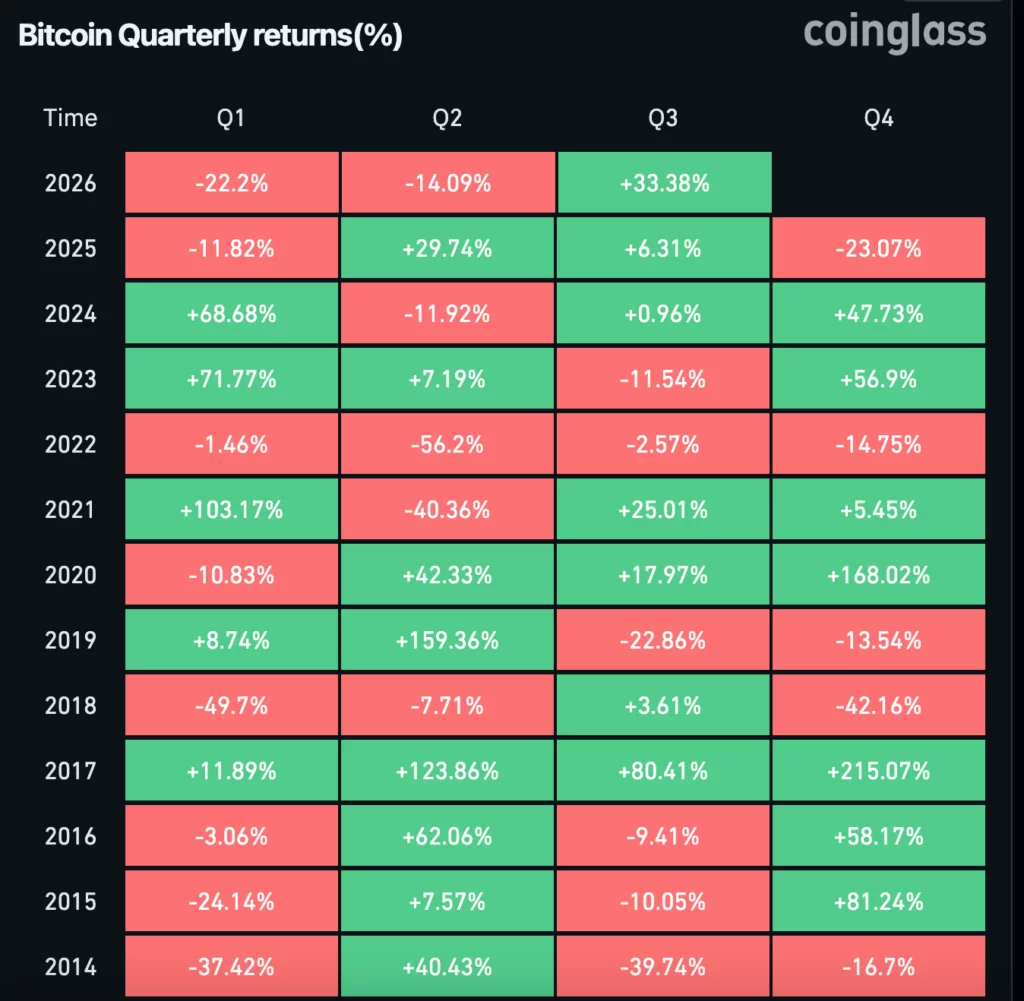
Bitcoin traded near $78,400 on Aug. 31 and headed toward its strongest August performance since 2017 after gaining roughly 24% during the month.
Summary
- Bitcoin traded near $78,400 after gaining roughly 24% during August, its strongest August since 2017.
- U.S. spot Bitcoin ETFs attracted $1.92 billion during their strongest weekly inflow since October 2025.
- Crypto derivatives recorded $6.55 billion in short liquidations across two weeks, according to CoinGlass data.
- Treasury will double bond buybacks to $4 billion per operation beginning on September 9.
- Bitcoin must reclaim $80,000 to strengthen momentum, while September jobs data could reset rate expectations.
BTC recovered from approximately $63,000 in mid-August and briefly crossed $80,000 before losing momentum near that level. The rally reversed much of the pressure recorded during the first half of 2026.
The final monthly return remains subject to Bitcoin’s closing price. Still, current historical data places August 2026 well ahead of every August since the 2017 bull market.
Bitcoin’s third-quarter return stood near 32% at the time of writing. That compares with losses of approximately 22% during the first quarter and 14% during the second, although September’s performance will determine the final quarterly result.
Bitcoin’s August rally reversed a difficult first half
Bitcoin entered August after spending several months under pressure. The cryptocurrency fell toward $58,000 in July before recovering above $60,000 and beginning its sharp late-August advance.
The rally carried BTC beyond $70,000 and eventually above $80,000 for the first time since May. It also pushed the asset above several short-term resistance levels that had restricted previous recovery attempts.
Derivatives positioning amplified the move. Data attributed to CoinGlass showed approximately $9.71 billion in cryptocurrency liquidations across two weeks. Short positions accounted for $6.55 billion, while long liquidations reached $3.16 billion.
Those figures cover the broader cryptocurrency market rather than Bitcoin positions alone. They show that bearish traders absorbed most of the forced closures, but they do not prove that new spot demand caused the entire rally.
As Bitcoin’s 22% advance confronted a demand test, analysts noted that futures open interest measured in BTC had declined. Contained funding rates also suggested short covering contributed to the initial breakout without excessive leveraged long positioning.
ETF inflows provided a clearer demand signal
U.S. spot Bitcoin exchange-traded funds attracted approximately $1.92 billion during the five trading sessions through Aug. 21, according to SoSoValue.
It was their strongest weekly inflow since October 2025. August inflows had reached approximately $2.72 billion by Aug. 24, making the month the strongest of 2026 at that point.
The renewed accumulation followed a difficult period for the products. Spot Bitcoin ETFs recorded heavy redemptions during May and June before investor demand recovered in August.
One session delivered $517 million in net inflows as Bitcoin broke above $70,000. As spot ETF demand strengthened during the breakout, nearly $2.7 billion in bearish cryptocurrency positions was liquidated.
ETF flows provide a more direct measure of regulated U.S. investment demand than futures liquidations. However, daily flows can reverse quickly, making continued September accumulation important for supporting prices near $80,000.
Treasury buybacks shaped the macro backdrop
The U.S. Treasury announced on Aug. 19 that it will at least double its long-end liquidity-support buybacks. Maximum purchases will rise from $2 billion to at least $4 billion per operation.
The expanded program covers Treasury securities in the 10-to-20-year and 20-to-30-year sectors. Operations are scheduled to begin Sept. 9 and continue through Nov. 4, according to the official announcement.
The policy aims to improve trading conditions in parts of the bond market where liquidity has weakened. It is not a direct BTC purchase program, and the Treasury has not described supporting cryptocurrency prices as an objective.
BTC and gold nevertheless rose as bond yields initially declined and the U.S. dollar weakened. Some market participants interpreted the policy as another reason to hold scarce assets, although that explanation remains an analyst view rather than a confirmed causal relationship.
That backdrop has since become less supportive. Federal Reserve Chair Kevin Warsh delivered hawkish remarks at Jackson Hole, prompting markets to raise their expectations for a September interest-rate increase.
Higher rates can strengthen the dollar and increase the opportunity cost of holding assets without yield. These conditions could test whether BTC’s August recovery can survive a less favorable monetary-policy outlook.
Bitcoin faces an $80,000 resistance test in September
Bitcoin ended the month closer to resistance than support. Trader Carl Moon said buyers need to push BTC back above $80,000, warning that failure to reclaim the level could expose the market to a deeper pullback.
Miles Deutscher said the recovery did not resemble a typical “dead cat bounce,” citing Bitcoin’s relationship with gold and increased on-chain activity. However, he questioned whether sufficient external capital was entering the market to sustain the advance.
Fidelity’s Jurrien Timmer said BTC had held the floor of his power-law model and may have satisfied the time component of its four-year correction. The model is an analytical framework, not a guaranteed price signal.
Comparisons with 2017 also require caution. BTC gained 80.41% during the third quarter of 2017 and 215.07% in the fourth. The current market has different liquidity, regulation, derivatives and institutional participation.
The next tests include the Sept. 4 U.S. employment report, Treasury buybacks beginning Sept. 9 and the Federal Reserve’s September decision. Sustained ETF inflows and a confirmed break above $80,000 would provide stronger evidence that August’s rally can continue.
Disclosure: This article does not represent investment advice. The content and materials featured on this page are for educational purposes only.
Crypto World
Catapult Trade Names Its Backers as Total Raised Reaches $6.6 Million Ahead of $PULT TGE
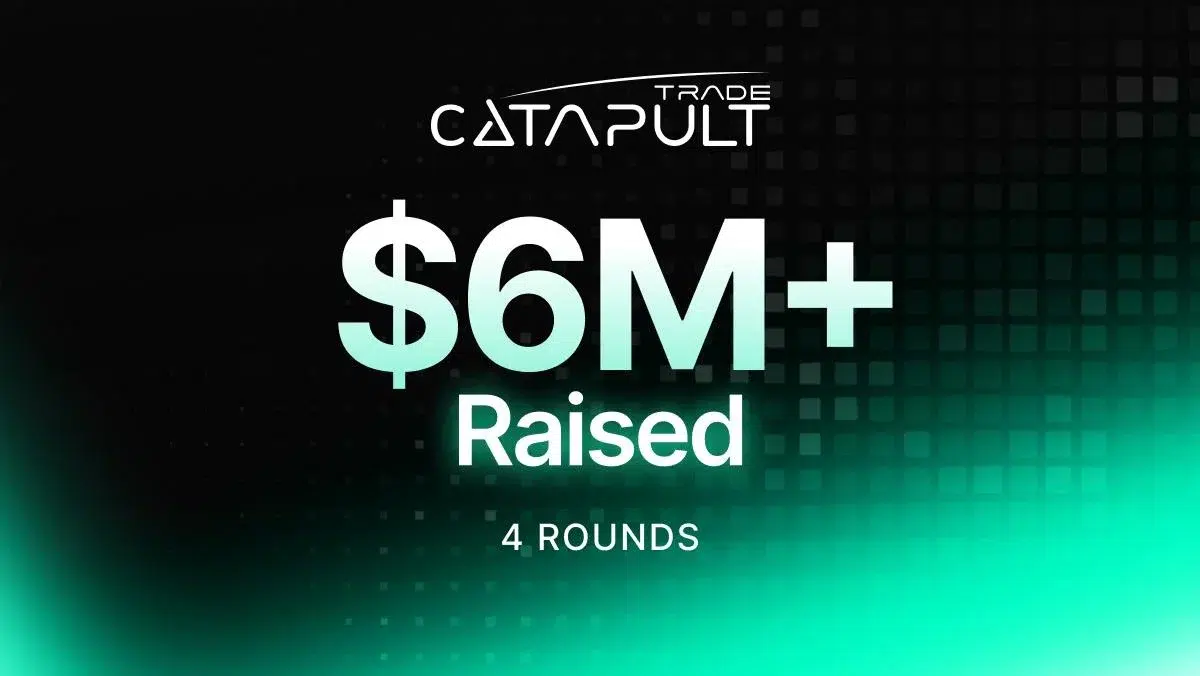
KuCoin Ventures, Oddiyana Ventures, and Venture Vault VC are among the investors behind Catapult Trade, the company confirmed following the close of its fourth funding round.
Summary
- Catapult Trade says four funding rounds raised $6.6 million before its planned PULT token launch.
- KuCoin Ventures, Oddiyana Ventures and Venture Vault VC participated alongside unnamed funds, traders and angels.
- The platform reports over $6 billion in trading volume and $3.3 million in net revenue.
- Catapult targets a fall 2026 token launch, with planned listings and liquidity across multiple blockchains.
- PULT economics will include token buybacks and burns funded by revenue, according to the company.
The disclosure covers backers across four completed rounds totalling $6.6 million, none of which had been named publicly until now.
Catapult Trade runs a consumer trading product that merges trading mechanics, gamification, and provably fair technology. Prices are not sourced from any external market. Each session is generated algorithmically using Geometric Brownian Motion, committed to a public cryptographic hash before trading opens, and revealed once it closes, so that any participant can confirm the chart was never altered mid-session. Halborn and Hashlock have both audited the system independently.
The platform has been live since December 2025 and has cleared more than $6 billion in cumulative trading volume and $3.3M in net revenue ahead of its token launch. Users can create their own tokens and open trading sessions on them. Tokens published to the discovery feed earn their creators a share of trading fees, while private tokens stay visible only to the accounts that made them.
A 1% notional fee on every trade is split between the protocol and the creator, with an additional fee applied to profitable positions. Protocol revenue funds buybacks and burns and feeds a portion back into ecosystem reward pools.
On the funding itself, the Seed round raised $500,000. Alongside the three funds named above, a T1 fund participated whose name cannot be disclosed at this stage, and three early angels joined: Kyle Klemmer, Co-Founder and CMO at Blockstreet, advisor to WLFI and USD1; MacnBTC, a 2017 OG trader; and Aamir Ghai, ex CSO at Manta Network and a mentor at Harvard Blockchain.
The $2.1 million Private round brought in founders of consumer trading businesses. Among them are the founder of LIS Skins, a CS:GO skin marketplace in the $50 million AUM range, and the founder of Trady, a multichain trading terminal. The remaining participants are not being named at this time. A further $400,000 came from 30+ tier 1 traders and analysts in the KOL round, and the Early Public Round closed at $3.6 million on Catapult Trade’s own platform at $0.06 per token. Participants in the current Strategic round will be announced before TGE.
Over the same period, Catapult Trade ran joint campaigns with the Binance, KuCoin, and Gate wallets.
Three products are due before the token launches: Gamified Futures, a gamified prediction market powered by Obsidian, and TradFi & Crypto Classic Futures. The team is targeting a TGE in the fall of 2026, with more than eight centralized exchange listings planned around it. $PULT will be issued as an omnichain asset through LayerZero, with liquidity across BNB Chain, Robinhood, HyperEVM, and others.
Catapult Trade built its user base, volume, and revenue first, and is introducing $PULT to distribute the economics that activity already produces through buybacks and burns.
The full list of investors across all rounds will be disclosed a few weeks prior to the TGE.


Vienna, Austria — August 31, 2026 — Bybit EU, headquartered in Vienna and operating under a MiCAR license granted by Austria’s Financial Market Authority (FMA), has been selected as a recommended alternative for MEXC users based in the Netherlands. This shift follows MEXC’s cessation of operations in the Netherlands in compliance with European regulatory requirements.
“We’re pleased to welcome Dutch users who are looking for a regulated, compliant platform to continue their crypto journey,” said Nazar Tymoshchuk, Regional Country Manager at Bybit. “The MiCAR framework exists to protect European users, and we’re committed to providing a secure, seamless experience for everyone transitioning to Bybit EU.”
MEXC has announced it will no longer serve users in the Netherlands due to the implementation of the Markets in Crypto-Assets Regulation (MiCAR), which requires all crypto-asset service providers operating in the EU to hold appropriate authorization.
“Partnering with Bybit represents an important step in ensuring a secure, compliant, and seamless transition for our users. said Robert MacDonald, Chief Compliance Officer at MEXC. “Bybit’s strong regulatory framework and commitment to user protection give us confidence that our users will continue to receive reliable services and a high standard of care throughout the transition.”
What This Means for Dutch Users
MEXC users in the Netherlands will receive direct communication from MEXC with guidance on next steps and timelines. Those who choose to move to Bybit EU will need to create and verify a new account independently – no accounts or assets will be automatically migrated.
Users are encouraged to complete their transition by October 31, 2026, with final offboarding from MEXC set for November 16, 2026.
About Bybit EU
Bybit EU operates under a MiCAR authorization granted by the Austrian Financial Market Authority (FMA) since May 2025. The platform segregates user funds from company assets as required by regulation, supports EUR top-ups and withdrawals via SEPA and iDEAL, and offers 115+ tokens across 135 trading pairs in both USDC and EUR. The platform is available in Dutch.
Supporting the Transition
To support users through the transition, Bybit EU is offering a welcome package for eligible new registrants, including bonus rewards, preferential trading fees, and cashback on the Bybit Card. Full details and terms will be available on the dedicated landing page.
A dedicated landing page is available for Dutch users with step-by-step guidance, FAQs, and links to customer support.
Users can also join the Dutch-language Bybit community for transfer support:
- Telegram: https://t.me/Bybit_NL
- X (Twitter): https://x.com/BybitNL
Bybit EU
Bybit EU GmbH is an Austrian Crypto-Asset Service Provider (CASP) authorized under the Markets in Crypto-Assets Regulation (MiCAR) in Austria. Bybit EU serves customers across the entire European Economic Area (EEA), with the exception of Malta, via bybit.eu platform.
Bybit EU GmbH is authorized to offer the following services:
– custody and administration of crypto-assets on behalf of clients;
– exchange of crypto-assets for funds
– exchange of crypto-assets for other crypto-assets
– placing of crypto-assets; and
– transfer services for crypto-assets on behalf of clients.
Bybit EU GmbH is neither the operator of a trading platform for crypto-assets nor provides investment advice.
Media Contact: press@bybit.eu
Disclaimer: This press release is provided for informational purposes only and does not constitute investment advice or an offer to buy or sell digital assets. Investing in crypto-assets is associated with risks, including high volatility and the potential loss of capital. Inform yourself thoroughly about the risks before making an investment decision. The products and services mentioned herein are subject to applicable laws and regulations in the relevant jurisdictions and may not be available in certain regions.
The post Bybit EU Partners with MEXC to Support a Seamless User Transition in the Dutch Market appeared first on BeInCrypto.
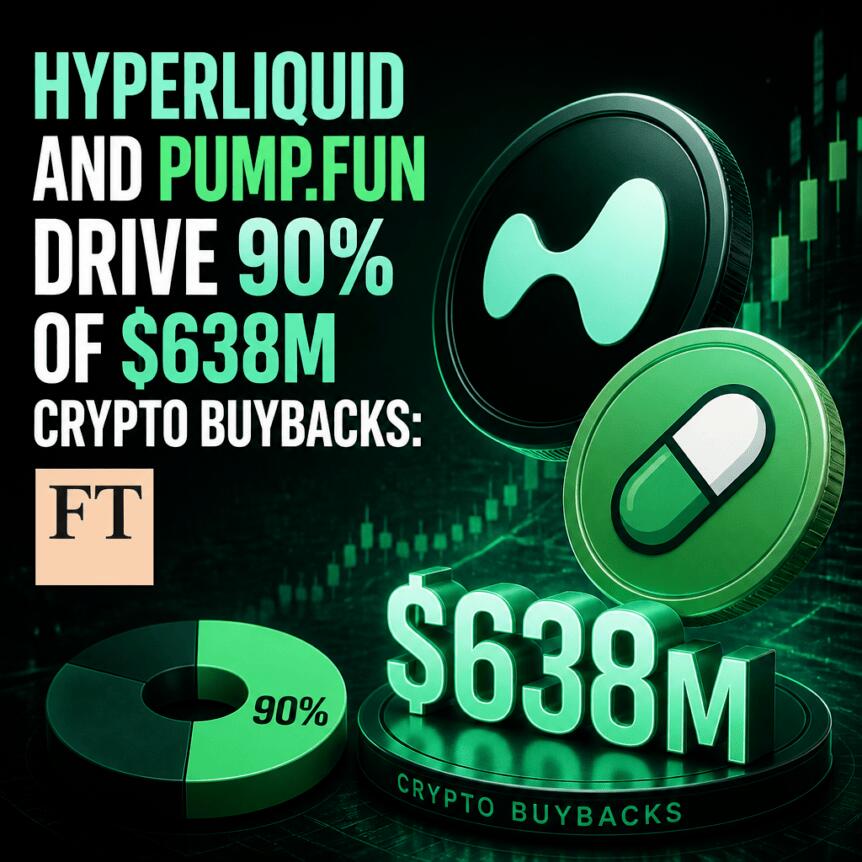
Token buybacks are becoming a defining strategy for a small but influential slice of the crypto sector. According to data compiled by Allium Labs and cited by the Financial Times, cryptocurrency projects spent a record $638 million on repurchasing their own tokens so far in 2026—nearly 90% of that total concentrated in two platforms: Hyperliquid and Pump.fun.
In the year-to-date tally, Hyperliquid accounted for roughly $370 million and Pump.fun for nearly $200 million. The Financial Times report notes that this level of buyback activity is still rare across the wider industry, but the numbers suggest it is moving from novelty toward a measurable category of capital deployment.
Key takeaways
- $638 million in token buybacks has been recorded in 2026 year-to-date, per Allium Labs data cited by the Financial Times.
- Hyperliquid (~$370M) and Pump.fun (~$200M) dominate the total, together accounting for nearly 90% of spending.
- Buybacks remain uncommon in crypto overall, but more projects are experimenting with revenue-to-repurchase mechanisms.
- Crypto token buyback activity is increasingly being framed as a tool to support token value—analogous to share repurchases in traditional markets.
- Recent governance action at Ethena Foundation highlights how fee-switch models can formalize buyback plans.
Why token buybacks are drawing attention again
Token buybacks follow a logic that resembles share buybacks by public companies: projects use capital to repurchase their own assets, which can reduce circulating supply and, in some cases, send a signal about long-term value. While the analogy is straightforward, the crypto execution varies widely—often depending on how a protocol’s revenue is routed and whether repurchases are automatic or subject to governance.
What stands out in 2026 is the scale relative to earlier periods. The same Allium Labs figures cited by the Financial Times show $638 million spent year-to-date in 2026 compared with $545 million during the same period in 2025. The report also contrasts the current pace with prior years, noting $366,000 in 2024 for the corresponding timeframe.
Hyperliquid and Pump.fun lead the buyback spend
Hyperliquid and Pump.fun are not just participating in token repurchases—they are effectively running buybacks as a core allocation strategy.
For Hyperliquid, the structure is especially concentrated: the project reportedly directs about 99% of its revenue toward token buybacks. Cointelegraph previously reported that Hyperliquid generated $169 million in second-quarter revenue on Aug. 6, with $141 million allocated to HYPE buybacks. The implication for investors is straightforward: buybacks are not episodic, but tied tightly to protocol earnings.
Pump.fun, a memecoin launchpad, follows a different but still aggressive approach. The project reportedly allocates around 50% of its net protocol revenue to token repurchases. The launchpad also reportedly carries $420 million in annualized revenue, based on average daily revenue over the preceding 90 days.
When two platforms account for most of the sector’s buyback activity, their revenue rules can become a proxy for how “buyback culture” may evolve in crypto—especially whether it remains concentrated among a few high-throughput protocols or broadens as others replicate the model.
Governance signals: Ethena Foundation opens a fee-switch vote
Beyond the two dominant leaders, 2026 has also seen governance proposals that formalize buybacks using protocol revenue. On Thursday, the Ethena Foundation opened a vote on a fee-switch proposal under which 95% of net revenue paid to it from Ethena’s core business lines would be used to repurchase ENA tokens.
Crypto markets quickly priced the development: the ENA token rose 10.7% on the day after the proposal, according to the reporting referenced in the vote coverage.
For readers, the practical takeaway is not simply that buybacks can move prices in the short term, but that fee-switch governance can convert a vague “buybacks might happen” narrative into an enforceable spending framework. That shift matters because it changes the probability distribution around future demand for tokens and how consistently a protocol can sustain repurchases.
Outperformance and the market narrative around buybacks
Buybacks are also being linked to stronger token performance relative to the broader market. TradingView data cited in the original coverage shows that Hyperliquid (HYPE) rose 145% year-to-date and Pump.fun (PUMP) gained 109%, while Bitcoin (BTC) fell 10% and total crypto market capitalization declined by 11.9% over the same period.
It is important to separate correlation from causation, but the structure is compelling from an investor’s perspective: protocols that consistently recycle revenue into token repurchases create a direct, recurring demand stream. That demand can influence valuation expectations, especially during broader drawdowns where the rest of the market is struggling.
The idea is increasingly being spelled out by major asset managers. Bitwise chief investment officer Matt Hougan earlier in August argued that crypto valuations could double in the next two years as protocols use revenue to fund token buybacks and burns, effectively returning more value to investors.
What to watch next
The big question for 2026 is whether buybacks stay clustered in a few revenue-rich ecosystems or expand into more protocols through governance and revenue routing. Investors should monitor not just total buyback totals, but the durability of the revenue streams behind them—because in a market that can change quickly, the sustainability of token repurchase programs may matter as much as the headlines.


Bitcoin developers supporting BIP-110 are preparing a separate BLAKE2b proof-of-work chain for a proposed Sept. 1 launch after an earlier minority branch failed to attract enough SHA-256 mining support.
Summary
- Bitcoin developer Luke Dashjr’s supporters plan a BLAKE2b breakaway chain after BIP-110’s minority branch stalled.
- The original BIP-110 proposed temporary restrictions on arbitrary data, not a proof-of-work algorithm replacement itself.
- The first enforcing branch produced only two blocks initially, showing that miners withheld meaningful support.
- Developers scheduled the BLAKE2b chain for September 1, although its final launch remains technically conditional.
- No major exchange, wallet, or Lightning implementation had publicly committed support before the planned launch.
The new chain became the subject of a dispute on Aug. 31 between BIP-110 supporter Loogart and Ripple co-founder David Schwartz, who previously served as Ripple’s chief technology officer.
Loogart argued that supporters had accepted losing the effort to change Bitcoin’s dominant chain and were voluntarily continuing elsewhere. Schwartz rejected the framing that supporters had tried to “fix the legacy chain.”
“Listen to yourself,” Schwartz wrote, before arguing that language portraying one side as broken moved the discussion away from a good-faith disagreement.
Schwartz’s comments represent his personal assessment. Neither Ripple nor the XRP Ledger has a technical role in BIP-110 or the proposed chain.
BIP-110 and the BLAKE2b fork are separate proposals
The original BIP-110 specification proposed a temporary soft fork restricting several methods used to place nonfinancial data on Bitcoin. Its rules included limits on large OP_RETURN outputs, script formats and contiguous arbitrary data exceeding 256 bytes.
Supporters argued those restrictions would reduce storage demands on node operators and preserve Bitcoin’s monetary use. Critics maintained that transaction fees and node policies should determine how block space is used.
BIP-110’s enforcing branch separated from Bitcoin’s dominant chain in August. It initially produced only two blocks as nearly all established Bitcoin mining power continued extending the existing network.
As crypto.news previously reported, BIP-110 entered its mandatory phase with only 2.53% miner support. That result left its minority branch far behind the chain recognized by major miners, exchanges and wallets.
The proposed BLAKE2b network is therefore not simply BIP-110 activating on Bitcoin. It is a separate hard fork with a different proof-of-work system and its own resulting asset.
BLAKE2b removes dependence on Bitcoin miners
The planned chain replaces Bitcoin’s SHA-256d mining algorithm with BLAKE2b. Existing Bitcoin mining equipment is designed specifically for SHA-256 and cannot automatically redirect its computing power to the new algorithm.
That change allows supporters to establish a new mining group instead of relying on operators securing Bitcoin’s dominant chain. Some machines designed for Sia’s version of BLAKE2b may be compatible, although available hardware does not prove that miners will commit enough computing power.
A rehearsal was arranged before the planned launch. Developers said a successful test could be preserved in a Bitcoin Knots 29.4.1 release on Sept. 1. Technical problems could require another release candidate and a reset to the last SHA-256 block.
The date should therefore be described as a target rather than an irreversible activation deadline. Reports published before the rehearsal also indicated that the final mainnet activation height had not been settled.
In related coverage, Luke Dashjr left OCEAN after disagreements over Bitcoin mining and recent protocol developments. OCEAN repurchased his equity after he resigned as chairman, chief technology officer and director.
Bitcoin holders face support and replay questions
No major exchange, mainstream wallet or Lightning implementation had publicly committed to supporting the BLAKE2b chain before the proposed launch. Without that infrastructure, any inherited forked coins may initially lack a reliable market price or accessible trading venue.
Wallets and infrastructure providers may also require technical changes. The proposed network uses BLAKE2b block headers that differ from Bitcoin’s current format, meaning existing light clients and indexers may not recognize the new chain automatically.
Replay protection is another issue to watch. If transactions remain valid on both networks, a payment broadcast on one chain could potentially be repeated on the other unless users separate their coins or employ other safeguards.
The practical effect on BTC depends on whether the breakaway network attracts miners, developers, wallets and trading venues after launch. Until then, claims that it will replace, repair or materially threaten Bitcoin remain disputed forecasts rather than established outcomes.
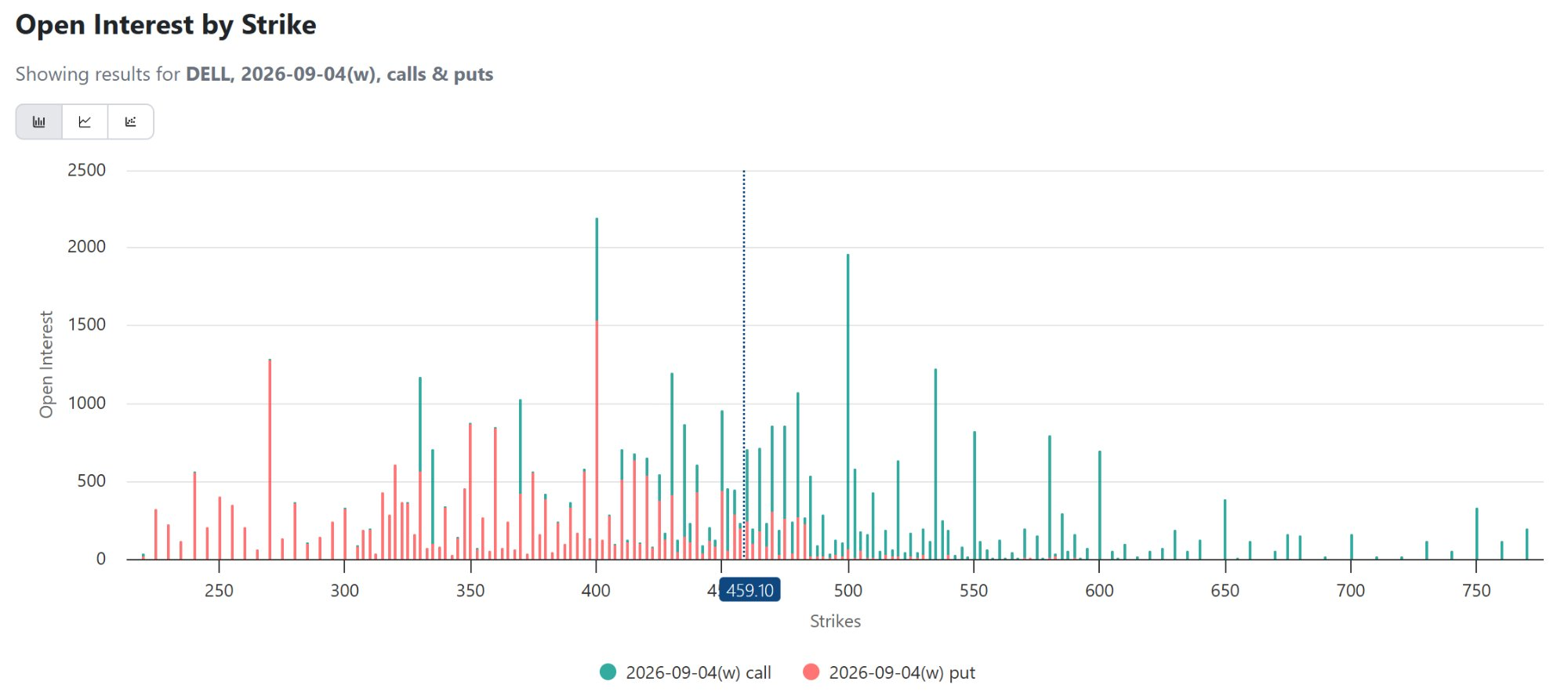
Dell Technologies reports fiscal second quarter results Tuesday after the close, and the options market is braced for a large reaction. Contracts expiring September 4 imply a swing of roughly 11% in either direction.
The at-the-money straddle, a paired call and put at the same strike, cost about $52 against Dell’s $456.01 close on Monday. Buyers profit only if the stock travels further.

What Dell Guided For, and What Analysts Expect
Dell guided to revenue of $44 billion to $45 billion for the quarter, adjusted earnings of about $4.80 a share, and roughly $15.5 billion of AI server revenue. It expected its Infrastructure Solutions Group, the server and storage division, to grow about 75%.
Zacks Investment Research puts the consensus at $4.72 a share across five forecasts. Dell earned $2.10 in the year-ago quarter.
The bar is high because the previous quarter reset it. Revenue reached $43.8 billion in Dell’s record first quarter beat, up 88% year over year, and adjusted earnings of $4.86 landed far above Wall Street’s estimate.
Management then raised the full-year revenue outlook to $167 billion at the midpoint and lifted its AI server target to $60 billion. Shares have climbed roughly 260% in 2026 on that artificial intelligence demand.
“We booked $24.4 billion in AI orders and recognized $16.1 billion of AI server revenue. We’re increasing our AI server revenue expectations for FY27 to $60 billion, which only goes to show the AI opportunity shows no signs of slowing,” said Jeff Clarke, Dell vice chairman and chief operating officer, in the quarterly release.
Follow us on X to get the latest news as it happens
The Numbers That Will Move Dell Stock
Orders and backlog now matter more than the headline figure. Dell booked $24.4 billion of AI orders last quarter and closed with a record $51.3 billion AI backlog.
Margins are the second test. AI servers earn thinner margins than storage, and Chief Financial Officer David Kennedy has flagged memory chips, processors and hard drives as supply bottlenecks.
Dell has also described an inflationary parts market that forces frequent repricing, so a revenue beat paired with weaker margins would land badly. Data center names have already drawn profit-taking after big rallies.
Wall Street still leans positive. Of 15 analysts covering the stock, 11 rate it a buy and four a hold, with an average target of $523.54 and a low of $434.

Nvidia’s own quarterly beat drew only a modest reaction last week. Whether Dell raises its full-year guide again, and what it says about second-half supply, will decide which side of the straddle pays.
The post Dell Earnings Could Swing the Stock 11% This Week, a $52 Straddle Shows appeared first on BeInCrypto.


Strategy purchased 4,603 Bitcoin for $369.7 million between Aug. 24 and Aug. 30, returning to accumulation after more than two months without a confirmed purchase.
Summary
- 4,603 Bitcoin cost Strategy $369.7 million, lifting its total holdings to 845,050 BTC.
- Strategy financed the purchase through MSTR sales that generated $602.8 million in weekly net proceeds.
- Strategy also spent $151.8 million repurchasing STRC while increasing unrestricted dollar cash by $30 million.
- MSTR traded near $127.31 before Monday’s opening, down 7.4% from Friday’s close in premarket trading.
- Strategy reported $6.71 billion across its restricted reserve and broader cash liquidity account combined Sunday.
The Virginia-based company paid an average of $80,318 for each Bitcoin, including fees and expenses, according to an Aug. 31 filing with the U.S. Securities and Exchange Commission.
The acquisition increased Strategy’s holdings from 840,447 BTC to 845,050 BTC. It paid a combined $63.73 billion for those assets at an average cost of $75,412 per Bitcoin.
Bitcoin traded near $78,023 at 12:18 UTC on Monday, placing the market value of Strategy’s holdings near $65.9 billion. That was approximately $2.2 billion above its reported aggregate purchase cost. The calculation changes alongside Bitcoin’s price and does not represent realized profit.
Strategy funded the Bitcoin purchase by selling MSTR
Strategy financed the entire acquisition through its at-the-market common-stock program. It sold 4,531,421 MSTR shares during the week, generating $602.8 million in net proceeds after commissions.
The company allocated $369.7 million of that amount to Bitcoin. It directed another $151.8 million toward repurchasing STRC preferred shares, used $50.7 million to fund STRC dividends and added $30 million to its unrestricted USD Cash account.
The structure means Strategy issued common shares while buying back preferred shares and adding Bitcoin. It did not issue any STRC, STRF, STRK or STRD preferred securities during the reporting period.
Strategy retained authority to sell another $19.09 billion of MSTR under its existing offering program. That capacity gives management room to fund further purchases, cash reserves or other capital-management activity, although the company has not committed to using the full amount.
Michael Saylor described the return to buying as “We’re back” in an Aug. 30 post. The statement signaled intent but did not disclose the transaction’s size before Monday’s filing.
STRC repurchases continued alongside accumulation
Strategy repurchased 1,557,177 STRC shares for $151.8 million during the same week. That implies an average repurchase cost near $97.48 per share, below STRC’s $100 stated amount.
STRC traded near $97.33 before Monday’s regular U.S. session, down approximately 0.7% from Friday’s close. Its recovery toward $100 followed a period in which the security traded as low as the mid-$70 range.
The company has used repurchases and a variable dividend to support STRC’s market price. As previously reported, Strategy maintained STRC’s annualized dividend at 12% after the preferred stock traded below its stated amount.
After the latest transaction, Strategy retained $364.8 million under its preferred-securities repurchase authorization. It also retained a separate $1 billion authorization to repurchase MSTR, although no common shares were bought back during the week.
Strategy’s dollar assets reached $6.71 billion
Strategy reported a $5.10 billion USD Reserve and $1.61 billion in USD Cash as of Aug. 30. Together, the two accounts held $6.71 billion, including proceeds from shares sold but not yet settled.
The accounts serve different purposes. The board-designated reserve supports preferred-stock dividends and interest on outstanding debt. USD Cash can be used more broadly for Bitcoin purchases, reserve expansion and other corporate needs.
Saylor said the combined dollar assets brought Strategy’s “net leverage” to 0.0%. That figure is a company-defined capital metric and should not be interpreted as meaning Strategy has no debt or preferred-stock obligations.
The filing shows only $30 million of the week’s MSTR proceeds went into USD Cash. Since the account increased by $29 million overall, other cash movements reduced the net addition by approximately $1 million.
MSTR falls despite Strategy’s return to Bitcoin buying
MSTR traded near $127.31 in Monday’s premarket session, approximately 7.4% below Friday’s closing price. STRC changed less sharply, trading near $97.33.
Bitcoin was also down approximately 0.9% over 24 hours. Its price near $78,023 was about 2.9% below Strategy’s latest average purchase price of $80,318.
The acquisition followed several weeks in which Strategy prioritized liquidity and preferred-stock support. In related coverage, Strategy raised roughly $2 billion without buying or selling Bitcoin during the previous reporting week.
The return to accumulation also follows two confirmed Bitcoin sales. Strategy sold 1,638 BTC between July 27 and Aug. 2, then sold another 1,690 BTC to finance STRC repurchases during the following week.
The latest purchase exceeded those combined sales by 1,275 BTC. Strategy’s holdings consequently reached a new reported high.
Future purchases will depend on Bitcoin prices, MSTR’s market value, available offering capacity and management’s preferred-stock strategy. The next weekly SEC filing should show whether the company continues accumulating or redirects proceeds toward its dollar accounts and STRC.
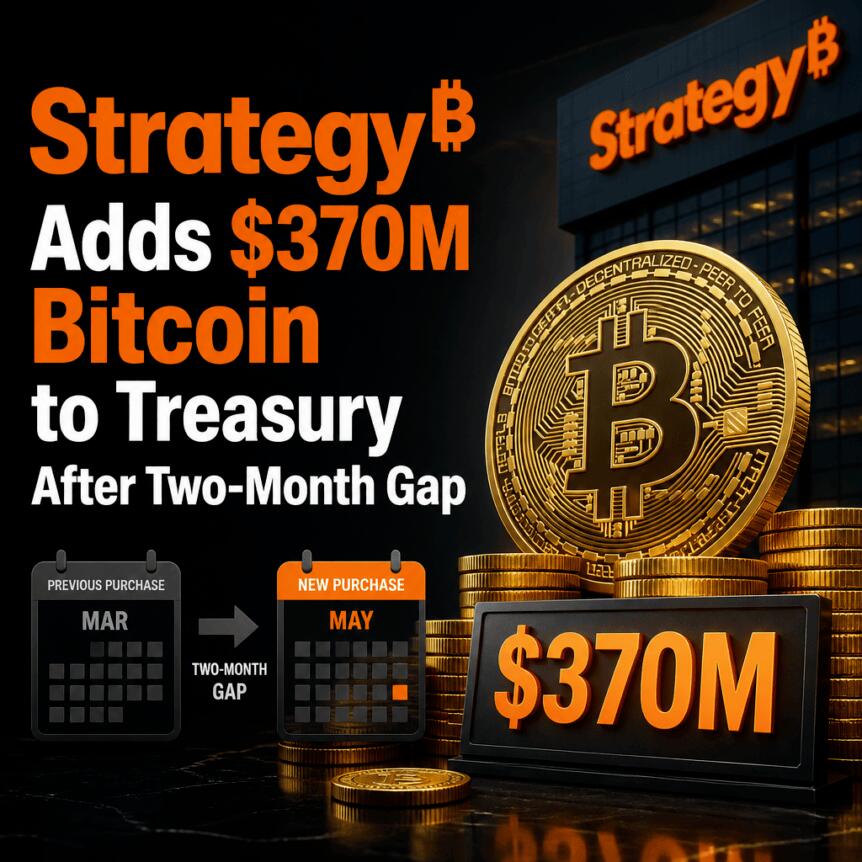
Strategy has added another sizable batch of Bitcoin to its corporate treasury, purchasing 4,603 BTC for about $370 million, according to an 8-K filing with the U.S. Securities and Exchange Commission released this week. The acquisition takes the company’s total holdings to 845,050 BTC.
The news also arrives shortly after Strategy last reported a Bitcoin buy in mid-June, and it follows a weekend signal from Strategy executive chairman Michael Saylor that the firm was preparing to resume accumulation. Investors are also watching how the company’s preferred stock funding mechanism—STRC—behaves as Strategy continues to finance new purchases.
Key takeaways
- Strategy bought 4,603 Bitcoin for an average price of $80,318 per BTC, bringing total holdings to 845,050 BTC.
- The purchase was funded using net proceeds from a $602 million common stock sale, with part of the proceeds added to USD cash reserves and part used for STRC repurchases.
- This is Strategy’s first corporate Bitcoin acquisition in roughly two months, after its prior buy of 1,587 BTC in mid-June.
- STRC trades below its $100 intended par value, which can affect the company’s ability to raise capital through STRC sales and may increase pressure on dividend terms.
A new Bitcoin tranche—and where the money came from
In its SEC filing, Strategy states it acquired 4,603 BTC at an average purchase price of $80,318, amounting to roughly $370 million. The company reports this brings its total Bitcoin holdings to 845,050 BTC, acquired for a cumulative $63.3 billion at an average price of $75,413.
The filing also outlines the capital flow behind the transaction. Strategy funded the purchase through the net proceeds of a 602 million MSTR common stock sale. It allocated $30 million of those net proceeds to increase its USD cash reserve, and it directed $151.8 million to repurchase its preferred STRC stock.
For investors, the mix of funding matters because Strategy’s Bitcoin program is designed to be capital-efficient while preserving flexibility—cash reserves provide liquidity, while repurchasing STRC can support the preferred stock’s market standing.
First buy in about two months, following Saylor’s “We’re Back” signal
The acquisition marks Strategy’s first reported corporate Bitcoin purchase since mid-June. At that time, the company last bought 1,587 BTC for roughly $100 million, according to earlier coverage referenced in the 8-K context.
On Sunday, Saylor posted a short teaser indicating a return to buying. He shared a widely viewed X post with the message “We’re Back,” a pattern that has previously preceded official announcements about Strategy’s treasury actions, as noted in earlier reporting. While weekend hints are not a substitute for filings, they often help investors anticipate the direction of future moves.
In Monday’s pre-market trading, Nasdaq-listed MSTR was reported up by less than 1% after falling more than 7% on Friday, according to the article’s market snapshot.
STRC discount and what it implies for future funding
Strategy’s STRC preferred stock remains central to how the company finances Bitcoin accumulation. In Monday’s pre-market activity, STRC rose about 0.44% to $97.33, which corresponds to a 2.67% discount to its intended $100 par value, based on Yahoo Finance data.
The discount is not just a pricing detail—it can influence how effective STRC becomes as a fundraising tool. As noted in the source reporting, trading below par can limit Strategy’s ability to raise funds through STRC sales. That limitation can create a feedback loop: if preferred shares consistently trade at discounts, Strategy may need to adjust economics—such as the dividend rate—to attract buyers and protect the instrument’s pricing.
The company previously signaled that it is willing to actively manage its capital structure. In a June 29 8-K filing, Strategy laid out a capital framework that contemplates using Bitcoin sales to fund dividends, and it increased the annual dividend rate on STRC to 12%. The same period included disclosure that Strategy sold 32 Bitcoin in early June, described as its first reported Bitcoin sale since a 2022 transaction tied to tax-loss considerations.
Taken together, the STRC discount and the dividend adjustments point to a consistent theme: Strategy wants the ability to keep buying Bitcoin while maintaining a workable funding channel through preferred stock. Whether the current discount narrows or widens in the weeks ahead could therefore influence how aggressively Strategy leans on STRC versus other sources of liquidity.
Why the details matter for traders and long-term holders
Strategy’s disclosed average purchase price—$80,318 per BTC—provides more than just a headline valuation. Because Strategy reports its total cost basis and holding size, each new acquisition affects how investors model the company’s treasury exposure over time, including how much unrealized gain or loss might be implied relative to recent market prices.
Just as important is the financing approach: the company used a common stock issuance rather than relying solely on balance-sheet liquidity. That choice can affect equity market dynamics and dilution expectations, while repurchasing STRC with $151.8 million suggests an effort to manage the preferred component alongside the Bitcoin program.
Meanwhile, the fact that Saylor’s “We’re Back” post preceded this acquisition reinforces how investors often treat Strategy’s leadership communications as early signals of treasury activity. The most reliable confirmation, however, remains the SEC filing and the detailed breakdown of how the Bitcoin was purchased and funded.
As Strategy continues to scale its portfolio—now at 845,050 BTC—readers should watch for two closely linked developments: whether STRC continues to trade at a discount to par, and how that pricing interacts with the company’s dividend and financing plans. Any future capital-structure changes could determine how smoothly Strategy converts access to capital into additional Bitcoin exposure.

Someone Finally Walked Off Financial Audit

Former Crips boss Duane ‘Keffe D’ Davis guilty of murder for 1996 slaying of rap legend Tupac Shakur

AI could cause global economic downturn, Andrew Bailey warns G20





-

 Crypto World6 days ago
SpaceX stock could rise 75% to $240, JPMorgan says
-

 Fashion3 days ago
Weekend Open Thread: Maeve – Corporette.com
-

 Crypto World4 days ago
Bitcoin’s 22% rally now needs real demand to outlast Treasury liquidity boost
-

 Crypto World5 days ago
Warsh Jackson Hole keynote puts financial innovation first
-

 Business4 days ago
Salesforce Stock Soars 19% as Blowout Earnings and Agentforce AI Growth Silence Software Skeptics
-

 Crypto World5 days ago
Elon Musk Grok Bot Promise: We Will Make You Whole if AI Loses Your Money
-

 Crypto World6 days ago
Did Trump Just Move SpaceX Stock With One Truth Social Post?
-

 Business4 days ago
Apple Confirms September 9 Keynote and Reveals Its Full Pre-Order Schedule
-

 Business3 days ago
Onto Innovation Stock: AI’s Next Bottleneck Is Yield (NYSE:ONTO)
-
 NewsBeat5 days ago
Lindsay Clancy jury braces for closing arguments as judge tells court: ‘You’ve heard all the evidence’ – Live updates
-

 Business6 days ago
Walmart takes aim at younger shoppers with new fashion brand
-

 Crypto World3 days ago
Bitcoin price tests $82K resistance as Brandt stays long
-

 Business6 days ago
Thailand’s Eastern Economic Corridor Capital City (EECiti): Key Developments and Investment Opportunities
-

 Crypto World5 days ago
NVIDIA revenue hits $96.2B as AI demand doubles
-

 Business3 days ago
iPhone 18 Pro Pre-Orders Could Shift to Saturday as Apple Reportedly Avoids September 11 Anniversary
-

 NewsBeat6 days ago
Trump’s trade truce with China faces test with Iran effort
-
 Crypto World5 days ago
Nvidia Q2 Earnings Reveal $96.2 Billion Beat, So Why Is NVDA Falling?
-
 Tech5 days ago
Claude Cowork gets its own browser that doesn’t touch your tabs, bookmarks, or saved passwords
-

 Crypto World4 days ago
Truflation calls for Fed rate cut after PCE forecast
-
 Tech2 days ago
Hugging Face built a $4.5 billion empire on free AI models. Now Nvidia is buying it for $12.9 billion
You must be logged in to post a comment Login