
Politics
Top Ally Modi Tells Putin To Stop Ukraine War


One of Vladimir Putin’s top international allies has urged the Russian dictator to end the Ukraine war.
India’s prime minister Narendra Modi told the Russian president to his face that the conflict must come to a conclusion, for humanity’s sake.
India is the second largest buyer of Russian oil after China and its support is essential to fund Putin’s war machine amid sweeping Western sanctions.
Russian crude oil accounted for more than 50% of India’s oil imports in June and July.
At the start of talks with Putin in the capital of Kyrgyzstan, on the sidelines of the Shanghai Cooperation Organisation summit, Modi began by calling Putin “my friend” and welcoming the economic ties between their countries.
According to the Kremlin’s transcript, Modi then said: “As you are aware, India supports all peace efforts in this regard, and we shall continue to do so in the future.
“Every day that the war continues, humanity is in effect set back a step, whilst every step towards peace gives all of humanity real hope for peace.
“We need to move from endless war to an end to the war, to the cessation of hostilities.
“And we will need to move precisely in this direction.”
Putin, who appeared visibly annoyed, replied: “Thank you very much, prime minister. We are moving forward along this path.”
Modi’s comments came after Russia’s defence ministry confirmed on Monday that that it is planning more “massive strikes” on Ukraine’s energy infrastructure just as the weather changes for autumn.
Moscow is expected to launch an intense winter assault on Ukraine in the coming months just as freezing temperatures hit the beleaguered country.
Putin’s unsuccessful land grab has now lasted for longer than World War 1 with more than 1.4 million battlefield casualties on Russia’s side.
The Kremlin has repeatedly insisted Russia will only ready to end the war on its own terms.
Putin has previously called for Ukraine to withdraw from the territory now occupied by Russian forces, primarily the Donbas, in exchange for peace.
However, Kyiv has insisted that is a red line it will not cross.
Listen to Commons People, the podcast that makes politics easy. Every week, Kevin Schofield and Kate Nicholson unpack the week’s biggest stories to keep you informed. Join us for straightforward analysis of what’s going on at Westminster.

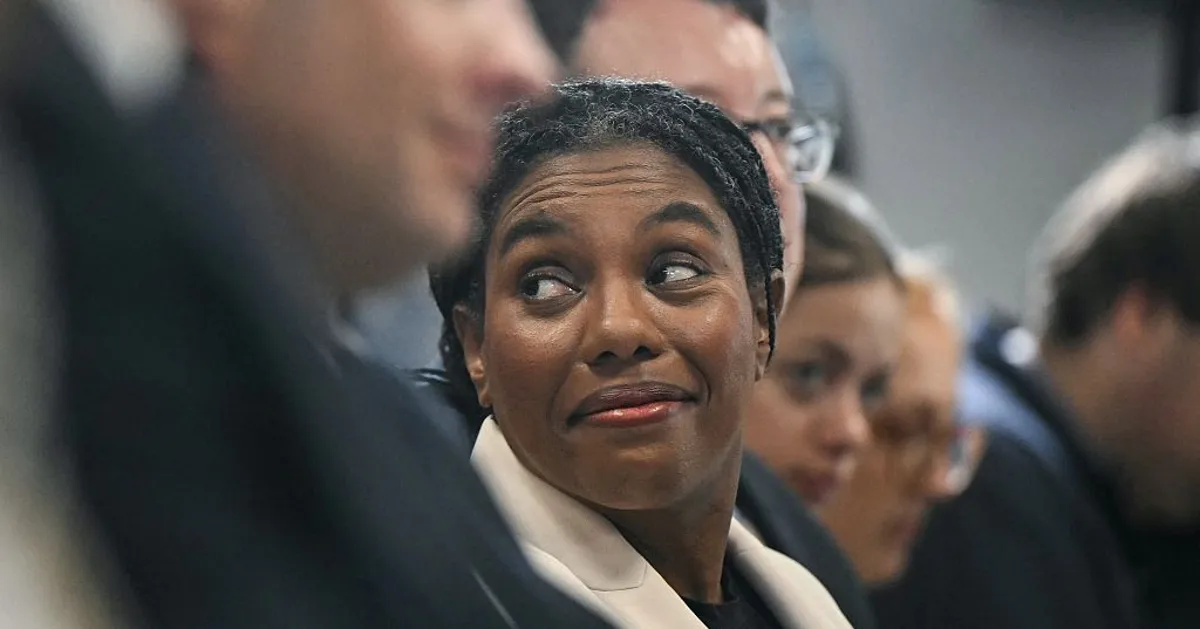
Kemi Badenoch has been accused of “shuffling the deckchairs on the Titanic” after she axed two Tory big beasts as she freshened up her top team.
The Conservative leader sacked former cabinet ministers Priti Patel and Mel Stride in the second reshuffle of her leadership.
Andrew Griffith – one of the architects of Liz Truss’s disastrous mini-Budget – replaced Stride as shadow chancellor, while Tom Tugendhat takes over from Patel as shadow foreign secretary.
Tory rising star Katie Lam replaces James Cleverly – who is bidding to be the party’s London mayoral candidate – as shadow housing secretary.
Another member of the Conservatives’ 2024 intake, Rebecca Paul, has been appointed shadow culture secretary.
Former cabinet minister Damian Hinds returns to the Tory frontbench as shadow health secretary, taking over from the sacked Stuart Andrew.
Other changes include Harriet Cross becoming shadow Scottish secretary.
She takes over from Andrew Bowie, who is replacing Claire Coutinho as shadow energy secretary.
Coutinho, who is currently on maternity leave, becomes shadow business secretary.
A Reform UK spokesman said: “Kemi is simply moving the deckchairs around the titanic with this reshuffle.
“She has promoted ardent supporters of net zero and the ECHR into senior positions, despite saying she wouldn’t .
“The Conservatives haven’t learned a thing from their failures in office.”
Labour chair Bridget Phillipson said: “Kemi Badenoch’s Conservatives have learnt nothing since they were kicked out of office by the British people.
“Promoting a key architect of Liz Truss’s disastrous mini Budget tells you all you need to know about Badenoch’s complete lack of judgement.
“The Tories’ top team is crammed full of the same vandals who hammered family finances and left our public services crumbling. No wonder they’ve made no progress in the last two years.”
Listen to Commons People, the podcast that makes politics easy. Every week, Kevin Schofield and Kate Nicholson unpack the week’s biggest stories to keep you informed. Join us for straightforward analysis of what’s going on at Westminster.

Labour’s attempts to stop asylum seekers crossing the English Channel in small boats are “bearing fruit”, according to Shabana Mahmood.
The home secretary made the surprising claim as new data revealed the number of crossings this summer was the lowest in seven years.
Her comments came less than a week after nearly 500 migrants arrived in Dover in a single day.
A total of 102 small boats brought asylum seekers over the Channel between June and August this year, a lower number than any year since 2019, when 57 vessels made the journey.
Some 7,371 migrants made the perilous journey this summer, which is lower than any year since 2020, when 3,307 crossed from France.
Home Office figures released last week also showed that the number of small boat crossings is down 23% compared to last year.
Mahmood said: “This government is committed to restoring order at our border.
“This work is beginning to bear fruit, with June, July and August recording the lowest number of small boat crossings in seven years. But we know there is more to do.
“We will be relentless in targeting the criminal gangs behind these crossings, and we will continue to remove the incentives that draw people here on unsafe and illegal routes.”
Shadow home secretary Chris Philp rejected Mahmood’s claims, and insisted that bad weather was the cause rather than government action.
He said: “Labour’s returns deal with France has been exposed as total sham. I saw with my own eyes the reality on French beaches this summer, as gendarmes stood idly by while migrants boarded dinghies bound for England.
“The home secretary should not be taking credit for rough seas in the Channel.
“Every day the waves are low, hundreds of illegal immigrants flood in. Praying for choppy seas is not a border security strategy.”
Listen to Commons People, the podcast that makes politics easy. Every week, Kevin Schofield and Kate Nicholson unpack the week’s biggest stories to keep you informed. Join us for straightforward analysis of what’s going on at Westminster.

Kemi Badenoch’s new shadow chancellor praised Liz Truss’s mini-Budget even as it sent the UK economy into a tailspin.
Andrew Griffith was one of the architects of the former prime ministers’ disastrous plan for £45 billion-worth of unfunded tax cuts.
In the days after the “economic growth plan” was delivered by the then chancellor Kwasi Kwarteng in September 2022, interest rates soared, inflation spiked and the value of the pound collapsed.
With the money markets in turmoil and Truss’s premiership in crisis, Griffith went out to defend the mini-Budget, insisting it would deliver economic growth and benefit ordinary people.
He said: “We think they’re the right plans because those plans make our economy competitive.
“What we politicians are responsible for is making the economic decisions that will drive continued growth.
“One of the things that’s bedevilled our economy is our inability to reach that top 2.5% rate of growth. It happened before the 2008 financial crisis, we can get back to do so with the programme of supply side reform that was embedded in the growth plan.”
He said Truss’s government should “get on and deliver that plan”.
“That’s what I, the chancellor, my colleagues in government are focused on – getting on delivering that growth plan,” he said. “That is what’s going to allow consumers to benefit.”
But within days, Kwarteng was forced to U-turn on his plans for huge tax cuts.
He was then sacked, with Truss herself being forced to resign shortly afterwards after a revolt by Tory MPs.
Nevertheless, Badenoch has decided to give Griffith the plum job of shadow chancellor after sacking his predecessor, Mel Stride, as part of a Tory frontbench reshuffle.
A senior Tory source said said Griffith would be “a no-nonsense, pro-growth shadow chancellor with real business experience”.
The source added: “Andrew and Kemi are in complete lockstep on how we back business, bring down taxes and regulation and get Britain working again.”
Listen to Commons People, the podcast that makes politics easy. Every week, Kevin Schofield and Kate Nicholson unpack the week’s biggest stories to keep you informed. Join us for straightforward analysis of what’s going on at Westminster.

Donald Trump has been criticised after he suggested America could withdraw its support for Britain over the Falkland Islands.
The US president said he was “reviewing” his position on the British Overseas Territory.
Argentina claims the Falklands, which it calls the Malvinas, belongs to them.
That is despite the fact that a referendum in 2013, 99.8% of those living there said they wanted to remain British.
At the recent World Cup, Argentina’s players sparked controversy after unfurling a banner saying “Las Malvinas Son Argentinas” (the Malvinas are Argentine) after they beat England 2-1 in the semi-final.
America’s official position is that it is neutral on the islands’ sovereignty, which in practice means it supports the status quo.
However, it has been reported that the Trump administration could instead support Argentina’s claim because the president does not believe the UK is spending enough money on defence.
Asked on Monday whether he was reviewing the US’s position, Trump said: “I always review positions, and that’s one of them.”
His comments sparked an angry backlash online, with one social media user accusing Trump of behaving like a Mafia boss.
Listen to Commons People, the podcast that makes politics easy. Every week, Kevin Schofield and Kate Nicholson unpack the week’s biggest stories to keep you informed. Join us for straightforward analysis of what’s going on at Westminster.


Credit: Adobe Stock

Arcades, piers and seafront amusements offer affordable fun while sustaining jobs, heritage and community life in coastal towns across the country
From Blackpool to Barry Island, Southend to Scarborough, right across the country this summer the same scene occurred time and time again. Bustling piers, seagulls divebombing at a portion of chips and the traditional sound of the arcades in full swing.
I know this scene well. My family has run amusements on the coast for 60 years, and we are one of hundreds of firms, many of them family-run, that have been part of Britain’s coastal towns for generations.
For the first time in a long time, we’ve had a good summer. After years of declining visitor numbers, this year it felt like there was a genuine buzz on the sea front.
Generations on the seafront
My family started our business 63 years ago, it was passed on to me, and I, in turn, will pass it on to my family too. What started out as one site in Weymouth, is now a business of 8 arcades employing over 150 people right across the South West.
At a time when the shopfronts around us are closing and businesses are abandoning physical stores in favour of online, we have invested millions in the heart of our communities. That’s not just investment, it’s jobs, it’s a sense of community, and being proud of where you’re from.
The British seaside holiday has been around for centuries but at a time when it has never been easier or cheaper to jump on a plane and end up in some far-flung destination, it’s those seaside destinations that need to be protected and cultivated. Our business, and businesses like mine, are a crucial part of delivering that.
We provide fun the whole family can enjoy
At a time when household budgets remain stretched, the arcade is one of the few places a family can spend an afternoon together for under a tenner. There are not many forms of entertainment that grandparents, parents and children can enjoy side by side. Especially one so cheap.
Beyond the entertainment, businesses like ours are significant local employers. We employ 150 people – managers, technicians, catering and maintenance staff – and that number grows through the peak season, giving many local young people a first job and a first wage. Multiply that across every resort in the country and you have an industry woven deep into the fabric of coastal Britain.
Pride in place
Politicians now talk about “pride in place”, and operators like me recognise the phrase immediately, because it describes what we try to deliver every day.
A busy pier or arcade is an anchor for the whole seafront, and footfall for the amusements is footfall for the cafés, the gift shops and the chippies alongside them. We sponsor local events, support schools and charities, and use local tradespeople wherever we can. Our success is bound up with the success of the town we are part of, and that is true of family operators right around the coast.
Building on the summer
The heatwave didn’t create the appeal of the British seaside so much as remind people it was there all along. The question now is how we build on that momentum: how coastal towns keep hold of the visitors who came in August and bring them back in April and October.
Family arcades, piers and seafront amusements are part of the answer because they are long-established, locally rooted and deeply invested in their communities. We provide jobs, we preserve heritage, and we offer something increasingly rare – safe entertainment that the whole family can afford and enjoy together.
Charles Holland runs Alexandra Gardens Arcade and Family Amusement Park in Weymouth.

In today’s tech driven world, it is almost impossible to be offline. According to Ofcom, the average UK adult now spends around a quarter of their waking life on the internet and last year one third of all retail sales were online. But this time spent online has allowed tech companies to undertake a stealth-twinning of individuals meaning you can be exploited, groomed, targeted and mis-sold – by a digital version of yourself.
Tech platforms including X, Facebook and Amazon have a model of you, based on hundreds or thousands or millions of data points they hold on you: what you purchase, content you engage with, streaming preferences. These inputs are collated to create “digital twins” which are then used to predict your behaviour, to target advertising and, in some cases, to groom extreme behaviours in ways outside of your control.
The ability to model human likeness and personalities represents a fundamental shift in power from us as individuals to large American and Chinese tech companies. If the state had been holding huge files on everything we had done online, we would rightly be outraged and the fact that this is being done by a small number of big, foreign companies, only makes it more outrageous.
Some may be asking what the need to tackle this now – I know Meta has collected data on me since I joined Facebook in 2005. But back then the content they fed you was based on your expressed preferences, friends you had chosen or people you followed. That is not the case now.

MDU warns Chancellor clinical negligence system ‘not fit for purpose’

Northern Ireland RE curriculum is ‘indoctrination’ – Supreme Court
As part of my committee’s inquiry into social media and algorithms, we heard from witnesses how content data is being curated, not just stored. Through this curation, posts are being fed back to you to drive your engagement, generally to drive revenue but in some cases, to groom particularly vulnerable people to extract certain behaviours.
The impact on children is of particular concern, given their potential exposure to this technology literally from the cradle – an AI camera pointed at them in a cot, a ‘smart toy’ on their pillow, smart phones in their hands. Imagine someone was following your child with a clipboard and made a note of everything they did. That is how these digital twins are being created – what they ate for dinner, how they sat, what they watched on TV or books they read before bed.
My committee also heard awful examples of the potential for algorithmic grooming. A fourteen-year-old girl was engaging with content online about weight and weight issues; the algorithm drove weight-loss and ultimately self-harm content at that child.
With AI we are now at an inflection point in automated personality capture and must establish the principle that you have a right to your personality and likeness in the AI age.
That is why I will be introducing a bill that would make creating a digital twin to simulate human appearance and cognitive performance illegal without the express consent of the individual. This builds on legislation in the United States, Europe and China to protect personhood and reflects concerns over copyright and deepfakes.
No one has the right to impersonate you for gain; impersonating human likeness to reap revenues or achieve social and political goals should not be legal. This bill will establish the principle that there is only one me, for everyone.
Kemi Badenoch has overhauled her shadow cabinet with a series of new appointments.
The Conservative leader reshuffled her top team after James Cleverly, the former housing secretary, stood down from the party’s frontbench in order to announce his campaign to stand as mayor of London.
Among the casualties of Badenoch’s reshuffle were Mel Stride, the former shadow chancellor, and Priti Patel, who previously served as shadow foreign secretary. Both Stride and Patel stood as candidates in the 2024 Conservative leadership contest.
Patel was replaced as shadow foreign secretary by Tom Tugendhat, who also stood as a Tory leadership candidate in 2024. Tugendhat served as chair of the House of Commons foreign affairs select committee from 2017 to 2022.
MDU warns Chancellor clinical negligence system ‘not fit for purpose’
Northern Ireland RE curriculum is ‘indoctrination’ – Supreme Court
Stride was succeeded by Andrew Griffith as shadow chancellor. Griffith, who served as shadow business and trade secretary from 2024 to 2026, was also financial secretary to the Treasury from September to October 2022 during Liz Truss’ brief tenure as prime minister. He went on to hold a series of ministerial positions under Rishi Sunak. Previously a close ally of Boris Johnson, he served as the former prime minister’s parliamentary private secretary (PPS) from September 2021 to February 2022.
During the 2019 Conservative leadership contest, Johnson used Griffith’s £9.5 million townhouse as his campaign headquarters. Griffith, then one of the most senior executives at broadcaster Sky, was later appointed as Johnson’s chief business adviser, based at 10 Downing Street. He took on that role in July 2019.
Griffith supported Badenoch’s candidacy in the 2024 Conservative Party leadership election.
Meanwhile, Chris Philp was retained as shadow home secretary. Harriet Cross, who was first elected to parliament in 2024, joined the shadow cabinet as shadow secretary of state for Scotland.
Katie Lam, a darling of the Conservative right and another of the party’s 2024 intake, was appointed as shadow housing secretary, replacing Cleverly. She will shadow Angela Rayner.
Stuart Andrew, the former shadow health secretary, and Nigel Huddleston, the former shadow culture secretary, have returned to the backbenches.
Kemi Badenoch is said to be grateful to Andrew, Huddleston, Cleverly, Patel and Stride for having helped “steady the ship and rebuild credibility after the devastating 2024 election.”
Read the full list of confirmed appointments below.
- Kemi Badenoch – leader of the Conservative Party
- Alex Burghart – shadow chancellor of the Duchy of Lancaster and shadow secretary of state for Northern Ireland
- Andrew Griffith – shadow chancellor of the exchequer
- Claire Coutinho – shadow secretary of state for business, innovation, science and trade (Julia Lopez covering during maternity leave)
- Richard Fuller – shadow chief secretary to the Treasury
- Tom Tugendhat – shadow secretary of state for foreign, commonwealth and development affairs
- Chris Philp – shadow secretary of state for the Home Department
- James Cartlidge – shadow secretary of state for defence
- Neil O’Brien – shadow minister for policy renewal
- Kevin Hollinrake – chairman of the Conservative Party
- Helen Whately – shadow secretary of state for work and pensions
- Andrew Bowie – shadow secretary of state for energy security
- Laura Trott – shadow secretary of state for education
- Nick Timothy – shadow secretary of state for justice
- Damian Hinds – shadow secretary of state for health and social care
- Victoria Atkins – shadow secretary of state for environment, food and rural affairs
- Richard Holden – shadow secretary of state for transport
- Katie Lam – shadow secretary of state for housing, communities and local government
- Rebecca Paul – shadow secretary of state for culture, media and sport
- Harriet Cross – shadow secretary of state for Scotland
- Mims Davies – shadow secretary of state for Wales
- Joy Morrissey – shadow secretary of state for women & equalities
- Jesse Norman – shadow leader of the House of Commons
- Lord True – shadow leader of the House of Lords
- Rebecca Harris – opposition chief whip
- John Glen – parliamentary private secretary to the leader


Andy Burnham has pledged to reform social care (Alamy)
3 min read
Within days of entering No 10, Andy Burnham pledged to end decades of drift and fix Britain’s broken social care system. His government is committed to delivering a “National Care Service” that is fully and sustainably funded.
This is a bold pledge – such reform is likely to be complex, politically contentious, and most of all, expensive. Election campaigns have turned and political careers foundered on similar promises. It is nonetheless encouraging because it presents a chance for genuinely transformative policymaking to restore Britain’s social contract, as I argue in my report for the Social Market Foundation today.
There are a number of potential models for a nationally funded social care system – it could be funded through national taxation like the NHS, or from a dedicated levy; a mandatory social insurance system, like in Japan and Germany; or a system similar to Theresa May’s could draw more heavily on housing wealth. All these would entail raising significant revenue when the tax burden is high and the cost of living is rising, but there are advantages as well.
Any new system must be nationally funded. Currently, old age social care provision is a duty of local authorities, and a major contributor to the parlous state of local government finances. Councils in England spent around £9.2bn from their own budgets on old age social care in 2024-25; that’s 22 per cent of all council tax receipts. These rising statutory costs have forced councils to cut non-essential services to the bone, leaving them less able to respond to local priorities and undermining local democracy.
The burden is not distributed equally or fairly. Nine of the 10 councils spending the smallest proportion of their council tax on old age social care are in London, with the highest-spending authorities concentrated in lower-income parts of the North and Midlands. Though it sounds counterintuitive, a purely national funding system for old age social care would help Burnham deliver on his pledge to put power and resources back in the hands of local communities. Councils would be free to spend the cash they raise on local services, and local councils, rather than central government, could determine spending priorities.
This could allow the PM to finally sort out England’s outdated, inefficient and unfair council tax system. Based on home valuations from 1991, the system has fallen dangerously out of sync with the distribution of wealth. Absurdly, Buckingham Palace incurs a lower council tax bill than a typical three-bedroom semi in Hartlepool. Council tax is deeply unpopular – one study ranked it last among 23 possible tax-raising measures.
The main barrier to council tax reform has been the fear that revaluation will generate a backlash from those required to pay more, particularly in London. Even if most bills were lower, the geographical concentration of “losers” would make for a serious political problem for any government, let alone a Labour administration holding 59 London seats. If, however, old age social care was funded nationally, council tax reform need not be revenue neutral. A reformed local tax system needing to raise £9.2bn less could be more rational and progressive without large swathes of the country paying significantly higher bills.
Our new report examines this possibility, finding that multiple models of council tax reform become more politically feasible in this scenario. Under the most politically feasible model, this social care saving at lower bands could cut the share of households facing higher bills from 35 per cent to just 4 per cent. In London, the number falls from 2.24m to around 670,000.
Rather than undertaking one difficult and politically dangerous reform, Burnham might be better off attempting two simultaneously.
Barney Dowling is a researcher at the Social Market Foundation
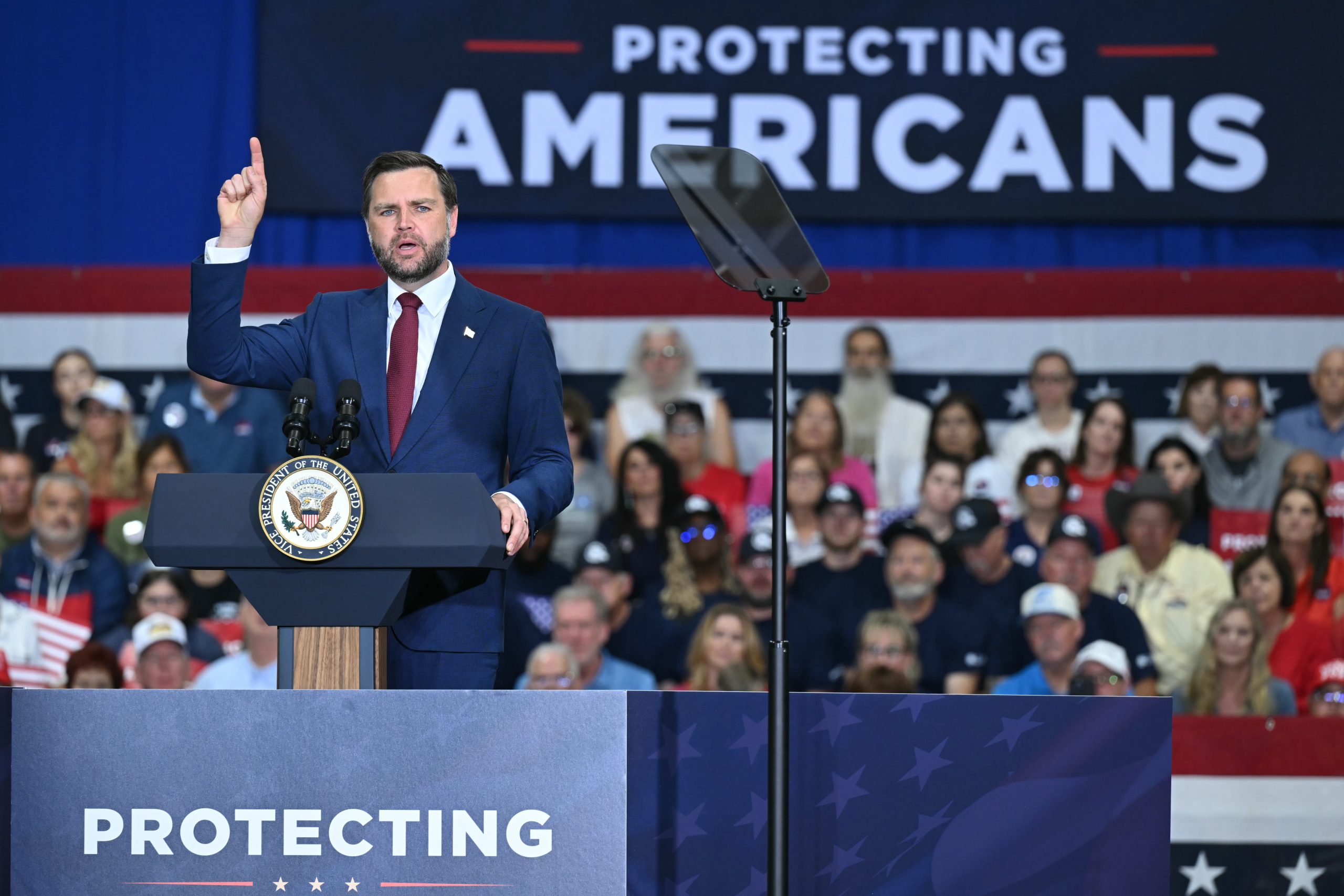

LAS VEGAS — Vice President JD Vance has faced skepticism from some in the Jewish Republican community. He waded directly into the fray Monday — and was met with raucous applause.
In a closed-door appearance at the Republican Jewish Coalition leadership summit, Vance addressed what he called the “elephant in the room”: Israel’s plummeting favorability among young Americans, according to one people in the room for Vance’s speech, granted anonymity to describe an off-record conversation, and audio of the event obtained by POLITICO. Vance also discussed rising antisemitism.
“There is a growing suspicion among, I would call it, under-40s of the U.S.-Israel relationship,” Vance said in a moderated conversation with former Sen. Norm Coleman (R-Minn.), chair of the RJC board. “I think my view is, what we have to do is articulate why this is in the best interest of the United States of America, and actually get out there and talk about the ways in which it is in the best interest of the United States of America.”
Vance noted that Republicans must “talk about the concrete alignment of interest and to hook a relationship on that, rather than something that may have made a lot of sense rhetorically 30 or 40 years ago, but just doesn’t have … the same purchase as it did 30 or 40 years ago because the country is different and because young people are looking at this in a different way.”
Vance’s appearance at the annual RJC confab — hosted at the Venetian Resort, developed by the late GOP megadonor Sheldon Adelson — came as a surprise to many in the pro-Israel community, with which Vance has shared a sometimes tumultuous relationship. Vance, the current frontrunner for the Republican presidential nomination in 2028, will likely need to shore up support from the community to succeed Trump.
The hesitancy toward Vance among some in pro-Israel circles boiled up in recent months over Vance’s dovishness on the Iran war and his criticism of Prime Minister Benjamin Netanyahu’s Israeli government. But other concerns go back further, centered on his longtime relationship with Israel-skeptical pundit Tucker Carlson and the way he’s addressed antisemitic incidents or statements.
Some pro-Israel megadonors, like billionaire hedge fund manager Ken Griffin, have already signaled they’d support Secretary of State Marco Rubio in 2028 over Vance. (Neither Vance nor Rubio have announced whether they’ll seek the presidential nomination, though Rubio has stated he will not run if Vance does.)
But Vance’s speech was met with applause inside the cavernous convention hall where it was delivered, and praise outside of it.
“He hit a home run with the crowd,” Sen. Jim Banks (R-Ind.) told reporters after the speech, noting Vance received “several standing ovations.”
The Jewish community has “a great ‘bullshit detector,’ to understand when they’re being pandered to,” said Matt Brooks, CEO of the RJC. “And I don’t believe that anybody will come away from this meeting thinking that they were pandered to. I think they will come away from this conversation with a sense that the vice president really gets it and gets us.”
Last year, the RJC’s leadership summit was centered on combatting antisemitism within the Republican Party, and leaders took aim at Carlson and others. Vance has been an ally of Carlson’s, and when Coleman asked Vance about podcasters like Carlson, Vance gave a winding answer.
“I recognize a lot of people in this room may disagree with things that Tucker Carlson or Megyn Kelly or Joe Rogan have said,” Vance said, before focusing on Rogan and Fuentes, saying they are “two very, very different categories of people.”
“I think it’s a mistake to sort of say we’re going to write Joe Rogan off because he said something that we don’t like,” he said. “I think the best approach is to actually go in there and talk to him and make the argument as best as you can.”
Vance directly condemned some antisemitic theories like blood libel, saying it is the exact opposite of the Christian gospel. He said that Jew-hatred is “corrosive to the soul.”
And echoing other speakers at the two-day RJC summit, Vance declared that former Rep. Mike Rogers (R-Mich.) is the most important Senate candidate this cycle, and urged those in attendance to support him in his race against Democratic nominee Abdul El-Sayed.
Earlier Monday, Vance rallied alongside Rogers at a Michigan event hosted by MAGA Inc., Trump’s super PAC, before flying to Nevada. His cross-country itinerary signaled his seriousness in courting the Jewish donor community, suggested Robert Schostak, an RJC board member.
“I think it’s great that he’s here. This is not easy,” said Schostak, the former Michigan GOP chair. “He cares about the fight of antisemitism, and the support for Israel. If this was secondary to him, he wouldn’t be here.”
Ari Fleischer, an RJC board member and a former White House press secretary, agreed. “Today is not primary day,” he said. “But I think today was progress day for JD Vance with the Jewish community.”
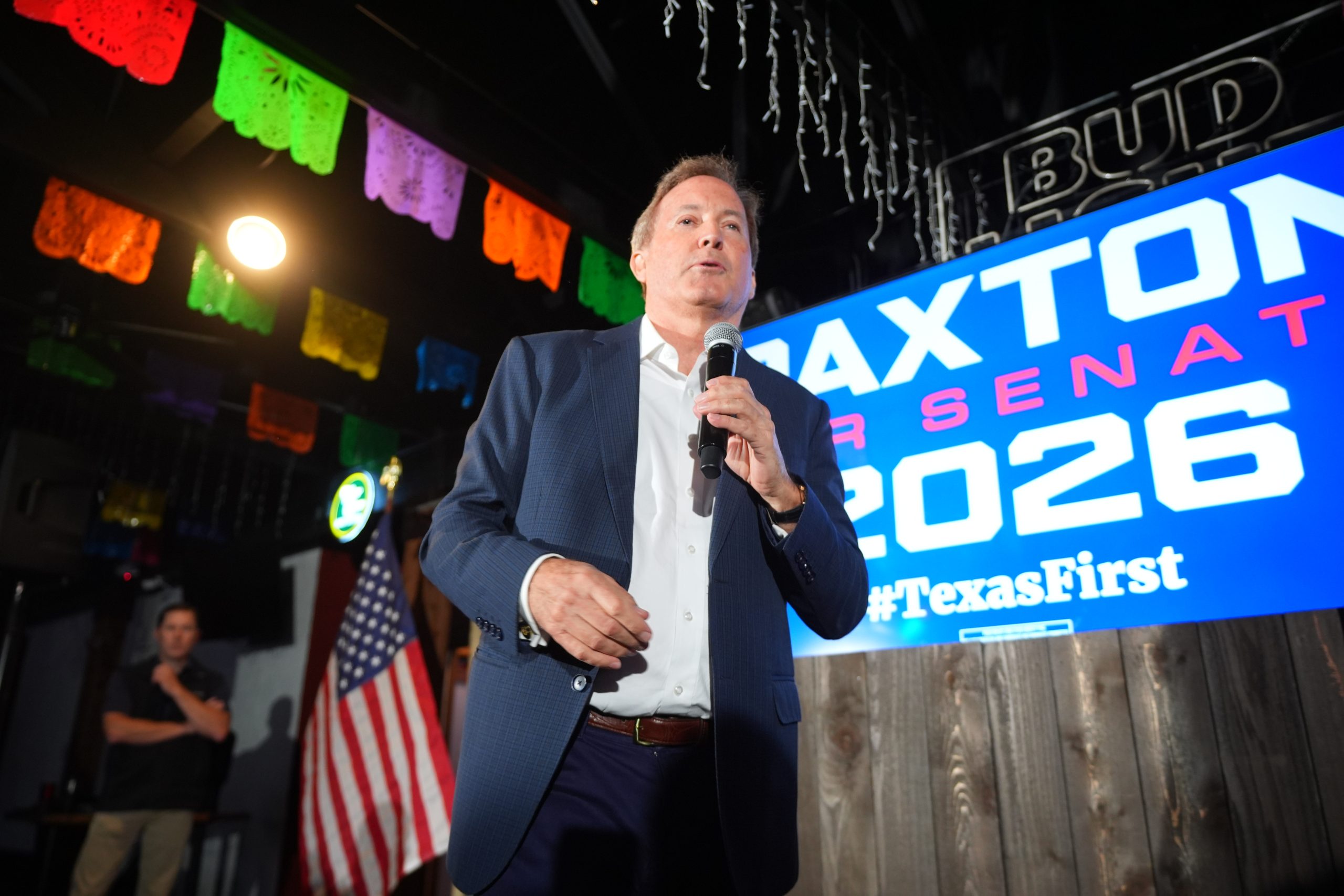

Allies of Texas GOP Senate hopeful Ken Paxton are planning a $15 million ad campaign starting Tuesday, the first major ad buy on behalf of Paxton in his battleground matchup with Democrat James Talarico.
Two new ads from Lone Star Liberty PAC, the pro-Paxton super PAC, will air across 18 markets across Texas over the ensuing two weeks. They mark Paxton’s first significant foray on to the airwaves, jolting a campaign that has been clouded by concerns over Talarico’s massive cash advantage and Paxton’s electability.
One of the new ads will lean into Paxton’s record as attorney general, highlighting Texas’ recent agreement with Kellogg’s to remove certain food dyes from cereals and the state’s billion-dollar settlements with Meta and Google over privacy and safety concerns.
“When they come after Texans, he comes after them,” a voiceover says in the ad.
The other new advertisement accuses Talarico of aiding China’s growth at the expense of Texas residents, pointing to the Democrat’s vote against restrictions on Chinese investments, and argues that a Chinese billionaire’s ownership of land near Laughlin Air Force Base presents national security concerns.
“China’s got Talarico. Texas needs Ken Paxton,” the ad says.
“[James Talarico] voted to sell Texas land to China, pushed a Texas Green New Deal that would gut our oil and gas jobs, and stood with criminals over cops as the most pro-criminal member of the Texas House,” Lone Star Liberty spokesperson Sam Cooper said. “That record is too extreme for Texas. Between now and Election Day, voters are going to hear it.”
Talarico’s campaign did not immediately respond to a request for comment.
The multimillion-dollar campaign comes as Republicans look for ways to negate Talarico’s war chest. The latest Federal Election Commission filings from July show Talarico with $21.5 million in the bank, dwarfing Paxton’s $1.8 million in reserves.
That advantage, along with Paxton’s drawn-out primary runoff that forced him to focus on beating Sen. John Cornyn, has allowed Talarico to dominate the general election messaging battle on television. He’s spent $39 million on TV since the March primary, according to data tracking firm AdImpact.
On Saturday, Talarico launched his first negative ad against Paxton, spotlighting his impeachment and labeling him “the most corrupt politician in Texas.”
Although Republicans have traditionally been favored in Texas statewide elections, Democrats are optimistic Talarico can defeat Paxton. A Texas Public Opinion Research poll released Thursday found Talarico leading Paxton — 48 percent to 42 percent.
Concerns about a potential Paxton defeat have prompted some Republicans to implore President Donald Trump to invest some of the gargantuan MAGA Inc. war chest in the Texas race. MAGA Inc. has over $400 million in cash on hand, and Trump publicly pledged to support Paxton financially.

Wladimir Klitschko sends message to Moses Itauma after KO loss to Filip Hrgovic

DuckDB will provide ‘connective tissue’ across the data estate

DVLA number plate fine warning ahead of 76 plates launch





-

 Crypto World6 days ago
SpaceX stock could rise 75% to $240, JPMorgan says
-

 Fashion4 days ago
Weekend Open Thread: Maeve – Corporette.com
-

 Crypto World4 days ago
Bitcoin’s 22% rally now needs real demand to outlast Treasury liquidity boost
-

 Crypto World6 days ago
Warsh Jackson Hole keynote puts financial innovation first
-

 Business4 days ago
Salesforce Stock Soars 19% as Blowout Earnings and Agentforce AI Growth Silence Software Skeptics
-

 Crypto World5 days ago
Elon Musk Grok Bot Promise: We Will Make You Whole if AI Loses Your Money
-

 Business4 days ago
Apple Confirms September 9 Keynote and Reveals Its Full Pre-Order Schedule
-

 Crypto World6 days ago
Did Trump Just Move SpaceX Stock With One Truth Social Post?
-

 Business3 days ago
Onto Innovation Stock: AI’s Next Bottleneck Is Yield (NYSE:ONTO)
-

 Business6 days ago
Walmart takes aim at younger shoppers with new fashion brand
-
 NewsBeat6 days ago
Lindsay Clancy jury braces for closing arguments as judge tells court: ‘You’ve heard all the evidence’ – Live updates
-

 Crypto World3 days ago
Bitcoin price tests $82K resistance as Brandt stays long
-

 Business6 days ago
Thailand’s Eastern Economic Corridor Capital City (EECiti): Key Developments and Investment Opportunities
-

 Crypto World5 days ago
NVIDIA revenue hits $96.2B as AI demand doubles
-

 Business4 days ago
iPhone 18 Pro Pre-Orders Could Shift to Saturday as Apple Reportedly Avoids September 11 Anniversary
-

 NewsBeat6 days ago
Trump’s trade truce with China faces test with Iran effort
-
 Crypto World6 days ago
Nvidia Q2 Earnings Reveal $96.2 Billion Beat, So Why Is NVDA Falling?
-

 Tech5 days ago
Claude Cowork gets its own browser that doesn’t touch your tabs, bookmarks, or saved passwords
-
 Tech3 days ago
Hugging Face built a $4.5 billion empire on free AI models. Now Nvidia is buying it for $12.9 billion
-

 Crypto World4 days ago
Truflation calls for Fed rate cut after PCE forecast
You must be logged in to post a comment Login