
Business
Tesla Stock Slips Nearly 3 Percent to $358 as Traders Fade August Rally Before Cybercab


AUSTIN, Texas — Tesla Inc. shares fell about 2.6 percent Tuesday morning, trading near $358.28, as investors locked in August gains ahead of a Cybercab event scheduled for Thursday at the company’s Texas headquarters.
The stock was down $9.67 from the prior close. The auto-parts group was also weaker, while Ford and General Motors traded slightly higher. Tesla had climbed through August on delivery optimism and autonomy headlines. Short-term momentum readings had moved into overbought territory, and the pullback fit a familiar pattern: sell into a binary product day.
Tesla has invited Robotaxi app users to the Sept. 3 Cybercab launch in Austin. State records show the company registered 45 Cybercabs with the Texas Department of Motor Vehicles on Aug. 31, a step toward commercial use on Texas roads. Robotaxi service already runs 6 a.m. to 10 p.m., seven days a week, in Austin, Dallas, Houston, Miami, Orlando and Tampa. Nevada regulators this month also approved Las Vegas permits for Tesla, Uber and Waymo.
Those milestones have not settled the debate over when unsupervised robotaxi miles become material revenue. Management has emphasized Full Self-Driving software — including a coming v15 build and pothole-avoidance work — over a rapid city-count expansion. Capital spending is expected to exceed $25 billion in 2026 and rise for two or three more years to fund Optimus robots, a robotaxi fleet, solar manufacturing, AI compute and other plants, Chief Financial Officer Vaibhav Taneja said on the last earnings call.
Chief Executive Elon Musk spent the weekend tying Tesla to power for data centers. In a post on X he said Tesla and SpaceX were “each building 100 gigawatts per year of solar production capacity as fast as possible,” a build that would take years. Natural gas would fill the gap, he said, and in-house turbine-blade casting at SpaceX could speed gas turbines by as much as 18 months. The stock jumped Monday on that message. Tuesday’s decline gave some of that move back.
The valuation remains stretched versus near-term auto profits. Tesla trades at a high multiple of next year’s estimated earnings. Wall Street has cut 2026 and 2027 net-income forecasts this year while lifting capital-expenditure estimates. Visible Alpha consensus figures compiled in August showed 2026 net income estimates down to about $3.5 billion from $4.4 billion three months earlier, with 2026 capex near $25 billion and free cash flow still deeply negative.
Vehicle demand is the other weight. Tesla lost the global battery-electric sales crown to BYD in 2025. U.S. federal EV tax credits expired, producing a pull-forward and then a hangover. China and Europe have been soft in recent monthly tallies. Cybertruck prices were raised on some trims in late August even as that model has struggled to become a volume product. Model S and Model X production has been wound down so Fremont capacity can shift toward Optimus.
Tesla said last week that Optimus production had started in Fremont. Musk has long argued humanoid robots and autonomy will dwarf the car business. Investors have learned to treat those timelines as elastic. The Cybercab event is the next test of whether hardware, software and regulation are lining up — or whether the day is another prototype showcase.
Tuesday’s tape looked more like risk reduction than a change in the long-term story. Institutions that added during the August run had a reason to lighten up two days before a staged reveal. High capex, delayed robotaxi profit and rich multiples leave little room if the event underwhelms. A clean demo and a firmer commercial calendar could just as easily refill the bid.
Tesla’s market value still sits in the low-to-mid trillions at these prices, far above traditional automakers. That premium is the autonomy and robotics option. It is also why a 3 percent down day before a product event is ordinary. The cars still have to sell. The software still has to drive. The robots still have to ship. Thursday is one more checkpoint, not the destination.


BHP’s chief commercial officer to step down in January, internal memo shows
Business
Dow Slides to Open September as Rising Oil Prices and Bond Yields Rattle Wall Street Once Again

The Dow Jones Industrial Average fell in early trading Tuesday as Wall Street opened September on a cautious note, with renewed fighting in the Strait of Hormuz, a continued rise in bond yields and growing uncertainty over the Federal Reserve’s next move all weighing on stocks.
The Dow traded at 52,895.96 as of 9:32 a.m. Eastern time, down roughly 0.58% from Monday’s close of 53,185.99. Futures on the S&P 500 and Nasdaq-100 also fell heading into the session, dropping about 0.6% and 1.4%, respectively, following a solid close to the month of August, according to Yahoo Finance.
The renewed pressure on markets traces back to overnight developments in the Middle East. Two oil tankers, one Saudi-owned and one South Korean-owned, were struck by projectiles Monday night as the United States and Iran resumed hostilities in the Strait of Hormuz, extending a six-month war that has largely settled into what analysts have described as a stalemate. Daniela Hathorn, senior market analyst at Capital.com, characterized the mood on trading desks as investors weighed multiple sources of uncertainty simultaneously. “Markets are starting September cautiously, with investors balancing renewed geopolitical uncertainty, elevated bond yields and the latest US economic data,” Hathorn said, according to TheStreet. “The S&P 500 remains close to record territory, but momentum has softened after a strong summer.”
Bond yields continued climbing Tuesday, adding further pressure on equities. The 10-year Treasury yield rose to 4.78%, its highest intraday level since January 2025, according to Yahoo Finance, as elevated oil prices stoked inflation concerns and reinforced expectations that the Federal Reserve could move toward another interest rate increase at its September meeting.
Monday’s regular trading session had already set a downbeat tone heading into Tuesday. The Dow fell 0.7% Monday to close at 53,186 points, while the S&P 500 and Nasdaq Composite declined 0.33% and 0.12%, respectively, according to Trading Economics. Nine of the S&P 500’s 11 sectors finished lower on the day, led to the downside by communication services, utilities and industrials, with individual decliners including Alphabet, down 3.16%, Amazon, down 2.45%, and Honeywell International, down 1.9%.
The pullback comes as Wall Street enters what has historically been a difficult stretch for stocks. According to Carson Group chief market strategist Ryan Detrick, September is statistically the weakest month of the year for equities, with the S&P 500 averaging a 0.6% decline during the month and posting a positive return in only 45% of years historically, a track record matched only by February among all 12 months. Detrick’s analysis also noted that market volatility tends to increase during September, a dynamic some analysts have said could be compounded this year by this fall’s midterm election campaigns.
Despite the softer near-term backdrop, some strategists have cautioned against reading too much into seasonal patterns alone. LPL Financial chief technical strategist Adam Turnquist said he expects continued volatility in the weeks ahead but suggested that pullbacks could also present buying opportunities for investors willing to look past short-term turbulence, given that stocks enter September carrying double-digit year-to-date gains and earnings expectations that have continued trending higher.
Investors are also looking ahead to a busy stretch of economic data this week that could further shape the market’s direction. Manufacturing and services activity readings are due Tuesday, followed by the closely watched August jobs report Friday, both of which are likely to influence expectations for the Federal Reserve’s policy path heading into its next meeting later this month.

Hamza Fodderwala
Senior VP of Investor Relations & Strategic Finance
Good day, everyone, and welcome to Palo Alto Networks’ Fiscal Fourth Quarter 2026 Earnings Conference Call. I am Hamza Fodderwala, Senior Vice President of Investor Relations and Strategic Finance. Please note that this call is being recorded today, Tuesday, September 1, 2026, at 1:30 p.m. Pacific Time.
With me on today’s call to discuss our fiscal fourth quarter results are Nikesh Arora, our Chairman and Chief Executive Officer; and Dipak Golechha, our Chief Financial Officer. You can find the press release and other information to supplement today’s discussion on our website at investors.paloaltonetworks.com. While there, please click on the link for quarterly results to find the Q4 ’26 supplemental financial information and Q4 ’26 earnings presentation.
During the course of today’s call, we will be making forward-looking statements and projections regarding the company’s business operations and financial performance as well as the company’s recent acquisitions. These statements made today are subject to a number of risks and uncertainties that could cause our actual results to differ from these forward-looking statements. Please review our press release and recent SEC filings for a description of these risks

Shares of Fervo Energy surged more than 12% Tuesday after a report revealed the geothermal power developer has struck its largest-ever supply agreement with Google, a deal that stands as a direct rebuttal to investor concerns raised following the company’s most recent earnings report.
The stock traded at 17.32 dollars, up 1.94 dollars, or 12.62%, as of 9:42 a.m. Eastern time on the Nasdaq, having climbed as much as 14.3% in pre-market trading. The rally came even as the broader U.S. market struggled Tuesday, with the S&P 500 down about 0.5%, the Dow Jones Industrial Average off roughly 0.6%, and the Nasdaq Composite declining about 1%, according to Investing.com, underscoring that Fervo’s move was driven by company-specific news rather than a broader sector rotation.
According to a Wall Street Journal report cited by Investing.com, Fervo has agreed to supply nearly 400 megawatts of electricity to Google from its Cape Station project in southwestern Utah, with deliveries to the technology giant beginning in 2028. The Houston-based company is spending more than 2 billion dollars to build out Cape Station, which it has positioned as what it expects to become the world’s largest next-generation geothermal development.
The agreement builds on an already deepening relationship between the two companies. Fervo had previously disclosed a broader 3-gigawatt framework agreement with Google, and the company now holds a contracted backlog totaling 7.2 billion dollars across utilities and corporate energy buyers, according to Investing.com’s reporting. Notably, peer renewable energy companies including Ormat Technologies did not share in Tuesday’s rally, further reinforcing that the catalyst was specific to Fervo’s newly announced deal rather than a broader lift for the geothermal or clean energy sector.
Tuesday’s rally comes at a technically significant moment for the stock, which had fallen roughly 26% over the prior 20 trading sessions heading into the announcement. That decline followed Fervo’s second-quarter earnings report, released Aug. 12, in which the company posted a net loss of 55.9 million dollars alongside capital expenditures of 226.5 million dollars for the quarter. Despite the loss, Fervo reported adjusted earnings per share of a positive 38 cents, sharply ahead of the 7-cent consensus estimate analysts had projected, according to data compiled by TipRanks.
The company has continued to attract largely positive coverage from Wall Street analysts even amid the stock’s recent volatility. J.P. Morgan reiterated a buy rating on Fervo on Aug. 17, and Bernstein separately maintained its own buy rating the same day, according to TipRanks. Baird has taken a more cautious stance on valuation specifically, lowering its price target on the stock to 35 dollars from 50 dollars following the second-quarter results while still maintaining an outperform rating, according to StockAnalysis.com.
Fervo, founded in 2017 by Jack Norbeck and Timothy Latimer, builds and operates geothermal power facilities using enhanced geothermal system technology, an approach that uses techniques including horizontal drilling and distributed fiber optic sensing to generate electricity from geothermal resources in locations that would not traditionally support conventional geothermal development. The company went public earlier this year, raising roughly 2.2 billion dollars in its initial public offering to help fund the Cape Station project and expand what it has described as a broader 42-gigawatt development pipeline.
Fervo has separately partnered with Nvidia and the Pacific Northwest National Laboratory on a digital twin platform designed to accelerate geothermal development using artificial intelligence and accelerated computing, part of a broader push by the company to position itself at the intersection of clean energy development and the surging electricity demand tied to AI data center growth. Tuesday’s Google agreement adds another major technology company to that growing list of corporate energy customers as demand for reliable, around-the-clock power sources continues to climb alongside AI infrastructure buildout across the industry.
Yes. Corporate subscriptions are available for teams and organisations, with discounted rates as user numbers increase. Pricing starts from $1,625 + GST per user.
Get in touch
to discuss the right option for your organisation.
Business News subscriptions are used by executives, investors, consultants and professionals who need to stay informed and make better decisions about the WA market. When you subscribe you’ll get
- Unlimited access to WA’s most trusted business journalism
- Data & Insights — detailed profiles of WA companies, people, projects and deals
- MyBN — a personalised feed based on the companies, people and sectors you follow
- Special publications and industry reports
- Daily and weekly email newsletters
Data & Insights is a research tool built specifically for the WA market. It draws on more than 30 years of Business News reporting, updated regularly to reflect what’s happening now. Use it to:
- Look up detailed profiles of WA companies, including financials, directors and ownership
- Find decision-makers and track their career movements
- Research live and completed projects across WA industries
- Monitor deals, appointments and market activity
- Access industry rankings and league tables
Data & Insights is updated daily by our dedicated research team, which uses the latest announcements, ASX filings and editorial coverage to keep our person, company, list and project records up to date.
Business News welcome all opportunities to make our dataset accurate, complete and current, so if you have an update request, please email the team at
general@businessnews.com.au, and we’d be happy to assist.
MyBN
is part of every subscription. It’s your personalised view of Business News. You can follow the companies, people, sectors and projects that matter to you, and get a news feed and alerts tailored to your interests. You can save articles to read later and retain only what you need.
Only subscribers have full access to all content on the Business News website.
If staying informed about the WA economy is part of your job, and/or you’re looking for networking opportunities in WA, Business News is built for you.
Business News subscribers are:
- Executives and directors tracking competitors, clients and market movements
- Investors and advisers researching companies, deals and industry trends
- Consultants and professionals staying across sectors relevant to their clients
- Business owners looking for leads, context and market intelligence
Most Business News publications cover national or global markets. Business News is focused entirely on Western Australia, which means the journalism, the data and the intelligence are all built around WA companies, people and projects — not adapted from a national feed. Data & Insights, included with every subscription, combines more than 30 years of WA-specific editorial research with live business data. There’s no comparable product for the WA market.
The Morning Digest Email provides a comprehensive wrap of the major headlines, relevant to WA business, and includes with a snapshot of the overnight news covering oil, gold and ASX-listed companies.
The Afternoon Wrap Email focuses on the news covered by our team of journalists during the course of the working day, including exclusive stories and analysis, all of which relates to WA business and the local economy.
The BN Weekender Email contains a wrap of the Business News from the week that was, highlighting the top stories in each area of WA business.
Sign up for free.
We’re happy to help.
Get in touch
and our team will come back to you.
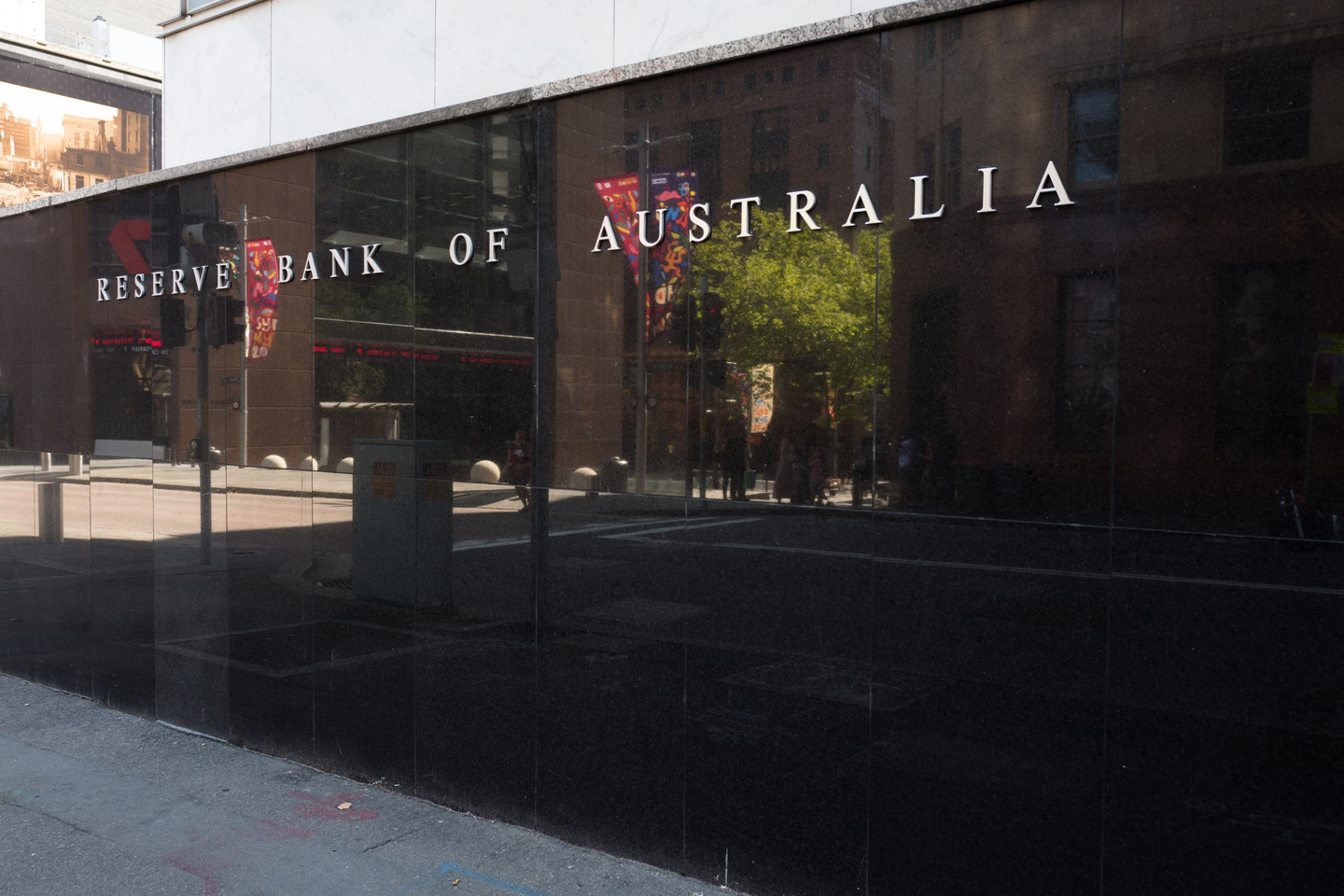
Australia’s economy is showing resilience despite higher interest rates and war in the Middle East, growing at 0.4 per cent in the June quarter.
Business
Apple Tested a Stubbier Apple Pencil for Its Foldable iPhone, but It Likely Wont Launch, Report Says

Apple internally prototyped and tested a specialized Apple Pencil designed for its upcoming foldable iPhone, but the accessory is unlikely to actually reach the market when the device launches next month, according to a new report from Bloomberg’s Mark Gurman.
Gurman detailed the findings in his “Power On” newsletter Sunday, writing that Apple “internally prototyped, tested and considered launching an Apple Pencil for the upcoming foldable iPhone.” According to his reporting, the stylus Apple tested was noticeably shorter and stubbier than existing Apple Pencil models designed for the iPad, a design choice intended to align with the compact height of the foldable device. The prototype was engineered to attach magnetically to the side of the phone for both storage and charging, mirroring how current Apple Pencil models work with supported iPad devices.
Despite the extent of the internal development work, Gurman said he believes it is unlikely Apple will actually bring the accessory to market alongside the foldable iPhone’s expected debut. “It seems unlikely that Apple will actually launch this accessory when it rolls out the foldable iPhone next month,” Gurman wrote, according to a summary of his newsletter published by Cult of Mac.
Multiple outlets covering the report pointed to the same core reason for the accessory’s likely cancellation: the risk that a stylus could damage the foldable device’s more delicate screen. Foldable displays rely on flexible, layered materials that are inherently softer and more fragile than the glass panels used on conventional iPhones, and Apple’s internal testing reportedly found that firm stylus pressure, of the kind commonly applied while writing or drawing, could risk causing lasting damage to the screen’s surface.
Space constraints also appear to have played a role in the decision. Enabling active stylus support typically requires an additional digitizer layer positioned beneath the display to detect the Pencil’s input, hardware that takes up valuable internal space inside a device that already needs to accommodate a large foldable display, batteries and other components within an unusually thin chassis. Reports have suggested Apple’s foldable iPhone, expected to be named either the iPhone Fold or iPhone Ultra, will measure roughly 4.5 millimeters thick when unfolded, making it thinner than Apple’s current 5.1-millimeter iPad Pro, itself the thinnest device the company has ever produced.
Apple’s broader stylus strategy on the foldable device also reportedly ran into design compromises beyond just the screen risk. According to a report from Techgenyz, the tested prototype’s magnetic side-attachment mechanism, while convenient for storage and wireless charging, made it more difficult to physically open the folded device while the stylus remained attached, an ergonomic tradeoff that appears to have factored into Apple’s broader hesitation to move forward with the accessory.
Apple’s history with styluses carries some notable irony given the company’s own founding philosophy on the subject. Steve Jobs famously mocked the concept of smartphone styluses during the original iPhone’s 2007 unveiling, saying at the time, “If you see a stylus, they blew it.” Apple nonetheless went on to introduce the Apple Pencil for the iPad in 2015, a product that has since become a well-established and popular accessory within Apple’s broader tablet lineup, even as the company has never extended stylus support to any standard iPhone model.
The broader foldable phone industry has taken an inconsistent approach to stylus support. Samsung offered S Pen compatibility across its Galaxy Z Fold lineup beginning with the Z Fold 3 in 2021, but the company dropped that support entirely with the Galaxy Z Fold 7, removing the internal digitizer layer needed to detect stylus input in order to make the device thinner and more durable. Google has similarly shown no interest in adding stylus support to its Pixel Fold devices, and book-style foldables from manufacturers including OnePlus and Huawei have not offered official stylus accessories either. Oppo remains something of an exception within the industry, having built limited stylus support into its Find N series since the Find N2, though availability has remained restricted to certain regional markets.
Apple’s foldable iPhone is widely expected to be unveiled at the company’s Sept. 9 event in Cupertino, California, alongside the iPhone 18 Pro and iPhone 18 Pro Max. Global foldable smartphone shipments are projected to grow roughly 20% in 2026 compared with the prior year, according to industry data cited by research firm DigiTimes, with Apple’s long-anticipated entry into the category cited as one of the key factors expected to drive that growth, regardless of whether the device ultimately ships with any form of stylus support at launch.
Operator
Hello, and welcome to MongoDB’s Second Quarter Fiscal ’27 Earnings Call. [Operator Instructions]
I would now like to hand the conference over to Jess Lubert, Vice President of Investor Relations. You may begin.
Jess Lubert
Vice President of Investor Relations
Thank you, operator. Good afternoon, and thank you for joining us today to review MongoDB’s Second Quarter Fiscal 2027 Financial Results, which we announced in our press release issued after the close of market today. Joining me on the call today are CJ Desai, President and CEO of MongoDB; and Mike Berry, CFO of MongoDB.
During this call, we will make forward-looking statements, including statements related to our market and future growth opportunities, our opportunity to win new business, our expectations regarding Atlas assumption growth, the impact of EA and other business and multiyear license revenue and the long-term opportunity of AI, our financial guidance and underlying assumptions, including expectations regarding profitability and operating margin and our investments in growth opportunities in AI.
These statements are subject to a variety of risks and uncertainties, including the results of operations and financial conditions that could cause actual results to differ materially from our expectations. For a discussion

President Donald Trump announces a $22.5 billion plan to overhaul Washington Dulles Airport, projecting it will become the best in the country.
A California airport is considering a major policy shift that would allow non-ticketed visitors to undergo TSA screening and enter secure areas and greet arriving passengers or say goodbye to departing loved ones at the gate.
Fresno Yosemite International Airport’s potential change would bring back the emotional send-offs and gate-side reunions that were common before the Sept. 11, 2001, terrorist attacks led to heightened airport security measures.
Under the post-9/11 policies, access beyond airport security checkpoints was generally limited to ticketed travelers, although airlines could issue gate passes in certain circumstances.
But the aviation director for the City of Fresno, Mark Thorpe, explore a program that would allow loved ones to experience emotional hellos and goodbyes.
AIRPORTS ALLOW NON-TRAVELING PUBLIC PAST SECURITY FOR FIRST TIME IN DECADES

Fresno Yosemite International Airport is considering a major policy shift that would allow non-ticketed visitors to greet arriving passengers or say goodbye to departing loved ones at the gate. (Adam Gray/Bloomberg via Getty Images / Getty Images)
“Whether it’s a family welcoming someone home who’s been gone for a long time, getting dinner at the airport or holding a business meeting, an airport can help create all these different experiences for people,” Thorpe told the Fresno Bee.
Thorpe said that the change could elevate the passenger experience and remind the community that an airport is a “unique place.” He said expanding access past TSA checkpoints would allow visitors to dine and shop alongside arriving and departing travelers, generating revenue for the airport while at the same time giving loved ones extra time together before flights.
“It creates a love and kind of a connection with that airport. And maybe, it means they want to fly out of here more,” he said.
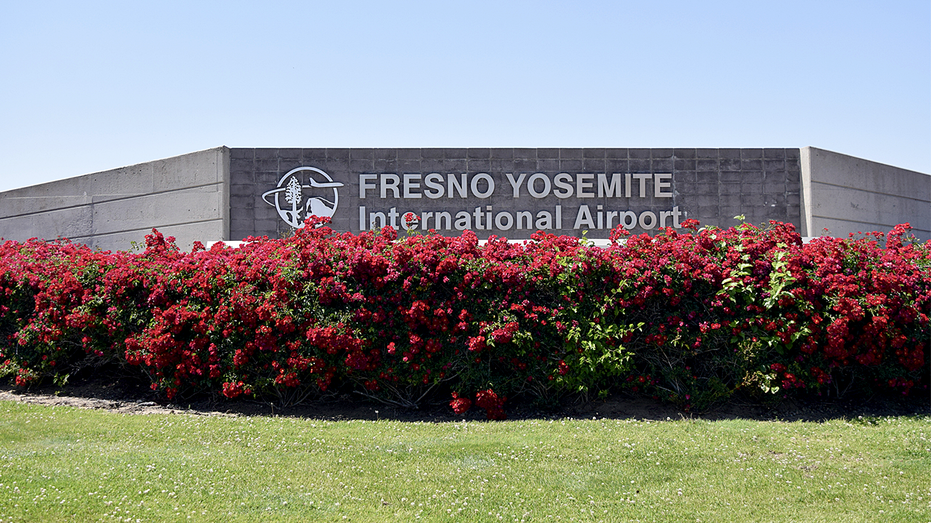
The potential change would bring back the emotional send-offs and gate-side reunions that were common before Sept. 11, 2001. (Getty Images / Getty Images)
Flooding terminals with non-ticketed guests could potentially impact TSA staffing, add to security checkpoint wait times and clog up seating at terminal gates.
Any program would also be subject to TSA approval, security screening and limits imposed by the airport.
While Thorpe is excited about the possibility of expanding airport access to non-ticketed visitors, he acknowledges that security remains a top priority.
“Safety and security — nothing comes before that. There are other exciting things at the airport … But our core responsibility is that safety and security element,” Thorpe said.
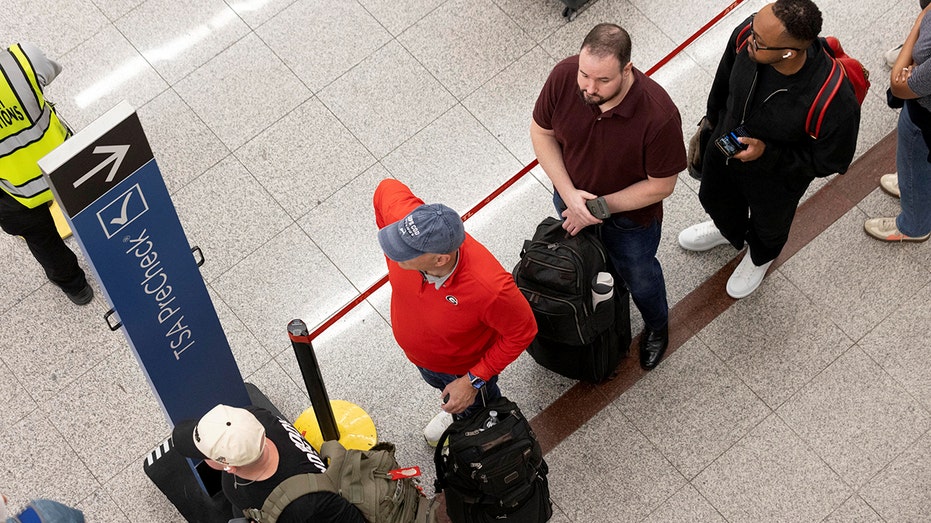
Under the post-9/11 policies, access beyond airport security checkpoints was generally limited to ticketed travelers, although airlines could issue gate passes in certain circumstances. (REUTERS/Alyssa Pointer / Reuters Photos)
GET FOX BUSINESS ON THE GO BY CLICKING HERE
If the change is adopted in Fresno, it would join six other California airports that have already introduced programs allowing approved non-ticketed visitors beyond security checkpoints.
Other Golden State airports with expanded access are Oakland San Francisco Bay Airport, San Francisco International Airport, Ontario International Airport, San Diego International Airport and Palm Springs International Airport, and John Wayne Airport, making it the state with the most airports with such programs.
More than 20 airports across the country allow non-ticketed visitors to receive a guest pass to move through airport security and into the terminal at no charge, with Pittsburgh International Airport the first major U.S. airport to enact the policy in 2017.
Business
ProtonMail Down? Outage Reports Surge Again Days After Cooling Failure Knocked Out Frankfurt Data Center Now
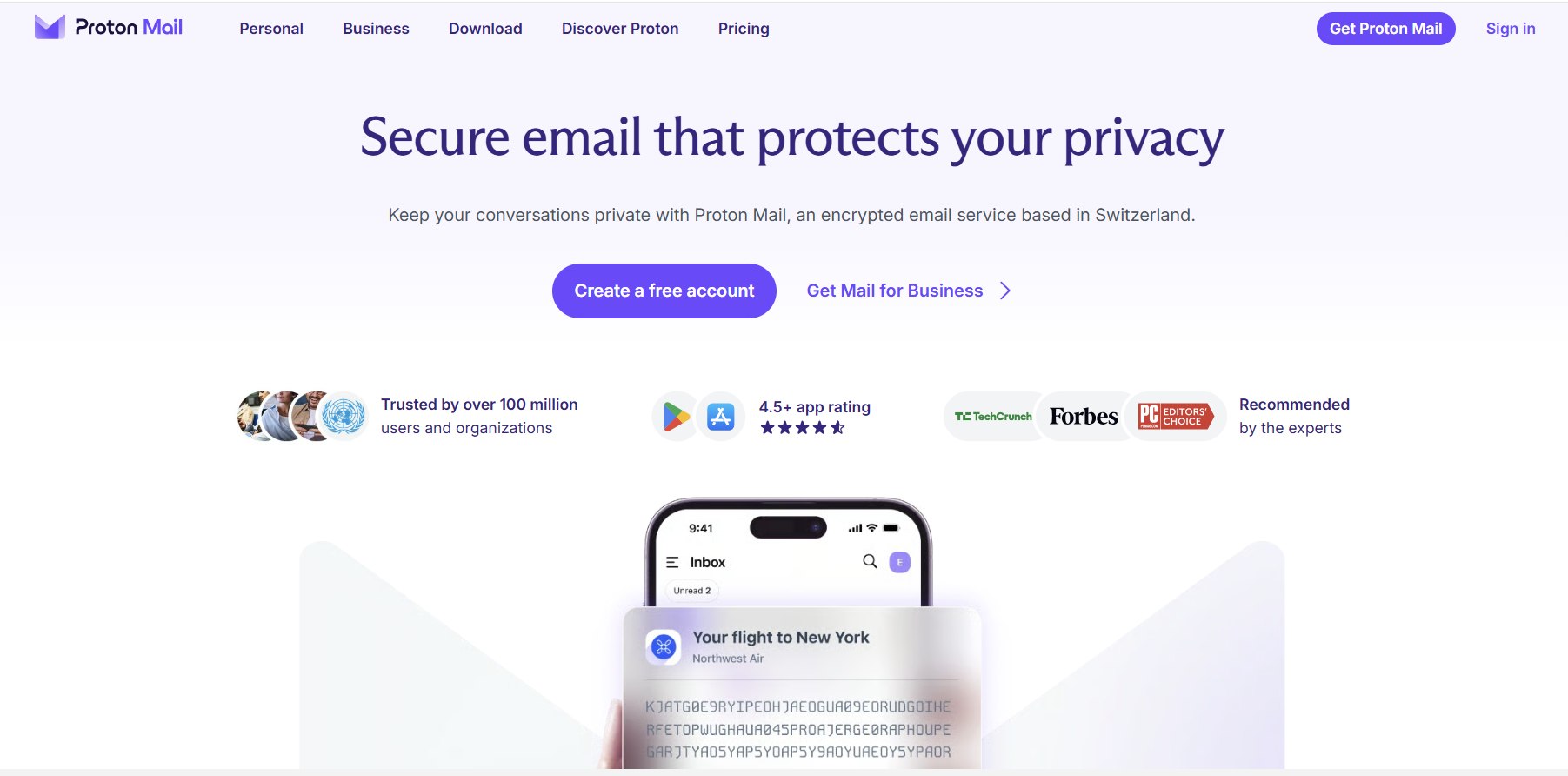
Users of privacy-focused email service ProtonMail began reporting access problems again Tuesday, according to outage-tracking service Downdetector, marking the latest in a string of disruptions that has hit the Swiss company over the past week, including a major outage caused by a data center cooling failure in Germany.
Downdetector posted on X shortly after Tuesday’s reports began surfacing. “User reports indicate problems with ProtonMail since 9:24 AM EDT,” the account wrote, asking affected users to describe how the disruption was impacting them under the hashtag #ProtonmailDown. Separate outage-tracking service StatusGator recorded a similar incident later Tuesday, logging a five-minute disruption beginning around 12:24 p.m. Eastern time tied to an internal server error that prevented users from accessing the service, an issue the company officially acknowledged roughly 16 minutes after it began. Proton’s own status page separately confirmed at 12:37 p.m. Eastern time that a small number of users were experiencing access issues, writing that its team was investigating and would share updates as they became available.
Tuesday’s reports add to what has become an unusually turbulent stretch for the encrypted email provider. According to StatusGator’s incident tracking, ProtonMail experienced a separate two-hour, 44-minute outage Sunday evening that left users unable to access mail or calendar features, an issue that, like Tuesday’s disruption, was never officially acknowledged by the company through its public status channels.
The most significant recent incident occurred Aug. 27, when Proton confirmed a critical cooling failure at one of its data centers in Frankfurt, Germany, took the service offline, according to reporting from Data Center Dynamics. Proton’s team wrote in an update at the time that the outage had been largely resolved, though some users continued experiencing delays in email delivery, reception and notifications as engineers worked to clear remaining issues. The company said no user data was lost as a result of the incident, and Proton CEO Andy Yen later acknowledged the severity of the company’s response, saying “we fucked up” regarding the slow failover process that extended the outage’s impact, according to Data Center Dynamics’ reporting.
The Frankfurt outage was notable in part because of Proton’s broader infrastructure history. The company, which markets itself heavily on end-to-end encryption and user privacy, previously hosted its infrastructure inside a former K7 military bunker located under roughly 1,000 meters of granite in Attinghausen, Switzerland, and has also operated data center infrastructure from a site in Lausanne, Switzerland, reflecting the company’s emphasis on physically secure hosting locations even as it has expanded its infrastructure footprint into other European data centers, including the affected Frankfurt facility.
Despite the recent pattern of disruptions, not every monitoring service showed evidence of a major ongoing problem as of Tuesday. Outage tracker Entireweb reported that ProtonMail was “operating normally” as of Tuesday, noting only four total user reports over the preceding 24-hour period, with just one submitted within the final hour before its status check, a discrepancy that illustrates how quickly outage-reporting metrics can shift and how different monitoring platforms can produce varying pictures of the same service’s health depending on their underlying data sources and update frequency.
ProtonMail, founded in 2014 and based in Switzerland, has built its reputation around strong privacy protections, including a policy of not tracking, logging or sharing users’ personal information, positioning itself as an alternative for individuals and organizations concerned about surveillance, hacking or general data security. The company’s broader Proton ecosystem includes additional privacy-focused products such as Proton VPN, Proton Drive and Proton Calendar, several of which have also experienced intermittent service issues in recent weeks alongside the email platform.
As of this report, Proton had not issued a comprehensive public statement addressing the full scope, cause or resolution timeline for Tuesday’s reported ProtonMail disruption specifically. Affected users have been encouraged to monitor Proton’s official status page directly at status.proton.me for the most accurate and up-to-date information regarding the service’s operational status.
BHP’s chief commercial officer to step down in January, internal memo shows

SEC’s Proposed Overhaul of Transfer Agent Rules Includes Blockchain Update

General Hospital LEAK: Carly Is Cuffed in Jack’s Death Case as Town Reels





-

 Fashion4 days ago
Weekend Open Thread: Maeve – Corporette.com
-

 Crypto World5 days ago
Bitcoin’s 22% rally now needs real demand to outlast Treasury liquidity boost
-

 Crypto World7 days ago
Warsh Jackson Hole keynote puts financial innovation first
-

 Business5 days ago
Apple Confirms September 9 Keynote and Reveals Its Full Pre-Order Schedule
-

 Crypto World6 days ago
Elon Musk Grok Bot Promise: We Will Make You Whole if AI Loses Your Money
-

 Business5 days ago
Salesforce Stock Soars 19% as Blowout Earnings and Agentforce AI Growth Silence Software Skeptics
-

 Crypto World7 days ago
Did Trump Just Move SpaceX Stock With One Truth Social Post?
-

 Business4 days ago
Onto Innovation Stock: AI’s Next Bottleneck Is Yield (NYSE:ONTO)
-
 NewsBeat6 days ago
Lindsay Clancy jury braces for closing arguments as judge tells court: ‘You’ve heard all the evidence’ – Live updates
-

 Business7 days ago
Walmart takes aim at younger shoppers with new fashion brand
-

 Crypto World6 days ago
NVIDIA revenue hits $96.2B as AI demand doubles
-

 Crypto World4 days ago
Bitcoin price tests $82K resistance as Brandt stays long
-

 Business4 days ago
iPhone 18 Pro Pre-Orders Could Shift to Saturday as Apple Reportedly Avoids September 11 Anniversary
-
 Crypto World6 days ago
Nvidia Q2 Earnings Reveal $96.2 Billion Beat, So Why Is NVDA Falling?
-
 Tech3 days ago
Hugging Face built a $4.5 billion empire on free AI models. Now Nvidia is buying it for $12.9 billion
-
 Tech6 days ago
Claude Cowork gets its own browser that doesn’t touch your tabs, bookmarks, or saved passwords
-

 Crypto World5 days ago
Truflation calls for Fed rate cut after PCE forecast
-

 Tech4 days ago
PaperCut releases second emergency patch for exploited flaws
-

 Crypto World7 days ago
Kraken hit by 12,000 HTX-linked dust transfers
-

 Sports7 days ago
SV 07 Elversberg 2026/27 season preview: Transfers, pre-season, predicted lineup & predictions
You must be logged in to post a comment Login