Connect with us

Tech

Senators Call For RFK Jr.’s Resignation After More Emails Suggest He Lied In His Confirmation Hearings

Published

on

from the tiny-little-coffins dept

There are plenty of reasons to call for RFK Jr. to resign or be fired. There are plenty of reasons to call for him to be investigated. There’s his complete dereliction of duty when it comes to the American measles outbreak. There’s his sneaky misrepresentations carried out as he moonlights on a government-funded cooking show that he puts out because… reasons. There’s the budget and staffing cuts that have led to our lessened ability to respond to outbreaks of diseases like cyclosporiasis. There’s the possible violation of the Hatch Act. There are the negative health outcomes stemming from his misinformation campaigns. There’s also his disinterest and/or inability to follow basic governmental procedures.

But the latest calls for him to resign, be fired, or at least be investigated aren’t about any of the above. Here are the comments from several senators. See if you can guess what this is about.

“This is a pattern, not a slip,” Sen. Edward J. Markey (D-Mass.) said in a statement. “RFK Jr. has lied to the Senate, lied to the American people, and jeopardized the health of children to advance his anti-vaccine agenda.”

Sen. Ron Wyden (D-Ore.) said in a social media post Friday that the documents were “Proof we got RFK lying on the record during his confirmation hearing (a crime).” He called for the matter to be referred to the US Department of Justice for a criminal investigation. In a separate statement to The Guardian, Wyden added that “RFK’s platform is built on lies and grifts that leave a trail of dead children in their wake. There are consequences for lying to Congress.”

If you didn’t manage to guess that this is all to do with what Kennedy told senators about his 2019 trip to Samoa in his confirmation hearings, don’t feel bad. As we demonstrated above, there are plenty of things Kennedy has done that could have resulted in the quotes above.

Advertisement

We wrote about this trip Kennedy took to Samoa earlier this year, when reporting uncovered emails from several people involved in the trip indicating that Kennedy went there as part of his anti-vaxxer crusade. Why Samoa? Well, allow me to quote myself:

It started in July of that year when two 1-year old children who were given a measles vaccine subsequently died. While anti-vaxxers around the world gleefully jumped into action to blame the vaccine for those deaths, it turns out that the vaccine didn’t kill the children at all. Instead, medical professionals had accidentally mixed the vaccine with a muscle relaxer solution instead of sterilized water like they were supposed to. Despite that fact, the anti-vaxxers sowed all kinds of fear and disinformation throughout the country, whipping up negativity around measles vaccines. As a result of that, the government put a 10 months ban in place on the vaccine.

It was during that ban that Kennedy visited the island, apparently to answer the question, “How can I make this bad situation worse?” While there, he met with both anti-vaxxers and members of the Samoan government. But when asked during his confirmation hearings, he claimed that his trip had nothing to do with vaccines at all. He was there to help rollout a new medical record and tracking platform he was pitching. Two months after his trip, Samoa suffered a massive outbreak of measles that lasted months and eventually killed 83 people and sickened over 5,000.

Earlier this year, the AP and the Guardian uncovered emails sent by American and U.N. government staffers that suggested the trip Kennedy took was entirely about vaccines. These emails were all written by third-parties, however, and amounted essentially to what I wouldn’t call speculation so much as a plain reading of the facts surrounding Kennedy’s visit. But, still, these are third-party accounts.

Fortunately, both of those outlets didn’t stop there. They kept digging. And what has the senators in this post’s opening so furious are uncovered direct emails between Kennedy and Samoan government officials that make it abundantly clear that the whole point of the trip was for Kennedy and his team to investigate the MMR vaccine.

Advertisement

On Thursday, the Associated Press and The Guardian jointly released newly obtained documents that directly contradict Kennedy’s statements. One of the documents is a letter Kennedy sent to Samoa’s prime minister in January 2019, in which Kennedy falsely suggested “deaths associated recently with MMR [measles, mumps, and rubella] vaccines” were due to a bad lot of vaccinations from the manufacturer. Kennedy proposed letting him and his “team” from CHD investigate the country’s MMR vaccines. In all, Kennedy used the words ‘vaccination’ and ‘vaccine’ eight times in the letter proposing his visit.

The prime minister responded with a letter in February saying he welcomed Kennedy and his “team’s independent health assessment of our MMR vaccines.” He requested Kennedy coordinate a visit with him.

With the only caveat being that those emails need to be completely authenticated as legitimate, that’s as much of a smoking gun as you could possibly want for proving that Kennedy lied to Congress in his confirmation hearings. That fact obviously won’t surprise anyone, of course. Kennedy is a habitual liar. But to have it evidenced in such a clear and unambiguous way is a rarity.

And, frankly, a gift. Kennedy has to go. Any reasonable and informed person would agree with that and the vast majority of our congresspersons are, in theory, reasonable and informed. They are also political creatures and you may have noticed that all of the folks calling for Kennedy’s figurative head have the letter “D” next to their name.

Sen. Angela Alsobrooks (D-Md.) said Kennedy “must resign or be fired immediately.” Hawaii Governor Josh Green, a doctor who responded to Samoa’s measles outbreak, also renewed his call for Kennedy to immediately resign.

Hopefully, either this reporting or a subsequent investigation will give cover to people on the other side of the aisle to join the call for Kennedy to be ousted. It probably should have been enough that Kennedy took a trip that pretty clear contributed to plenty of people getting killed, most of them children. But if it has to be his lying about it that does him in, so be it.

Advertisement

Filed Under: angela alsobrooks, anti-vaxxers, ed markey, measles, rfk jr., ron wyden, samoa, vaccines

Source link

Advertisement
Continue Reading
Click to comment

You must be logged in to post a comment Login

Leave a Reply

Tech

Larry Page’s flying car company Pivotal loses its CEO

Published

on

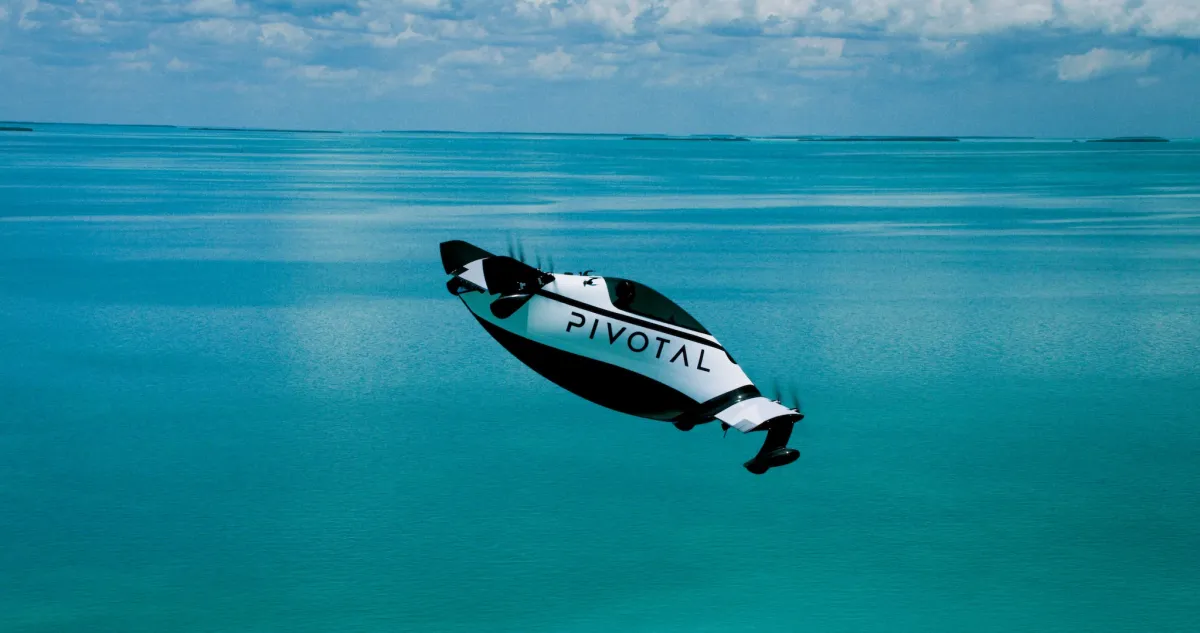
The CEO of a flying car company backed by Larry Page has left the company.

Ken Karklin, who was Pivotal’s CEO for more than four years, left the role this week, according to a press release. Pivotal said Karklin is “pursuing new endeavors” but didn’t offer any other information about the executive’s departure from the electric vertical takeoff and landing (eVTOL) firm.

“Leading Pivotal has been the privilege of my career. Together, we’ve moved beyond the promise of light eVTOL and proved it out in practice,” Karklin said in a statement. “This industry has moved past prototypes and press releases; it’s now operating in the real world, under real constraints, with real consequences for the future of Advanced Air Mobility. As I turn to new endeavors, I do so knowing the foundation we built here will help carry this industry forward.”

Karklin will be replaced on an interim basis by Mike Ross, an aviation executive who joined Pivotal’s board of directors in November 2025. Karklin did not immediately respond to a request for comment.

Advertisement

Karklin’s departure comes two years after Pivotal started sales of Helix, its first lightweight electric personal aircraft. The single-seat aircraft doesn’t require a pilot’s license to fly and starts at around $200,000.

“Ken’s leadership over the past four years has been instrumental in bringing Pivotal to where it is today. Our team, our priorities, and our roadmap remain steady through this transition,” Ross said in a statement. “I’ve had the honor of working closely with Ken as a Board member and watching Pivotal’s disciplined approach to safety, engineering, and accessibility deliver on the vision of electric VTOL flight. I look forward to working with the team and guiding the company forward as we bring our fourth-generation Helix aircraft to market.”

Pivotal has also spent years developing an aircraft called BlackFly that is aimed at defense and first-responder use cases. Last month, BlackFly was used to respond to an emergency in North Carolina for the first time ever. The company says it beat an ambulance responding in parallel to the call by 20 minutes. BlackFly has flown more than 10,000 times, according to Pivotal.

Pivotal is one of a number of companies in the space that was selected for the Federal Aviation Administration’s eVTOL Integration Pilot Program, which was created to increase testing of these types of aircraft around the country.

Advertisement

When you purchase through links in our articles, we may earn a small commission. This doesn’t affect our editorial independence.

Source link

Continue Reading

Tech

Forget Labor Day Deals, These 5 DeWalt Tools Already Have Deep Discounts

Published

on


We may receive a commission on purchases made from links.

Power tool sales are great for everyone, but they can be especially attractive for those who have already invested in a premium power tool system. DeWalt, for instance, has a well-earned reputation as one of the best major cordless power tool brands on the market thanks to the performance, durability, and long-term reliability of its tools. One thing it’s not particularly known for, however, is low prices.

Advertisement

You’ll likely find great deals on the brand’s tools when Labor Day finally rolls around on September 7, but you don’t need to wait, as several retailers already have deep discounts on DeWalt tools. Some, like Home Depot, have started discounting products in anticipation of the holiday. These deals are constantly shifting, and you can’t know for sure what might go on sale later. That’s why it’s always worth checking out these pre-Labor Day discounts to see if something you’ve been dying to add to your collection is available at a lower price.

Advertisement

DeWalt 20V Max LED Work Light/Flashlight

There are plenty of deals on large (and expensive) DeWalt tools, but if you want something smaller, consider the DeWalt 20V Max LED Work Light/Flashlight. This typically retails for $84.00, but Amazon currently has it discounted by a full 58%. That means you can get it right now for just $35.00.

This is a versatile handheld light with a stand-up base that rests on the battery, a head that rotates 120 degrees, and an integrated hanging hook. The LED outputs 110 lumens and offers 11 to 25 hours of runtime depending on the capacity of the battery it’s paired with. This makes it a great DeWalt product to keep in your car in case of an emergency or have on hand for a power outage, a work light for cramped spaces, or a simple flashlight to take camping.

Users also really like this flashlight. It has an impressive 4.8 out of 5 rating on Amazon with over 11,000 ratings. Customers praised its brightness, durability, functionality, battery life, range of adjustability, and lightweight design. The few complaints largely center around the light’s fixed output, so you might want to consider something else if that’s an important feature for you. Otherwise, this seems like an easy win.

Advertisement

DeWalt 20V Max XR Oscillating Multitool Kit

DeWalt’s cordless oscillating multitools are beginner-friendly and easy to use, so it’s nice to see that the DeWalt 20V Max XR Oscillating Multitool Kit is on sale. This set usually costs $299.00, but Amazon has it discounted by 51%, bringing the price down to $146.98.

This tool has a three-speed selector and a Dual-Grip variable-speed trigger for the brushless motor, which DeWalt claims offers 57% better runtime than brushed rivals. It also has a built-in LED worklight and a Quick-Change accessory system that lets you swap attachments by holding down a lever and wiggling it free. In addition to the multitool itself, you get a DeWalt 20V Max 2.0Ah battery and charger, three DeWalt Plungepoint blades, a sanding pad, five sheets of sandpaper, a depth guide, and a universal accessory adapter. All this adds up to make the kit a substantially better value than the tool alone.

Advertisement

This DeWalt kit has a 4.8 out of 5-star rating on Amazon from more than 5,600 users. Most customers appeared to be pleased with the cutting performance, build quality, and value. Most of the negative opinions had to do with the limited capacity of the included 2.0Ah battery.

Advertisement

DeWalt Xtreem 12V Max Variable Speed Brushless ⅜-inch Drive Ratchet Wrench

Some power tools are great ways to cut down on the labor involved with hand tools. One example is the DeWalt Xtreme 12V Max Variable Speed Brushless ⅜-inch Drive Ratchet Wrench, which eliminates the tedious cranking of tightening and loosening nuts and bolts and replaces it with the pull of a trigger. This tool has an MSRP of $199.00, but it’s half off at Lowe’s right now and available for $99.00.

This little tool generates up to 60 ft-lbs of torque for strong, rapid fastener removal. It has a glass-filled nylon housing to help prevent oil and solvent damage, a built-in LED worklight, and a variable-speed trigger for more control during fastening and removal. This is the only tool on this list that is part of DeWalt’s 12V Max series and, as such, will not work with 20V Max batteries.

This tool has a 4.5 out of 5 rating on Lowe’s website, with customers appreciating its lightweight and compact design, which makes it easy to use in tight spaces. They also state that it performs most tasks well and is highly durable. Some have complained that the 60 ft-lbs of torque isn’t as strong as they would like, but others note that this tool isn’t meant for heavy-duty jobs; those should be left to an impact wrench instead.

Advertisement

DeWalt 60V Max 7-¼-inch Brushless Circular Saw with Flexvolt Battery

A good circular saw deserves a spot in just about every craftsperson’s toolkit. The trouble is that many of them struggle with big jobs that require cutting through dense materials. That’s when you’ll want something like the DeWalt 60V Max 7-¼-inch Brushless Circular Saw. This is currently available as a kit that includes a 9.0Ah 20V/60V Flexvolt battery, which normally retails for $558.00. Right now, Home Depot has this kit available for just $299.00, marking a 46% discount.

The saw has a brushless motor with a no-load max speed of 5,800 rpm and 2,456 unit watts out, which DeWalt notes is 47% more power than its DCS575 circular saw. It has an electric brake for safety and a 57-degree maximum bevel capacity, with bevel stops at 22.5 and 45 degrees. It also has a built-in LED and an integrated rafter hook.

Advertisement

This set only has two ratings on the Home Depot site (both 5-star), but the stand-alone tool has a 4.7 out of 5 rating from over 2,000 customers and a 91% recommendation rate. Buyers praise the tool’s strong cutting power and performance, which matches (or even surpasses) corded cutting tools. Most negative reviews reference the weight of the Flexvolt battery, though it does last a long time and charges quickly.

Advertisement

DeWalt 20V Max Orbital Sander

One of the best tools a carpenter can add to their workshop is a random orbital sander. Its versatility and efficiency mean you’ll be using it a lot, so you’ll want to invest in a good one. The DeWalt 20V Max Orbital Sander is a solid option. This typically costs $179.00, but you can get it from Amazon right now for just $95.99, a 46% savings.

This brushless tool has variable-speed control and a motor that runs between 8,000 and 12,000 oscillations per minute. Its low-profile design allows it to fit in tight spaces, such as between drawers. It has a replaceable 8-hole hook-and-loop sanding pad, a dust seal switch that protects the tool from dust ingestion, and a textured rubber overmold to reduce vibrations. It comes with a one-handed locking dust bag.

This DeWalt orbital sander has 4.7 out of 5 stars on Amazon from over 13,800 ratings. Many customers praised the tool’s value, even at full price, and earned high marks for its adjustable range and raw power, with some even claiming it matches the performance of corded units. Opinions about its dust collection were, however, a bit more mixed.

Advertisement


Source link

Advertisement
Continue Reading

Tech

ICE, CBP Officers Prefer To Sexually Assault Children When Committing Crimes

Published

on

from the starting-from-the-most-helpless-and-working-their-way-up dept

The “worst of the worst” are coming for the “worst of the worst.” Of course, this administration has completely given up on this pretense, despite sending out lots of noisy messaging otherwise every time an immigration officer murders a person.

For the entirety of Trump’s anti-migration surge, it’s been obvious that it’s all about expelling certain people and has nothing to do with ridding this nation of criminals. But there are quotas to meet. Trump is awful enough on his own, but he can’t read a spreadsheet. That’s why Stephen Miller exists: to apply the pressure Trump simply can’t stay awake to do himself.

For years, law enforcement officers at every level have abused their power and positions to violate the rights of regular people. That alone is a crime, even if it’s usually just considered a civil violation. Guess what else is a civil violation? Being in this country without having the proper paperwork or processes in place to comply with immigration law.

To keep up with demands for ever-increasing arrests, this administration has also engaged in hiring surges. The people responding to huge signing bonuses and the simultaneous lowering of training standards tended to be the people you expected them to be. And, as the DHS soon discovered, stripping standards and all but eliminating training that would be useful to new ICE/CBP officers, its pool of applicants ran from the sub-par to the absolutely criminal.

Advertisement

Given what else we’ve always known about how those with power seek out the weakest people to exploit and abuse — combined with the free pass courts now give to federal officers when they’re only violating civil rights — this new report that’s based on hundreds of criminal cases against immigration officers makes it clear a lot of the “worst of the worst” are employed by the federal government.

new report by the Ohio Immigrant Alliance, released today, pulls back the curtain on a stunning level of sexual criminal behavior within ICE and CBP. Out of 152 cases of identified immigration officials or contractors accused or convicted of criminal behavior, 131 of them, or 86.2 percent, were charged with sex offenses. Seventy-eight of them—51 percent of the entire cohort—”committed sex offenses against children—the single largest category on the list,” the report states. Cases involving a CBP officer, the report finds, “are more likely to involve underage victims” than those of an ICE officer. Yet fully half of ICE officers accused or convicted of sex offenses (12 of 24) had a minor as their victim.

As bad as this looks, it’s probably even worse. As the Ohio Immigrant Alliance report [PDF] notes, this only covers immigration officers who have actually been caught and are facing criminal prosecutions.

This means there are many more who just haven’t been caught yet. And the chances of them being caught has been drastically reduced in recent months. ICE’s OPR (Office of Professional Responsibility) has always been tasked with investigating complaints filed against ICE officers. It’s not just history. It’s the directive handed down by law, which now seems to be something the OPR can just ignore because it would rather investigate critics of Trump’s anti-migrant activities.

If you’re wondering how it gets so bad that most criminal allegations against immigration officers involve the sexual abuse of children, this is how we’ve reached what we can only hope is an inflection point.

Advertisement

First, there’s the Supreme Court, which has made it all but impossible to sue federal officers for rights violations, many of which include clearly criminal acts. Added to that is this administration’s absolute refusal to perform internal investigations, much less punish officers for excessive force, child molestation, or murdering US residents and citizens.

Now, I’m sure there will be dishonest comment brokers arriving to fill the comments with stupid stuff like “well, 152 officers is only X% of immigration officers, so this is actually a good thing.” They can fuck right off. I guarantee any commenter thinking this sort of thing is acceptable because it only involves a small minority of officers is also in favor of letting internet vigilantes beat/maim/murder anyone these amateurs happen to think might be seeking to harm minors. The Venn diagram of “get all the pedos” and “whatever Trump wants to do is fine” is pretty much a full eclipse.

In other words, it’s forgivable if a few ICE/CBP officers do this while engaged in God’s/Trump’s work. But anyone asking for gender-neutral bathrooms should be executed immediately because the only reason a trans person would ask for this is because they want to rape children.

And, in case you’re wondering, of course this isn’t all Trump’s fault. The lack of oversight and accountability has been a problem for years, reducing the deterrents from zero to less than zero. That being said, it’s been getting a lot worse since Trump took office for a second time:

Advertisement

All this, the report finds, is accelerating. Nearly 25 percent of examined criminal offenses tied to ICE and CBP happened during the second presidency of Donald Trump. More occurred in 2026 (22 so far) than in 2025 (14). Both years outperformed the previous peak year of 2024 (11). Still, the fact that the previous peak occurred during Joe Biden’s presidency testifies to Biden and the Democrats’ unwillingness to confront ICE and CBP.

To sum up, this situation was fucked from the get-go and it’s exponentially getting worse under the current [cough] “leadership.” And no one truly thinks Trump or anyone in his administration will look at this report and see a chance to improve things. Trump could try to beat Biden at his own “molested by an immigration officer” game, but this administration has already written off anyone subjected to violent acts (including sexual violence) by immigration as subhumans who just got what the deserved.

Expecting him to care about the steadily-increasing number of molestations by ICE or CBP officers is to expect the sun to rise in the west tomorrow. No one cares, because they never have. And this administration is capable of not caring at levels we’ve never seen before, to cop a favorite phrase of our current president.

Filed Under: cbp, ice, law enforcement misconduct, mass deportation, worst of the worst

Advertisement

Source link

Continue Reading

Tech

Are All TVs At Risk From Burn-In? Here’s How To Avoid The Problem Altogether

Published

on

OLED screens run the biggest risk, but with a little common sense you can mitigate the issue.

If you’re shopping for a new TV or monitor, you may have heard that OLED offers some of the best picture quality available today. While OLED TVs often cost a premium compared to budget and even mid-range LCDs, you get excellent contrast, vivid colors and deep blacks in return. However, there can be one major caveat to the display technology: the possibility of permanent image retention or burn-in.

While the term burn-in may sound alarming, especially if you’re on the verge of spending hundreds or thousands of dollars, it’s not something you need to worry about immediately. And even though it’s inevitable, burn-in remains unnoticeable in many cases and takes years to appear even if it does. Better yet, you can take some simple precautions to significantly reduce the risk and extend the lifespan of an OLED display to keep burn-in at bay until it’s time to upgrade.

So, what exactly is burn-in, what causes it on modern TVs and how can you minimize the risk? Here’s a quick rundown.

Advertisement

What is burn-in and what causes it?

An OLED display is made up of millions of tiny organic light-emitting diodes — hence the name OLED. This is unlike an LCD, which relies on a backlight to illuminate its pixels. This means that each pixel in an OLED generates its own light and can be dimmed or turned off independently. But while this granular control provides excellent contrast and deep blacks, it also means that individual pixels can wear out independently of each other.

Each time you use an OLED display, these individual pixels undergo some infinitesimal amount of degradation. In the real-world, this wear translates to a dimmer light output. To further complicate matters, each pixel is actually made up of several smaller sub-pixels that produce different colors, typically red, green and blue. These sub-pixels don’t necessarily age at the same rate, either.

Advertisement

Practically speaking, the OLED display is continuously varying the brightness of each pixel and sub-pixel to reproduce the colors you see on the screen. Over time, though, this can cause some pixels can experience more wear than others and become dimmer. Eventually, the difference in brightness can become noticeable enough to our eyes.

Put simply, burn-in occurs when some pixels appear brighter than those that have experienced greater wear, creating a persistent outline or ghosting of previously displayed content.

Static elements like channel logos have a higher potential to cause OLED burn-in, since the sub-pixels in that region wear out unevenly. This is why OLED displays aren’t the best choice if you exclusively watch news or sports channels for several hours each day. Playing the same game for hundreds of hours can also have the same effect, as on-screen text and other fixed elements can accelerate burn-in in certain localized spots.

Advertisement

Is burn-in still a risk for modern OLED TVs?

If you end up buying an OLED TV, you can still take several steps to prevent rapid burn-in. Besides turning off the display when you’re not actively watching content, one of the most consequential accelerators for burn-in is brightness. High brightness levels place greater strain on the LEDs that make up the display, which can cause premature wear. The organic material used in an OLED panel also degrades faster when exposed to heat, with higher brightness levels exacerbating this effect. This is one reason OLED manufacturers have historically been more conservative with sustained brightness, although newer generations have pushed the envelope in this area.

Still, running an OLED display at maximum brightness for extended periods of time can result in noticeable burn-in. The solution is simple: head into the TV or monitor’s settings menu and lower the brightness setting. This will lengthen the lifespan of each pixel, which should keep burn-in at bay for a long time.

Having said that, I wouldn’t worry about image retention if you only use your OLED display for a few hours each day, especially if it’s mostly to watch varied content with no static elements like channel logos. Modern OLED displays have plenty of burn-in mitigation features, ranging from pixel shifting and refreshing to automatic dimming in bright scenes. I’ve owned the same OLED TV for five years and haven’t noticed any burn-in even though I frequently watch HDR or high-brightness content.

Advertisement

Do LCD TVs suffer from burn-in?

If you’d like to avoid the risk of permanent burn-in altogether, a modern LCD TV can be a great alternative to OLED. Since LCD panels don’t use self-emissive pixels, they don’t suffer from OLED-style burn-in caused by uneven pixel degradation. While LCD backlights can and do sometimes fail with age, you can watch content with static elements like news channels without worrying about wearing out specific areas of the display.

Having said that, LCD panels can also exhibit temporary image retention after displaying static content for long periods of time. This is less of a concern for LCD than OLED, as the image retention typically recedes on its own as you switch over to more varied content.

Modern LCD TVs with Mini LED backlighting technology can offer excellent black levels and contrast, although they cannot match OLED’s perfect pixel-level control. High-end models can also get significantly brighter than OLED since they don’t rely on organic light-emitting material. This makes high-end LCD TVs a perfect choice for bright, sun-filled rooms or if you don’t want to think about the risk of image retention at all.

Advertisement

Source link

Advertisement
Continue Reading

Tech

Are We There Yet? Startup Wants to Launch an 80,000-Year Mission to Alpha Centauri

Published

on

A group of executives and entrepreneurs led by Starcloud co-founders Philip Johnston, Adi Oltean and Ezra Feilden teamed up to develop humanity’s first interstellar spacecraft. If everything goes according to plan, it will launch in 2029, headed for Alpha Centauri, the closest star system to our solar system. But it won’t reach its destination for about 80,000 years. 

Known as Fermi Explorer, this non-profit mission aims to build a 10cm cube weighing about 1 kilogram (about 2.2 pounds). Once the cube is built, they plan to attach it to a propulsion system, take it to space and launch it toward Alpha Centauri. It’s the technological equivalent of taking a hefty rock into space, throwing it at Alpha Centauri and waiting for it to get there. 

“The mission is intended to make the idea of interstellar travel real, and to encourage more people to confront one of humanity’s biggest unanswered questions when we look beyond our planet,” the group said in a post on X. The post is accompanied by a video showing the Fermi Explorer being overtaken by hundreds of faster spacecraft also bound for Alpha Centauri.

The wait for this mission to go interstellar is unreal. The exact wait to mission completion is 79,800 years, according to the Fermi Explorer mission calculator, which means once this thing gets underway, it won’t be the problem of anyone currently living, or anyone else, for a few thousand generations. 

Advertisement

Just getting out of the solar system will take longer than any road trip any human has ever taken. The spacecraft is expected to circle the sun for 12 years in an oval orbit. The boosters will fire when the spacecraft gets closer to the sun, a process called the Oberth maneuver, thereby gaining speed through multiple orbits as it approaches escape velocity. Once done, it’ll launch itself and keep going, and going, and going. The Fermi Explorer’s technical feasibility assessment says it should leave the solar system by the early 2040s. 

It’s quite a different mission from what Starcloud’s co-founders usually work on: putting data centers in space to power AI. The company plans to launch its first such full commercial data center, called the Starcloud-2, in 2027, but it did send an Nvidia H100 GPU into space via Starcloud-1 in 2025.

More symbolic than scientific

A graphing showing the Fermi Explorer's trajectory.
We hope they packed enough snacks, because that’s one long road trip.Fermi Explorer

Interstellar travel takes so long that humanity has focused far more on speeding up the journey than actually making it. One of the big projects addressing this was Breakthrough Starshot, a multi-billion-dollar initiative that would’ve used laser-based propulsion to propel a ship to another star in a matter of decades rather than millennia. That project collapsed in 2025 with no launches. 

The only other interstellar missions ever conducted, Voyager 1 and Voyager 2, entered interstellar space in 2012 and 2018, respectively, over four decades after their launches. 

According to the non-profit group, the purpose of the Fermi Explorer is to just toss something into the cosmos and see what happens. It sounds silly, but it’s the truth. The group’s thinking is based on the Fermi Paradox, which seeks to explain why there are so many stars and planets yet no signs of extraterrestrial life. 

Advertisement

One potential reason is the Fermi Great Filter, which suggests a barrier so hard to cross that intelligent life rarely survives long enough to be detected.

There are dozens of potential filters, ranging from the various steps of abiogenesis — the natural process by which life arises from non-living matter — to technological filters such as the inability to get into space, or, once there, the lack of motivation to search beyond a species’ host star. 

“By launching the Fermi Explorer mission, we can for the first time tick two possible Fermi Great Filters off the list,” the group wrote on its website. “That it is impossible for an intelligent species to leave their nearest stars (and) that all intelligent species decide not to leave their home star for some reason.”

The goal is to fund and build this entire project for about $15 million, using existing technology and piggybacking on a commercial rocket, such as SpaceX’s, to reach orbit. This project exists only to prove that humans can and are willing to do it, even if it’s something no one alive today is ever going to witness.

Advertisement

Source link

Advertisement
Continue Reading

Tech

I tried Honor’s ingenious Robot Phone and it is far more than a gimmick

Published

on

Having first seen it at MWC earlier in the year – in a strictly hands-off demo – I have finally got my first proper close-up look at Honor’s wild Robot Phone. 

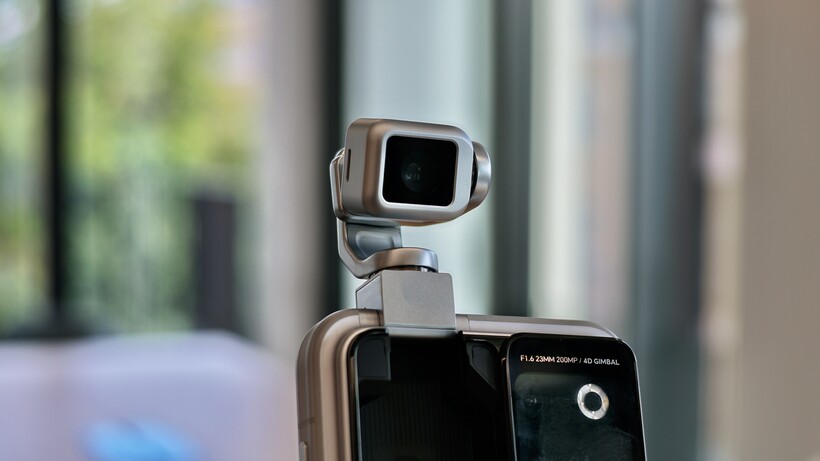
The headline feature is that mechanical camera arm on the back. Effectively tucking what looks like a DJI Osmo Pocket 4 gimbal inside the back of the phone. It’s an impressive feat of engineering for something so small, and it looks much better in person than it does in press pictures online.

Read through Honor’s press release for the Robot Phone, and you’ll find all sorts of bold claims about the number of manufacturing steps, patents and speeds at which it moves.

Each little feature is also seemingly given its own brand name – but the important thing here is that it’s designed to be durable, and move quickly and accurately.

Advertisement

The addition of the gimbal is there to give you super steady footage without relying on algorithms and electronic stabilisation. But it also offers the ability to manually pan the camera across the scene. It also supports some pre-programmed cinematic movements to help you capture really impressive footage that’s dynamic with very little effort.

Advertisement

Honor robot phone with its rotating camera module raised and tilted to the sideHonor robot phone with its rotating camera module raised and tilted to the side
Image Credit (Trusted Reviews)

It can also use AI to automatically track, or follow, a subject, panning and tilting itself to keep you in the frame. It’s all very clever, and during my time with the phone it worked surprisingly well, aside from a few teething issues caused by the device being built solely for the Chinese market.

The camera sensor boasts 200MP resolution, with a wide f/1.6 aperture. One thing I definitely missed back at MWC is that it’s joined by a telephoto zoom lens, which also has a 200MP sensor, and a 50MP ultrawide camera, to give you a very versatile camera system for video.

Advertisement
Honor robot phone with its camera module raised above the screen showing status bar iconsHonor robot phone with its camera module raised above the screen showing status bar icons
Image Credit (Trusted Reviews)

For pro video lovers, there are lots of promising features here: RAW processing 14-bit data, the ability to shoot in Log, and you can also preview ARRI looks in real time. 

Powering all these features is the Snapdragon 8 Elite Gen 5 processor, along with Honor’s H1 chip, and an effective cooling system designed to let you keep shooting for long periods. There’s also a 7060mAh battery that supports 120W wired and 50W wireless charging.

Advertisement

The gimbal works as expected, and the footage really does look good – even if I was only able to view it on the slightly chunky device’s screen.

Where things are less positive for me is in the AI and Robot aspects. The gimbal can dance, act as a personal assistant and answer questions while it looks you in the face. These are gimmicks, pure and simple, and not a reason anyone should buy this phone.

Advertisement
honor-robot-phone-camera-module-folded-in-handhonor-robot-phone-camera-module-folded-in-hand
Image Credit (Trusted Reviews)

The Robot Phone is actually on sale in China right now. So if you want to get hold of one, you won’t find it in Western retail stores. It doesn’t seem like a wider release is planned either. However, I’d guess that we will see this tech, in some form, hit Honor flagships in the future.

Source link

Continue Reading

Tech

A Principal and a Student Reviewed the New ChatGPT for Teens. They Had Plenty to Say

Published

on

OpenAI launched ChatGPT for Teens on Aug. 18 as its new artificial intelligence (AI) platform for users ages 13 to 17.

According to the firm, teens will be automatically placed into the new platform based on their estimated age, where they will encounter “an experience designed to help [them] learn, think critically, deepen understanding, and use AI with confidence,” OpenAI said in its product announcement. 

ChatGPT for Teens offers safety measures for its younger users, with tools designed to encourage balanced usage habits while giving parents more oversight. 

“We have been guided by four commitments,” OpenAI wrote. “Put teen safety first, encourage real-world support, treat teens like teens, and be transparent about how our systems should behave.”

Advertisement

The new product specifically targets students with several features:

  • Study Mode, which uses guiding questions and step-by-step support to help teens understand the material they’re learning.

  • Homework Reminders, which can recognize when a teen appears to be trying to shortcut an assignment and will redirect them to Study Mode for collaborative problem solving.

  • Quizzes and Learning Visualizations, which give teens more ways to practice, gauge their knowledge, and see difficult concepts more clearly.

  • Study Hours, which lets teens or parents choose times when Study Mode is on by default.

An Educator’s View of ChatGPT for Teens

Laura Yeager, an elementary school principal in Oklahoma’s Frederick School District, says there are several reasons to like ChatGPT for Teens, theoretically. “To start, this technology places a large burden on both parents and teachers to be as well-informed about the tool, or better than, the teens using it. Off the bat, they’re at a disadvantage compared to a native user,” Yeager explains.  

While managing this oversight may be challenging, Yeager sees one advantage to ChatGPT for Teens. She says it could serve as a resource for students struggling with difficult concepts who might not have access to help at home due to circumstances like working parents or family members being less familiar with the materials a teen brings home from school.

“In a perfect world, students could access sample problems or quizzes or be prompted with thoughtful questions intended to promote higher-order thinking and independent learning,” Yeager says. “Highly motivated students could benefit greatly from using this tool to further their reasoning skills by analyzing the answers, verifying sources, and challenging their own thinking.”

Advertisement

Yeager appreciates how ChatGPT for Teens steers teens away from potentially harmful situations. For example, posing as a 15-year-old, she entered a prompt about making money quickly in an attempt to see how the technology would respond. “It answered with age-appropriate odd jobs, babysitting, and the like,” she says. The tool offered a plan to save money, and issued repeated warnings to avoid people enticing teens with quick cash for illegal things (without naming them).

ChatGPT for Teens also earned high marks from Yeager for steering prompts about studying toward critical thinking rather than creating a document of facts to memorize. For example, when she asked it to create a study guide on “Of Mice and Men,” instead of creating the study guide, “I was prompted to consider the relationships among the characters and the meanings of certain events,” Yeager says. 

A Student’s Perspective 

Interestingly, high school student Annie (last name withheld), an 11th grader from Auburn High School in Alabama, likes ChatGPT for Teens for some of the same reasons as Principal Yeager.

“I think it can be very useful, especially for students who do not have a tutor or someone available to help them with a subject,” Annie explains. “ChatGPT is particularly good at teaching foundational material in subjects such as math, physics, and languages. For example, it can explain grammar rules in much more detail if a student does not understand the first explanation.”

Advertisement

Annie likes that Study Mode teaches the user systematically, step-by-step. When she used ChatGPT to study Spanish, it started with the most basic concepts to gauge her level of knowledge, such as how to conjugate verbs, before moving on to more difficult material. It also provided practice problems and revealed patterns to help her remember the rules. 

“I especially liked the encouraging tone, which made studying feel less intimidating and allowed me to make mistakes without being afraid of getting something wrong,” Annie says.

One thing that Annie says she does not like: “ChatGPT sometimes seems to forget how I asked it to teach me as a conversation gets longer. At the beginning, I might ask it to teach me in a certain way or format, with different sections and a specific style of explanation. However, after a long conversation, the responses can become shorter or stop following the same teaching style.”

A Fan of the Product — to a Point 

Despite her approval of some features, Yeager says she is not totally on board with ChatGPT for Teens.

Advertisement

“I understand the intention of this platform is to teach students to use AI responsibly and to leverage technology effectively as a skill, which is noble, but it is also to reduce liability and to attempt to place some responsibility back on the parents and guardians,” Yeager explains. 

“The brutal truth is: there are many AI programs out there, and if students want to find information, they will. ChatGPT for Teens has some merit, but teens who want to will still find ways to plagiarize and take shortcuts in schoolwork, rather than develop and use critical thinking skills.”

If she were still teaching in the classroom, Yeager says she would not use it. Test scores across the nation reveal that students are struggling in critical reading and writing skills. “Worksheets don’t teach. Teachers do,” Yeager argues.

“It is the same with any tool,” Yeager adds. “Nothing replaces the mental modeling of a skilled classroom teacher delivering explicit instruction. Students need to hear another person verbally work through difficult concepts and scaffold ideas. They need evidence that it can be done without a computer program and that they are capable of hard things.”

Advertisement

Areas Where ChatGPT for Teens Is Helpful 

Annie sees that struggle a bit differently.

“I would especially use it for studying Spanish, because no one in my family speaks Spanish, so I do not always have someone available to practice with,” Annie explains. “ChatGPT gives me a way to practice writing and speaking and to ask questions when I do not understand a grammar rule.”

Annie does not think ChatGPT for Teens necessarily discourages creative thinking. She says it is most useful for establishing a strong foundation in a subject, which can eventually help students develop their own ideas. 

“It is difficult to think creatively about a subject without first understanding its basic concepts,” Annie says. “However, students still need to use what they learn to develop their own conclusions and ideas rather than relying on ChatGPT to do all of their thinking for them.”

Advertisement

Ultimately, ChatGPT for Teens illustrates the promise and the limits of AI in education. Tools like Study Mode can fill a genuine gap for students who lack resources. But as both Yeager and Annie point out, the technology is not a substitute for teachers. ChatGPT’s true value may depend less on its safety measures than on how teens and teachers choose to use it.

Source link

Continue Reading

Tech

Reactive Heat And Wind Come To VR, Thanks To Smart Plugs

Published

on

Want to feel the heat of nearby fire, explosions, or radiation? Or even just the gentle warmth and breeze of a sunny day in the wasteland? If you said yes, you’re in luck because [GingasVR] created an immersive heat mod and wind mod for the VR version of Fallout 4 that leverages economical smart outlets and game scripting to do just that.

The heart of this hack lies in gluing two things that don’t normally go together. In this case [GingasVR] uses a bit of game scripting to control TP-Link HS100 or HS110 Smart Plugs, allowing virtual events to control things in the real world. An ordinary fan in a smart plug creates wind on demand, and heat comes from a 250 watt infrared heat lamp aimed toward the player. For heat, an IR lamp is the way to go because it’s highly directional, can be quickly cycled on and off, and responds rapidly.

The range of immersive effects opened up by this is pretty compelling. Sunny weather yields a gentle glow of warmth, but nearby explosions cause a short full-blast flash of heat. The heat of fires also grows and fades with proximity. This being Fallout, [GingasVR] ensured local radiation has an effect on the heat level as well. Want to see it in action? She briefly explains around the 3:20 mark in this video.

Advertisement

Using ordinary appliances and smart plugs controlled from within VR to modify environmental effects is clever, and we like that it’s entirely nondestructive. The scripting mod for the game doesn’t overwrite any game files, and the hardware used requires no modifications.

Not into Fallout? [GingasVR] has similar Skyrim VR mod, if that’s more your bag. And if you’re modding Skyrim VR anyway, consider adding a “meditation device” headband to make magic respond to your actual state of mind.

Advertisement

Source link

Continue Reading

Tech

Instagram is making it harder for AI-generated personas to pass themselves off as real people

Published

on

In a nutshell: There’s a huge number of accounts on Instagram that feature AI-generated characters, but identifying these as non-human isn’t always that simple. As such, the social media giant is changing its current “AI creator” label to the clearer “AI generated profile.” It will also limit the reach of any of these accounts that don’t use this designation.

It’s not just AI-generated slop content sweeping across Instagram these days. There are also countless personas that are entirely AI-generated – many of which appear to be influencer-style accounts – and not all of them make it clear that the person isn’t real.

Instagram previously allowed creators of these accounts to add an “AI creator” label, but it was optional and could still suggest that the persona is a real human who simply “creates” with AI.

The new “AI-generated profile” label is a lot clearer, and should help the many men who engage with AI-generated women on the site understand they’re not real.

Advertisement

Being optional means some account creators won’t add the disclaimer to their AI personas, of course. Instagram says that if it detects an unlabeled AI account in these cases, the account’s reach will be limited. That means non-followers won’t see the posts as recommendations in the Explore section or in Reels.

A lot of these personas are essentially influencers, selling products for legitimate brands. There are no specific rules requiring brands to tell consumers when advertising content has been created using AI, and many companies would rather go down this route than pay a real person to advertise their goods – they tend to be very defensive when they’re called out, too.

Instagram said it introduced the changes because its users “don’t like seeing a profile that seems human, only to find out later that the person featured is AI-generated.”

Unfortunately, Instagram is pretty specific about this applying only to profiles featuring an AI-generated person rather than a human. This won’t apply to the seemingly millions of accounts that pump out AI-generated content all day, every day, which Instagram pleasantly describes as “creators who simply use AI tools as part of their creative process.”

Advertisement

That type of AI content can still be labeled separately, though Meta’s system is hardly foolproof. Across Instagram, Facebook and Threads, the company adds an “AI info” label when an image, video, or piece of audio contains technical signals showing it was generated using AI, or when the uploader admits it. If AI was only used to edit something, the label is hidden in the post’s menu, while photorealistic images made using Meta AI are marked “Imagined with AI.”

Ultimately, both systems still depend on Meta detecting the content or the person behind an account being honest enough to label it themselves. The company admits that the technical markers it relies on can be removed, so it seems unlikely that every fake influencer is suddenly going to announce itself. But making these accounts easier to identify – and harder to push in front of unsuspecting users – is at least a start. Even if it won’t stop thousands of men from asking a collection of pixels whether she’s single.

Advertisement

Source link

Continue Reading

Tech

Haiku OS Releases Beta 6

Published

on

After just a little over 25 years of the Haiku project trying to keep the BeOS spirit alive, the team has now released Beta 6. The spicy details of what is now all better can naturally be found in the detailed release notes. Part of the size of these release notes is due to the previous beta release being two years ago, though nightly builds have kept Haiku users appeased in the meantime.

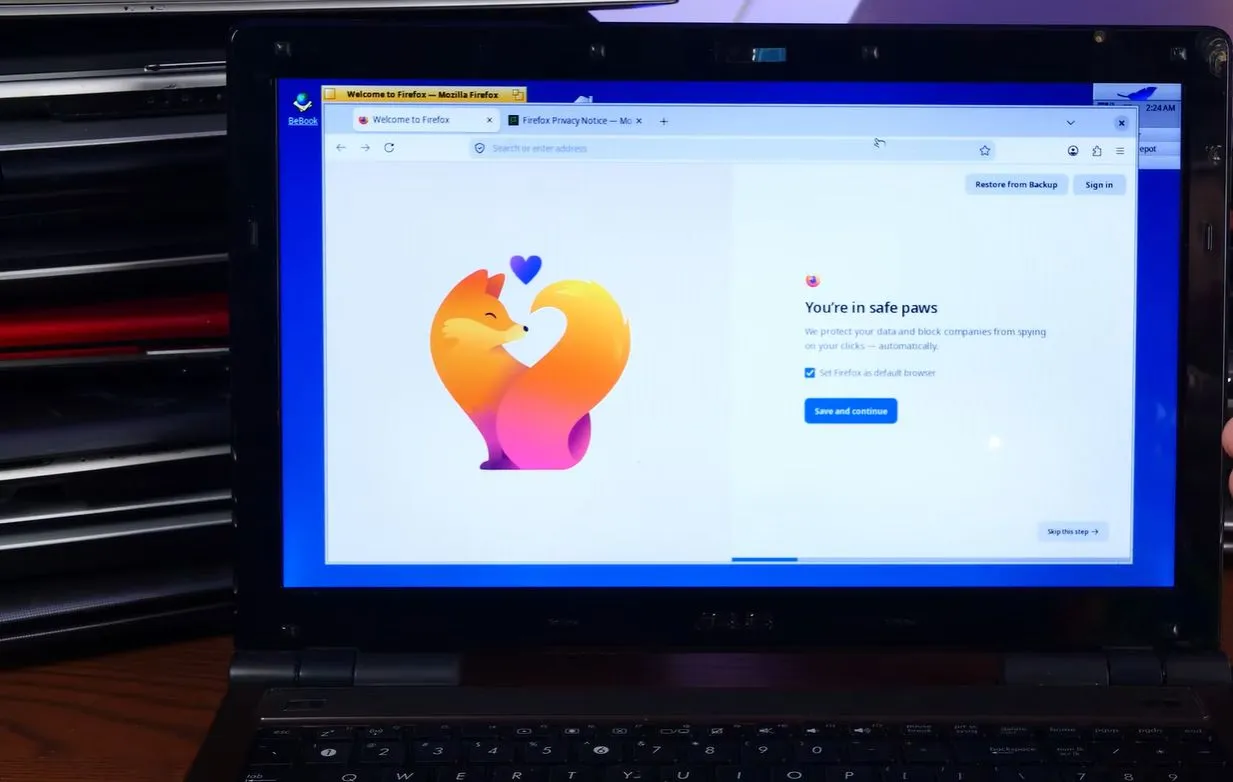
The headline features that are new compared to the previous release include the ability to run the Firefox browser and derivatives, QEMU hardware virtualization using the NetBSD Virtual Machine Monitor (NVMM), improved POSIX and hardware compatibility, as well as many bug fixes. Unfortunately 64-bit ARM support still has to wait a bit longer.

Naturally, such a joyful new release wouldn’t go unnoticed by [Action Retro], who decided to celebrate by installing this new release on a stack of old laptops that he bought for a dollar each. With system requirements starting at a Pentium II with 256 MB of RAM, it’s very zippy to install and boot on. As [Action Retro] noticed, a fresh install on a random 2000s Asus laptop both WiFi and audio worked out of the box.

Advertisement

Wrestling through his e-waste pile of laptops, the functional laptops provided a pretty good experience, making these at least an excellent target for a fresh Haiku install as a daily driver.

We looked at Beta 5 and the nightlies back in 2024, with recently attempts being made to port Nvidia GPU drivers to Haiku, with good results.

Advertisement

Source link

Continue Reading

Trending

Copyright © 2025