
Business
Hints And Full Solution Revealed For NYT Puzzle Number 1,901 On September 2, 2026


Wordle players logging on Wednesday were greeted with puzzle number 1,901, a word that sent many solvers down two very different paths of thinking before the correct answer became clear.
The answer to Wednesday’s Wordle, September 2, 2026, is RULER.
The five-letter word carries two distinct meanings that tripped up plenty of players throughout the day, according to puzzle trackers who monitor daily solving trends. It can refer to a straight measuring tool typically marked with units of length, commonly used in classrooms, workshops and design studios, or it can describe a person who exercises supreme authority over a country, kingdom or realm. That dual meaning became a talking point among solvers on social media, with some guessing based on tools and measurement while others leaned toward monarchy and governance themes.
According to the New York Times’ WordleBot, the automated tool that tracks how efficiently players solve each day’s puzzle, the average Wordle player completed Wednesday’s puzzle in four moves on easy mode, or 3.9 moves under hard-mode rules, which require players to reuse any correctly placed letters in subsequent guesses.
Wordle, the daily word-guessing game acquired by The New York Times in early 2022, gives players six attempts to identify a hidden five-letter word. After each guess, tiles change color to indicate whether a letter is correct and properly placed, correct but misplaced, or absent from the word entirely. The game has retained a devoted global following since it first went viral, with millions of players logging on each day to maintain personal winning streaks and compare results with friends.
For Wednesday’s puzzle, RULER contained one repeated letter, the letter R, which appeared as both the first and final letter of the word. It also included two of the five vowels and featured two of the game’s most commonly occurring letters, according to puzzle-hint outlets that publish daily breakdowns without immediately revealing the solution.
Puzzle guides noted that strong opening guesses for Wednesday’s word would have included common Wordle starting words that quickly narrow the field of possibilities. Players who opened with words like STRIP were left with 27 possible remaining answers, according to WordleBot’s analysis, while those who used TRAIL were left with just 18 options, illustrating how starting-word choice can dramatically shape the difficulty of a given day’s puzzle.
One puzzle columnist who documented their own solving process on Wednesday described using an opening guess that turned three letters green immediately, narrowing the field to just four remaining candidates. That columnist said they briefly attempted RELIC as a follow-up guess, which proved incorrect, before ultimately solving the puzzle on their fourth attempt using REMIX as a testing word to eliminate remaining possibilities.
Puzzle-hint sites are generally careful to sequence their clues from vague to specific, allowing players to seek only as much help as they want without immediately spoiling the answer. Wednesday’s hint sequence typically began with a note on the word’s dual meaning, followed by details on letter repetition, vowel count, and finally the word’s starting letter, before revealing the full solution for players who remained stuck after exhausting the softer hints.
Wordle’s format has remained essentially unchanged since its rise to prominence, with a single new puzzle released each day at midnight local time and shared globally as players move through different time zones. The simplicity of the format, combined with its shareable emoji-based results grid, has been widely credited with helping fuel the game’s sustained popularity, even as numerous imitators and spinoff word games have emerged in the years since its debut.
The New York Times has continued to expand its portfolio of daily puzzle offerings alongside Wordle, including Connections, a word-grouping game; Strands, a word-search style puzzle with a hidden theme; and Pips, a newer addition that challenges players to arrange dominoes according to specific rules. Each game maintains its own daily archive, allowing players to revisit previous puzzles they may have missed.
For Wordle specifically, the Times has resisted making significant changes to the core mechanics of the game since acquiring it, a decision widely seen as key to preserving the format that made it a viral sensation in the first place. The company has, however, occasionally adjusted its word list to remove or swap out certain answers deemed too obscure, offensive, or repetitive for a mainstream daily audience.
Wednesday’s puzzle number, 1,901, reflects the running count of daily puzzles since Wordle’s original launch, a figure that continues to climb by one with each passing day regardless of time zone or regional release schedule. Longtime players often track this number closely, both as a point of pride for maintaining long personal streaks and as a quick way to confirm they are discussing the correct day’s puzzle when comparing notes with friends or family in different parts of the world.
Players who missed Wednesday’s puzzle or want to revisit it can typically still access the archive through the Times’ official Wordle platform, though prior-day puzzles are usually locked behind the publication’s games subscription for those without a free daily play allowance. The Times has increasingly bundled Wordle access with its broader digital games subscription, which also includes access to its crossword archive, Spelling Bee, and other puzzle offerings, as part of a broader strategy to grow recurring subscription revenue from its games division.
Thursday’s Wordle puzzle, number 1,902, will be released at midnight, giving players a fresh chance to extend their streaks after Wednesday’s dual-meaning word tested vocabulary and lateral thinking in equal measure.


Uber stock gains 2% as tech giant cuts 3,300 jobs in major restructuring
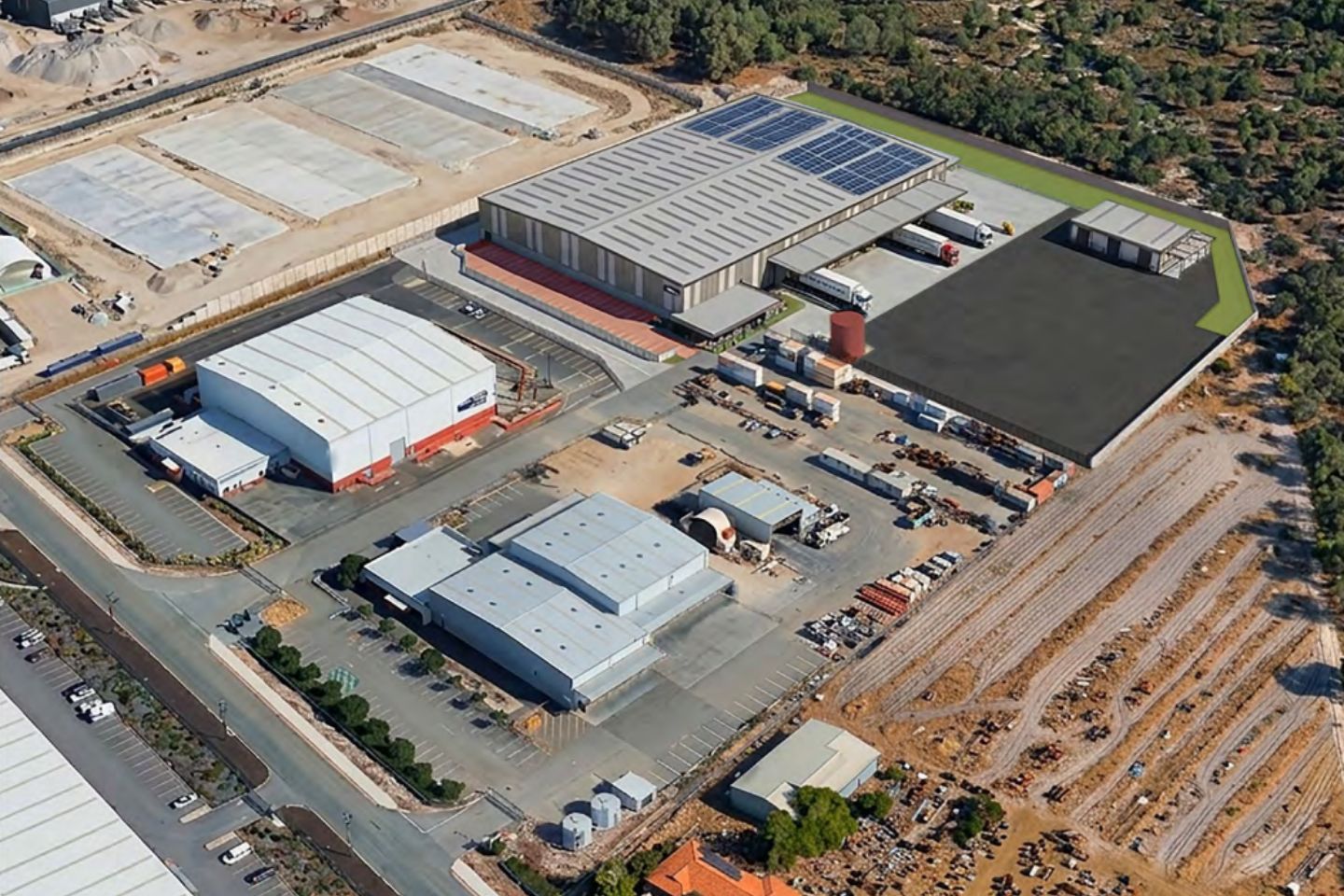
An assessment panel has approved another multi-million-dollar warehouse in Hesperia’s industrial centre in Hazelmere, to be occupied by a freight logistics and haulage service.
Business
Australian Stocks Tumble As Middle East Tensions And Global Bond Selloff Rattle Markets, ASX 200 Sinks 1%
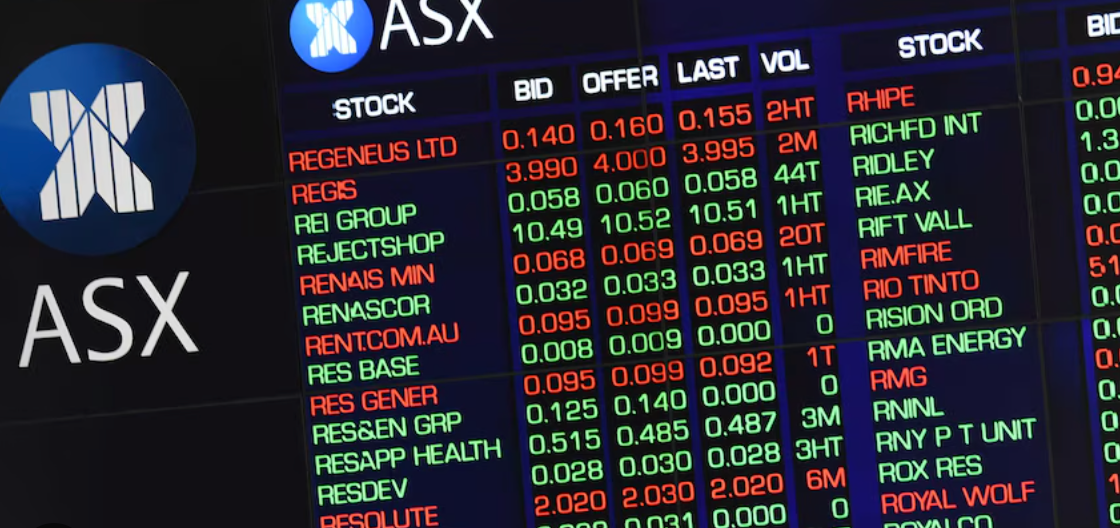
SYDNEY — Australian shares suffered their steepest one-day drop in months on Wednesday, as fresh U.S. military strikes on Iran sent oil prices surging and triggered a global bond market selloff that spooked investors across nearly every sector of the local market.
The benchmark S&P/ASX 200 index closed at 8,978.4 points, down 88.3 points, or 0.97%, marking one of the market’s worst sessions in recent months. The broader All Ordinaries index also fell sharply, tracking losses across almost every corner of the market.
Only a small fraction of the 200 companies that make up the benchmark index finished the day in positive territory, with mining and gold stocks bearing the brunt of the selloff while energy producers were among the rare bright spots.
The rout began overnight after the United States launched new strikes against Iran, escalating a conflict that has now stretched into its seventh month. The attacks pushed Brent crude oil prices to a two-month high, reviving fears that higher energy costs could reignite inflation just as central banks around the world had been signaling confidence that price pressures were cooling.
Moomoo Australia chief market strategist Tapas Strickland said the shift in investor sentiment was swift and broad-based.
“The catalyst for the sudden shift in sentiment stems from escalating Middle East tensions following strikes near the Strait of Hormuz, raising immediate concerns over potential bottlenecks in critical global shipping channels,” Strickland said. “Higher energy costs risk re-igniting headline inflation just as central banks seek confirmation that price pressures are contained.”
Strickland added that while higher bond yields were expected to weigh on rate-sensitive growth stocks, banks and real estate, energy producers and materials heavyweights were likely to offer some support given elevated crude and firm commodity prices.
The selloff in equities was compounded by a deepening rout in global government bond markets. Australia’s 10-year bond yield jumped to 5.19%, its highest level in 15 years, as investors demanded greater compensation for what they see as rising inflation and fiscal risk. Similar pressure was evident overseas, with Japan’s 10-year yield touching 3% for the first time since 1996, and borrowing costs in Germany and the United Kingdom climbing to multi-year highs.
Gold miners were among the hardest hit locally after the precious metal’s spot price slid to a one-month low near $4,314 an ounce, pressured by growing expectations of a U.S. Federal Reserve interest rate move this month. Shares in several mid-tier gold producers fell between 6% and 7.5%, while a major copper miner dropped roughly 8%. The country’s largest iron ore miners also slumped, with declines of between 2% and 3.4% weighing heavily on the broader index given their size.
Energy stocks stood out as the exception, buoyed by the jump in oil prices, while a handful of individual gainers including a grains and agribusiness company, an insurer and the nation’s largest telecom operator posted solid gains.
The selloff came on the same day the Australian Bureau of Statistics released data showing the economy grew 0.4% in the June quarter and 2.1% over the year, a result that came in slightly ahead of market expectations and added a fresh layer of uncertainty for the Reserve Bank of Australia ahead of its September policy meeting.
ABS head of national accounts Grace Kim said the underlying picture remained mixed.
“Economic growth remained subdued in the June quarter as households continued to behave cautiously,” Kim said. “While increased spending and business investment occurred in pockets of the economy, imports supported much of the growth, moderating its contribution to overall GDP growth.”
The stronger-than-forecast reading immediately fueled debate among economists over whether the central bank would resume raising interest rates this month. Capital Economics analyst Marcel Thielant said the data strengthened the case for further tightening.
“With GDP growth and inflation holding up better than the RBA had anticipated, the bank will probably hike rates again before long, perhaps as soon as this month,” Thielant said, noting the quarterly growth figure came in stronger than both the analyst consensus and the central bank’s own forecast.
Not all economists agreed a hike was imminent. BetaShares chief economist David Bassanese struck a more cautious tone, saying the numbers did not conclusively point to a September move.
“Ultimately, the jury remains out on a September rate decision,” Bassanese said. “The saving grace from the economic rut revealed by these numbers is they do not compel the RBA to raise rates, but they also do not rule out a hike in the future. My base case is that September will not bring a rate increase, as the RBA will want to see more evidence on inflation and the moderation in house prices.”
State Street Investment Management economist Krishna Bhimavarapu took a firmer view, pointing to the possibility of an increase as central banks elsewhere also lean toward tighter policy.
“Today’s GDP data surprised our bullish expectations,” Bhimavarapu said. “Absent another negative surprise in the August employment data, there are high chances of a September RBA hike now, particularly with the Fed, ECB and the BoJ also leaning hawkish.”
Treasurer Jim Chalmers welcomed the growth figures despite the market turmoil, framing Australia’s economic performance as resilient relative to its global peers.
“Annual growth in Australia was as strong or stronger than every major advanced economy — equal to the United States and much stronger than the rest,” Chalmers said. “Australia is outperforming when it comes to annual growth, we have stronger employment growth than almost every major advanced economy, and lower gross debt to GDP than every major advanced economy.”
Wednesday’s declines followed a soft start to September, after the ASX 200 had notched a fifth consecutive monthly gain in August. Losses on Wall Street overnight, driven by a sharp pullback in technology shares, had already set a cautious tone heading into the local session before the fresh Iran strikes deepened the selloff.
Market watchers said the path forward would likely hinge on whether the bond selloff stabilizes and on upcoming U.S. inflation and employment data, which could determine whether global interest rate expectations ease or harden further in the weeks ahead. For now, investors are bracing for continued volatility as geopolitical risk, inflation concerns and central bank policy uncertainty converge.

Credo Is Now A De-Risked AI Compounder


Stone Fox Capital is an RIA from Oklahoma. Mark Holder is a CPA with degrees in Accounting and Finance. He is also Series 65 licensed and has 30 years of investing experience, including 15 years as a portfolio manager. Mark leads the investing group Out Fox The Street where he shares stock picks and deep research to help readers uncover potential multibaggers while managing portfolio risk via diversification. Features include various model portfolios, stock picks with identifiable catalysts, daily updates, real-time alerts, and access to community chat and direct chat with Mark for questions. Learn more.
Analyst’s Disclosure: I/we have no stock, option or similar derivative position in any of the companies mentioned, and no plans to initiate any such positions within the next 72 hours. I wrote this article myself, and it expresses my own opinions. I am not receiving compensation for it (other than from Seeking Alpha). I have no business relationship with any company whose stock is mentioned in this article.
The information contained herein is for informational purposes only. Nothing in this article should be taken as a solicitation to purchase or sell securities. Before buying or selling any stock, you should do your own research and reach your own conclusion or consult a financial advisor. Investing includes risks, including loss of principal.
Seeking Alpha’s Disclosure: Past performance is no guarantee of future results. No recommendation or advice is being given as to whether any investment is suitable for a particular investor. Any views or opinions expressed above may not reflect those of Seeking Alpha as a whole. Seeking Alpha is not a licensed securities dealer, broker or US investment adviser or investment bank. Our analysts are third party authors that include both professional investors and individual investors who may not be licensed or certified by any institute or regulatory body.


Samuel Smith has a diverse background that includes being lead analyst and Vice President at several highly regarded dividend stock research firms and running his own dividend investing YouTube channel. He is a Professional Engineer and Project Management Professional and holds a B.S. in Civil Engineering & Mathematics from the United States Military Academy at West Point and has a Masters in Engineering from Texas A&M with a focus on applied mathematics and machine learning.Samuel leads the High Yield Investor investing group. Samuel teams up with Jussi Askola and Paul R. Drake where they focus on finding the right balance between safety, growth, yield, and value. High Yield Investor offers real-money core, retirement, and international portfolios. The service also features regular trade alerts, educational content, and an active chat room of like-minded investors. Perspective: “Do not store up for yourselves treasures on earth, where moth and rust destroy, and where thieves break in and steal. But store up for yourselves treasures in heaven, where neither moth nor rust destroys, and where thieves do not break in or steal; for where your treasure is, there your heart will be also … For what will it profit a man if he gains the whole world and forfeits his soul?” ~ Jesus (Matthew 6:19-21; 16:26)Learn more
Analyst’s Disclosure: I/we have a beneficial long position in the shares of GLD, MSDL either through stock ownership, options, or other derivatives. I wrote this article myself, and it expresses my own opinions. I am not receiving compensation for it (other than from Seeking Alpha). I have no business relationship with any company whose stock is mentioned in this article.
Seeking Alpha’s Disclosure: Past performance is no guarantee of future results. No recommendation or advice is being given as to whether any investment is suitable for a particular investor. Any views or opinions expressed above may not reflect those of Seeking Alpha as a whole. Seeking Alpha is not a licensed securities dealer, broker or US investment adviser or investment bank. Our analysts are third party authors that include both professional investors and individual investors who may not be licensed or certified by any institute or regulatory body.
Ella Loneragan speaks to Claire Tyrrell about why WA’s state library is turning to philanthropy in order to broaden its funding base.
Business
Dow Jones Futures Fall After Oil Prices Slam Market; Dell, Credo, Palo Alto Are Earnings Movers

Dow Jones futures fell early Wednesday, along with S&P 500 futures and Nasdaq futures. Dell Technologies, Palo Alto Networks, Credo Technology and MongoDB are notable overnight earnings movers. The stock market rally came under further pressure with the Dow Jones and S&P 500 dropping below key levels. Crude oil prices jumped on fresh U.S.-Iran attacks while Treasury yields also moved…
Copyright ©2026 Investor’s Business Daily, LLC. All rights reserved. 87990cbe856818d5eddac44c7b1cdeb8
Business
Dow Jones Futures: Trump’s Iran Warning Sparks Stock Market Losses; Elon Musk-Led SpaceX, Tesla Rally

Futures for the Dow Jones Industrial Average and the other major stock indexes traded little changed ahead of Tuesday’s open. On Monday, the Dow Jones industrials declined 373 points after President Donald Trump threatened “a response” to Iran’s recent retaliatory strikes on U.S. bases in Jordan, saying on Fox News, “We’re going to hit them hard.” Micron Technology (MU), Sandisk…
Copyright ©2026 Investor’s Business Daily, LLC. All rights reserved. 87990cbe856818d5eddac44c7b1cdeb8

Flower Labs, a Cambridge University spinout, has launched a British frontier AI model that it says can match the performance of rivals from OpenAI and Anthropic.
The London and Hamburg-based start-up said its Endeavor general-purpose model, which draws on open-source software as well as its own proprietary intellectual property, completed tasks at similar levels to OpenAI’s GPT-5.6 Sol and Anthropic’s Claude Fable 5, two of the US companies’ main models.
Users of Endeavor can also deploy it on their local IT systems, which the company says gives them reliable access, control and improved security. The leading US providers with “closed-source” models require users to access them via software interfaces, access to which can be withdrawn.
“Europe should not have to rent its intelligence indefinitely from a handful of US companies,” said Professor Nicholas Lane, co-founder and chief scientist of Flower Labs and professor of machine-learning systems at the University of Cambridge.
“If AI is going to become fundamental infrastructure for companies and governments, then those organisations need a credible way to control the intelligence their systems depend on. Endeavor gives them that option without asking them to step back from the frontier.”
The launch comes as the government seeks to support UK-based alternatives to the big US AI companies in order to reduce the country’s dependence on overseas suppliers. On Monday it opened the first competitions under a £100 million sovereign AI research and development procurement scheme, which will run as a series of contests for AI start-ups. One goal, the government said, was to “significantly expand the UK’s public AI compute capacity while reducing costs” for researchers and businesses.
The UK’s reliance on leading US AI models was highlighted in June when the US government and Anthropic temporarily restricted access to the latter’s Fable 5 model over US national security concerns, prompting Downing Street to seek an exemption from the ban.
Lane, 47, and his co-founders Daniel Beutel and Taner Topal set up Flower Labs in 2023 as a spinout from Cambridge University. The same year they attended Y Combinator, the US start-up accelerator. They have since raised $23.6 million, and their models, AI agents and infrastructure have been used in more than 2,500 organisations, including the US bank JP Morgan, the IBM-owned software company Red Hat and the US Department of Energy.
Flower Labs’ technology draws on the capabilities of freely available AI models developed by companies including Meta and Mistral, the French artificial intelligence company, many of which perform well for specific tasks. It knits them together, adding the reasoning of its own model, called Lizzy, as well as proprietary harnesses, the software infrastructure that wraps around AI models to turn them into functional AI agents.
Lane, who teaches machine learning at St John’s College, Cambridge, said the difference in performance between closed-source models such as Anthropic’s Claude and open-weight models, systems where the final trained numerical parameters are placed in the public domain, had become “vanishingly narrow”.
“Open-weights are catching up to closed-source and if you are a strong, technical company you can look at ways of using the best of open-source to stand up these frontier models that we say are as good as the closed-sourced models,” Lane said.
He said Flower Labs’ long-term strategy was to develop more of its own proprietary models itself, and the company expects to raise additional capital in 12 months’ time.
Endeavor itself is a closed-source model, sold under licence. It enables organisations to use an AI training method called federated learning, which allows the model to be trained on sensitive data without that data being transferred to a central server. The company said this can help preserve privacy and security and is of interest to healthcare, financial services and defence companies as well as governments. Flower Labs has also developed its own AI deployment tools and services, for which it charges a fee.
The launch adds a British name to a field in which overseas challengers have already been positioning themselves as the alternative to Silicon Valley for organisations wary of handing over their data, with Canada’s Cohere tripling its London footprint to chase the same demand for so-called sovereign AI.

Paul Jones
Harvard alumni and former New York Times journalist. Editor of Business Matters for over 15 years, the UKs largest business magazine. I am also head of Capital Business Media’s automotive division working for clients such as Red Bull Racing, Honda, Aston Martin and Infiniti.

Five ways the human body can sync up with other people
Uber stock gains 2% as tech giant cuts 3,300 jobs in major restructuring

European Gas Hits 3-Year High With Winter Storage at 13-Year Low





-

 Fashion5 days ago
Weekend Open Thread: Maeve – Corporette.com
-

 Crypto World6 days ago
Bitcoin’s 22% rally now needs real demand to outlast Treasury liquidity boost
-

 Crypto World7 days ago
Warsh Jackson Hole keynote puts financial innovation first
-

 Business5 days ago
Apple Confirms September 9 Keynote and Reveals Its Full Pre-Order Schedule
-

 Crypto World7 days ago
Elon Musk Grok Bot Promise: We Will Make You Whole if AI Loses Your Money
-

 Business5 days ago
Salesforce Stock Soars 19% as Blowout Earnings and Agentforce AI Growth Silence Software Skeptics
-

 Business4 days ago
Onto Innovation Stock: AI’s Next Bottleneck Is Yield (NYSE:ONTO)
-

 Business7 days ago
Walmart takes aim at younger shoppers with new fashion brand
-
 NewsBeat7 days ago
Lindsay Clancy jury braces for closing arguments as judge tells court: ‘You’ve heard all the evidence’ – Live updates
-

 Crypto World6 days ago
NVIDIA revenue hits $96.2B as AI demand doubles
-

 Crypto World4 days ago
Bitcoin price tests $82K resistance as Brandt stays long
-

 Crypto World7 days ago
Nvidia Q2 Earnings Reveal $96.2 Billion Beat, So Why Is NVDA Falling?
-
 Tech4 days ago
Hugging Face built a $4.5 billion empire on free AI models. Now Nvidia is buying it for $12.9 billion
-

 Business5 days ago
iPhone 18 Pro Pre-Orders Could Shift to Saturday as Apple Reportedly Avoids September 11 Anniversary
-

 Tech6 days ago
Claude Cowork gets its own browser that doesn’t touch your tabs, bookmarks, or saved passwords
-

 Crypto World5 days ago
Truflation calls for Fed rate cut after PCE forecast
-

 Crypto World6 days ago
GENIUS Act missed its deadline as OCC writes rules anyway
-

 Tech4 days ago
PaperCut releases second emergency patch for exploited flaws
-

 Tech7 days ago
Apple’s iPhone 18 Pro event is on September 9
-
 News Videos3 days ago
Charlie Munger on Robinhood: No one should believe that Robinhood’s trades are free
You must be logged in to post a comment Login