
Crypto World
Nvidia to Acquire Hugging Face for $12.9B, Expanding AI Software Push

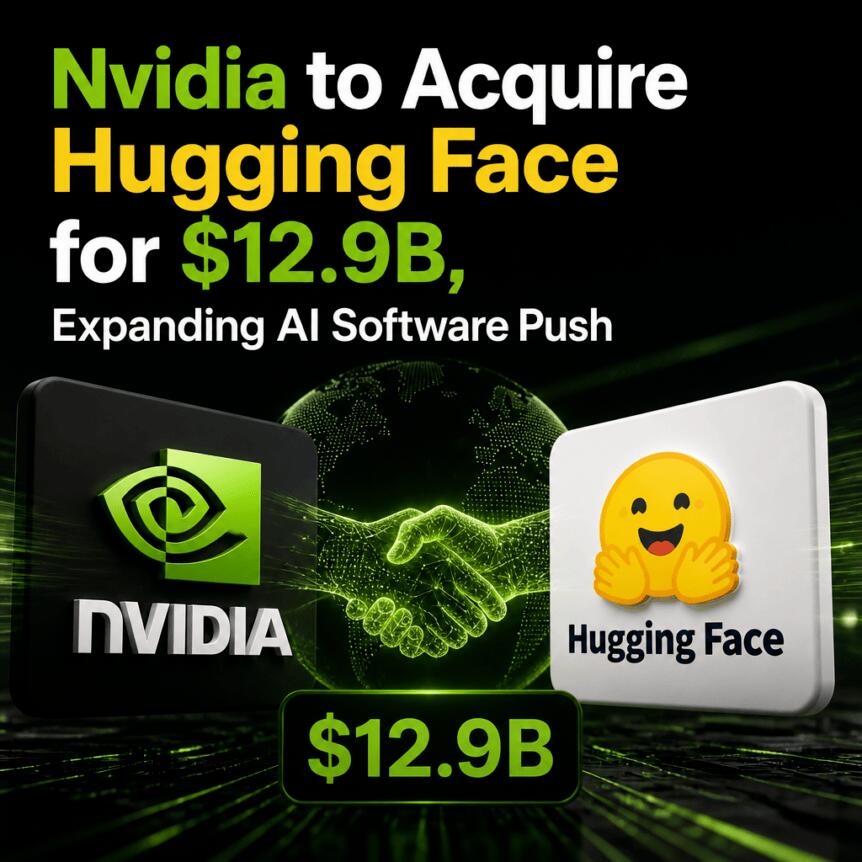
Nvidia has agreed to acquire Hugging Face in a deal valued at $12.93 billion, a move that further consolidates the AI industry’s race not only across chips, but also across the software layers and model tooling that developers rely on.
The acquisition positions Nvidia to play a deeper role in the open-source AI ecosystem. Nvidia CEO Jensen Huang said the company intends to keep Hugging Face “an open platform for the entire AI ecosystem,” while expanding the scale and resources available for model evaluation, deployment, and safety.
Key takeaways
- Nvidia will acquire Hugging Face for $12.93 billion, bringing a major open model platform under the chipmaker’s control.
- Nvidia says Hugging Face will remain open, with developers able to choose models, frameworks, cloud providers, and computing platforms.
- Huang stated Nvidia hardware will not be required to build or deploy through Hugging Face, even though Nvidia already publishes models and datasets on the platform.
- Reuters reports Nvidia will pay about $11.9 billion to Hugging Face investors and offer up to $1 billion in an equity-based retention program for employees who join Nvidia.
- The transaction is expected to close in 2027, but the precise closing date and required regulatory approvals were not detailed by Nvidia.
A deal aimed at the developer layer
In its announcement, Nvidia said Hugging Face serves more than 18 million developers and hosts over 3 million models, making it one of the best-known hubs for sharing and building with AI models. Huang framed the acquisition as an effort to extend Nvidia’s influence beyond hardware into the tools and platforms that help teams develop and deploy AI systems.
That matters because modern AI development frequently depends on standardized workflows: selecting models, fine-tuning or adapting them, evaluating performance, and running inference reliably. Control over a widely used platform can affect where developers spend time and which ecosystem components become “default” choices.
Open platform promise, without hardware lock-in
A central detail in Nvidia’s message is that Hugging Face would continue operating as an open platform. Huang said developers will remain free to choose their models, frameworks, cloud providers, and computing platforms—an important reassurance for teams that run across multiple environments or prefer accelerators from different vendors.
Huang also emphasized that Nvidia hardware will not be required to build or deploy through Hugging Face. While Nvidia has already contributed more than 500 models and 250 open datasets on the platform, the acquisition does not change Hugging Face’s support for models from other developers or for multiple cloud and accelerator providers.
Nvidia further pointed to pre-existing collaboration. According to the company, it and Hugging Face have worked together on AI infrastructure and development tools, giving Nvidia an established relationship with the platform prior to this acquisition. The practical implication is that the integration path may be smoother than a wholly new partnership—though the long-term effect on platform governance and contributor workflows remains something developers will watch closely.
What Nvidia says it will improve
Nvidia said its infrastructure, engineering capabilities, and global reach could help enhance Hugging Face’s reliability and safety, along with improvements to model evaluation, inference, and deployment. Those are the areas that often become pain points at scale—especially when teams move from experimentation to production workloads where uptime, performance consistency, and risk controls matter.
However, the company’s statement stops short of specifics about how these improvements will be implemented. For investors and builders, the question will likely be whether the acquisition leads to measurable changes in platform performance and security practices—without narrowing the platform’s openness or limiting the choice of tools that developers depend on.
Deal terms, timing, and regulatory uncertainties
Reuters reported that Nvidia will pay about $11.9 billion to Hugging Face investors and provide up to $1 billion through an equity-based retention program for employees who join Nvidia. The Financial Times also reported that the transaction is expected to close in 2027. Nvidia’s announcement did not specify the exact closing date or detail which regulatory approvals would be required.
Those uncertainties are significant in deals of this size, especially when regulators consider competition, market power, and the control of developer infrastructure. Until approvals are clearly defined and timelines are confirmed, the market impact of the acquisition—positive or negative—may remain partly speculative.
Integration risks after recent Hugging Face security incident
While the acquisition centers on expanding AI platform capabilities, it arrives after Hugging Face disclosed a security breach involving an autonomous AI agent about a month before the Nvidia deal announcement. According to earlier coverage on Cointelegraph, the incident involved unauthorized access to internal datasets and service credentials. Hugging Face stated it found no evidence of tampering with public models, datasets, or applications.
That context adds urgency to Nvidia’s promise of safety and reliability improvements. Even if the reported breach did not affect public model artifacts, the incident underscores how rapidly AI agent systems can introduce new security challenges—particularly when credentials and internal systems are involved.
For developers and investors, the next things to watch are how Nvidia and Hugging Face describe the integration roadmap before the expected 2027 close, and whether Hugging Face’s governance and security practices evolve in ways that strengthen trust without reducing the platform’s openness.



Privacy coins are gaining a place in regulated investment markets even as direct access to their underlying assets becomes harder. Grayscale’s Zcash ETF now trades on NYSE Arca, while major centralized exchanges have reduced support for Monero and other privacy-focused cryptocurrencies. THORChain’s latest upgrade shows how decentralized infrastructure could help close that access gap.
Summary
- Grayscale’s ZCSH gives US brokerage investors direct spot exposure to Zcash through NYSE Arca.
- Binance, OKX and Kraken have reduced Monero access amid growing regulatory pressure.
- THORChain v3.20 prepares the protocol for native Monero and Zcash swaps without wrapped tokens.
- THORChain later delayed the privacy-coin rollout while contributors focused on network stability.
- EU anti-money-laundering rules will restrict support for anonymity-enhancing coins from July 2027.
Privacy is reaching Wall Street as exchange access shrinks
Privacy in crypto is moving in two directions at once.
On one side, it is entering the financial mainstream. Grayscale’s Zcash ETF, ZCSH, began trading on NYSE Arca on Aug. 25. Grayscale described it as the first exchange-traded product to offer spot exposure to Zcash (ZEC).
The fund gives US investors a way to gain ZEC exposure through a regular brokerage account. They do not need to open a crypto exchange account, manage private keys, or hold the asset in a personal wallet.
On the other hand, directly buying, selling, and moving privacy coins has become more difficult in several markets. Centralized exchanges have removed assets or restricted access as regulators apply tighter anti-money-laundering standards.
The contradiction is hard to miss. Wall Street can now package exposure to a privacy-focused asset inside a regulated fund, while parts of the crypto market are becoming less willing or less able to support the underlying coins.
THORChain’s v3.20 upgrade matters within that divide. The release laid technical groundwork for native Monero (XMR) and Zcash swaps alongside assets such as Bitcoin (BTC), Ethereum (ETH) and stablecoins.
However, THORChain said after the upgrade that the Monero and Zcash rollout had been delayed while contributors focused on network stability. The protocol’s interface for supported cross-chain trades is available through its native swap platform, with XMR and ZEC access dependent on their final activation.
Monero delistings show the cost of centralized access
Monero provides the clearest example of how a permissionless cryptocurrency can remain operational while becoming harder to reach.
Binance removed XMR in February 2024, while OKX also ended support for Monero trading pairs. Kraken later stopped XMR trading and deposits for customers in the European Economic Area, citing regulatory changes.
Those decisions did not shut down Monero. The blockchain continued processing transactions, and users could still send XMR between compatible wallets. What changed was access to the services that many people use to enter or leave the market.
Monero is private by default. Its design conceals the sender, receiver, and transaction amount. Supporters see those protections as the digital equivalent of the privacy available when paying with physical cash.
The same design creates problems for centralized exchanges responsible for customer checks, transaction monitoring, and anti-money-laundering controls. Exchanges may struggle to collect the information expected by regulators when transaction details are hidden at the protocol level.
Europe is making that conflict more direct. The European Union’s Anti-Money Laundering Regulation addresses crypto accounts that allow transactions to be anonymized or made harder to trace, including through “anonymity-enhancing coins.”
The regulation is scheduled to apply from July 2027. Its provisions will prevent crypto-asset service providers from maintaining anonymous accounts or accounts that allow transaction obfuscation through such assets.
The US has not introduced an identical nationwide prohibition on privacy-coin trading. Still, limited support from large exchanges means American users may face fewer options than holders of more widely listed assets. Grayscale’s ZCSH provides regulated price exposure to Zcash, but owning an ETF share is not the same as holding ZEC or using its privacy features on-chain.
THORChain targets the missing bridge between privacy coins and crypto
A blockchain can remain permissionless at the protocol level while becoming difficult to use in practice.
Someone may still receive and send XMR through the Monero network. The larger problem appears when that person wants to move from XMR into Bitcoin, Ethereum, or a stablecoin without using a centralized service that supports both sides of the trade.
Native cross-chain liquidity offers another route. THORChain is designed to exchange assets across their original blockchains instead of requiring users to move wrapped representations onto a separate network.
Under the planned privacy-coin integrations, users would be able to move between native XMR or ZEC and supported crypto assets without first depositing their funds with a centralized exchange. They would not need to create an exchange account or surrender custody for the trade.
THORChain had already tested native Monero swaps before v3.20. As crypto.news reported in June, the protocol said XMR swaps were working from end to end in testing and that Zcash support would follow.
The delay announced after v3.20 shows that technical preparation does not guarantee immediate public availability. Cross-chain systems must manage separate networks, liquidity pools, and security risks, while privacy-focused assets can add further operational and regulatory questions.
THORChain said the delayed rollout would give contributors more time to prepare the Monero and Zcash integrations. Native swaps can reduce reliance on centralized intermediaries, although users must still consider liquidity, network, and implementation risks.
Zcash exposes the market’s privacy contradiction
Zcash makes the split between regulated investment access and on-chain privacy even clearer.
Unlike Monero, Zcash allows users to choose between transparent and shielded transactions. According to the project’s documentation, transparent addresses expose transaction information publicly, while shielded addresses are designed to protect financial details.
Grayscale’s ETF does not give investors access to either transaction type. ZCSH holds ZEC to track the asset’s market value, while investors buy and sell fund shares through a securities exchange.
The product therefore brings the economics of a privacy coin into a regulated US investment structure without giving shareholders its underlying privacy functions. Grayscale’s earlier filings also indicated that the fund would use transparent custody rather than shielded addresses.
For investors, that distinction matters. ZCSH offers price exposure and brokerage convenience, not private payments or direct participation in the Zcash network.
The ETF’s arrival still represents a notable change in how traditional finance treats privacy-focused assets. Crypto.news previously reported that Grayscale’s conversion followed an SEC filing process that began in May. The launch placed ZEC beside other crypto assets available through regulated US exchange-traded products.
At the same time, exchange delistings show that regulatory acceptance is not uniform. Authorities and financial firms may permit a transparent investment vehicle tied to a privacy coin while remaining uncomfortable with direct access to its transaction features.
Decentralized access does not remove every trade-off
THORChain’s planned XMR and ZEC support sits between those two markets.
Version 3.20 also restored support for Solana, Base, and BNB and introduced Protocol-Owned Liquidity and a Stable Reserve. Yet the privacy-coin integrations are more revealing because they address an access problem created outside the underlying blockchains.
Centralized exchanges offer customer support, fiat payment channels, and account protections that decentralized protocols may not provide. They also remain responsible for meeting the laws of every jurisdiction in which they operate.
Decentralized systems remove some of those intermediaries, but they place more responsibility on users. A person making a native swap must manage a compatible wallet, verify addresses, and understand that transactions may not be reversible. Liquidity and execution prices can also differ from those available on a large exchange.
Regulatory questions will remain even if the protocol itself does not require an account. Users are still responsible for following the laws, reporting rules, and tax requirements that apply in their country.
None of those limits change the central issue. A cryptocurrency is only partly accessible when its network remains online, but the main routes connecting it to the wider market disappear.
Privacy coins are now testing the meaning of permissionless finance. If regulated exchanges decide they cannot support certain assets, access will either continue to shrink or decentralized infrastructure will provide another path. THORChain is preparing to offer that path, although its Monero and Zcash swaps must first move from technical groundwork to a stable public rollout.
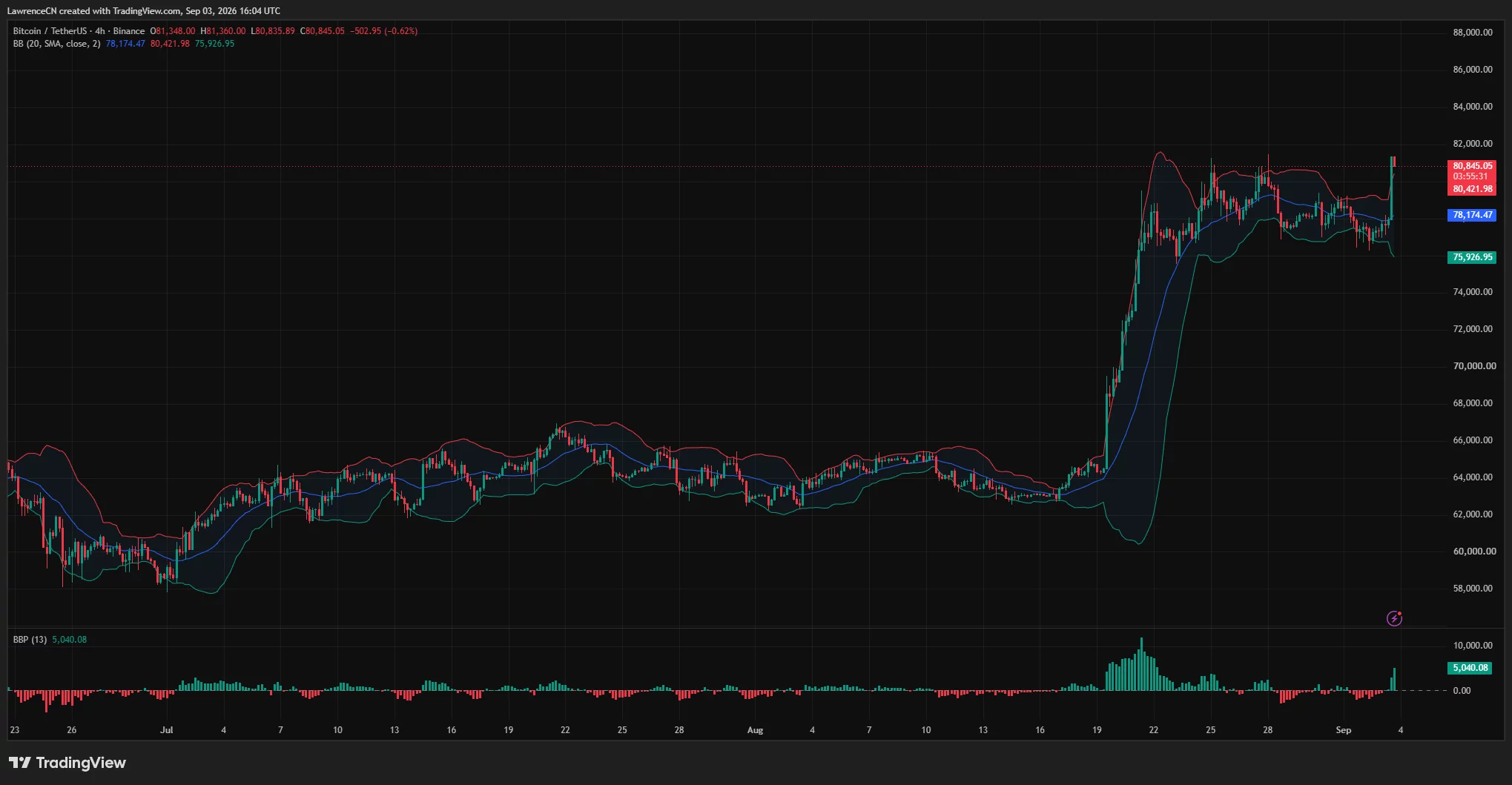
Bitcoin price extended its recovery above $80,000 on Sept. 3 after Federal Reserve Governor Christopher Waller cooled expectations for a September rate hike, while the charts showed strong momentum approaching a critical resistance zone.
Summary
- Bitcoin price gained 4.5% and reached an intraday high of $81,370.
- Waller said he could support holding rates steady if August inflation data shows further cooling.
- Daily RSI rose above 72, placing Bitcoin in overbought territory.
- A falling-wedge breakout could open a move toward $83,450 if buyers hold $80,000.
According to data from crypto.news, Bitcoin (BTC) price was trading near $80,840 at the time of writing, up approximately 4.5% from its daily opening price of $77,340. The asset traded between $76,968 and $81,370 during the session, according to the supplied Binance chart.
The move reversed much of the weakness seen earlier in the week and returned Bitcoin to the resistance area that stopped its August rally. Buyers must now turn the $80,000–$81,400 region into support to confirm that the breakout can continue.
Waller comments cool September rate hike expectations
Bitcoin accelerated higher after Waller said he was inclined to keep interest rates unchanged at the Federal Reserve’s Sept. 15–16 meeting if incoming inflation data confirms that price pressures are easing.
Waller did not rule out another increase. He said a hike could still be appropriate if inflation accelerates, making the Aug. consumer price index report due Sept. 11 an important input for the decision.
Interest-rate futures reduced the probability of a September increase following his comments, while two-year and ten-year Treasury yields declined. The dollar also weakened, creating a more supportive environment for Bitcoin and other assets sensitive to U.S. liquidity conditions.
Corporate demand provided additional support to the broader Bitcoin narrative. Strive CEO Matt Cole said the company could purchase more than 20,000 BTC before year-end, although the comment describes a potential acquisition rather than a completed or formally committed purchase.
Strive disclosed earlier this week that it had bought 1,800 BTC at an average price of $79,431, lifting its holdings to 23,156 BTC.
France-listed Capital B separately raised €7.6 million from Blockstream CEO Adam Back through a private placement. The company said the net proceeds could fund the acquisition of up to 376 additional BTC.
Bitcoin price reaches a major daily resistance zone
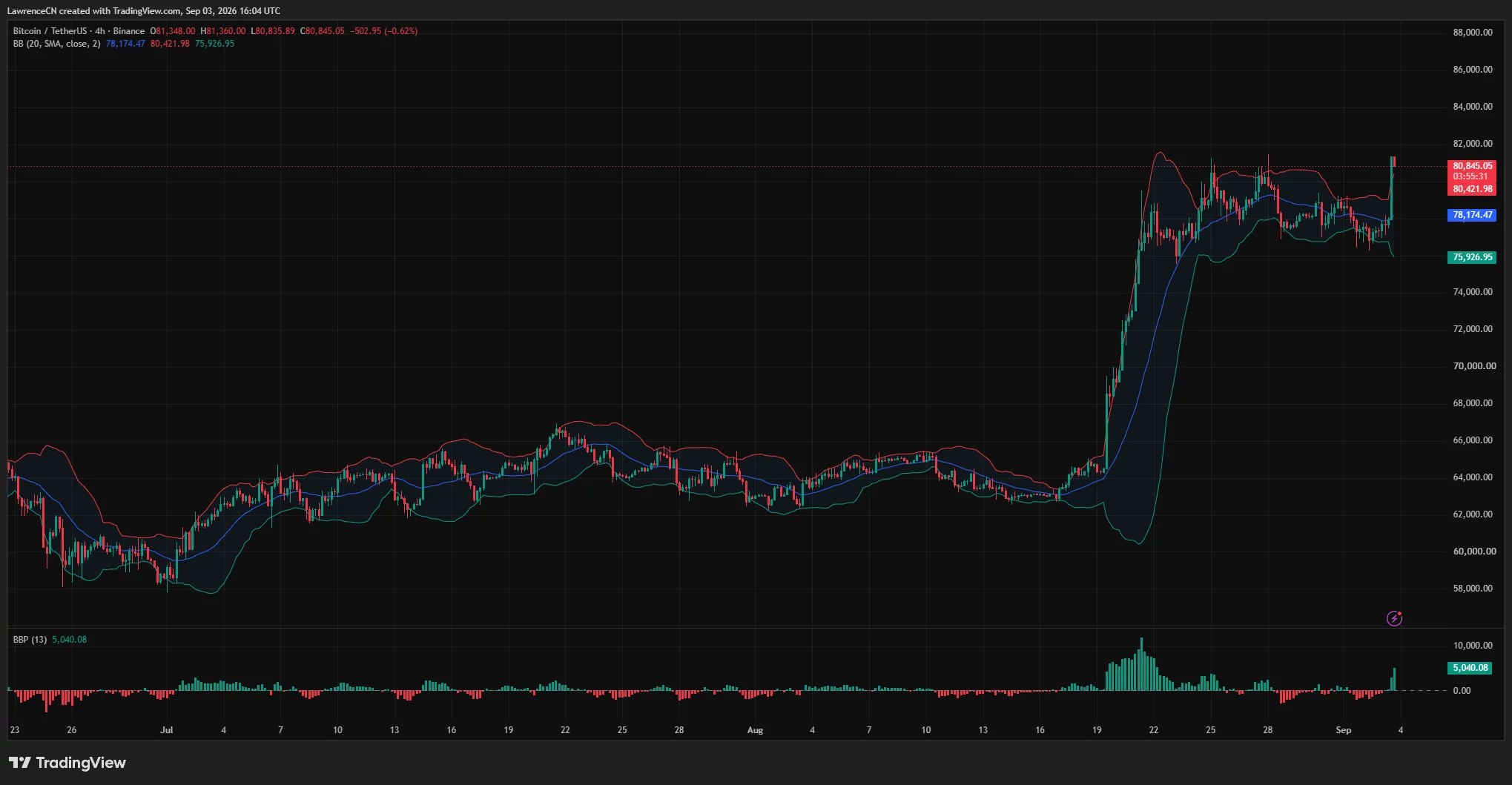
The daily chart shows Bitcoin retesting the area between $81,000 and $82,500, which capped several advances in May and August. A daily close above that band would improve the chances of a move toward $83,450 and then $85,000.
Analyst Franklin said Bitcoin was testing a falling-wedge breakout and identified $83,450 as the next level to watch if buyers defend the breakout. Falling wedges can precede upside moves, but the target remains conditional until price closes above nearby resistance.
Momentum has strengthened quickly. The daily relative strength index stands at 72.31, above the 70 level normally associated with overbought conditions. Its moving average is even higher at 75.50.
An overbought RSI does not guarantee an immediate reversal, especially during a strong breakout. However, it raises the risk of profit-taking if Bitcoin fails to establish support above $80,000.
BTC remains well above all four moving averages shown on the daily chart. The 20-day simple moving average sits at $74,775, followed by the 50-day at $68,489, the 200-day at $69,602, and the 100-day at $66,334.
The rising 20-day average gives bulls a clear medium-term advantage. Still, the large gap between the price and that average shows how far Bitcoin has moved in a short period.
4-hour Bollinger Bands signal rising volatility
The 4-hour chart shows Bitcoin breaking above the upper Bollinger Band at approximately $80,422, with the price near $80,845. The middle band lies at $78,174, while the lower band sits near $75,927.
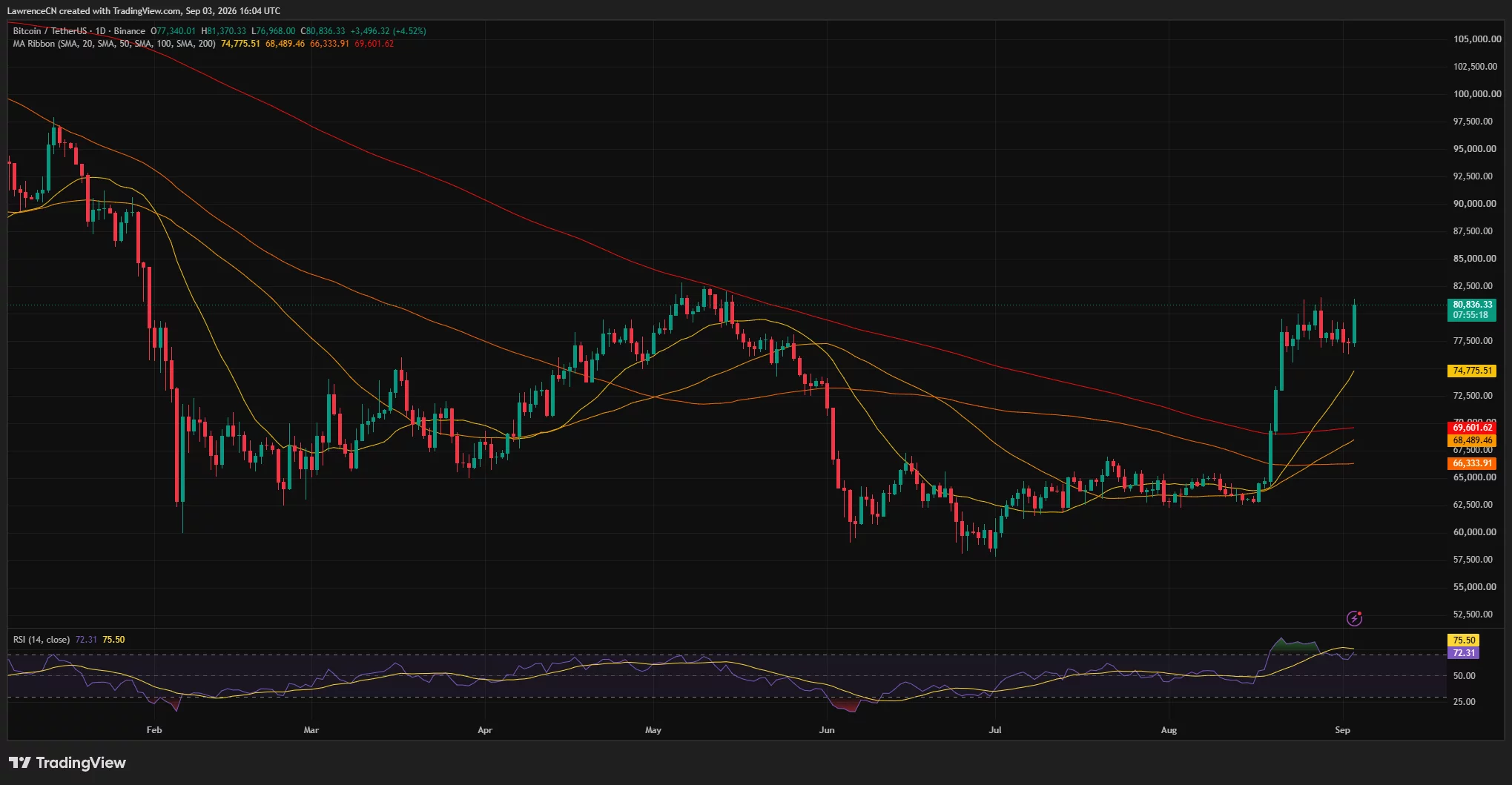
Trading above the upper band confirms strong upside pressure, but it can also indicate that price is temporarily stretched. The Bollinger Band width reading has expanded to about 5,040, reflecting a sharp increase in volatility.
The $80,400 area is therefore the first short-term level buyers need to protect. A successful retest could allow BTC to challenge $81,370 again before attempting a move toward $82,000 and $83,450.
Failure to hold the breakout would place the 4-hour middle band near $78,175 back in focus. Below it, the $76,000–$76,500 region represents a deeper support area and sits close to both the lower Bollinger Band and the session’s earlier low.
Liquidation map puts $81,500 in focus
CoinGlass’ 24-hour liquidation heatmap shows that Bitcoin climbed through several short-liquidation clusters between $78,000 and $80,500. Forced buying from traders closing bearish positions may have increased the speed of the advance.
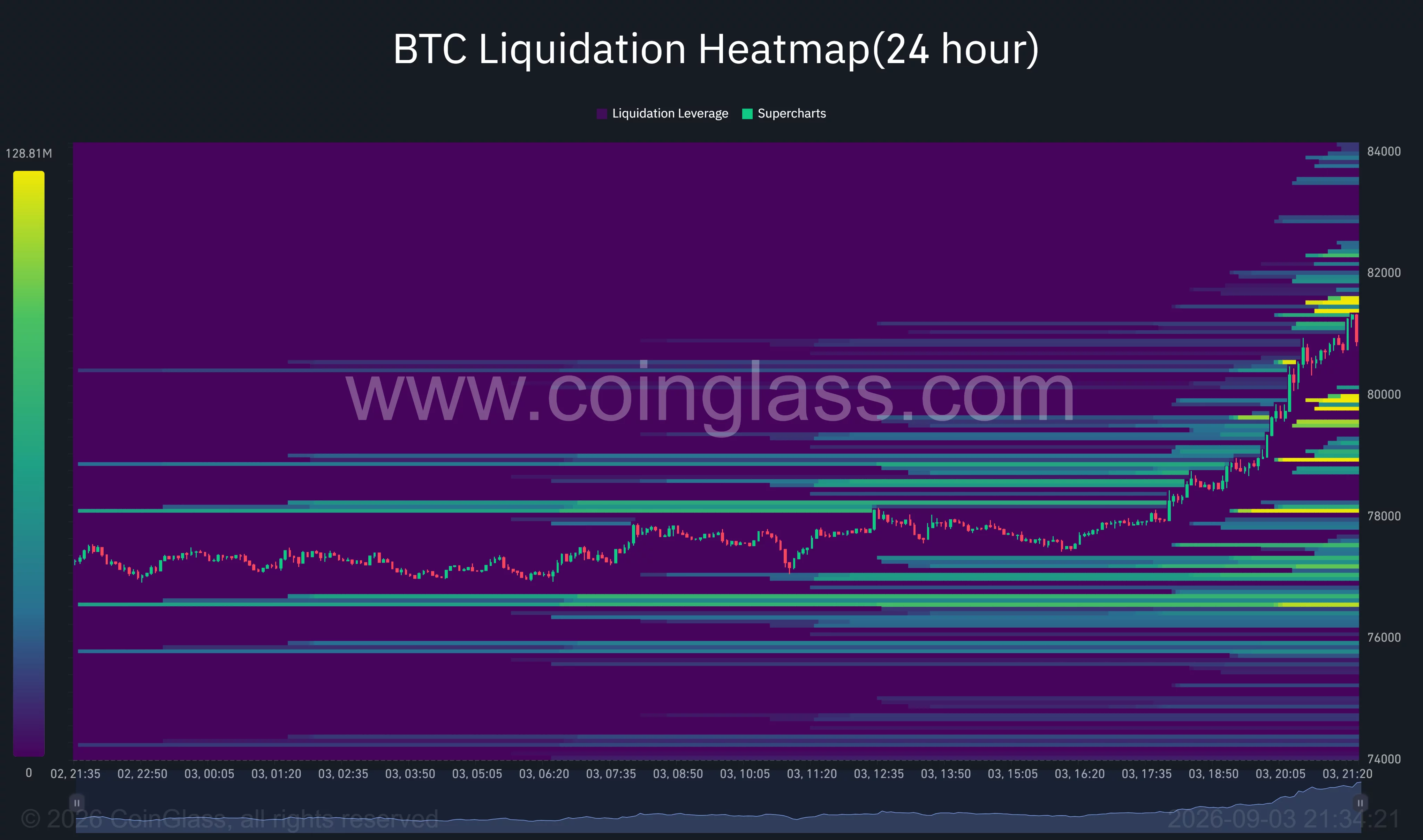
The largest nearby liquidity concentration above the market appears around $81,300–$81,600. A clean break through that zone could draw price toward smaller clusters near $82,000 and $84,000.
Downside liquidity remains concentrated around $79,700, $78,000, and $76,400–$76,700. If buyers lose $80,000, those clusters could attract price during a pullback.
Bitcoin’s next move will depend on whether spot demand can sustain the rally after the initial short squeeze. A close above $81,400 would strengthen the bullish breakout case, while rejection followed by a loss of $80,000 would leave the market vulnerable to a return toward $78,200.
Disclosure: This article does not represent investment advice. The content and materials featured on this page are for educational purposes only.
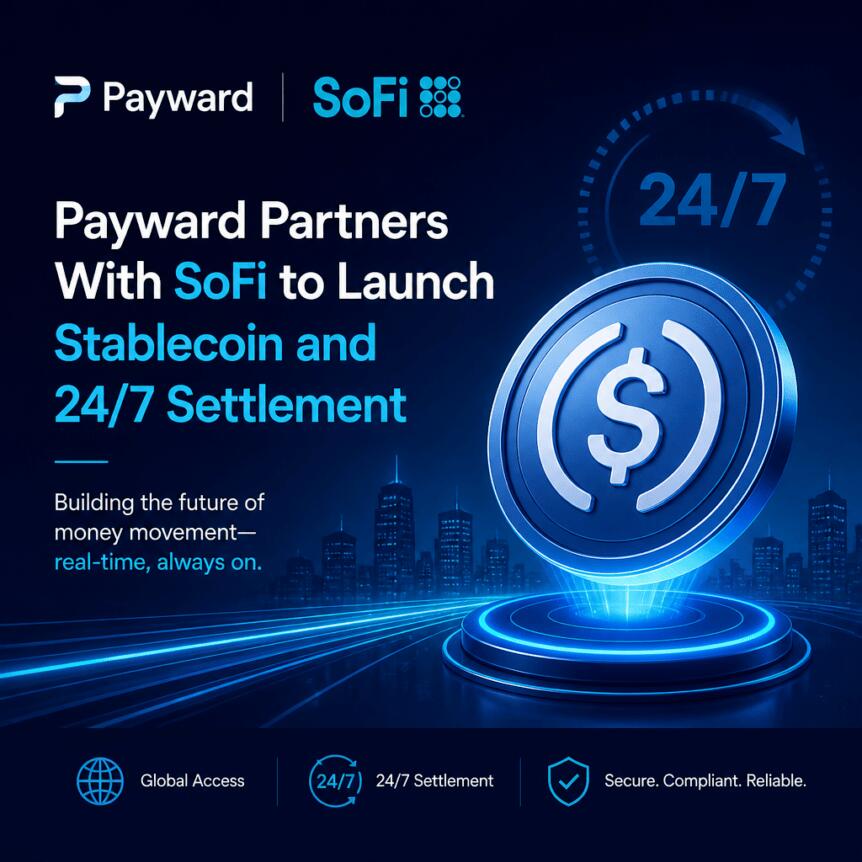
Kraken’s parent company Payward has announced a partnership with SoFi aimed at linking SoFi’s dollar settlement infrastructure with Kraken’s institutional trading and liquidity capabilities. The deal will bring SoFiUSD—SoFi’s dollar-backed stablecoin—onto Kraken, while connecting Kraken to SoFi’s 24/7 US dollar settlement network.
Under the collaboration, SoFi will route its digital-asset trading activity through Kraken Prime, using the exchange platform’s smart order routing technology to seek the best available fills across supported venues. Payward, meanwhile, will join the SoFi Exchange Network (SEN) and gain access to SoFi’s business banking services, with the companies saying qualified custody services could be added as the partnership expands.
Key takeaways
- SoFiUSD, issued by SoFi Bank and backed by cash and short-term US Treasurys, will be supported on Kraken.
- SoFi will use Kraken Prime as an additional liquidity source for digital-asset orders, routed via smart order routing.
- Payward will join the SoFi Exchange Network for round-the-clock US dollar settlement for institutional and business clients.
- The partnership extends Kraken/Payward’s broader strategy of deeper ties with traditional financial rails and tokenized market access.
How SoFiUSD and Kraken Prime are expected to connect
SoFiUSD is designed for payments and settlement, with reserves held in cash and short-term US Treasurys. According to a Thursday blog post from Kraken, the partnership will route SoFi’s digital asset orders through Kraken Prime, a venue designed to evaluate pricing and market depth across multiple trading venues in real time and direct orders to where they can be filled most effectively.
That distinction matters for institutions and app-based providers. Rather than relying on a single order book, smart order routing can help a liquidity provider or trading app access fragmented liquidity that may be available elsewhere in the market. Kraken said that enabling routing through Kraken Prime gives SoFi access to liquidity across multiple trading venues.
24/7 dollar settlement through SEN
In the second half of the arrangement, Payward will connect to SEN, SoFi’s exchange network that supports continuous US dollar settlement. Kraken said SEN access will extend to its institutional and business customers, positioning the settlement layer as a key part of the product experience on both sides.
The companies also indicated that custody capabilities could be added later, depending on how the partnership evolves. For market participants, custody and settlement are frequently the two “make or break” components when moving from experimentation to scaled deployment—especially when a platform is trying to support frequent, automated flows.
Payward’s broader push into traditional finance
The SoFi announcement fits within a wider pattern of Payward and Kraken moving beyond the core crypto trading stack and into partnerships with legacy-market infrastructure.
Earlier this week, London Stock Exchange Group reportedly partnered with Payward to offer tokenized versions of leading UK equities through LSE 24, a new trading venue set to launch in 2027 (coverage of the reported partnership was noted earlier by Cointelegraph). In August, Kraken also expanded its funded trading offerings with exposure to the S&P 500, and said commodities were expected to follow in that program.
Kraken has additionally expanded into tokenized public markets through xStocks, a tokenized equities platform developed by Backed Finance, which Kraken acquired in early 2026. Using that platform, Kraken has offered eligible users access to shares tied to SpaceX and Jersey Mike’s IPOs through tokenized equities, and in some cases via direct share allocations.
These moves are notable because they shift Kraken/Payward’s narrative from “just” an exchange and custody operator into a bridge between crypto trading infrastructure and regulated market access workflows—an approach that can be attractive to institutions that want familiar settlement and distribution mechanisms.
Regulatory timing and the IPO backdrop
Payward’s traditional finance partnerships also come as the company prepares for a potential public listing. Reports indicate Payward’s IPO plans have been delayed multiple times.
According to Kraken, Payward confidentially submitted a draft registration statement to the US Securities and Exchange Commission in November 2025. However, reporting cited in the source indicates that the earliest timing for a listing has been pushed to the second quarter of 2027.
While the SoFi partnership itself doesn’t change the reported IPO timetable, it underlines the kinds of business developments Payward may want to demonstrate as it prepares to be scrutinized by public markets—namely, scalable relationships with non-crypto counterparties and settlement mechanisms that resemble mainstream financial infrastructure.
Going forward, market participants will likely watch whether custody services are eventually added to the SoFi-Kraken integration and how quickly SoFiUSD support expands across Kraken products and settlement workflows. The practical question for traders and institutions is whether the combination of multi-venue routing (via Kraken Prime) and continuous dollar settlement (via SEN) improves execution quality and operational reliability at scale.


September rate-hike odds have fallen to 38% on Polymarket after Federal Reserve Governor Christopher Waller said cooling August inflation could persuade him to support holding rates steady.
Summary
- Polymarket priced a 38% chance of a September rate hike after Waller’s remarks.
- Waller said a hot August inflation report could lead him to support tighter policy.
- August PPI and CPI figures are scheduled for Sept. 10 and Sept. 11, respectively.
- The Federal Open Market Committee will announce its rate decision on Sept. 16.
Waller makes August CPI the Fed rate hike test
The Federal Reserve said in Waller’s published remarks on Sept. 3 that his decision at the September Federal Open Market Committee meeting would depend heavily on the next inflation report.
With employment near what Waller called its maximum sustainable level, he said inflation has continued to move slowly toward the central bank’s 2% goal. Another jobs report and a fresh inflation reading will arrive before officials meet on Sept. 15–16.
Waller does not expect the employment report to differ greatly from recent labor data. Instead, the August inflation figures will carry more weight in deciding whether he supports keeping the federal funds rate at its present range of 3.50% to 3.75%.
“If there is continued progress toward our 2 percent goal, then I am willing to support holding the policy rate at its current level,” Waller said.
A hotter reading would change his position. Waller said he would consider a rate increase if inflation accelerated, partly because he believes the current policy setting is only slightly restricting demand.
“If there is evidence that progress toward 2 percent inflation reversed in August, a small adjustment in our stance would help ensure that it resumes.”
Waller described the position as conditional rather than a commitment to a particular vote. According to the governor, explaining how economic data could affect his decision allows households, companies, and investors to prepare for different policy outcomes.
During the July meeting, Waller supported the FOMC’s decision to leave rates unchanged because the economy remained solid and recent data had offered early signs of disinflation. The committee held its target range at 3.50% to 3.75% by a 9–3 vote, while three officials preferred a quarter-point increase.
August inflation data will arrive days before the decision
The U.S. Bureau of Labor Statistics will release the August Producer Price Index on Sept. 10, followed by the Consumer Price Index on Sept. 11. Both reports will arrive less than a week before the Fed announces its decision on Sept. 16.
According to the BLS release calendar, the two reports are scheduled for 8:30 a.m. Eastern time. The short gap between the data and the meeting gives policymakers only a few days to assess whether price pressures continued to ease during August.
July’s Personal Consumption Expenditures price index, the Fed’s preferred inflation measure, rose 3.7% from a year earlier. The reading remained well above the central bank’s 2% target, while higher energy costs linked to the U.S.-Iran conflict have added uncertainty to the next set of figures.
Earlier rate expectations had climbed after Fed Chair Kevin Warsh used his Jackson Hole speech to warn that inflation had not returned to target. As crypto.news reported on Sept. 3, CME FedWatch had placed the chance of a quarter-point September increase above 66% before Waller outlined the conditions under which he could support a pause.
CME pricing later moved closer to 50% following his comments, according to Reuters. The difference between CME FedWatch and Polymarket comes from separate markets, pricing methods, and observation times, meaning their implied probabilities do not always match.
Other Fed officials remain open to higher rates
Waller’s conditional support for holding rates differs in tone from comments made by Governor Michael Barr earlier in the week, although both officials identified inflation as the main test for September.
In remarks delivered Sept. 1, Barr said inflation had remained too high for more than five years. Price growth dropped from above 7% in 2022 to slightly more than 2% in 2024, but progress stalled during 2025 as tariffs, the Middle East conflict and spending tied to artificial intelligence infrastructure added pressure.
Barr said officials could take more time to assess policy if incoming data gave him confidence that inflation was returning to 2%. If inflation failed to moderate enough, however, he said the central bank should “act decisively to raise rates.”
The July vote had already shown a split within the FOMC. Beth Hammack, Neel Kashkari and Lorie Logan opposed the decision to hold, preferring a 25-basis-point increase. Their dissents left the September outcome sensitive to even a modest surprise in the inflation data.
Energy remains one source of risk. Brent crude moved above $90 after renewed fighting near the Strait of Hormuz raised concerns about oil shipments, according to an Aug. 31 market report. Sustained increases in crude can feed into transport, production, and consumer costs, though the size and duration of any inflation effect depend on how long prices remain elevated.
Reports that President Donald Trump was considering declaring the U.S.-Iran war over later reduced some concern about another energy-price surge. Any verified end to hostilities could ease pressure on oil, but neither the White House nor the Fed has treated lower energy prices as assured.
Lower Fed rate hike odds support U.S. crypto markets
Polymarket’s September contract showed the probability of a rate hike falling to 38% after approaching 50% earlier in the week, while the chance of no change rose to roughly 62% to 63%. Because prediction-market prices move as users trade, the percentages may continue changing before the inflation releases.
A separate Polymarket contract placed the probability of at least one rate increase during 2026 at about 64%. Traders therefore continued to price a possible hike later in the year even as the expected chance of action in September declined.
For U.S. crypto investors, the rate decision can affect demand through Treasury yields, the dollar, and regulated investment products. Higher yields increase the returns available on government debt and money-market instruments, which can reduce demand for volatile assets that do not produce interest.
Recent U.S. spot Bitcoin ETF flows show why monetary policy remains relevant to the crypto market. An Aug. 31 ETF demand report found that the funds received about $3.04 billion across nine consecutive positive sessions from Aug. 17 through Aug. 27 before recording $201.9 million in net withdrawals on Aug. 28.

The caregiver is often the person standing in the clinic exam room with their loved one, doing the paperwork and answering questions on someone else’s behalf. Yet currently, they are invisible to our health care system.
In my years as a cancer caregiver for my wife, taking her to dozens of appointments and treatments, I was never once asked how I was doing or how my health was holding up. Only 15% of caregivers have ever been asked by a health care provider how they are doing. Even on the mental-health side, clinicians still lack the diagnostic pathway to bill for supporting caregivers, so even if caregiver burden is documented, it’s not treated because it’s not billable. Our health care system can bill for almost anything these days, yet it cannot bill for one of the most common health exposures in American life.
What else would caregiver support look like?
If you know a caregiver, please stop texting, “let me know if you need anything.” An exhausted caregiver will never ask, and answering requires more work and inventing a task for you. Just name a day and a four-hour window, and show up. Bring food for them and take over the care duties for a few hours, so they can get a much-needed break to go watch a movie, go to their own doctor’s appointment, sit in a park, or take a nap.
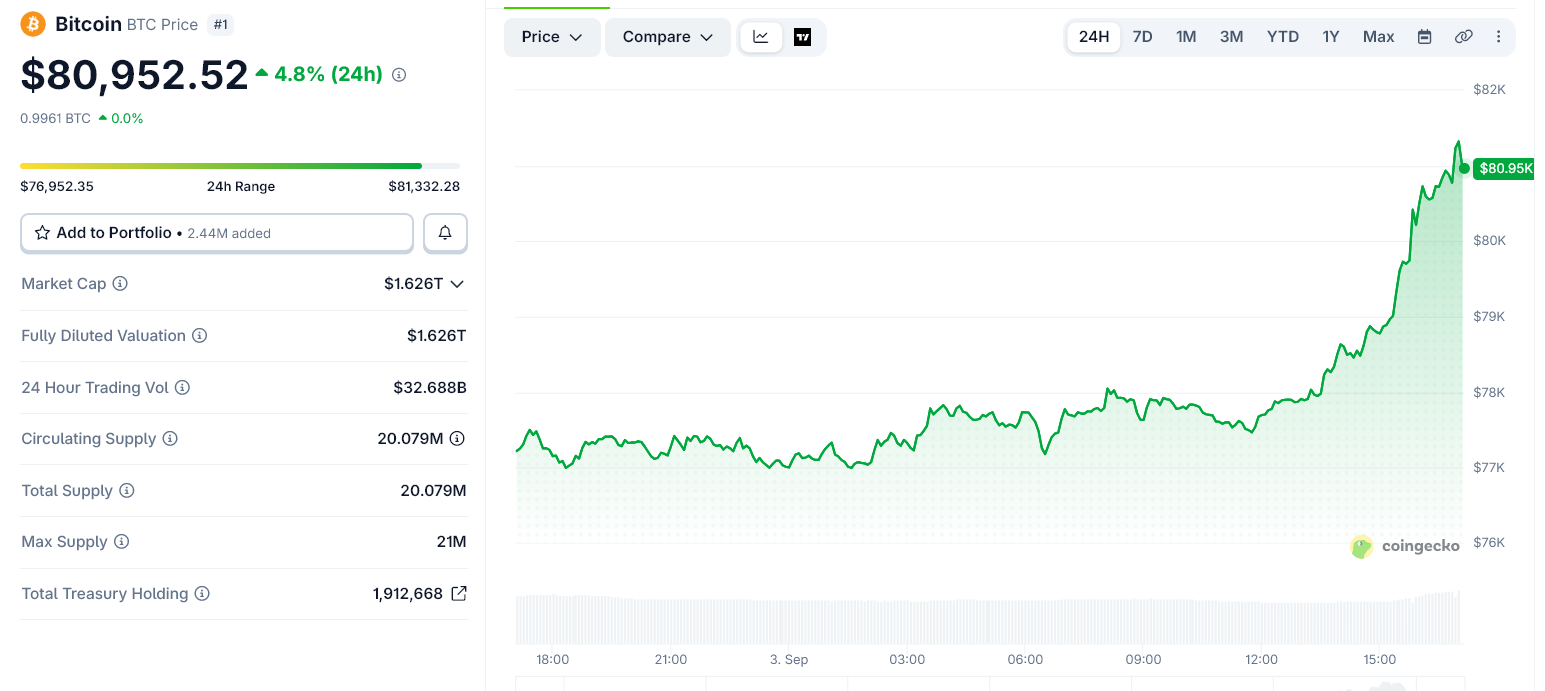
Bitcoin (BTC) reclaimed $81,000 on Thursday as reports suggest the Iran war could be over. Reportedly, Donald Trump’s inner circle is advising the president to declare the war officially over, as pressure over midterm elections grows.
Meanwhile, Fed Governor Christopher Waller signaled he could back a September rate hold, further exacerbating the Bitcoin rally.

Bitcoin Rallies as Iran War Talk Shifts
The Wall Street Journal reported the private talks on Thursday. Trump reportedly thinks economic pressure alone will force Tehran to concede.
However, senior aides warned that more escalation could cost Republicans the November midterm elections.
Bitcoin has traded this war closely, sliding below $77,000 on Tuesday after Trump confirmed fresh strikes near the Strait of Hormuz. So Thursday’s bounce fits the pattern.
The oil market, however, read the same day very differently. Brent crude rose toward $98 a barrel. That is a six-week high, not a peace trade.

Iran struck US military bases overnight. Israel also signaled it could resume operations. Trump has said publicly that the new fighting will not last long. The private talks match that message.
Tanker traffic says the same thing. Six commodity vessels crossed Hormuz on Wednesday, against a 10-day average near 13.
Meanwhile the Pentagon is digging in, with the army air-defense tours reportedly stretching from nine months to twelve, and some units could stay into 2027.
Waller Adds a Second Tailwind for Bitcoin
Beyond Trump. Fed Governor Waller also moved markets on Thursday, weeks after policy makers split nine to three in July, with three officials pushing for a hike.
He said three-month core inflation slowed to 3.05% through July. It ran at 4.76% in February. Therefore Waller leans toward holding rates if August confirms that trend. A hot print would flip him.
“…it may not take much acceleration in inflation to nudge me into supporting tighter policy,” read an excerpt in his remarks.
Against this backdrop, CME FedWatch put September hike odds at 50.2%. That is down from 63.2% a day earlier, and below the rare Fed hike odds priced in late July.

So will $80,000 hold? The recent record argues for caution. Brent fell 9% intraday on August 2 when Trump announced talks to reopen Hormuz.
However, that trade unraveled quickly. Trump said Gulf states and Iran had asked him to delay a strike, and Iran’s Fars news agency denied it.
Oil is now back near $98. The war is in its sixth month. Trump has picked no strategy yet. Waller’s vote waits on August inflation. That leaves the Bitcoin price above $80,000 resting on two maybes.
Therefore, renewed strikes or a hot print would likely drag BTC toward Thursday’s $76,963 low.
The post Bitcoin Blasts Past $81,000 as Trump Weighs Ending Iran War appeared first on BeInCrypto.


Gracy Chen highlighted the world’s largest asset manager as one example of such a firm seeking to expand distribution of their tokenized ETFs in the region.


The bank is now offering institutional crypto spot trading in the region, bringing BTC and ETH onto the same eFX rails that institutions use to trade dollars and euros.
The Treasury Department’s Aug. 19 bond market intervention plan illuminated a key question for investors: Can financial markets digest bloated U.S. debt at the same time AI borrowing is spiraling from hyperscalers like Google, Amazon, Meta Platforms (META) and Oracle (ORCL)? In announcing at least a doubling of buybacks of long-term bonds, Treasury Secretary Scott Bessent seemed to acknowledge that…
Copyright ©2026 Investor’s Business Daily, LLC. All rights reserved. 87990cbe856818d5eddac44c7b1cdeb8
Crypto World
Willy Woo Says Bitcoin May Ditch the Halving Cycle and Switch to a 6-8 Year TradFi Cycle
On-chain analyst Willy Woo says the Bitcoin (BTC) 4-year cycle may be ending. In a post on X, he argued the market could adopt the 6-8 year debt cycle of traditional finance (TradFi).
The claim lands with Bitcoin near $78,011 after an August rebound. The coin had lost roughly half its value from the October 2025 peak of $126,198.
Why the Bitcoin 4-Year Cycle May Have Lost Its Engine
Historically, each halving cut the pace of new supply in half and reset Bitcoin’s four-year cycle. That recurring supply shock was strong enough to move the price on a fixed schedule. Woo now believes the mechanism has become too small to matter.
Issuance has run near 0.8% of supply since April 2024, and the 2028 halving will cut it to roughly 0.4%. For comparison, gold miners added about 1.7% to above-ground stock in 2025, based on World Gold Council data. Bitcoin’s supply engine is therefore already weaker than gold’s.
Fidelity Digital Assets reached a similar conclusion in February. Its research found volatility declining even as Bitcoin set record highs, behavior it links to maturation. Spot exchange-traded funds (ETFs), which existed in no prior halving cycle, add to that structural break.
Inside TradFi’s 6-8 Year Debt Cycle
Crypto traders know the halving as a supply event. The debt cycle, in contrast, is a demand and liquidity event, and it is the rhythm that stock and bond markets already trade on.
Economist Ray Dalio popularized the framework. In his model, the Fed cuts rates after a downturn, and credit becomes cheap. Households and companies borrow and spend, which lifts earnings and asset prices, then pushes inflation higher. The Fed responds with rate hikes, credit tightens, growth stalls, and a recession forces the next round of cuts.
One full loop typically takes several years. Data from the National Bureau of Economic Research (NBER) puts the average post-war US cycle at about 75 months, or just over six years, from peak to peak. Woo’s 6-8 year range, therefore, sits at the long end of the record.
The last Bitcoin cycle arguably fits this loop as well as the halving one. The Fed cut rates to zero in March 2020, and Bitcoin peaked in November 2021. Hikes began in March 2022, and the bear market followed. Both models explain that sequence, which is why the debate is hard to settle.
However, Woo’s version has a gap. Bitcoin launched in 2009, and the only recession since then was the two-month COVID downturn in 2020, which the Fed met with immediate stimulus.
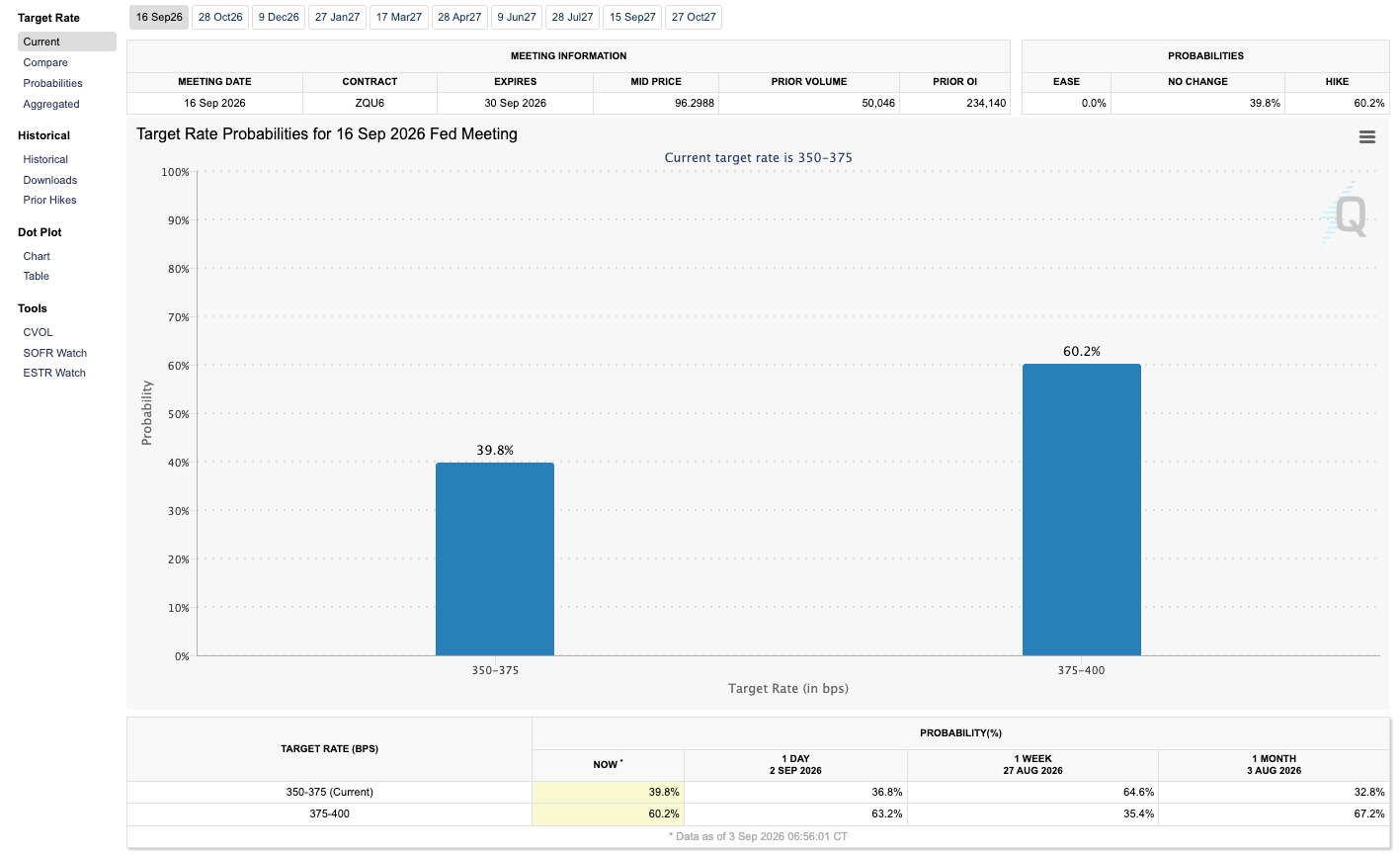
Woo said on the What Bitcoin Did podcast that Bitcoin has never faced a true business-cycle downturn, and that 2026 could be the first real test. That test may be close. According to CME Group, there is a 60% chance of a 25 bps rate hike during the September FOMC meeting.

The Case Against a New Regime
Cycle purists argue the old script is still running on time. Bitcoin peaked about 18 months after the April 2024 halving, inside the historical window, and then entered a deep drawdown. That is the same sequence that followed the 2017 and 2021 tops, and it has kept the four-year cycle debate alive.
There is also a sample-size problem on both sides. Bitcoin has completed only four cycles, and a 6-8 year orbit cannot be confirmed or refuted before the next decade.
For now, both stories fit Bitcoin’s recent price action. The coin climbed from about $62,900 at the start of August. Even so, it remains roughly 38% down from its all-time highs.
The signposts from here follow the calendar. In the last two cycles, the bottom arrived about a year after the peak, which under the old script points to a low around late 2026 and a recovery into the 2028 halving. A longer orbit would instead show the low drifting into 2027 or beyond, with rallies tracking Fed easing rather than the halving date.
If the halving no longer sets Bitcoin’s clock, the asset becomes a macro trade with a higher beta.
The post Willy Woo Says Bitcoin May Ditch the Halving Cycle and Switch to a 6-8 Year TradFi Cycle appeared first on BeInCrypto.

Wall Street is buying privacy while centralized exchanges are delisting it

Has Trump Finally Lost It? A Week Of Global Turmoil

Maryland looks to young quarterback in opener vs. Hampton





-

 Fashion6 days ago
Weekend Open Thread: Maeve – Corporette.com
-

 Crypto World7 days ago
Bitcoin’s 22% rally now needs real demand to outlast Treasury liquidity boost
-

 Business7 days ago
Apple Confirms September 9 Keynote and Reveals Its Full Pre-Order Schedule
-

 Crypto World17 hours ago
CLARITY Act could advance within weeks, Atkins says
-

 Business7 days ago
Salesforce Stock Soars 19% as Blowout Earnings and Agentforce AI Growth Silence Software Skeptics
-

 Business6 days ago
Onto Innovation Stock: AI’s Next Bottleneck Is Yield (NYSE:ONTO)
-

 Crypto World6 days ago
Bitcoin price tests $82K resistance as Brandt stays long
-
 Tech5 days ago
Hugging Face built a $4.5 billion empire on free AI models. Now Nvidia is buying it for $12.9 billion
-

 Business6 days ago
iPhone 18 Pro Pre-Orders Could Shift to Saturday as Apple Reportedly Avoids September 11 Anniversary
-

 Crypto World2 days ago
Elon Musk Says Grok 4.7 Lands in 10 Days and Will Beat Every Model
-

 Crypto World7 days ago
Truflation calls for Fed rate cut after PCE forecast
-
 Entertainment6 days ago
‘Adults’ Creators Break Down Season 2’s Most Shocking Moments and Tease a Potential Season 3
-

 Tech7 days ago
The fix for the AI agent that hijacked a company’s DNS: it can propose the change, but it can’t approve it
-

 News Videos4 days ago
Charlie Munger on Robinhood: No one should believe that Robinhood’s trades are free
-

 Tech6 days ago
PaperCut releases second emergency patch for exploited flaws
-

 Tech5 days ago
Tamagotchi Ring Takes the 30-Year Digital Pet and Places it on Your Finger
-
 Tech5 days ago
As the influencer economy drives retail sales, Seattle startup raises $22M to play matchmaker
-
 Crypto World2 days ago
Bitcoin slips below $77.5K as macro pressure offsets ETF inflows
-

 Crypto World13 hours ago
Kalshi seeks CFTC approval for WTI perpetual
-
 NewsBeat5 days ago
Trump posts AI video of ‘Lake America’ being protected by an army of bequiffed ‘Donald Ducks’
You must be logged in to post a comment Login