

During a tense vote on a data center being built in her drought-stricken Arizona district last summer, Tucson City Councilmember Nikki Lee made an unlikely pitch: “We’re going to get a little out-of-this-world for a second, so just bear with me.”
Tech
10 Useful OnePlus Phone Accessories Worth Adding To Your Wishlist In 2026

We may receive a commission on purchases made from links.
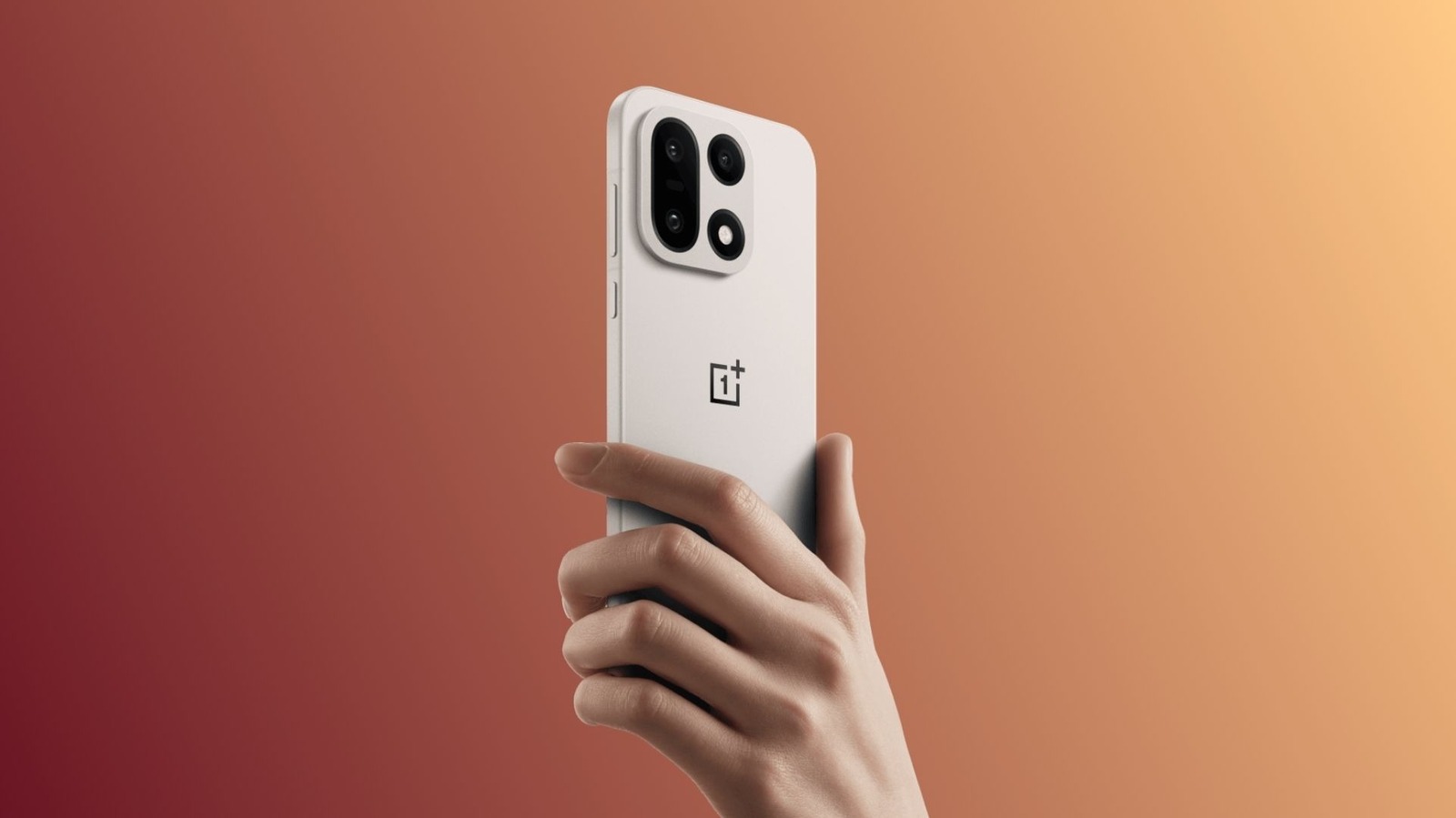
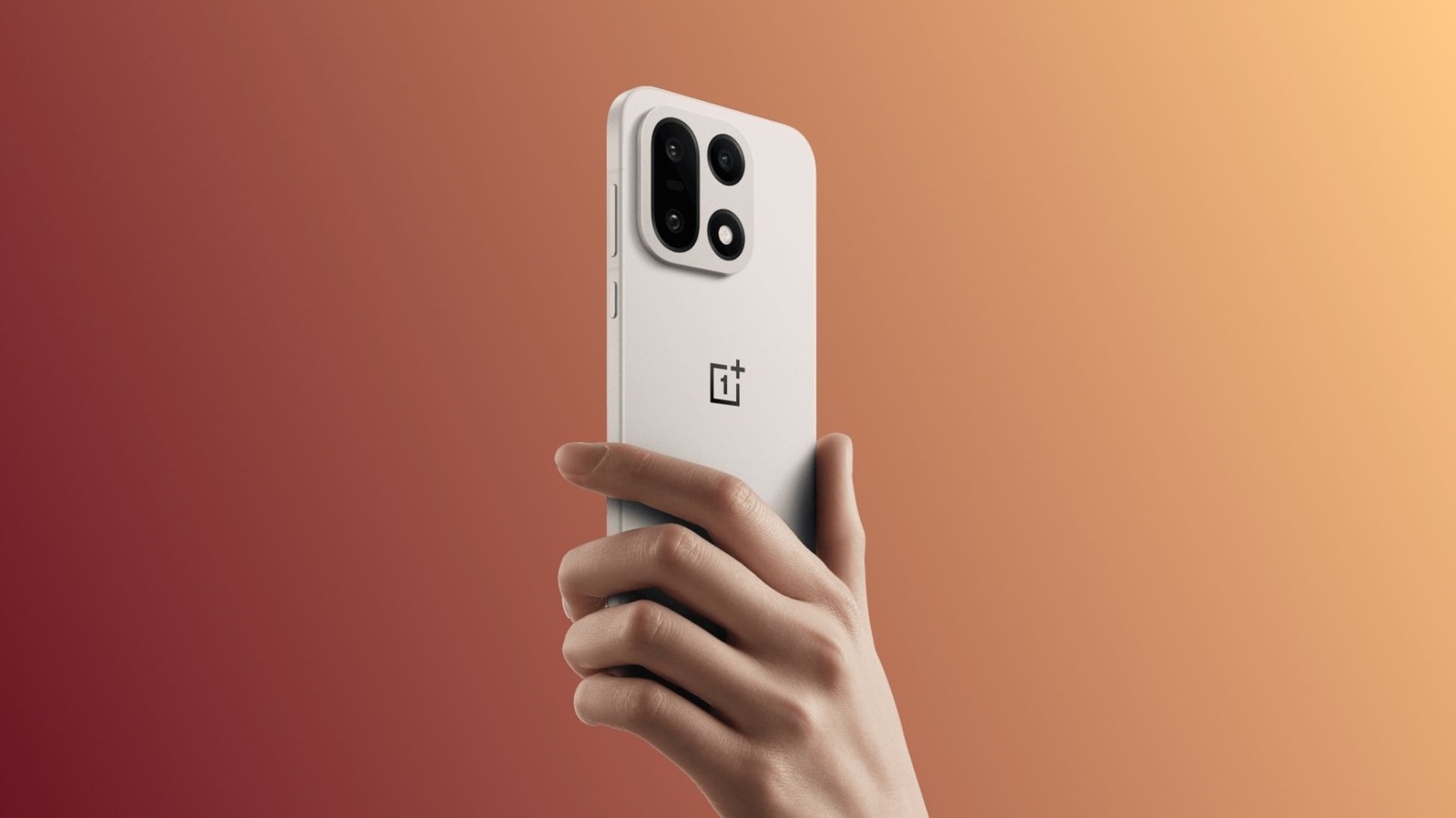
Like, most modern phone brands, OnePlus nows let you attach magnetic accessories to its phones (albeit with a supported case), even though it has pulled back from selling its phones directly in North America and Europe. The OnePlus 15’s Sandstone Magnetic Case introduced a proper magnetic ring to the lineup, opening the door to an entire ecosystem of chargers, mounts, and wallets that had previously been locked to iPhones and Samsung phones.
Just like how Apple’s MagSafe charger works with Samsung phones, a phone doesn’t need to be an iPhone to tap into Apple’s magnetic ecosystem. Most of the products lean on using the same Qi2 and USB-C standards, so a phone really just needs the right ring, either built into it or added through a case. That means OnePlus users can gain the same flexibility.
We have rounded up some nice magnetic accessories that you can use with your OnePlus phone. These gadgets are picked for real-world usefulness rather than just brand matching, and also have been cross-checked against ratings, specs, and reviews.
OnePlus 15 magnetic case
The OnePlus 15 Magnetic case is what makes everything else on this list usable. Since the OnePlus 15 doesn’t come with magnets built in, you’ll need one of these to use magnetic accessories, and you cannot go wrong with the official case offered by OnePlus itself. Specifically the Sandstone one, it has a textured and grippy finish, which is the signature OnePlus feel that longtime fans specifically asked for.
It doesn’t add much bulk to the OnePlus 15 phone, and it is just 1.3 millimeters thick, which means you will barely notice it. The case houses N52-grade magnets, strong enough to hold power banks, wallets, and car mounts securely in place. The cameras get protection thanks to the raised edges around the camera module, and OnePlus rates this case for solid drop protection.
Unfortunately, for those living in North America or Europe, you cannot get the OnePlus 15 Magnetic case from the official website. However, you can still get it officially from Amazon for $39.99, which probably has faster shipping anyway.
Once you have gotten your magnetic case, there is a world of magnetic accessories that extend your phone’s capabilities. Aside from the Sandstone color, you can also purchase this official magnetic case in AramidFiber color, which changes the texture and adds a bright orange line on the camera module that stands out.
Anker MagGo power bank
OnePlus does not sell its power banks in the U.S. anymore, so the next best thing is probably going to come from a brand most people trust. The Anker MagGo power bank snaps onto any phone running a Qi2- or MagSafe-style magnetic case. Once you have sorted out the magnetic case for your OnePlus 15, this power bank will snap onto the back of your phone and charge it without a cable.
While the magnet power bank OnePlus used to sell was limited to 5,000 mAh, but Anker’s offers 10,000 mAh. It is paired with 15W wireless output and 30W USB-C port output. So, it can top up your OnePlus phone fast without adding much bulk. It has a metal frame and also comes with a built-in kickstand that you can use to stand your phone while charging or consuming content, a feature even the official OnePlus power bank did not offer.
On Amazon, this Anker MagGo power bank is available for $69.99 and is available in a range of colors: Green, Black, Pink, and White. Anker is one of the best brands for power banks and is known for its reliability and consistent output. For anyone wanting a cable-free charging solution, it is a safer buy than many options available online.
OnePlus Buds 4
While the market is flooded with wireless earbuds available in all different price ranges, OnePlus’ own latest OnePlus Buds 4 is a great companion for a OnePlus phone. These earbuds pack a 55dB dual-driver ANC setup along with a dedicated DAC chip and LHDC 5.0 support. This is something quite rare for earbuds in this price range and gives noticeably richer sound than most competitors.
Battery life is another strong point for the OnePlus Buds 4. The company has rated it for up to 45 hours of use, when combined with the charge held by the case. So, a multi-day trip shouldn’t require packing a charging cable or another pair of earbuds as backup. The touch controls are simple to use, without accidental taps that plague some cheaper earbuds. It is available in two different colors: Green and Black. The OnePlus Buds 4 have a long ear tip, unlike some other options that go directly inside your ear.
In SlashGear’s review of the OnePlus Buds 4, we tested them directly for sound quality, battery, and performance, and came away impressed with how much it can deliver for the price. They are unfortunately not available on the official website in the U.S., but you can get them on Amazon for $114.99.
OnePlus Watch 4
When it comes to smartwatches, Samsung and Apple are typically the big brands that come to mind. However, Android has a much bigger ecosystem of Wear OS smartwatches, and it includes the OnePlus Watch 4. This watch can give serious competition to the Apple Watch in terms of battery life, with OnePlus rating it to last up to 120 hours per charge in smartwatch mode. This means the watch can run for as long as five days — more than most Wear OS competitors.
The hardware inside the watch is pretty interesting, as it can switch between a low-power chip for everyday tracking and more capable one for heavier tasks like GPS-based workouts. This is one of the ways the OnePlus Watch 4 preserves battery instead of letting it burn in the background. The display is made up of sapphire crystal and the bezel around it is made of titanium. It runs on Wear OS 6, supports 100-plus sports modes, and has 5ATM, IP68, and MIL‑STD‑810H durability.
We at SlashGear, reviewed the OnePlus Watch 3 and really like the battery life of the watch, and the OnePlus Watch 4 builds on that plus adds multiple improvements. Unfortunately, since no OnePlus hardware is being sold in the U.S. or Europe, the OnePlus Watch 4 is not available on the official website. But you can get it from Amazon for $429.
Scosche MAGDMB MagicMount car mount
A magnetic phone mount eliminates the issue of fumbling around with clip-style mounts, and the Scosche MAGDMB is one of the most highly rated around, across 40,000-plus customer reviews. Once you have a magnetic case on your OnePlus 15 smartphone, you can easily snap your phone into this magnetic mount head without needing to align anything. The Scosche MAGDMB magnetic mount has a 360-degree adjustable head, meaning the phone can switch between portrait and landscape without unclipping it first.
This is of great importance when you don’t want your phone blocking your view or the AC vents. Scosche also designed this magnetic mount base to sit flush against the dashboard, so there is no wobble when your car goes over a bump or rough roads. This is a major problem on some cheaper mounts. For $9.99 on Amazon, you get good build quality but you should note that you need to use the provided metal plates to mount your phones, since this is not MagSafe compatible.
On the back of this mount, you also get a small clip, where you can clip your cable and continue charging the phone without the cable swinging on your dashboard. And if mount doesn’t quite seem like the one for you, there are a bunch of other options on the market so you can shop around a bit to find your favorite.
Orzero OnePlus 15 screen protector and camera lens kit
When you purchase a smartphone, one of the first things that you should get along with a case is a screen protector. While the Gorilla Glass Victus 2 on the OnePlus 15 is tougher than what was shipped on older models, it’s still not scratch-proof. With a decade of experience in the tech field, I personally feel like these are just marketing gimmicks, and there is no better way to protect your phone screen than applying a screen protector to it.
The Orzero screen protector also comes with camera lens protectors, so you are getting all-around protection for your phone’s vulnerable areas. It costs only $8.99 on Amazon, and based on the reviews, people seem highly satisfied with its quality. The interesting part is that you aren’t getting just one screen protector, but three in total. These screen protectors are rated for 9H hardness.
The camera lens protectors are also precisely cut to make sure that night shots and flash photos aren’t affected, since this is a major issue with budget camera lens protectors. Tech reviewers have also praised the Orzero screen protector and picked this bundle as their top overall recommendation for the OnePlus 15.
ESR MagSafe Wallet
A magnetic wallet may sound unnecessary to many, unless you dislike having to carry a separate cardholder or wallet. Of course, there are risks involved — if you lose your smartphone, you are also losing your cards — but if you are careful enough, a magnetic wallet can be your best companion. The ESR MagSafe wallet can hold up to 5 cards and works great with a OnePlus 15 snapped with a magnetic case.
This magnetic wallet comes with RFID blocking so nothing gets skimmed while it is in your pocket. ESR’s magnets are noticeably stronger than most third-party wallets in the same price range, which is one of the reasons why ESR’s HaloLock lineup made it to the top of SlashGear’s list of the best MagSafe wallets. The wallet does not slide off when pulling the phone out of a bag or tight jeans, which is one of the most common complaints of cheaper magnetic wallets.
The ESE magnetic wallet is available in multiple color options. But they are available at different prices on Amazon. The cheapest one is the black color, which is retailing for $12.98.
Zbhishe Magnetic finger ring
Modern phones are getting bigger and bigger, and many people with small hands generally find reaching the top corners of the phone quite challenging without doing finger gymnastics. A magnetic ring solves this issue and gives excellent one-handed grip on big-screen phones like the OnePlus 15. And unlike other cheap finger rings that stick to the back of the phone or case with tape, this one from Zbhishe can attach to the magnetic case.
The finger ring is available for $14.90 on Amazon. It can double as a mini kickstand and fold flat when not in use. Since it relies purely on magnets rather than adhesive, it can be repositioned easily, or even pulled off entirely without trouble. It is available in different color options: Grey, Colorful, Silver, and Rose Gold. You can pick one matching your phone’s color or the one you like.
The Zbhishe magnetic ring is a small accessory but gets used constantly once it is on your phone. It is one of the cheapest ways to fix an awkward one-hand grip and also make it stand when you want to watch content.
Cooya 80W SuperVOOC car charger
OnePlus’s fast charging tech is one of its main selling points, but using many generic car chargers throws away most of the speed. The Cooya 80W SuperVOOC car charger does not force you to make that compromise, built specifically to negotiate the higher wattage that OnePlus phones are designed to be charged at. Its dedicated “Super” port can hit up to 80W for SuperVOOC-capable models instead of falling back to a slower universal fast-charging protocol. This matters most on longer drives, where a phone is busy in navigation, playing music, and also using a mobile data connection simultaneously.
With this fast car charger, you can top up your phone quickly and then freely use it without the hassle of being limited by a cable. The Cooya 80W SuperVOOC car charger is bundled with a 3.3-foot USB-A to USB-C cable with a built-in voltage monitor and LED light, so it is easy to find the port at night.
Using the wrong charger not only means slow charging, but it can also stress the battery over time. You should use the right charger for your phone so that nothing wrong happens with the battery and the phone.
Anker Prime 3-in-1 wireless charging station
OnePlus used to sell AIRVOOC, which wasn’t just a charging pad — it was a fan-cooled, wall-powered magnetic charger, built to push high wattage without overheating the phone. Since it is no longer available in the U.S., the Anker Prime 3-in-1 wireless charging station is next best thing you’ll find on Amazon. It delivers 25W through Qi2.2’s magnetic alignment and pairs it with TEC active cooling, which is the same semiconductor-based cooling approach as OnePlus’s fan.
Since the charging pad runs on the open Qi2.2 standard, it works with any phone wearing a Qi2-compatible magnetic case, including a OnePlus 15 in its Sandstone case, even though the bundled Apple Watch and AirPods charging are extra spots that OnePlus owners may not use. It also comes with a 65W USB-C adapter in the box, so there is no guessing on power delivery, and a small display shows real-time wattage and temperature.
While it is pricier than a basic pad, and not everyone would find usefulness in this one, but it is a solid alternative to AIRVOOC, which OnePlus used to sell. The Anker Prime 3-in-1 Qi2.2 MagSafe compatible 25W wireless charging station is available for $159.99 on Amazon.
Methodology
This list draws on hands-on experience as a former OnePlus owner who used the brand’s magnetic case ecosystem, SuperVOOC fast charging, and other OnePlus-specific gadgets across multiple generations before switching phones. Every pick was cross-checked against official specs and current retail listings on Amazon for charging wattage, magnet grade, and battery capacity, so nothing here is guesswork.
Because OnePlus accessories largely run on the same USB-C, Qi, and magnetic-ring standards used across Android, almost every product on this list works just as well for Samsung, Google, and other Android owners and not just current OnePlus 13/15-series users. Also, since OnePlus has shut down its operations in North America and Europe, we have included alternative gadget links.
Continue Reading

BrianFagioli writes: Audacity 4.0 has been released with a rebuilt Qt interface, a new clip-editing model, customizable workspaces, native high-DPI rendering, and a new AUP4 project format. The open source audio editor also adds ASIO playback and recording support to official Windows builds, while bringing major changes to recording, playback, plugins, and project handling. The overhaul comes with some tradeoffs. Audacity 4.0 currently lacks several features found in Audacity 3, including Time Tracks, Note and MIDI tracks, Mixer, Macro Manager and scripting pipe, VAMP and LADSPA plugin hosting, and play-at-speed. The developers say they plan to bring the missing functionality back in future releases.


Read more of this story at Slashdot.

Like many of her constituents, Lee did not want Project Blue, a sprawling 290-acre data center, gobbling up an ounce of her local drinking water. “We need to put data centers where they belong,” she said, and “we don’t think data centers belong in the desert.”
President Donald Trump’s recent bluster aside, it’s possible that the only thing as bipartisan as loving Dolly Parton is hating data centers, whose construction has become so controversial, so costly, and so backlogged here on Earth that companies like Google, Meta, and of course, SpaceX, are actively flirting with the idea of flinging them into orbit instead. Soon after the Tucson City Council rejected Project Blue’s attempt to connect to city utilities, Amazon Web Services, the secretive intended beneficiary, pulled out of the project, and another Jeff Bezos company, Blue Origin, filed a plan with regulators for tens of thousands of possible new data centers, this time, destined for orbit.

Sure, launching a hyperscale AI data center into space is still unprecedented engineering-wise, carries an unfathomably large price tag, could engender its own severe environmental risks, and may or may not draw unwelcome attention from the hunters among the stars. But for AI companies, such trade-offs might still be preferable to the terrestrial roadblocks, among them an explosive populist backlash and a 12-year wait to connect to the power grid.
SpaceX’s gargantuan initial public offering earlier this summer was predicated on the idea that it would launch a thus-far-unrealized fleet of orbital data centers to fuel much of the AI economy. The company claims that by the end of this decade, possibly as early as 2028, it will have successfully assembled an AI data center in orbit, with plans to eventually harvest a staggering 100 gigawatts of new solar energy for AI annually, equivalent to one-fifth of all US electricity consumption last year. (As always, that’s a very iffy promise.)
And Google, which has its own plan to deploy dozens of space-based data centers, released a study last December positing that as launch costs go down, they could become cost-competitive with terrestrial data centers within the next decade.
Experts tell me that it’s no longer a question of if space-based data centers could be technically feasible, but rather when they’ll be ready to launch, and perhaps more importantly, whether the math of using them to power something like AI will make much financial sense anytime soon. As of now, building a one-gigawatt data center in space would cost about $51.5 billion, according to an analysis by aerospace engineer Andrew McCalip, compared with $16 billion for one on land.
“They’re not breaking any rules of physics. Yes, there are going to be engineering challenges, but they are all solvable with enough time and money,” said Jason Aspiotis, a leading space systems engineer who now leads an orbital data center startup. “The gray area is, well, what about the economics?”
But even if this astronomically kooky plan does take off, it may not change much for those of us left on terra firma: Our energy bills will remain high, even if data centers aren’t there to drive them up. Our earthly infrastructure — affordable housing, public transit, and more — may be just as hard to build as ever. Harder even, maybe, given that crucial resources and untapped tax revenue will be literally rocketing up out of our reach.
No, if these tech giants succeed, it will not fix what’s wrong here on Earth, but merely prove once again their exemption to the gravitational forces holding the rest of us down.
Space-based data centers, explained
My father spent most of his career working in the satellite industry, and would sometimes let me waltz inside the quaint little data center housed in his office, a room I remember as roughly the size of my school’s computer lab, hosting rows upon rows of servers that I couldn’t touch, churning with a cool, mechanical hum as they crunched zeroes and ones.
AI data centers work similarly to that server room but on an exponentially larger scale, requiring far more land and energy to run, and much more extravagant cooling systems. Sending his office’s data center into orbit would have been extraordinarily difficult, and getting one of the facilities that powers modern LLMs aloft would be an even larger, more ambitious undertaking. But the benefits — namely, “cheap space (no pun intended) and power,” as my dad put it to me recently — are even more enticing.

An orbital data center need not negotiate with an elected official like Lee over precious water rights to the Colorado River, though it would need to install bigger-than-football-field-sized heat radiators to keep itself cool. You can’t simply launch something that big into orbit, meaning a space-based hyperscale data center — the size of which would likely rival that of the International Space Station — would need to be assembled piece by piece, probably by robots. And while the sun would provide an endless supply of solar power to process your ChatGPT queries, it would also inflict incessant radiation on delicate circuitry. If something breaks, you can’t send a technician up to fix it. Many experts are also concerned that if an excess of space junk, which extraterrestrial data centers would inevitably produce, begins colliding like bumper cars in Earth’s low orbit, it could knock out the orbital infrastructure we already rely on, like GPS navigation and weather satellites.
Even plastic decays in space, said Sven Bilén, a professor of aerospace engineering at Penn State, who, like Aspiotis, believes that early orbital data centers will probably be “processing data from space, like spatial imaging satellites or weather satellites, as opposed to, you know, cat videos” or AI-generated reality TV slop.
But even if AI is not the lowest-hanging fruit for deploying compute into space, it is certainly the deepest-pocketed, meaning that many investors and companies like SpaceX and Google seem quite willing to shoulder the start-up costs anyway. And considering how difficult it’s gotten to build data centers on Earth, or at least in the United States, it’s indeed possible that space could become the cheaper, or at least most convenient option, more quickly than one might think.
“In some form or another, in five years, we are going to have some orbital data centers in space for sure,” Krishna Muralidharan, who leads the Center for Semiconductor Manufacturing at the University of Arizona, told me, but it’s hard to say right now whether those consist of just a few expensive prototypes, or the beginning of a much bigger swing toward orbital compute. “Only time will tell whether you’re going to have a business case for it.”
Can we send our data center problem into space?
So, is it better to have a data center in space or in your backyard?
David Reid, a member of Virginia’s House of Delegates representing Loudoun County, home to more data centers than anywhere else on Earth, says the question has repeatedly come up at his town hall meetings. Reid is the rare politician — apart from the president, anyway — willing to defend terrestrial data centers, calling them a “money-printing machine” for local schools and infrastructure. Having spent decades working in the defense and technology sectors, he is doubtful that the math on orbital data centers will ever make sense.
“I believe this is, for lack of a better term, fictional nonsense,” he said, and is “creating a distraction from the fact that local officials here on Earth still need to make better zoning decisions.”
If most of the AI industry can eventually be powered by space, as SpaceX claims, it will require millions of sprawling new satellites, in an orbit currently dotted by fewer than 20,000 of them. Though “space is really big,” as Elon Musk has put it, one million satellites would still profoundly and, likely irrevocably, transform our night sky into one in which data centers outnumber visible stars.
“Will humanity notice if there are fewer stars in the sky? Well, not so much right now,” given light pollution in many cities, said John Barentine, an astronomer and environmental advocate for the night sky. “But what if they’re replaced by these artificial stars in the night sky? Is that the point at which people will say, ‘Wait a minute, we don’t want this. We want the benefits, but we don’t want this as a consequence.’”
This is, of course, the tension also at the heart of building data centers here on Earth. To some extent, they’re the most tangible representations of how little power we have to shape the course of a transformative new technology that few trust, and even fewer asked for. It’s one thing to object to a hulking data center, but it might be another altogether to see the sigils of our digital overlords illuminating the firmament. Would a place like Tucson, one of the most beautiful places to stargaze in the world, prefer a Project Blue to a starscape marred by blinking servers in the sky?
Tech
MartinLogan Motion Discrete Cinema Series Targets Big-Screen Home Theaters With Premium LCR Speakers and Passive Soundbars
Televisions have become substantially larger over the past decade, but the audio systems sitting beneath them have not always kept pace.
Mount an 85-inch television on the wall and place a compact soundbar underneath it and the mismatch can be rather obvious. There are certainly active soundbars capable of producing impressive output, but buyers who want a genuine left, center and right front soundstage usually have to choose between three conventional loudspeakers, architectural speakers hidden in the wall, or a premium passive soundbar.
MartinLogan thinks there is another way.
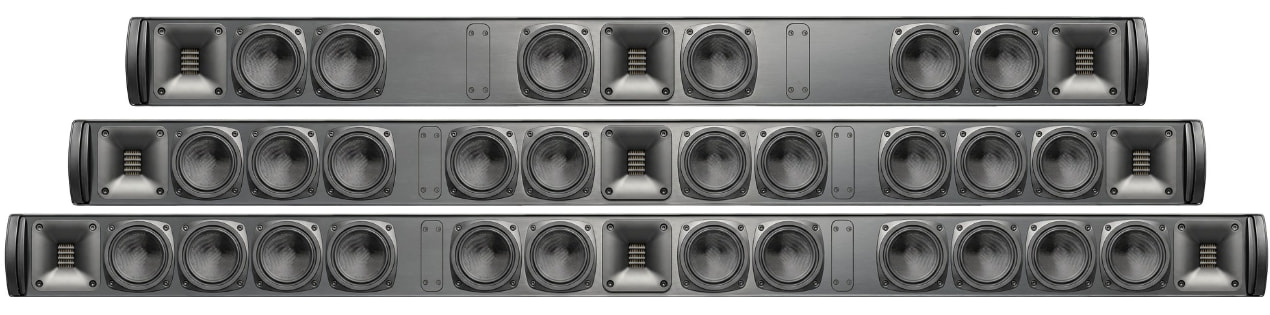
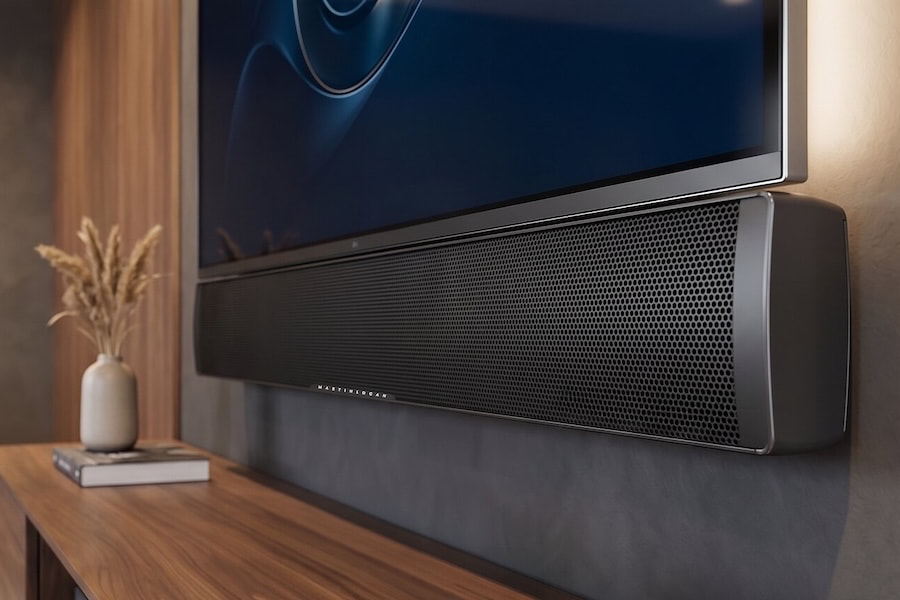
The new Motion Discrete Cinema Series consists of six passive loudspeakers designed specifically around 65, 75 and 85-inch class televisions. Three are individual LCR speakers that can be installed vertically or horizontally, while three combine discrete left, center and right channels inside a single enclosure.
More interestingly, MartinLogan has not simply made the cabinets longer as the screen size increases. The company increases the number of drivers as well, with the goal of increasing output capability and acoustic scale along with the size of the display.
That makes this considerably more interesting than another skinny speaker designed primarily to disappear beneath a television.
Related Reviews:
Two Ways to Build the Front Soundstage
The Motion Discrete Cinema lineup is divided into LCR5, LCR7 and LCR9 loudspeakers, plus Soundbar 65, Soundbar 75 and Soundbar 85 three-channel passive soundbars.
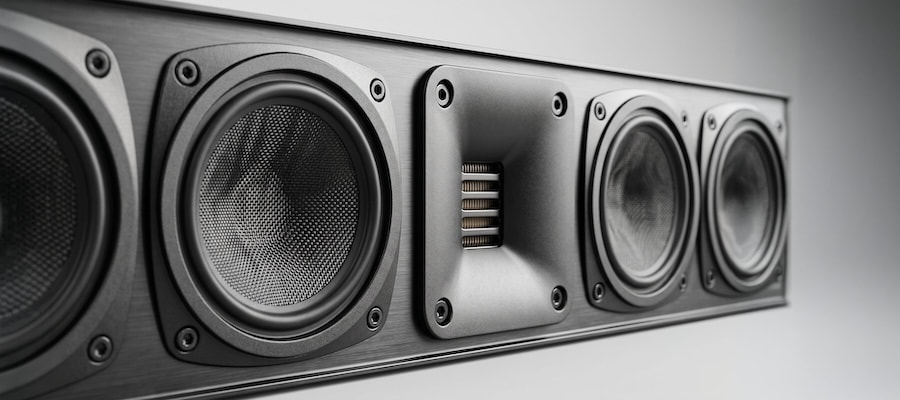
All six models use MartinLogan’s Gen2 Folded Motion Tweeter with Folded Motion Waveguide, woven fiberglass woofers and extruded aluminum enclosures.
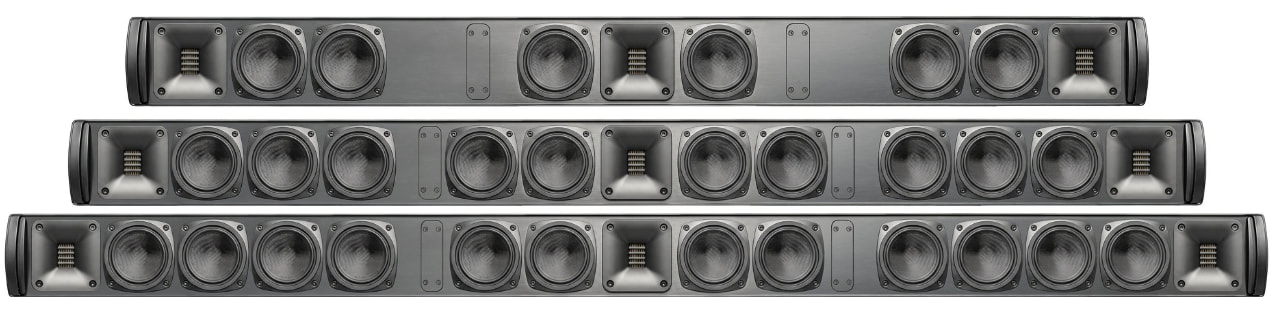
The LCR5 is designed as a height match for 65-inch class displays and uses a five-driver array consisting of the Gen2 Folded Motion Tweeter and four 4.5-inch woven fiberglass woofers.
The LCR7, intended for 75-inch displays, adds two additional woofers for greater output, higher power handling and improved room control in larger spaces. The flagship LCR9 moves to a nine-driver configuration designed to provide greater output and scale alongside an 85-inch display.
All three can function as left, center or right speakers, which means an installer could place three vertically around a display, rotate one horizontally beneath the television for center-channel duty, or use them as high-output surrounds where their shallow profile makes sense.
The Soundbar models take a different approach.
These are not powered soundbars competing directly with products like the Sonos Arc Ultra. There is no built-in AVR replacement here. The Soundbar 65, 75 and 85 contain discrete left, center and right loudspeaker channels and require external amplification.
That means an AV receiver or separates still handle decoding, amplification, bass management and the rest of the home theater system. The advantage is that buyers get three physical front channels inside one enclosure without surrounding a large television with three conventional speaker cabinets.
The Soundbar 65 is designed for 65-inch class displays and uses a Gen2 Folded Motion Tweeter and two woofers per channel. The Soundbar 75 increases the driver count, including twice as many woofers in the center channel and additional drivers for the left and right channels.
At the top of the range, the Soundbar 85 uses a 15-driver array across its three discrete channels.
What Makes Motion Discrete Cinema Different?
Screen matching is the clever part.
Plenty of manufacturers produce passive soundbars and slim on-wall loudspeakers. MartinLogan’s approach is to create three progressively larger configurations and increase their acoustic capability rather than offer essentially the same speaker in different cabinet lengths.
That becomes especially relevant with today’s 75 and 85-inch televisions, where a small center channel or narrow soundbar can look disproportionately small and may struggle to create the sense of scale expected from a large image.
There is also some real loudspeaker technology inside these enclosures.
MartinLogan has managed to incorporate its full-size Gen2 Folded Motion Tweeter and an application-optimized Folded Motion Waveguide rather than developing a miniature tweeter specifically to squeeze into the cabinet. The woofer system was intentionally optimized around midrange and upper-bass performance, with MartinLogan assuming that a serious home theater installation will include at least one powered subwoofer.
That last point is worth remembering. These are not being positioned as full-range loudspeakers that somehow violate several inconvenient laws of physics simply because they are expensive and made from aluminum.
Use a subwoofer.
Preferably a good one made by MartinLogan.
Where Do They Fit in the MartinLogan Lineup?
The Motion Discrete Cinema Series fills a fairly obvious hole between MartinLogan’s existing Motion SLM products and its larger conventional Motion and Motion XT loudspeakers.
The Motion SLM family already gives MartinLogan customers thin on-wall speakers designed to complement flat-panel televisions, including individual SLM models and the three-channel Motion SLM X3.
Motion Discrete Cinema is a considerably more ambitious interpretation of the same basic installation problem.
It incorporates MartinLogan’s newer Gen2 Folded Motion technology, offers substantially larger driver arrays and gives installers dedicated versions intended to complement 65, 75 and 85-inch displays.
The new series also overlaps the price territory of MartinLogan’s conventional Motion center-channel speakers, but that does not necessarily make Motion Discrete Cinema a higher-performance tier than Motion XT.
They are built for different jobs.
Motion XT remains MartinLogan’s premium conventional Motion range, including larger cabinets and the company’s Gen2 Folded Motion XT tweeter. Motion Discrete Cinema instead gives custom installers a premium shallow-depth alternative when conventional loudspeaker cabinets would interfere with the room design or television installation.
In other words, you’re paying partly for acoustics and partly for solving a very specific installation problem without reducing the front stage to a typical powered soundbar.
Designed for Custom Installation
The CI focus becomes even clearer when looking at the mounting hardware.
Every Motion Discrete Cinema model includes a universal wall bracket offering leveling and small positional adjustments, useful when wall studs refuse to cooperate with the architect’s carefully centered television.
An optional television bracket can attach to a display frame or VESA mounting pattern, allowing the loudspeaker to move with an articulating television.
MartinLogan has also integrated recessed cable channels into the aluminum chassis to conceal wiring, while removable Phoenix-style connectors with tool-free tension levers allow installers to terminate the speaker cable before the loudspeaker itself is mounted.
None of that will make anyone abandon dinner to stare at the specifications page, but installers will notice immediately. The difference between a clever mounting system and three hours of profanity behind an 85-inch television is not insignificant.
What Are the Closest Competitors?
The closest competition depends on which Motion Discrete Cinema configuration you are considering.
For the individual LCR speakers, the Focal On Wall 302 is arguably the most direct rival. At roughly the same price as the LCR9, it is another premium low-profile loudspeaker intended for home theater installations where conventional speaker cabinets are undesirable. It can also be mounted vertically or horizontally and uses four Flax midbass drivers surrounding Focal’s inverted-dome tweeter.
That makes it a credible alternative for someone building a premium low-profile LCR system around a large television.
For the three-channel models, the GoldenEar SuperCinema 3D Array XL is one of the most obvious competitors. It occupies similar pricing territory to the Soundbar 65 and also combines three passive front channels within a slim enclosure.
GoldenEar takes a somewhat different technical approach, using multiple midbass drivers, its High-Velocity Folded Ribbon tweeters and proprietary technology intended to create a soundstage wider than the enclosure itself.
MartinLogan’s advantage is the breadth of the new lineup.
Instead of offering one primary passive soundbar configuration, Motion Discrete Cinema provides dedicated 65, 75 and 85-inch models along with corresponding individual LCR speakers.
That gives integrators substantially more freedom to maintain a consistent visual and acoustic design across different rooms and screen sizes.
Pricing & Availability
MartinLogan expects the Motion Discrete Cinema Series to reach authorized dealers and custom integrators worldwide by the end of September 2026.
Motion Discrete Cinema LCR Speakers
- LCR5: $1,249.99 each
- LCR7: $1,499.99 each
- LCR9: $1,749.99 each
Motion Discrete Cinema Passive Soundbars
- Soundbar 65: $1,999.99
- Soundbar 75: $2,499.99
- Soundbar 85: $2,999.99
The Bottom Line
MartinLogan is not trying to reinvent the powered soundbar. Motion Discrete Cinema is aimed at customers who want the cleaner appearance of one without surrendering a properly amplified, discrete home theater system.
The ability to choose between separate LCR speakers and three-channel passive soundbars is useful, but the more unusual idea is scaling the driver array with the television itself. An 85-inch display gets a substantially different loudspeaker than a 65-inch model rather than the same acoustic platform wearing a longer grille.
That should make the series especially relevant to custom installers trying to reconcile increasingly enormous televisions with homeowners who have absolutely no interest in seeing enormous loudspeakers sitting beside them.
Physics still gets a vote, however, which is why MartinLogan wisely expects owners to add a subwoofer.
Some things even a very expensive piece of aluminum can’t negotiate.
Related Reading:


Access to Wi-Fi is something you expect when you stay at any hotel, but we’re so accustomed to taking this amenity for granted that we might overlook the risks involved in connecting to hotel Wi-Fi. Ignoring the fact that people pick up their phones a worryingly excessive number of times each day, there are multiple reasons to avoid using hotel Wi-Fi when you can.
These risks can come in several forms. First, when connecting to a network, you must ensure the one you’re connecting to is legitimately operated by the hotel you’re staying at. Hackers attempting to steal user data can create hotspots with misleading network names, and accidentally connecting to the wrong network could be playing into the hands of cybercriminals. At least one security analyst says a relatively common error travelers make involves joining a network merely because it includes the name of the hotel.
Unfortunately, even if you do connect to an authentic hotel Wi-Fi network, you still can’t be certain your data is secure. Real-world examples serve as reminders of this. For instance, Darkhotel was a malware campaign in which hackers infected the computers of various hotels with code designed to provide guest users with fake software updates, turning guests into data theft victims.
And those are just a couple of scenarios. Although not all security experts agree on just how dangerous hotel Wi-Fi is, even those who think the risk is fairly low still discourage users from connecting to these networks for sensitive tasks, like checking banks accounts.
Tips for guarding against hotel Wi-Fi risks

Confirming the network you’re connecting to is genuinely the hotel’s network is critical before joining it. Experts also recommend using a mobile hotspot instead when handling sensitive tasks. None of the information here is fear-mongering. The FBI actually considers hotel Wi-Fi cyberthreats to be a significant enough issue to justify warning the public about it. In an age when telecommuting is increasingly common, the FBI has determined that more and more Americans are working from hotels. In response to this trend, the FBI issued recommendations to help users maximize safety and security if they must connect to a hotel’s Wi-Fi network.
Specifically, the FBI recommends leveraging a VPN to encrypt network traffic, which means researching the best VPN services available right now to find a reputable one that serves your needs. The FBI also states that you can protect yourself and your data to an even greater degree by making sure all software updates are installed and using a strong security or antivirus app to maximize safety. Luckily, there are several free antivirus apps that consumers say are effective, with many antivirus programs proving to be better than Windows Defender.
All that said, if you can avoid using hotel Wi-Fi entirely, that may be your best option. While experts offer varying perspectives on just how dangerous using one of these networks is, when you have the choice to limit your vulnerability, you should protect yourself accordingly. If you do have to use hotel Wi-Fi, however, just make sure you’re thoroughly following safety recommendations.
Tech
Nvidia’s game-changing RTX Spark laptops are coming in October – but price information is still MIA
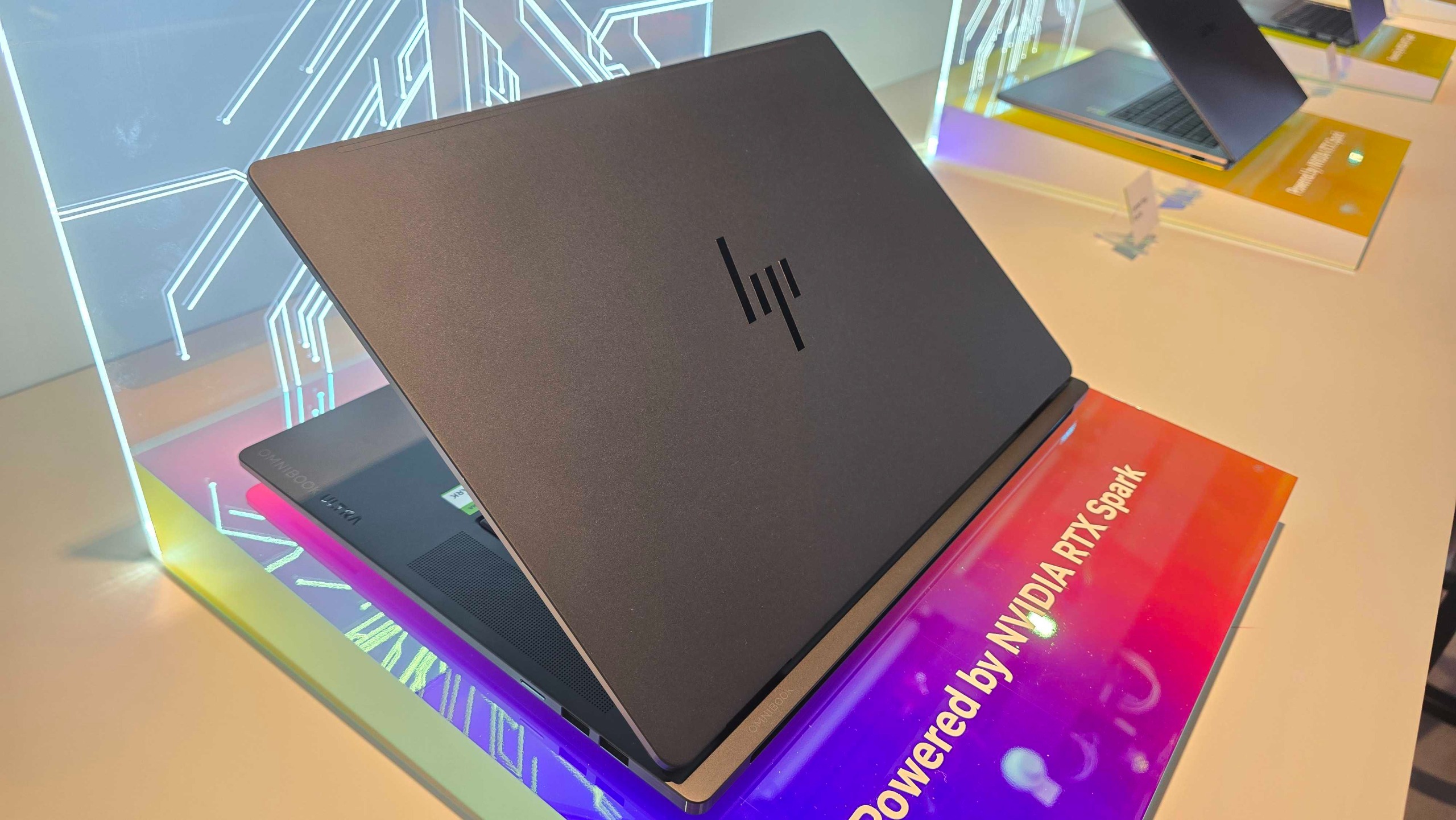
At IFA 2026, the huge tech show in Berlin, Germany, Nvidia announced that laptops running on its ARM-based RTX Spark chip will be available to buy from October.
The biggest names in the laptop industry, including Microsoft, Lenovo, HP, and Dell, will all have RTX Spark devices, and I got to spend a bit more time with some of them at Nvidia’s launch event.
Having already seen a lot of RTX Spark laptops at Computex 2026 earlier this year, quite a bit of what Nvidia showed at IFA was familiar. There was, again, a big emphasis on local AI performance, which is undoubtedly impressive, but a bit niche for consumers, and I can see how Nvidia tech such as DLSS upscaling and Multi Frame Gen (MFG), which RTX Spark devices can make use of, can help content creators working on complex 3D art speed up their workflows (those technologies have in the past mainly been aimed at improving the performance of PC games).
Latest Videos FromTechRadar
I also got to play a range of games on RTX Spark laptops, including DOOM The Dark Ages, and 007 First Light, and it remains impressive that these thin and light laptops are able to run such demanding titles with such impressive results. This is especially true when you consider that the games aren’t running natively on ARM, instead they are being run via Microsoft’s Prism emulation layer, which means games developed for traditional Intel or AMD (x86) hardware can run without devs having to make dedicated ARM versions. According to the Nvidia spokesperson I chatted to, the performance hit of running a game via emulation is negligible, at least with GPU-bound titles.
The spokesperson admitted, however, that CPU-intensive games (such as RTS games) could see bigger dips compared to running the game natively.
What is new at IFA is the announcement that RTX Spark laptops will go on sale in October. But, apart from that, details remain scarce – and that means it’s hard to get excited about these laptops just yet.
Keeping their cards close to their chest

Despite being about a month out from going on sale, Nvidia was tightlipped about a lot of things regarding RTX Spark laptops. The biggest question mark, of course, concerns pricing.
These are powerful laptops aimed at creative professionals, and will come with up to 128GB of unified memory, so I can’t imagine they are going to be anything other than very, very, expensive. The continued silence about prices doesn’t bode well for anyone hoping for vaguely affordable laptops.
One spokesperson I talked to did suggest there will be multiple yet to be announced configurations that will appeal to different consumers and price points, though they looked slightly doubtful when I asked if there would be an RTX Spark laptop that students could afford.
We still don’t know more about performance, either, as while there were live demos, raw performance numbers were not available, and I was not allowed to run benchmarks or change settings.

What I can say is that complex AI tools and generative AI features, all run locally on the laptops, and appear fast and smooth. Games also ran well. I was also assured by Nvidia that performance would be roughly the same if the RTX Spark laptop is plugged into a charger, or running on battery.
So, no power-conserving throttling it seems, something that Apple has long boasted about with its M-series chips.
A number of laptops from Nvidia’s partners were on display, but were turned off, and journalists were asked not to even pick them up, again an odd request considering these devices are supposed to go on sale next month.
I’m certainly impressed with what I’ve seen, and the potential of RTX Spark is huge. I’m also glad that Windows laptops look like they could finally give Apple’s modern MacBook Pros a run for their money.
But, on the topic of money, I really won’t be able to ascertain just how excited we should all be with RTX Spark laptops until we know more about the price – and with an October launch, time is running out.

Follow TechRadar on Google News and add us as a preferred source to get our expert news, reviews, and opinion in your feeds.


Microsoft AI on Thursday released MAI-Transcribe-2, a speech-recognition model the company says is faster, more accurate, and cheaper than anything OpenAI, Google, or ElevenLabs currently sells. Then it priced the thing at 10 cents per hour of audio.
That figure deserves a pause. When Microsoft AI shipped the first model in this line just five months ago, it charged $0.36 an hour. Thursday’s early-bird price cuts that by roughly 72%. For an enterprise processing 100,000 hours of call-center audio a year — a modest volume for a large bank or telecom — the bill drops from $36,000 to $10,000. At that level, transcription stops being a line item anyone argues about.
The release arrives as Microsoft executes a strategy that would have seemed implausible two years ago: building its own frontier-class models one modality at a time, then steadily swapping them into products that once ran on OpenAI’s technology. Transcription is the modality where that plan has moved fastest, and MAI-Transcribe-2 is its clearest proof point yet. It also offers a preview of how the world’s most valuable software company intends to compete in AI without depending on the partner it spent $13 billion to cultivate.
What MAI-Transcribe-2 does and why the feature list matters to enterprise buyers
The model transcribes audio in 60 languages, up from 43 in June’s MAI-Transcribe-1.5 and 25 in April’s original release. It runs on Microsoft Foundry, the company’s model marketplace for developers, and in MAI Playground, its testing environment. Microsoft says it built the model for the messy audio that real businesses generate — background noise, low-quality recordings, overlapping speech — rather than clean studio conditions.
More important than the language count is what Microsoft has bundled into the base product. Speaker diarization sorts out who said what in a multi-person recording, which is the difference between a wall of text and a usable meeting transcript. Word-level timestamps attach a precise time marker to every word, enabling search, editing, and alignment with video. Keyword biasing lets developers feed the model a list of drug names, product codes, or employee names so it stops mangling domain jargon. Automatic language identification means users no longer have to declare the language in advance.
Two features stand out for their specificity. A configurable output style offers a “verbatim” mode that preserves every “um,” false start, and stutter for compliance and legal teams, alongside a “clean” mode that strips fillers for readable captions and notes. And code switching handles conversations that drift between languages mid-sentence; Microsoft explicitly names Hinglish and Spanglish, a nod to the Indian and U.S. Hispanic markets where a single customer-service call might toggle languages a dozen times. Specialty vendors have historically charged premiums for each of these capabilities. Microsoft is including all of them for a dime.
How to read Microsoft’s FLEURS and Artificial Analysis benchmark claims
Microsoft makes three performance claims, each resting on a different measuring stick, and technical buyers should understand what each one captures and what it misses.
The first is that MAI-Transcribe-2 ranks number one on FLEURS across 60 languages with an average word error rate of 5.2%. FLEURS is a benchmark Google researchers published in 2022, built from native speakers reading roughly 2,000 sentences in each of 102 languages — about 12 hours of speech per language. It is the standard yardstick for multilingual speech recognition because it lets you compare a model’s Swahili against its Swedish on identical content. Word error rate, its metric, simply counts substitutions, insertions, and deletions against a human reference; 5.2% means roughly one word in 20 is wrong. But FLEURS is read speech, not conversation, and Microsoft’s average has actually risen from the 3.7% it reported for MAI-Transcribe-1.5 in June. That almost certainly reflects broader coverage rather than regression — averaging across 60 languages instead of 43 means folding in low-resource languages where every model struggles — but buyers should request the per-language breakdown.
The second claim is that the model ranks second on the Artificial Analysis word-error-rate leaderboard and defines that firm’s accuracy-latency Pareto frontier. Artificial Analysis is an independent benchmarker that tests models through their public APIs, measuring what a customer actually gets. Its index blends simulated agent conversations, European Parliament speeches, and corporate earnings calls, weighting heavily toward English business speech. In June, the firm ranked MAI-Transcribe-1.5 third at 2.4% WER, behind Alibaba’s Fun-Realtime-ASR-preview and ElevenLabs’ Scribe v2, while calling it the fastest model in the top 10. Climbing to second suggests Microsoft has cleared ElevenLabs. “Pareto frontier” is the phrase practitioners should note: it means no rival beats the model on accuracy without being slower, and none beats it on speed without being less accurate.
The third claim is raw speed — 10 times faster than OpenAI’s GPT-Transcribe, seven times faster than ElevenLabs’ Scribe v2, five times faster than Google’s Gemini 3.5 Transcribe, per Artificial Analysis evaluations. In batch transcription, speed matters less because anyone is waiting and more because throughput is cost. A model running at 300 times real-time needs a fraction of the GPU-hours of one running at 30 times. That efficiency is what lets Microsoft charge a dime and, presumably, still make money.
Three speech models in five months: inside Microsoft AI’s rapid release cadence
The pace is the story within the story. On April 2, MAI-Transcribe-1 launched with 25 languages at $0.36 per hour. On June 2, MAI-Transcribe-1.5 arrived with 43 languages, keyword biasing, and a third-place ranking on Artificial Analysis. Today, MAI-Transcribe-2 shipped with 60 languages, diarization, timestamps, code switching, a second-place ranking, and a price of $0.10.
Three releases in five months, each expanding language coverage by roughly 40% while adding features competitors gate behind premium tiers. That cadence is characteristic of a team that has settled on a stable architecture and is now turning the crank on data and scale — the phase where speech models tend to improve quickly and predictably. It is also the cadence of a company that intends to make transcription a commodity before anyone else can.
The organizational bet behind that speed is one Mustafa Suleyman, Microsoft AI’s chief executive, described to The Verge in April. He credited the first model to “a small, focused 10-person team” that had been “liberated from any of the bureaucracy,” with a larger surrounding group handling vendor management and data acquisition.
He also told The Verge the model ran at “half the GPU cost of the other state-of-the-art models,” calling it “a huge cost-saving” for Microsoft. Meta, Amazon, Google, and Anthropic have all experimented with similar flattened structures, The Verge noted. Microsoft’s transcription line is the most visible test yet of whether the approach produces commercial results rather than research papers.
Why Microsoft is building its own AI models despite its $13 billion OpenAI bet
Microsoft has invested more than $13 billion in OpenAI, and hosts OpenAI’s models across Azure, Office, and Copilot. For most of the past four years, the obvious question about any Microsoft-built model has been: why bother? The answer has sharpened over the past year, and it begins with independence.
When Microsoft hired Suleyman from Inflection AI in March 2024, along with most of Inflection’s staff, Salesforce CEO Marc Benioff read it as a declaration of intent. “Microsoft is building their own AI and I don’t think Microsoft will use OpenAI in the future. They’ll have their own frontier models,” Benioff told CNBC in January 2025. “That’s why they hired Mustafa Suleyman.” Benioff had his own motives — Salesforce competes with Microsoft and invests in Anthropic — but events have largely borne him out.
In October 2025, Microsoft and OpenAI restructured their partnership in a deal that, per Microsoft’s own announcement, allowed Microsoft to “independently pursue AGI alone or in partnership with third parties” for the first time. Suleyman told The Verge that renegotiation “unlocked [Microsoft’s] ability to pursue superintelligence,” and Microsoft announced its MAI Superintelligence team weeks later. In April 2026, the companies amended the deal again, ending Microsoft’s exclusive access to OpenAI’s models and eliminating Microsoft’s revenue-share payments, according to reports at the time. Each amendment loosened the tie. Each one was followed by more MAI models.
How Microsoft’s in-house models are cutting costs across Teams, Word, and Excel
The second half of the answer is margin. Every prompt Microsoft routes to an OpenAI model carries a cost. Every prompt it routes to its own model on its own GPUs carries a smaller one. In July, Bloomberg reported that Microsoft had begun using MAI models to answer a portion of user prompts in Word and Excel — products it had previously advertised as powered by OpenAI and Anthropic. TechCrunch framed the shift as part of a broader industry pullback on AI spending, with Amazon, Uber, Meta, and Accenture all reportedly trimming.
Transcription is the natural first target for this substitution because the problem is bounded and the metric is objective. Microsoft owns Teams, which generates an enormous volume of meeting audio. It owns Nuance, whose clinical documentation business runs on speech recognition. It owns the Azure speech services that thousands of enterprises already call. Every one of those workloads is a candidate to move onto MAI-Transcribe-2, and every hour that moves is an hour Microsoft no longer pays anyone else for.
Suleyman has been unusually candid that this is the point. Superintelligence, he told The Verge in April, “is really about, ‘Are these models capable of delivering product value for the millions of enterprises that depend on us to deliver world-class language models?’” Whatever one thinks of applying the word “superintelligence” to a transcription API, the commercial logic is plain: build the capability once, deploy it across a dozen products, and stop writing checks to a partner that is increasingly a competitor.
MAI-Transcribe-2 vs. OpenAI, Google, and ElevenLabs: the competitive picture
Microsoft’s release names four rivals: OpenAI’s GPT-Transcribe, Google’s Gemini 3.5 Transcribe, OpenAI’s older Whisper V3-Large, and ElevenLabs’ Scribe v2. It does not mention Deepgram, AssemblyAI, Speechmatics, or Rev — the specialists that have sold transcription to enterprises for a decade. Microsoft is positioning against the frontier labs, not the incumbents.
That framing is partly marketing and partly true. The frontier labs have treated speech as a checkbox feature of broader platforms, priced accordingly, and a dedicated model that beats them on speed by five to 10 times while matching their accuracy is a genuine differentiator. But the specialists will feel the price pressure most acutely. At $0.10 an hour, Microsoft is pricing at or below where many of them sell high-volume enterprise contracts, and it is bundling diarization, timestamps, and 60 languages into the base rate. The specialists’ remaining moat is domain depth — medical vocabularies, legal formatting, industry-specific integrations — and Microsoft’s keyword biasing feature is aimed squarely at it.
The one competitor Microsoft conspicuously does not claim to beat on accuracy is Alibaba, whose models have posted leading numbers on independent leaderboards for much of 2026. TechCrunch reported in July that some U.S. companies had begun evaluating Chinese models as cheaper alternatives despite security concerns. Microsoft’s pitch to those buyers is implicit but unmistakable: comparable accuracy, faster inference, lower price, and a vendor your compliance team already trusts.
The questions technical decision makers should ask before switching transcription vendors
For all its specificity on benchmarks, the release leaves several practical questions open. The first is duration: Microsoft calls $0.10 per hour a launch offer without naming an end date or a standard rate, and anyone building a cost model should get both in writing. The second is streaming. The release emphasizes batch throughput and long-form audio but says nothing about real-time transcription, which voice agents and live captioning require. Artificial Analysis maintains a separate streaming leaderboard, and Microsoft’s silence on it is notable.
The third is per-language accuracy. A 5.2% average across 60 languages could mean 3% on major languages and 12% on low-resource ones, so buyers with specific needs should test those languages directly. The fourth is diarization quality. Word error rate does not measure speaker attribution; a transcript can have near-perfect WER and still assign every other sentence to the wrong person. The release offers no diarization error rate or comparable metric.
The fifth is data handling. Enterprise transcription touches medical records, legal privilege, and financial disclosures, and the release says nothing about data residency, retention, or whether audio submitted to Foundry feeds future training. Microsoft’s April announcements described training data as a mix of human-curated recordings, contractor-recorded noisy audio, and “vast amounts of data from the open web,” per The Verge — a description that should prompt pointed questions from regulated industries. None of these gaps is unusual for a launch announcement, but they are exactly the questions that separate a leaderboard win from a production deployment.
What Microsoft’s speech model strategy reveals about its broader AI ambitions
Step back from the speech-recognition details and a pattern emerges that extends well beyond transcription. Microsoft’s AI unit now ships models for images, voice, transcription, code, reasoning, and cybersecurity. At Build in June, it announced seven new MAI models in a singlekeynote. Each follows the same playbook: target a well-defined modality, optimize aggressively for inference cost, price below the frontier labs, distribute through Foundry, and quietly swap the model into Microsoft’s own products.
This is not an attempt to build one model that beats GPT or Gemini at everything. It is an attempt to build a portfolio of specialized models that, in aggregate, let Microsoft serve most of its enterprise workloads without paying anyone else — and to sell the surplus capacity to everyone else at prices the specialists cannot match. Transcription happened to be the first modality where the approach fully matured, but the release notes for MAI-Transcribe-2 read less like a product announcement than a template.
Suleyman has spent two years talking about “humanist superintelligence” and AI assistants that are “accountable to them, on their side.” The vocabulary is lofty. The execution is a spreadsheet. Five months ago, Microsoft charged 36 cents to turn an hour of speech into text. On Thursday it charged a dime, threw in six features its rivals sell separately, and claimed the top spot on the industry’s standard multilingual benchmark. The company that spent $13 billion learning what frontier AI costs has decided it would rather own the factory than rent the output — and now it is selling the output for less than the rent.
MAI-Transcribe-2 is available now through Microsoft Foundry and MAI Playground.
How large does a digital movie collection need to become before storage starts getting a little ridiculous?
Kaleidescape apparently thinks 246TB is a reasonable place to find out.
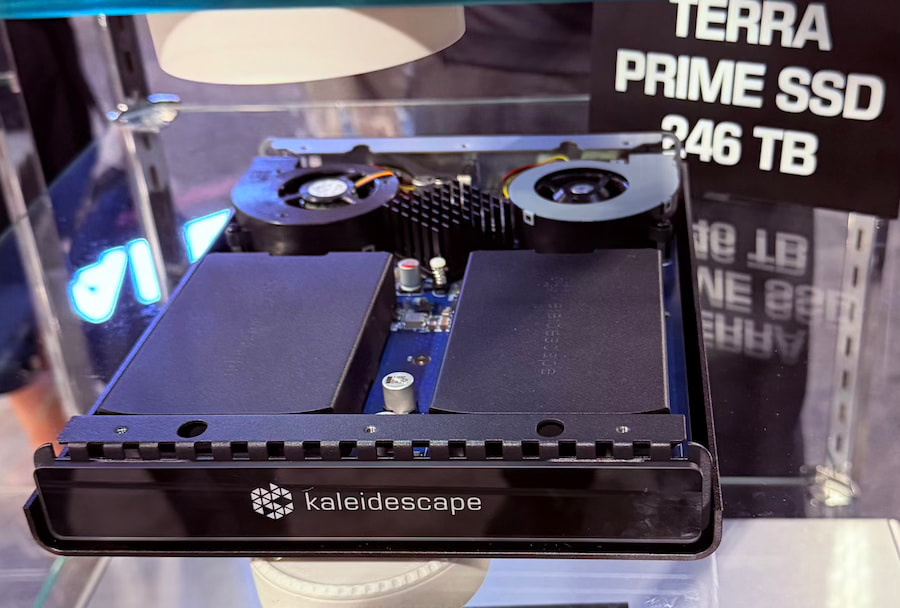
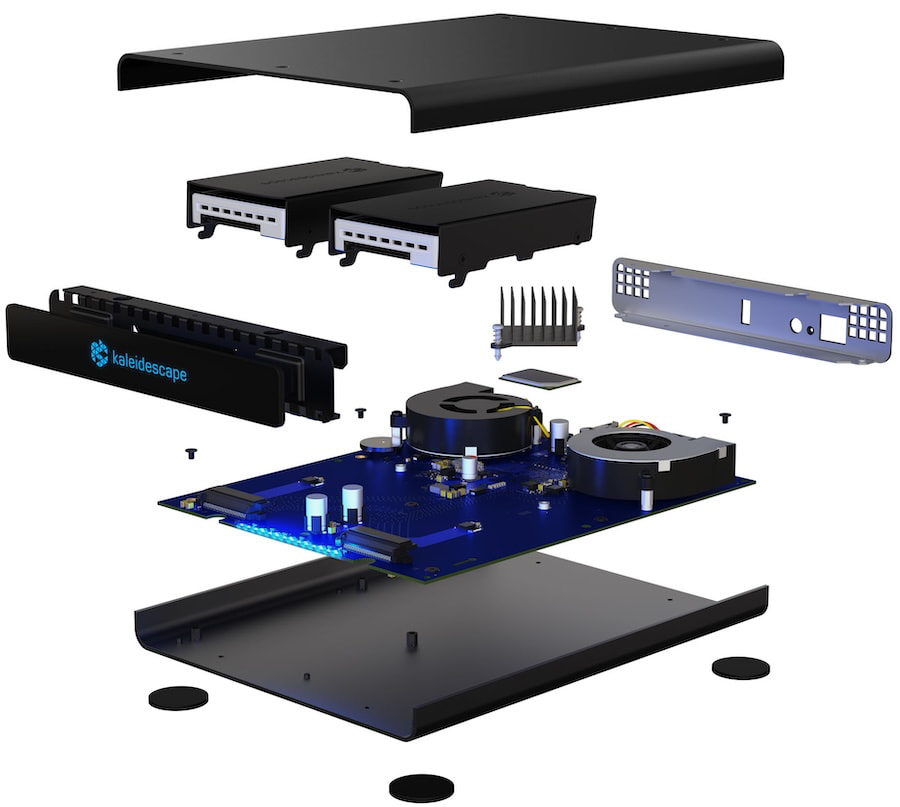
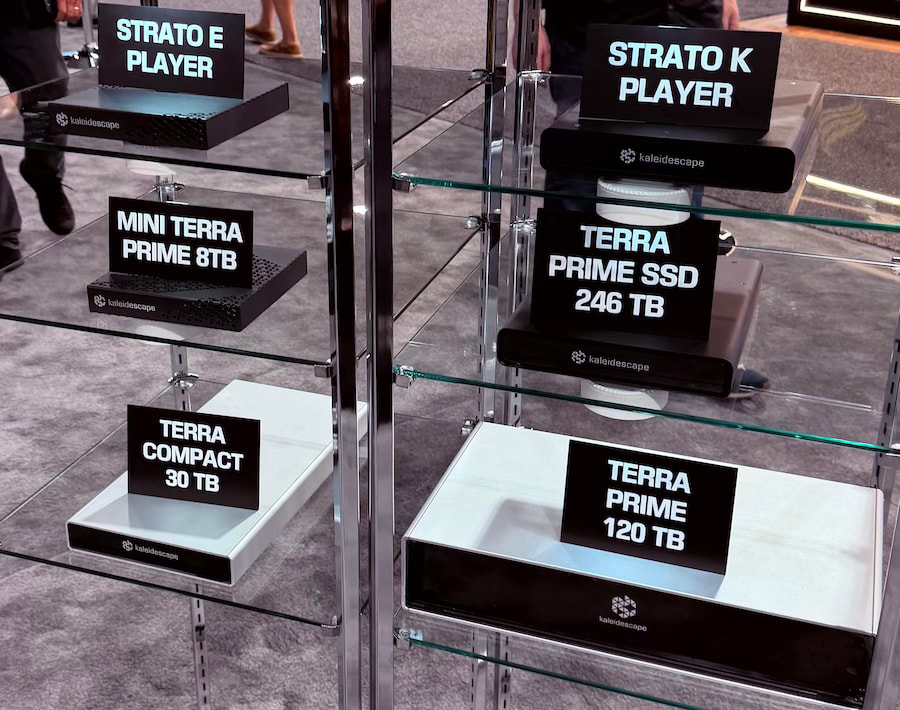
At CEDIA Expo 2026, the company introduced the Compact Terra Prime 246TB SSD Movie Server, its highest-capacity server to date. What makes it more interesting than another exercise in storage excess is the packaging: Kaleidescape has squeezed two 123TB solid-state drives into the same compact chassis used by the Strato K 8K movie player.
For perspective, the full-size Terra Prime 120TB introduced earlier this year suddenly looks rather modest.
The new model is aimed at very large Kaleidescape collections, whole-home installations and marine systems where multiple Strato players need immediate access to a centralized movie library.
And presumably people who regard deleting a downloaded movie as a personal failure. It appears someone at Kaleidescape finally read my email.
Related Reviews:
How Much Fits on 246TB?
Kaleidescape estimates the Compact Terra Prime can store approximately 4,000 conventional 4K movies, 2,300 4K Cinematic or 8K movies, 6,600 HD movies, or 37,000 SD titles.
There is an important distinction with that 2,300 figure. It represents storage capacity based on typical file sizes; it does not mean Kaleidescape currently offers 2,300 native 8K movies.
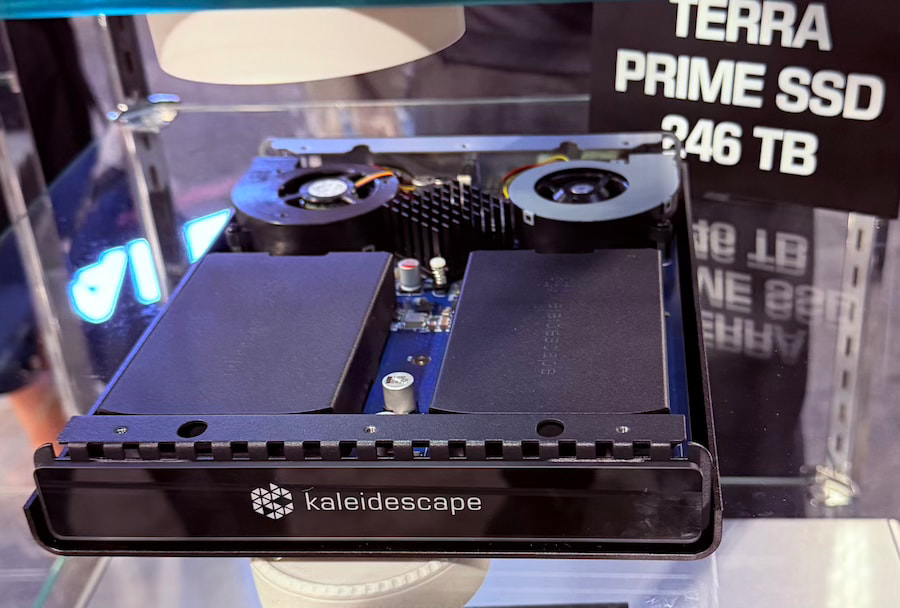
The company offers more than 14,000 titles across its supported formats, while its newer 4K Cinematic and 8K playback capabilities are tied to the Strato K platform.
Storage requirements are also moving upward. Kaleidescape says 4K Cinematic downloads average approximately 1.5 times the size of its conventional 4K versions, with average bitrates around 110 Mbps. The format can retain chroma information up to 4:4:4 and was introduced alongside Strato K in June 2026.
Strato K itself includes a 960GB SSD, which is useful for a small standalone library but can hold only about seven 4K Cinematic titles. Connecting it to Terra storage removes that constraint and lets the player concentrate on playback while the server maintains the collection.
That makes a huge server considerably easier to understand, even if most home theater owners will never come remotely close to needing this much capacity.
SSD Changes More Than Storage Capacity
The existing Terra Prime 120TB uses four removable hard drives in a traditional full-width component. Moving to SSDs allows the 246TB version to deliver considerably more capacity in a chassis less than half as wide.
There are also performance advantages.
Compact Terra Prime 246TB SSD
Terra Prime 120TB
Storage
246TB
120TB
Storage Type
2 x 123TB SSD
4 x HDD
Approx. 4K Movies
4,000
2,000
4K Download Time
As little as 4 minutes
As little as 8 minutes
Simultaneous 4K Playbacks
25
10
Network
2.5GbE recommended
2.5GbE recommended
Dimensions
7.87 x 1.52 x 10 inches
17 x 3.5 x 10 inches
Weight
4 pounds
21.6 pounds with drives
Typical Fan Noise
20 dB(A)
29 dB(A)
With a 2.5 Gigabit Ethernet connection, Kaleidescape says a high-bitrate 4K movie can download in as little as four minutes.
The more relevant specification for large custom installations may be simultaneous playback. One server can provide high-bitrate 4K content to as many as 25 network-connected Strato players.
Nobody needs 25 movie zones in a two-bedroom condo.
In a large residence, yacht or other professionally integrated system, that capability starts making considerably more sense.
Almost One Petabyte of Kaleidescape
If 246TB somehow proves inadequate, Kaleidescape allows up to four Compact Terra Prime SSD servers to operate together.
That creates a maximum combined capacity of 984TB, just shy of one petabyte.
Kaleidescape says three of the new servers provide sufficient capacity for its entire current Movie Store based on typical storage requirements.
This is where the intended customer becomes fairly obvious. Someone building a modest single-room Kaleidescape system can choose the Strato E, Strato M, Strato K and considerably smaller Terra options already in the lineup.
The 246TB server exists for installations where users want an enormous collection stored locally and available instantly throughout the property without continually deciding what stays downloaded.
Kaleidescape has never been about cloud streaming. Purchased movies are downloaded to local storage and then played directly from the system, which allows the company to use movie files and bitrates that would be impractical for conventional streaming services.
Increasing local storage therefore becomes increasingly useful as Kaleidescape pushes toward higher-quality downloads.
What About Price?
Kaleidescape has not announced a fixed MSRP for the Compact Terra Prime 246TB SSD.
The server is available now on a special-order basis through authorized Kaleidescape dealers.
That is probably just as well.
For context, the Terra Prime 120TB sells for $34,995, before adding a Strato movie player. Two 123TB enterprise-class SSDs are not exactly something you pick up from the impulse aisle at Costco, so attempting to reverse-engineer a retail price from consumer SSD pricing would be pointless.
Anyone genuinely shopping for one will be speaking with an authorized integrator anyway.
Specifications
- Product: Kaleidescape Compact Terra Prime SSD Movie Server
- Storage: 246TB
- Drives: 2 x 123TB SSD
- Approximate Storage: 2,300 8K or 4K Cinematic movies; 4,000 4K movies; 6,600 HD movies; 37,000 SD movies
- Download Speed: High-bitrate 4K movie in as little as 4 minutes
- Simultaneous Playback: Up to 25 network-connected Strato players
- Networking: 2.5 Gigabit Ethernet recommended; 1 Gigabit minimum
- USB: USB 3.0, reserved
- Dimensions: 7.87 x 1.52 x 10 inches
- Weight: 4 pounds
- Typical Power Consumption: 22 watts
- Maximum Power Consumption: 42 watts
- Typical Fan Noise: 20 dB(A)
- Construction: Black anodized aluminum
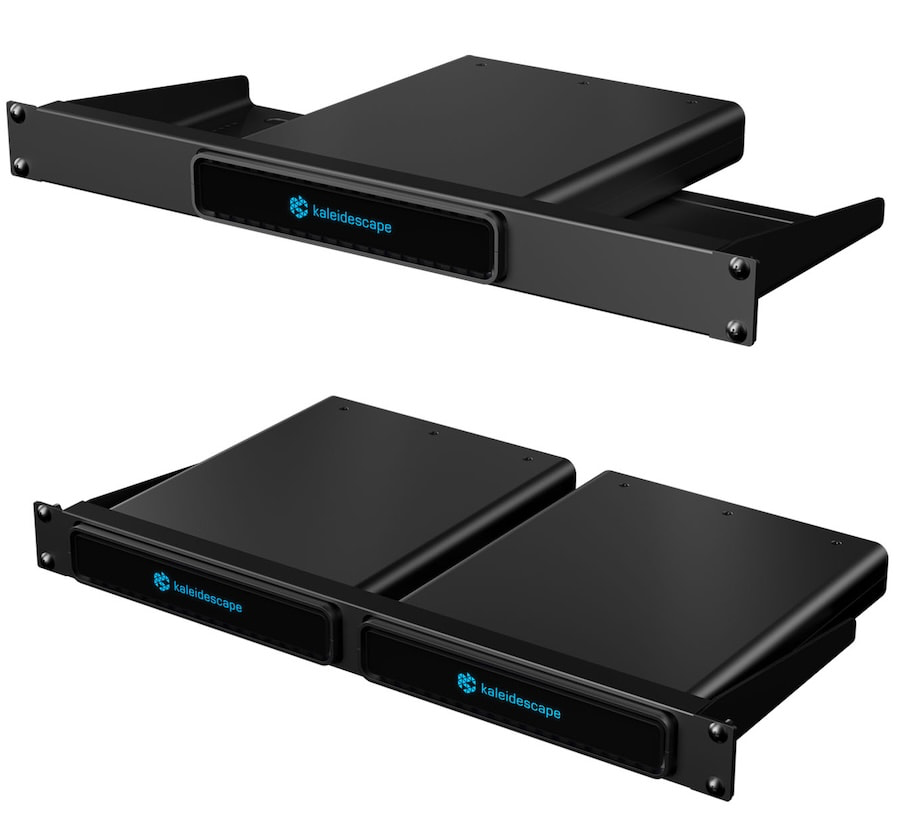
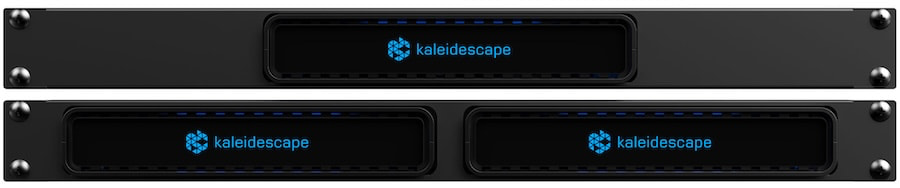
- Rack Mounting: Optional 1U shelf supports one or two compact units
- Supported Storage: 8K, 4K Cinematic, 4K Dolby Vision, 4K HDR10, 4K SDR, HD and SD Kaleidescape downloads
- Availability: Available now by special order through authorized Kaleidescape dealers
The Bottom Line
The Compact Terra Prime 246TB SSD is clearly not intended to make Kaleidescape more affordable. Strato E and Strato M have already taken on that job by lowering the cost of entering the ecosystem.
This product pushes in the other direction.
Kaleidescape is building an increasingly scalable platform in which a relatively simple single-room system can coexist with installations serving dozens of playback zones and enormous locally stored collections. Strato K and 4K Cinematic have also increased the amount of data required to deliver the company’s best video quality, making higher-capacity storage more than just a game of spec-sheet one-upmanship.
Does anyone really need almost a quarter-petabyte of movie storage in one box?
Probably not many people.
But the customers who do were unlikely to be satisfied with 120TB anyway.
For more information: kaleidescape.com
Related Reading:
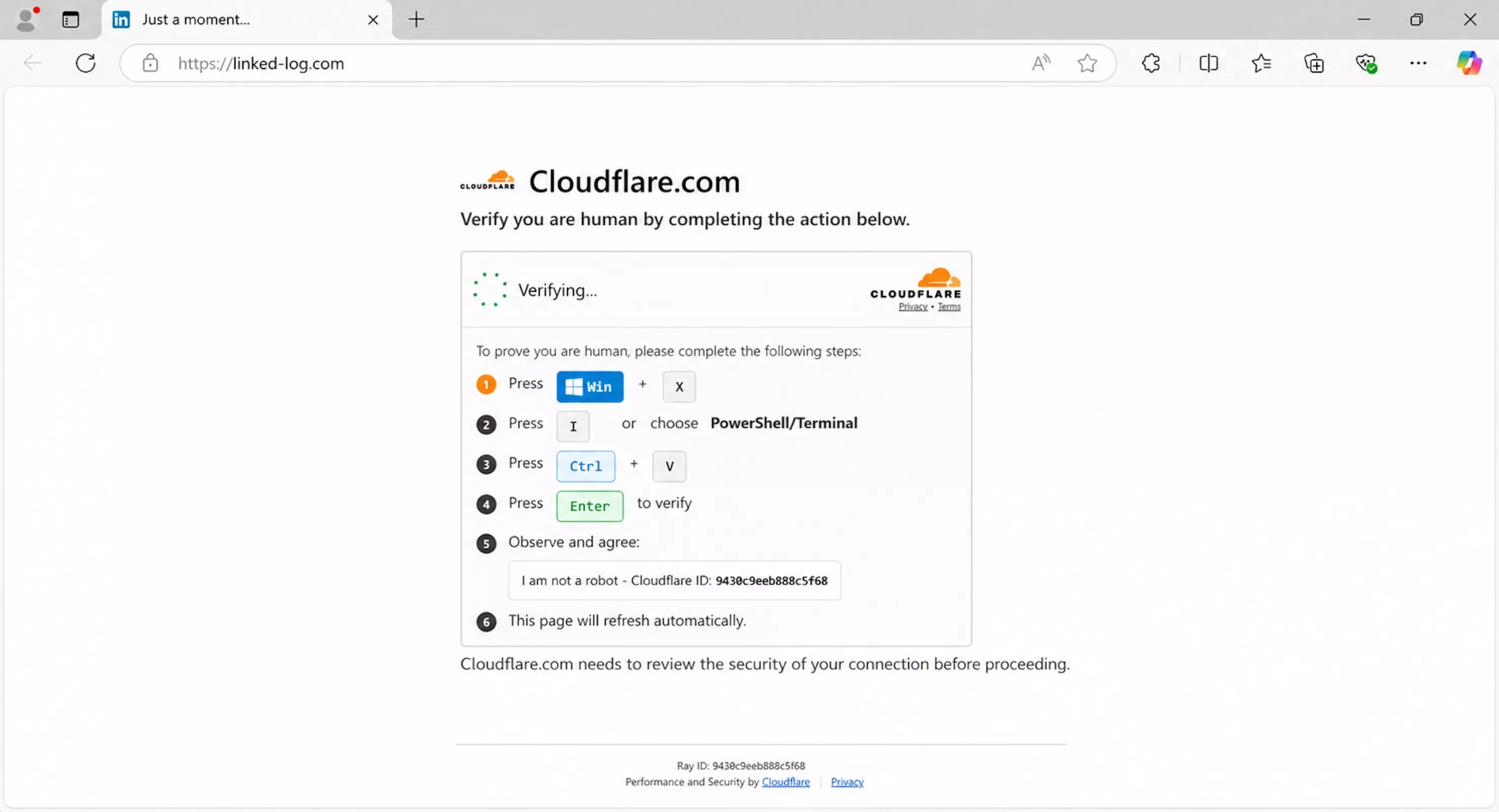
The takeaway: Microsoft has identified a new malware campaign that uses fake CAPTCHA prompts to trick Windows users into running malicious commands. The campaign, called TerminalFix, is a variation of the ClickFix attacks that have become increasingly common among business users. The campaign highlights a broader security problem: familiar browser prompts can now bypass technical safeguards by convincing users to execute the attacker’s code themselves.
The pages impersonate Cloudflare and other trusted services. Instead of presenting a normal CAPTCHA challenge, they instruct users to open PowerShell or Command Prompt and paste in a command.
That is the main difference between TerminalFix and earlier ClickFix activity. ClickFix attacks often direct victims to the Windows Run dialog, where a command is used to install an information stealer. TerminalFix, by contrast, uses PowerShell or Command Prompt, making it easier for attackers to execute longer, multi-line scripts.
Microsoft said the change increases “the likelihood that complex, multi-line scripts execute successfully.”
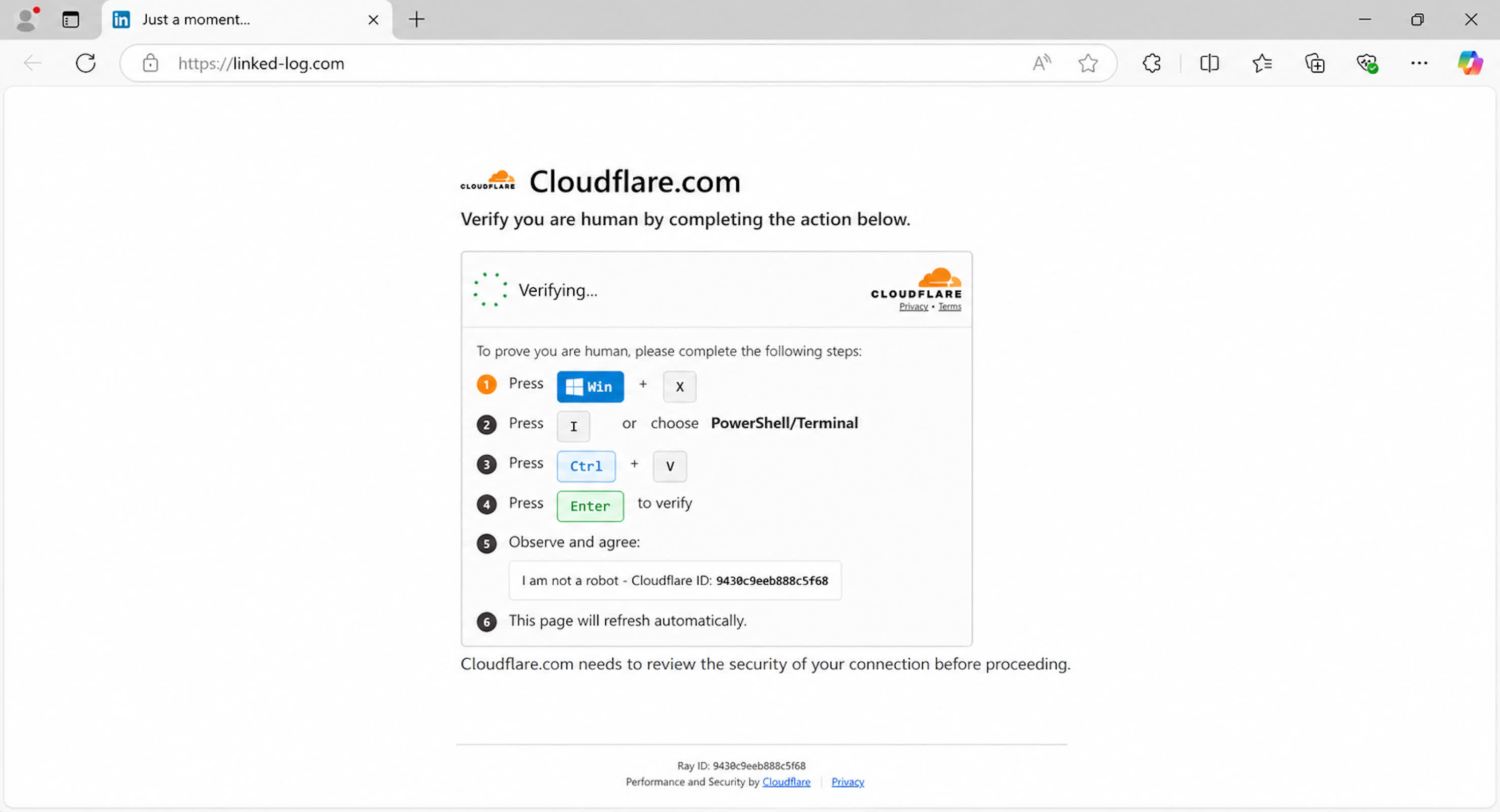
The campaign is designed to do more than infect a single computer. After a user runs the command, TerminalFix can begin a multi-stage intrusion that gives the attacker persistent proxy access through the compromised machine. That access can provide a route into other parts of a company’s network.
An attacker with access to an unsecured network could use the initially infected system to steal data, spread malware to other devices, or install ransomware. The extent of the damage would depend on the victim’s network controls, endpoint security, and user permissions.
TerminalFix relies on social engineering rather than a hidden software exploit. The attacker needs the user to follow the instructions on the fake verification page, making employee awareness an important line of defense.
A CAPTCHA that asks someone to open PowerShell, Command Prompt, or the Windows Run dialog should be treated as suspicious. Legitimate CAPTCHA services do not require users to run system commands to prove they are human.
Microsoft Threat Intelligence has published mitigation guidance for organizations. The company recommends restricting access to PowerShell and the Windows Run dialog when possible, monitoring systems for signs of DLL sideloading, blocking Flash plugins, and enabling cloud-delivered protection in Microsoft Defender Antivirus.
Those controls may not be appropriate for every employee or device. IT administrators, developers, and other technical users may need access to scripting tools as part of their jobs. Companies can still reduce risk by limiting those tools to users who need them and monitoring for unusual command activity.
Security teams should also review which older software remains installed across their environments. Microsoft’s guidance to block Flash plugins, for example, shows how outdated components can create additional paths for attackers even when they are no longer needed for daily work.
The campaign is primarily a concern for enterprise networks, where one compromised device can provide a path to more valuable systems and data. But the basic advice applies to individual users as well. Do not run a PowerShell or Command Prompt command simply because a website asks you to, especially when the request is presented as a CAPTCHA or security check.
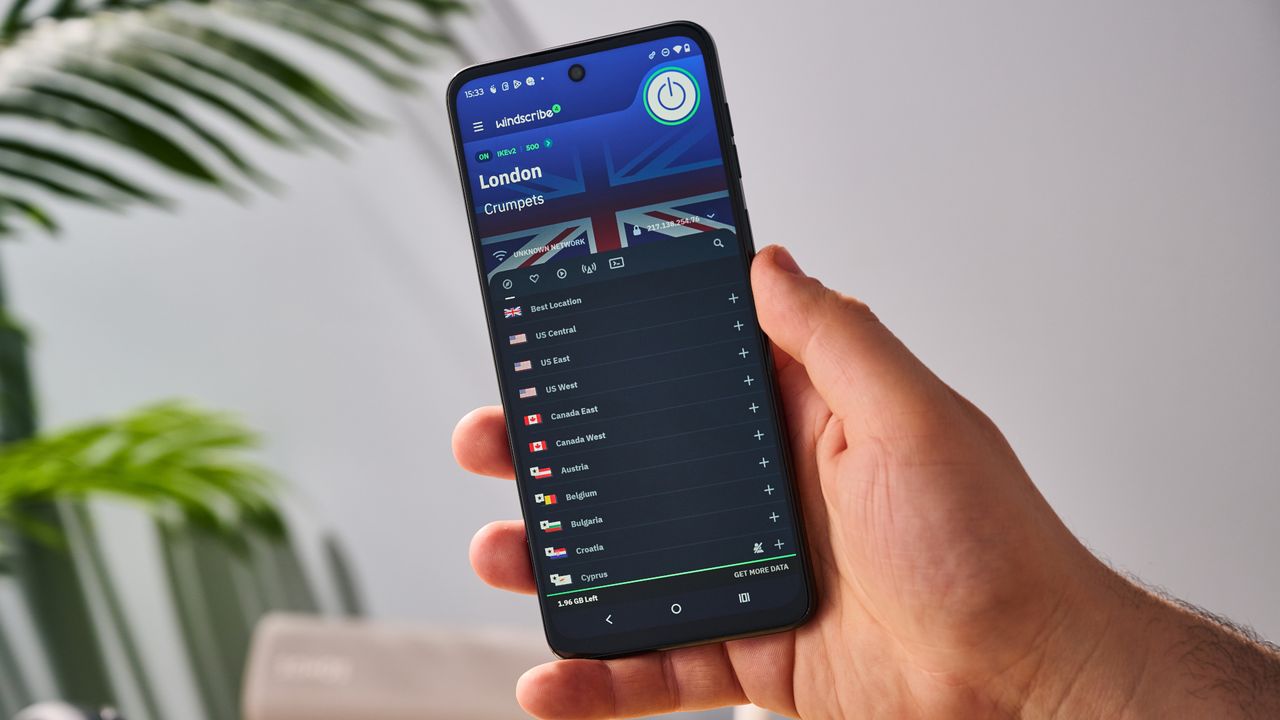
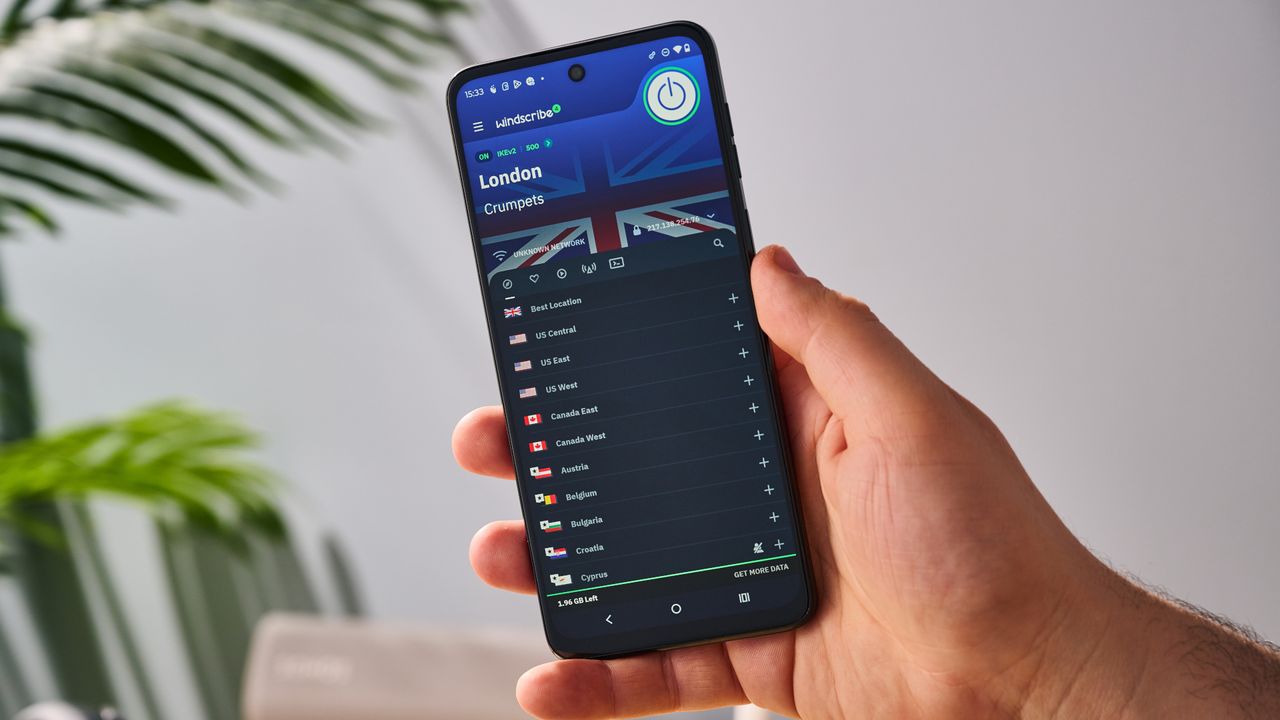
Windscribe has reduced its annual plan from $69 to $39 upfront ($3.25/month), just in time for the new academic year.
The plan includes unlimited simultaneous connections — a feature missing from competitors like NordVPN or Proton — along with a built-in ad, tracker, and malware blocker.
Its user-friendly apps are available across desktop, mobile, and many smart TVs, so it can cover everything you need: whether you’re securing public Wi-Fi in the library or streaming back in the dorm.
Crucially, this isn’t a first-year teaser rate. You’ll be billed $39 every 12 months for as long as you keep the subscription active, avoiding the steep renewal price hikes standard across the VPN industry.
Few premium VPNs match this pricing, particularly when accounting for renewal costs. For example, NordVPN‘s one-year plans start at $65.88, over $20 more, and renew at $139 per year. It’s a similar story when you look at the likes of Surfshark and ExpressVPN, too.
It’s also among the fastest VPNs we reviewed during our most recent tests, achieving over 2,000 Mbps over WireGuard. Plus, it reliably unblocks major streaming platforms and bypasses regional internet blocks.
If you’re not keen on Windscribe but want to keep top speeds, PrivadoVPN is another top choice that achieved over 2000 Mbps in testing. Equally, for streaming performance, no VPN performed better than NordVPN with global services this time around.
If you want to test it first, Windscribe offers a solid free tier. While bandwidth and server locations are capped, it gives you a risk-free way to test the interface before upgrading.

from the good-deals-on-cool-stuff dept
The Adobe Graphic Design Bundle has 3 courses designed to help you learn the essentials of graphic design and how to apply those skills to your projects. Courses cover Photoshop, Illustrator, and InDesign. You’ll learn all aspects of the design process. It’s on sale for $50.

Note: The Techdirt Deals Store is powered and curated by StackSocial. A portion of all sales from Techdirt Deals helps support Techdirt. The products featured do not reflect endorsements by our editorial team.
Filed Under: daily deal
NewsBeat2 seconds ago
The Grand Tour boss says male presenters ‘provide entertainment’ despite having ’emptier brains’ than females

Crypto World2 minutes ago
VARA and Securitize to Expand Tokenization Innovation in Dubai via MoU

Entertainment4 minutes ago
8 Greatest Heist Movies of All Time, Ranked





-

 Fashion6 days ago
Weekend Open Thread: Maeve – Corporette.com
-

 Crypto World7 days ago
Bitcoin’s 22% rally now needs real demand to outlast Treasury liquidity boost
-

 Business7 days ago
Apple Confirms September 9 Keynote and Reveals Its Full Pre-Order Schedule
-

 Crypto World17 hours ago
CLARITY Act could advance within weeks, Atkins says
-

 Business7 days ago
Salesforce Stock Soars 19% as Blowout Earnings and Agentforce AI Growth Silence Software Skeptics
-

 Business6 days ago
Onto Innovation Stock: AI’s Next Bottleneck Is Yield (NYSE:ONTO)
-

 Crypto World6 days ago
Bitcoin price tests $82K resistance as Brandt stays long
-
 Tech5 days ago
Hugging Face built a $4.5 billion empire on free AI models. Now Nvidia is buying it for $12.9 billion
-

 Business6 days ago
iPhone 18 Pro Pre-Orders Could Shift to Saturday as Apple Reportedly Avoids September 11 Anniversary
-

 Crypto World2 days ago
Elon Musk Says Grok 4.7 Lands in 10 Days and Will Beat Every Model
-

 Crypto World7 days ago
Truflation calls for Fed rate cut after PCE forecast
-
 Entertainment6 days ago
‘Adults’ Creators Break Down Season 2’s Most Shocking Moments and Tease a Potential Season 3
-

 Tech7 days ago
The fix for the AI agent that hijacked a company’s DNS: it can propose the change, but it can’t approve it
-

 News Videos4 days ago
Charlie Munger on Robinhood: No one should believe that Robinhood’s trades are free
-

 Tech6 days ago
PaperCut releases second emergency patch for exploited flaws
-

 Tech5 days ago
Tamagotchi Ring Takes the 30-Year Digital Pet and Places it on Your Finger
-
 Tech5 days ago
As the influencer economy drives retail sales, Seattle startup raises $22M to play matchmaker
-
 Crypto World2 days ago
Bitcoin slips below $77.5K as macro pressure offsets ETF inflows
-

 Crypto World13 hours ago
Kalshi seeks CFTC approval for WTI perpetual
-
 NewsBeat5 days ago
Trump posts AI video of ‘Lake America’ being protected by an army of bequiffed ‘Donald Ducks’
You must be logged in to post a comment Login