Connect with us

Business

Petrol station specialist Suresite Health & Safety acquired by Opus Safety

Published

on

Business Live

Midlands firm makes latest ‘buy-and-build’ move

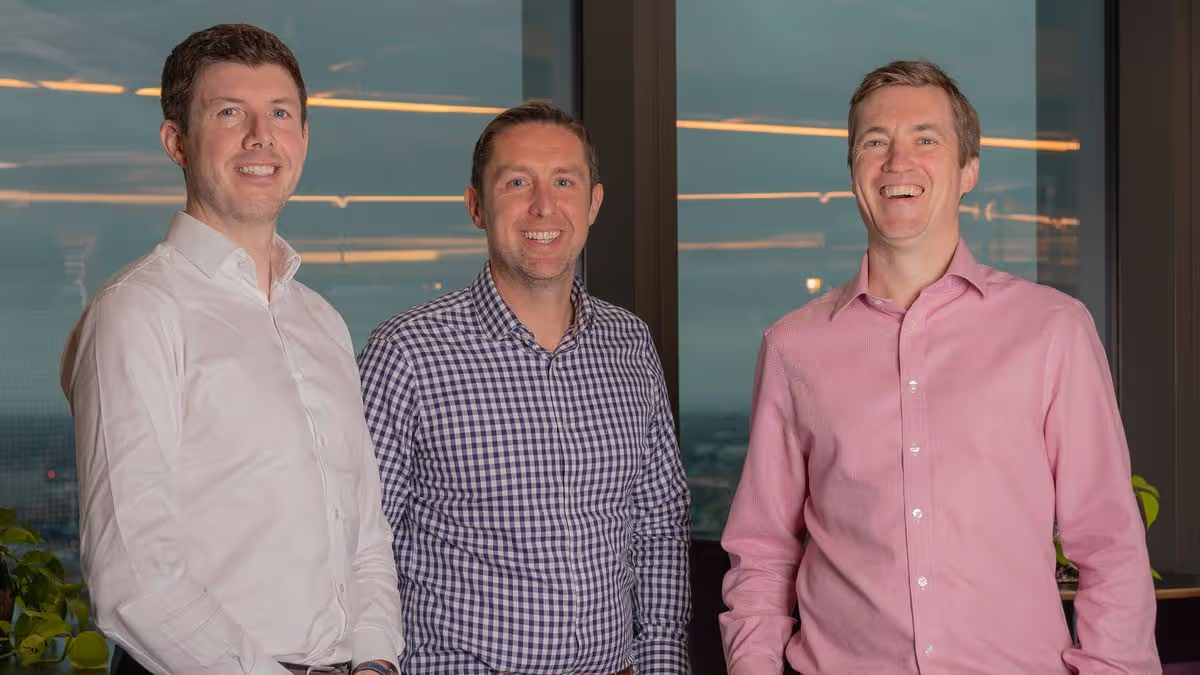
Opus Safety founders (from left) Tom Baverstock, John Southall and Ian Hatherly

Opus Safety founders, from left, Tom Baverstock, John Southall and Ian Hatherly

A Preston-based health and safety specialist that works with thousands of petrol stations across the country has been acquired by acquisitive Midlands firm Opus Safety.

Opus says the deal for Suresite Health & Safety gives it a “significant route into the petrol forecourt market” as the Lancashire firm services more than 3,500 petrol stations across the UK. All consultants at Suresite will move to Opus Safety, alongside a network of associates.

It’s the fifth recent takeover by Birmingham-based Opus following deals for Agility Risk & Compliance, Three Spires Safety, GH Safety, and Sentinel Safety Solutions. The value of the latest deal has not been disclosed.

The deal has been backed by OakNorth and by BGF, which invested in Opus in July 2025.

Advertisement

Opus was founded by John Southall, Ian Hatherly and Tom Baverstock. Mr Southall said: “Suresite has built an enviable health and safety business over the last 30 years, developing a strong footprint in the petrol forecourt market through robust Dangerous Substances and Explosive Atmospheres Regulations (DSEAR) risk assessments and compliance audits.

“As we look to accelerate our growth ambitions – both organically and through M&A – we wanted to seamlessly integrate a proven team and compliance and safety proposition that would strengthen our health and safety capabilities. The Suresite function is a perfect fit.”

David Bellis, investor at BGF, said: “The acquisition of Suresite’s health and safety function is yet another demonstration of the Opus team’s ambition to build a company with strength and depth in personnel, services and technological capabilities, to meet the growing needs of customers across the safety, HR and occupational health compliance landscape.

“BGF aims to back local, ambitious businesses – those with robust business models and compelling growth prospects. Opus is an excellent example of this approach and we’re delighted to be supporting them on their exciting growth journey.”

Advertisement

Safa Arif, associate at OakNorth, said: “The acquisition of Suresite represents another important step in Opus’ growth journey and is a strong strategic fit for the business. It’s great to see the management team continuing to identify and execute acquisitions that broaden the business’ capabilities and support its long-term growth ambitions.

“OakNorth is focused on backing ambitious management teams and working alongside experienced investors such as BGF to support their growth plans. We were pleased to provide Opus with the acquisition funding to support its buy-and-build strategy and are delighted to see that capital being deployed into another strategic acquisition. We look forward to continuing to work alongside the management team and BGF as Opus scales the business both organically and through further M&A.”

Evolve Corporate Finance and law firm Fieldfisher advised on the deal.

Andy Lawton Smith at Fieldfisher said: “Our team has been delighted to provide legal support to John, Ian and Tom and the whole Opus Safety group throughout its exciting journey to date. The consolidation of very highly regarded boutique providers in this sector provides their clients with deeper resource and better technology to fulfil their critical operating functions while simultaneously providing these hugely respected and conscientious entrepreneurs with a safe home for their friends and often life-long relationships. It’s a win-win.”

Advertisement

David Neate, partner at Evolve, said: “Having supported Opus from the outset, we are delighted to have led on this transaction. Suresite is a leading player in its niche and fits well with the buy and build strategy, with further growth opportunities which can be delivered through Opus’s Compliance Cloud technology.”


Continue Reading
Click to comment

You must be logged in to post a comment Login

Leave a Reply

Business

Wall Street Nears Record Highs With Help From Mag 7

Published

on

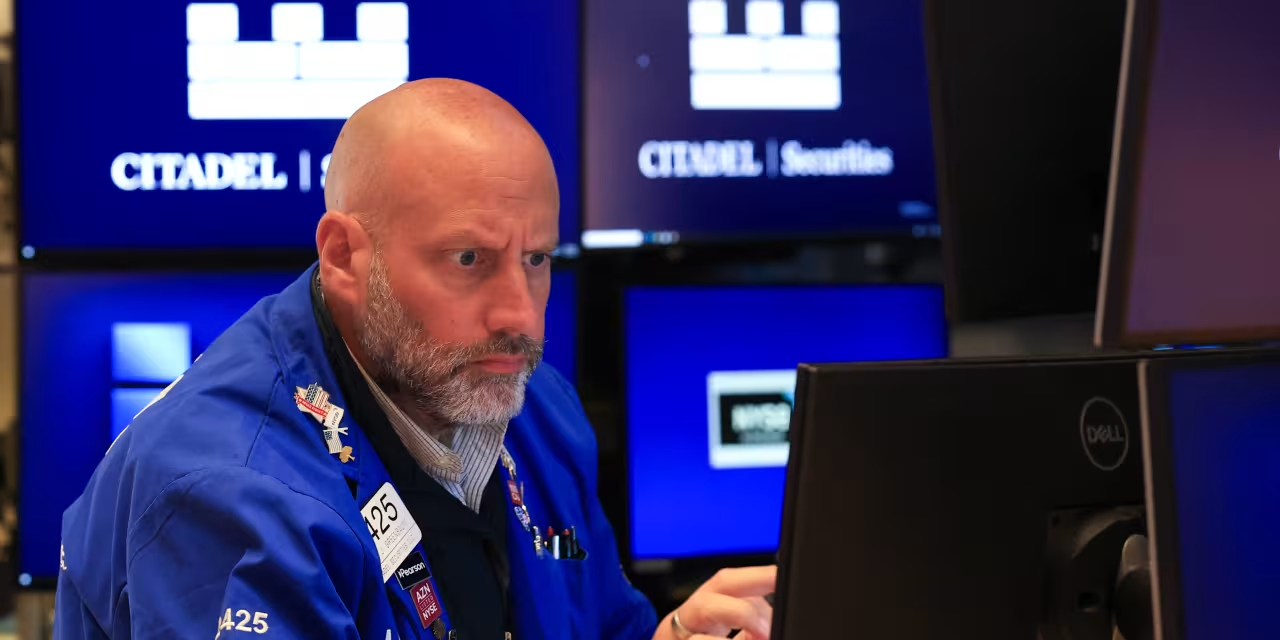
Stocks Little Changed After Fed Decision

Stocks rallied during Thursday’s session, nearing record levels, with some help from the Magnificent Seven.

The Roundhill Magnificent Seven ETF was up 2.7% to $70.58, just a stone’s throw from its record closing price of $70.94.

All stocks in the ETF were moving higher. Tesla saw the largest gains, rising 7%, followed by Meta’s 3.5% climb. Microsoft popped 3.1% while Apple, Amazon, Nvidia, and Alphabet all saw more than 1% rises.

Continue Reading

Business

Nvidia, Tesla, Robinhood, Snowflake, Ultragenyx, Ciena, and More Stocks That Explain Today’s Market

Published

on

Nvidia, Tesla, Robinhood, Snowflake, Ultragenyx, Ciena, and More Stocks That Explain Today’s Market

Nvidia, Tesla, Robinhood, Snowflake, Ultragenyx, Ciena, and More Stocks That Explain Today’s Market

Continue Reading

Business

Brooke Rollins urges Americans to eat beef amid US cattle herd push

Published

on

Brooke Rollins urges Americans to eat beef amid US cattle herd push

Agriculture Secretary Brooke Rollins praised the Trump administration’s agriculture agenda as she took aim at Biden-era food policies, accusing the former administration of pushing Americans away from traditional meat products.

“There was a massive push under the last administration to eat less meat. Could you imagine? Don’t stop eating meat. There was a massive push under the Democrats to eat fake meat and lab-grown meat,” Rollins said.

Advertisement
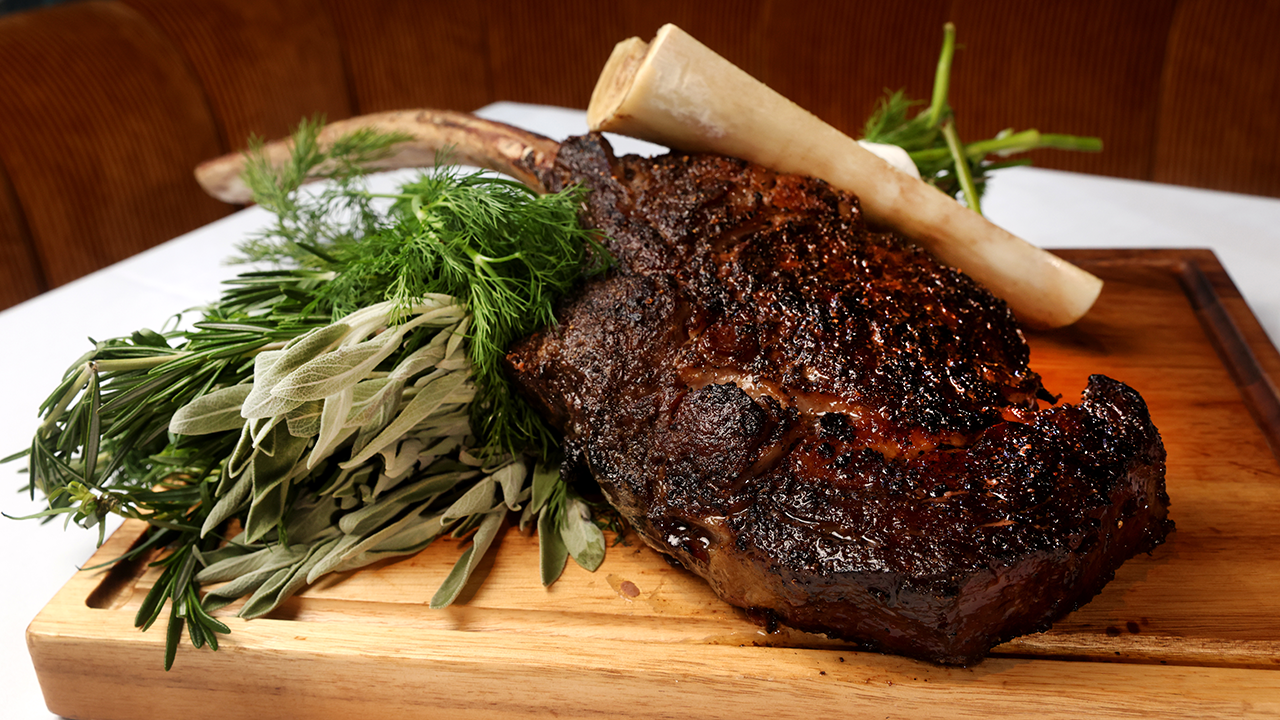
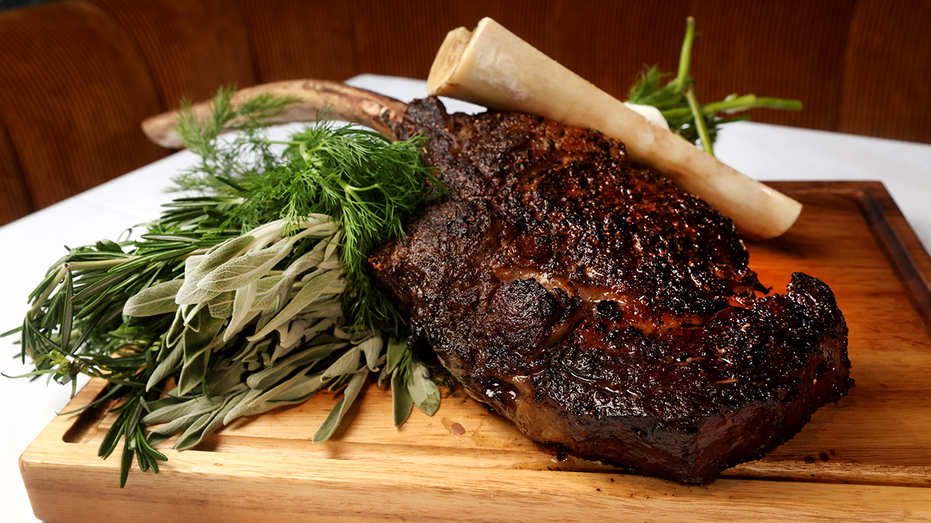
Tomahawk steak at a restaurant.

Agriculture Secretary Brooke Rollins pushes back against efforts to move Americans away from traditional meat products. (Jonathan Wiggs/The Boston Globe / Getty Images)

During an appearance on “Mornings with Maria,” Rollins explained the administration’s long-term cattle strategy, beef imports and efforts to support American farmers and ranchers.

“We’re working on deconstructing and then reconstructing our entire system around homegrown, nutrient-dense, fresh food, making America healthy again,” she said.

Rollins is encouraging Americans to keep meat on the menu as the administration works to rebuild the nation’s cattle herd and strengthen domestic beef production while ranchers face continued economic pressure.

“I was in Iowa… Talking to our ranchers, laying out a long-term program, incentives to retain their heifers, incentives, to make sure that they know that, that we’re behind them,” Rollins said.

Rollins said the administration is also looking to increase federal beef procurement and invest in small and mid-sized regional processors.

DOJ EXPANDS BEEF PRICE INVESTIGATION TO WALMART, COSTCO, AMAZON AND OTHER MAJOR RETAILERS

With ranchers facing a volatile cattle market and concerns about competition in meat processing, Rollins said the administration is focused on giving producers strong long-term incentives while expanding opportunities for U.S. agricultural products overseas.

US FARMER PUSHES FOR ONE MAJOR CHANGE AS IMPORTED BEEF DEBATE HEATS UP

“[We’re] really focusing on young ranchers, getting more people into the business of growing and farming and ranching, is part of this,” Rollins said.

GET FOX BUSINESS ON THE GO BY CLICKING HERE

Advertisement
Continue Reading

Business

World Acceptance: A Melting Ice Cube Priced Like A Growth Stock (NASDAQ:WRLD)

Published

on

Janus Henderson Forty Fund Q4 2025 Commentary (MUTF:JACCX)

This article was written by

PhD in Law & Economics with a dissertation on corporate wrongdoing, paired with an accounting background and a lifelong interest in markets.Generalist by temperament: value, growth, income, special situations, accounting shenanigans. Deepest coverage in fintech, consumer lending, and specialty finance, where legal, regulatory, and governance risk routinely moves the stock more than anything in the sell-side’s model.

Analyst’s Disclosure: I/we have no stock, option or similar derivative position in any of the companies mentioned, and no plans to initiate any such positions within the next 72 hours. I wrote this article myself, and it expresses my own opinions. I am not receiving compensation for it (other than from Seeking Alpha). I have no business relationship with any company whose stock is mentioned in this article.

Seeking Alpha’s Disclosure: Past performance is no guarantee of future results. No recommendation or advice is being given as to whether any investment is suitable for a particular investor. Any views or opinions expressed above may not reflect those of Seeking Alpha as a whole. Seeking Alpha is not a licensed securities dealer, broker or US investment adviser or investment bank. Our analysts are third party authors that include both professional investors and individual investors who may not be licensed or certified by any institute or regulatory body.

Advertisement
Continue Reading

Business

Automakers urge Congress to quickly ban Chinese vehicles in U.S.

Published

on

Automakers urge Congress to quickly ban Chinese vehicles in U.S.

BUSAN, SOUTH KOREA – 2026/06/27: People seen experiencing the BYD Sealion 6 DM-i during the Busan International Mobility Show 2026 (BIMOS 2026) at BEXCO. Busan International Mobility Show 2026 (BIMOS 2026) is happening from June 26 to July 5. The event which includes city wide pop-ups is promoting the integration of eco-friendly consumer vehicles, autonomous driving, AI, urban air mobility (UAM), robotics, and marine transport tech. (Photo by Simon Shin/SOPA Images/LightRocket via Getty Images)

Sopa Images | Lightrocket | Getty Images

DETROIT — Major automakers operating in the U.S. are increasing pressure on Congress to permanently ban the domestic sale, import and manufacturing of Chinese connected vehicles, hardware and software.

Advertisement

The Alliance for Automotive Innovation, which represents the vast majority of companies selling vehicles in the U.S., urged congressional leaders in a Thursday letter to make a move before the end of Congress’ current session on Jan. 3.

“Right now, Chinese automakers are dumping subsidized vehicles with connected software and hardware around the world,” John Bozzella, CEO of the group, said in the letter seen by CNBC. “This hasn’t happened inside the U.S. yet, but given the scale and urgency of this threat, we urge you to enact a Chinese vehicle, software and hardware ban before adjourning this year and make this policy the law of the land.”

Midterm elections are also coming up in November, which could affect Congress’ momentum.

Bozzella’s comments come amid bipartisan efforts in the House and Senate to address Chinese vehicles, including legislation advanced by the Senate Commerce Committee that could ban Mercedes-Benz in the U.S. because Chinese investors hold nearly 20% of the German automaker.

Advertisement

The Alliance for Automotive Innovation, which includes Mercedes-Benz, said in the Thursday letter that it wants to work with lawmakers to “achieve a balanced policy so all our member companies continue to succeed and thrive inside the U.S.”

Automakers have been worried that Chinese rivals like BYD and Geely are flooding global markets, undercutting domestic production and vehicle prices. Those Chinese-based companies have been increasing their vehicle exports to Europe and Central and South America.

“Enacting a permanent ban on Chinese vehicles and high-risk hardware and software in the 119th Congress will send a clear and bipartisan message that China’s strategy to dominate global automotive manufacturing will be met with a national security policy response from the American government,” Bozzella said.

Choose CNBC as your preferred source on Google and never miss a moment from the most trusted name in business news.
Advertisement
Continue Reading

Business

General Mills wraps up sale of Brazil business

Published

on

General Mills wraps up sale of Brazil business

MINNEAPOLIS — Furthering its portfolio overhaul, General Mills Inc. has completed the sale of its Brazil business to food and beverage company Grupo 3corações.

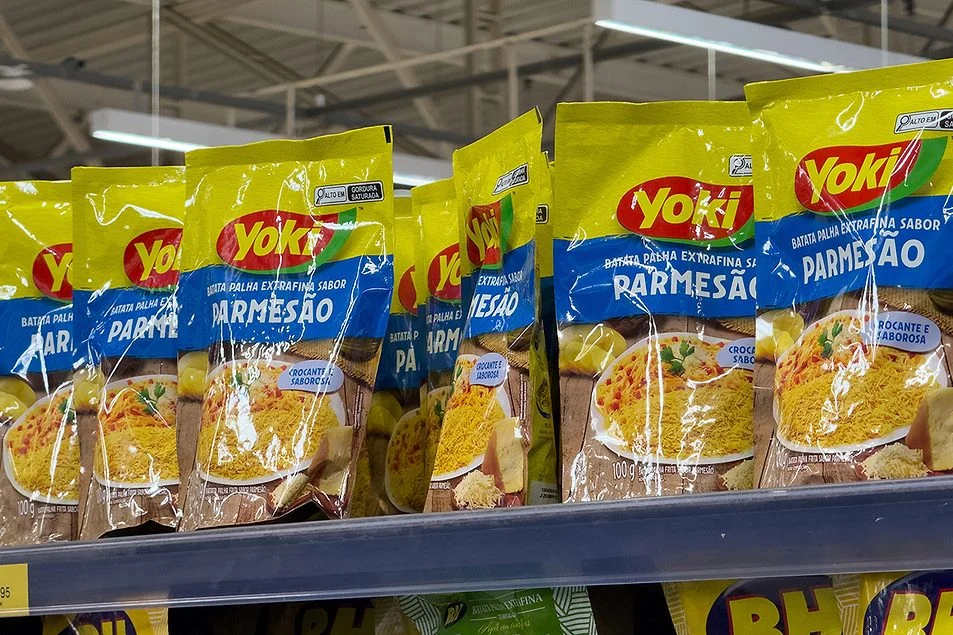
The $153 million deal, announced in March, includes leading local brands Yoki — with six labels across 21 categories, such as snacks, desserts, popcorn, side dishes, grains and cereals — as well as Kitano seasonings and Mais Vita soy beverages. Also part of the sale are production facilities in Pouso Alegre and Campo Novo do Parecis. Minneapolis-based General Mills said the Brazil operation generated net sales of $350 million in fiscal 2025.

Under its Accelerate strategy, General Mills has been reshaping its product roster to focus on brands and platforms offering more profitable long-term growth potential. The company said the divestiture of the Brazil business will raise its operating profit margin and enable its international segment to better focus on priority global platforms, such as super-premium ice cream, Mexican food, snack bars and pet food.

General Mills noted that, since fiscal 2018, it has turned over about a third of its net sales base via acquisitions and divestitures. Besides the sale of the Brazil operation, divestitures have included the $2.1 billion sale of its US and Canadian yogurt businesses — with brands such as Yoplait, Liberte, Go-Gurt, Oui, Mountain High and :Ratio — to the French companies Lactalis Group and Sodiaal in transactions that closed in 2025. This past June, General Mills also agreed to sell its Häagen-Dazs retail shops in mainland China to an investor group including Chinese tea beverage chain Ningji. On the acquisition side, General Mills closed its $8 billion purchase of Blue Buffalo Pet Products Inc. in 2018.

Advertisement

Eusébio, Brazil-based Grupo 3corações — Brazil’s largest coffee company — said the addition of the Yoki and Kitano brands “significantly expands” its industrial, logistics and commercial capabilities and extends its presence to more than 600,000 points of sale across the country. The company described Yoki as well-positioned in a range of categories — including microwave popcorn, farofa, potato sticks, flour, meal components and side dishes — and called Kitano “one of Brazil’s most-established brands in seasonings, herbs and spices.”

“We are completing a highly significant acquisition in our history while, at the same time, beginning a new chapter,” said Pedro Lima, president of Grupo 3corações. “Yoki and Kitano are beloved brands that have been part of the everyday lives of millions of Brazilian families for decades. We embrace this legacy with great respect and with the responsibility of caring for these brands, for the people who build them every day, and for the trust they have established with consumers, while creating the conditions for them to continue growing.”

Grupo 3corações said the addition of the two manufacturing plants in Pouso Alegre and Campo Novo do Parecis expand its production network in Brazil to 15 facilities. The purchase from General Mills also includes an administrative office in São Paulo.

“We were born from coffee, and it was through coffee that we built our relationship with millions of Brazilian families,” Lima added. “Over time, we expanded into new categories and consumption occasions, and the arrival of Yoki and Kitano accelerates this journey. We are bringing together strong brands, talented people, expertise and complementary capabilities — an important step toward establishing ourselves as one of Brazil’s leading food companies.”

Advertisement
Continue Reading

Business

Etiquette Experts Reveal The Silent Silverware Signal Diners Use To Tell Servers They’re Done Before Clearing

Published

on

Etiquette Experts Reveal The Silent Silverware Signal Diners Use To

A growing debate over restaurant etiquette is playing out at dinner tables across the country, as diners increasingly question whether servers are clearing plates too quickly, and whether a simple placement of a knife and fork could resolve the confusion entirely.

Traditional dining etiquette calls for restaurants to wait until everyone at a table has finished eating before clearing any plates. But many contemporary restaurants have moved toward clearing plates individually as diners finish, a shift that has left some customers wondering whether they are simply receiving attentive service or being subtly rushed out of their seats.

Jacqueline Whitmore, a Florida-based etiquette expert and founder of the Protocol School of Palm Beach, said the traditional standard still holds in her view of proper dining etiquette.

“Everyone at the table should be finished before all the plates are cleared,” Whitmore told Fox News Digital.

Advertisement

Not everyone in the hospitality industry agrees that a cleared plate should be read as a signal to leave. Salar Sheik, who runs Savory Hospitality Restaurant Consulting in Los Angeles, said diners shouldn’t automatically assume the worst when a server removes their plate ahead of others at the table.

“Clearing a plate is not necessarily an attempt to rush the guest or turn the table,” Sheik told Fox News Digital. “Often, the server is simply trying to keep the table tidy, maintain the flow of service and prepare for the next course.”

Determining the right moment to clear a plate, according to Sheik, requires a fair amount of skill and attentiveness on the part of restaurant staff. He said servers are typically trained to watch for specific physical cues indicating a diner has finished eating, including a plate being pushed away, silverware being placed together, a diner sitting back from the table, or a guest looking around the room as if searching for a server’s attention when little or no food remains on their plate.

“We train the best service professionals to read the guest’s body language, pace and overall energy to determine when it is appropriate to approach and clear a plate,” Sheik said. “This is a subtle skill that only a small percentage of staff members truly master.”

Advertisement

Getting the timing wrong, however, can produce exactly the negative experience diners sometimes suspect. Sheik said repeatedly hovering near a table or attempting to remove a plate while a guest is still actively eating carries real consequences for how customers perceive the quality of their service.

“Can make the guest feel rushed and is a sign of poor service,” Sheik said of premature plate-clearing attempts.

For diners looking to avoid this kind of miscommunication altogether, Whitmore pointed to a longstanding, largely universal signal rooted in the specific placement of silverware on a plate. According to Whitmore, crossing a knife and fork on the plate indicates that a diner is still eating or simply taking a pause, while placing the utensils side by side at roughly the four-o’clock position on the plate signals that the meal is finished and the plate can be cleared.

Sheik echoed the usefulness of silverware as a general cue for servers, though he cautioned that such signals are not entirely universal across all dining settings. He noted that customs surrounding silverware placement and its meaning can vary meaningfully between different countries and even between individual restaurants, meaning diners traveling internationally or visiting unfamiliar establishments should not necessarily assume staff will interpret the same signals in the same way.

Advertisement

Given the potential for miscommunication even when relying on traditional cues like silverware placement, Sheik suggested that the most reliable solution for servers may simply be to ask directly rather than attempting to interpret indirect signals at all.

“If there is any doubt, the server should always ask, ‘May I clear this for you?’” Sheik said.

While much of the etiquette conversation has focused on restaurant staff avoiding the perception of rushing customers, both experts noted that diners carry their own responsibilities when it comes to table etiquette and turnover. Sheik said there is no universal standard governing how long a party should be permitted to occupy a table, explaining that the appropriate length of a meal depends on a range of factors, including the specific restaurant, the size of the dining party, whether other guests are waiting for a table, and whether a specific dining time window was communicated to the party in advance.

Whitmore offered a similarly situational approach for diners weighing how long to linger after a meal has concluded, encouraging guests to simply “read the room” based on the circumstances around them. She said diners lingering at their table while other customers wait in line for an available table should remain mindful of those waiting nearby, while parties dining at a restaurant with no one waiting for a table should feel free to continue enjoying their time without concern.

Advertisement

The etiquette debate drew significant public engagement following its publication, with readers offering a range of perspectives on the underlying tension between attentive restaurant service and old-fashioned dining manners. Some commenters argued the entire discussion reflected a minor, low-stakes concern relative to more pressing issues, while others defended traditional table manners as basic social skills that have eroded over recent decades amid a broader cultural emphasis on speed and efficiency in dining settings. Still others pointed to differences in dining customs between the United States and other countries, suggesting American restaurants in particular have moved further away from traditional plate-clearing etiquette compared with European dining norms.

Ultimately, both etiquette experts suggested that good restaurant service may depend less on servers perfectly decoding subtle diner body language and silverware placement, and more on restaurant staff simply communicating directly with guests when any uncertainty arises about whether a meal has concluded. As Sheik put it, the solution to the entire dilemma may come down to five simple words that any server can use to eliminate the guesswork altogether: “May I clear this for you?”

Continue Reading

Business

How The Travel Group manages the complete business journey

Published

on

How The Travel Group manages the complete business journey

Booking the flight is the easy part. Managing everything around it is where business travel gets complicated.

There are the hotel, rail or ground transport, airport transfers, visas, meeting schedules and budgets to think about. Then you have traveller preferences and company travel policies. And when a flight is cancelled or a meeting moves at the last minute, the whole itinerary can change quickly.

When all of this is booked through different websites, suppliers and email chains, keeping track of the trip becomes harder than it needs to be.

The Travel Group brings the journey into one place, combining experienced travel consultants with online booking technology and AI-powered support.

It starts with understanding why people travel

Good business travel planning starts before anyone searches for a flight.

Advertisement

The Travel Group first looks at how a business travels. Where are employees going? How often? Why are they travelling? And what does the company need from those trips?

A complimentary travel assessment can help uncover things such as inefficient booking habits, gaps in the travel policy or areas where money is being spent unnecessarily.

The details matter because no two business trips are quite the same.

Someone travelling between three cities for a run of meetings needs a very different itinerary from an employee flying out to see one client and returning the next day.

Advertisement

The team looks at the company’s budget, approval process, preferred suppliers and travel policy, as well as the traveller’s own profile and preferences. The aim is to build a trip that works for the business without making life unnecessarily difficult for the person travelling.

Choose how you want to book

Some businesses want a consultant to handle everything. Others prefer employees to make straightforward bookings themselves.

The Travel Group supports both, along with an AI-powered travel assistant.

Clients can work directly with a dedicated travel consultant, book through the online platform or use the AI assistant for quicker requests. They don’t have to choose just one option either. A business might use self-service for a simple return flight and bring in a consultant when an itinerary involves several cities, connections or changes.

Advertisement

The online platform puts flights, hotels, car hire and rail in one place. Traveller profiles, approval processes, negotiated rates and company policy rules can be built into the booking process.

For straightforward requests, the AI travel assistant can send quotes, itineraries and updates through channels people already use, including WhatsApp and email.

But there are times when you want a person involved.

A complicated itinerary or an urgent change can need human judgement that software alone can’t provide. In those cases, an experienced consultant can step in with an understanding of the traveller, the company’s policy and the trip itself.

Advertisement

When the trip doesn’t go to plan

Anyone who travels regularly for work knows that the itinerary on the confirmation email isn’t always the itinerary you end up travelling.

Flights get delayed. Connections are missed. Meetings move. Sometimes a traveller needs another night in the hotel. Sometimes they need to get home earlier than planned.

This is where having proper support matters.

The Travel Group provides 24/7 assistance through its own team rather than sending travellers to an outsourced call centre. The person helping can see the traveller’s itinerary, history and company requirements, so they aren’t starting from scratch while the traveller is standing in an airport trying to work out what to do next.

Advertisement

Having the complete journey in one place also makes it easier to look at the knock-on effect of a change. Moving a flight, for example, might also mean changing the hotel, transfer or rail booking.

Real-time alerts, traveller tracking and duty-of-care support give the business visibility when something goes wrong and help keep the traveller informed.

Keeping an eye on what travel costs

The cheapest fare isn’t always the cheapest trip.

A low fare with poor flexibility can become expensive when plans change. The same goes for bookings made outside company policy or across multiple suppliers where nobody has a clear picture of total travel spend.

Advertisement

The Travel Group uses centralised reporting, negotiated corporate rates, supplier management and travel policy reviews to help businesses see where their money is going.

That means looking beyond the price shown on the booking screen. Booking behaviour, flexibility, unused bookings and avoidable costs all matter.

Where it makes sense, this information can feed into a tailored 12-month travel savings plan with measurable targets and regular reviews.

For SMEs and growing businesses, this can add some much-needed structure to travel management without forcing every employee or every trip into the same process.

Advertisement

The work isn’t finished when the traveller gets home

Once the trip is over, there’s useful information sitting in the booking data and traveller feedback.

What worked? Where did the business spend more than expected? Did the preferred suppliers deliver? Was there something about the booking process that made the trip harder than it needed to be?

The Travel Group uses this information to adjust the travel programme over time.

After onboarding, an early review gives the client a chance to flag problems or fine-tune the service. Longer-term reviews can then look at savings, supplier performance and changes in the way the company travels.

Advertisement

That’s the difference between simply processing bookings and managing business travel.

With a dedicated travel expert, online booking and AI support working together, The Travel Group can manage the trip before, during and after travel. The business gets a clearer view of costs and bookings, while the traveller gets something equally useful: fewer travel problems to deal with when they’re supposed to be working.

Advertisement
Continue Reading

Business

Mativ Holdings: Margin Expansion Is Rewriting The Investment Story (NYSE:MATV)

Published

on

Mativ Holdings: Margin Expansion Is Rewriting The Investment Story (NYSE:MATV)

This article was written by

I am an investor specializing in the consumer products sector with a focus on identifying companies that offer a unique combination of strong brand recognition, solid financials, and growth potential. I have a keen eye for consumer trends and an in-depth understanding of the industry, which has helped me to identify profitable investment opportunities in the sector.

Analyst’s Disclosure: I/we have no stock, option or similar derivative position in any of the companies mentioned, and no plans to initiate any such positions within the next 72 hours. I wrote this article myself, and it expresses my own opinions. I am not receiving compensation for it (other than from Seeking Alpha). I have no business relationship with any company whose stock is mentioned in this article.

Seeking Alpha’s Disclosure: Past performance is no guarantee of future results. No recommendation or advice is being given as to whether any investment is suitable for a particular investor. Any views or opinions expressed above may not reflect those of Seeking Alpha as a whole. Seeking Alpha is not a licensed securities dealer, broker or US investment adviser or investment bank. Our analysts are third party authors that include both professional investors and individual investors who may not be licensed or certified by any institute or regulatory body.

Advertisement
Continue Reading

Business

Investigation underway over MinRes workshop incident

Published

on

Investigation underway over MinRes workshop incident

An investigation into a workplace incident at a Mineral Resources subsidiary’s workshop, in which an employee’s hand was seriously injured, is ongoing.

Continue Reading

Trending

Copyright © 2025