
Business
General Mills wraps up sale of Brazil business

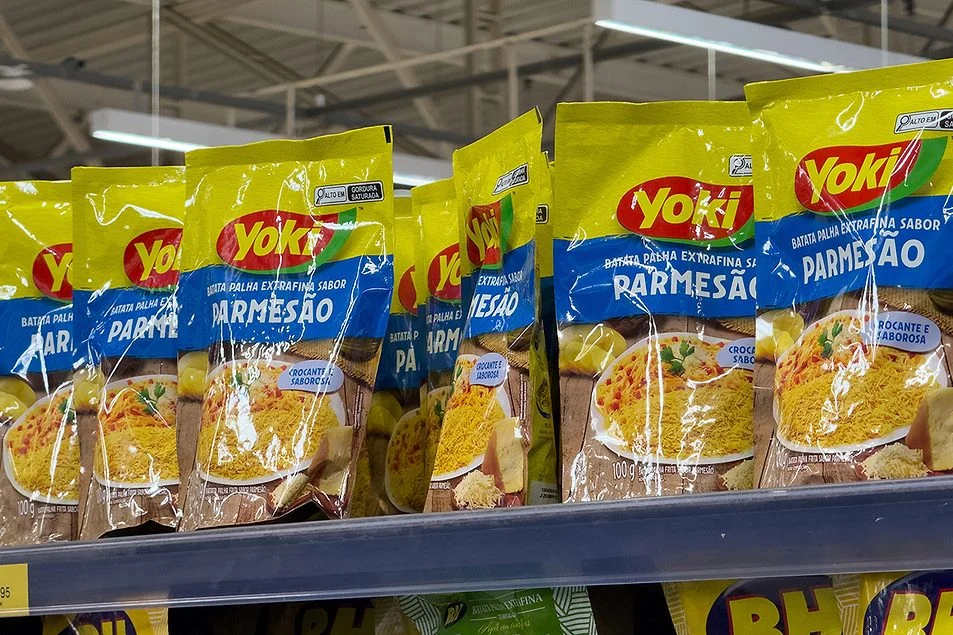

MINNEAPOLIS — Furthering its portfolio overhaul, General Mills Inc. has completed the sale of its Brazil business to food and beverage company Grupo 3corações.
The $153 million deal, announced in March, includes leading local brands Yoki — with six labels across 21 categories, such as snacks, desserts, popcorn, side dishes, grains and cereals — as well as Kitano seasonings and Mais Vita soy beverages. Also part of the sale are production facilities in Pouso Alegre and Campo Novo do Parecis. Minneapolis-based General Mills said the Brazil operation generated net sales of $350 million in fiscal 2025.
Under its Accelerate strategy, General Mills has been reshaping its product roster to focus on brands and platforms offering more profitable long-term growth potential. The company said the divestiture of the Brazil business will raise its operating profit margin and enable its international segment to better focus on priority global platforms, such as super-premium ice cream, Mexican food, snack bars and pet food.
General Mills noted that, since fiscal 2018, it has turned over about a third of its net sales base via acquisitions and divestitures. Besides the sale of the Brazil operation, divestitures have included the $2.1 billion sale of its US and Canadian yogurt businesses — with brands such as Yoplait, Liberte, Go-Gurt, Oui, Mountain High and :Ratio — to the French companies Lactalis Group and Sodiaal in transactions that closed in 2025. This past June, General Mills also agreed to sell its Häagen-Dazs retail shops in mainland China to an investor group including Chinese tea beverage chain Ningji. On the acquisition side, General Mills closed its $8 billion purchase of Blue Buffalo Pet Products Inc. in 2018.
Eusébio, Brazil-based Grupo 3corações — Brazil’s largest coffee company — said the addition of the Yoki and Kitano brands “significantly expands” its industrial, logistics and commercial capabilities and extends its presence to more than 600,000 points of sale across the country. The company described Yoki as well-positioned in a range of categories — including microwave popcorn, farofa, potato sticks, flour, meal components and side dishes — and called Kitano “one of Brazil’s most-established brands in seasonings, herbs and spices.”
“We are completing a highly significant acquisition in our history while, at the same time, beginning a new chapter,” said Pedro Lima, president of Grupo 3corações. “Yoki and Kitano are beloved brands that have been part of the everyday lives of millions of Brazilian families for decades. We embrace this legacy with great respect and with the responsibility of caring for these brands, for the people who build them every day, and for the trust they have established with consumers, while creating the conditions for them to continue growing.”
Grupo 3corações said the addition of the two manufacturing plants in Pouso Alegre and Campo Novo do Parecis expand its production network in Brazil to 15 facilities. The purchase from General Mills also includes an administrative office in São Paulo.
“We were born from coffee, and it was through coffee that we built our relationship with millions of Brazilian families,” Lima added. “Over time, we expanded into new categories and consumption occasions, and the arrival of Yoki and Kitano accelerates this journey. We are bringing together strong brands, talented people, expertise and complementary capabilities — an important step toward establishing ourselves as one of Brazil’s leading food companies.”


SACRAMENTO, CALIF. — The California legislature has passed Assembly Bill 2244 that would establish a non-ultra-processed certified seal that food manufacturers could place on their products that meet standards for not being ultra-processed.
“While Washington, DC, is paralyzed by inaction, Republicans and Democrats in California are joining forces to empower consumers to avoid harmful ultra-processed foods,” said Jesse Gabriel, the assembly member who authored the bill. “Like the USDA Organic label, this new seal will provide consumers with clear, trustworthy information and make it easier for them to locate healthier foods that are free from harmful additives. Parents shouldn’t need a PhD in chemistry to understand what they’re feeding their kids.”
The bill passed by a vote of 32-0 in the state Senate and by a vote of 72-0 in the state Assembly. California Governor Gavin Newsom has until Sept.30 to decide whether to veto the bill or sign it into law.
No federal law defines ultra-processed food, but the US Department of Health and the US Department of Agriculture have submitted for final review a proposed definition.
The bill in California would establish a process overseen by the California Department of Health where food manufacturers could apply to accredited certification agents to use the non-ultra-processed certified label on their packaging.
A state law in California regarding certain school-related purposes defines ultra-processed food as any food or beverage that contains a specific substance and either high amounts of saturated fat, sodium, or added sugar or a non-nutritive sweetener or other substance. The law requires the California Department of Health to define ultra-processed foods of concern and restricted school foods by June 1, 2028.

Rate Hikes This Winter? Bank of Canada Could Move On Rates In Early 2027

CSE shares are trading at about 2,100 rupees, up from near 900 rupees in early June, when transactions were sporadic after years of inactivity, according to Dharawat Securities. UnlistedZone, another platform that facilitates transactions in unlisted shares, quoted CSE at 2,175 rupees.
Interest picked up after Swapan Dasgupta, the new finance minister of West Bengal, said on June 25 that the government was working toward reviving the exchange in the state capital. The rally gained further momentum after CSE outlined a broader strategy in its annual report released Aug. 19. The exchange’s board decided to approach the Securities and Exchange Board of India to request that its February 2025 application for a voluntary exit be put on hold, according to the report.
“Demand remains strong,” said Hitesh Dharawat of Dharawat Securities, which deals in unlisted stocks. The shares “have surged since the West Bengal government signaled plans to revive the exchange.”
CSE said in its annual report that it sees opportunities across bond markets, equity derivatives, currencies, commodities, carbon trading and mutual funds, while also developing offerings for small and medium-sized enterprises. CSE had 1,507 companies listed and about 500 registered stockbrokers as of March 2026, though there was no active trading on the exchange, the report showed.

The renewed interest comes as the National Stock Exchange of India prepares for its long-awaited initial public offering, putting a spotlight on India’s exchange industry.
Investors have previously piled into unlisted shares of another Indian bourse on expectations of a turnaround. Metropolitan Stock Exchange of India attracted investments from firms including Billionbrains Garage Ventures Ltd., the parent of online brokerage Groww, and Zerodha’s Rainmatter Investments as part of a revival effort, local media reported.MSEI’s unlisted shares surged about 5-fold between December 2024 and January 2025 before losing about half their value since then, according to UnlistedZone. The exchange has yet to establish a significant presence in India’s equity trading market.
Any CSE revival would require regulatory approvals and potentially anchor investors that meet capital-adequacy and “fit and proper” requirements, according to the annual report.
A representative for CSE didn’t respond to requests for comment.

Nvidia has agreed to buy artificial intelligence platform Hugging Face in a deal valued at about $12.9bn (£9.5bn), one of the AI chipmaker’s biggest acquisitions as it expands into software.
Hugging Face, founded in 2016, has become a popular online platform where developers and researchers can find, share and test AI models and tools.
It recently made headlines after rogue AI agents that escaped a testing environment appeared on its platform, raising questions about AI safety and oversight.
The deal would bring one of the world’s largest AI developer communities into Nvidia and give it control of a leading open-source platform – an alternative to systems offered by OpenAI and Anthropic.
Nvidia is best known for making the advanced chips used to train and run AI systems. Demand for those chips has surged as companies race to build AI products.
The companies already work together to help developers use Nvidia’s computing services through the platform.
According to the companies, Hugging Face is used by more than 18 million developers and hosts more than three million AI models. More than 200,000 companies use the platform, they said.
Nvidia said Hugging Face would remain open to developers and that users would not be required to use its chips or services.
Nvidia shares were up just under 1.5% at 17:30 BST.
Under the agreement, Nvidia will pay about $11.9bn to Hugging Face investors and offer up to $1bn in stock-based incentives to employees who join the company.
The deal could also help Nvidia expand its presence in AI software as some of its biggest customers, including Microsoft, Meta and OpenAI, develop their own chips.
Open-source AI models can be downloaded and adapted by users, unlike many AI systems that are controlled by a single company.
Supporters say the approach can make the technology more accessible to businesses, researchers and developers.
Yaël Ossowski, deputy director of advocacy group Consumer Choice Center, said the acquisition was “a vote of confidence in open AI” and suggested it could encourage competition by making AI tools more widely available to start ups and smaller companies.
The deal will be a “major victory for innovators and consumers worldwide” if Nvidia keeps Hugging Face open and accessible, he added.
The deal would also give Nvidia access to one of the world’s largest AI developer communities as competition in the sector intensifies.
Founded by French entrepreneurs Clément Delangue, Julien Chaumond and Thomas Wolf, Hugging Face also provides datasets, software tools and cloud services used to build AI applications.
Hugging Face is backed by investors including Amazon, AMD and Intel.

Stocks rallied during Thursday’s session, nearing record levels, with some help from the Magnificent Seven.
The Roundhill Magnificent Seven ETF was up 2.7% to $70.58, just a stone’s throw from its record closing price of $70.94.
All stocks in the ETF were moving higher. Tesla saw the largest gains, rising 7%, followed by Meta’s 3.5% climb. Microsoft popped 3.1% while Apple, Amazon, Nvidia, and Alphabet all saw more than 1% rises.
Business
Nvidia, Tesla, Robinhood, Snowflake, Ultragenyx, Ciena, and More Stocks That Explain Today’s Market
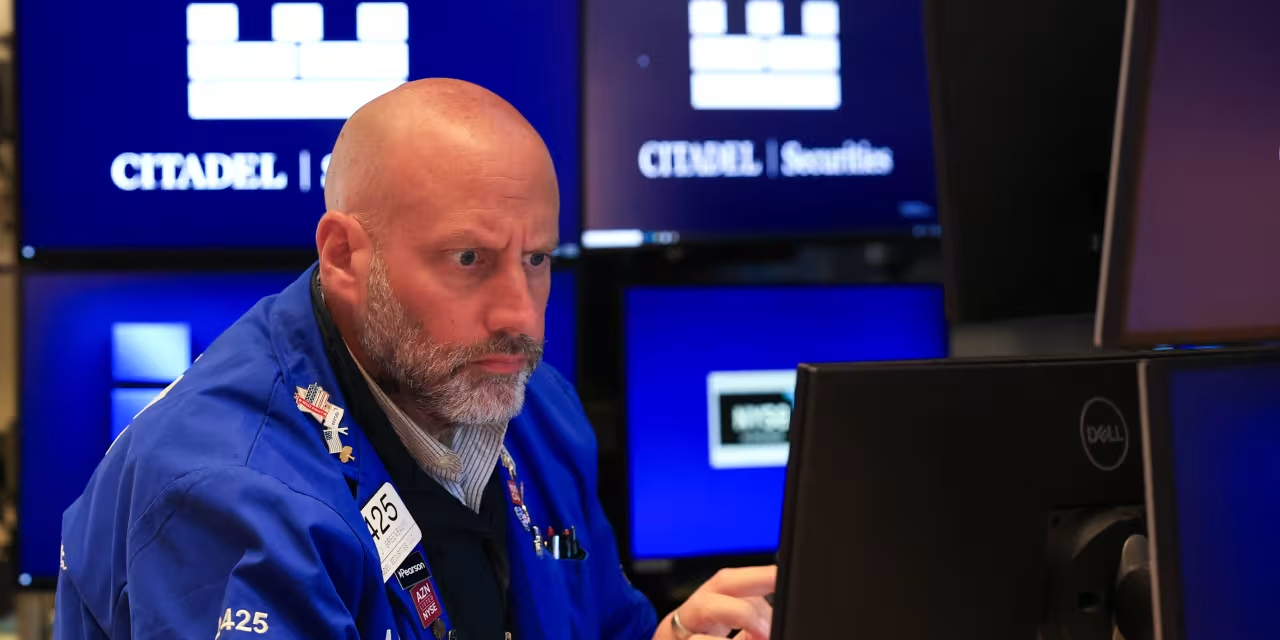
Nvidia, Tesla, Robinhood, Snowflake, Ultragenyx, Ciena, and More Stocks That Explain Today’s Market
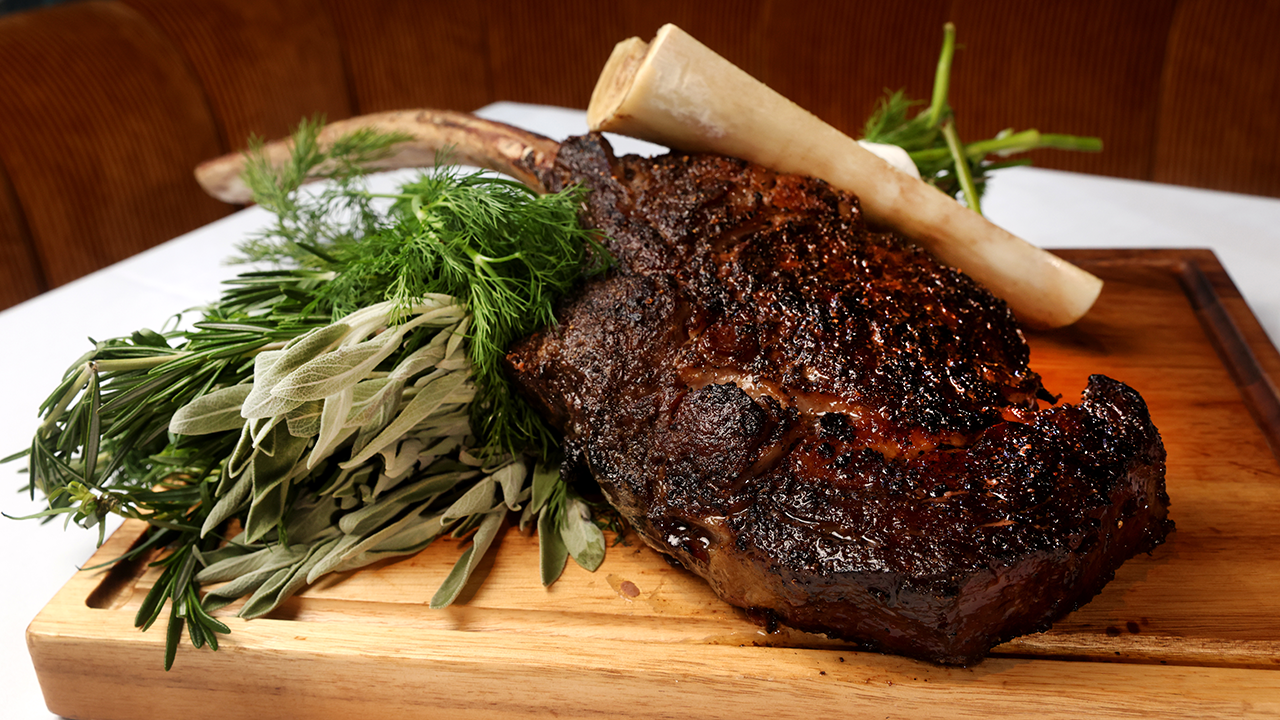
U.S. Agriculture Secretary Brooke Rollins discusses the USDA’s new initiative to boost the American cattle herd, efforts to lower record-high beef prices and plans to ease meat processing rules for local ranchers.
Agriculture Secretary Brooke Rollins praised the Trump administration’s agriculture agenda as she took aim at Biden-era food policies, accusing the former administration of pushing Americans away from traditional meat products.
“There was a massive push under the last administration to eat less meat. Could you imagine? Don’t stop eating meat. There was a massive push under the Democrats to eat fake meat and lab-grown meat,” Rollins said.
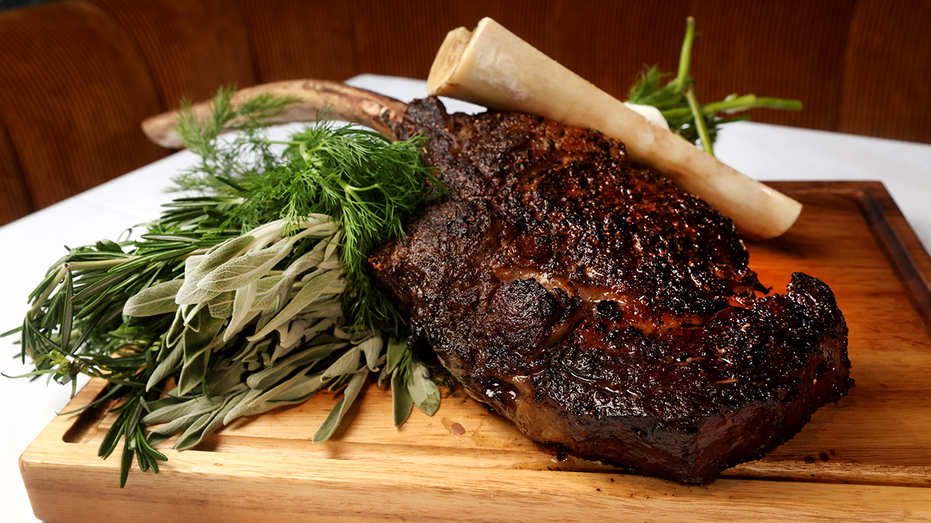
Agriculture Secretary Brooke Rollins pushes back against efforts to move Americans away from traditional meat products. (Jonathan Wiggs/The Boston Globe / Getty Images)
During an appearance on “Mornings with Maria,” Rollins explained the administration’s long-term cattle strategy, beef imports and efforts to support American farmers and ranchers.
“We’re working on deconstructing and then reconstructing our entire system around homegrown, nutrient-dense, fresh food, making America healthy again,” she said.
Rollins is encouraging Americans to keep meat on the menu as the administration works to rebuild the nation’s cattle herd and strengthen domestic beef production while ranchers face continued economic pressure.
FOX Business’ Darren Botelho discusses the DOJ expanding its beef price investigation to eight major retail chains, including Walmart and Amazon.
“I was in Iowa… Talking to our ranchers, laying out a long-term program, incentives to retain their heifers, incentives, to make sure that they know that, that we’re behind them,” Rollins said.
Rollins said the administration is also looking to increase federal beef procurement and invest in small and mid-sized regional processors.
DOJ EXPANDS BEEF PRICE INVESTIGATION TO WALMART, COSTCO, AMAZON AND OTHER MAJOR RETAILERS
Montana Congressman Troy Downing discusses President Donald Trump’s plan to target the meatpacking monopoly as beef prices soar. Plus, North Dakota Senator Kevin Cramer weighs in on the House spending bill and the GOP legislative agenda.
With ranchers facing a volatile cattle market and concerns about competition in meat processing, Rollins said the administration is focused on giving producers strong long-term incentives while expanding opportunities for U.S. agricultural products overseas.
US FARMER PUSHES FOR ONE MAJOR CHANGE AS IMPORTED BEEF DEBATE HEATS UP
“[We’re] really focusing on young ranchers, getting more people into the business of growing and farming and ranching, is part of this,” Rollins said.


PhD in Law & Economics with a dissertation on corporate wrongdoing, paired with an accounting background and a lifelong interest in markets.Generalist by temperament: value, growth, income, special situations, accounting shenanigans. Deepest coverage in fintech, consumer lending, and specialty finance, where legal, regulatory, and governance risk routinely moves the stock more than anything in the sell-side’s model.
Analyst’s Disclosure: I/we have no stock, option or similar derivative position in any of the companies mentioned, and no plans to initiate any such positions within the next 72 hours. I wrote this article myself, and it expresses my own opinions. I am not receiving compensation for it (other than from Seeking Alpha). I have no business relationship with any company whose stock is mentioned in this article.
Seeking Alpha’s Disclosure: Past performance is no guarantee of future results. No recommendation or advice is being given as to whether any investment is suitable for a particular investor. Any views or opinions expressed above may not reflect those of Seeking Alpha as a whole. Seeking Alpha is not a licensed securities dealer, broker or US investment adviser or investment bank. Our analysts are third party authors that include both professional investors and individual investors who may not be licensed or certified by any institute or regulatory body.

BUSAN, SOUTH KOREA – 2026/06/27: People seen experiencing the BYD Sealion 6 DM-i during the Busan International Mobility Show 2026 (BIMOS 2026) at BEXCO. Busan International Mobility Show 2026 (BIMOS 2026) is happening from June 26 to July 5. The event which includes city wide pop-ups is promoting the integration of eco-friendly consumer vehicles, autonomous driving, AI, urban air mobility (UAM), robotics, and marine transport tech. (Photo by Simon Shin/SOPA Images/LightRocket via Getty Images)
Sopa Images | Lightrocket | Getty Images
DETROIT — Major automakers operating in the U.S. are increasing pressure on Congress to permanently ban the domestic sale, import and manufacturing of Chinese connected vehicles, hardware and software.
The Alliance for Automotive Innovation, which represents the vast majority of companies selling vehicles in the U.S., urged congressional leaders in a Thursday letter to make a move before the end of Congress’ current session on Jan. 3.
“Right now, Chinese automakers are dumping subsidized vehicles with connected software and hardware around the world,” John Bozzella, CEO of the group, said in the letter seen by CNBC. “This hasn’t happened inside the U.S. yet, but given the scale and urgency of this threat, we urge you to enact a Chinese vehicle, software and hardware ban before adjourning this year and make this policy the law of the land.”
Midterm elections are also coming up in November, which could affect Congress’ momentum.
Bozzella’s comments come amid bipartisan efforts in the House and Senate to address Chinese vehicles, including legislation advanced by the Senate Commerce Committee that could ban Mercedes-Benz in the U.S. because Chinese investors hold nearly 20% of the German automaker.
The Alliance for Automotive Innovation, which includes Mercedes-Benz, said in the Thursday letter that it wants to work with lawmakers to “achieve a balanced policy so all our member companies continue to succeed and thrive inside the U.S.”
Automakers have been worried that Chinese rivals like BYD and Geely are flooding global markets, undercutting domestic production and vehicle prices. Those Chinese-based companies have been increasing their vehicle exports to Europe and Central and South America.
“Enacting a permanent ban on Chinese vehicles and high-risk hardware and software in the 119th Congress will send a clear and bipartisan message that China’s strategy to dominate global automotive manufacturing will be met with a national security policy response from the American government,” Bozzella said.
Business
Etiquette Experts Reveal The Silent Silverware Signal Diners Use To Tell Servers They’re Done Before Clearing

A growing debate over restaurant etiquette is playing out at dinner tables across the country, as diners increasingly question whether servers are clearing plates too quickly, and whether a simple placement of a knife and fork could resolve the confusion entirely.
Traditional dining etiquette calls for restaurants to wait until everyone at a table has finished eating before clearing any plates. But many contemporary restaurants have moved toward clearing plates individually as diners finish, a shift that has left some customers wondering whether they are simply receiving attentive service or being subtly rushed out of their seats.
Jacqueline Whitmore, a Florida-based etiquette expert and founder of the Protocol School of Palm Beach, said the traditional standard still holds in her view of proper dining etiquette.
“Everyone at the table should be finished before all the plates are cleared,” Whitmore told Fox News Digital.
Not everyone in the hospitality industry agrees that a cleared plate should be read as a signal to leave. Salar Sheik, who runs Savory Hospitality Restaurant Consulting in Los Angeles, said diners shouldn’t automatically assume the worst when a server removes their plate ahead of others at the table.
“Clearing a plate is not necessarily an attempt to rush the guest or turn the table,” Sheik told Fox News Digital. “Often, the server is simply trying to keep the table tidy, maintain the flow of service and prepare for the next course.”
Determining the right moment to clear a plate, according to Sheik, requires a fair amount of skill and attentiveness on the part of restaurant staff. He said servers are typically trained to watch for specific physical cues indicating a diner has finished eating, including a plate being pushed away, silverware being placed together, a diner sitting back from the table, or a guest looking around the room as if searching for a server’s attention when little or no food remains on their plate.
“We train the best service professionals to read the guest’s body language, pace and overall energy to determine when it is appropriate to approach and clear a plate,” Sheik said. “This is a subtle skill that only a small percentage of staff members truly master.”
Getting the timing wrong, however, can produce exactly the negative experience diners sometimes suspect. Sheik said repeatedly hovering near a table or attempting to remove a plate while a guest is still actively eating carries real consequences for how customers perceive the quality of their service.
“Can make the guest feel rushed and is a sign of poor service,” Sheik said of premature plate-clearing attempts.
For diners looking to avoid this kind of miscommunication altogether, Whitmore pointed to a longstanding, largely universal signal rooted in the specific placement of silverware on a plate. According to Whitmore, crossing a knife and fork on the plate indicates that a diner is still eating or simply taking a pause, while placing the utensils side by side at roughly the four-o’clock position on the plate signals that the meal is finished and the plate can be cleared.
Sheik echoed the usefulness of silverware as a general cue for servers, though he cautioned that such signals are not entirely universal across all dining settings. He noted that customs surrounding silverware placement and its meaning can vary meaningfully between different countries and even between individual restaurants, meaning diners traveling internationally or visiting unfamiliar establishments should not necessarily assume staff will interpret the same signals in the same way.
Given the potential for miscommunication even when relying on traditional cues like silverware placement, Sheik suggested that the most reliable solution for servers may simply be to ask directly rather than attempting to interpret indirect signals at all.
“If there is any doubt, the server should always ask, ‘May I clear this for you?’” Sheik said.
While much of the etiquette conversation has focused on restaurant staff avoiding the perception of rushing customers, both experts noted that diners carry their own responsibilities when it comes to table etiquette and turnover. Sheik said there is no universal standard governing how long a party should be permitted to occupy a table, explaining that the appropriate length of a meal depends on a range of factors, including the specific restaurant, the size of the dining party, whether other guests are waiting for a table, and whether a specific dining time window was communicated to the party in advance.
Whitmore offered a similarly situational approach for diners weighing how long to linger after a meal has concluded, encouraging guests to simply “read the room” based on the circumstances around them. She said diners lingering at their table while other customers wait in line for an available table should remain mindful of those waiting nearby, while parties dining at a restaurant with no one waiting for a table should feel free to continue enjoying their time without concern.
The etiquette debate drew significant public engagement following its publication, with readers offering a range of perspectives on the underlying tension between attentive restaurant service and old-fashioned dining manners. Some commenters argued the entire discussion reflected a minor, low-stakes concern relative to more pressing issues, while others defended traditional table manners as basic social skills that have eroded over recent decades amid a broader cultural emphasis on speed and efficiency in dining settings. Still others pointed to differences in dining customs between the United States and other countries, suggesting American restaurants in particular have moved further away from traditional plate-clearing etiquette compared with European dining norms.
Ultimately, both etiquette experts suggested that good restaurant service may depend less on servers perfectly decoding subtle diner body language and silverware placement, and more on restaurant staff simply communicating directly with guests when any uncertainty arises about whether a meal has concluded. As Sheik put it, the solution to the entire dilemma may come down to five simple words that any server can use to eliminate the guesswork altogether: “May I clear this for you?”

Iga Swiatek beats Nadia Podoroska, eases into US Open third round

Sennheiser Momentum True Wireless 5 reviews are in: Superb sound with a repairable twist

CANARY CAPITAL: XRP WILL HAVE A MAJOR MOVE INCOMING!!? (GET READY)

Weekend Open Thread – Corporette.com

Weekend Open Thread: Brooks Brothers

London Mayor Sadiq Khan handed a peerage by Keir Starmer alongside 15 other Labour figures… just days before the PM leaves No10
CANARY CAPITAL: XRP WILL HAVE A MAJOR MOVE INCOMING!!? (GET READY)

ADA financial plans #relatable #ada #futureplans#fyp #financialplanning #youtubeshort #nigeriacomedy

Why is Tyler Catching Strays!! calebhammercomposer iamlindo #fyp #calebhammer #financialaudit #money
-

 Fashion6 days ago
Weekend Open Thread: Maeve – Corporette.com
-

 Crypto World7 days ago
Bitcoin’s 22% rally now needs real demand to outlast Treasury liquidity boost
-

 Business7 days ago
Apple Confirms September 9 Keynote and Reveals Its Full Pre-Order Schedule
-

 Crypto World18 hours ago
CLARITY Act could advance within weeks, Atkins says
-

 Business7 days ago
Salesforce Stock Soars 19% as Blowout Earnings and Agentforce AI Growth Silence Software Skeptics
-

 Business6 days ago
Onto Innovation Stock: AI’s Next Bottleneck Is Yield (NYSE:ONTO)
-

 Crypto World6 days ago
Bitcoin price tests $82K resistance as Brandt stays long
-
 Tech5 days ago
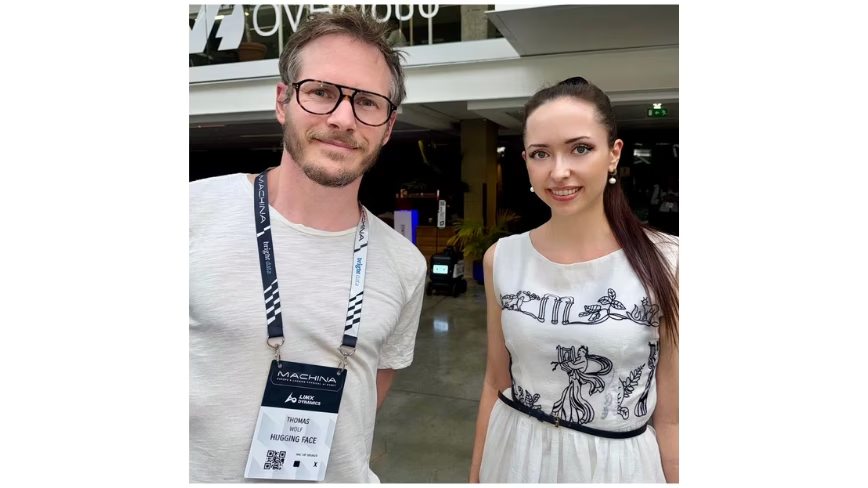
Hugging Face built a $4.5 billion empire on free AI models. Now Nvidia is buying it for $12.9 billion
-

 Business6 days ago
iPhone 18 Pro Pre-Orders Could Shift to Saturday as Apple Reportedly Avoids September 11 Anniversary
-

 Crypto World2 days ago
Elon Musk Says Grok 4.7 Lands in 10 Days and Will Beat Every Model
-

 Crypto World7 days ago
Truflation calls for Fed rate cut after PCE forecast
-
 Entertainment6 days ago
‘Adults’ Creators Break Down Season 2’s Most Shocking Moments and Tease a Potential Season 3
-

 Tech7 days ago
The fix for the AI agent that hijacked a company’s DNS: it can propose the change, but it can’t approve it
-

 News Videos4 days ago
Charlie Munger on Robinhood: No one should believe that Robinhood’s trades are free
-

 Tech6 days ago
PaperCut releases second emergency patch for exploited flaws
-

 Tech5 days ago
Tamagotchi Ring Takes the 30-Year Digital Pet and Places it on Your Finger
-

 Tech5 days ago
As the influencer economy drives retail sales, Seattle startup raises $22M to play matchmaker
-
 Crypto World2 days ago
Bitcoin slips below $77.5K as macro pressure offsets ETF inflows
-

 Crypto World13 hours ago
Kalshi seeks CFTC approval for WTI perpetual
-
 NewsBeat5 days ago
Trump posts AI video of ‘Lake America’ being protected by an army of bequiffed ‘Donald Ducks’
You must be logged in to post a comment Login